

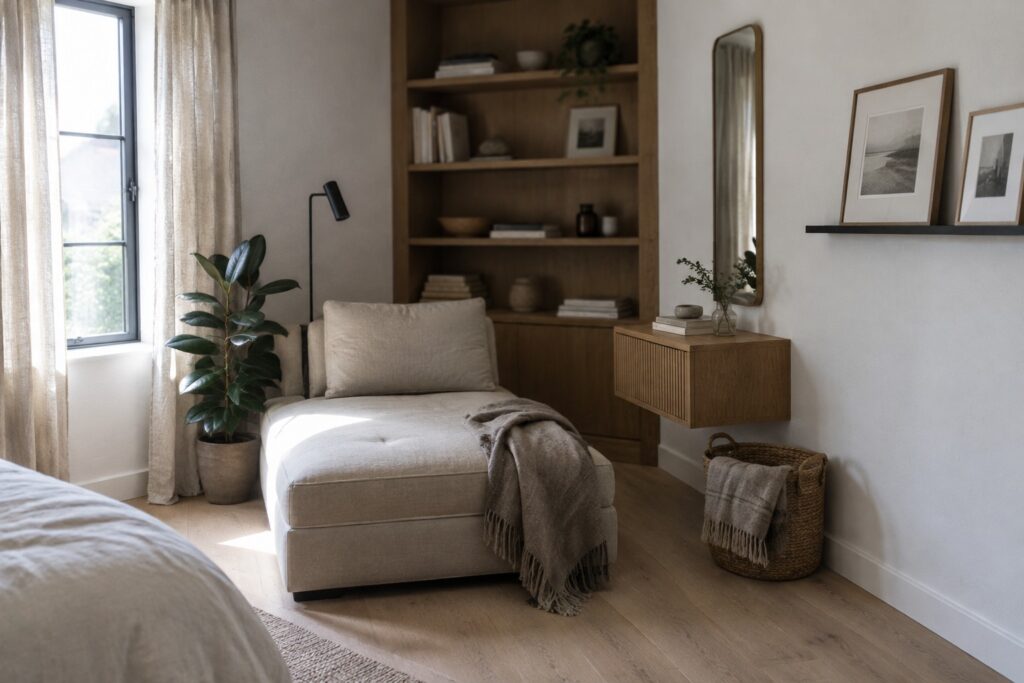
I have walked into plenty of bedrooms where an awkward corner ends up becoming dead space because standard furniture just does not line up with the walls. Finding pieces that tuck in without blocking movement takes some experimenting with scale and shape. Corners can make or break the flow. In my own place I learned that starting with the function I need most, like extra seating or hidden storage, helps narrow down what actually belongs there. It is surprising how much better the whole room feels once that one tricky spot starts working with the layout instead of against it.
A Chaise in the Corner
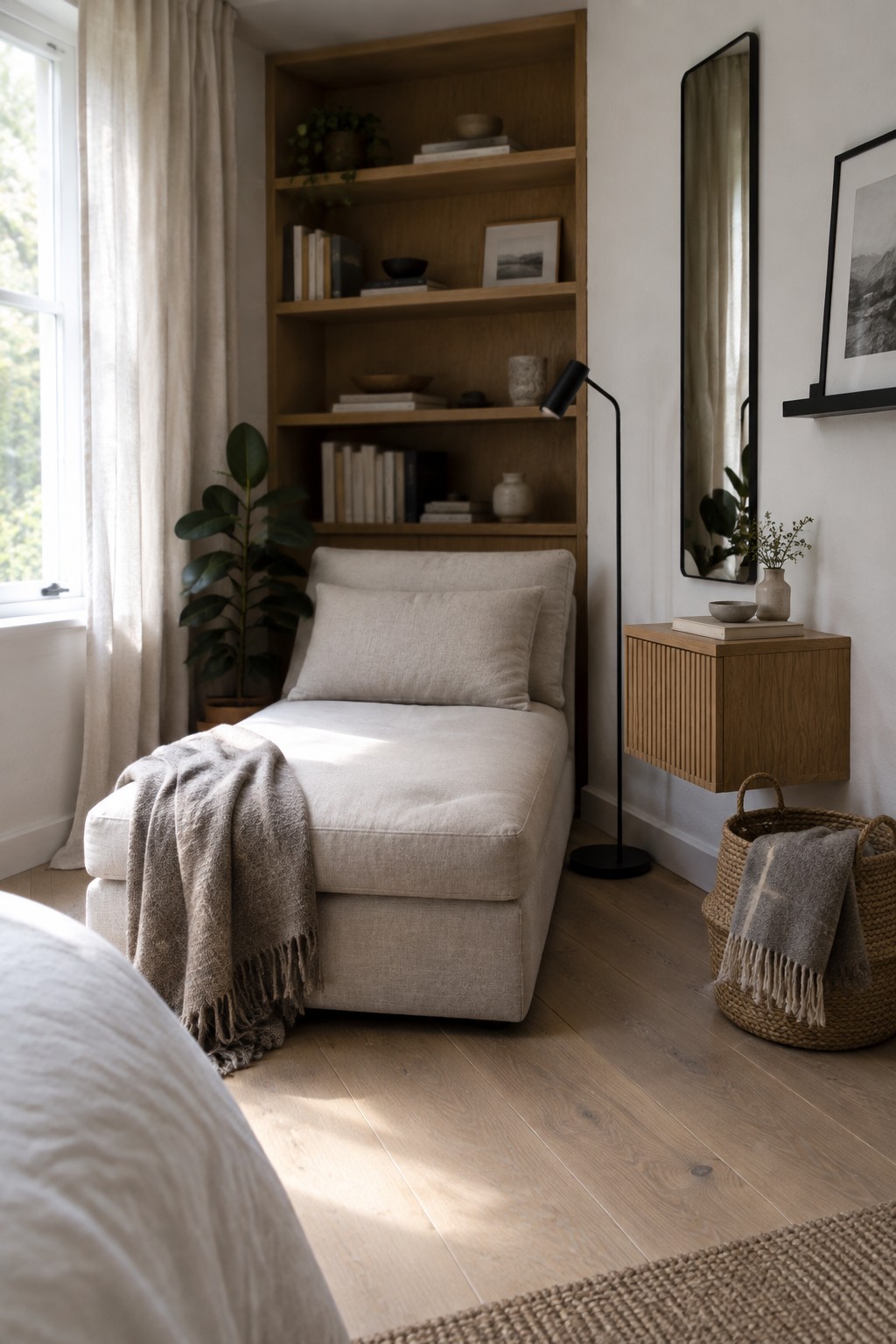
A chaise lounge can be a simple fix for bedrooms where the corner feels wasted. It sits low and long, so it fills the space without blocking light or making the room feel smaller. The built-in shelves above it turn the same spot into storage without needing extra furniture.
This setup works best in rooms with odd angles or limited floor space. Keep the chaise in a light fabric so it does not dominate, and use the shelves for books or a few small items. It gives you a quiet place to sit without taking over the whole room.
Curved Daybeds For Awkward Bedroom Corners
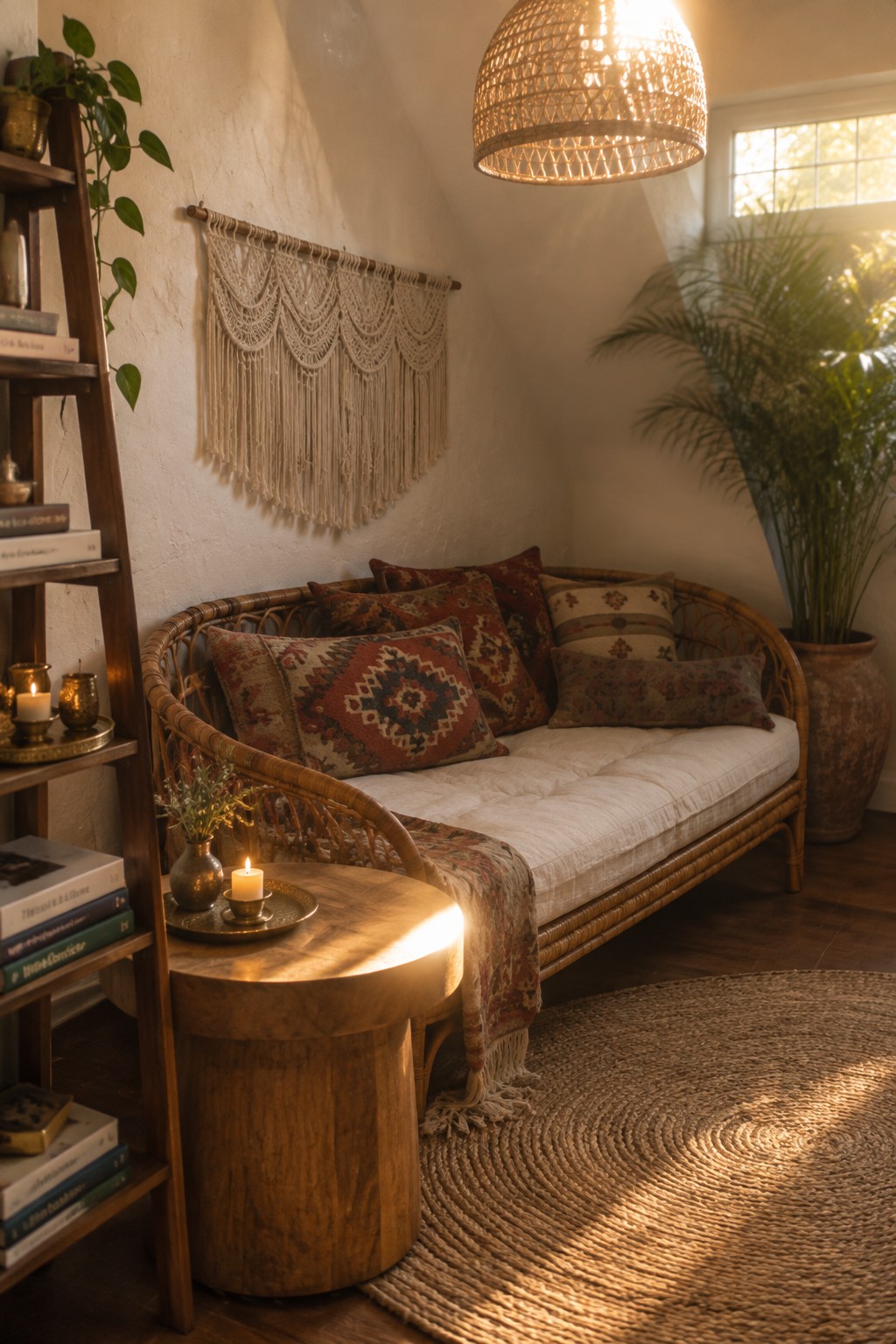
A curved daybed solves the problem of corners that feel too tight or oddly shaped. The rounded frame follows the wall instead of pushing against it, which makes the whole area feel more open and usable.
This setup works best in bedrooms with slanted ceilings or small nooks where a standard bed or sofa would crowd the space. Pair it with a low side table and soft textiles so the daybed becomes the main seating spot without needing much else around it.
Built-In Corner Desks For Awkward Bedroom Angles
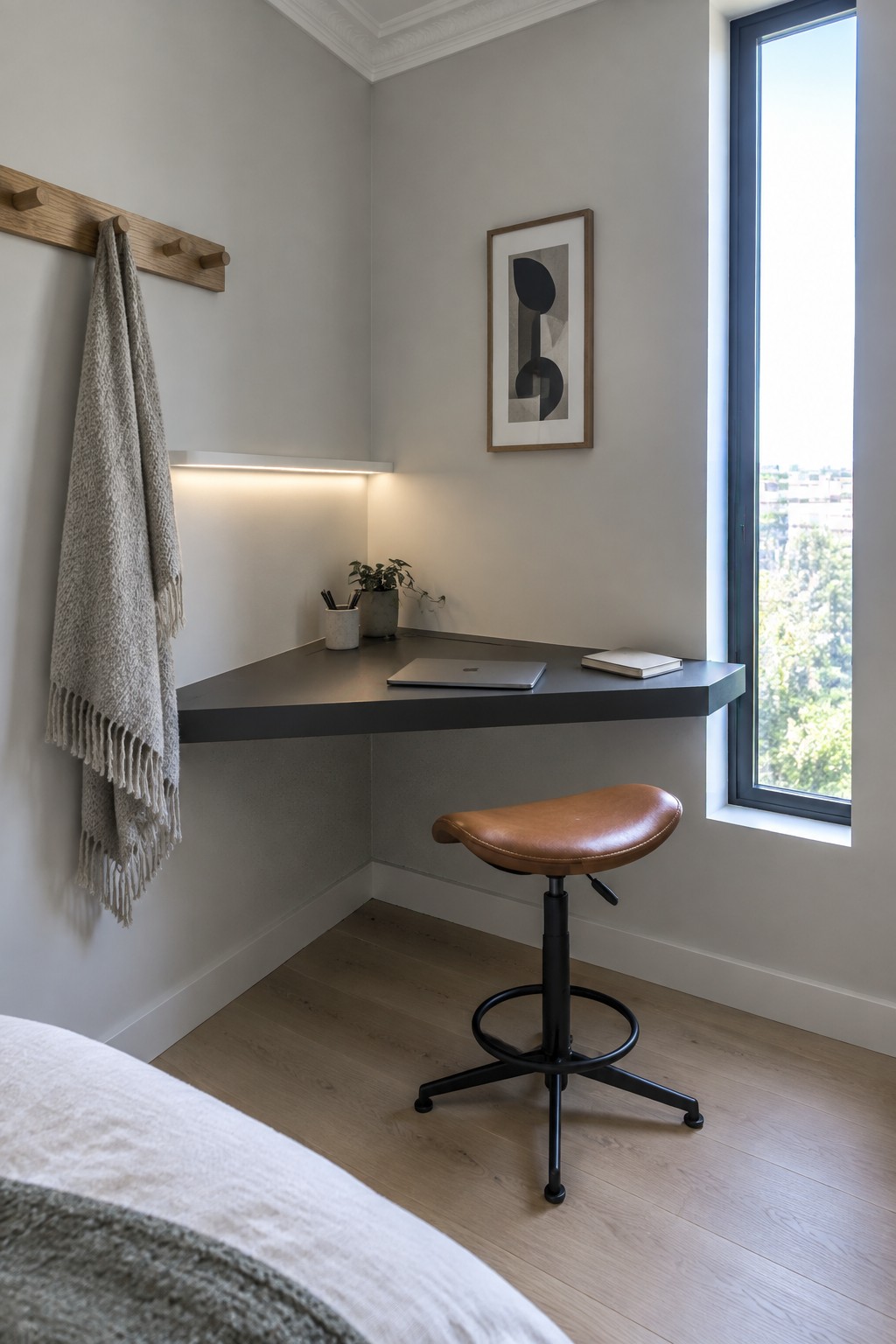
A floating desk set into a corner gives you a workspace without eating up floor space that a regular desk would need. It works especially well in bedrooms where the walls meet at odd angles or where you only have a narrow strip left after the bed is placed.
This approach suits smaller rooms or guest bedrooms that double as offices. Keep the top fairly clear and choose a stool that slides underneath so the area stays open when you are not using it. A simple wall light above the desk helps keep the surface free of extra lamps.
A Narrow Vanity Makes the Most of Corner Space
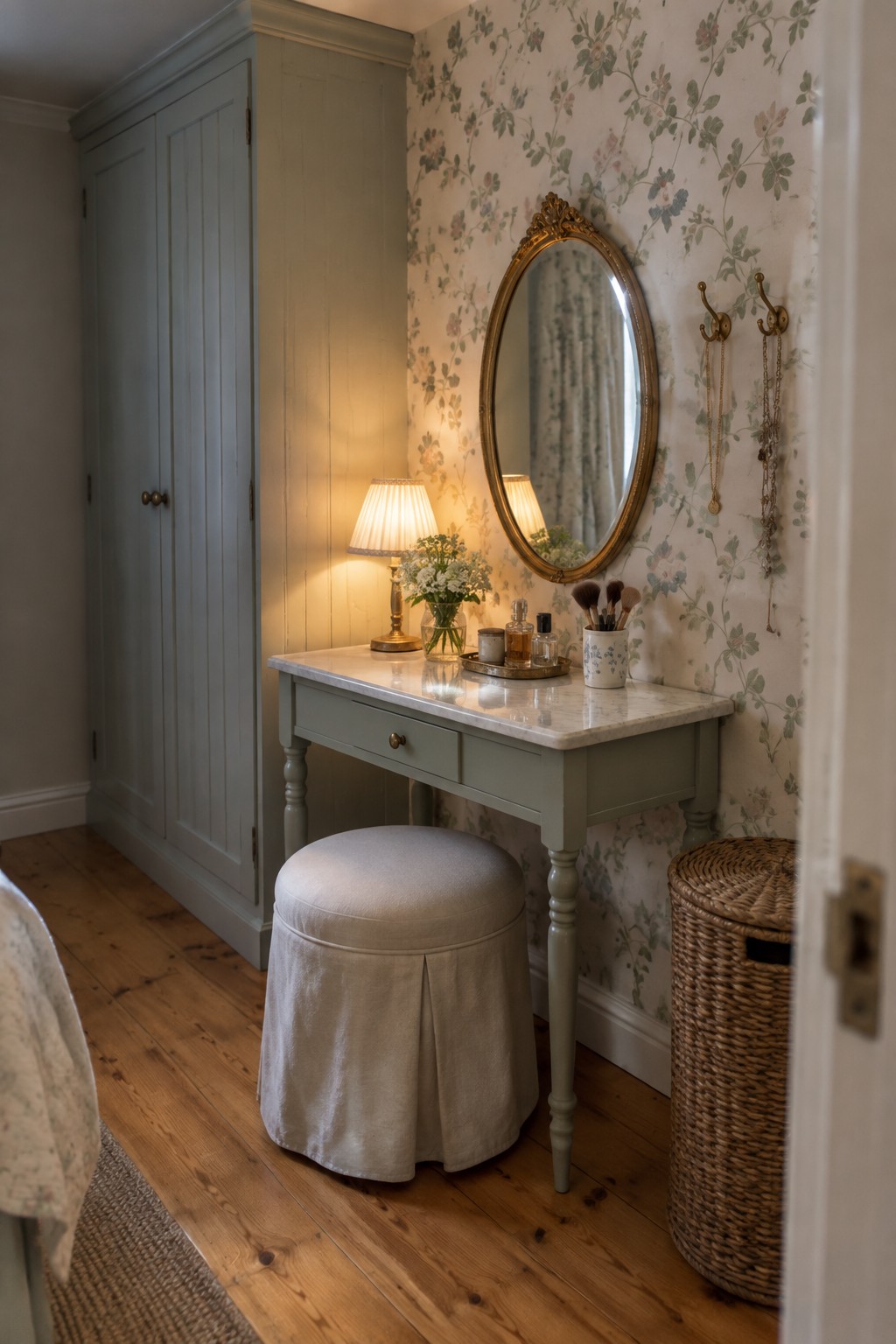
Many bedrooms leave you with an awkward corner that feels too tight for a full dresser or desk. A slim vanity table with turned legs slips in neatly and gives you a spot to sit and get ready without crowding the room.
The low stool tucks right underneath when you are done, so the floor stays clear. This setup suits older homes or smaller bedrooms where built-in storage is limited and every bit of usable wall space counts.
Built-In Corner Benches Add Storage Without Taking Up Floor Space
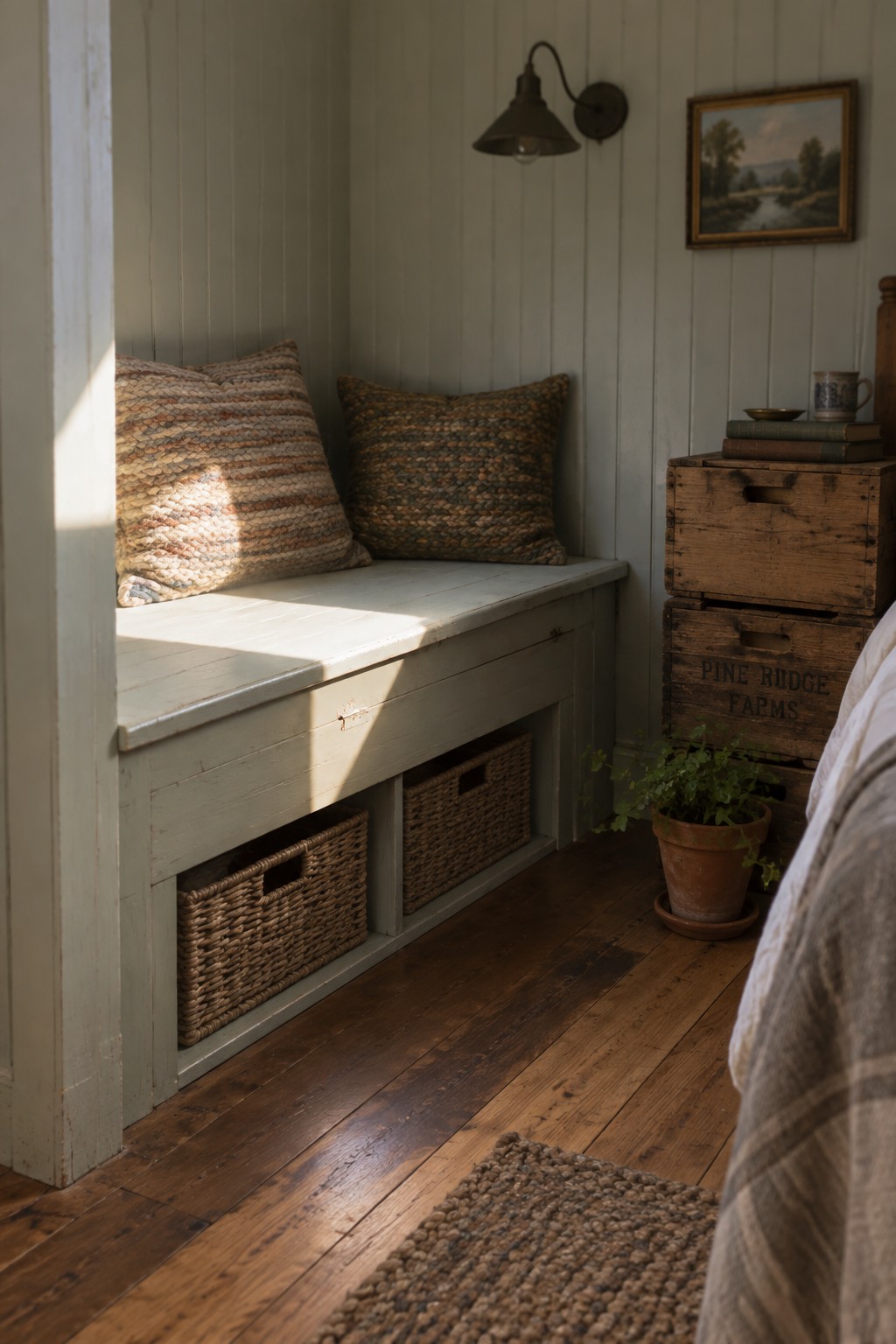
A built-in bench in a bedroom corner turns an awkward spot into something useful. It gives you a place to sit while the open space underneath holds baskets or crates for extra blankets and clothes.
This works well in older homes or smaller rooms where regular furniture leaves wasted gaps. Keep the bench low and simple so it fits the scale of the room without crowding the walkway.
Corner Cabinets That Fit Awkward Angles
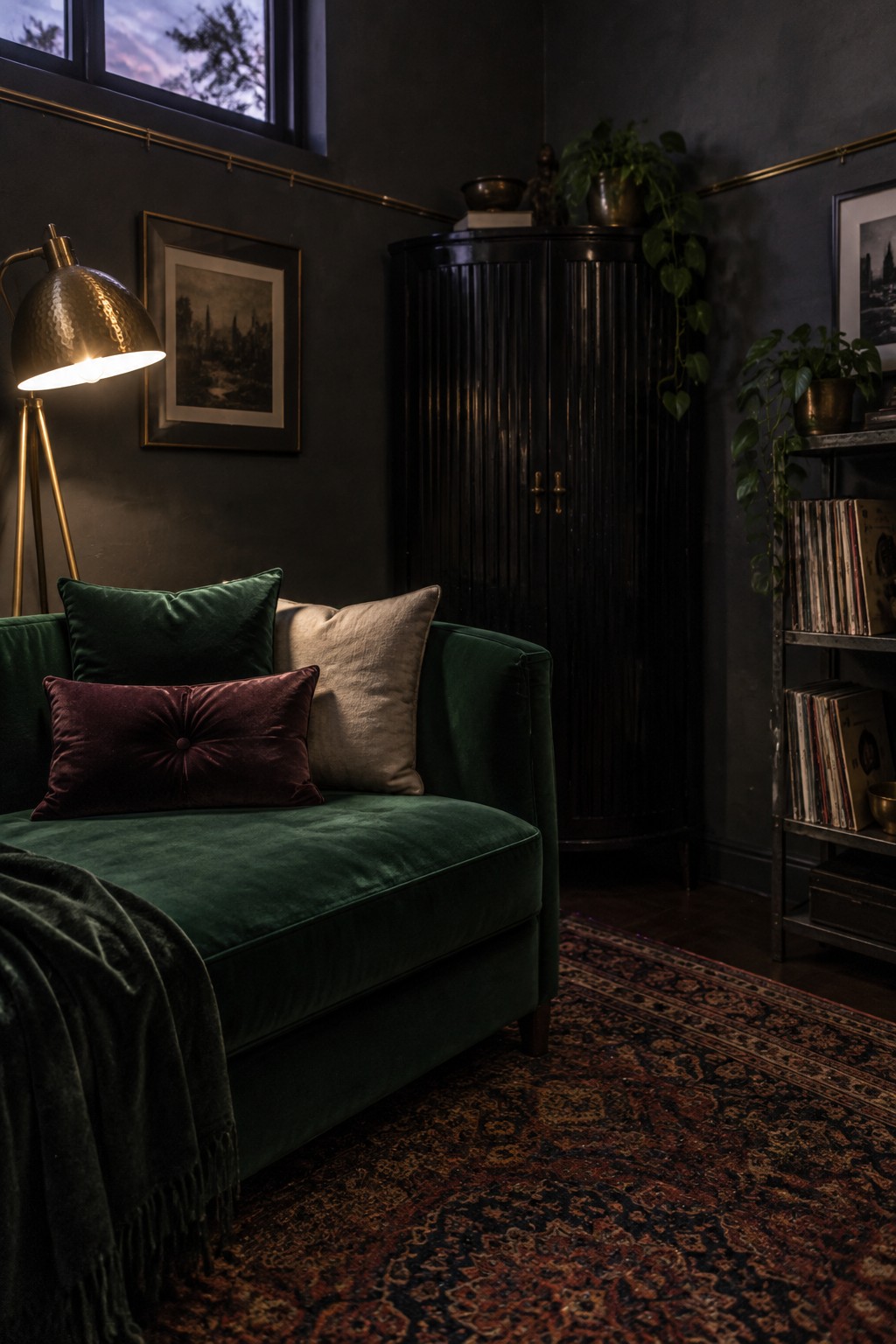
A tall corner cabinet can turn a useless angle into real storage without eating up floor space. The curved front lets it sit tight against two walls, which keeps the rest of the room open for a bed or seating.
This works best in older homes or small bedrooms where standard dressers leave odd gaps. Choose one with doors rather than open shelves if you want the space to feel calmer, and keep the top clear or add just a plant or two.
Built-In Corner Benches For Awkward Bedroom Layouts
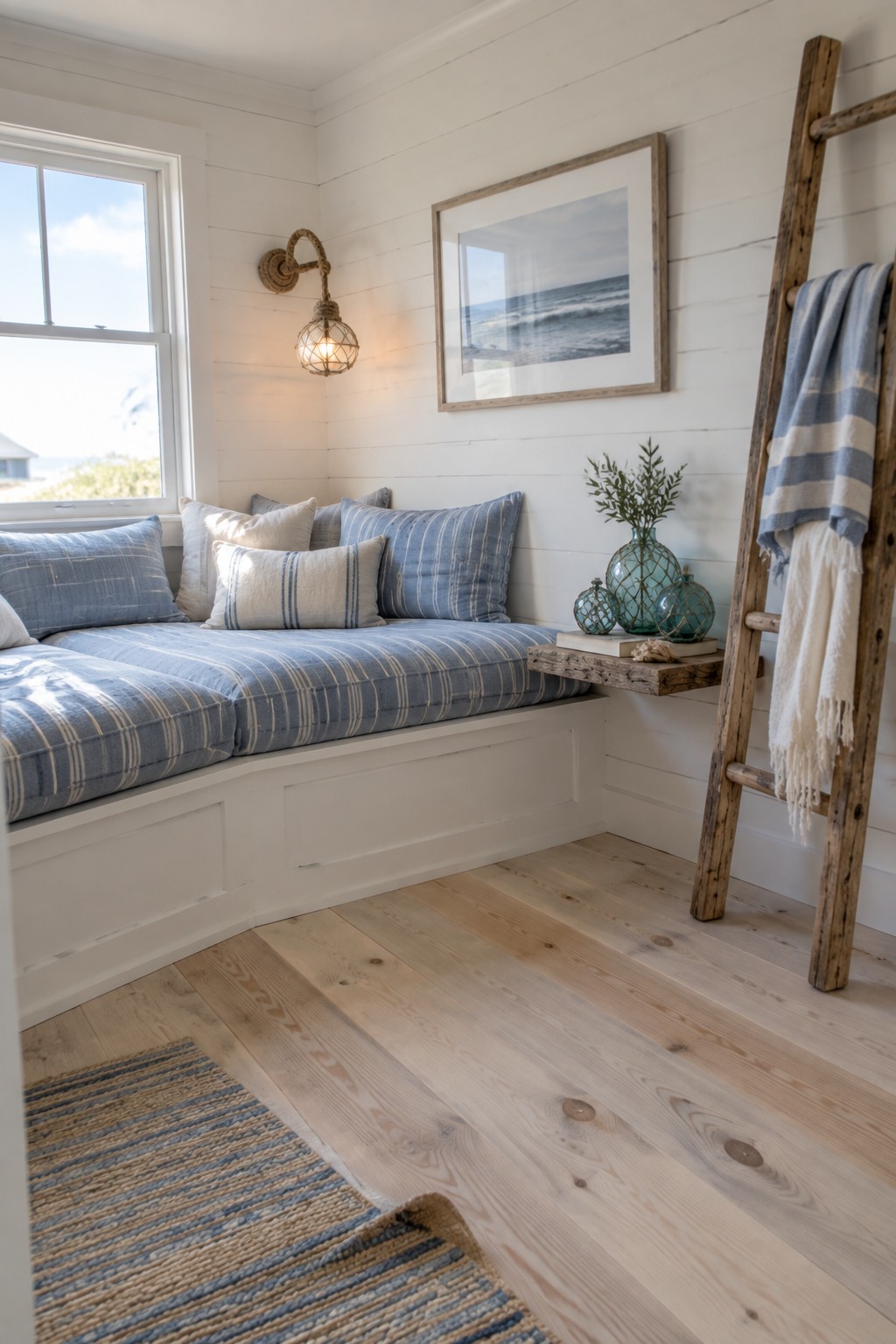
A built-in bench makes good use of a corner that would otherwise sit empty. It turns the space into a window seat or a quiet spot to read, and the storage underneath keeps extra blankets or pillows out of sight.
This setup works best in smaller bedrooms or older homes where the walls do not meet at clean right angles. Keep the cushions in light colors and simple patterns so the bench does not crowd the room.
Low Platform Beds For Awkward Bedroom Corners
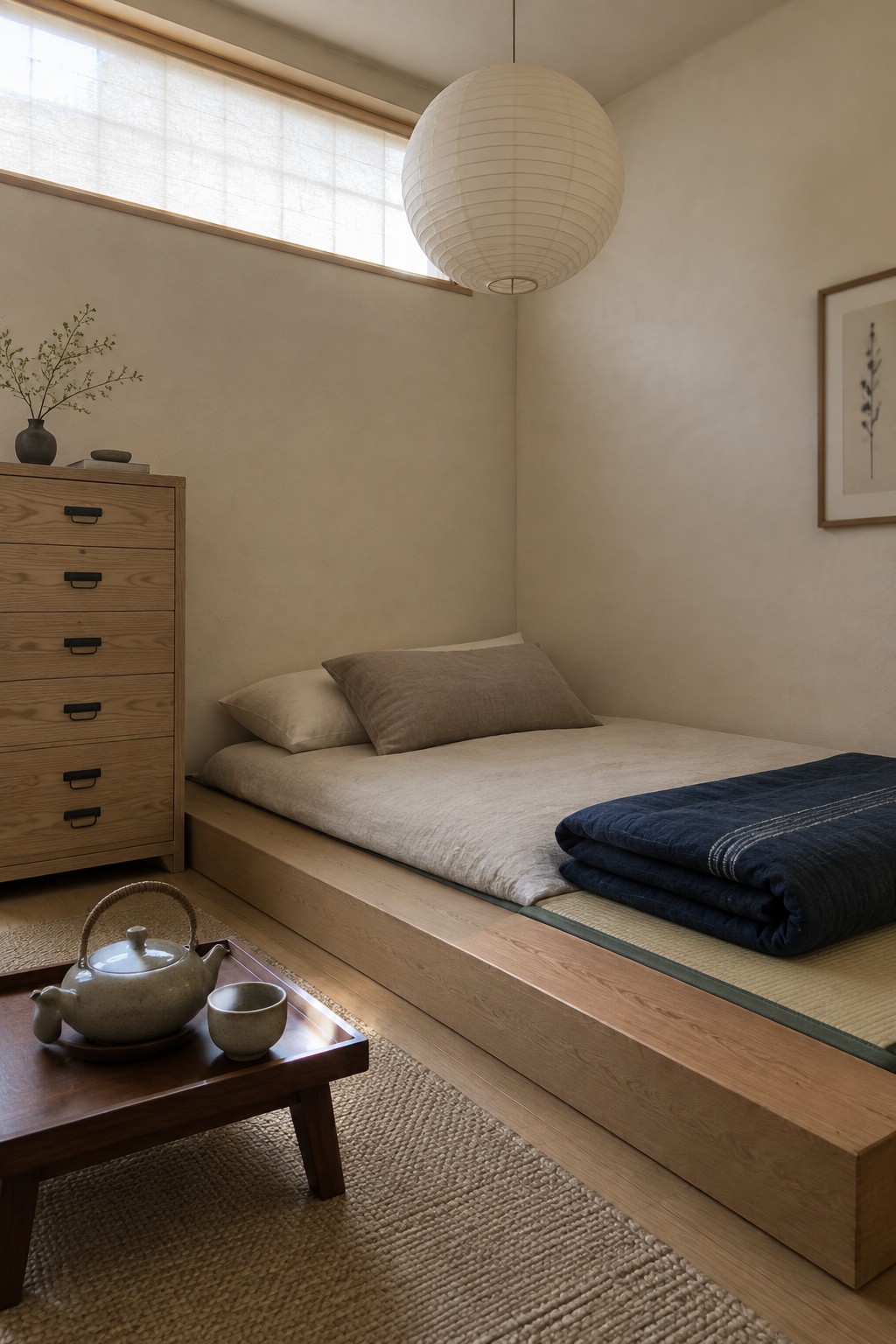
A low platform bed built into the corner gives you a clean way to use space that often gets wasted in bedrooms with odd layouts. The raised wooden base tucks right against two walls, so the bed does not float in the middle of the room or leave awkward gaps on either side.
This setup works best in smaller bedrooms or rooms where standard frames feel too bulky. Keep the platform simple and low, and choose bedding in soft neutral tones so the corner feels calm rather than crowded. Just check that the height lines up with your mattress so the whole thing stays balanced.
Corner Desk With Overhead Shelves
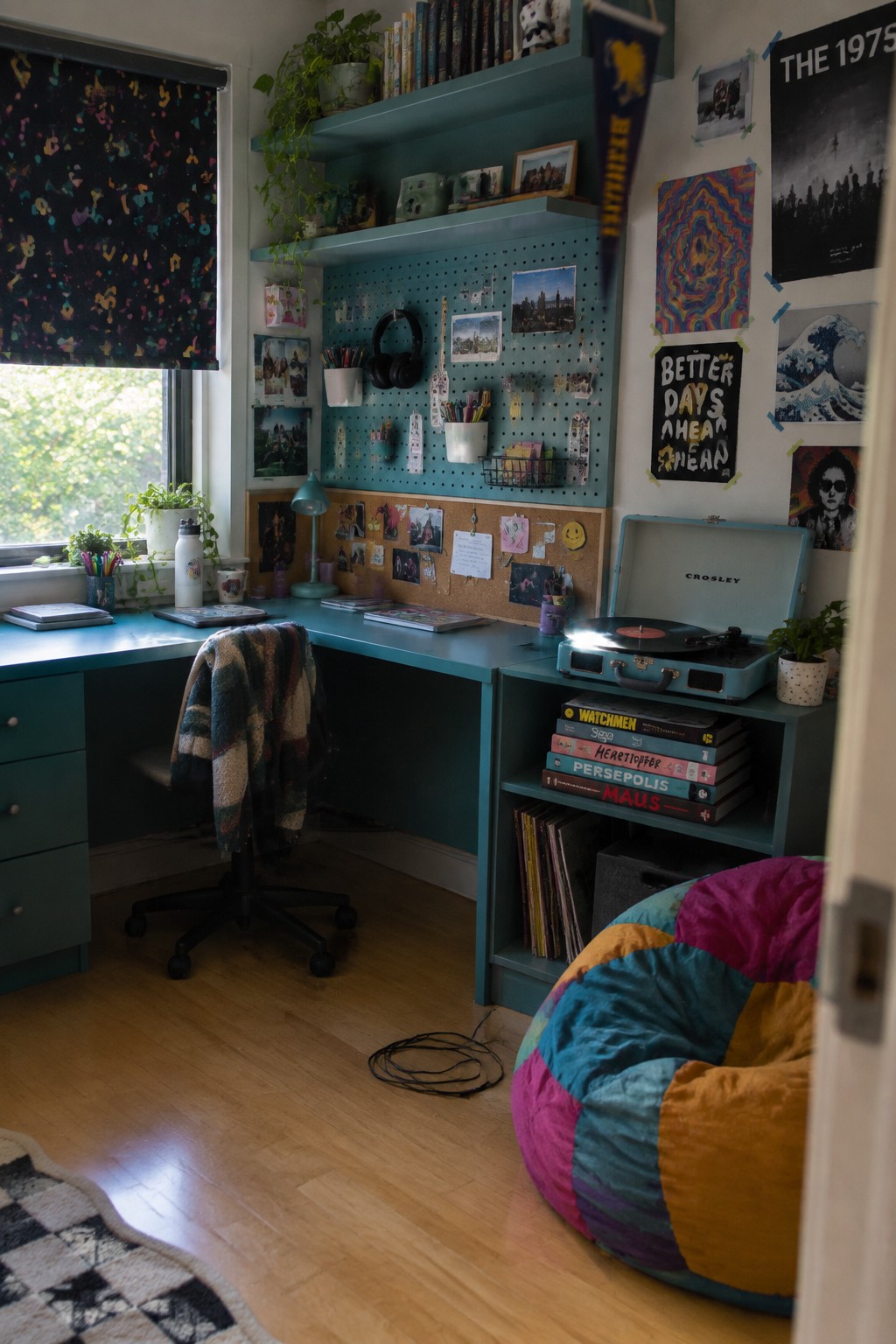
A corner desk that reaches up the wall is one of the simplest ways to handle an awkward bedroom layout. It turns unused space into a real workspace while keeping the floor clear for movement. The shelves above hold books and supplies, and the pegboard keeps smaller items within reach without adding clutter.
This works best in smaller bedrooms where you need both a desk and storage but do not have room for separate pieces. It suits teens or anyone who wants a single spot for schoolwork or hobbies. Just make sure the desk depth leaves enough walking room around the corner.
Rounded Vanities Work Well in Tight Corners
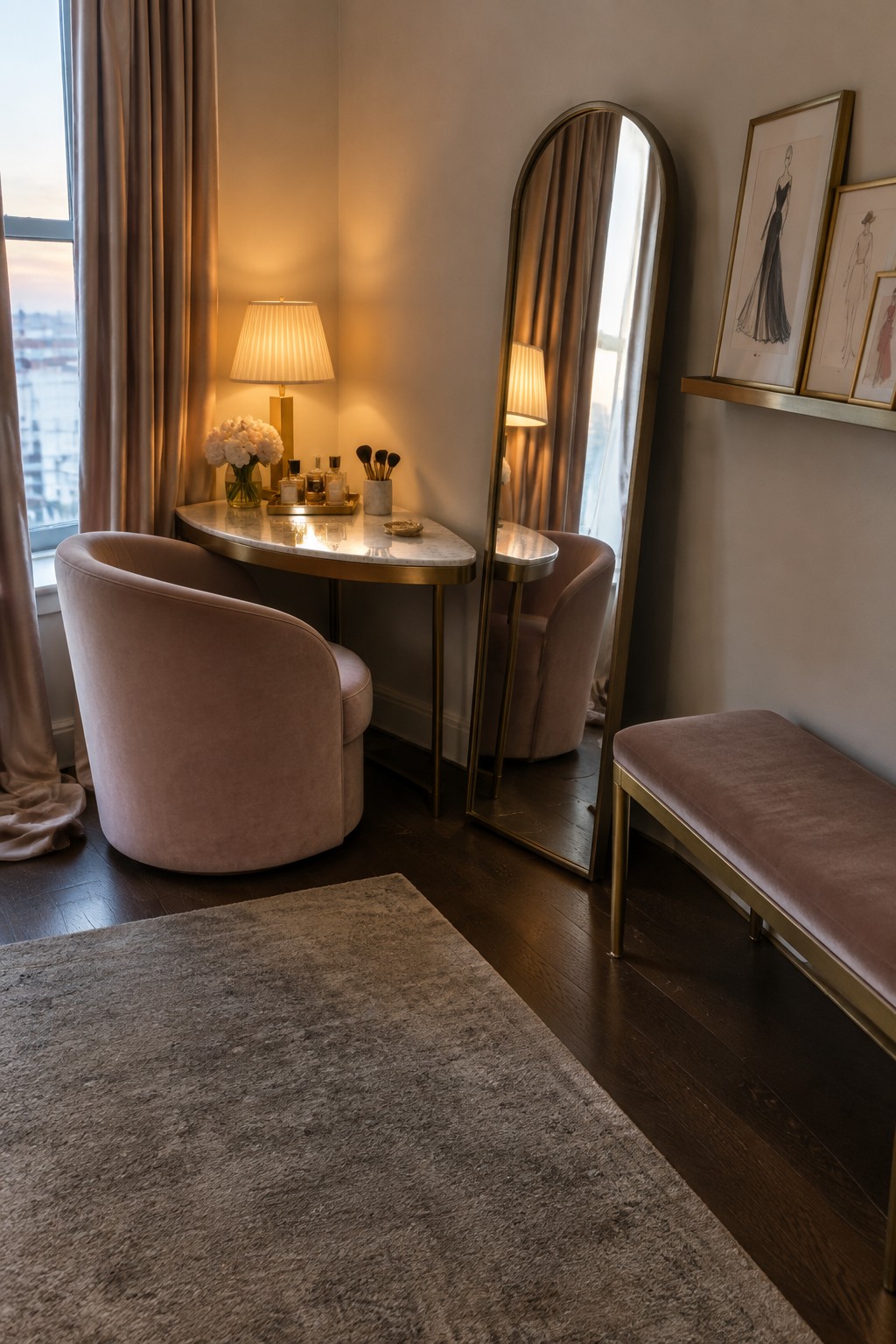
A vanity with a soft curved edge can sit neatly in a bedroom corner where a square table would crowd the space. The rounded shape leaves more room to walk past and avoids the harsh lines that often make odd angles feel even tighter.
This setup suits smaller bedrooms or rooms with slanted walls. Keep the chair low and simple so the whole arrangement stays compact and does not block light from the window.
Corner Desk Setup For Awkward Bedroom Angles
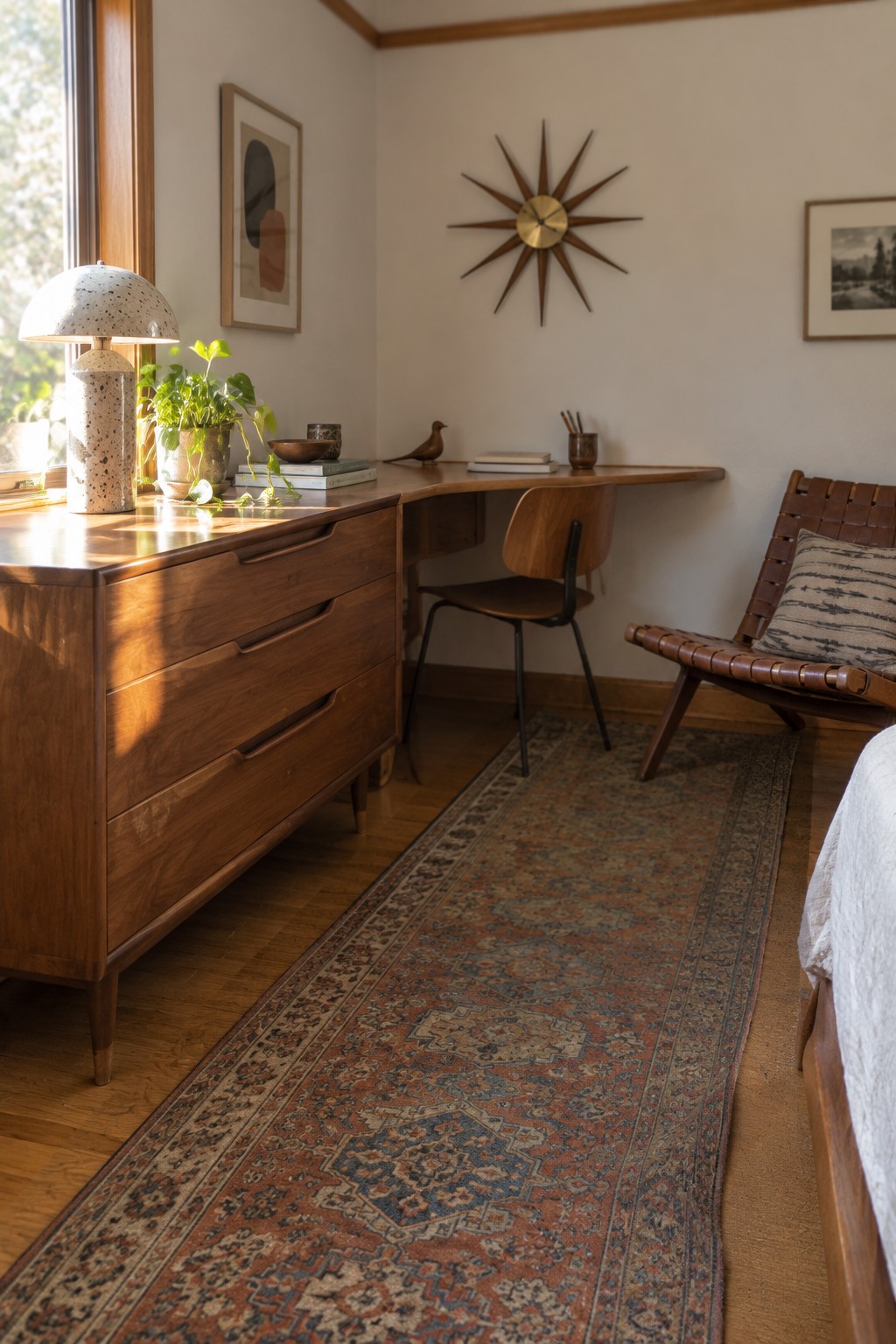
A corner desk makes good use of space that often gets ignored in bedrooms with uneven walls or tight layouts. Instead of forcing a standard desk against one wall, the angled placement tucks neatly into the corner and leaves the rest of the floor open.
This approach works best in smaller rooms or older homes where straight furniture lines feel cramped. Keep the desk surface clear and pair it with a slim chair so the area stays functional without blocking movement around the bed.
A Tall Wardrobe In The Corner
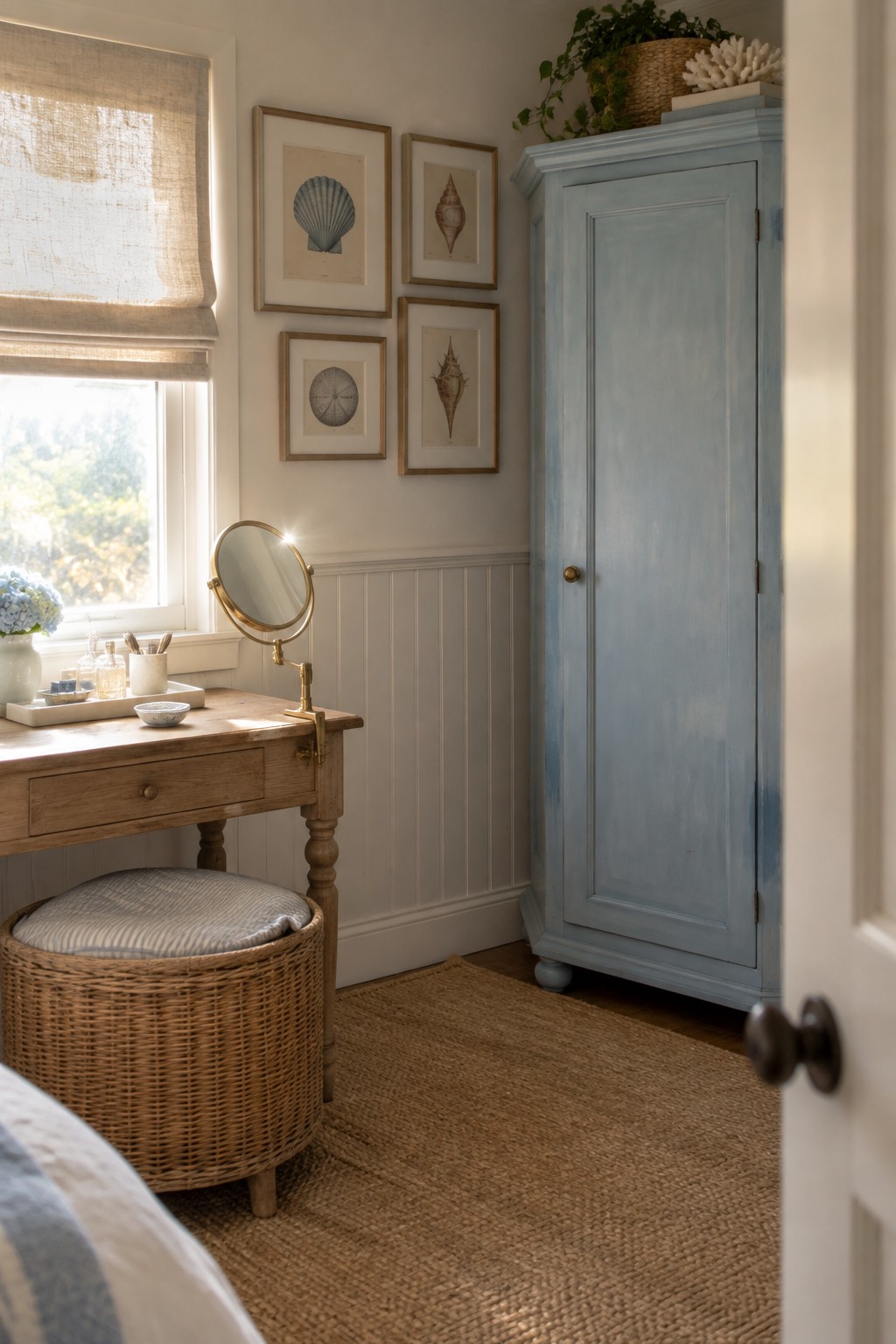
Many bedrooms leave an awkward empty corner that never seems to fit standard furniture. A tall wardrobe placed there uses the full height of the room for storage while taking up very little floor space. This keeps the room feeling open and gives you a place to tuck away clothes, linens, or extra items without adding more pieces along the walls.
This setup works best in smaller bedrooms or rooms with uneven layouts. Look for a wardrobe that is fairly narrow in depth so it does not jut out too far. Pair it with lower furniture nearby, like a simple vanity, to balance the height and keep the corner from feeling heavy.
A Rounded Chair For Awkward Bedroom Corners
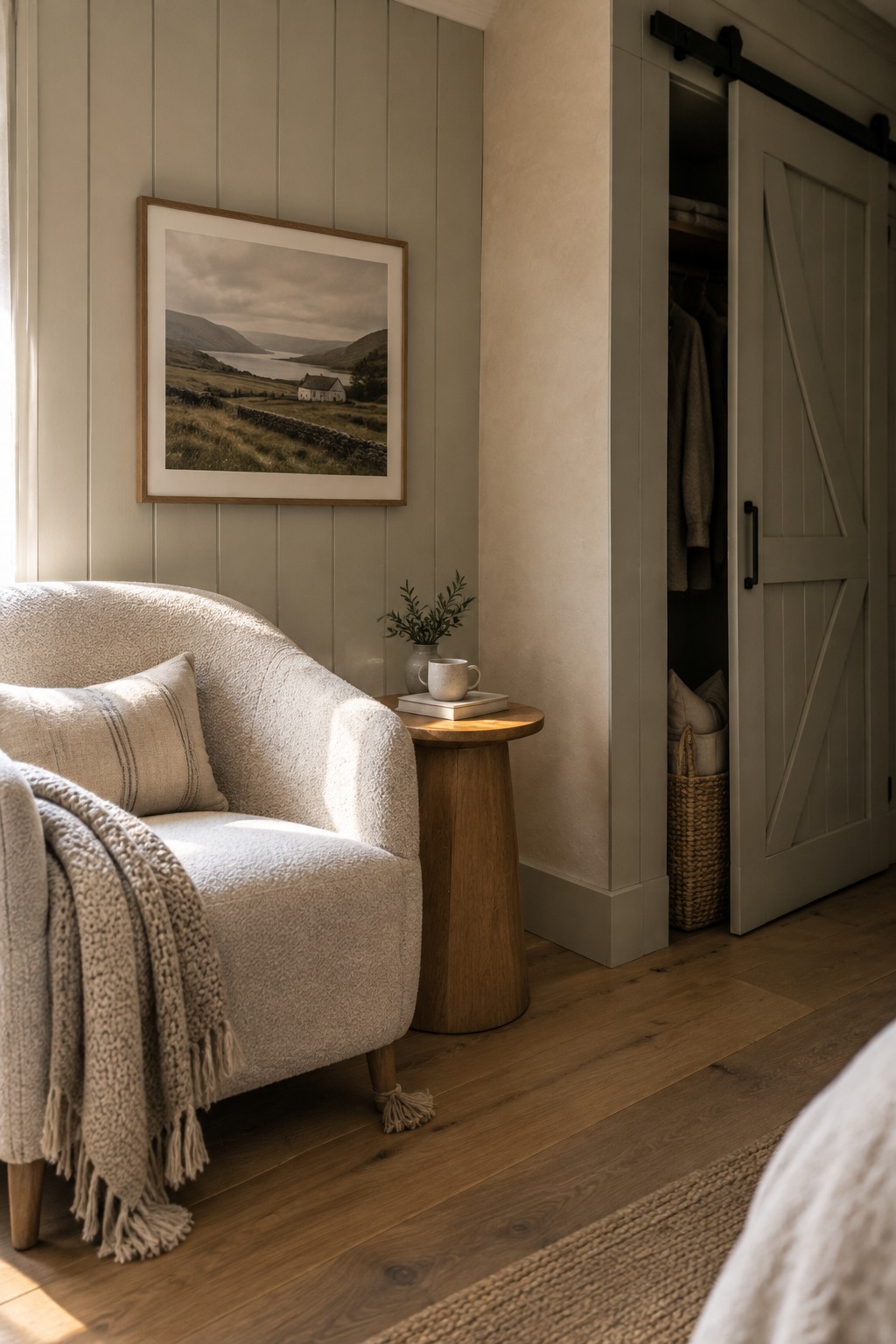
Many bedrooms have corners that feel too tight for standard furniture. A rounded armchair with a small pedestal table slips in neatly and turns that leftover space into a quiet spot to sit.
This works best in rooms where the layout leaves an odd gap near a closet or window. Choose a chair with a soft shape and keep the table low and simple so the corner stays open and easy to walk around.
Corner Vanities For Awkward Bedroom Corners
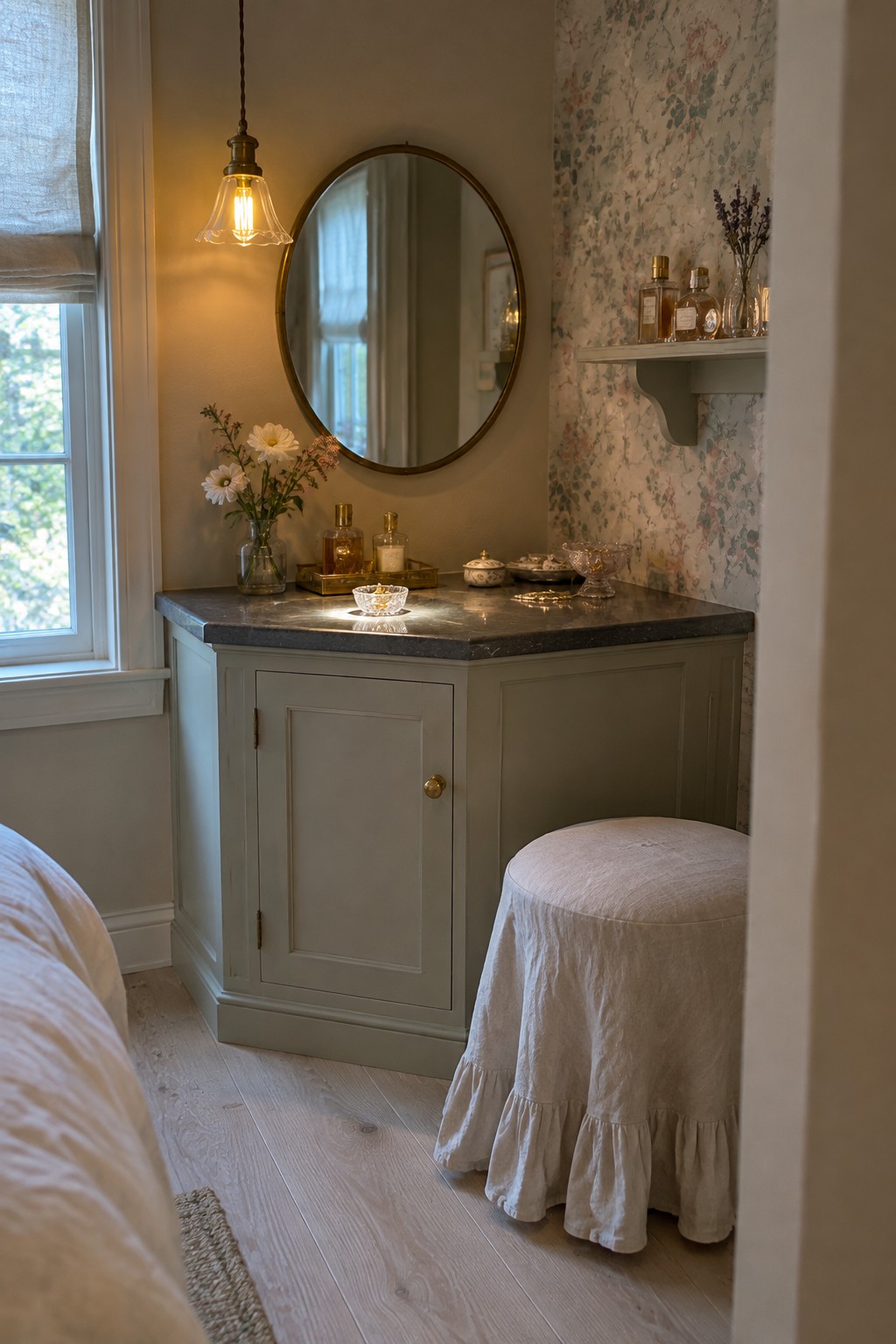
Many bedrooms have corners that feel wasted because standard furniture does not fit well. A fitted corner cabinet with a vanity top solves this by using the space right up to the walls and keeping the floor clear in front.
This approach works best in smaller rooms or older homes where angles are not square. Keep the top simple, add a round mirror above, and choose a stool that tucks in when not needed.
Corner Desk With Floating Shelves
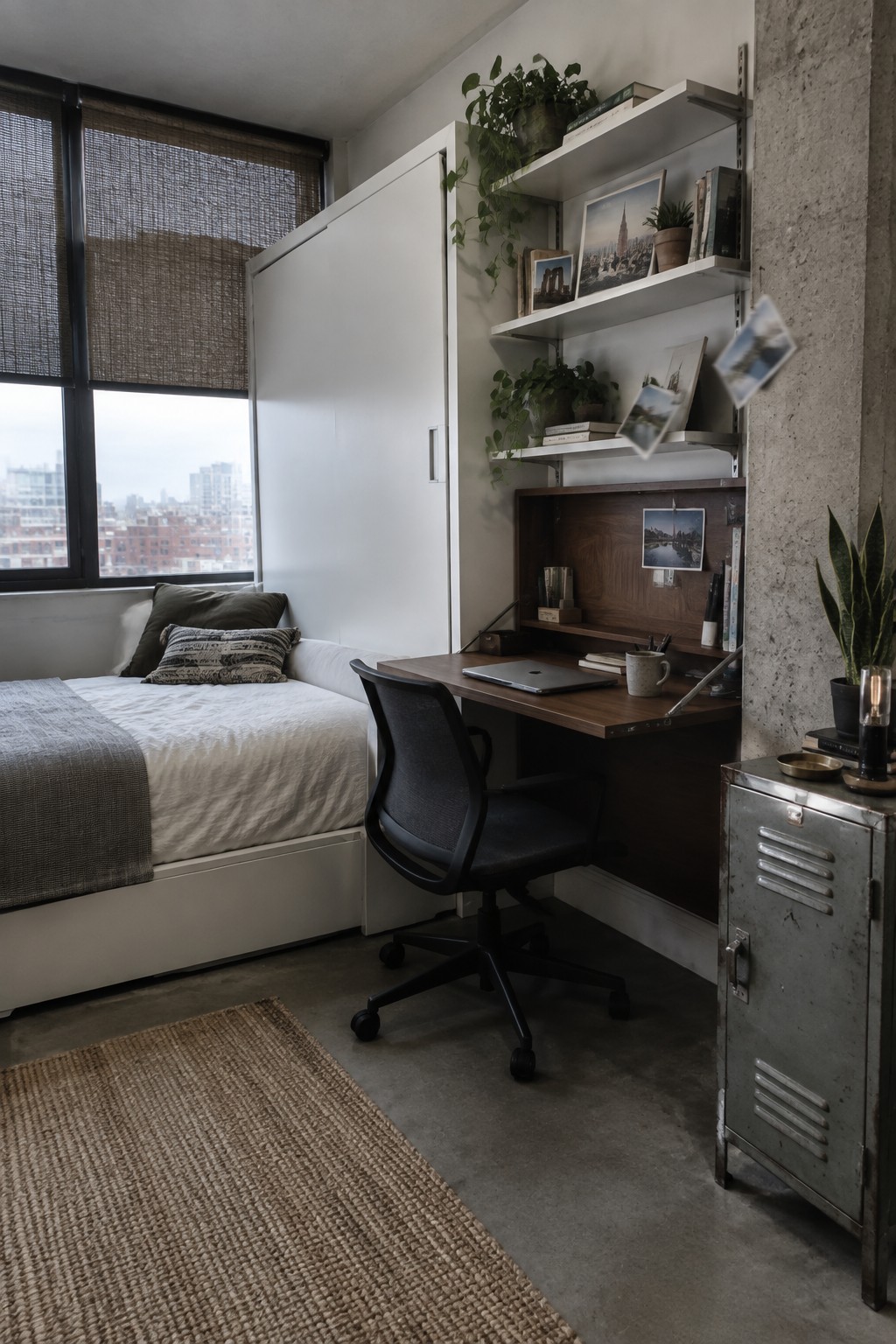
One simple way to deal with an awkward bedroom corner is to slide a small desk underneath a row of floating shelves. This keeps the floor open and turns unused wall space into storage for books, plants, and small items without crowding the room.
It suits smaller bedrooms where floor space is limited. Keep the desk shallow and the shelves at a comfortable height so the area stays practical and easy to reach.
Frequently Asked Questions
Q: What if my corner is too narrow for a standard chair or table? A: Measure the exact width and depth first then look for slim options like a tall plant stand or a wall mounted shelf unit. These take up little floor space yet still make the area feel finished. A single chair with a low back often works if you angle it slightly toward the room.
Q: How can I add storage in an awkward corner without blocking the walkway? A: Choose a shallow cabinet or a set of open crates that sit low to the ground. Keep the top clear or add a small lamp so the spot stays practical for daily use. This setup gives you room to reach items while leaving the path open.
Q: Should I place anything next to the bed if the corner sits right beside it? A: Try a narrow nightstand or a floating shelf at bed height for books and a lamp. Make sure you leave enough room to swing your legs out easily each morning. A tall floor lamp behind the bed also works if the corner feels empty.
