

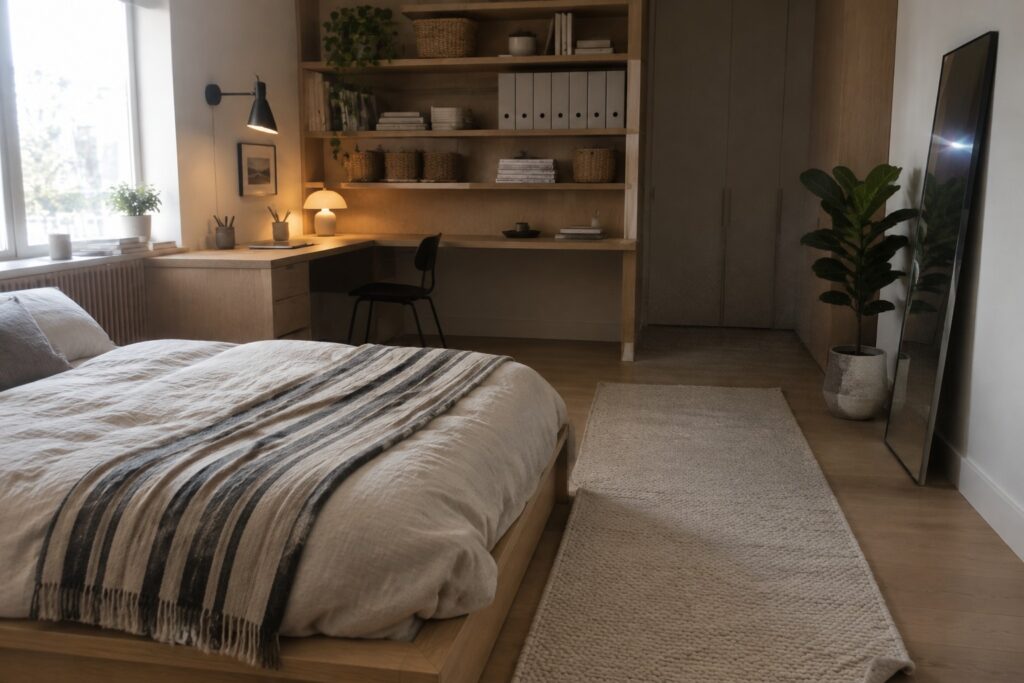
When you try to fit a workspace into a bedroom, the furniture choices decide whether the room stays restful or starts to feel crowded by the end of the day.
I have noticed that the height and finish of a desk can shift the whole mood more than most people expect.
The right storage pieces keep papers and cords out of sight so the bed area still reads as a place to unwind.
Testing a few of these setups in my own home showed me which ones hold up once daily life takes over.
Some layouts simply work better than others.
Built-Ins That Turn A Bedroom Into A Workspace
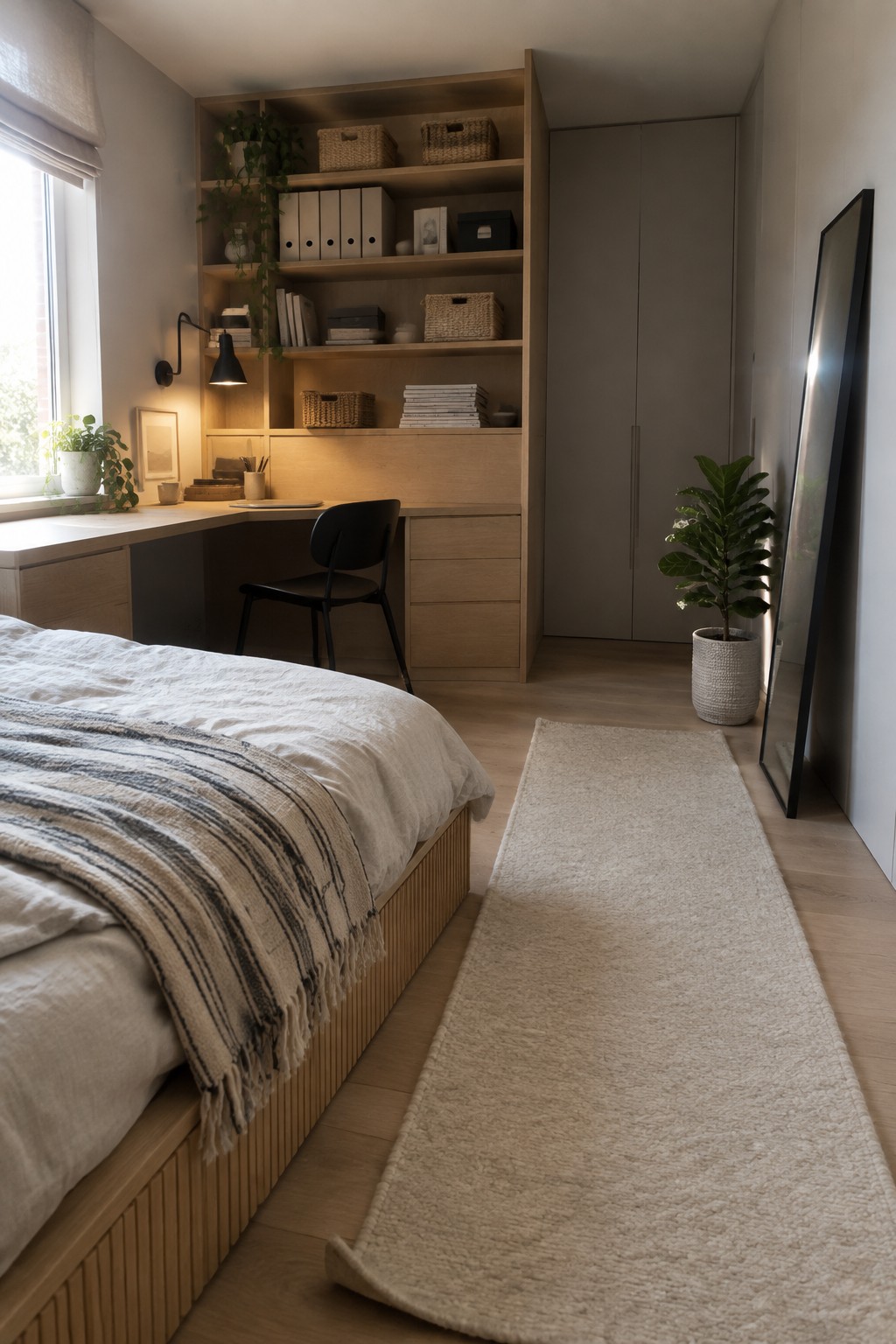
A built-in desk with open shelves above it lets a bedroom handle both sleeping and working without eating up extra floor space. The unit sits neatly along one wall so the bed and the desk share the room without fighting for attention.
This setup works well in smaller homes or guest rooms that need to serve double duty. Stick to light wood tones and keep the shelves from getting too crowded if you want the space to stay calm at night.
Positioning A Desk By The Window
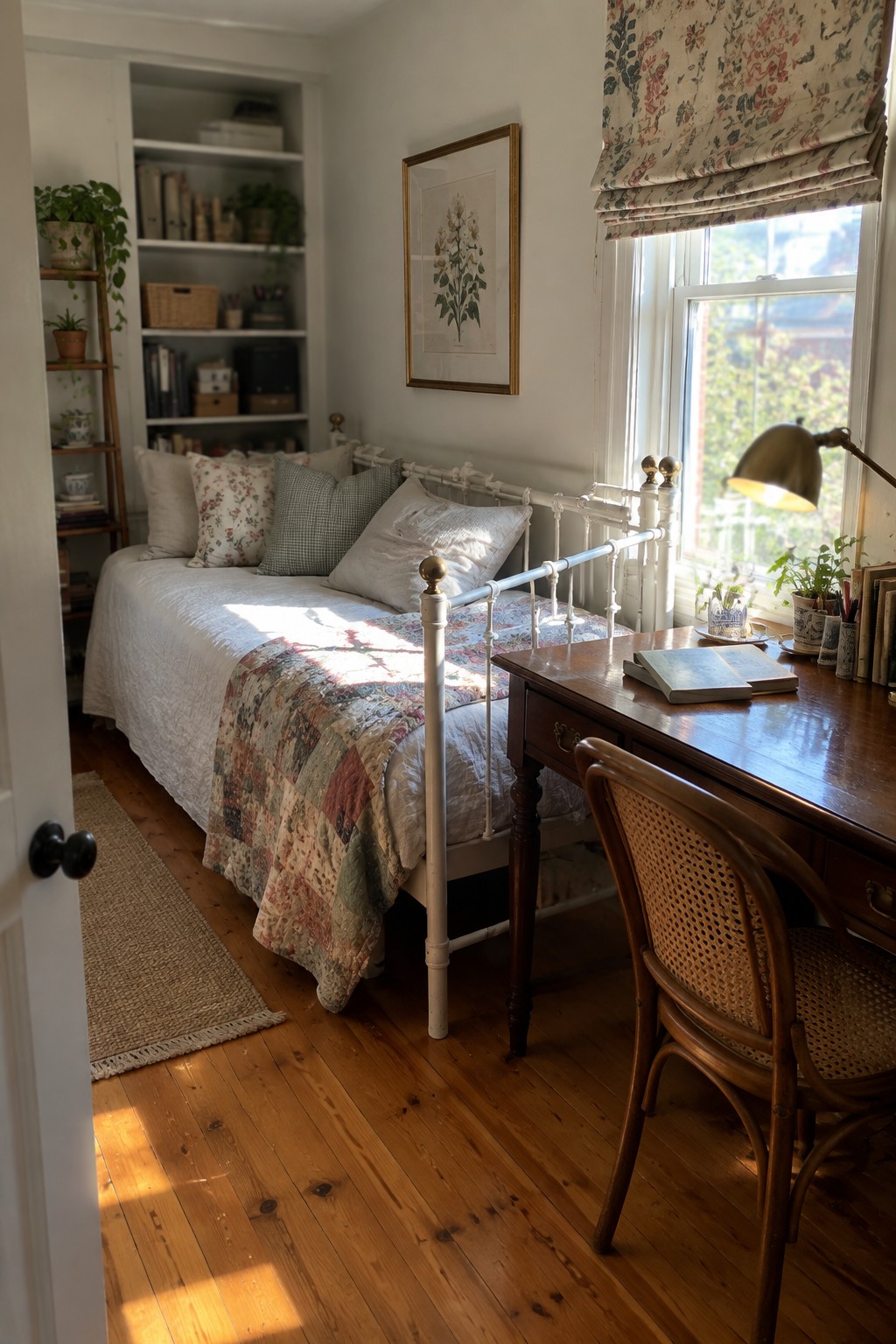
Placing a desk right by the window gives you steady natural light without needing extra lamps during the day. It turns a regular bedroom into a workable office without taking up much extra space or adding more furniture.
This setup works best in smaller homes or rooms that already feel full. Keep the desk narrow and the chair simple so the bed area still feels like the main spot in the room.
Add a Large Desk to Create a Bedroom Office
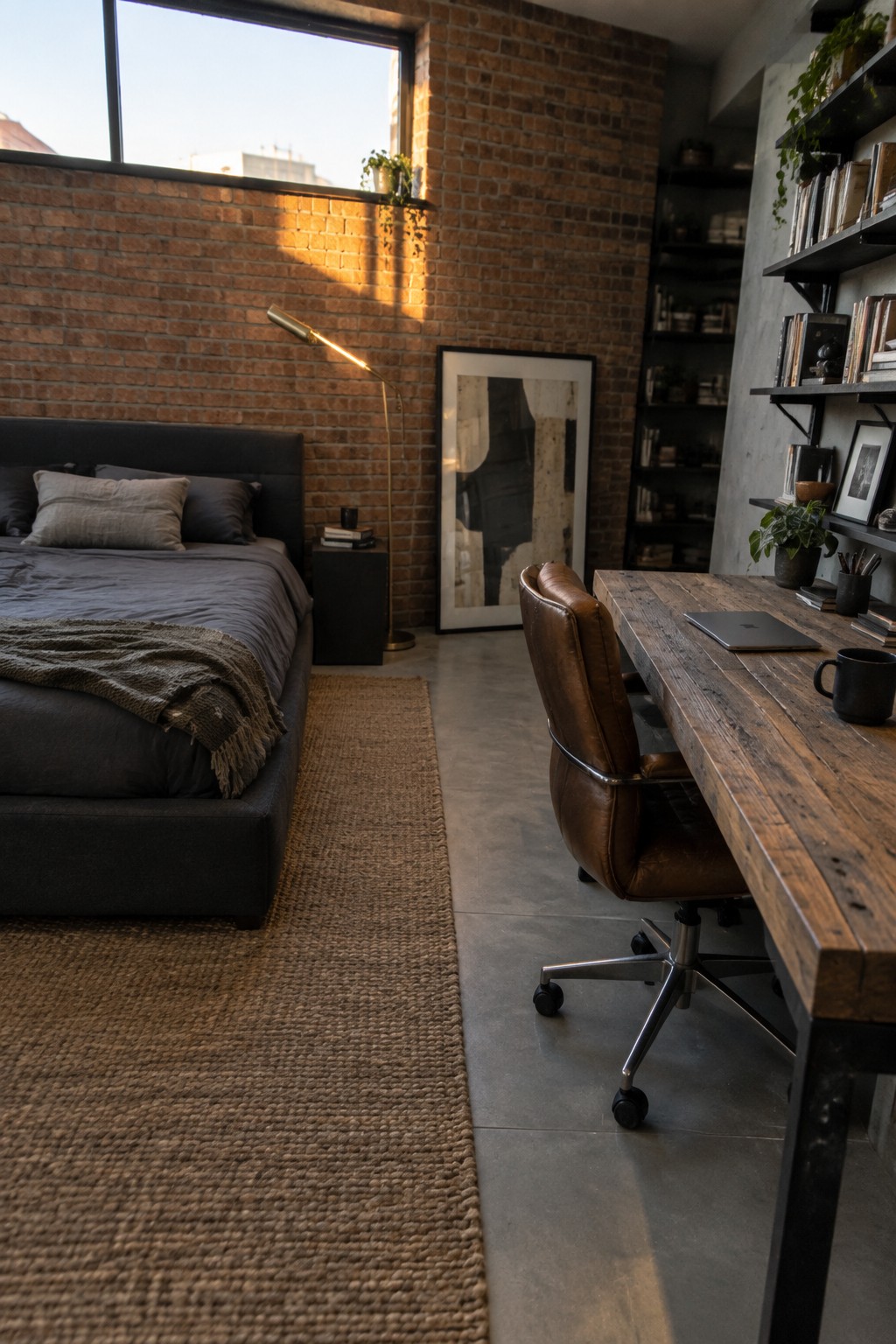
A large desk makes the office side of a bedroom feel like it belongs there instead of looking like an afterthought. It gives you actual room to work without crowding the bed or making the space feel split in two.
This setup works best in apartments or smaller homes where one room has to handle both sleeping and working. Choose a sturdy desk with a thick top and pair it with a comfortable rolling chair so you can move between the two areas without fighting for space.
Slatted Wood Dividers For Bedroom Offices
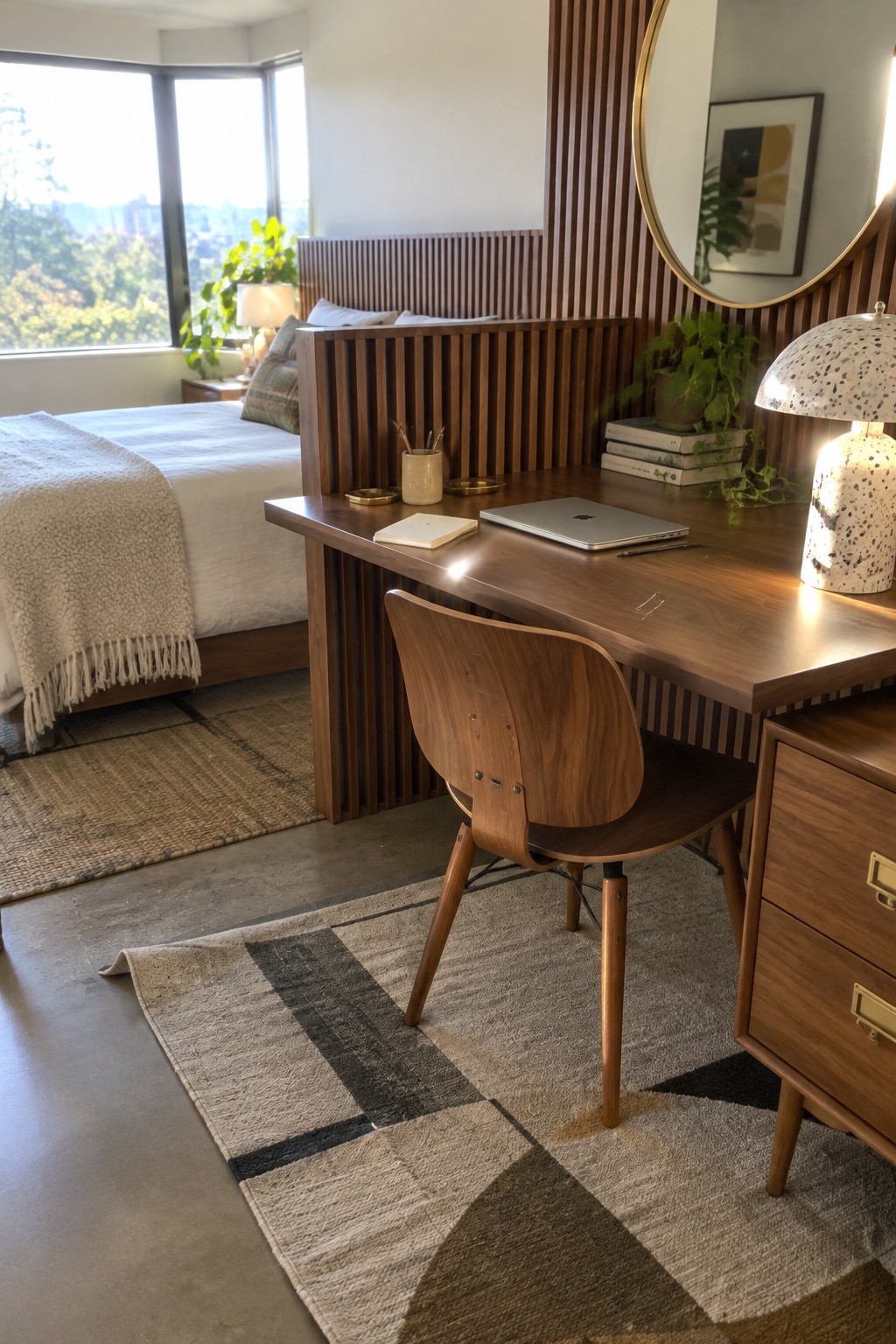
A slatted wood screen can turn a corner of the bedroom into a workable desk space without closing the room off completely. The vertical slats give just enough separation to keep the bed area feeling private while still letting light and air move through. It works especially well when the same wood tone runs through the bed frame and desk so the whole setup feels connected rather than added on.
This approach suits smaller bedrooms or apartments where a full wall would make the space feel tight. Keep the desk surface clear of too many items so the area stays calm when you are not working. Match the screen height to the headboard so it reads as one built element rather than two separate pieces.
Desk By The Window
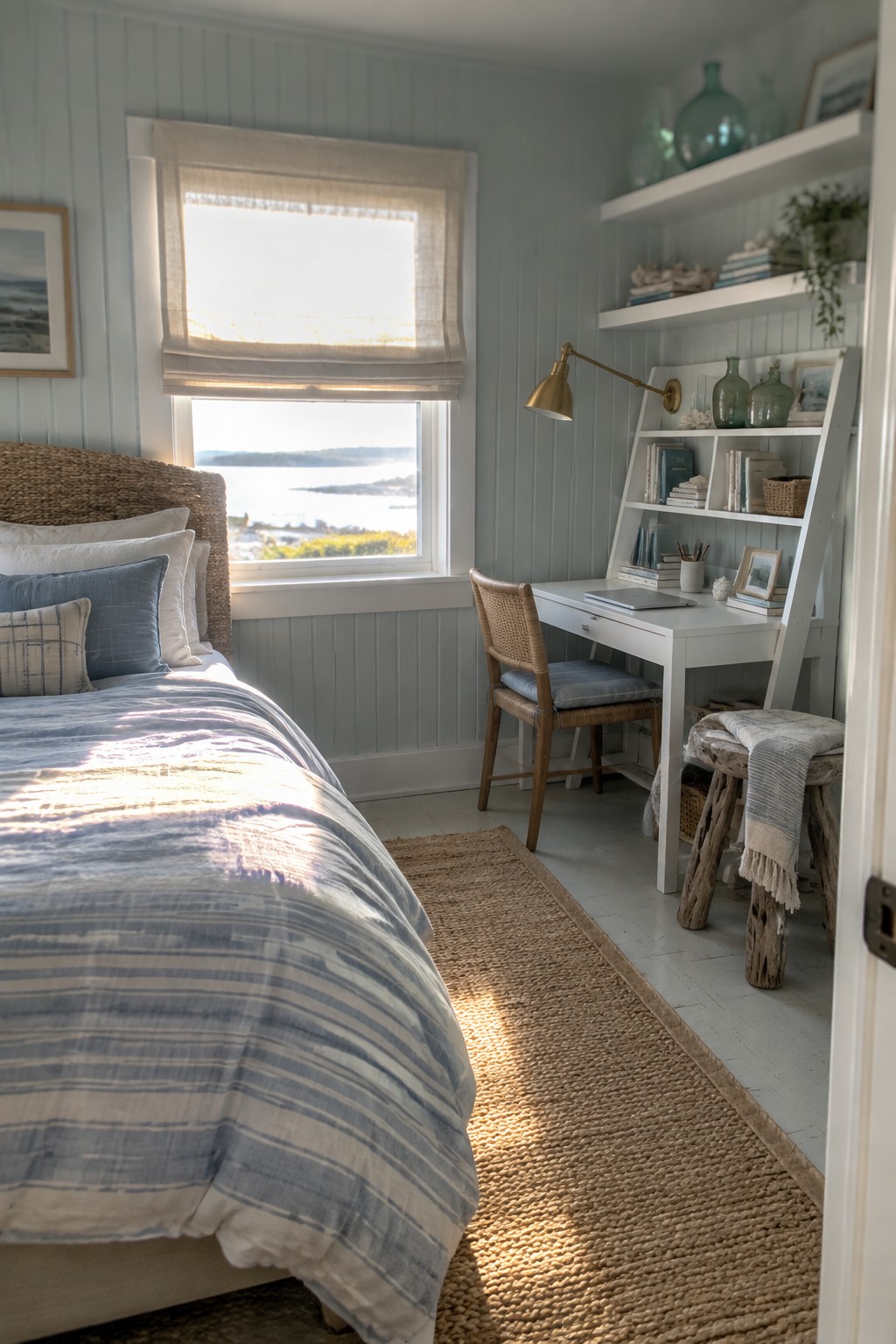
Placing a small desk right next to a bedroom window gives you a simple workspace that takes advantage of natural light without needing much extra room. The setup keeps the office area from feeling separate or bulky, and the view outside helps the space stay open during the day.
This works best in bedrooms that already have a decent window spot with some wall space beside it. Choose a narrow desk and a lightweight chair so the furniture does not block the light or crowd the bed area.
Fold Down Desks Built Into Cabinets
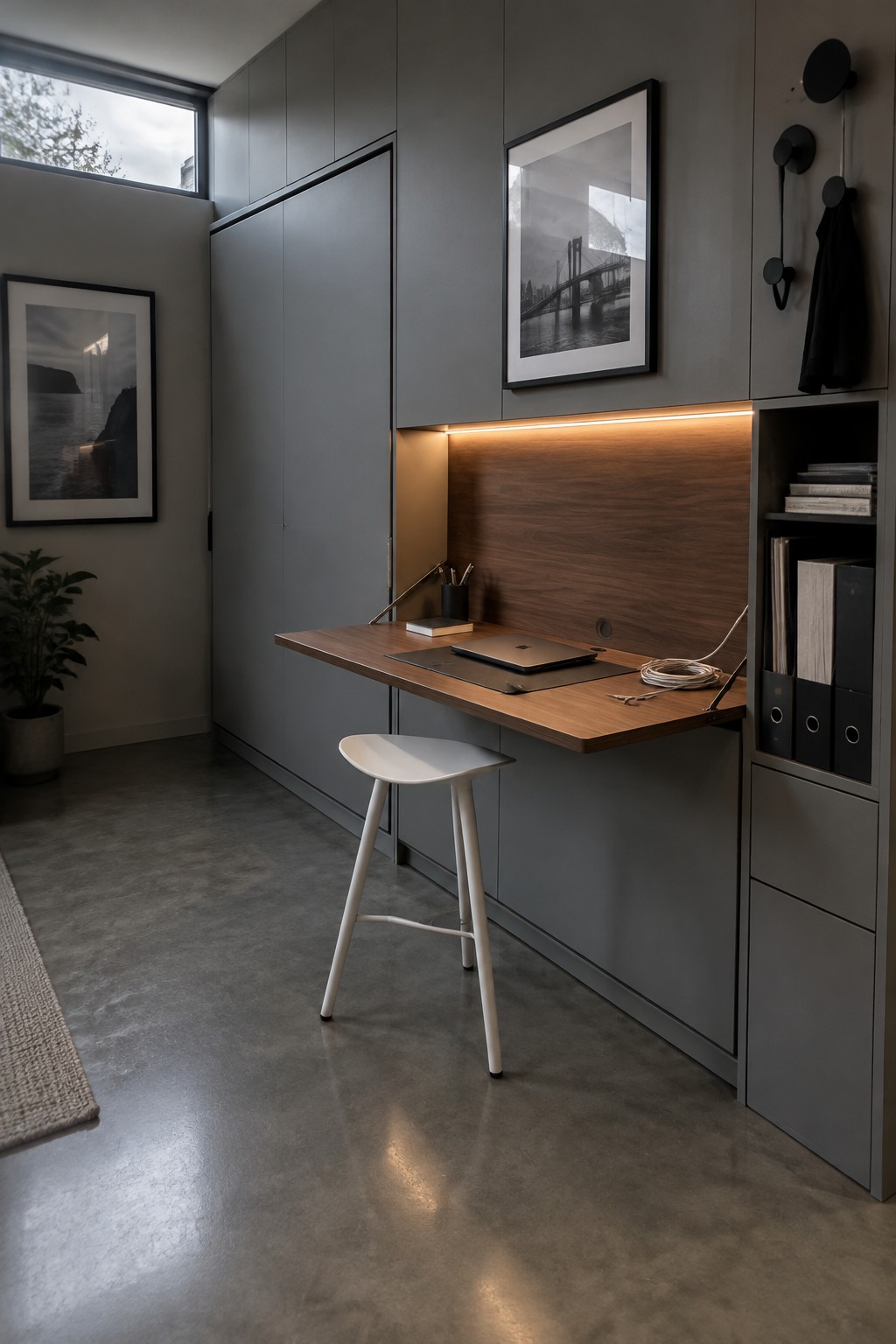
A desk that folds away keeps the room usable for more than work. This kind of built-in lets you close up the surface and clear the floor space when you need the room for something else.
It suits bedrooms or guest rooms that double as offices. Look for cabinets deep enough to store your chair or stool inside, and keep the desk height comfortable for long hours.
Place the Desk by the Window
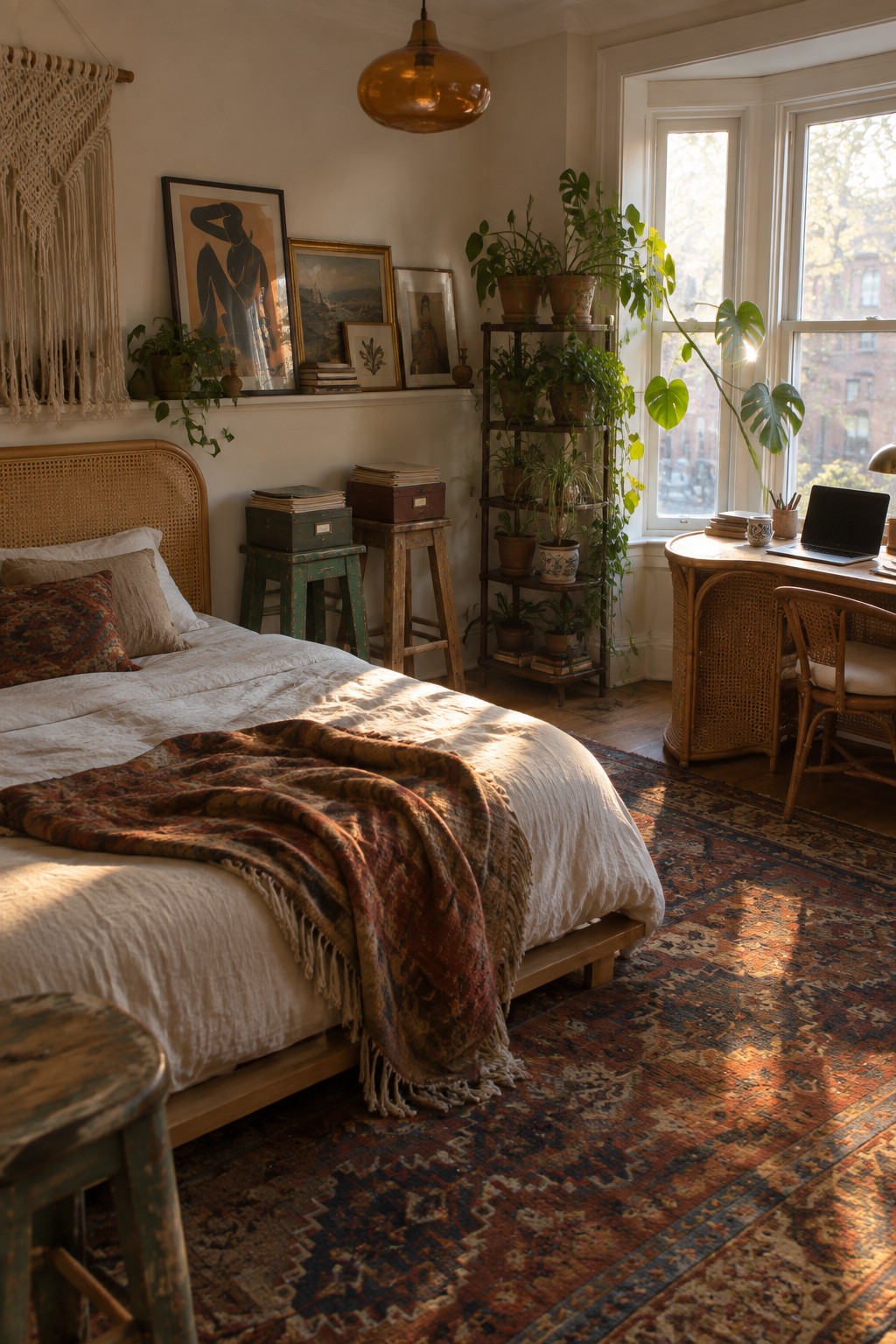
Putting the desk right next to a window gives the work area its own spot without crowding the rest of the bedroom. The light helps during the day and makes the space feel more open even when both the bed and office share the same room.
This works best in smaller homes or apartments where every piece needs to earn its place. Keep the desk narrow and the chair light so the room still feels like a bedroom first and an office second.
Desks That Match Bedroom Built-Ins
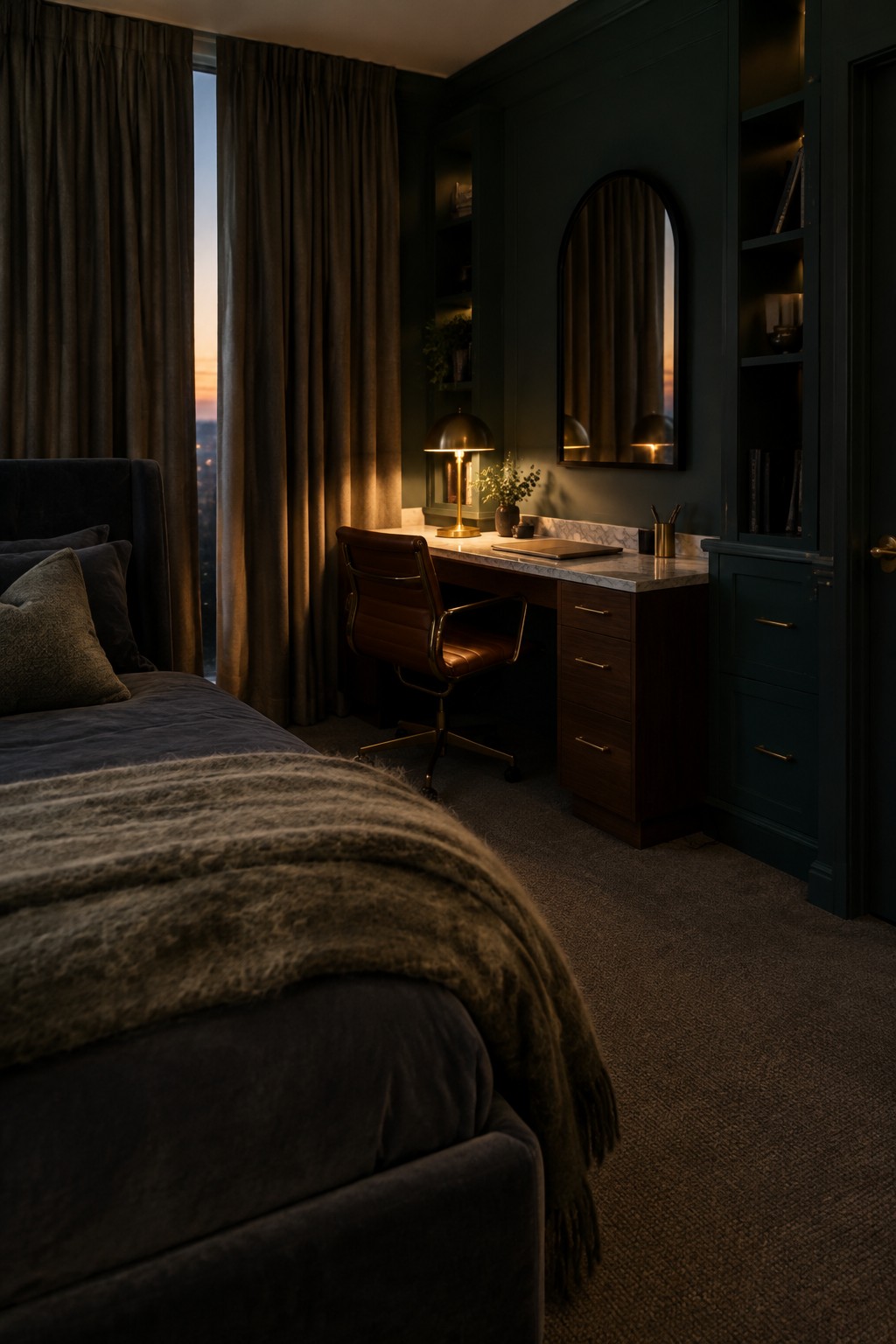
One way to keep a bedroom feeling calm while adding a workspace is to choose a desk that lines up with the built-in cabinetry. The wood tones and drawer style carry through, so the desk reads as part of the room rather than an extra piece brought in later.
This setup works best in smaller bedrooms or guest rooms where you need both uses but do not want the office side to dominate. Keep the chair simple and the top clear so the whole wall stays looking like storage rather than a workstation.
Desk by the Window
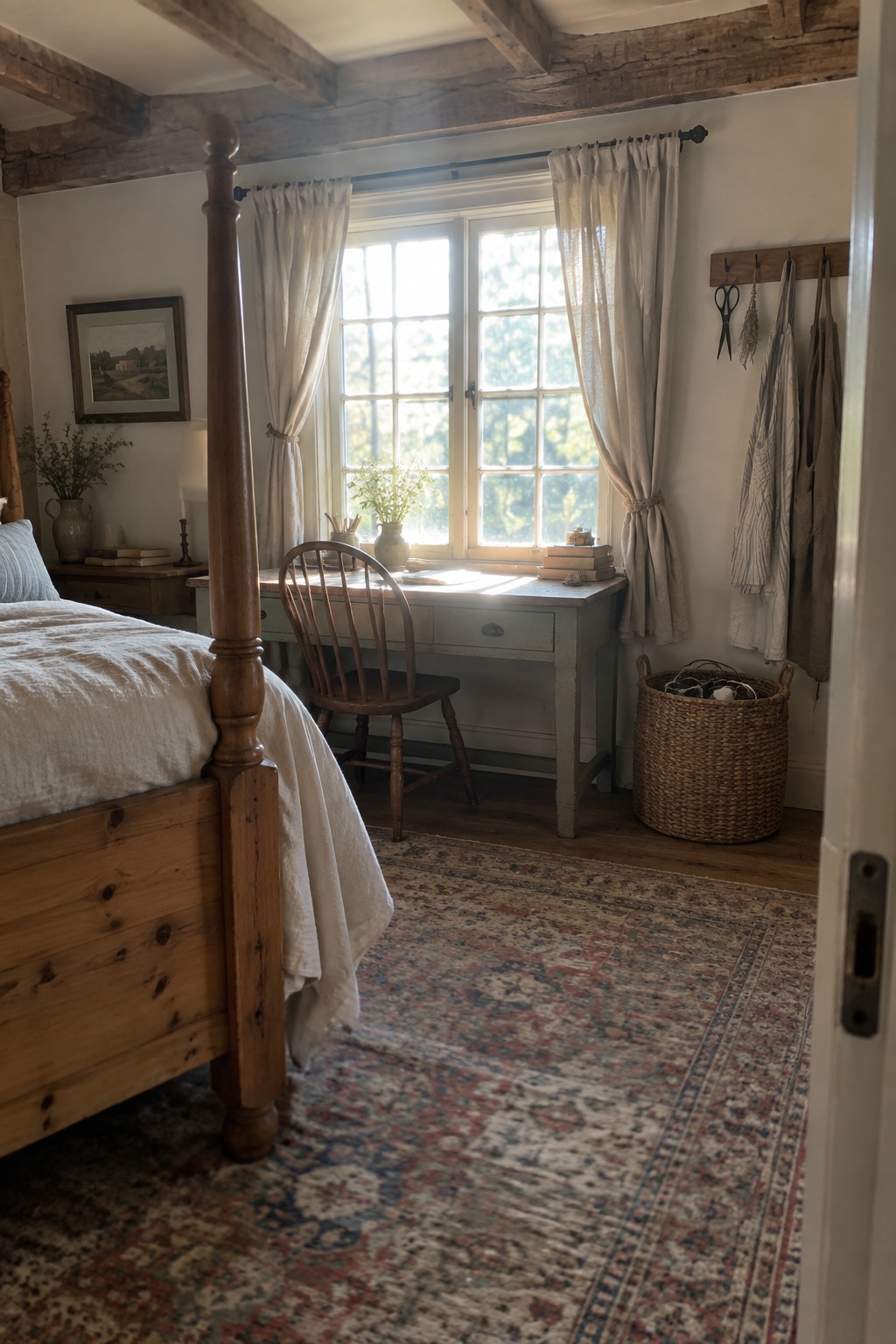
Placing a desk under a window in the bedroom gives you steady natural light without needing extra lamps during the day. It keeps the workspace feeling part of the room instead of a separate office corner.
This works best in smaller homes or spaces where you want to avoid heavy furniture. A simple desk and chair are enough, and the setup stays useful even when you are not working.
Wall-Mounted Desks For Bedroom Offices
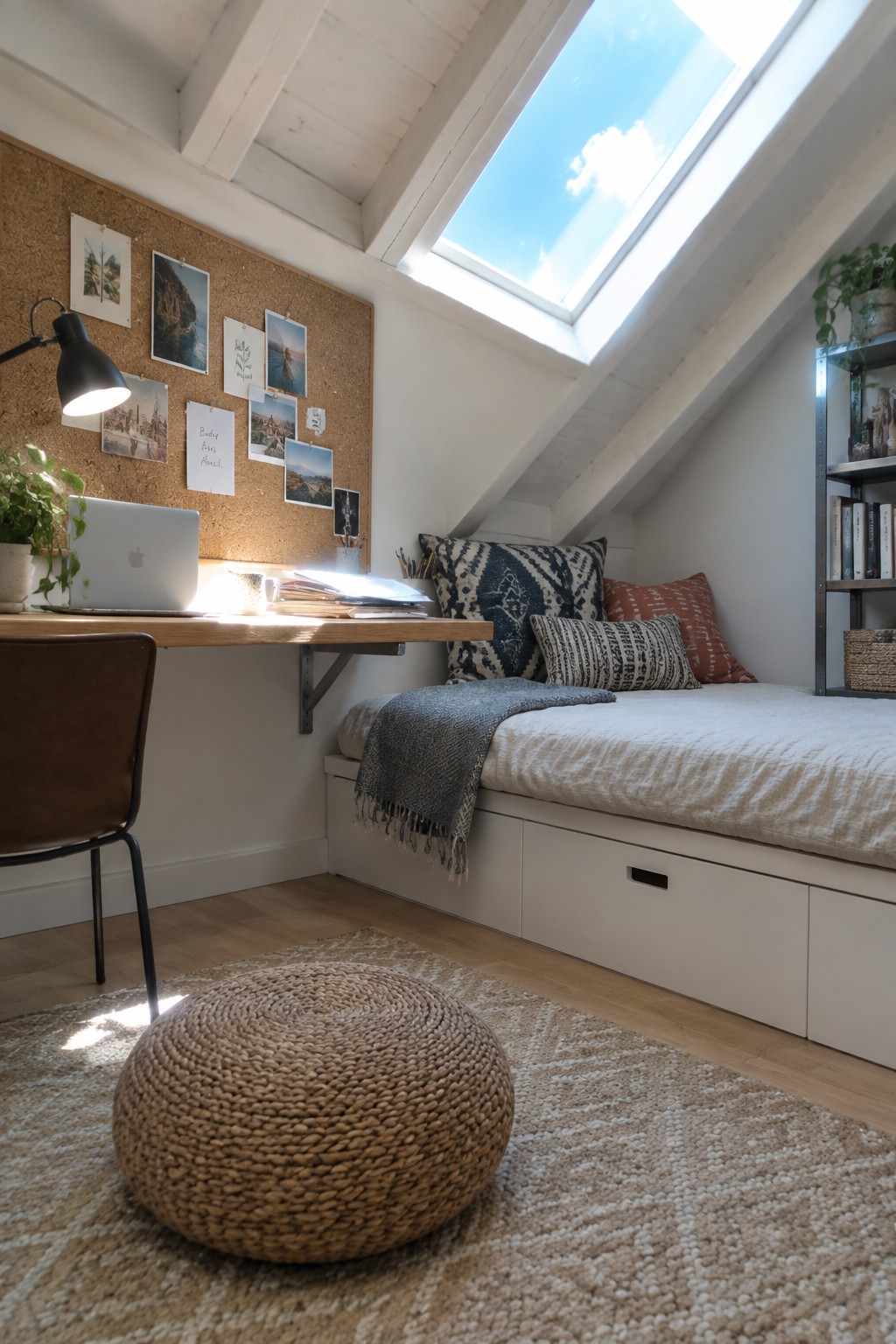
A wall-mounted desk lets you add a workspace to a bedroom without taking up floor space. This works especially well in smaller rooms or attic setups where the bed already fills most of the area. The desk stays out of the way yet stays close enough for quick use during the day.
This approach suits homes that need one room to handle both sleeping and working. Keep the desk narrow, add a simple board above it for notes, and use the space under the bed for storage so the room stays tidy.
Desk Placement By The Window In A Bedroom Office
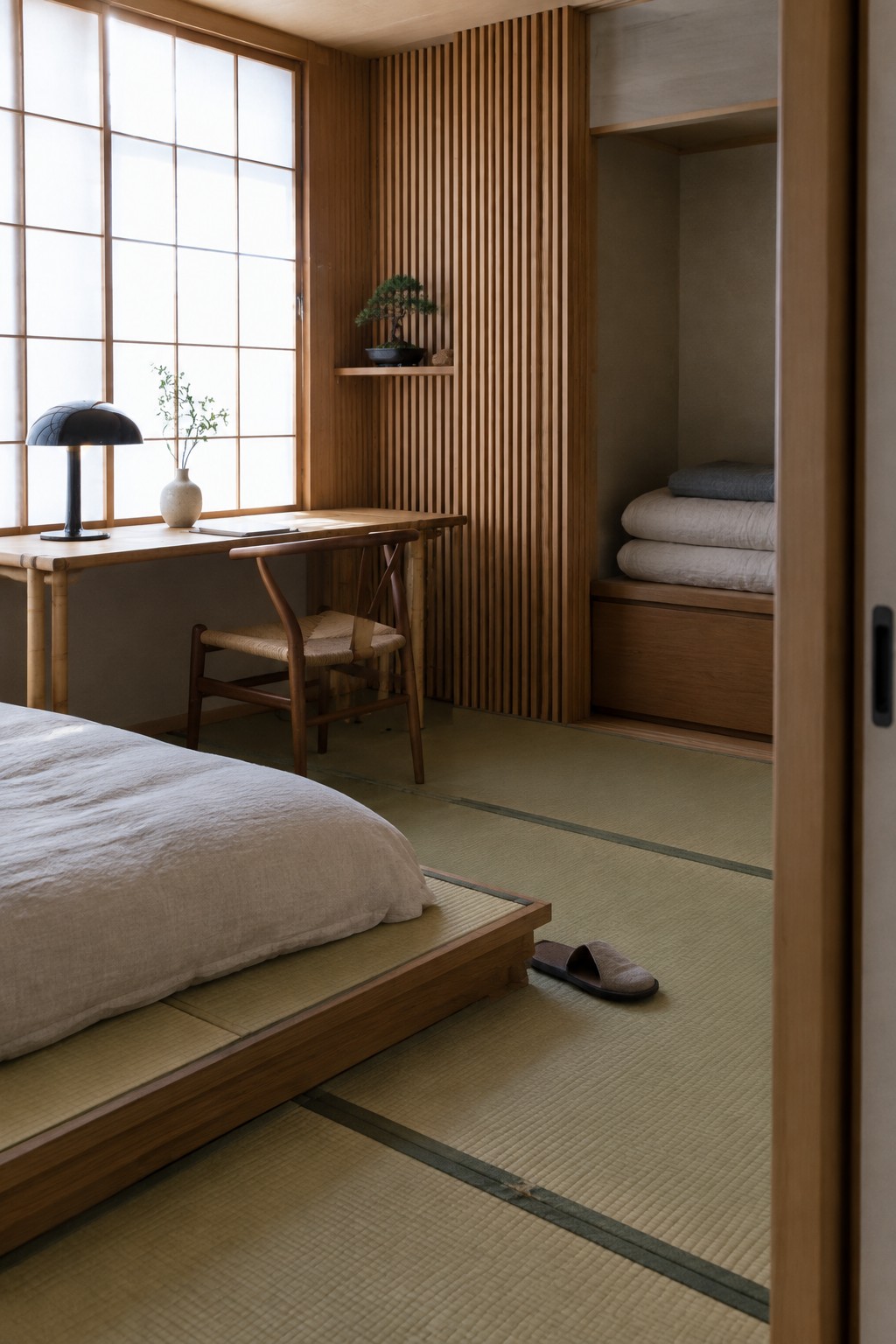
A small desk set right by the window turns a bedroom into a workable office without much fuss. Natural light helps with focus during the day, and the setup stays out of the way once work is done. The simple wooden desk and low chair keep the room feeling calm rather than crowded.
This approach works well in smaller homes or apartments where space is shared. Pick a desk with slim legs and a chair that fits the bedroom style so the furniture does not fight with the rest of the room. Avoid anything too bulky that would make the space feel more like an office than a place to rest.
Built-In Window Desks For Bedroom Offices
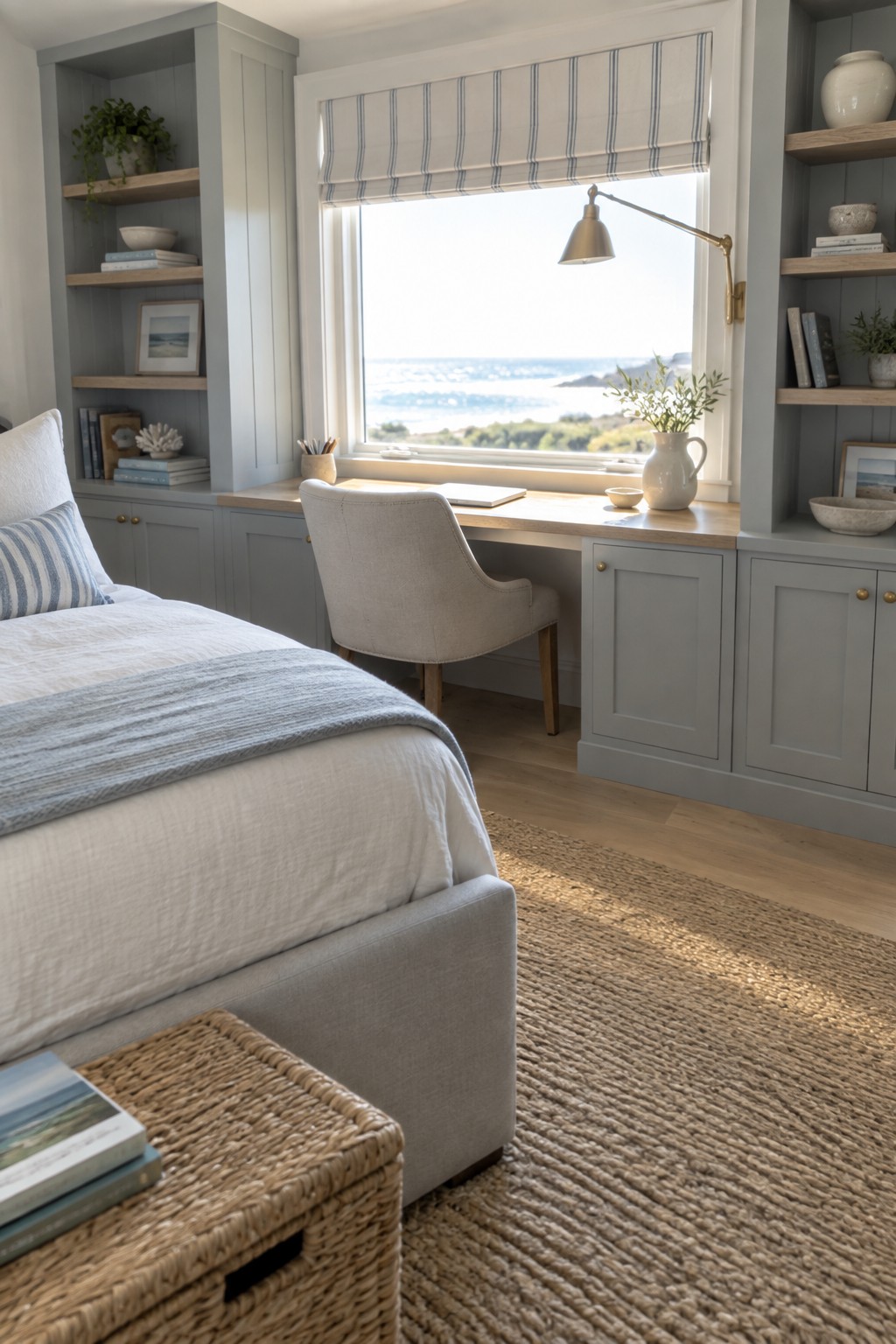
Placing a desk directly under a bedroom window gives you good light and a clear view, and wrapping it with matching built-ins makes the workspace feel like it belongs there. The cabinets and shelves on either side keep everything organized without adding extra furniture that would crowd the room.
This setup works best in smaller homes or guest rooms that need to double as an office. Keep the surface clear and match the cabinet color to the walls so the desk area stays quiet when you are not using it.
Daybed And Desk In One Room
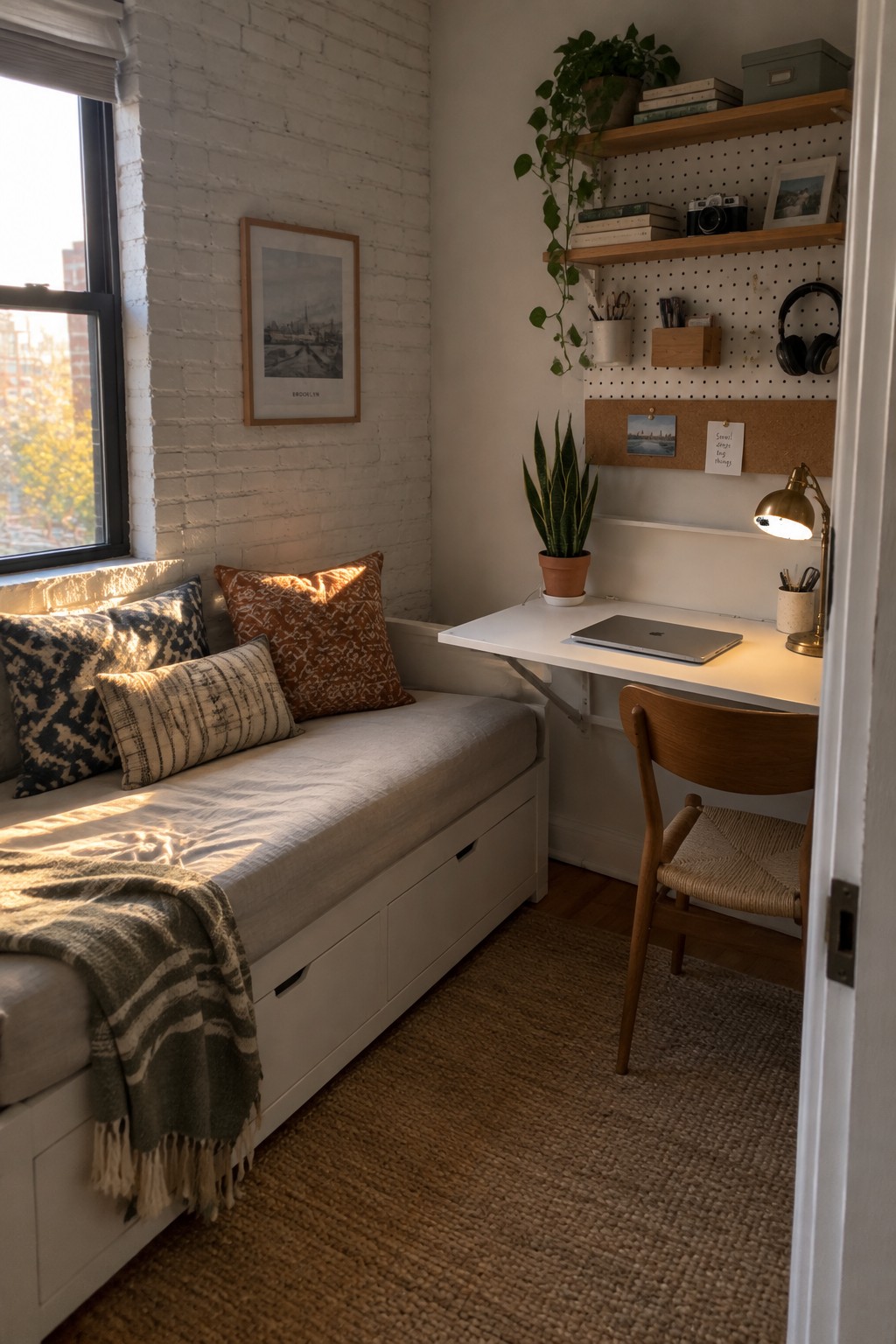
A daybed along one wall and a desk along the opposite wall lets a small bedroom handle both sleeping and working without feeling crowded. The daybed takes up less visual space than a full bed while still giving you somewhere to sit or nap, and the desk stays clear for daily use.
This setup works best in apartments or guest rooms where you need both functions but cannot dedicate separate spaces. Keep the furniture low and simple so the room stays open, and use the daybed drawers for extra storage if the room lacks a closet.
Built-In Shelves Around a Window Desk
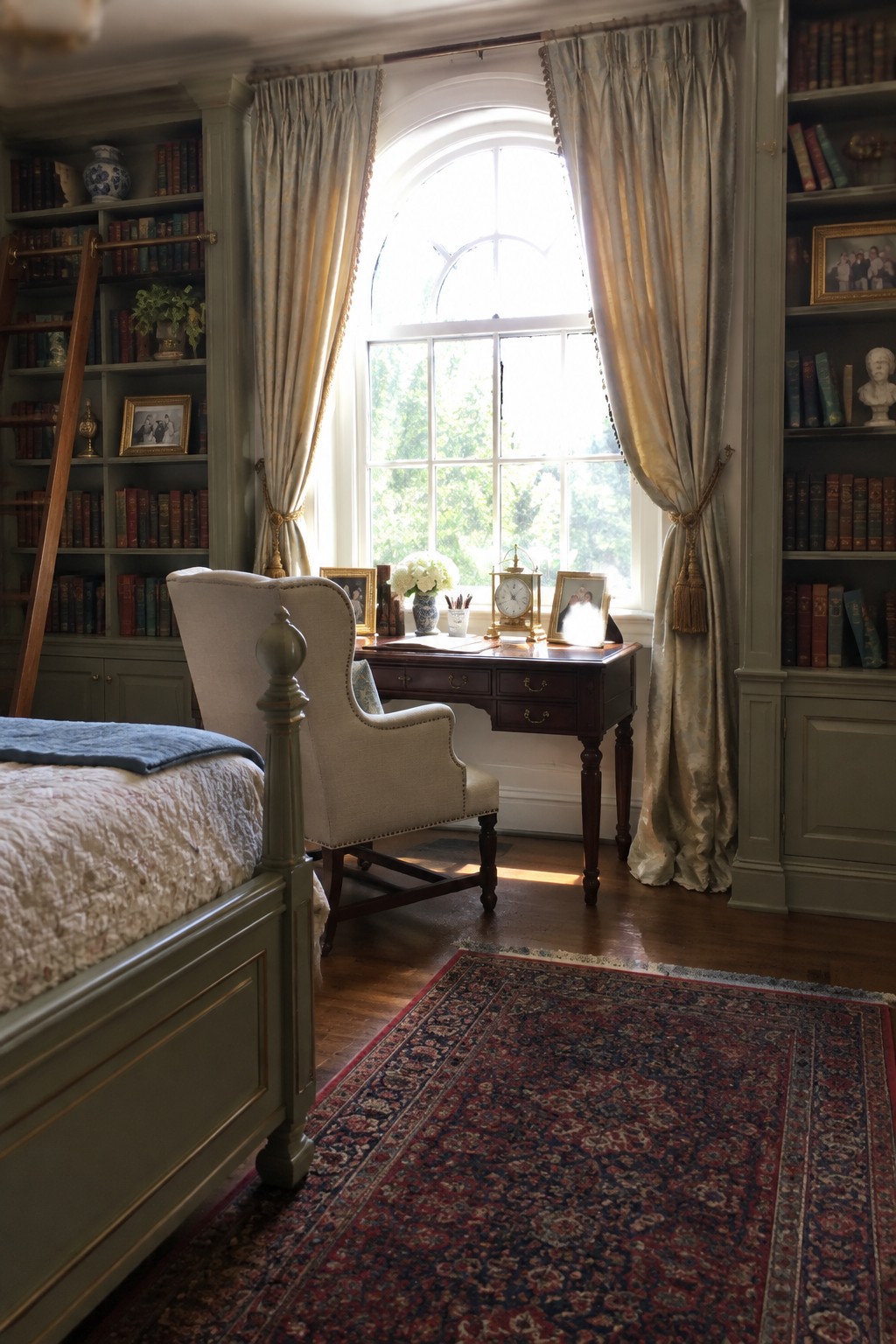
Placing a desk between built-in bookshelves turns an ordinary bedroom wall into a working office without making the room feel chopped up. The shelves give the desk a sense of belonging so it reads as part of the bedroom rather than a separate zone that got added later.
This arrangement works best in rooms that already have decent natural light and some wall width to spare. Keep the shelves the same color as the walls so the whole corner feels calm, and leave the center open for the desk so the window stays the main focus.
Match Your Desk to the Bed Frame
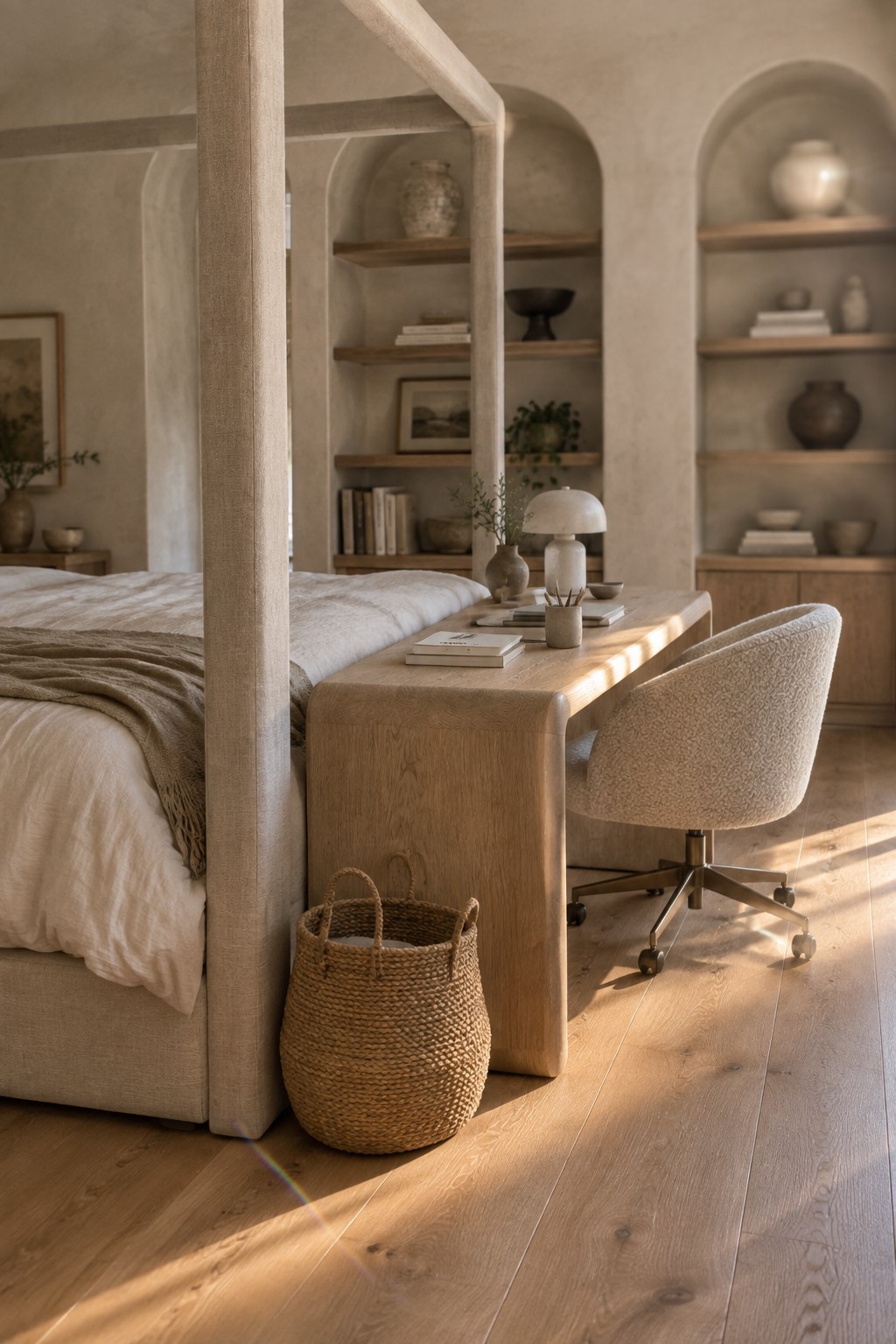
A desk in the same light wood tone as the bed frame helps the workspace blend right into the bedroom instead of feeling like an add-on. The matching material keeps the whole area calm and connected, which matters when the same room has to handle both sleep and work.
This approach works best in smaller bedrooms or spaces where you want minimal visual break between zones. Keep the desk shape simple and the finish natural so the room still feels restful once the laptop is closed.
Storage Beds Help Fit A Desk In Tight Spaces
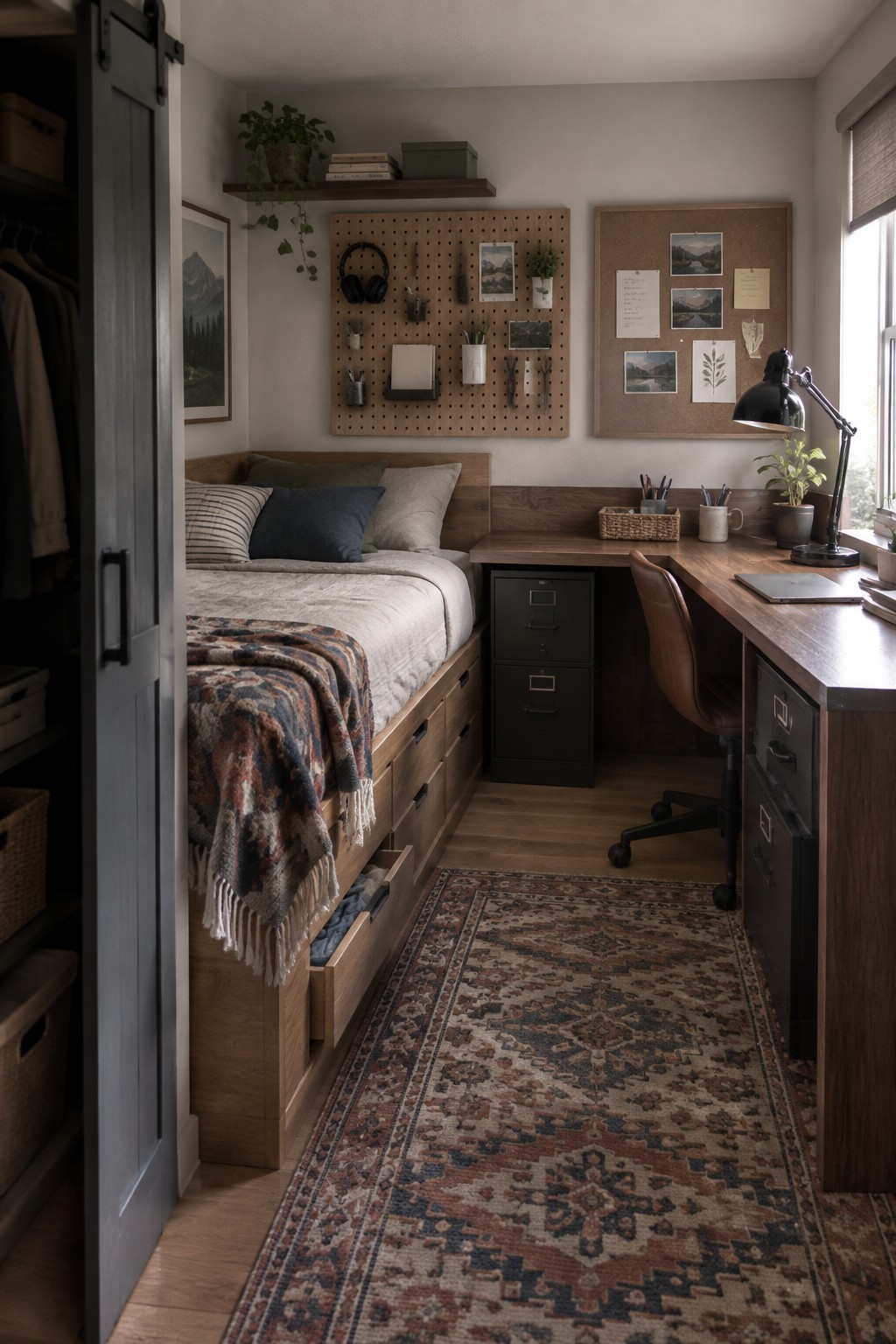
A bed with drawers built into the base gives you extra storage without taking up floor space. This setup works especially well in smaller bedrooms where you need both a place to sleep and a spot to work. The drawers keep bedding or clothes out of sight, which leaves more room for a desk and chair nearby.
This idea suits compact homes or guest rooms that double as offices. Keep the desk surface clear for daily use and use wall boards above it for papers and small items. Just measure your space first so the bed frame does not block the desk chair.
A Full Size Desk Turns the Bedroom Into a Workspace
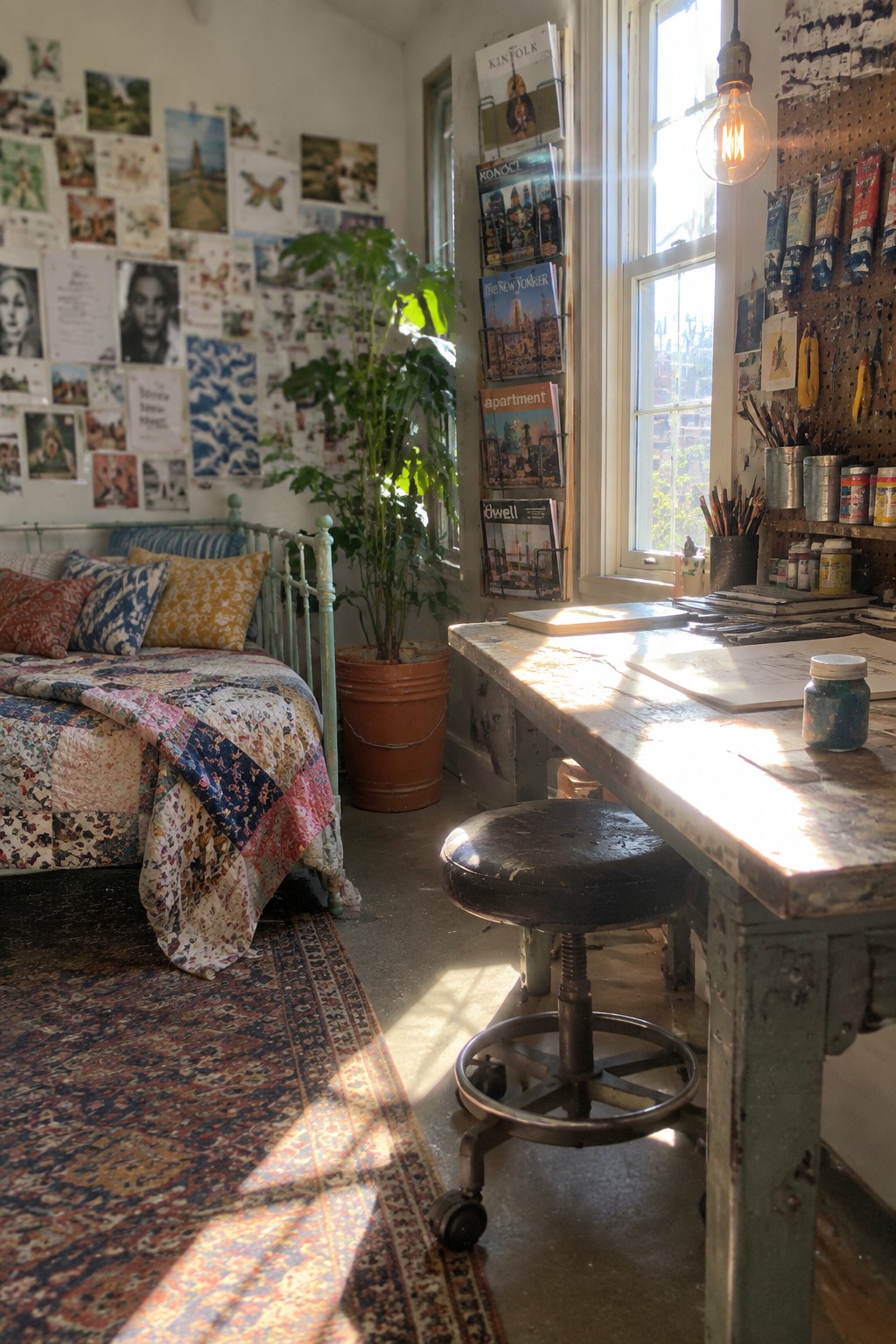
Plenty of bedrooms can handle both sleeping and working if you give the desk enough room to matter. A big table with real surface space lets you keep papers, a laptop, and supplies out without shoving everything into a corner or onto a tiny nightstand.
This works best in medium or larger bedrooms where the bed and desk can sit on different walls. Keep the chair simple and the desk clear enough for daily use so the room still feels restful at night.
Daybed And Desk Pairings For One Room
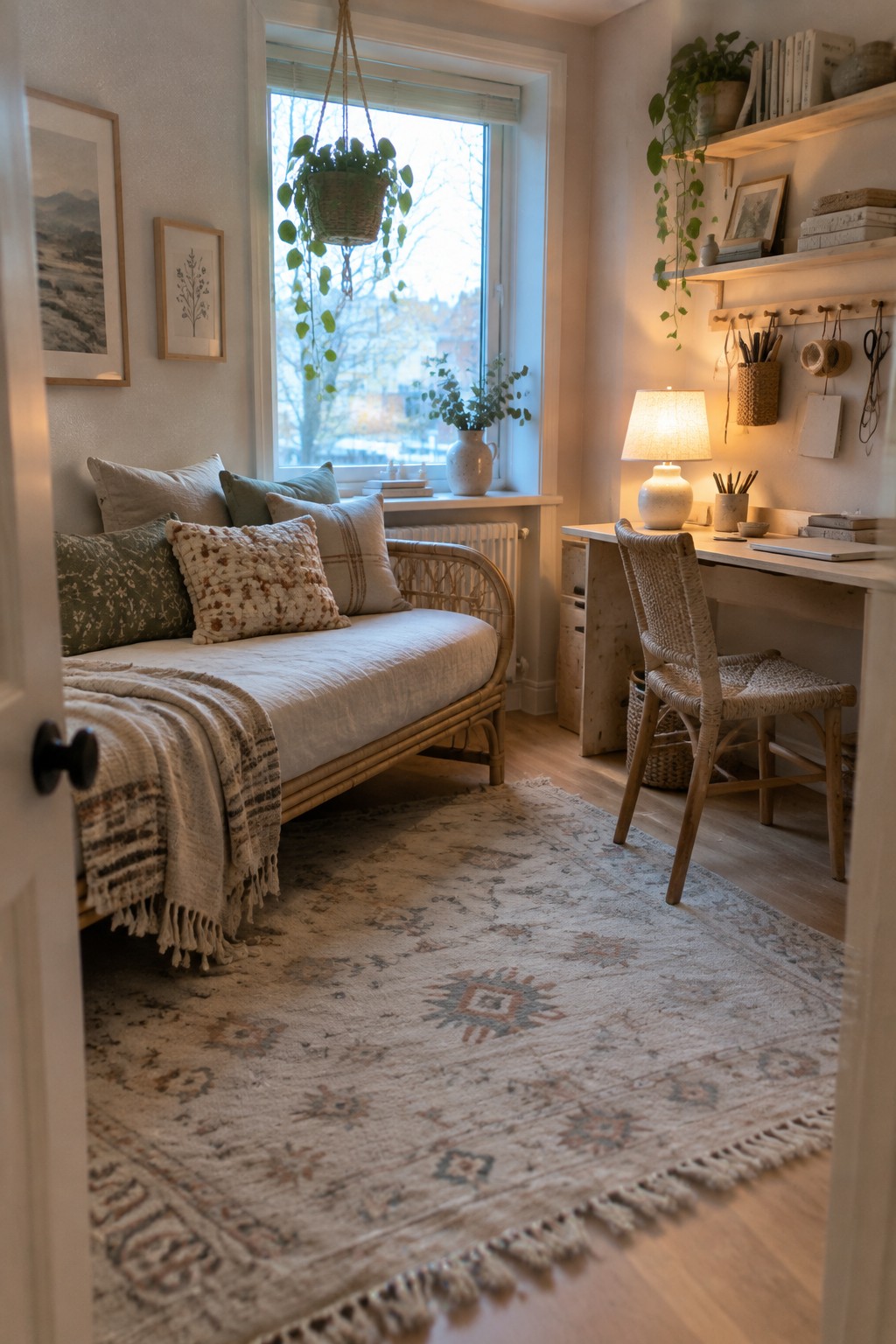
A daybed works well when you need the bedroom to handle both sleeping and working. It gives you a place to sit or rest without adding another large piece of furniture, and it keeps the space from feeling split in two. The woven chair at the desk adds a bit of texture that matches the daybed frame without trying too hard.
This setup suits smaller bedrooms or apartments where every piece has to earn its space. Keep the rug large enough to cover both areas so the room feels connected. Avoid crowding the daybed with too many pillows if you want to use it for seating during the day.
Built-In Storage Beds For Small Dual-Purpose Rooms
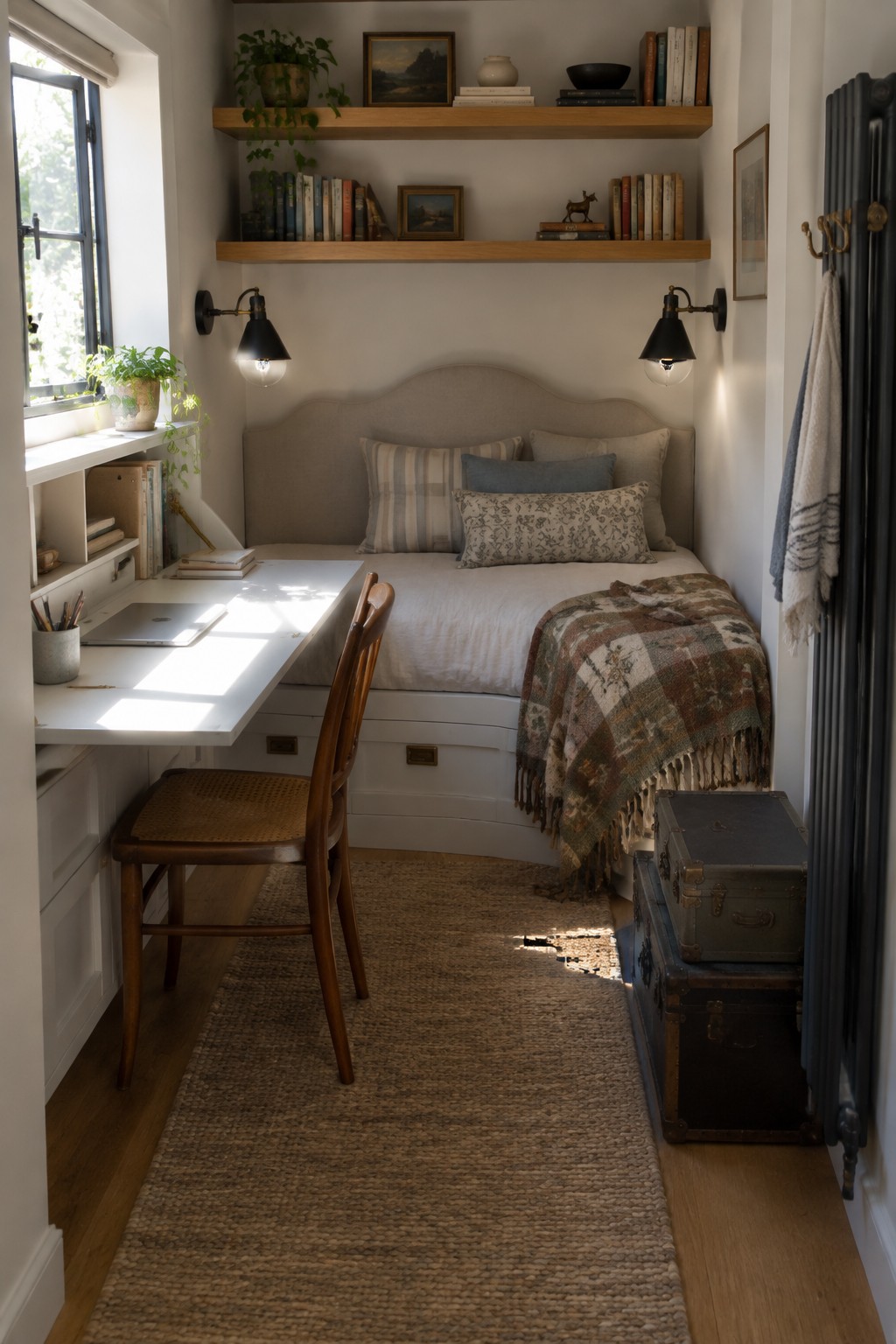
One idea worth copying in a tight room is adding real storage under the bed itself. The drawers pull out easily and hold extra bedding or office supplies, which frees up floor space for a simple desk right beside it. This keeps the room from feeling split between two functions.
It works best in narrow bedrooms or guest rooms that need to serve as an office during the day. Just check that the bed height lines up with the desk so you can move between the two without awkward gaps.
A Floating Desk Along The Window Works In A Bedroom
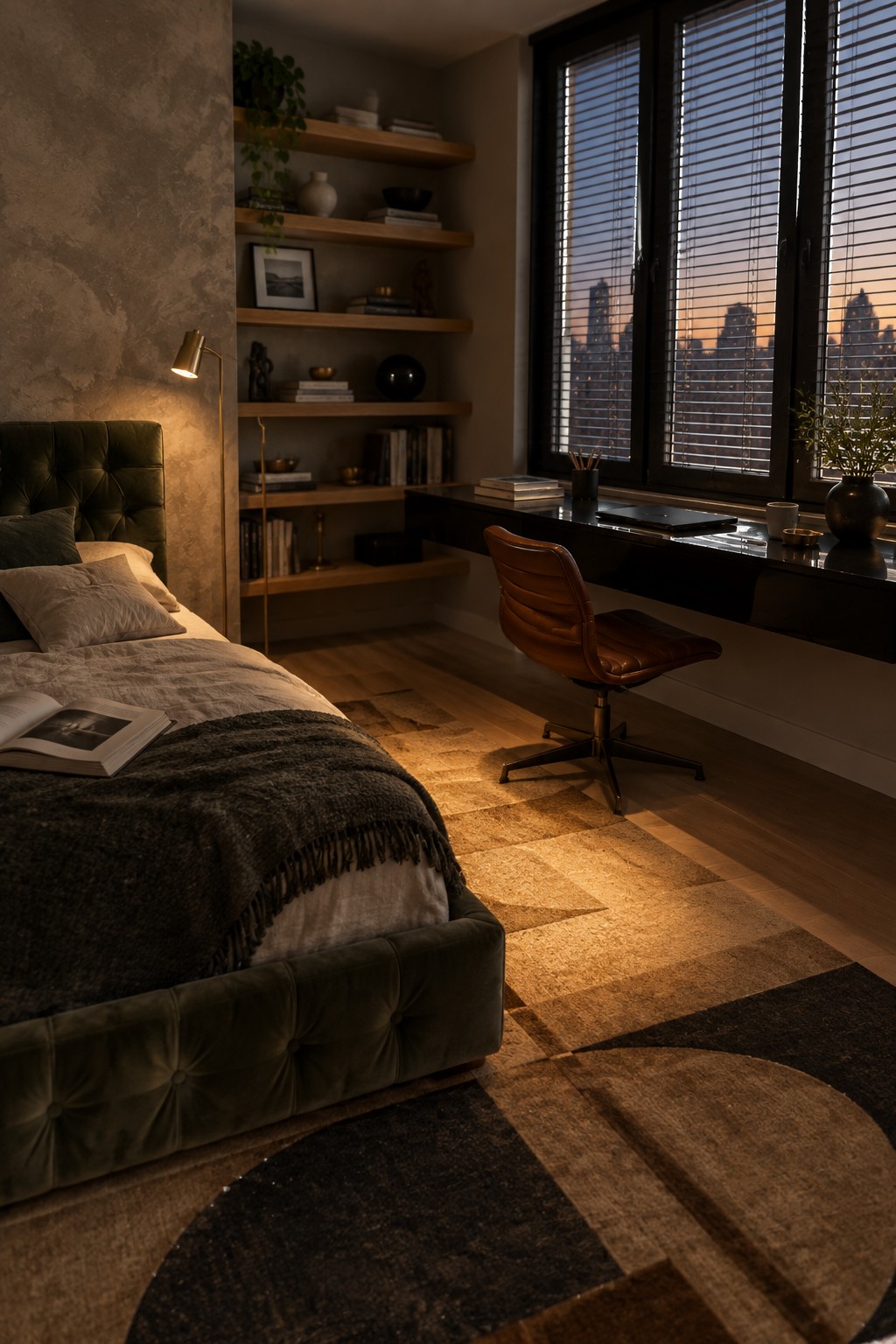
Placing a desk right along the window wall turns a bedroom into a usable workspace without eating up the middle of the room. The setup stays out of the way of the bed and keeps the floor plan open enough for both sleeping and working.
This approach suits apartments or smaller homes where one room has to handle two jobs. Keep the desk surface fairly narrow and pair it with a simple chair that can tuck in when not in use.
Frequently Asked Questions
Q: How do I stop my workspace from taking over the whole bedroom? A: Place the desk against a wall or in a corner away from the bed. Use vertical storage like wall shelves to free up floor space. This keeps the room balanced for both uses.
Q: Which pieces of furniture work for both lounging and typing? A: A sturdy bench with storage can double as extra seating and a spot for your laptop. Choose one with a flat top that stays comfortable for short work bursts.
Q: What about lighting that suits both reading in bed and working at a desk? A: Add a floor lamp with adjustable arms near your desk area. It shines bright for tasks but dims easily for evening wind down. Position it so the light does not hit your bed directly.
