

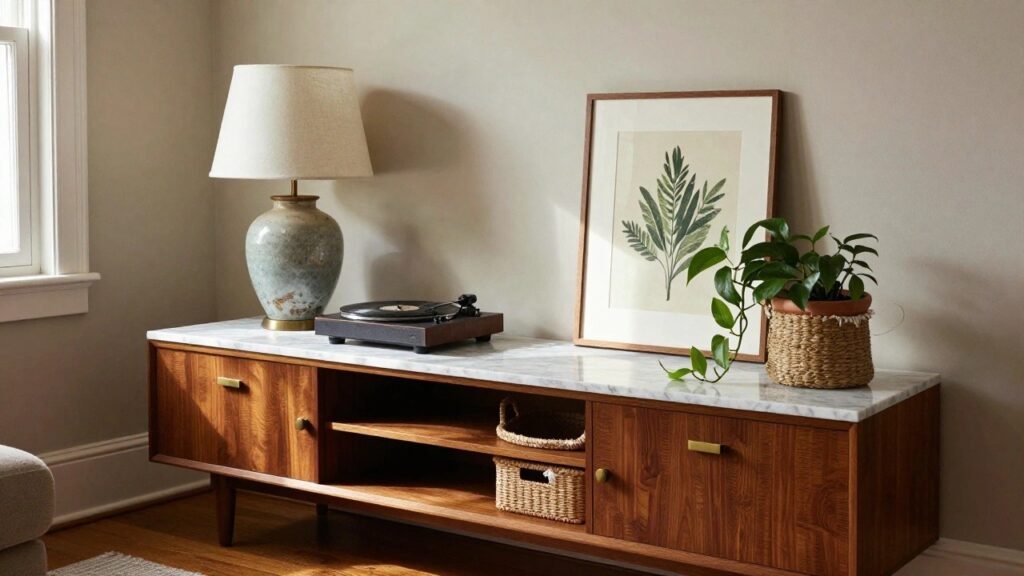
In my living room I keep noticing how quickly papers and small items collect on open surfaces when there is no simple way to put them out of sight.
A sideboard with solid doors or deep drawers can handle that buildup without adding another piece that draws attention to itself.
It changes the daily feel of the room.
I have tested a couple of these setups at home and the ones that last are the ones where the storage actually matches what we reach for every day rather than what looks neat in a photo.
Small choices like adding a tray inside or picking a slightly deeper model often make the difference in whether the clutter stays hidden or creeps back out by evening.
Store Vinyl Records In Woven Baskets
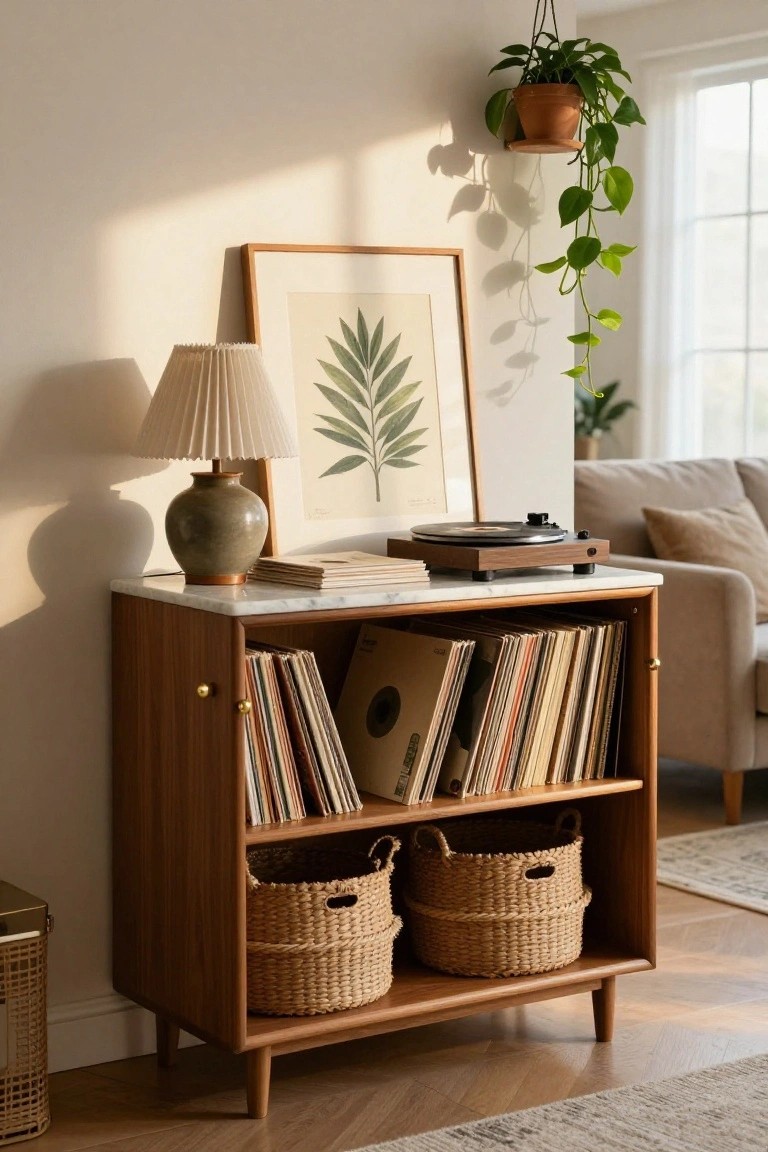
A sideboard can handle more than just dishes or linens. When the lower section has open cubbies, woven baskets make it simple to sort records by genre or artist and slide them out of sight when guests come over.
This works best in living rooms where music gets played often but you still want the space to stay tidy. Pick baskets that match the width of the shelves so they sit neatly and can be swapped out if your collection grows.
Store Everyday Dishes In Sideboard Cabinets
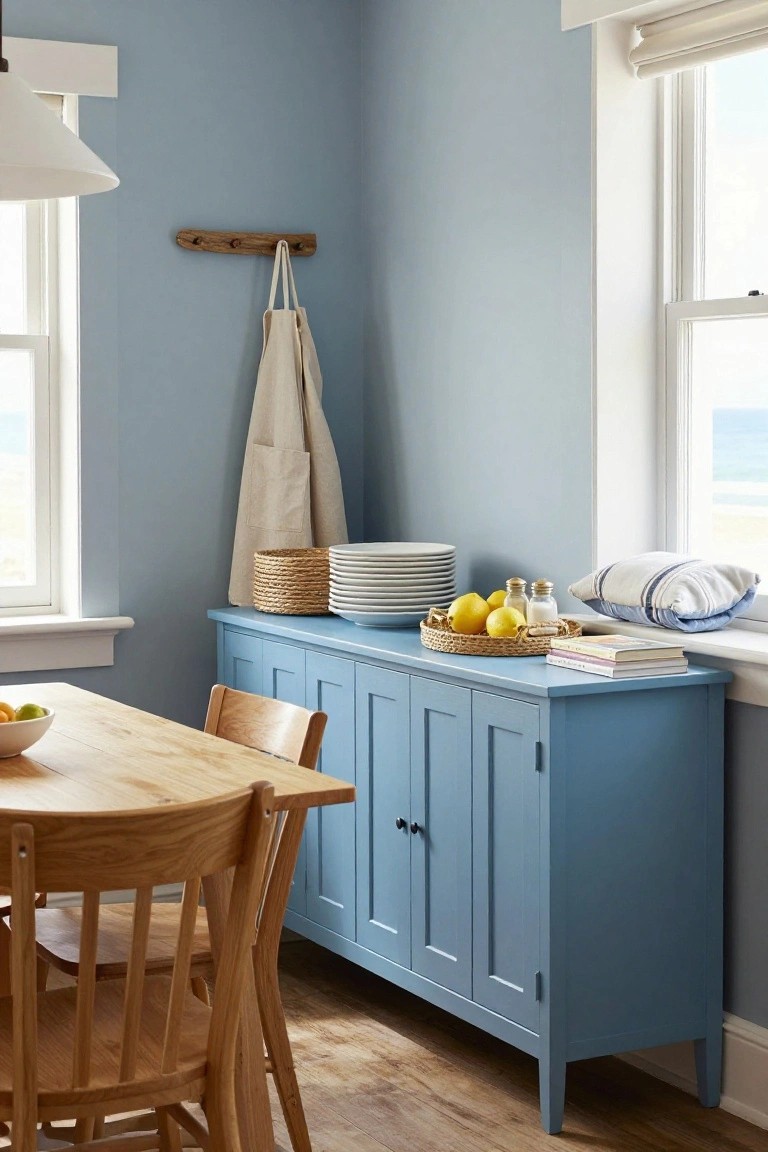
A sideboard with solid doors gives you a simple place to keep plates, bowls, and linens out of sight. Instead of stacking everything on open shelves or the countertop, you can close the doors and still have quick access when you need it.
This setup works best in dining areas or open kitchens where you want the room to feel calm and tidy. Choose a piece that is deep enough for your larger items and add a shelf divider if you need to separate everyday dishes from special occasion pieces.
Sideboards With Built In Wine Storage
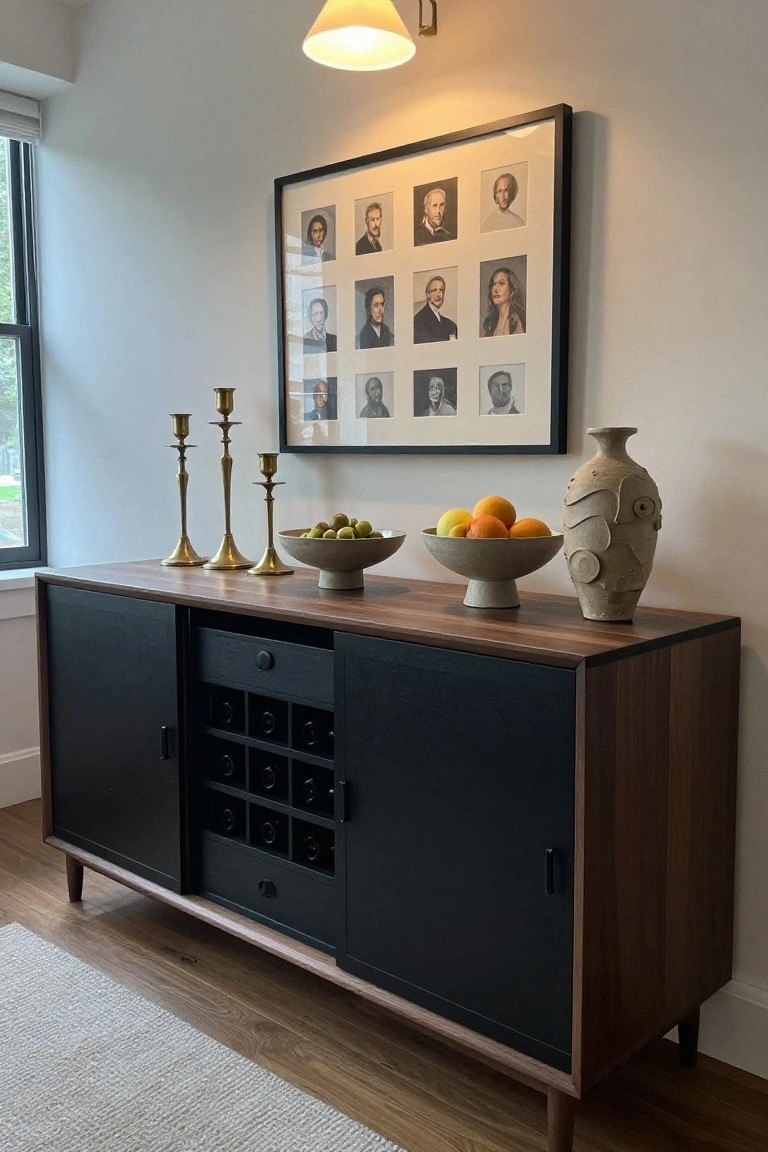
A sideboard with its own wine rack section keeps bottles tucked away but still easy to reach. It turns what could be a plain storage piece into something that handles both display and everyday needs without extra furniture.
This setup works best in dining rooms or open living spaces where you serve drinks often. Look for one with a mix of closed cabinets and a small rack so you can hide the clutter while keeping the top surface useful for serving.
Mix Open And Closed Storage
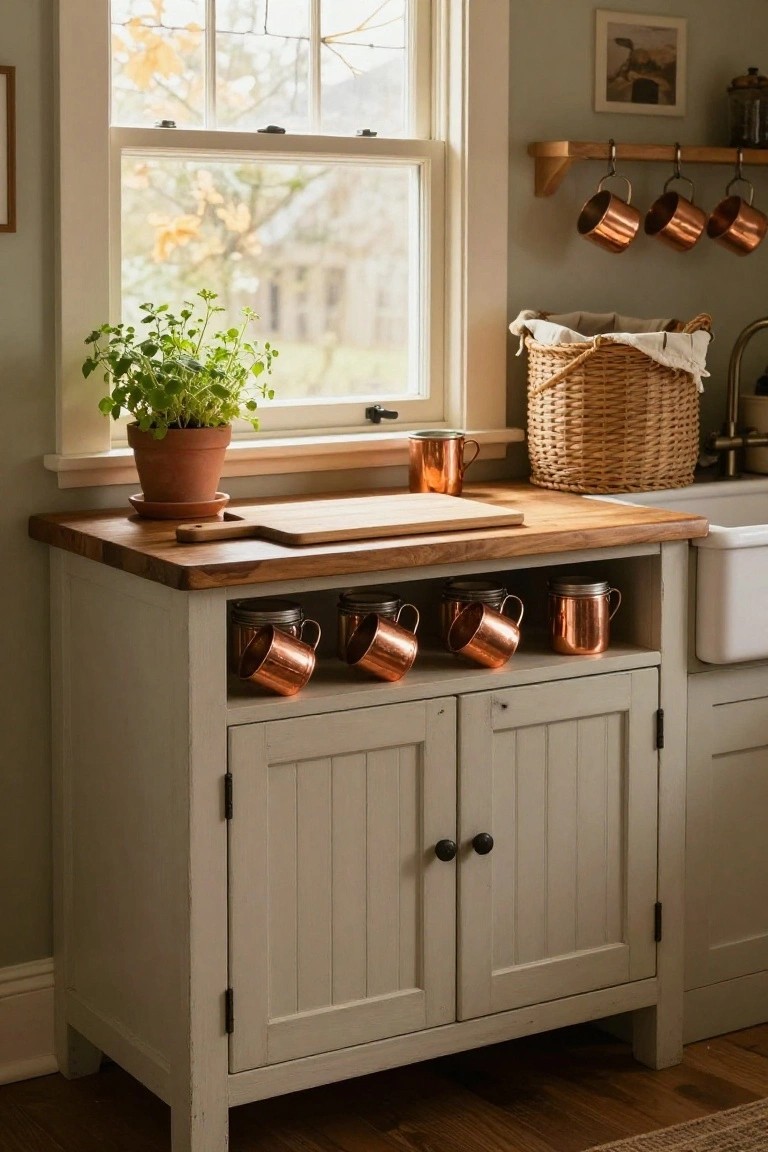
Many sideboards work better when you leave some space open for things you reach for often. The open sections hold mugs and similar items in plain sight while the doors below keep everything else out of view.
This approach suits kitchens or dining areas where daily items need to stay handy. Just watch that the open spots do not fill up too much or the clean look starts to slip away.
Sideboards With Hidden Storage Keep Surfaces Clear
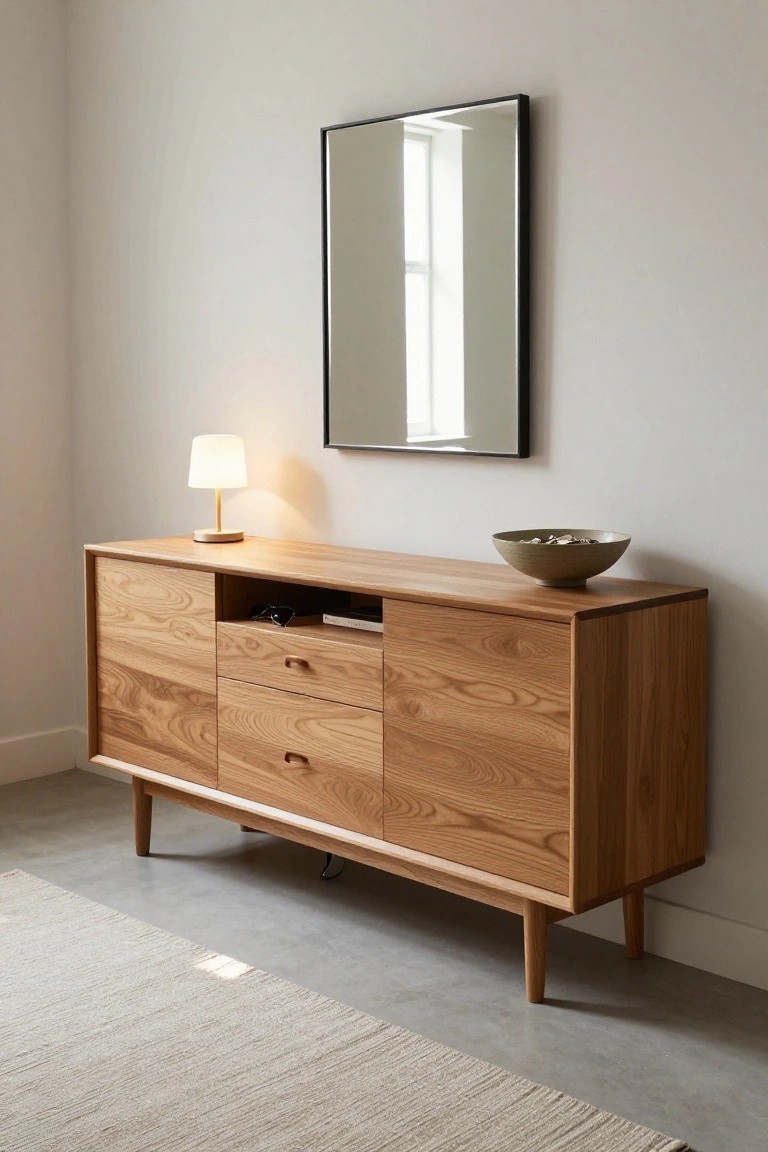
A sideboard with closed drawers and cabinets gives you room to store things without leaving them scattered around. The doors and drawer fronts create a smooth front that hides what is inside while the top stays open for just a few simple items.
This setup works best in living rooms or entry areas where you want the surface to stay usable but not crowded. Look for one with a mix of drawer sizes so everyday things stay organized and out of sight.
Closed Doors Hide Everyday Clutter
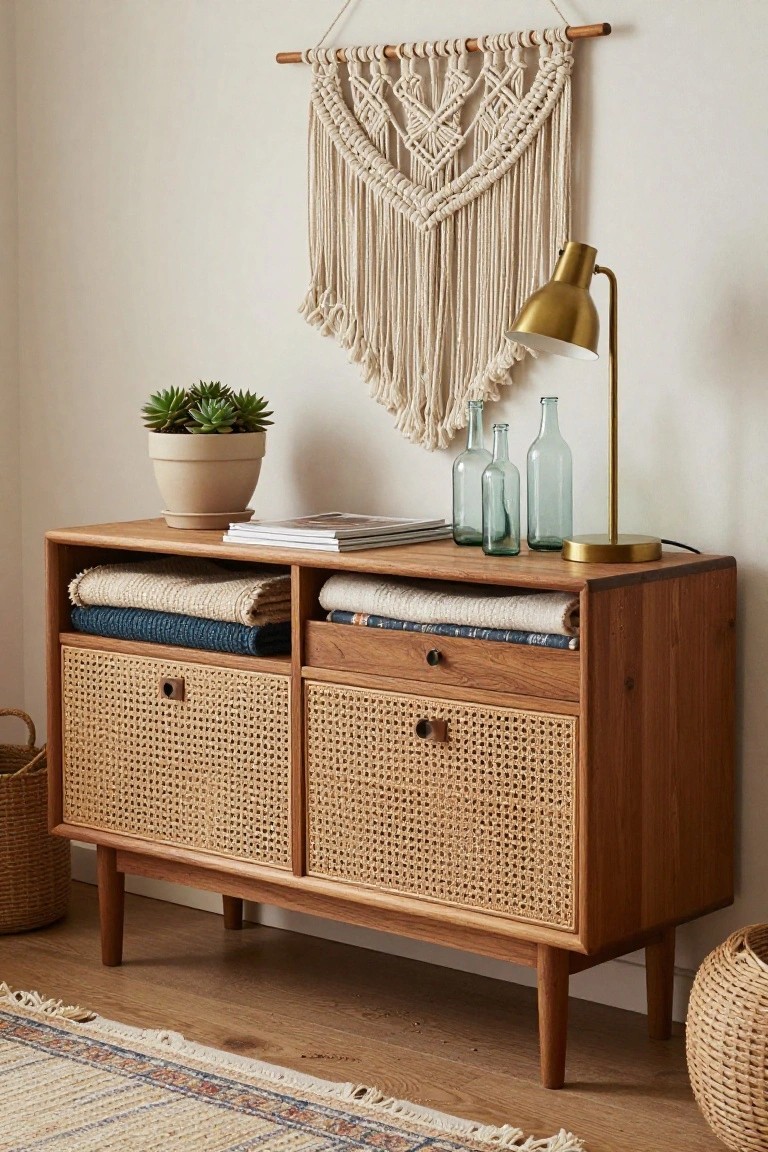
Sideboards with closed cabinets work well when you want a tidy surface but still need space for things you use often. The doors let you store blankets, papers, or extra linens without them showing, which keeps the room feeling calmer.
This setup suits living rooms or entryways where open storage can start to look messy fast. Just check the height before you buy so the piece lines up with your other furniture and does not block the flow of the room.
Hidden Storage Keeps Counters Looking Clean
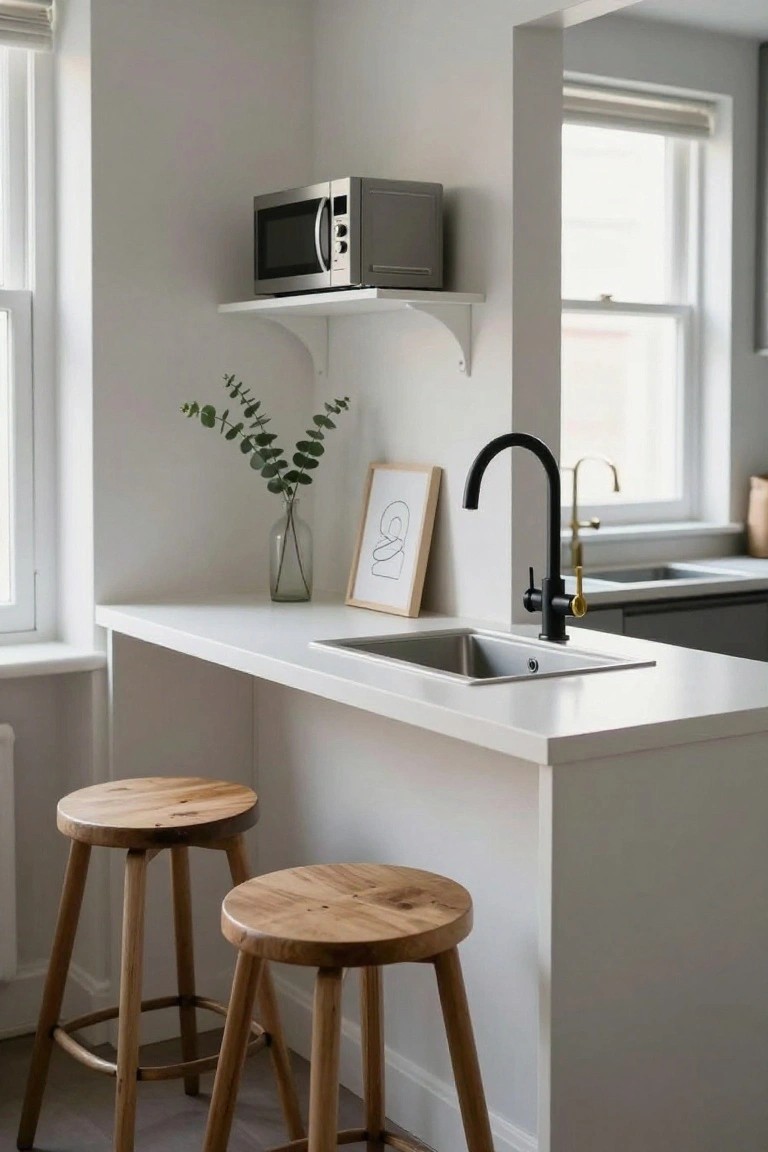
A long white counter works best when most things stay out of sight below the surface. This keeps the top clear for daily use and makes the whole area feel more open without extra effort.
It suits smaller homes or open layouts where you want the space to double as a dining spot or work area. Focus on adding deep drawers or pull-out bins inside so everyday items do not end up scattered on top.
Use A Sideboard With Closed Storage To Hide Clutter
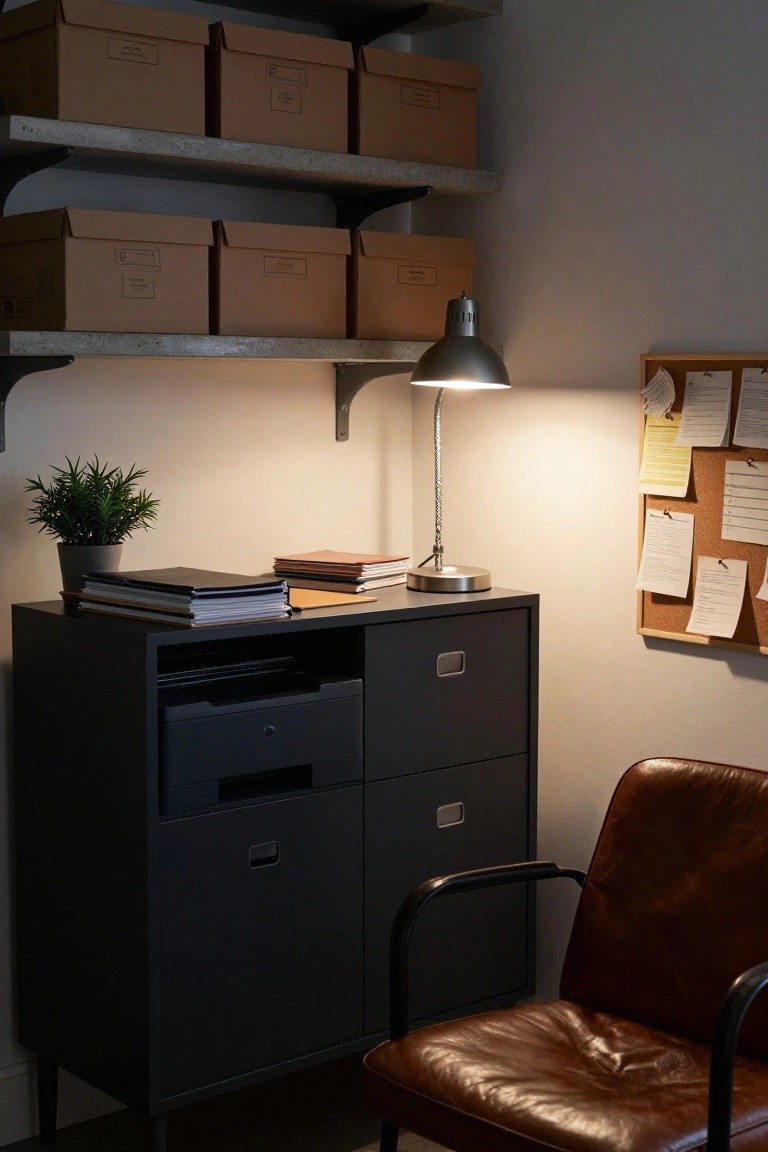
A sideboard with solid doors and drawers can handle a lot of everyday mess without showing it. The closed compartments make it easy to keep papers, supplies, and random items out of view while still having them close at hand.
This kind of piece works well in a home office or living space where you want surfaces to stay clear. Just check that the drawers and cabinets are deep enough for what you need to store.
Sideboards With Hidden Storage Compartments
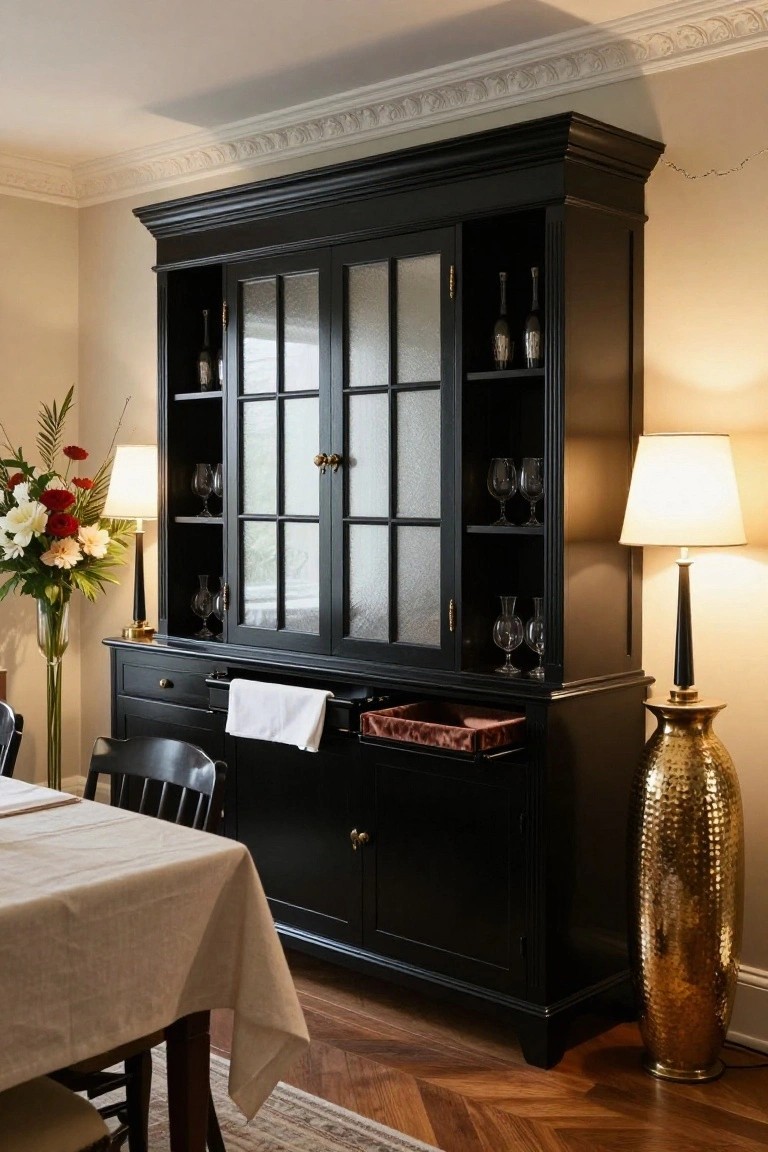
A sideboard with both open display areas and plenty of closed storage helps keep a dining room looking neat without giving up useful space. The lower cabinets and drawers can hold tablecloths, extra dishes, or serving pieces so they stay out of sight while a few nicer items remain visible.
This setup works best in rooms that need to feel orderly but still welcoming. Look for pieces with deep drawers and solid doors if you want to tuck away everyday clutter rather than show everything.
Sideboard Cabinets for Hidden Storage
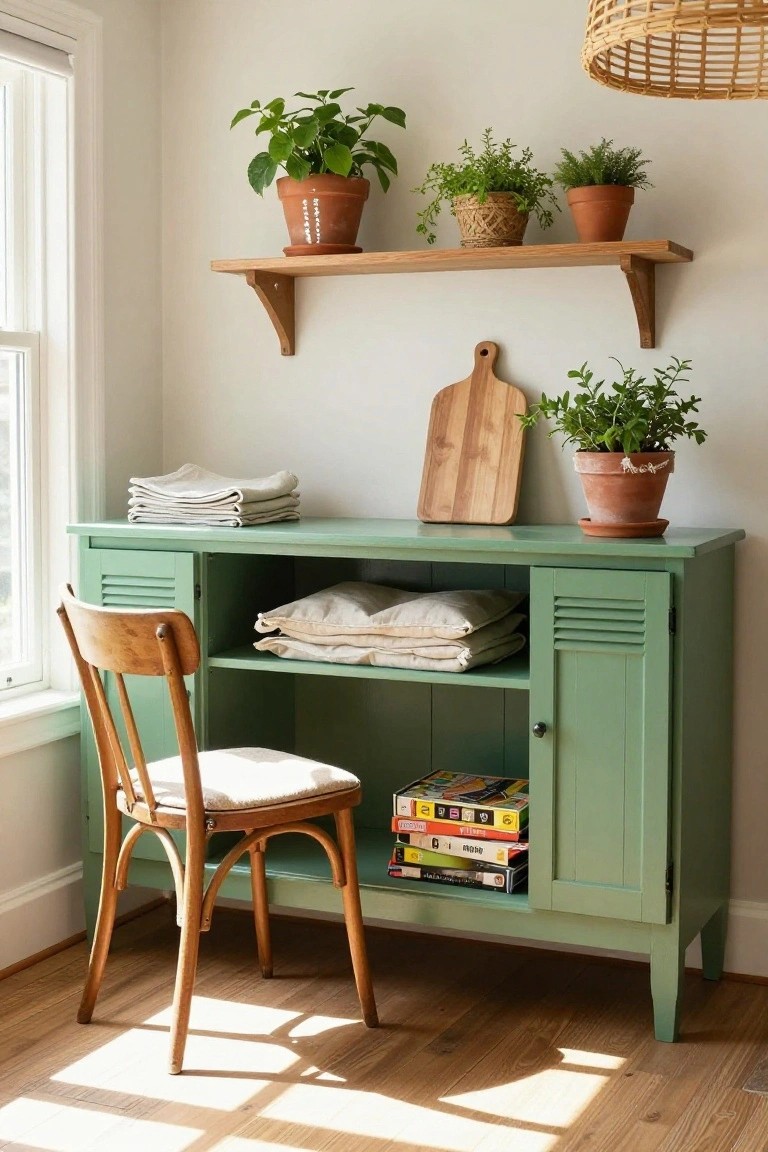
A sideboard with doors on each end gives you a simple way to keep everyday clutter out of view. You can still use the open middle section for things you reach for often, but the closed cabinets handle the rest without making the surface feel crowded.
This setup works best in smaller dining areas or living rooms where you want storage but need the room to stay calm. Look for doors that open easily and add a shelf inside if the space feels too deep for what you plan to store.
Mix Open Cubbies With Closed Storage
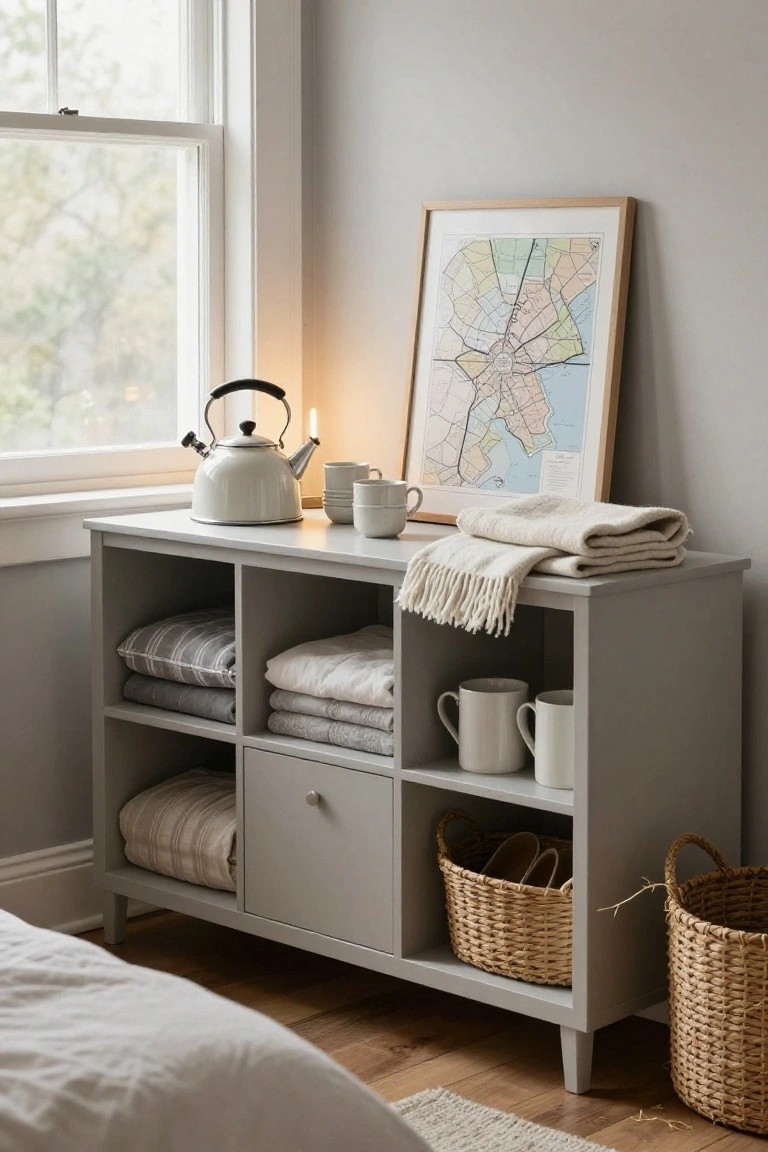
A sideboard with both open cubbies and a closed cabinet gives you room to store what you use often while hiding the rest. The open sections work well for folded linens and baskets, and the door keeps smaller or less tidy items out of view.
This style fits best in bedrooms or living areas where you need extra storage without adding more furniture. Keep the top fairly clear so the piece stays practical instead of turning into another surface for clutter.
Use A Sideboard For Record Storage
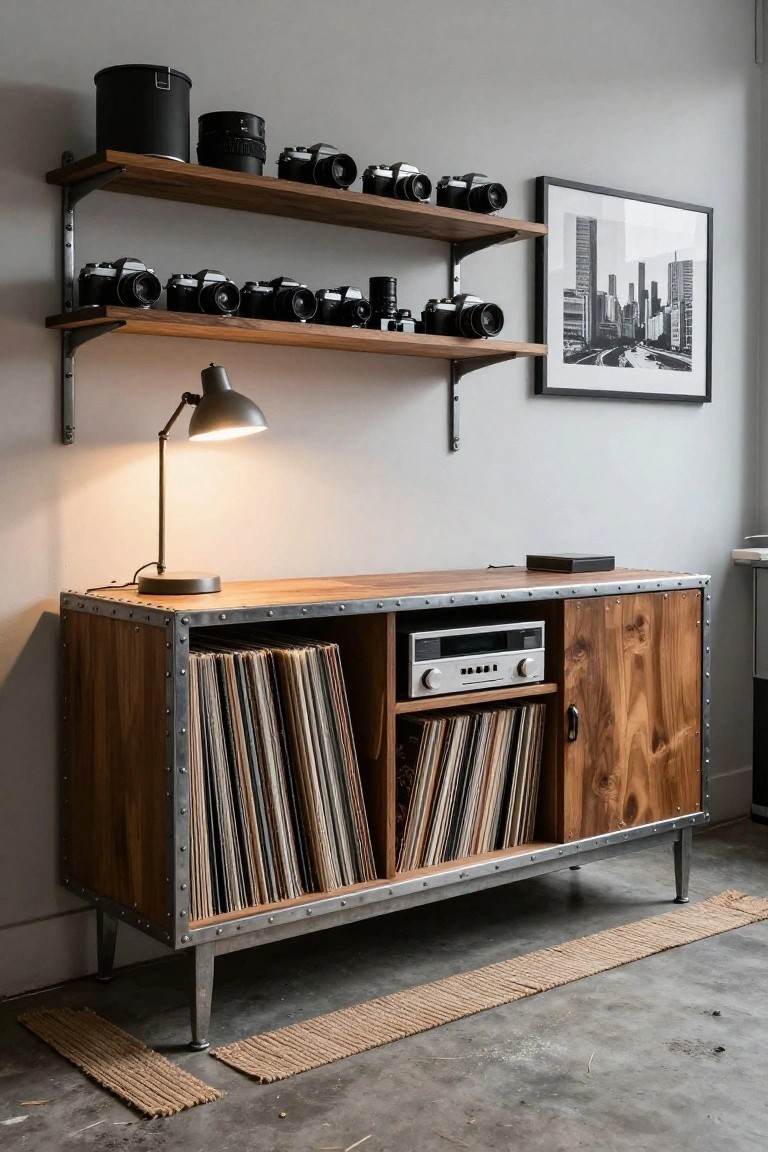
A sideboard works well when you need a place to keep records without spreading them around the room. The open sections let you flip through what you have while the rest of the piece stays closed and tidy. It turns a big collection into something that feels manageable instead of messy.
This setup fits best in a living room or den where you play music often. Keep the records in the open spots and use the cabinets for everything else you want out of sight. Just watch the weight so the piece stays stable on its legs.
Sideboards With Cabinets And Drawers Hide The Clutter
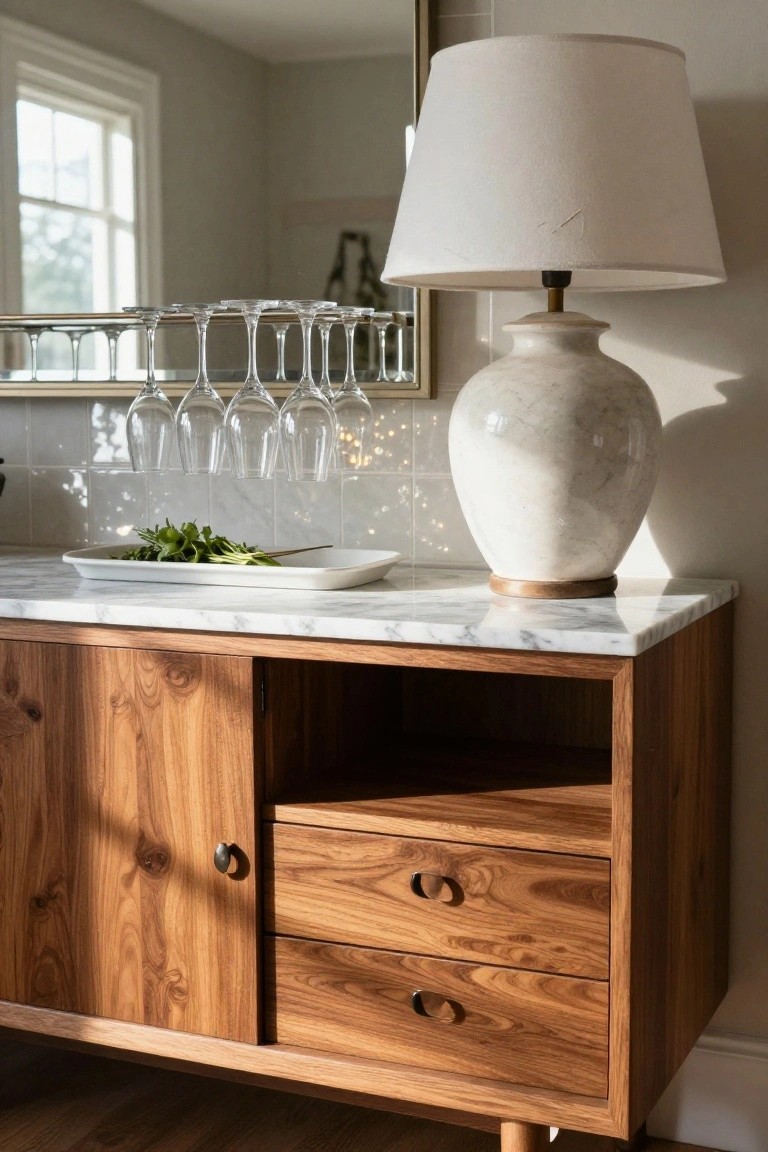
A sideboard works best when most of the storage stays out of sight. Closed doors and drawers let you tuck away dishes, linens, or serving pieces without the surface turning into a catchall. The clean top then has room for just a lamp or a tray, which keeps the whole piece looking neat in a dining area or entry.
This setup suits homes that need extra storage but still want an open, uncluttered feel. Look for pieces with a mix of shallow drawers for small items and deeper cabinets for larger ones. Avoid overloading the top, since that quickly undoes the hidden storage benefit.
Pull-Out Trays for Everyday Pantry Items
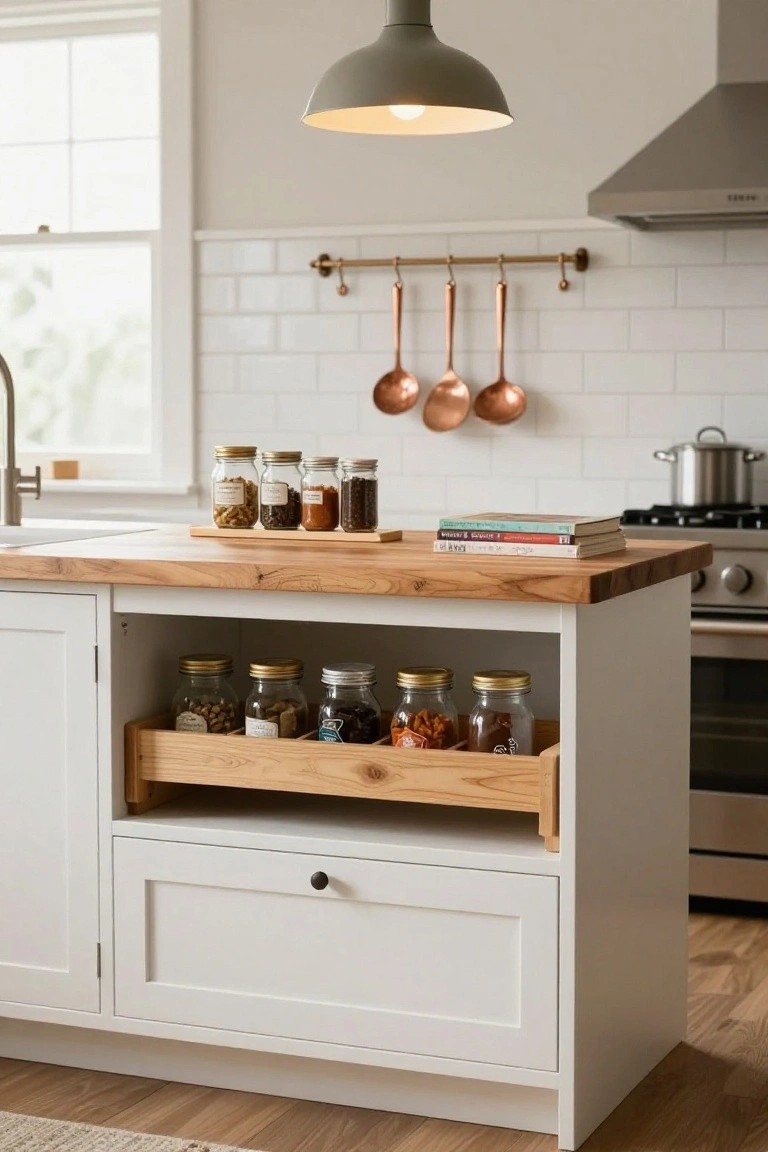
A pull-out tray built into the side of a sideboard or island gives you a place to line up jars without leaving them scattered on the counter. It keeps the surface clear while still letting you reach what you need quickly. Many people like this setup because it turns a plain cabinet into something more practical without adding extra furniture.
This idea works best in kitchens or dining rooms where you store spices, tea, or snacks that get used often. It suits homes that already have a sideboard or island but want better everyday access without visible clutter. Just measure the depth first so the tray does not stick out when closed.
Hide Everyday Items In A Sideboard Drawer
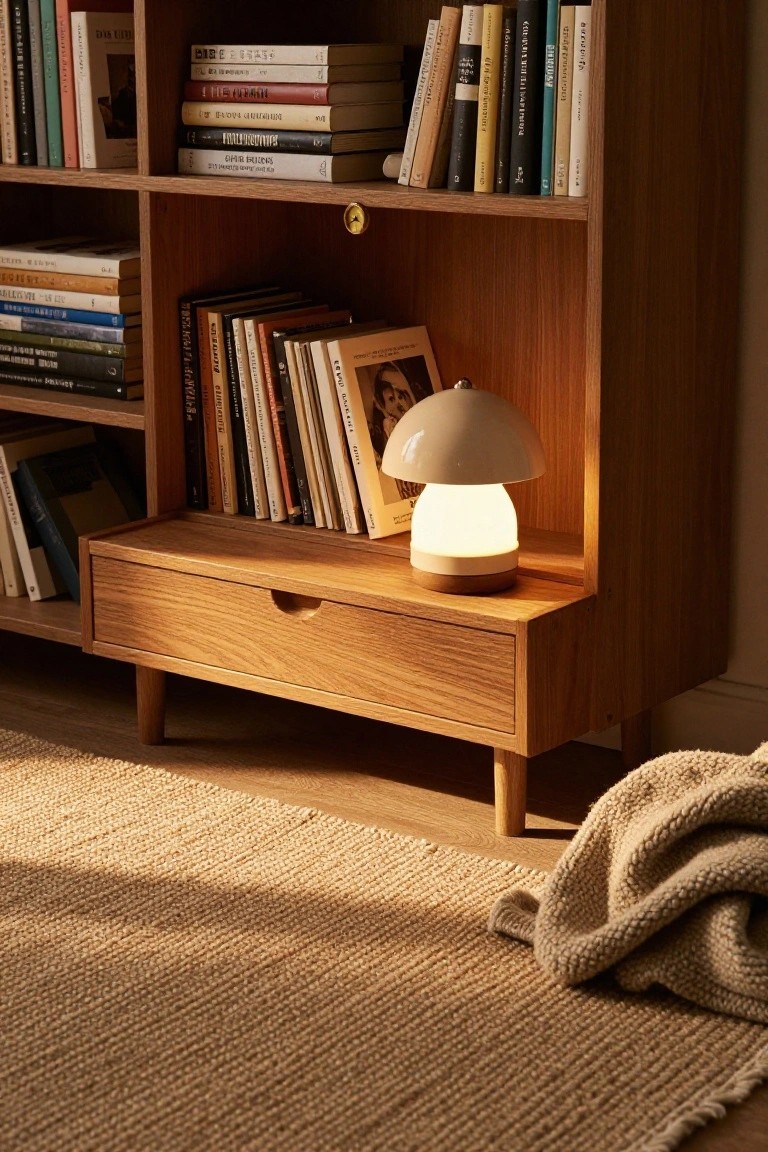
A drawer built into a low sideboard gives you a place to drop mail, chargers, or other small things that usually end up scattered on top. It keeps the surface clear while still letting the piece work as a display spot for books or a lamp.
This setup fits best in living rooms or entry areas where you want quick access but also a tidy look. Choose a drawer that runs the full width so it feels balanced with the rest of the furniture.
Frequently Asked Questions
Q: How do I keep cords and chargers from turning into a tangled mess inside the sideboard?
A: Wrap each cord around a small binder clip and drop it into a divided tray. That way you grab the right one without pulling everything else out with it.
Q: My sideboard sits in the dining room. Can I still tuck away board games and art supplies there?
A: Slide the games into flat bins on the bottom shelf and stack the supplies in a couple of matching boxes above them. Everything stays out of sight yet close enough for quick setup at the table.
Q: What if I open the doors and the inside already looks crowded?
A: Pull out anything you have not used in the past month. One quick pass like that frees up space and makes the rest easier to reach.
