

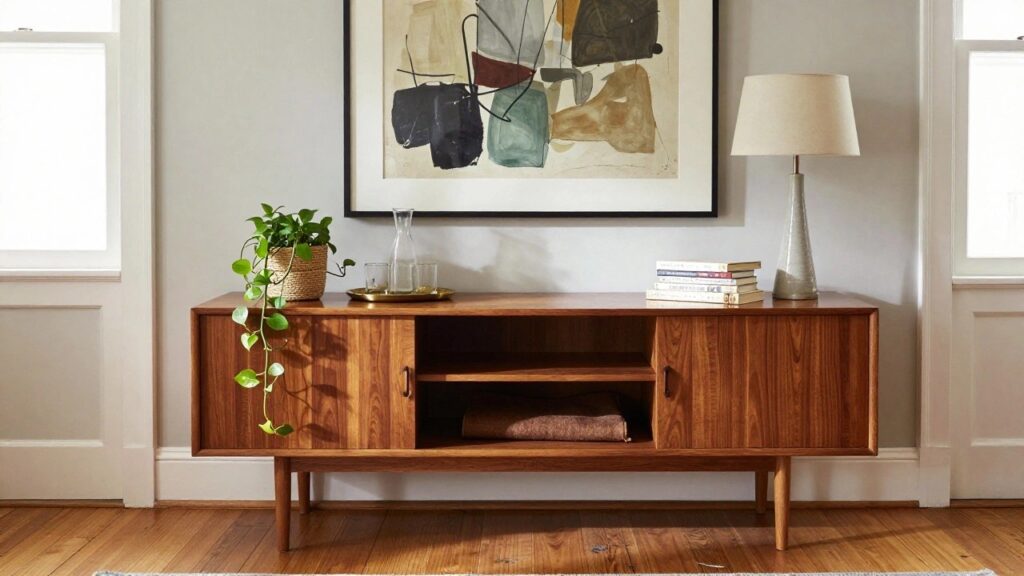
I have always noticed that a sideboard tends to anchor the flow of a room more than people realize at first glance.
It needs to work with the actual scale of the furniture nearby and the way people move through the space day to day.
Proportions make the difference.
I usually try a couple of different heights and textures in the room itself before deciding what feels settled rather than staged.
A few thoughtful swaps in what sits on top or underneath can pull scattered elements together without changing anything else.
Mix Open And Closed Storage
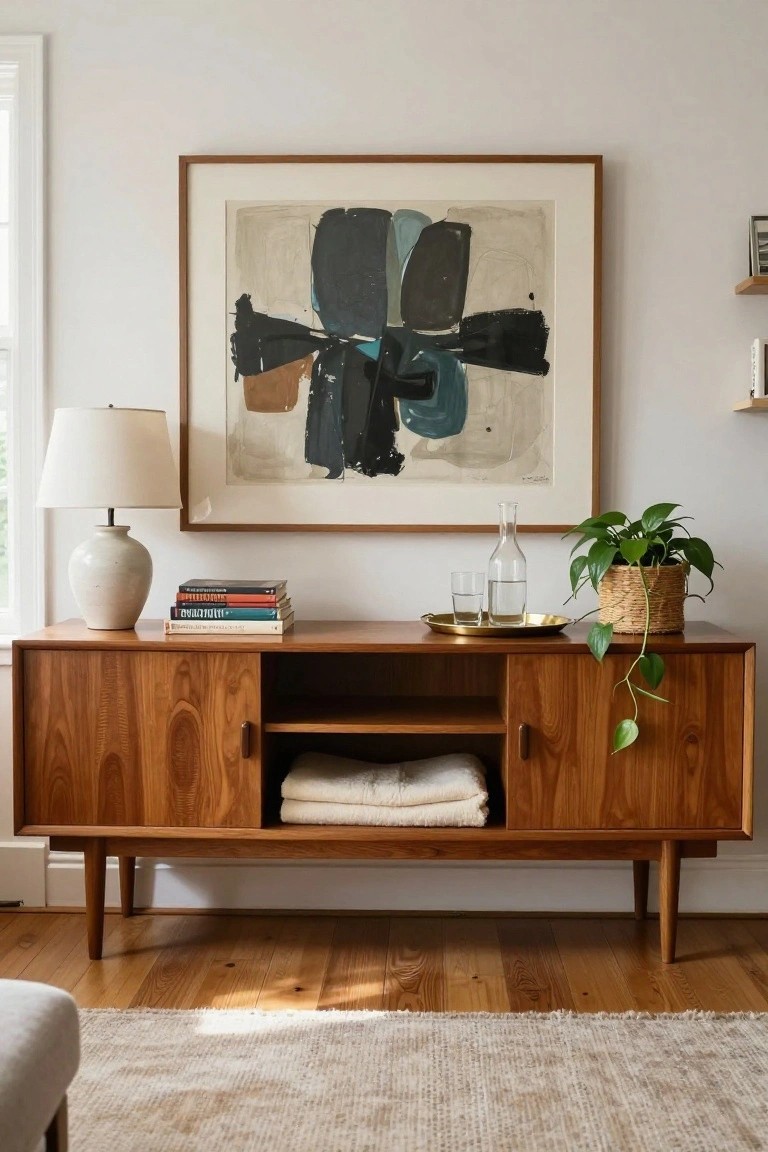
A sideboard feels more useful when it gives you places to hide things and spots to keep a few items in view. The open center shelf here holds folded textiles while the cabinets on either side keep the rest out of sight, so the top stays clear for a lamp, books, or a tray.
This approach works well in living rooms or dining areas that need extra storage without looking crowded. It suits homes where furniture has to do more than one job, and it keeps the whole piece from feeling too heavy or too plain.
A Mirror Above The Sideboard For Balance
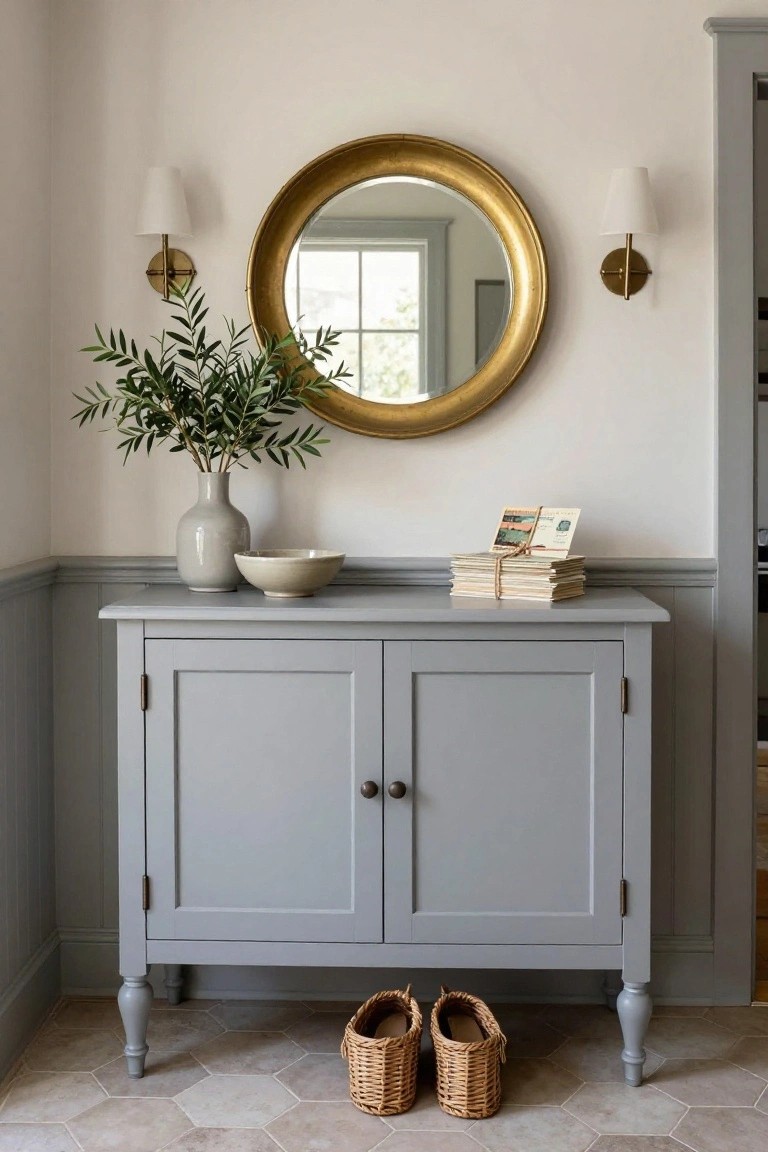
A large round mirror placed right over a sideboard gives an entry or hallway a steady, pulled-together look without much effort. The shape softens the lines of the cabinet and bounces light around the space, which helps narrow areas feel less cramped.
This works best in homes with simple trim and neutral walls where you want the setup to feel calm rather than busy. Stick to a few items on top, like a vase and a small stack of books, so the mirror stays the main focus.
Displaying Plates Above a Sideboard
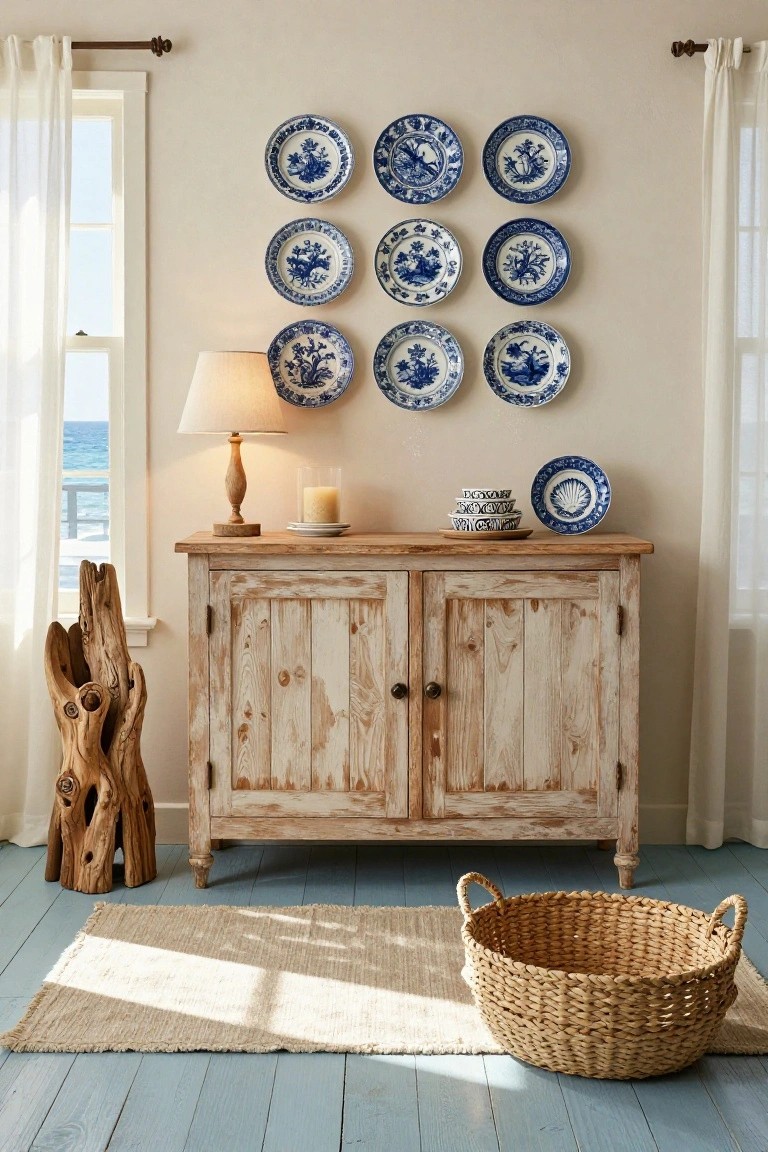
Hanging plates in a neat grid above a sideboard gives the piece a finished look without needing lots of extra decor. The arrangement pulls the eye up and creates a balanced focal point that works especially well when the sideboard itself stays fairly simple.
This setup suits homes with a collected feel, like coastal or traditional spaces. Keep the plates evenly spaced and stick to a limited color range so the display stays calm rather than busy.
Balance A Sideboard With Height On One Side
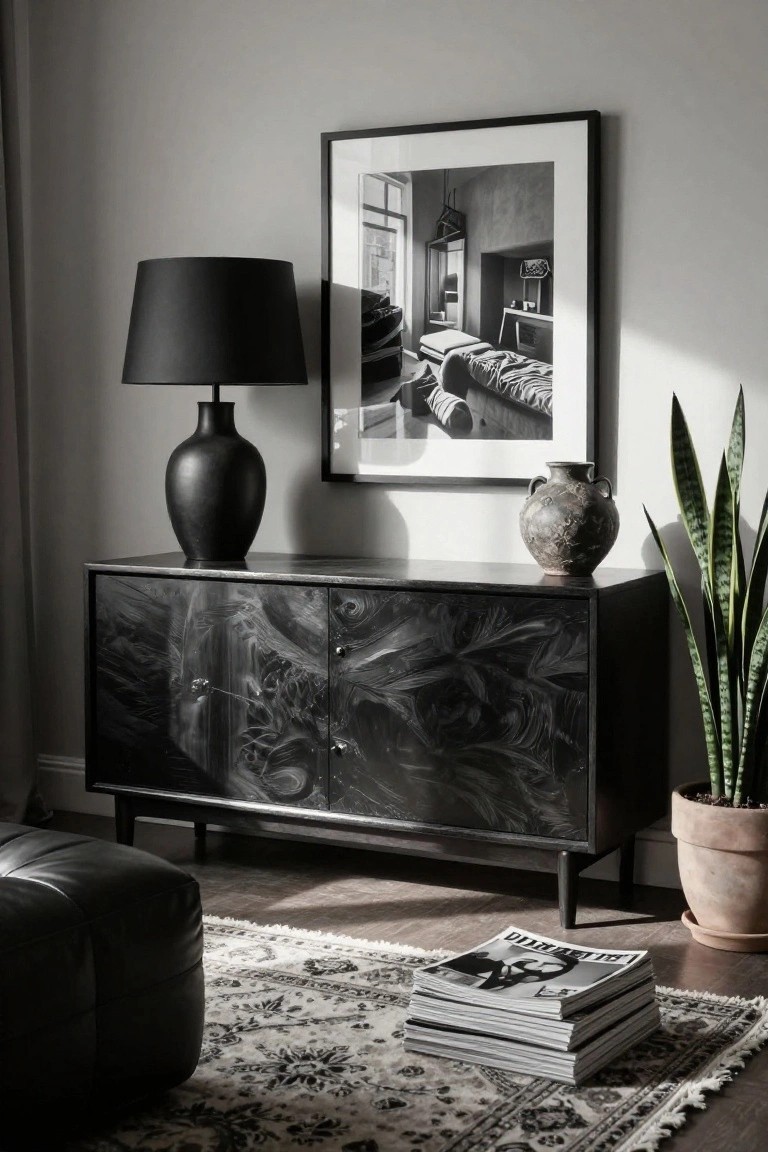
A tall lamp on one end of a sideboard gives the whole piece more presence without crowding it. The dark finish on the cabinet already makes a strong statement, so keeping the other side lighter with just a single vessel lets the eye rest and keeps the setup from feeling heavy.
This works best in living rooms or entryways where you want the sideboard to feel grounded but not busy. Stick to one tall item and one lower one, then hang art centered above so the vertical lines tie everything together.
Keep Sideboard Styling Light and Natural
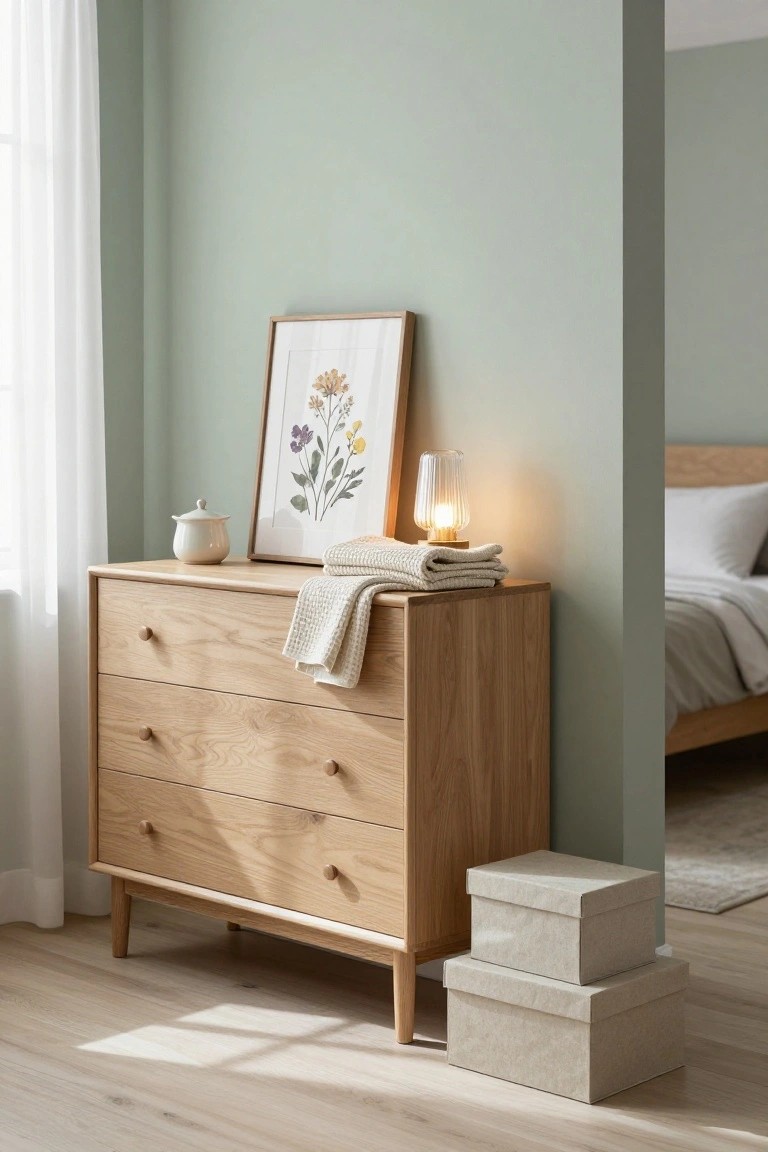
A light wood sideboard feels calmer when you resist the urge to fill every inch of the top. A single piece of artwork, a small lamp, and one or two folded textiles give it enough presence without making the surface look busy.
This setup works best in bedrooms or quiet living spaces where you want the furniture to feel useful rather than decorative. Tuck a couple of storage boxes beside it for extra function, and choose pieces that share the same soft, neutral tones so nothing fights for attention.
Open Shelves For Everyday Storage
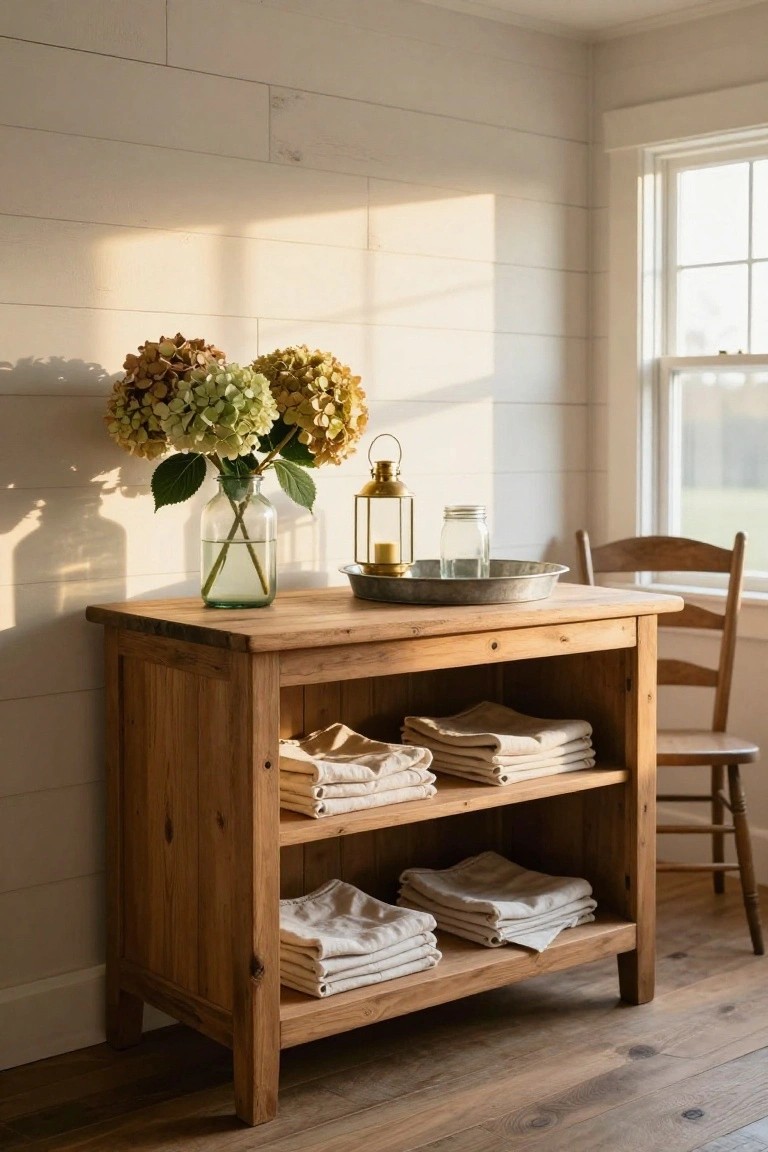
Open shelves on a sideboard give you a place to keep things you reach for often without tucking them away in drawers. It keeps the piece useful while still looking like part of the room instead of just extra furniture.
This setup works best in dining areas or hallways where you need quick access to linens or cloths. Stick to one or two types of items so the shelves stay tidy and the whole arrangement feels balanced.
Lean a Tall Artwork Behind the Sideboard
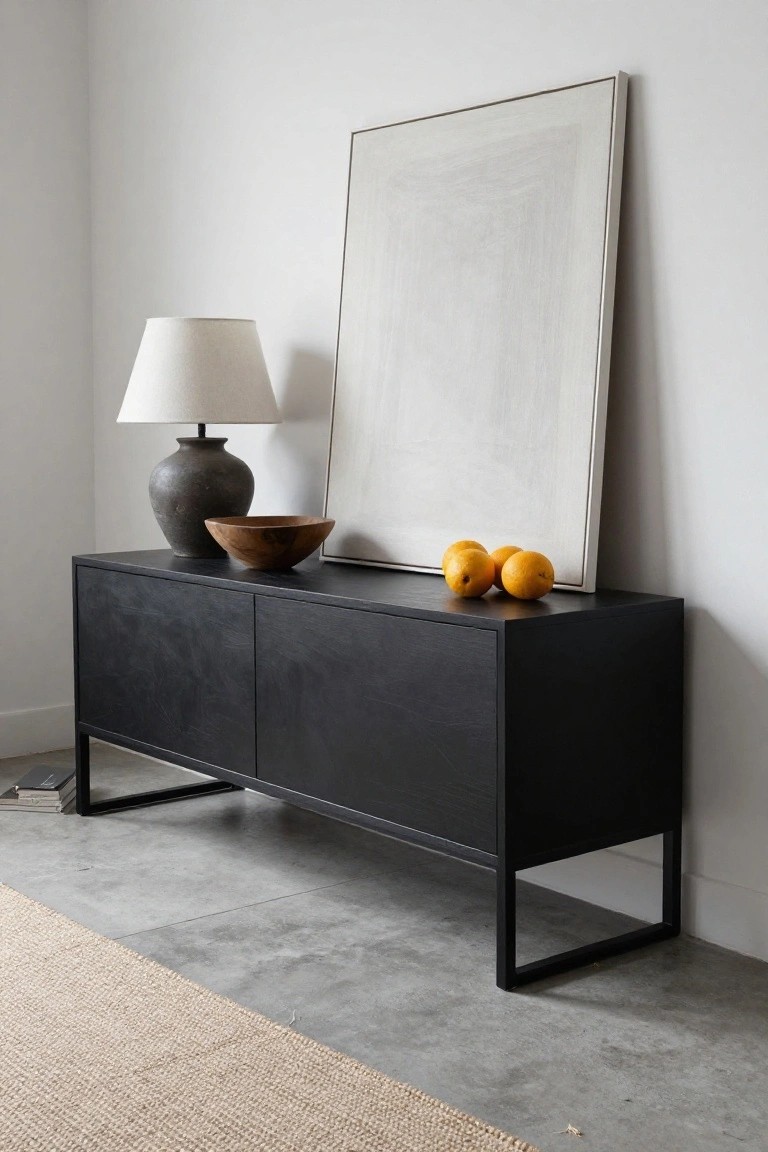
A low sideboard can sometimes look a bit flat on its own. Leaning a tall piece of art behind it gives the whole setup more height and helps the arrangement feel more complete without adding extra furniture.
This works especially well in living rooms or hallways where you want a clean look. Keep the top fairly simple with just a lamp and a couple of natural pieces so the art stays the main focus above.
Blend Natural Materials Around a Sideboard
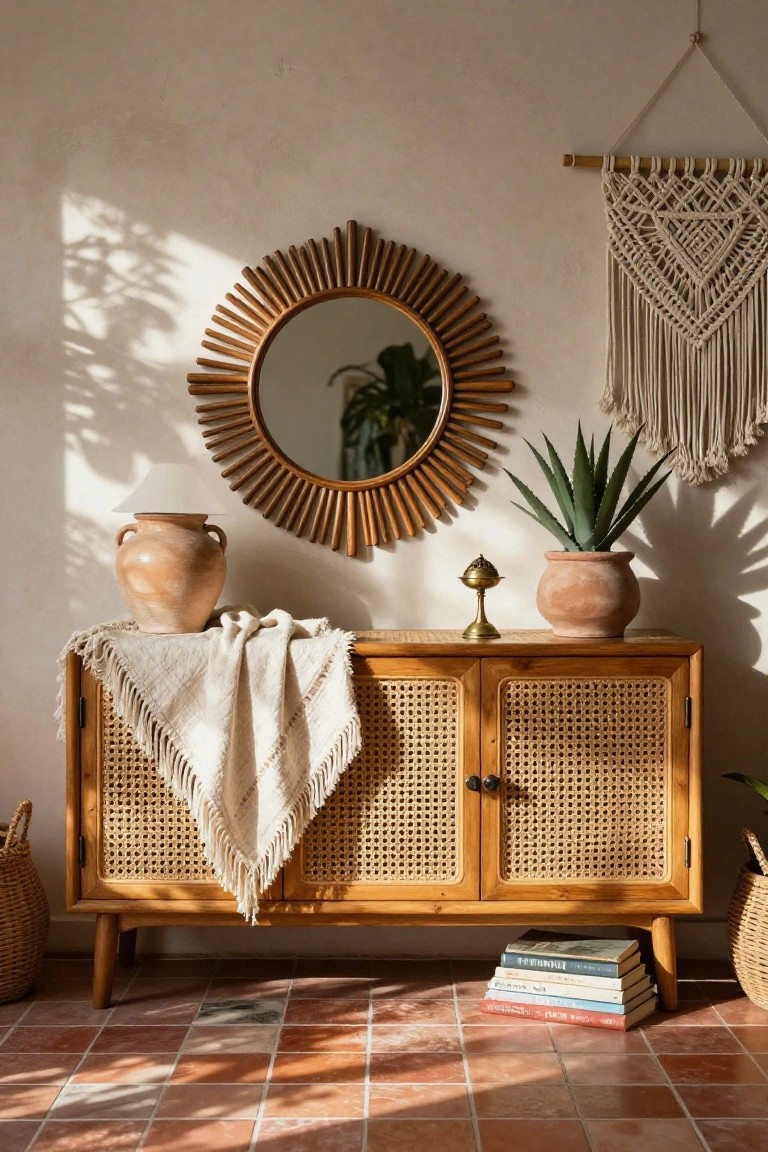
Natural materials keep a sideboard from feeling too heavy or styled. Cane doors, raw wood, and simple clay pieces work together to add warmth while still leaving plenty of breathing room on the surface.
This setup suits homes with wood floors or soft neutral walls. Stick to just a few accents so the textures carry the look without crowding the space.
Add Basket Storage Under a Kitchen Sideboard
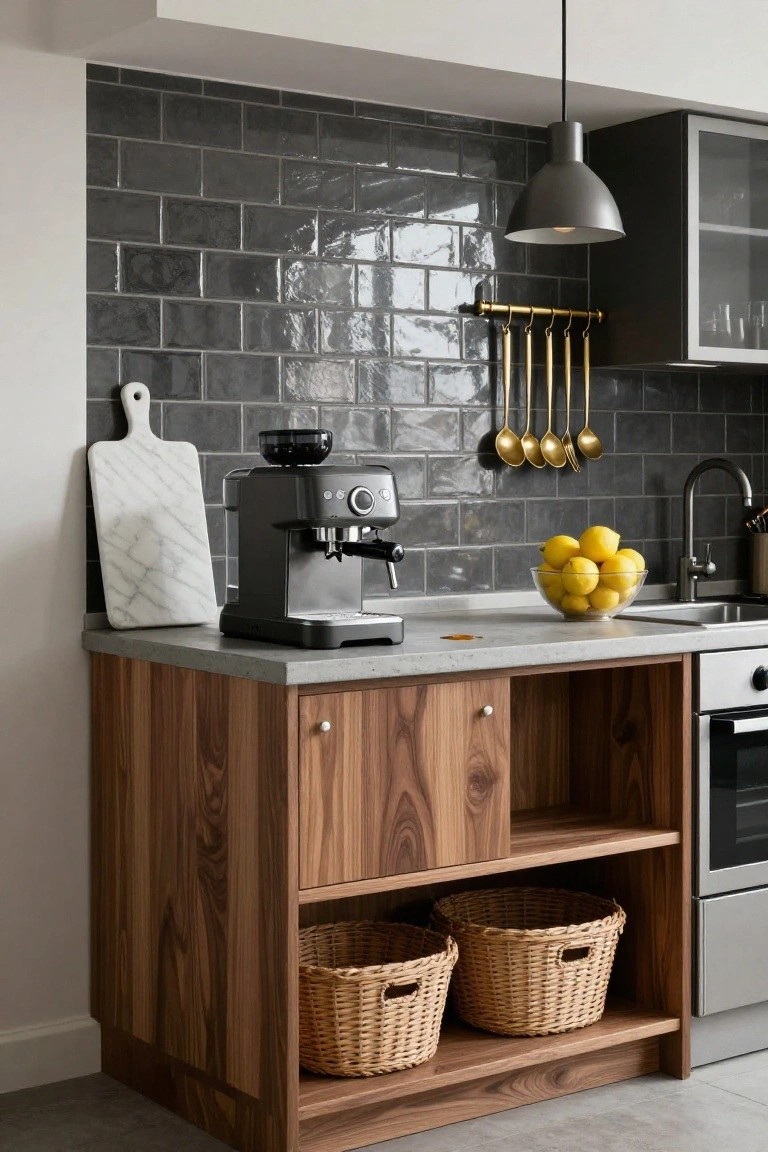
Open lower shelves on a sideboard can handle a lot of the clutter that usually ends up on counters. Baskets make that space useful without turning it into a mess of loose items.
This setup works best in kitchens that already have enough cabinet space higher up. Keep the baskets simple and sturdy so they can hold things like towels or produce without looking messy.
Balance a Sideboard With Matching Lamps
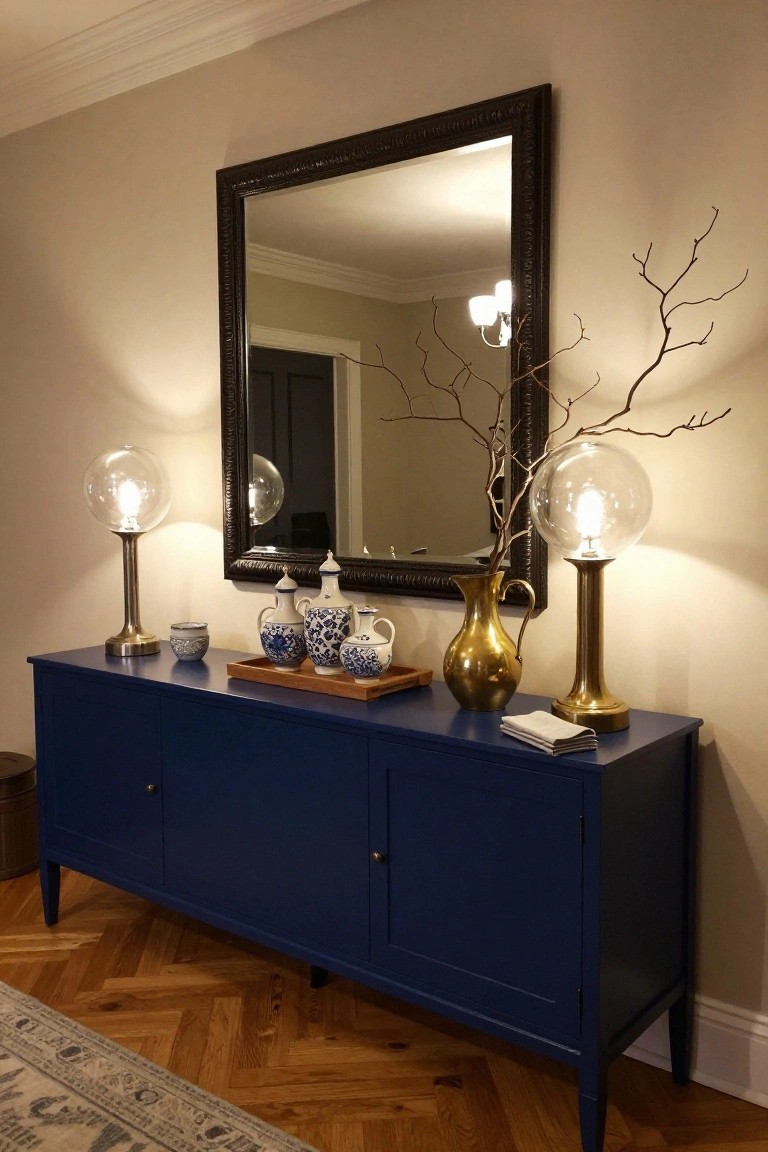
Placing a pair of matching lamps at each end of a sideboard is a simple way to keep the whole setup feeling steady and even. It works especially well when the sideboard itself has a strong color, like the deep blue one here, because the lamps help soften the look without adding too much fuss.
This approach suits entryways or hallways where you want the piece to feel grounded but not overly decorated. Keep the center area lighter with just a few objects so the lamps stay the main anchors on either side.
Using A Console Table As A Hallway Drop Zone
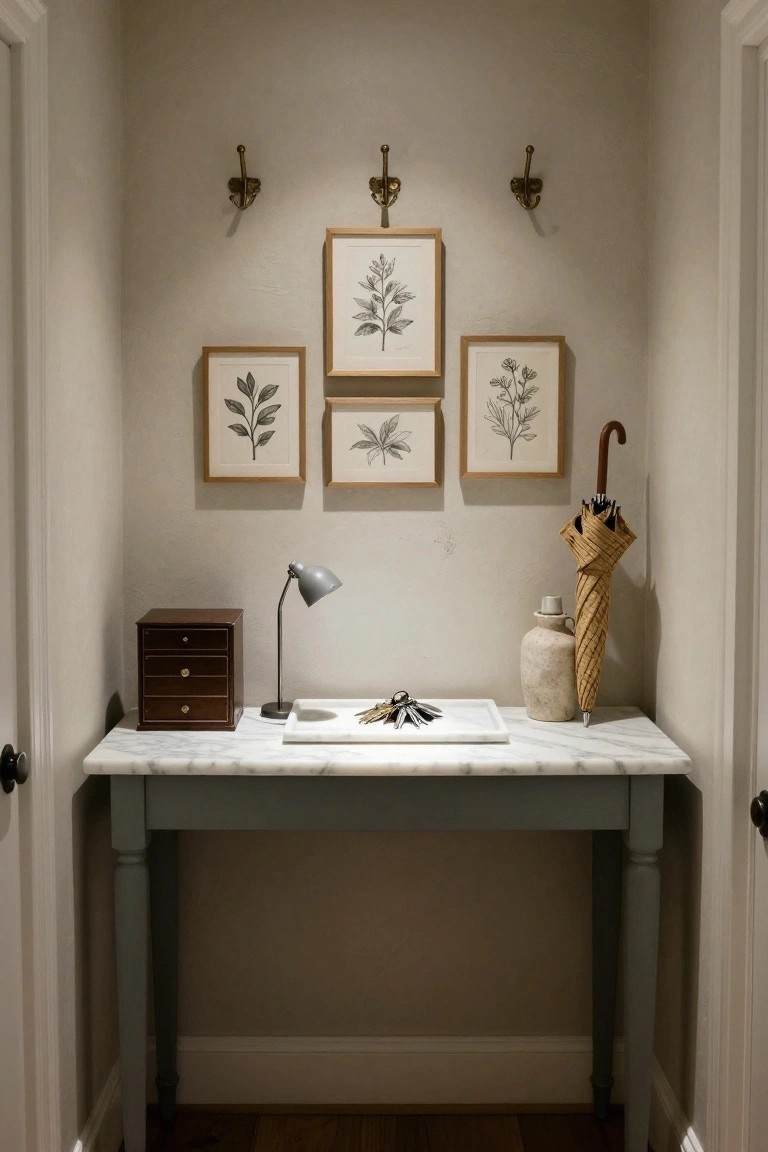
A console table works well in a narrow hallway because it gives you a place to set things down without blocking the path. Many people end up tossing keys and mail on the nearest surface, and this setup keeps those items in one spot.
Place a tray on top for keys and everyday things, then add just a lamp and one or two small pieces. Hang a few framed prints and hooks above the table so the wall feels finished without crowding the space. This works in most older homes or apartments where hallways are tight but still need to feel useful.
Built-In Shelving Over A Sideboard
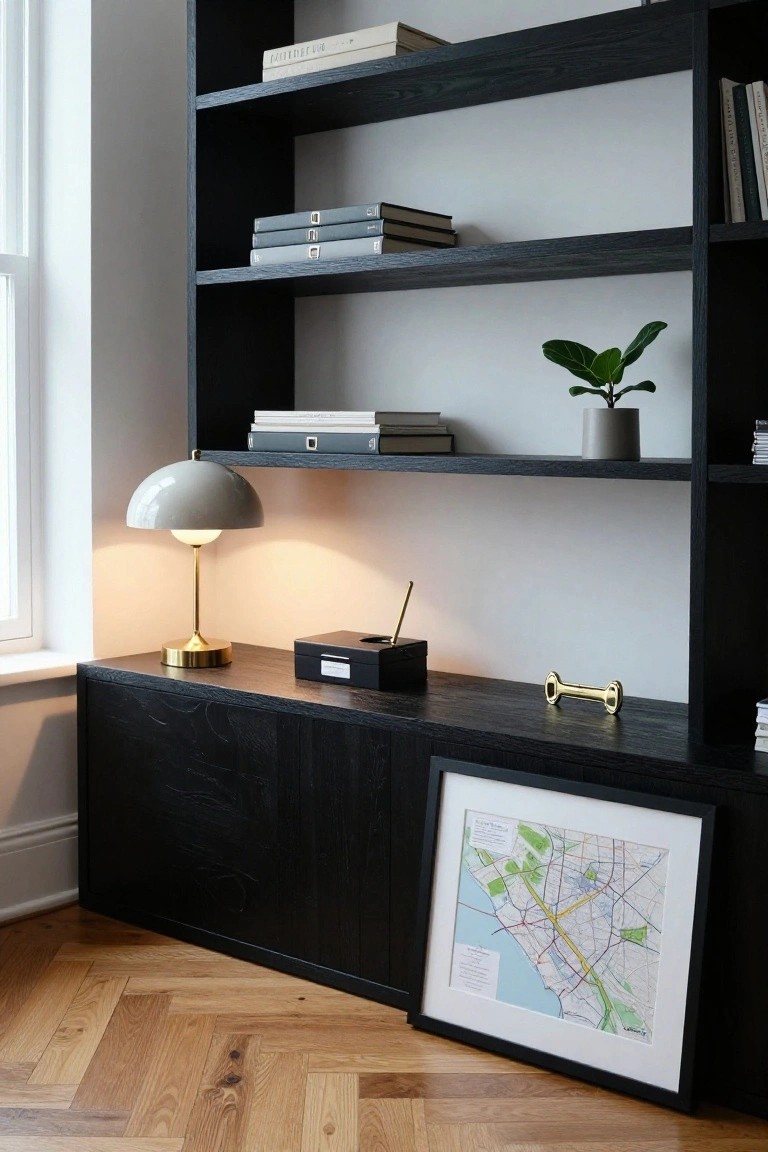
A built-in sideboard with open shelves above it gives you a simple way to add both storage and display space in one spot. The lower cabinet keeps everyday items out of sight while the shelves let you arrange books and a few smaller pieces without crowding the room.
This works best in living rooms or offices that need extra function but still want a calm look. Stick to a limited color range on the shelves and leave some empty space so the whole area feels balanced rather than busy.
Mix Open Shelving With Closed Storage
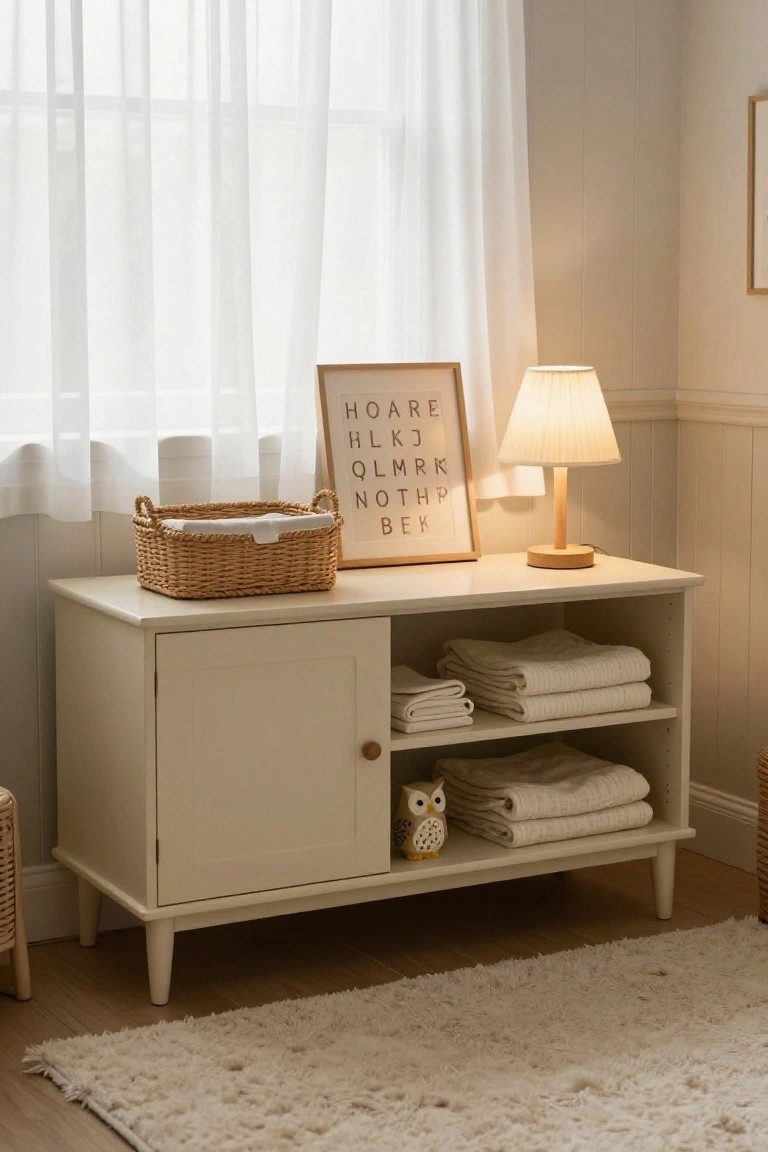
One way to make a sideboard feel useful without looking cluttered is to combine open shelves with a closed cabinet. This setup lets you keep everyday items like extra blankets or linens within reach while hiding the rest behind a door.
It works especially well in smaller rooms or entry areas where you need both display space and storage. Stick to neutral colors and simple items on the open parts so the whole piece stays calm and easy to live with.
Floating Vanity With Open Storage
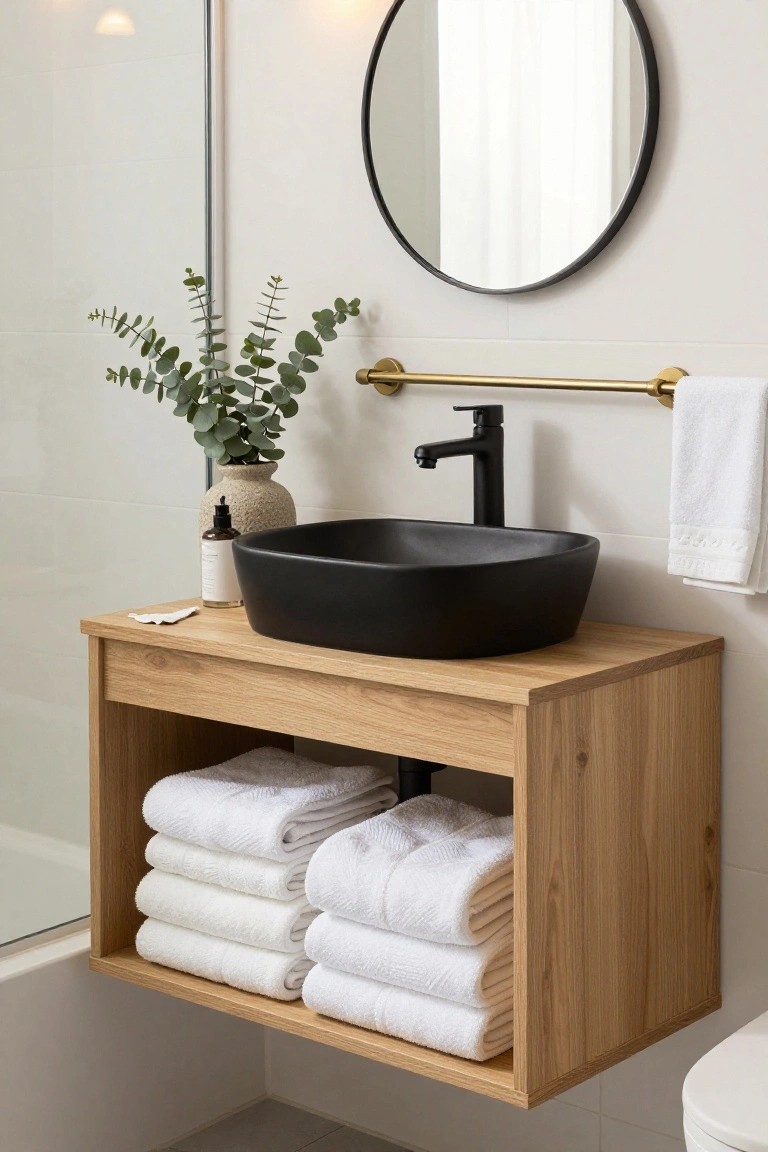
A floating vanity with open shelves underneath keeps a bathroom feeling light and practical at the same time. The open space lets you reach towels easily without digging through cabinets, and the wood tone adds just enough warmth against the darker sink and fixtures.
This works especially well in smaller bathrooms where closed storage can start to feel heavy. Stack a few sets of matching towels on the shelves and the whole area stays neat without extra doors or hardware getting in the way.
Letting Sunlight Highlight a Wooden Sideboard
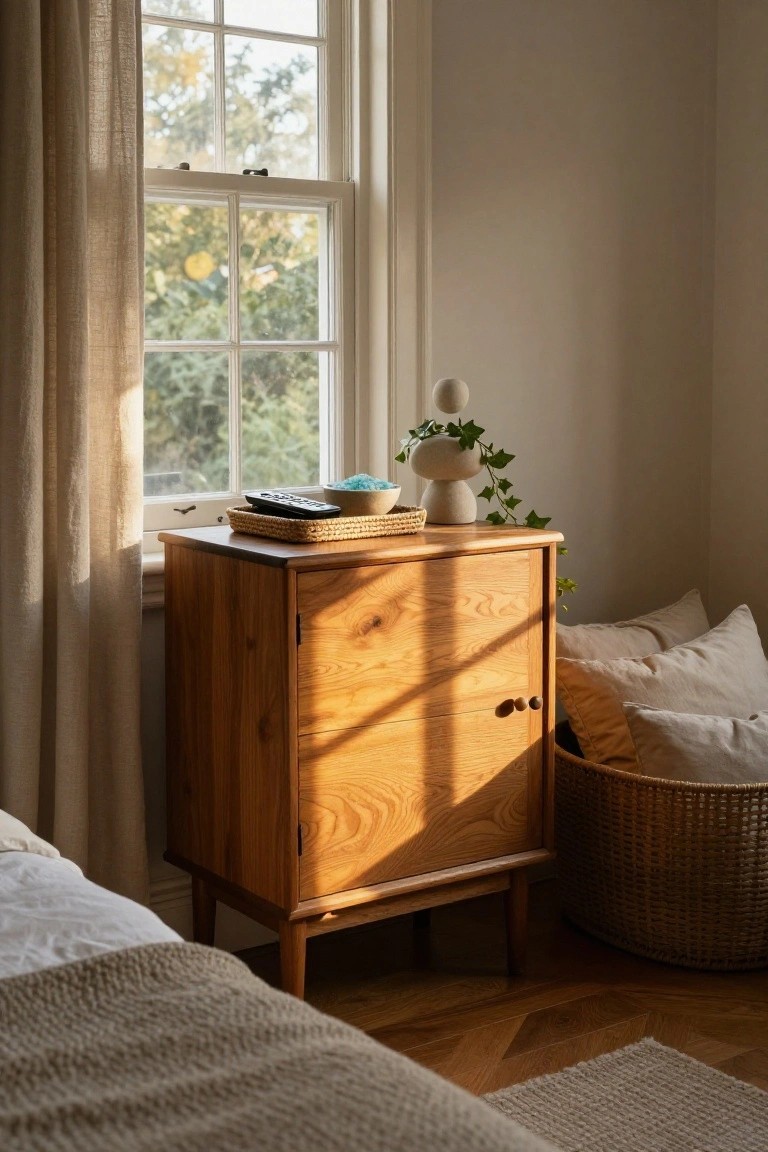
A sideboard gains a lot of warmth when it sits where light can move across it throughout the day. The wood shows its grain better and the piece feels more connected to the rest of the room instead of just sitting there as storage.
Place it under or next to a window if the layout allows. Keep whatever you set on top fairly simple so the light stays the main feature rather than fighting with too many objects.
Use Wire Baskets for Open Storage
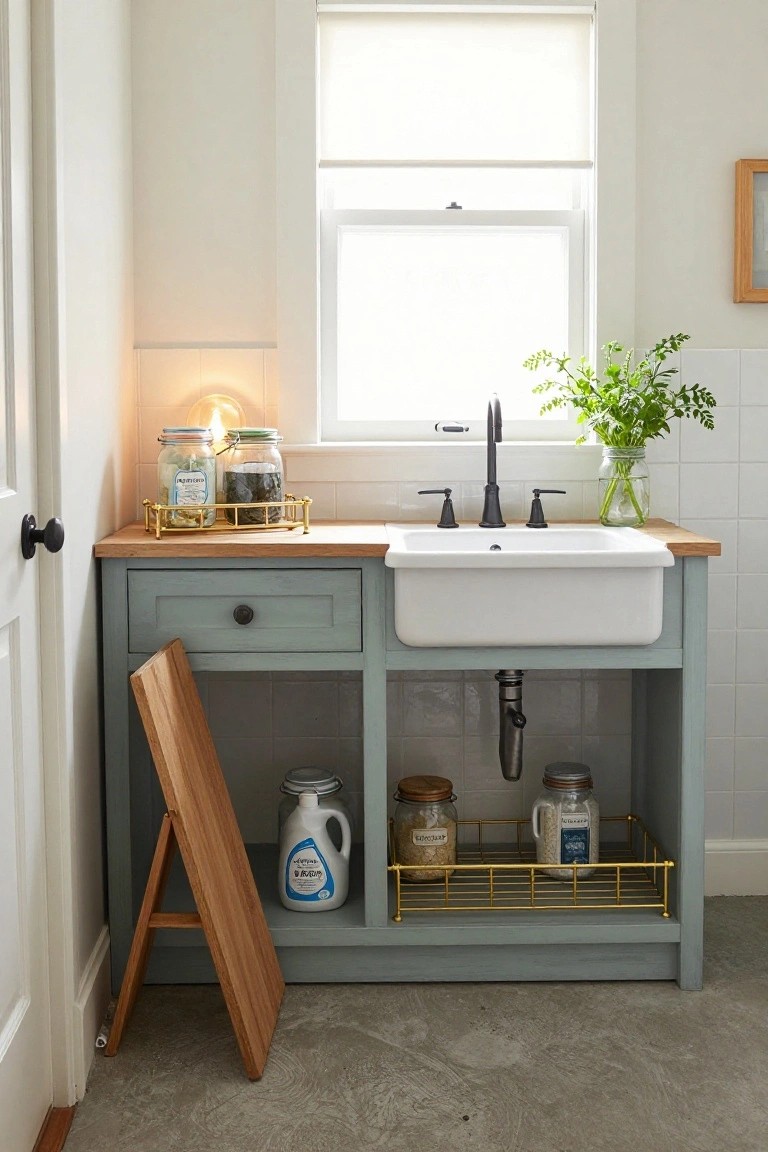
Open storage under a sink or counter often ends up looking messy. Wire baskets fix that by giving loose items a home while keeping everything easy to reach and still looking put together.
This approach works well in a laundry room or compact kitchen where you need quick access to supplies. Group like items in each basket so the space stays tidy without doors getting in the way.
Finding Extra Storage Under a Sideboard
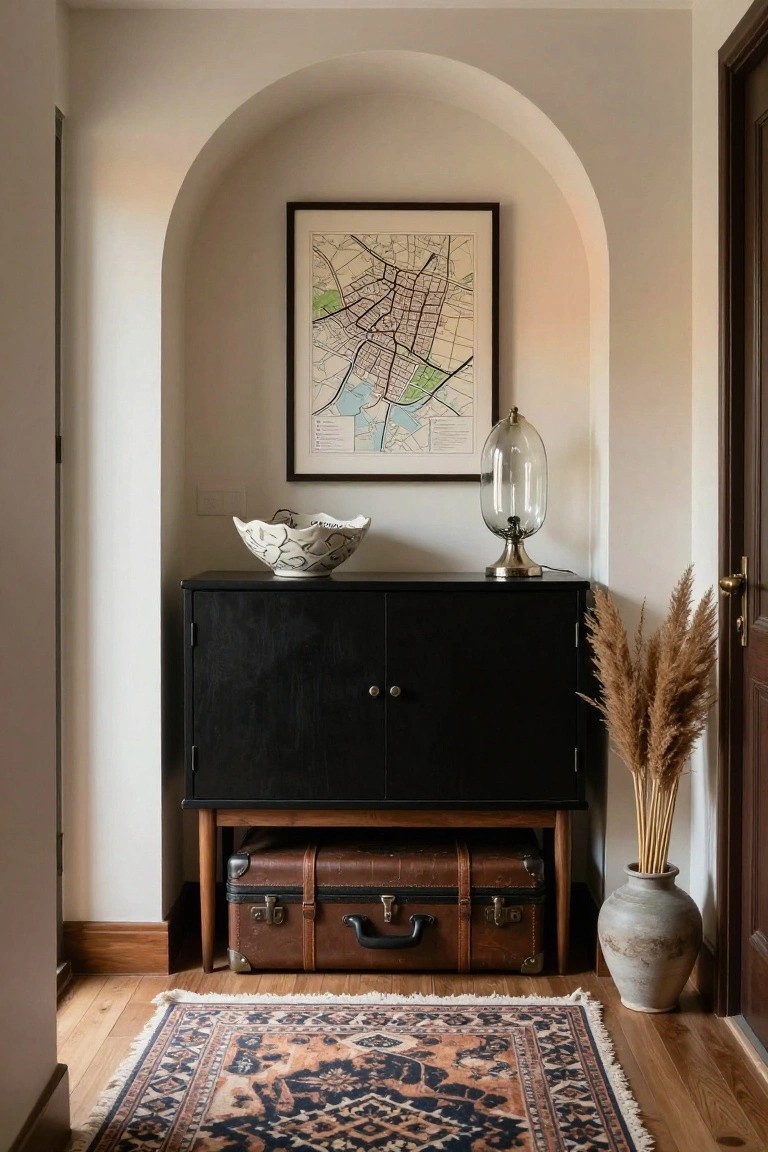
One way to keep a sideboard practical is to use the open space underneath for storage trunks. It turns an otherwise empty gap into something useful without adding more furniture to the room.
This works especially well in hallways or small entries where closet space is tight. Choose trunks that sit low enough to leave the sideboard at a comfortable height and still allow easy movement through the area.
Add Pillow Storage To Your Sideboard
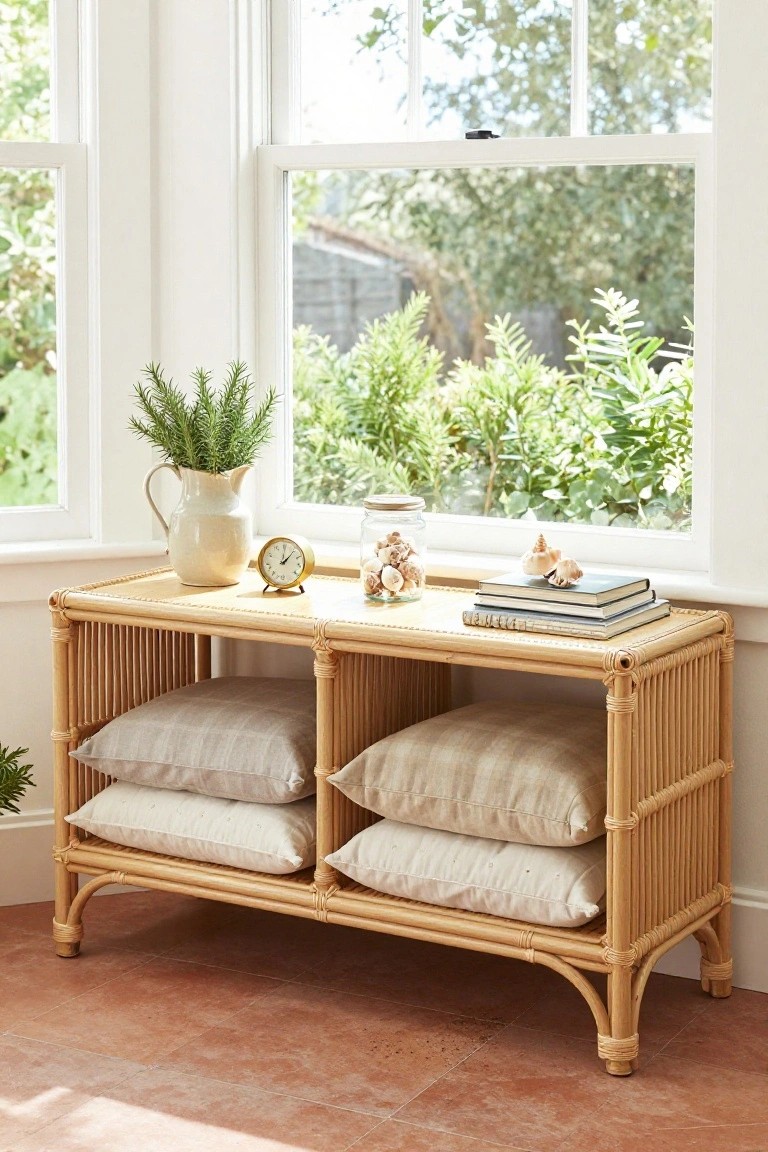
Many sideboards have open lower shelves that often sit empty. Using that space for extra pillows keeps them easy to reach while adding a bit of softness to the overall look.
This works especially well in rooms with multiple seating areas. Stick to simple covers in neutral tones so the setup feels balanced rather than busy.
Turning a Console Table Into a Music Station
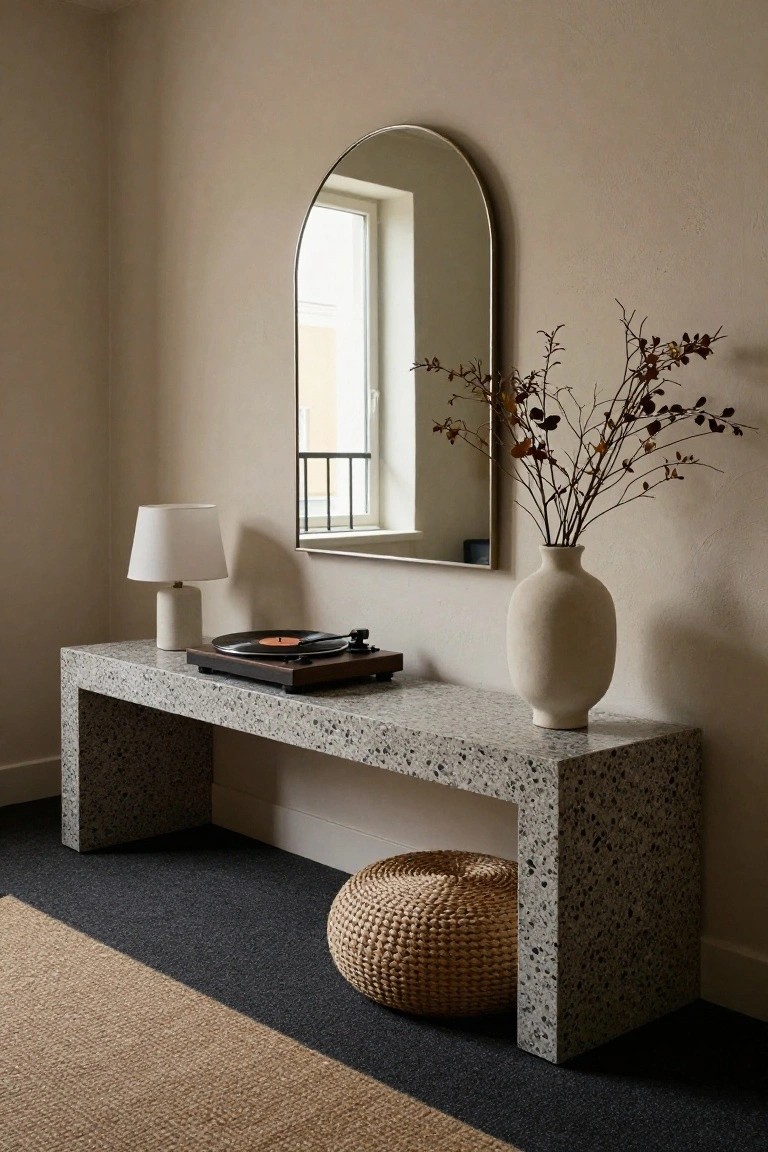
A long console works well in a hallway when you give it one clear purpose instead of trying to make it hold everything. Setting a record player on top turns the surface into something you actually use, instead of just a spot for keys and mail. The rest of the setup stays quiet so the player stays the main thing people notice.
This idea suits homes with narrow passages or open entries where you want a bit of life without adding bulk. Keep the other pieces simple, like a small lamp and one tall vase, and leave the area underneath open for a low stool or basket. That way the table stays useful without feeling crowded.
Using a Sideboard for Everyday Book Storage
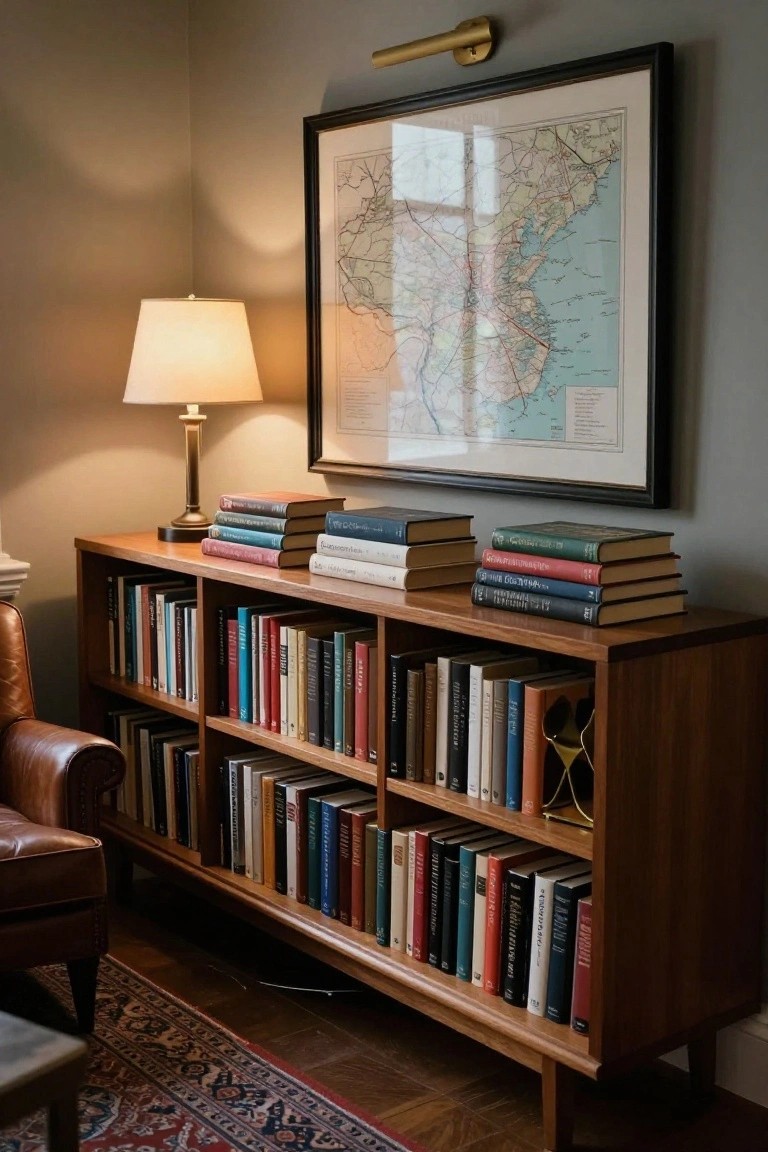
A low sideboard gives you a place to keep books without needing a full wall of shelves. It works well because the surface stays open for a lamp or a few objects while the shelves below hold the rest of the collection in an easy to reach way.
This approach fits best in living rooms or hallways where you want storage that does not feel heavy. Keep the top fairly clear so the sideboard can still be used for a drink or a stack of mail, and arrange the books by size so the whole thing stays simple to maintain.
Frequently Asked Questions
Q: How tall should my sideboard be to feel balanced with the seating around it?
A: Go for waist height so the top lines up nicely with nearby chairs or a sofa. This keeps the eye moving smoothly across the room instead of stopping at an awkward gap.
Q: What if I only have a few items and the surface still looks bare?
A: Stack a couple of books on one side and set a single lamp or plant on the other. The empty middle space actually helps everything feel intentional and open.
Q: How do I swap things out later without losing the cohesive feel?
A: Keep your main anchors like a tray or bowl in place and rotate smaller accents around them. One or two fresh pieces at a time keeps the whole setup steady while you test new ideas.
