


I’ve noticed that most home offices start out feeling stark and unyielding, no matter how much we organize them.
Wabi-sabi flips that by welcoming the quiet appeal of chipped edges and faded finishes into everyday work spaces.
In my setup, swapping sleek frames for ones with natural knots made the walls finally breathe around me.
Folks tend to pick up on the soft patina of aged metal lamps or uneven shelves right away, since they draw the eye in a room we stare at for hours.
A few of these tweaks are the kind worth noting down to test in your own corner, where they settle into real rhythms.
Natural Wood Desk Setup
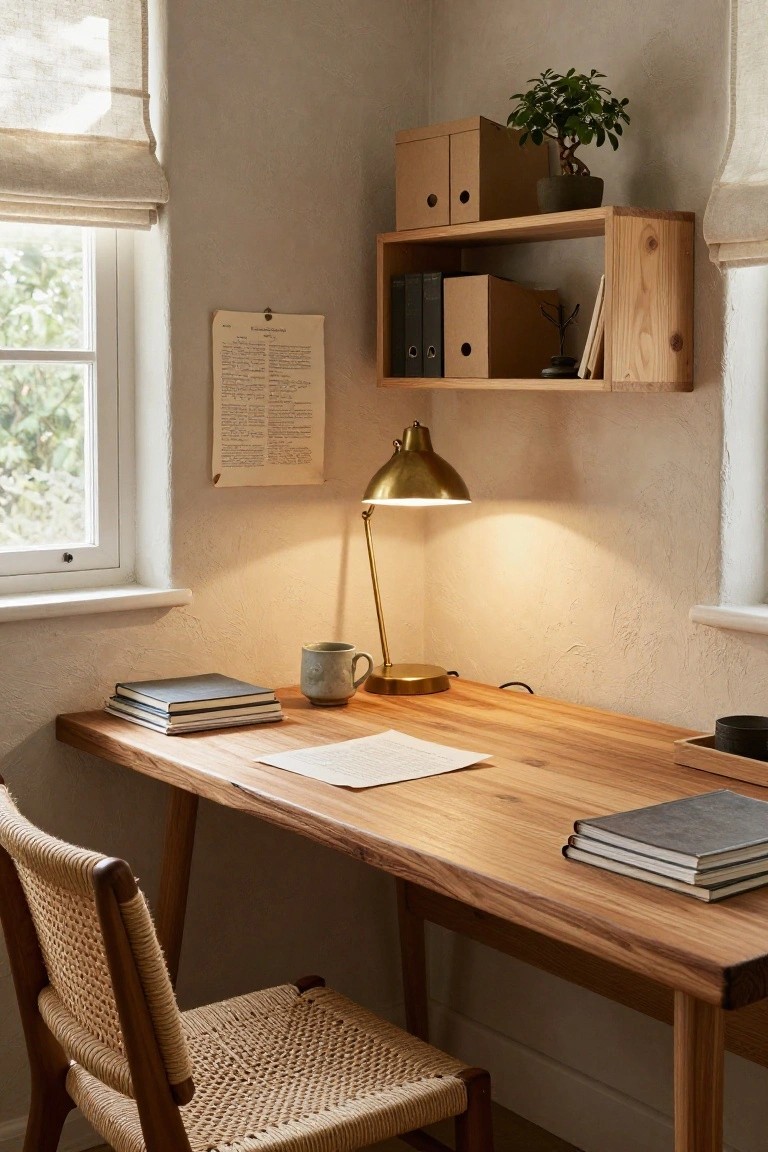
A wooden desk like this one shows off the beauty in natural grain and knots. No fancy finishes here. Just honest wood that fits right into wabi-sabi thinking. The rattan chair adds that same handmade touch. Soft light from the window keeps it calm and real.
Put this in a small corner office or spare room. It works best where you want focus without fuss. Look for oak or walnut with live edges. Add a plant on the shelf above. Skip perfection. A little unevenness makes it yours.
Rustic Wooden Desk in a Plain Office
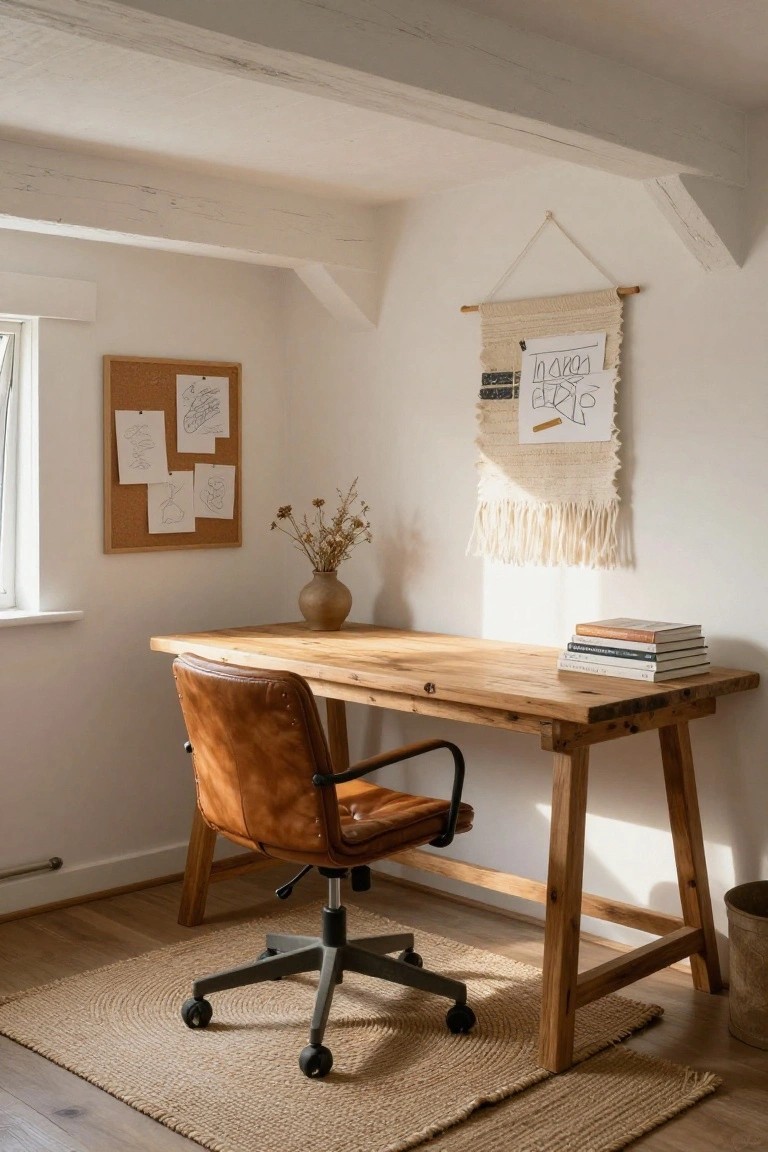
A rustic wooden desk like this one fits right into wabi-sabi thinking. It’s got that rough, natural grain and sturdy trestle legs that show off wood’s imperfections without trying too hard. Set against plain white walls, it keeps the space calm and focused, letting the desk do the talking while a few sketches on the corkboard add a handmade touch.
This kind of desk works best in smaller home offices where you want warmth without clutter. Pair it with a basic leather chair and keep the floor simple, maybe a seagrass rug. Skip anything too shiny. It suits older homes or rentals… just make sure the wood feels real, not factory-fresh.
Succulents Clustered on Desk and Sill
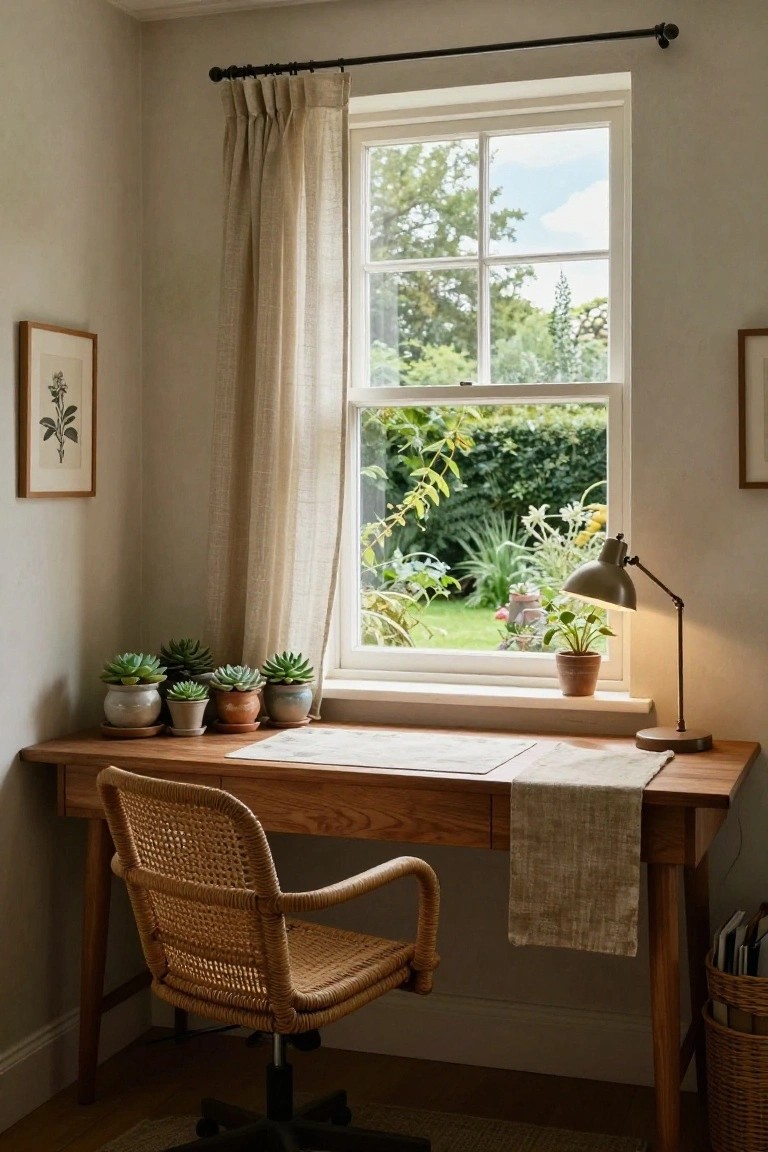
A bunch of small succulents in simple pots gathered right on the desk and windowsill brings that easy wabi sabi touch to an office corner. They are not perfectly arranged. Some pots are glazed, others plain, all a little uneven. It feels lived in, like plants just grew there over time. The natural shapes soften the workspace without much effort.
Try this in a sunny spot near a window. It suits compact home offices best, where you want green without fuss. Pick low-water types like echeverias. Set a few on the desk edge and one or two on the sill. Keep soil dry between drinks… or they might stretch out.
Wall Niche with Pottery Shelves
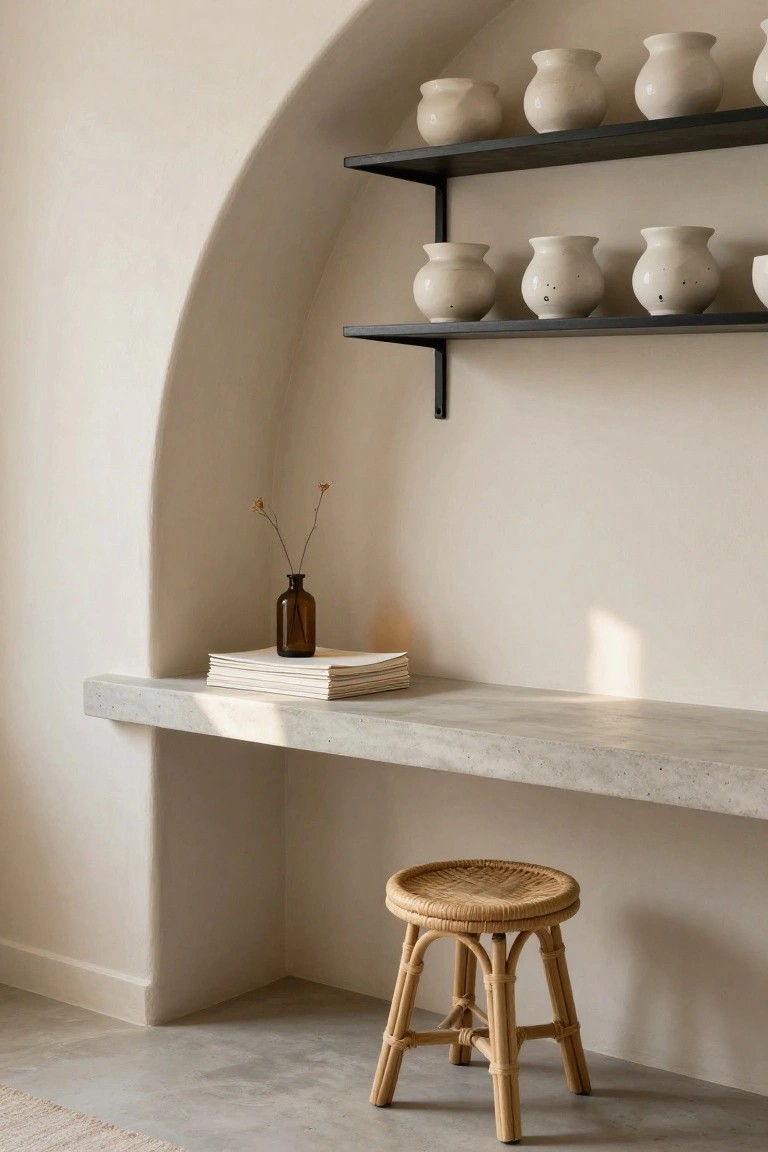
An arched recess in the wall makes a perfect spot for open black shelves holding white ceramic pots. These vases have that rough, handmade look wabi-sabi loves. Nothing matches exactly. It turns a plain corner into a quiet display that feels organic and settled. Below, a concrete ledge holds papers and a simple vase with dried stems.
Try this in a home office nook or reading spot. If you have an existing recess, just add floating shelves. Hunt thrift stores or markets for imperfect pots. A rattan stool fits right in front. Works best in light, neutral rooms where you want subtle texture without clutter.
Live-Edge Wood Table as Desk
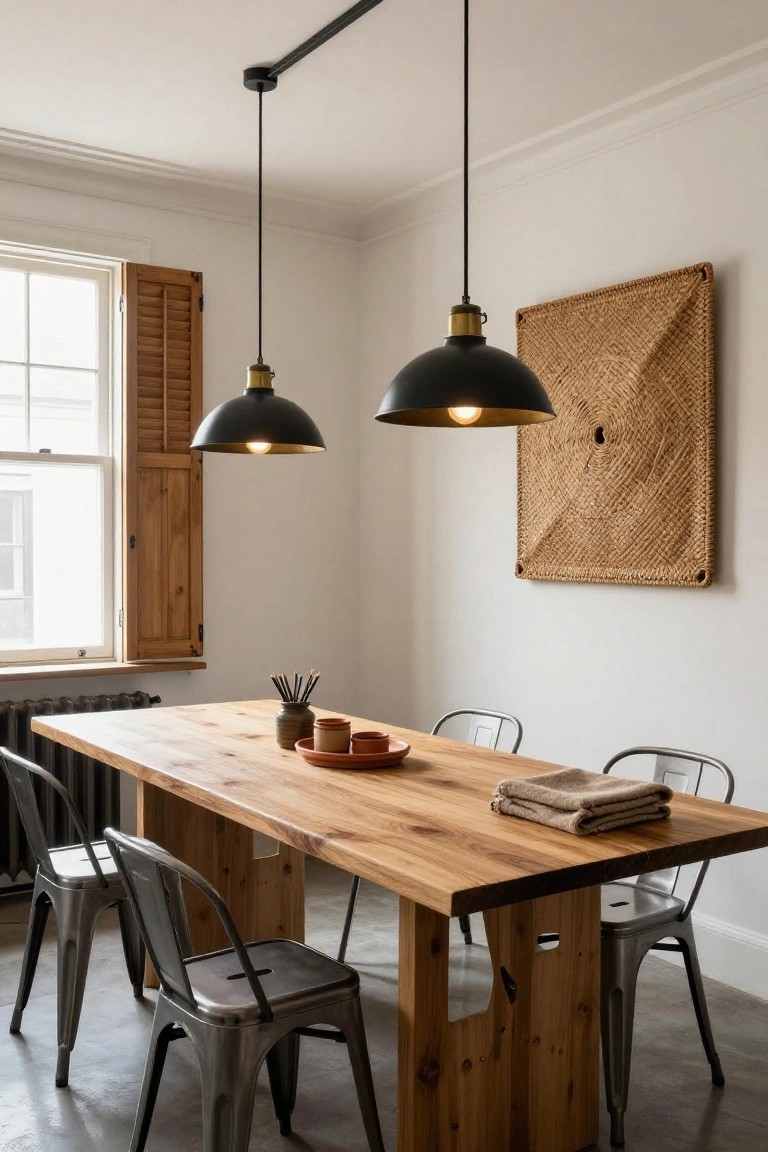
A table like this one, cut straight from the tree with its rough edges and knots showing, fits right into wabi-sabi office style. The natural grain and uneven shape give the space a lived-in feel without trying too hard. It stands out against plain white walls and pulls in warmth from the wood tones alone.
Set one up in a home office or multipurpose room where you need a work surface that doubles for meals. It suits older homes or minimalist setups best, especially with metal chairs around it for easy wipe-down. Just keep the finish light so the imperfections stay visible, and avoid overcrowding the top.
Rustic Wood Desk for Everyday Use
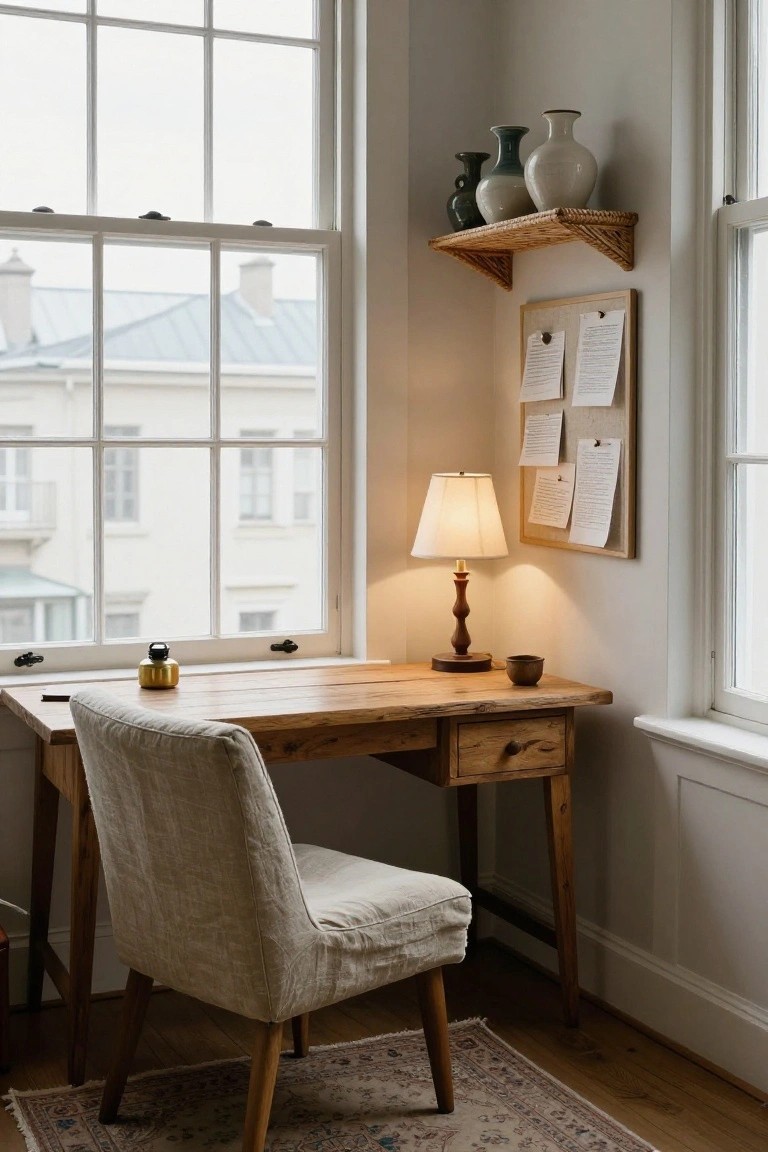
A desk with rough natural wood like this catches the eye because of its uneven edges and visible grain. It fits wabi sabi perfectly. No sanding everything smooth. Just honest material sitting there by the window with a plain linen chair. That small imperfections make the space feel lived in and calm.
Try this in a home office corner where light comes in strong. It suits older homes or apartments with high windows. Source wood from salvage yards or craftspeople nearby. Make sure the legs are sturdy enough for daily work.
Open Shelving with Ceramic Vases
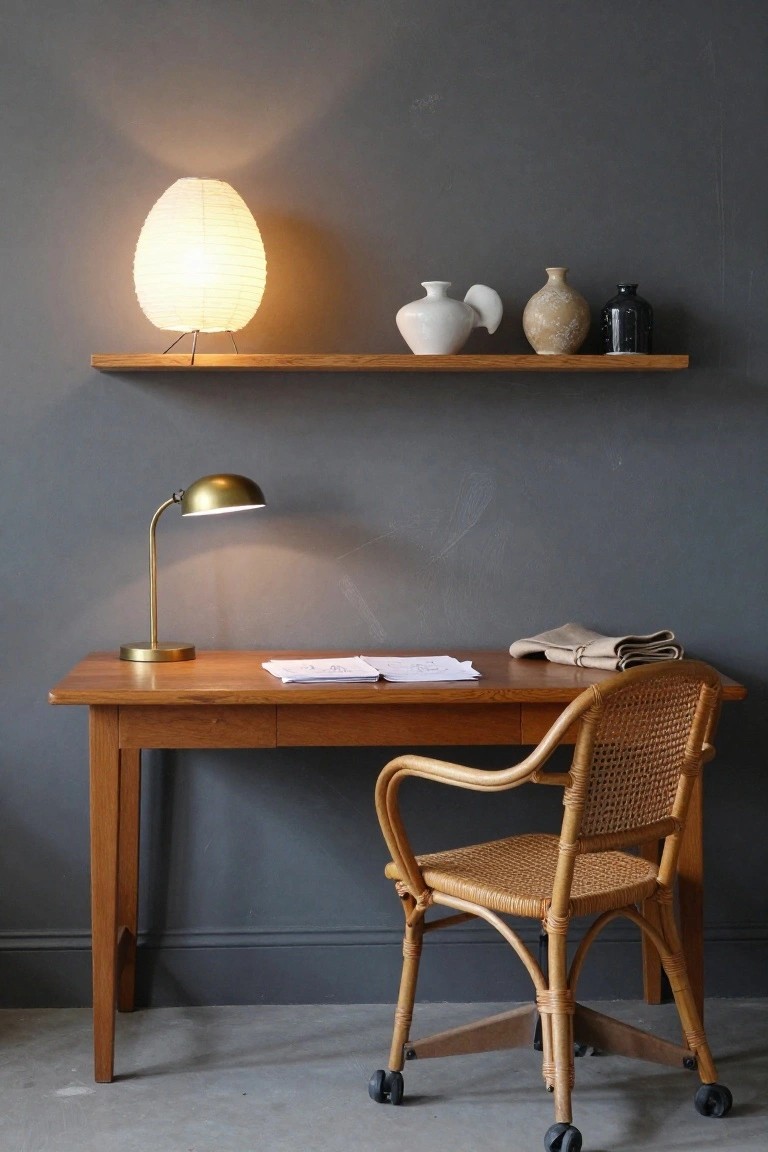
A floating wood shelf stocked with just a few handmade-looking ceramics brings real wabi-sabi character to an office corner. Those organic shapes and matte finishes up top, like the white ewer and textured beige vase, sit easy against the dark wall. They nod to imperfection without trying too hard, keeping the space calm and lived-in.
Hang a similar shelf above your desk in a small home office or study. Pick vases or pots with visible hand marks or slight asymmetry, three or four at most. It works best in rooms with neutral walls where the ceramics can stand out quietly. Skip anything too perfect or shiny.
Rustic Wooden Work Desk
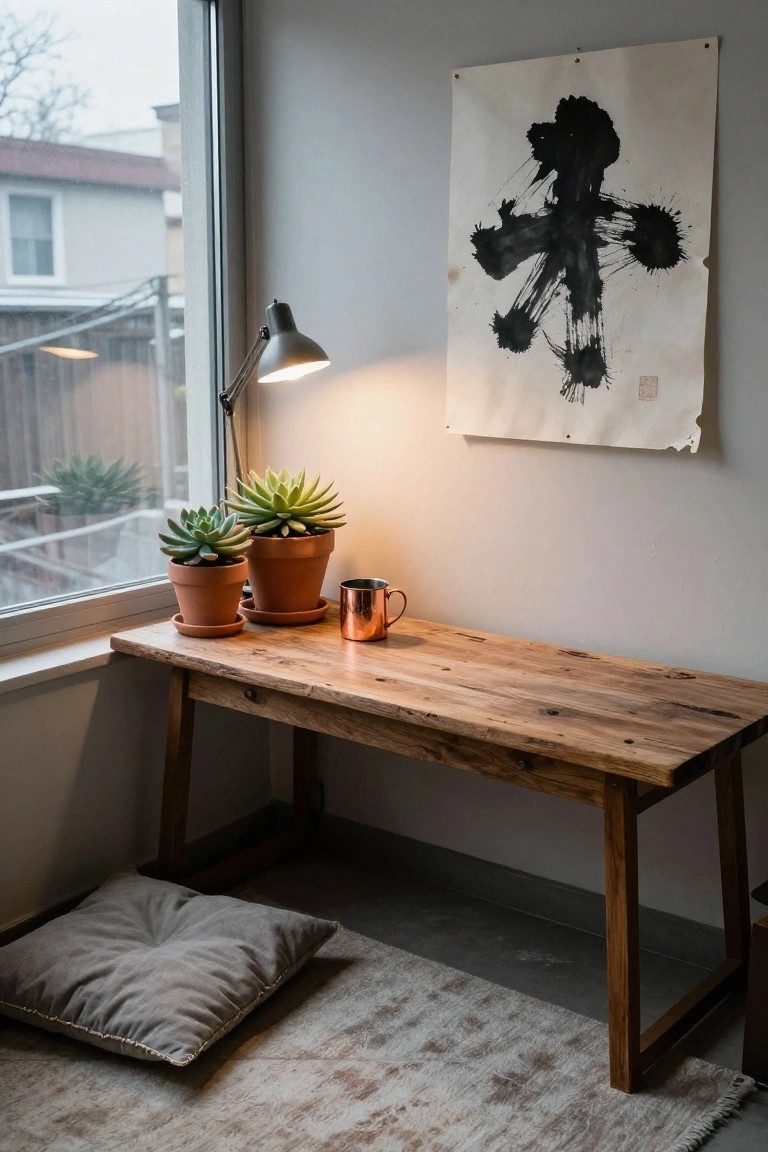
A desk like this one starts with rough sawn wood planks full of knots and splits. That’s the point in wabi sabi style. It turns a simple work surface into something with real character. Notice the plants and mug sitting easy on top. No need to hide the wood’s flaws.
Set it up in a quiet corner by a window. The natural light shows off the grain. It suits small home offices or apartments where you want calm without fuss. Skip polish or varnish. Just oil it lightly now and then.
Live-Edge Wood Desk
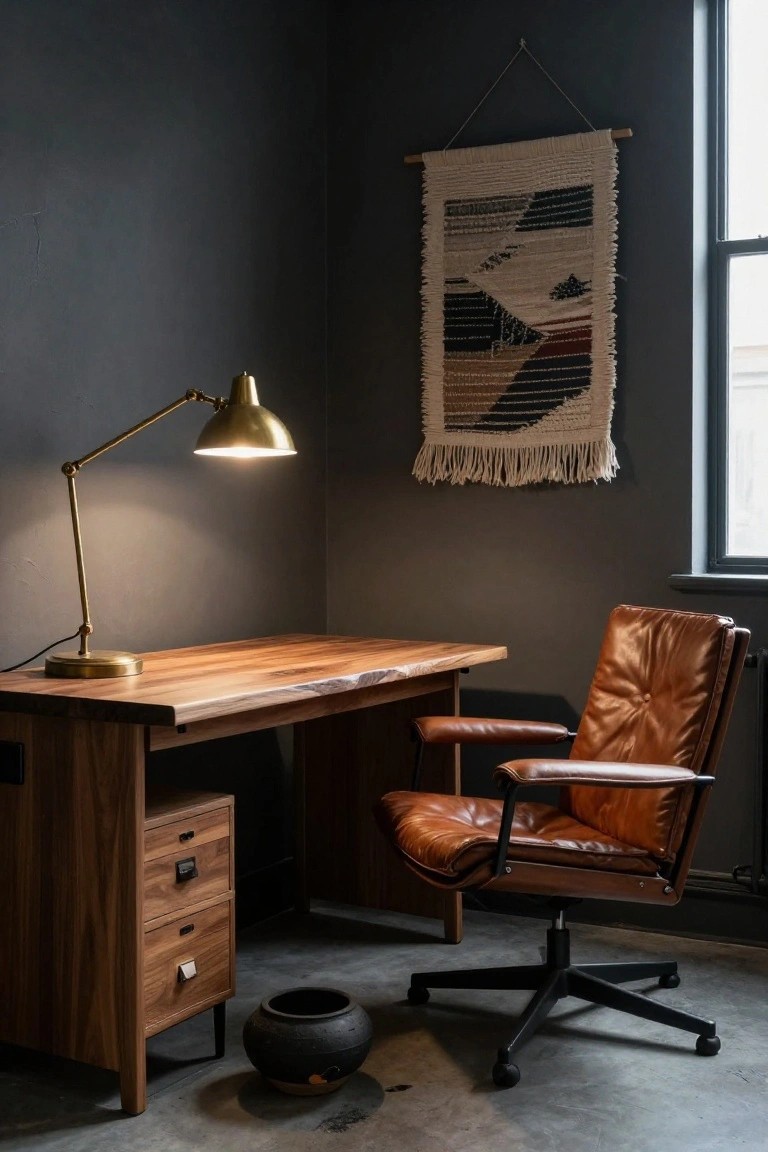
A live-edge desk like this one takes the heart of Wabi Sabi straight to your workspace. That rough, natural edge on the wood tabletop isn’t polished away. It keeps the tree’s original shape, showing knots and curves that feel real and lived-in. In an office setup, it stands out against smoother pieces, reminding you perfection isn’t the goal.
Put one in a corner with dark walls to let the wood shine under a simple lamp. It suits home offices or small studies, especially if you like a mix of wood tones and leather seating. Just make sure the base matches in material so it doesn’t compete. Keeps things grounded without much fuss.
Pegboard Wall with Draped Curtains
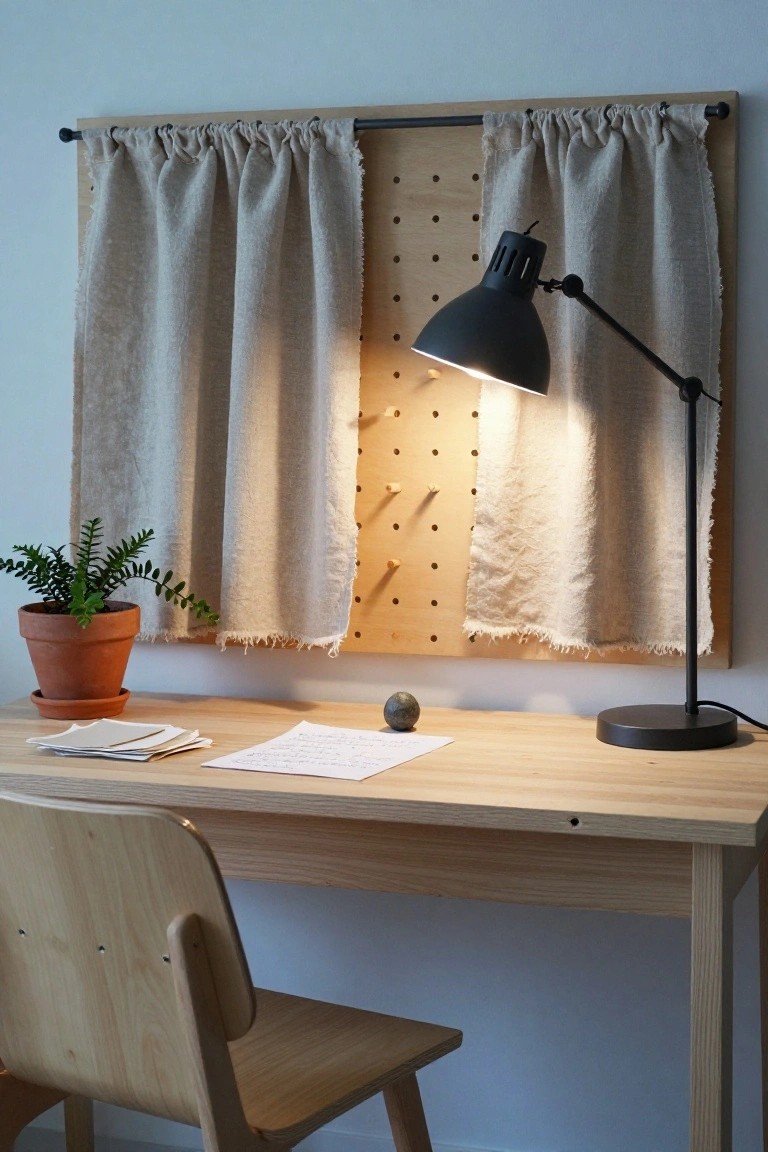
A pegboard wall like this one gives your office a spot for tools, lights, and storage without much effort. Here it’s raw wood behind a desk, holding a black desk lamp right where you need it. Drape some linen curtains across the front with simple hooks, and you get soft light filtering through. The frayed edges on the fabric fit right into wabi-sabi, showing off natural wear instead of hiding it.
This works best in a small home office or workspace corner. Pair it with a plain wood desk and chair to keep things grounded. Hang what you use daily, like notes or a plant hook. Skip painting the board if you want that honest look. Just make sure the curtains aren’t too heavy or they’ll pull on the pegs.
Shelf of Vintage Bottles
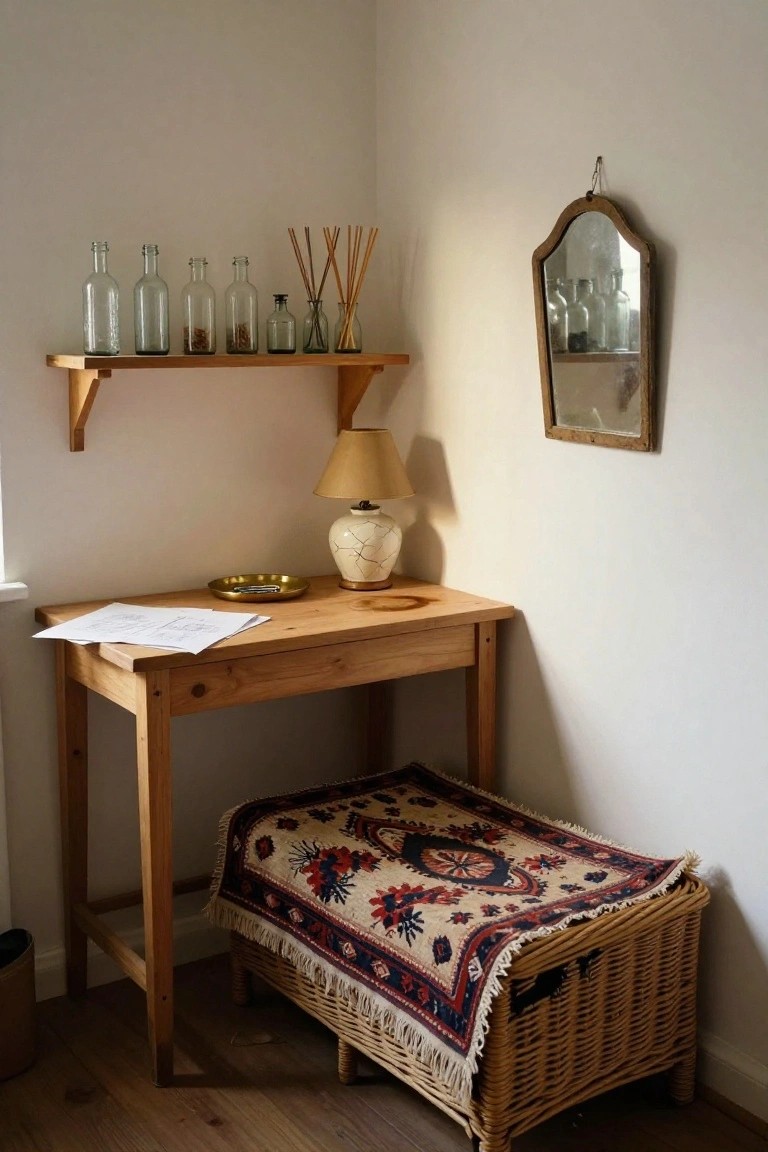
Nothing says wabi sabi like a simple wooden shelf lined with old glass bottles. Here, mismatched sizes hold reeds for a light scent or sit empty, showing their worn edges and subtle colors. They bring a handmade, collected-over-time feel to the office corner without trying too hard.
Put one above a desk in a small room. Source bottles from flea markets or cabinets. Mix heights for interest, add sticks or spices inside some. It fits tight spaces best, like apartments, and stays low fuss. Watch the dust though.
Parchment Paper Wall Hangings
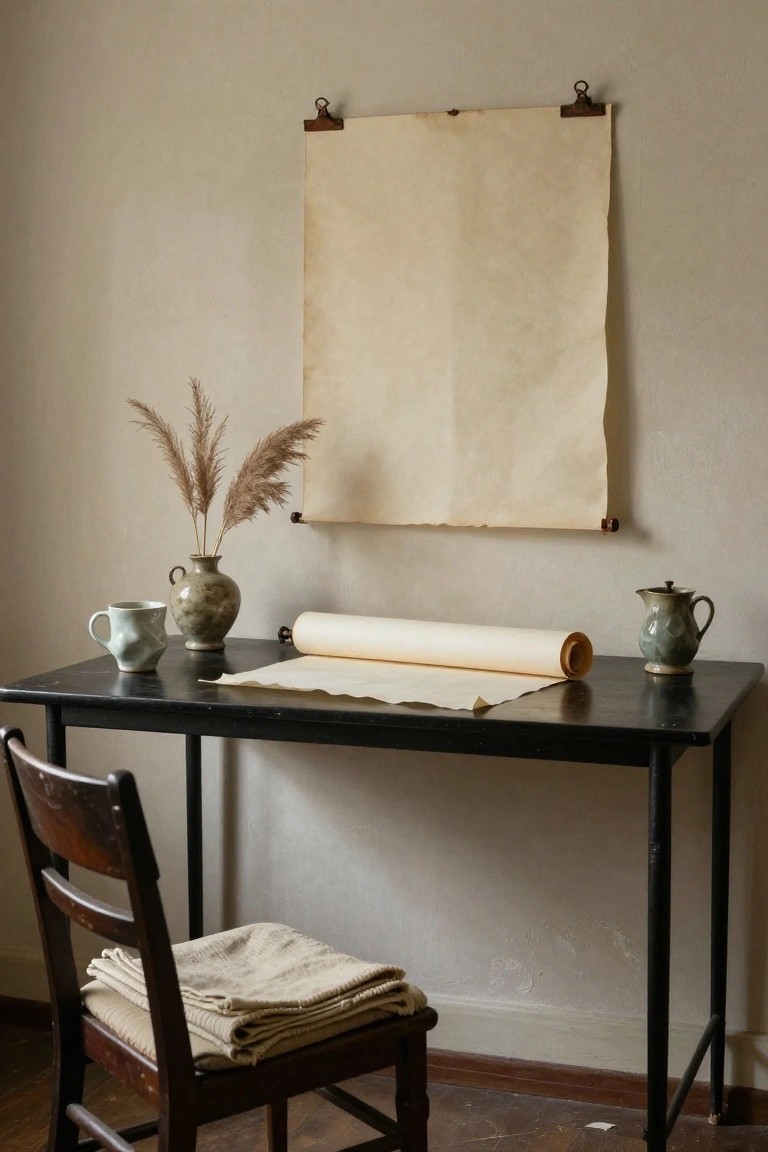
A plain sheet of parchment hung loosely on the wall with old metal clips brings that wabi-sabi feel right into your office. It’s nothing fancy. Just aged paper showing creases and edges, adding quiet texture to bare walls. Paired with a rolled scroll on the desk, it keeps things looking lived-in and calm.
Hang one above your workspace where light hits it softly. Use it in any small office corner, especially with neutral walls. Clip it high enough to avoid daily bumps. Skip busy patterns nearby… let the paper do its simple thing.
Wooden Desk Against Exposed Brick
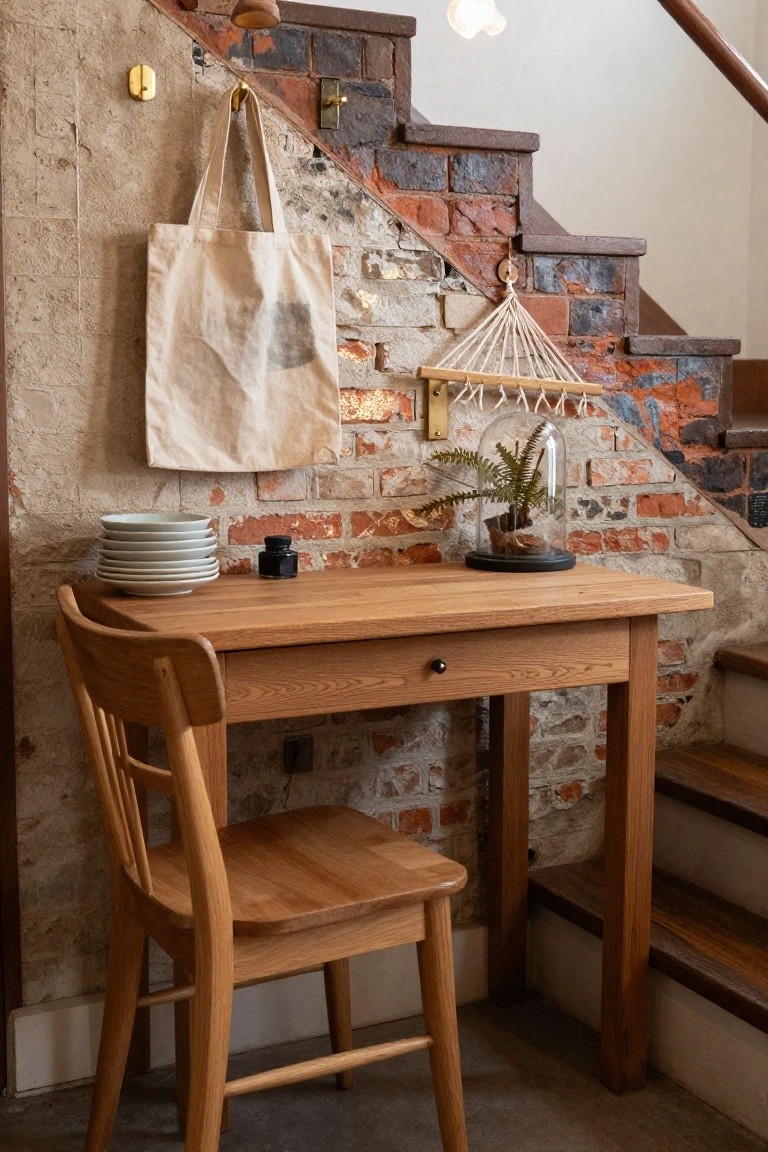
A plain wooden desk and chair tucked right up against an old brick wall makes for a no-fuss office spot. The rough bricks show their age with patches and uneven spots, while the oak furniture keeps things simple and sturdy. That mix gives off a real wabi-sabi feel… honest and imperfect.
Put one like this in a tight corner near stairs or in a hallway where space is short. It suits older homes with character walls. Go for basic wood pieces without fancy finishes, and keep the desk top light, maybe just a few useful things like stacked dishes for notes. Watch for too much stuff, though. It can crowd quick.
Sparse Floating Shelves
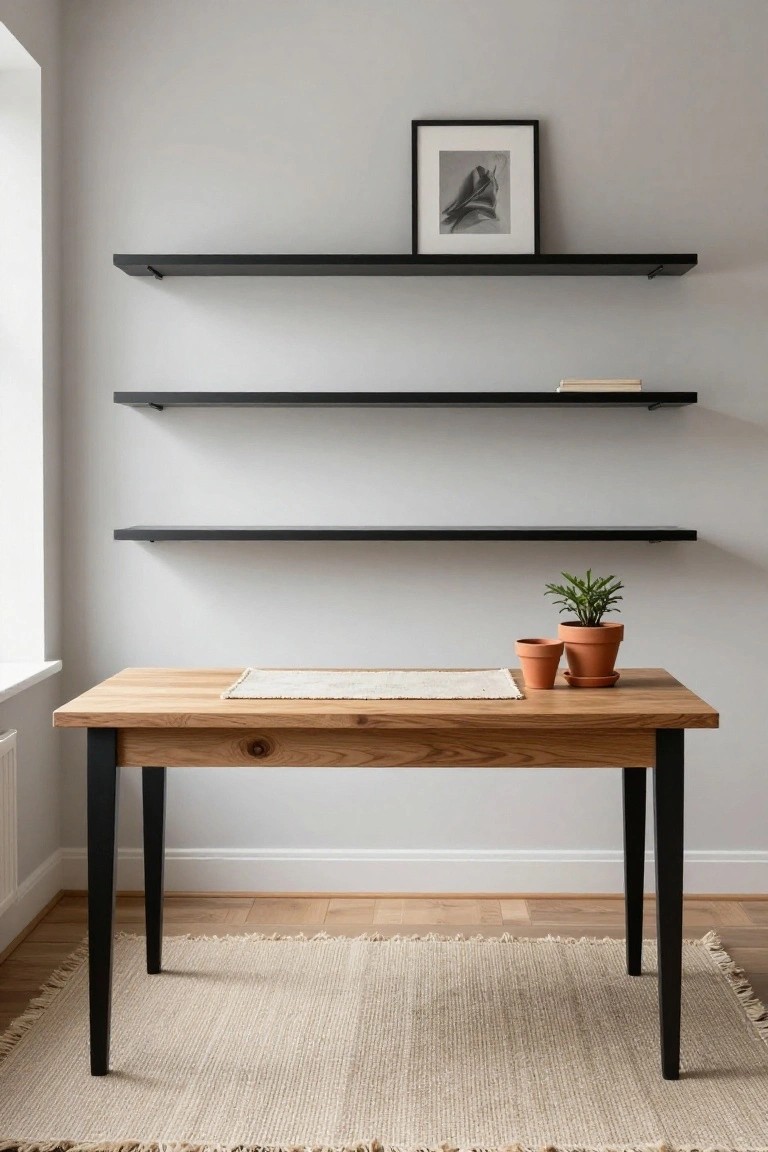
Black floating shelves mounted at uneven heights on a plain light gray wall make for easy storage that fits a wabi-sabi office. Here they’re mostly empty, with just one framed drawing up high and a single book below. That sparseness shows off the beauty in what’s not there. It keeps things feeling lived-in, not staged.
Put these in a home office corner or along a hallway wall where you need spots for books or plants without clutter. They work best in smaller rooms since the black metal pops against softer walls. Go light on what you put up. A knotty wood shelf or live-edge plant adds to the imperfect vibe… just don’t fill every inch.
Open Wooden Shelves with Enamelware
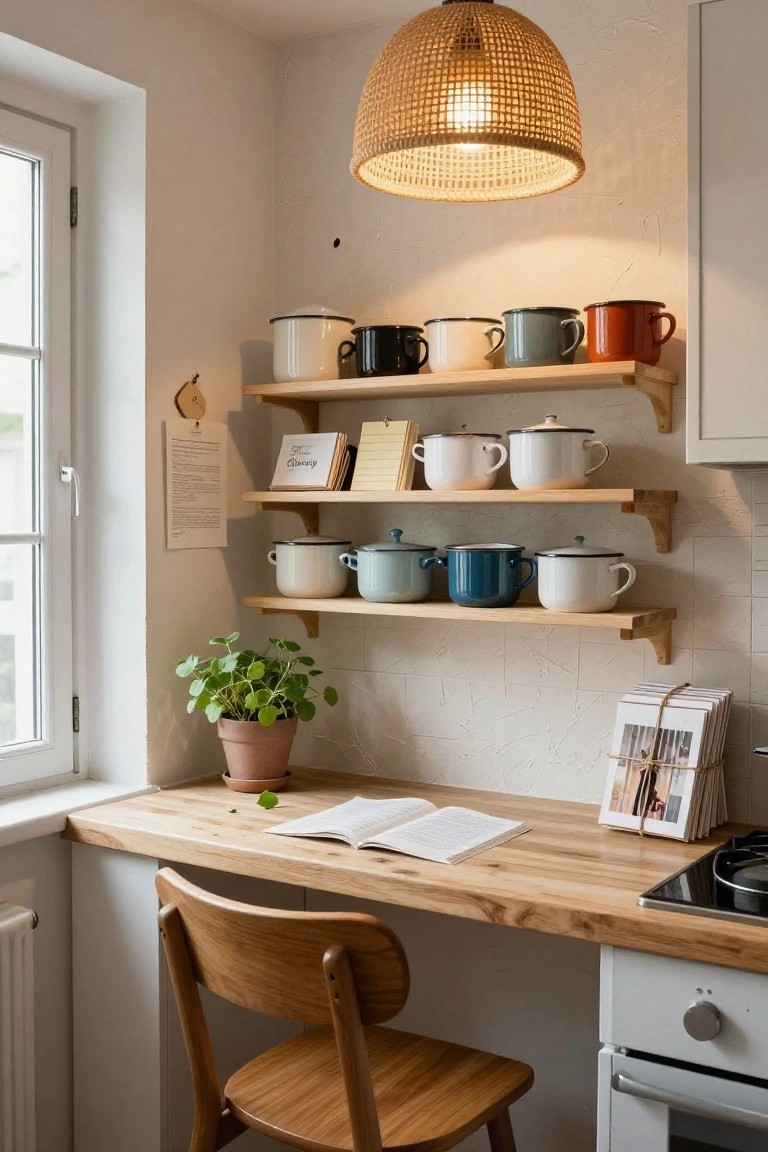
One simple way to add character to a small office space is filling open wooden shelves with everyday enamelware. Here you see shelves holding pots and mugs in soft blues, greens, reds, and whites. The raw wood pairs nicely with the chipped edges and matte finishes on the pieces. It keeps things practical while feeling collected over time.
Put this in a kitchen corner turned workspace or any tight home office. Hunt for secondhand enamelware at markets or online. It suits older apartments or cozy homes best. Just don’t overload the shelves… leave some breathing room.
Built-In Arched Niches
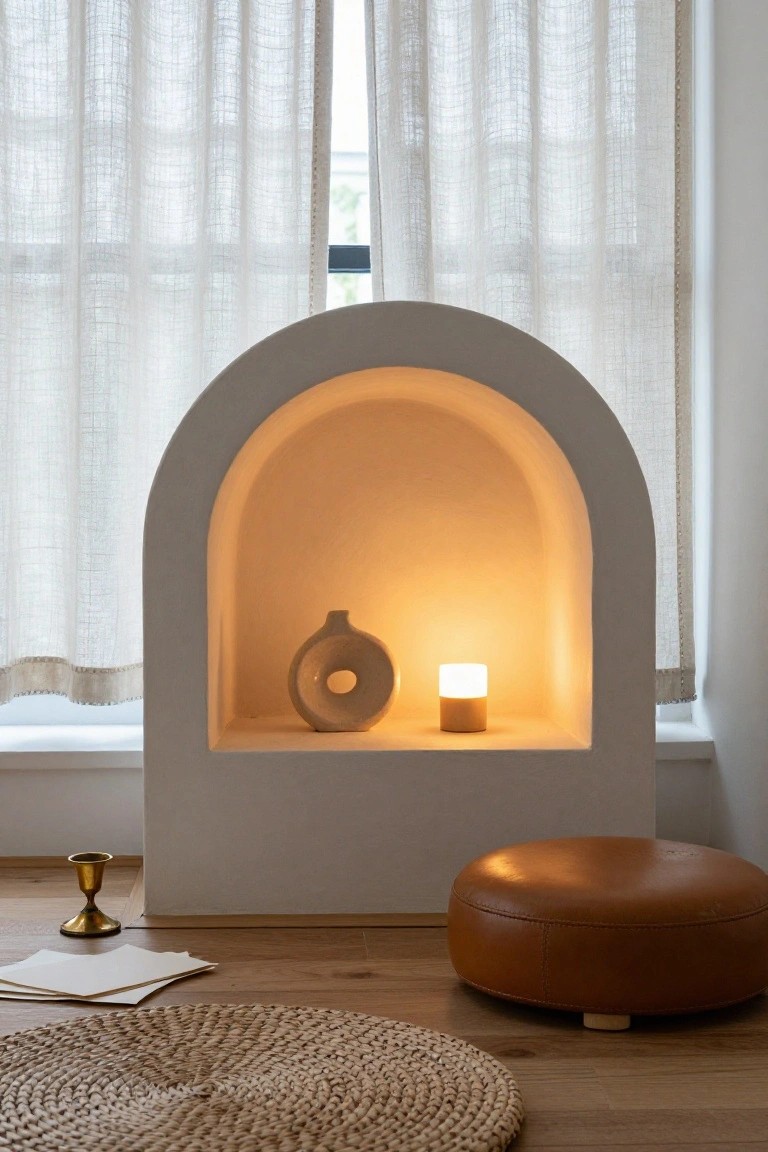
A built-in arched niche like this one turns a plain wall into a quiet spot for a few favorite objects. The soft curve and rough plaster give it that wabi-sabi feel, where nothing needs to be perfect. Here, a simple vase with an open hole sits next to a small wooden lamp that glows gently. It pulls your eye without trying too hard, making the space feel calm and lived-in.
Put one in an office corner near a window, where natural light mixes with the lamp at night. It works best in smaller rooms, keeping clutter off desks and letting imperfections like uneven edges show. Just pick one or two handmade pieces, nothing fussy… and let the niche do its thing.
Rustic Wooden Desk for Daily Use
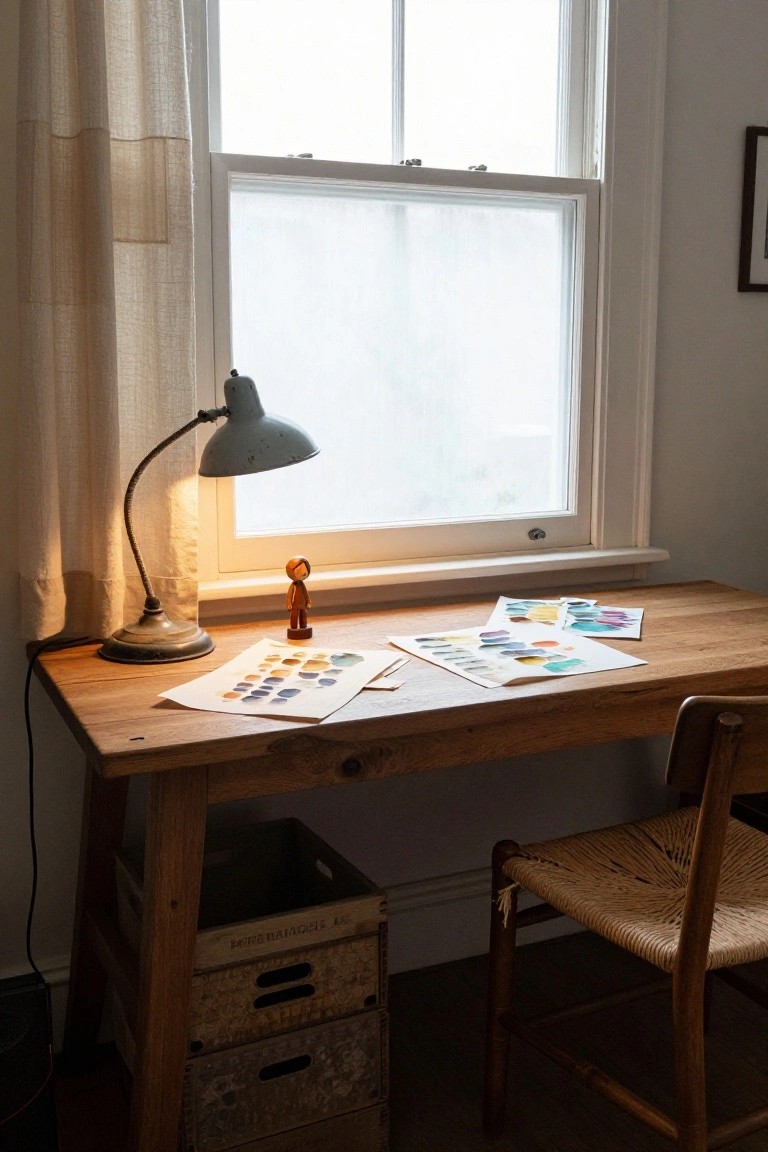
A desk like this one, rough-hewn from old wood with knots and all, sits right in the middle of a wabi sabi office. It’s got that lived-in look from years of use, paired with a bent-arm lamp and a little wooden figure nearby. What stands out is how the wood’s natural flaws make the space feel real and calm, not too fussy for working or sketching.
Put one in a home office with good window light, maybe stack some crates underneath for storage like here. It suits older homes or creative corners where you want things practical over perfect. Just keep the top clear except for what you need… avoids clutter taking over.
Dried Botanicals on the Wall
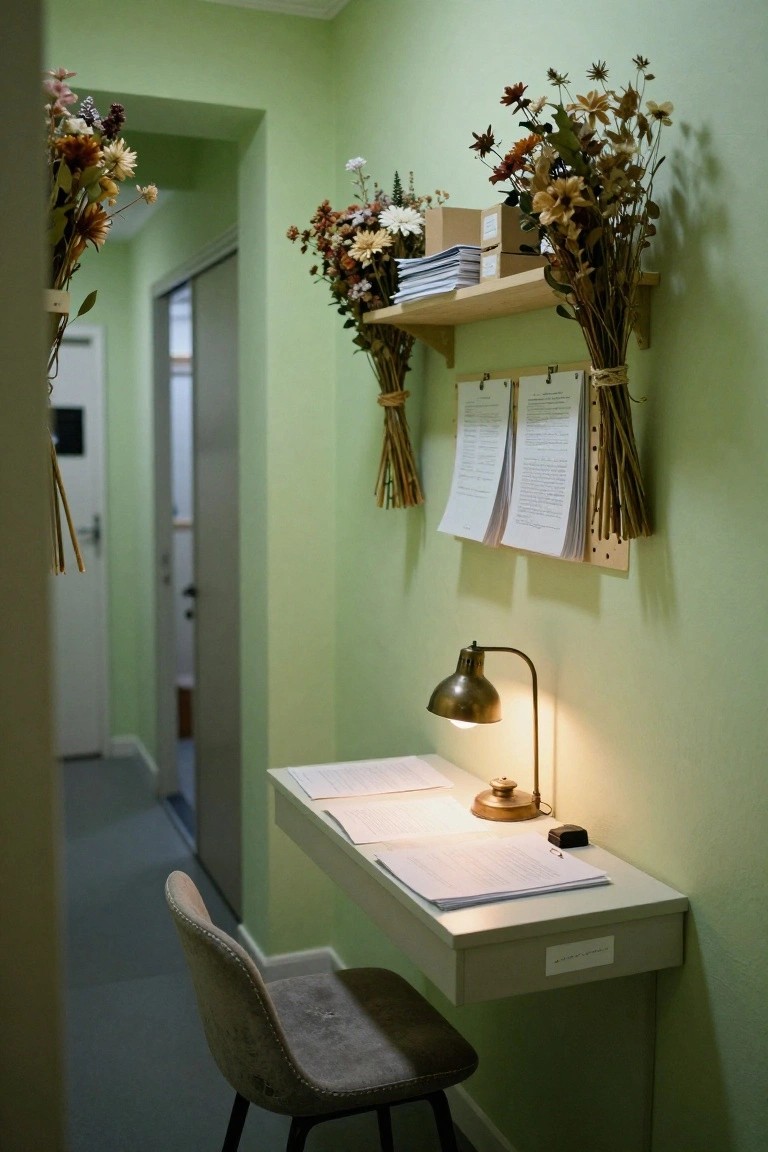
One easy way to bring wabi sabi into your office is with dried flowers and grasses hung right on the wall. They have that natural, slightly worn look that fits the style, like the bundles tied with string next to pinned papers in this setup. No need for perfect arrangements. Just gather what’s in season or from your yard and let them lean into their own shape.
Try this above a desk or floating shelf in a small nook. It suits compact home offices where you want calm without clutter. Pick muted stems to match soft green walls, and swap them out as they fade… keeps things fresh in an imperfect way.
Round Terrazzo Table for Office Work
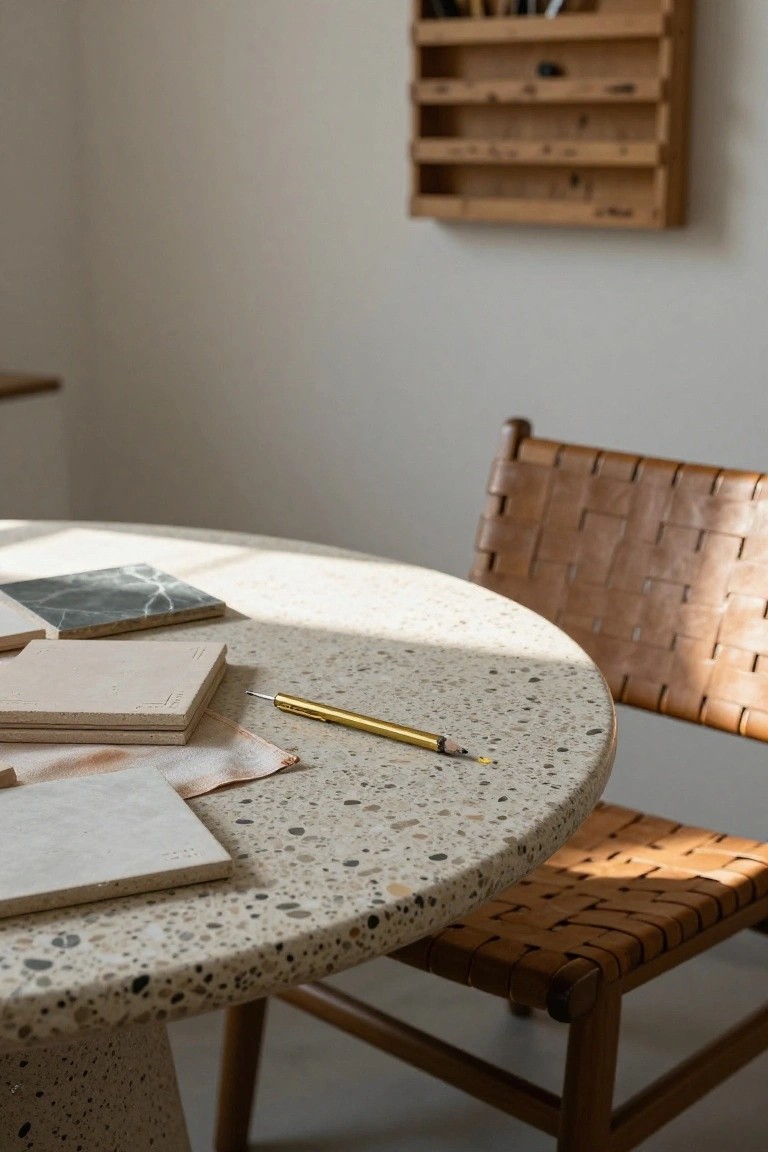
A round table with a terrazzo top like this one brings that wabi sabi feel right to your workspace. The white base speckled with darker bits looks handmade, not too perfect. It holds up notebooks or tile samples without showing every mark. That texture keeps things real and calm.
Put one in a home office corner where light hits soft. Pair it with a simple leather chair like the woven tan one here. Works best in smaller spots… avoids feeling too formal. Just source real terrazzo, not fake stuff that chips easy.
Open Shelves with Handmade Pottery
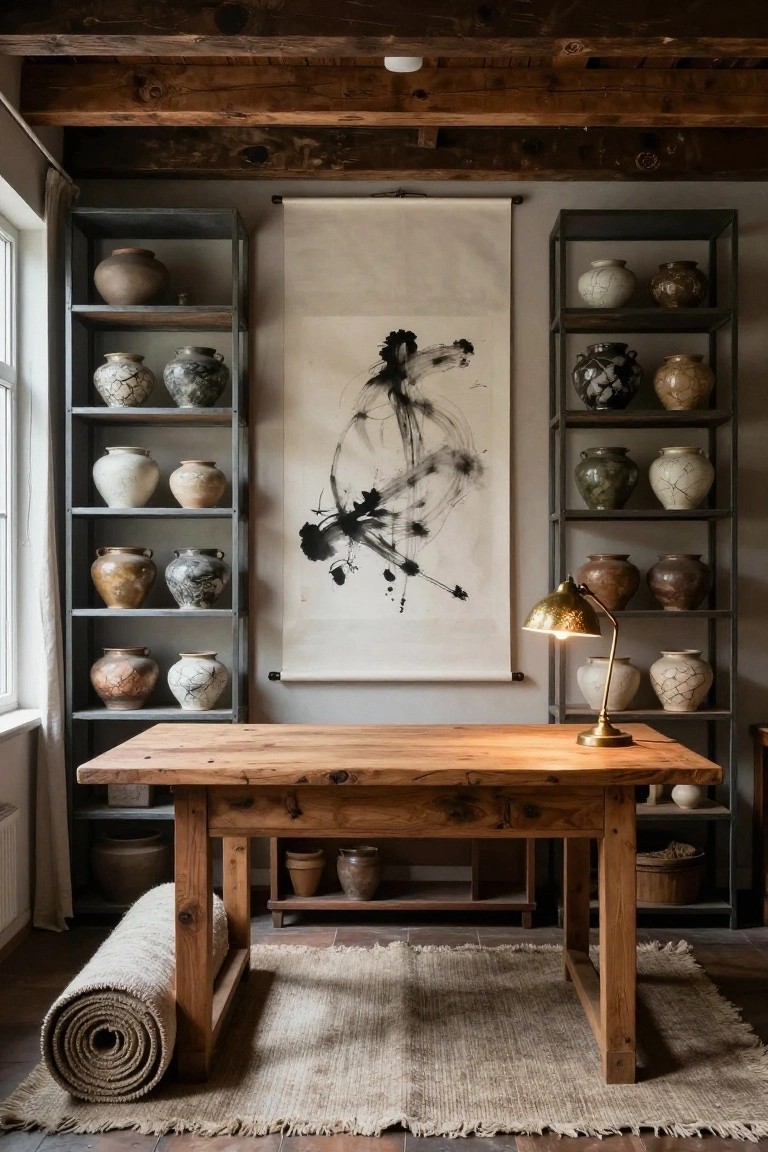
One easy way to bring wabi sabi into your office is filling open shelves with pottery. These shelves sit tall on either side of a simple desk, loaded with jars and vases in rough glazes and natural shapes. The mix of cracked finishes and uneven forms feels collected over time, not staged. It adds real texture to the walls without much effort.
Look for metal racks like these, the kind with a bit of rust or simple lines. Stack them by your workspace if you have room, or one against a side wall. They suit beamed rooms or spaces with wood floors best, keeping things grounded. Just don’t overcrowd, or it loses that quiet feel.
Frequently Asked Questions
Q: How do I start with Wabi Sabi in my office without a big shopping spree? A: Dig through your garage or attic for old pottery, woven baskets, or wooden boxes that show some wear. Place one on your desk right away. It kicks off the vibe instantly.
Q: Can I mix Wabi Sabi pieces with my sleek modern desk and chair? A: Layer in textured linens or a handmade stoneware mug next to your laptop. The contrast highlights the raw beauty of both worlds. Your space feels lived-in, not divided.
Q: What’s a quick way to add that imperfect natural feel with plants? A: Grab a few air plants or succulents in unglazed clay pots…they dry out gracefully over time. Hang them from a simple cord or tuck into a wooden crate.
Q: How do I keep Wabi Sabi from looking like plain clutter? A: But pick just a handful of items and group them loosely on trays or shelves. Leave plenty of empty space around them. The calm breathing room pulls it all together.
