

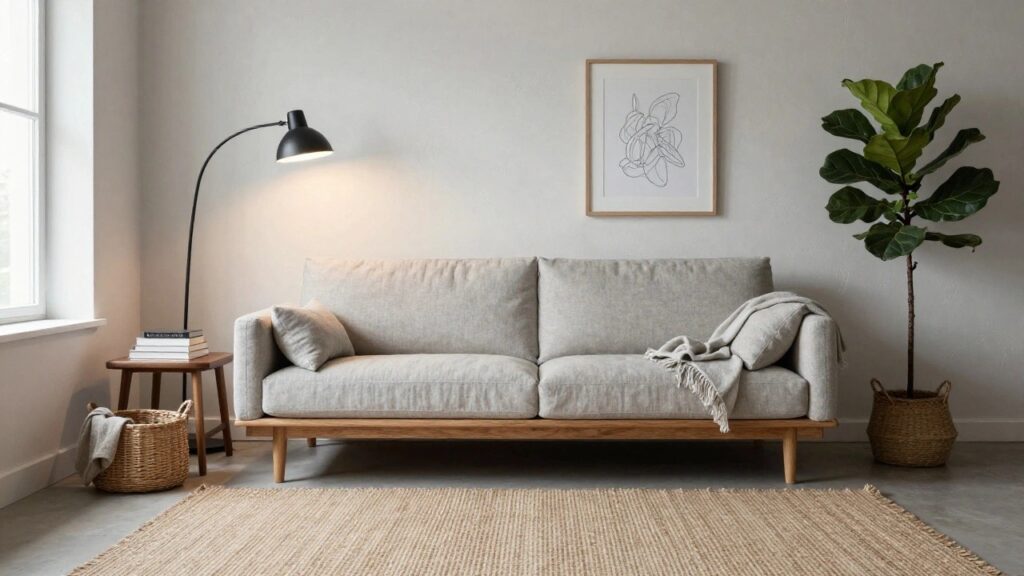
Narrow living rooms have a way of exposing every furniture choice, especially when the sofa crowds the path you take every day.
You sense it right away if the setup funnels people smoothly or leaves them bumping edges just to reach the couch.
I shifted mine against a long wall once, and that simple move made the whole space feel twice as open for family nights.
Sofas that tuck neatly or float just right also draw the eye along the length of the room instead of stopping it cold.
A couple of these approaches are the ones I’d adapt first in a real tight spot.
Low Sofa on Legs for Narrow Flow
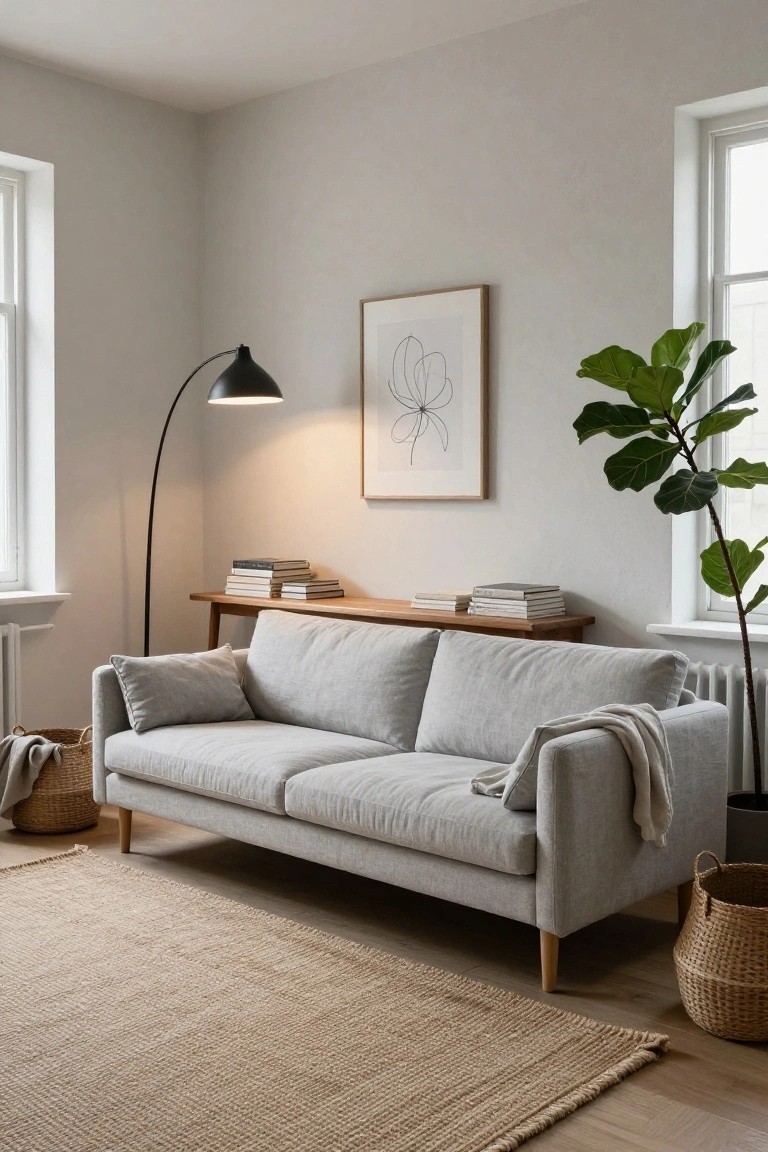
A low gray sofa like this one keeps narrow living rooms from feeling boxed in. The thin wooden legs lift it off the floor just enough to let light pass underneath and make the space look bigger. It’s a straightforward choice that avoids the bulk of chunkier pieces, and pairing it with a slim console table behind adds storage without crowding the room.
Try this in long skinny spaces or apartments where every inch counts. Position the sofa against the longest wall, and use baskets or a jute rug nearby to define the zone without weighing it down. It suits casual homes best, but watch the fabric for high traffic.
Compact Slipcovered Sofa for Narrow Rooms
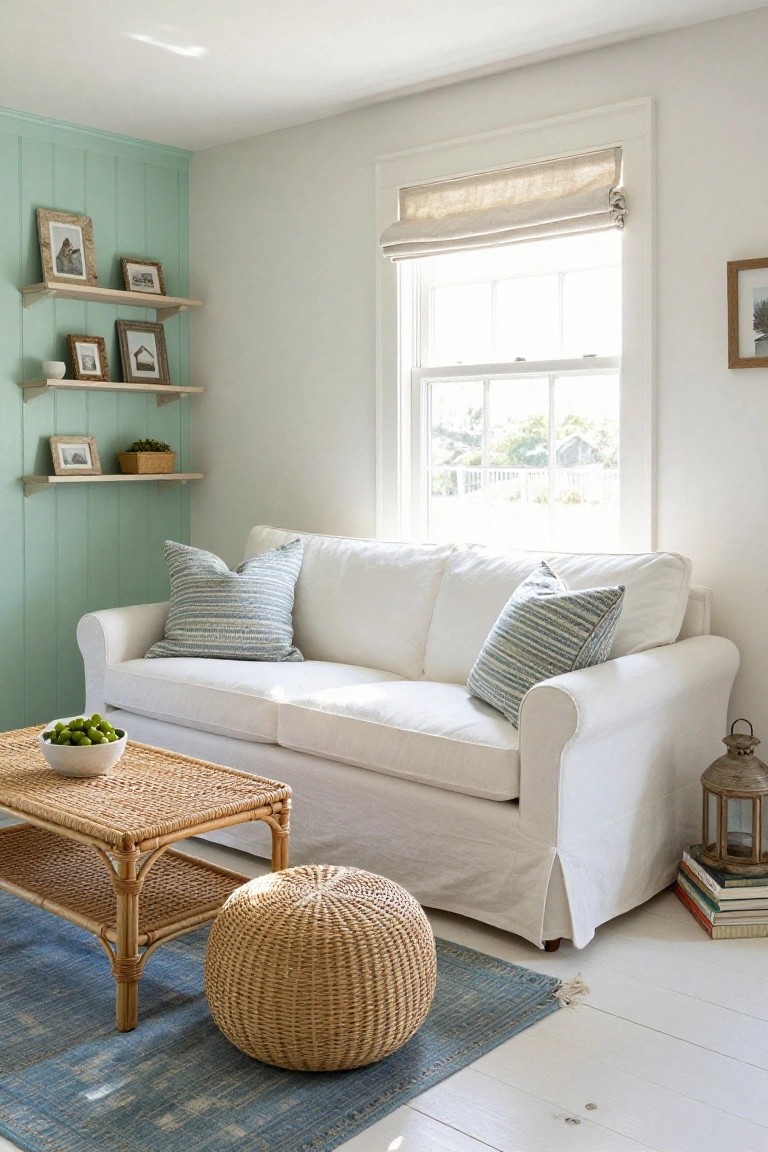
A small white slipcovered sofa works well in tight living spaces like this one. Tucked against a soft green wall near a window, it lets light flood in and keeps things feeling open. The loose cover gives a casual look that’s easy to clean, and pairing it with a low rattan table avoids blocking the path.
Try this in apartments or skinny rooms where you need seating without bulk. Go for a loveseat size under 70 inches, add a couple of striped pillows, and skip heavy side tables. It suits casual coastal spots or older homes with wood floors… just measure your wall space first.
Low Slung Sofas Open Up Narrow Rooms
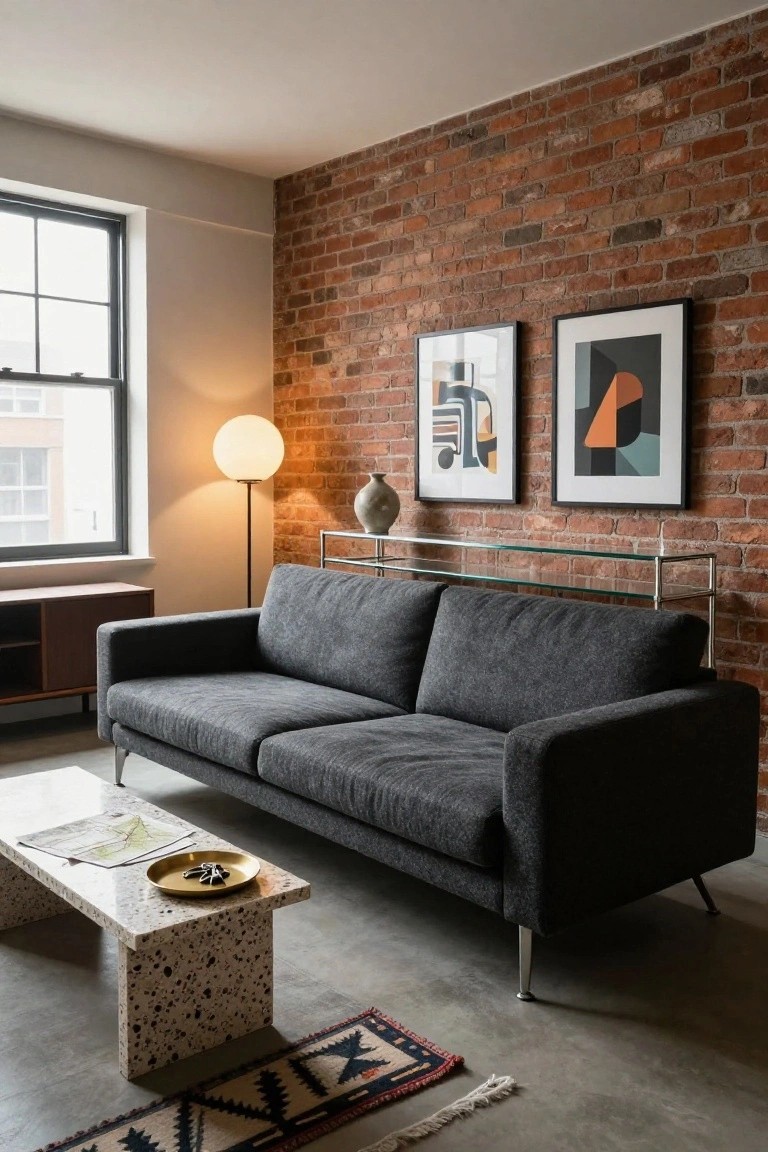
A low slung sofa works great in narrow living rooms because it hugs the floor and uses slim legs that don’t cut off the view across the space. This gray fabric one shows how it stays out of the way visually, letting the room breathe even with a brick wall right behind it. The low height keeps everything connected to the ground instead of boxing in the area.
Put one like this in a tight apartment living room or hallway-style space where you need good flow for walking through. Match it with a simple low table and keep side tables minimal. It fits industrial or casual setups best, but pick a tough fabric if kids or pets are around.
Tufted Leather Sofa Along the Long Wall
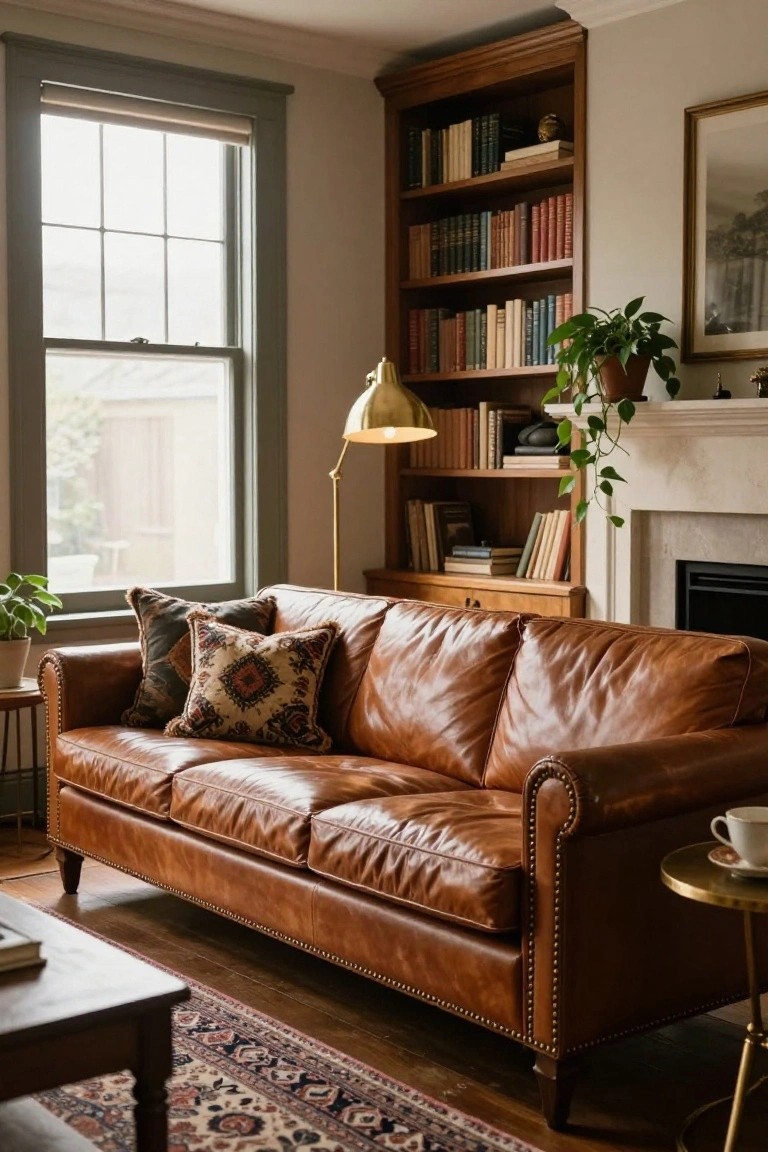
A tufted leather sofa like this one fits right into narrow living rooms. The tan leather and nailhead trim give it a sturdy, classic look that doesn’t overwhelm tight spaces. Placed tight against the bookshelves and window wall, it keeps the center floor clear for easy walking.
Try this in a long room where you want seating without blocking paths. It suits older homes with high ceilings and built-ins. Just make sure the sofa depth stays under 36 inches… and add a simple rug underneath to guide the flow.
Pink Velvet Sofa Fits Narrow Rooms Easily
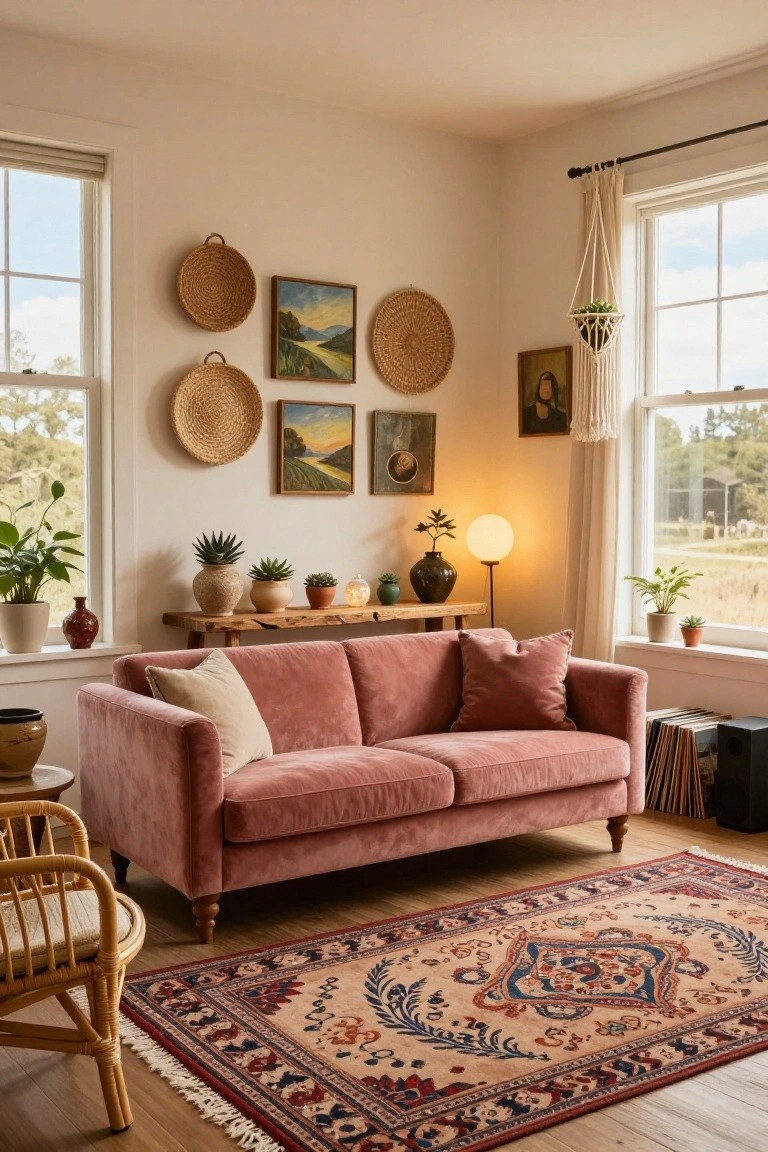
A pink velvet sofa like this one works great in narrow living rooms. It’s plush enough to feel cozy, but the low profile and slim arms keep it from overwhelming the space. That soft blush color picks up the warm light coming through the big windows, making the room feel bigger and more relaxed. A single rattan chair nearby adds a spot to sit without crowding things.
Put one in a long, skinny living area where you want comfort but need to walk through easily. Stick to sofas around 70 inches wide or less, and keep the back against a short wall. It suits casual homes with plants and simple art… just watch the velvet for pet hair if you have furry friends.
Low Profile Leather Sofa
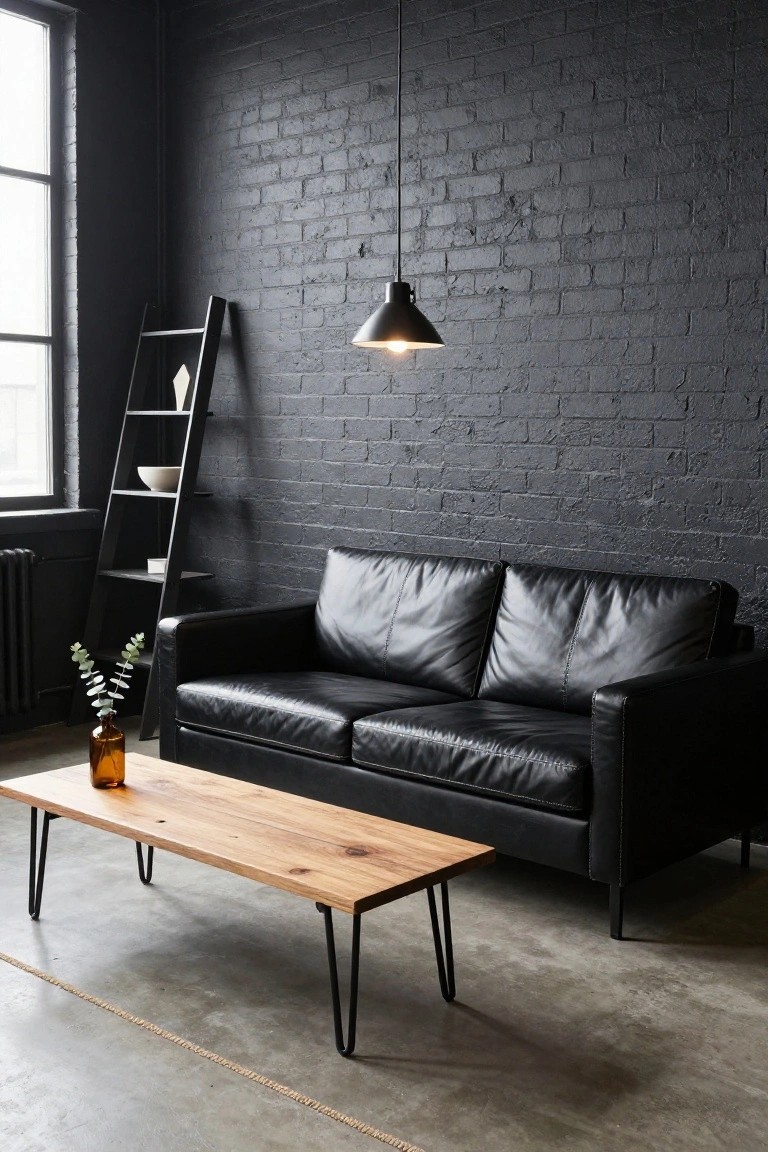
A low black leather sofa like this one hugs the floor without dominating a narrow room. Its clean lines and slim arms let you see straight across the space, making everything feel longer and less boxed in. The nearby wood coffee table on hairpin legs lifts it up too, so the floor stays open.
This setup fits best in city lofts or industrial-style spots with brick walls. Go for a two-seater scale, and pair it with leggy pieces to keep walkways clear. Leather wipes clean easy, which helps in tight traffic areas.
Slim-Legged Sofas for Narrow Rooms
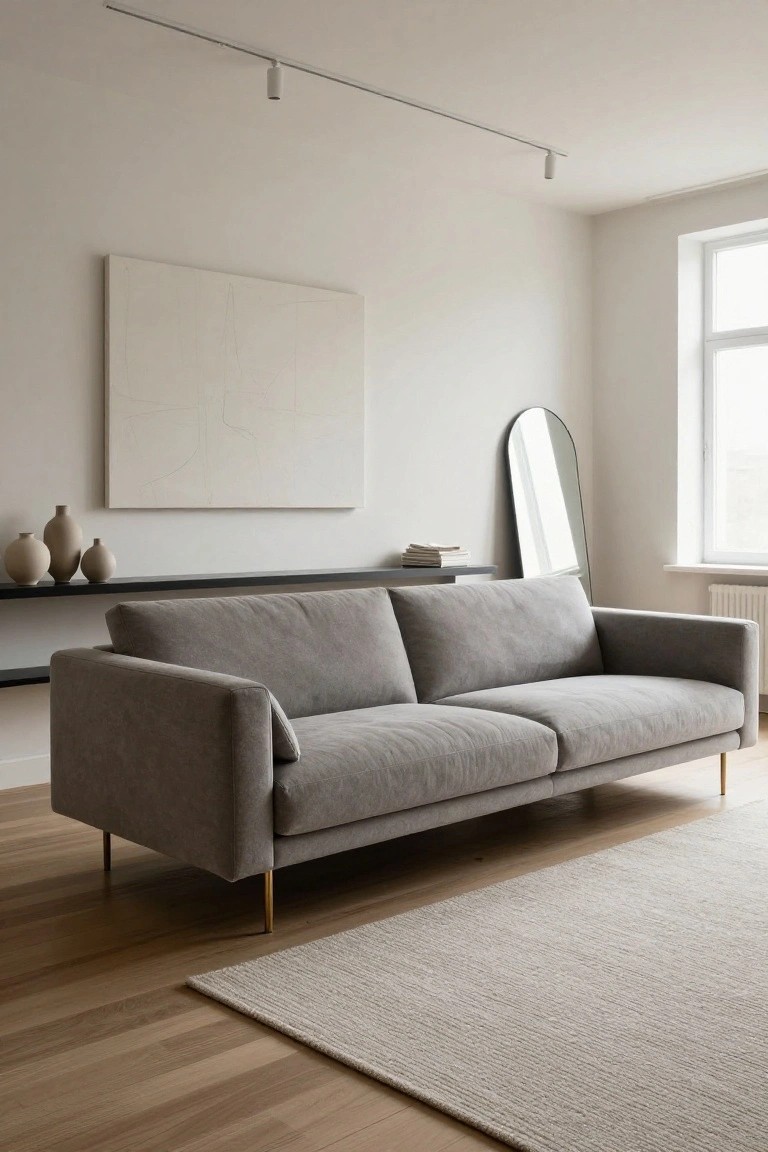
Sofas on slim legs work well in narrow living rooms because they lift the piece off the floor. This keeps things from feeling heavy or closed in. You see it here with thin gold legs under a simple gray fabric sofa. Air moves better around it. And light flows underneath too.
Put one like this along a long wall where space is tight. It suits apartments or older homes with skinny layouts. Go for sturdy metal legs that won’t wobble. A light rug in front helps without taking up room. Just skip bulky cushions that add bulk.
Loveseat Under the Window Sill

A loveseat like this one works great in narrow living rooms. It’s compact enough not to crowd the space but still comfy for two. Tucked right under the window sill, it leaves room to walk by easily. The natural light from the big window makes the spot feel open instead of squeezed.
Put one in your own narrow room if you want better flow around the furniture. It suits older homes with paneled walls or tight layouts. Pair it with a slim side table and keep pillows simple. Just watch the skirt length so it doesn’t drag on the floor.
Curved Emerald Green Sofa
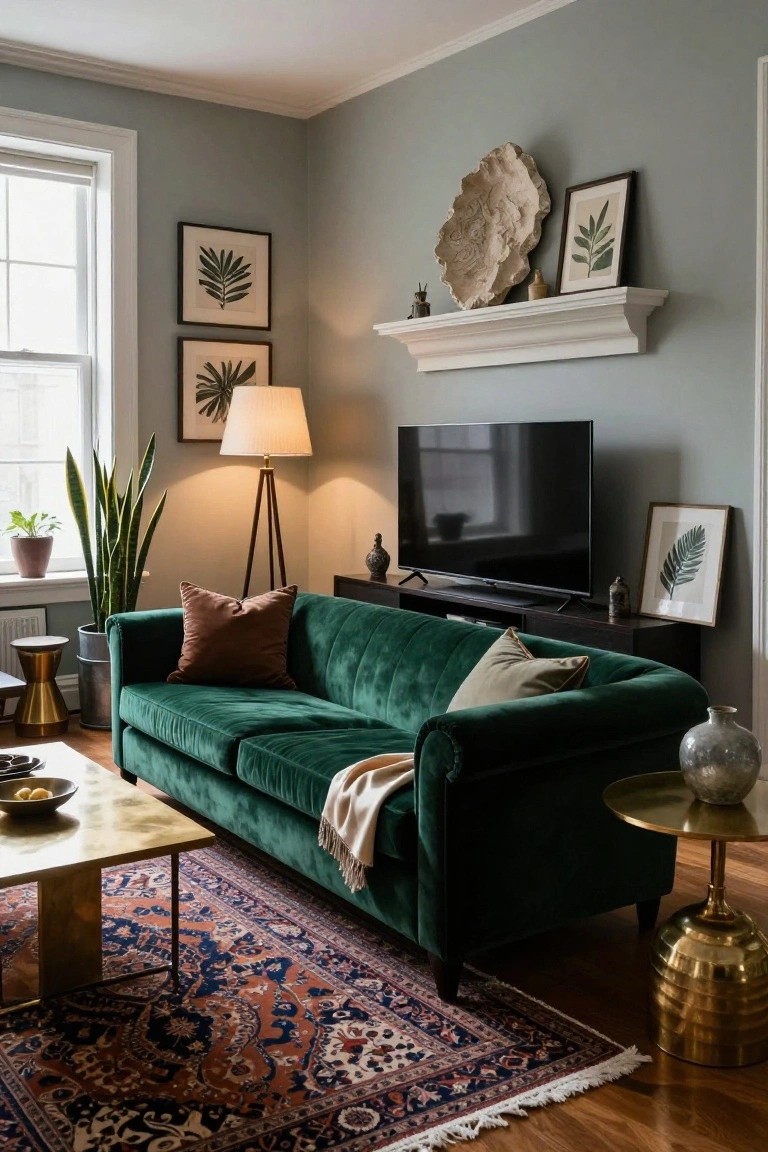
A curved sofa in deep emerald velvet works well in narrow living rooms. The shape follows the wall softly. It keeps furniture from blocking paths. The rich color pops against pale gray walls. This makes the room feel cozy but not cramped.
Try this in long thin spaces like apartments. Add brass tables nearby for contrast. Layer in a patterned rug underfoot. Tall plants help too. Watch the scale though. Too big and it crowds the flow.
Navy Linen Sofa on Wood Legs

A deep navy linen sofa like this one sits on a simple oak frame with raised legs. It works well in narrower living rooms because those legs lift it off the floor a bit. That lets light and air move underneath instead of everything feeling heavy and stuck to the ground. The fabric gives a soft look without taking up visual space.
Put one along the longest wall in a tight room with a big window. Pair it with a clear glass coffee table to keep sightlines open. This setup suits coastal or casual homes best. Skip it if you have kids or pets who might snag the linen.
Long Sofas Along Linear Fireplaces
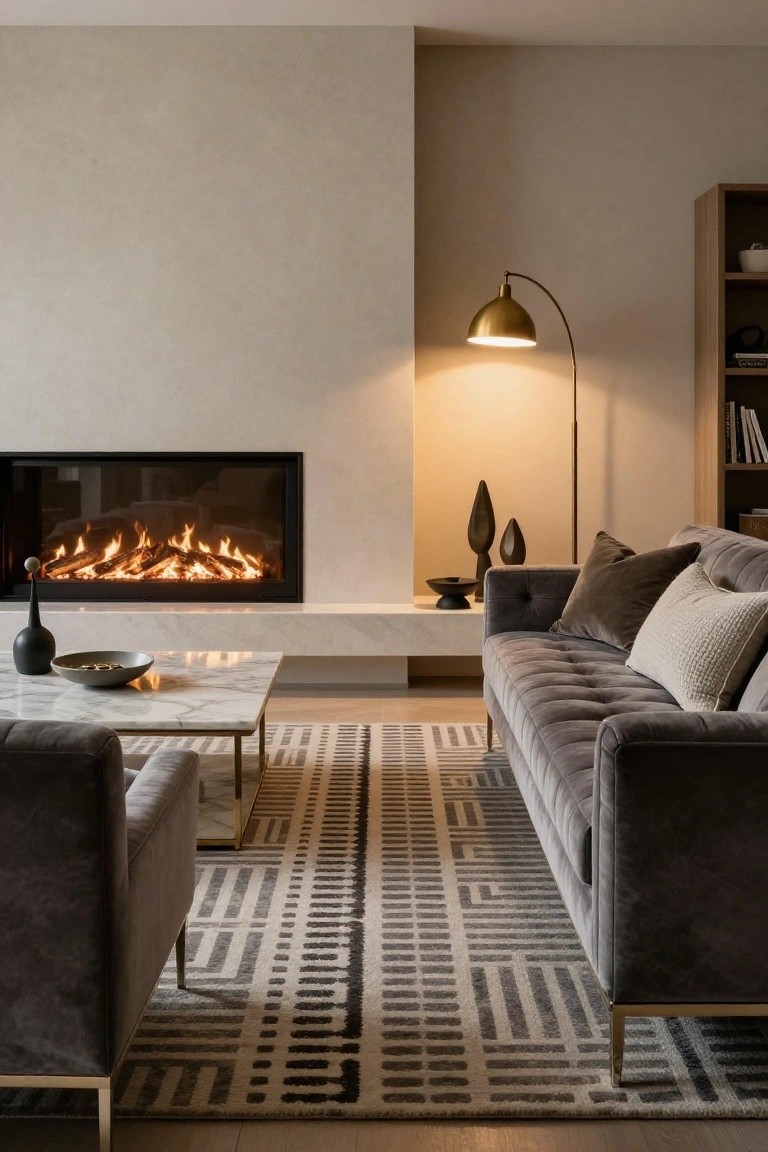
In narrow living rooms, running a long sofa parallel to a sleek linear fireplace pulls everything together without eating up floor space. It turns the fireplace into a natural anchor that stretches the room visually, so you get better flow from one end to the other. The gray tufted sofa here sits snug against the wall, leaving room for easy walking.
Try this in galley-style spaces or apartments where walls are close. Pick a low-slung sofa with slim legs to keep sightlines open, and pair it with a narrow marble coffee table. A simple geometric rug underneath helps zone the area. Just make sure the fireplace isn’t too dominant, or it might overpower a small room.
Low-Profile Sofas Open Up Narrow Rooms
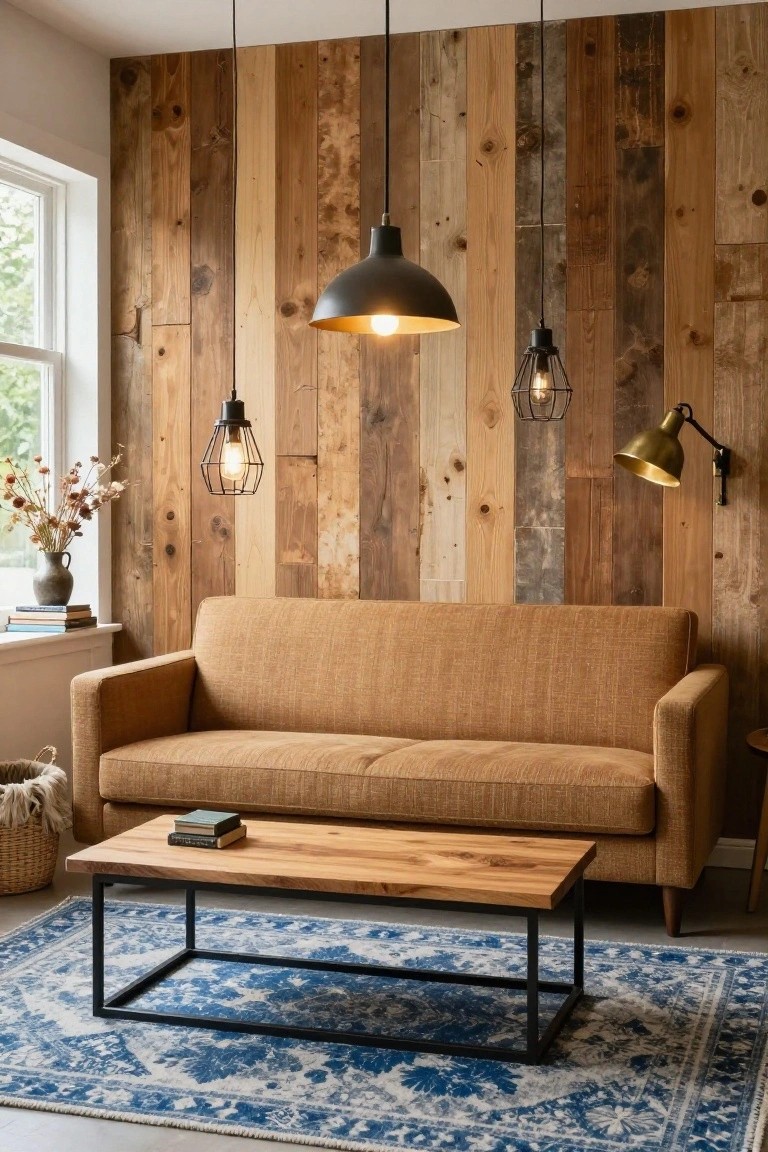
A low-profile sofa works well in narrow living rooms because it stays close to the floor and wall. This tan tufted one sits snug against the wood plank wall, keeping the center clear. Pendant lights overhead pull the eye up, so the space doesn’t feel squat or closed off.
Put this kind of sofa in long skinny rooms where you need easy paths. Line it up with a simple wood coffee table, nothing too wide. It suits apartments or row houses… just watch the scale so armchairs don’t block the way.
Low Sofas on Raised Legs
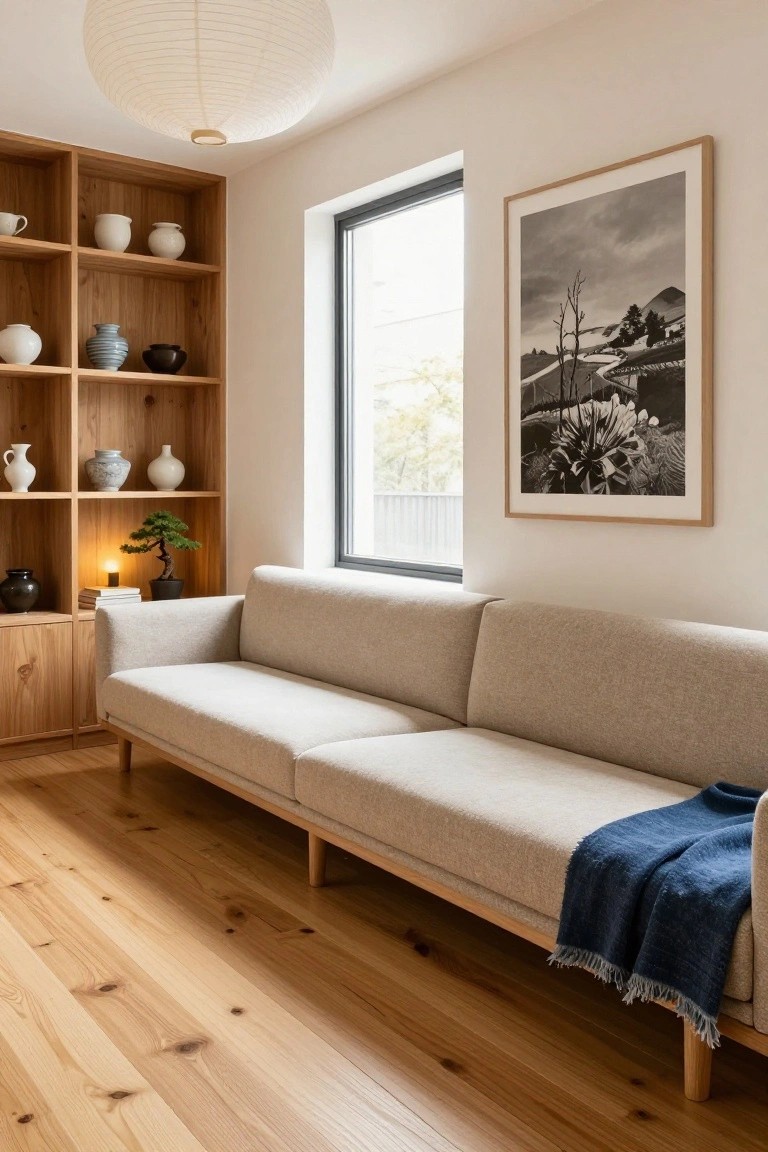
A low sofa like this works well in narrow living rooms because it hugs the wall without blocking the path. The raised wood legs let you see the floor below, and the long shape gives plenty of seating without eating up the middle of the room. It just opens things up naturally.
Stick it along the longest wall, maybe add a simple throw at one end for casual feel. This setup fits homes with wood floors and built-in shelves nearby. Keep walks clear around it, and the space stays easy to move through.
Petite Floral Settee Under Window Sill
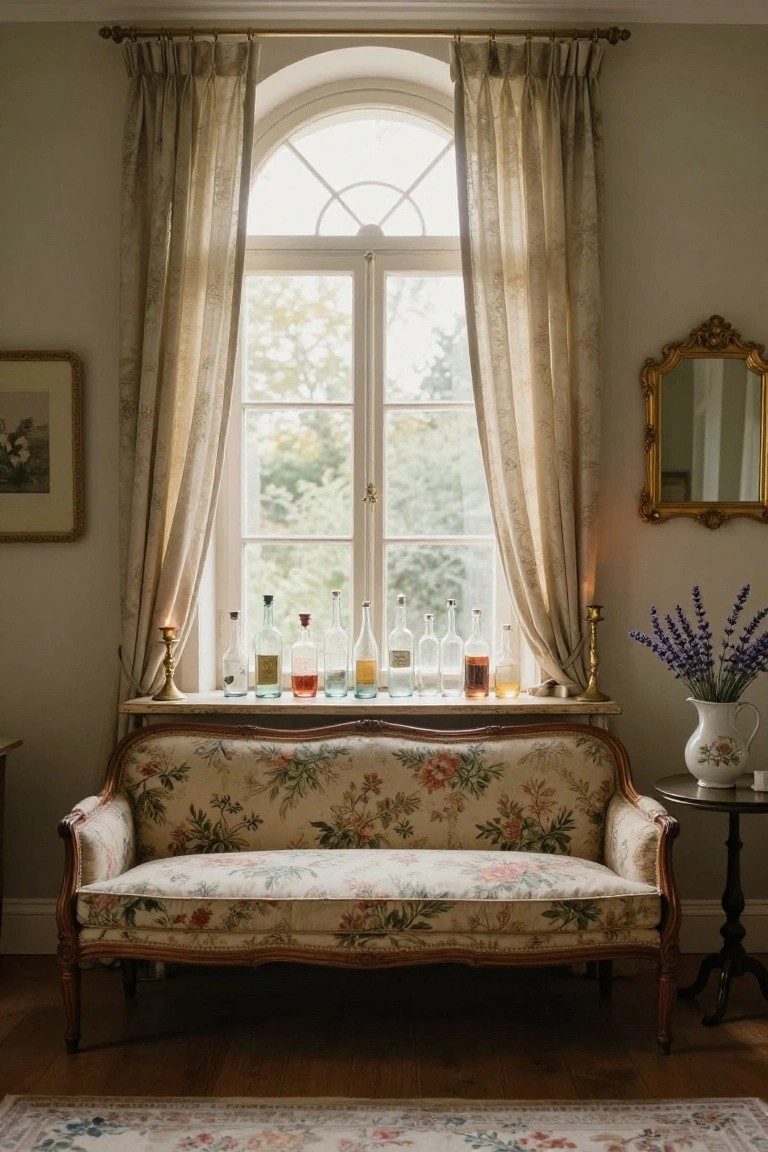
A slim settee tucked under the windowsill works well in narrow living rooms. This curved antique style with floral upholstery fits right along the wall. It doesn’t block the window light or crowd the floor. The sill above turns into a natural shelf for bottles and a candle. That pulls the eye up and keeps things open.
Try this in older homes with tall windows. Pick a sofa no wider than 30 inches. Line up the sill with simple glassware or plants. Leave the space in front empty or with a low table. It helps traffic flow and makes the room feel less pinched.
Low-Legged Sofa Against the Wall
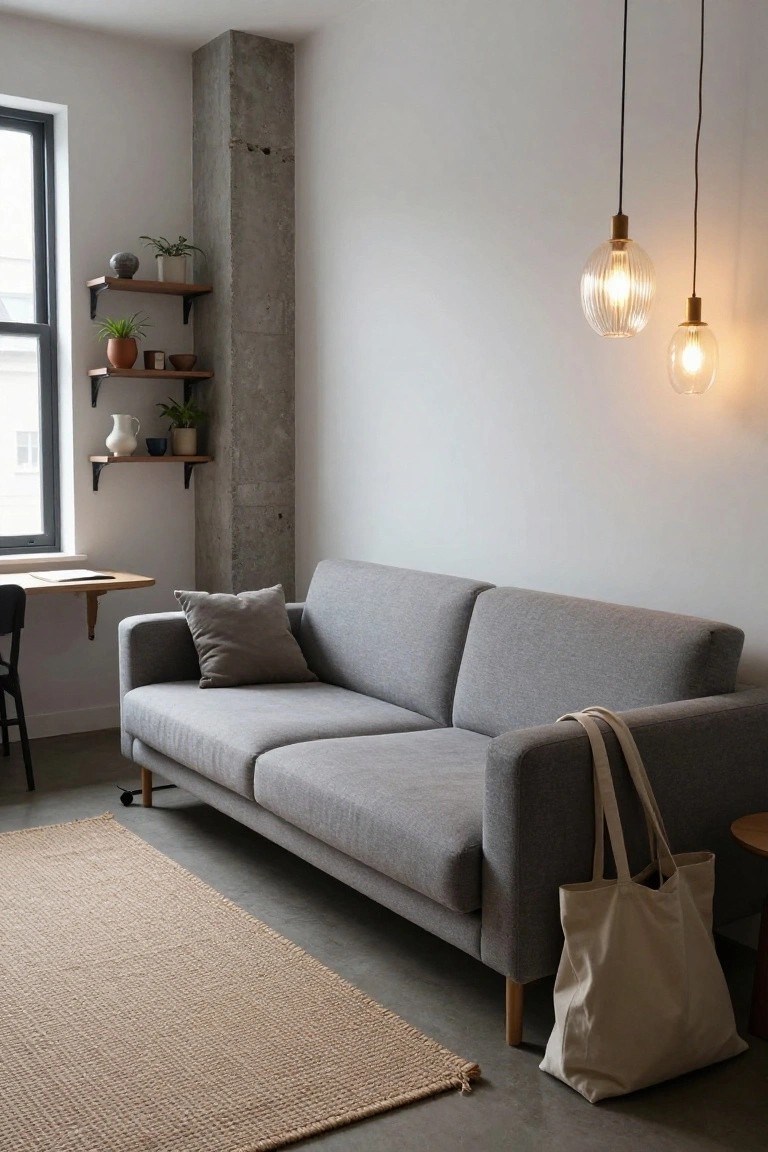
In narrow living rooms, a sofa like this low one with wooden legs works well pushed right up against the wall. It keeps the floor visible underneath, so the room doesn’t feel boxed in. That bit of air flow makes a big difference in tight spaces, especially with the simple gray fabric that blends into light walls.
You’ll want to use this setup in long skinny rooms or apartments where every inch counts. Go for a sofa around 80 inches long, and add a rug that stops short of the front legs. It fits industrial or minimalist homes best, but watch the scale, nothing too bulky on the arms.
Low Wooden Sofa on Raised Legs
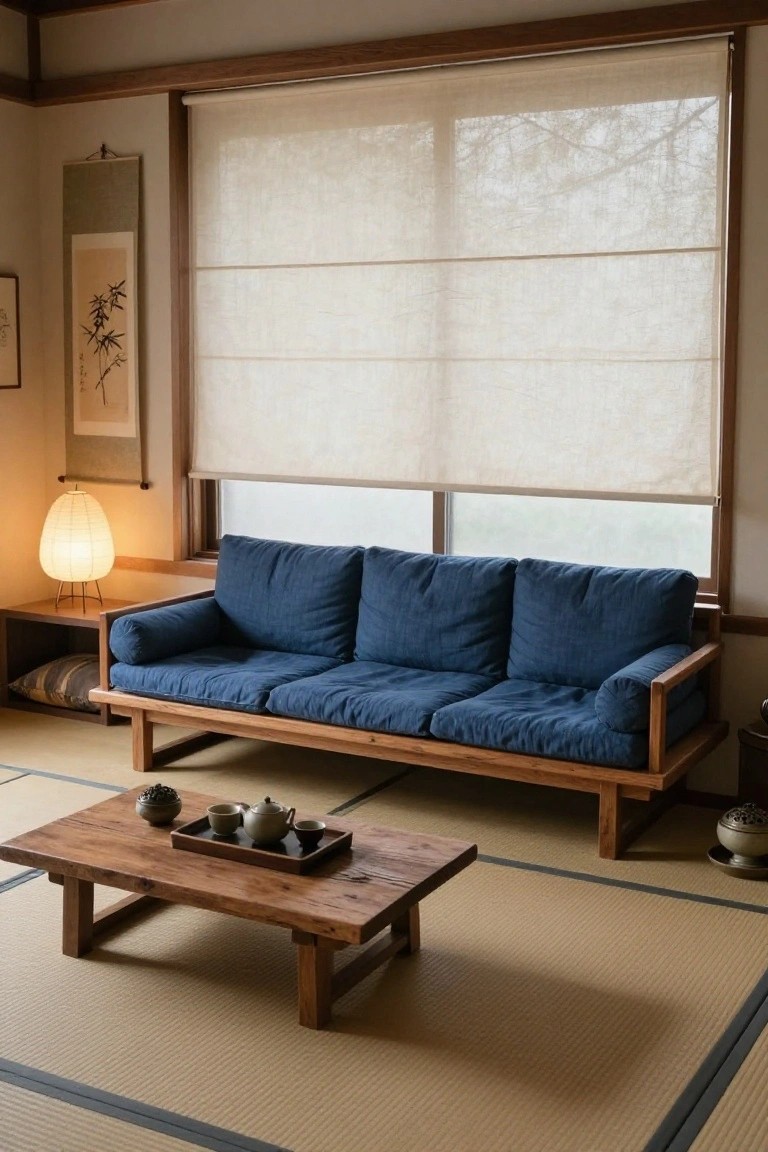
A low wooden sofa like this one sits up on sturdy legs, leaving the tatami floor open underneath. The navy cushions give it a soft look without bulk, and that gap below makes a narrow room feel less crowded. You can see right through to the other side, which helps with flow when space is tight.
Try this in a long skinny living area or apartment where every inch counts. Match it with a low table for sitting or snacks, keep walls plain, and skip heavy rugs. It fits minimalist homes best, but watch the leg height so it does not feel too floaty.
Sofa Against Full Wall Shelving
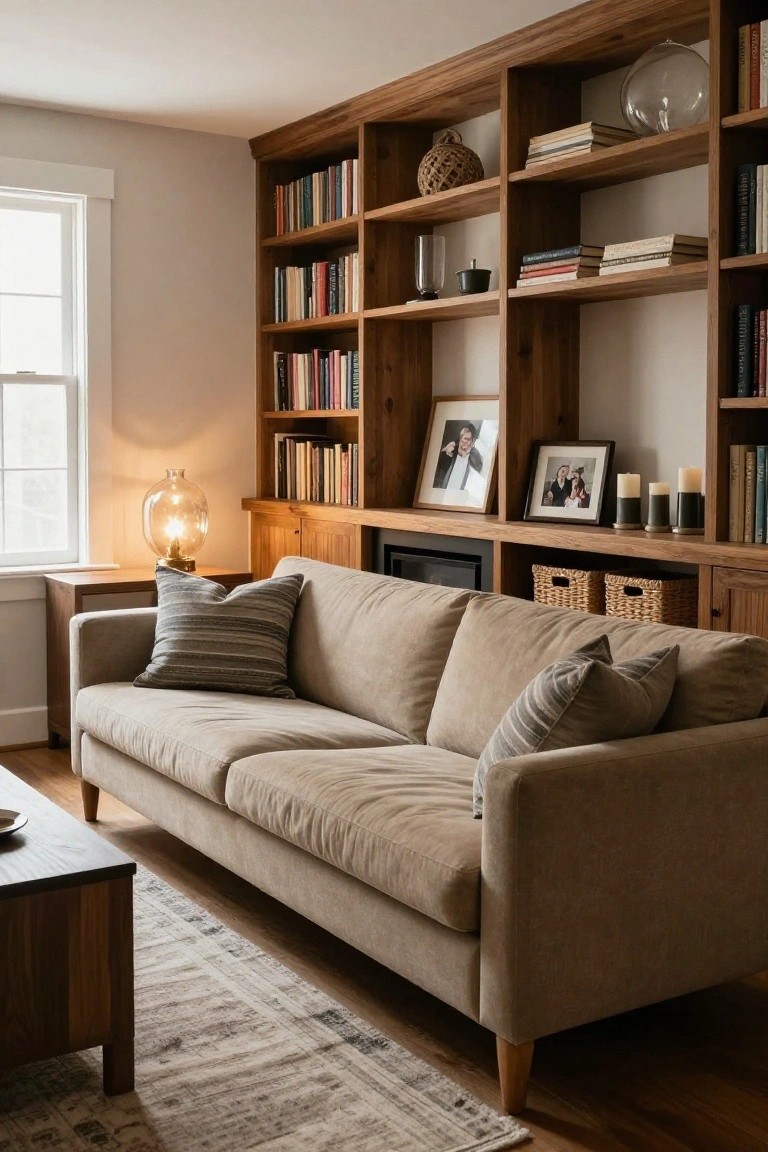
A long sofa tucked right up against built-in bookshelves works great in narrow living rooms. It frees up the center for easy walking and makes the space feel open instead of pinched. The low profile keeps sightlines clear across the room too.
Try this in a long skinny layout where traffic flows from entry to back areas. Pick a simple neutral upholstery that matches the wood tones around it. Just watch the depth… too deep and it starts blocking again.
Low Slung Sofa on Metal Legs
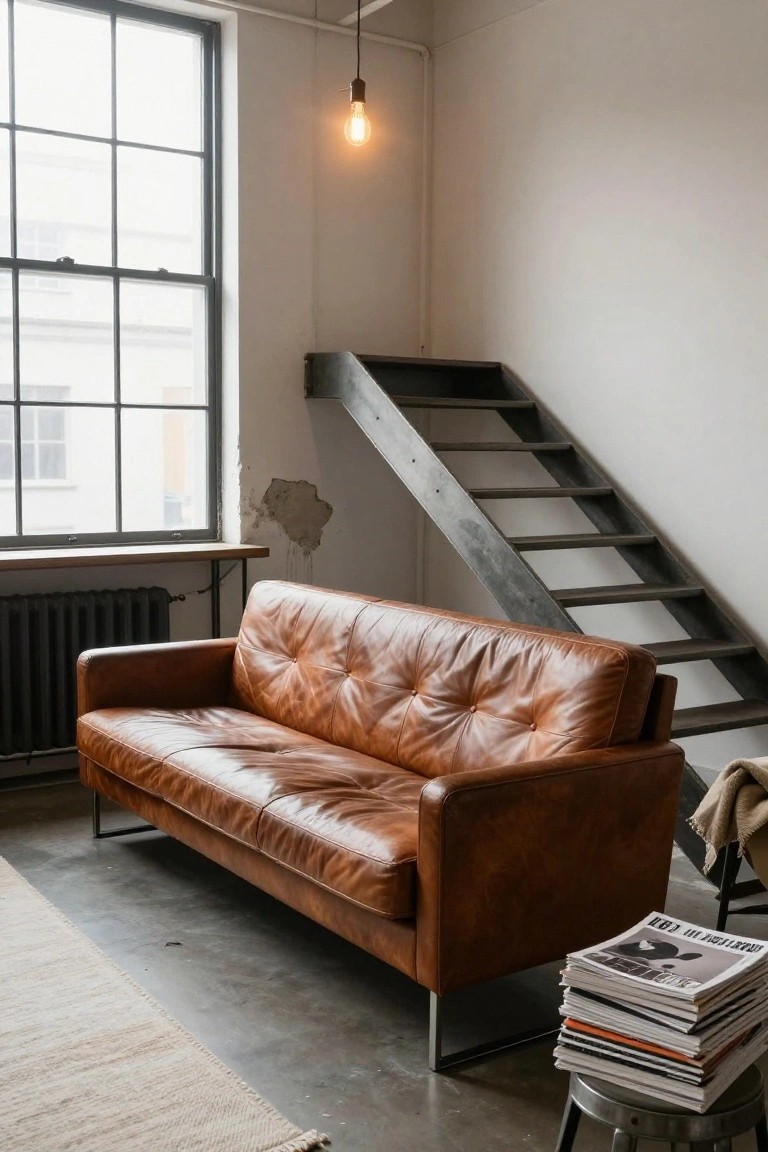
A low slung sofa on slender metal legs works well in narrow living rooms. This tan leather version sits right against the wall, close to the floor but lifted just enough to show the concrete underneath. That keeps the path open past it, especially with stairs nearby. It avoids blocking the flow.
Try this in lofts or older spaces with high ceilings and hard floors. Pick a sofa around 30 inches high or less, with legs at least 6 inches tall. Leather holds up to foot traffic too. Watch the scale though. Too wide and it cramps things.
Velvet Loveseat Fits Narrow Living Rooms
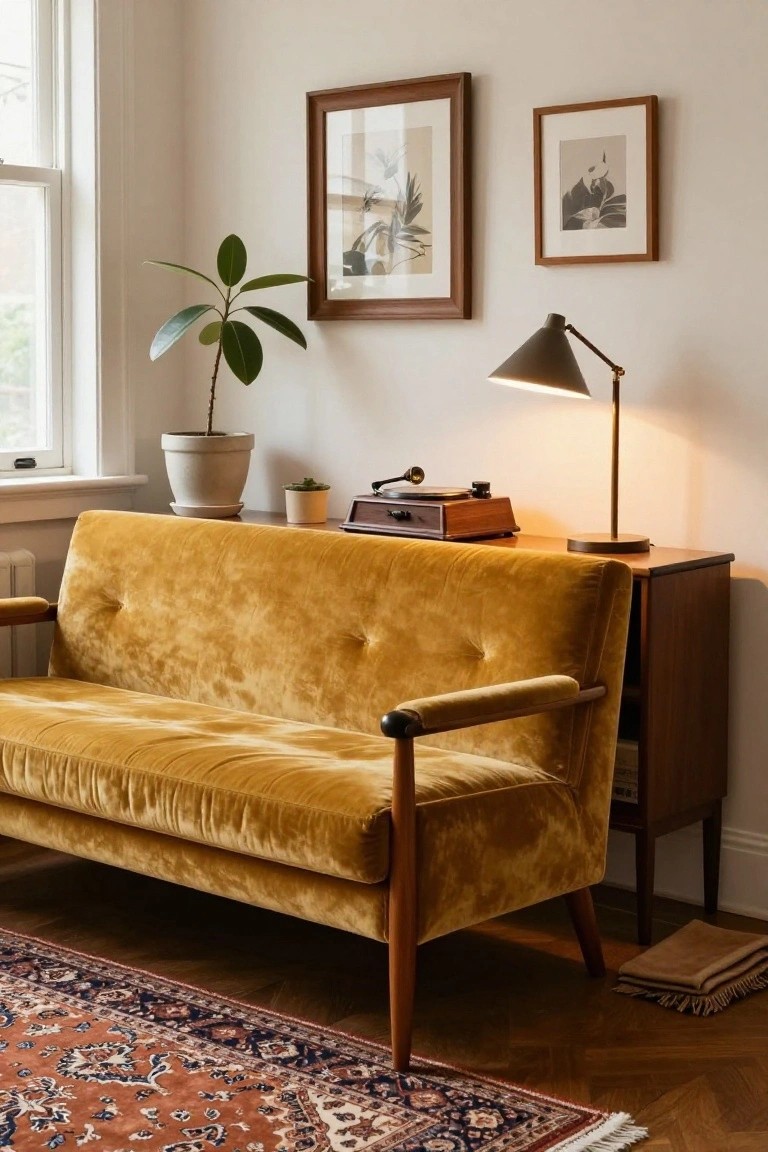
A small velvet loveseat like this one in mustard yellow keeps things open in tight spaces. With its tufted cushions and slim wooden legs and arms, it hugs the wall next to a credenza without blocking flow. The fabric adds a soft touch that makes the room feel lived-in.
Try this in apartments or long galley-style living areas. Go for a compact two-seater under 60 inches wide, and tuck a narrow console behind it for records or books. Light walls help the color stand out… just measure your walkway first.
Green Sofa with Wooden Legs for Narrow Spaces
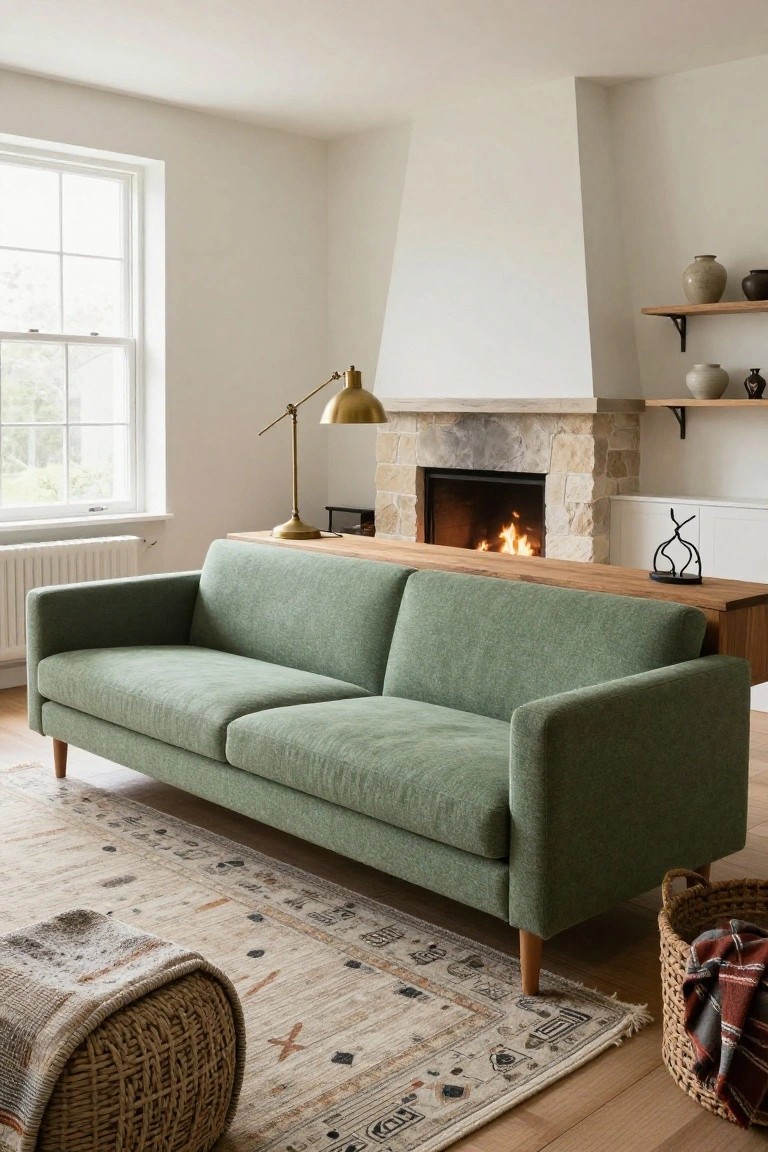
A slim green sofa like this one proves how much a leggy design can open up a narrow living room. The low arms and raised wood legs let light flow underneath. It sits right across from the fireplace without blocking the path. That keeps the room feeling easy to move through.
Put something similar in a long, skinny space where heavy furniture would crowd things. The green fabric adds a bit of color without overwhelming. Works well in casual homes with hardwood floors. Just measure your walkway first… you want at least 3 feet clear.
Bench Seating for Narrow Living Room Flow
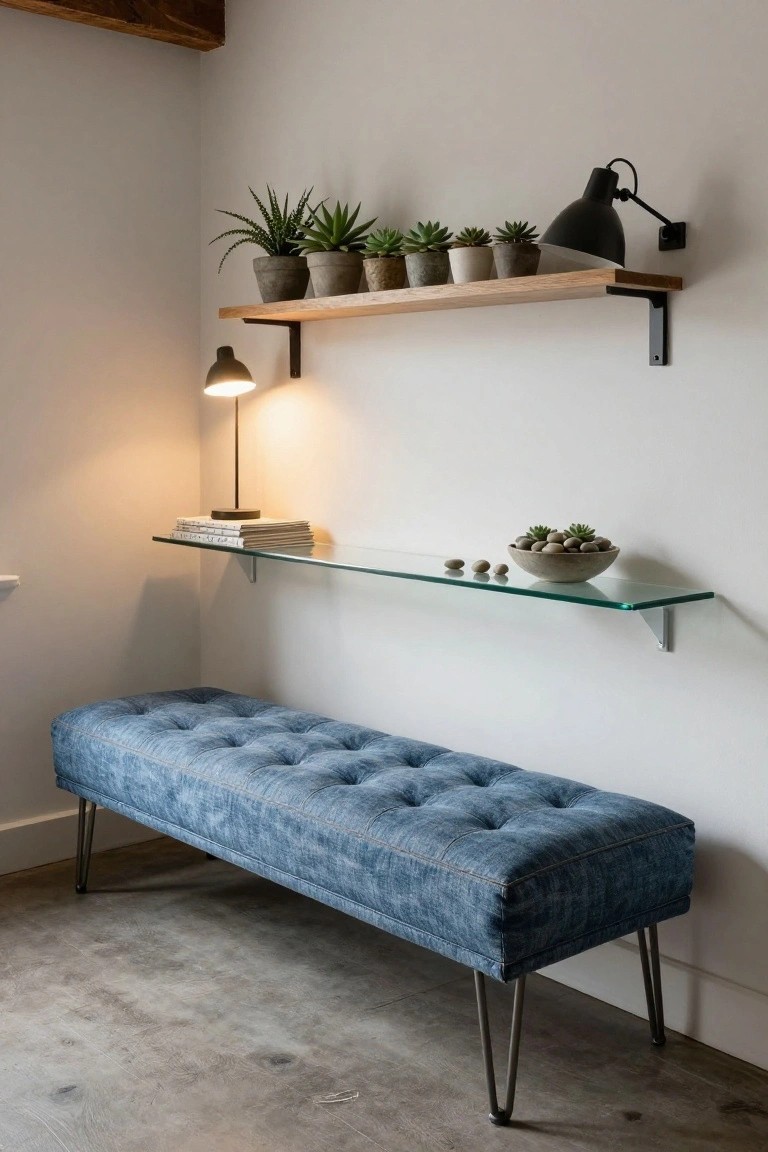
In narrow living rooms, a full sofa can make the space feel boxed in. A slim bench like this blue tufted one changes that. Sitting low on those skinny metal legs, it lets your eye travel right under and keeps air moving through. The floating shelves up top add spots for plants and books without eating up floor area.
Try this in a tight entry lounge or hallway spot where you need seating but not bulk. It works best in homes with clean white walls and simple vibes. Just pair it with a few cushions if you want more comfort for guests… and skip heavy rugs nearby to keep things light.
Sofa Against the Long Wall
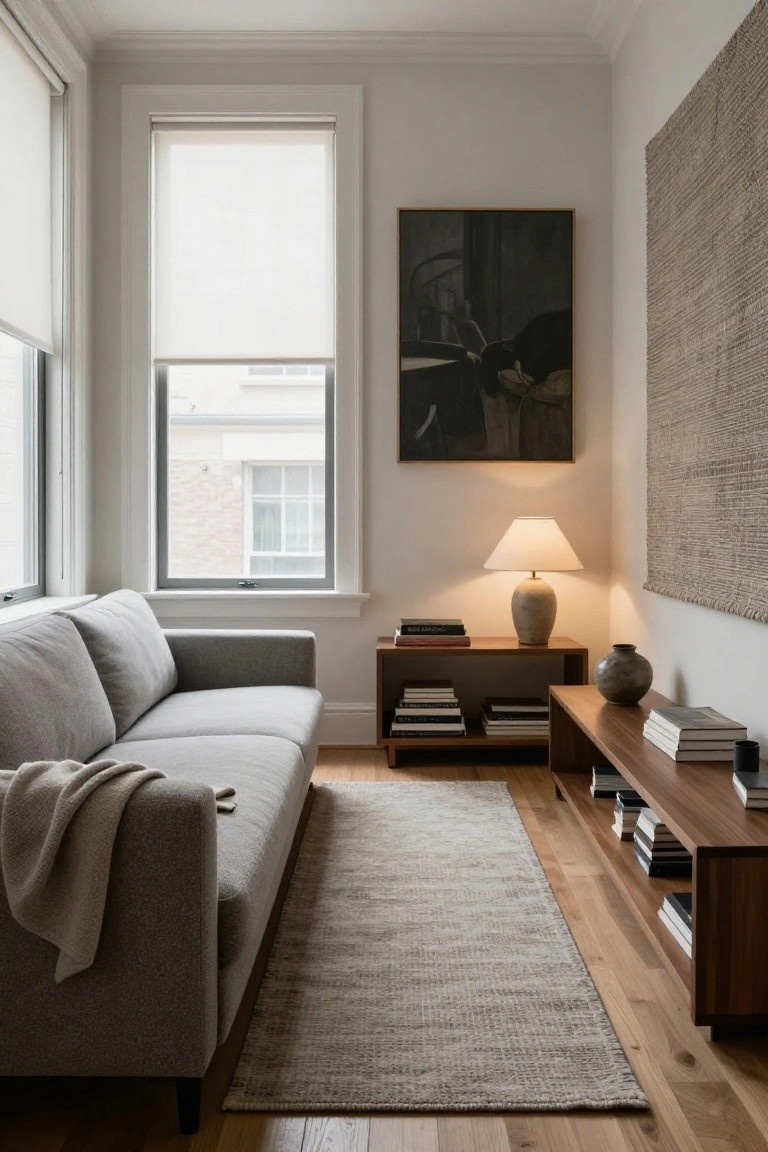
In tight living rooms, sliding the sofa snug against the longest wall makes all the difference. It leaves the center open for walking, and this low gray one fits without eating up precious floor space. The runner rug in front draws your eye right through, keeping things feeling roomy even in a skinny setup.
Try this in long narrow spots like row houses or apartments. Flank the ends with slim wood consoles for lamps and books, but skip anything bulky. It suits modern neutrals best, and watch the depth, too, nothing over 34 inches or so.
Low-Profile Leather Sofa for Narrow Spaces
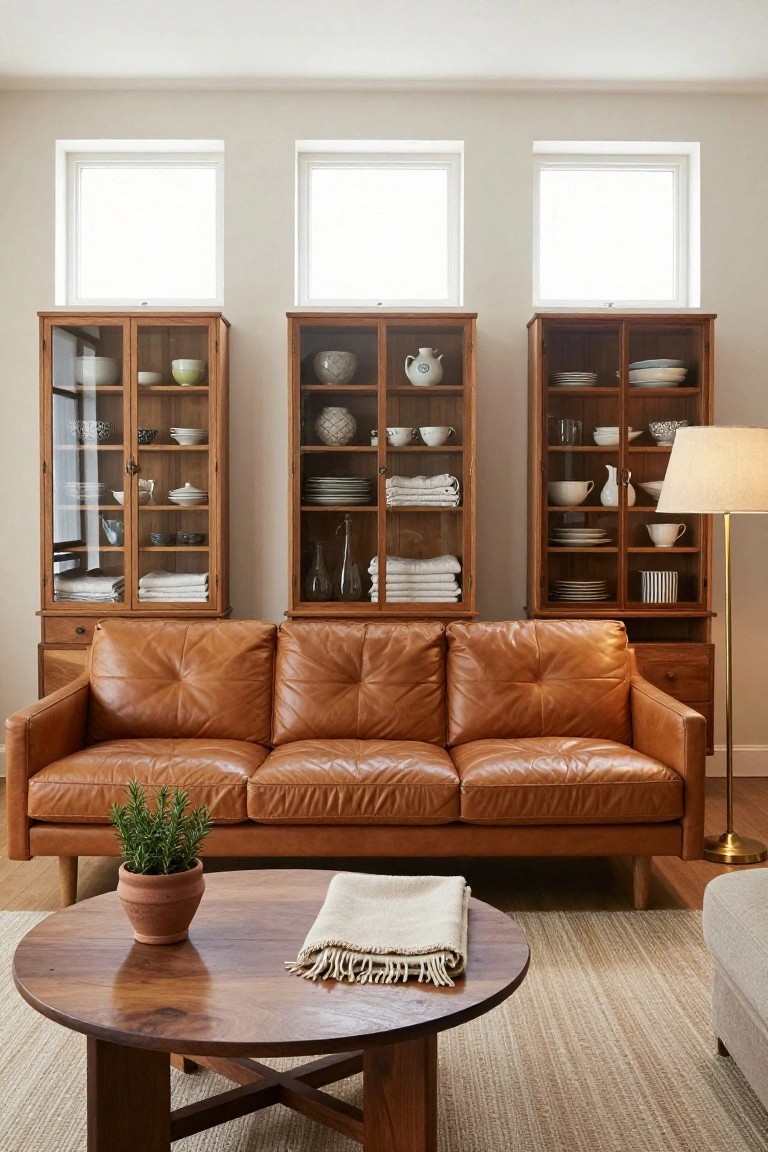
A low-profile leather sofa like this tan one sits close to the floor and keeps the arms slim. It makes a narrow living room feel less boxed in because nothing cuts across the middle of the space too high. The tufted seats add some style without bulk.
Put one in a long thin room where you want to walk easily from the entry to the windows or kitchen. It pairs well with open cabinets on the sides and a matching low wood table. Skip anything too deep or tall that crowds the path.
Frequently Asked Questions
Q: My living room is only 8 feet wide. Can I fit a sofa without it feeling squeezed?
A: Measure from wall to wall, then subtract space for walkways on each side, at least 18 inches. Pick a sofa under 60 inches wide, like a loveseat or slim profile. That leaves breathing room and keeps things moving.
Q: How do I place the sofa to make the room flow better?
A: Float it a foot off the wall if you can. This opens up the path behind it and tricks the eye into seeing more space. Pair it with a slim console table there for drinks without crowding.
Q: What if kids or pets run through all the time?
A: Go for a low-profile sofa with clean lines. Skip bulky arms that snag clothes or toys. And tuck in storage baskets underneath to grab clutter fast.
Q: Do darker colors make a narrow room feel smaller?
A: Light neutrals bounce light around best. Try a pale linen or soft gray to stretch the walls visually. Test fabric swatches in your light first.
