

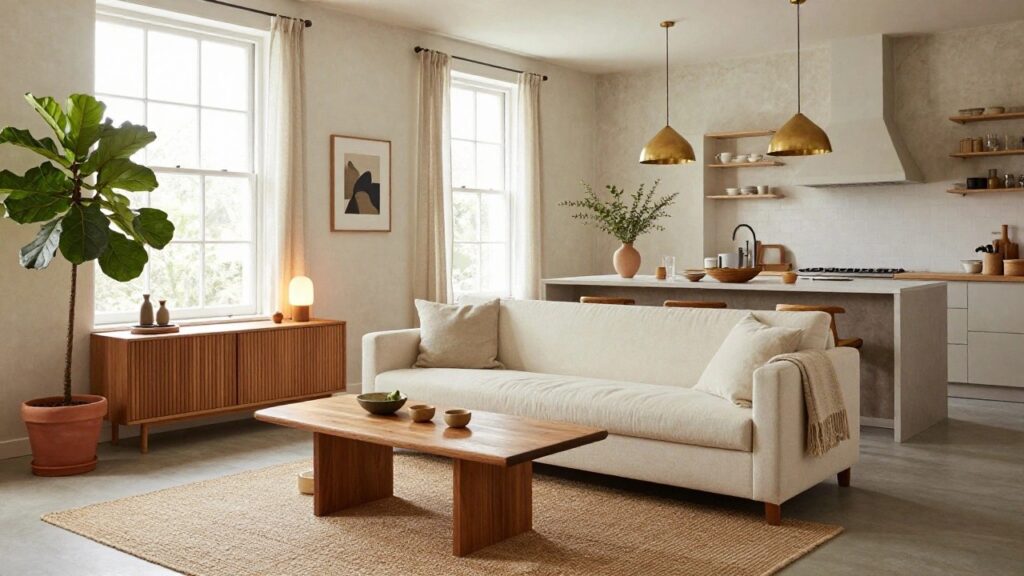
Open-plan homes give you that great open flow, but they often feel overwhelming until the sofas land in just the right spots to anchor everything.
In my own space, I learned the hard way that pushing all the seating into one corner kills the connection between kitchen and living areas.
People usually spot first whether the layout eases movement or turns the room into a maze of awkward paths.
Arrangements that create natural zones make daily life smoother, from quick coffee chats to movie nights with friends.
Angle a sofa toward the windows sometime.
Sofa Facing Kitchen Bar in Open Plan
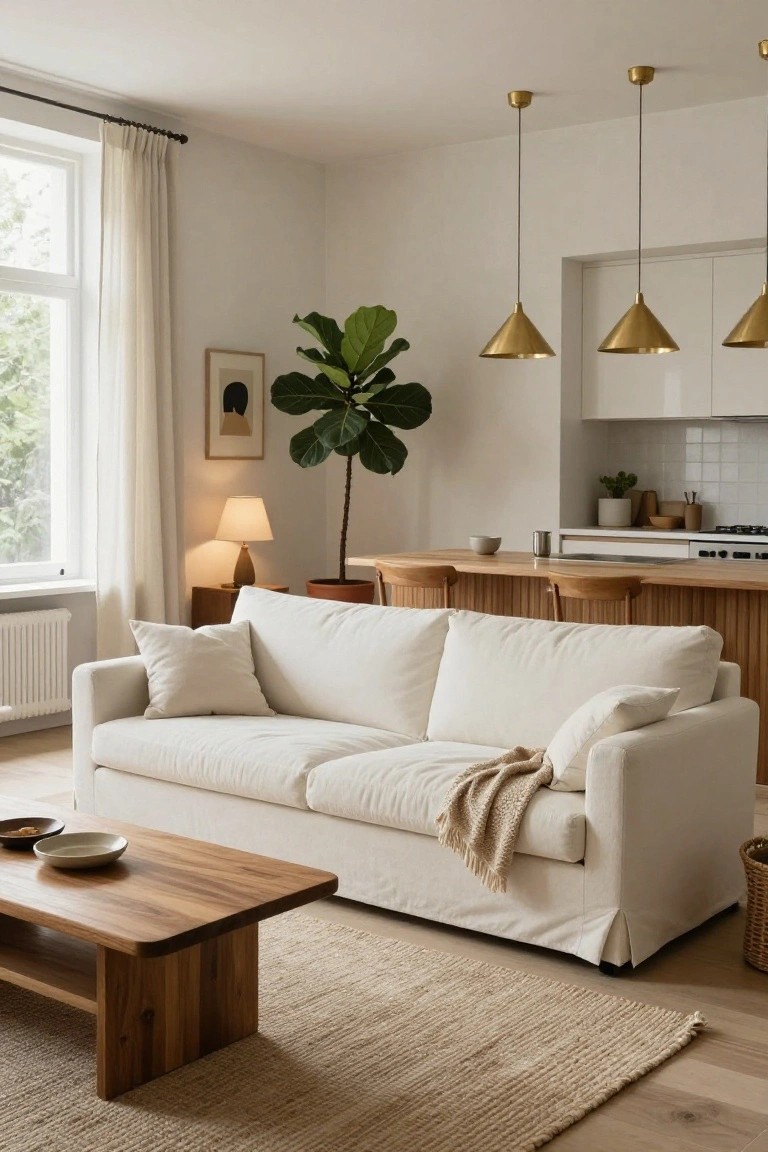
One easy way to arrange a sofa in an open-plan home is to tuck it along the wall, facing straight toward the kitchen bar. This setup keeps the living area defined but open, like with that simple white sofa here paired with a low wood coffee table. It makes the space feel connected, so you can chat from the couch while someone cooks.
This works best in long rooms where flow matters, like city apartments or additions with kitchen islands. Position the sofa close enough to the bar for conversation but not blocking paths. Skip bulky sectionals… a straight one like this leaves room to move.
Sofa Facing Kitchen Pass-Through
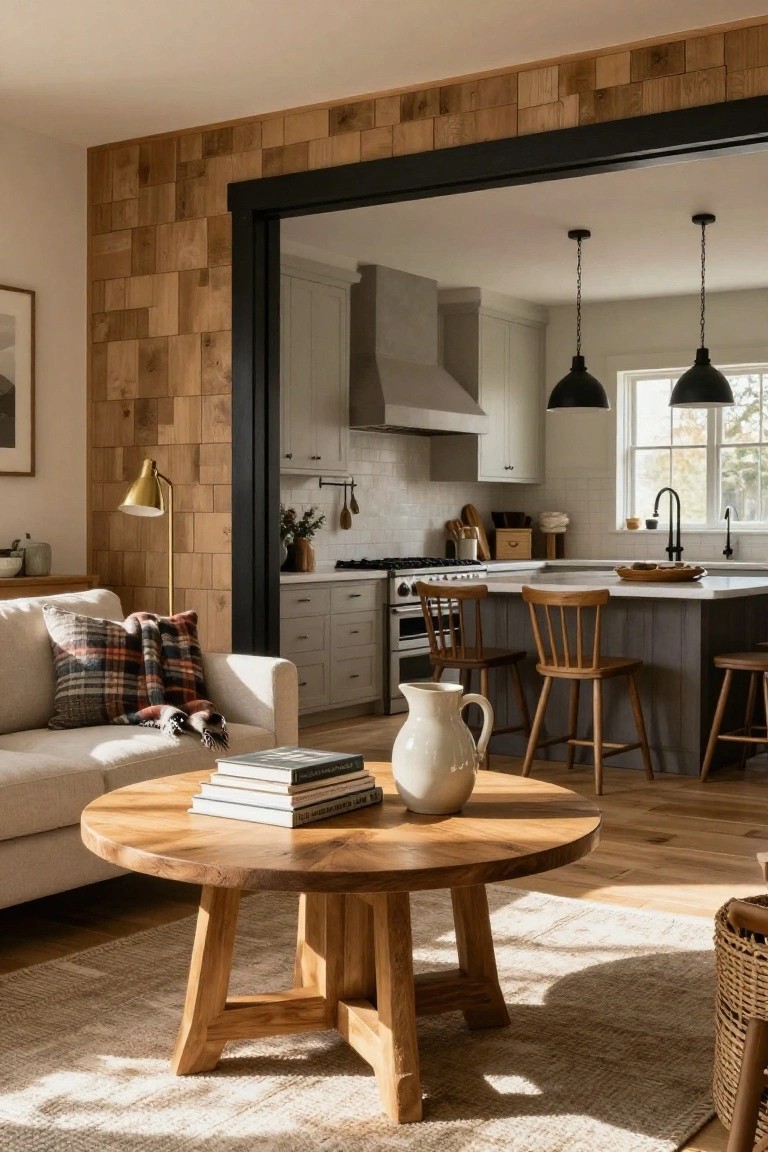
In open-plan homes, one straightforward sofa setup is to place it against the wall right by the kitchen opening. Here the cream-colored sofa sits snug along the wood-paneled wall, with a round wooden coffee table out front. This keeps the living area defined but lets you face right into the kitchen action, so no one feels cut off during family time or dinner prep.
It works best in medium-sized spaces where you want that connected feel without everything blending together. Line it up parallel to the pass-through like this, add a couple throws for comfort, and skip bulky side tables to maintain the flow. Just make sure the wall treatment ties into the kitchen somehow, or it might feel a bit chopped off.
Facing Sofas Around the Fireplace
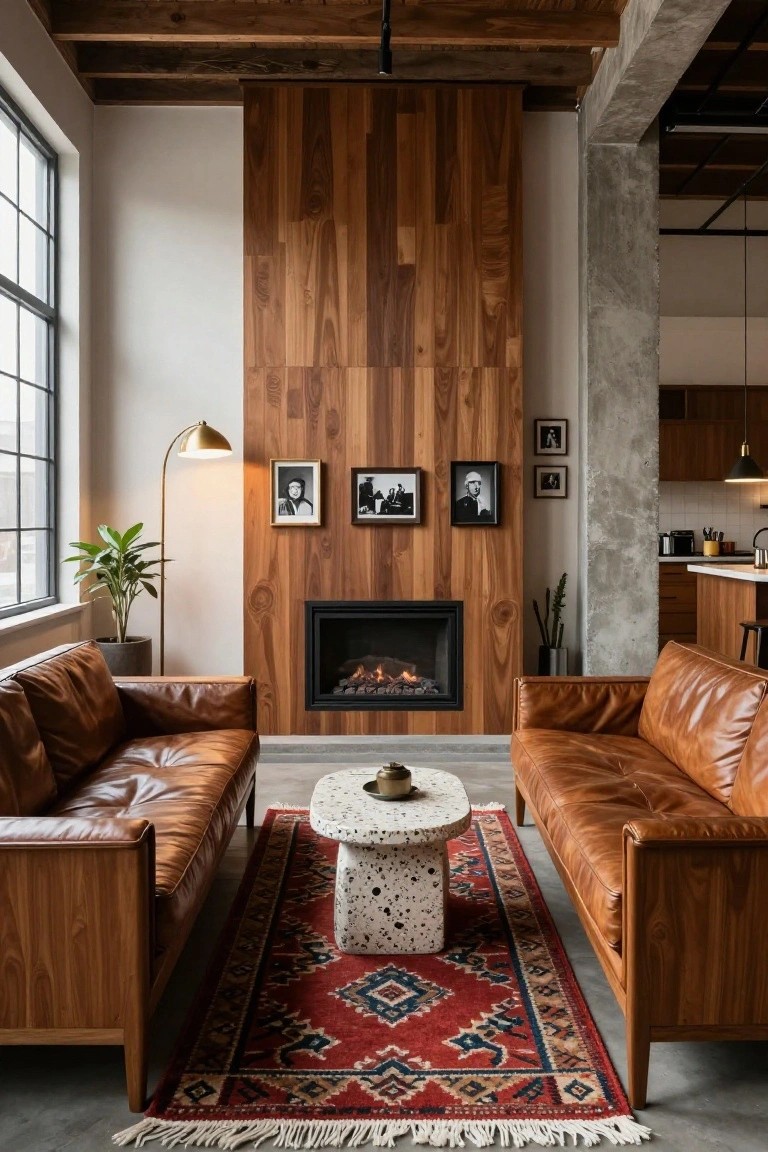
In open-plan homes, placing two sofas to face each other right in front of the fireplace pulls the seating into a natural conversation spot. It works because the fire draws people in anyway, and the facing setup makes the area feel like its own little zone even without dividing walls. Here, low-slung leather sofas keep it casual, with a simple coffee table in between to hold drinks or books.
This arrangement shines in loft-style spaces or big living areas where you want to break up the floor plan without fuss. Anchor it with a rug underfoot to define the edges, and add a plant nearby for some green. Skip tall backs on the sofas if the ceiling is high. It keeps things open yet cozy.
Face the Sofa Toward Big Windows
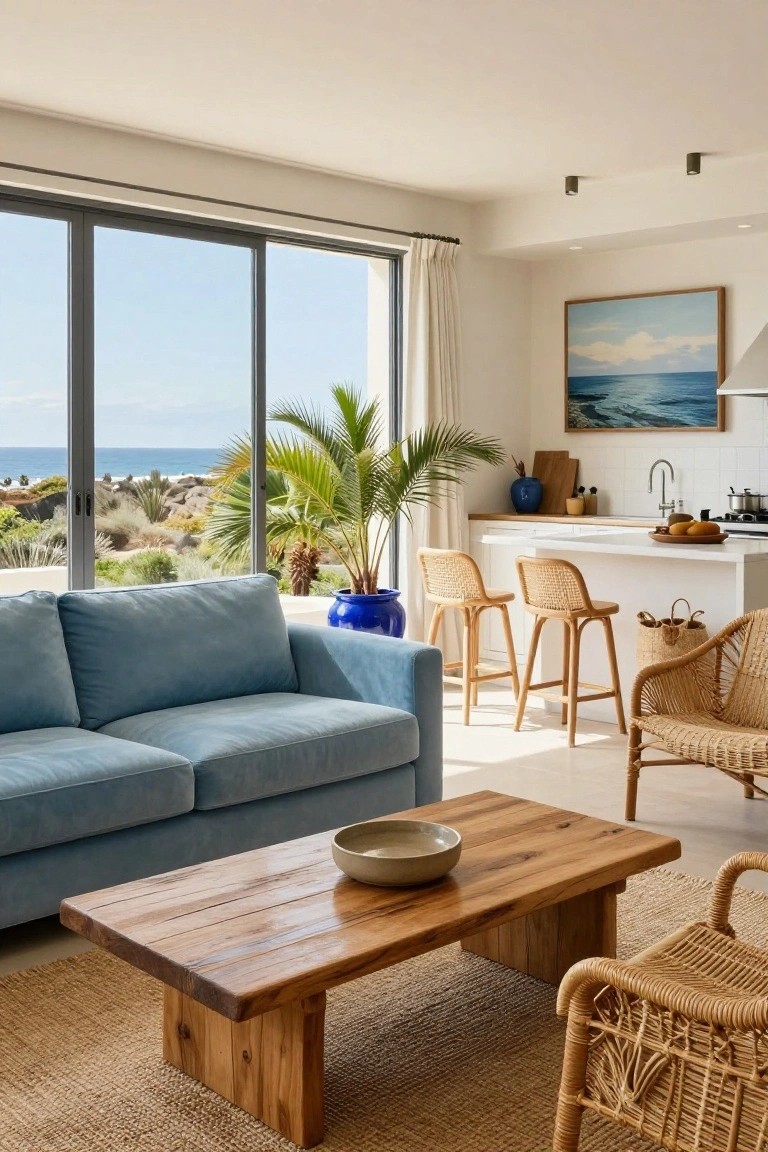
In open-plan living areas, turning the sofa to face large windows works every time. It pulls your eye outside and makes the whole space feel connected to the view, like with this low blue velvet sofa right up against the glass doors. The ocean beyond keeps things calm and open, without needing much else.
Try this in homes with a good outlook, whether sea or garden. Pair it with a simple wooden coffee table and rattan chairs to keep paths clear around the kitchen island. Just make sure the sofa isn’t too deep… or folks might bump into the bar stools.
Sofa Next to the Kitchen Island
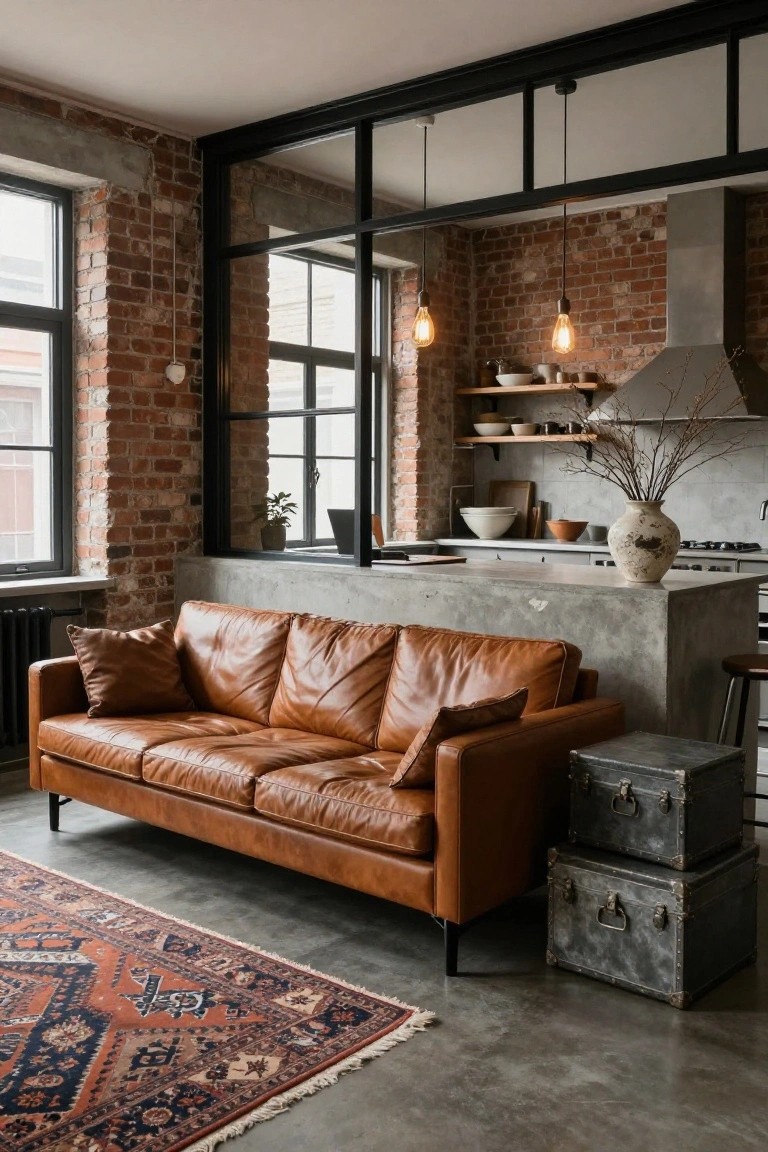
In open-plan setups like this loft-style space, sliding the sofa right up against the kitchen island carves out a living area without needing extra walls or dividers. The tan leather sofa hugs the concrete peninsula here, keeping everything connected while giving a spot to sit and chat during meal prep. It just feels natural.
This arrangement fits best in homes with long islands or bars, especially industrial or urban spots with exposed brick and high ceilings. Go for a low-back sofa to maintain the open flow, and leave room for stools on the other side. One thing to check: make sure the sofa depth doesn’t crowd the walking path.
Sofa Against the Wall
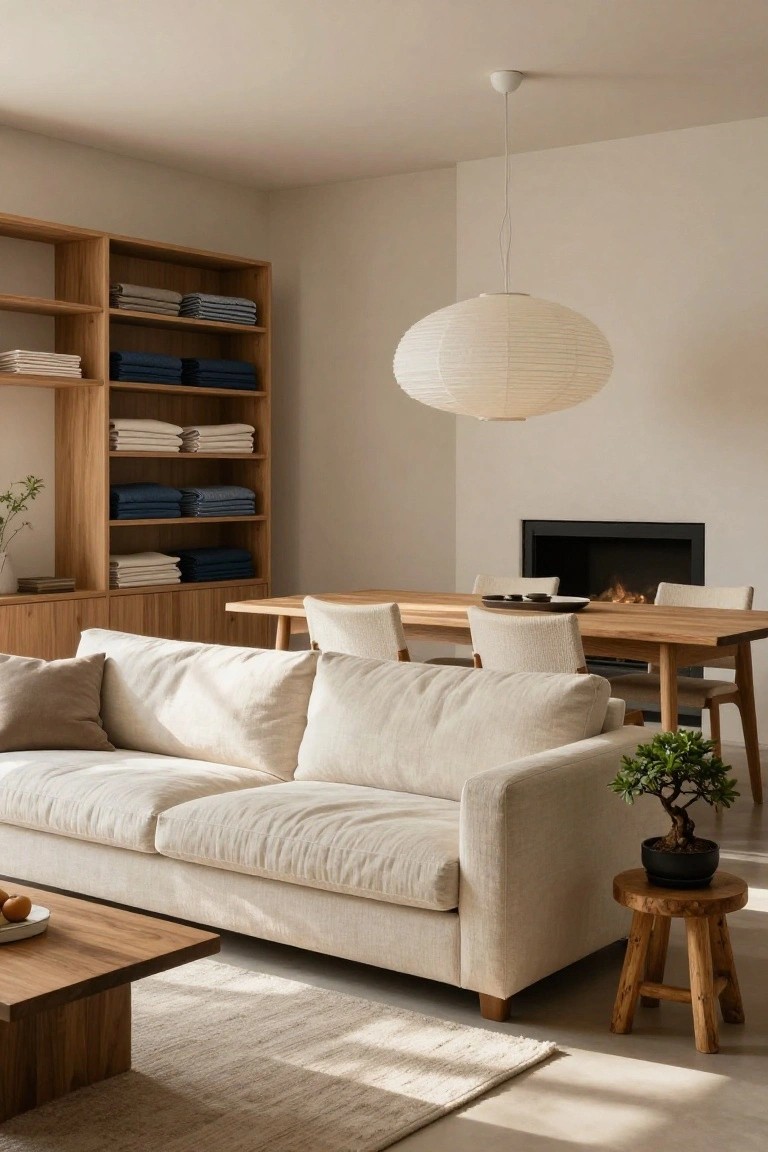
In open-plan homes, sliding the sofa right up against the wall works every time. It frees up the middle of the room for easy movement and lets you see across to the dining area or fireplace. Here, a big cream sofa sits snug under open wood shelves holding folded linens, which keeps things practical without crowding the space.
This setup fits best in long living-dining rooms where you want zones but not walls between them. Go for a low coffee table in front, like the wood one with a few oranges, to match the casual feel. It suits modern or neutral homes… just pick shelves or cabinets that don’t block light.
Facing Sofas for Open-Plan Lounges
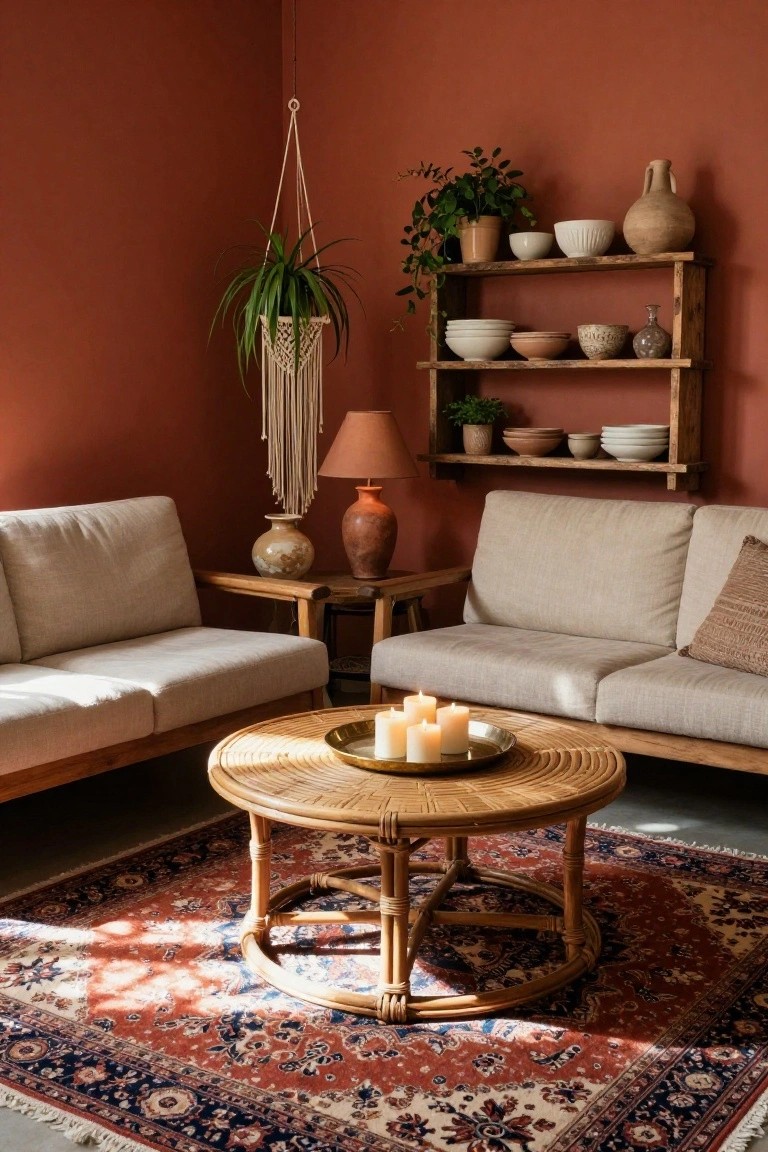
In open-plan homes, facing sofas pull a space together into a natural hangout spot. Two simple beige ones sit opposite here, framing a round rattan table right in the middle. That setup invites people to settle in and chat, especially with the warm terracotta walls keeping things cozy without closing off the room.
Try this in bigger living areas that flow into dining or kitchens. Go for low-slung sofas in neutral fabrics so they don’t overwhelm. Add a rug underneath to anchor it all. Just watch the scale. Too big, and it blocks traffic flow.
Sofa Parallel to Kitchen Counter
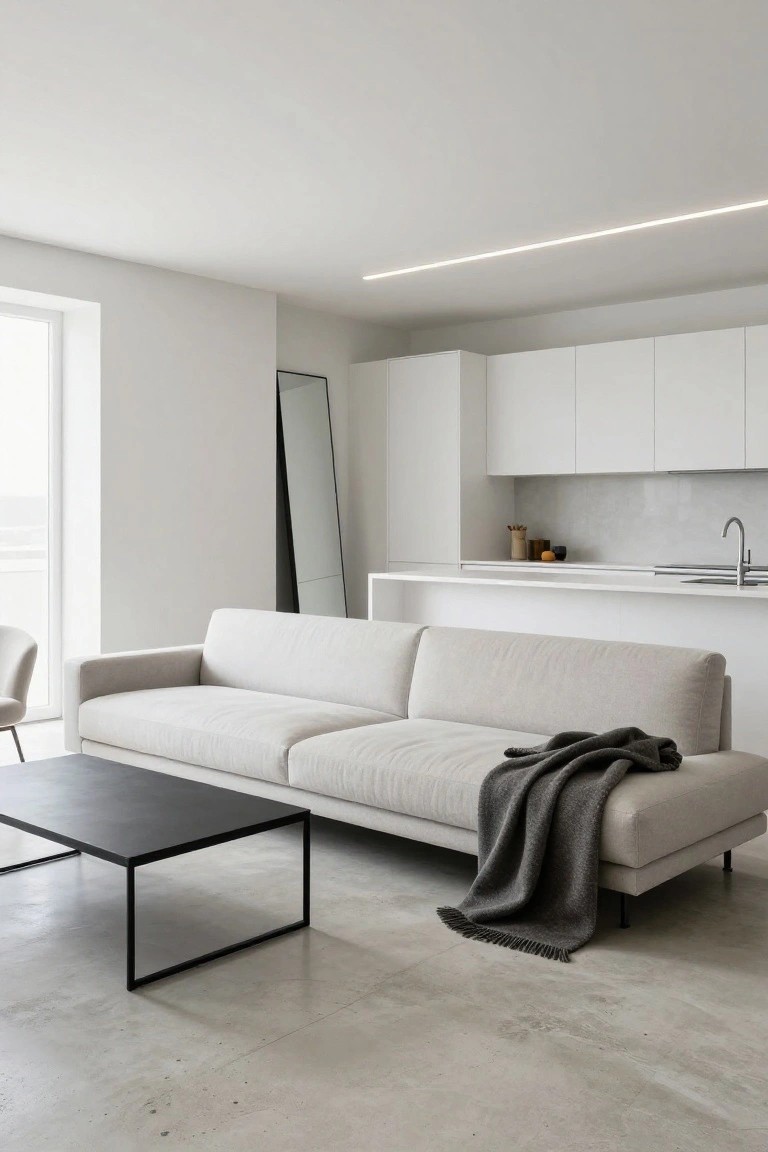
In open-plan homes, running your sofa right along the kitchen counter edge makes a lot of sense. It carves out a clear living spot without walls or screens getting in the way. The light gray fabric here keeps things soft against all the white cabinetry, and that black metal coffee table pulls it together without fuss.
This arrangement fits best in long, narrow spaces like lofts or apartments where kitchen and living blend. Angle it to face the counter for easy chats during cooking. Skip bulky arms if traffic flow matters… keeps it practical.
Arranging Sofas Around the Fireplace
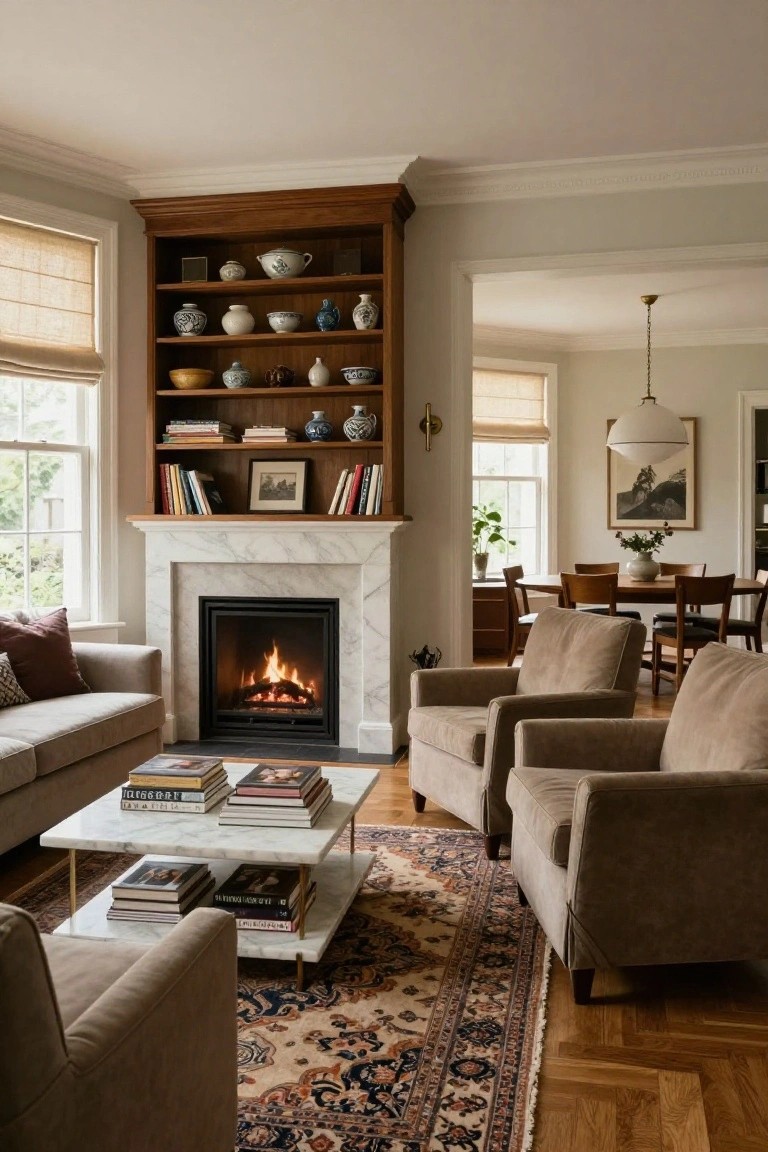
One solid setup for open-plan living rooms puts the sofa parallel to the fireplace. Flank it with armchairs and slide a coffee table right in the center. This way, you get a clear spot for talking or reading that doesn’t block the view through to the dining area.
It suits homes where the hearth already draws the eye, especially with neutral upholstery like the beige pieces here. The low table keeps it all connected to the floor. Just make sure the chairs aren’t too bulky or they’ll crowd the path.
Nesting Tables in Front of the Sofa
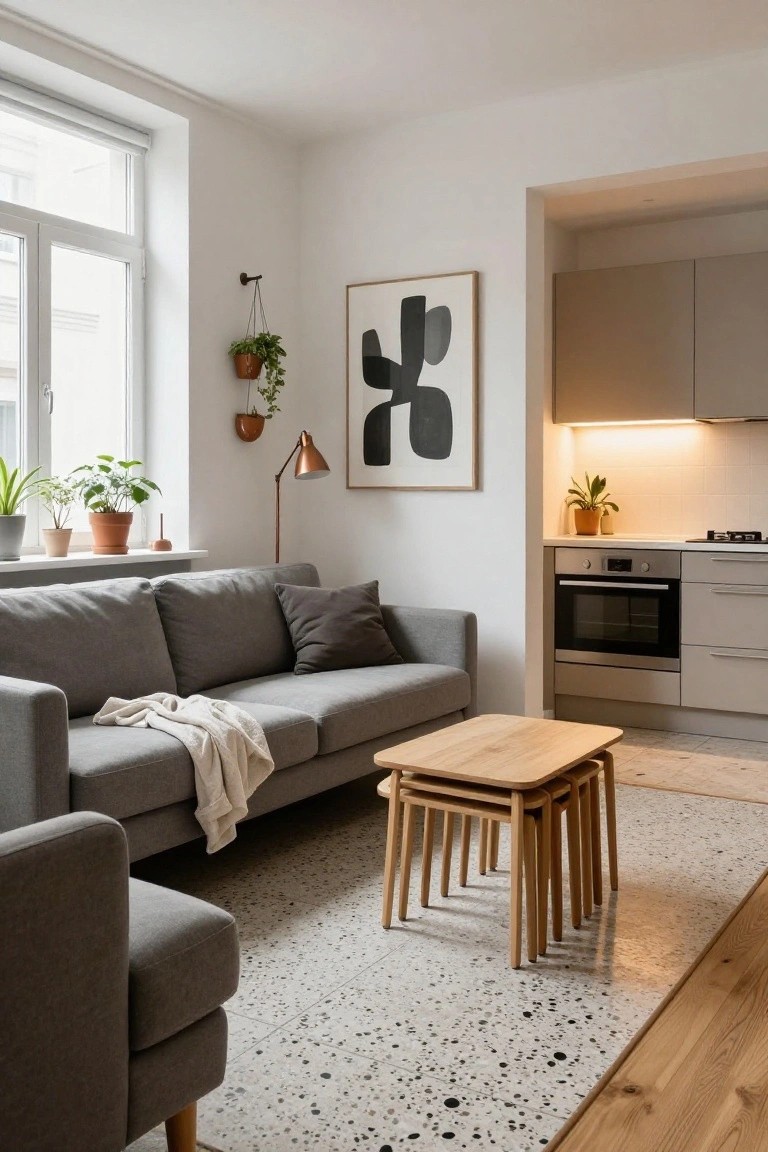
In open-plan homes, a simple way to set up the sofa area is pulling together a few nesting tables right in front. You see it here with four small wooden ones stacked loosely, giving that living spot shape without a bulky coffee table taking over the floor. It keeps things airy around the kitchen and lets the gray sofa feel settled but not locked in place.
This works best in smaller spaces where you want flexibility, like pulling out an extra stool for guests or shifting them aside for more walking room. Go for natural wood tones to warm up cool floors like this terrazzo. Just make sure they are sturdy enough for daily use, and match the height to your sofa for easy reach.
Sofa Along the Fireplace Wall
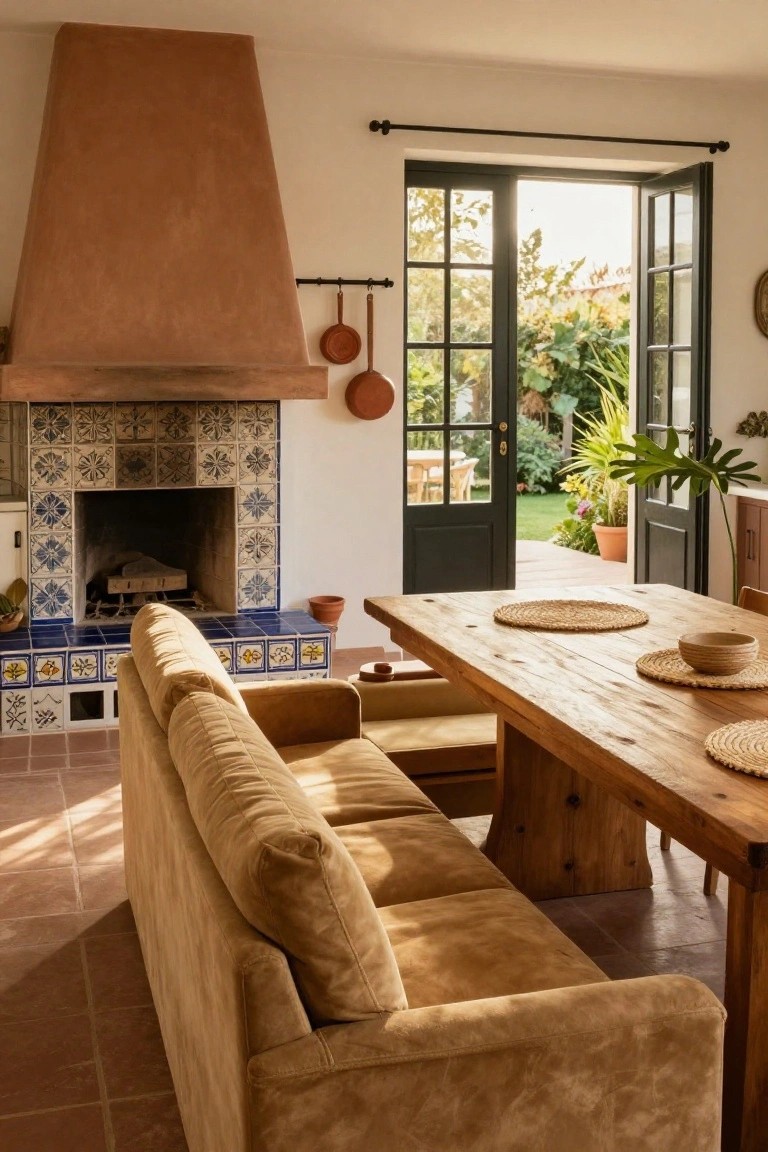
In open-plan homes, sliding a sofa right up against the long wall by the fireplace carves out a natural spot for relaxing. It keeps the seating close to the fire’s warmth without eating into the walking space around the dining table. The tan fabric here picks up the earthy tones from the chimney and tiles, making the whole corner feel settled and easy.
This setup shines in longer rooms where one wall has a strong feature like a chimney breast. Position the sofa to face both the hearth and any open doors to the yard, so you get views outside too. It’s practical for everyday family use, but watch the scale, a low-back style avoids blocking light from the windows.
Tuck an L-Shaped Sofa Against the Wall
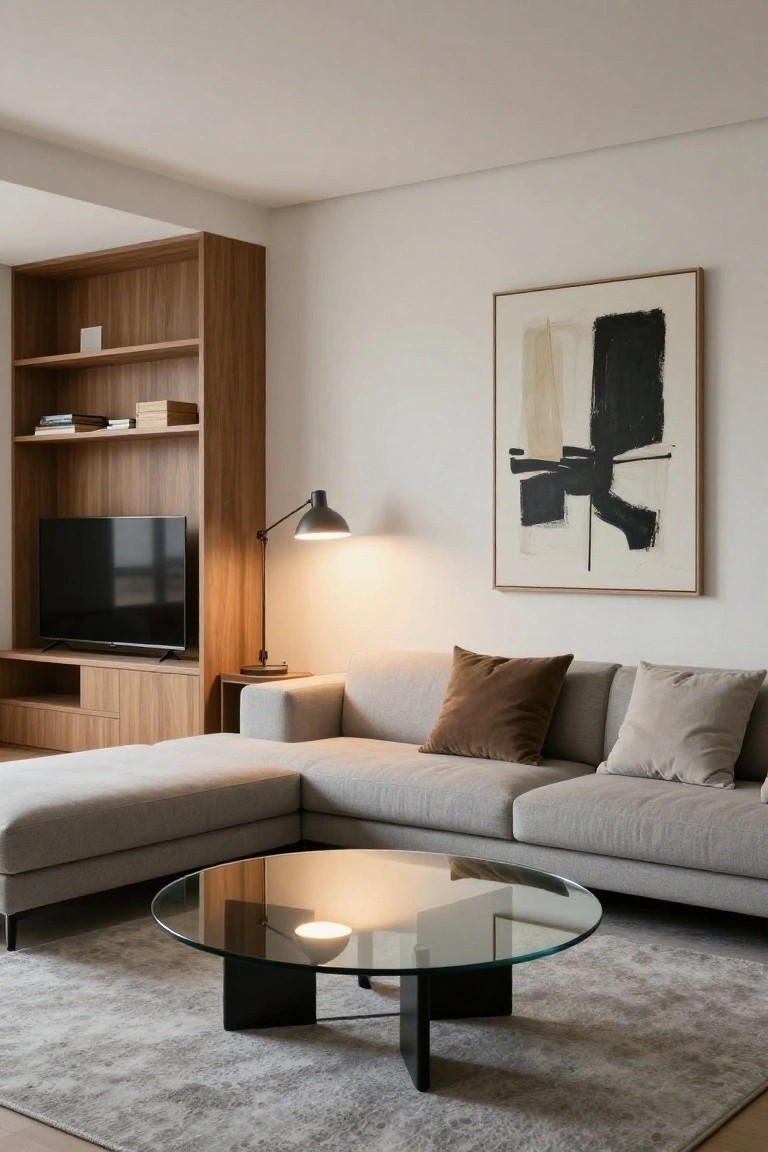
In open-plan homes, one straightforward sofa setup is to place an L-shaped sectional right up against the wall. Here, it sits next to a built-in walnut media unit with the TV mounted above, which keeps the seating zone defined without blocking the flow through the space. This arrangement makes the room feel bigger since the center stays open, and it turns that one wall into a complete living area hub.
You can pull this off in apartments or loft-style homes where every inch counts. Go for a light gray fabric like this one to blend with neutral walls, and slide a round glass coffee table in front for easy reach without crowding. Just make sure the chaise end has room to stretch out, or it might feel squeezed.
Curved Sofas in Open-Plan Living Areas
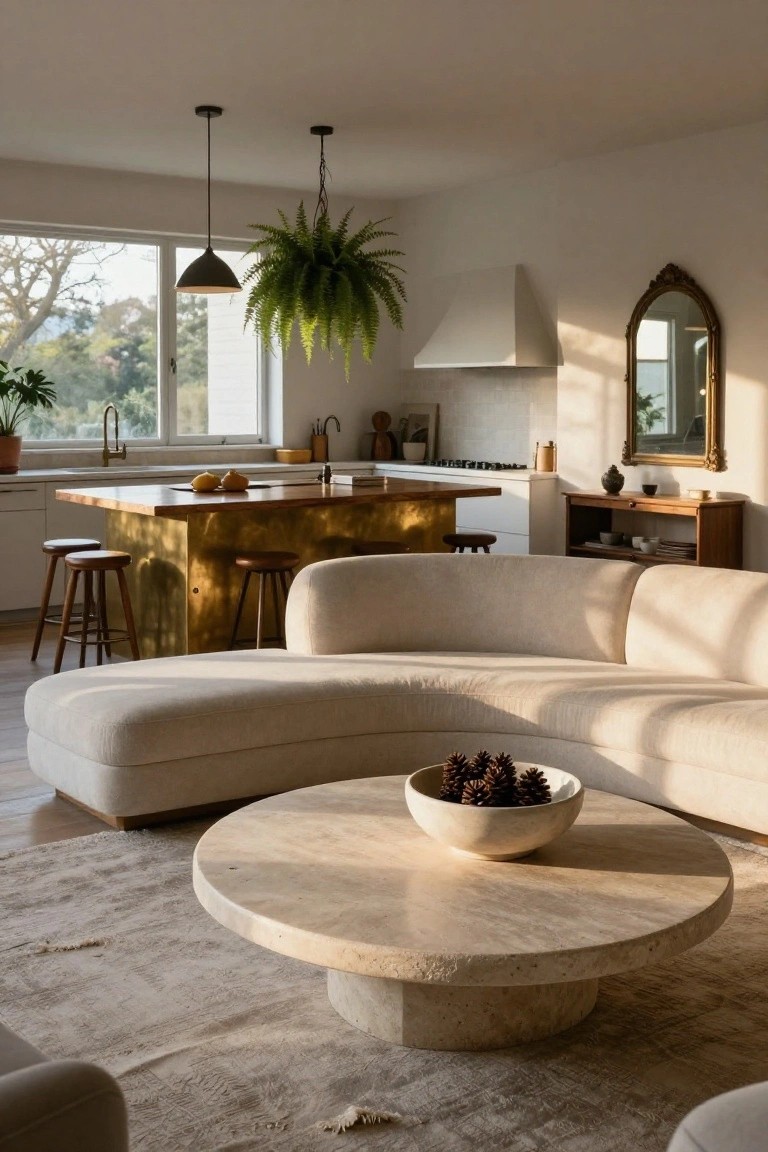
A curved sofa works well in open-plan homes because it pulls the seating into its own shape without needing walls or rugs to define it. Here, the soft cream curve sits right off the kitchen, facing a simple round stone table. That gentle bend makes the spot feel like a real living nook, even with the counters and stools nearby.
Try this in homes where kitchen and living blend together. It suits neutral rooms with good light, keeping things cozy but open. Just make sure the sofa isn’t too big, or it might crowd the flow to the kitchen.
Sofa Facing Kitchen Cabinets
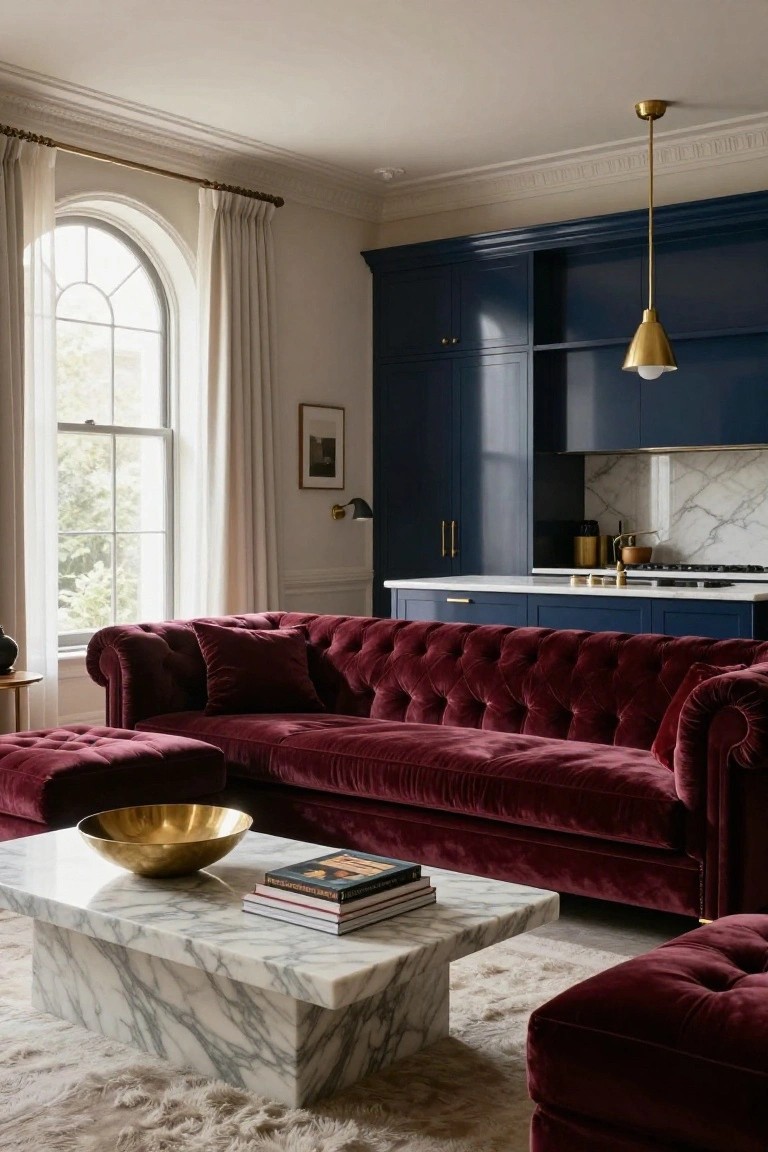
In open-plan homes, one straightforward sofa arrangement is to place it right up against the kitchen wall of cabinets. This deep red velvet Chesterfield sofa does just that, with matching ottomans pulled close. It carves out a lounge spot without blocking the flow, letting you keep an eye on cooking from the couch.
Try this where your kitchen runs into the living area. A low marble-top table in front keeps it practical for drinks or books. Works best in medium-sized spaces… not too cramped. Just make sure the sofa color pops against the cabinets for that easy separation.
Sofa Facing the Window View
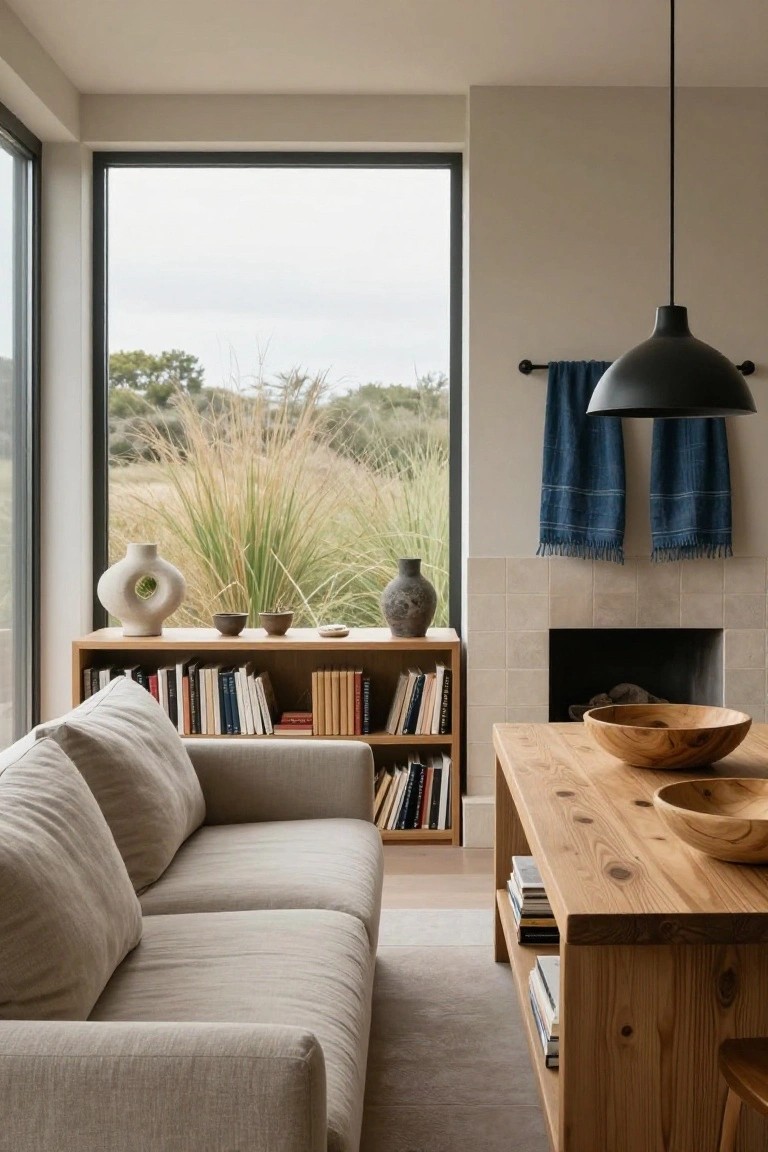
In open-plan homes, one straightforward sofa setup is to place it right in front of a big picture window. This way, you sit facing the outdoors, like those tall grasses in the distance here. The sofa backs up against low bookshelves, which keeps books handy without crowding the space. It makes the room feel connected to nature, especially when the view is peaceful.
Try this in living areas with good outdoor sights, maybe a yard or field. Use a neutral sofa like the light gray one shown, and add a simple wooden table out front for drinks or feet. It suits modern or casual homes, but skip it if your windows face busy streets. Just make sure the sofa isn’t too deep, or you’ll block the walkway.
Facing Sofas Define Open Living Zones
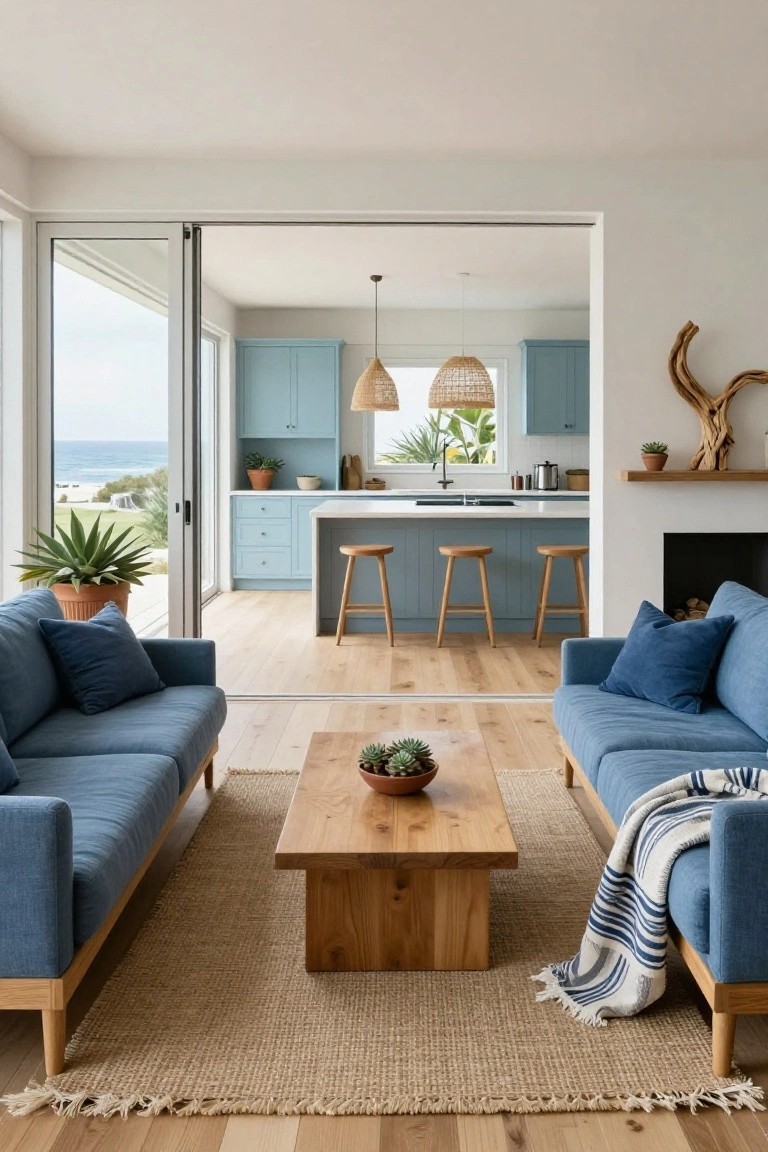
In open-plan setups, placing two matching sofas to face each other across a coffee table makes a clear spot for relaxing or talking. It carves out a living area without walls getting in the way. The blue linen sofas here sit on light wood floors, with a simple wooden table in between keeping things casual.
This arrangement suits homes where kitchen and living blend together, especially with views pulling you outside. Anchor the setup on a big seagrass rug so feet don’t feel lost. It fits modern coastal spots or airy family rooms… just skip bulky arms if space feels tight.
Curved Sofa in Open-Plan Living
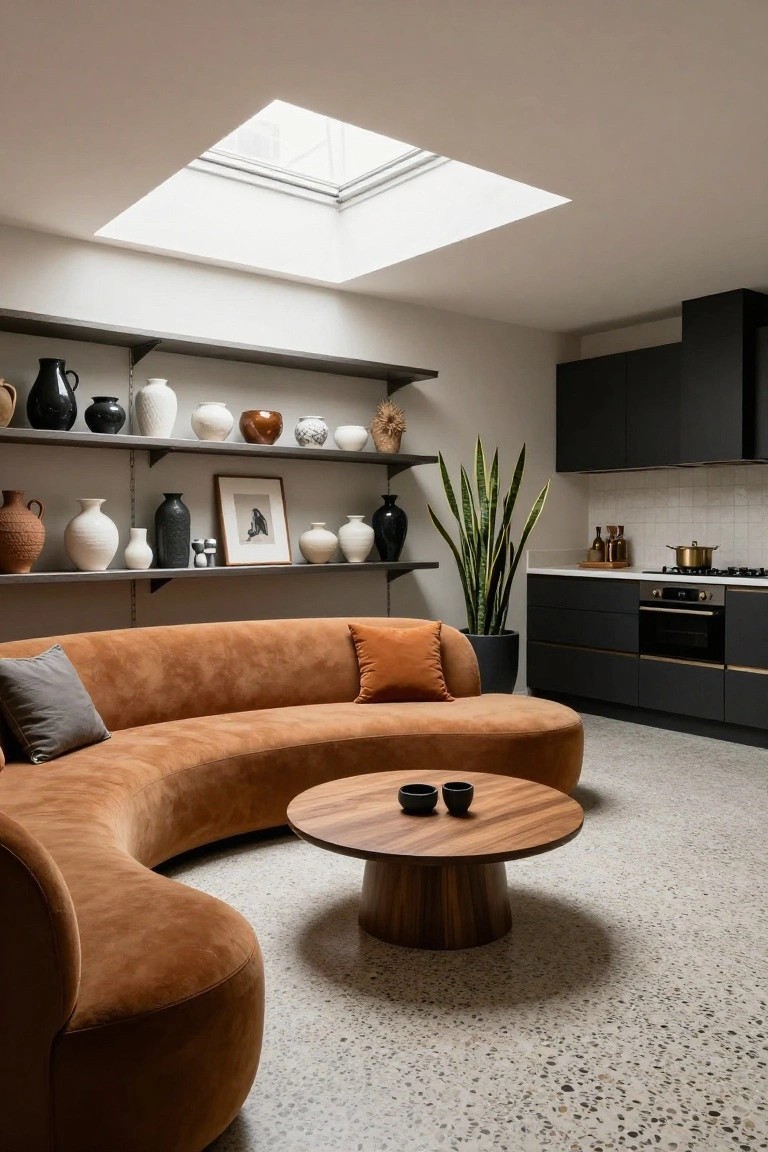
In open-plan homes, a curved sofa like this burnt orange one works great to pull together a seating area without closing things off. It hugs the space nicely, making a spot for relaxing right next to the kitchen. The gentle curve invites people to sit close, and it keeps the flow open while feeling defined.
Try this in kitchens that flow into living areas. Pair it with a low round table for easy reach, and add shelves or plants nearby to frame it without clutter. It fits smaller spots well… just make sure the sofa isn’t too big or it might block paths.
Sofa Facing the Fireplace
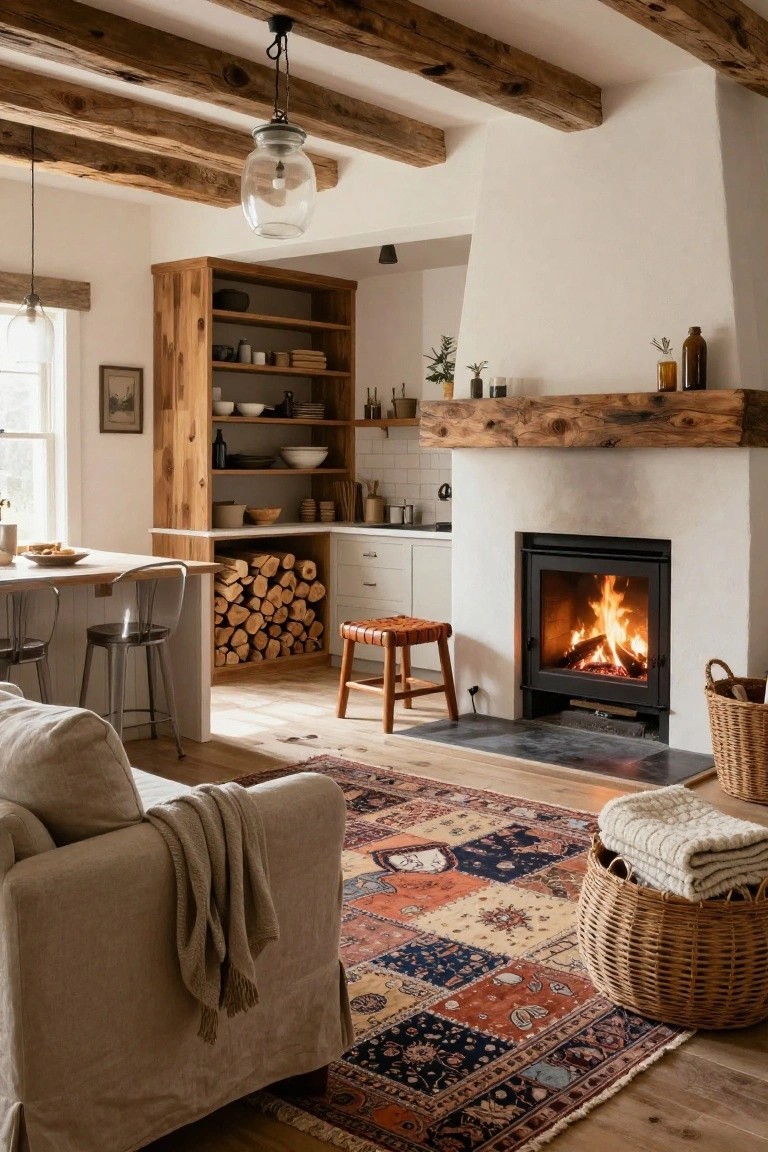
In open-plan homes where kitchen and living run together, turning the sofa to face the fireplace makes it the heart of the room. It draws people in for evenings by the fire without blocking the flow to the cooking area. A plain linen sofa like this one, tossed with a throw and set on a patterned rug, keeps things casual and cozy.
Try this in rectangular spaces with a central hearth. Position the sofa a few feet out from the wall so legs can stretch. Pair it with stools at the nearby island for overflow seating. Just avoid shoving it right up against the fire surround. Works in older homes with wood beams too.
Curved Sofas Facing a Central Table
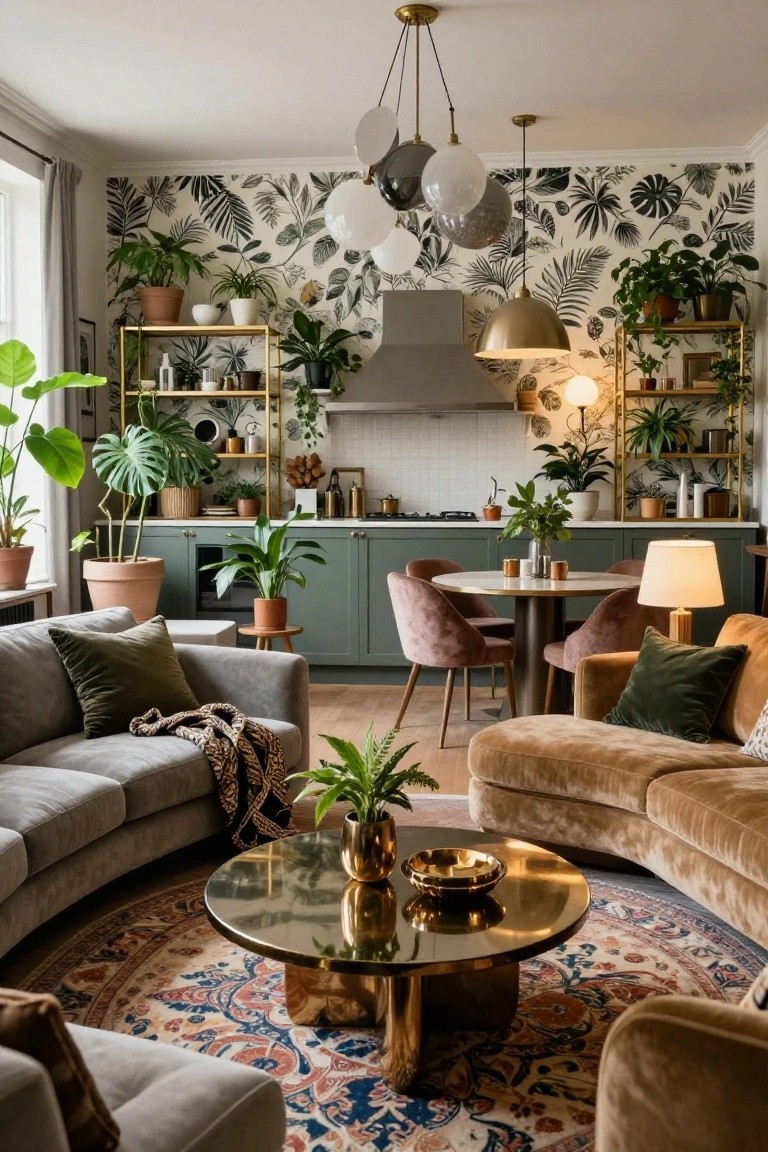
In open-plan living areas, curved sofas facing each other across a round brass coffee table make a natural spot for talking. They hug the table and a patterned rug just right, pulling the seating into its own zone. The setup keeps the flow open to the kitchen, with plants adding some life without crowding things.
This works best in bigger rooms where you want a lounge that doesn’t block the whole space. Go for low-back curves in neutral tones so they blend in. Pair with a few floor plants nearby… and skip anything too boxy that might cut off the sight lines.
Sofa Against Low Shelving
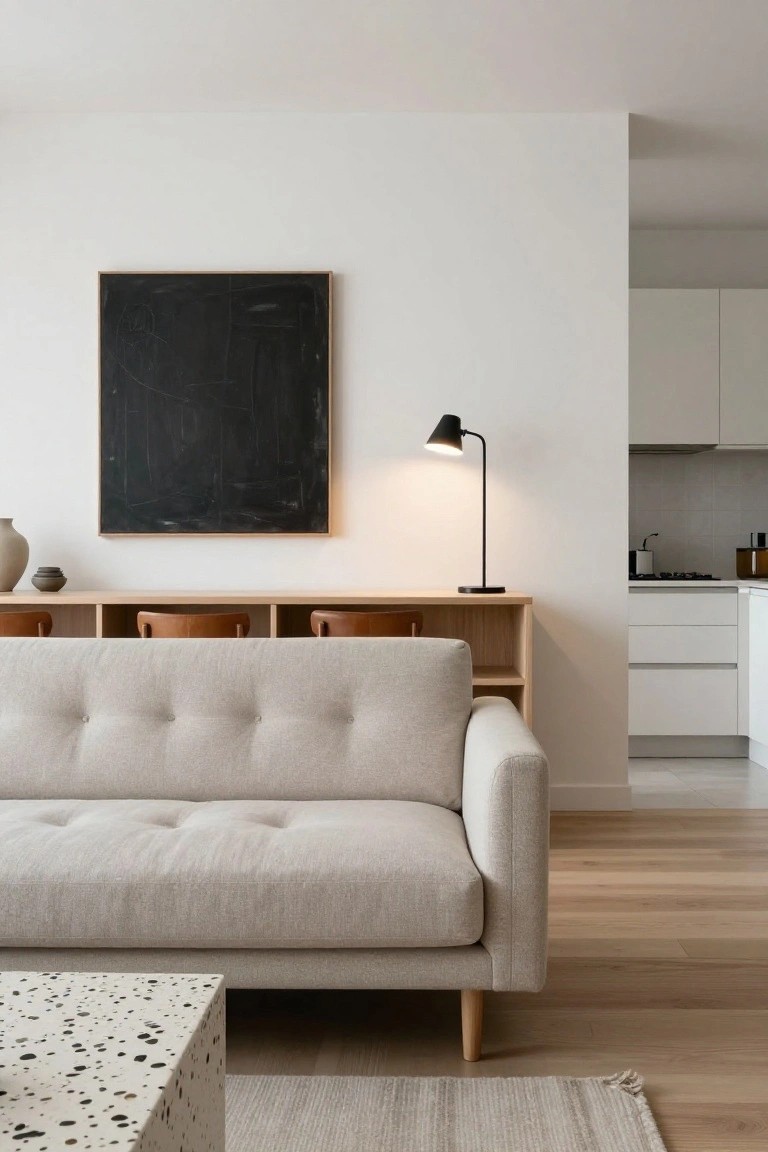
In open-plan homes, one straightforward way to set up the sofa is right in front of low shelving along the back wall. It carves out a living area without shutting down the flow to the kitchen. The light gray sofa here sits snug against wooden shelves that double as display space, with leather stools tucked in for easy pull-out seating.
This arrangement fits best in long, narrow spaces where you want to keep things connected. Go for open shelving under four feet tall, and keep it lightly loaded so it doesn’t overwhelm. Watch the scale. Too much stuff back there, and it starts feeling cluttered.
Built-In Banquette Along the Window
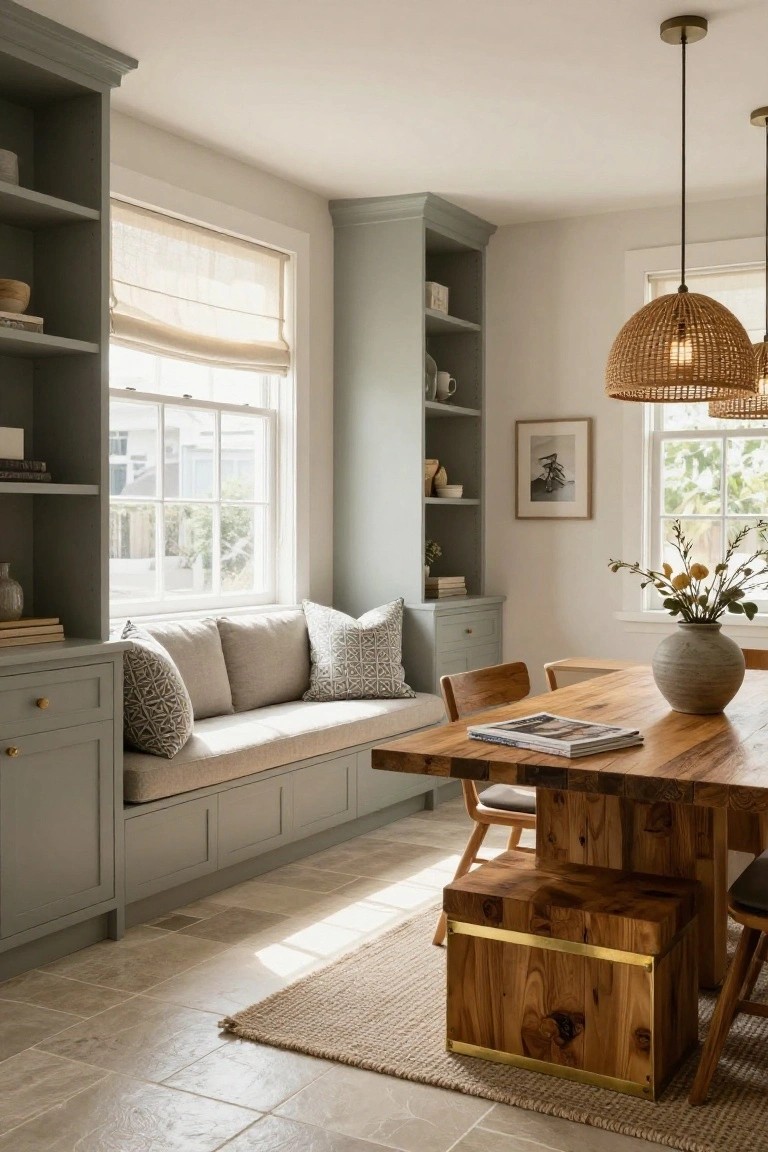
A built-in bench runs right along the window in this open kitchen setup. Cushions turn it into sofa-like seating that pulls up to the dining table. The matching cabinets below give it storage too, so it fits without taking extra floor space. That keeps the room open and easy to move around in.
Try this where you have a window wall near the kitchen. Add a wood table with chairs on the other side for balance. It works well in family homes or casual spaces. Pick cushions thick enough to sit on comfortably, or it might feel more like a shelf.
Low Sofa with Round Coffee Table
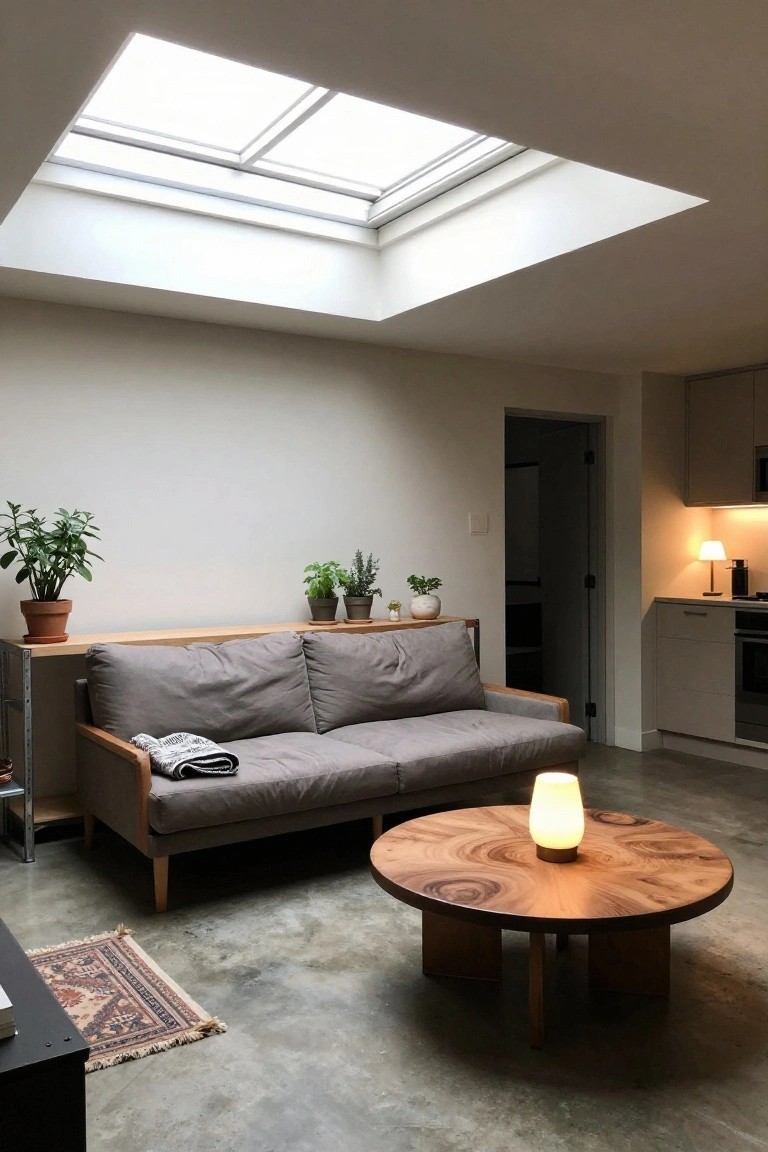
In open-plan homes, a low gray sofa like this one works well when paired with a simple round coffee table. The sofa sits back from the center, legs visible, which keeps the concrete floor flowing right through to the kitchen. That round wooden table adds a bit of curve and wood tone without crowding the space. Plants on the shelf above the sofa bring some green right to eye level.
This setup fits best in loft-style spots or modern kitchens that flow into living areas. Pull the sofa a foot or so off the wall if you can, for airiness. Skip big rugs underfoot, at least at first, to let the floor show. It suits smaller homes too, since nothing blocks the light from that skylight.
Frequently Asked Questions
Q: How do I stop my sofas from chopping up the open flow in my living area?
A: Pull them into L-shapes or gentle curves that guide people through the space.
Leave at least three feet between pieces for easy walking.
Q: What if my room is long and narrow—will these ideas still work?
A: Run sofas along the length to widen the feel.
Anchor one end with a console table.
And float the other toward the center for balance.
Q: Can I face sofas away from each other in an open plan?
A: Yes, back-to-back setups divide zones without walls.
Toss a console between them for drinks or lamps.
It carves out a lounge from dining effortlessly.
Q: How do I pick the right scale for sofas in a big open space?
A: Go bold with oversized pieces to fill the void.
Scale them to your coffee table so nothing dwarfs it.
