

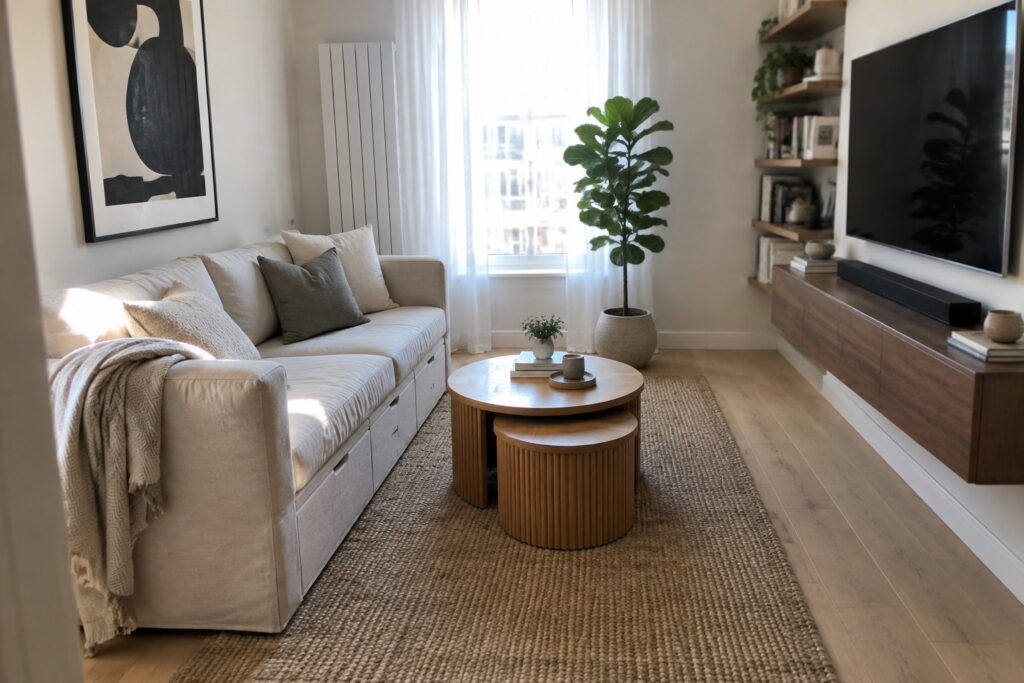
When I first tried to furnish a tiny living room, the biggest surprise was how quickly even a single oversized chair could make the whole space feel smaller than it measured on paper.
Furniture choices that work in bigger rooms often fail here because they block natural paths and leave little room for movement during everyday routines.
Scale matters more than anything else in these situations.
I have found that testing a few pieces in the actual room before committing usually reveals whether a layout will hold up once books, blankets, and daily clutter enter the picture.
Over time that habit has helped me spot which compact solutions actually improve how the room functions instead of just looking neat in photos.
Nesting Tables Add Flexibility Without Crowding a Small Room
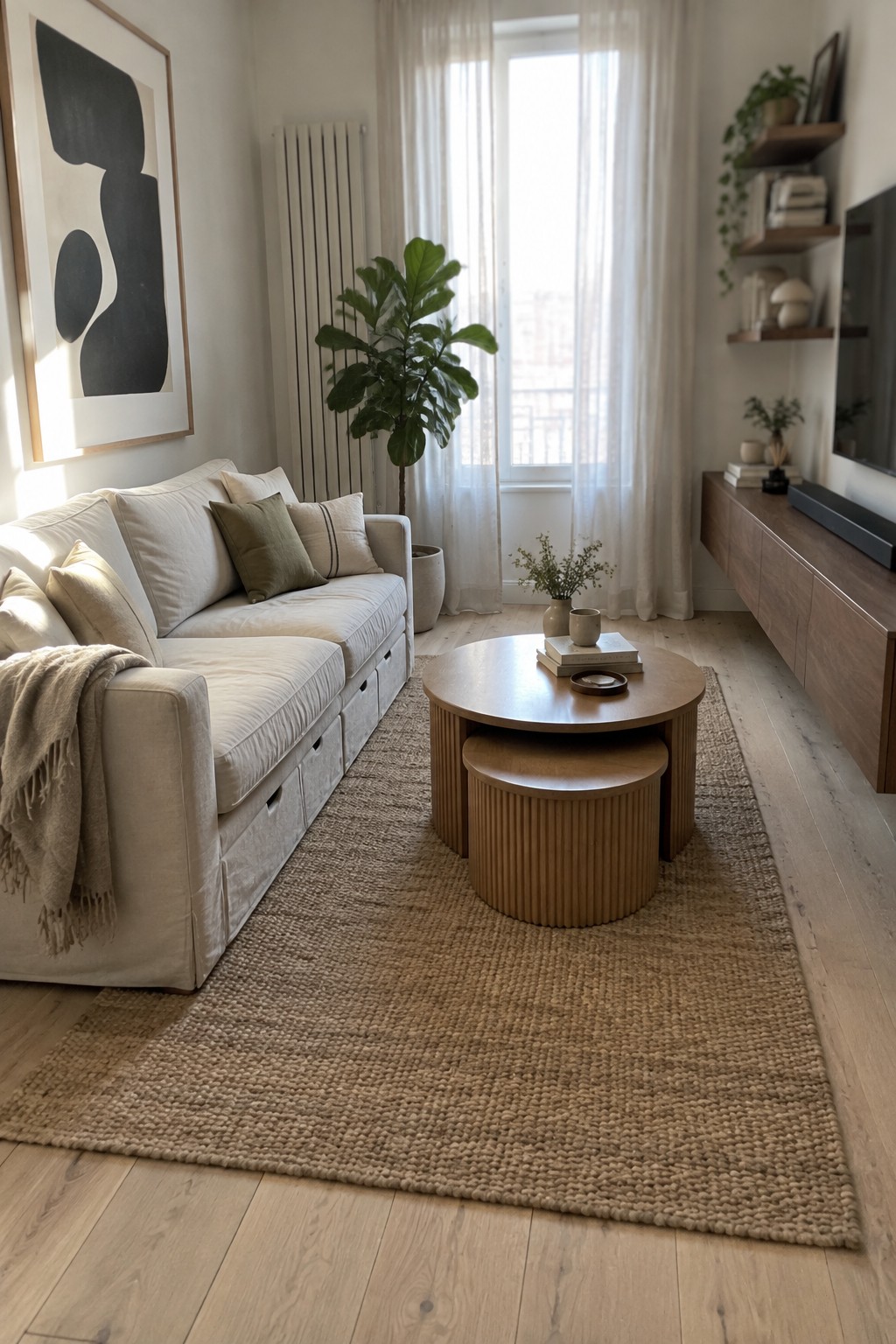
A set of nesting tables can be one of the most practical furniture choices in a compact living room. They sit neatly together most of the time but pull apart when you need extra surface space for drinks, snacks, or a laptop. This setup keeps the floor area open while still giving you options that a single fixed table cannot match.
These tables work especially well in rooms where seating is tight or traffic paths need to stay clear. Look for sets in wood or neutral finishes that blend with your sofa and rug rather than adding more visual weight. Avoid anything too tall or bulky, since the goal is easy movement and quick rearrangement when the room feels cramped.
Nest Two Coffee Tables to Save Floor Space
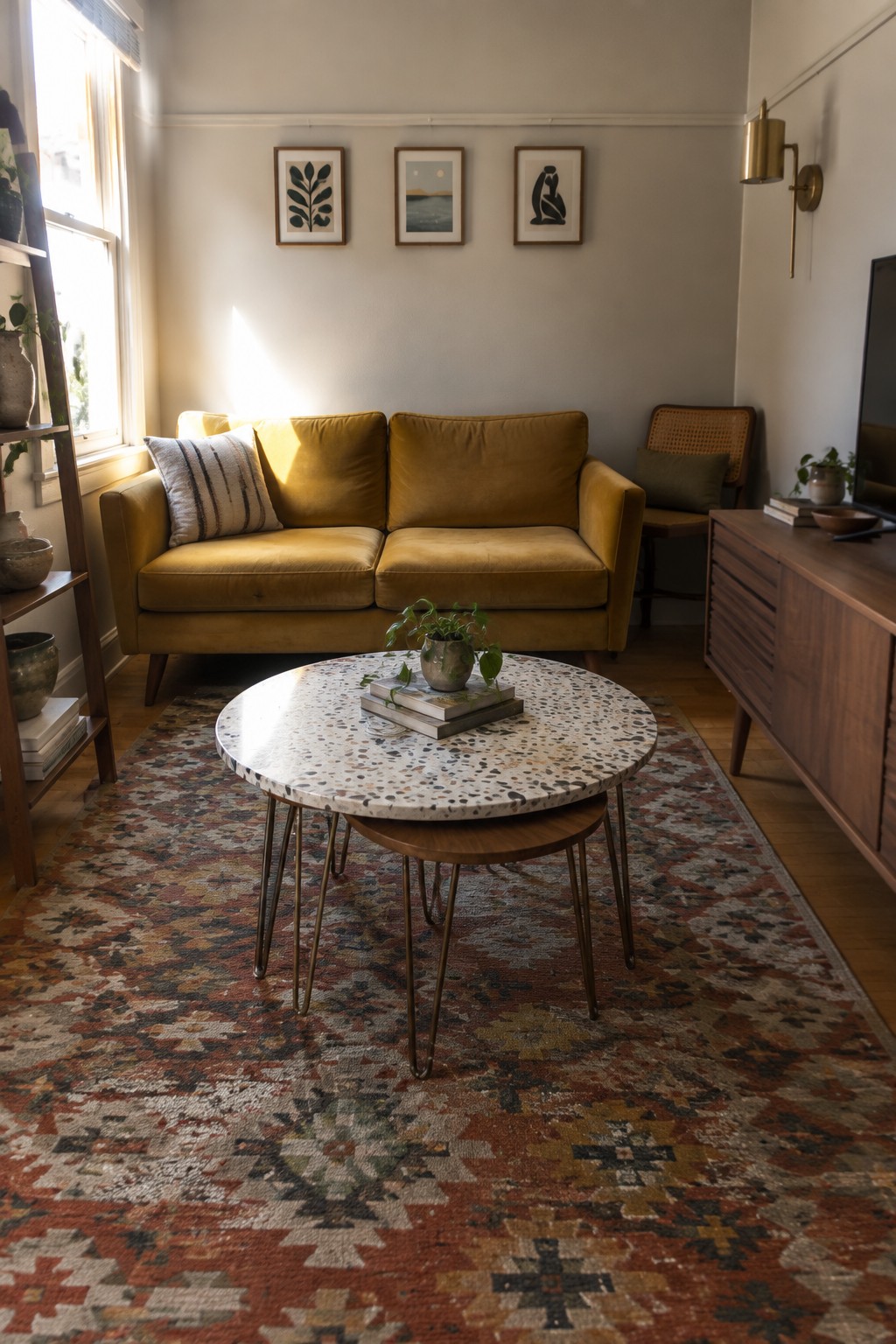
Nesting tables let you keep a full-size surface in the room without it taking over the floor every day. The round top table sits on its own legs while the smaller one tucks underneath, so you only spread them out when you need the extra room for drinks or snacks.
This works best in apartments or any small living room where you want flexibility without buying two separate pieces. Just check that the legs clear each other and the top table feels steady on its own.
Fold Down Desks For Compact Living Rooms
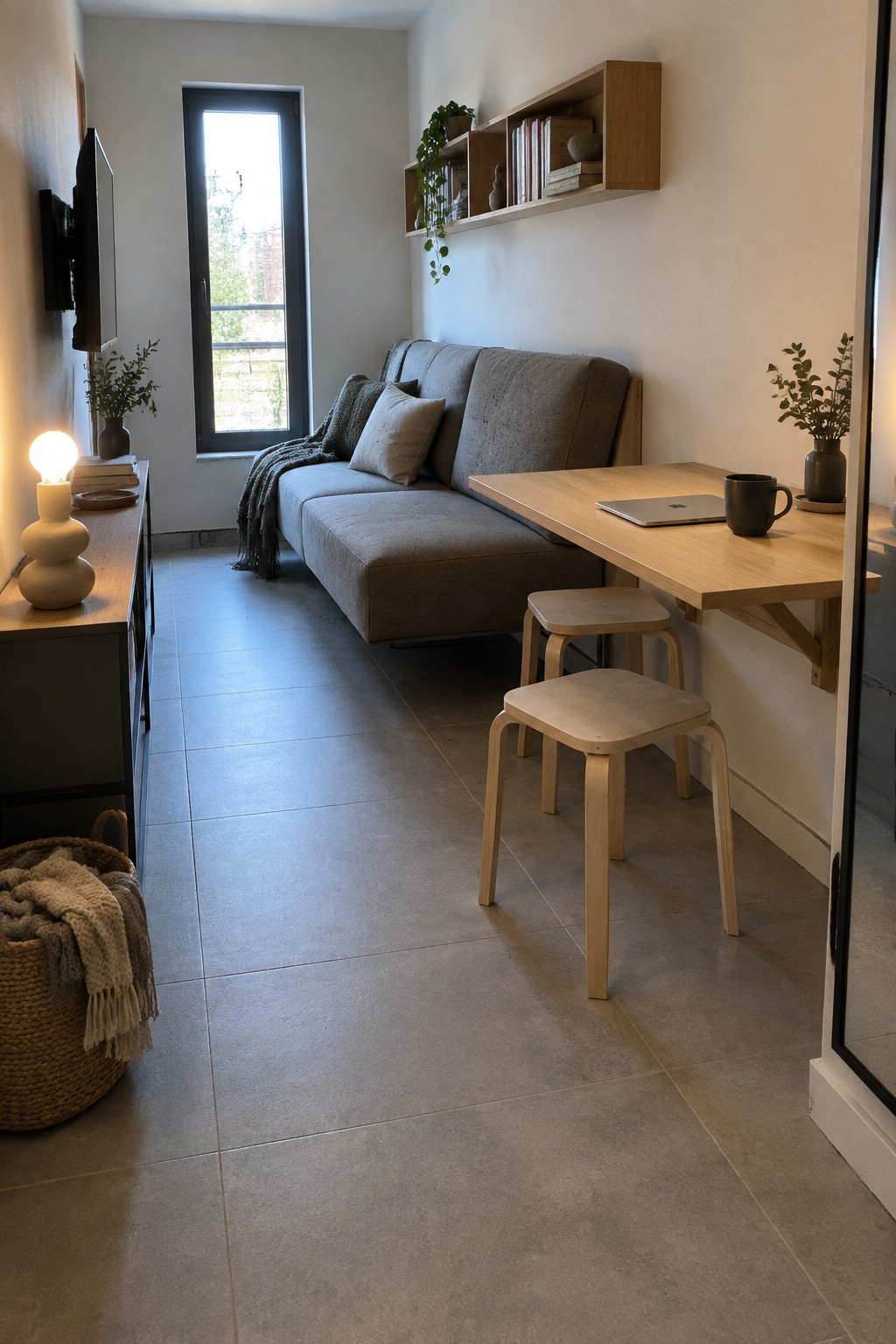
A desk that folds down from the wall gives you a place to work without taking up floor space all the time. In tight rooms this keeps the layout simple and lets the same area shift between sitting and working without extra pieces in the way.
It suits small apartments or narrow living rooms best, where a full desk would crowd things out. Pick one with stools that slide underneath so the floor stays open when the desk is up.
Add A Window Seat With Built-In Storage
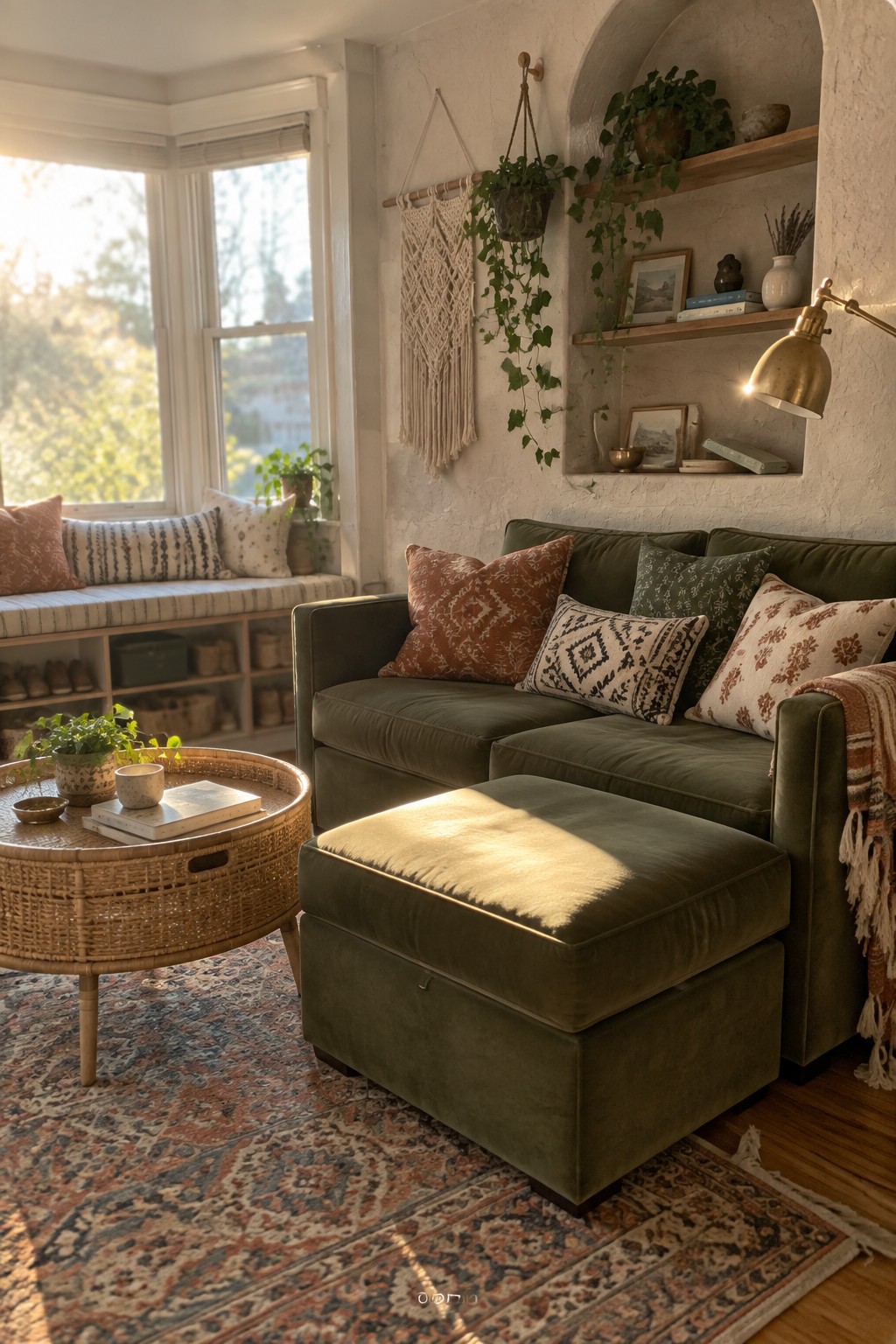
A window seat turns an empty wall into useful space in a small living room. It gives you extra seating without adding another chair, and the area underneath can hold baskets, bins, or boxes for things you use often.
This setup works best in rooms with a bay window or wide sill. Keep the cushions simple so the seat stays comfortable, and choose open cubbies if you want quick access or doors if you prefer a cleaner look. It suits older homes and apartments where floor space is limited.
Low Profile Furniture Opens Up Small Living Rooms
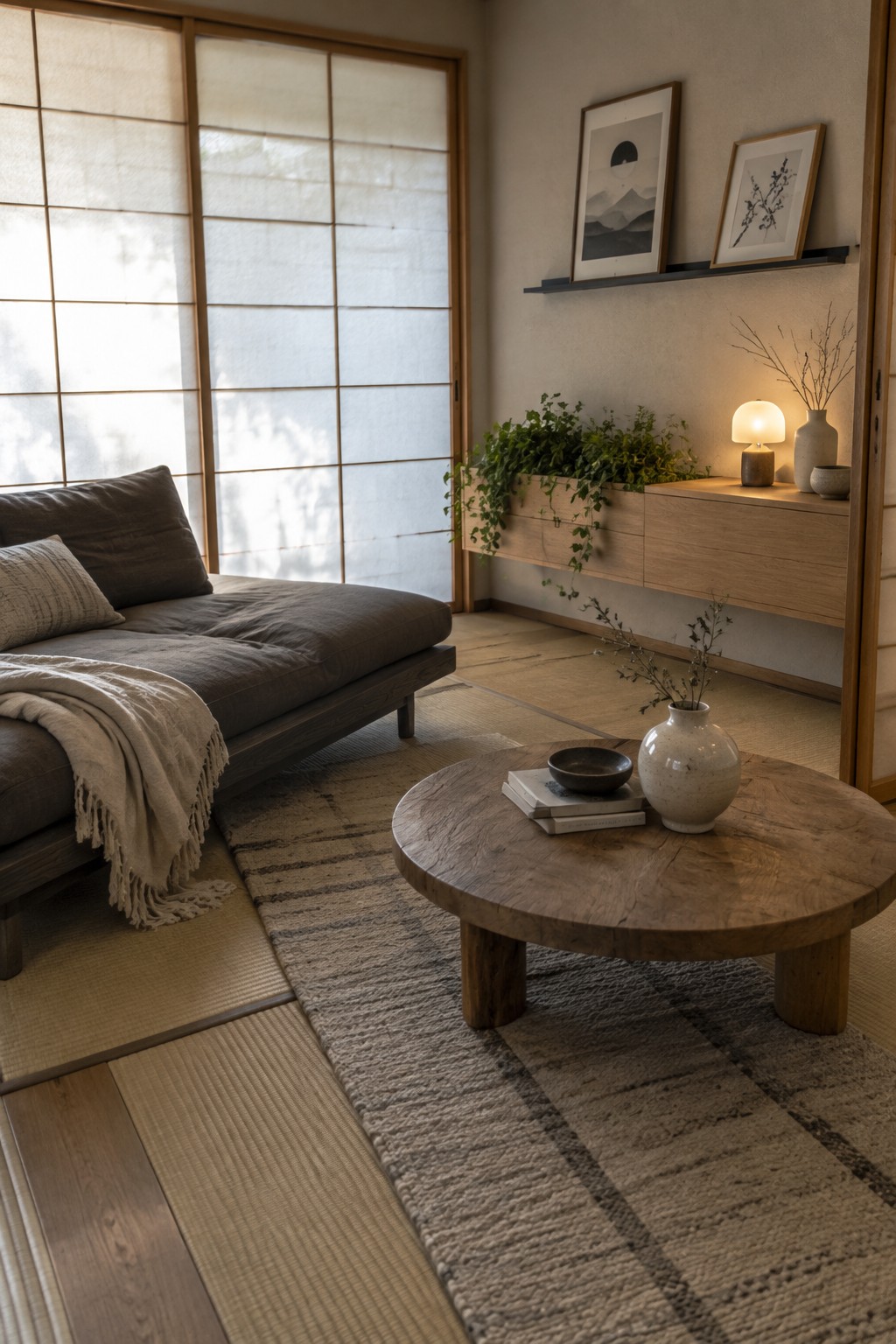
Many small living rooms feel tighter than they need to when furniture sits at standard heights. Low pieces keep sight lines open and let the space feel calmer and less crowded.
This works best in apartments or compact homes where floor area is limited. A low sofa or daybed along one wall paired with a simple round table leaves room to move. Add a floating console for storage without blocking floor space. Keep the overall scale modest so nothing overwhelms the room.
Built-Ins That Add Storage And A Desk In One Go
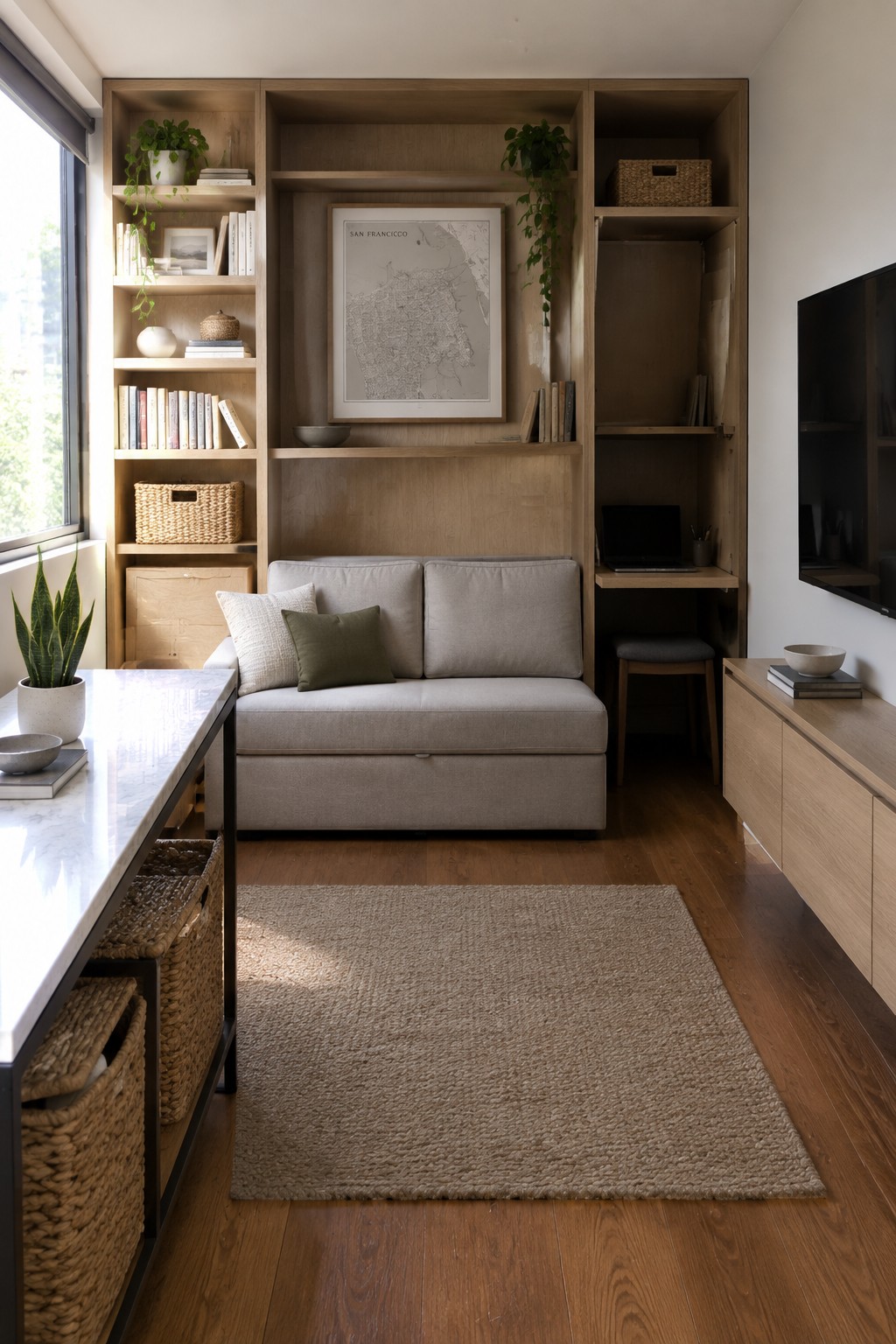
Built-in shelving works well in small living rooms because it turns one wall into both storage and a workspace without adding extra furniture on the floor. The unit can hold books, plants, and baskets while leaving room for a slim desk area that stays out of the way when not in use.
This kind of setup suits apartments or homes where every inch counts. Keep the depth shallow so the sofa still has space in front, and plan the desk height to match a regular chair or stool.
Open Rattan Coffee Tables For Small Living Rooms
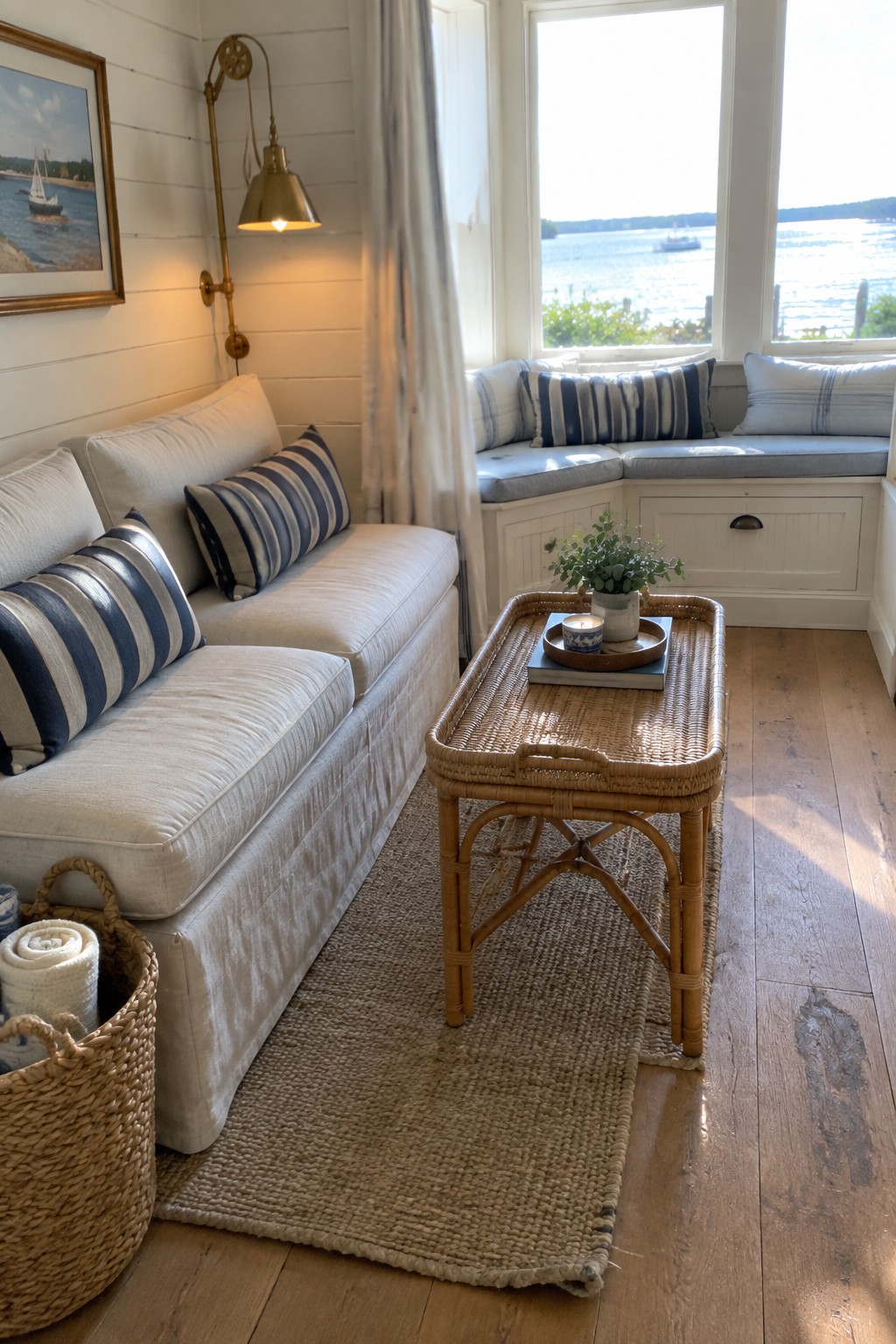
An open rattan coffee table works well in compact living rooms because the crossed legs and light frame keep the piece from blocking sightlines or taking up too much visual weight. It sits nicely on a simple rug without crowding the floor space around it.
This style suits narrow rooms or layouts where you need room to walk past the seating area. It pairs best with light-colored upholstery and built-in window seats, since the natural material adds texture without adding bulk.
Rolling Storage Ottomans Add Flexibility to Small Living Rooms
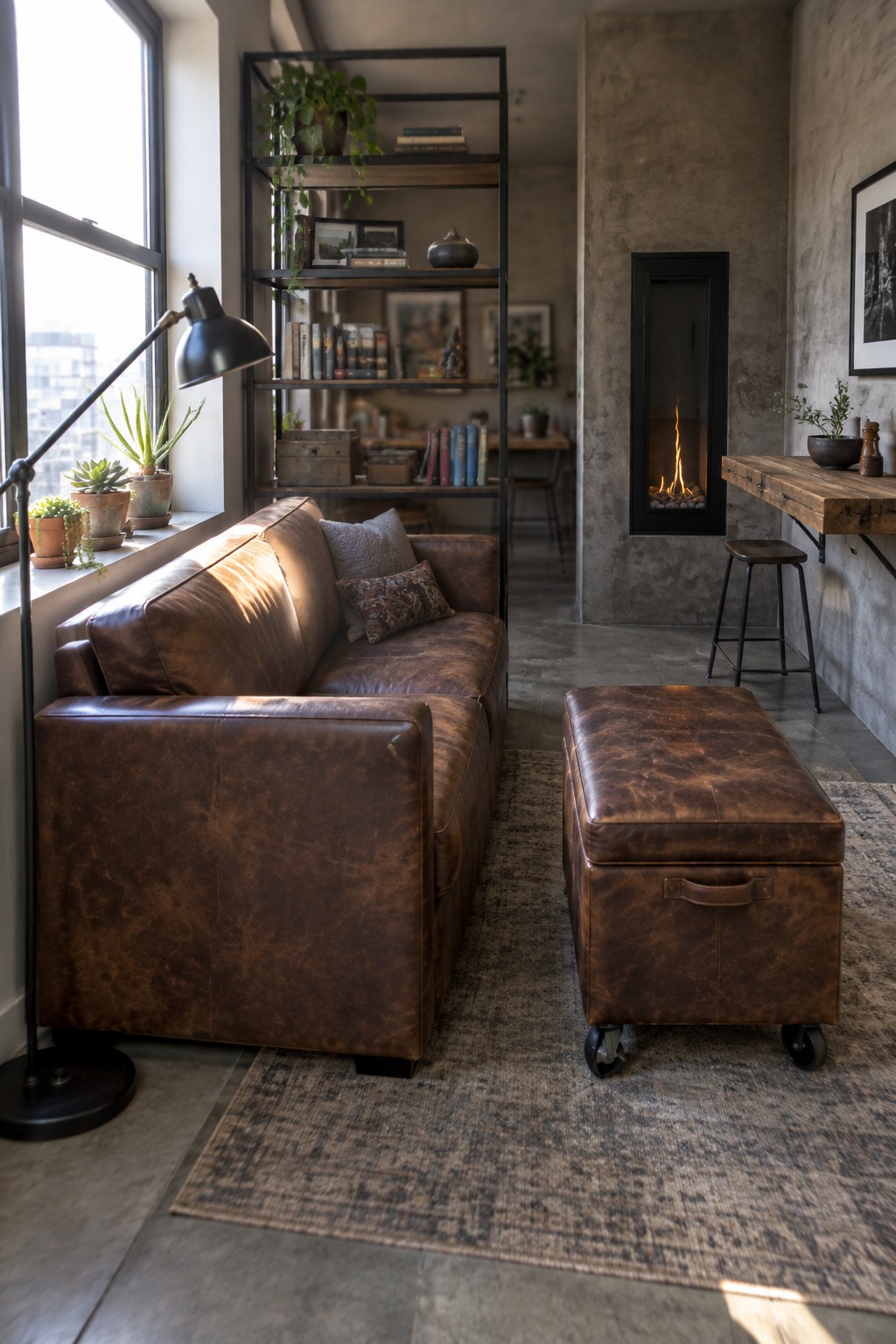
A storage ottoman on wheels gives you options in a tight living room without adding bulk. It can work as a coffee table during the day, then roll over for extra seating when guests arrive, and the lid lifts to hide blankets or magazines so the floor stays clear.
This approach suits apartments and small homes where the living area needs to shift quickly between uses. Choose one with strong casters that lock when needed and a sturdy top that holds up to regular use.
Wooden Benches Offer Flexible Seating for Compact Living Rooms
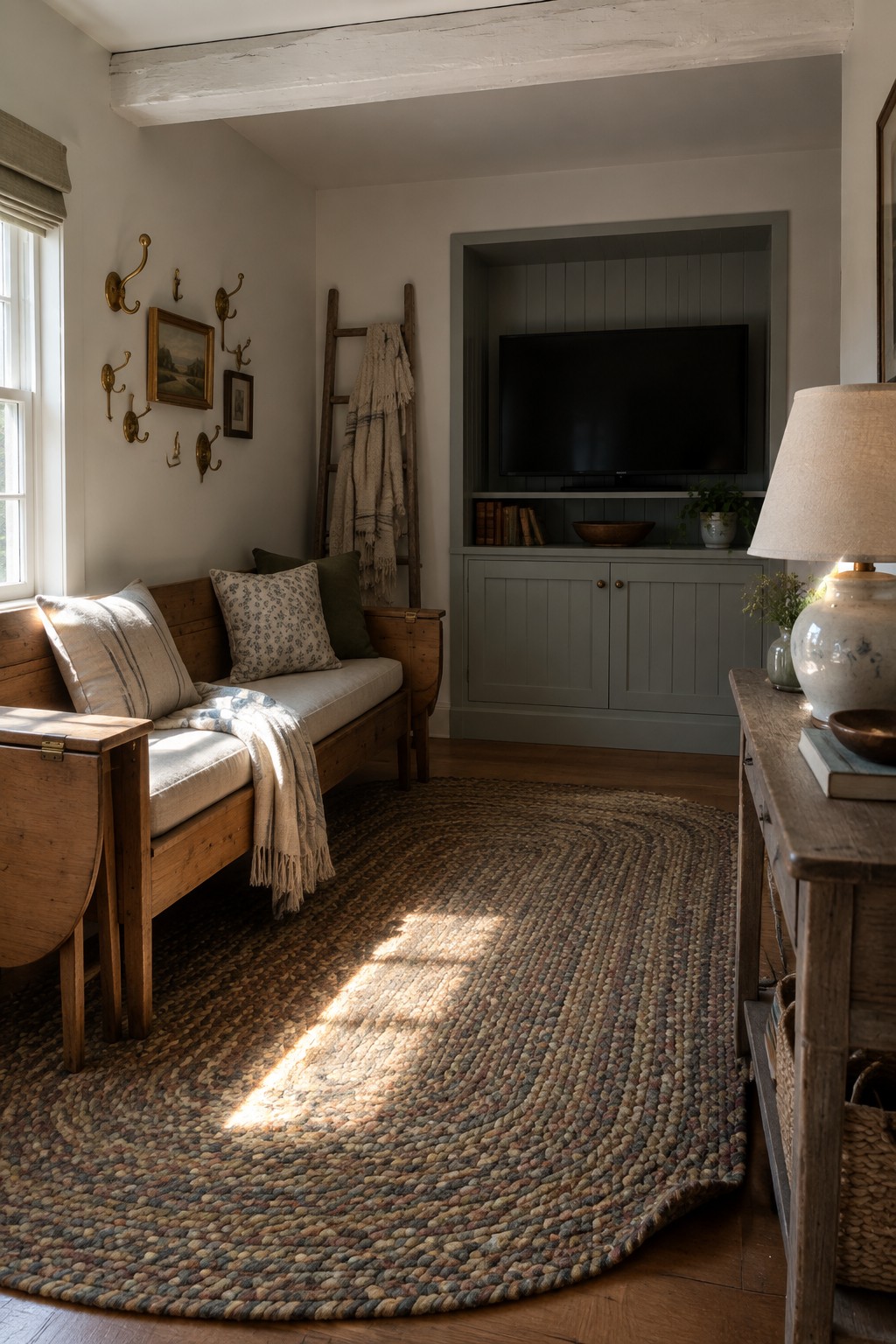
A wooden bench works well as the main seat in a small living room because it takes up less visual space than a full sofa. You can add cushions and a throw to make it comfortable while still keeping the room feeling open and easy to move through.
This choice suits narrow rooms or older homes where a bulky couch would crowd the floor. Place the bench along a wall and add a large rug underneath to pull the seating area together without adding more furniture.
Sectionals Fit Small Living Rooms Well
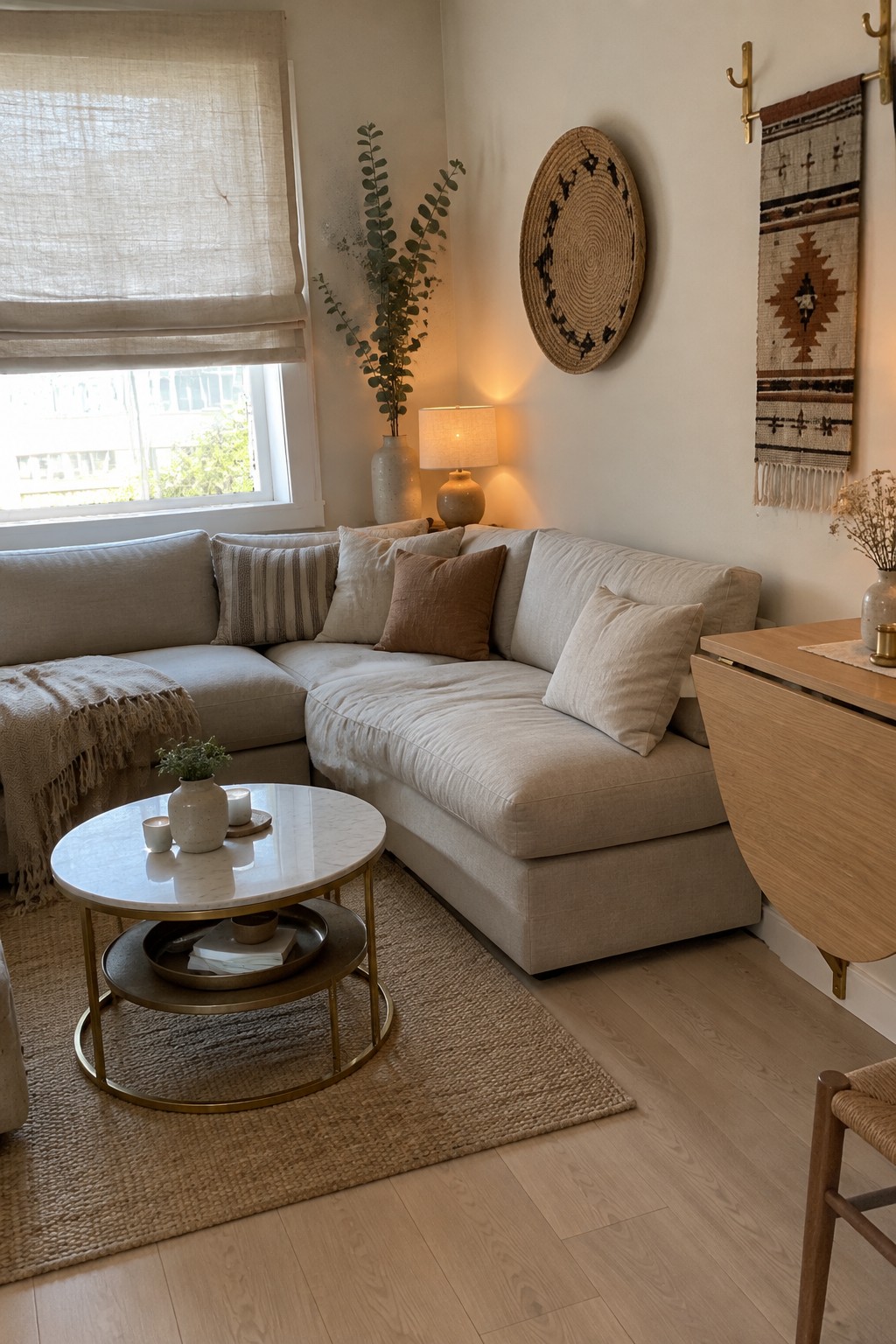
A sectional that runs along two walls gives you more seating than a standard sofa without crowding the center of the room. The L shape keeps the furniture tight to the edges so the space still feels open enough to move through.
This works best in apartments or small homes where you need to seat several people but have limited floor space. Keep the scale modest and stick to lighter colors so the piece does not dominate the room.
Use An Ottoman Instead Of A Coffee Table
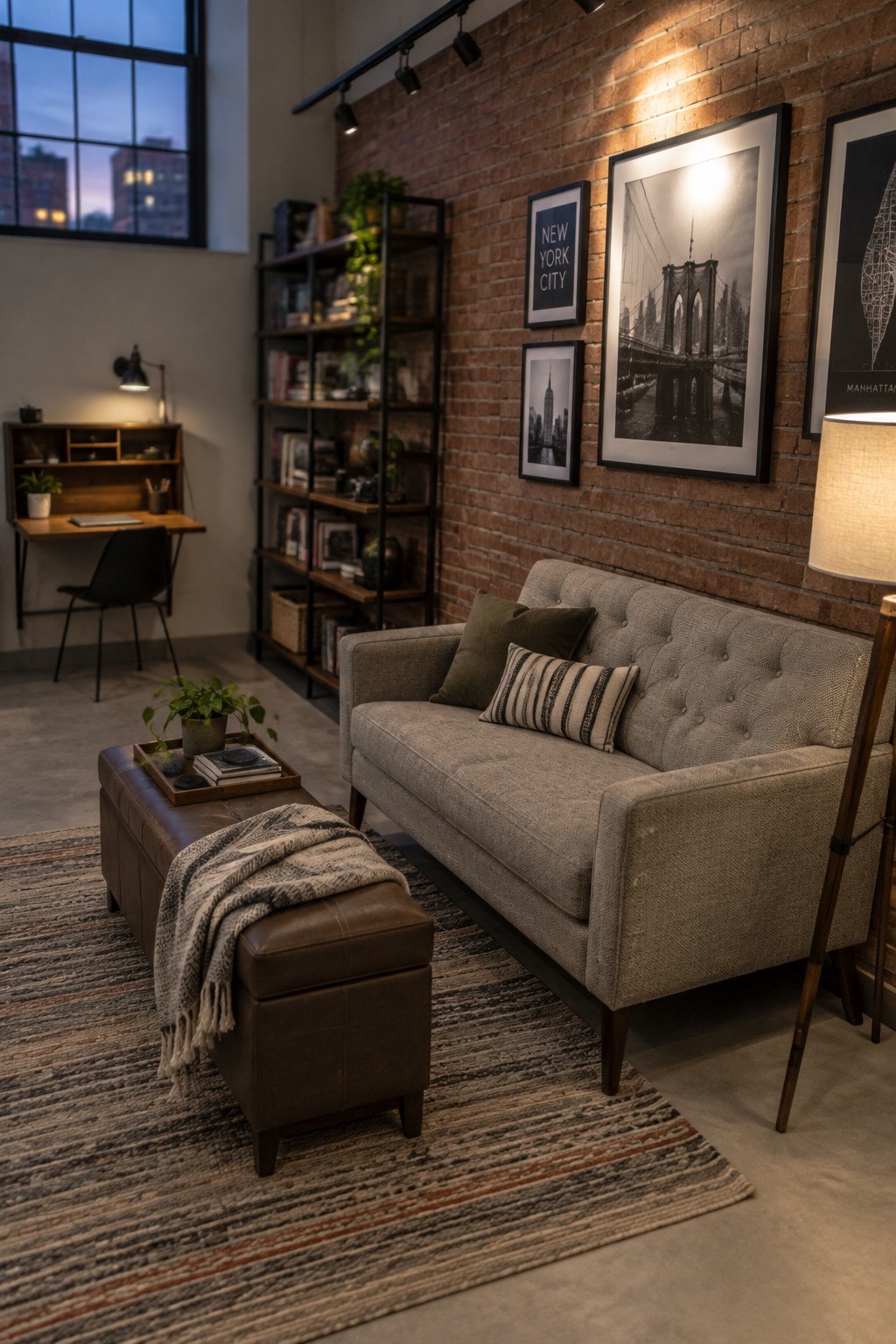
An ottoman gives you more flexibility than a standard coffee table in a small living room. It takes up less visual weight and can double as extra seating or hidden storage when guests come over.
Set a tray on top for drinks and everyday items. This works best in apartments or compact homes where furniture needs to serve more than one purpose without crowding the floor.
Float the Media Console
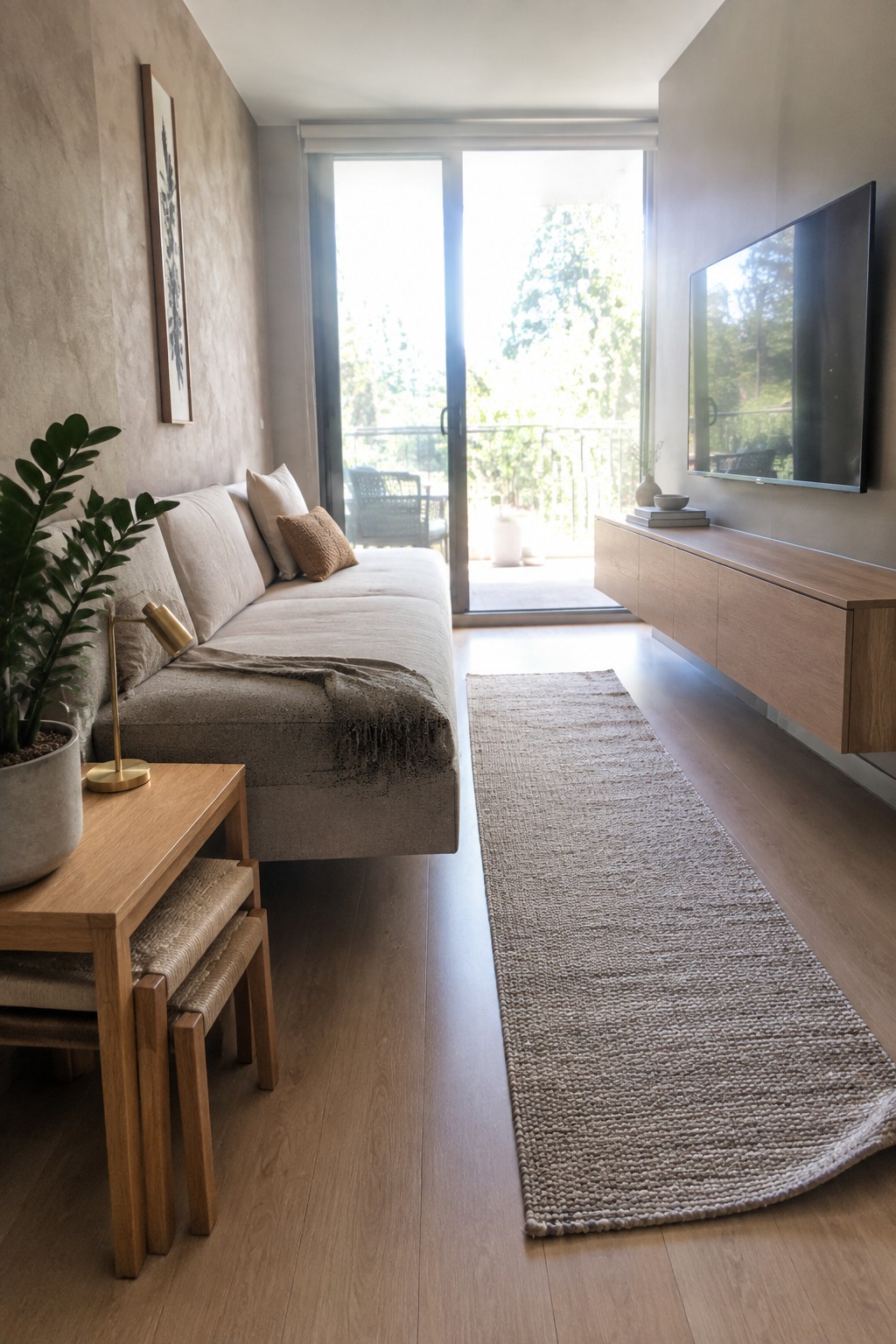
A floating media console keeps the floor clear in a narrow living room. This setup lets the room feel more open since nothing bulky sits on the ground, and it works especially well when you have limited width to work with.
It suits small apartments or compact homes where every bit of floor space matters. Just make sure the unit is mounted securely and at a comfortable viewing height so it stays practical day to day.
Add a Narrow Console Next to the Sofa
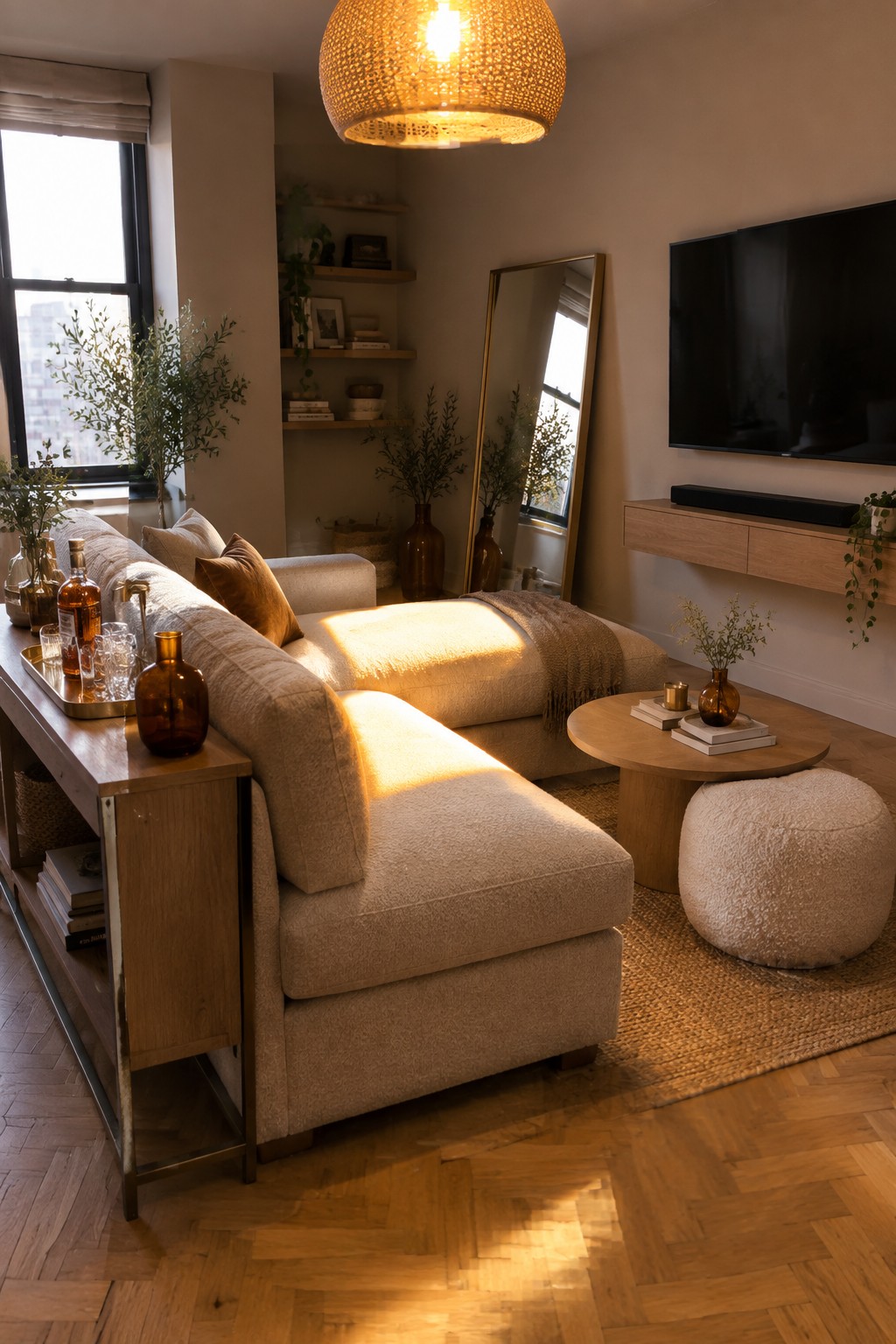
A narrow console placed along the side of a sectional gives you surface space for drinks and lamps without pushing the seating arrangement away from the wall. In compact rooms this keeps the layout tight while still making the sofa feel usable for everyday life.
It works best in apartments or small homes where every inch counts. Look for one with a lower shelf so you can tuck away books or small baskets, and keep the top fairly clear so it stays practical rather than cluttered.
Modular Storage Ottomans Free Up Floor Space
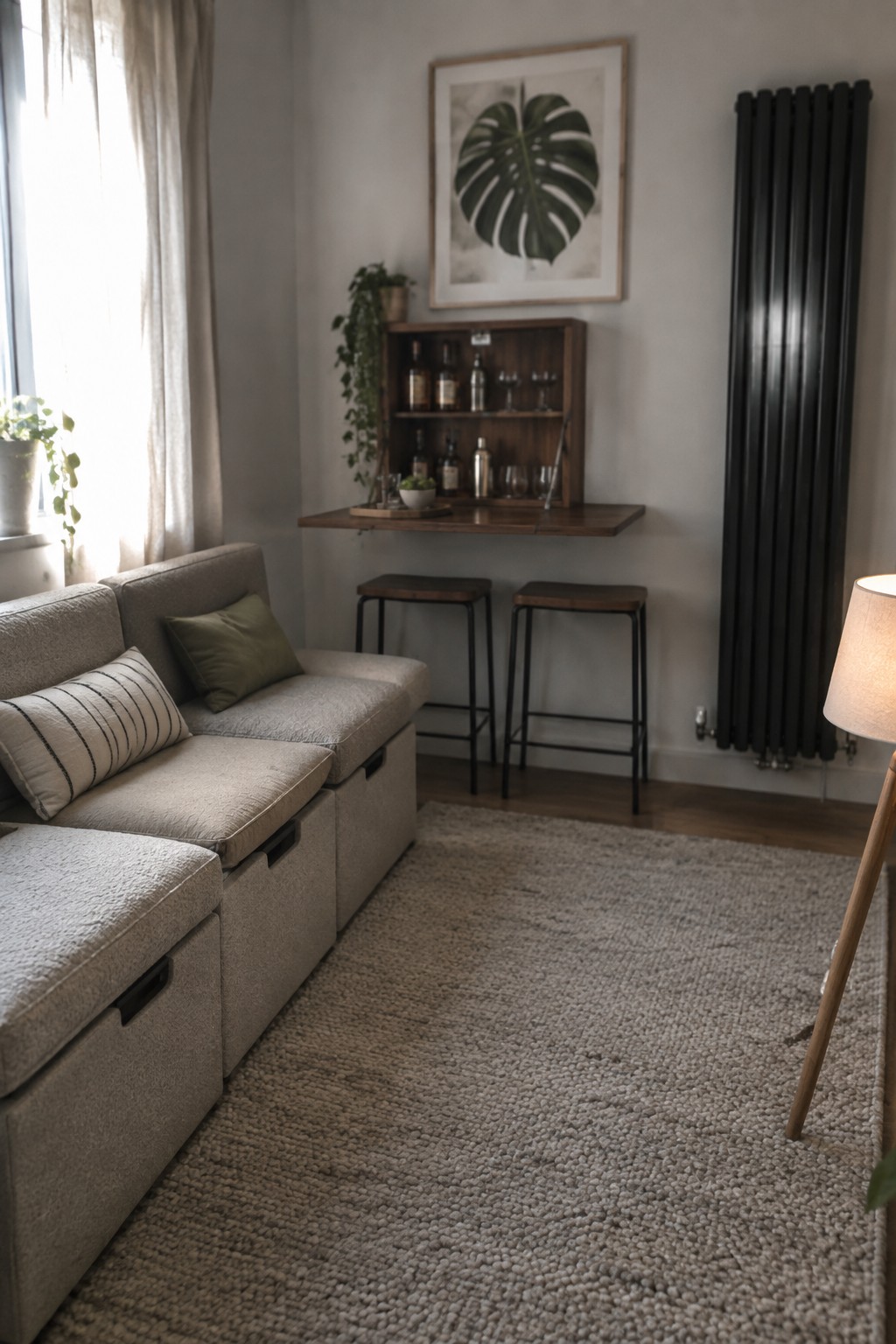
Storage ottomans give you seating and hidden room for clutter at the same time. In a compact living room they replace a bulky coffee table or extra chairs while keeping everyday items out of sight, which helps the whole space feel less crowded.
They work best in apartments or small homes where every inch counts. Look for low, sturdy pieces that match the scale of your sofa and leave clear paths around the room.
Storage Baskets Under The Sofa
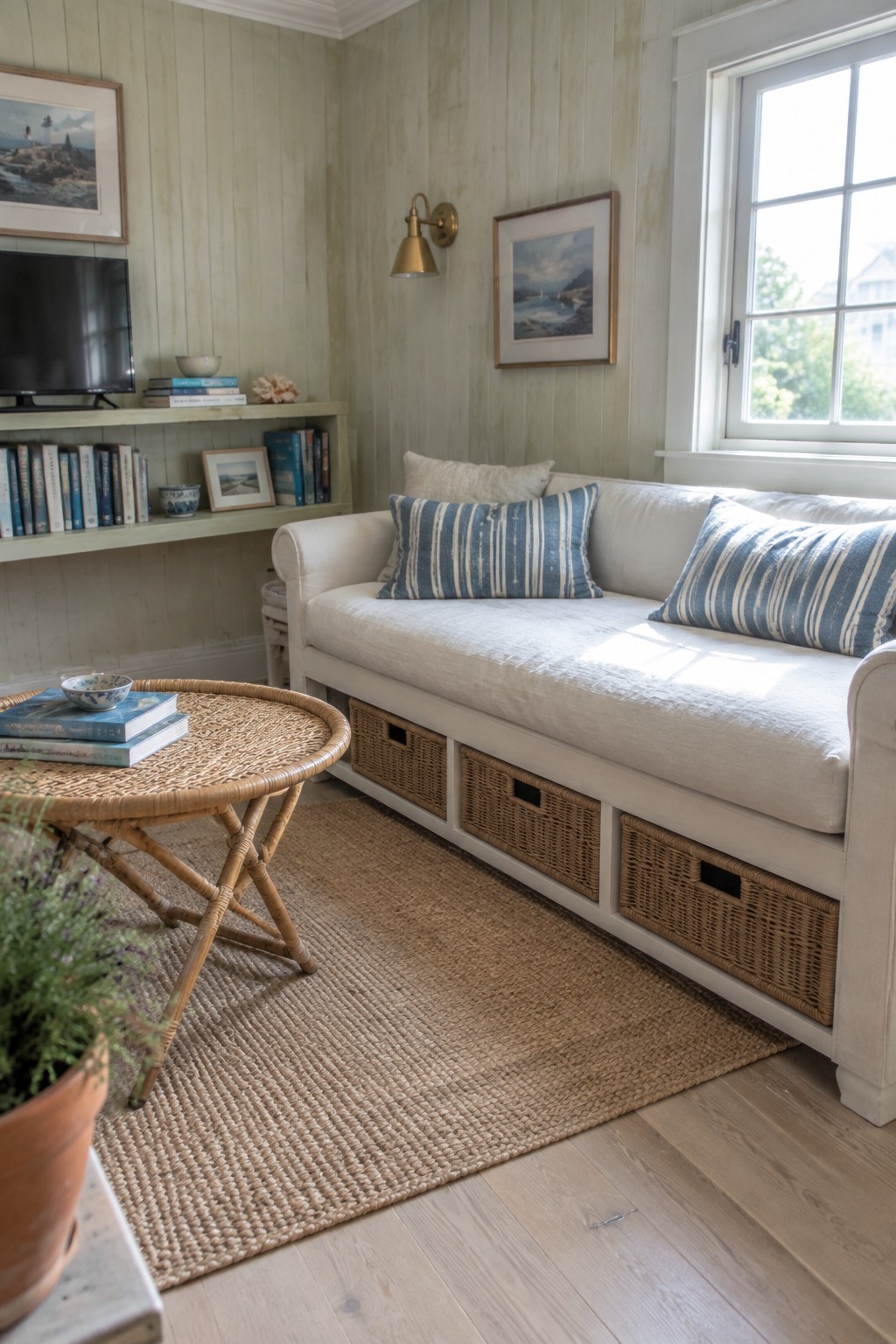
One of the easiest ways to keep a small living room tidy is to use the space under the sofa for storage. A daybed or sofa with open compartments lets you tuck away blankets, books, or games without adding extra furniture that would crowd the room. The baskets keep things looking neat while still being easy to pull out when you need them.
This works especially well in rooms that serve more than one purpose, like a guest space or a spot that doubles as a reading area. Just measure the height under your sofa first so the baskets fit without sticking out. It is a simple change that cuts down on clutter without making the room feel busy.
Use A Storage Ottoman Instead Of A Coffee Table
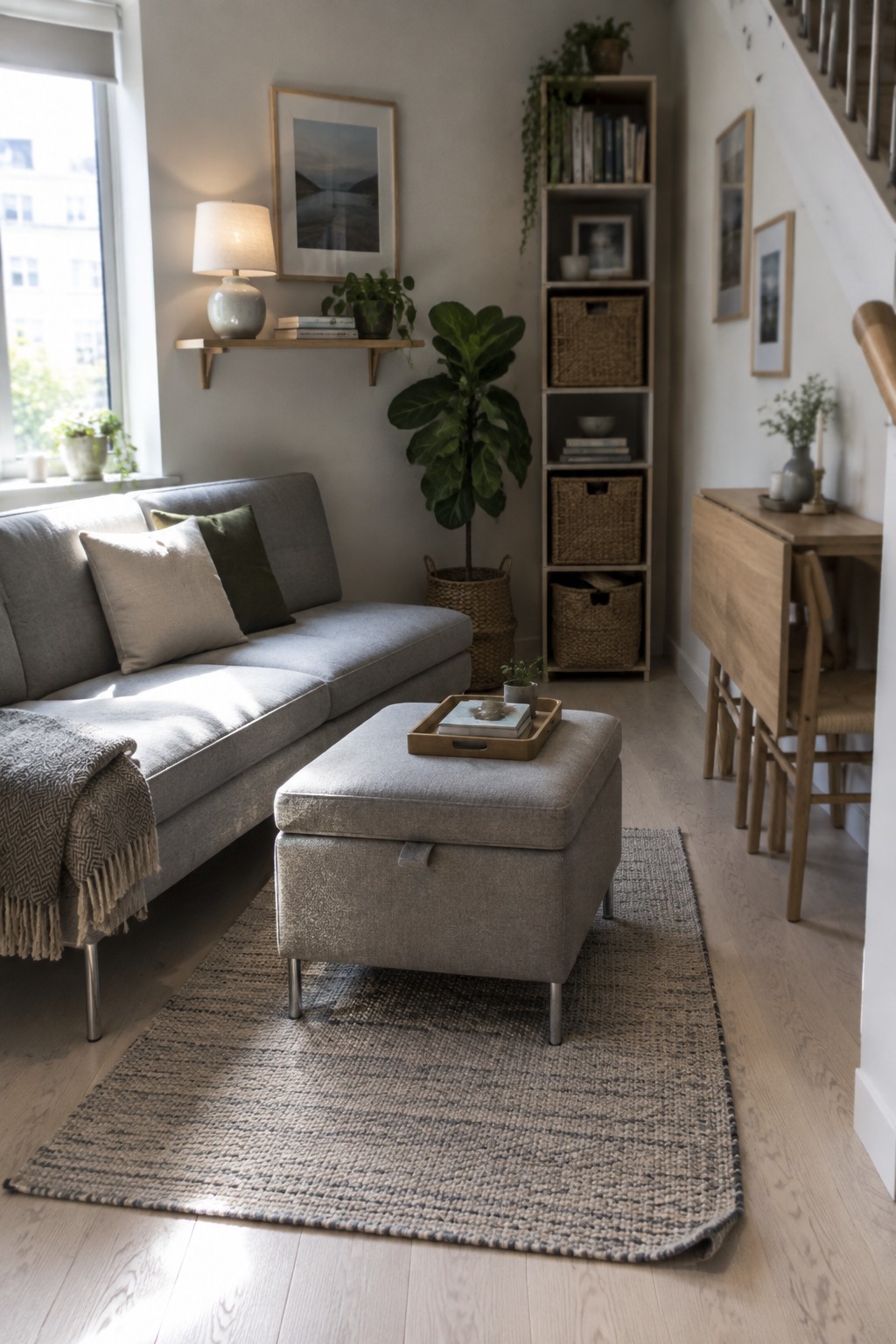
An ottoman takes up less visual space than a bulky table and still gives you a place to rest your feet or set down a tray. In smaller rooms it keeps the layout feeling open because the shape is softer and lower.
It also doubles as hidden storage for throws or magazines, which cuts down on extra pieces around the room. This works best in apartments or compact homes where the living area needs to stay flexible for daily use.
Ottomans And Nesting Tables Keep Small Rooms Flexible
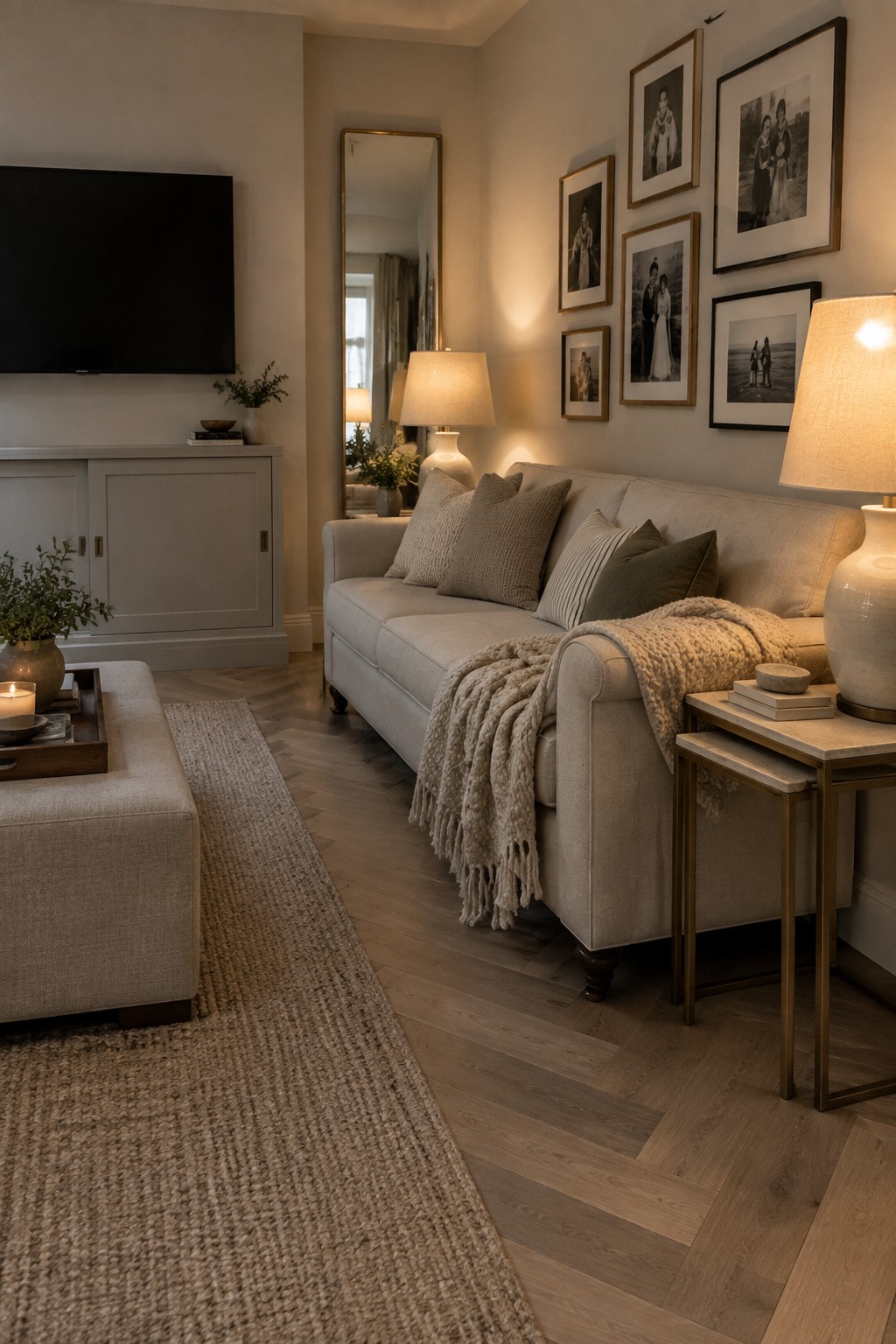
An ottoman works well in a small living room because it doubles as seating or a footrest without the bulk of a full coffee table. Nesting tables add more surface space when needed and slide together to stay out of the way the rest of the time.
This approach suits apartments and compact homes where you want the room to feel open most days but still handle extra people or projects now and then. Keep the pieces in neutral fabrics so they blend with the rest of the seating and do not add visual weight.
Choose Sofas With Hidden Storage
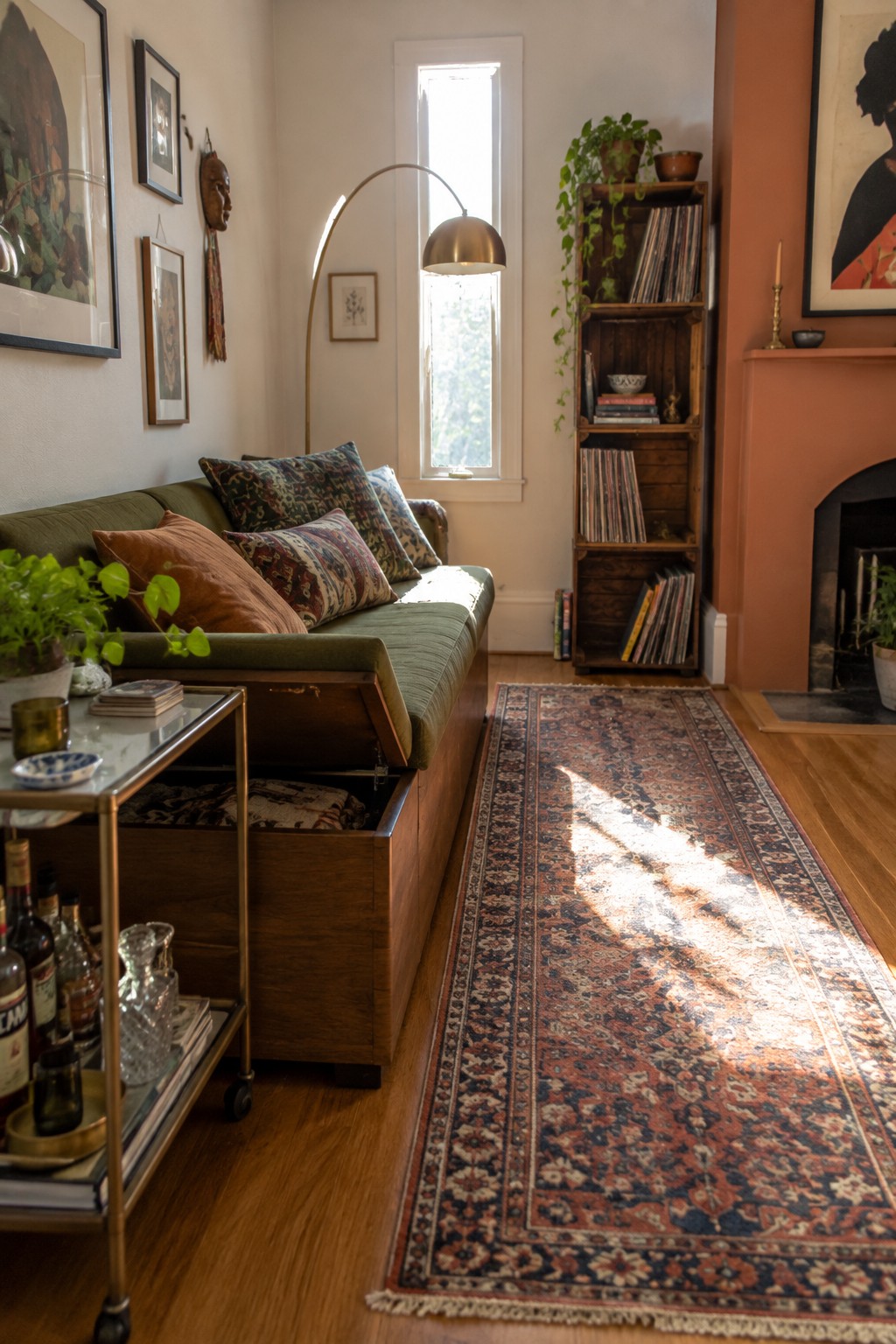
A sofa with a lift-up seat gives you extra room for blankets and pillows without crowding the floor. In a compact living room this one feature can replace a separate trunk or cabinet while keeping the seating area comfortable.
It suits narrow rooms best because the storage stays inside the sofa footprint. Make sure the mechanism feels solid and the seat height works with your other furniture before you buy.
Nesting Tables Add Flexibility Without Extra Clutter
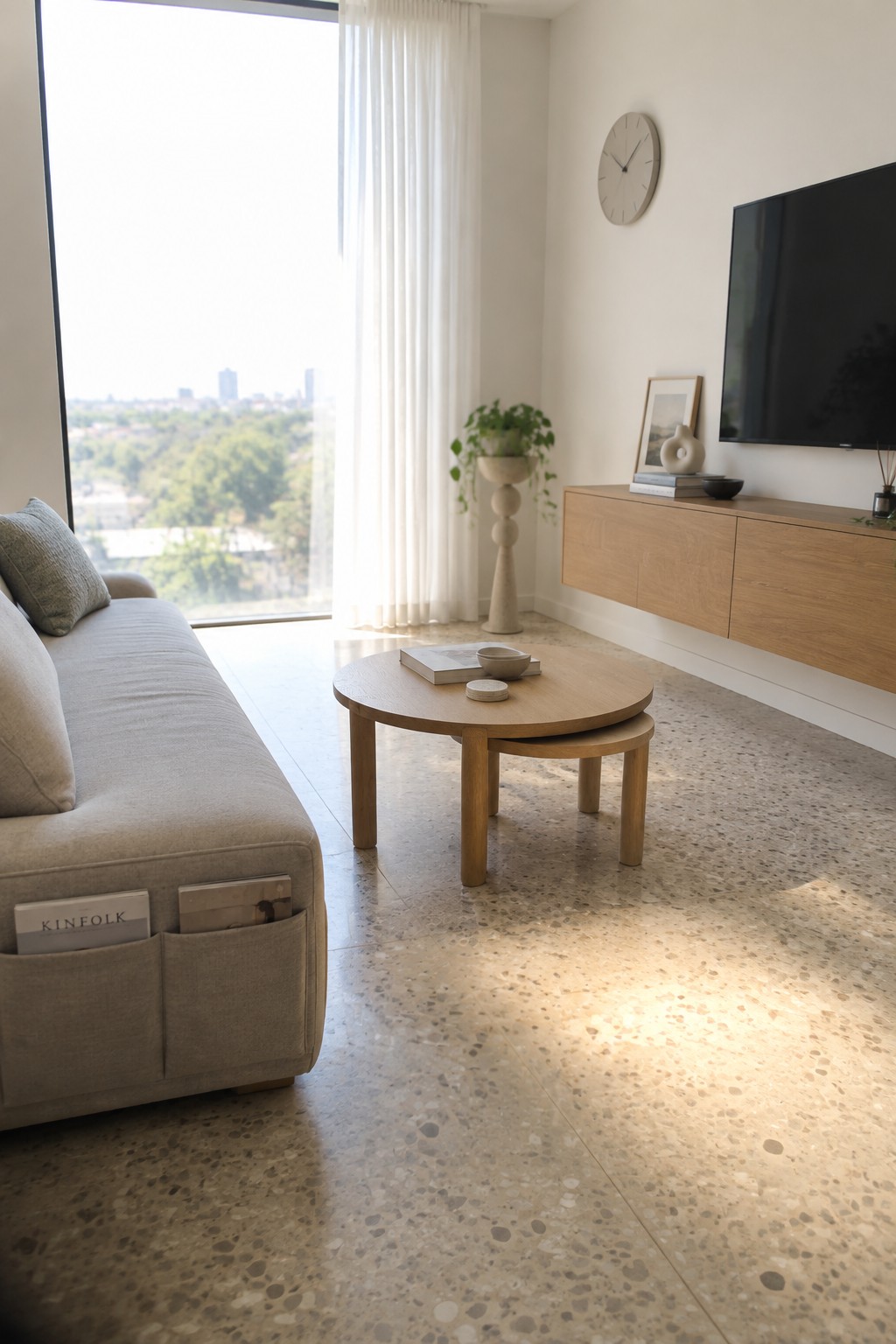
Nesting tables solve a common problem in small living rooms. The smaller table tucks under the larger one most of the time, so the floor stays clear and the space feels open. When you need more surface area for drinks or snacks, the second table slides out easily.
This setup works best in rooms where furniture has to serve more than one purpose. Light wood tones help the tables blend in rather than dominate the layout. Just make sure the larger table still leaves enough walking room around the seating area.
Round Coffee Tables Help Small Living Rooms Feel More Open
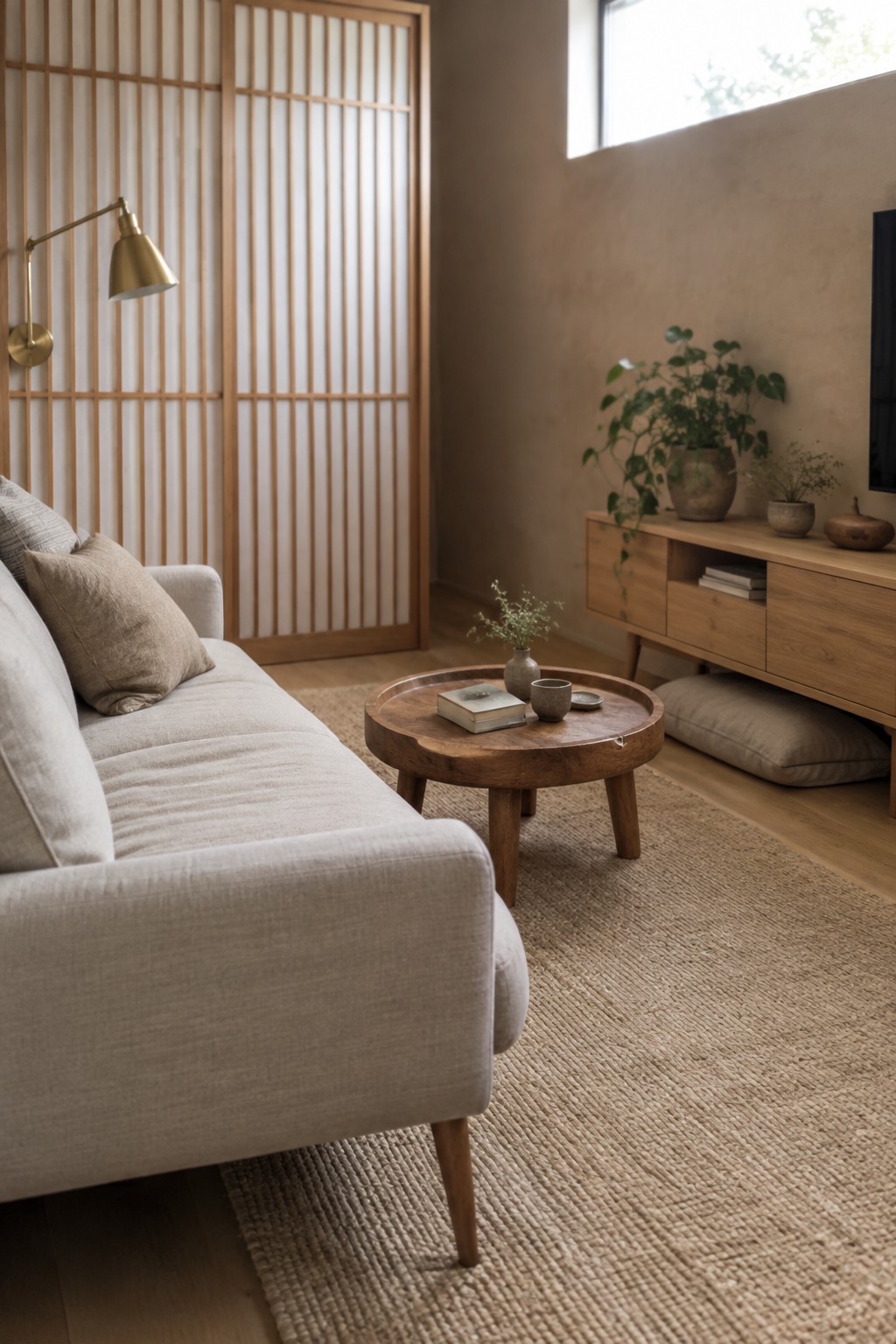
A round coffee table can make a big difference in a tight living room. Without corners sticking out, it leaves more room to walk around and keeps the space from feeling blocked.
This shape works well when you set it on a large rug that extends past the legs. It suits apartments or smaller homes where you want easy movement and a layout that does not crowd the floor.
Place Furniture Along The Walls In Narrow Rooms
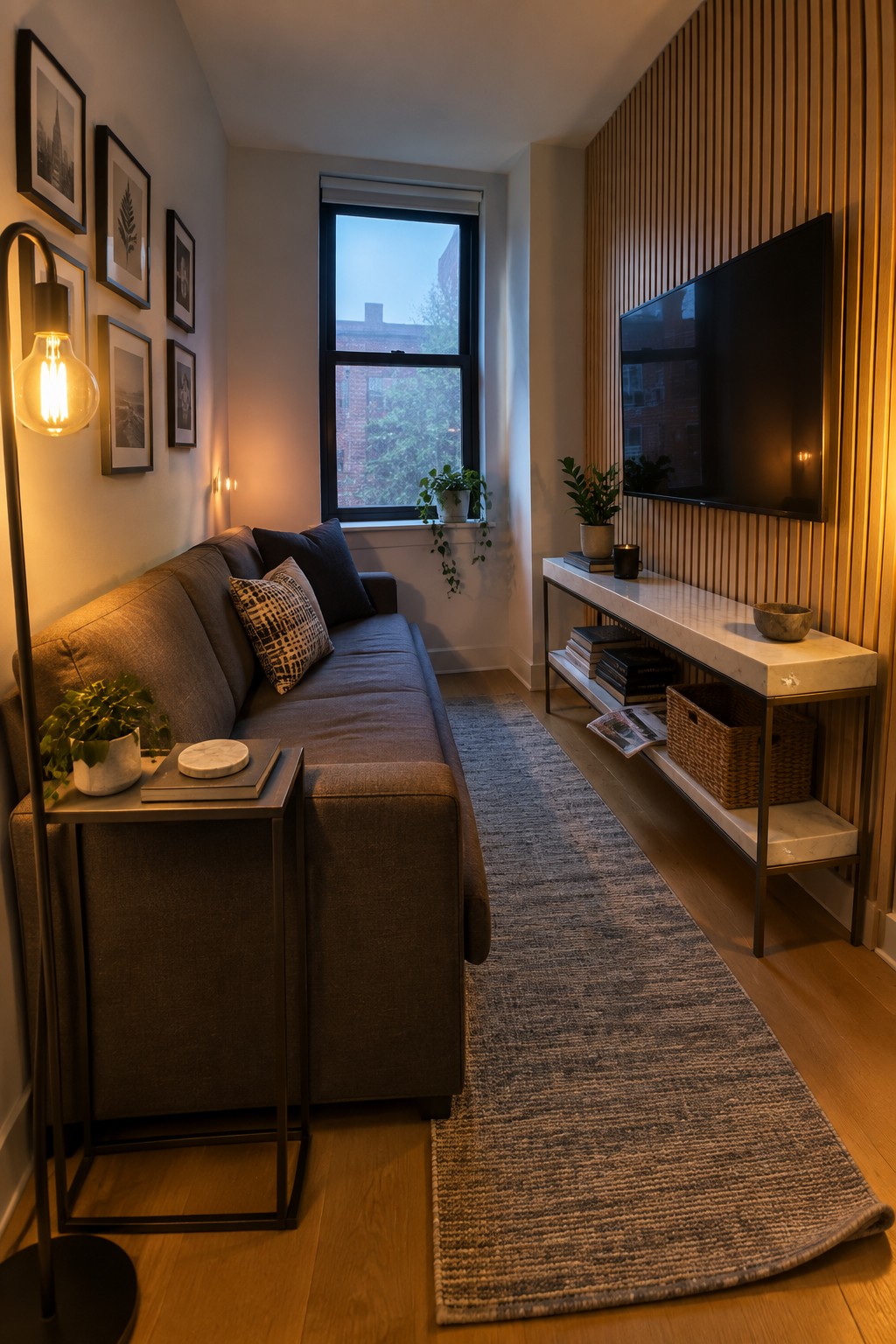
In narrow living rooms, lining the main pieces along opposite walls keeps the center open and the space easier to move through. A long sofa on one side paired with a slim console on the other turns a tight corridor-like room into something that actually works for daily use.
This layout suits apartments and older homes where rooms run long and thin. Choose pieces with shallow depths so the walkway stays clear and the room does not feel cramped even when both sides are filled.
Long Sofa Fits Narrow Living Rooms
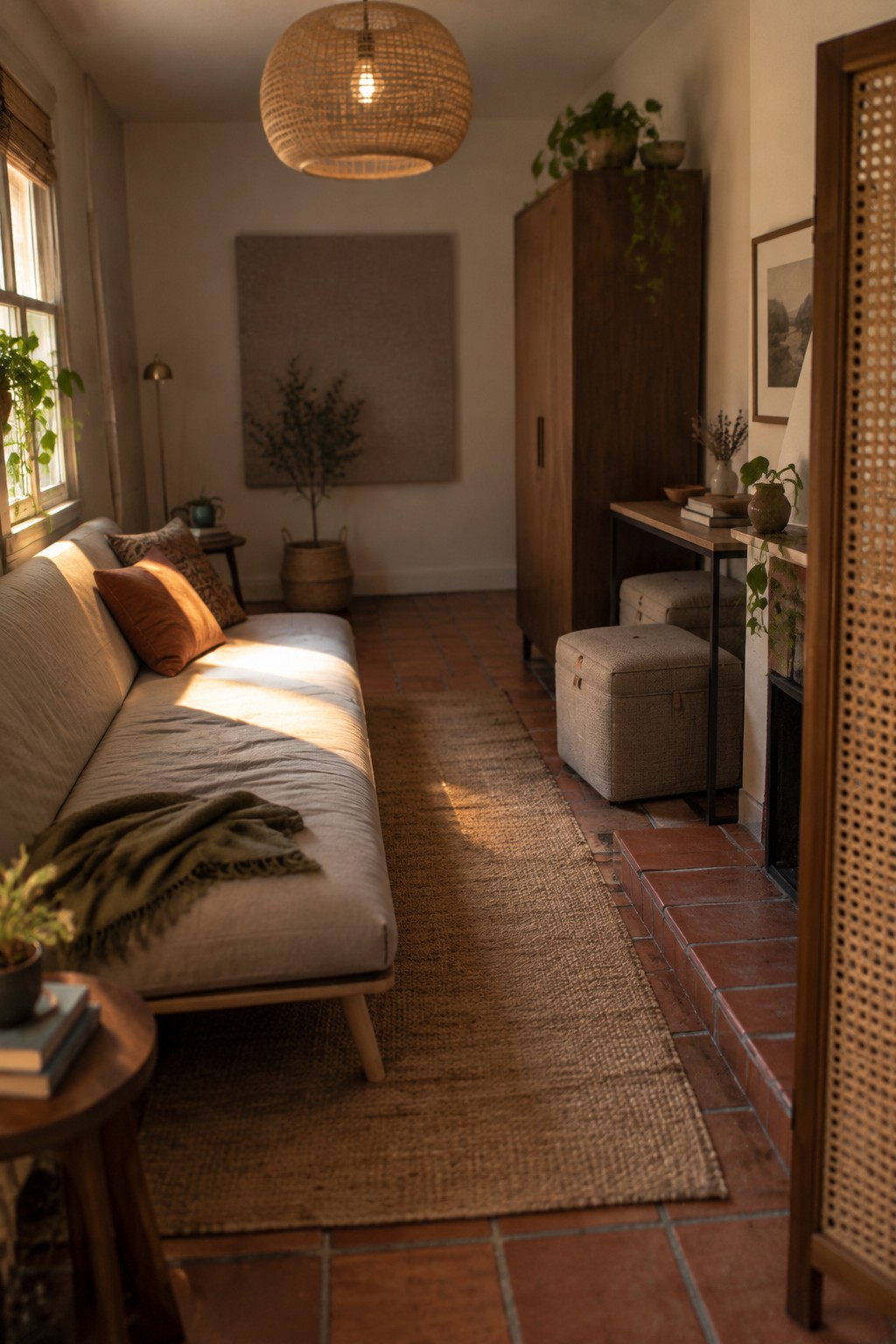
A long, low sofa placed along the longest wall gives you seating without cutting the room in half. In tight or rectangular spaces, this layout leaves a walkway open and keeps the middle of the floor clear.
It works especially well in older homes or small apartments where the living room runs long and thin. Pair it with a narrow rug to define the seating area, and choose a sofa with simple legs so the floor still shows through.
Choose a Chaise Sectional for Small Rooms
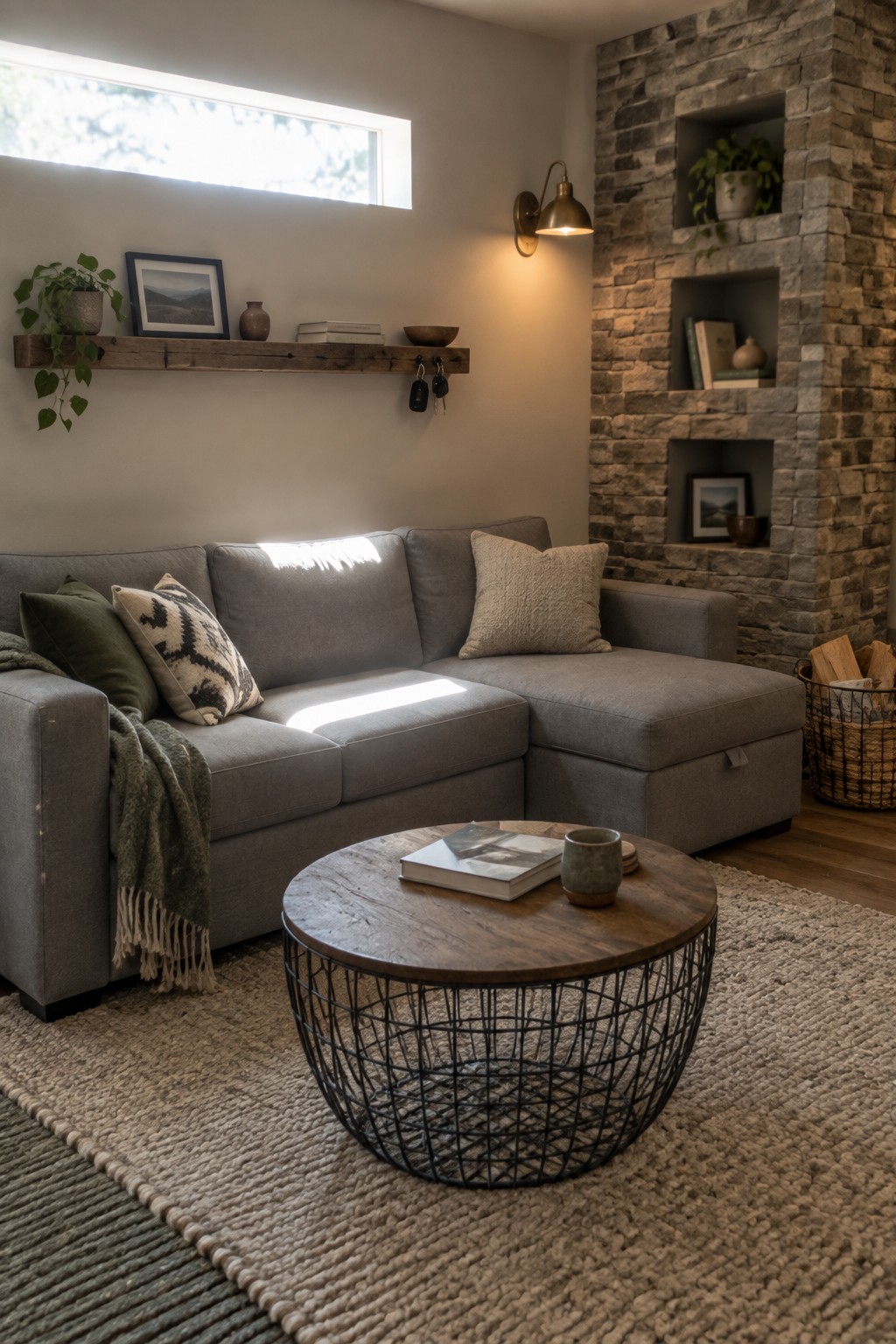
A chaise sectional packs a lot of seating into one piece without the need for extra chairs. The L shape tucks into a corner and leaves the middle of the room clearer, which helps the space feel less cramped.
This layout works well in apartments or any living room under 200 square feet. Keep the chaise on the side away from the main walkway so people can move through easily, and pair it with a low round table to maintain an open feel.
Choose Sofas With Built In Storage
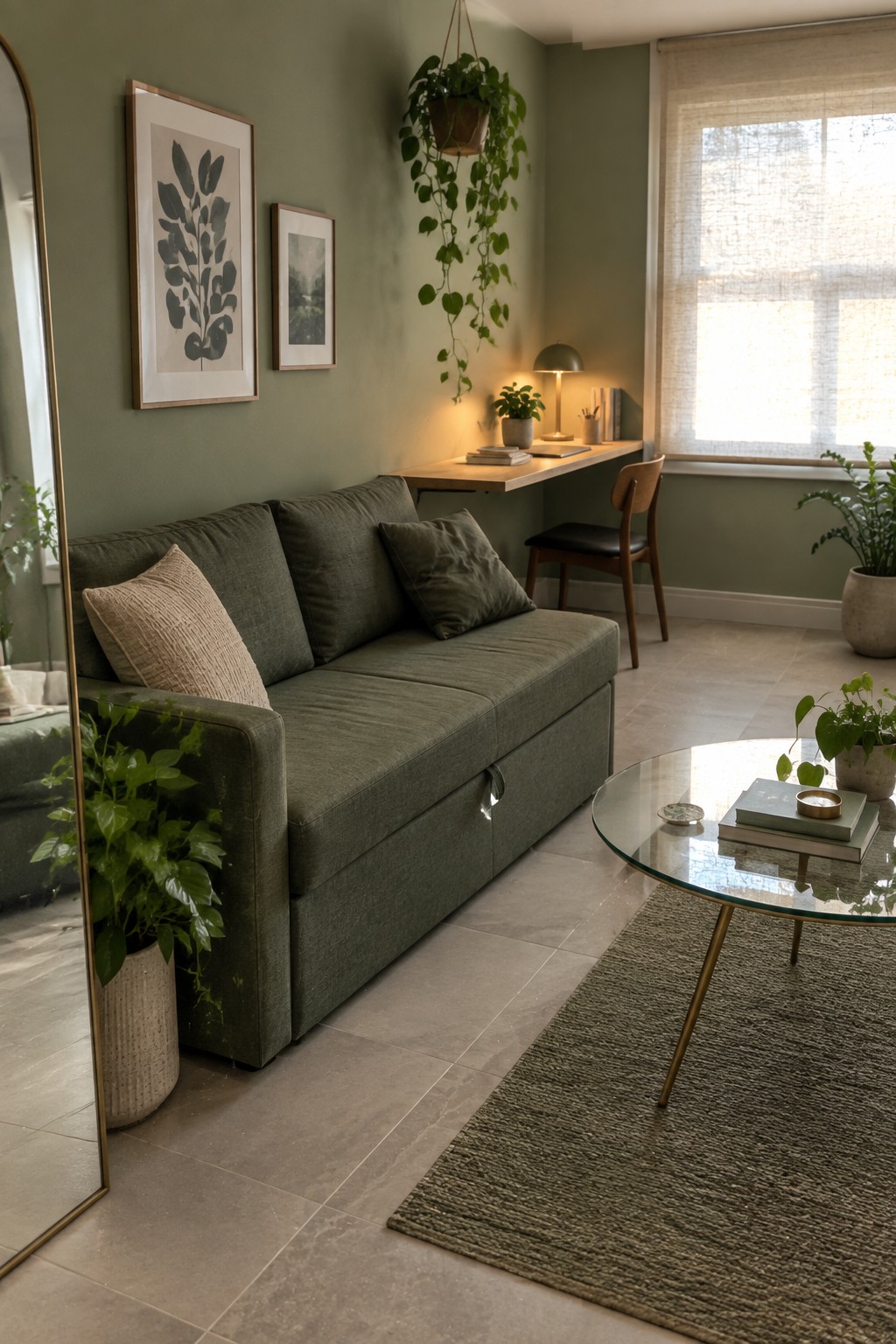
A sofa that hides storage inside can change how a small living room feels. Instead of adding more cabinets or bins, you get a place to keep blankets, books, or extra pillows right where you sit. It keeps the floor clear and the room from feeling crowded.
This works best in apartments or homes where space is tight and you want fewer pieces of furniture. Look for models with lift seats or side compartments, and pair them with a simple desk or table nearby so the room stays useful without extra bulk.
Frequently Asked Questions
Q: Which sofa style works best in a really tight living room?
A: Go with a loveseat that has clean lines and no big arms. It fits more easily and leaves walking space open.
Q: How can I get storage without adding bulky cabinets?
A: Choose tables or benches with hidden compartments inside. They keep things out of sight while doubling as seating or surfaces.
Q: What about using rugs to define the space?
A: A small rug under the main seating area helps anchor the furniture (without covering too much floor). It makes the room feel organized even when things sit close together.
