

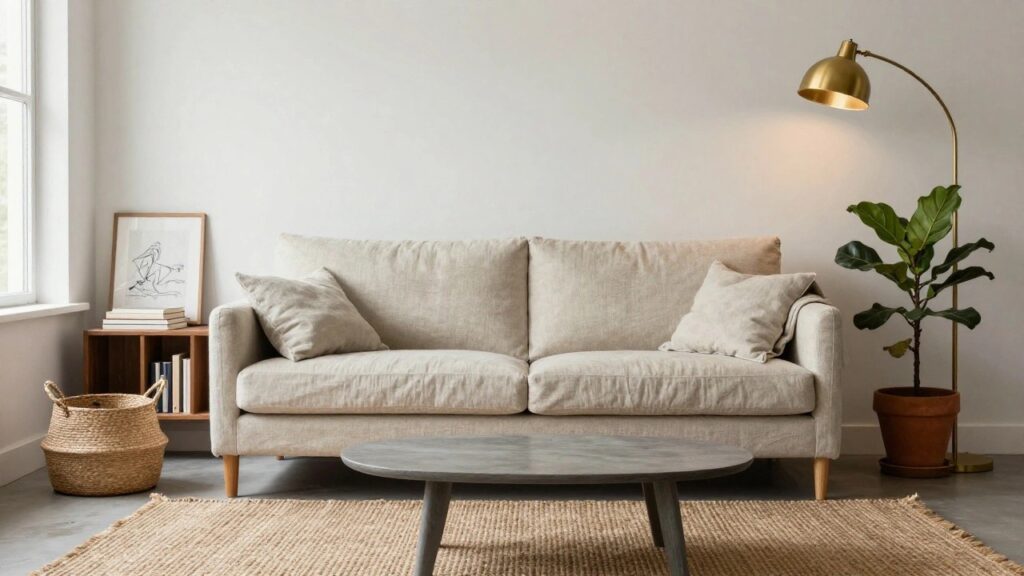
Living rooms can feel boxed in no matter their size if the sofa crowds the walking paths. I shifted mine a few feet from the wall in our old apartment, and it transformed how we used the whole space without adding square footage. Folks usually spot that easy movement first when they step inside, long before they notice the colors or pillows. Smart layouts position the sofa to anchor the room while borrowing sightlines from windows or doorways to stretch the feel. Some of these setups have me eyeing our current setup already, ready to test one out this weekend.
Low Sofa with Open Floor Space
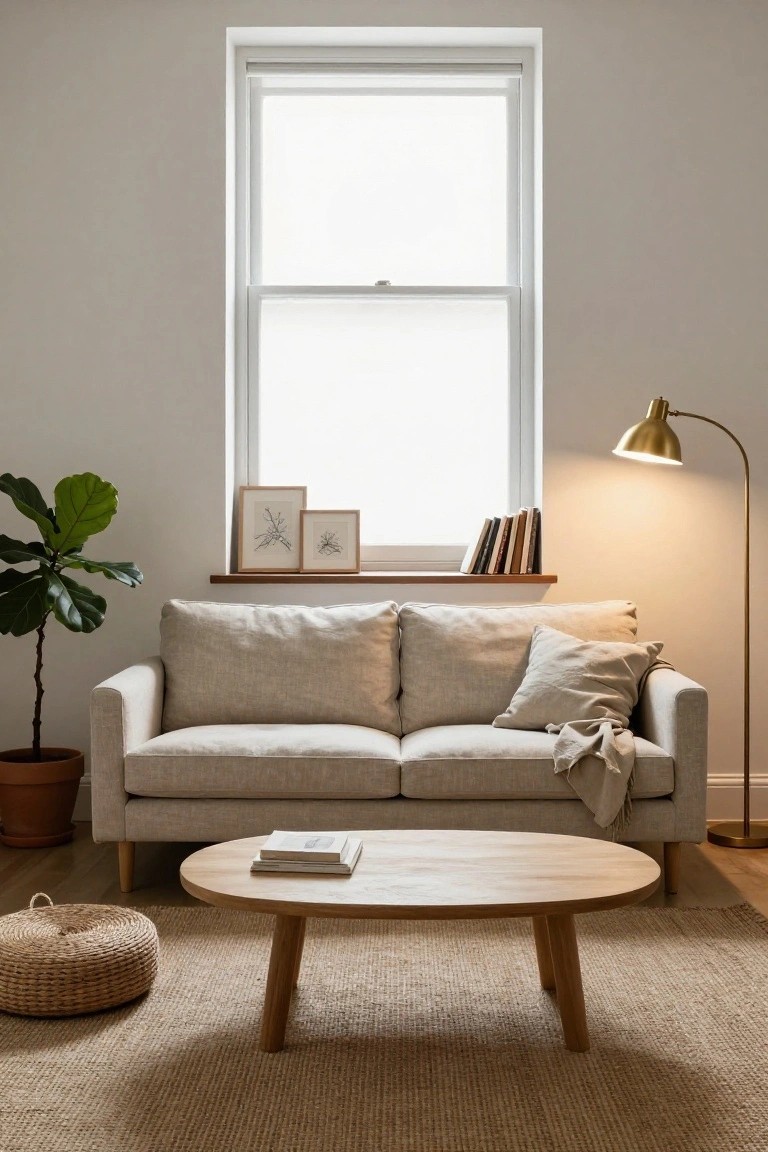
In a small living room, a low profile sofa tucked against the wall under the window makes the whole space breathe easier. Natural light floods the room from above, and keeping just a simple wood coffee table out front stops things from feeling boxed in. That open floor area right in the middle… it pulls the eye around without clutter.
This layout fits tight spots like apartments or narrow city rooms best. Go for neutral fabrics on the sofa, legs that don’t hit the floor, and one pouf off to the side for extra seating when needed. Skip side tables if you can. It keeps movement easy and the vibe calm.
Corner Armchair Opposite the Sofa
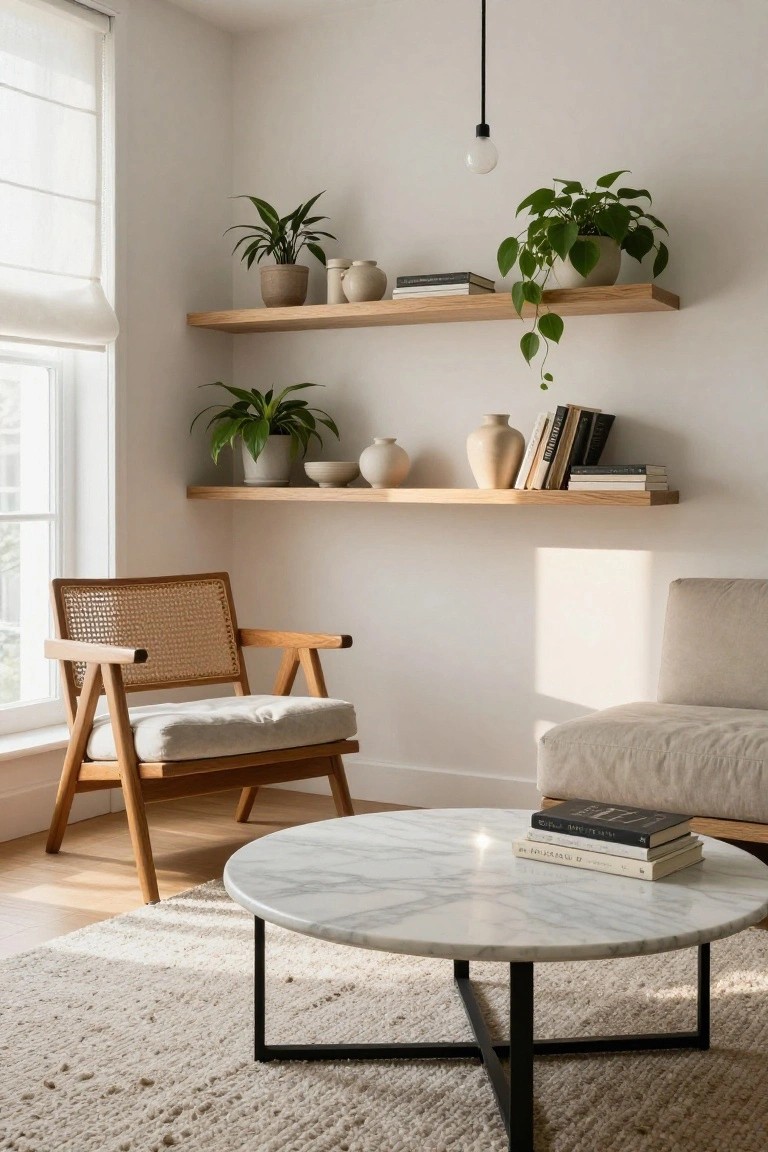
In small living rooms, skipping a full loveseat or sectional and going with just a sofa plus one comfy armchair opens things right up. Here a rattan corner chair sits by the window facing a low-profile sofa, with a round marble coffee table in between. That setup keeps paths clear and lets light flow through, so the space feels bigger than it is.
Try this in tight corners or narrow rooms where you want seating for two or three without crowding. Pair wood frames and light cushions like these with floating shelves for books and plants overhead. It works best in sunny spots, but watch the scale, keep everything low to the ground.
Low Sofa Opposite the Fireplace
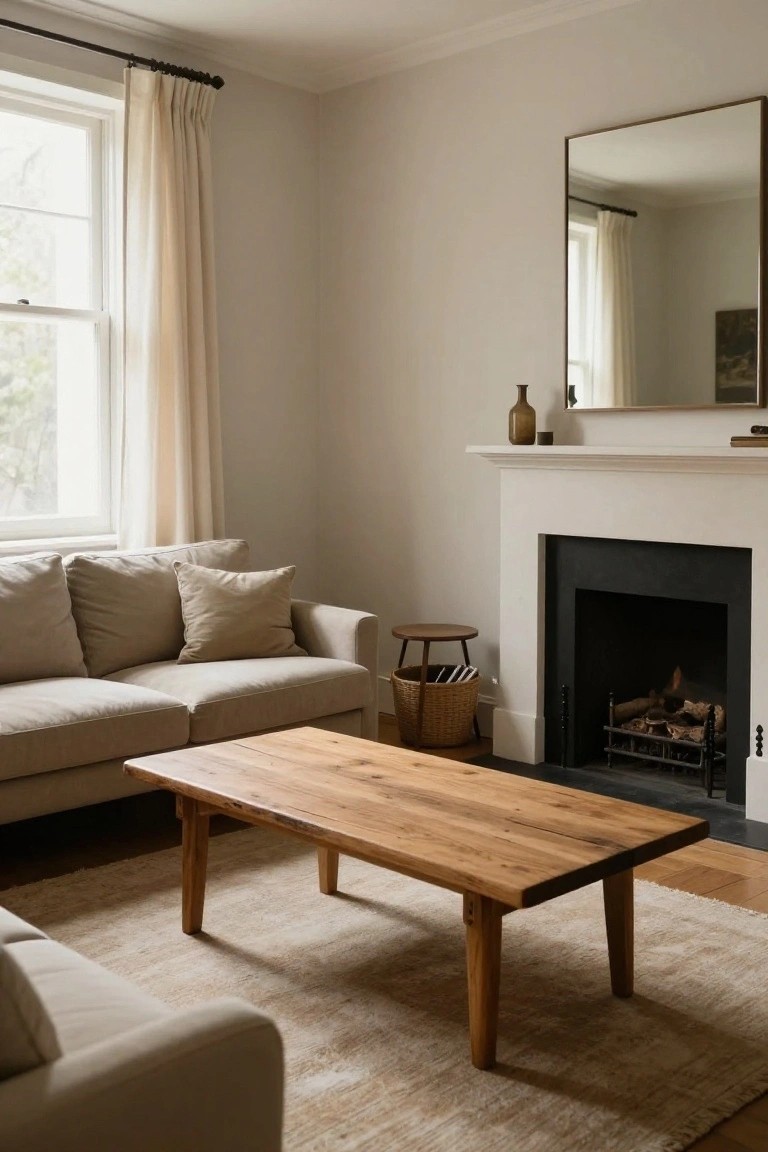
In tight living rooms a low-slung sofa set against one wall facing the fireplace keeps things open and easy to move around. That simple oak coffee table in between stays close to the floor so your eye travels right to the fire without anything bulky in the way. It makes the room feel bigger even on the smaller side.
Try this in spaces with a focal wall like a fireplace and some window light. Stick to neutral fabrics on the sofa and a pale rug underneath. It fits older homes with white trim or calmer modern setups just fine. Scale the table to your sofa though or it might crowd the middle.
Curved Sofas Free Up Floor Space
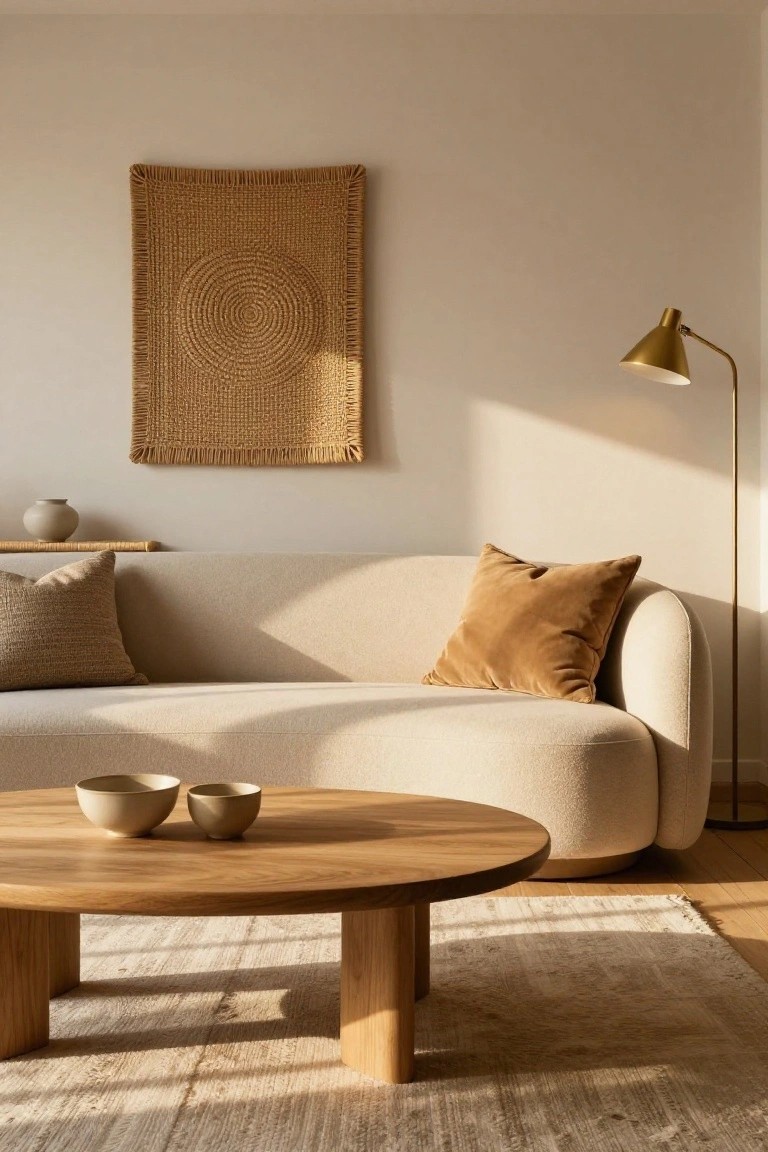
A curved sofa like this creamy one pulls back from straight lines. It softens the room edges right away. Pair it with a round wooden coffee table on tall legs. That keeps the center open. No heavy block in the middle. Small living rooms start to feel roomier fast.
Put this in apartments or narrow family spaces. The sofa hugs one wall. Table floats easy in front. Stick to light beiges and natural woods. Scale matters… go low profile. It works where straight furniture jams things up.
Low Daybed Under the Window
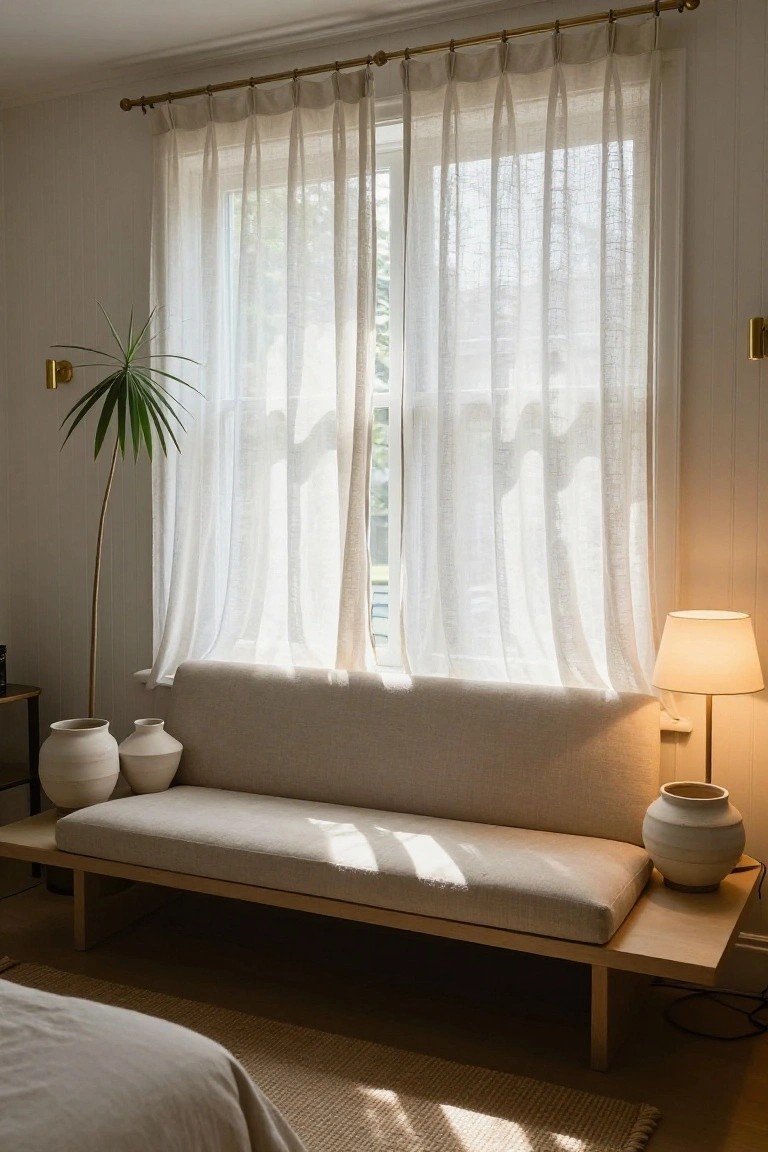
Putting a slim daybed sofa right under the window opens up a small living room fast. It hugs the wall without blocking light or views, and sheer curtains keep the flow going. That palm plant and a couple vases nearby just nod to nature, nothing heavy.
Try this in narrow spots near a bed or entry. Go for light upholstery that matches the walls, keep accessories to the floor only. It suits calm homes where you want room to move… or just breathe. Watch the height though, too tall and it cramps the air.
Floating Shelves Above the Sofa
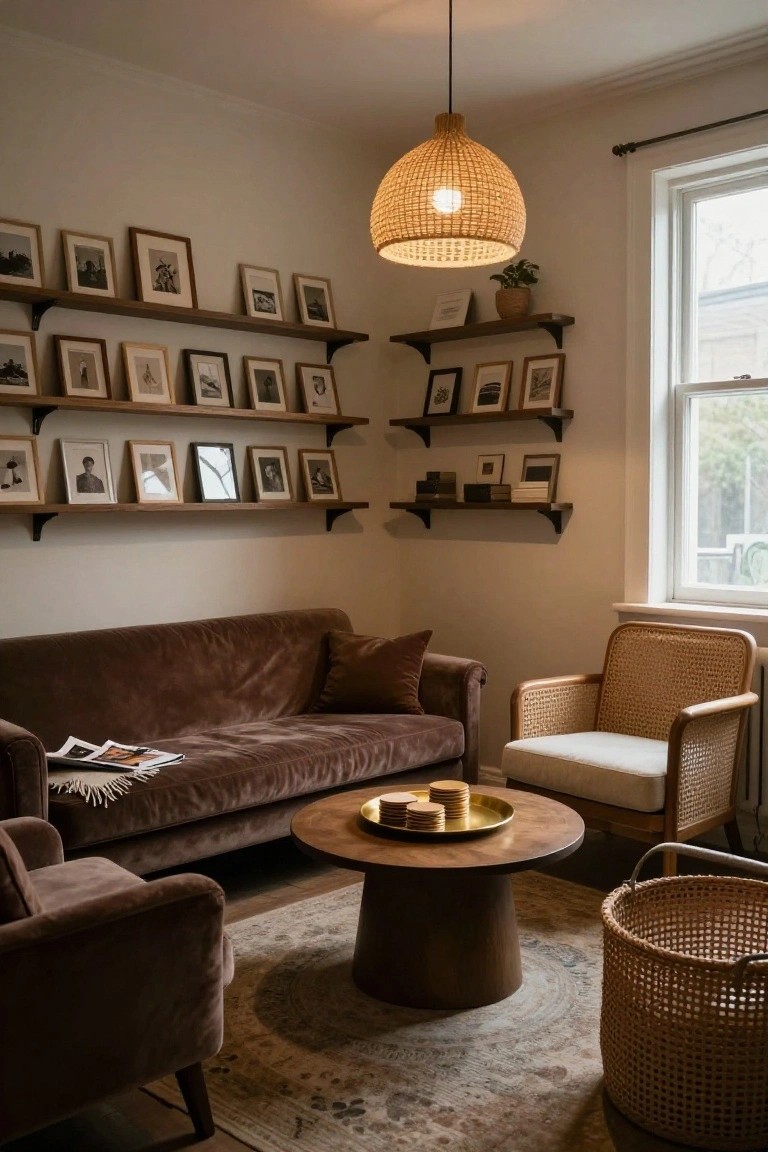
In small living rooms, floating shelves running along the walls above your sofa pull double duty as display spots and storage. They hold all those photos and small frames without eating into floor space, so the seating area stays open. The brown velvet sofa here sits snug under layers of simple wood shelves, letting the round coffee table and chairs breathe in the middle of the room.
This setup shines in compact spots like apartments or narrow city homes. Pick plain shelves in a wood tone that matches your table or rug, and space them at varying heights for interest. Load them lightly with frames you love. It keeps things personal and practical, especially if you have books or plants to tuck away too.
Armchair Nook Layout
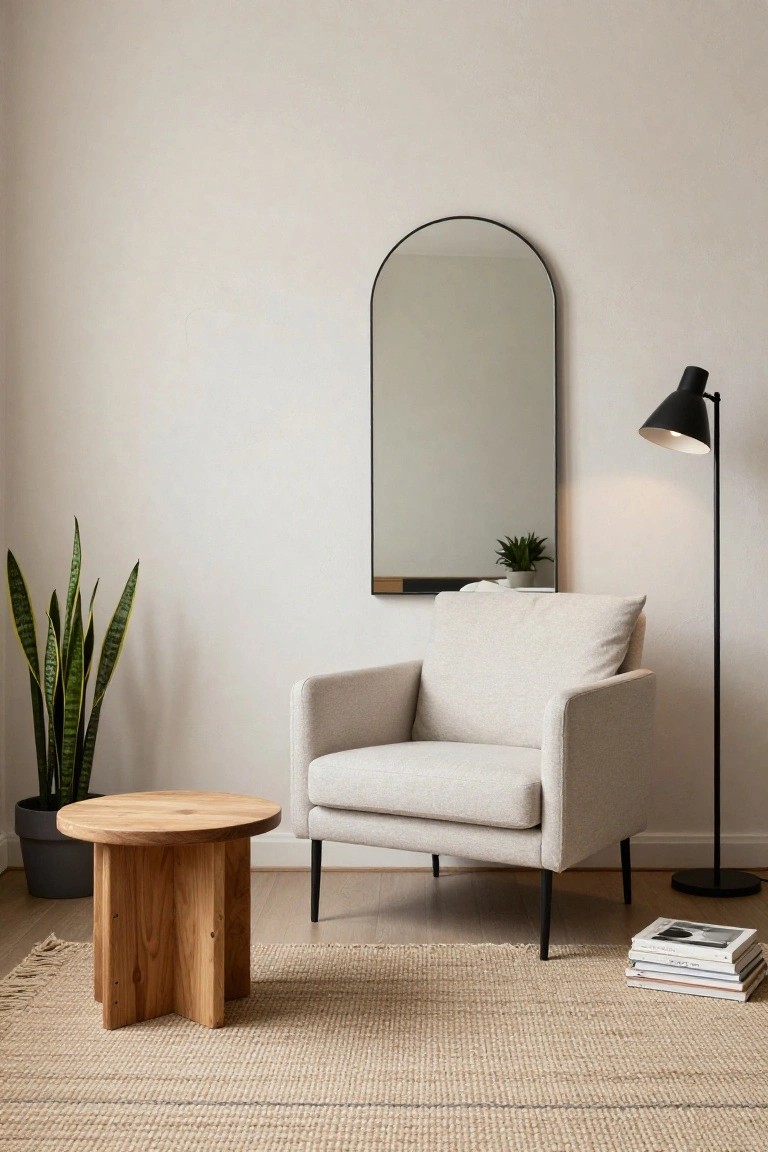
A single armchair tucked into a corner with just a small side table nearby keeps things simple and open. That chunky wooden table on tripod legs fits right beside the low chair without crowding the floor. The setup leaves plenty of empty space, which makes even a tight living room feel bigger and calmer.
Put this in any small space where a full sofa would overwhelm. Pair the chair with a tall plant and a floor lamp for function, and hang a big mirror opposite to bounce light around. It suits rentals or starter homes best… just make sure the table height matches your chair for easy reach.
Floating Shelf Above the Sofa
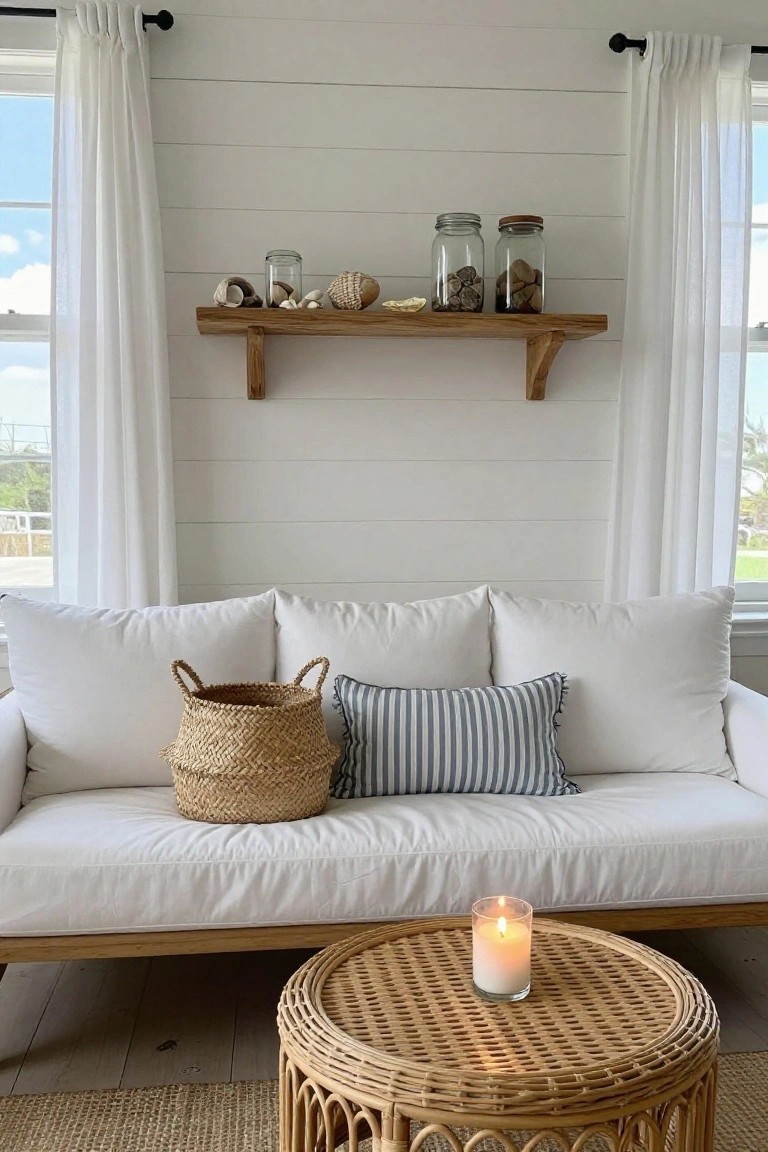
A floating wooden shelf mounted right above the sofa is a smart way to add storage and interest without taking up any floor space. Here you see it holding jars of shells and rocks, plus a few beach finds. That keeps the area below open and airy. In a small living room it helps everything feel bigger since nothing crowds the walking path.
Try this in a casual coastal spot or any tight room where you want to display collections. Pick a shelf in natural wood tones to blend with light walls. Just hang it high enough so no one bumps their head when sitting. It works best with a simple sofa setup like this low white one paired with a single low table out front.
Sofa and Credenza Along One Wall
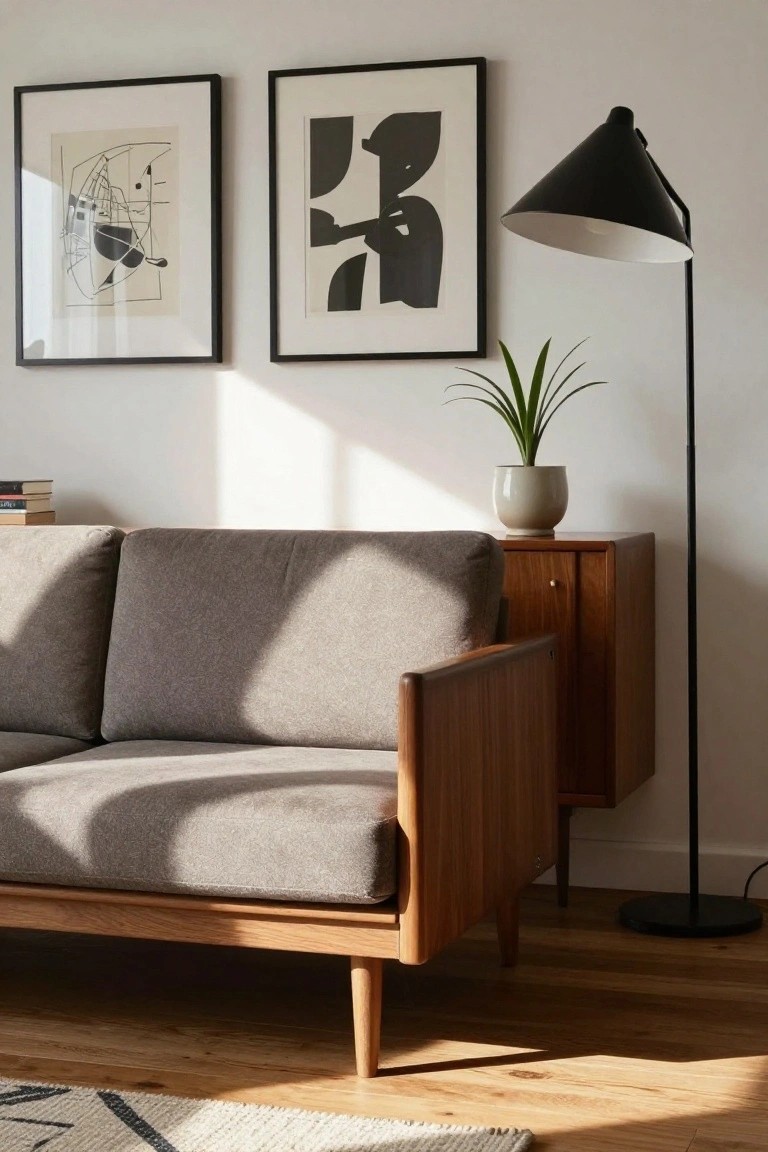
Putting your sofa flush against the wall with a slim credenza right next to it frees up the middle of the room. This layout works well in tight spaces because it uses the wall fully without eating into floor area. The wood credenza adds spots for books or a plant, and the gray sofa fabric stays neutral so light bounces around.
It’s great for apartments or open-plan homes where you want seating without bulk. Go for leggy pieces like these to keep airiness. A tall floor lamp nearby gives reading light, but skip heavy decor on top to avoid clutter.
Corner Sofa with Oval Coffee Table
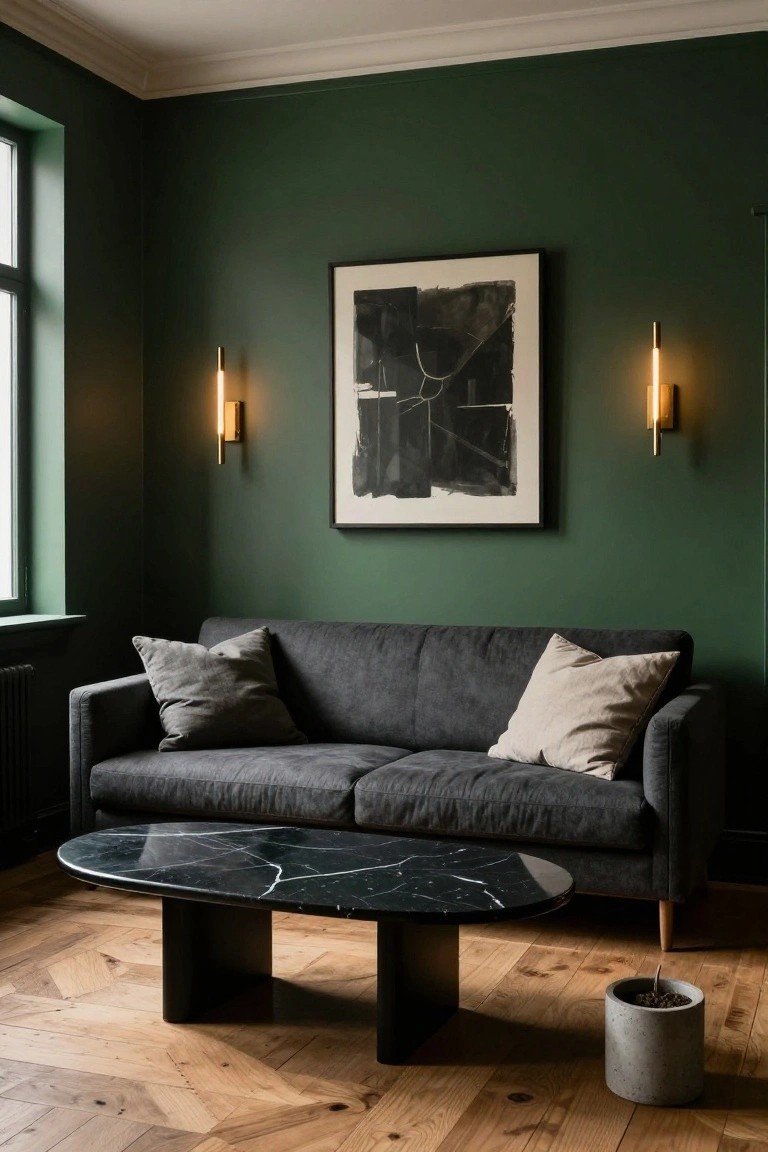
Tuck a simple gray sofa right into the corner like this, and add an oval coffee table in black marble with those slim black legs. The shape flows around the space without blocking sightlines to the floor. Dark green walls pull it together, making even a small room feel steady and not too closed in.
This works best in compact city apartments or older homes with tricky corners. Keep the table low and open underneath so the parquet floor shows through. Just size everything to your scale… no oversized pieces that crowd things.
Corner L-Shaped Sofa Layout
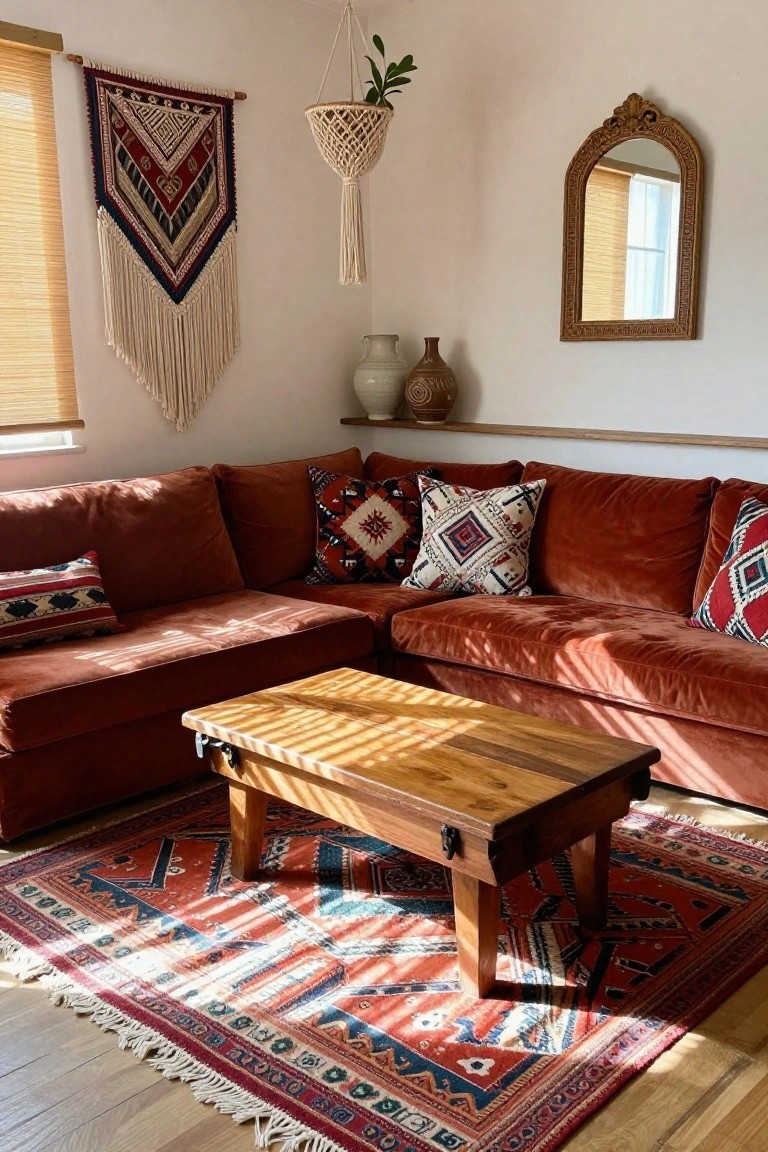
Tucking an L-shaped sofa into the corner opens up the center of a small living room. It lets you walk around freely and makes the space feel bigger right away. Here the rust-colored velvet sofa pairs with a low wood coffee table right in front. A patterned rug pulls it all together without taking over.
This works best in apartments or narrow rooms with good light. Push the sofa snug against two walls and center the table on the rug. Skip bulky armchairs… just add a couple pillows for color. Measure your walls first to avoid surprises.
Leather Sofa in Industrial Loft
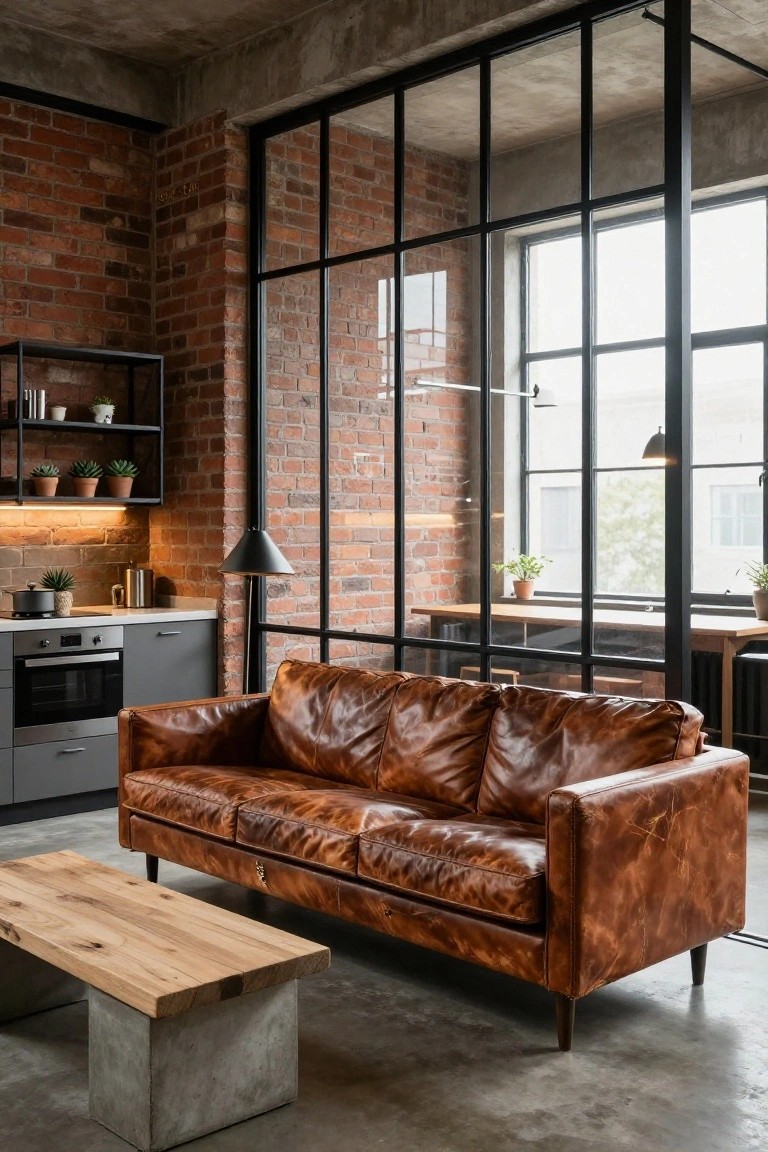
A tan leather sofa like this one works great in a small living room setup. Placed right in the open space with its slim wooden legs, it fills the area without blocking the flow. Those big glass walls let light pour in, and the exposed brick keeps things rugged but cozy. The low coffee table made from a wood beam on a concrete base stays out of the way too.
Put this layout in apartments or lofts with open kitchens. Face the sofa toward windows or glass doors to borrow outdoor space. Stick to low pieces so your eyes travel freely… it tricks the room into feeling twice as big. Just watch scale. A huge sofa shines here but might swamp a super tight spot.
Fireside Armchair Setup
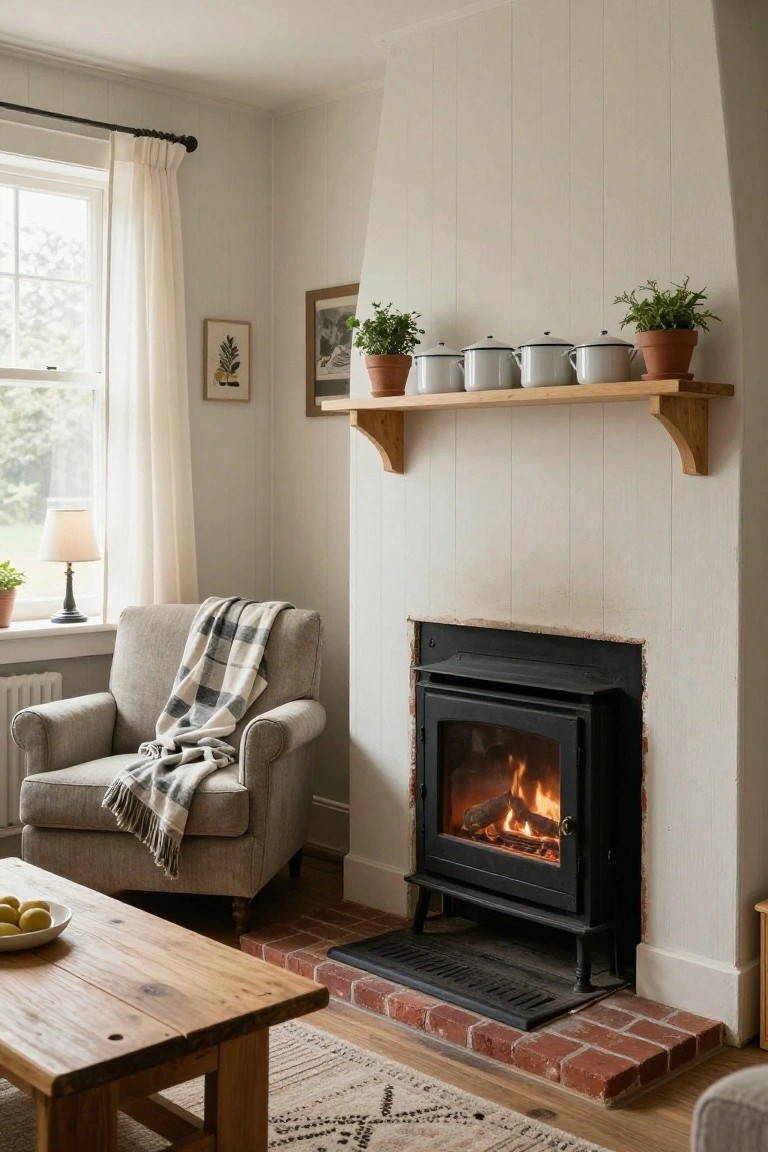
In tight living rooms, a single armchair pulled up to the fireplace makes a natural gathering spot. It keeps things simple and open, letting the fire draw your eye without extra furniture getting in the way. The chair here has a soft gray fabric with a checkered throw draped over it, paired with a low wood table holding just a bowl of lemons.
This works best in small spaces with one strong focal point like a stove or hearth. Angle the chair slightly for easy access, and use a table small enough not to block paths. It’s practical for apartments or old cottages where you want warmth without bulk.
Oversized Landscape Art Above the Sofa
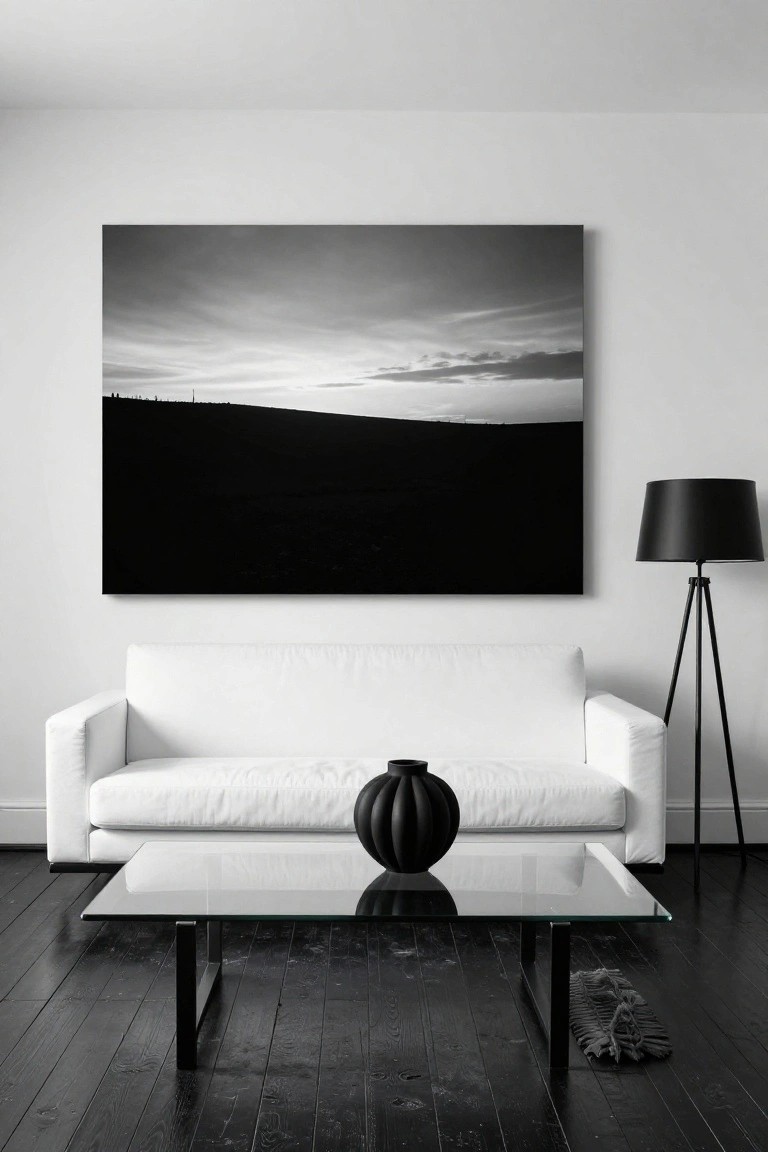
A big black-and-white photo of open fields and sky hung right over the sofa pulls the eye way out. It turns a plain small living room into something that feels much bigger. With just a white couch, glass coffee table, and a black vase in front, there’s no clutter to fight the wide-open view from the picture. That empty black foreground in the art echoes the simple setup below.
Try this in tight city apartments or any spot where walls close in. Pick art at least as wide as your sofa, something with lots of negative space like a landscape. Black and white keeps it from overwhelming light walls and floors. Skip busy patterns… they shrink things back down. Works best in modern or neutral rooms.
Low Coffee Table Keeps Small Rooms Airy
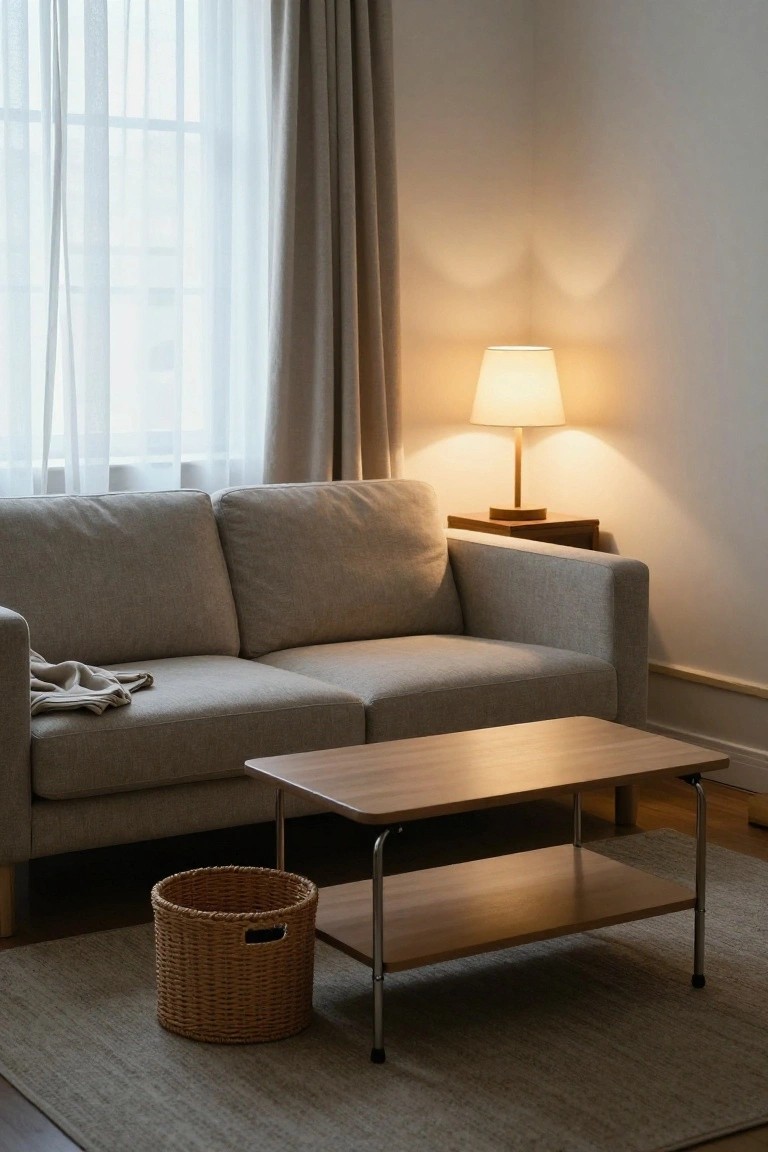
A low coffee table like the simple wood one here works wonders in tight living rooms. Set in front of a plain gray sofa, its open legs let your eye travel right under to the rug and floor. That little trick cuts down on visual bulk. No heavy solid pieces blocking the flow. Just enough surface for a drink or book, and the room breathes easier.
Put this setup along a window wall where light comes in strong. It suits apartments or starter homes with not much square footage. Grab a leggy table under 16 inches high, and toss a wicker basket nearby for magazines. Skip anything too wide or boxy. Watch the scale so it doesn’t crowd the sofa path.
Sofa Under Floating Shelves
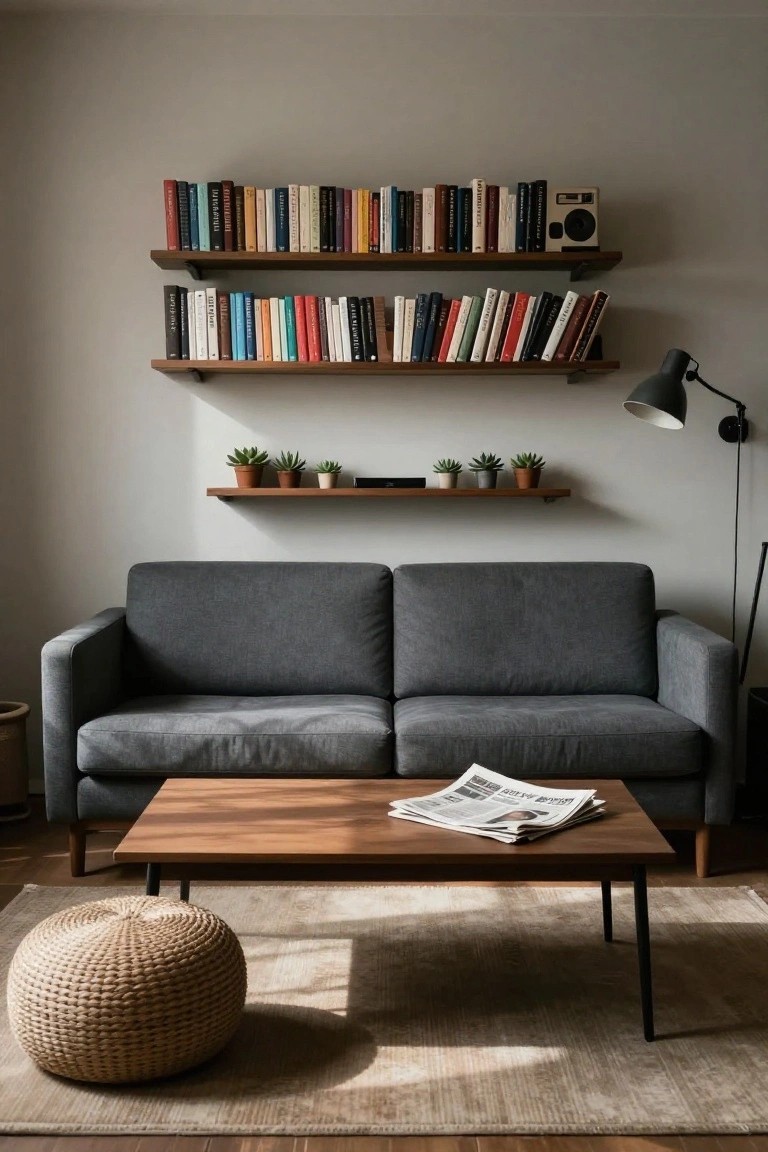
One straightforward way to handle storage in a small living room is to put floating wooden shelves right above the sofa. This setup keeps books and a few plants off the floor so the space stays open around a simple gray two-seater. It works because your eye goes up instead of getting stuck on clutter below, and that alone makes the room feel bigger without much effort.
Try this in apartments or narrow rooms where every inch counts. Mount the shelves at eye level or higher, leave some breathing room above the sofa back, and pair it with a low wooden coffee table plus a woven pouf for extra seats. Skip bulky side tables. Just watch the weight on those shelves. Not everything needs to go up there.
Clear Coffee Table for Airy Sofa Layouts
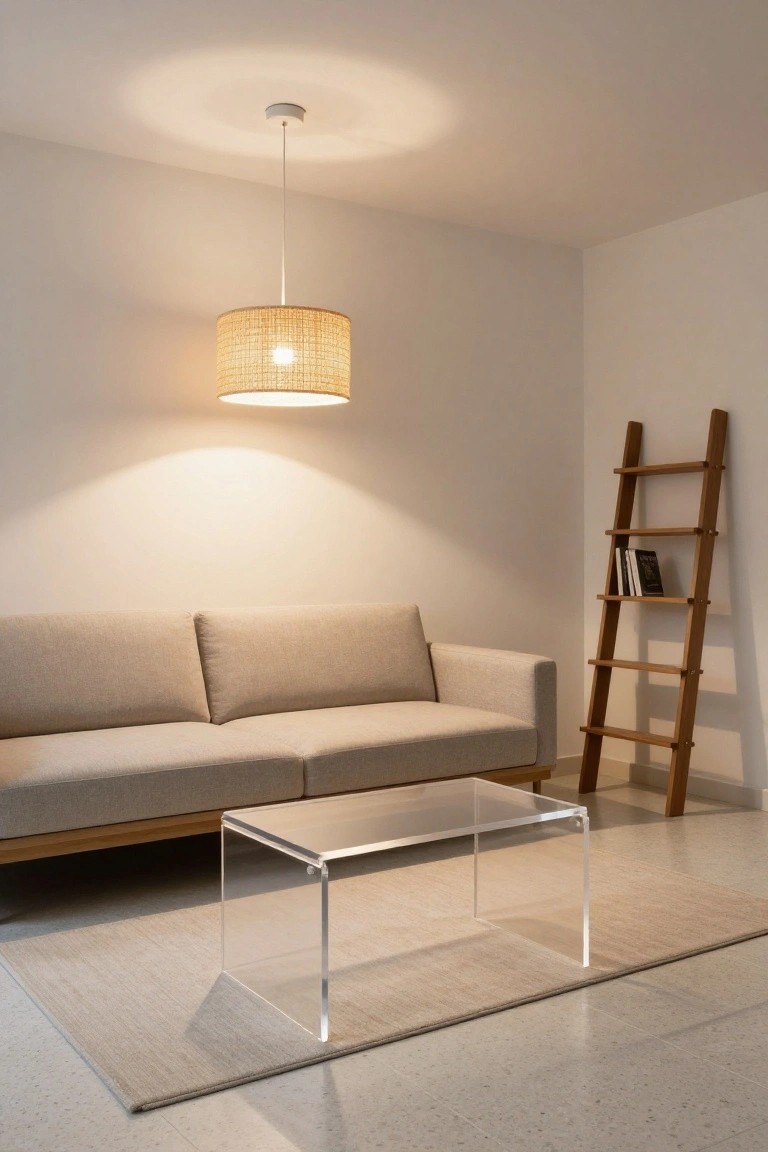
A clear acrylic coffee table sitting right in front of a low beige sofa is a simple way to keep a small living room from feeling crowded. It lets your eye travel right through to the floor and rug below. That openness works especially well here with the neutral walls and wood ladder shelf tucked in the corner. No heavy furniture blocking the flow.
Put one like this in tight spaces where you want the sofa to be the main focus without extra bulk. It fits modern or minimalist setups best, maybe with light rugs and simple shelves. Just wipe it down now and then. Fingerprints show up easy.
Bay Window Seat Nook
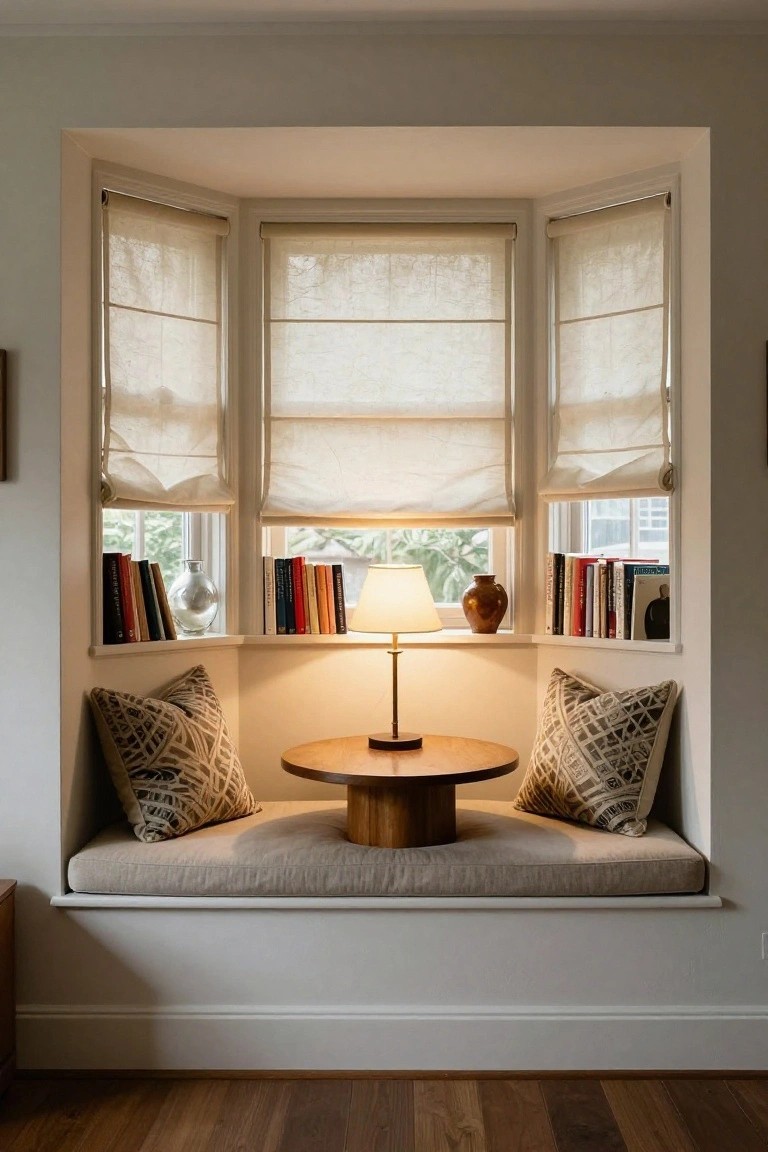
A bay window seat like this turns an often unused spot into practical seating for small living rooms. It keeps the floor open while the built-in bench hugs the windows, letting in plenty of light. Bookshelves on the sides hold your favorites, and a small table with a lamp sets up a quiet reading corner that feels bigger than it is.
This setup suits homes with bump-out windows already in place. Just add deep cushions and pillows for comfort, maybe in neutral tones to blend with your room. It works best facing a view or in a corner, avoiding clutter by keeping shelves light on extras.
Corner Sofa Layout
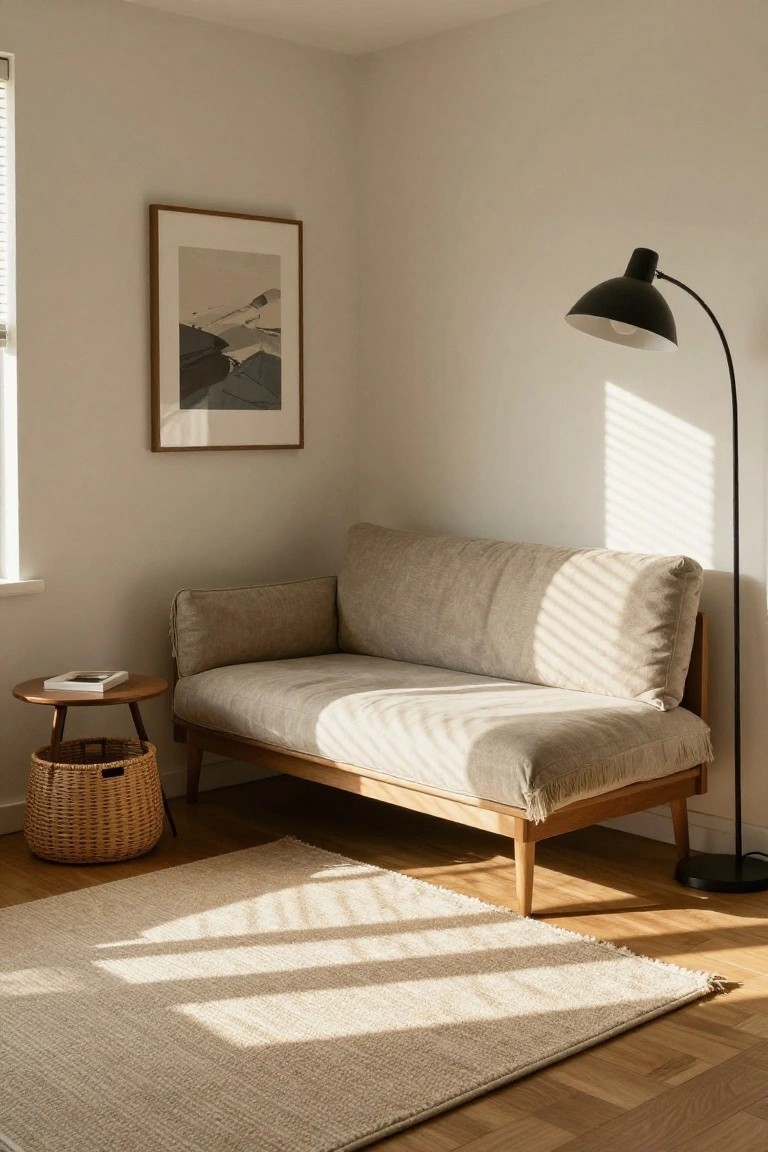
Tucking a slim sofa right into the corner works wonders in tight living rooms. This setup leaves the center floor open, so the space feels bigger than it is. The low-profile daybed style with light fabric blends into pale walls, and those sun stripes from the blinds add airiness without much effort.
Try it in apartments or narrow rooms where every inch counts. Add one small side table nearby, maybe with a book or basket, and a tall lamp for reading light. Skip anything bulky. It suits casual spots that get natural light…keeps things simple and roomy.
Free Up Floor Space with a Floating Console
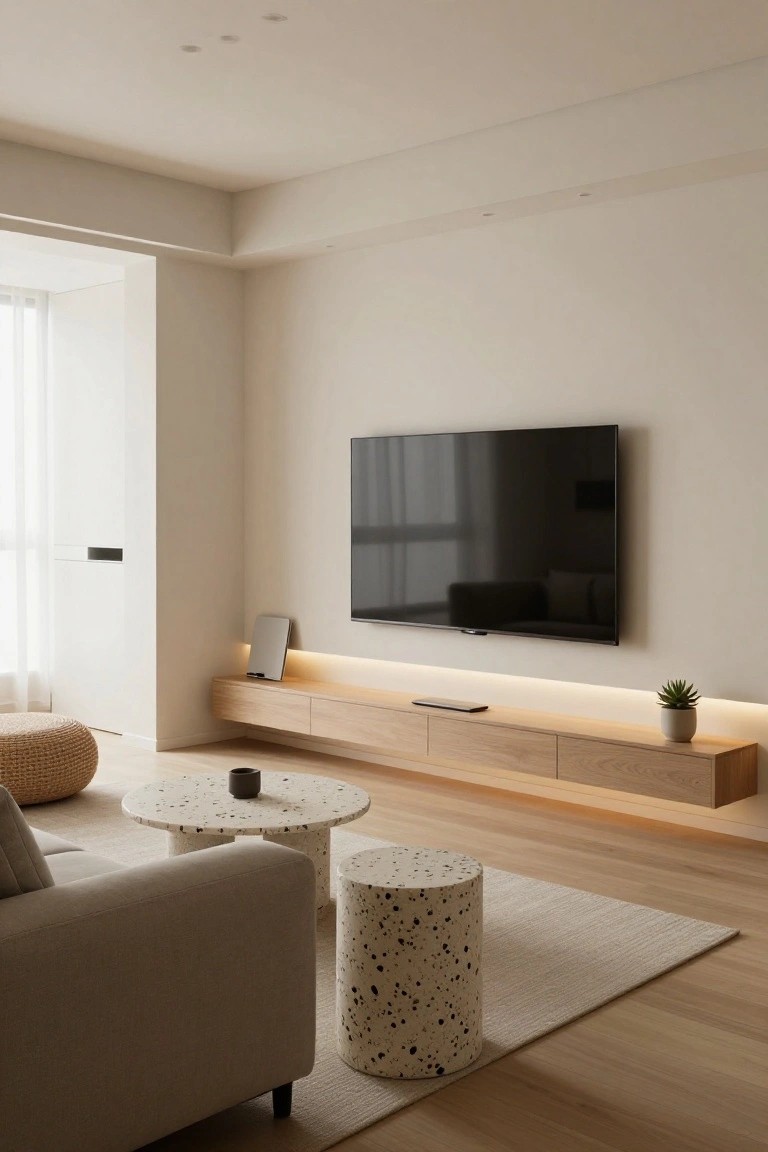
In tight living rooms, a floating wooden console under a wall-mounted TV makes a big difference. It stores essentials like remotes and speakers without eating into the floor area. Here the oak shelf hugs the wall nicely, with a slim LED strip adding a soft glow that draws the eye up instead of crowding the room.
This works best in apartments or narrow spaces where you want the sofa area to breathe. Mount the console at knee height, keep it simple with a couple drawers, and pair it with low stools or poufs for extra seats. Skip bulky cabinets… they just close things in.
Vertical Wood Slats Behind the Sofa
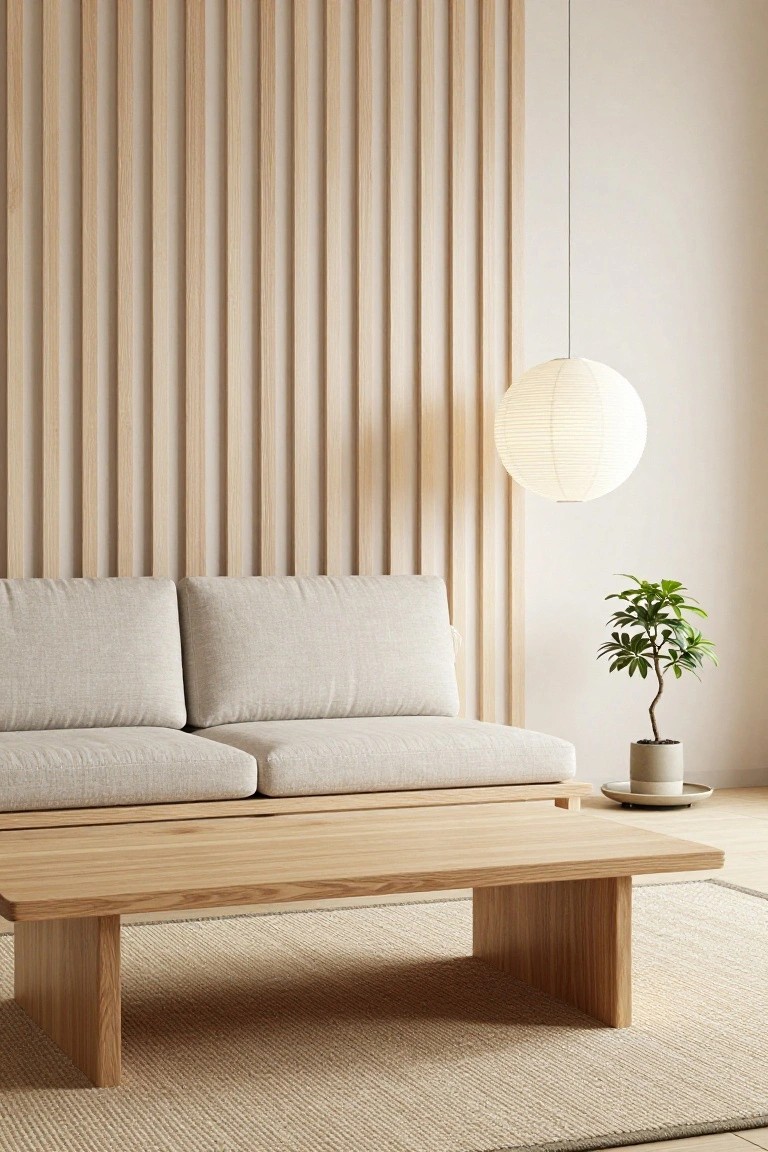
A vertical slat wall behind the sofa is a smart way to add interest to a small living room without making it feel crowded. The light oak strips run floor to ceiling, pulling the eye upward and giving the space more depth. Paired with a simple low sofa and oak coffee table, it keeps everything open and calm.
This setup shines in narrow rooms or apartments where blank walls can feel boring. Go for pale woods and keep furniture low to the ground. It suits modern spots with clean lines… avoid dark tones unless you have lots of natural light.
Gallery Wall Above the Sofa
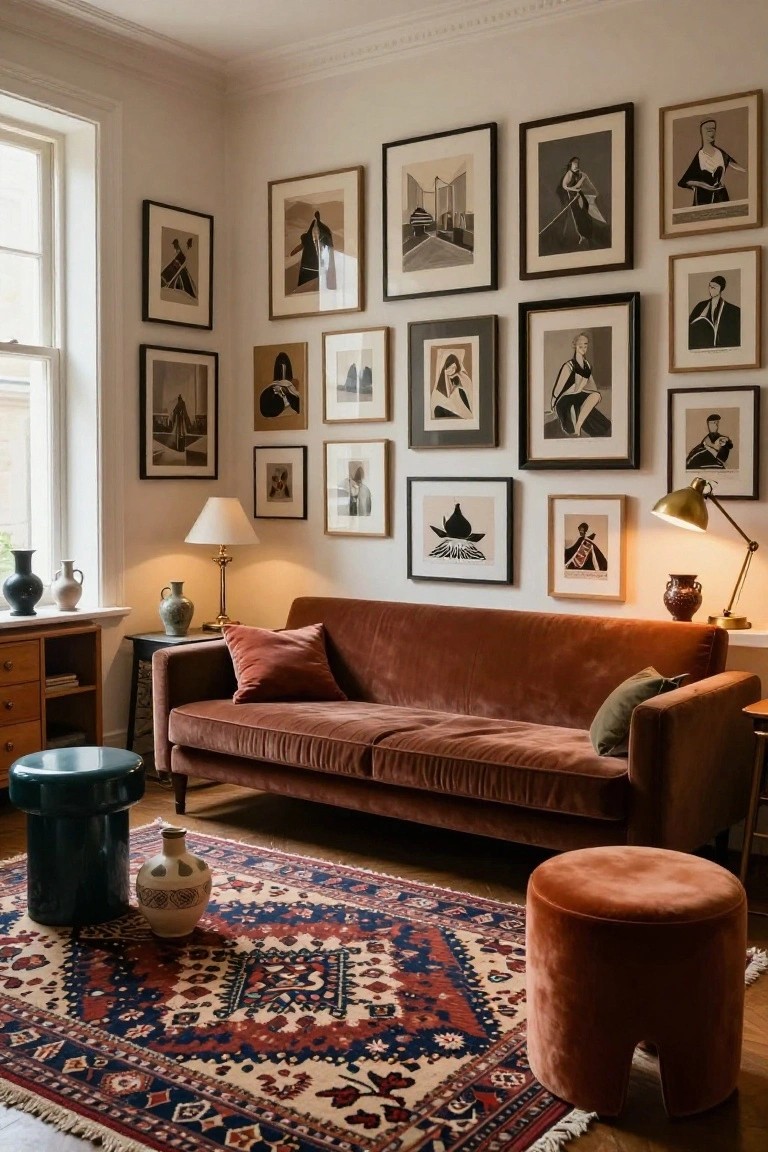
One simple way to make a small living room feel bigger starts with hanging art high on the wall right over your sofa. In this setup, a mix of black-and-white frames stretches from the ceiling almost to the sofa back. It pulls the eye up and makes the room seem taller than it is. The rust velvet sofa sits snug below without competing for attention.
You can try this in any narrow or low-ceiling space where the sofa hugs one wall. Pick frames in similar tones but vary the sizes for interest. Just keep the sofa simple, maybe in a soft fabric like velvet, so the wall stays the star. It works best with minimal furniture around to let the height breathe. Watch the lighting though. Lamps nearby help the art show up without overwhelming the spot.
Sofa Facing the Fireplace
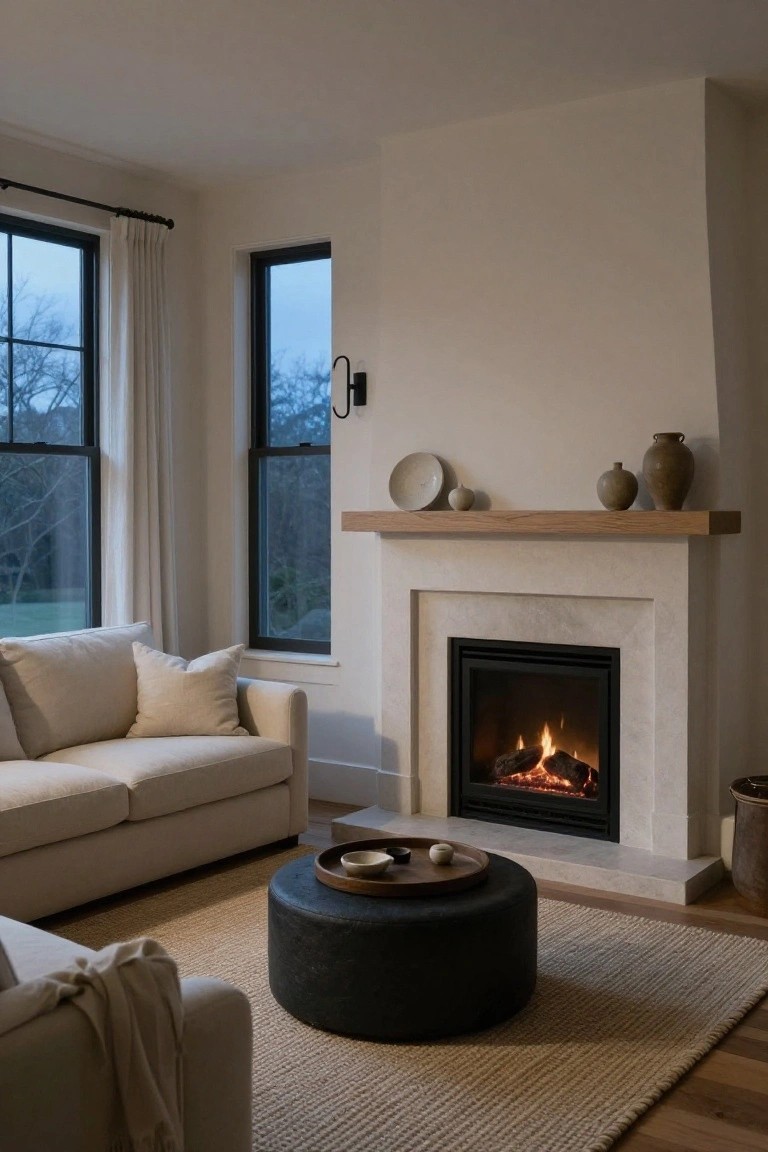
One easy way to lay out a small living room is to put the sofa right in front of the fireplace. It turns the fire into your main spot without filling up the floor. A plain cream sofa works here, paired with a low black pouf instead of a table. That keeps walkways clear and the room from feeling boxed in.
This setup fits long narrow spaces best, especially with big windows nearby. Line the sofa up parallel to the mantel, and pick a footstool you can shift around. Just watch the scale; too big a piece and it crowds quick.
Frequently Asked Questions
Q: My room is super narrow. Which sofa layouts work best there?
A: Go for the single sofa parallel to the long wall. It leaves a clear path on one side and tricks the eye into seeing more width. Skip L-shapes; they eat up too much.
Q: Do I have to float the sofa away from the wall in a small space?
A: Try it first if you can. Pulling it out a foot creates depth and lets you slip a slim console behind. Your room instantly feels taller.
Q: How do I arrange around a TV and windows?
A: Face the sofa toward the TV, but angle it slightly if windows are opposite. This catches natural light without glare. And drape sheer curtains to soften edges.
Q: What if I want seating for more than four people?
A: Pair your sofa with floor cushions or poufs along one side. They tuck away easy and pull out for guests. Keeps the flow open.
