

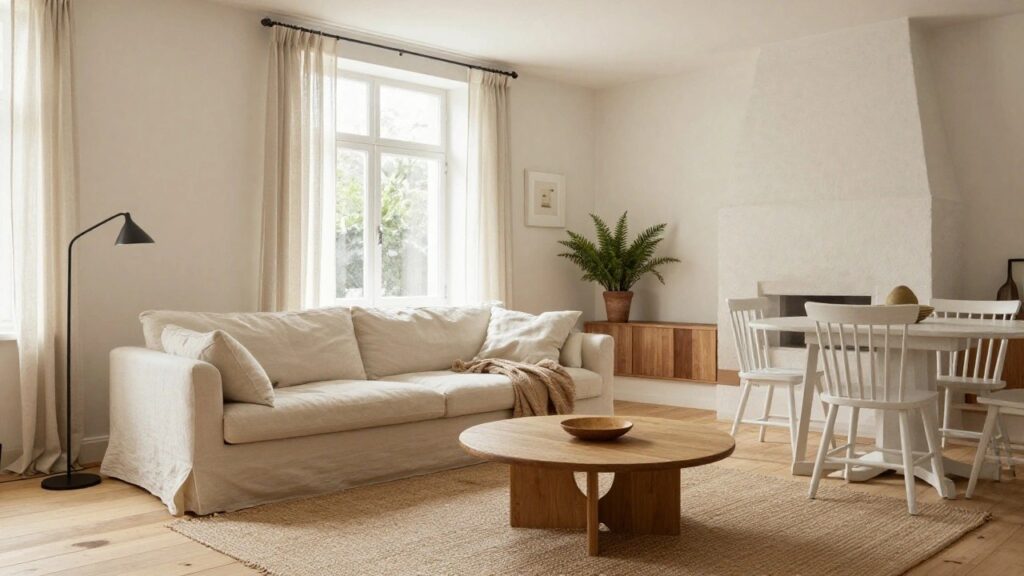
Open-plan rooms can feel freeing at first, but they often turn into one big blur where the kitchen chaos spills into movie night.
I shifted my own sofa last summer to nudge the dining area apart from the lounge, and it finally made the space work for daily life.
What catches the eye right away is how a well-placed sofa draws a soft line, letting each zone breathe without closing things off.
These setups lean on simple angles and pairings that real homes can borrow, turning flow problems into easy wins.
One with the low-slung sectional still sticks in my mind for testing next.
Sofa and Rug Mark the Living Zone
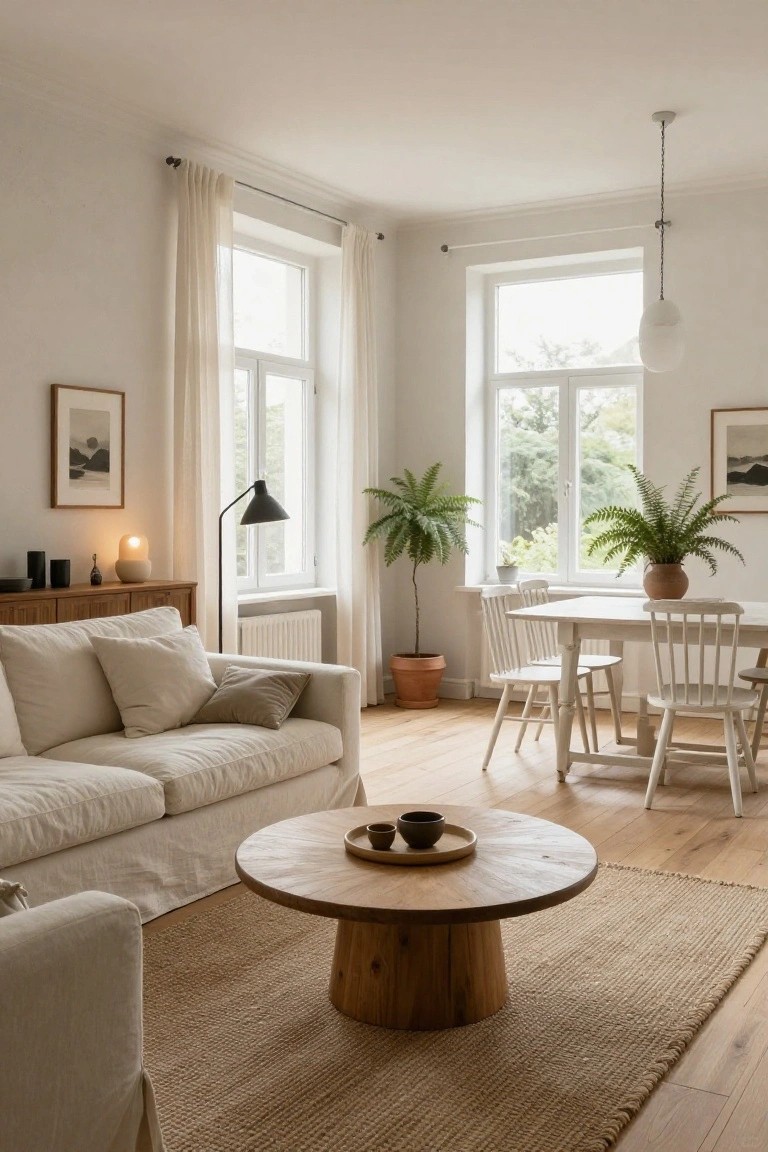
In open-plan setups, a sofa pulled away from the walls with a rug under it clearly sets apart the sitting area from the rest of the room. This one uses a big creamy white sofa, a round wooden coffee table, and a textured seagrass rug to draw that line. It keeps the flow open toward the nearby dining table but makes the spot feel like its own place to relax.
Try this in sunny rooms where you want zones without walls. Anchor the sofa on a rug that covers most of the floor under it, then add a low table in front. It suits apartments or older homes with combined living and eating spaces. Watch the scale though. A sofa that’s too wide can crowd things.
L-Shaped Sofas Zone Open Living Areas
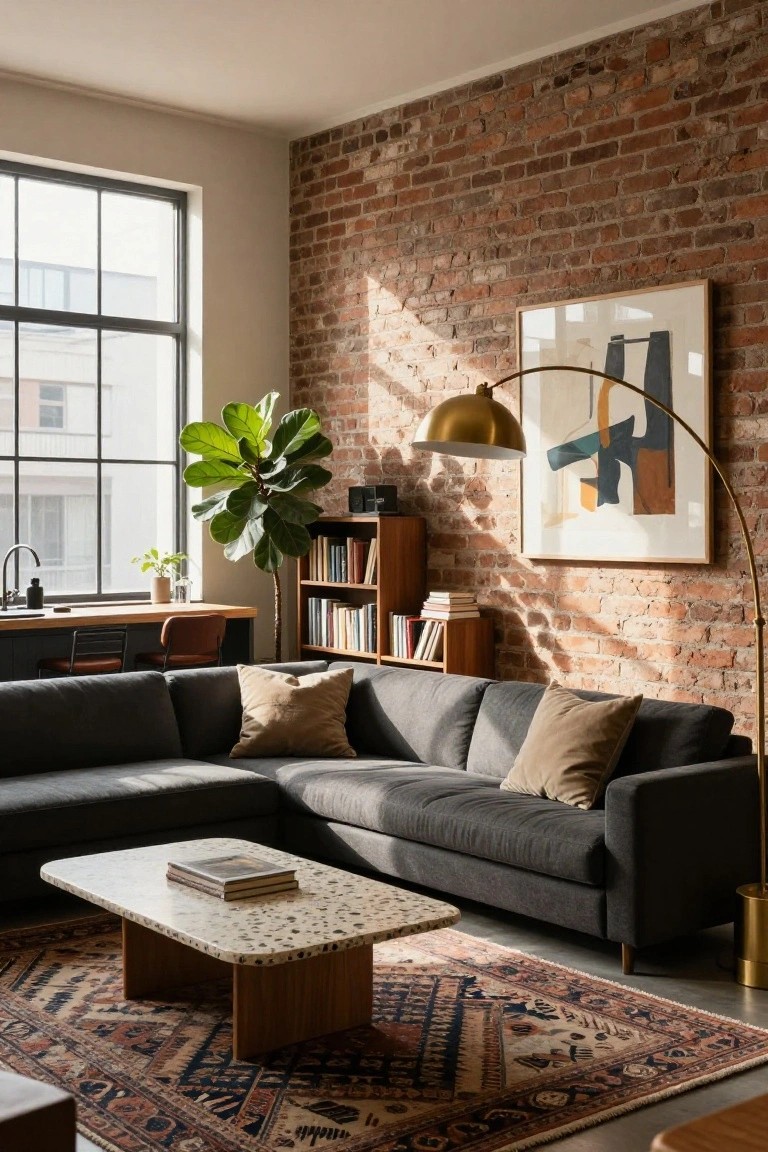
In open-plan setups, an L-shaped sofa pulls the seating area together without needing extra walls or dividers. This gray one sits on a terracotta rug that marks off the living spot from the nearby desk and kitchen. It keeps things cozy yet open, especially with the sofa’s low back letting light flow through.
Try this in lofts or wide living rooms where you want distinct zones but no chopped-up feel. Go for a sofa in a neutral tone that blends with brick or wood accents. A simple coffee table in front finishes the spot. Just watch the scale, so it doesn’t overwhelm smaller spaces.
Sofa Zones Open-Plan Kitchen Living
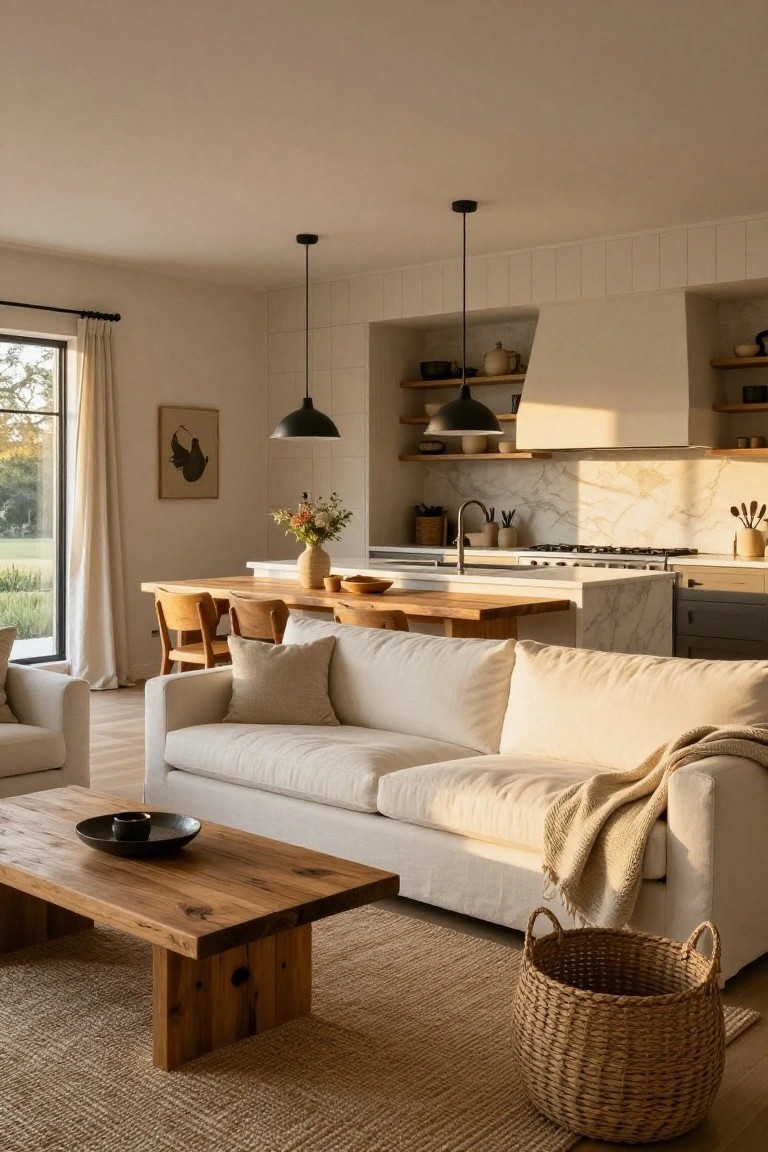
A simple cream sofa like this one does a nice job marking off the living area in a wide-open kitchen space. Placed parallel to the island, it pulls the eye into a cozy lounge spot without blocking the flow. That low profile keeps everything connected, and the wood coffee table right in front adds a grounded feel.
Try this in homes where kitchen and living blend together. Light upholstery works best to stay airy, especially with big windows nearby. It suits casual family setups… just watch the scale so the sofa doesn’t overwhelm smaller rooms.
Console Behind the Sofa Marks the Lounge Area
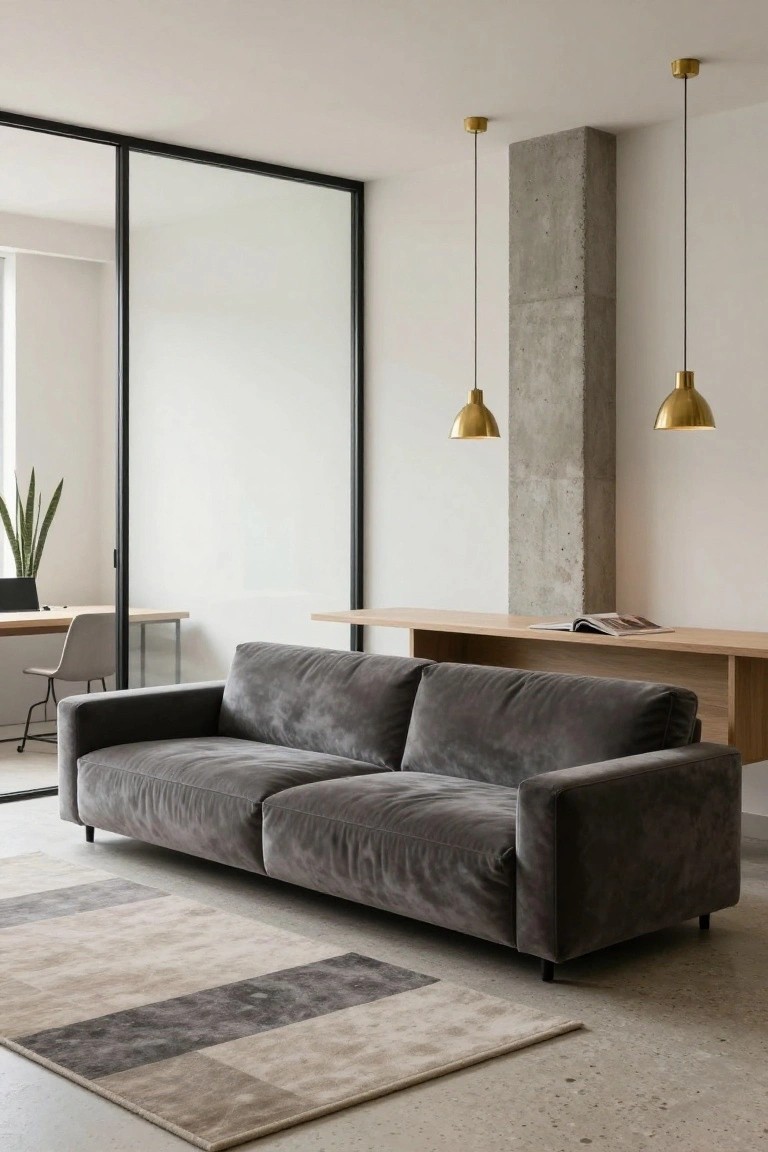
In open-plan setups, sliding a console table right behind the sofa is a straightforward way to carve out a seating zone. It keeps the flow open while giving the lounge its own spot. The light wood console here pairs nicely with the low gray velvet sofa, holding just a book or two without clutter.
This works well in airy modern rooms or lofts with a desk nearby. Tuck a rug under the sofa to settle it in place. Pick a slim console so it does not block paths… and it suits homes that mix work and relax areas.
Simple Sofa Facing the View
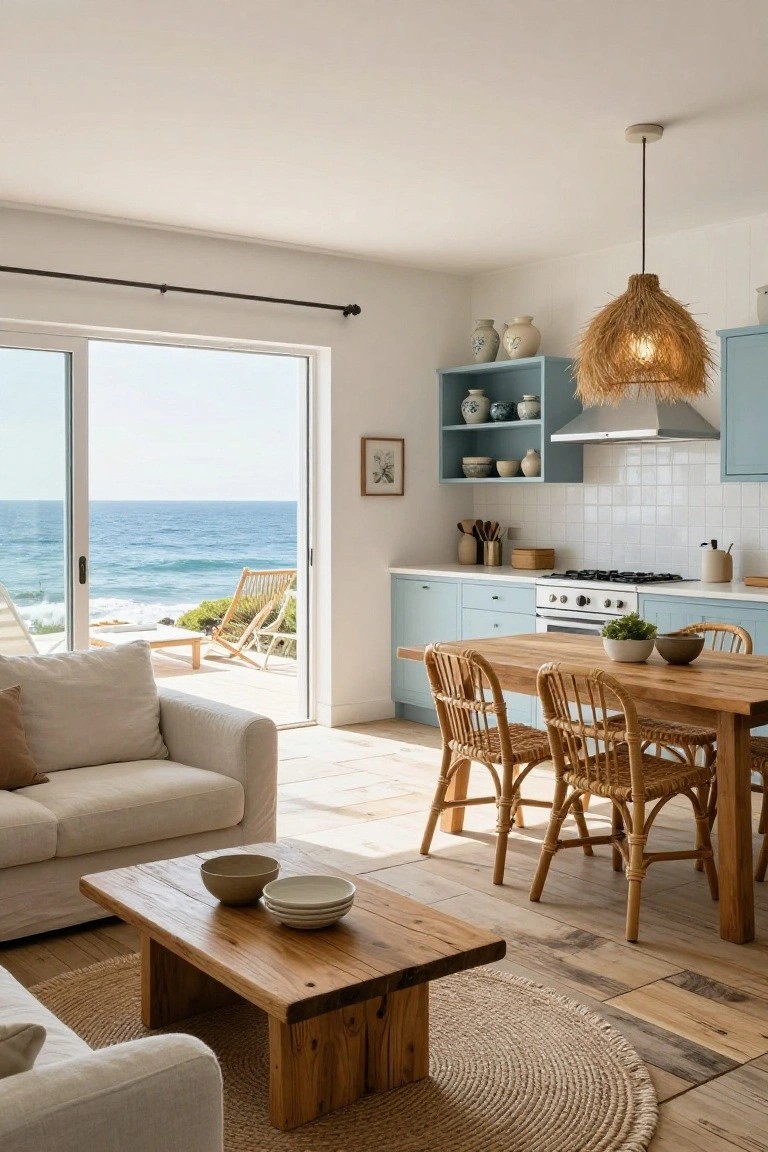
A low linen sofa placed right in front of sliding doors to the ocean does a nice job marking off the living area in this open kitchen space. It keeps everything connected but gives the lounge its own spot, with a chunky wooden coffee table out front adding that grounded feel.
This setup suits airy homes with big views, like coastal spots or modern extensions. Face the sofa toward your best window or doors, pick relaxed fabrics and wood pieces that match the floor, and skip tall backs to maintain flow. Scale matters though… too big and it crowds things.
Leather Sofas Define Open-Plan Lounge Areas
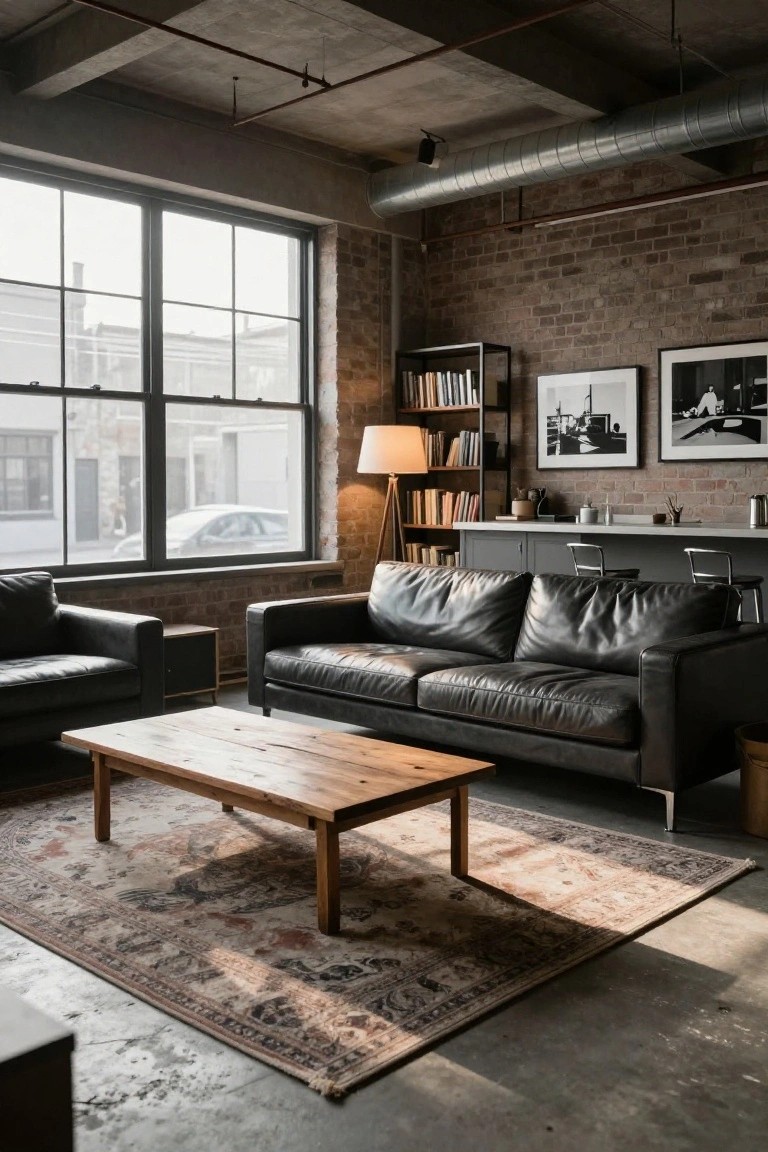
Black leather sofas work well to carve out a lounge spot in wide-open industrial rooms. Here, a pair of low-slung ones sit around a rough wooden coffee table on a big patterned rug. That setup pulls the seating together against the brick walls and concrete floor. It keeps the space feeling connected but gives a clear place to settle in.
Try this in lofts or big living areas where walls are sparse. The leather holds up to everyday use and the dark tone grounds things without overwhelming. Pick a rug large enough so the sofa legs sit on it. Suits city homes with that raw edge best.
Low Sofa Defines Open Tatami Seating Zone
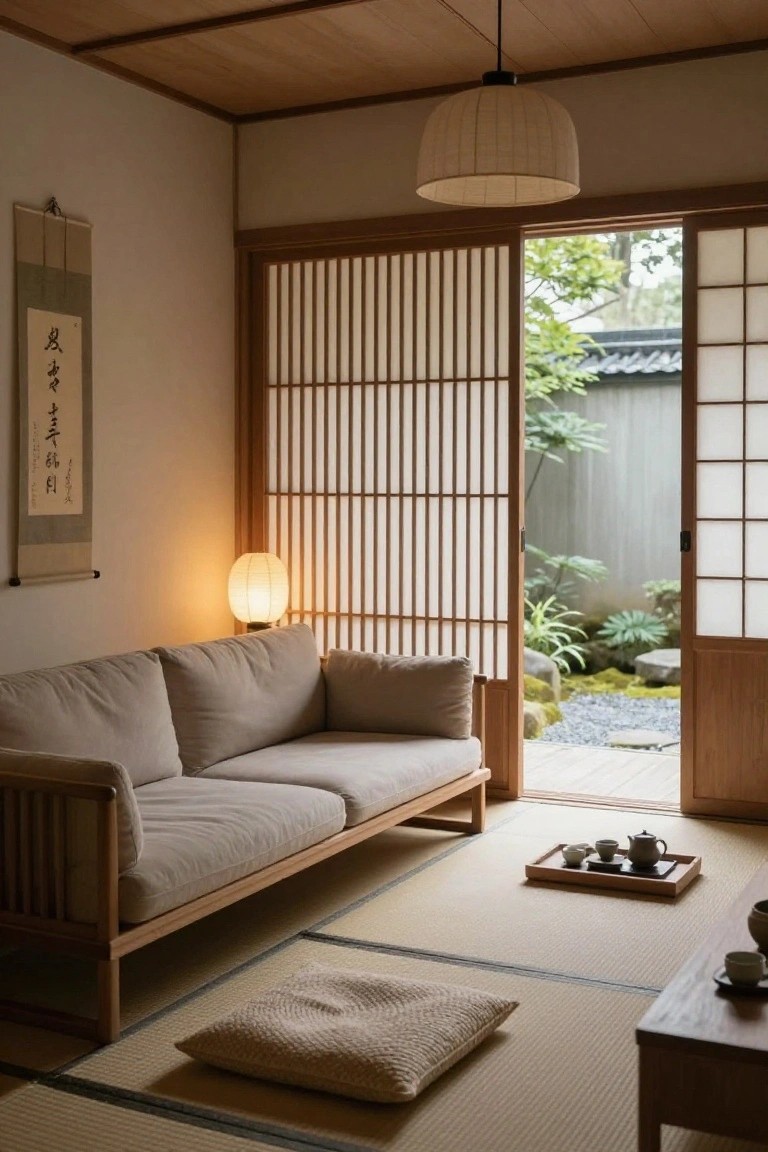
In an open-plan room floored with tatami mats, a simple low sofa marks out the living area without any walls or extra dividers. Here it’s wooden-framed and beige, sitting right on the floor next to open shoji doors that bring in the garden view. That setup keeps the space feeling airy while giving the sofa spot its own quiet purpose.
This works well in minimalist homes or any open floor plan where you want subtle zoning. Place a low sofa like this on natural flooring, and pair it with just a few pieces like a tea tray nearby. It suits smaller rooms best. One thing to watch, though, is picking cushions thick enough for real sitting comfort.
Curved Sofas for Play Zones
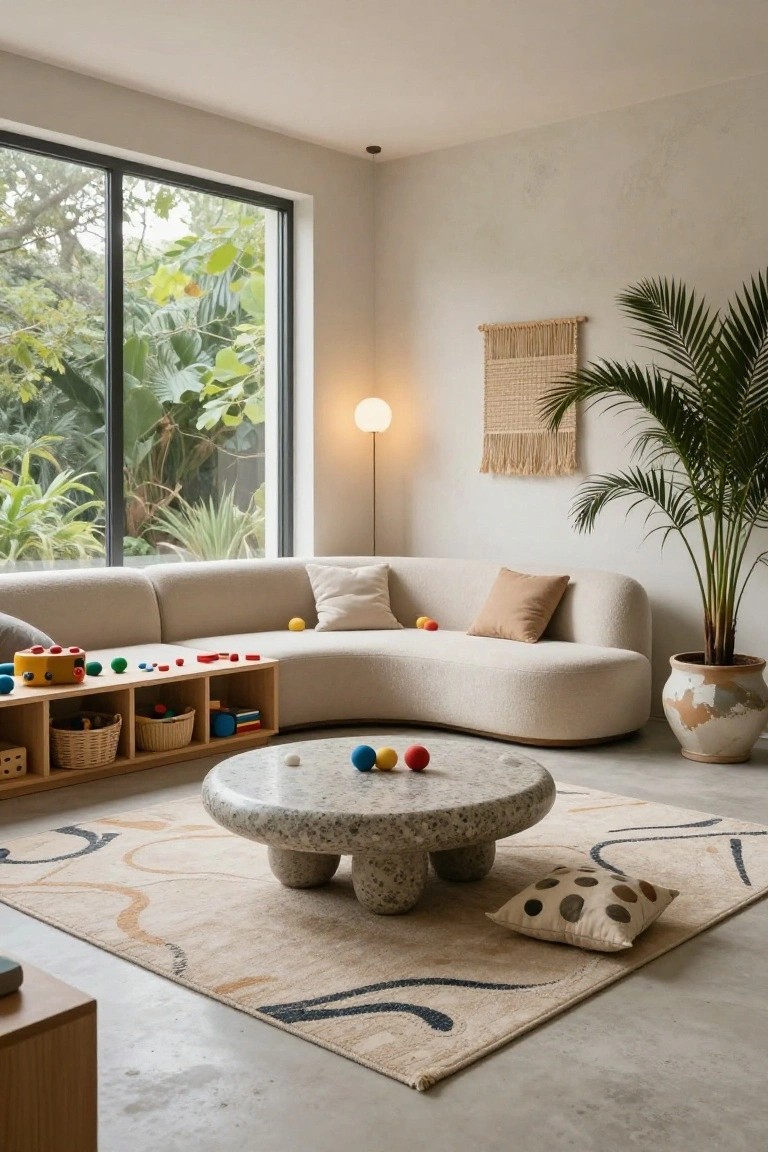
A curved sofa pulls double duty in open-plan living rooms by shaping a natural play area. Here, the cream bouclé style wraps softly around a low wooden shelf stocked with toys, keeping everything in one spot without walls or dividers. It makes the space feel playful yet contained.
This works well in family homes that blend living and play. Tuck the sofa against a big window for light, add a sturdy coffee table nearby, and let the rug outline the edges. Skip it in tight rooms… the curve needs breathing room.
L-Shaped Sofa Marks Off Living Zones
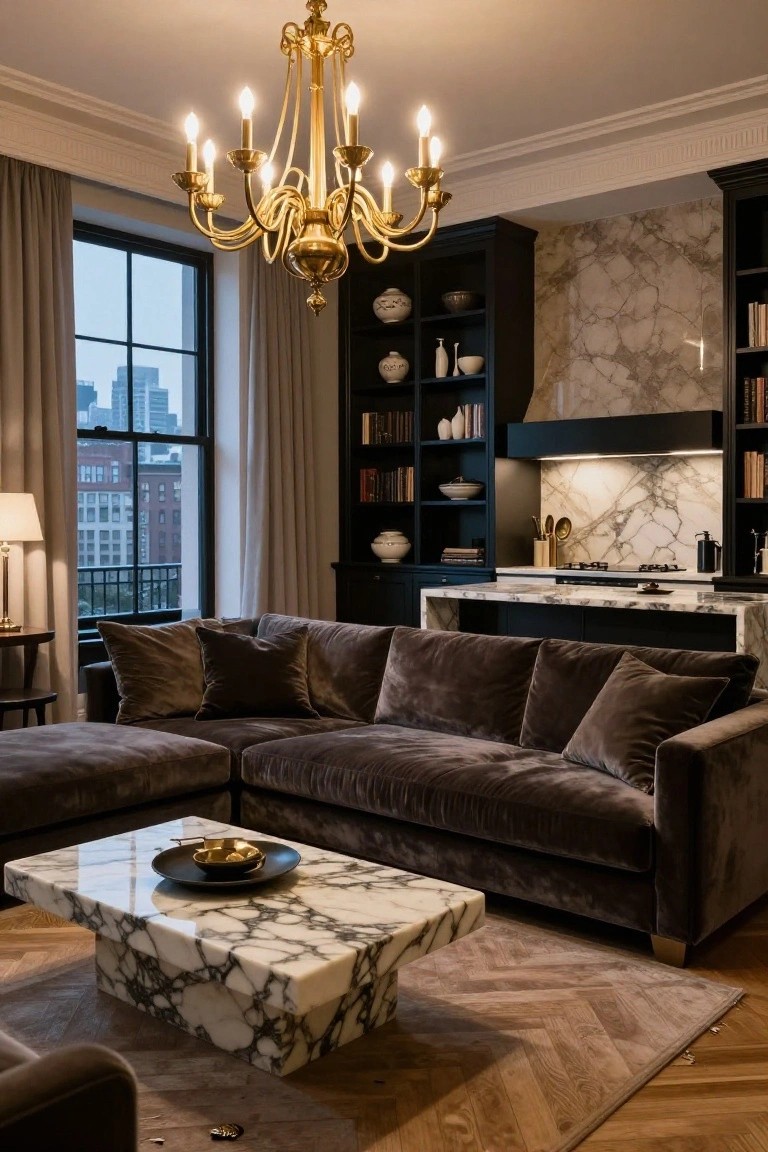
Open-plan rooms can feel too blended sometimes. A deep L-shaped sofa fixes that by carving out a clear spot for relaxing. Here the plush brown velvet version sits right up against the kitchen island. It pulls your eye to the lounge area and makes the whole space work better.
Put one like this in apartments or homes where kitchen and living flow together. Angle it toward windows for light and views. The marble coffee table in front keeps it grounded. Just make sure the fabric holds up to daily use.
Leather Sofa Defines Open-Plan Living Zone
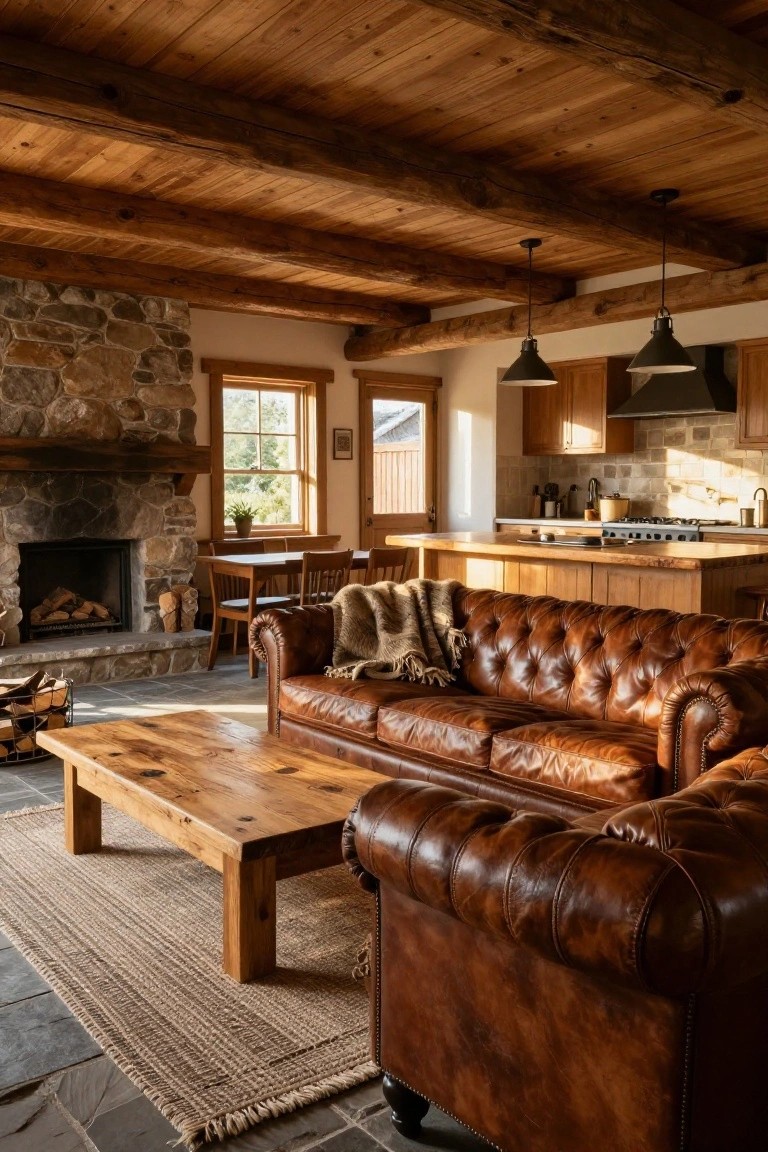
In open-plan setups like this one, a big tufted leather sofa pulls the living area together right in front of the stone fireplace. It stands out against the wood beams and kitchen island without blocking the flow. The warm brown leather just fits the rustic feel, making the spot cozy for lounging.
Try this in cabin-style homes or any space blending kitchen and living. Face the sofa toward your main focal point to draw the eye and create that natural divide. Keep the scale large enough so it doesn’t get lost… smaller rooms might need something slimmer.
L-Shaped Sofa Marks Off the Lounge Area
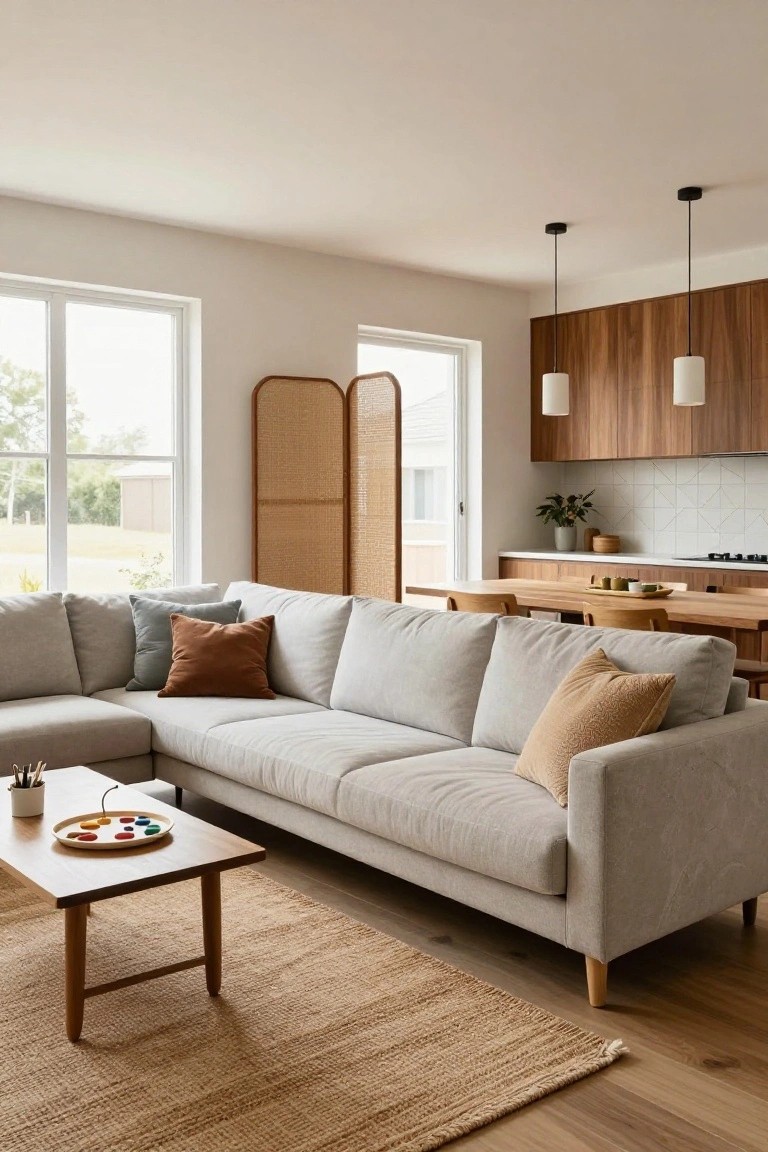
In this open-plan setup, the big L-shaped sofa pulls the living space together and sets it apart from the kitchen and dining. Its light gray fabric blends right in, and the corner shape naturally creates boundaries. A simple bamboo screen stands nearby to reinforce the divide without closing things off.
This works well in airy homes where everything flows together. Float the sofa or tuck it into a corner facing the windows. Add a low table and rug for extra definition, but keep walkways clear so it stays practical.
Rattan Sofa Defines Open-Plan Living Zone
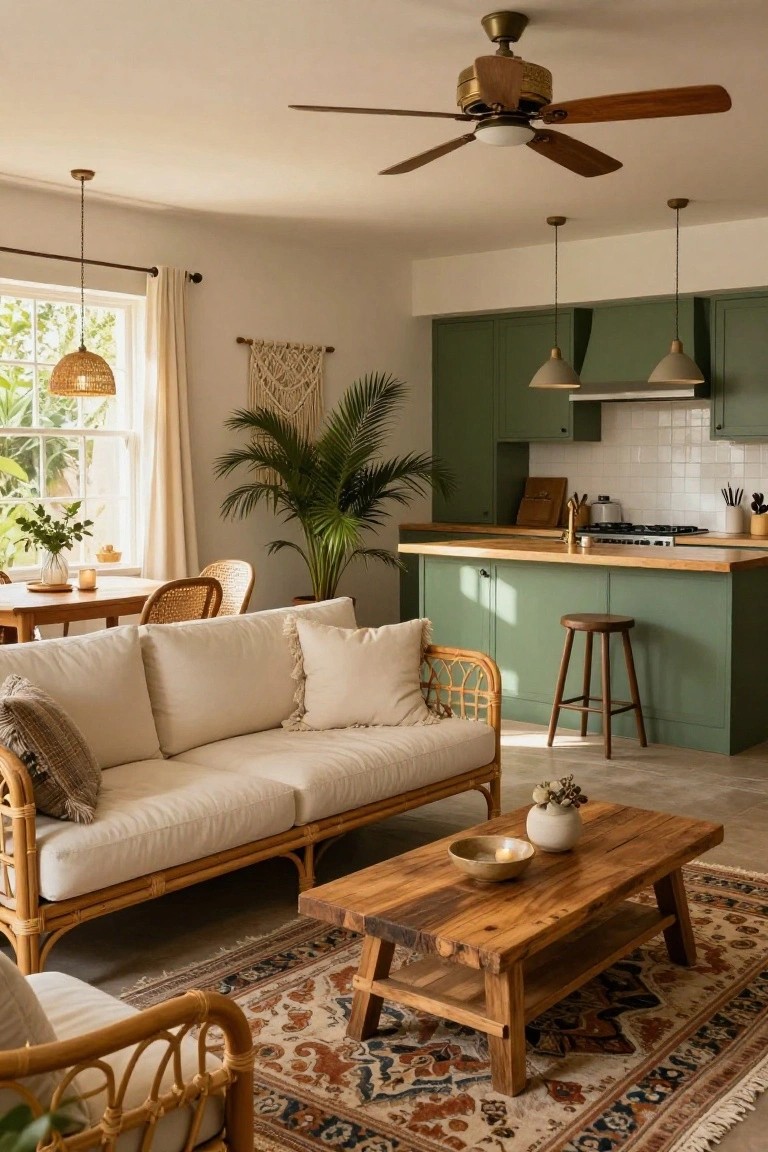
In open-plan setups like this kitchen-living room, a rattan sofa pulls the lounge area together without needing walls. Set against the kitchen bar, it marks off a cozy spot for sitting. The woven frame feels light and ties into the natural vibe from plants and wood tones.
This works well in apartments or small homes where space flows freely. Position the sofa to face away from cooking areas, then layer in a rug and low table. Stick to soft neutrals and greens for calm flow. Avoid heavy fabrics that could weigh it down.
Sofa Next to Desk in Open-Plan Rooms
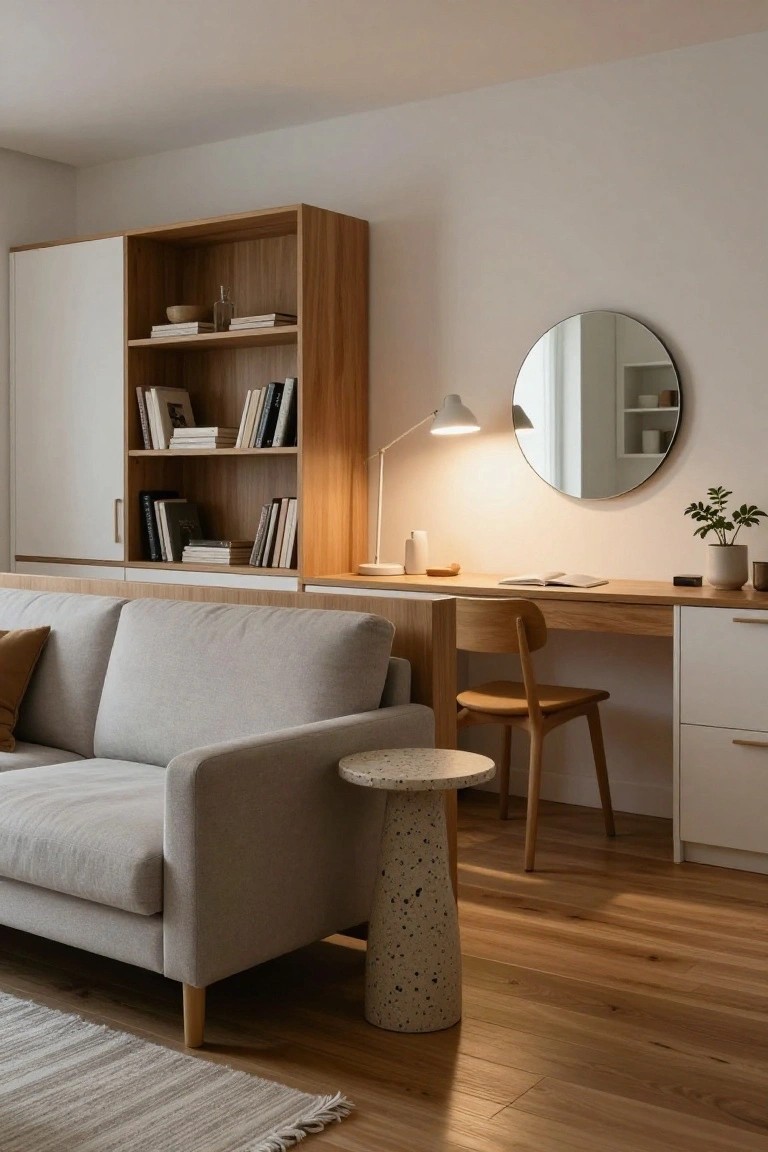
Placing a sofa right up against a desk setup is a straightforward way to split lounge and work areas in open-plan spaces. The gray sofa here hugs the wooden desk and shelves, making a cozy spot for relaxing without closing off the room. Wood tones across the furniture keep it all connected and calm.
This layout fits well in apartments or small homes where you want everything in one area. Match materials like the oak desk and chair for flow, and add a small side table nearby for drinks. Just make sure the desk lamp gives enough light over the workspace.
Defining Open-Plan Zones with Sofa and Rug
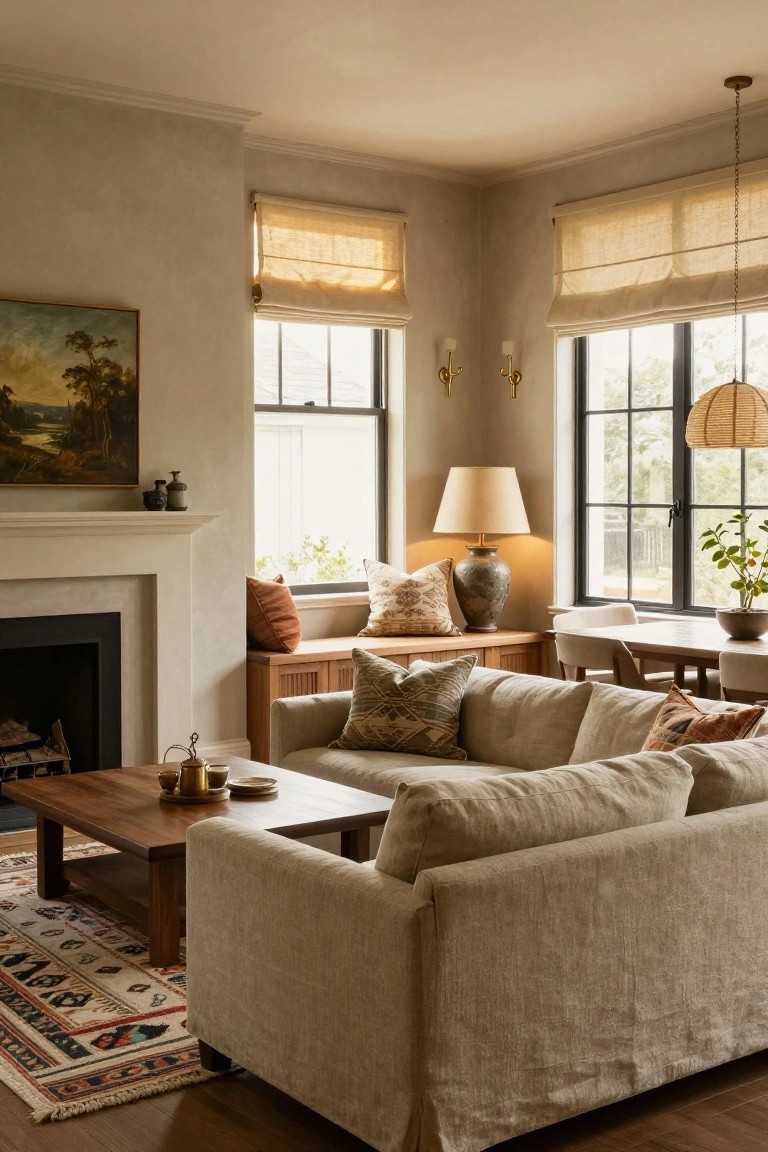
In open-plan setups, placing a sofa fully on a large area rug is one of the easiest ways to carve out a living zone without walls. The rug here sets the boundary, with the sofa tucked right onto it alongside a low wood coffee table. It keeps the space feeling connected to the nearby dining area but still distinct and cozy.
This approach suits airy rooms with neutral walls and big windows. Go for a rug that extends well under the sofa legs and table, and choose soft, slouchy upholstery like linen slipcovers for everyday comfort. Just make sure the pattern isn’t too busy if your floors are wood.
Cream Sofa Defines Open-Plan Living Zone
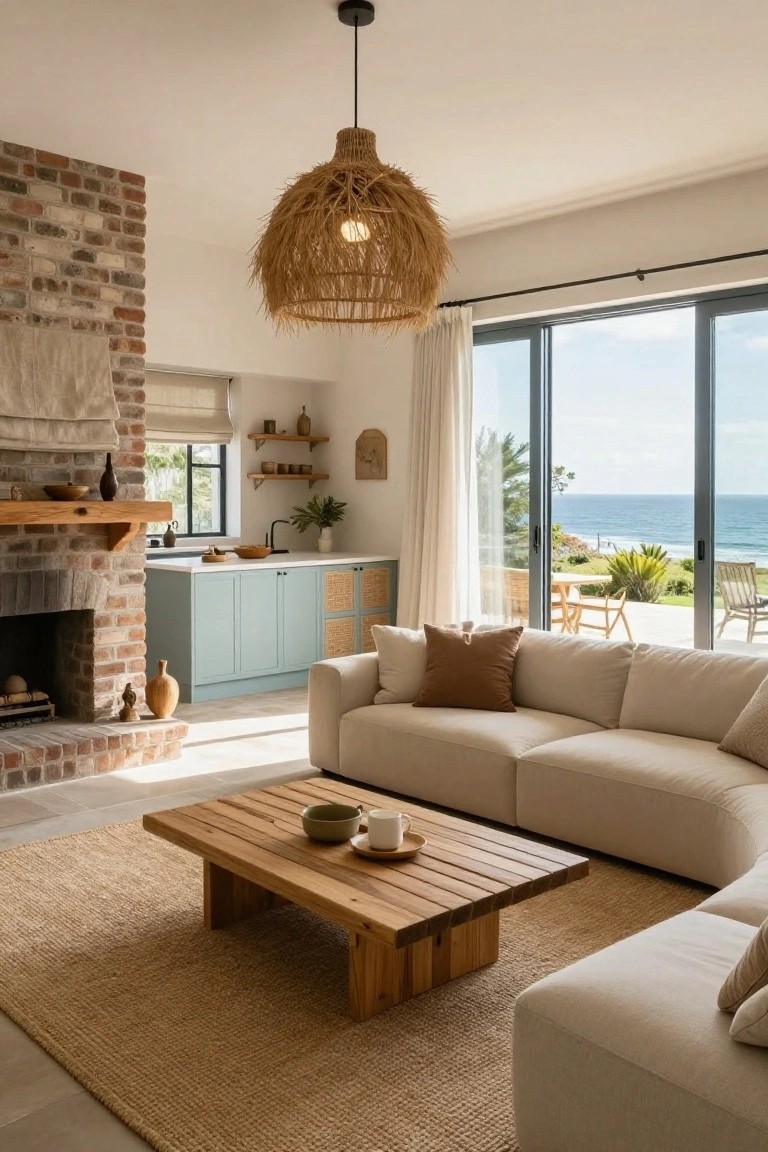
A simple cream L-shaped sofa tucked into the corner does a great job marking the living area in this open kitchen-living room. It pulls the eye away from the teal cabinets and brick fireplace, creating a clear spot to relax. The low back keeps sightlines open to the sliding doors and sea view beyond.
This setup fits best in sunny homes where you want flow between cooking and lounging. Go for neutral fabric that picks up the light, pair it with a wood coffee table on a seagrass rug. It softens the shift from kitchen to seating… just watch the scale so it doesn’t crowd the room.
L-Shaped Sofa Carves Out Lounge Next to Bar
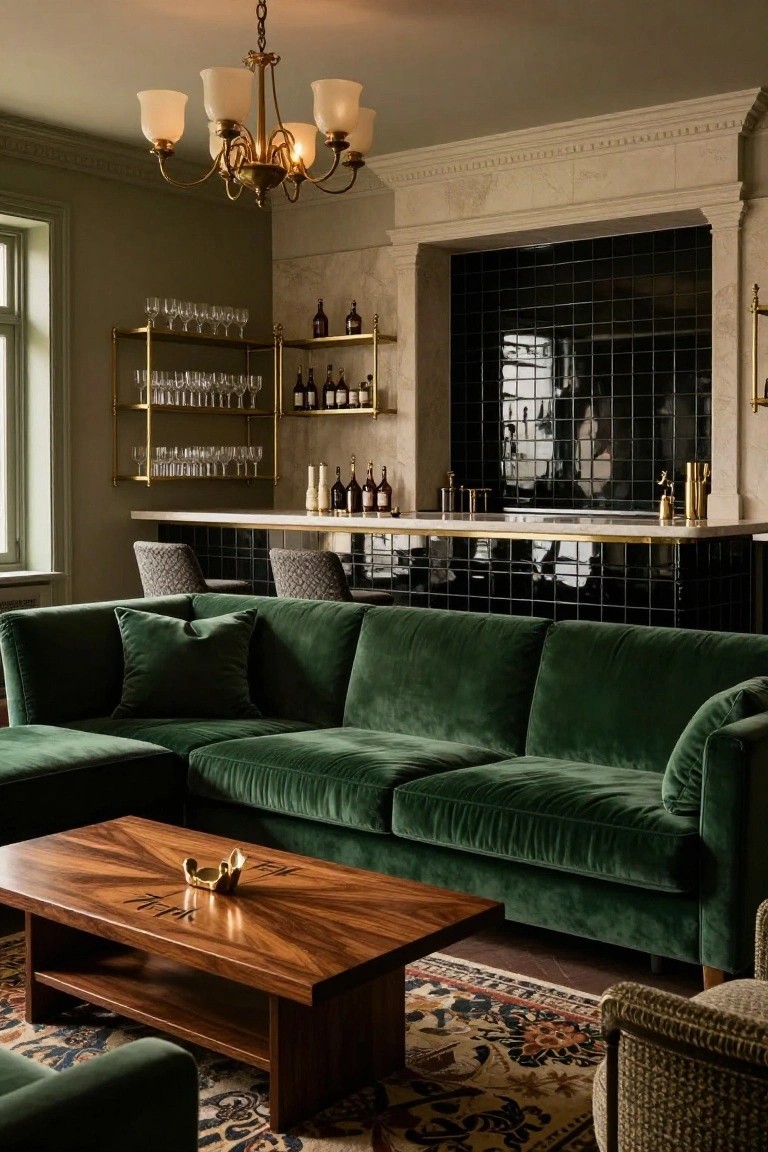
In open-plan setups, an L-shaped sofa does a solid job marking off a lounge spot without needing walls or dividers. Here, the deep emerald green velvet version sits right in front of a bar counter, making the seating area feel separate yet connected. That curve wraps around nicely, inviting people to settle in while keeping the bar handy for drinks.
This setup fits best in homes where living flows into serving spaces, like kitchen bars or wet bars. Go for a plush fabric like velvet to add comfort, and pair it with a low wood table for balance. Watch the scale though. Too big, and it eats up the openness.
Slipcover Sofa Defines Open-Plan Living Zone
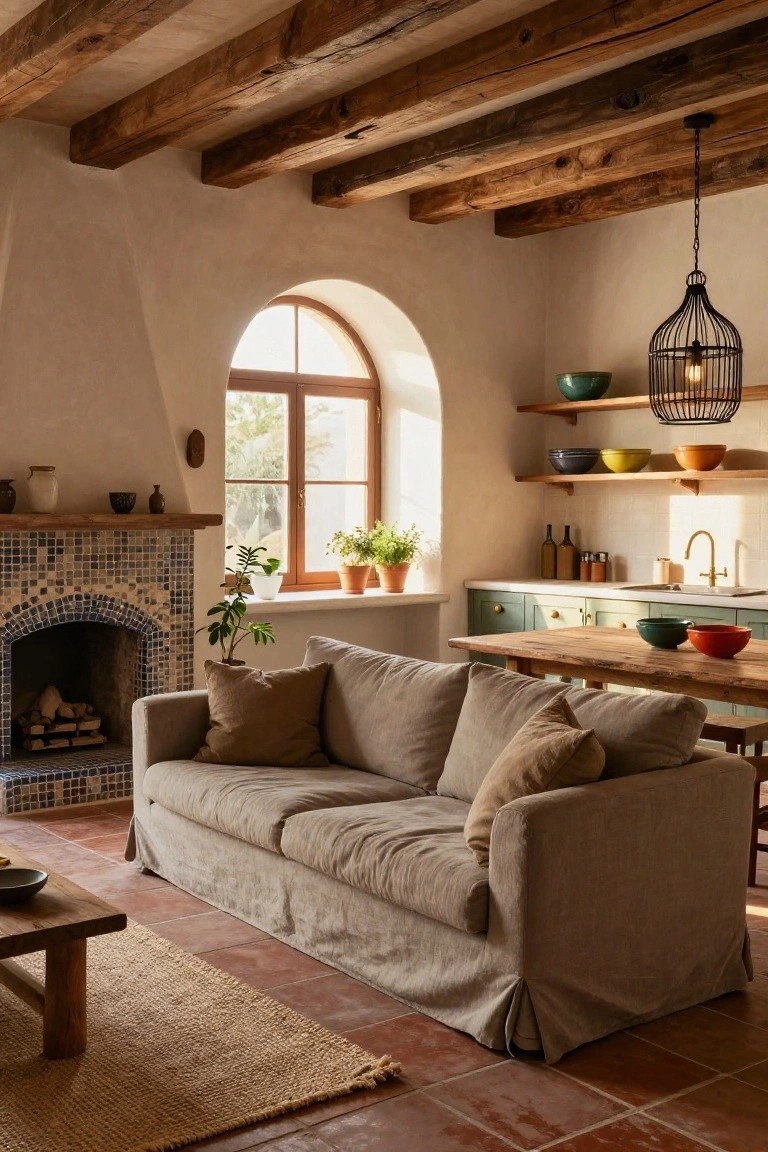
In open-plan setups, a simple slipcovered sofa like this marks off the living area without any walls getting in the way. Tucked next to the fireplace on terracotta floors, it pulls together a cozy spot amid the kitchen and dining flow. That neutral linen fabric keeps everything light and connected, letting the exposed beams add their rustic charm.
This idea fits best in homes with high ceilings, tile floors, or a bit of Mediterranean feel. Pick a low-slung model so it doesn’t block views, and layer a rug below for extra definition. Just keep the cushions plump but not too fussy.
Wooden Island Divides Open-Plan Kitchen and Sofa Area
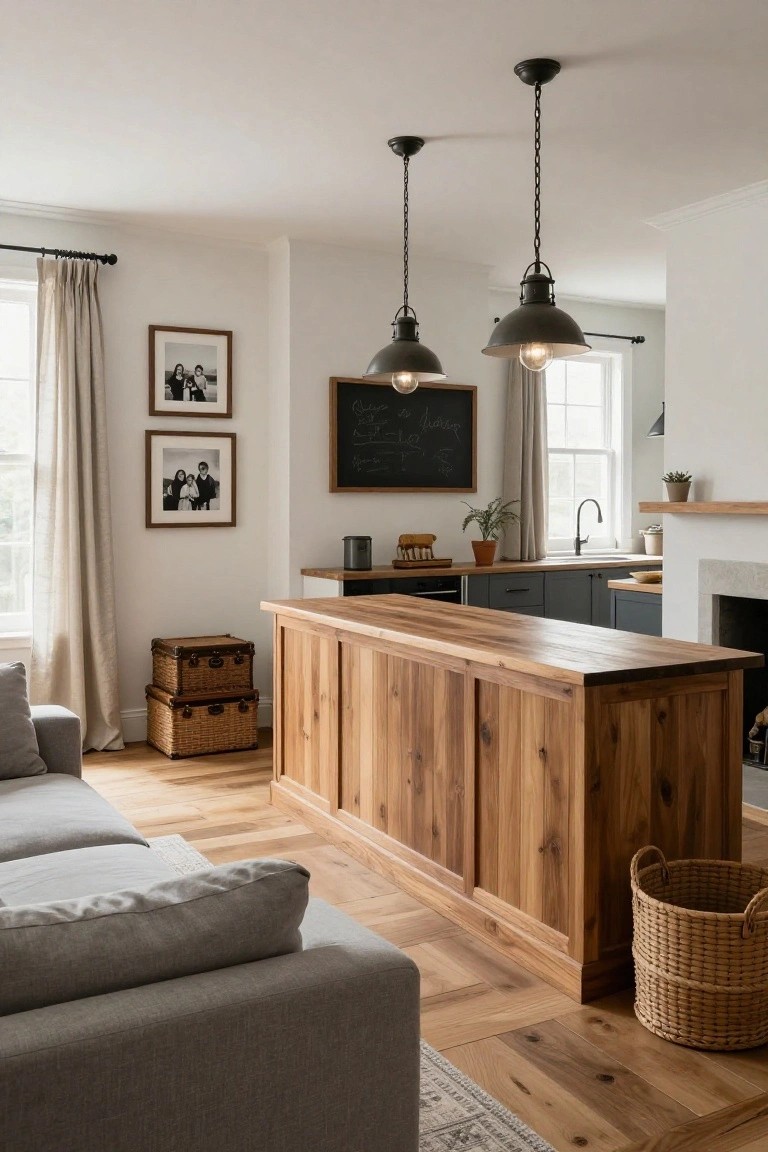
In open-plan homes, a big wooden island like this pulls double duty. It gives you kitchen counter space while setting off the living area. The natural wood adds warmth right where you need it, making the sofa feel like its own cozy zone without shutting things off completely.
This setup shines in light, airy rooms with white walls and wood floors. Go for a similar island if your space flows kitchen to seating. Keep the sofa simple in gray or neutral, and hang a couple pendants above for task light… it keeps everything practical yet defined.
Sofa Facing Windows to Zone Open Spaces
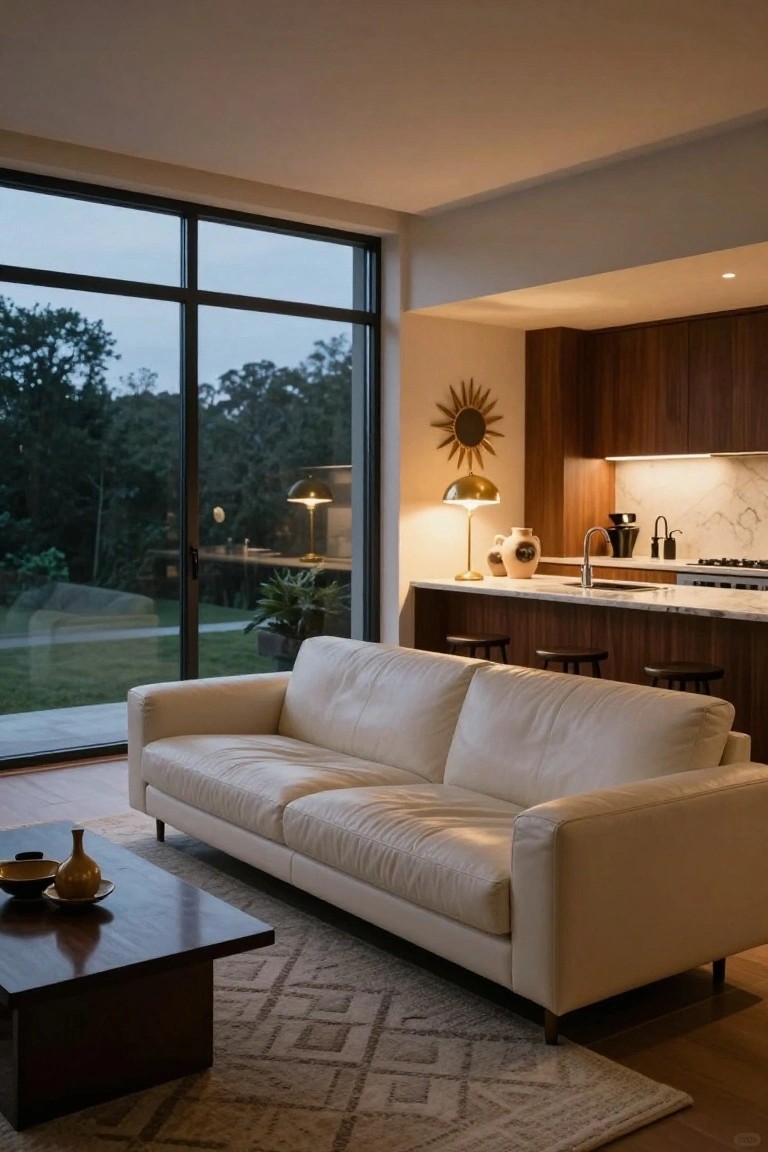
In open-plan living areas like this one, placing a long low-slung sofa right along the big window wall does a nice job of carving out the lounge zone. It keeps the kitchen island and stools feeling separate without any walls or dividers getting in the way. The cream leather sofa here picks up on the soft light coming in, making the spot feel relaxed and tied to the outdoors.
This setup works best in homes with plenty of natural light and a good view. Just slide a simple wooden coffee table in front, maybe add a couple of cushions, and you’ve got your living area sorted. Keep the sofa low to avoid blocking the windows… it lets the space breathe. Good for modern houses or apartments where you want flow but still some definition.
Cozy Sofa in Open Kitchen Lounge
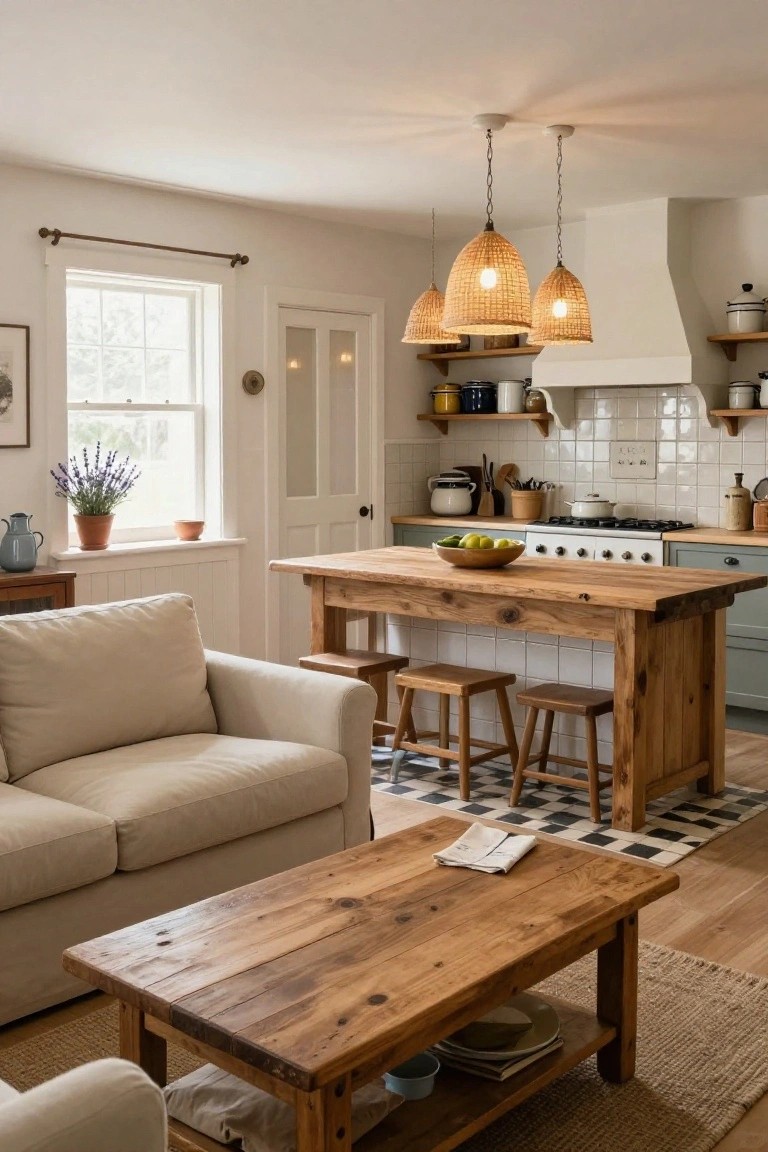
In open-plan setups like this kitchen-living room, a simple sofa placed right by the kitchen island does a nice job marking off the lounge area. It’s tucked against the wall with a wooden coffee table in front, keeping things casual and separate from the cooking space without any big dividers. The beige fabric and rough wood tones blend right in, making the whole area feel connected yet zoned.
This works best in smaller homes or cottages where you want multifunctional flow. Pull the sofa close to the island for easy chats while cooking, and add stools at the counter for extra seats. Skip fussy rugs or walls. Just keep the wood consistent to tie it all together. Watch the scale though. Too big a sofa crowds things quick.
Frequently Asked Questions
Q: How do I choose a sofa that zones my open-plan living area without chopping up the flow?
A: Pick a low-profile sofa with clean lines. Position it with its back facing the kitchen or hallway. This creates a soft boundary that invites people in.
Q: Can these sofa ideas work in a super small space, like my studio apartment?
A: Yes, grab a slim loveseat or daybed. Tuck it against a wall and add floor cushions nearby. It carves out a lounge spot fast.
Q: What if my room’s long and narrow—how do I make the sofa define zones there?
A: Float the sofa down the middle, perpendicular to the length. Pair it with a rug that stops at the dining chairs. And boom, you split living from eating without walls.
Q: How do I keep the sofa setup looking fresh over time?
A: Swap out throw pillows and a blanket each season. This refreshes the zone vibe quick. Stick to textures that nod to your dining side for harmony.
