

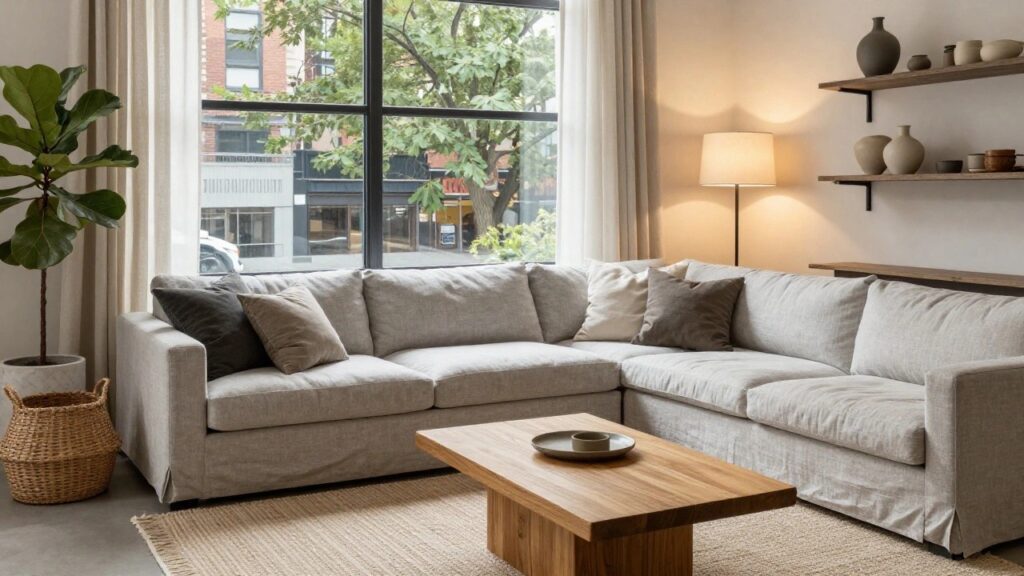
When you slide an L-shape sofa into a living room, it quickly shows whether the space pulls people together or pushes them apart.
I shifted mine a few times before settling on a layout that kept the coffee table reachable without squeezing past anyone.
Most folks pick up right away on whether they can wander in from the entryway and settle in comfortably.
These setups lean into real room shapes, dodging the traps that make open areas feel tight.
One or two could fix that odd nook you’ve been ignoring.
L-Shaped Sofa in a Corner by the Windows
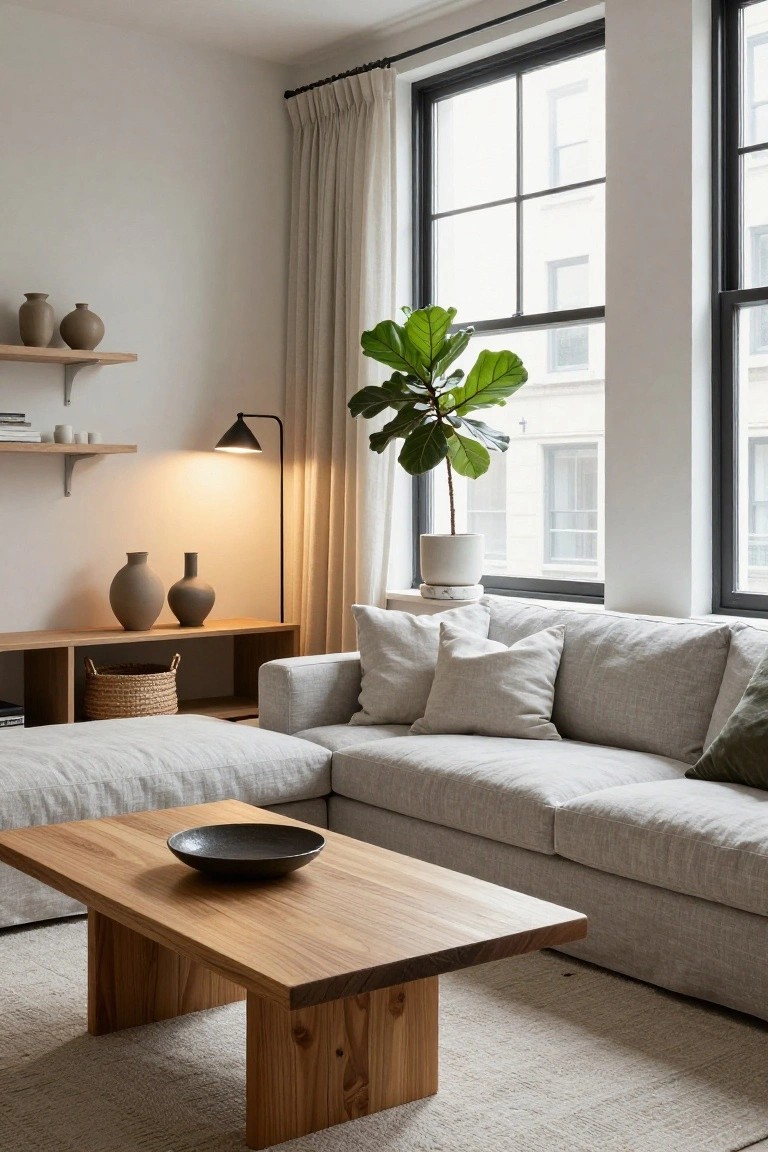
One simple way to use an L-shape sofa is to tuck it right into a room corner next to large windows. Here the light gray sectional sits snug against the walls, leaving the center open for easy movement. A tall ficus plant sits nearby, and that low wooden coffee table keeps things from feeling crowded.
This layout works best in rectangular living rooms where you want to pull seating toward natural light. It suits apartments or open-plan homes with views outside. Just keep accessories minimal so the flow stays clear… no big rugs blocking paths.
L-Shaped Sofa Layout by the Fireplace
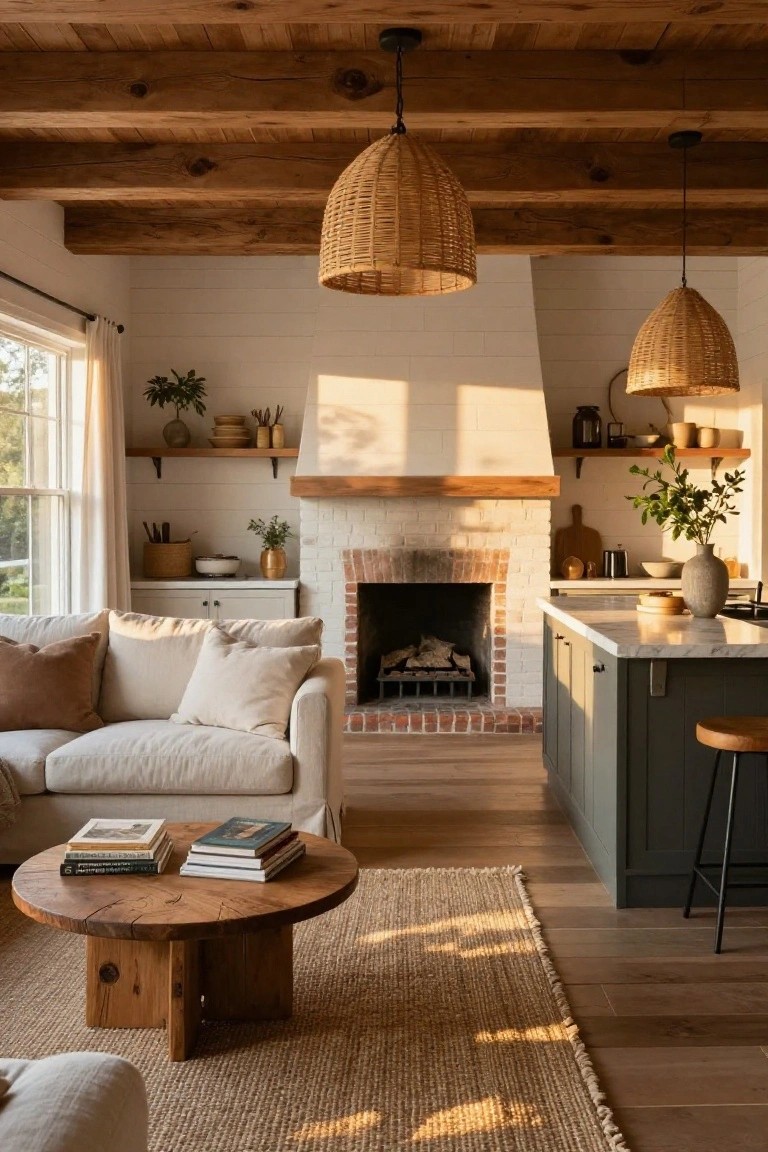
One simple way to set up an L-shaped sofa is right in front of the fireplace. It turns the seating into a natural spot for gathering, with the long arm wrapping along the wall. That brick hearth pulls everyone in, and the open feel keeps things from getting too closed off. A low wooden coffee table sits easy in the middle, books stacked casual.
This works best in open living areas that flow into the kitchen. Think homes with white walls and wood floors, where you want cozy without crowding the room. Just keep the sofa low profile so the fire stays the view. Add a rug underneath… it helps define the spot without blocking paths to the counters.
L-Shaped Sofas Hugging a Corner Wall
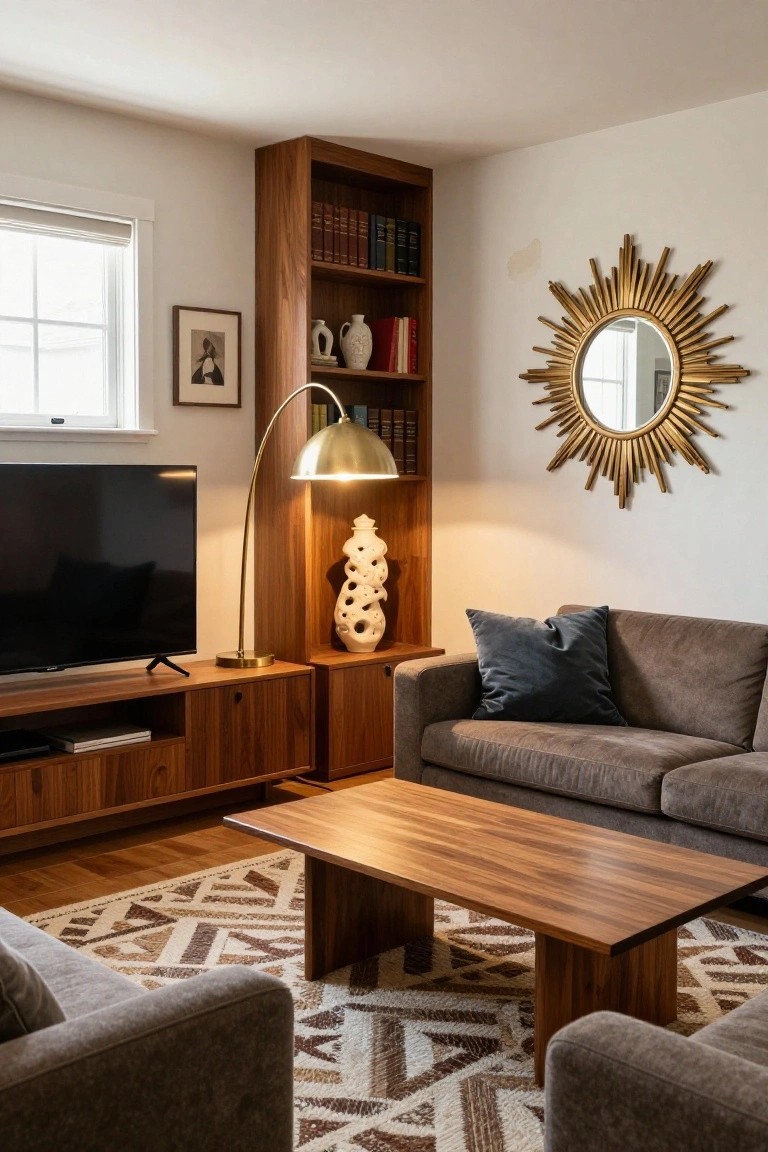
One simple way to set up an L-shaped sofa is to tuck it right into a living room corner like this. The longer arm runs along the wall with the TV and built-in shelves, while the shorter piece juts out to form the nook. That layout keeps the center open for easy walking around, and the matching wood tones from the media unit and coffee table make everything feel pulled together without crowding the floor.
This works best in medium-sized rooms where you need seating that doesn’t block doorways or paths. Go for low-profile pieces in a neutral gray fabric to keep it airy, and add a rug underneath to anchor the spot. It’s practical for homes with a mix of books and screens, though you might need to keep pillows minimal if foot traffic is high.
L-Shaped Sofa in an Industrial Loft
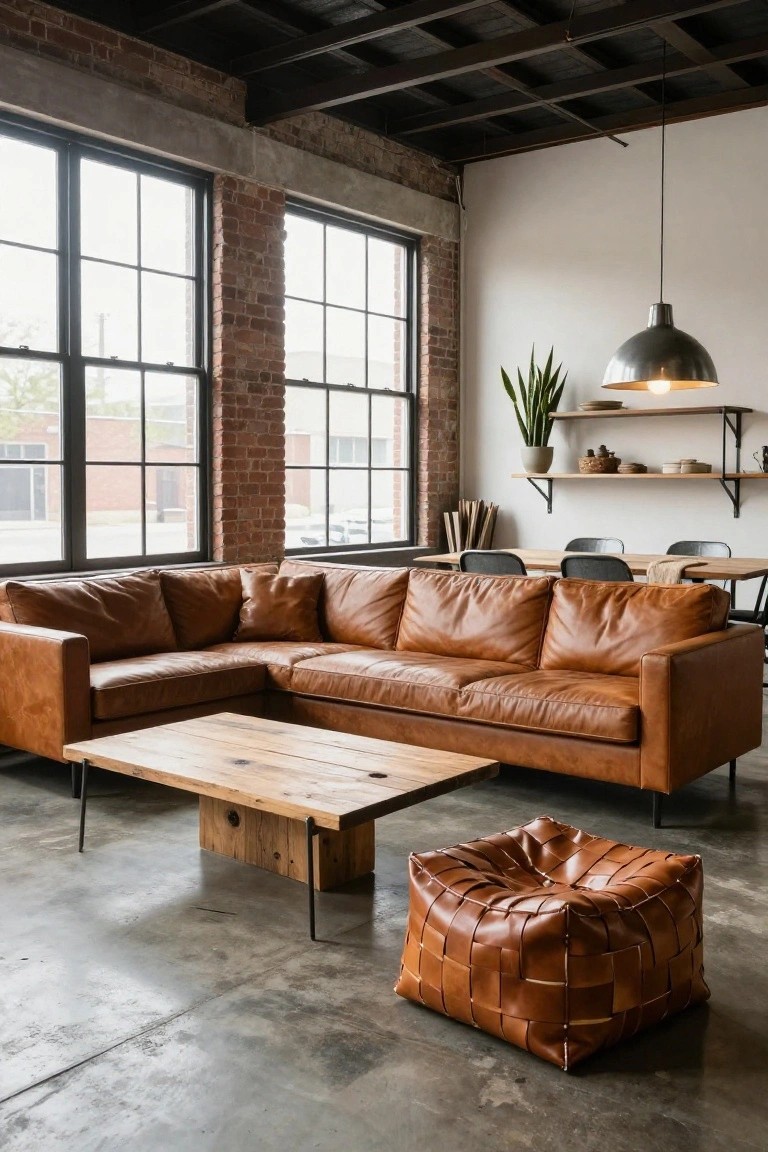
An L-shaped sofa works great in open industrial spaces like this loft. The tan leather sectional hugs the corner, setting off the living area without blocking the path to the dining table. Big windows and brick walls make the whole setup feel connected and easy to move through.
Try this layout in lofts or wide-open rooms where flow matters. Pick a low-slung sofa to match the casual vibe, add a rough wood coffee table, and keep seating low. It suits homes with high ceilings best. Just make sure the sofa isn’t too bulky for your traffic paths.
Corner L-Shaped Sofa Layout
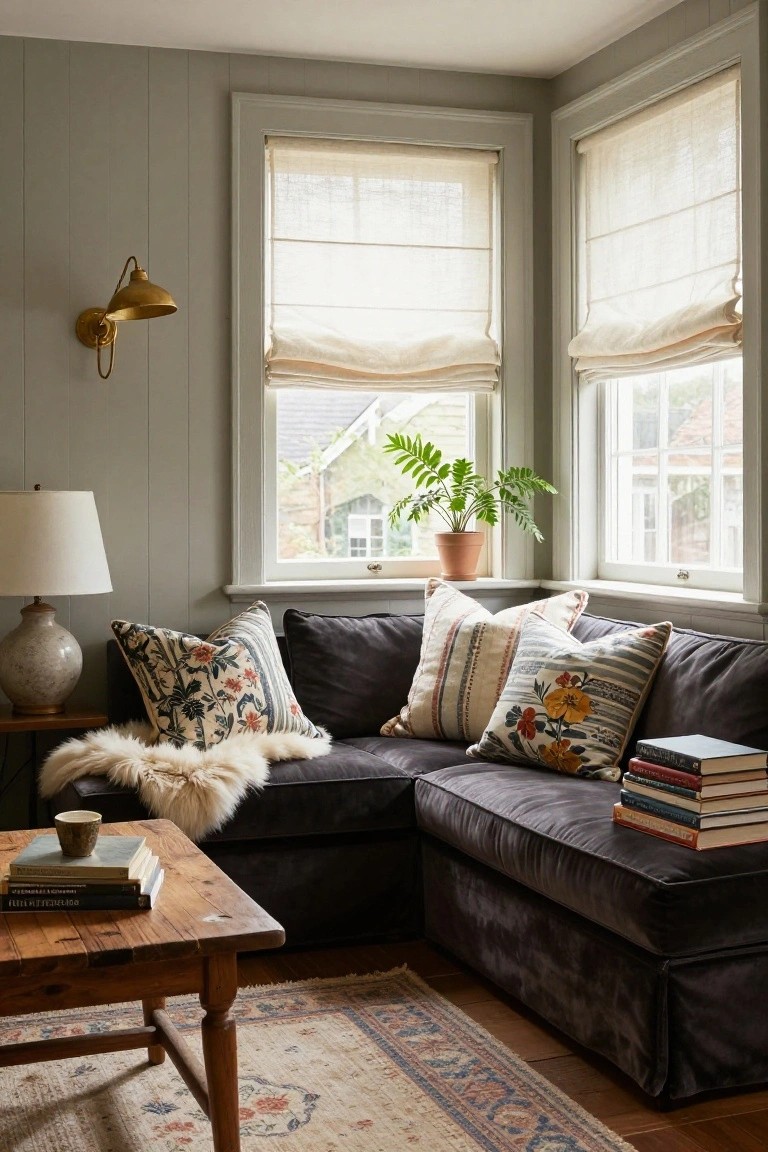
Putting an L-shaped sofa right in the corner like this makes good use of the space. It hugs two walls and lines up with the windows, so you get plenty of natural light right where people sit. The low wooden table in front keeps things open and easy to reach, perfect for books or a cup of tea.
This works best in rooms with good window views, like a den or family sitting area. Pair it with simple shades and a plant on the sill to keep the focus on relaxing. Just make sure the sofa isn’t too deep if foot traffic passes nearby… it can feel snug that way.
L-Shaped Sofa Facing the Fireplace
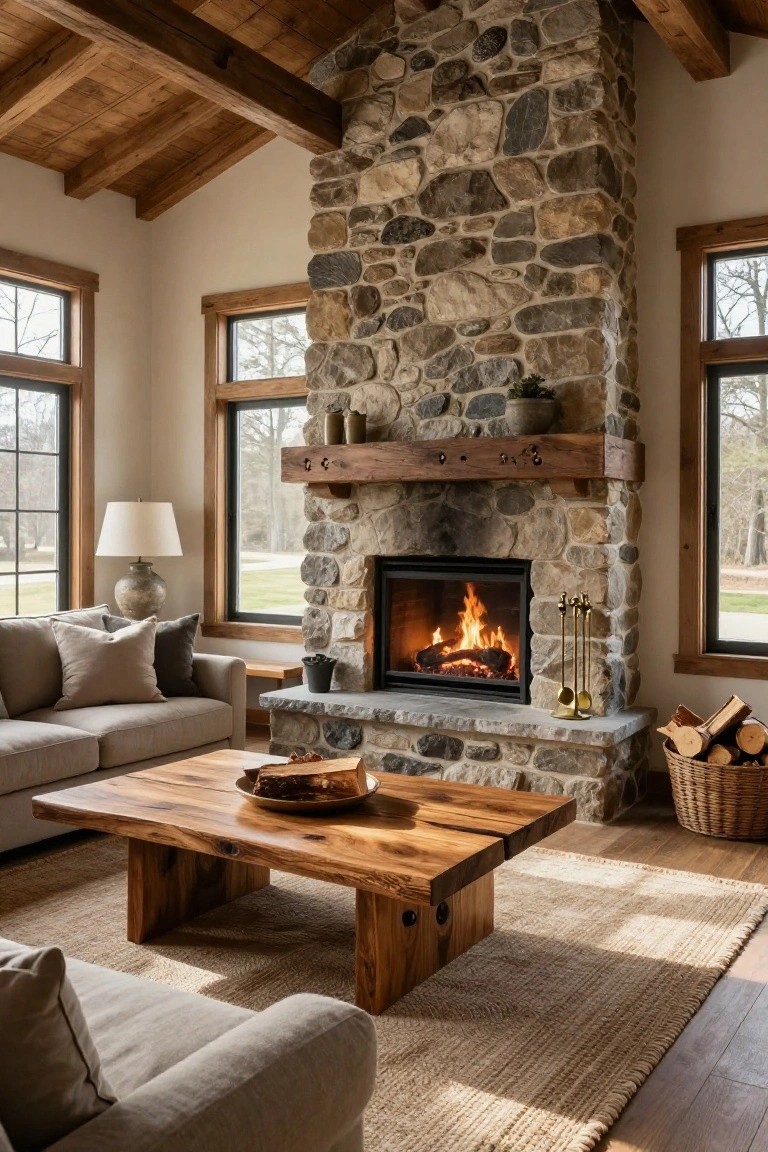
One simple way to get good flow in a living room is to place an L-shaped sofa right in front of a stone fireplace like this. The sofa hugs one wall, leaving the center open for the coffee table and easy walking paths. That setup keeps the fireplace as the main spot without the furniture crowding things.
This works best in bigger rooms with a strong focal point, like a cabin-style space or open family area. Put the longer arm of the sofa along the wall near windows so views stay open. Skip it in tight spots, though. Just add a basket of logs nearby for that ready-to-use feel.
L-Shaped Sofa Facing the Sea
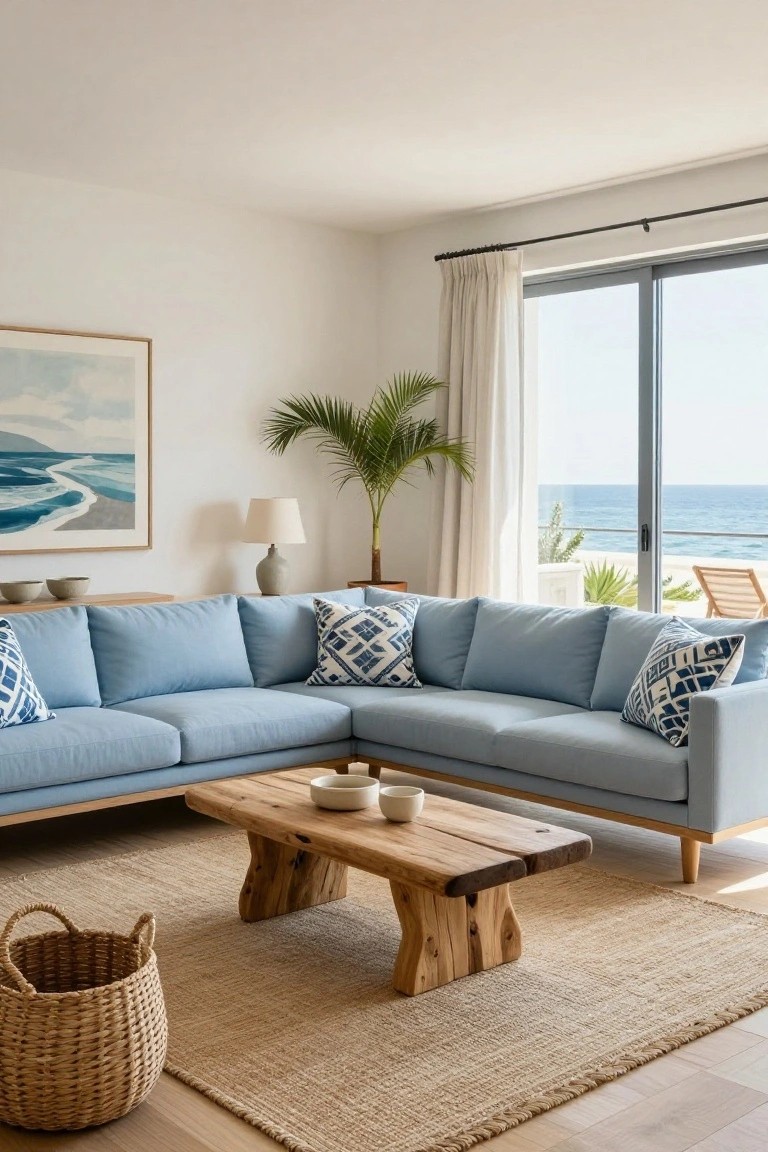
One simple way to get better flow in a living room is to place an L-shaped sofa right toward the big windows or sliding doors. Here the light blue sofa sits against white walls, with its long arm along the wall and the short one pulling you toward the ocean view. That setup makes the room feel open and connected to outside. No awkward angles blocking the light or the breeze.
This works best in coastal homes or any space with a great view you want to enjoy from the couch. Angle the L-shape so everyone faces out, add a low wooden coffee table in front, and keep the floor clear. It suits open-plan spots where indoor and outdoor blend. Just make sure the sofa isn’t too deep, or it might cut off the path to the doors.
L-Shaped Sofa by the Window
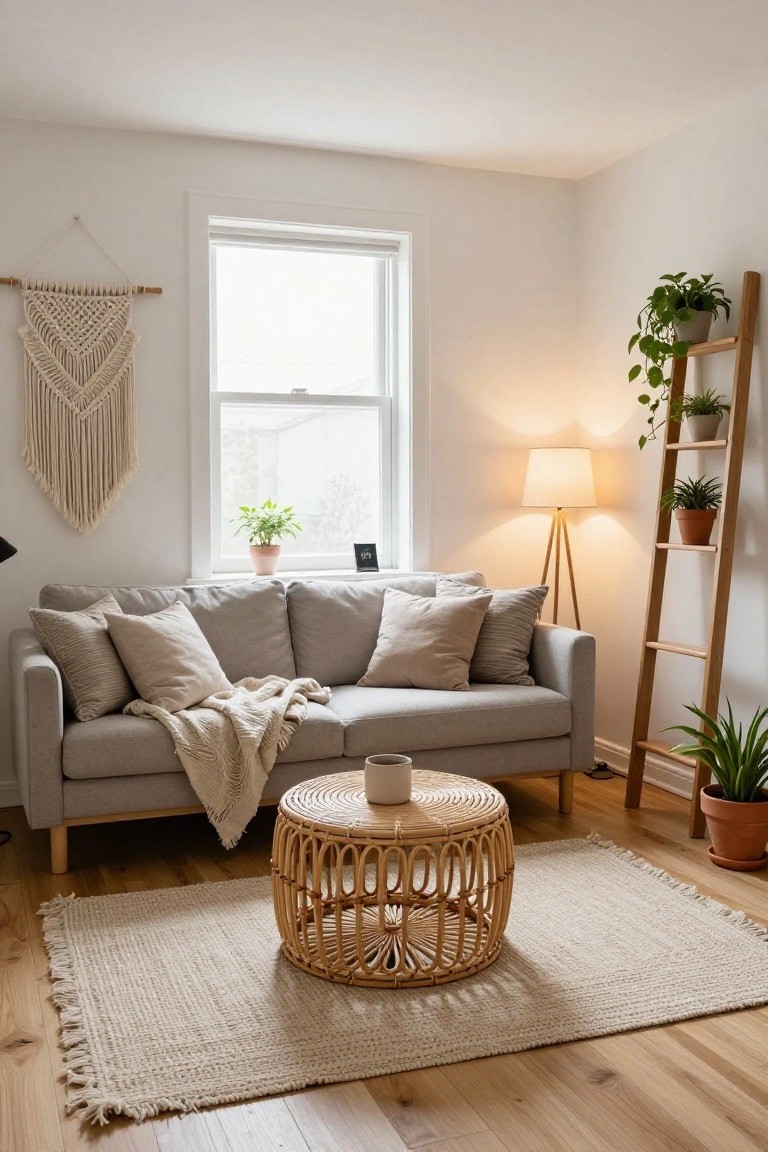
Placing your L-shaped sofa right up against a window like this keeps the room feeling open and pulls in plenty of natural light. The light gray fabric blends with the white walls and wood floors, so the space stays calm and not too heavy. A few plants on a ladder shelf nearby add some life without crowding things.
This setup works best in smaller living rooms where you want seating that flows toward the outdoors. Face the longer arm of the sofa toward the window for easy lounging, and keep the coffee table simple like the rattan one here. Skip dark colors if your room gets good light, or it might feel closed in.
Facing Chairs for Simple Room Flow
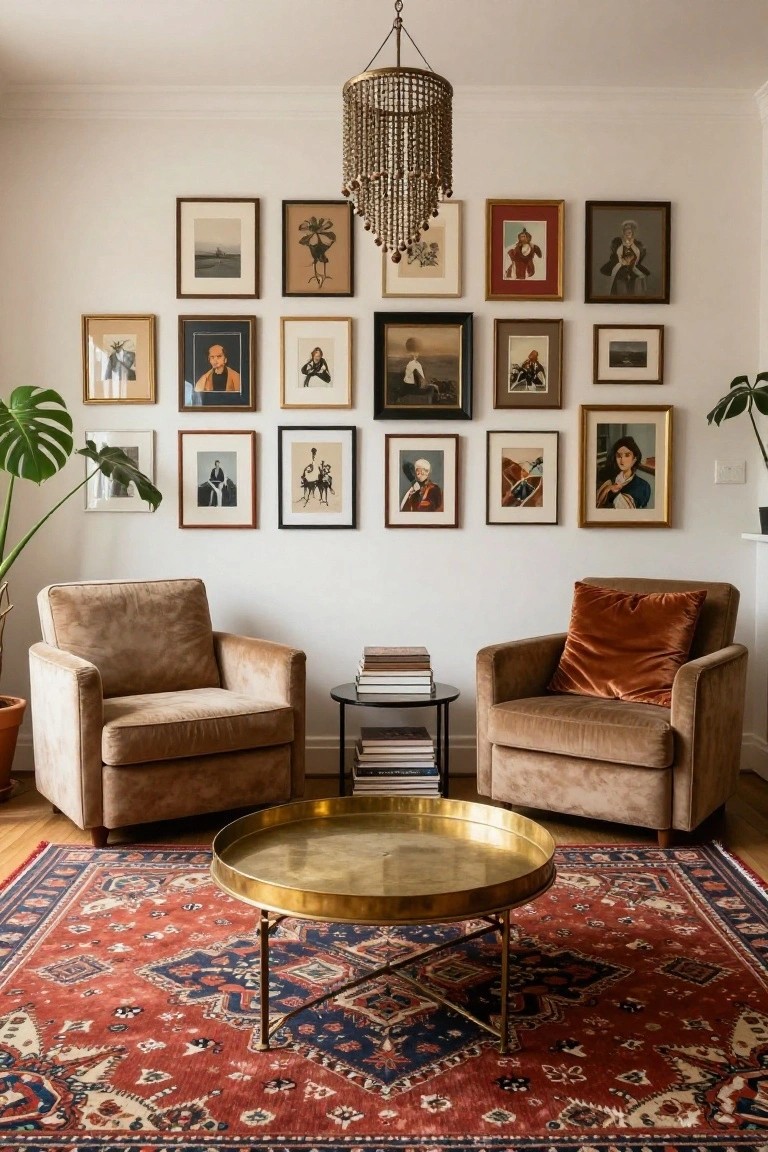
Two armchairs set opposite each other across a round brass table make a tight little spot for talking. It leaves paths open on the sides and feels less bulky than a full sofa setup. That Persian rug underneath pulls it together without taking over the floor.
This works great in narrow living rooms or apartments where you want flow without losing seats. Pick low-slung chairs like these velvety ones, and add stacks of books on a side table nearby. Skip it if foot traffic is heavy, though. The chairs might trip folks up.
Corner L-Shaped Sofa Layout
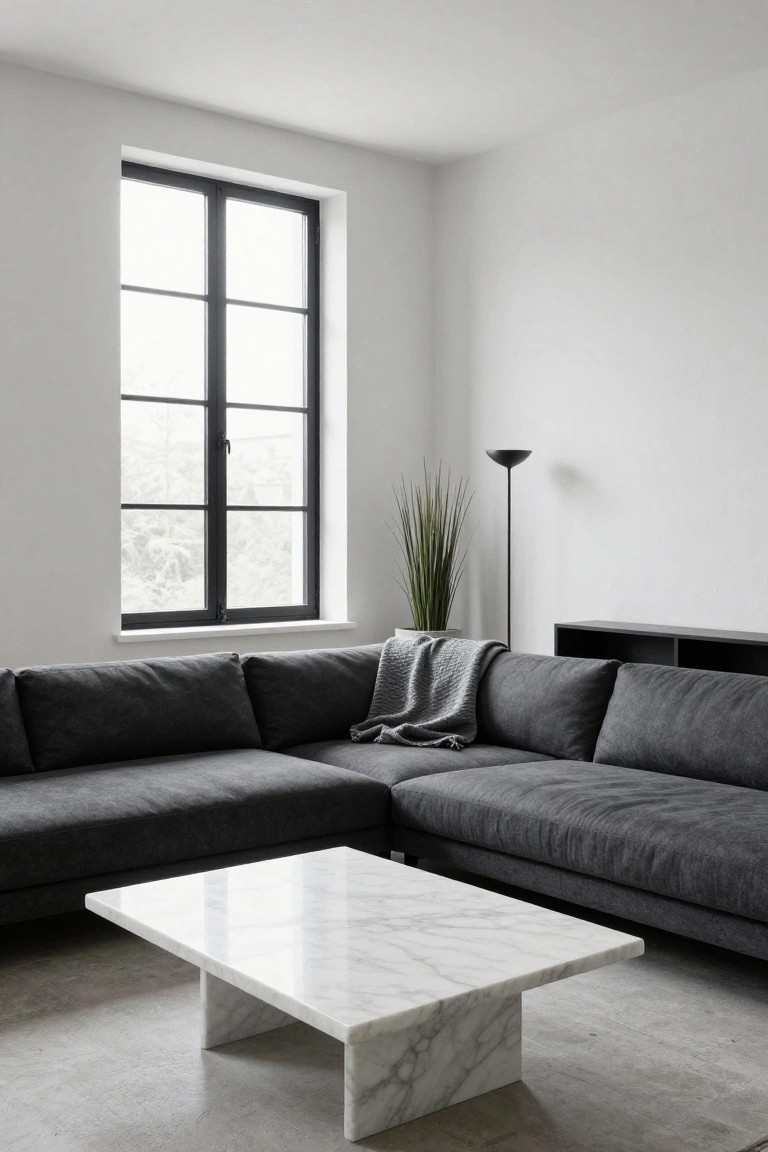
Placing an L-shaped sofa snug in the corner like this opens up the rest of the room. It hugs the walls and window without blocking light, so the space feels bigger and easier to move through. The dark gray fabric keeps things calm against white walls, and that low marble table in front ties it together without crowding.
This works best in apartments or smaller living areas where you want flow from one spot to the next. Pair it with a tall plant nearby for some life, and skip heavy side tables. Just watch the scale, nothing too bulky or it closes things in.
Corner L-Shaped Sofa with Round Coffee Table
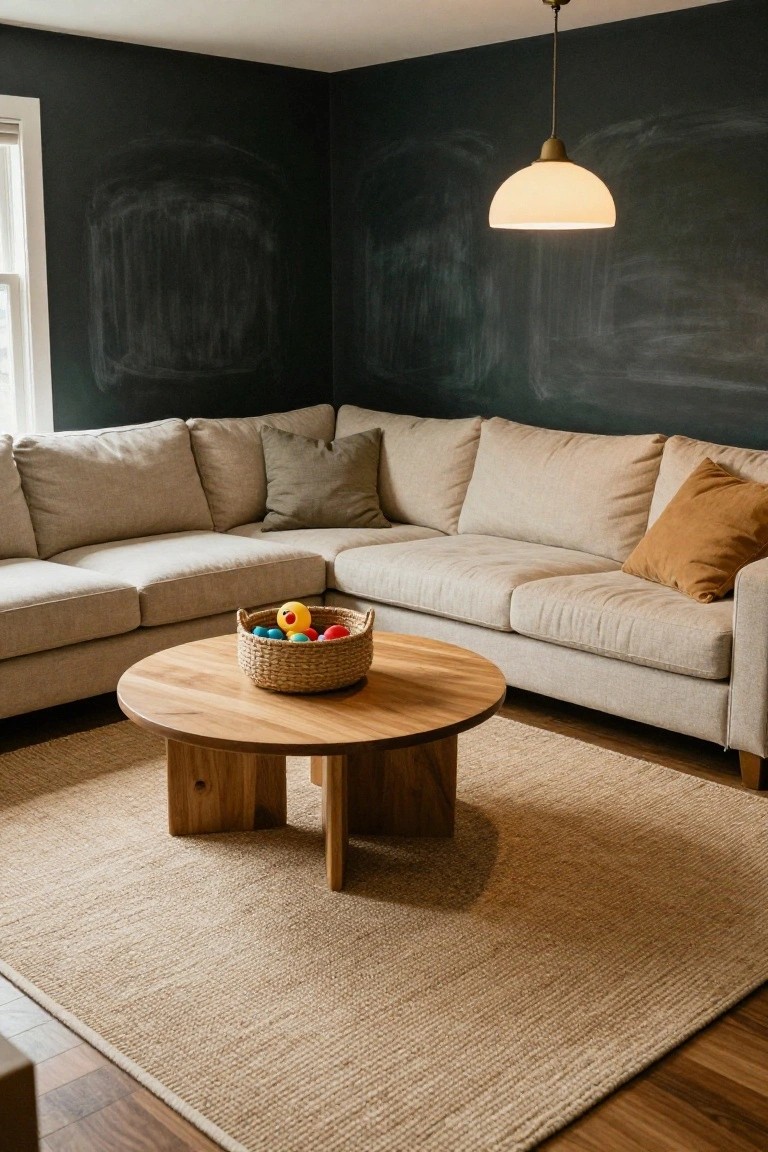
Tucking an L-shaped sofa into a room corner like this opens up the space around it. The round wooden coffee table sits right in front, pulling the seating together without blocking paths. A basket of toys on the table shows how practical this is for family living. It keeps the flow easy even with kids around.
This layout works best in smaller living rooms or play areas where you want seating without crowding. Pair it with a neutral sofa and a seagrass rug for that grounded feel. Just make sure the table is low and sturdy. It fits casual homes with hardwood floors and a bit of wall fun, like chalkboard paint nearby.
L-Shaped Sofa in a Bookshelf Corner
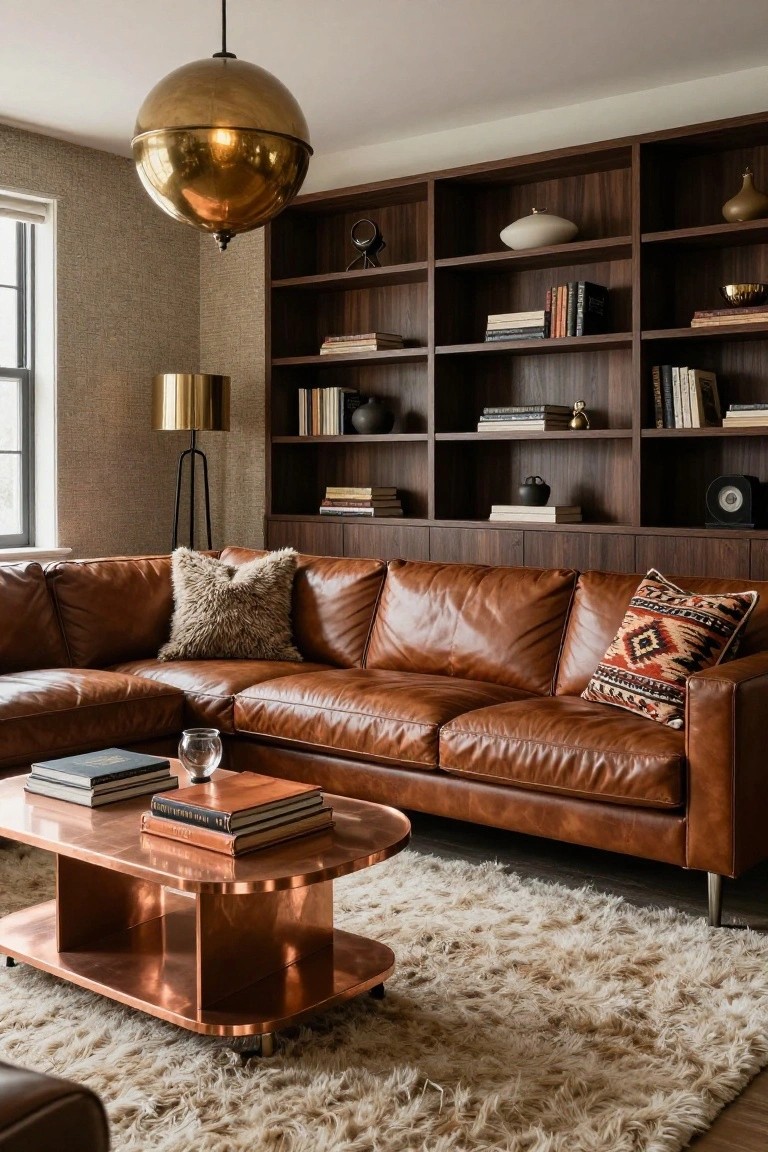
One smart way to make an L-shaped sofa work in a smaller living room is to tuck it right up against a wall of built-in bookshelves. This setup keeps the seating close to storage and display spots, so everything flows together without wasting space. The leather sofa here fills the corner nicely, and the shelves around it add that lived-in feel people want in a reading or lounging area.
You can pull this off in most homes with a plain wall you can build shelves into, or even freestanding units if you don’t want custom work. It suits cozy spaces best, like apartments or family rooms, where you need seating that doesn’t crowd the middle of the room. Just keep the coffee table simple, like this copper one, so it doesn’t fight the books.
Staircase Base L-Shape Seating
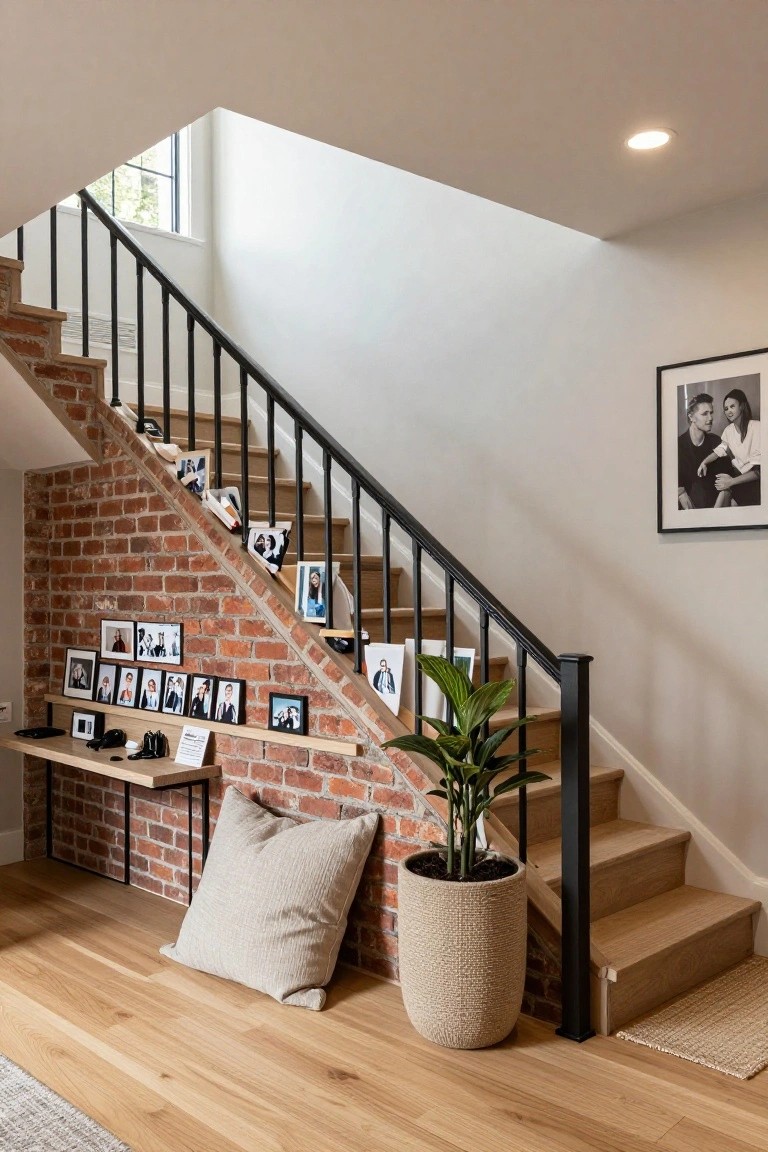
Tuck an L-shape sofa right at the bottom of the stairs like this, and you get a spot that feels part of the flow instead of in the way. The open brick wall and simple shelving here keep things from closing in. It turns that often empty space into something useful, maybe for dropping keys or kicking off shoes before heading up.
This works best in homes with open entries or two-story foyers where traffic moves around the stairs. Go for a low-profile sofa in neutral fabric to match wood floors and not overpower the steps. Add a plant nearby for life, but skip heavy side tables that block paths. It’s practical for families…keeps the sofa out of main walkways.
L-Shaped Sofa in Open-Plan Living
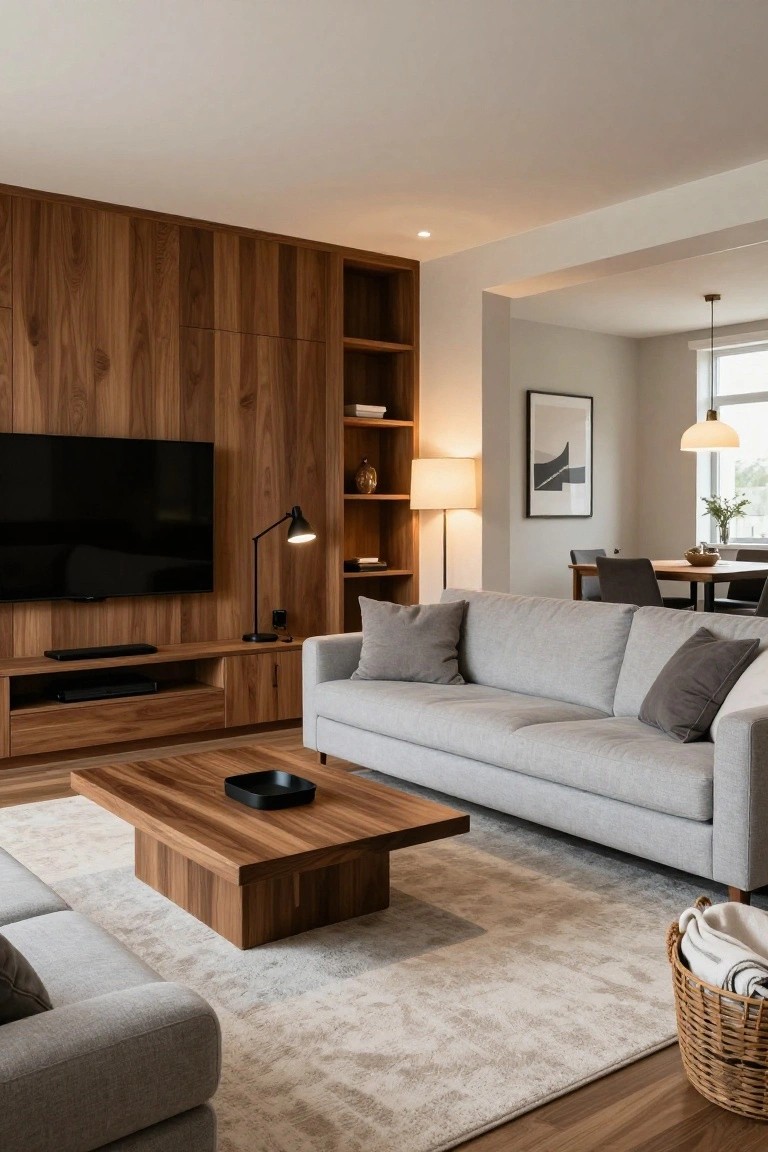
This layout puts an L-shaped gray sofa right up against a tall wood-paneled wall. The long side hugs the media setup with the TV and shelves, while the shorter arm angles out toward the dining area. A simple low wood coffee table sits in the crook of the L, keeping the middle open. It pulls the seating together without chopping up the room’s flow.
Try this in homes where living and dining blend together. It works well in medium-sized spaces with wood floors or accents already in place. Just keep the table low so legs don’t bump, and pick a sofa that’s not too bulky. Feels natural for everyday use.
L-Shaped Sofa in the Sunroom
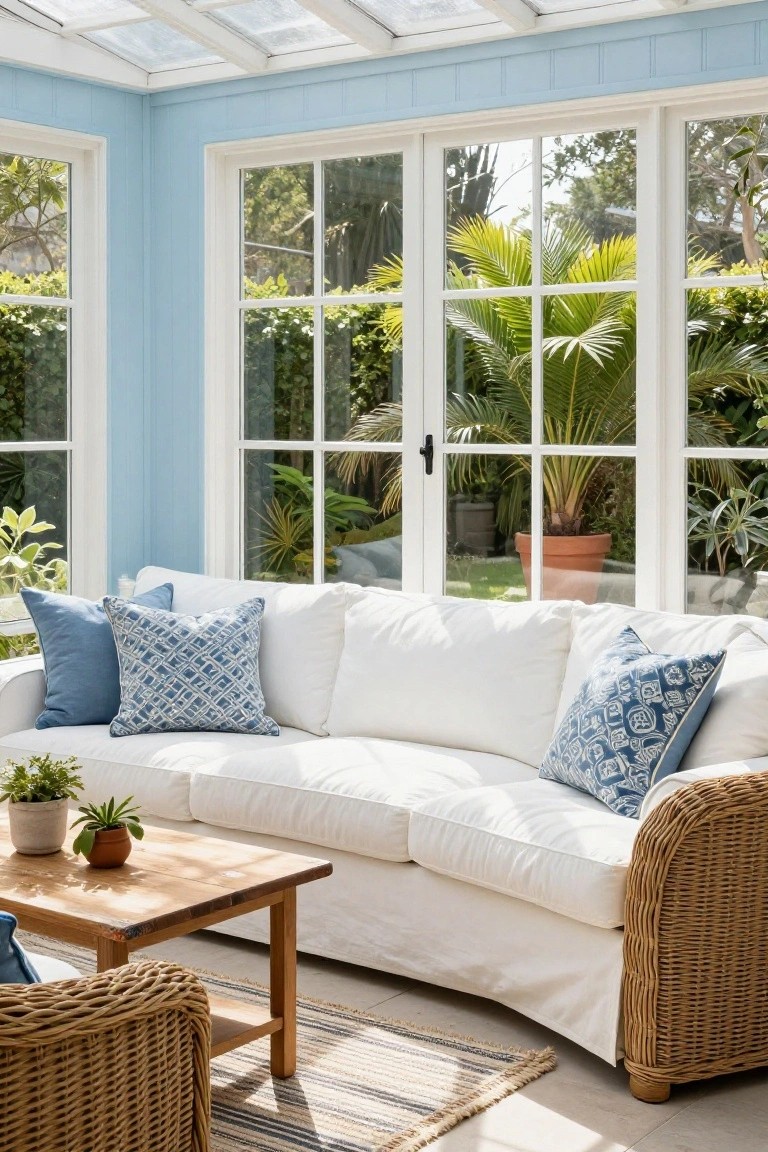
Placing an L-shaped sofa right in a sunroom like this sets up a spot that’s all about relaxing and looking out. The white sofa curves around a low wooden table, with blue pillows adding a bit of color, and it faces straight into the garden through those big windows. It pulls the whole room together without blocking light, and the flow just heads naturally outdoors.
This works best in glass-heavy rooms where you want indoor seating to blend with the yard. Tuck the sofa against one wall or window edge so shorter arm opens to the view. It’s good for casual family spots or reading nooks in milder climates. Skip dark fabrics here, though. Light ones keep things airy.
L-Shaped Sofa in a Room Corner
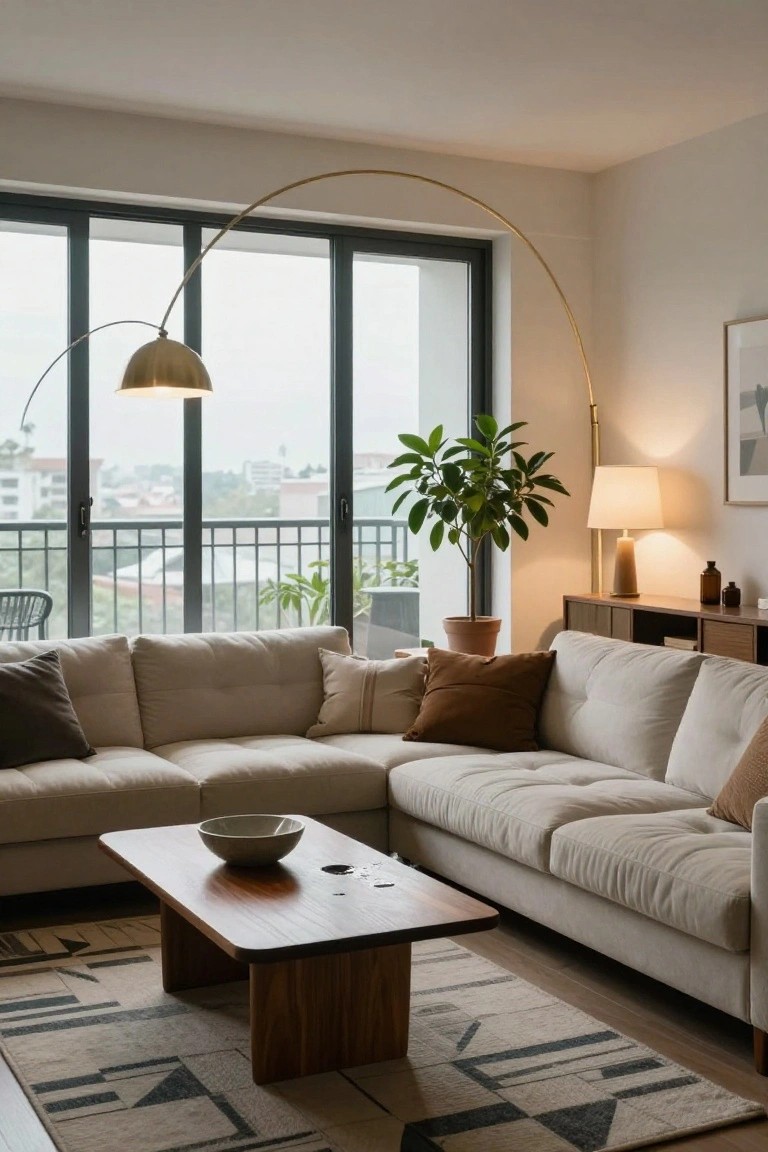
Placing an L-shaped sofa right in the corner next to large glass doors works well for keeping things open. The sofa hugs two walls, leaving the middle of the room free for walking around. That setup pulls your eye toward the balcony and view outside. A simple wooden coffee table sits in front without crowding the space.
This layout fits best in apartments or condos with good natural light. It suits smaller living areas where you want easy flow from seating to outdoors. Just keep the sofa low-profile like this beige one, and add a floor lamp or plant nearby for balance. Avoid pushing it too far from the windows or the room starts to feel boxed in.
L-Shaped Sofa in the Room Corner
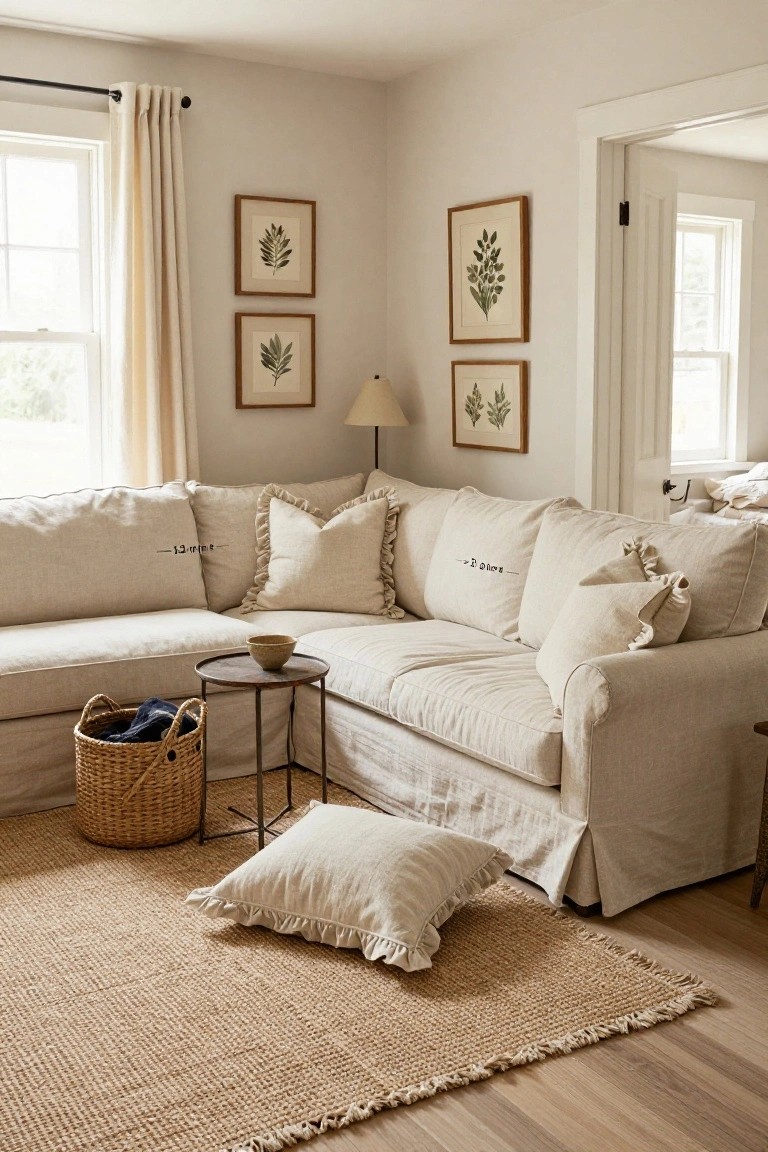
Tucking an L-shaped sofa into a room corner like this keeps the rest of the space wide open. It pulls seating together without blocking paths, and the light linen slipcovers make everything feel relaxed and easy to live with. A simple side table and basket nearby add just enough function without crowding things.
This layout works best in smaller living rooms or family spaces where you want good flow from one area to the next. Pair it with a seagrass rug to define the spot, and keep walls neutral so the sofa stands out a bit. Skip heavy furniture across from it… lets the room breathe.
L-Shaped Sofa Facing Stone Fireplace
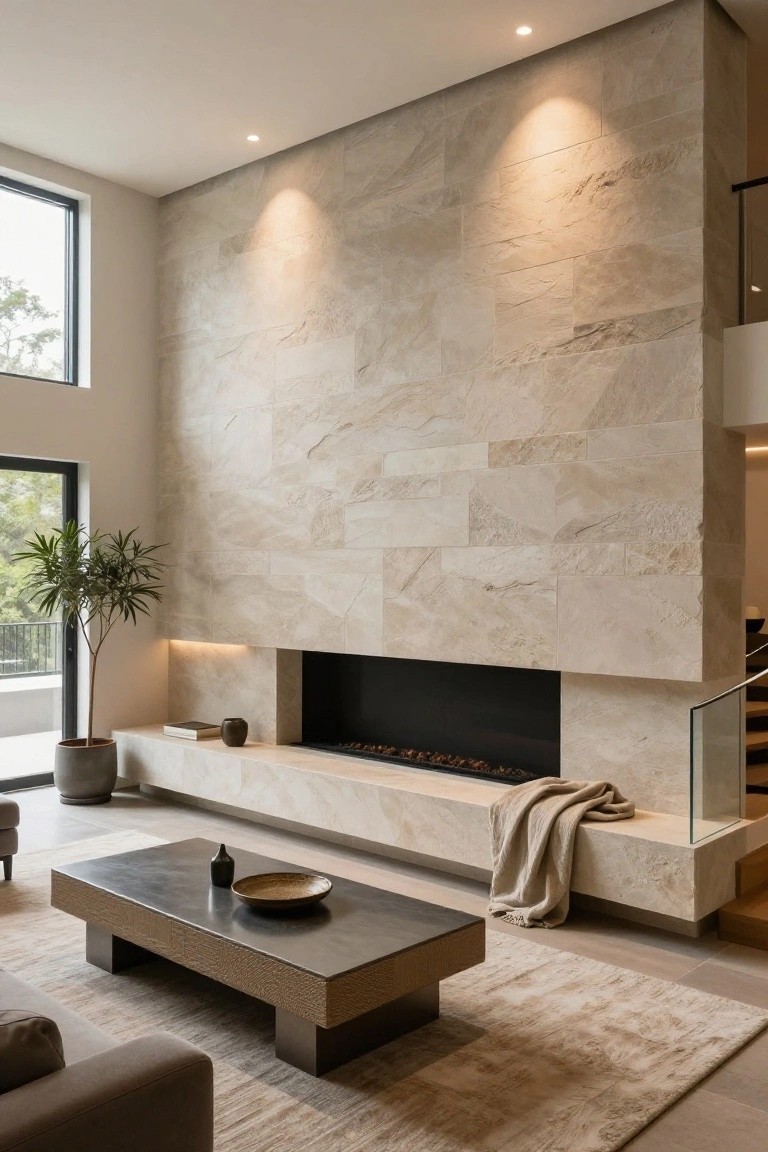
One straightforward way to set up an L-shaped sofa is right along a big fireplace wall like this. The sofa sits low and open, with one end tucked near the side window and the other stretching out to face the long gas flames. That setup keeps the middle of the room free for walking around, and the neutral stone wall behind it makes everything feel connected without crowding the space.
This works best in open living areas where you want seating to hug a focal point but still let people move easily from kitchen to stairs or out the doors. Go for low-profile pieces so views stay open, and add a simple throw on the bench for a lived-in touch. Skip it in tight spots though, since the L needs room to breathe.
L-Shaped Sofa and Desk in the Corner
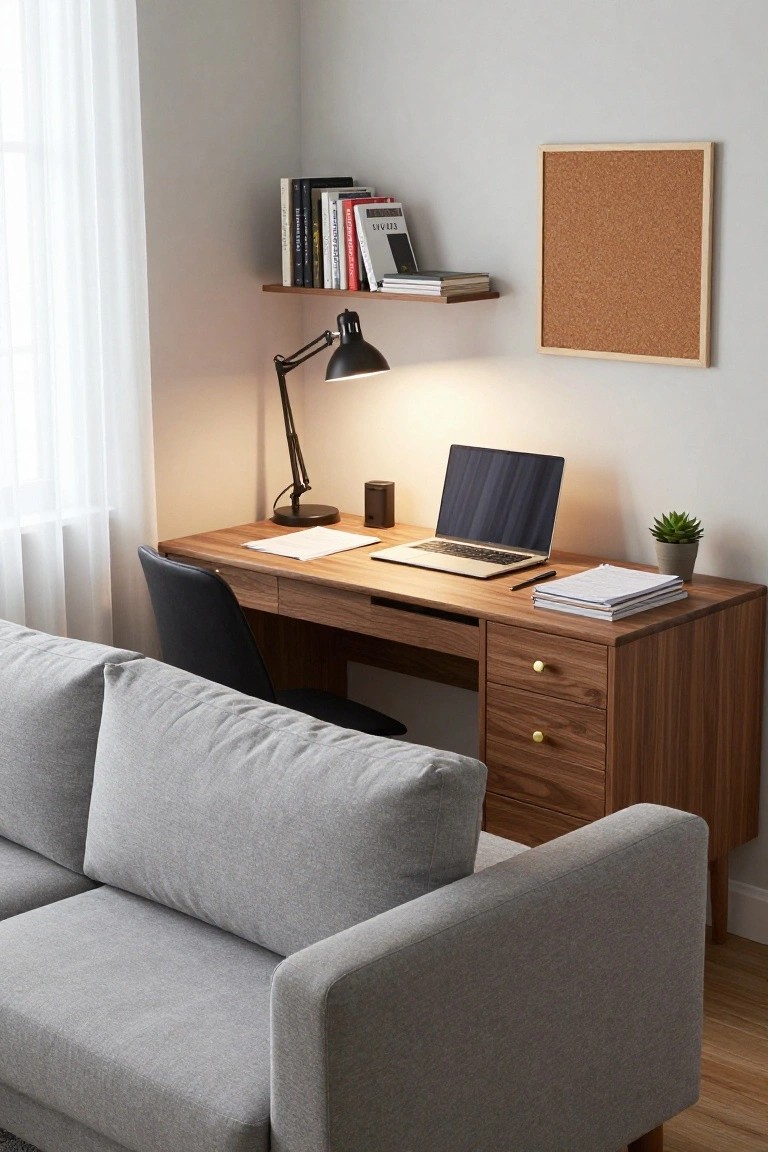
Tucking an L-shaped sofa right up against a desk in the corner makes a natural spot for both work and downtime. You get the sofa’s cozy back for lounging while the desk handles daily tasks, all without wasting space. In this setup, the wood desk with its open drawers fits neatly beside the sofa arm, keeping papers and a laptop close at hand.
This works best in apartments or small living rooms where you need one area to do double duty. Pick a sofa in a neutral gray like this one to blend with light walls, and keep the desk simple so it doesn’t crowd things. Just measure your corner first. Too big, and it feels tight.
Corner L-Shaped Sofa Arrangement
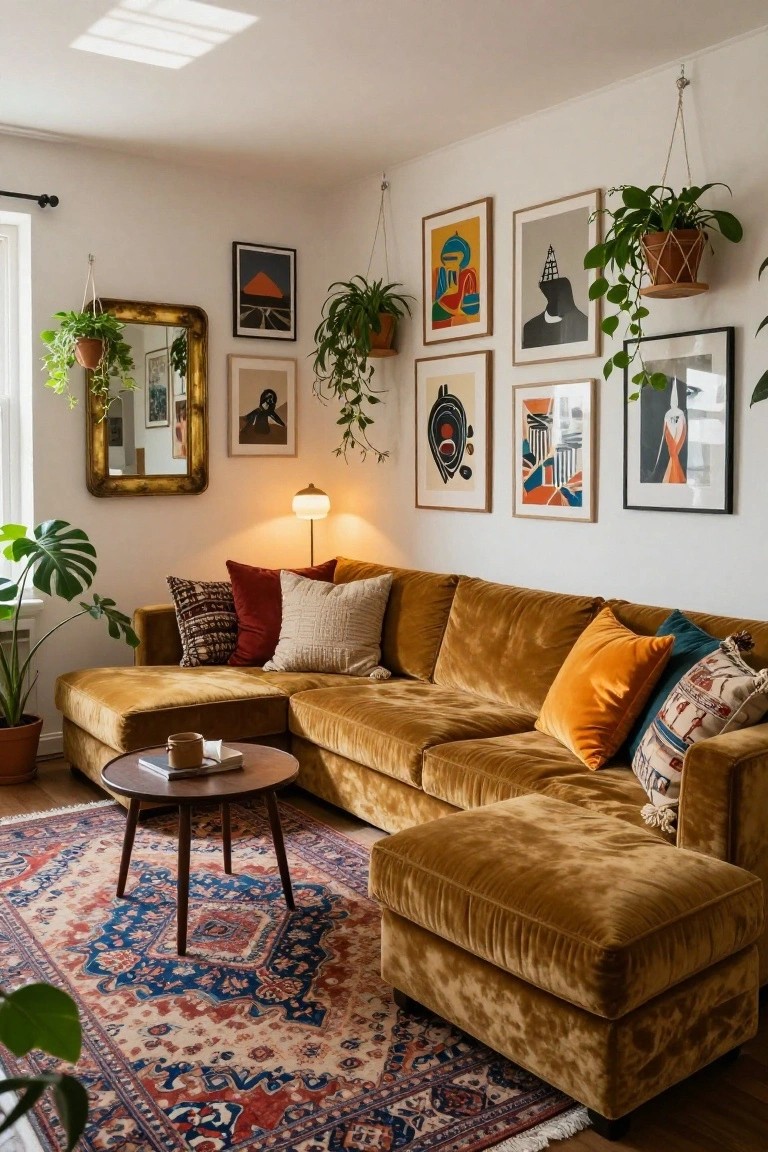
Tucking an L-shaped sofa into a room corner like this makes a natural spot for lounging without blocking traffic flow. The mustard velvet upholstery adds a soft, rich texture that pulls the eye, while the small round coffee table slips right in front for drinks or books. It’s a simple way to zone off a seating area that feels collected and lived-in.
This layout works best in modest living rooms or open-plan spaces where you need to keep pathways clear. Pair it with a patterned rug underneath to anchor everything, and add plants or wall art for that extra layer of interest. Watch the sofa depth though. Too bulky and it cramps the corner.
Petite Table by the Stairs
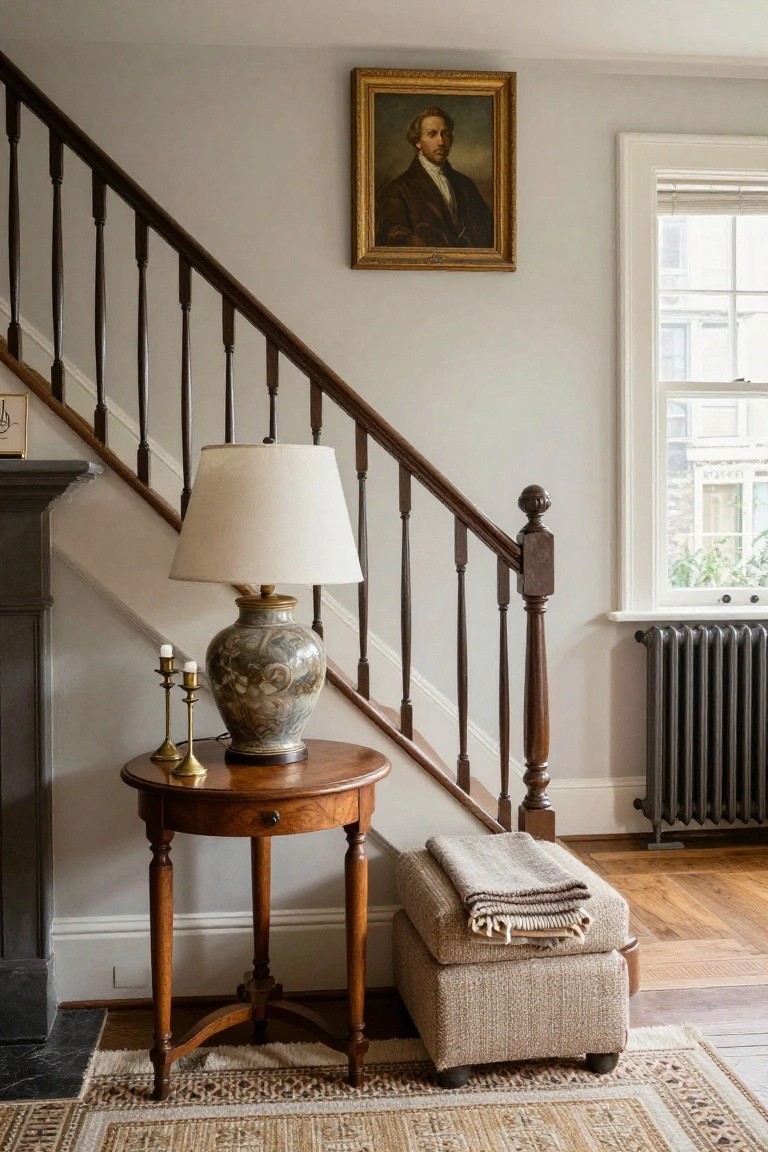
A small round table sits right at the base of the stairs here, topped with a ceramic lamp and a couple of brass candlesticks. Next to it is a simple stool piled with a few throws. This little setup makes the entry feel lived-in and useful. It gives you a place for mail or keys without eating into the walking space. In older homes like this, it keeps things practical while adding some everyday warmth.
Try this in a hallway or stair landing where you want a touch of function but hate clutter. Pick wood pieces that match your trim, and keep the lamp soft for evening light. It works best in narrower spots. Just don’t overload the table, or it starts to block the flow.
Facing L-Shaped Sofas for Open Living Rooms
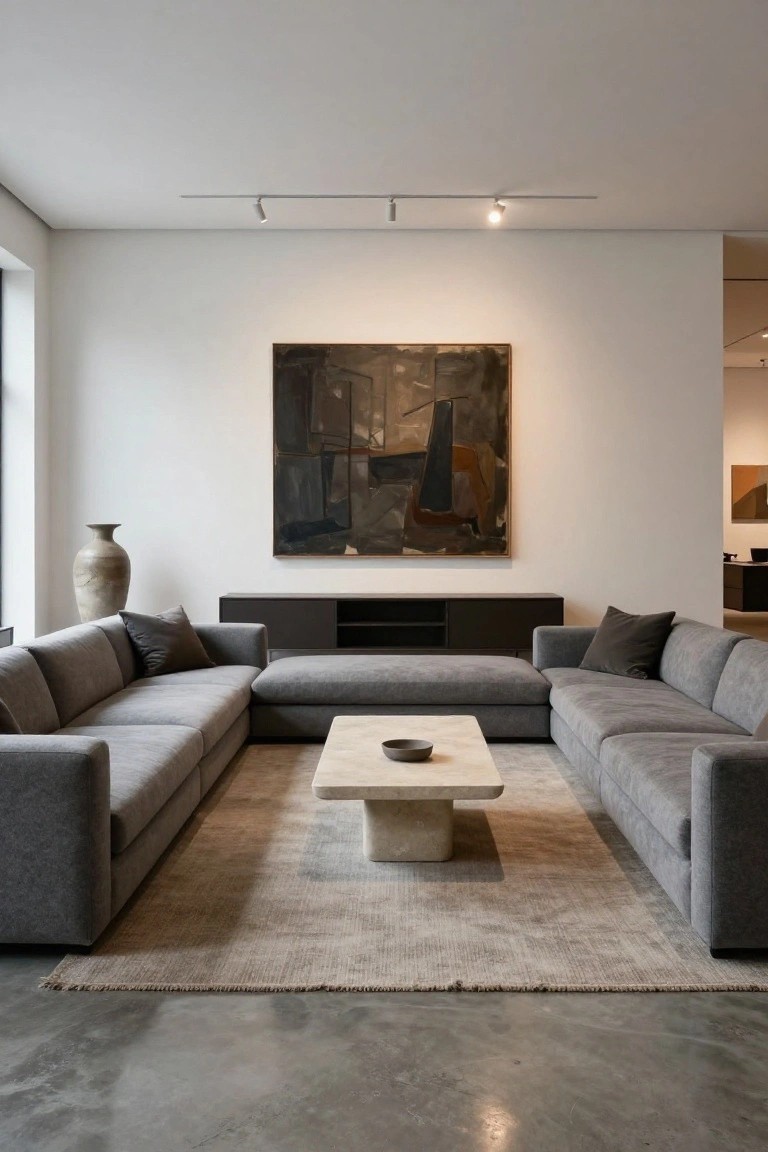
One simple way to set up seating that keeps things flowing is to place two L-shaped sofas facing each other. This layout pulls people into conversation without blocking paths through the room. The low travertine coffee table right in the middle keeps it open and easy to reach from any spot. It works because the sofas hug the edges, leaving the center clear.
Try this in larger open spaces where you want a spot for lounging but not a cramped feel. It suits modern homes with high ceilings or gallery walls… just make sure the rug is big enough to anchor everything. Skip it in tight rooms, though. The flow gets lost there.
Frequently Asked Questions
Q: Will an L-shape sofa fit in my small living room without crowding the space?
A: Pick a compact L-shape around 100 to 120 inches on the long side. Push the short arm against a wall to open up the center. Add a slim side table instead of bulky pieces.
Q: How do I figure out which direction the L should face?
A: Stand in the doorway and look where people naturally gather. Point the long arm toward that spot so everyone chats easily. Test it by sitting down, coffee in hand.
Q: What if my room flows into the kitchen, like an open plan?
A: Angle the L-shape corner toward the kitchen for seamless movement. Skip a coffee table in front, or go floating to keep paths clear. This setup turns your whole space into one comfy zone.
Q: Can I mix an L-sofa with my existing straight couch?
A: Tuck the straight one opposite the L to frame a conversation nook. Leave 18 inches between them for easy scooting around. It works great if you overlap angles just a bit.
