

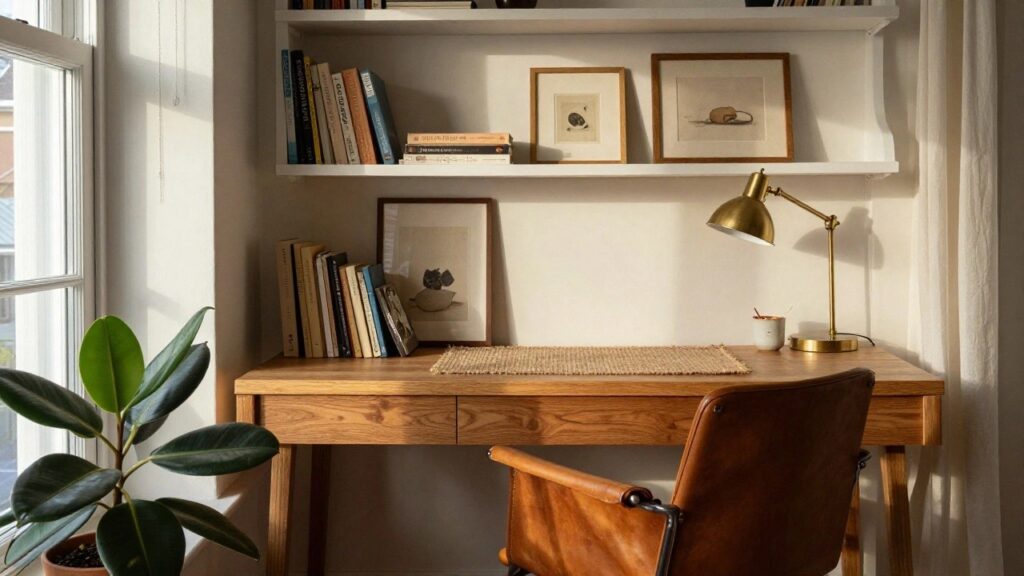
I have found that turning a quiet corner into a workspace often depends on how the furniture fits with the rest of the room flow.
Light and storage end up being the details that decide if the area actually helps with concentration or just adds another surface to maintain.
Layout choices show up quickly in daily use.
When I tested a few adjustments in my own place, the difference came from keeping the surface clear and choosing a chair that actually fits the space.
These kinds of setups work best when they match how the room is already used rather than forcing a new arrangement.
Corner Desk With Floating Shelves
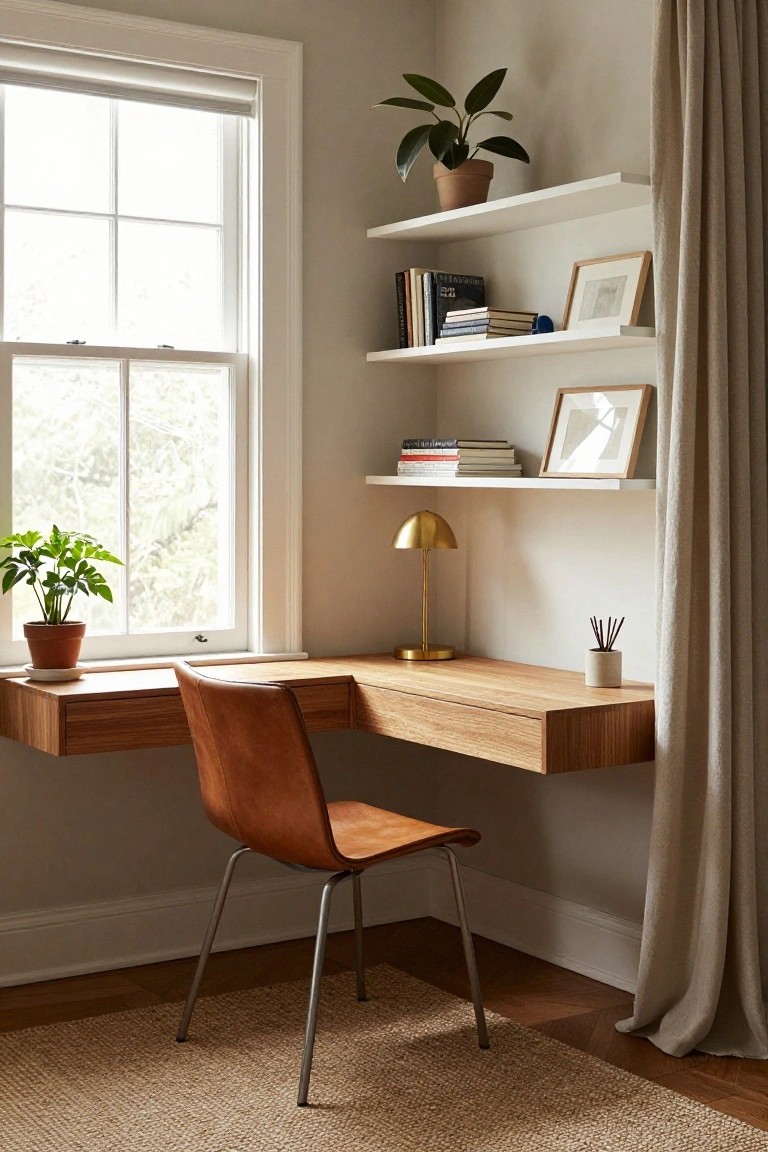
A corner desk that mounts to the wall leaves the floor open and keeps the workspace from feeling heavy. Adding a couple of floating shelves above it gives storage without needing extra furniture, which helps the area stay calm and easy to use every day.
This setup works best in smaller rooms or homes where you want a dedicated spot without taking over the space. Keep the shelves lightly filled and let natural light from a nearby window do most of the work.
Wall Storage Keeps a Desk Surface Clear
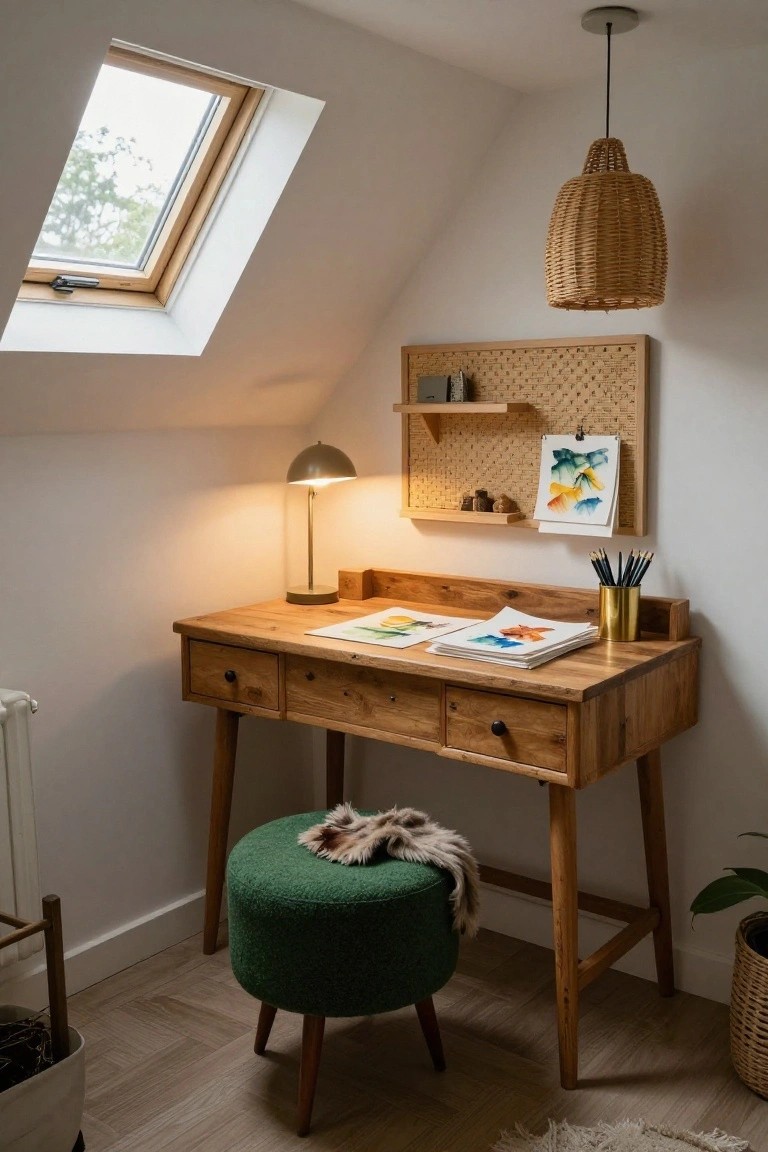
One simple way to make a desk feel calmer is to move some of the everyday items up onto the wall. A shallow organizer or pegboard right above the desk holds papers, small tools, and a few favorite pieces without crowding the work area itself.
This approach works especially well in compact rooms or under low ceilings where every inch counts. Keep the organizer fairly narrow and within easy reach so it stays useful rather than decorative.
Round Desk By A Window For A Calmer Workspace
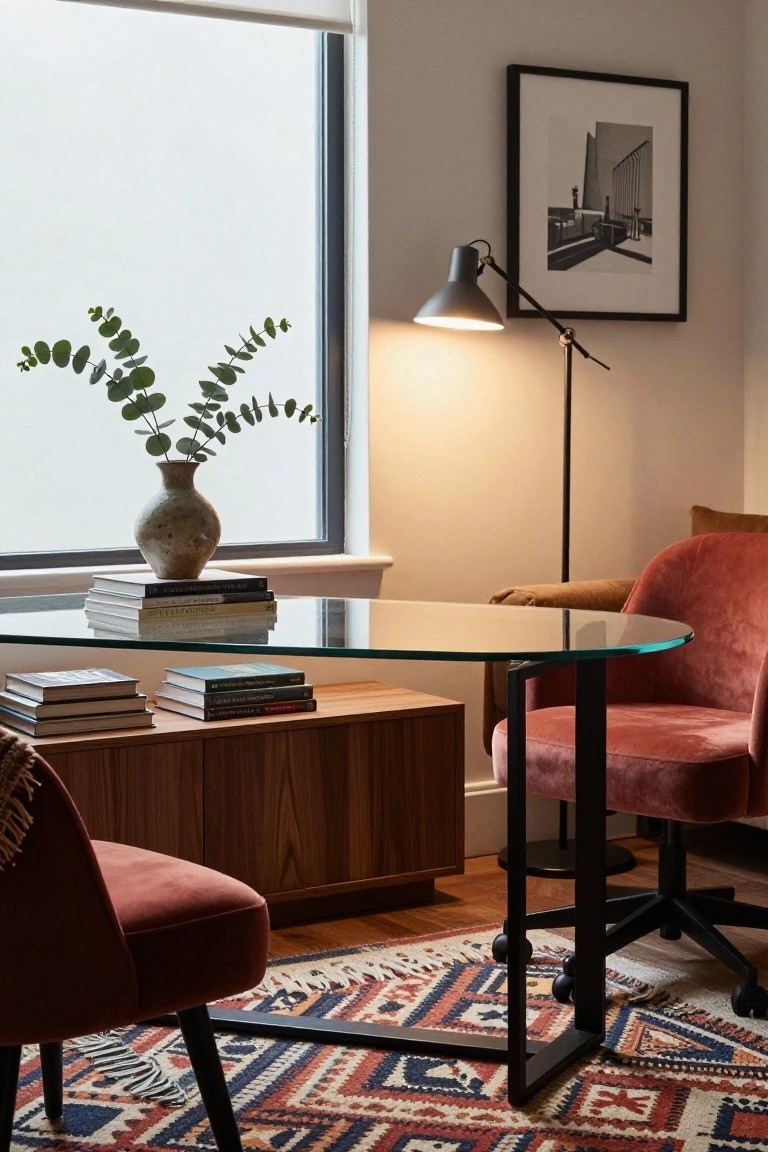
A round glass desk works well in a corner because it softens the angles and lets the eye move freely around the space. The see-through top also keeps the area from feeling crowded, which helps when you need to focus for long stretches.
This setup suits a living room corner or a small spare room where you want a quiet place to work without closing yourself off. Keep the surface mostly clear and let the natural light from the window do the rest.
Basket Storage Under a Desk for a Cleaner Workspace
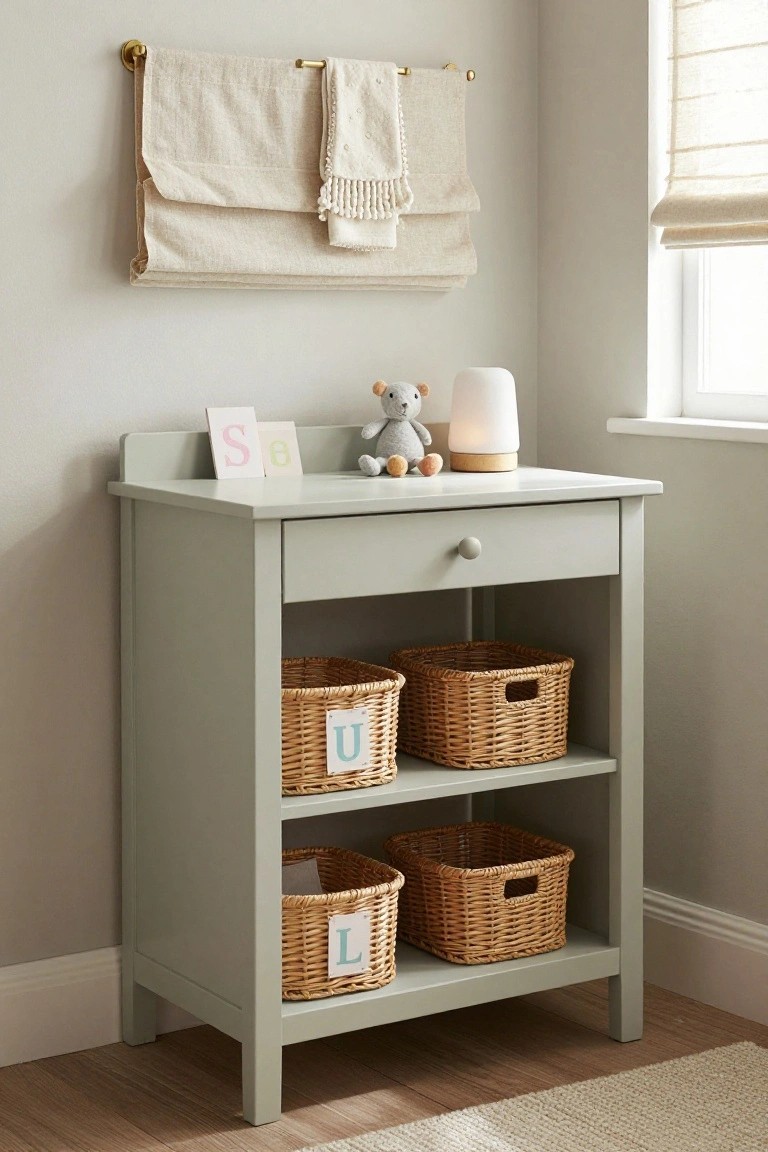
Open shelves with simple baskets give you a place to tuck away papers, toys, or supplies without closing everything off. This setup keeps the surface clear while still letting you reach what you need quickly, which helps the whole corner feel more settled and ready for focused work.
It works especially well in smaller rooms or shared spaces where a full desk with drawers would crowd the area. Choose neutral baskets and a light finish on the furniture so the storage blends in rather than adds visual noise.
Mount a Corkboard Above the Desk
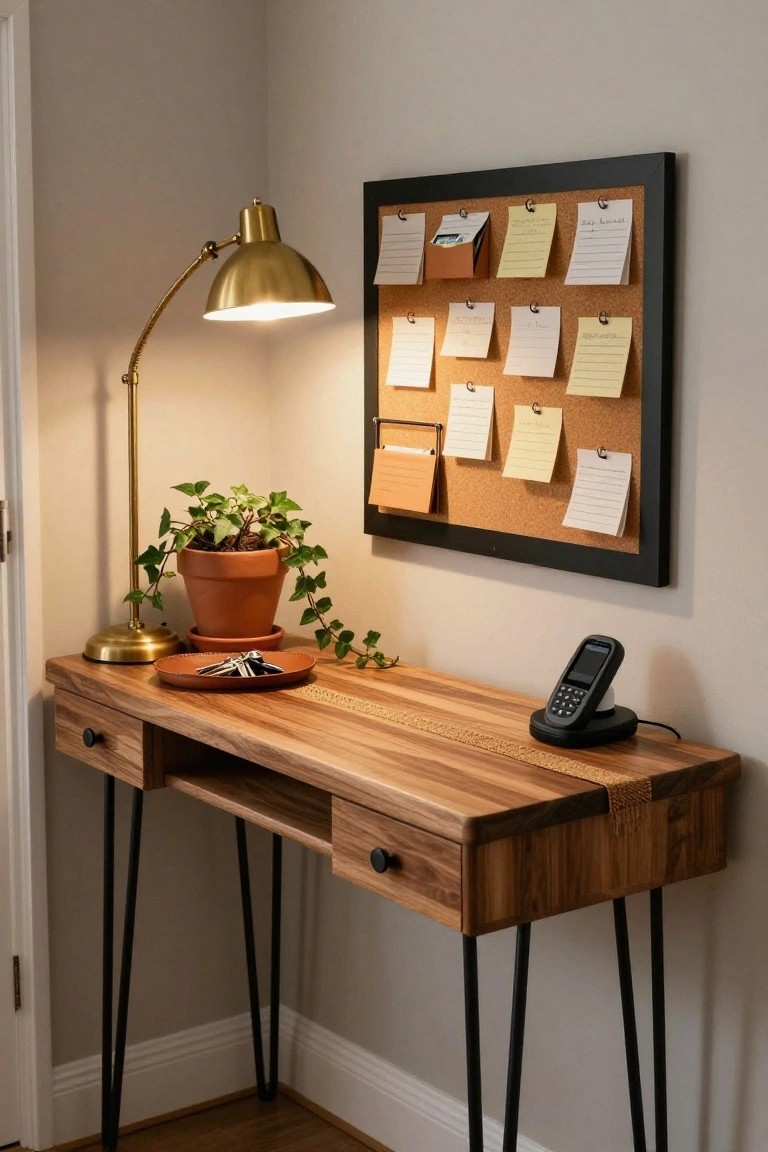
A corkboard placed right over the desk gives you an easy spot to pin reminders, lists, and notes so they stay in sight. This keeps the surface clear while still having everything you need within reach during the day.
It works best in smaller corners or tight workspaces where wall space is available but floor room is limited. Use it for daily tasks or project notes, and swap things out as they change so the board stays useful instead of turning into clutter.
Built-In Shelves That Wrap a Corner Desk
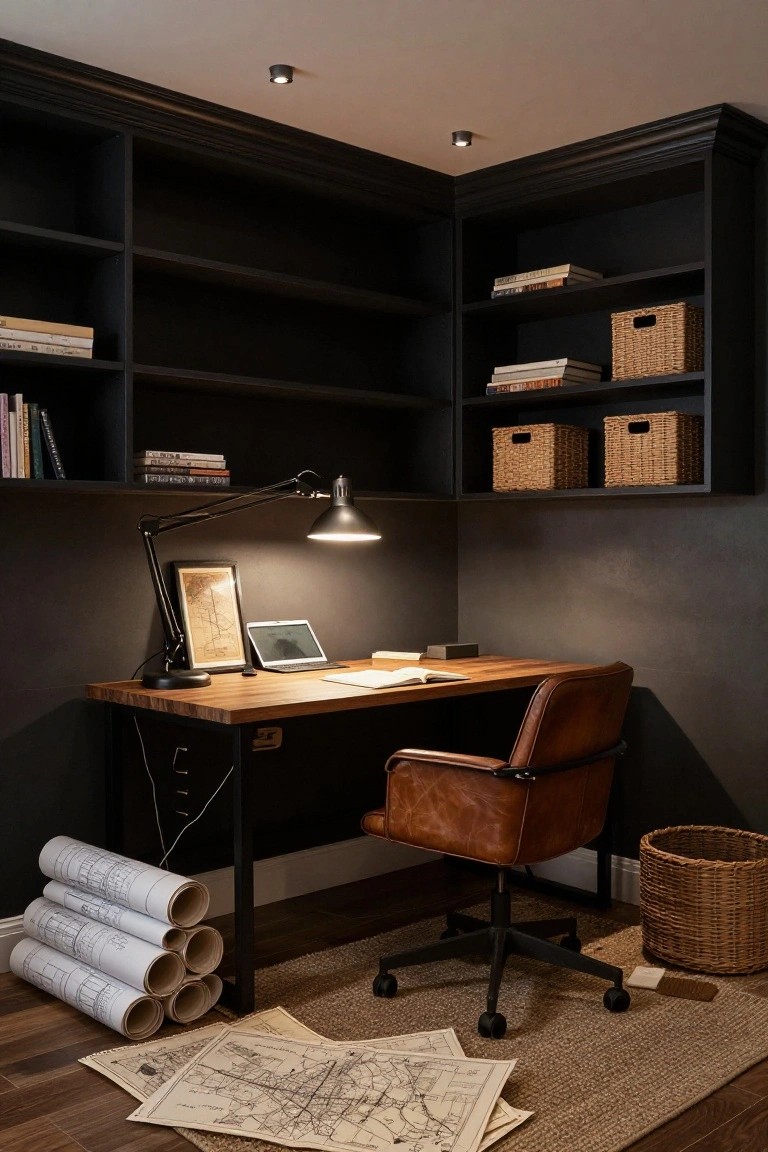
Dark built-in shelves that run along two walls can turn an ordinary corner into a quiet desk spot. The enclosed feeling helps block out distractions and keeps everything you need within reach without the space feeling cramped. A simple wood top against the dark finish adds just enough warmth to keep it from feeling too heavy.
This setup works especially well in a spare room or along a blank wall in a larger space. Keep the shelves mostly for books and a few baskets so the area stays calm rather than cluttered. A task lamp and one comfortable chair are usually all you need to finish the look.
A Soft Blue Desk for Calm Focus
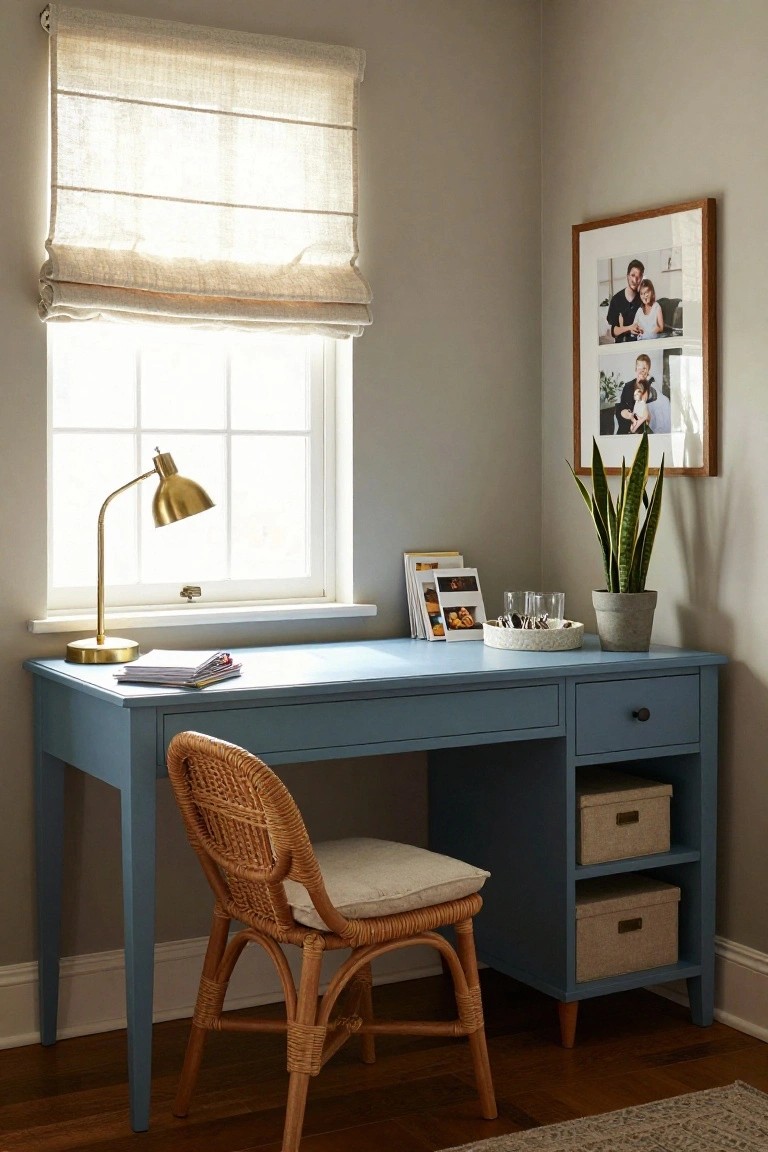
A soft blue desk helps turn an ordinary corner into a place where focus comes more easily. The gentle color keeps the surface from feeling harsh or distracting, especially when natural light comes in from a nearby window.
This works well in smaller homes or shared spaces where you need a quiet zone without building walls. Pair the desk with a simple chair in natural materials so the area stays comfortable but not cluttered.
Natural Wood For A Calmer Desk Setup
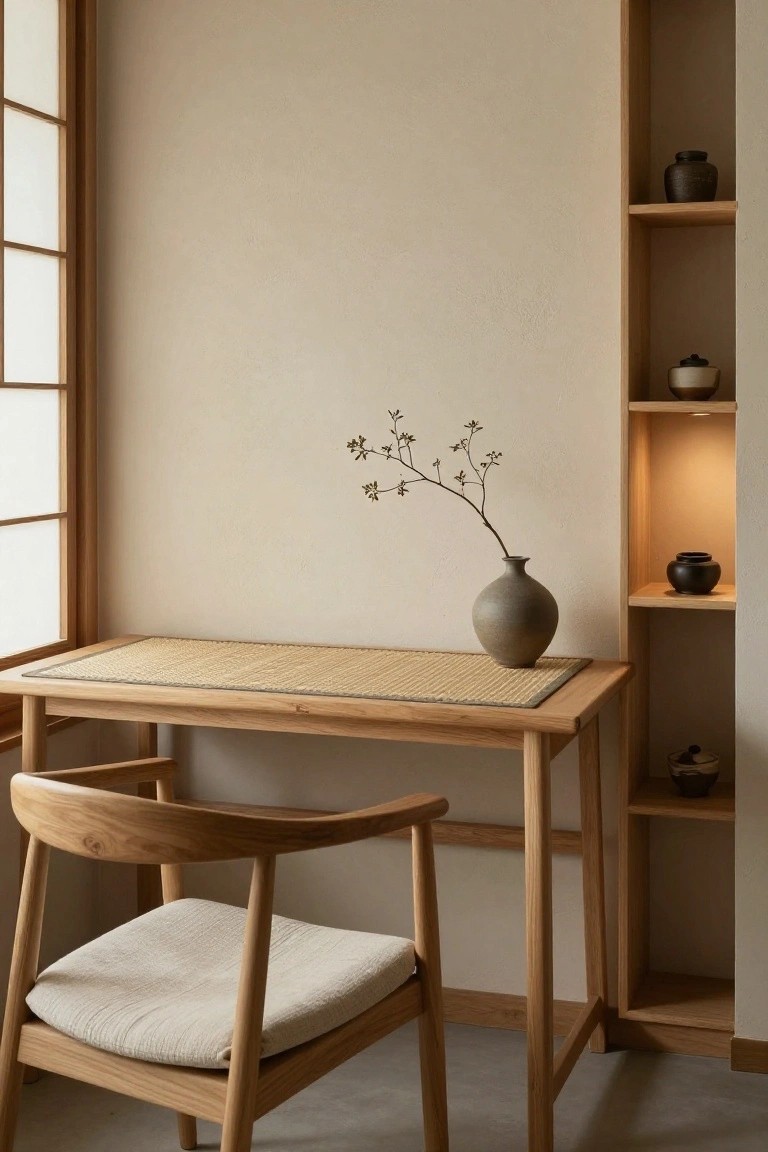
A light wood desk with a simple woven mat on top gives the workspace a quiet, grounded feel. The plain wall behind it and the single branch in a clay vase keep everything from feeling busy, so the focus stays on the work instead of the objects around it.
This approach works best in smaller rooms or tight corners where you want the space to feel open but still warm. Keep accessories to a minimum and let the wood tone and natural texture do most of the work.
A Desk Tucked Under The Stairs
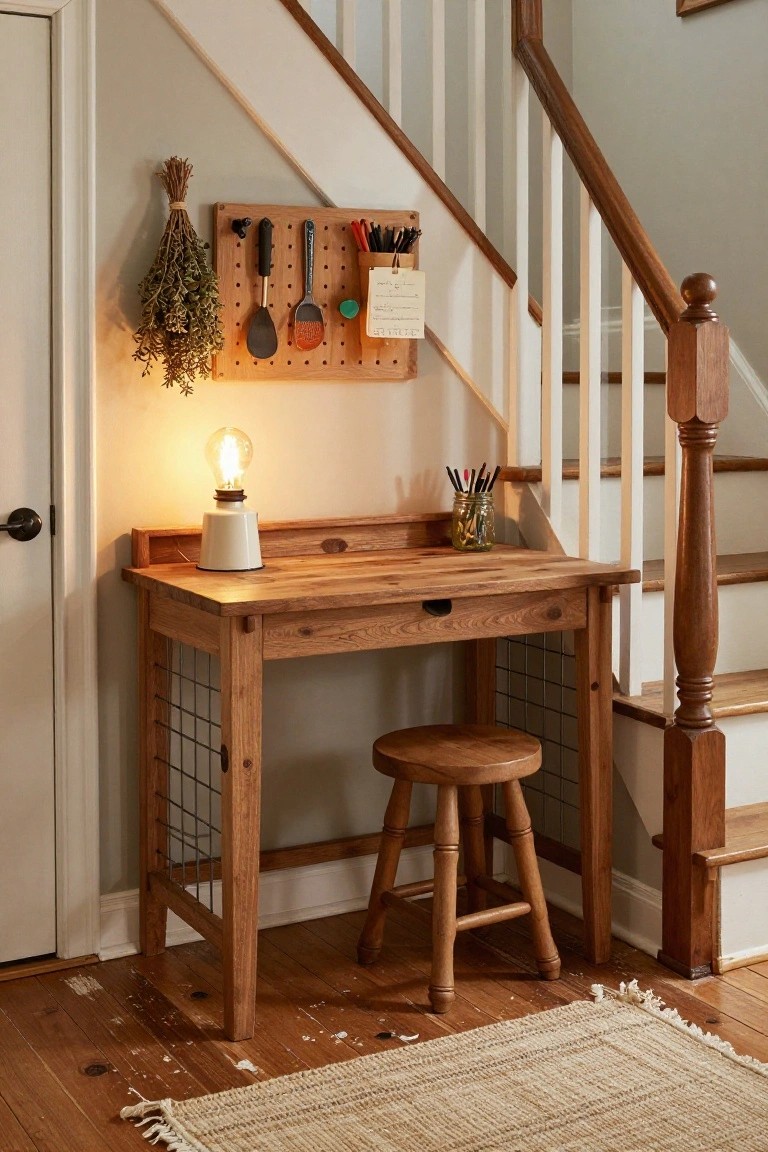
Many homes have a bit of empty space right under the stairs that rarely gets used for anything practical. Setting a small wooden desk there gives you a quiet spot to work without needing an entire room or even a full corner.
This kind of setup suits older houses or any place where space is tight. Keep the surface clear, add just a stool, and use a simple board on the wall for notes or a few supplies so the area stays calm and easy to sit down at when you need focus.
Natural Wood Desk with Storage Drawers
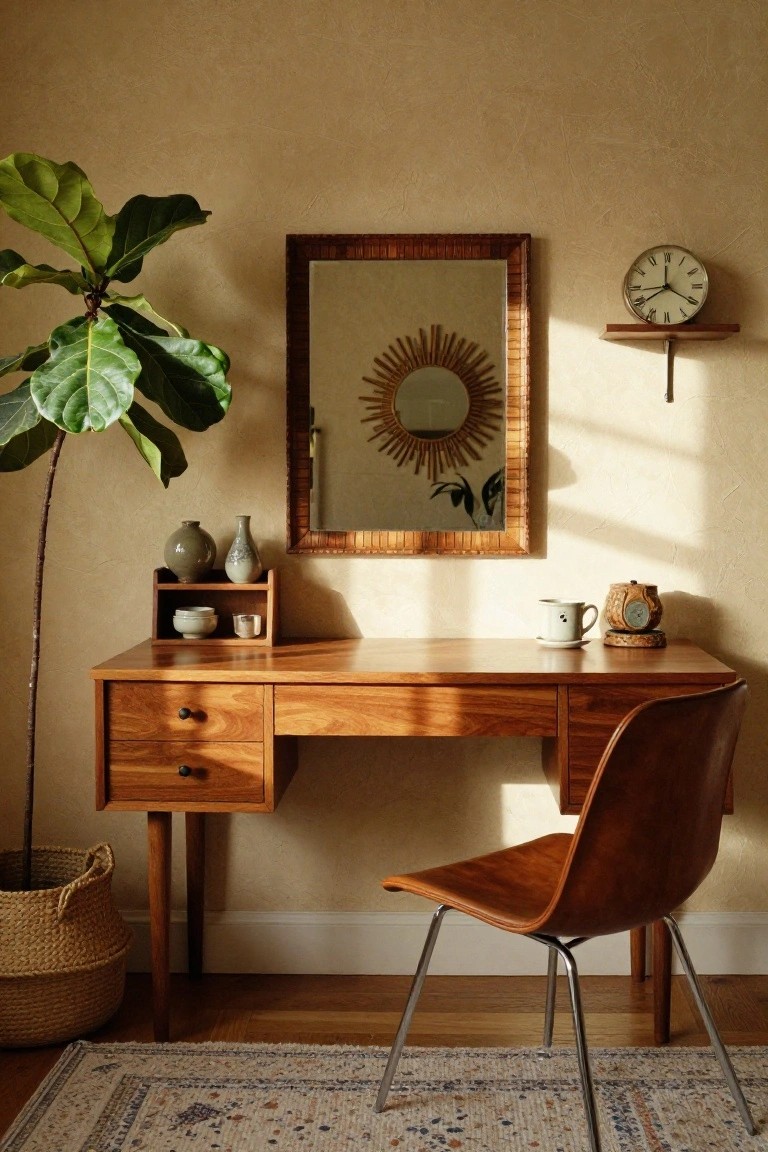
A desk made from solid wood with built-in drawers gives you a workspace that feels steady and organized. The warm tone of the wood softens the room while the drawers keep papers and supplies out of sight so the surface stays clear.
This kind of desk works best in a quiet corner or along a plain wall where you can face the room without too many distractions. Keep the area above it simple and choose a chair that tucks in neatly when the desk is not in use.
Fitting a Desk Into a Quiet Corner
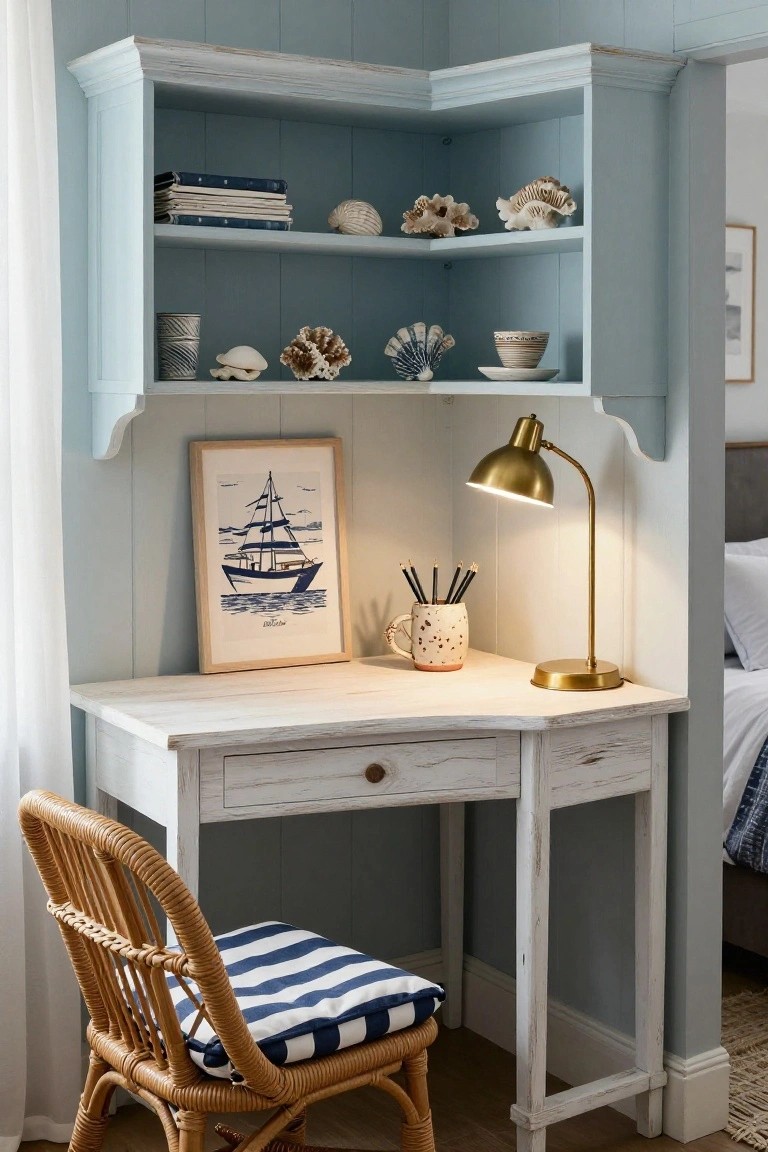
A corner desk with open shelves above it turns an empty spot into a simple workspace without taking over the room. The light wood finish and soft wall color help keep the area feeling open and easy on the eyes, which matters when you need to focus for a while.
This setup works best in bedrooms or smaller homes where a full office is not practical. Keep the shelves lightly styled so they hold what you need without adding clutter, and choose a chair that tucks in neatly when the desk is not in use.
Corner Desks With Open Storage
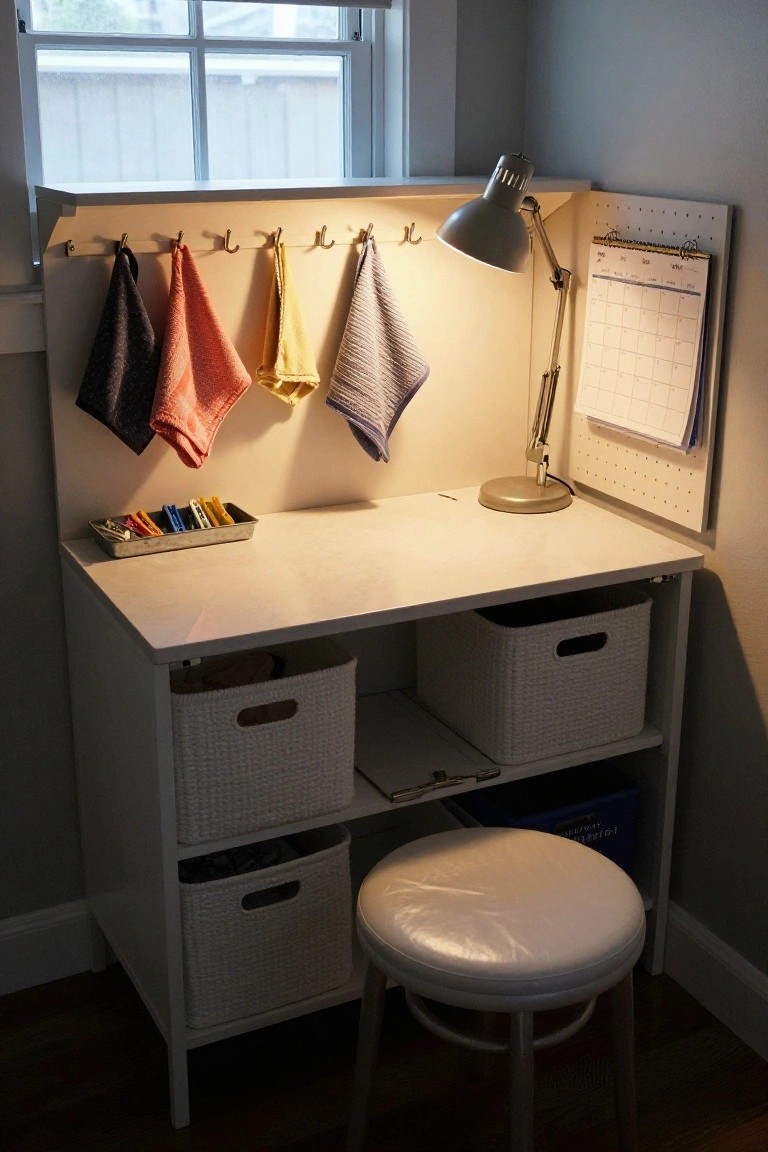
A small corner desk feels calmer when you keep the area underneath open and use simple baskets for storage. This approach lets you tuck away papers and supplies without adding doors or extra furniture that can crowd the space.
It works especially well in bedrooms or quiet rooms where you want a spot for focused work or reading. Choose baskets that slide out easily and keep the top surface mostly clear so the area stays inviting to sit down at.
Corner Desks With a Back Panel
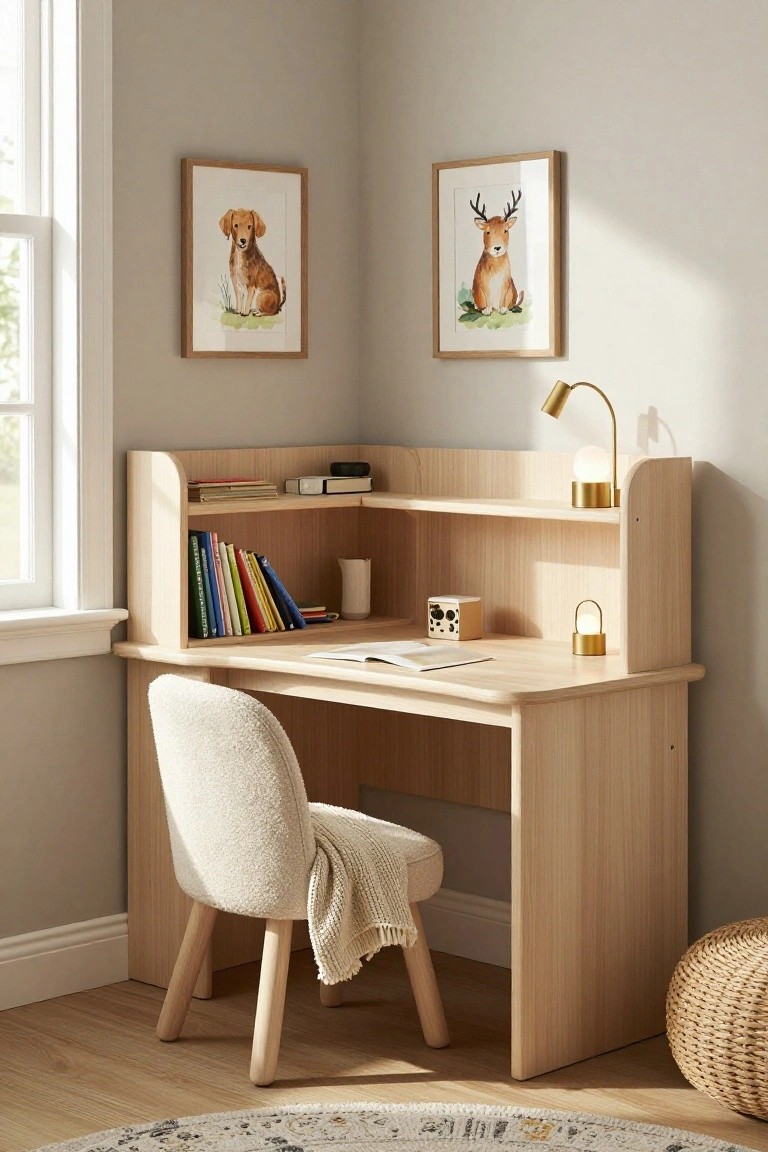
A back panel on a corner desk helps turn an open spot into a more private workspace. It blocks some of the room behind you and keeps the focus on the desk surface instead of everything else going on around it. Many people find this simple addition makes it easier to settle in and stay on task.
This kind of setup works best in bedrooms or small home offices where space is limited. Use light wood tones like the one shown here and add a few open shelves for books so the area feels organized without looking heavy. Keep the chair soft and comfortable so the whole corner invites you to sit down and work.
Sideboard Desk For A Shared Room
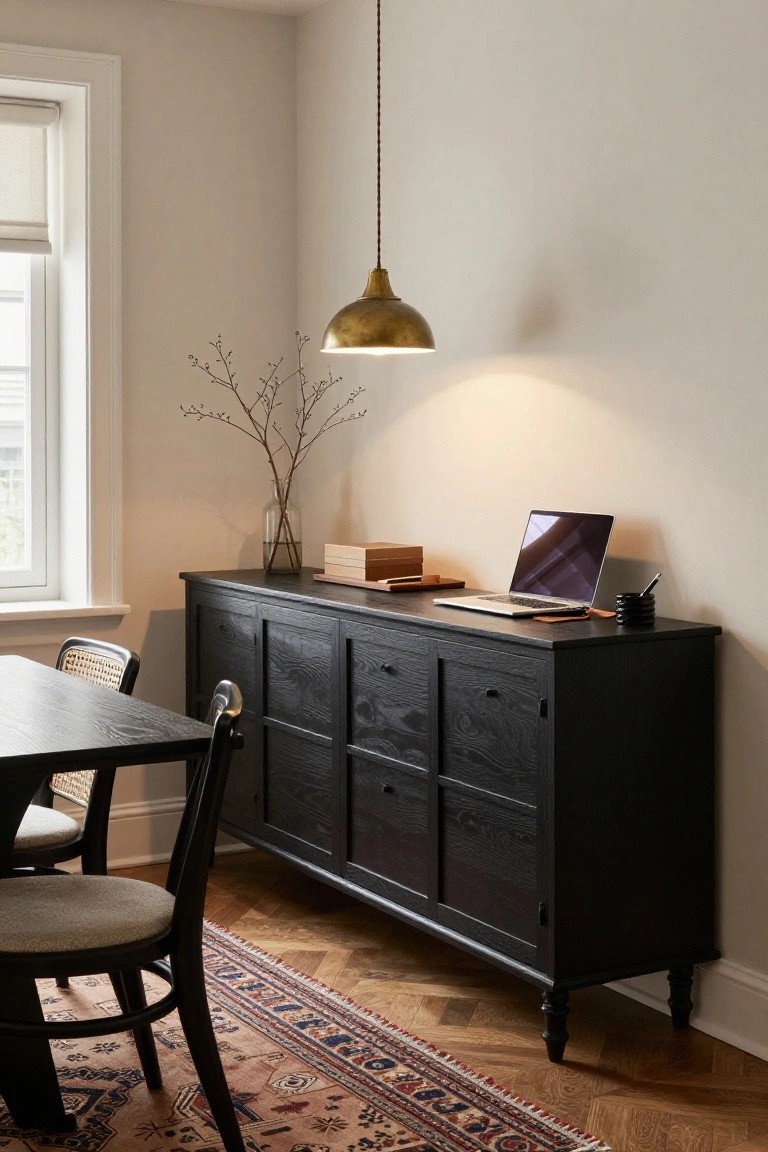
A sideboard can make a surprisingly good desk when you need a work spot but do not want a full office setup. The long surface gives plenty of room for a laptop and a few essentials, while the lower cabinets keep papers and supplies out of sight. It works especially well in a dining area or living room where the desk can sit quietly along the wall.
Try this in a room that already has decent natural light and some existing furniture so the workspace feels like part of the whole space rather than an added office. Keep the top fairly clear and use a simple lamp overhead so the area stays calm and easy to use at different times of day.
Corkboard Panels Keep Ideas Within Reach
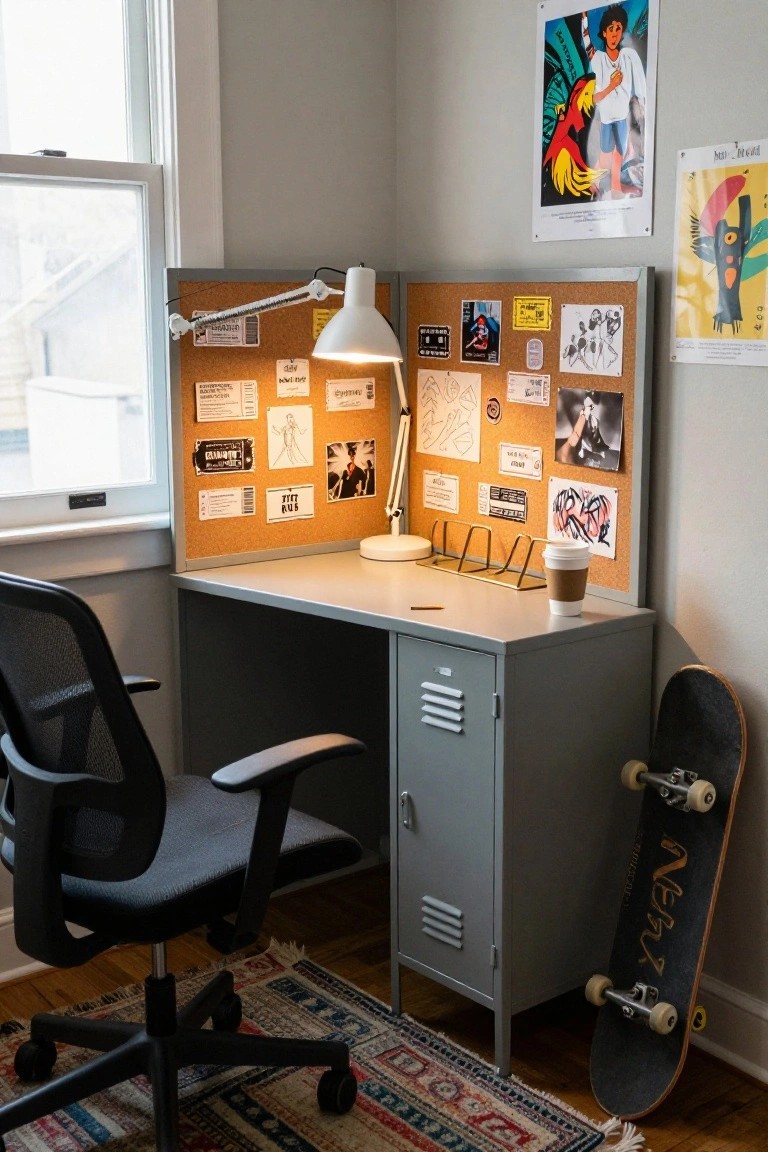
Many people like adding large corkboard panels around a corner desk so notes, sketches, and reference images stay visible without cluttering the surface. The setup turns the walls into a working backdrop that supports focus during long stretches at the desk.
This approach suits small rooms or apartments where floor space is limited. Mount the boards at seated eye level, pin a mix of practical lists and creative visuals, and keep only a lamp and a few tools on the desk itself.
Built-In Lighting Over A Corner Desk
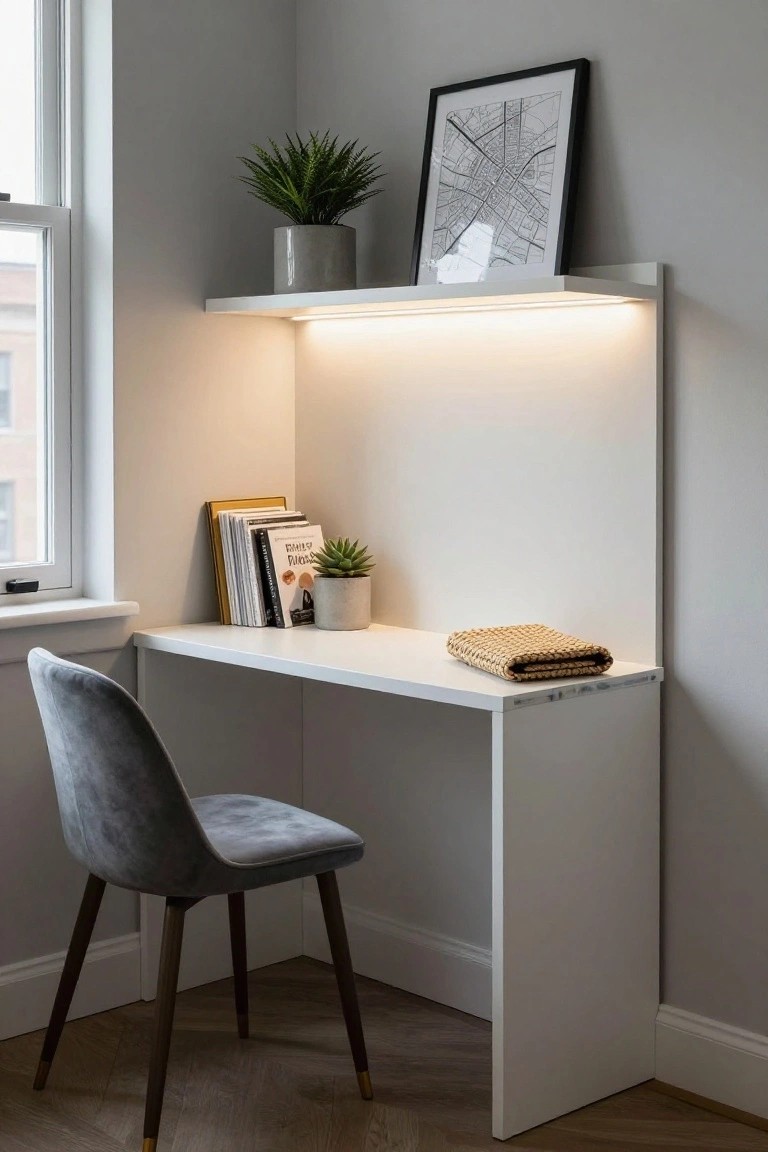
A floating shelf with a light strip underneath gives the desk a soft, even glow that stays gentle on the eyes. This kind of lighting turns a plain corner into a quiet place to sit and work without needing a big lamp taking up surface space.
It suits small bedrooms or apartments where you want one calm spot for reading or writing. Keep the desk clear and the walls light so the glow stays the main feature rather than competing with clutter.
Choose Natural Materials For A Calmer Desk Spot
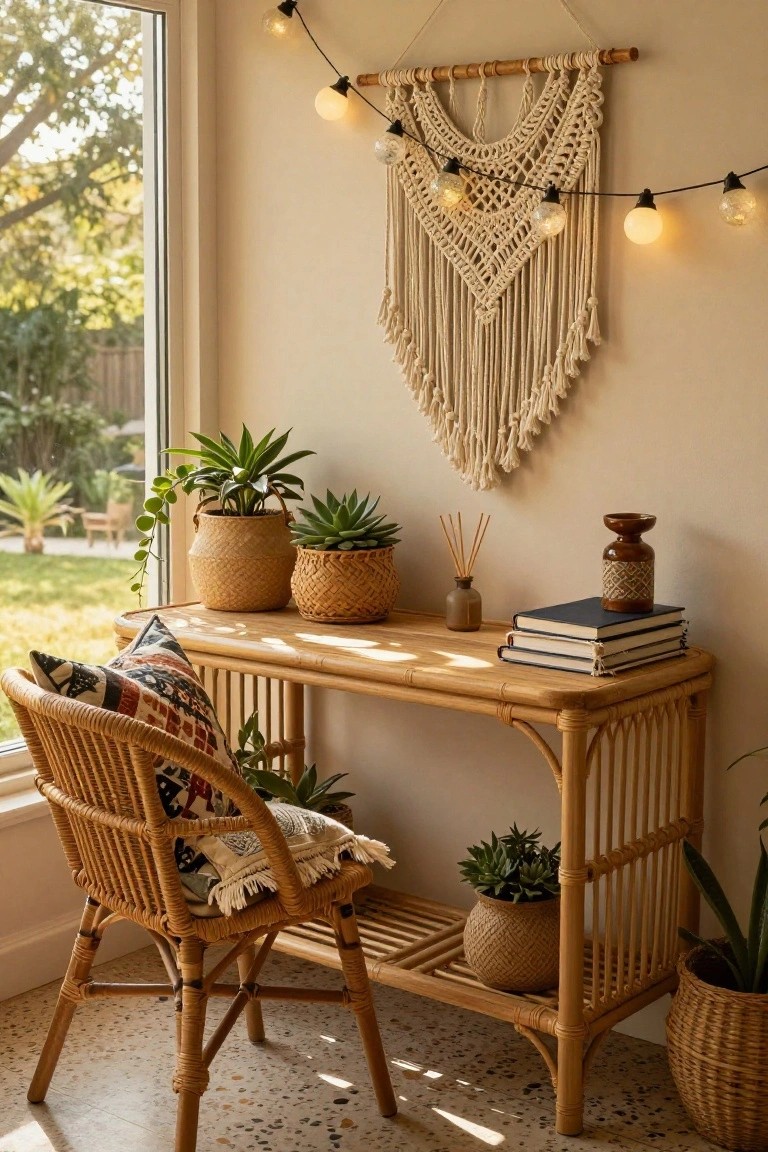
A desk corner feels more inviting when it uses light wood and woven pieces instead of heavier or darker furniture. The rattan chair and baskets add texture that keeps the space from feeling stiff while the plants bring a bit of life that helps the mind settle.
This approach works especially well in small rooms or apartments where you need a quiet place to focus without much extra space. Keep the surface fairly clear and let the natural tones and greenery do the work so the area stays simple and easy to maintain.
Keep Desk Decor Minimal for Better Focus
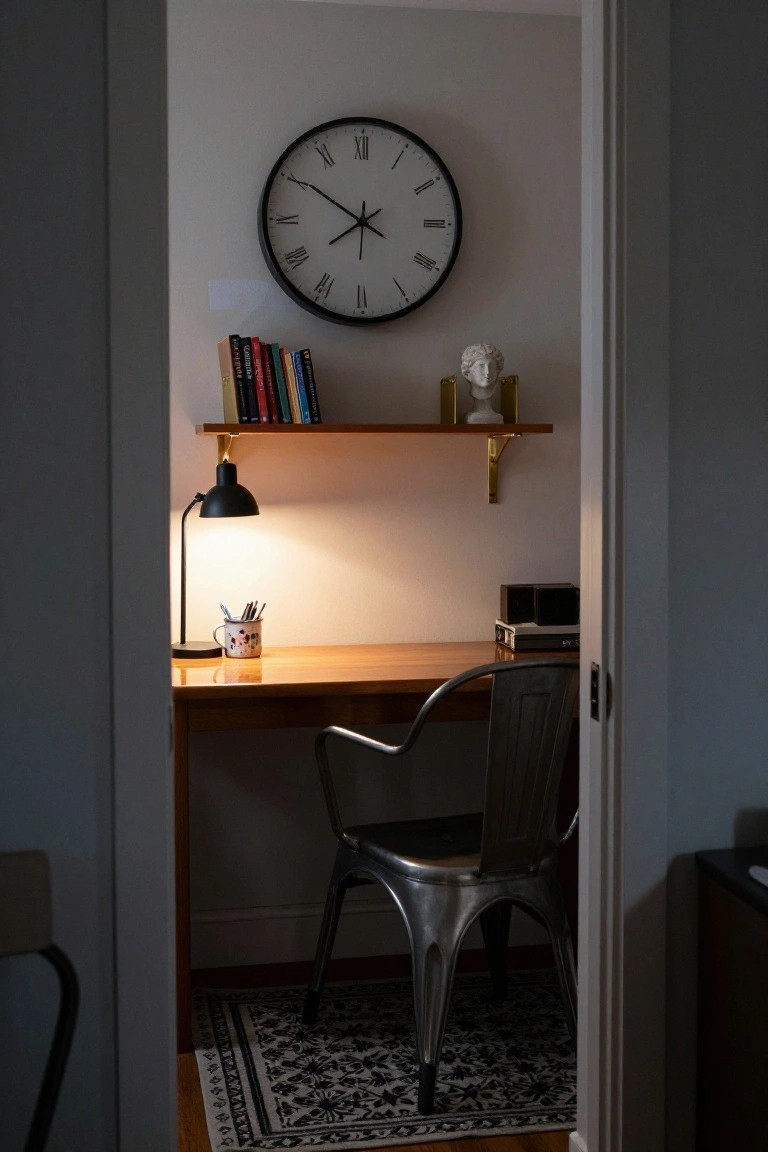
A small workspace feels calmer when you limit what sits on the desk and on the wall above it. A narrow shelf holds just a row of books and one small object, while a simple clock keeps the eye from wandering. The rest of the surface stays clear except for a lamp and a cup of pens.
This kind of setup works best in a tight corner or alcove where you can close the door or face away from the rest of the room. Use a chair that slides fully under the desk when you finish, and stick to one or two wall items so the space stays quiet rather than busy.
Tuck a Desk Into a Corner Niche

Placing a desk in a corner with an arched niche above it creates a quiet spot that feels naturally set apart. The wood surface and soft chair keep things simple, while the recessed shelf holds just one or two items so the area stays uncluttered.
This works best in smaller rooms or homes where you want the workspace to feel calm rather than busy. Keep accessories minimal and choose warm wood tones so the corner stays inviting without pulling focus from your work.
Frequently Asked Questions
Q: How do I keep a tiny corner from feeling cramped once I add the desk and a few cozy touches?
A: Stick to one or two pieces that serve double duty, like a narrow desk with built-in shelves. Leave some floor space clear so you can still stretch your legs. A single soft lamp and a small cushion often add warmth without crowding things.
Q: What works best if I want to use the spot for both work and quick breaks?
A: Pick a chair you can lean back in comfortably and add a small side table or tray nearby. Keep a throw blanket within reach for those moments when you need to pause and reset. This way the corner supports focus without forcing you to stay rigid all day.
Q: My setup feels a bit flat even after following a few ideas. How do I add depth?
A: Layer different textures like a woven mat under the chair and a knit cover on the seat. Change the angle of your light so it hits the wall gently instead of shining straight down.
