

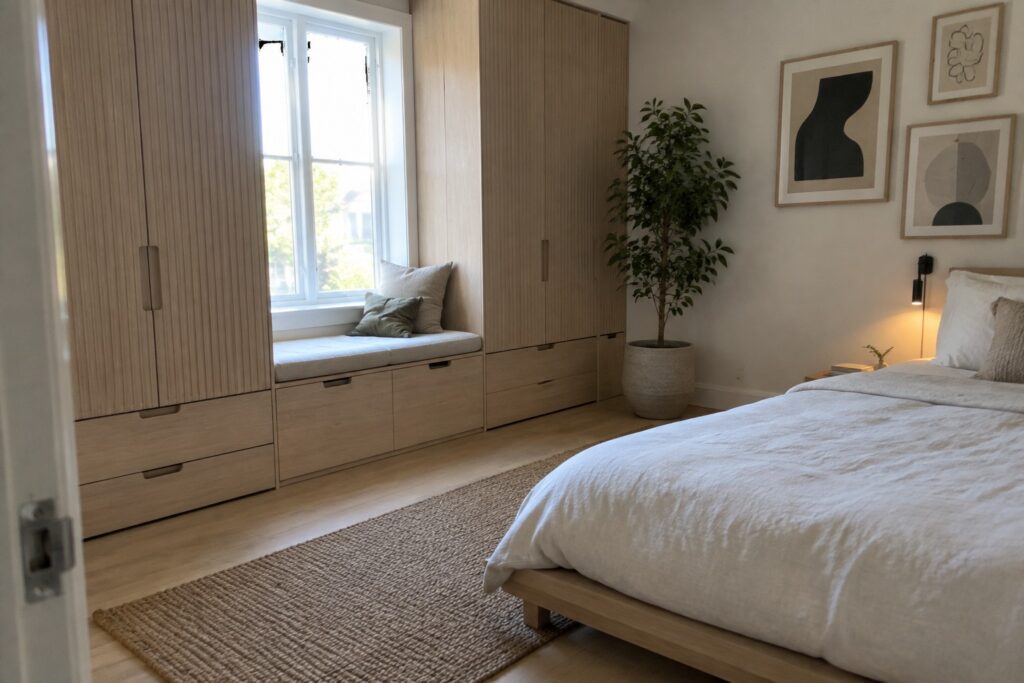
I often find that a bedroom starts to feel more organized once the wardrobes and drawers are placed where we actually reach for them most often.
It is easy to focus on style when picking storage but the real test comes after a few weeks of living with the layout.
In my own space I noticed that low drawers beside the bed made a bigger difference than I expected because they keep everyday items within easy reach without standing up.
Tall wardrobes can change how light moves through the room so it helps to consider window placement before committing to a certain height.
Some ideas deserve a trial run.
Built-In Wardrobes And Drawers
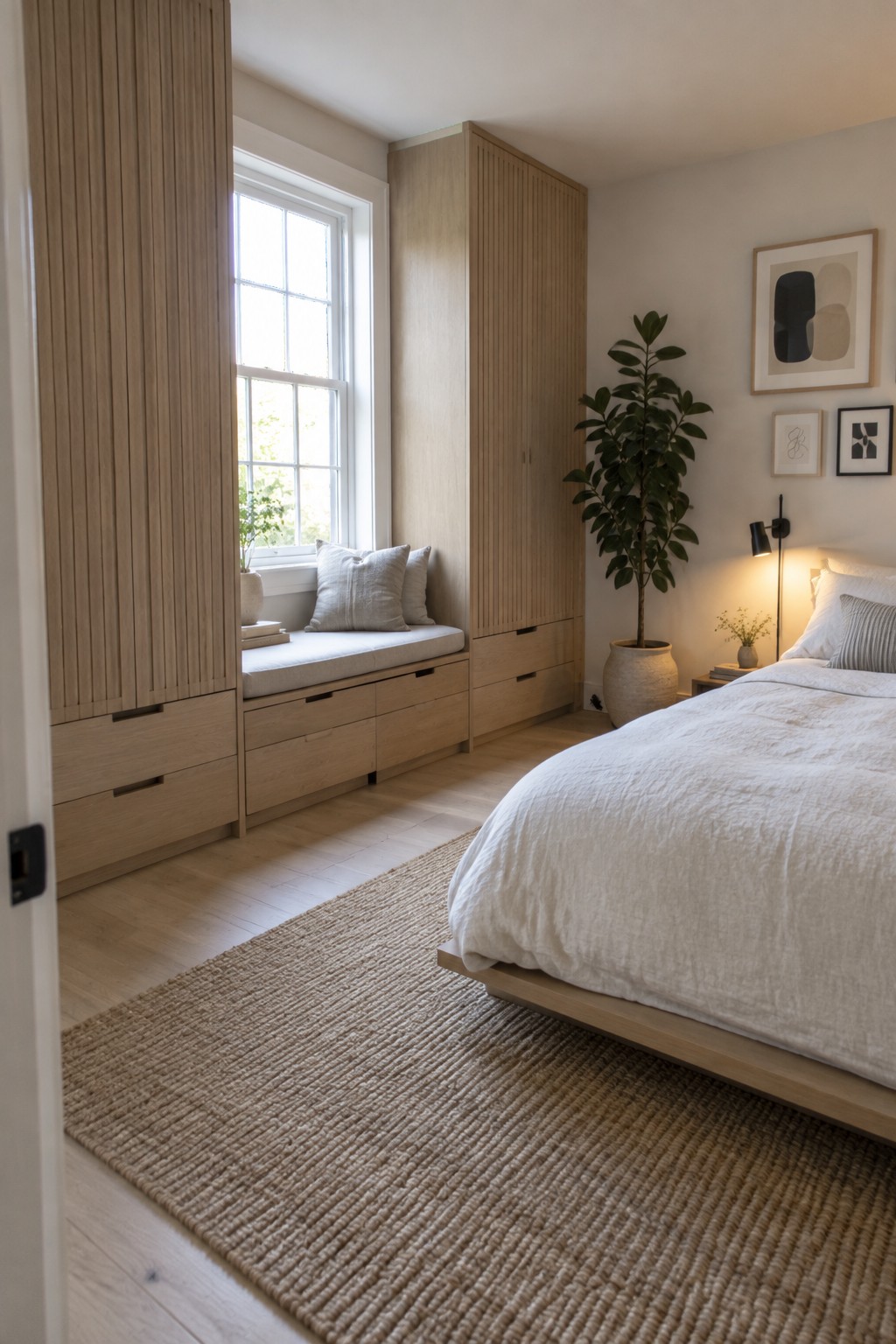
Built-in units that combine tall wardrobes with rows of drawers underneath give you a lot of storage without crowding the room. The clean lines keep everything looking calm, and you avoid the scattered look that comes from mixing different standalone pieces.
This setup works especially well in bedrooms where floor space is limited or where you want the walls to feel more finished. It suits homes that already have some built-in character, and it helps if you keep the wood tone consistent so the whole run reads as one piece rather than separate furniture.
Combine A Tall Wardrobe With Low Drawers
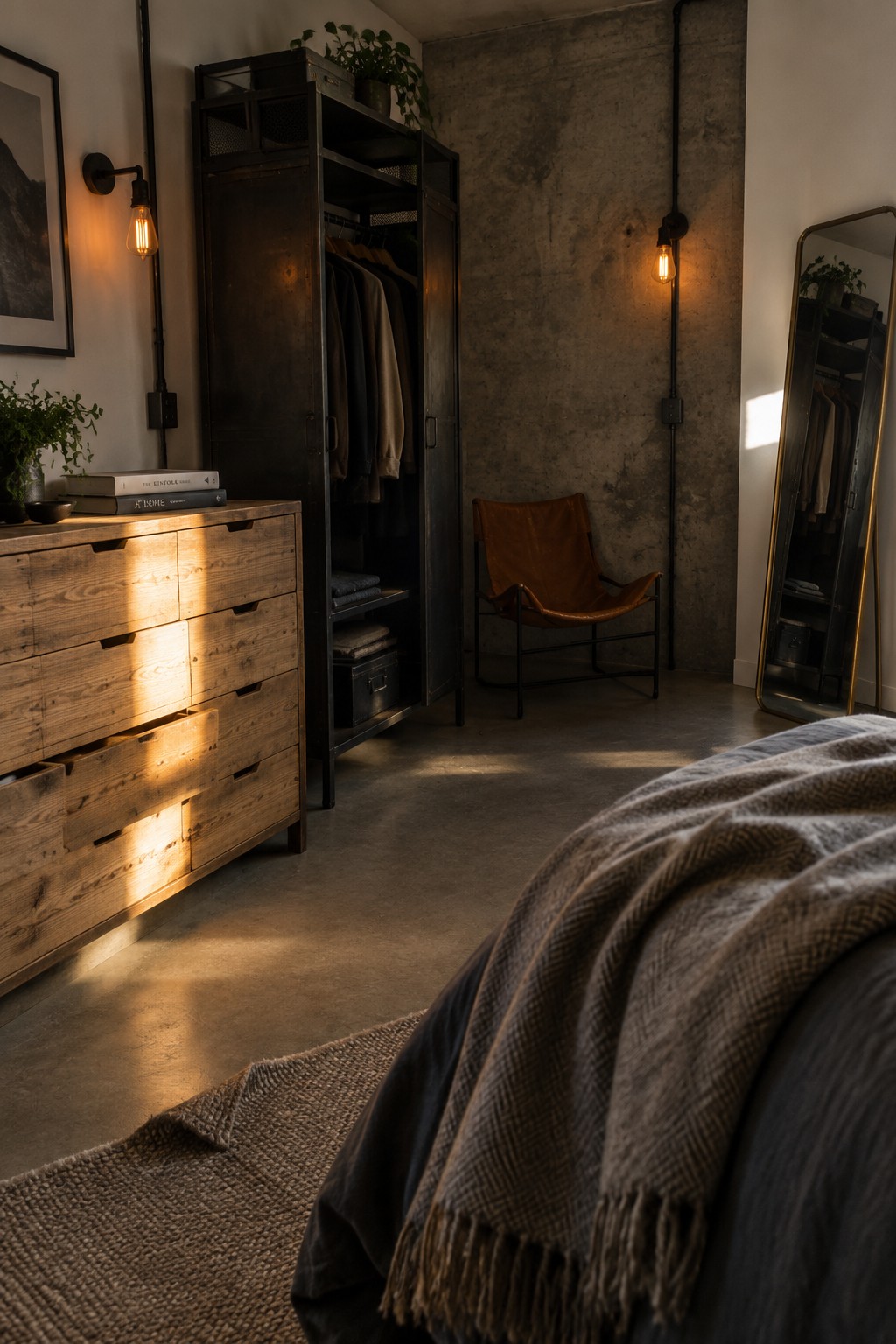
A tall wardrobe paired with a low dresser gives you two kinds of storage in one area. The wardrobe takes care of hanging clothes and less-used items on upper shelves, while the drawers hold folded things you reach for often. This split keeps the room from feeling crowded with too many separate pieces.
It works especially well in bedrooms that do not have built-in closets. Place the wardrobe against the longest wall and keep the dresser beside it so both stay easy to use. Dark finishes on the wardrobe and lighter wood on the drawers add some contrast without making the space feel heavy.
Wardrobes With Drawers Built Inside
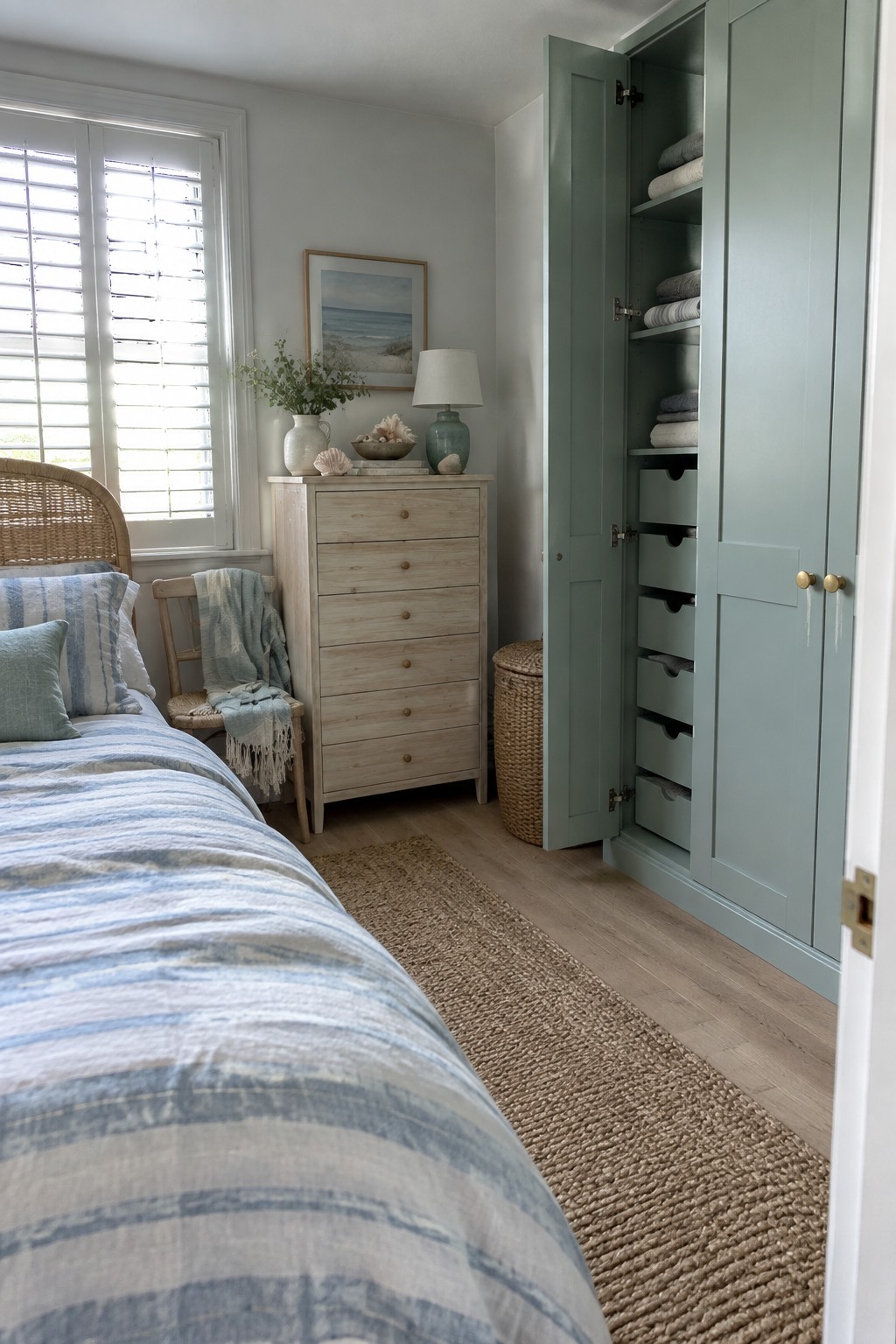
A tall wardrobe that includes drawers inside works well when you need more folded storage but do not want another big piece taking up floor space. The doors close over everything, so the room stays looking tidy even when the inside holds quite a bit.
This setup suits smaller bedrooms or any room where you want one tall storage piece rather than several shorter ones. Keep the drawers for everyday items and use the top shelves for things you reach less often. A simple wood dresser next to it can handle overflow if needed.
Platform Beds With Built-In Drawers
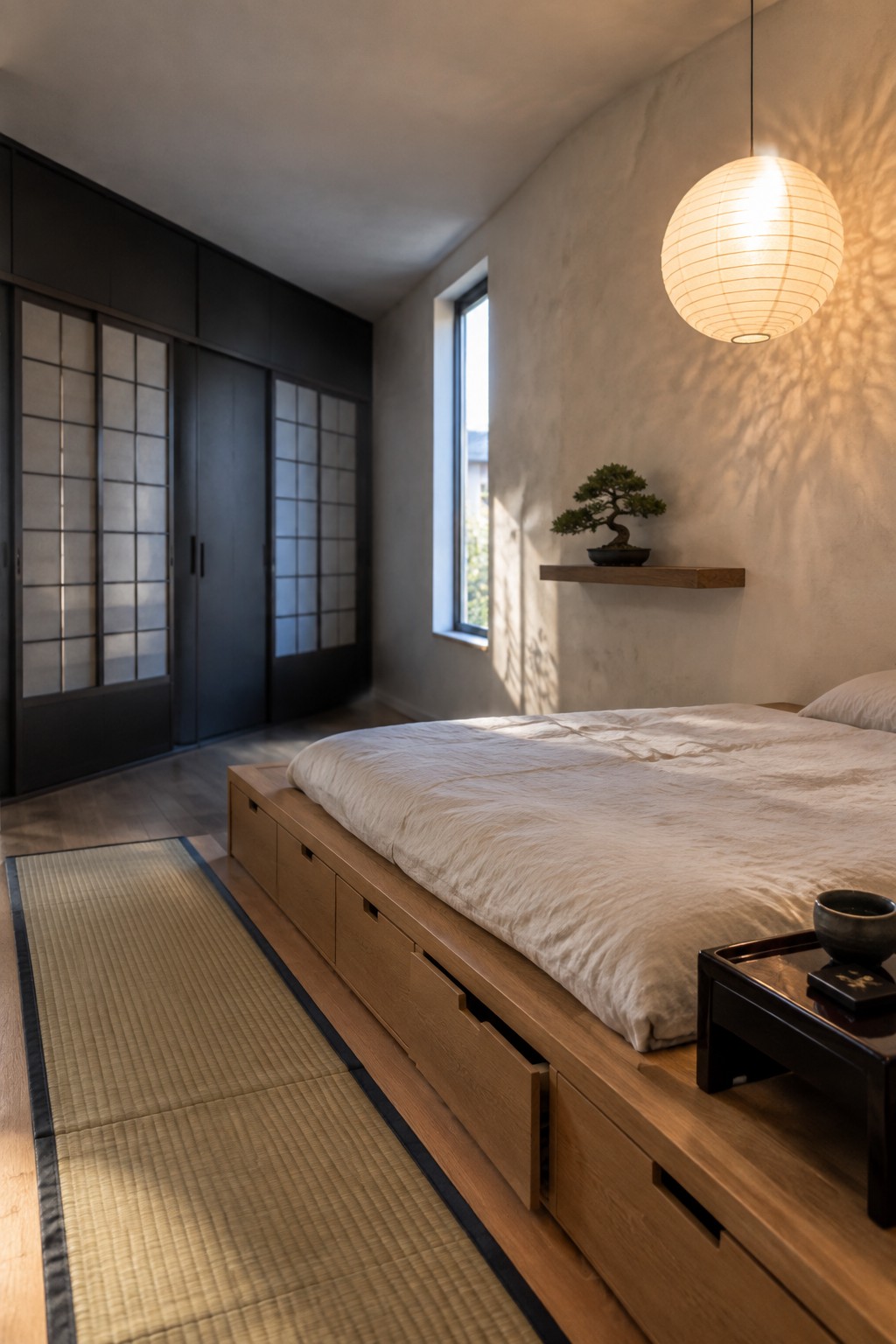
A platform bed with drawers built right into the base gives you storage without adding another piece of furniture to the room. It keeps the floor clear and works especially well when you want a lower, simpler look that still holds plenty of clothes or linens.
This setup suits smaller bedrooms or anyone trying to reduce visual clutter. Just check that the drawers slide out fully once the bed is placed and that the overall height still feels comfortable with your mattress.
Wardrobes With Drawers And Open Shelves
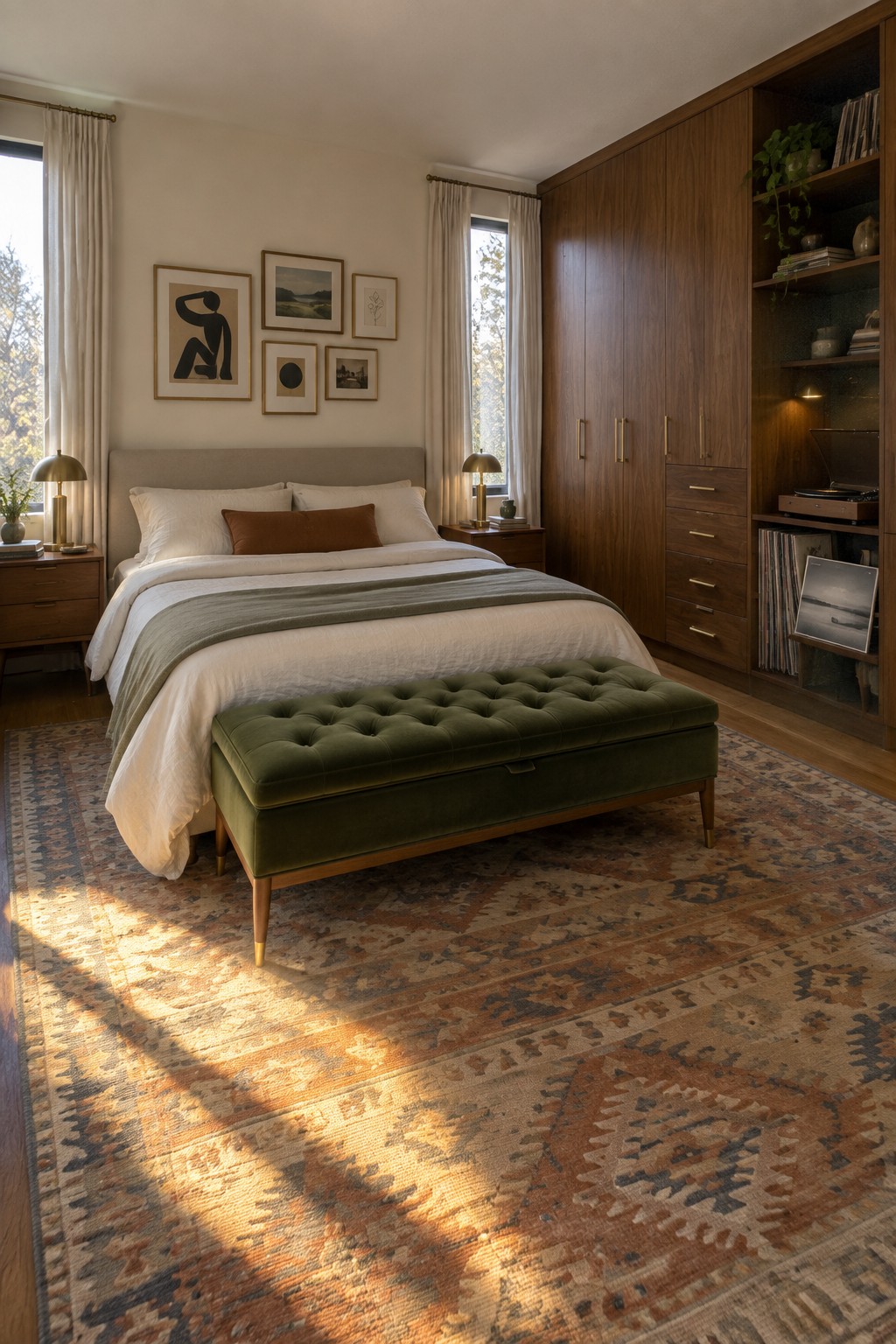
A tall wardrobe that combines hanging space with drawers and a few open shelves gives you storage in one piece instead of scattering smaller units around the room. This setup works well when you want to keep the floor clear and still have a spot for books or records without adding more furniture.
It suits bedrooms that lack built in closets and works best in medium sized rooms where you need both closed and open storage. Keep the open shelves to just a few items so the unit stays looking neat rather than crowded.
Wardrobes With Open Shelves And Drawers
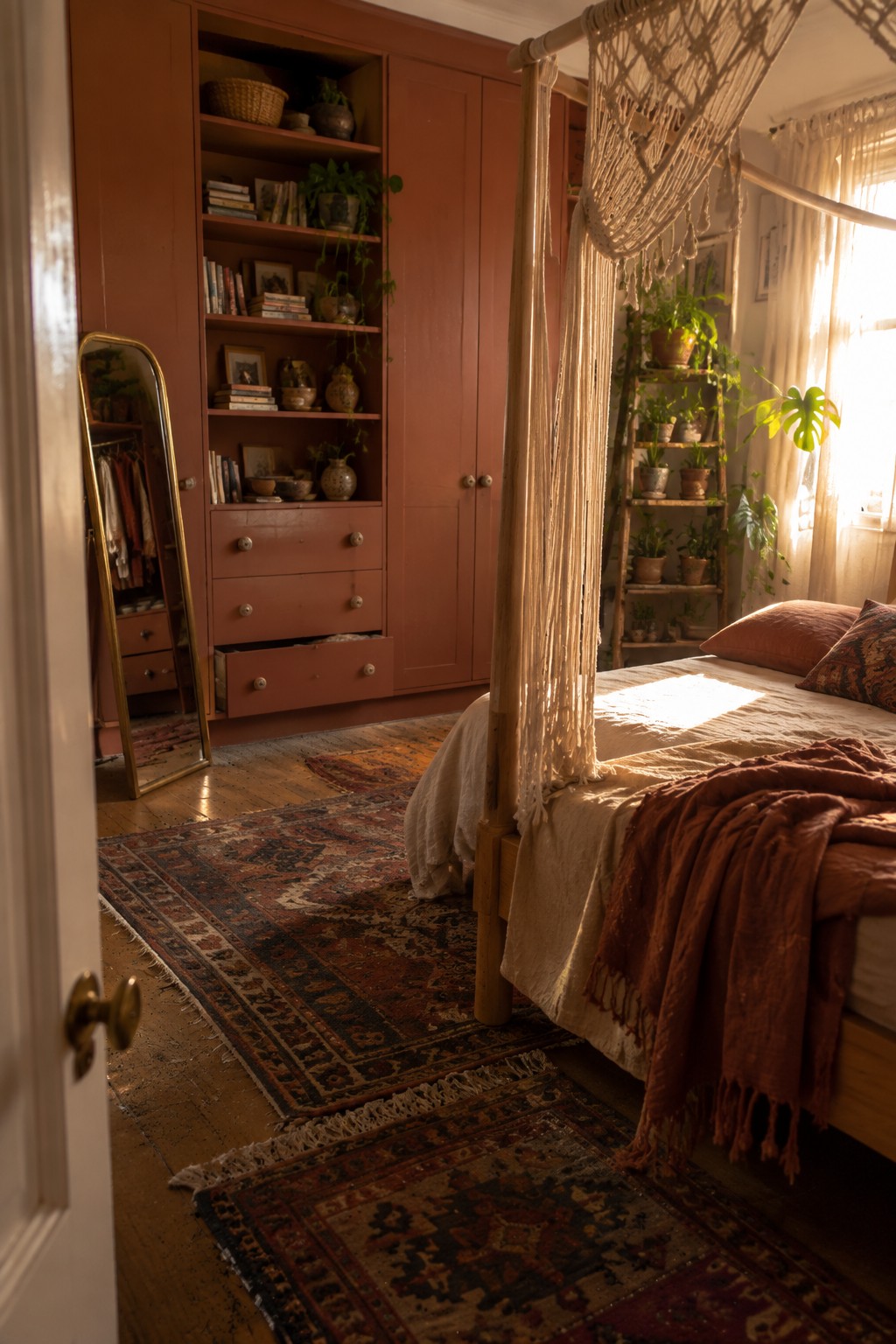
A tall wardrobe painted in a warm color can handle most of your bedroom storage in one piece. The open upper shelves keep everyday items visible and easy to reach while the drawers below hide the rest, so you avoid needing a separate dresser or extra cabinets.
This setup works best in rooms that already have wood floors and a few rugs to soften the look. Try matching the wardrobe color to your bedding or curtains so the whole space feels calm instead of busy.
Loft Beds With Drawers Below
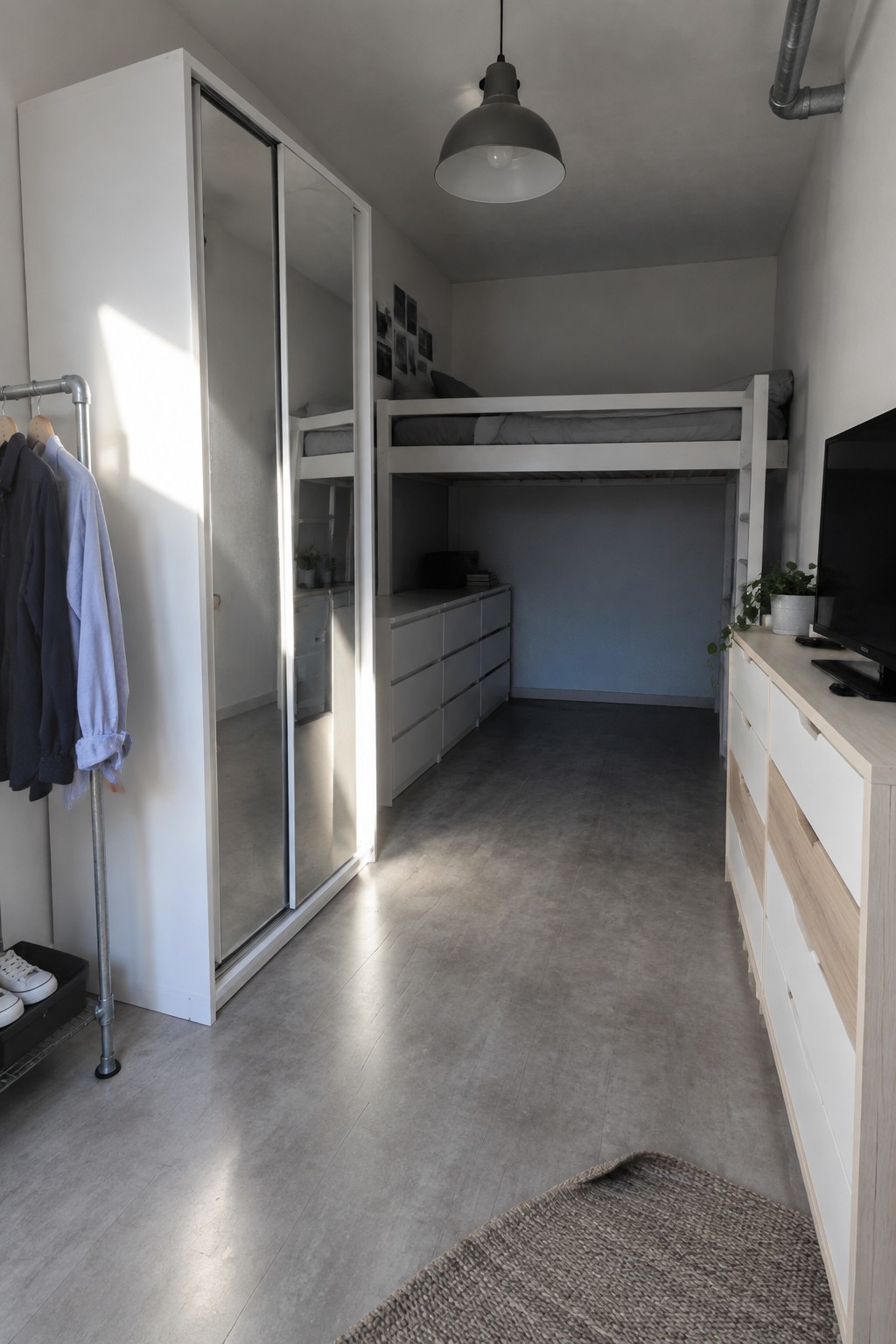
Raising the bed off the floor opens up useful space in smaller bedrooms. A loft setup lets you fit a full row of drawers right underneath, which keeps the room from feeling crowded while giving you plenty of storage for clothes and linens.
This arrangement works best in apartments or rooms where floor space is tight. Pair the loft bed with a tall wardrobe on another wall so everything stays organized without needing extra furniture scattered around.
Built-In Wardrobes With Window Seat Drawers
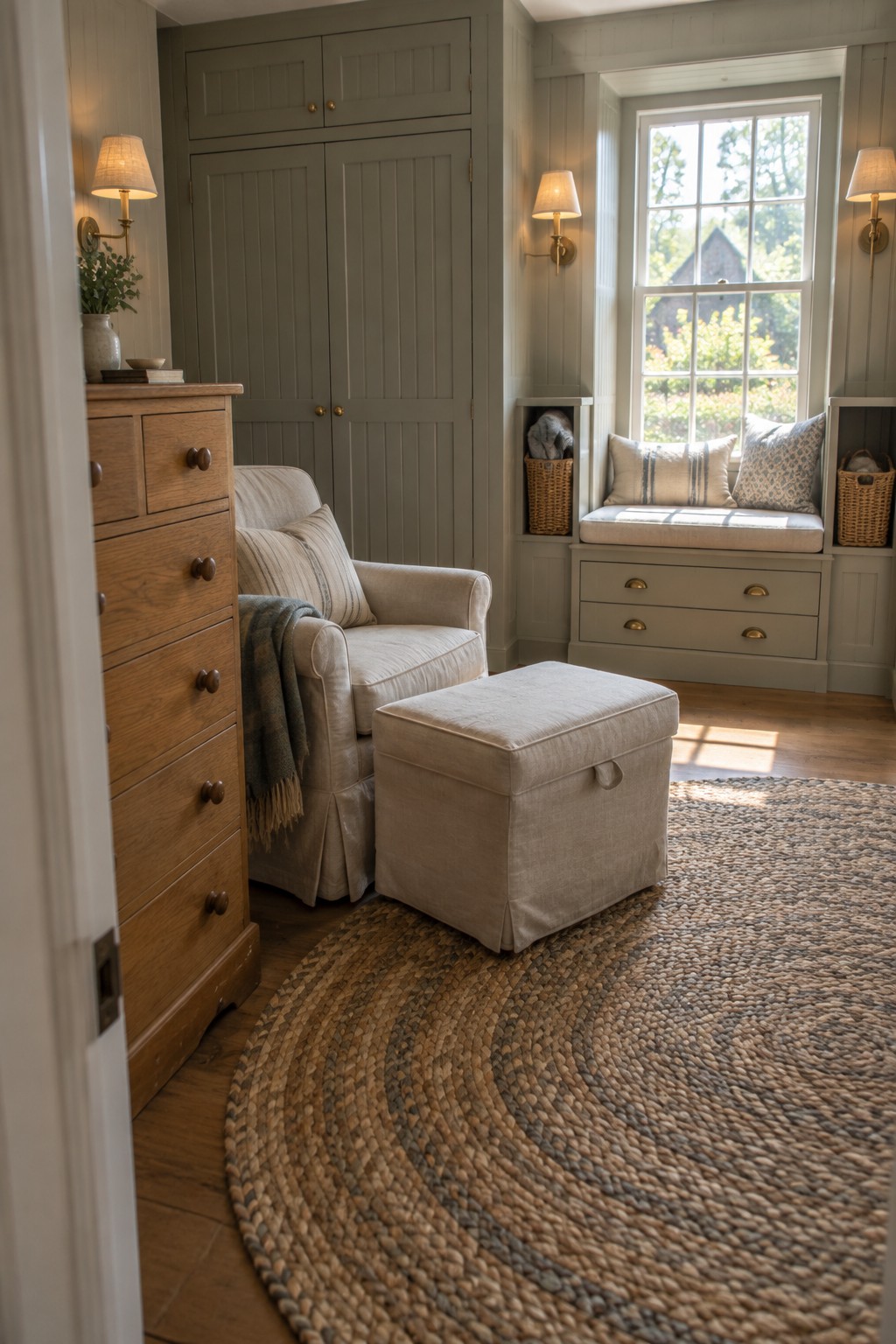
Mixing tall built-in wardrobes with a window seat that has drawers underneath gives you two kinds of storage in one area. The wardrobes handle hanging clothes while the lower drawers keep things you reach for often without needing extra furniture taking up floor space.
This setup works best in bedrooms where the window sits next to a wall that can take cabinetry. It keeps the room feeling calm since everything lines up at the same height and finish, and you still have room for a small dresser elsewhere if you need it.
A Bench At The Foot Of The Bed Adds Storage
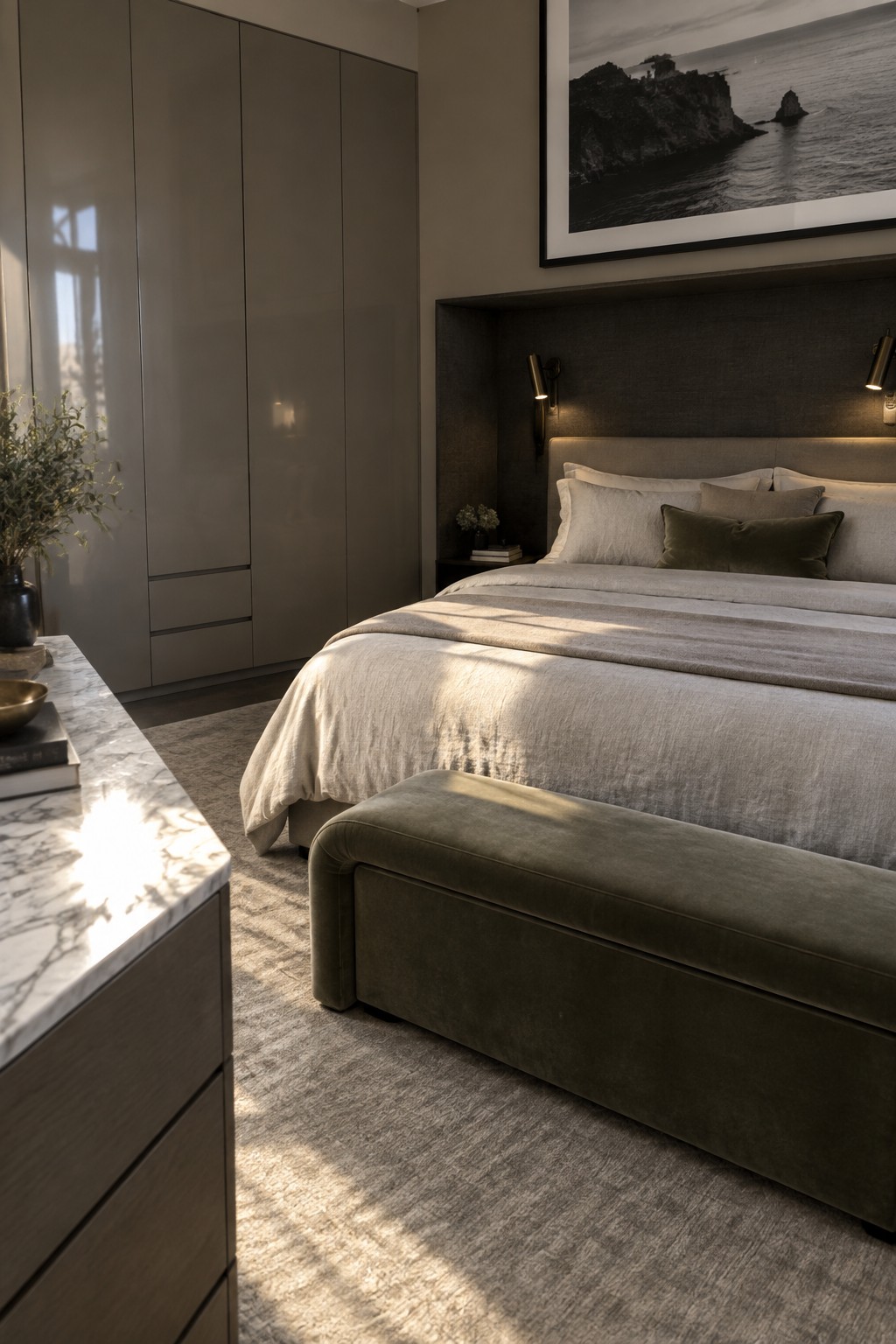
Placing a storage bench right at the end of the bed gives you an extra spot to keep extra bedding or clothes without needing another piece of furniture that crowds the room. When you already have built-in wardrobes along one wall, this keeps the storage simple and lets the bed stay the main focus.
This works best in bedrooms that have enough length for the bench to sit clear of the main walkway. It suits homes where you want the storage to feel built in rather than added on, and the bench can still be used for sitting when you need it.
Built-In Storage Around Bunk Beds
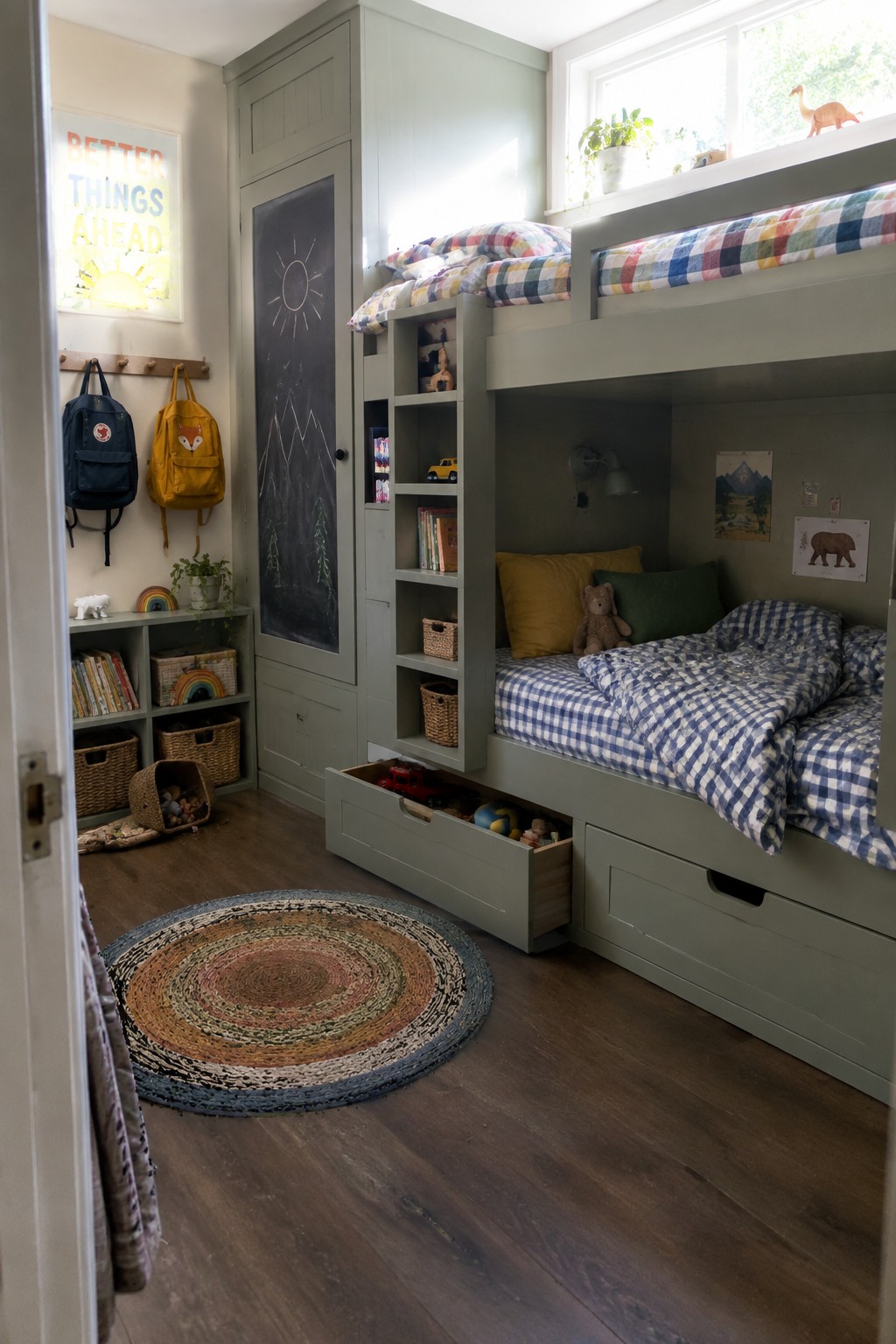
Built-in storage makes the most of the space under and beside bunk beds. Drawers that pull out from the base and shelves tucked into the side unit keep toys, clothes, and books organized without adding extra furniture to the room.
This approach works best in smaller bedrooms where floor space is limited. It suits homes with kids who have lots of belongings, though you need to plan the layout early so the built-ins fit the bed size and wall space properly.
Combine A Wardrobe With A Wall Desk For Compact Storage
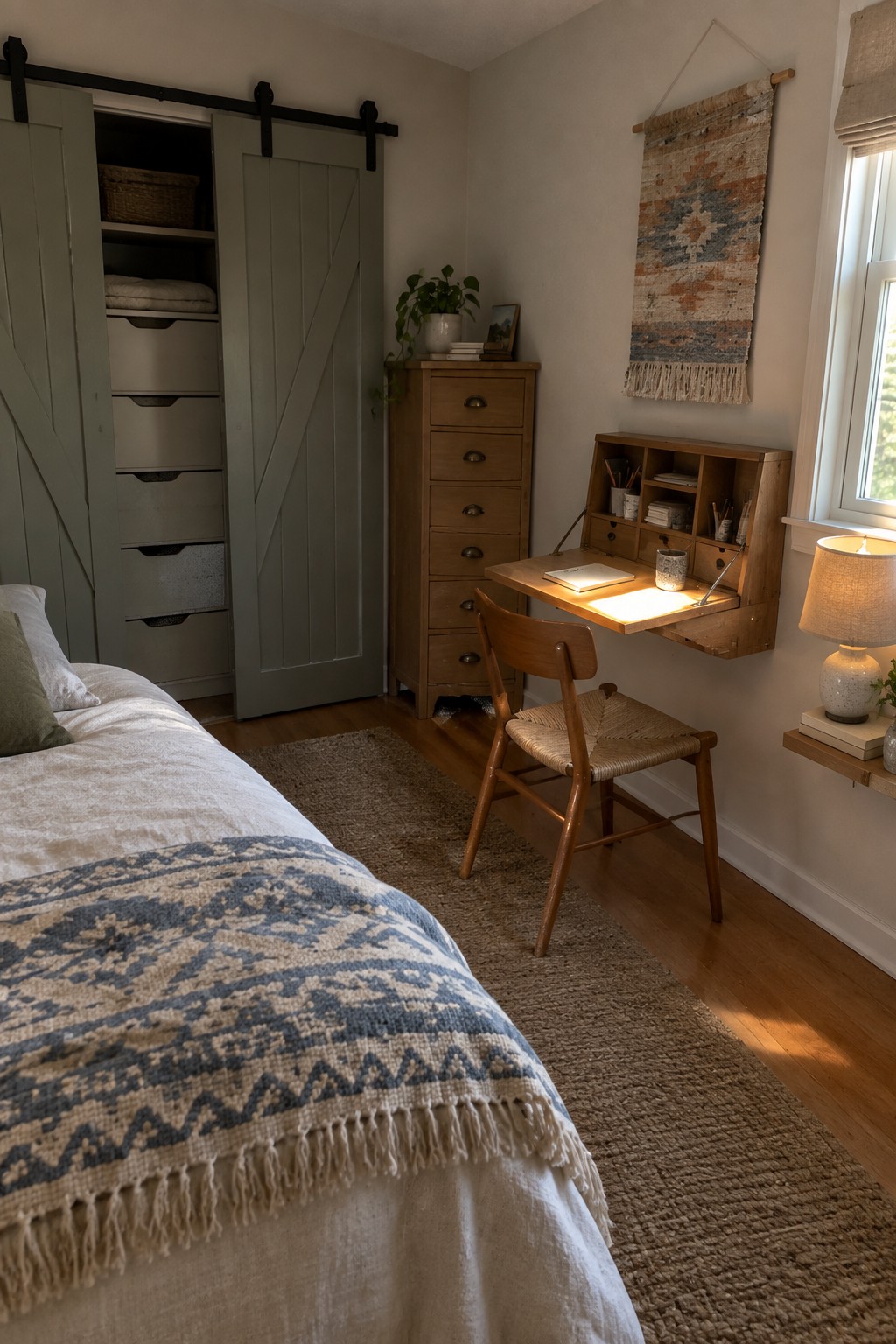
Many small bedrooms gain a lot from adding a wall mounted drop down desk next to the main wardrobe and chest of drawers. It creates a usable workspace without taking up floor space that could be used for other things.
This setup works best in rooms where you need both clothes storage and a spot for daily tasks. Keep the desk surface clear when it is folded up and use the small cubbies for supplies you reach for often.
Built-In Wardrobes With Open Shoe Shelves
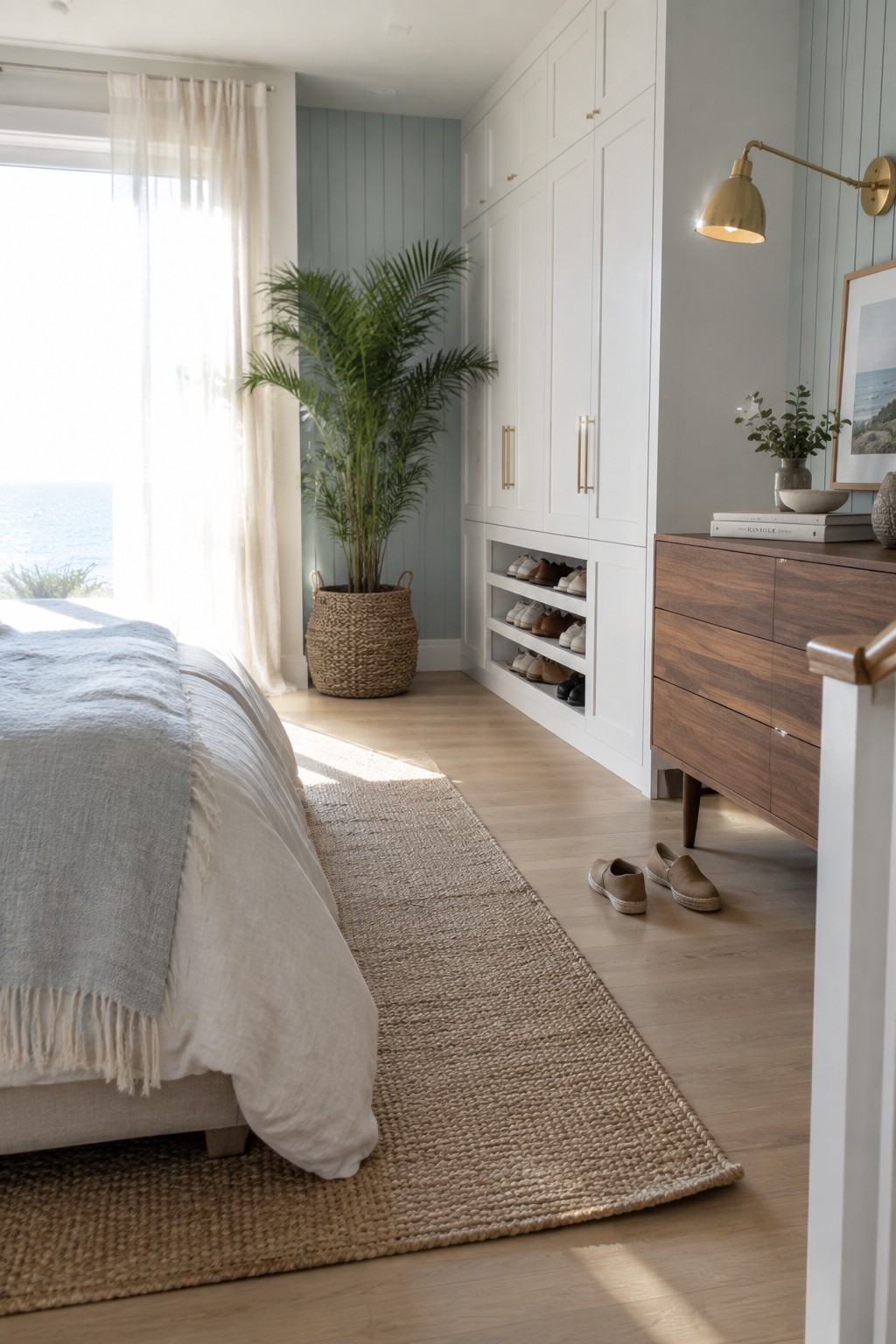
Built-in wardrobes with open lower shelves give you a clean way to store shoes without adding more furniture to the room. The shelves sit right at floor level so everything stays visible and easy to reach, which cuts down on clutter from stray pairs.
This approach works best in bedrooms that already have some built-in cabinetry or where you want to keep the floor clear. It suits homes with light wood floors and simple wall colors, since the open section adds just enough texture without feeling busy. Make sure the shelves are deep enough for boots if you plan to use them year-round.
Built-In Wardrobes And Drawers Keep Storage Simple
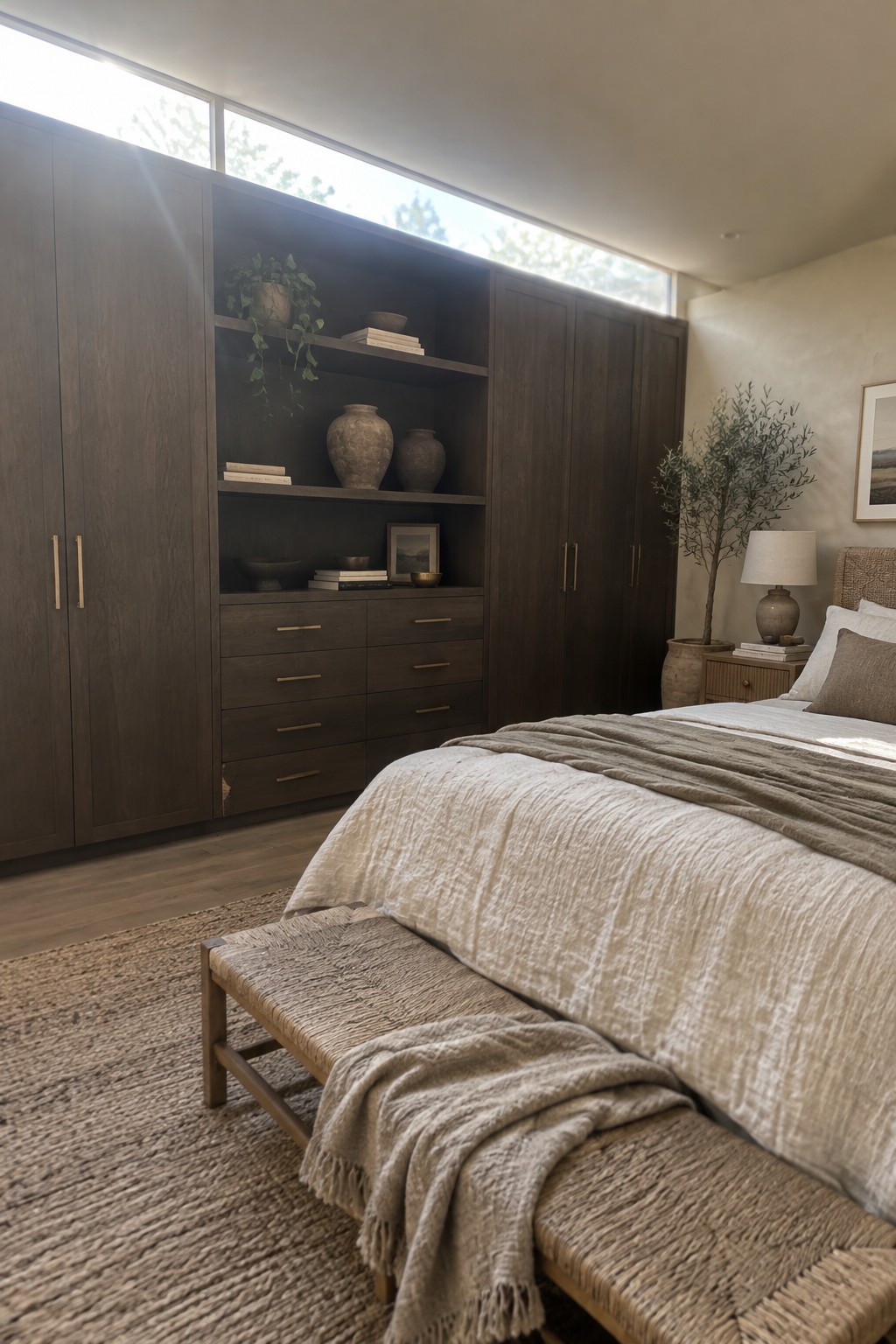
Built-ins like this work well because they combine hanging space, drawers, and a few open shelves in one clean unit. The room stays open and calm instead of crowded with separate pieces of furniture.
This approach suits bedrooms where floor space matters or where you want everything tucked away without a heavy look. It works best when the unit runs floor to ceiling and matches the wall color or wood tone so it feels like part of the room rather than added on.
Built-In Storage That Fits A Loft Bed And Desk
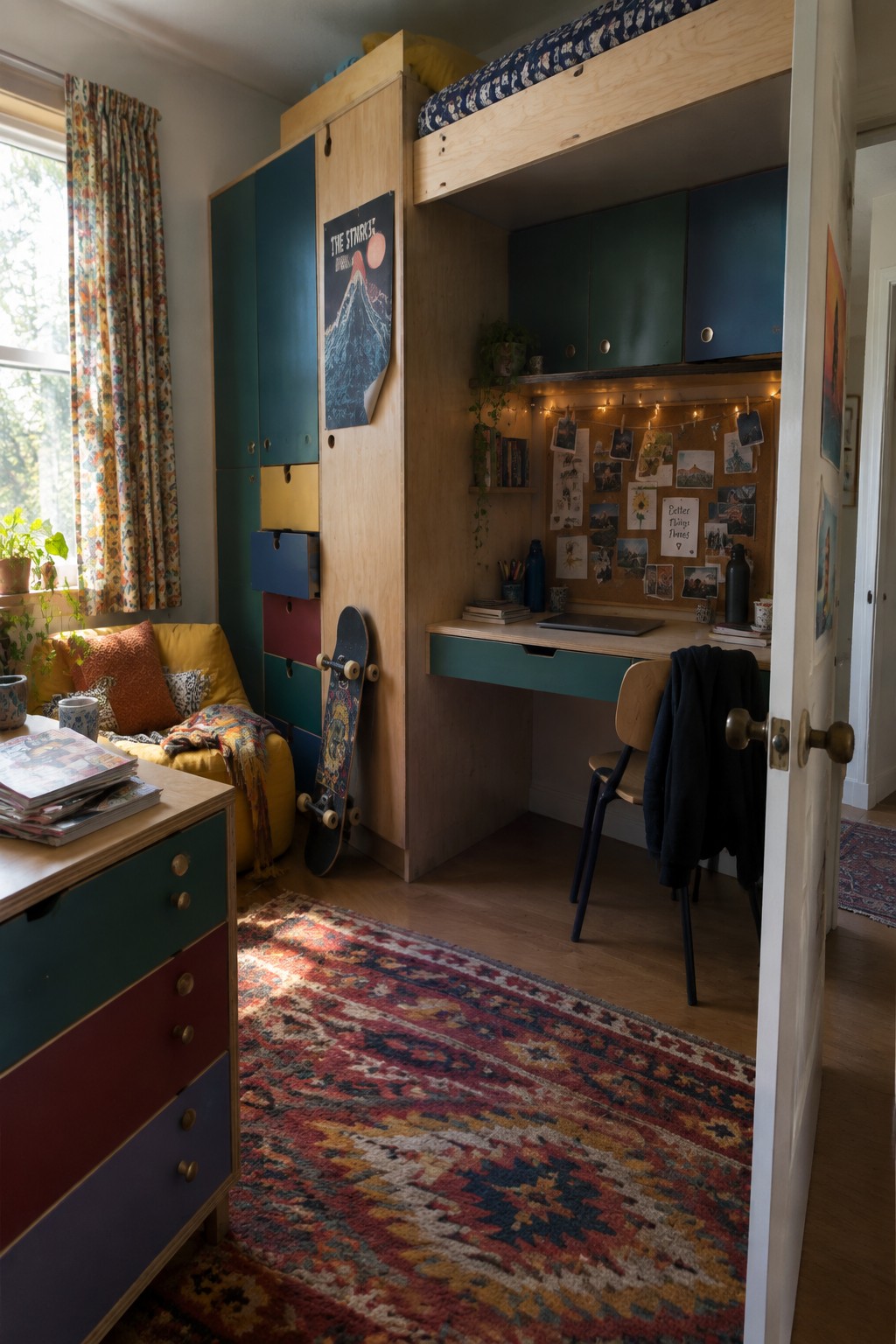
Many bedrooms feel cramped when you try to fit a bed, wardrobe, and desk all in one space. Built-in units solve that by stacking the bed above the work area and wrapping storage around both. The result gives you room to move and keeps everything in reach without extra furniture taking up floor space.
This approach works especially well in smaller rooms or for kids and teens who need both sleep and study areas. You can choose drawer colors to match the rest of the room, and the wardrobe doors blend in with the walls so the whole thing feels like part of the architecture rather than added on later.
Built-In Wardrobes With A Freestanding Dresser
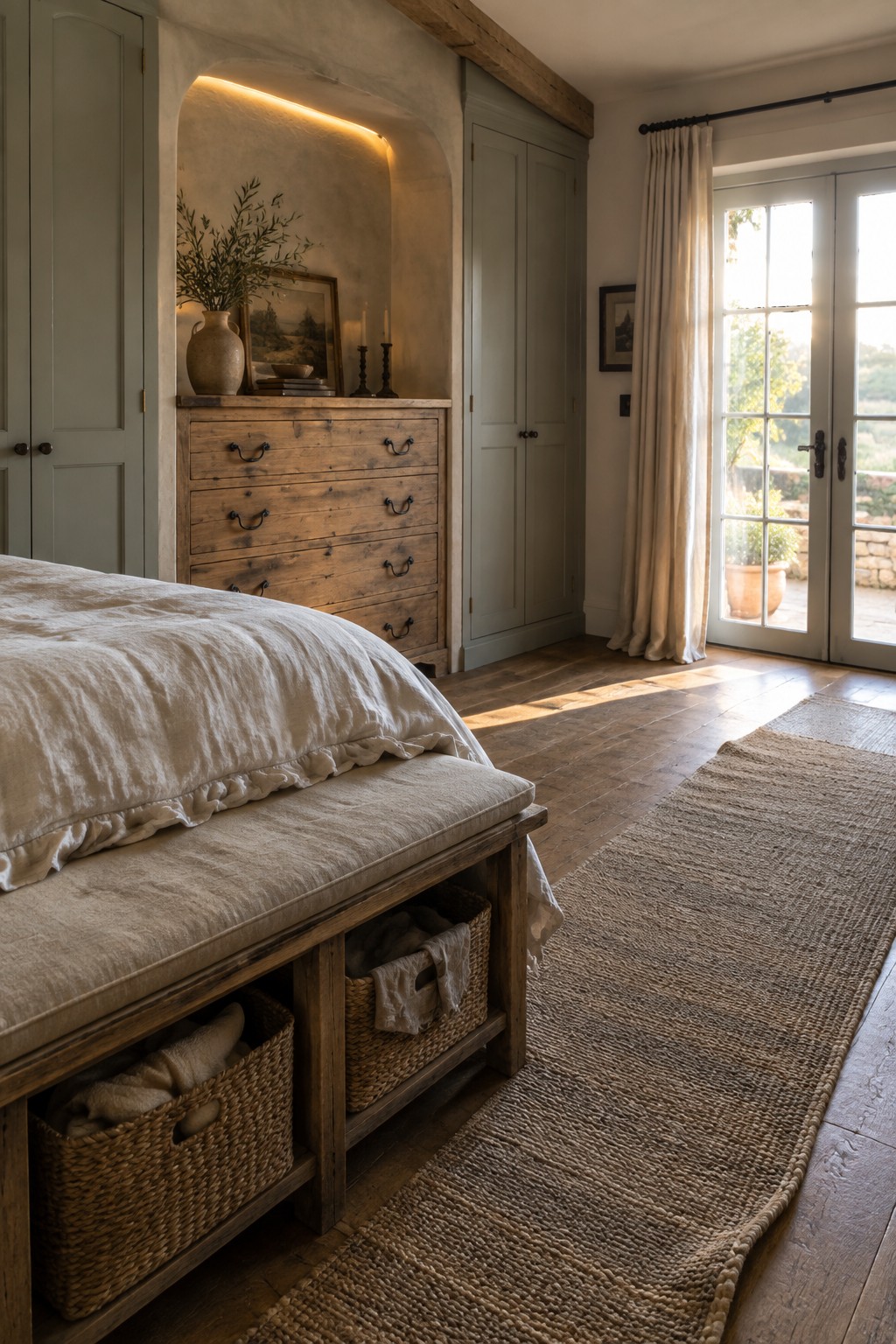
One of the simplest ways to add real storage in a bedroom is to run built-in wardrobes on either side of a dresser. The tall cabinets give you hanging space and hide the clutter, while the dresser in the middle keeps everyday items within reach. It feels more finished than a single big wardrobe unit and still leaves the room open.
This setup works best in a bedroom with a decent stretch of wall and a fairly traditional layout. Keep the dresser a bit lower and in a warmer wood tone so it does not fight the painted built-ins. If the room is small, the mix of closed storage and a few open baskets below a bench can stop things from feeling too heavy.
Built-In Wardrobes With A Low Dresser
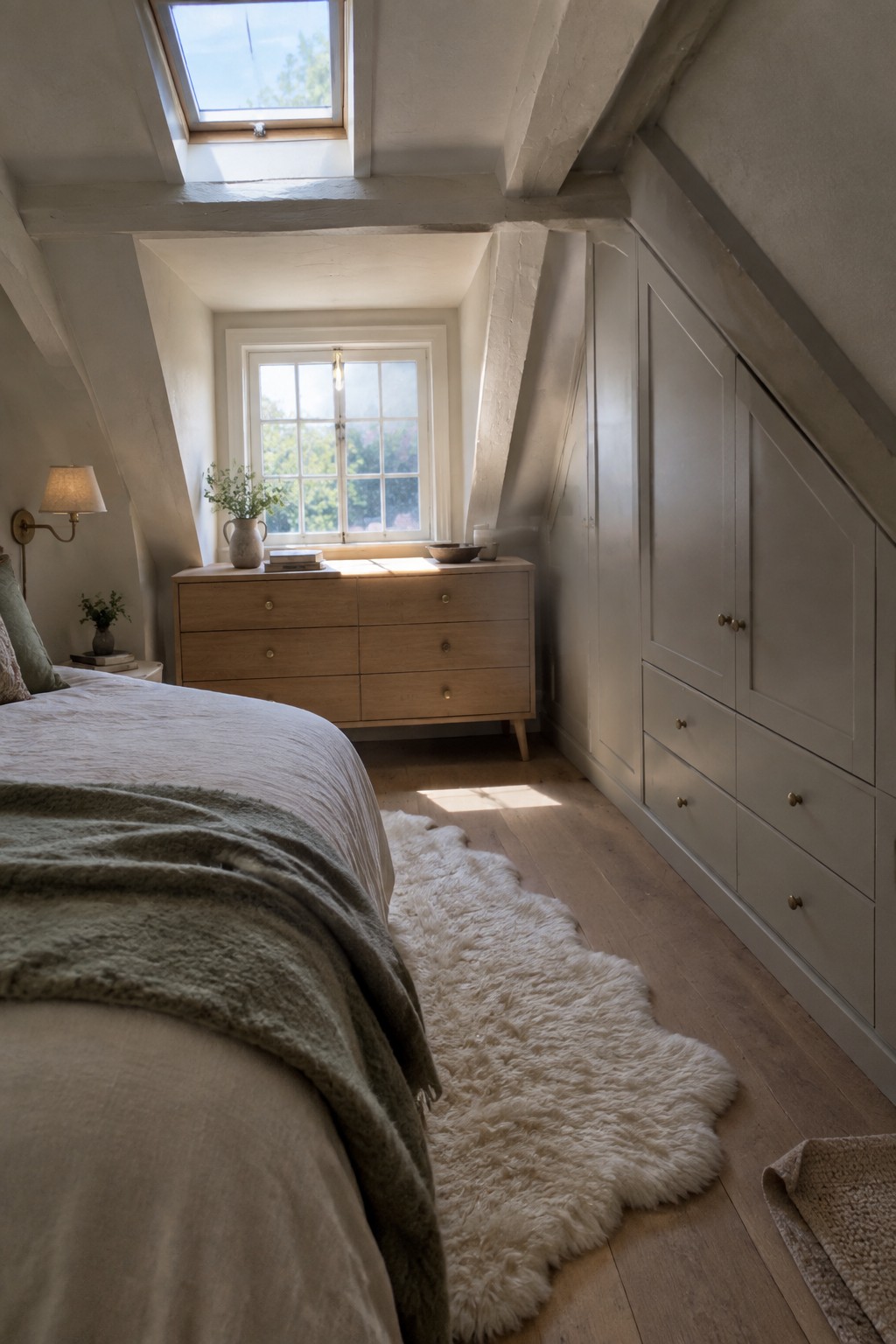
In rooms where the ceiling slopes, built-in wardrobes can be shaped to fit the wall without losing usable space. Adding a low dresser in front of a window gives you extra drawers for clothes while keeping the surface clear for small items.
This combination works best in attic bedrooms or any space with angled walls. It turns awkward corners into practical storage without making the room feel crowded.
Use a Tall Wardrobe with Integrated Drawers
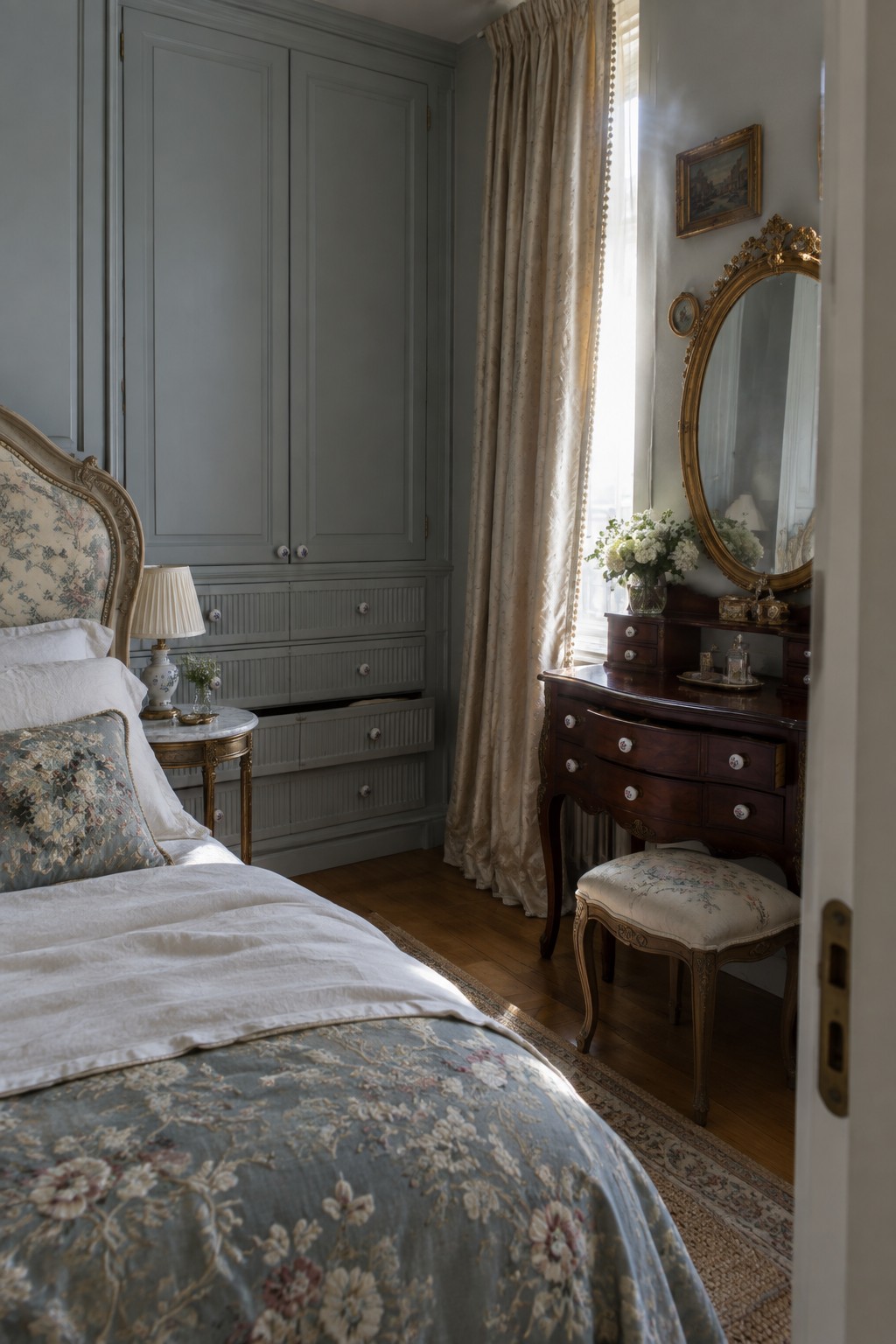
A wardrobe that includes drawers at the base gives you hanging space and folded storage in a single piece. This keeps the room from feeling crowded with too many separate chests while still giving easy access to both types of storage.
It works best in bedrooms that need to stay organized without adding extra furniture along the walls. The vanity can then handle smaller items and daily use without competing for floor space.
Built-In Wardrobes With A Desk Area
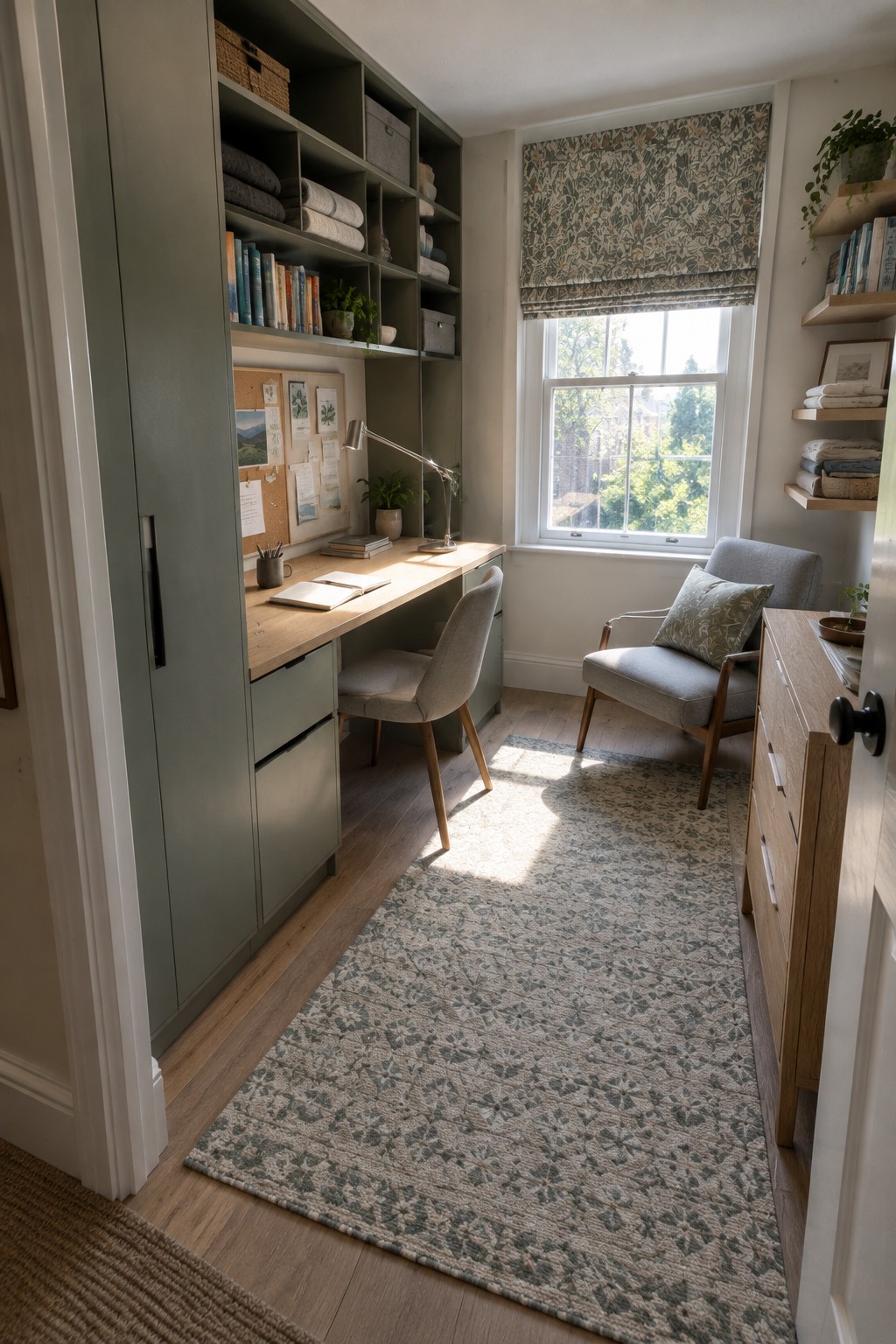
Built-in storage that wraps around a workspace gives you both hanging room and a place to work without eating up extra floor space. The cabinetry can run floor to ceiling, so you get plenty of shelves and drawers while the desk sits neatly inside the same unit.
This setup works best in smaller bedrooms or guest rooms where you want one wall to handle clothes, books, and daily tasks. Keep the desk depth shallow so the chair can tuck in easily when not in use.
Wardrobes With Mirrored Drawer Bases
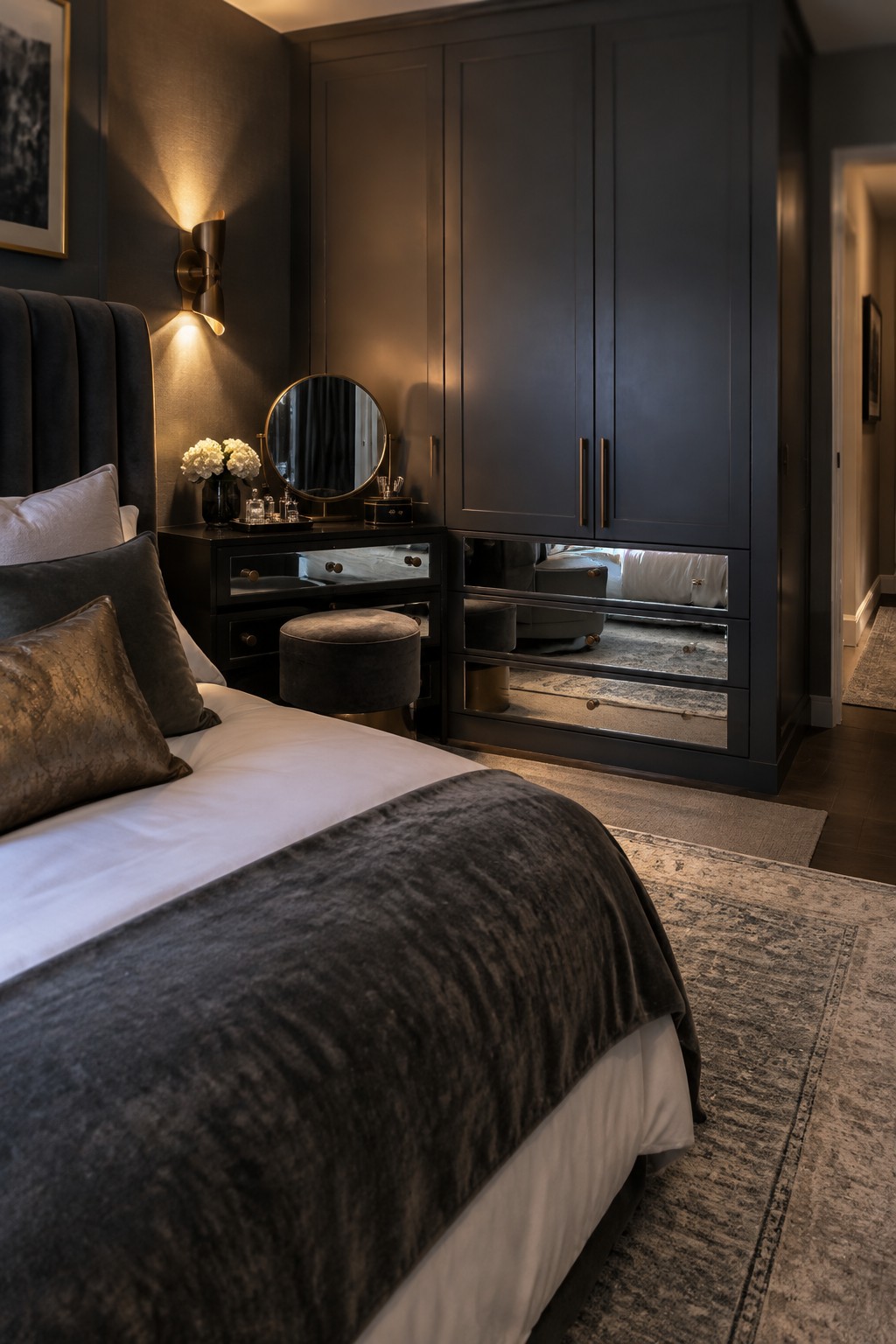
One storage move that keeps coming back in bedrooms is building drawer space right into the bottom of a tall wardrobe. The mirrors on the drawer fronts add a little light bounce without needing extra pieces, and the whole unit stays looking clean and tall.
This setup works especially well in rooms that already run dark or have limited floor space. Keep the mirror frames simple so the storage reads as part of the wardrobe instead of a separate add-on.
Built-In Wardrobes With Separate Drawers
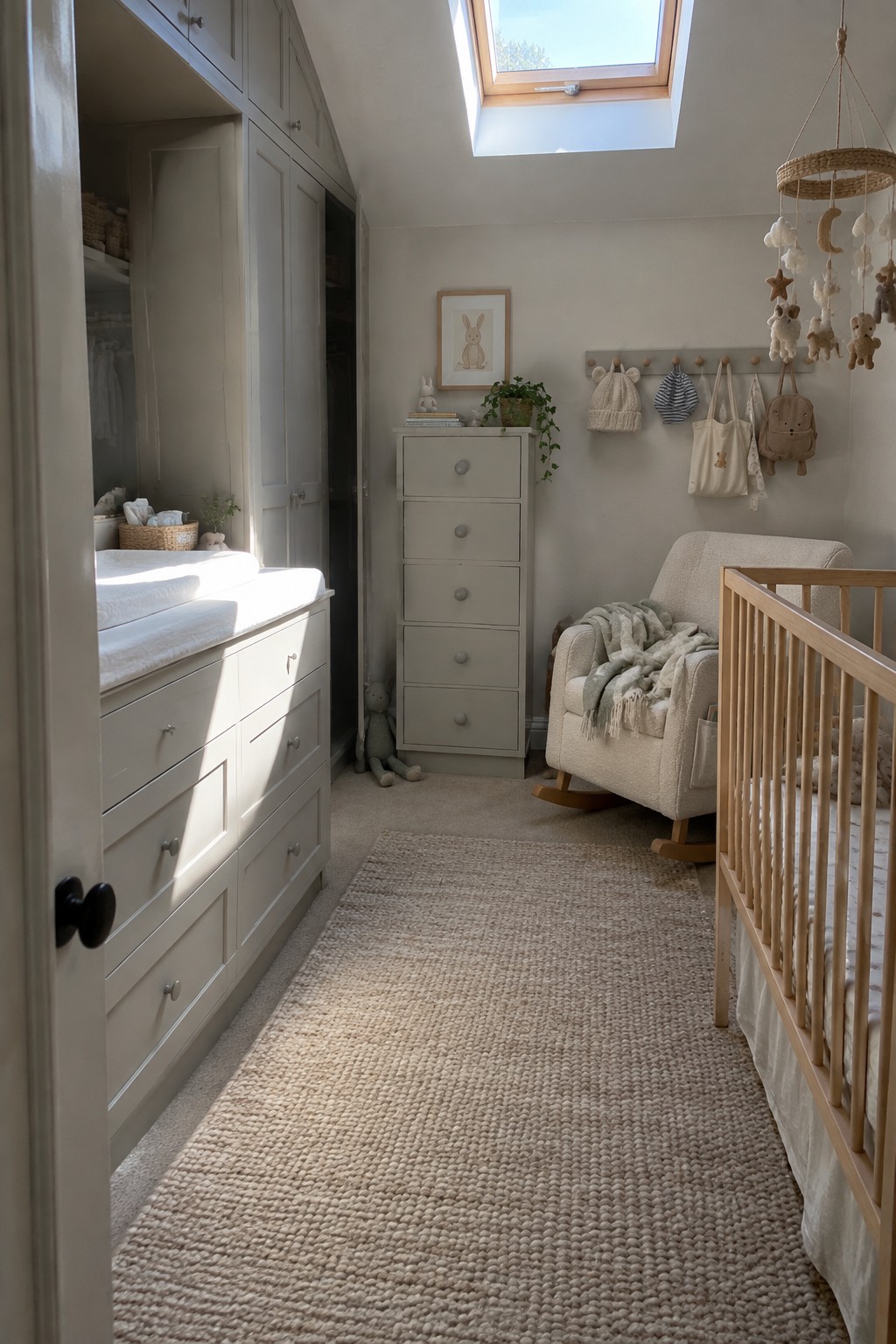
Pairing built-in wardrobes with a few freestanding drawer pieces gives you more storage options without crowding the room. The wardrobe handles hanging clothes and deeper items while the drawers take care of folded things, which keeps everything easier to reach and the space feeling open.
This works well in smaller bedrooms or rooms that need to stay flexible. Match the finish on the drawers to the wardrobe so it reads as one system, then place the pieces where they fit best along the wall. It suits homes that want storage that feels built in but still allows you to move things around later.
Frequently Asked Questions
Q: How much space should I leave around a new wardrobe so the room still feels open?
A: Measure your room and mark the spot with tape before you buy. Leave at least two feet on the sides you walk past most often. That keeps daily movement easy without the furniture taking over.
Q: What can I do if my drawers keep sticking after a few months?
A: Pull them out and wipe the tracks clean of dust and crumbs. Rub a little candle wax along the edges to help them glide again. Check the weight inside too and remove anything heavy that sits at the front.
Q: Is it worth adding dividers to the drawers for better organization?
A: Yes if you have small items that slide around. Cut thin cardboard to match the drawer depth and set up a few sections. You will find what you need faster without digging through piles.
