

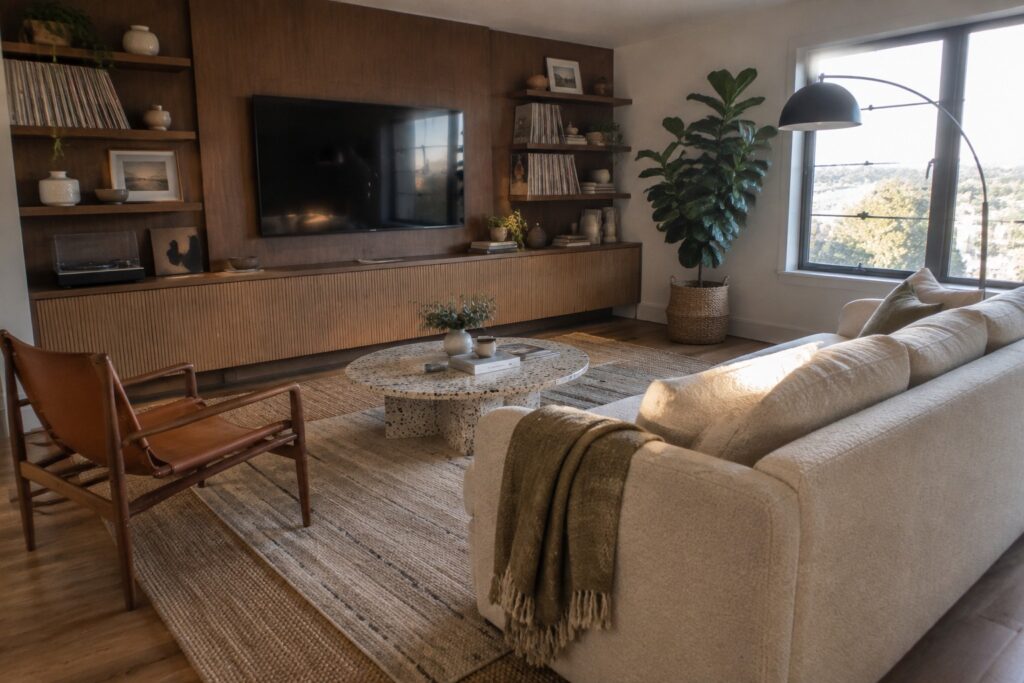
I often find that the way seating wraps around a television determines whether the room feels balanced or just like a media cave.
In my experience the best setups allow easy movement between the couch and other areas without turning the TV into an obstacle.
People tend to notice the viewing angle first when they walk into a living room arranged this way.
Layout decides everything.
Some arrangements work on paper yet fail once the family starts using the space every night, which is why testing a few new furniture ideas makes sense before committing.
Built-In Shelving Beside the TV
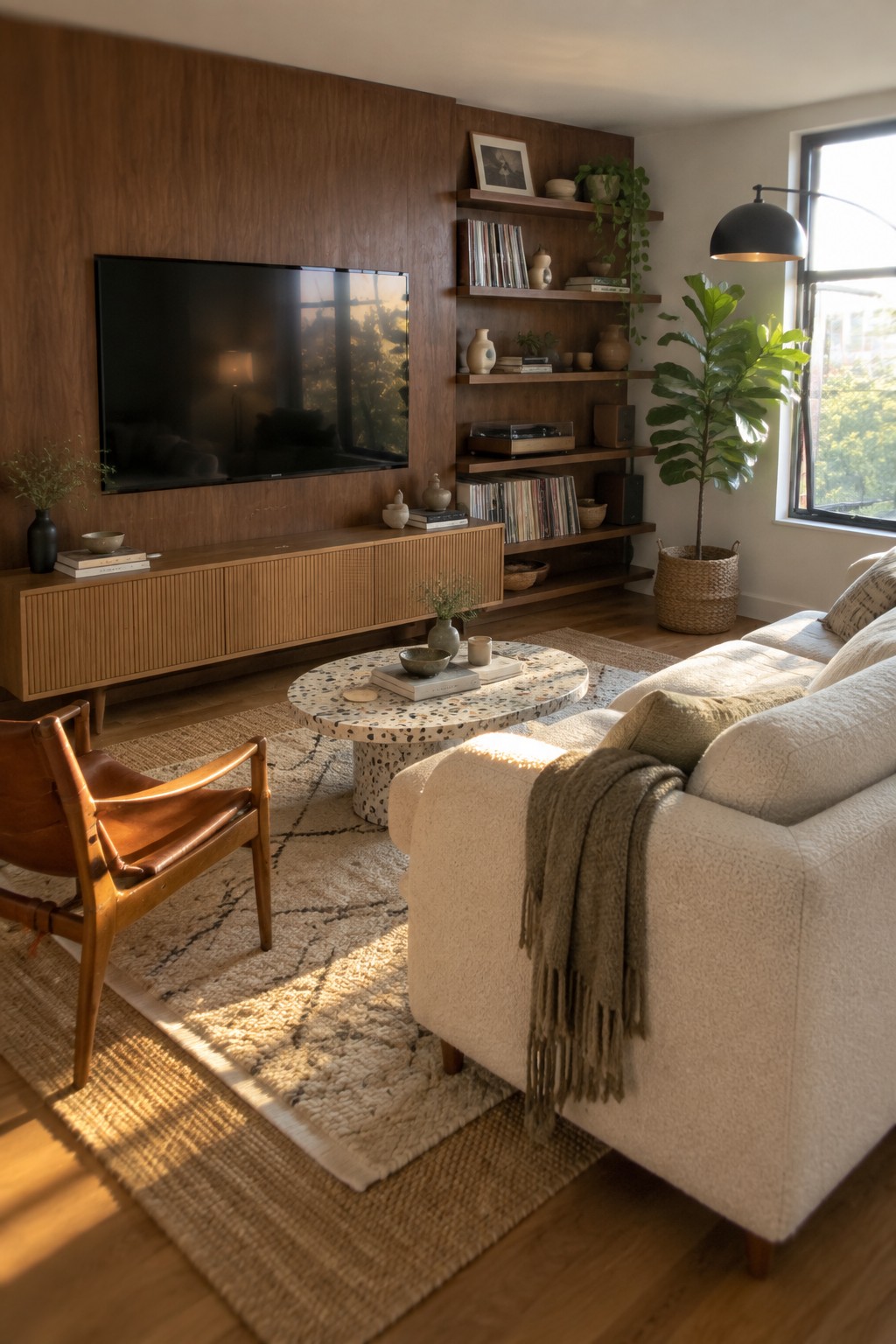
Built-in shelves on either side of the TV give you a place to store books, records, and a few plants without adding more furniture to the room. The wood paneling behind the screen helps tie everything together and keeps the focus on the wall instead of just the screen itself.
This setup works best in living rooms where you already have enough seating but need extra storage that does not crowd the floor. Keep the shelves from getting too full so the TV still feels like the main point rather than one item in a busy wall.
A Media Console Under The Wall Mounted Tv
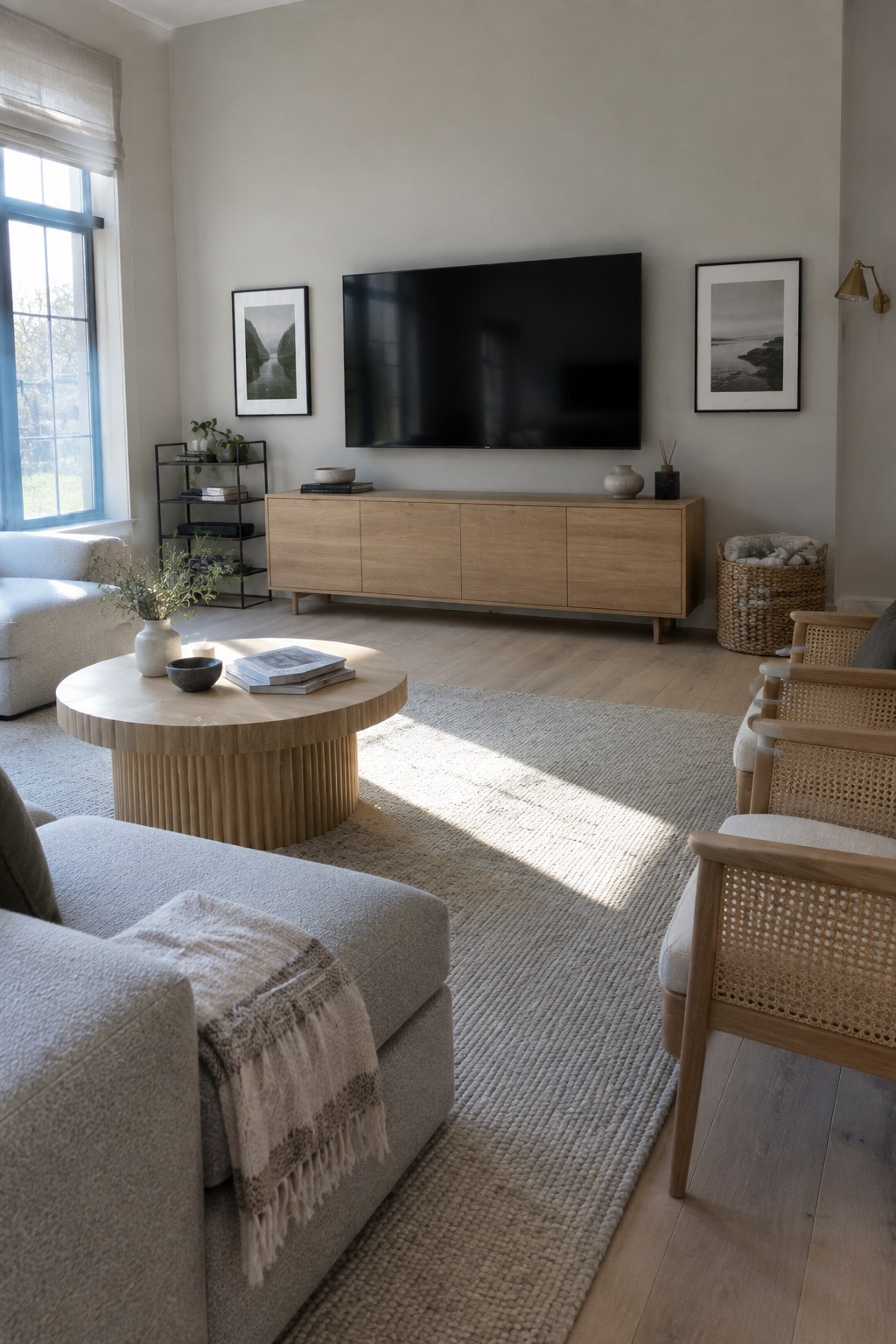
A long low console under the tv keeps the screen at the right height while hiding all the clutter. It gives storage without adding extra furniture that would crowd the room or pull focus away from what is on screen. The simple wood finish blends into the wall and lets the seating stay the main feature.
This setup works best in open living rooms where the tv needs to serve the whole space. It suits homes that want a calm layout and pairs well with a round coffee table in the middle. Keep the console no higher than the bottom of the tv so viewing stays comfortable from every seat.
Tall Shelves on Both Sides of the TV
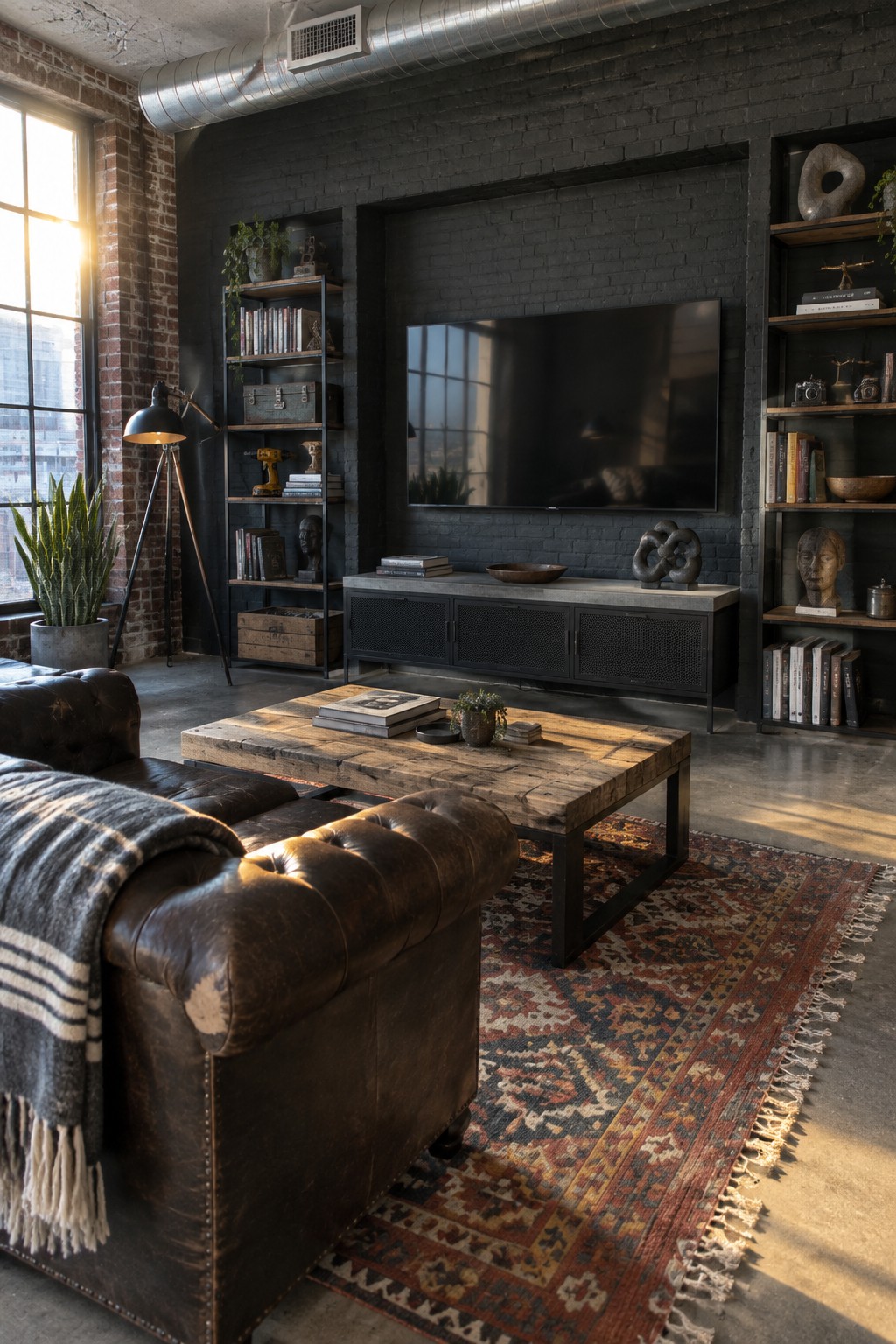
Placing tall open shelves on either side of a wall-mounted TV gives the screen a settled look without crowding the floor. The shelves add storage for books and smaller items while keeping everything within reach. This setup works especially well when the room already has exposed brick or dark walls, since the vertical lines help balance the large dark rectangle of the screen.
It suits living rooms that need extra display space but cannot fit a full wall of cabinets. Keep the console low and simple so the shelves remain the main feature. Match the shelf color to the console or the wall if you want the whole area to feel calm rather than busy.
Mount The Tv Above A Floating Media Console
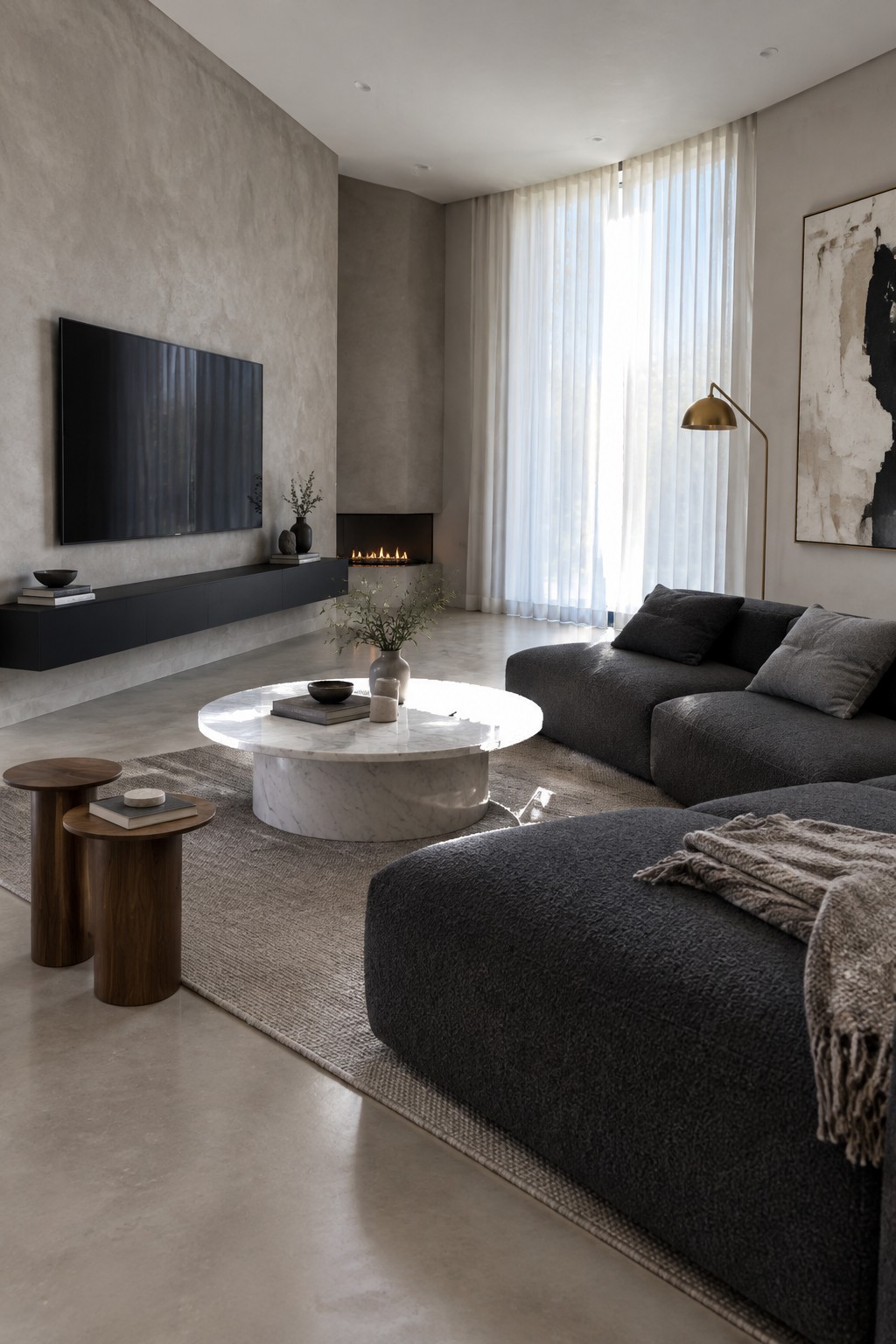
Mounting the tv on the wall above a long floating console gives the screen a clean, settled place in the room. The console stays low enough that it does not compete with the tv, yet it still holds streaming devices, remotes, and a few books or bowls without crowding the floor space.
This approach suits modern living rooms where you want the tv to feel like the main point without the whole wall turning into a big block of furniture. Use it in rooms with open floor plans or textured walls, and keep the console in a dark or neutral finish so it blends rather than stands out.
Built-In Shelves and Low Cabinet Around the TV
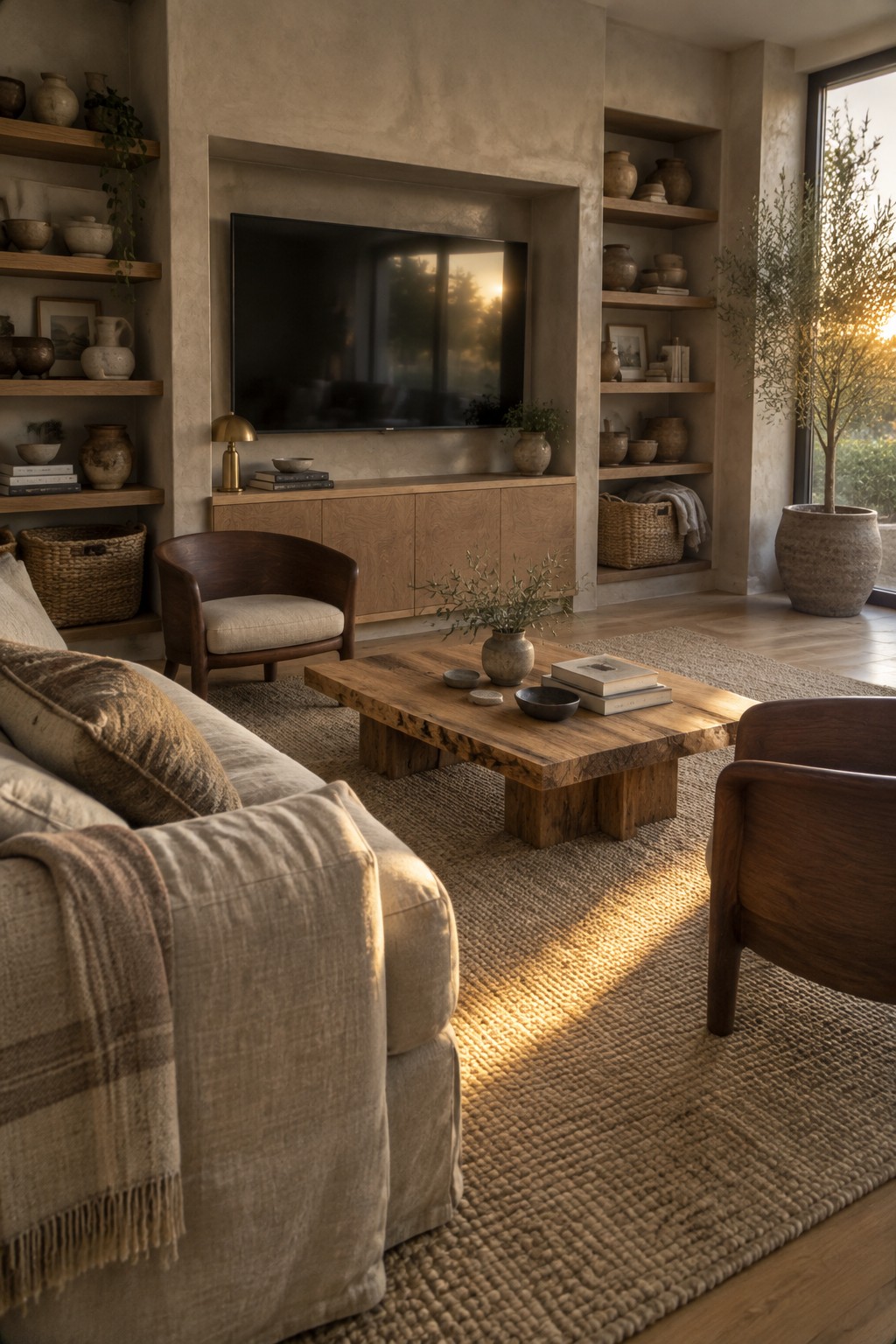
Built-in shelves on either side of the TV give the whole wall a finished look instead of leaving a big blank space with just a screen. The low wood cabinet below keeps the setup grounded and adds storage without crowding the room. It works especially well when you want the TV to feel like part of the architecture rather than something stuck on the wall.
This approach suits living rooms that already have some wood tones or natural textures. Keep the shelves from getting too busy by mixing in a few solid pieces like pottery or stacked books. It helps the space feel calm even when the screen is the main focus.
Shallow Built-In Shelving With a Floating TV Console
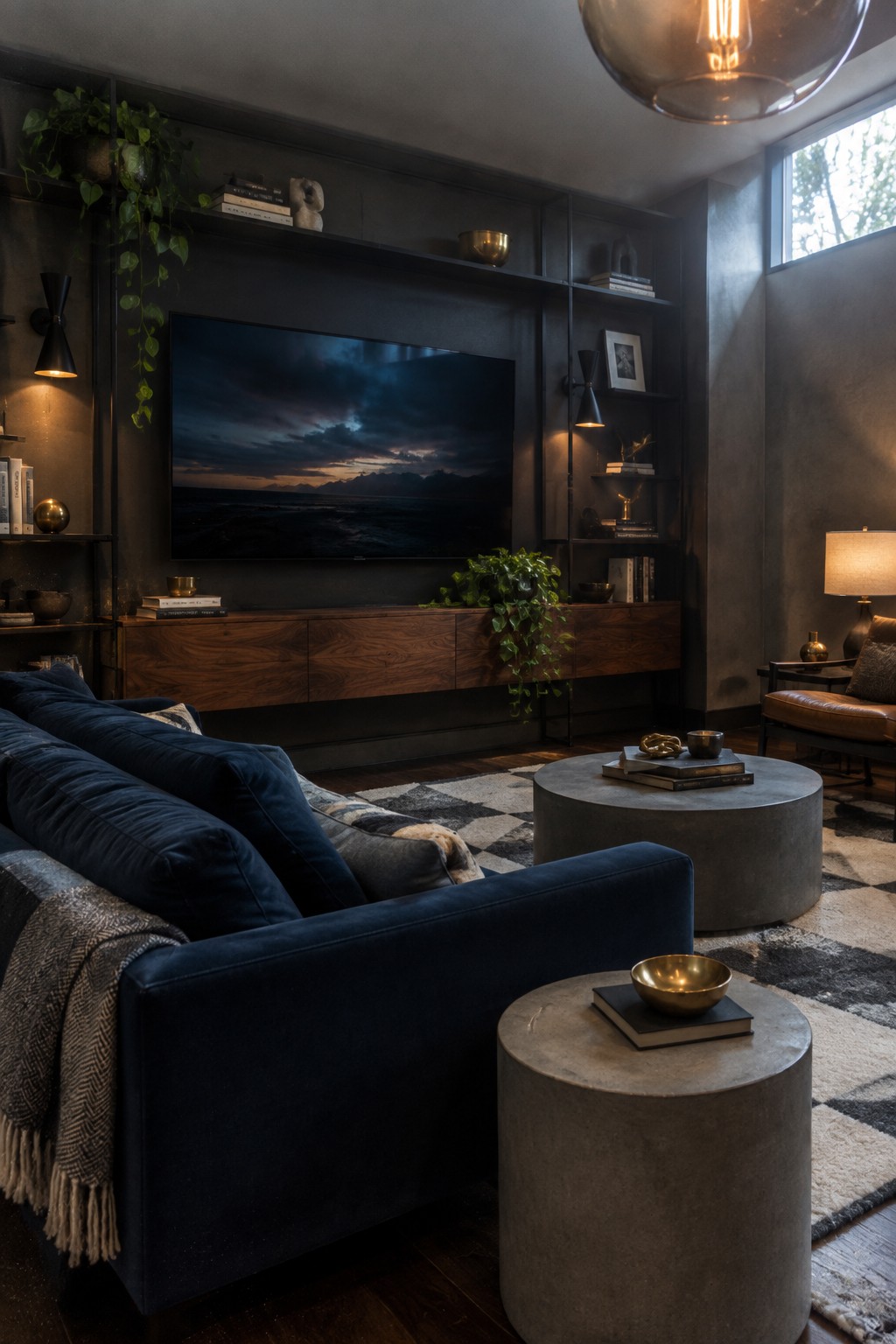
Built-in shelving on both sides of the TV gives you a place to store books and display a few favorite items without adding extra furniture. The long floating console underneath keeps the look low and clean while hiding cords and holding more everyday things. It works because everything stays in one spot instead of spreading across the room.
This setup suits smaller living rooms or any space where you want the TV to feel like part of the wall instead of a standalone piece. Use it in homes with modern or simple styles, and keep the shelves fairly shallow so the area does not feel heavy.
Long Wood Media Console for an Uncluttered TV Wall
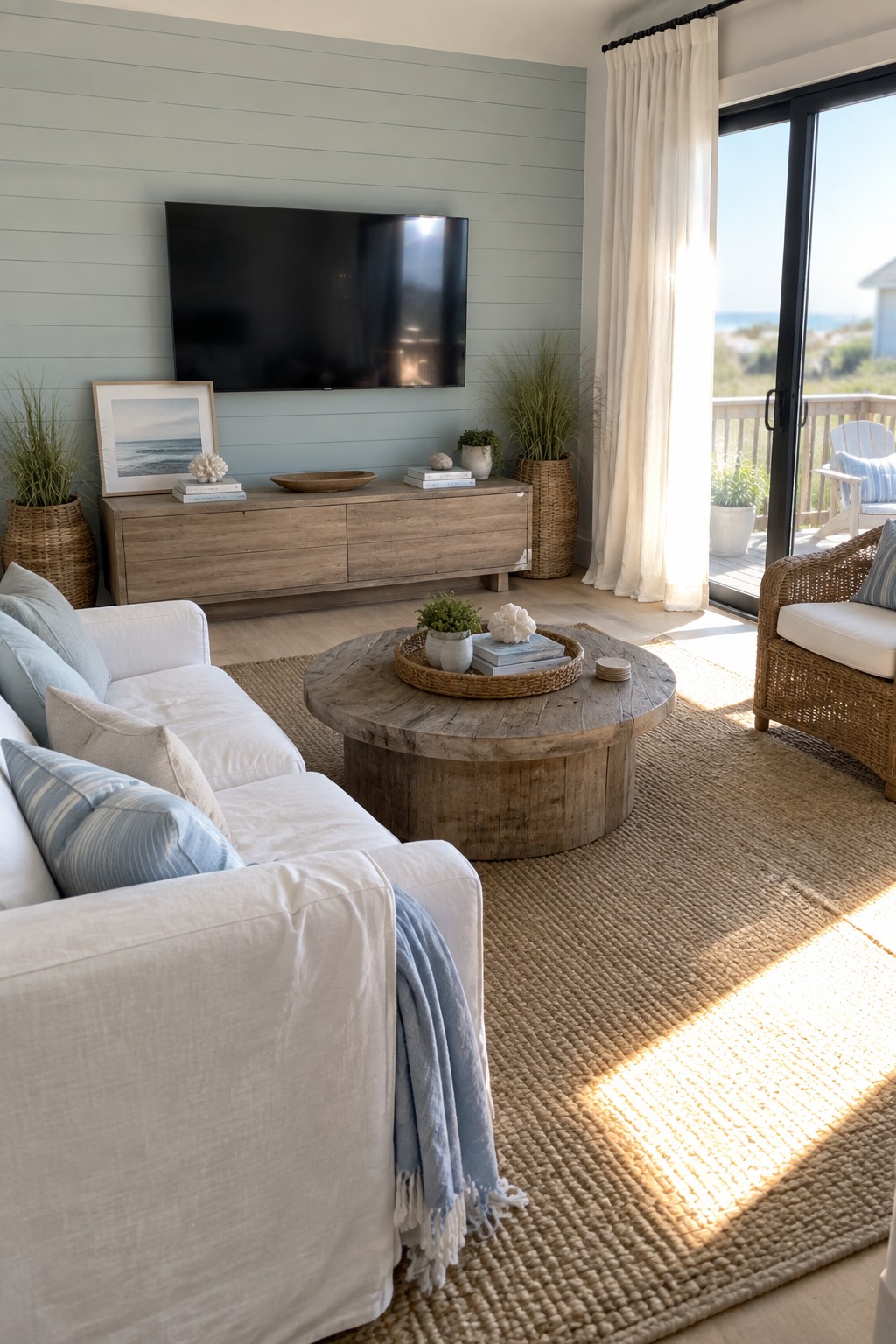
A long, low media console works well under a wall-mounted TV because it gives you storage without adding height or bulk that could crowd the room. The console stretches across the wall, holds a few books and trays, and keeps the screen at a comfortable viewing height while the rest of the seating stays open and easy to move around.
This setup suits living rooms that need to feel calm and uncluttered. Pick a console in a light wood tone if your walls are soft or pale, and keep the top fairly clear so the TV remains the main point of interest. It works in both smaller spaces and open layouts where you want storage but do not want the furniture to feel heavy.
Slatted Low Media Console With Open Storage
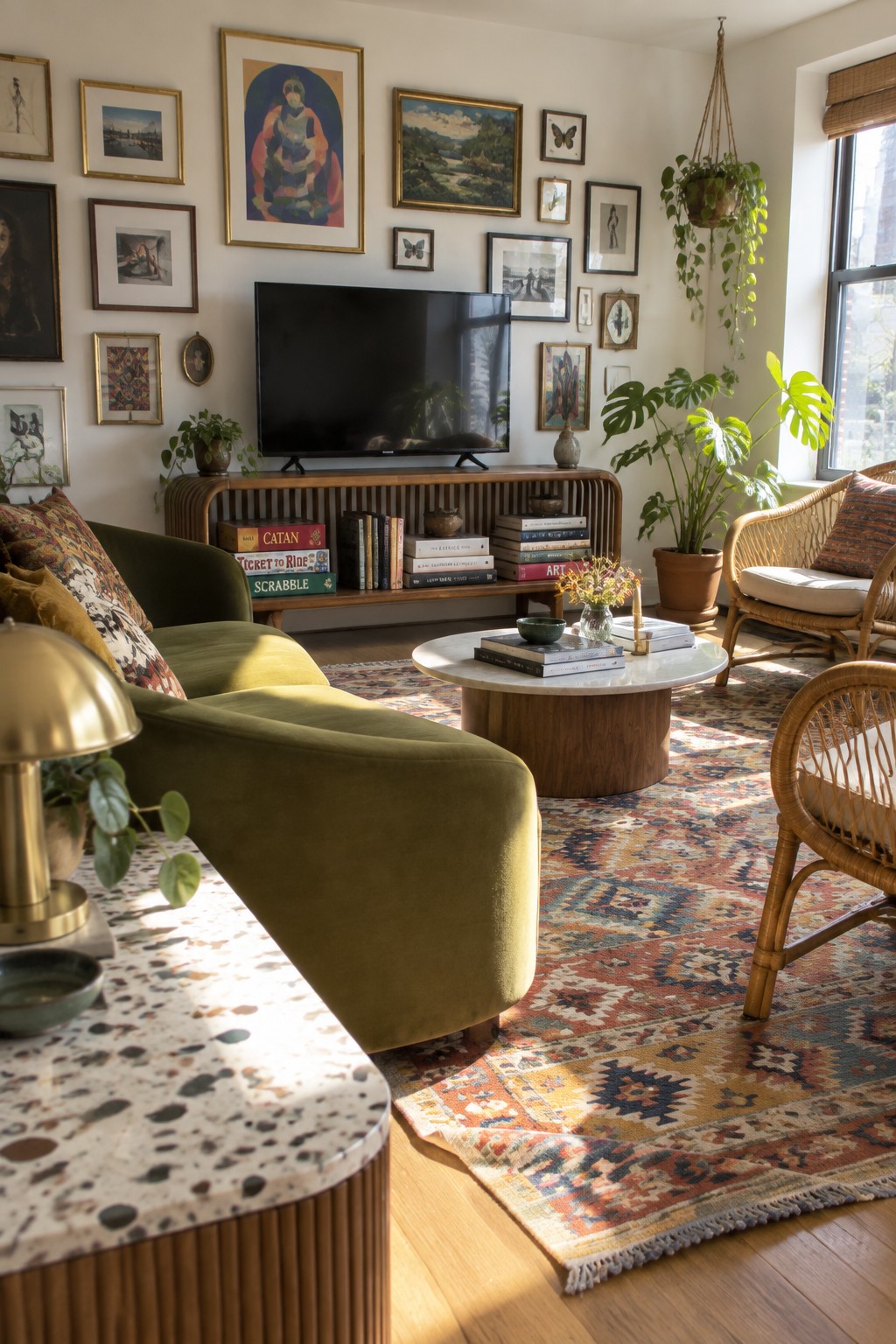
A long low console under the TV works well because it gives the screen a steady base while adding real storage without extra bulk. The slatted front keeps things open so books and small items stay visible but tidy, and the wood tone helps the whole setup feel more like part of the room.
This choice suits living rooms where the TV needs to sit at the right height for viewing but should not dominate the space. It pairs easily with gallery walls above and works in rooms that already have mixed seating and natural textures around. Just keep the console depth shallow enough that it does not push the seating too far back.
Wall-to-Wall Built-In Storage Around the TV
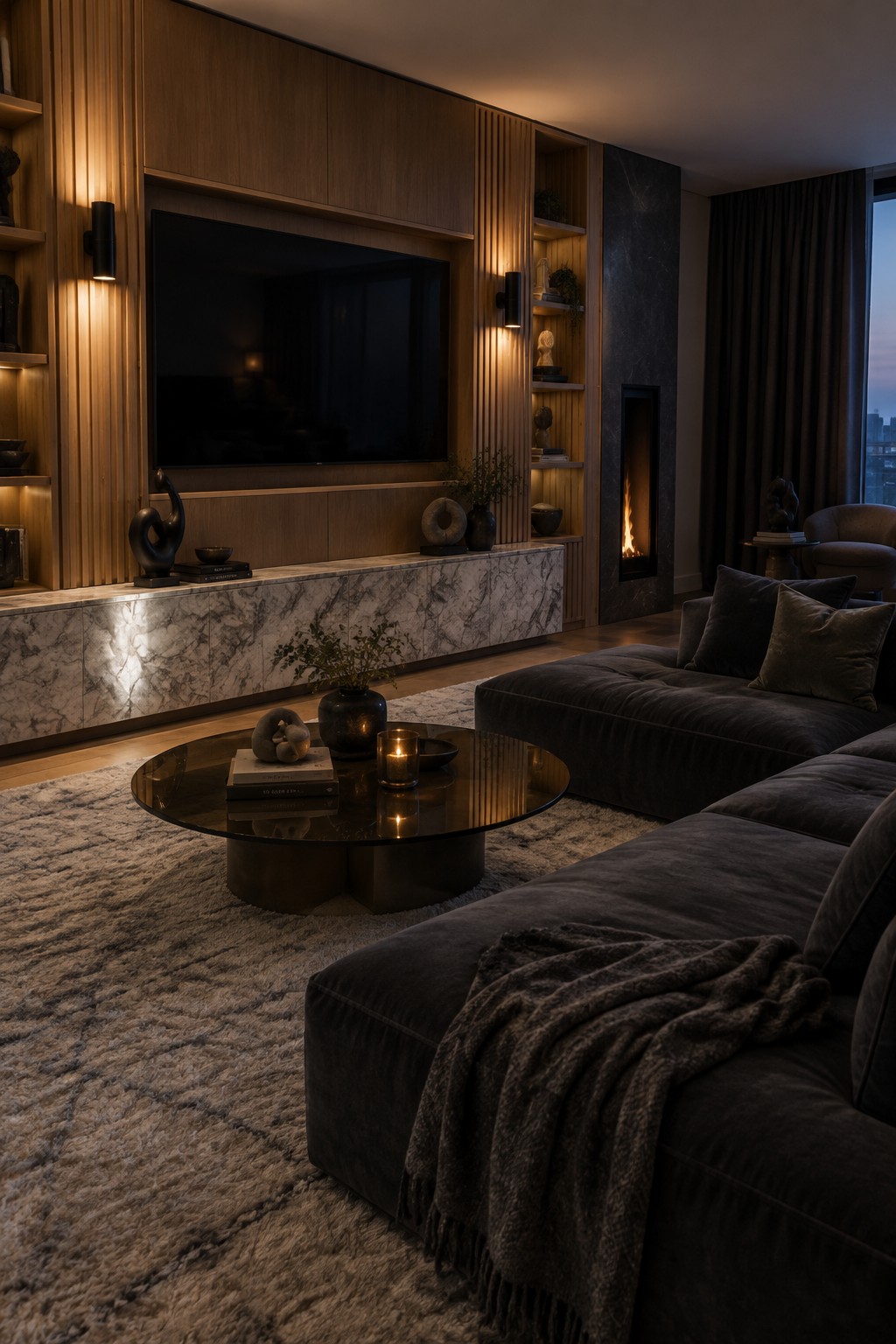
Many people like the idea of building shelves and cabinets right into the wall around the TV. It keeps the screen from feeling like it is just stuck on the wall and gives you useful storage without bringing in more furniture that can crowd the space.
This works well in living rooms where you want a calm, organized look and need room for books or small pieces. It suits homes that already have some wood tones or built ins elsewhere, and it helps the whole wall feel like one piece rather than a collection of separate items.
Low Wood Console for Smaller Living Rooms
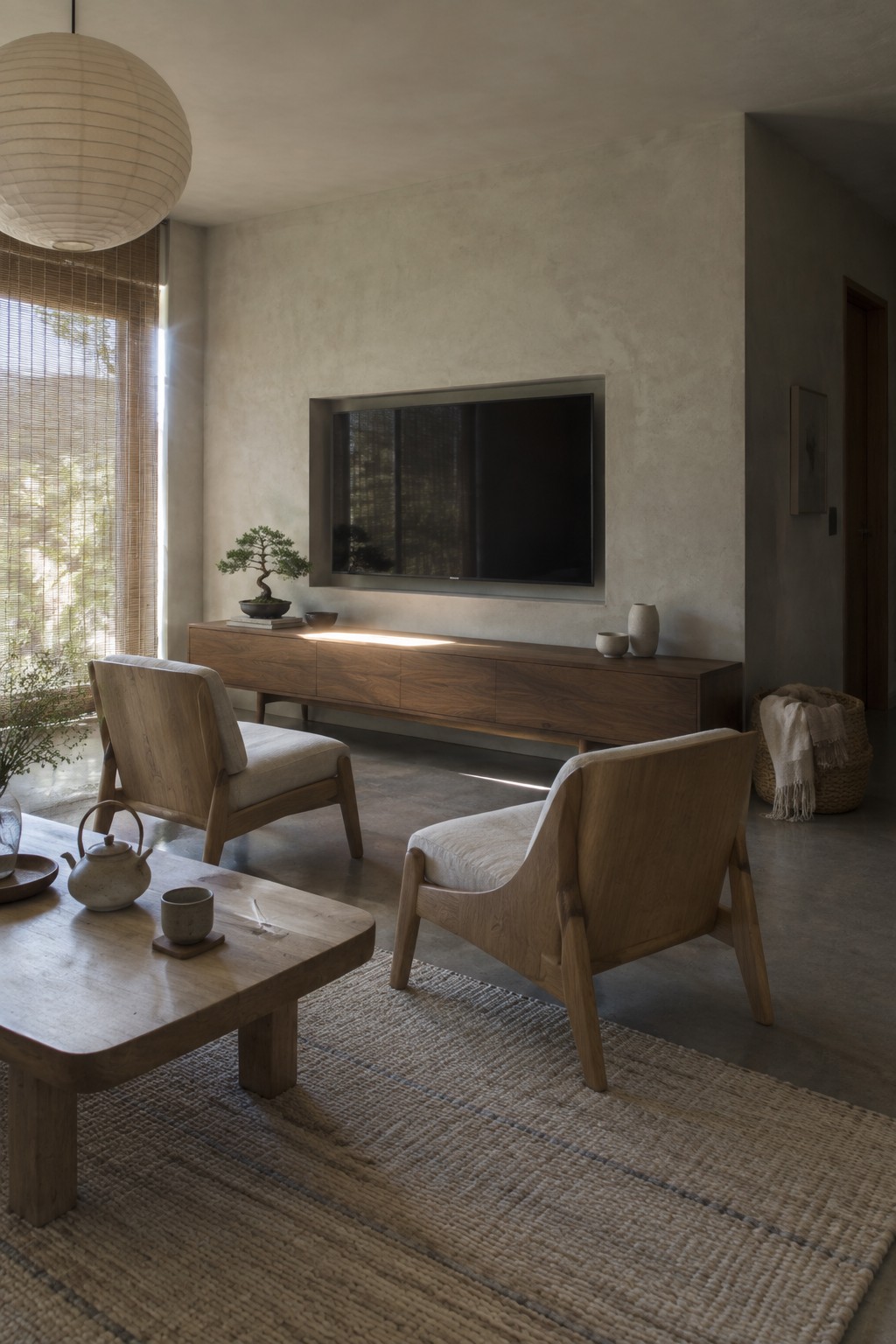
A long, low console under a wall-mounted TV keeps the screen as the main focus without adding height or bulk to the wall. The console gives you storage for remotes and small items while letting the wood grain add warmth to an otherwise simple room. It works especially well when the rest of the furniture stays low too, so nothing fights for attention.
This setup suits smaller or medium living rooms where you want the space to feel open but still practical. Place the console at a height that lines up with the bottom of the TV frame, and keep the top mostly clear except for a few low objects. It works best in homes that already lean toward natural materials and clean lines.
Low Media Console With Basket Storage
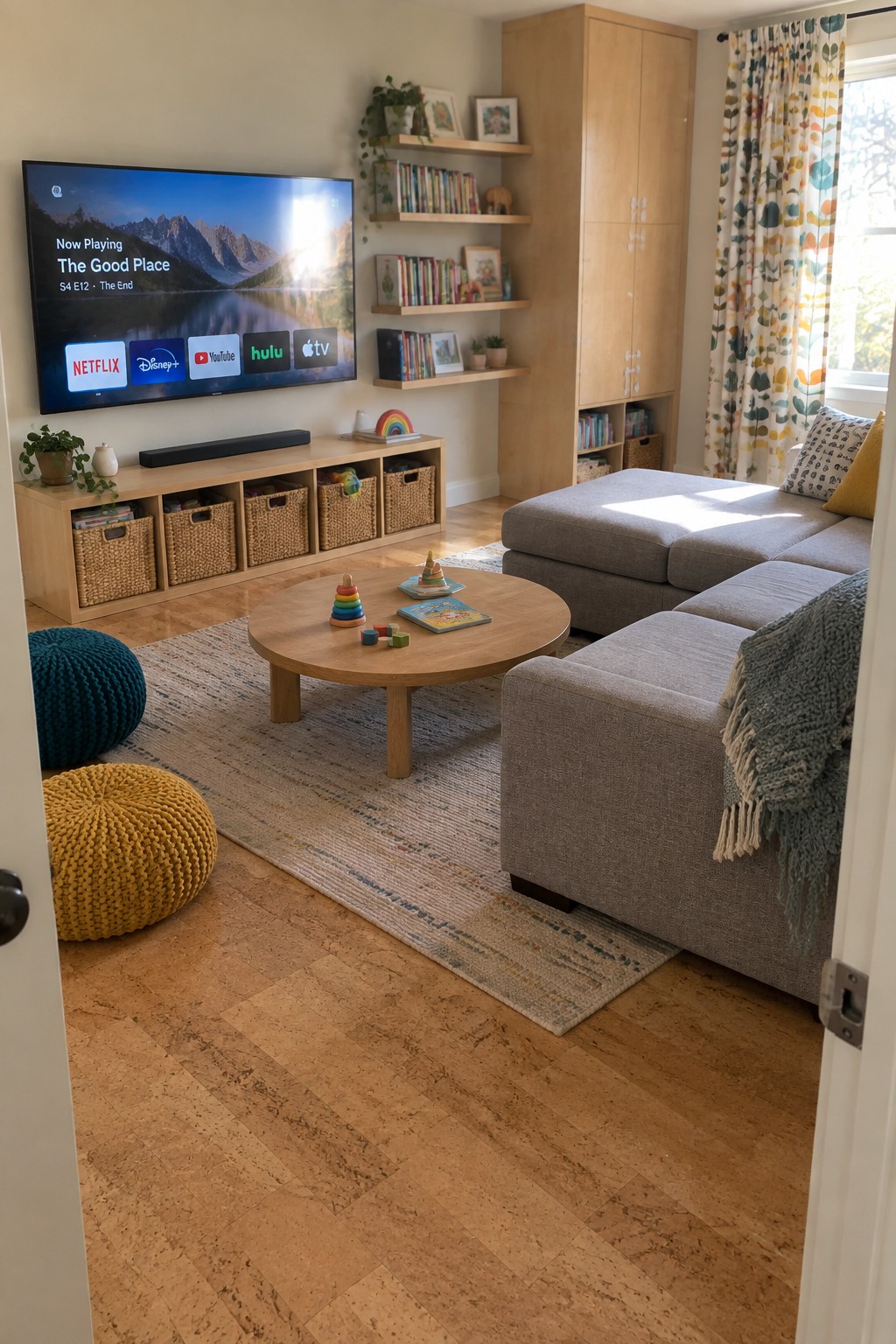
Mounting the TV on the wall and placing a low console underneath gives the room a clean look without blocking the screen. The console stays low and simple, so the TV becomes the main feature while the baskets underneath hold toys, books, and remotes out of sight.
This setup works best in family rooms where you need storage but do not want tall cabinets crowding the space. Keep the console in a light wood tone and choose matching baskets so everything feels pulled together without looking too formal.
Low Console for an Open Living Room Layout
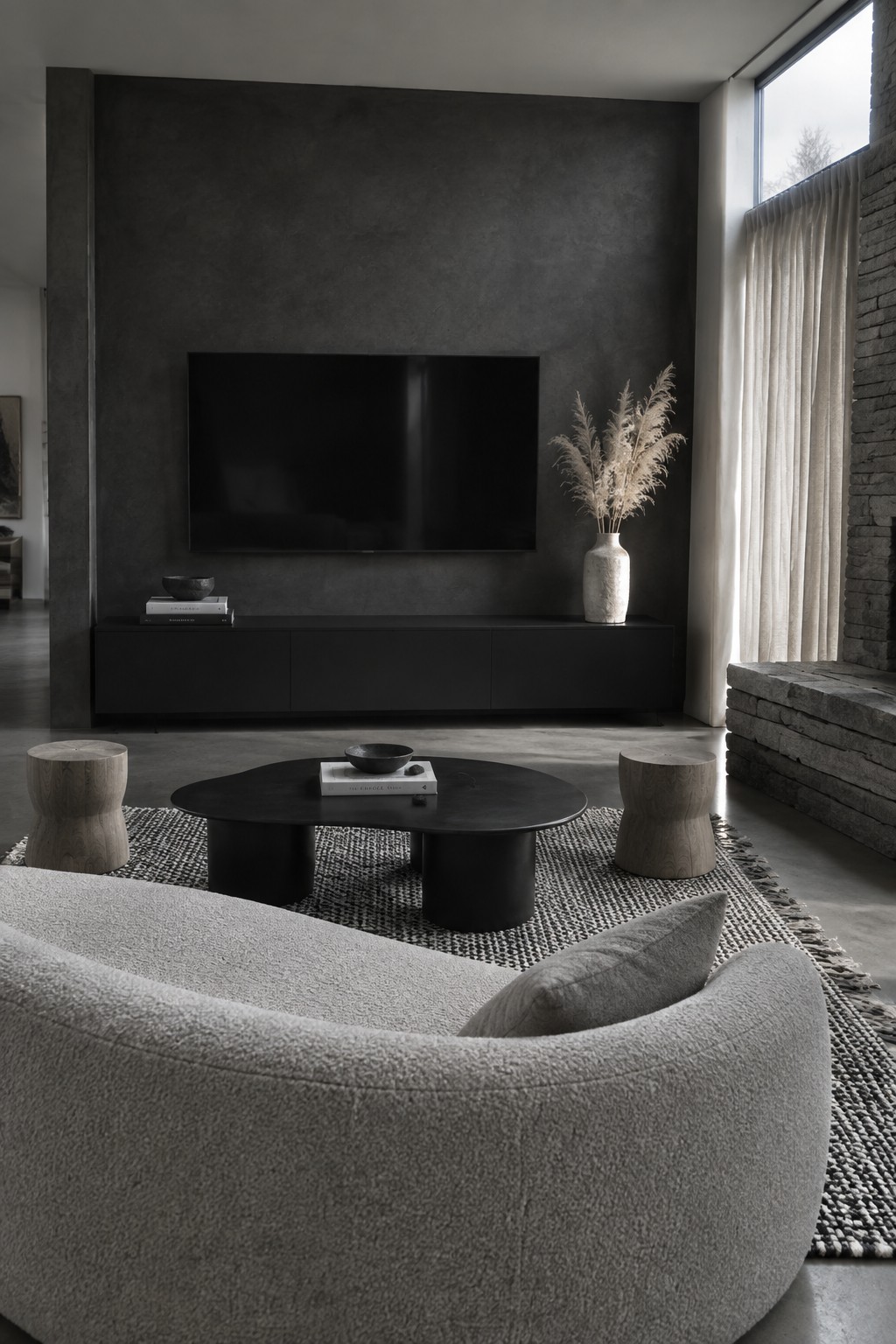
A long, low media console under a wall-mounted TV helps the screen remain the clear center of the room. It stays low enough that it does not compete for attention or make the space feel crowded.
This works best in open living areas with a darker wall behind the TV. Keep the console roughly the same width as the screen and leave the top mostly clear so the setup stays simple and easy to watch from the seating area.
Low Console for a Balanced TV Wall
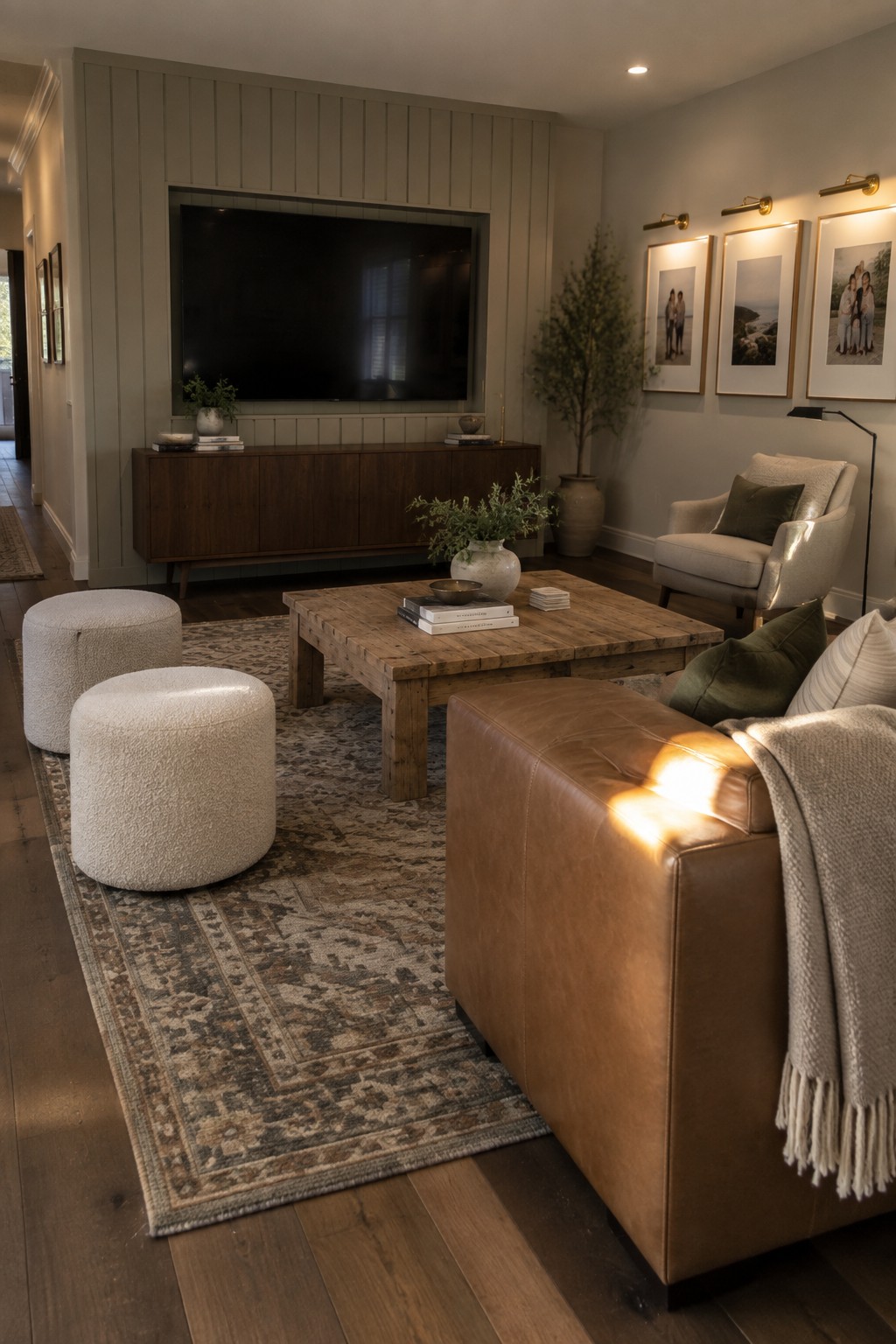
A long, low console under a wall-mounted TV gives the screen a quiet base without stealing the show. It also adds useful storage and keeps the whole wall from feeling empty or top-heavy.
This setup works best in rooms where the TV is the main focal point and you want the rest of the furniture to stay relaxed. Pick a console that lines up with the width of the screen and leave the surface mostly clear so the attention stays on the TV rather than on extra clutter.
Wood Slat Walls Behind The Tv
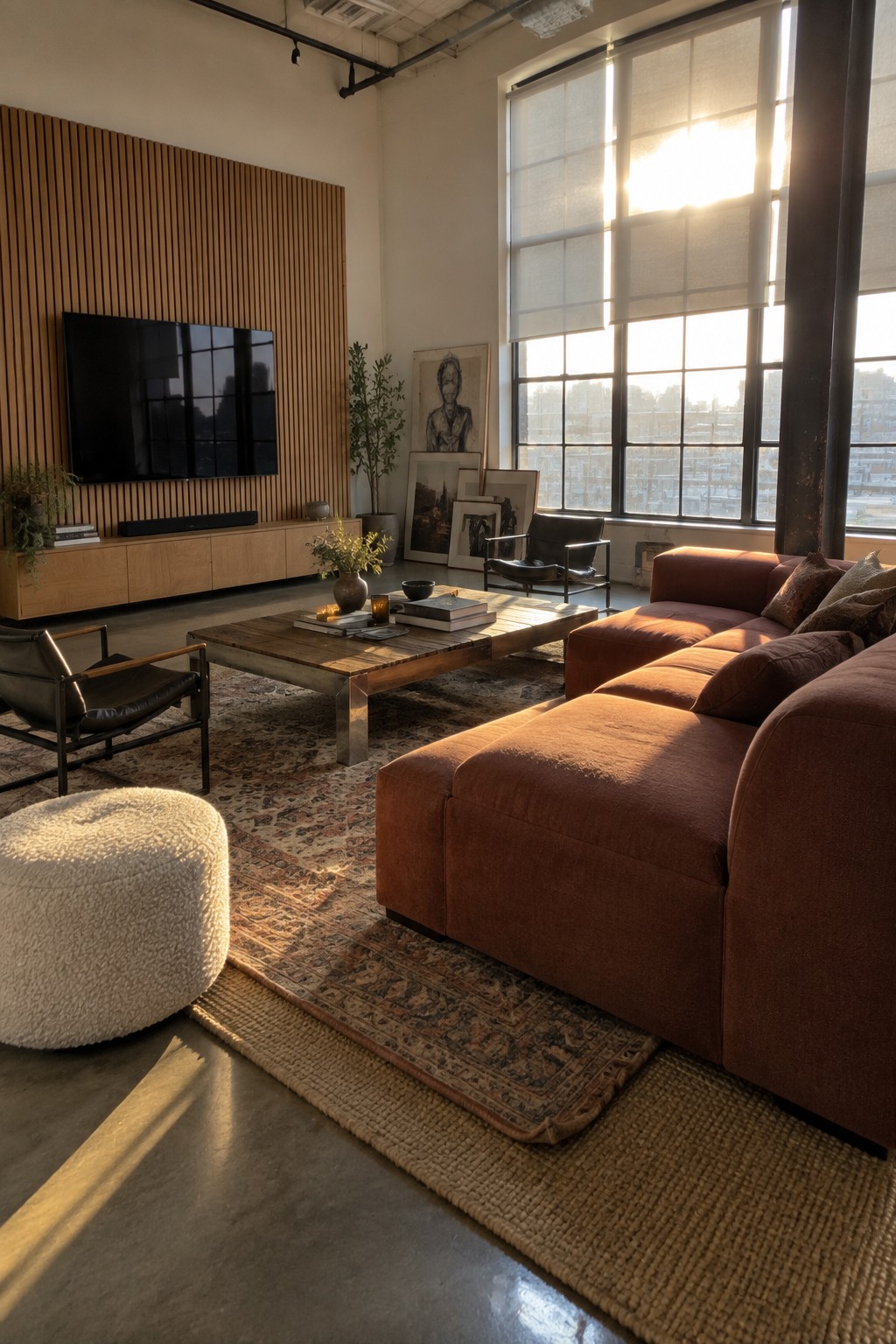
A wood slat wall gives the TV a built-in look without turning the whole room into a media cave. The vertical lines add texture and keep the screen from floating on a flat white surface, which helps the seating area feel more pulled together even when the TV is off.
This works best in rooms with open layouts or concrete floors where you need something to soften the tech focus. Keep the rest of the furniture low and simple so the wood wall stays the main anchor rather than competing with too many other materials.
Large Round Coffee Tables
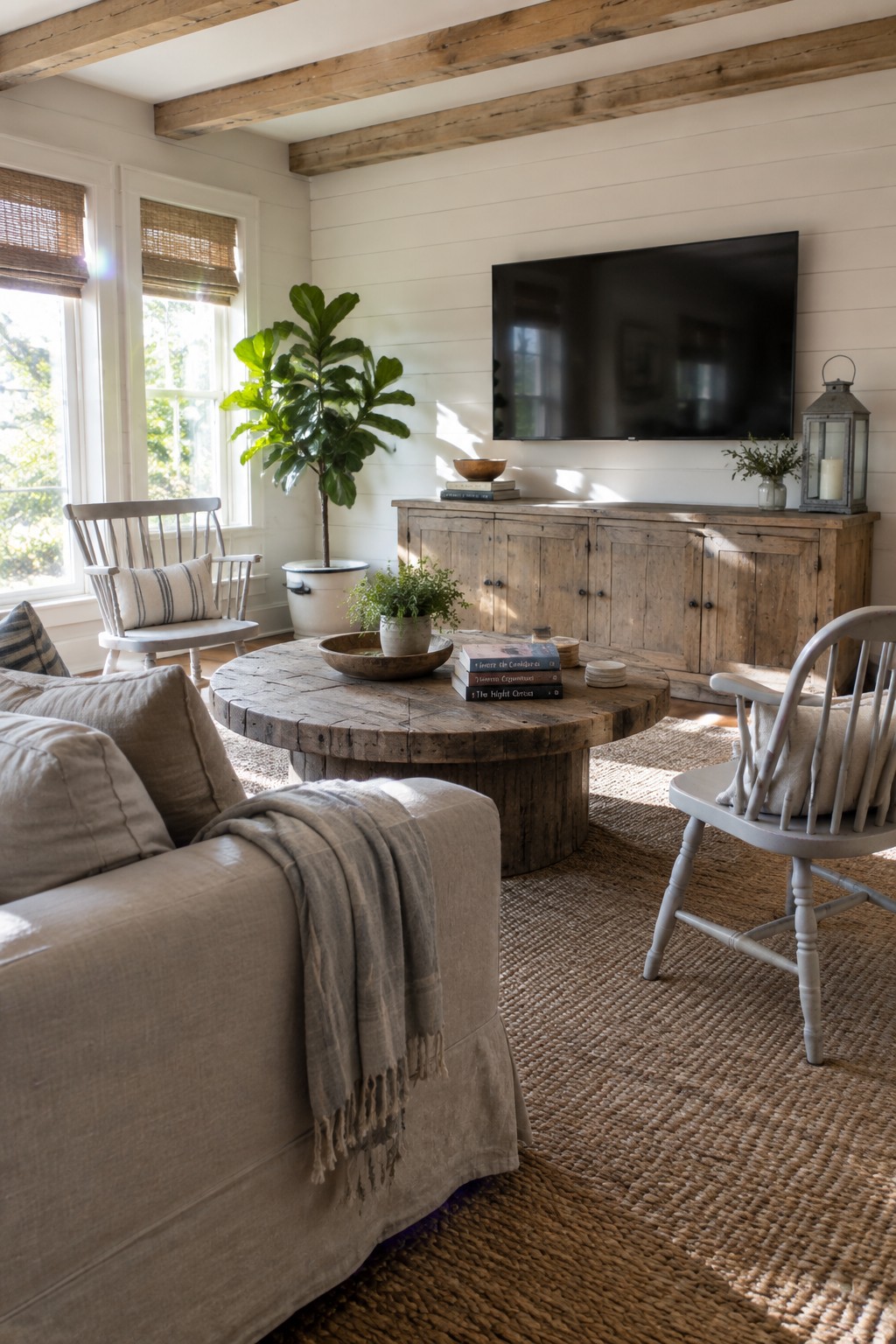
A big round coffee table can pull a whole seating area together when the TV is the main focus. It gives everyone a spot to rest drinks or books without needing a bunch of side tables, and the curved shape keeps the flow open so nothing feels blocked.
This works best in rooms where people actually sit and watch together. Keep the table low and solid so it feels grounded, and make sure there is enough room to walk around it. In smaller spaces it can start to crowd things, so measure first.
Low Round Coffee Table for Easy Movement
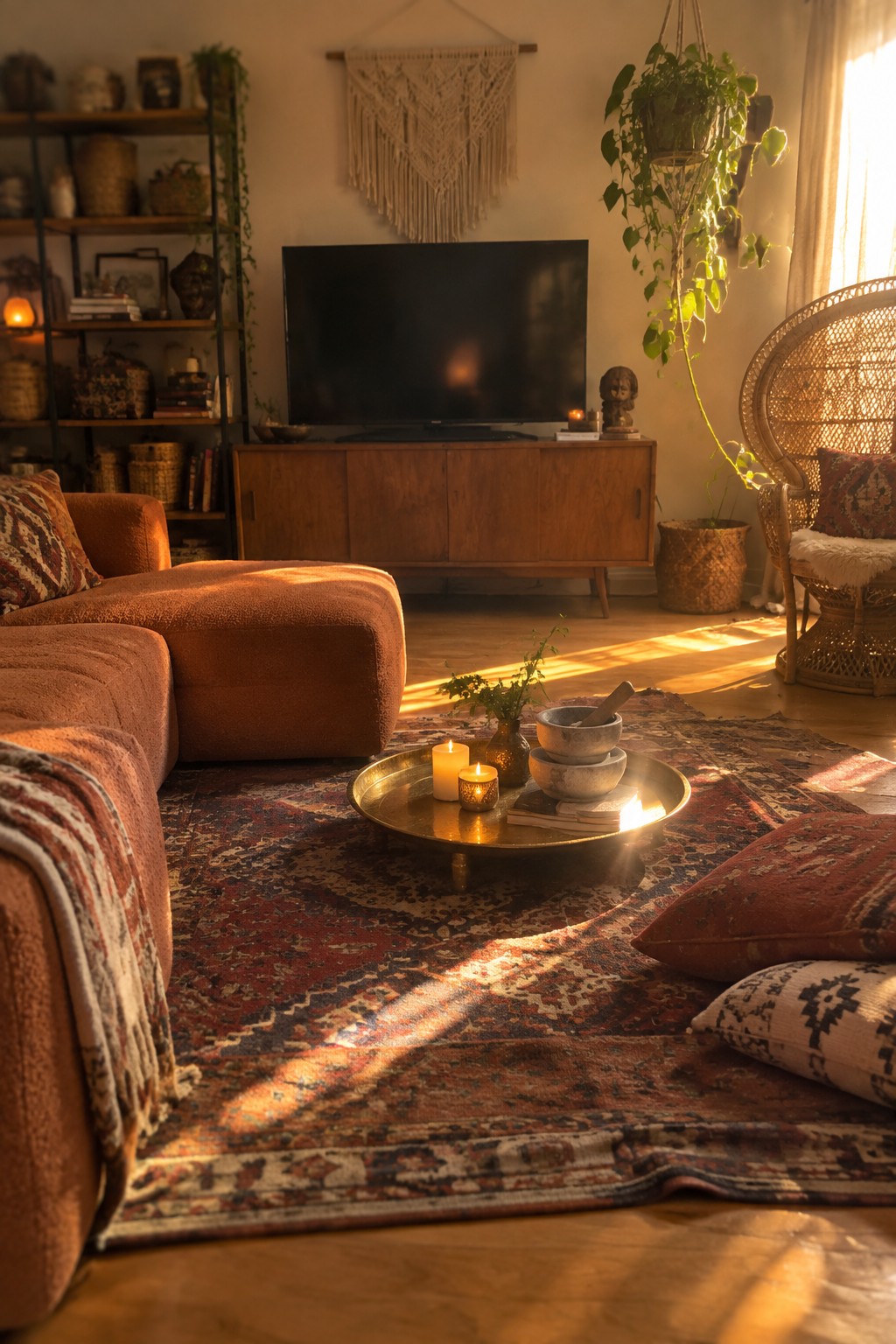
A low round coffee table keeps the middle of the room open so movement stays easy. It also avoids blocking the view of the TV, which helps the screen stay the main focus without extra visual weight in the way.
This setup works best in rooms where seating faces the TV directly and you still want space for drinks or a few small items. A simple tray style on a metal base tends to feel lighter than a solid wood table and suits homes that already have a clean media console underneath the screen.
Open-Front Low Console for Simple TV Storage
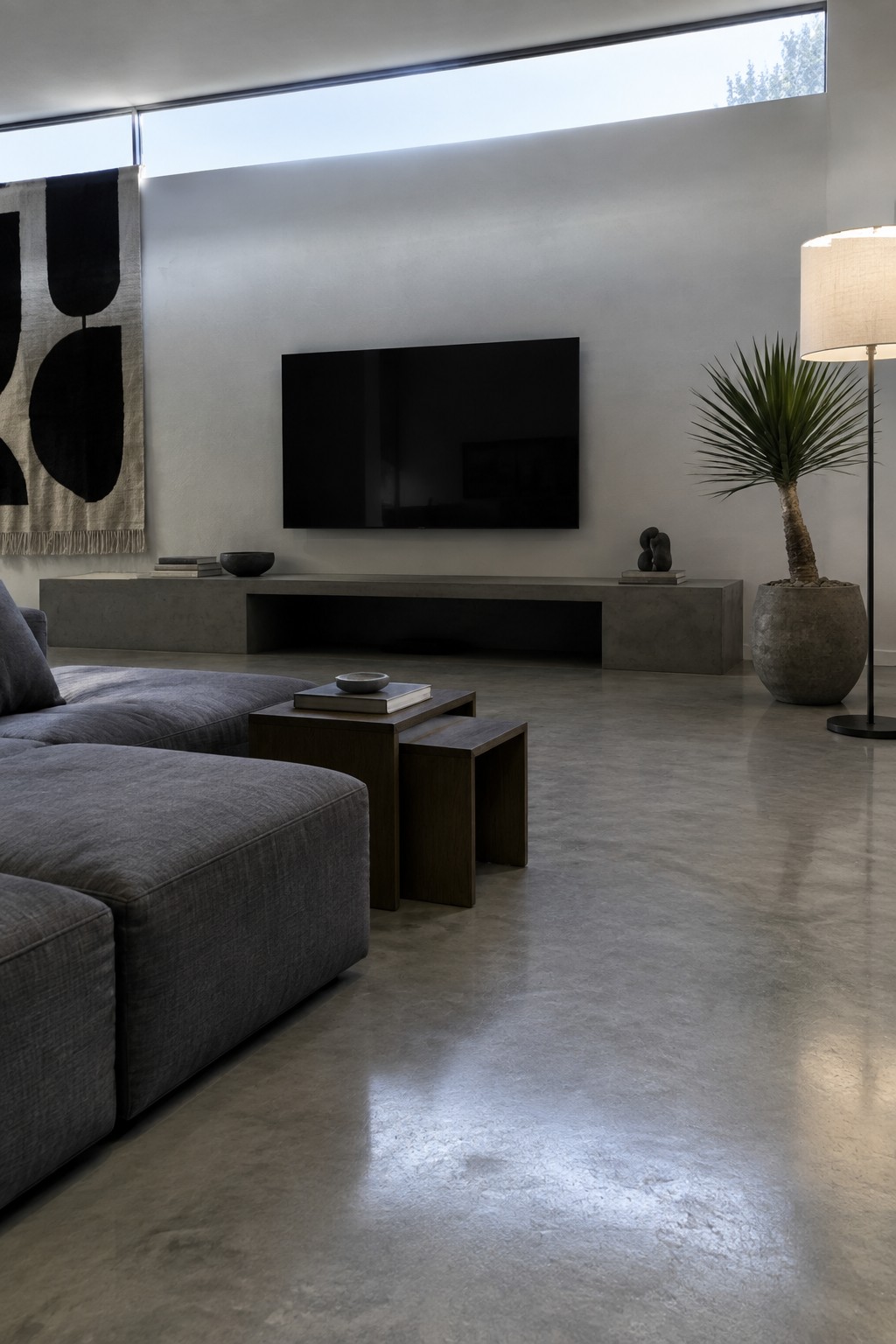
A long, low console under a wall-mounted TV keeps the screen as the clear focus without adding height or bulk to the wall. The open middle section lets the eye move freely while the solid ends give you spots for a few items without turning the surface into a display shelf.
This works well in living rooms that already have enough seating and just need a simple base for the TV. It suits spaces with plain walls and a straightforward sofa arrangement, but skip it if you need lots of closed storage since the design stays open by nature.
Built-In Wall Units Around The Television
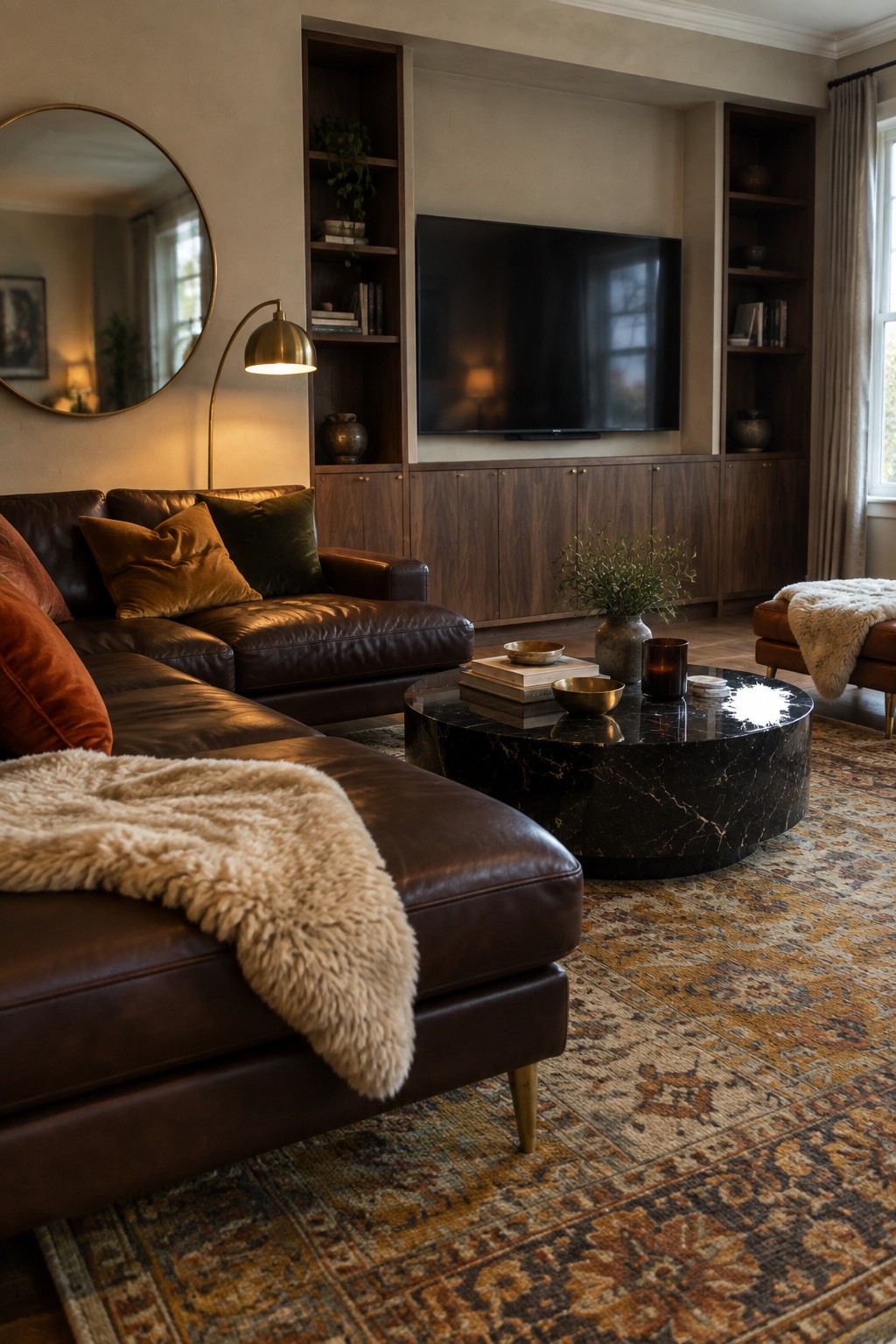
A built-in wall unit gives the TV a permanent spot without making it feel like the only thing in the room. The dark wood cabinetry and open shelves on either side create storage and display space that blends into the wall, so the screen sits neatly in the middle instead of floating on its own.
This setup works well in living rooms where you want the TV visible but not overwhelming. It suits homes with enough wall space for custom work and pairs best with lower furniture like a sectional that stays in front rather than competing for attention. Just keep the shelves from getting too crowded so the unit stays calm.
Long Console for Storing TV Accessories
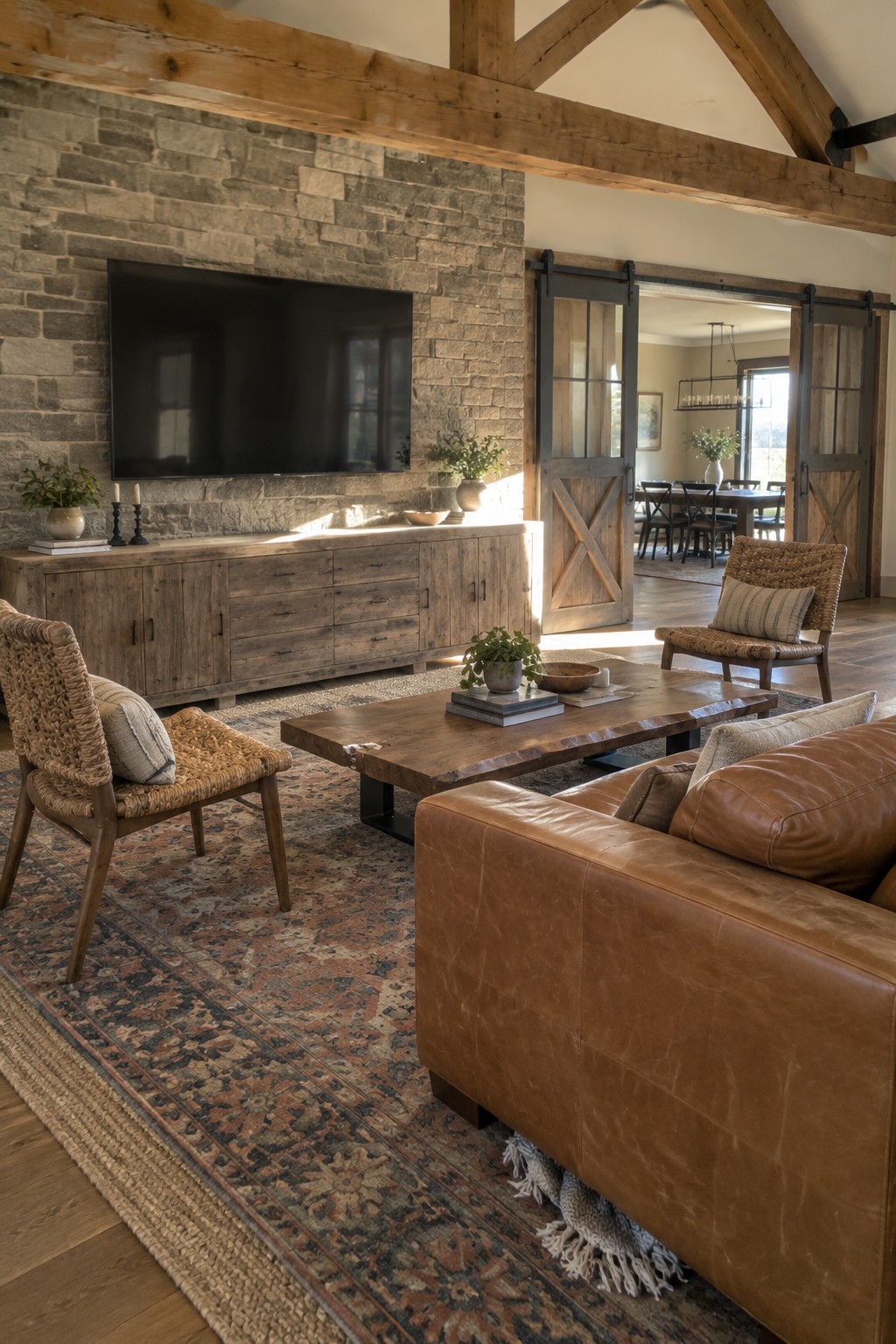
A long, low console under the TV gives the screen a steady base without making the wall feel crowded. It also adds real storage for remotes, blankets, and whatever else ends up in the living room.
This setup works best in rooms where the seating faces the screen directly and you want the console to stretch across the wall. Keep the height modest so the TV stays the main point and the piece below it feels like support rather than competition.
Light Wood Console for Colorful Living Rooms
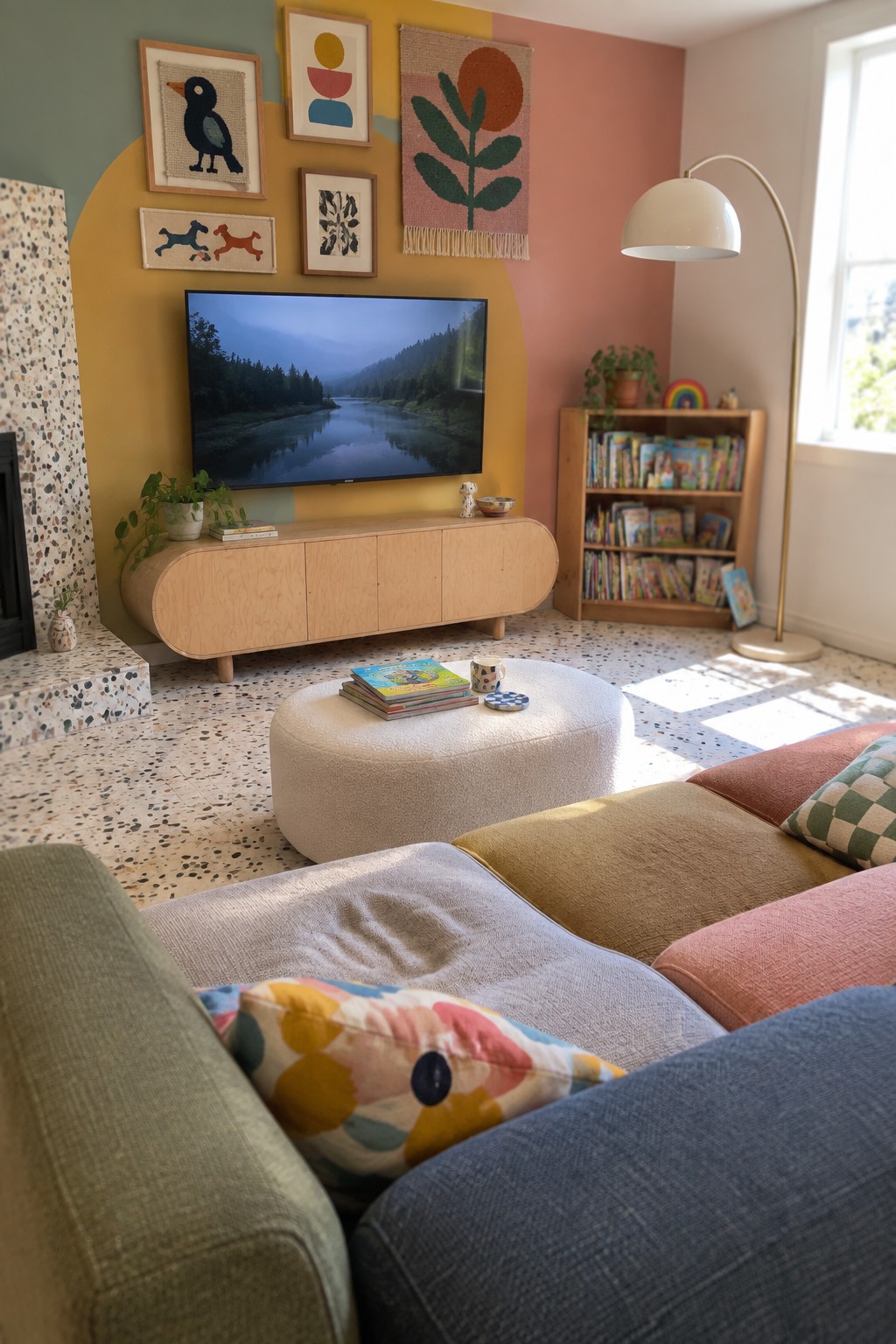
A low media console keeps the television as the main focus without adding bulk or visual noise to the wall. It holds the screen at the right height while leaving room above for art or just open space. The light wood finish here blends into the background instead of fighting with the stronger wall colors around it.
This approach works best in rooms that already have plenty of color or pattern elsewhere. It gives you hidden storage for small items without making the setup feel heavy or formal. Rounded shapes soften the look even more if the rest of your furniture has straight lines.
Frequently Asked Questions
Q: How far should I place the sofa from the TV?
A: Sit about six to eight feet back for a clear view without straining your neck. Walk around the room and test a few spots before you commit to the final spot.
Q: What kind of table keeps drinks handy during movie nights?
A: A round coffee table in front of the sofa works well. It lets everyone reach without blocking the screen.
Q: How do I add storage for all the TV gear?
A: Try a media cabinet with doors that close over the devices. It hides the clutter while keeping remotes easy to grab.
Q: Can I still fit a couple of accent chairs?
A: Slide two small chairs along the sides of the main seating area (nothing too bulky). They give extra spots without pulling focus from the TV.
