

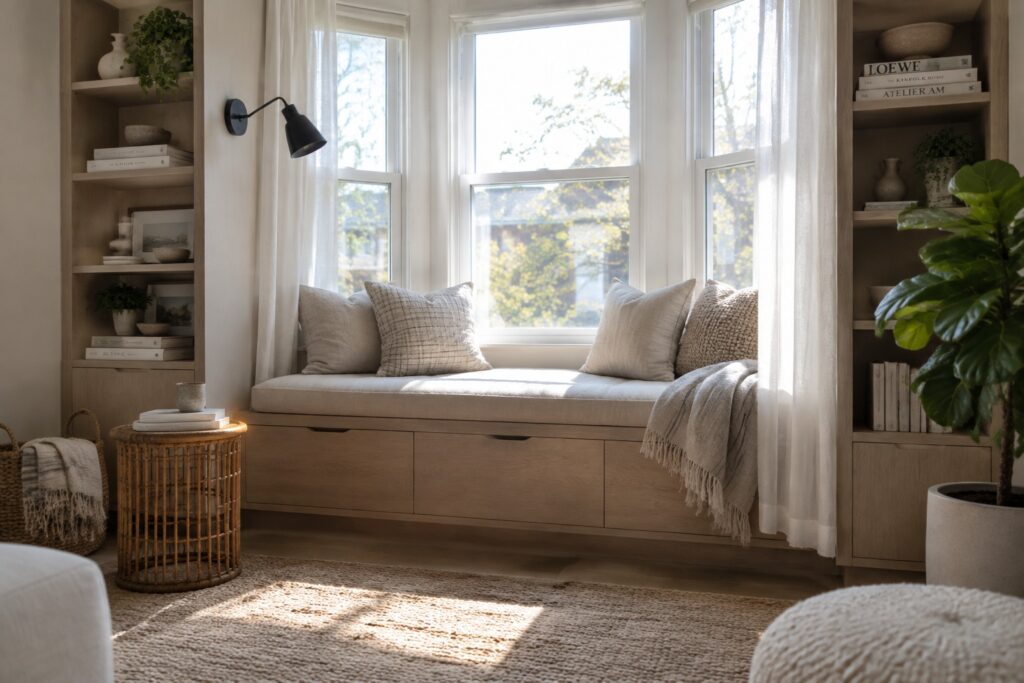
Bay windows bring in plenty of light and create a natural spot to linger, but they also leave awkward corners that most standard furniture fails to fill without blocking the view.
I have rearranged rooms more than once only to realize that the shape of the space matters more than the size of any single piece.
Scale matters more than I thought.
After testing a few options in my own home, I found that pieces with lower profiles or flexible backs let the window remain the main feature instead of turning it into background clutter.
Some of the smarter choices involve built-in seating or slim tables that follow the curve without crowding the floor plan.
Built-In Window Seats With Storage
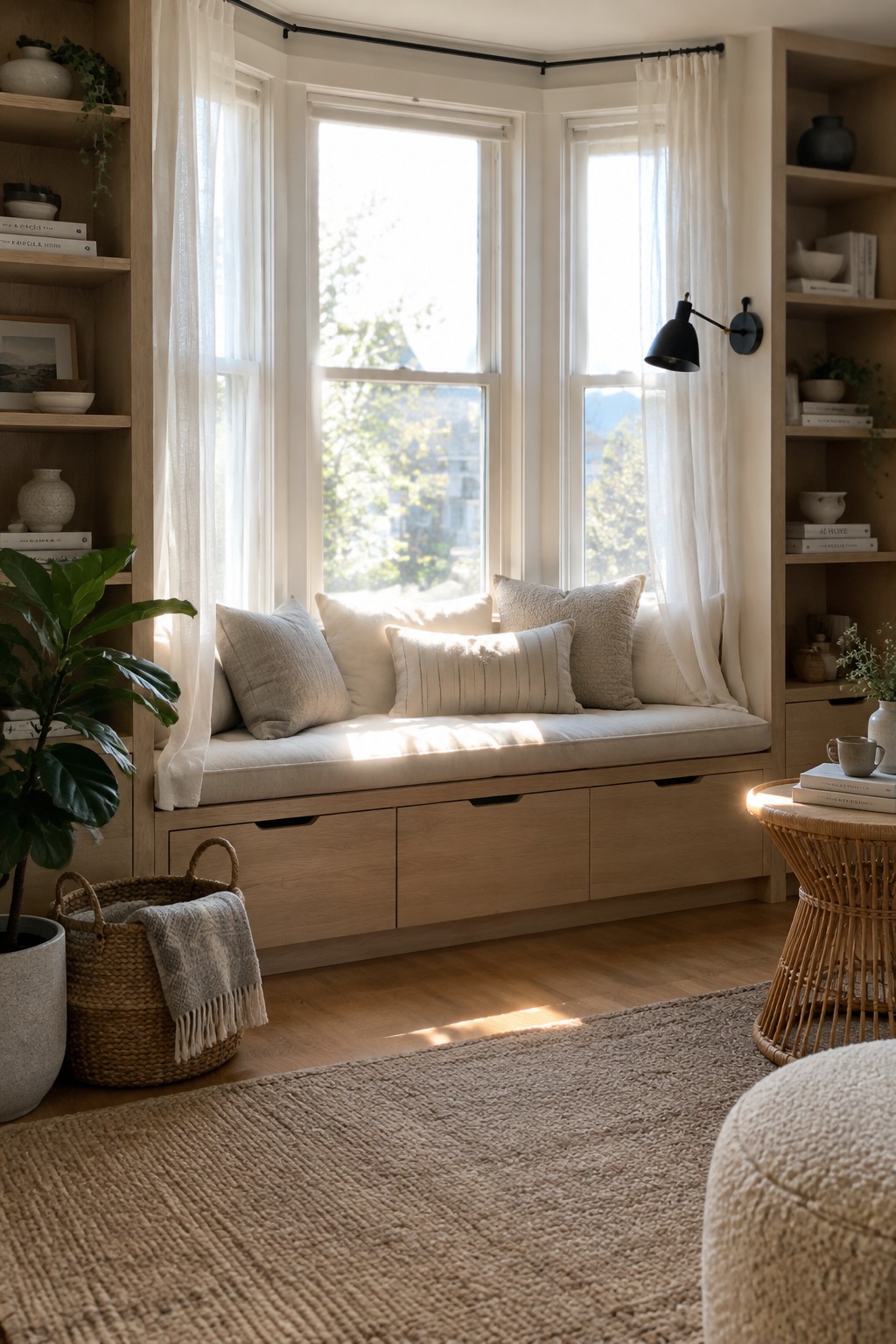
A built-in seat under a bay window gives you a place to sit while also solving the storage problem that often comes with these nooks. The drawers tucked underneath keep blankets, books, or seasonal items out of sight, so the area stays useful instead of becoming a spot where things pile up.
This setup works best in rooms where floor space is limited or where you want seating without adding another piece of furniture. It suits older homes with original bay windows or newer builds that include them, and it pairs well with simple cushions and light curtains that let the view stay open.
Fit a Banquette Into the Bay Window
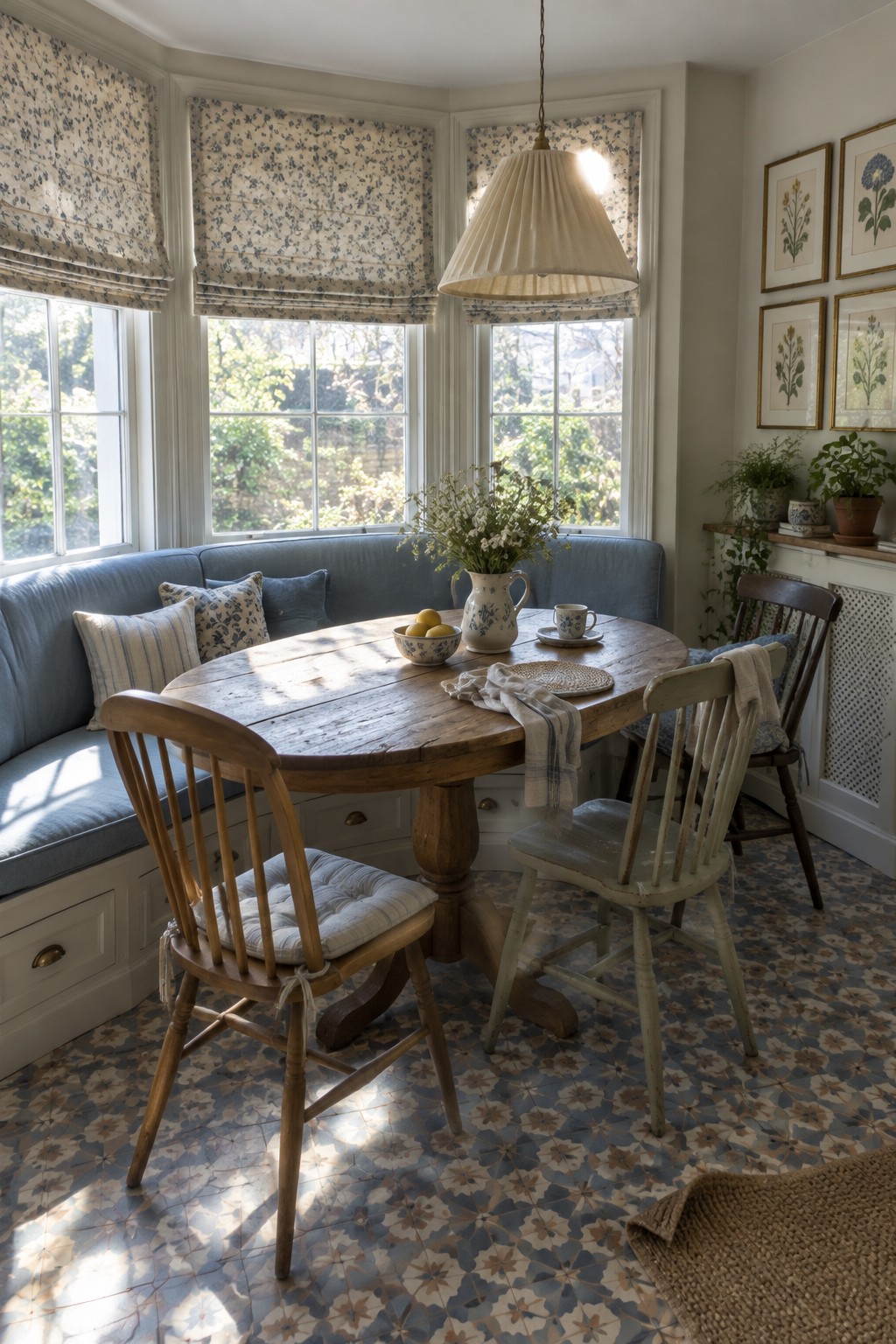
A banquette along the bay window turns an awkward nook into the most useful seat in the room. It follows the shape of the window so nothing gets wasted, and the seating stays low enough that the view stays open.
This works best in kitchens or breakfast spots where you want extra places without adding more chairs. Keep the table round or oval so the flow around it stays easy, and use one or two loose chairs on the open side for flexibility.
Build A Window Seat Into Your Bay Window
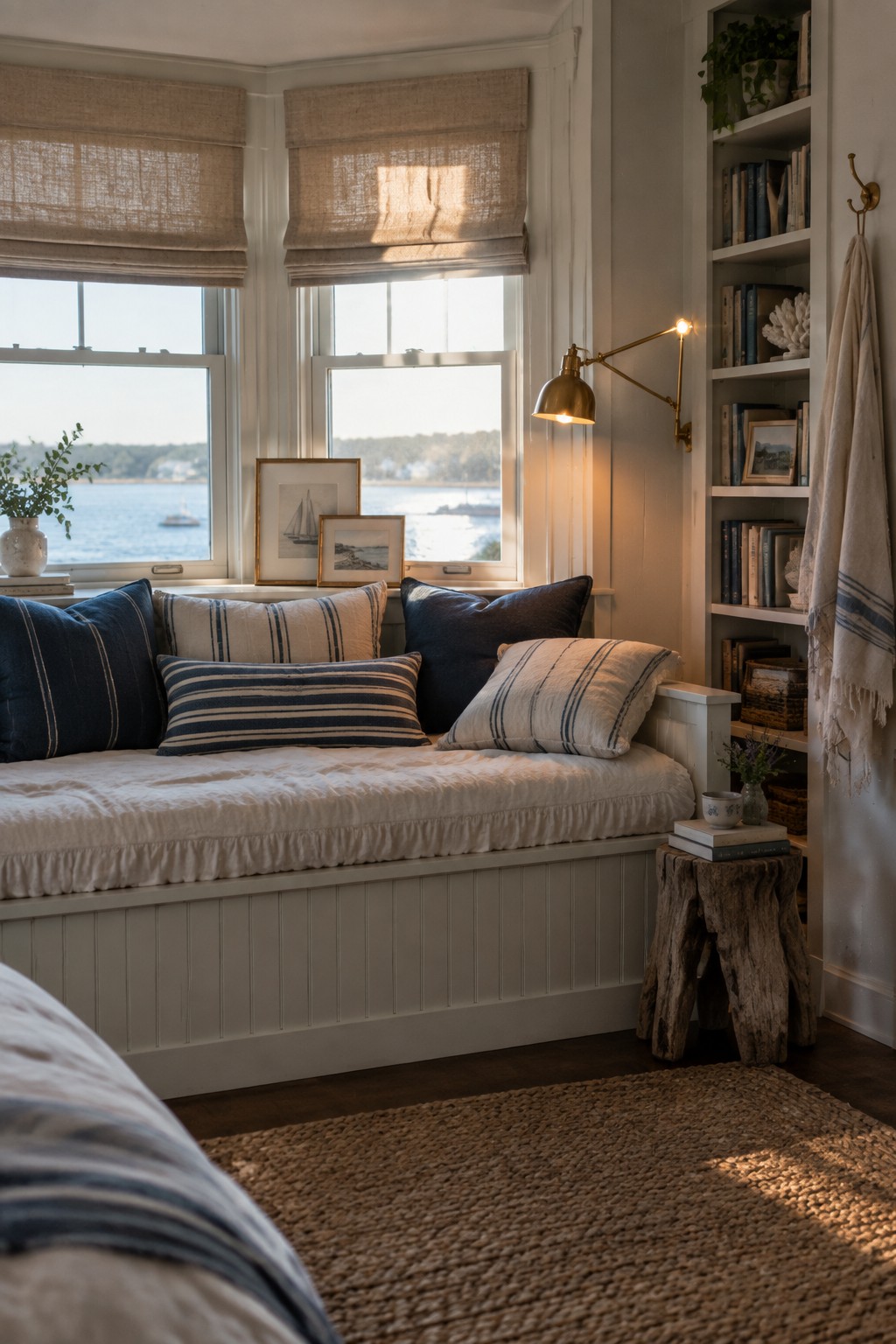
A built-in window seat turns a bay window into something you can actually use every day. Instead of leaving the space empty or just putting a few chairs nearby, the seat gives you a comfortable spot to sit while also hiding storage underneath the bench.
This idea works best in bedrooms or living rooms where you want a quiet corner without crowding the room with extra furniture. Keep the cushions simple and the seat height around 18 inches so it feels natural to sit on for more than a few minutes.
Built-In Desks That Work Well With Bay Windows
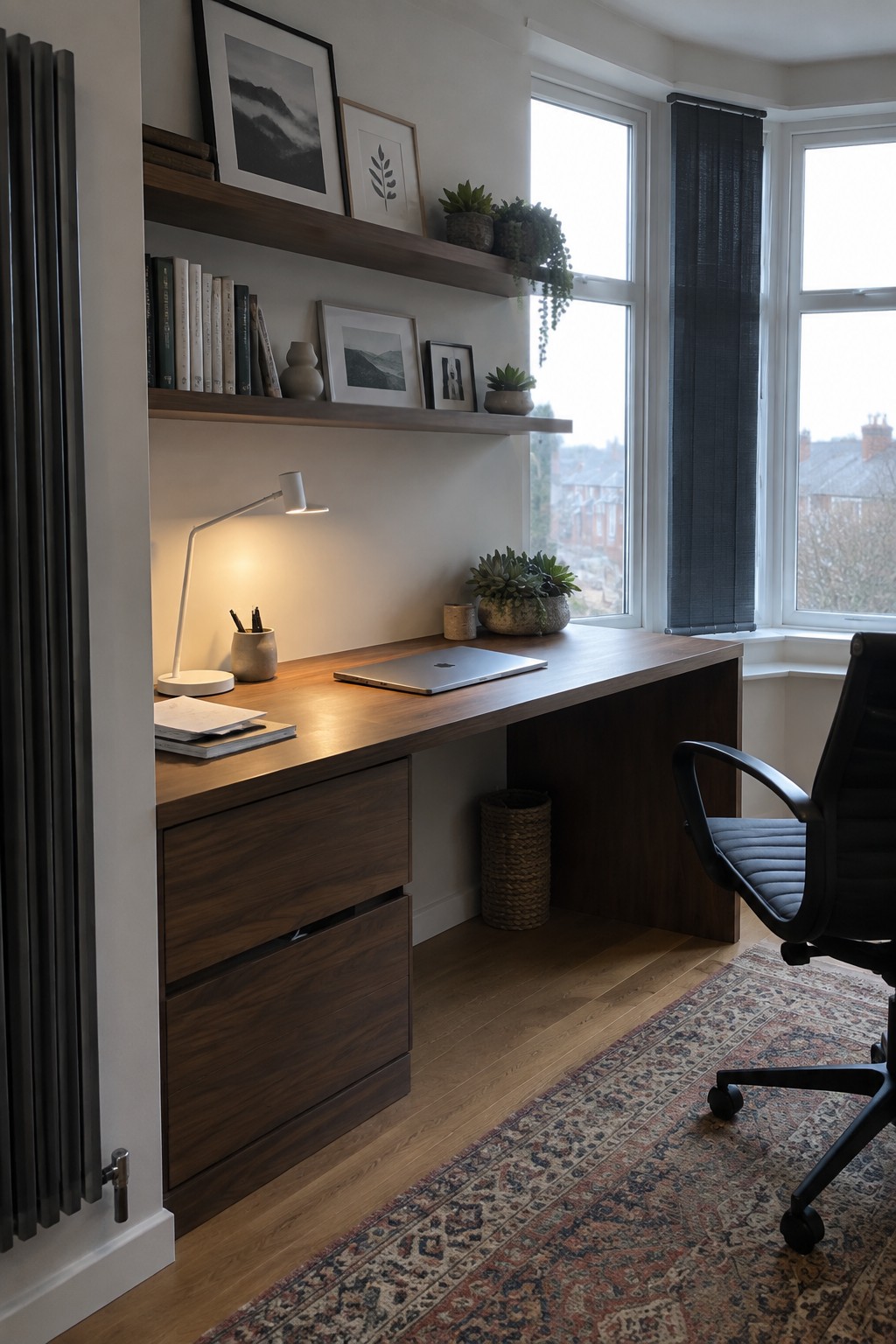
A built-in desk fits neatly into the space under bay windows and turns what might be empty floor area into useful workspace. The drawers below keep supplies tucked away while the surface stays clear for daily use. It also avoids blocking the light that comes through the windows.
This approach suits smaller rooms or home offices where floor space matters. It works best when the desk depth stays shallow enough to leave room for a chair and easy movement. Adding a few shelves above can give extra storage without needing a separate bookcase.
Built-In Window Seats Add Seating And Storage
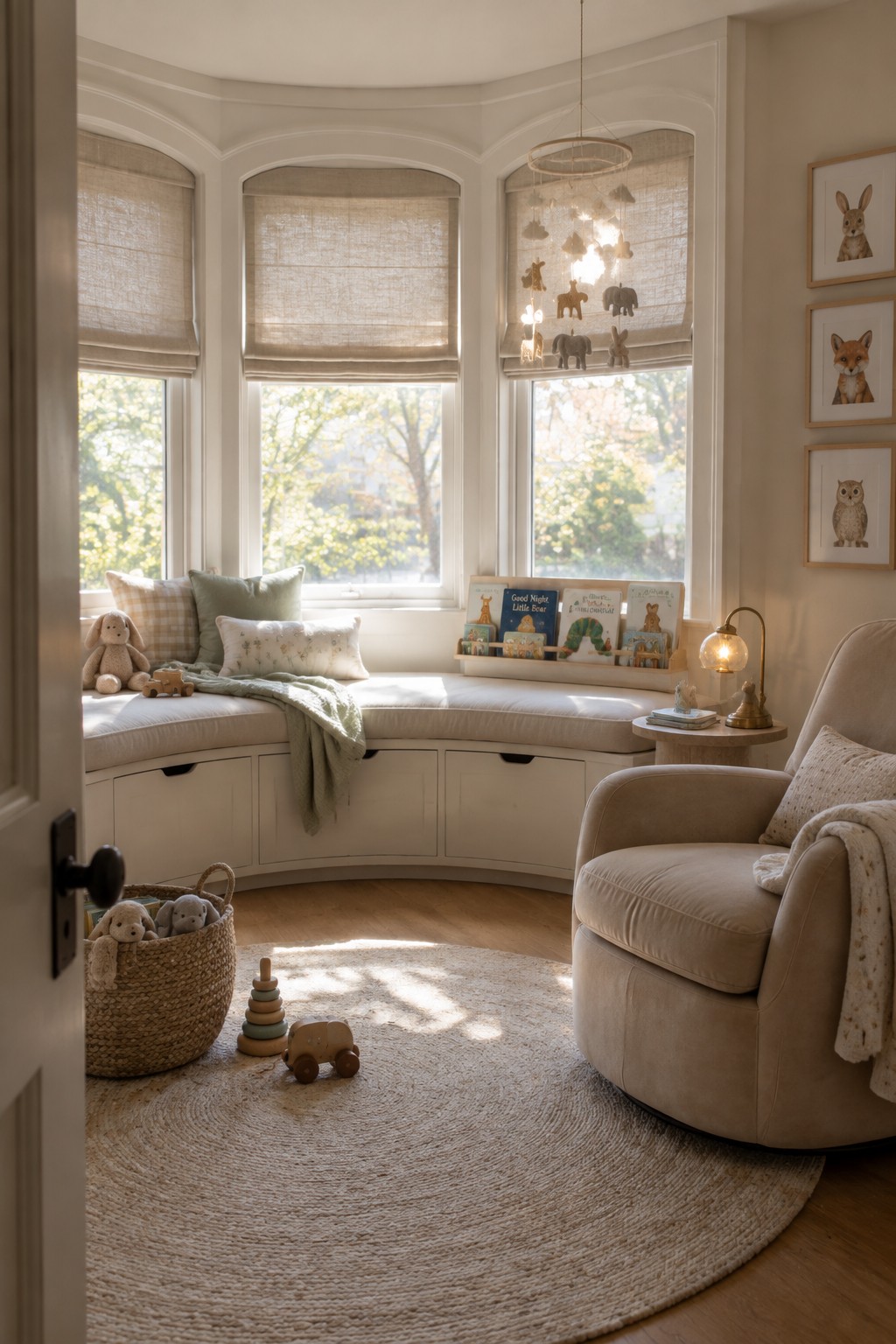
A built-in window seat turns a bay window into something you can actually use every day. It gives you a place to sit while also hiding storage underneath, so the room stays tidy without needing extra pieces of furniture.
This setup works best in family rooms or kids’ spaces where you want seating that does more than one job. The drawers underneath keep toys and books out of the way, and the cushions make the spot comfortable without crowding the floor.
Line Up Stools Along a Bay Window Counter
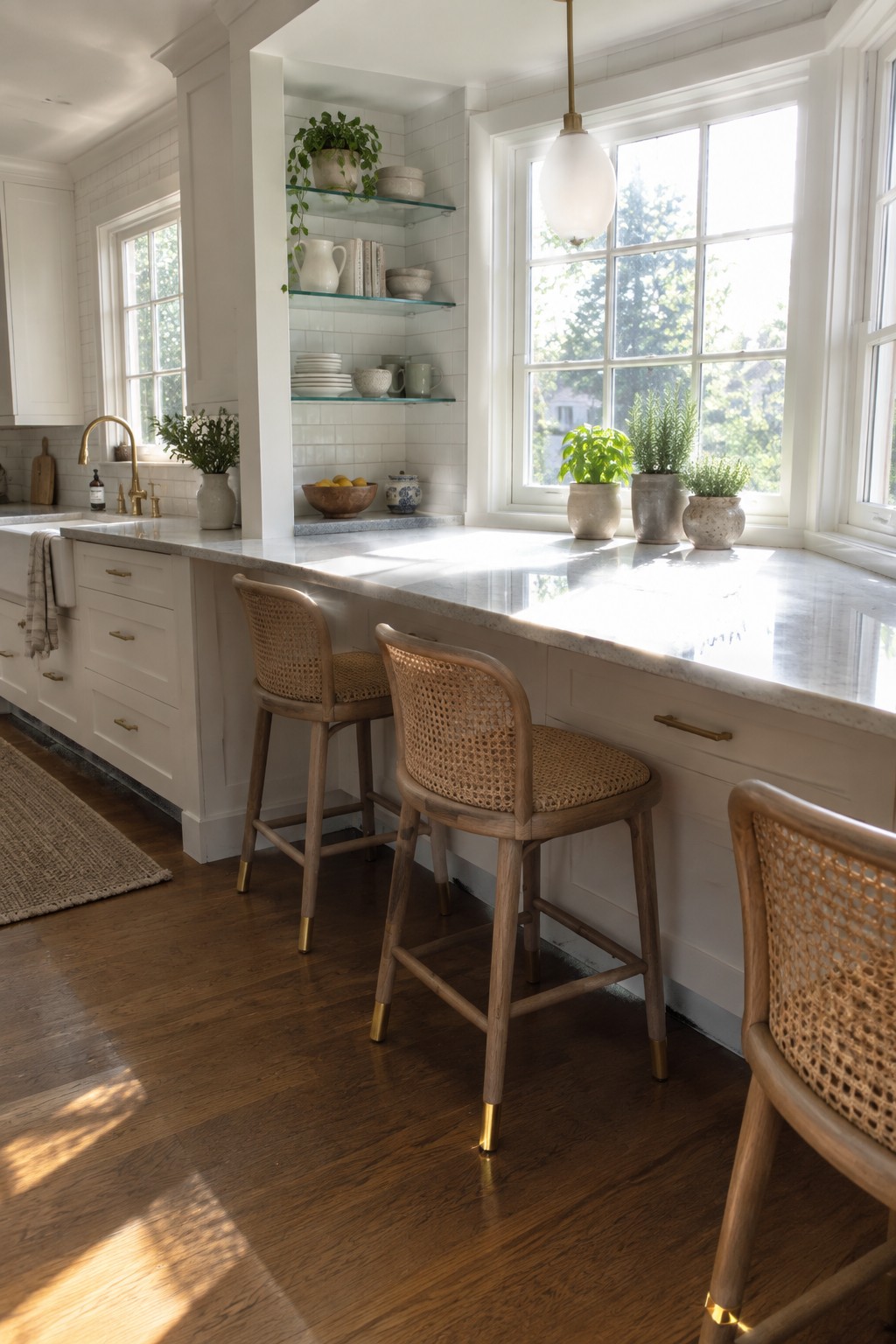
Placing a row of stools right under a bay window turns the extra depth into a useful spot for sitting. It works especially well in kitchens where the counter already runs along the window, since the stools let people face the light and view without crowding the main workspace.
This setup suits homes that want casual seating without adding a separate table. Just check that the stool height matches the counter and that there is still room to move behind the seats when people are using them.
Built-In Bench Seating With Hidden Storage
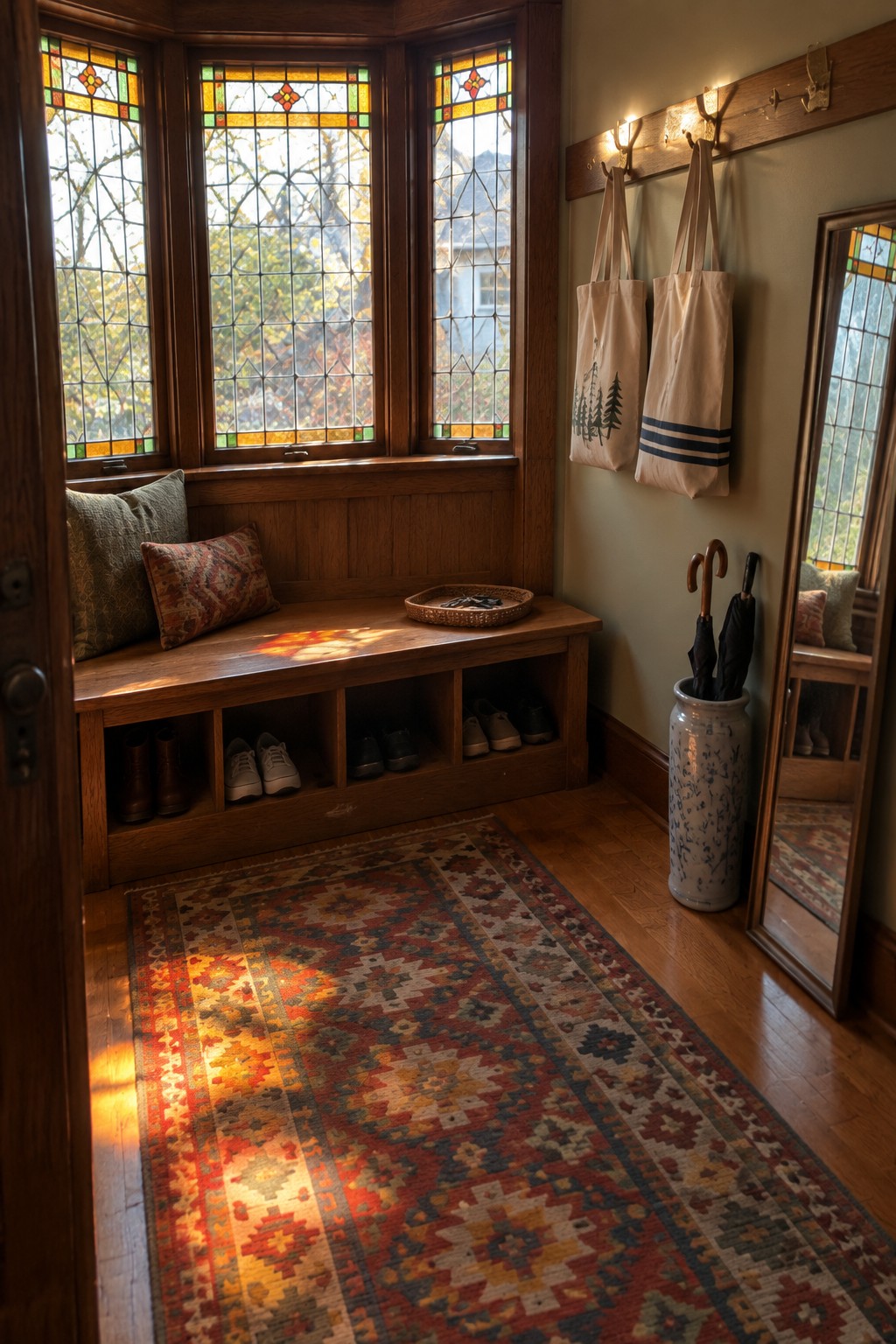
A bay window often leaves a stretch of floor that is hard to use. A built-in bench with open cubbies underneath turns that space into seating and storage at the same time, which keeps the room from feeling cluttered.
This setup works best in entryways or smaller living rooms where you want a spot to sit while putting on shoes. It suits homes with deeper window sills and older wood trim, and it pairs well with a rug in front to soften the look.
Built-In Seating Under Bay Windows
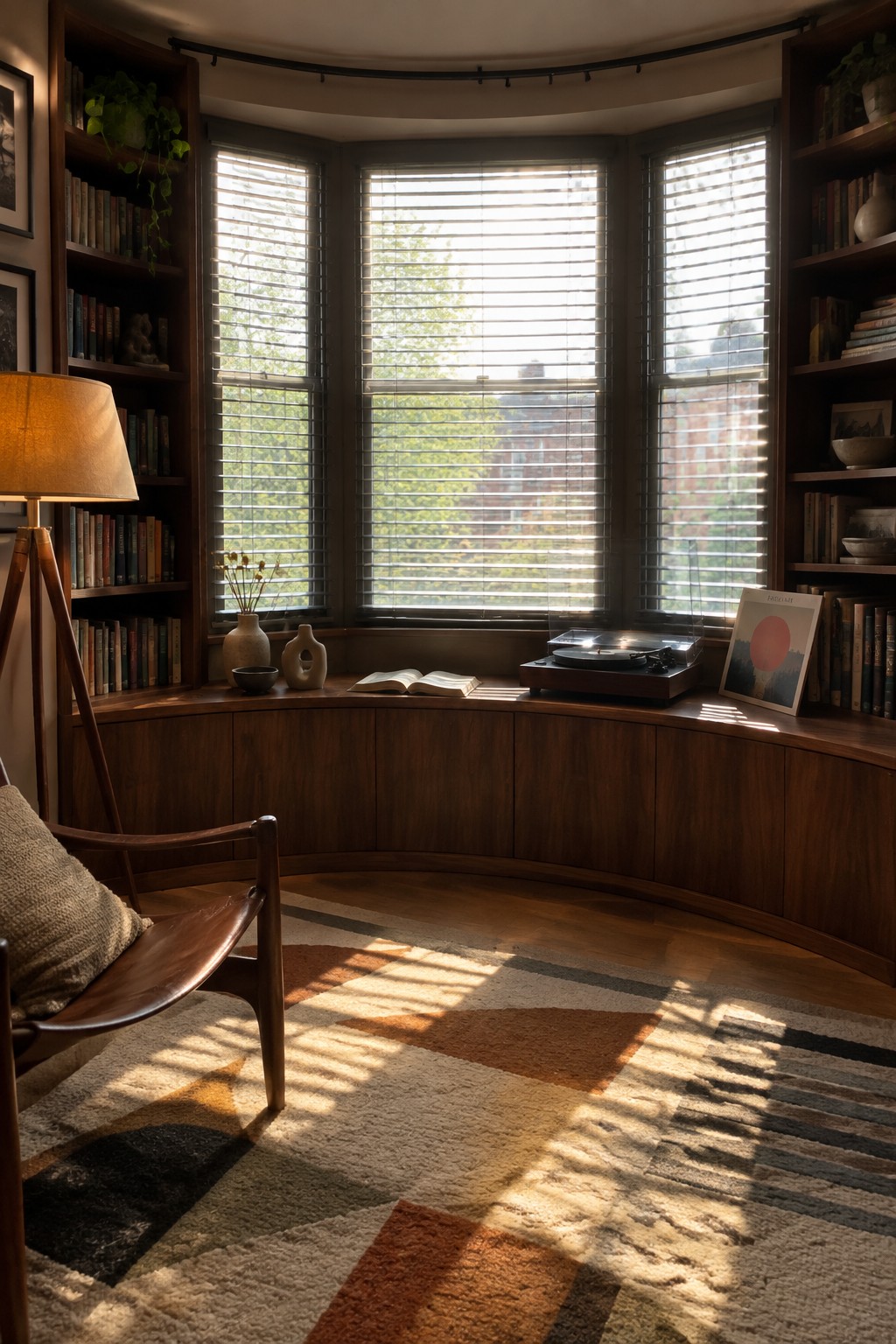
One practical way to handle a bay window is to run low cabinets right beneath it and top them with a simple bench cushion. This creates seating without blocking light and gives you storage for books, blankets, or whatever else tends to pile up in that spot.
It suits rooms that already have bookshelves on the sides, since the built-ins can match the woodwork and keep everything looking connected. Just keep the cabinet fronts simple so the window stays the main feature rather than the furniture around it.
Build A Long Counter Under The Bay Window
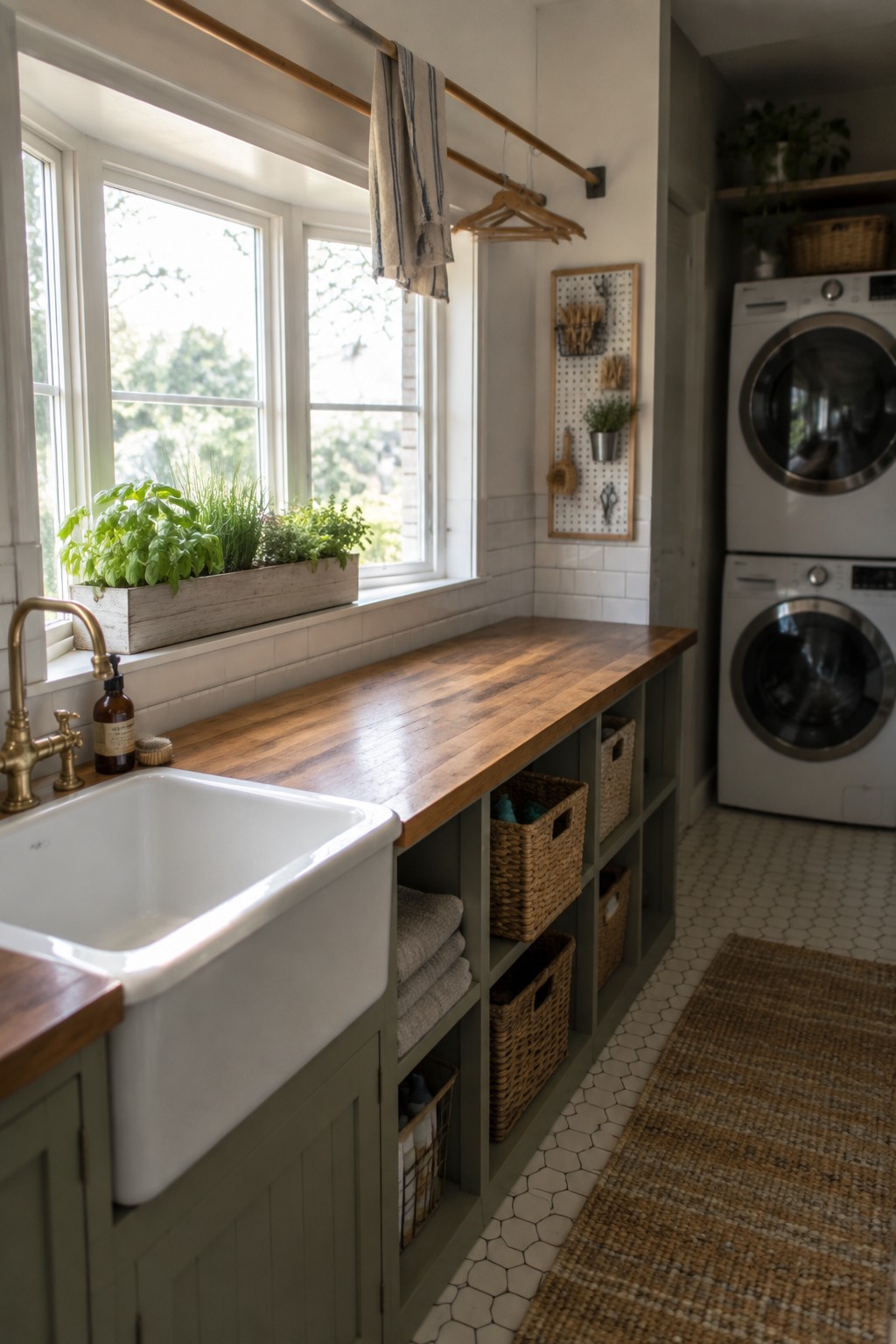
A bay window often leaves a long stretch of wall that feels hard to use. Running a solid counter across it gives you a wide work surface without blocking the light.
This works best in rooms that need practical space like laundry areas or craft rooms. Leave the area below open so baskets and bins stay easy to reach and the whole setup stays simple to keep clean.
Float A Vanity Under The Bay Window
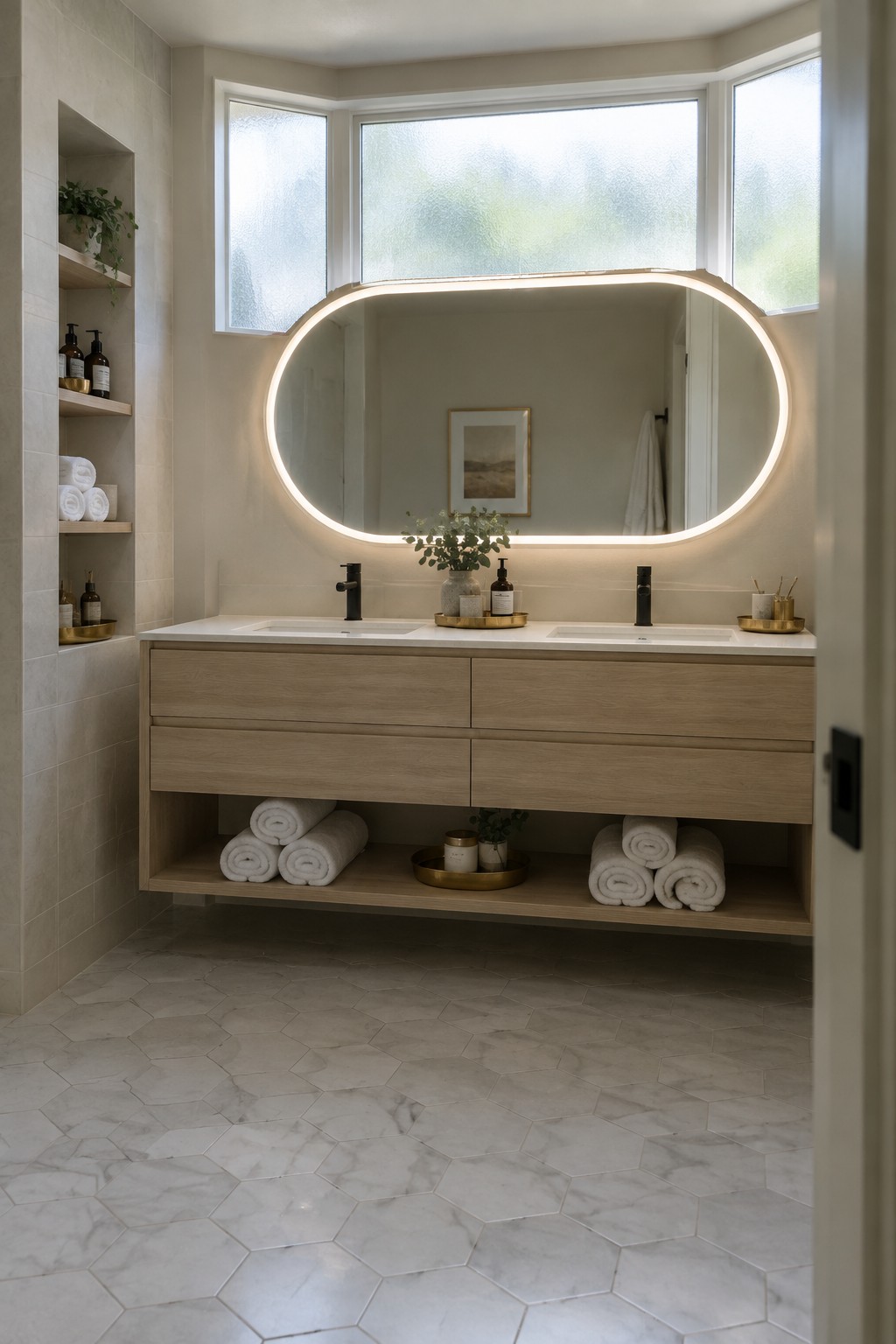
A floating vanity fits neatly under a bay window and leaves the floor open so light can still reach the rest of the room. The open lower shelf gives you a place to keep towels and daily items without adding bulky cabinets that would block the view or make the space feel tight.
This setup works well in bathrooms that already have good natural light from the windows. Choose a vanity that runs the full width of the window area and keep the bottom open or lightly stocked so the room stays easy to clean and move around in.
Place a Piano in the Bay Window
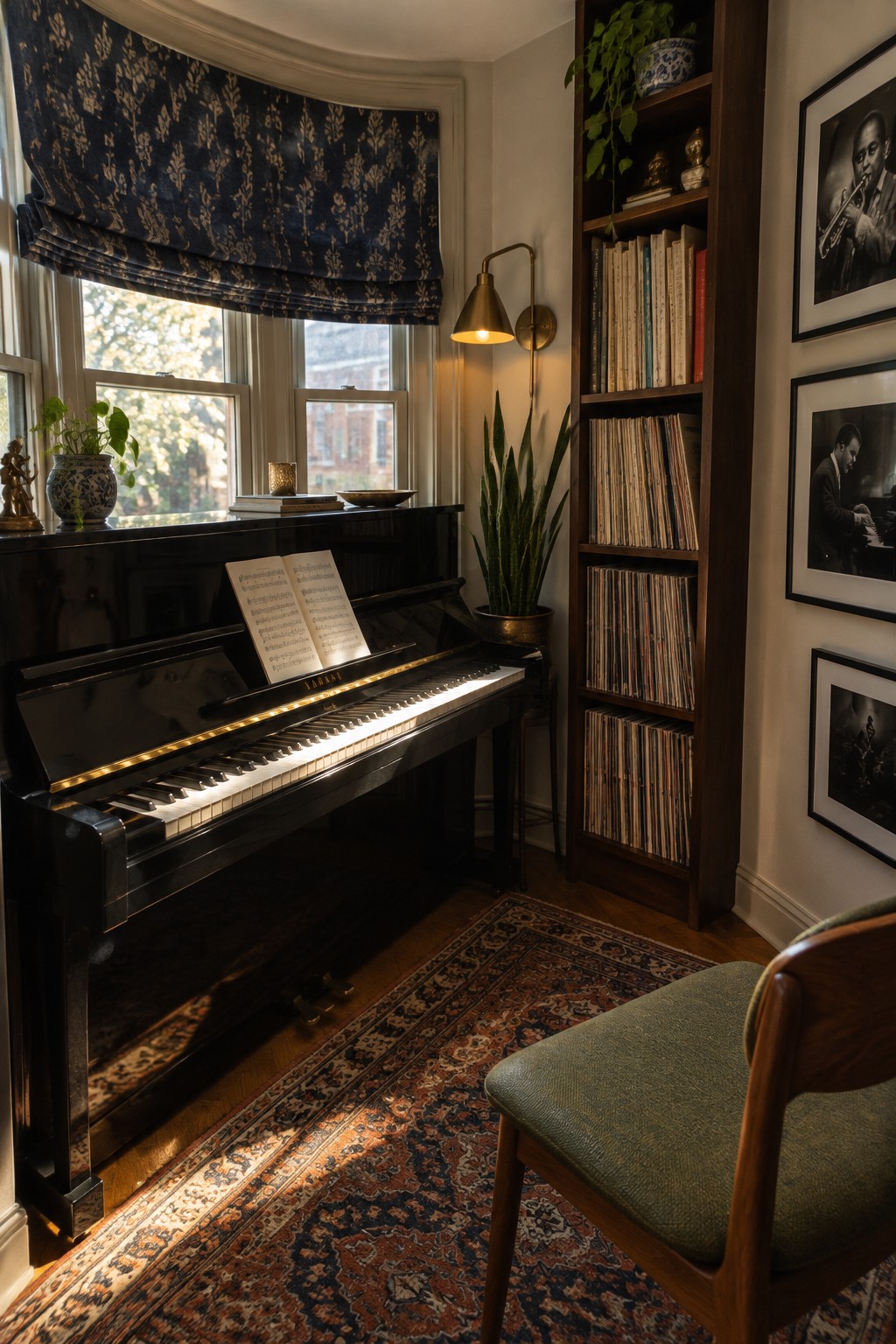
A piano takes advantage of the extra depth in a bay window without crowding the rest of the room. The light from the windows makes the space feel open, and the curved wall gives the instrument a natural home that still leaves floor space clear.
This works best in living rooms or music corners where the piano sees regular use. Keep the bench pulled out enough for comfortable playing and choose a shade or blind that can soften direct sun on the keys.
Curved Banquette Seating for Bay Windows
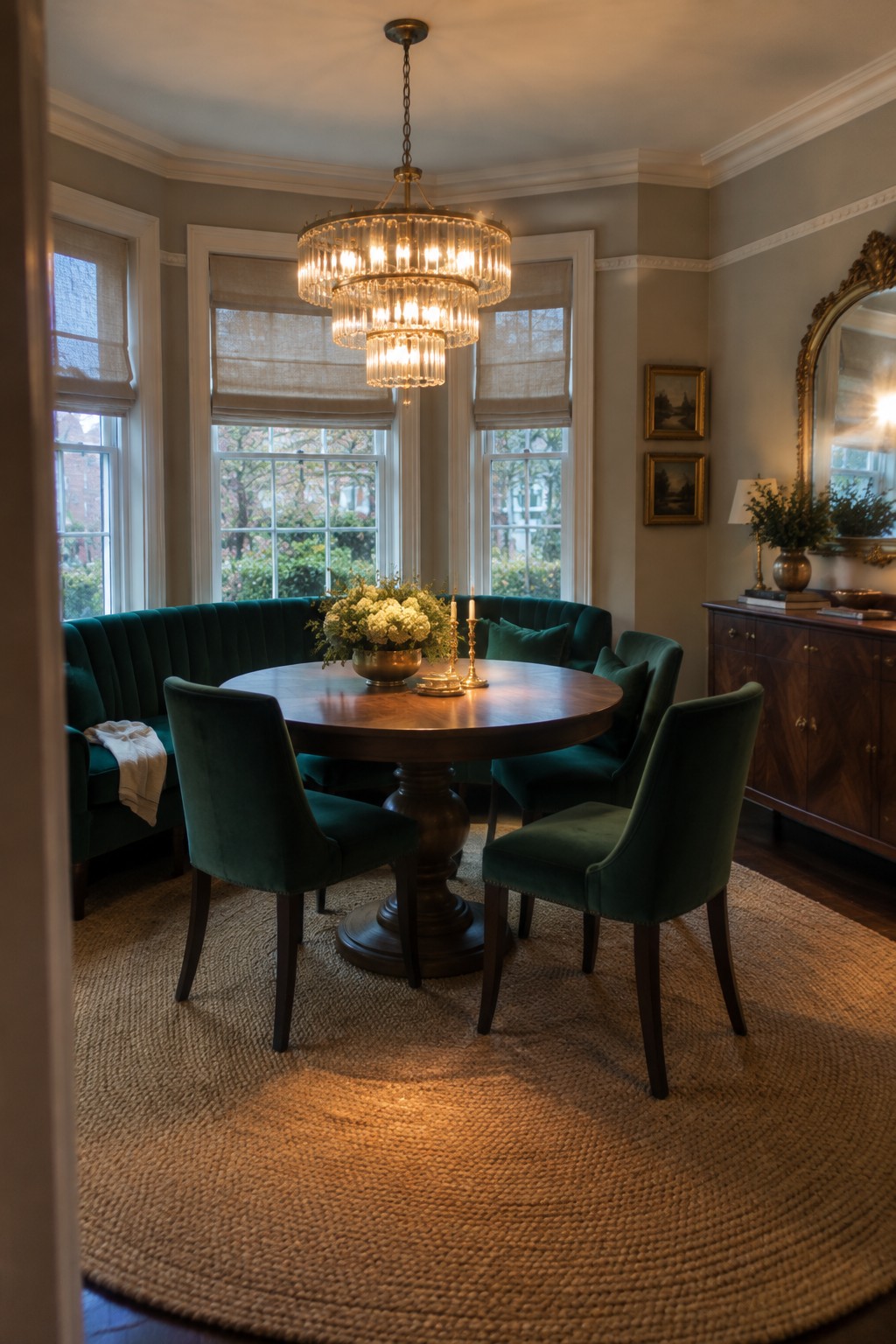
A curved banquette makes the most of a bay window by following its shape instead of fighting it. This layout keeps the seating snug against the windows and opens up the rest of the room for a table and chairs.
It works especially well in older homes or dining areas where the bay is fairly deep. A round table sits comfortably in front of the banquette, and you can add two or three extra chairs on the open side when you need more seats.
Built-In Seating Along The Bay Window
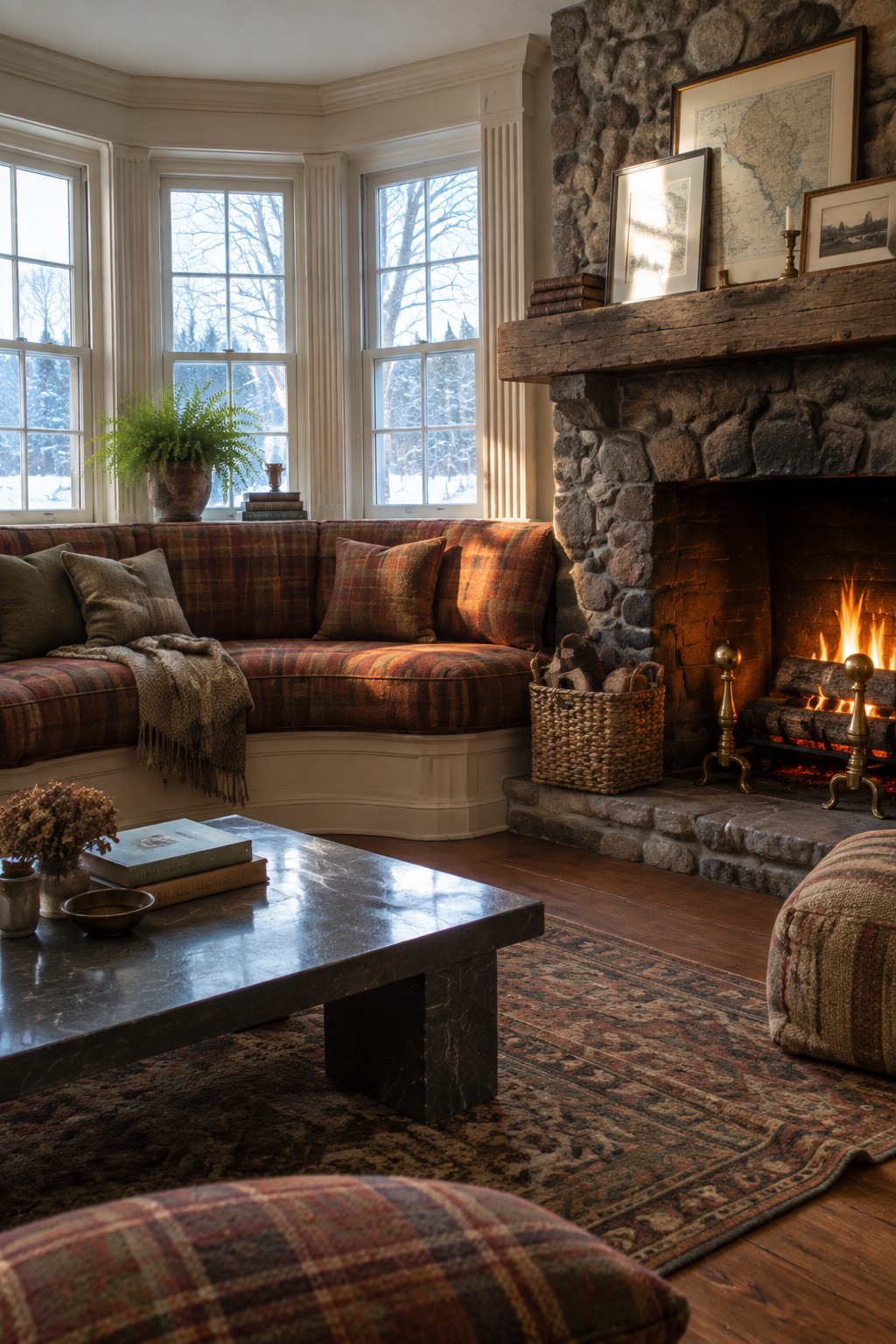
A built-in bench or sofa that follows the curve of a bay window turns an otherwise hard-to-use spot into everyday seating. It keeps the floor clear and gives the room a settled look without needing extra chairs or bulky pieces pushed against the wall.
This works best in living rooms or family rooms where you want the window to stay the main focus. Keep the cushions in a simple fabric so the seat blends with the rest of the room instead of standing out as a separate zone.
Put a Workbench Under the Bay Window
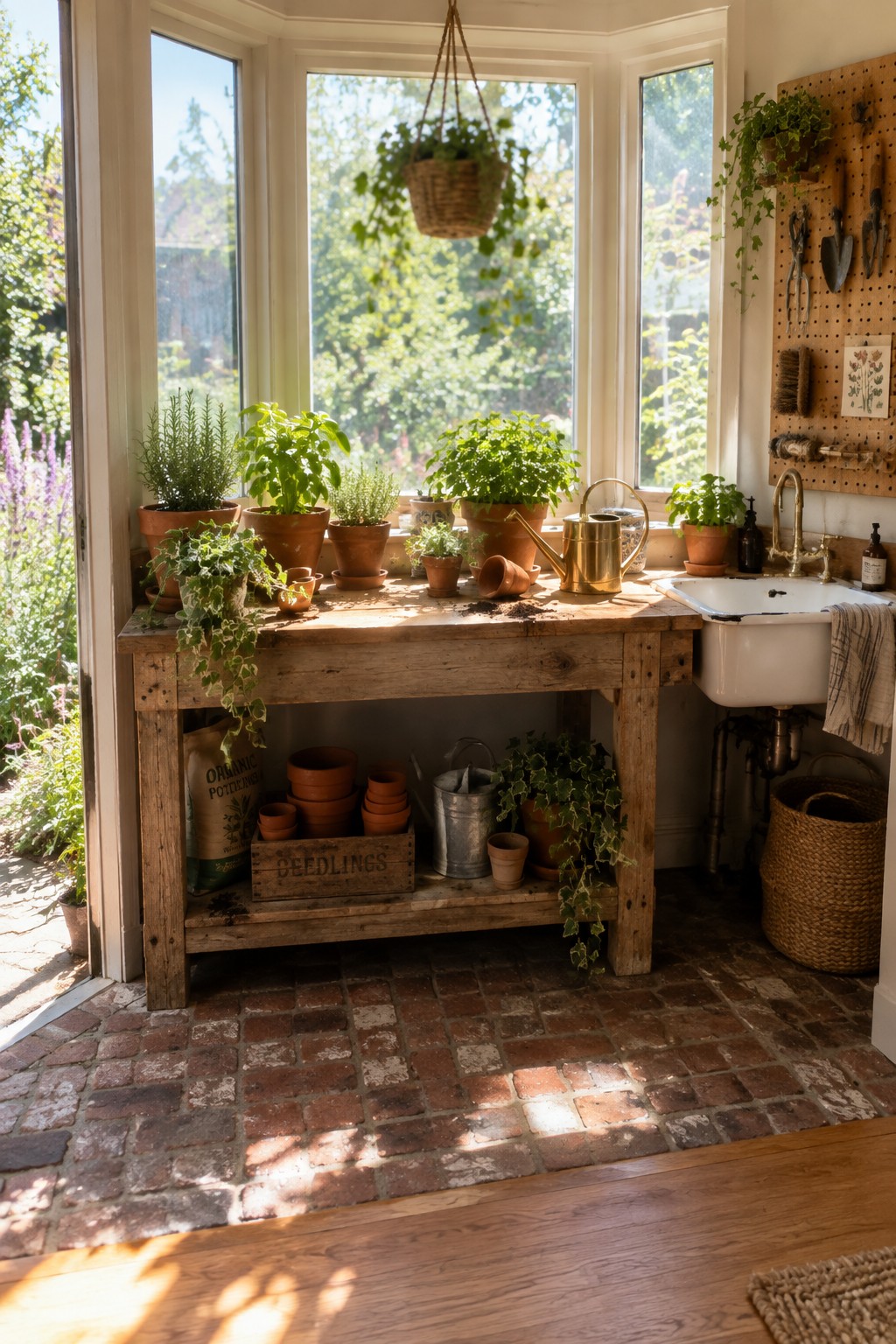
A workbench under the bay window turns the extra floor space into a real work area. It gives you room to pot plants, store supplies, and keep everything in one spot instead of spreading it across the kitchen or sunroom.
This setup works well in rooms that get steady light and already have a sink nearby. Pick a table that fits the width of the window, leave open storage underneath for pots and bags, and keep the surface clear enough to actually use it.
Build A Desk Into The Bay Window
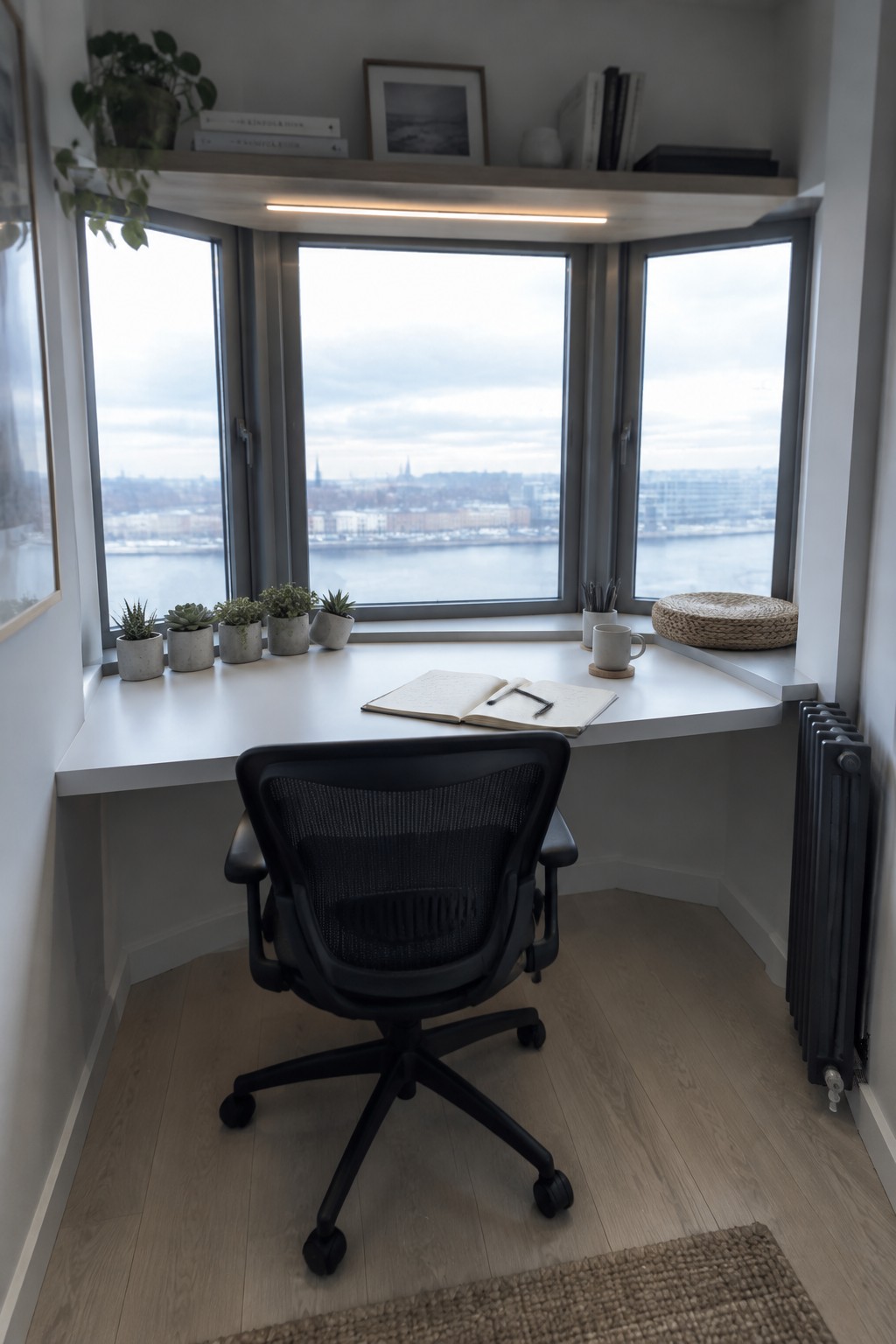
Running a desk right along the inside of a bay window turns the whole area into usable workspace instead of empty floor. The flat surface gives you room to spread out papers or a laptop while the windows bring in steady light and a view that makes sitting there feel less closed in.
This works best in rooms that get decent natural light and where the window faces something worth looking at. Keep the desk height standard so any regular chair fits underneath, and leave enough clearance on the sides for the chair to move freely.
Daybeds Work Well In Bay Windows
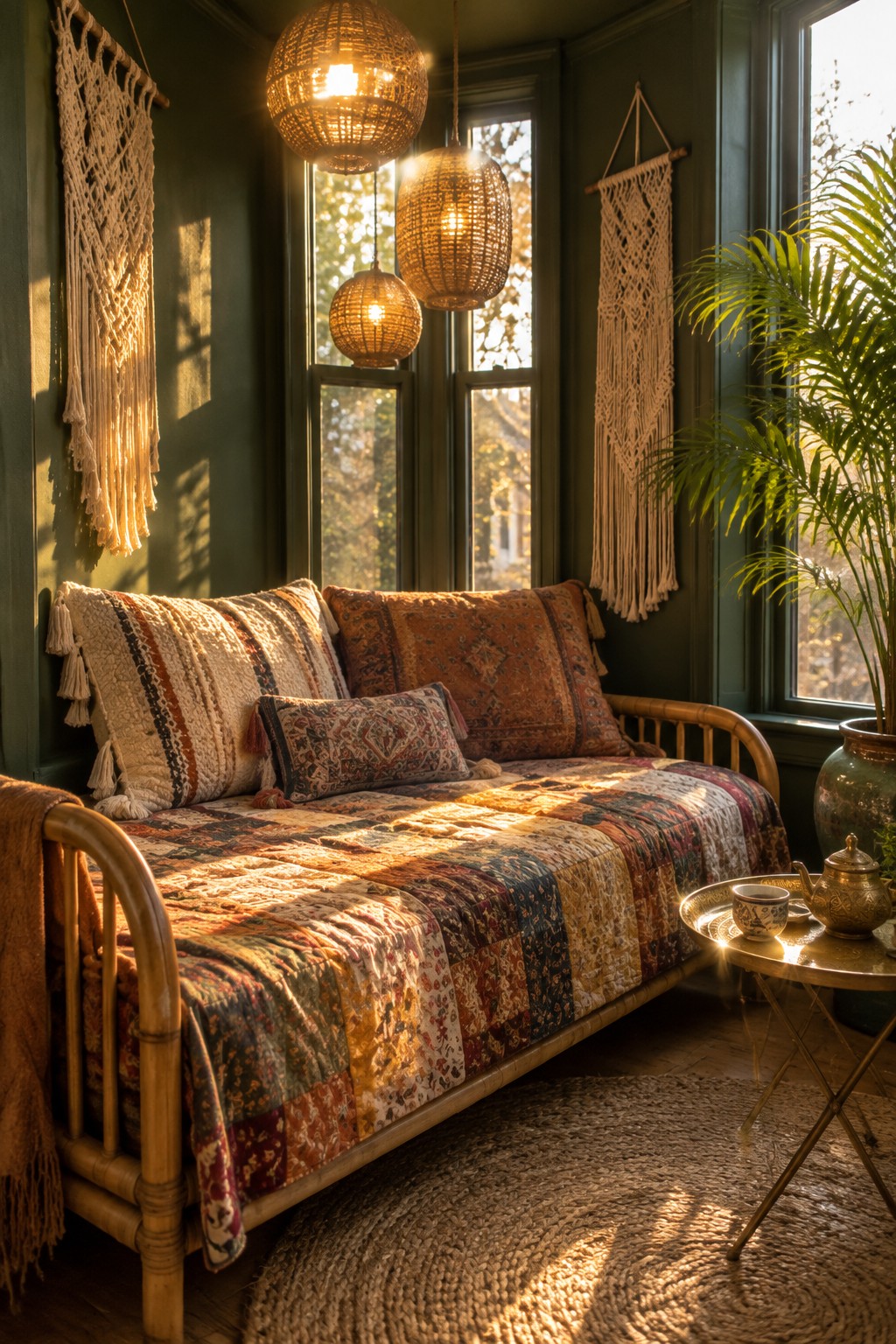
A daybed gives you a simple way to turn a bay window into an actual place to sit. It sits low enough to keep the view open while turning that extra floor space into a comfortable spot for reading or just resting in the light.
This works best in rooms that already feel a bit tight or where you want a quiet corner without adding another big chair. Keep the daybed frame light and skip anything too deep so the window stays usable and the room does not feel crowded.
A Desk That Follows The Bay Window Curve
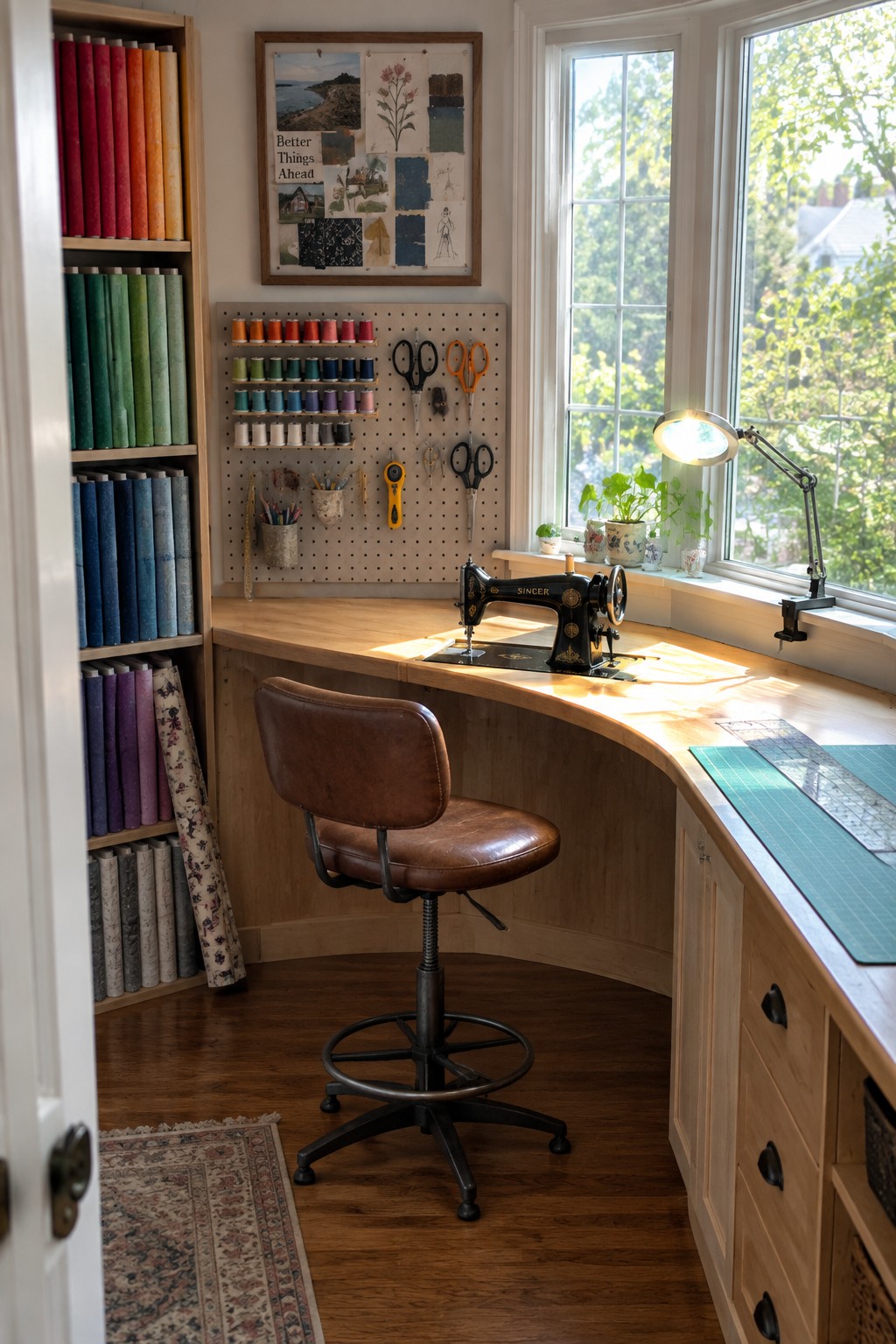
A desk shaped to match the curve of a bay window turns that area into actual workspace instead of leftover floor space. It gives you a long surface for projects while keeping the natural light right where you need it.
This setup works best in craft rooms or small home offices that already have a bay window. Keep the desk height even with the window sill so the whole thing feels built in rather than added later.
Built-In Window Seats With Storage
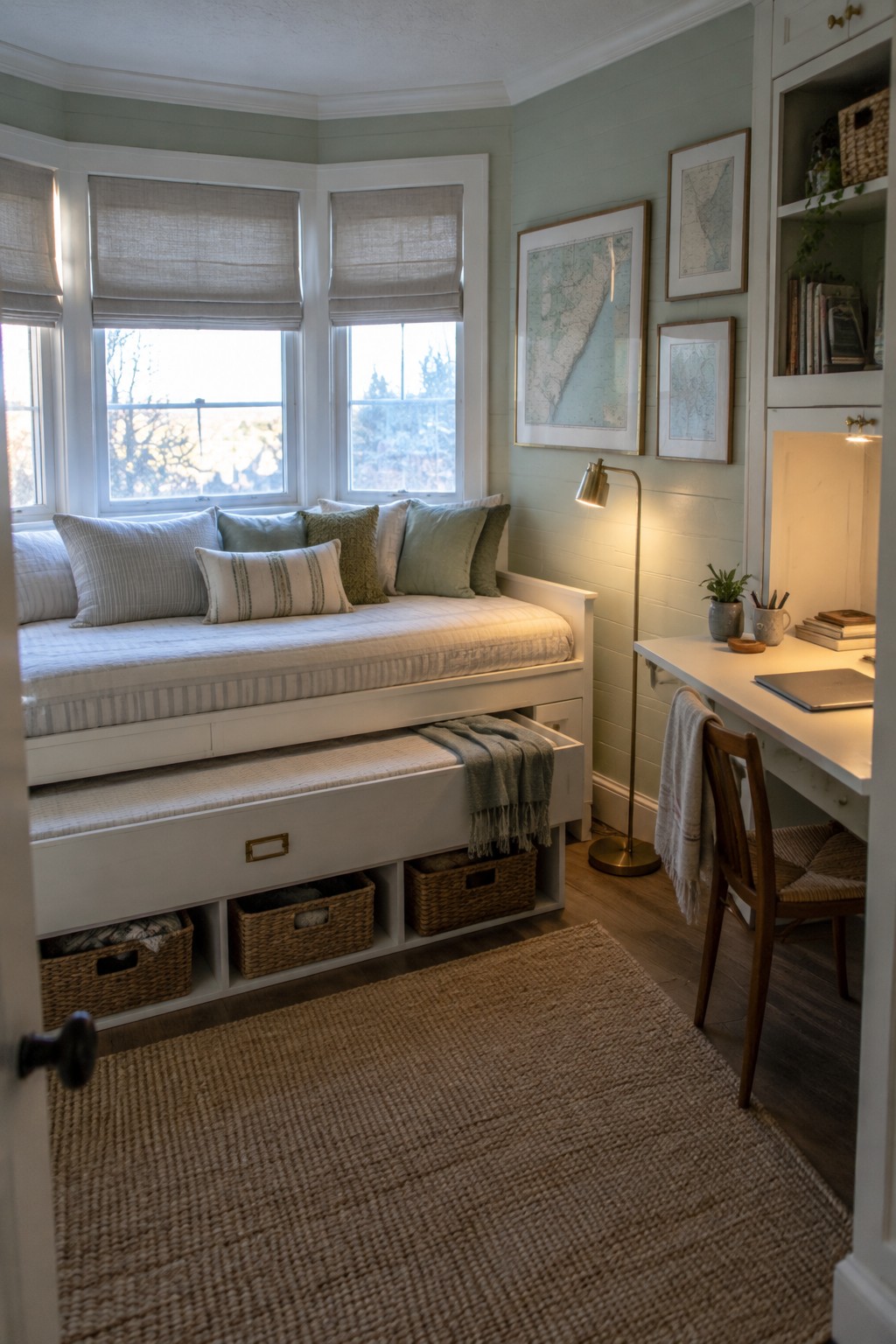
A window seat built into a bay window gives you seating and storage in one piece. The space underneath can hold drawers or open cubbies, so you keep the floor clear while still having a place to sit and read or rest.
This setup works best in bedrooms or living rooms where you already need extra storage for blankets, pillows, or seasonal items. It fits homes with deeper bay windows especially well, since the added depth makes the seat comfortable without crowding the room.
Built-In Seating For Bay Windows
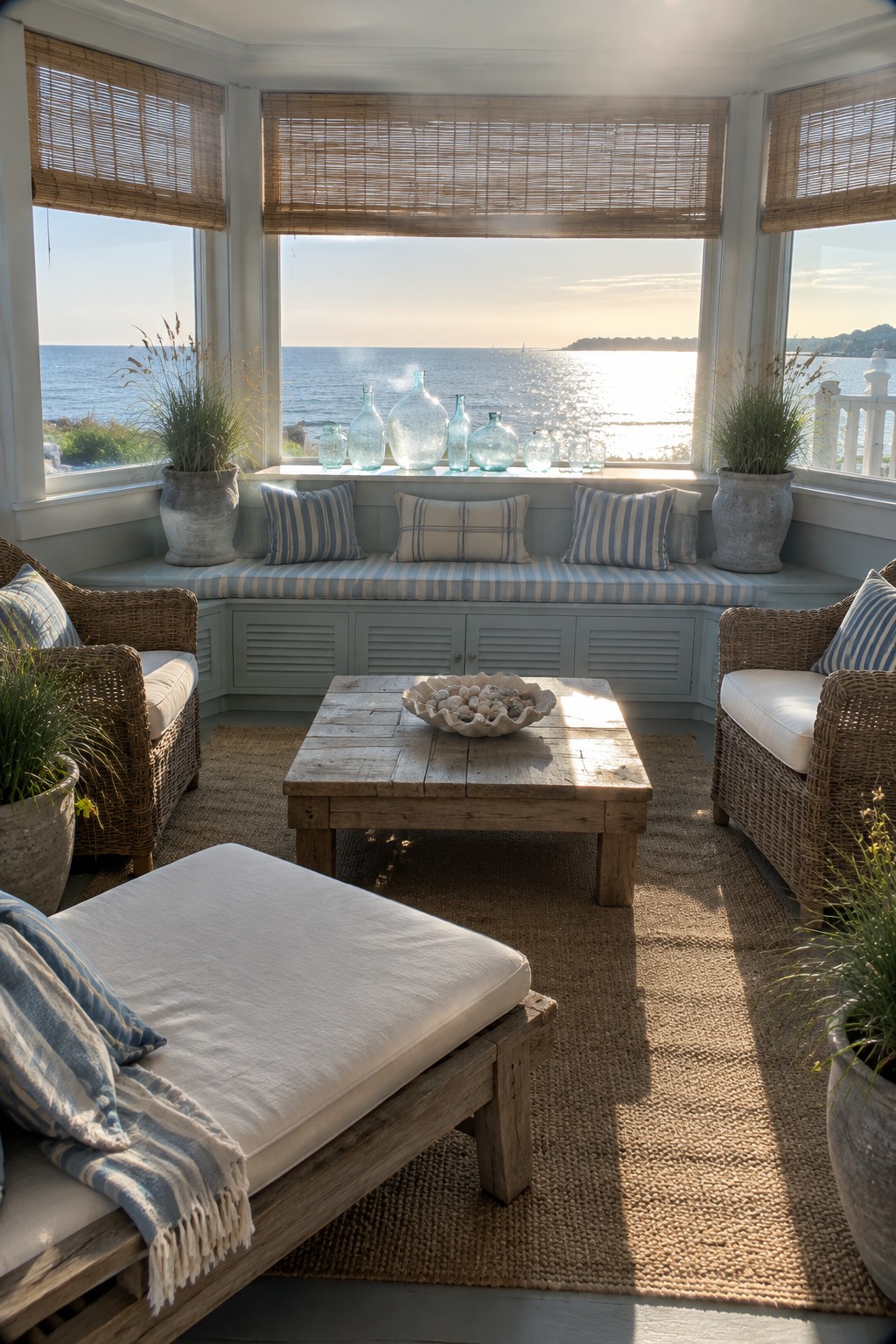
A built-in bench under a bay window turns an awkward spot into the most practical seat in the room. It gives you a place to sit and enjoy the view while adding storage space underneath that keeps the room from feeling cluttered.
This works best in living rooms or sunrooms where you want extra seating without bringing in another sofa. Keep the cushions simple so the bench blends with the rest of the furniture and does not compete with the window itself.
Frequently Asked Questions
Q: What furniture fits best if my bay window is small? A: Low benches or built-in seats work great in tight spots. They turn the space into a cozy spot without taking over the room.
Q: How can I use the bay window for reading? A: Add a simple armchair angled toward the glass. A floor lamp beside it gives light for evenings.
Q: Do curtains still work with furniture in the bay? A: Hang them on the outer edges (so they frame the whole area). This way your pieces stay in the light.
Q: Is it okay to store things in the bay window? A: Yes, but keep it to low bins or baskets under a seat. They stay hidden and the view stays clear.
