

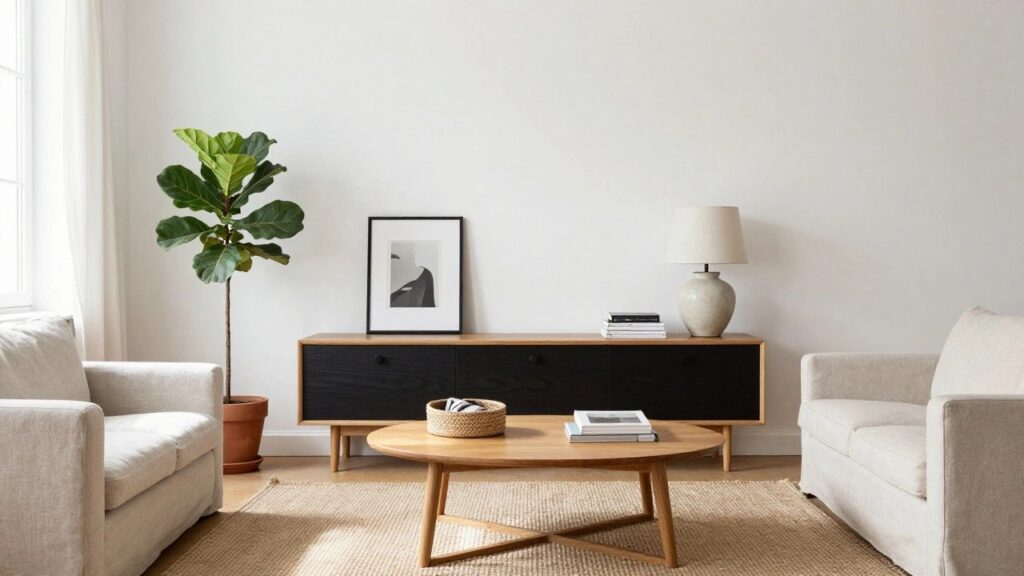
I often notice that a room starts to feel settled once the larger pieces of furniture actually match how people move through it day to day.
A sideboard can quietly shape that balance when its size and finish work with the existing layout rather than fighting it.
Small details matter more than I first realized.
I have tried a few different approaches in my own spaces and found that the ones with real storage behind the doors hold up better than open-shelf versions.
Looking at fresh options helps me picture what might actually fit without needing a full redesign.
Sideboards With A Mix Of Storage Options
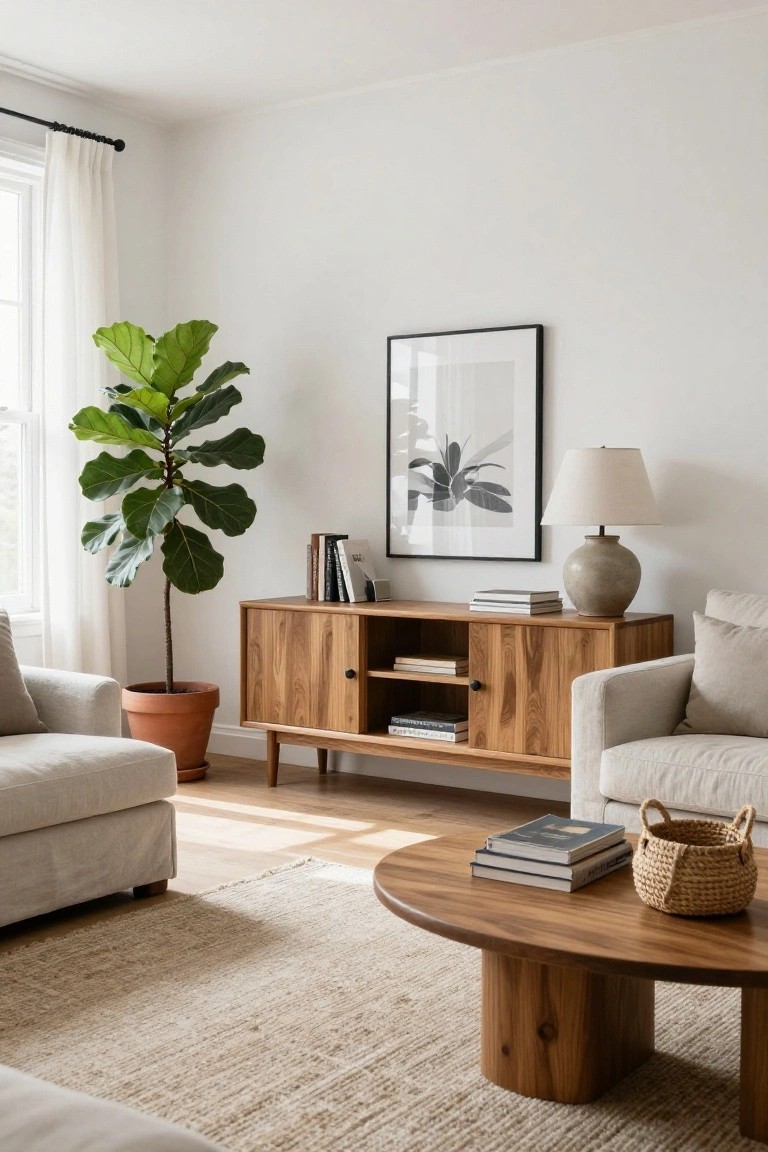
A sideboard that combines closed cabinets with a few open shelves gives you room to hide everyday clutter while still showing off a few favorite things. This setup works especially well in living rooms where you want storage that does not take over the space or look too heavy.
It fits best in rooms with a relaxed feel where you need to store books, games, or linens but still want a spot for a lamp or a few plants. Just keep the open areas light so the piece stays airy instead of crowded.
Sideboards That Support a Simple Music Setup
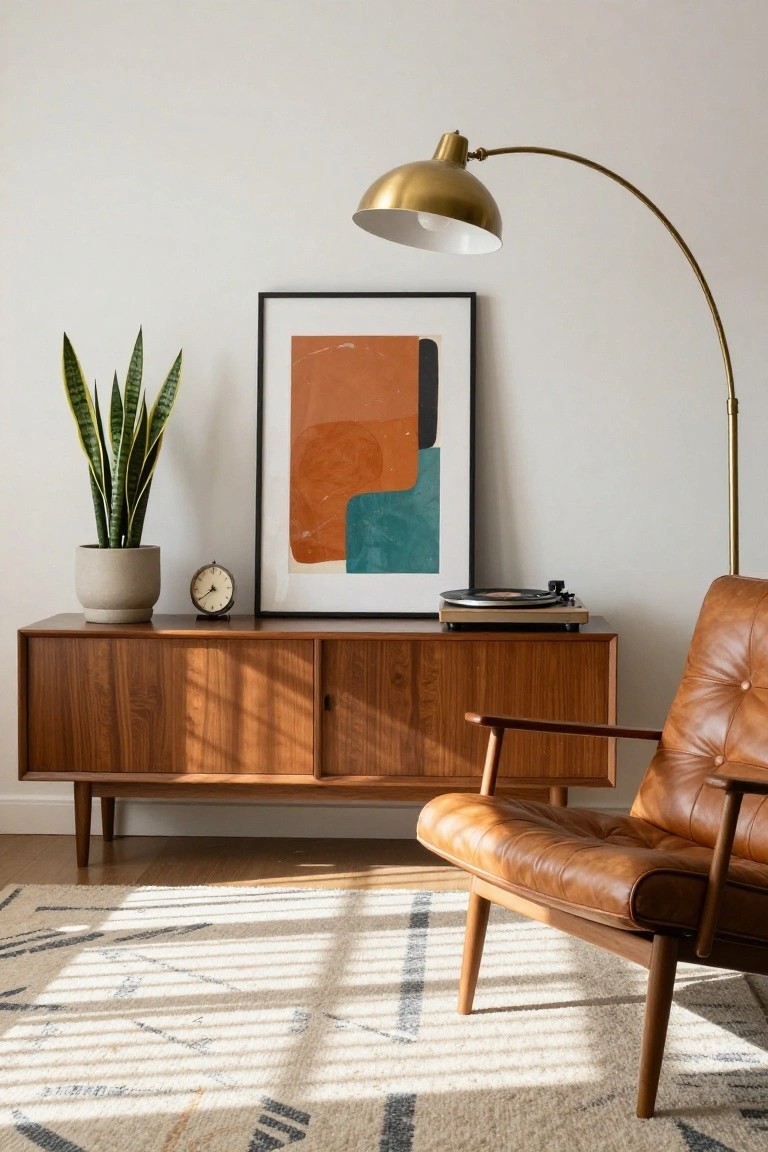
A low wooden sideboard works well when you want storage without cluttering the room. The clean lines and warm wood tone let it blend into the space while giving you a solid surface for a record player or a few everyday items.
This style fits best in smaller living rooms or open layouts where you need the piece to stay useful but not dominate. Keep the top fairly clear, hide the rest behind the doors, and let the sideboard handle the practical side of things without extra fuss.
Botanical Prints For A Simple Dining Room
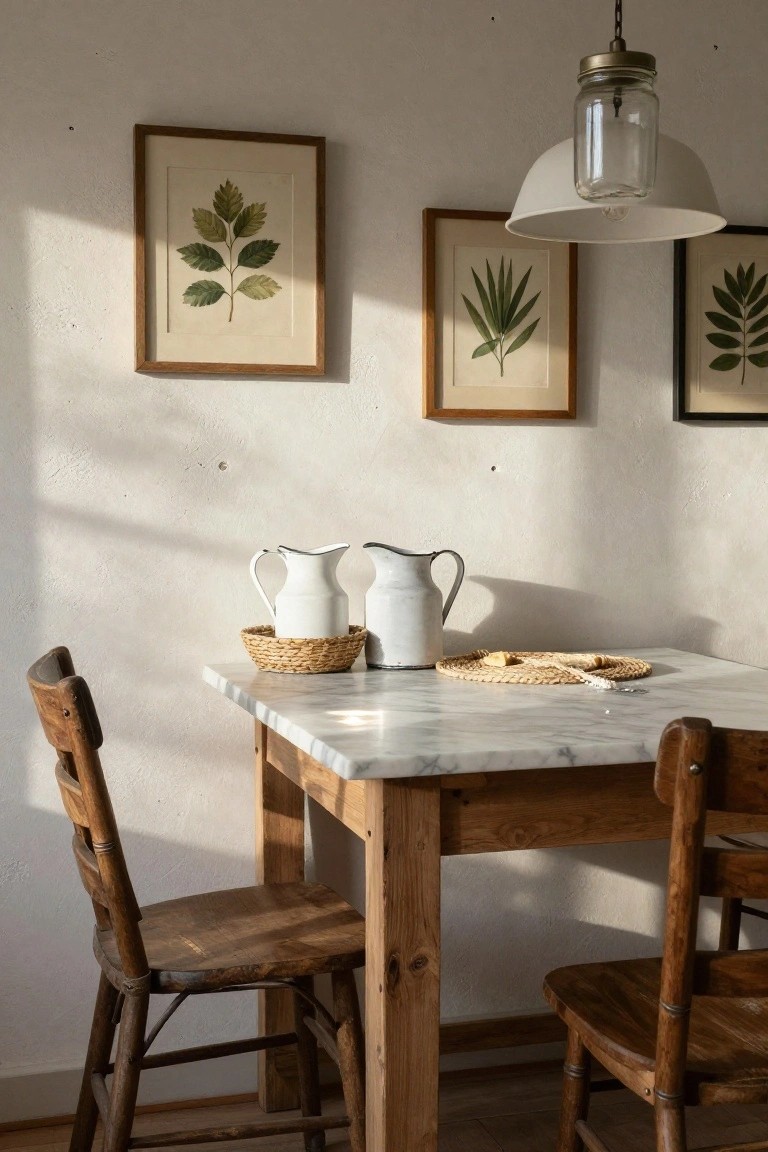
Botanical prints give a dining room an easy lift without adding clutter. A few framed leaf illustrations on a plain wall bring in some softness and keep the space from feeling too bare, especially when the furniture stays simple and natural.
This works best in homes that already have wood tones and light colors. Stick to matching frames and let the prints sit at eye level so they feel part of the room rather than just decoration.
Keeping Storage Simple With A White Sideboard
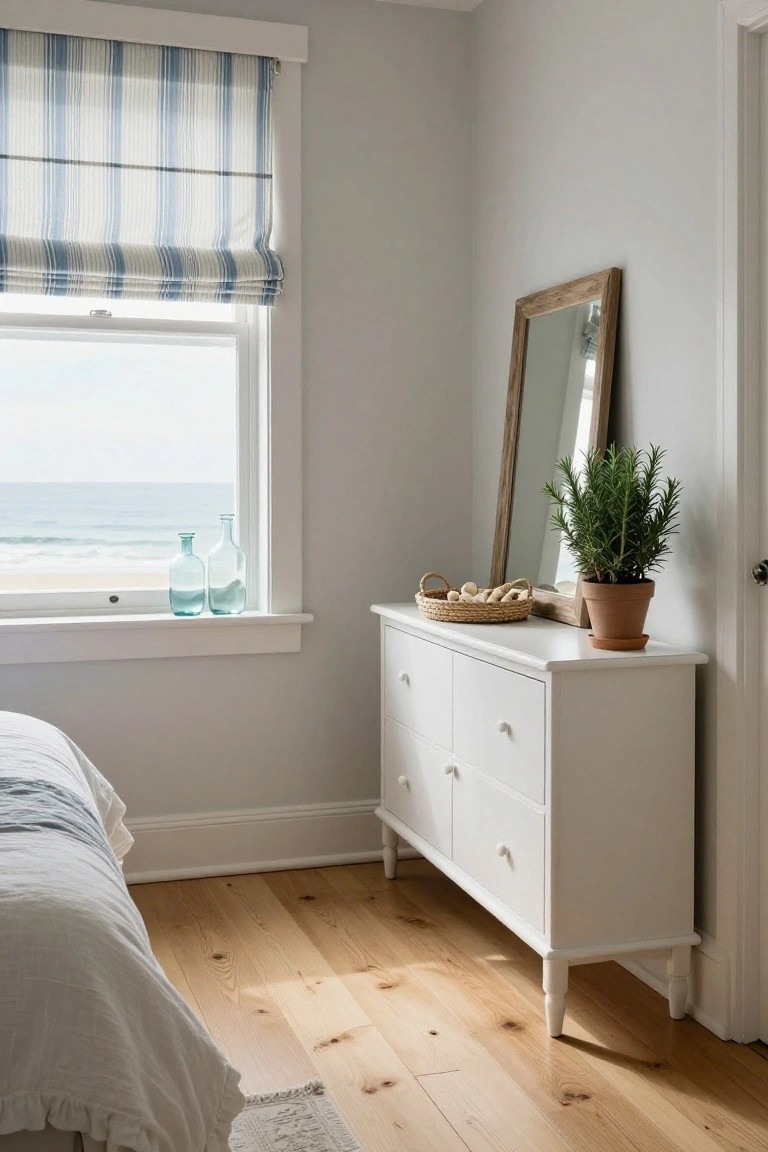
A white sideboard works well when you want storage that stays out of the way. The light finish helps it blend with the walls so the room still feels open and calm even with the extra drawers and surface space.
It suits bedrooms or small living areas that get good natural light. Keep the top fairly clear with just one or two simple items so the piece stays useful without crowding the space.
Metal Sideboards Hold Up In Everyday Spaces
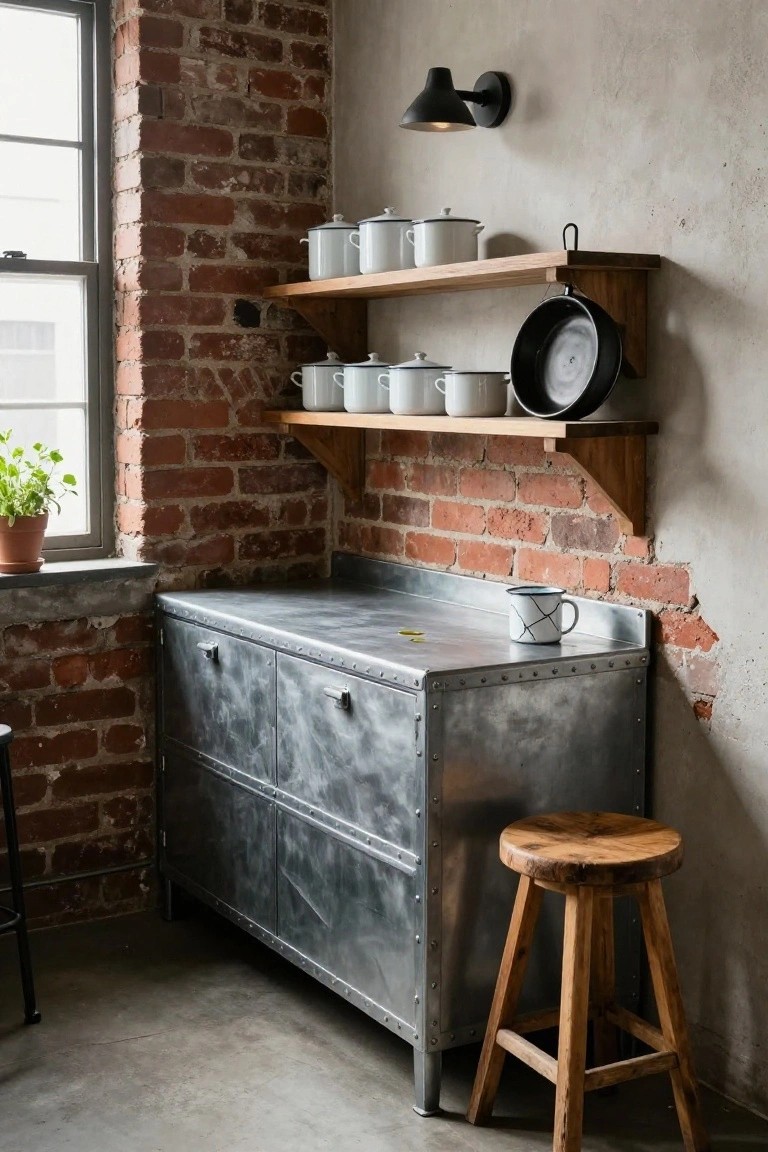
A galvanized metal sideboard gives you a solid work surface that stands up to regular use without fuss. The riveted construction adds just enough texture to keep the piece interesting while still feeling practical for a kitchen or utility area.
Place one against a brick wall or similar textured backdrop so the metal can contrast with warmer tones around it. It suits older homes or any space where you want storage that looks built to last rather than delicate.
Sideboards With Cane Doors Add Natural Texture
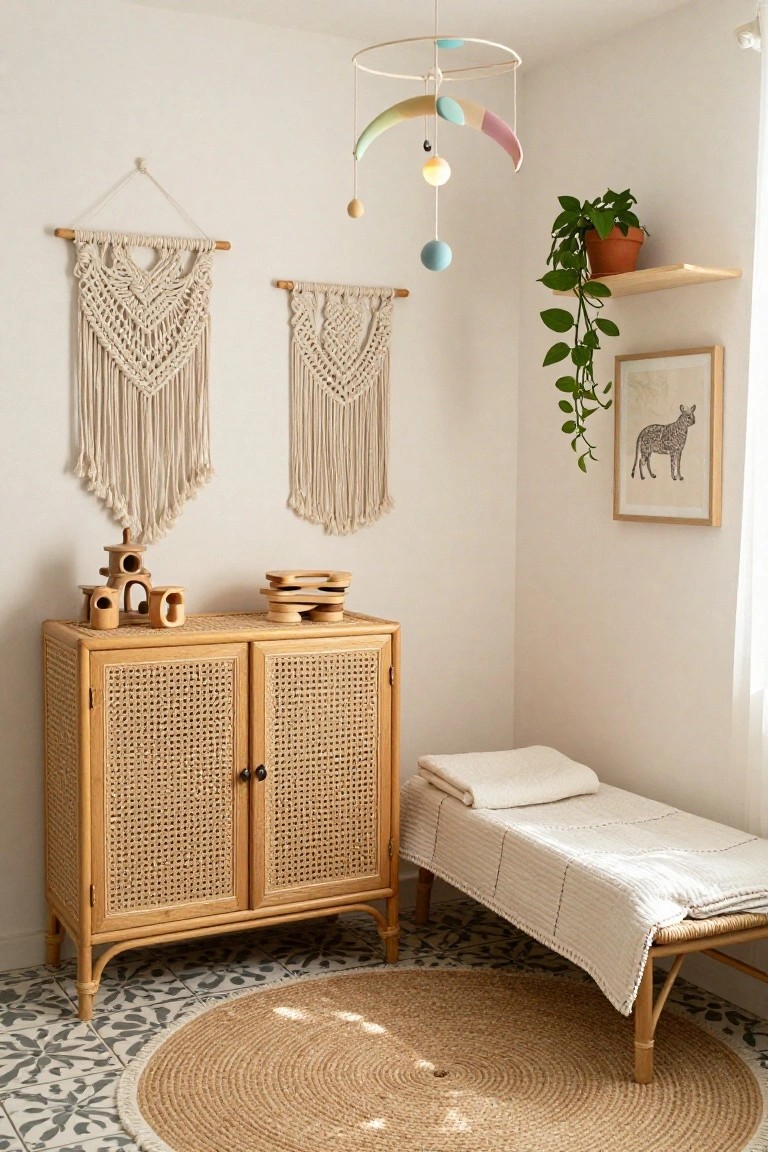
A sideboard with cane doors brings a light, open feel to storage pieces that might otherwise look heavy. The woven fronts break up the solid wood and let the piece blend into softer rooms without drawing too much attention.
This style works best in spaces that already use natural materials or need extra storage without clutter. Keep the top fairly clear and let the doors do the work.
Low Sideboards For Functional Entry Storage
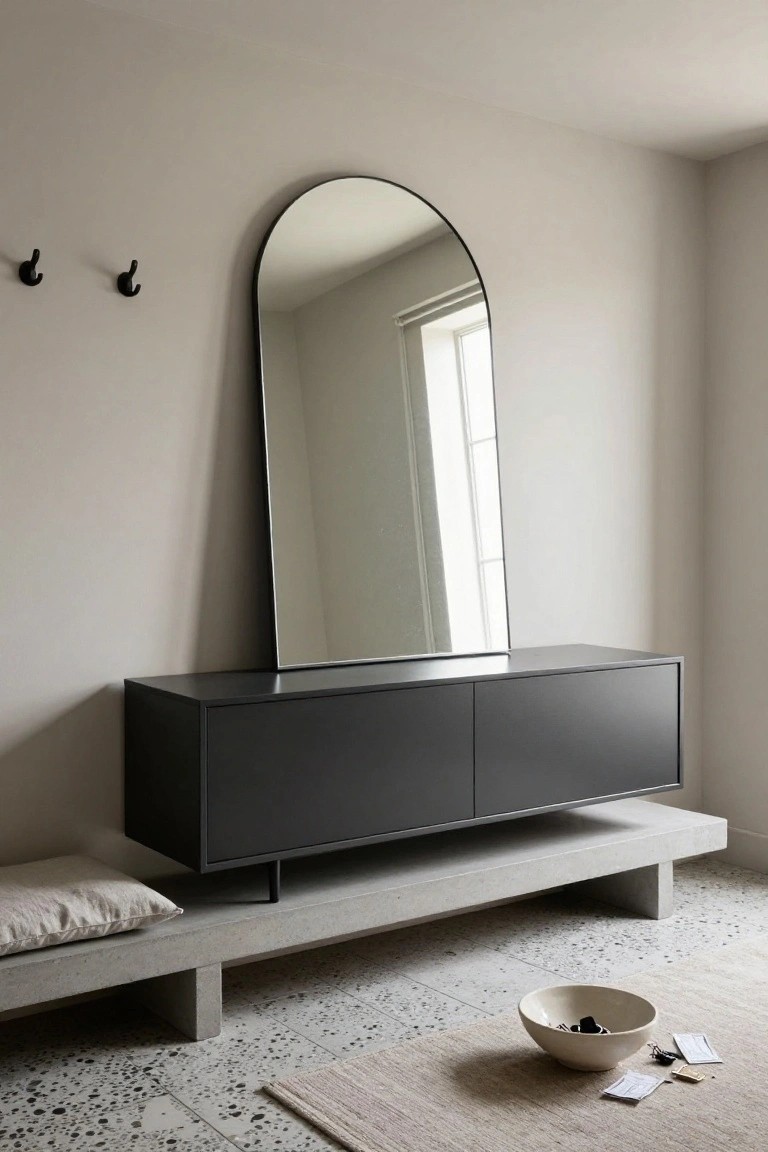
A low sideboard works well in an entry because it gives everyday storage without blocking the flow of the room. The dark finish keeps it from feeling heavy against light walls, and the simple shape lets the space stay open and calm.
This style suits homes that need a spot for bags, mail, or shoes right by the door. Place it along a main wall where people pass through often, and keep the top mostly clear so it stays practical day to day.
Marble Tops On Slim Consoles
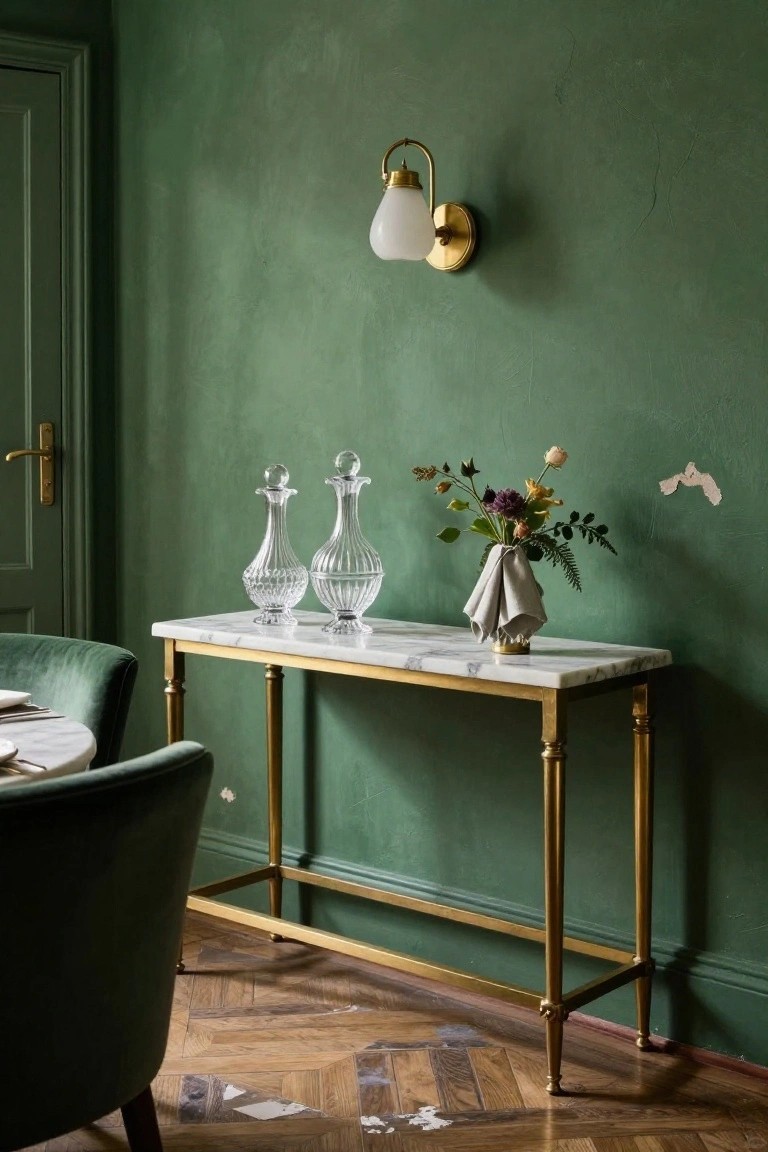
A marble top on a slim console gives you a sideboard that feels solid without crowding the room. The stone surface holds up well to daily use and pairs nicely with metal legs that keep the whole piece from looking heavy.
This works best in dining rooms or hallways where you want a little storage and display space but still need to keep the floor open. Stick to just a few items on top so the marble stays the main feature.
Painted Sideboards For Laundry Storage
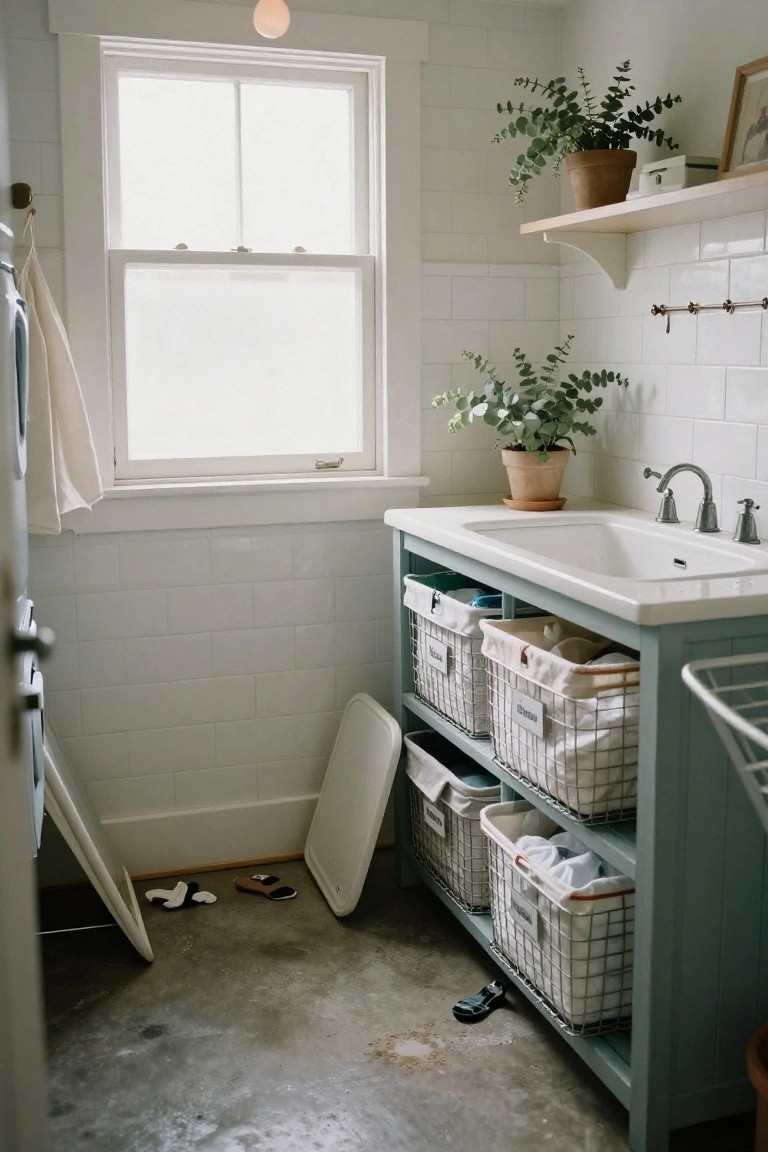
A painted sideboard brings useful storage to a laundry room without making the space feel too basic. The open lower section holds wire baskets that keep towels, clothes, and supplies sorted and easy to reach.
This setup works best in smaller homes where the laundry area also serves as a catch-all spot. Choose a durable piece with a sink cutout if you need running water, and stick with a soft color so it blends in rather than stands out.
Sideboards With Tile Accents
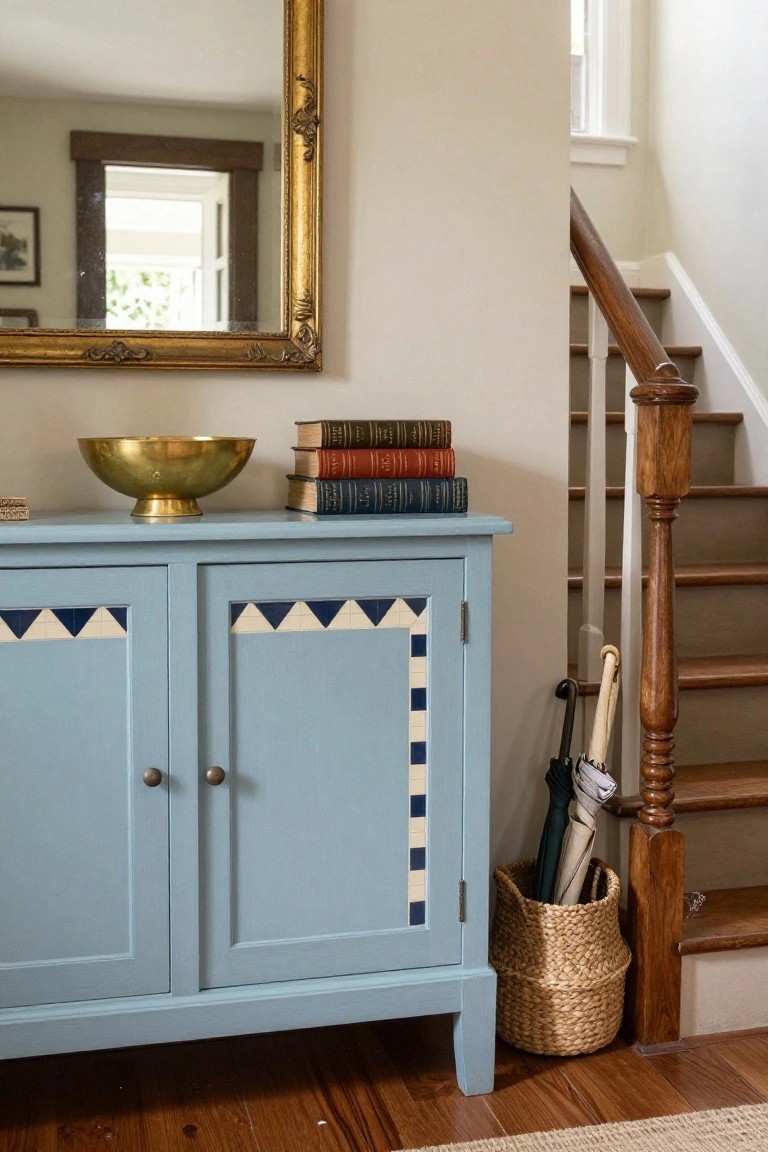
A painted sideboard can feel more interesting when the doors include a simple row of tiles. The pattern adds a handmade touch and breaks up the solid color without making the piece look busy.
This approach works well in hallways or entry areas where you need storage but want something that feels a little custom. Stick with two or three colors that already appear in the room so the sideboard blends in rather than fights for attention.
Built-In Shelving That Keeps A Desk Organized
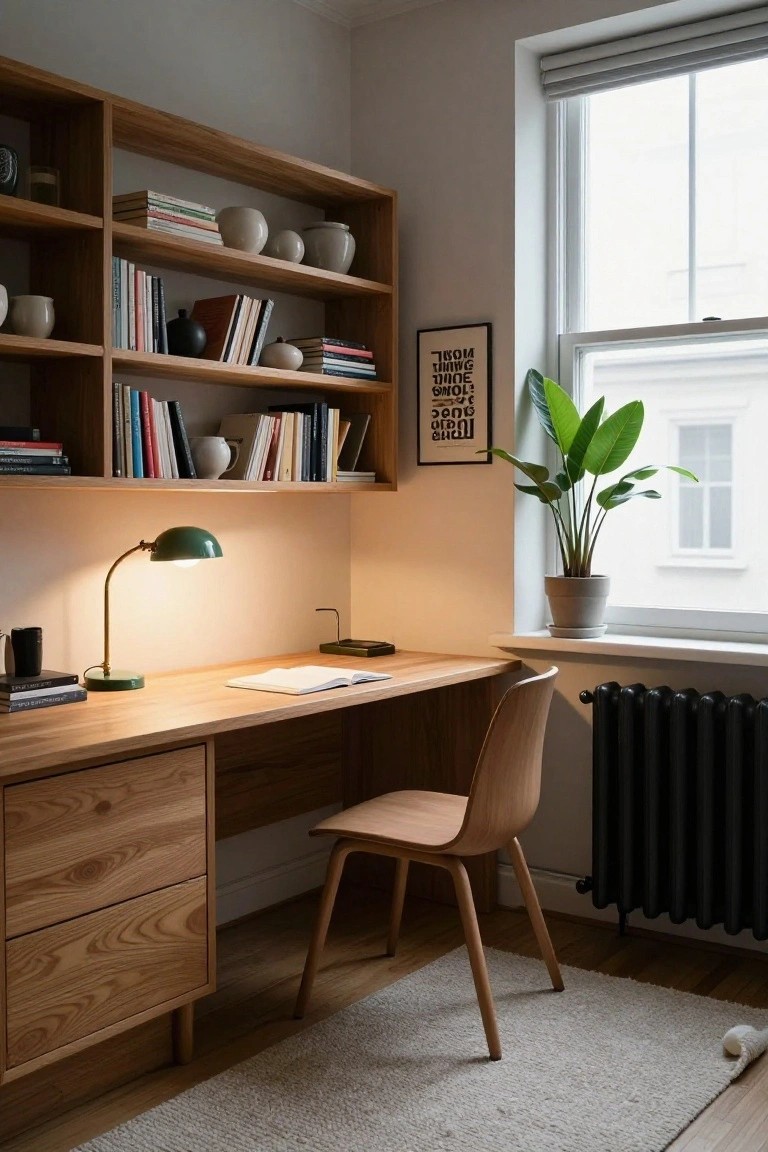
Built-in shelves right above a desk give you storage without crowding the floor or blocking light. The matching wood grain ties the whole wall together and makes the workspace feel intentional rather than thrown in as an afterthought.
This approach works well in smaller rooms or corners where you need both a work surface and room for books and supplies. Keep the shelves at a comfortable reach so you do not have to stand up every time you want something.
Bold Sideboards Work Well in Neutral Rooms
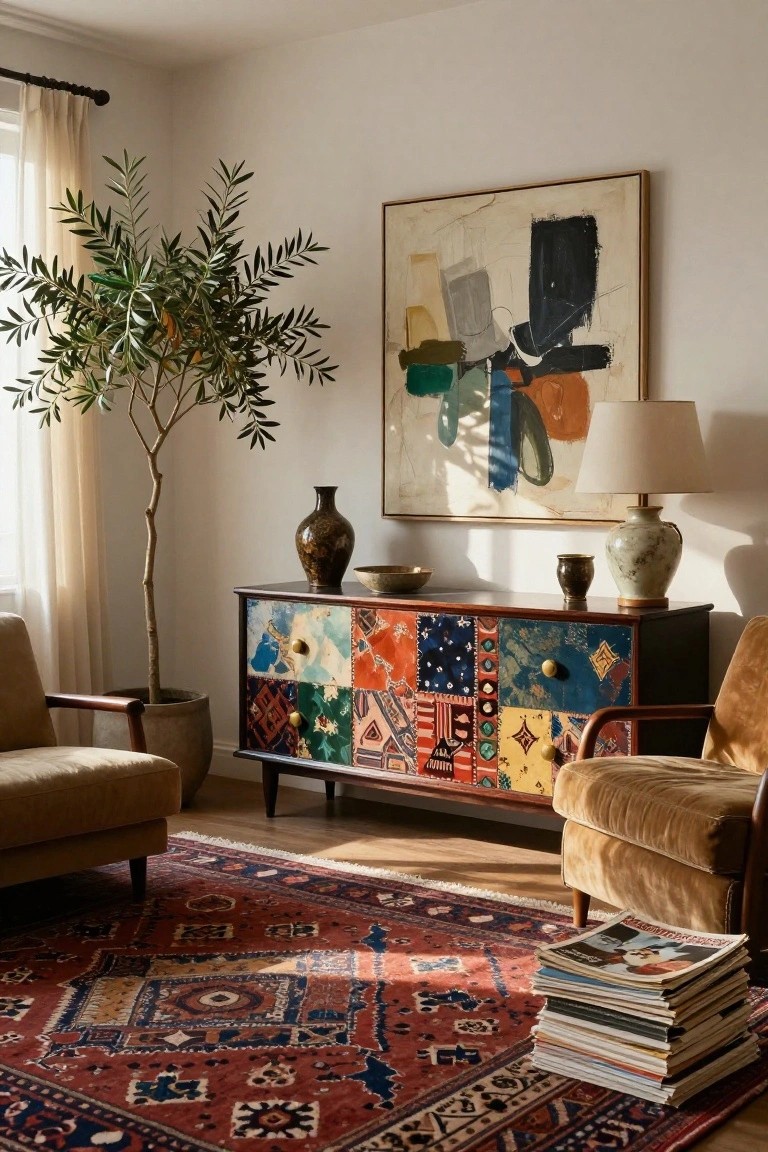
A sideboard covered in bright patches of color and pattern can change how a plain room feels. It draws the eye without needing much else around it, especially when the walls and floor stay quiet. In rooms that lean mostly beige or white, that kind of piece adds life without making things feel busy.
This works best in living rooms or dining spaces where you already have simple furniture. Keep the rest of the room light so the sideboard stays the focus, and avoid piling too many other colors on top of it. It suits homes that want a little personality without a full overhaul.
Low Dark Wood Sideboards For Calm Rooms
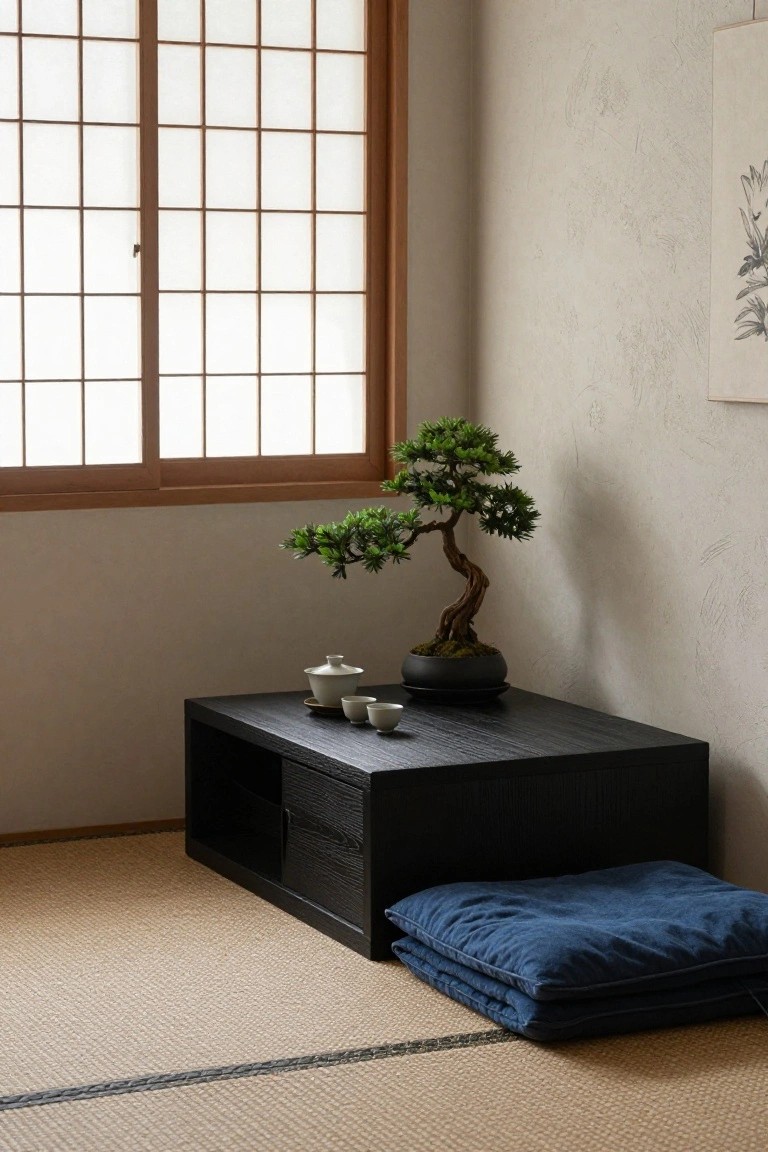
A low dark wood sideboard gives a room a steady base without taking over the space. Its height keeps sight lines open and helps the whole area feel quieter and more balanced, especially in rooms that already lean simple.
This works best in homes that favor natural materials and minimal clutter. Keep the top mostly clear and let the wood tone connect with other warm elements like flooring or nearby textiles.
A Sideboard With A Sink For Drinks And Serving
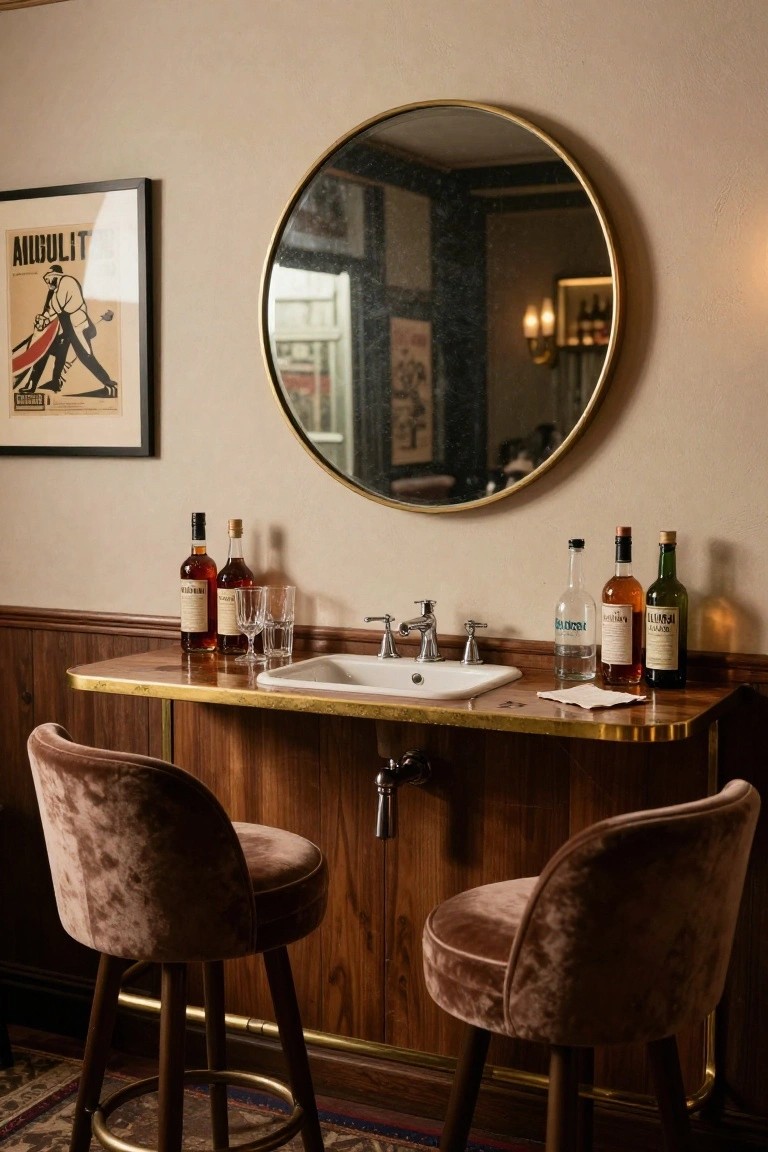
A sideboard with a sink built right in gives you a practical spot for mixing drinks or rinsing glasses without running back to the kitchen. It turns a regular piece of furniture into something that handles real use during parties or even quiet nights at home. The wood tone and brass edge help it blend with the rest of the room instead of looking like a separate bar.
This setup works best in a dining room or larger living space where you entertain often. Keep the top clear except for a few bottles and glasses so it still feels like furniture rather than a workstation. Just make sure the plumbing is planned early if you are adding one to an existing piece.
Mirrored Sideboards That Make A Room Feel Bigger
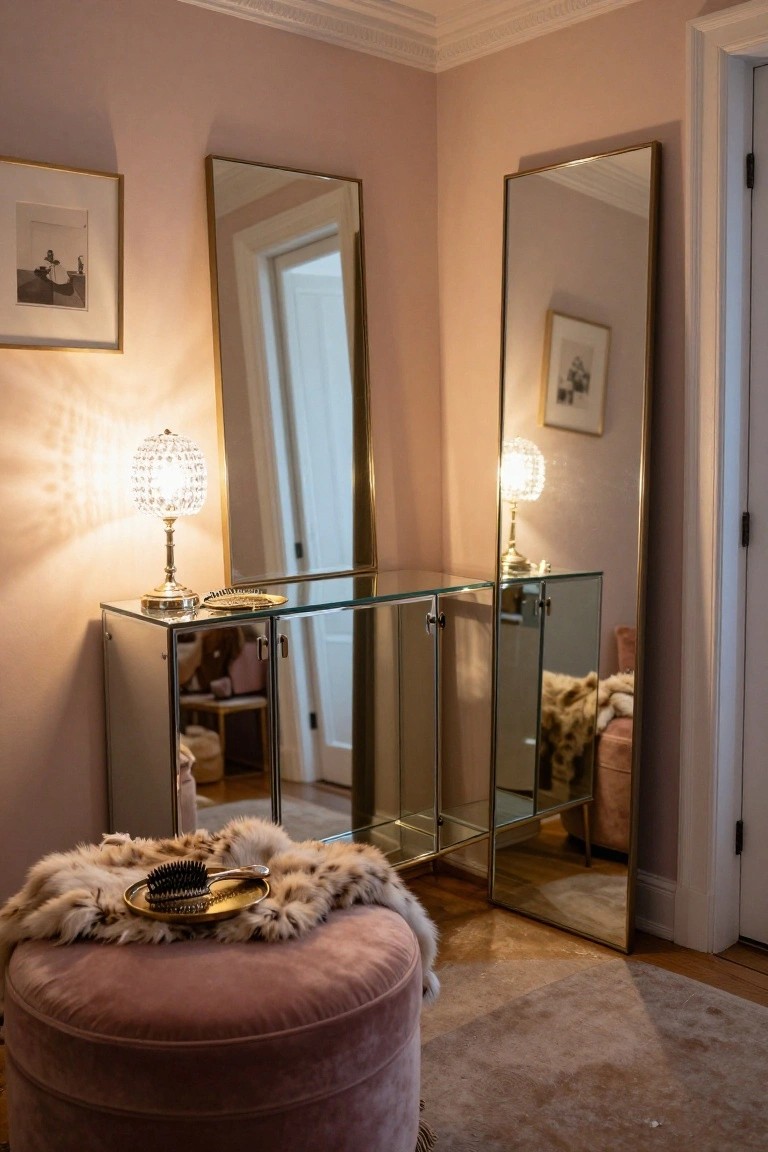
Mirrored sideboards work well when you want to bounce light around without adding more lamps or windows. The reflective surfaces pick up whatever is in the room and spread it out, so even a narrow spot ends up feeling less closed in. They also keep the look light instead of heavy, which helps when the walls are already a soft color.
Place one or two along a hallway or at the end of a bedroom and keep the rest of the furniture simple. They suit homes that already have some traditional trim or softer palettes, though they can feel too busy if the room is already full of pattern. Just watch the hardware so it stays subtle rather than flashy.
Sideboards With Open Shelves In The Middle
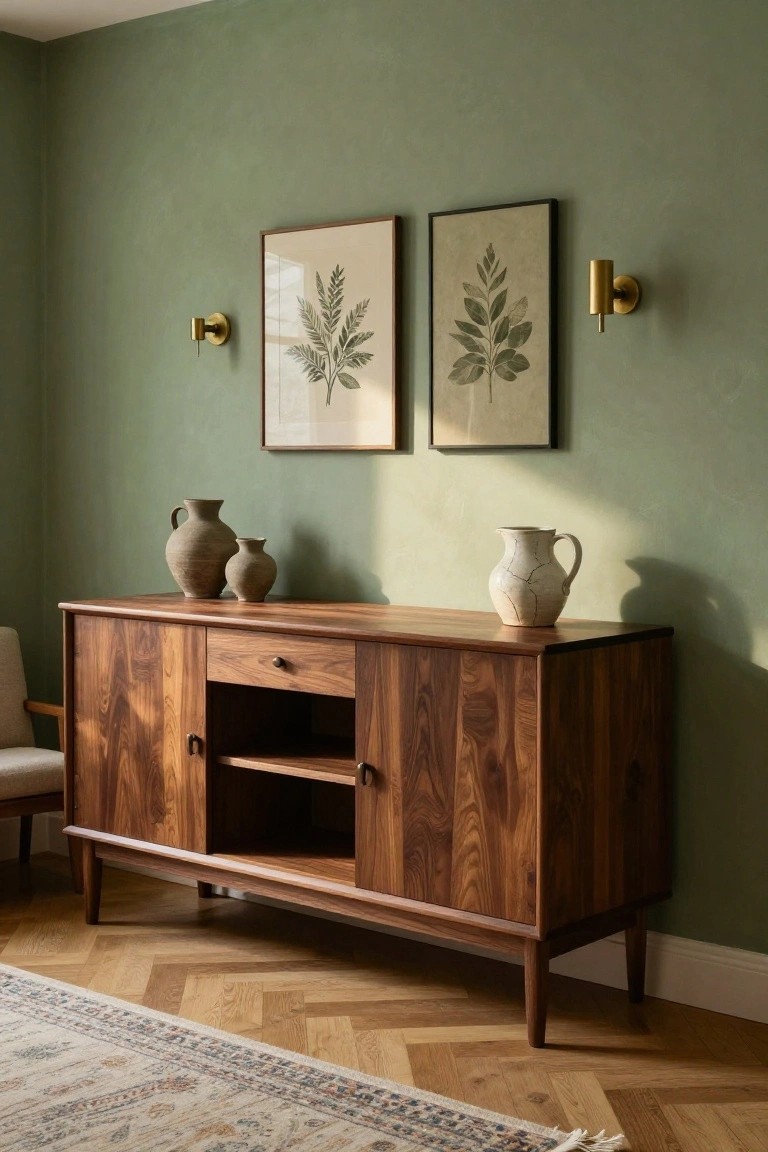
A sideboard that mixes closed cabinets with an open middle section gives you practical storage without hiding everything away. It works well when you want a place to tuck away dishes or linens but still need quick access to a few everyday items.
This setup suits dining rooms or living spaces where you keep the top surface fairly clear. It pairs nicely with simple wall art above and a few larger pieces on top, as long as you leave enough breathing room so the whole thing does not feel crowded.
Stainless Steel Sideboards For Everyday Kitchen Use
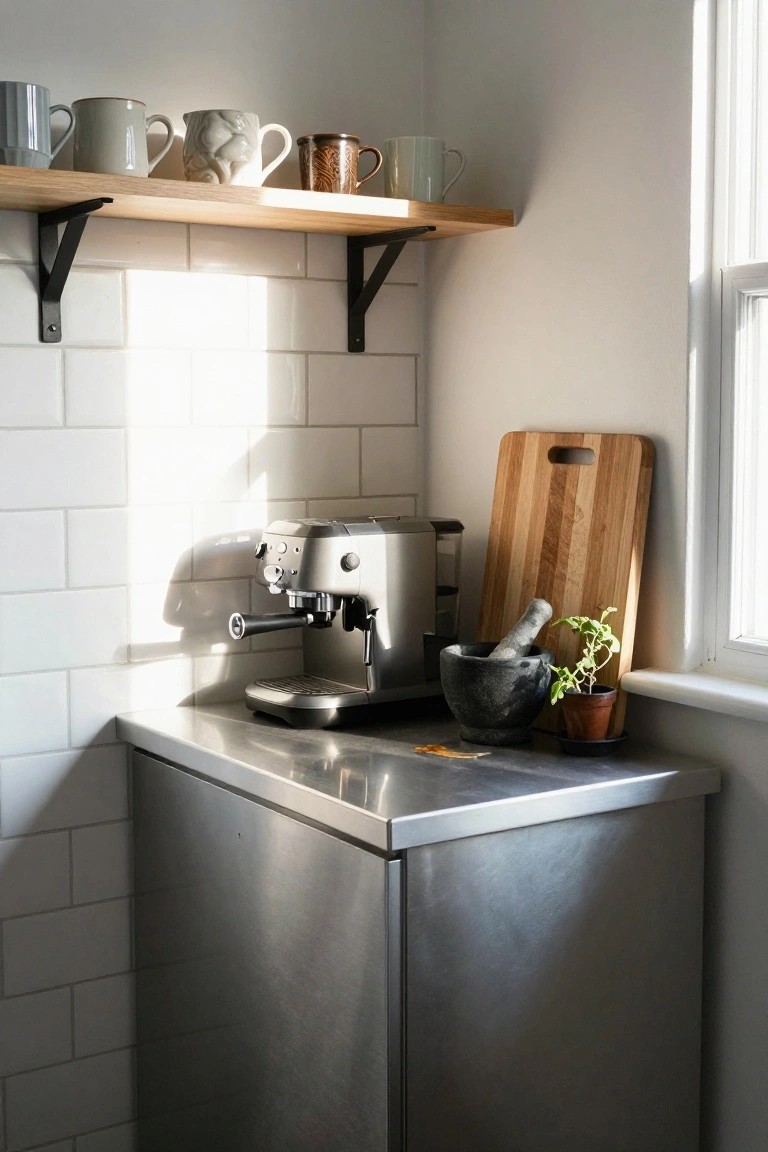
Stainless steel sideboards stand out because they handle real daily wear without showing every mark or stain. The flat metal top creates a solid spot for something like an espresso machine while still looking clean and simple next to basic tiles.
They suit smaller kitchens or open layouts where you need extra workspace that is easy to wipe down. Keep the area clear of clutter and pair it with a simple shelf above for mugs or small items so the whole corner stays practical rather than crowded.
A Sideboard With Open Storage Works Well in a Studio
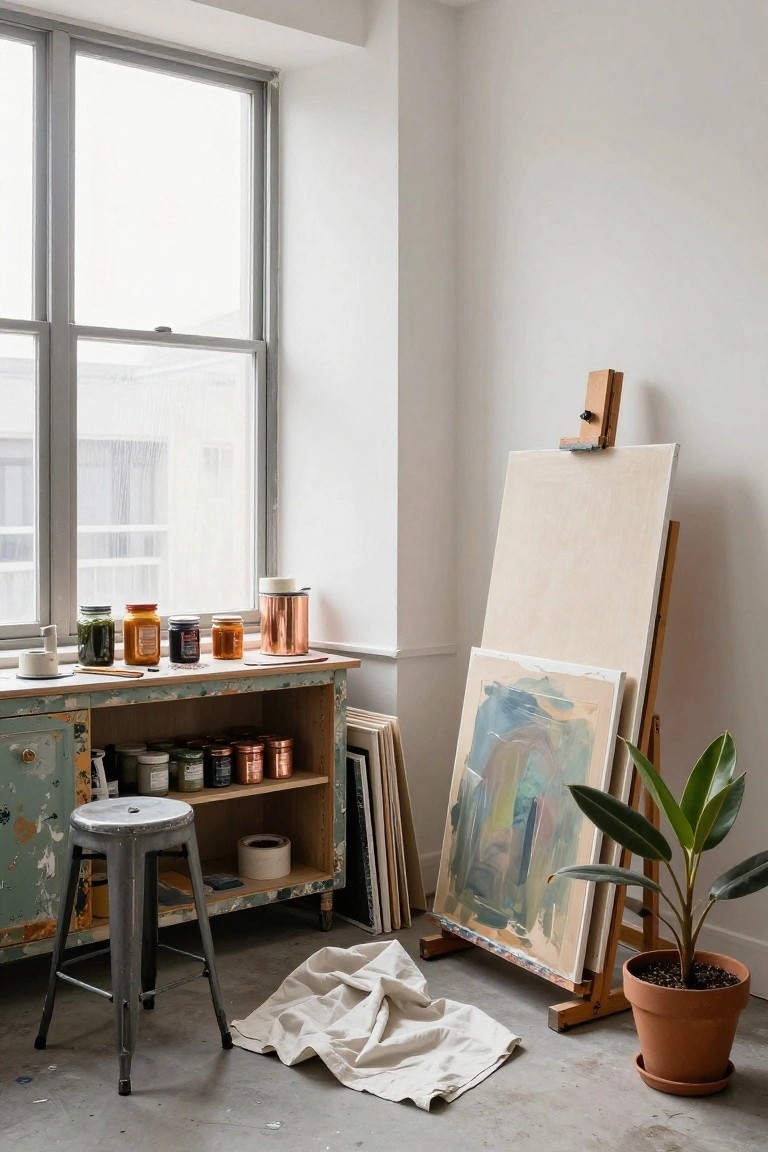
Many people think of sideboards mainly for dining rooms or entryways, but the open lower section makes them useful in a workspace too. You can see supplies at a glance and reach them without opening doors or drawers every time.
This setup suits creative rooms or any spot where you want furniture to pull double duty. Just keep the top clear enough for actual work and add a drop cloth or mat if things get messy.
Cane Sideboards For Casual Storage
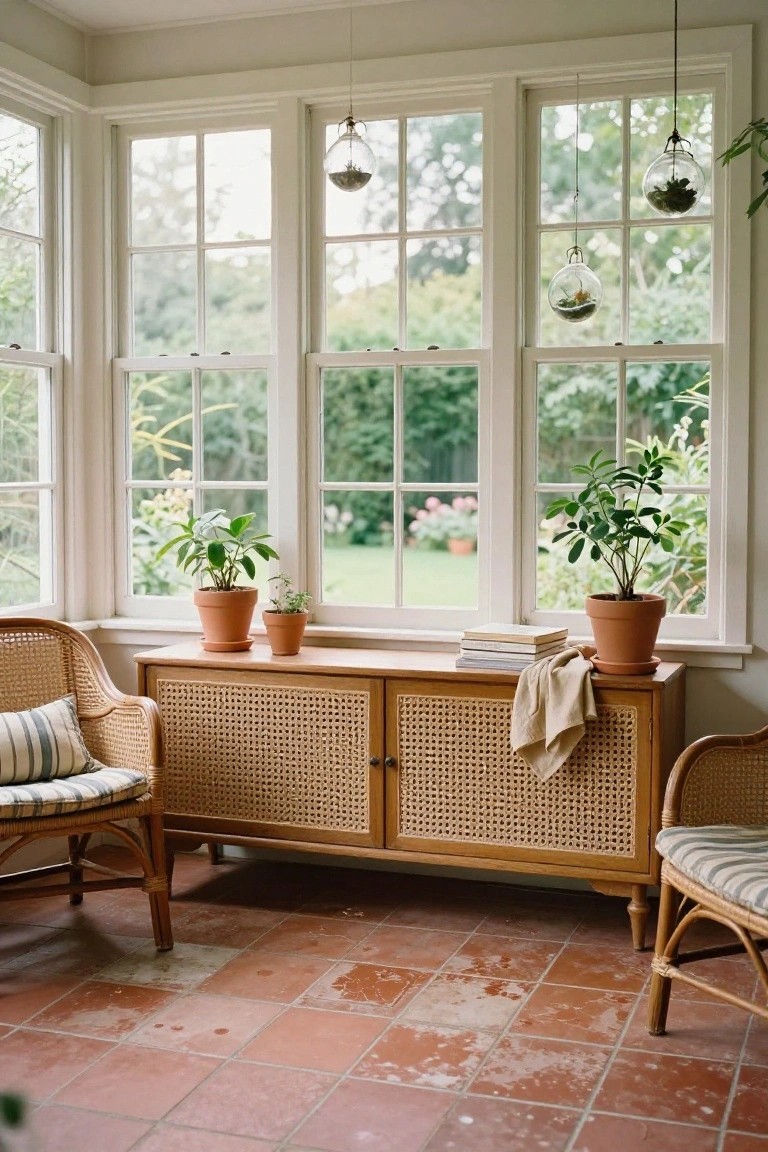
A sideboard with cane doors keeps storage simple and light. The woven panels add texture that feels at home next to plants and wood tones without closing off the space.
This style works well in sunrooms or family areas where you want to tuck away items but still keep things open. Place it under windows so the cane catches the light and the top stays mostly clear for a few pots or books.
Painted Sideboards in Entryways
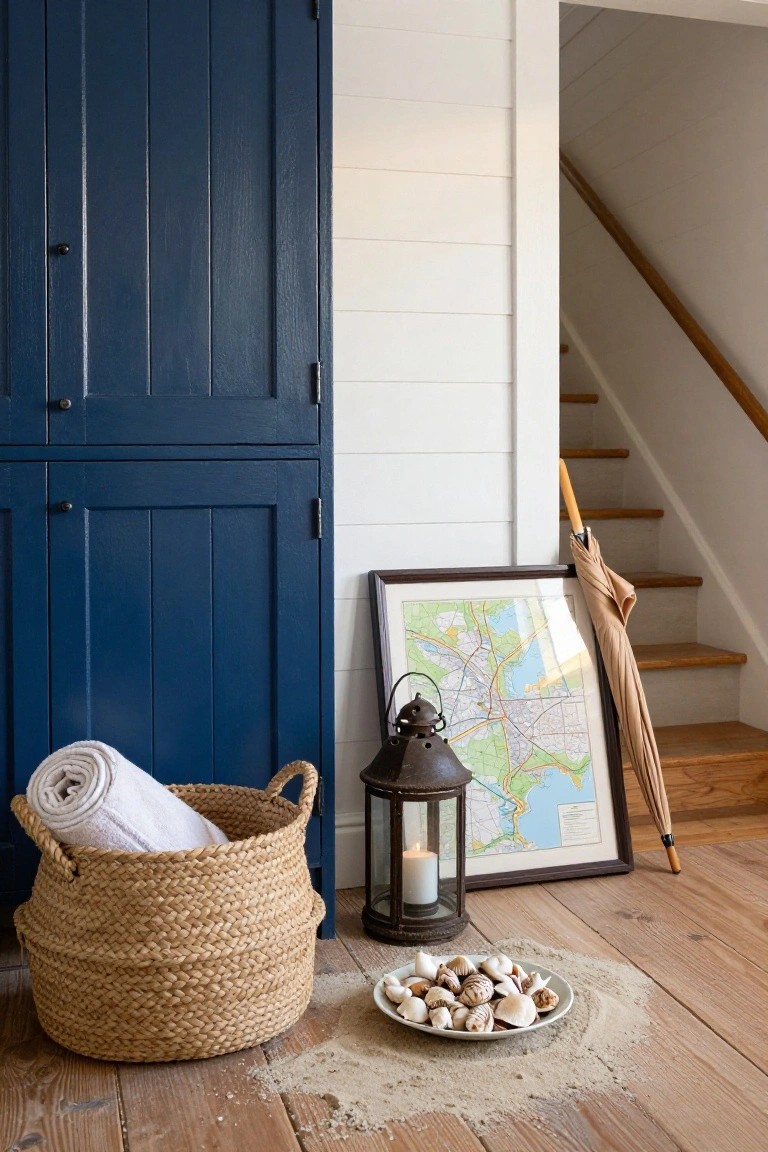
A deep navy sideboard brings useful storage and a strong color accent to an entry without taking up much floor space. It handles everyday items like towels or extra blankets while giving the area a finished look that feels more intentional than a plain bench or console.
This works best in homes with light walls and wood floors where the dark paint creates contrast. Keep the top fairly clear so the piece stays practical for daily use rather than turning into another surface that collects clutter.
Frequently Asked Questions
Q: How do I pick a sideboard size that fits my dining room without crowding the table? A: Measure the wall first and leave at least two feet of clearance on each end. This gives chairs room to move and keeps foot traffic open. A piece that spans most of the wall can anchor the space without swallowing it.
Q: Where should I place a sideboard in a small living room to get the most storage? A: Tuck it behind the sofa if the back is low and clean. The surface then doubles as a spot for lamps or books while the drawers hide everyday clutter. Float it against a shorter wall if you need to define a reading corner instead.
Q: What is the easiest way to protect the top from daily wear? A: Wipe up spills right away with a soft cloth. Add a simple tray for drinks and remotes so the finish stays intact longer. Reapply a light coat of wax once a year if the wood starts to look dry.
