

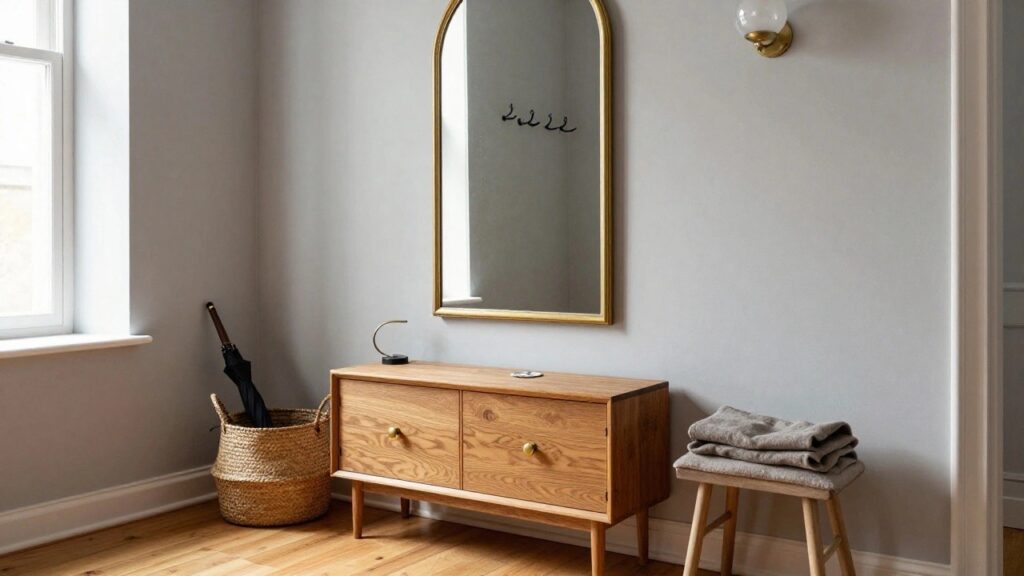
When you live in a compact place every piece of furniture ends up doing more than one job and that is especially true for sideboards.
I learned this the hard way after squeezing a bulky cabinet into my first apartment and watching the room shrink overnight.
A better approach is to look for pieces that sit lightly against the wall and still hold the things you reach for daily.
Scale matters more than you expect.
That is why I usually start by measuring the wall space and the walkway before bringing anything home.
Narrow Sideboards Work In Tight Hallways
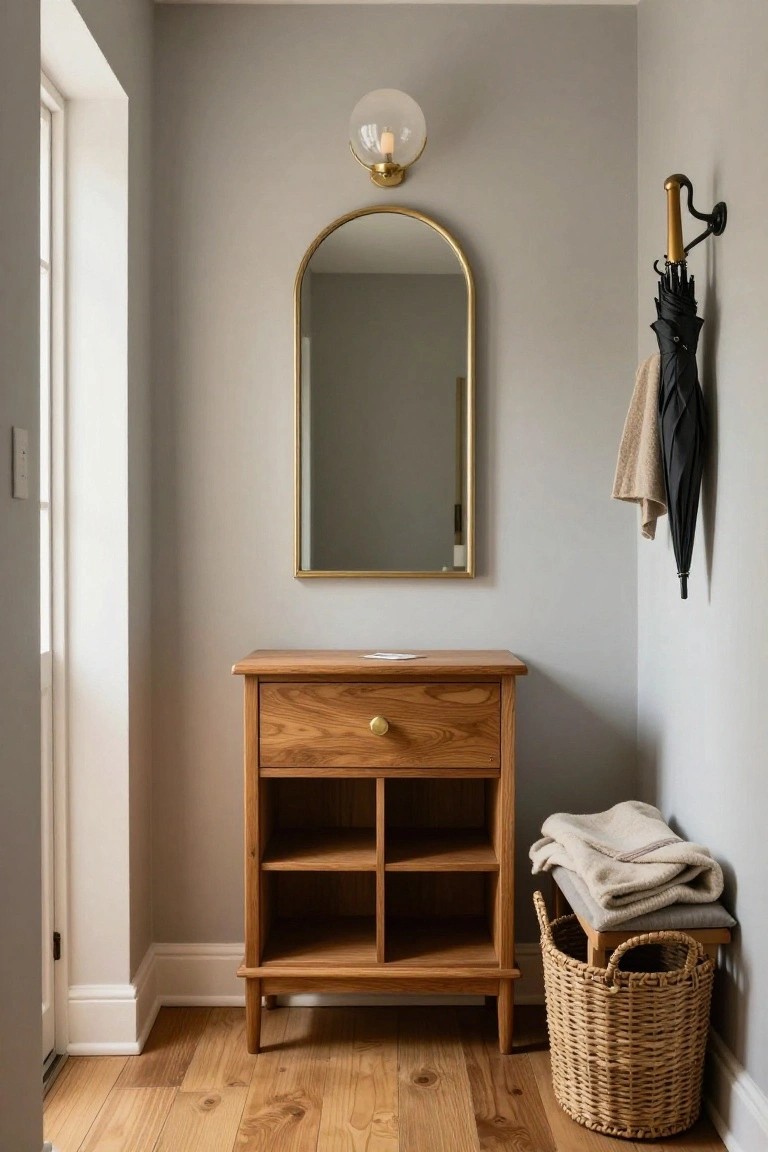
A narrow sideboard with just one drawer and open lower sections gives you useful storage without blocking the walkway. The wood finish blends easily into most homes and the open cubbies let you tuck in baskets or everyday items so nothing piles up on the floor.
This setup works best in small entries or hallways where a full cabinet would feel too big. Keep the top clear except for a few small things and make sure the piece sits flat against the wall so there is still room to pass through.
Sideboards With Cane Doors
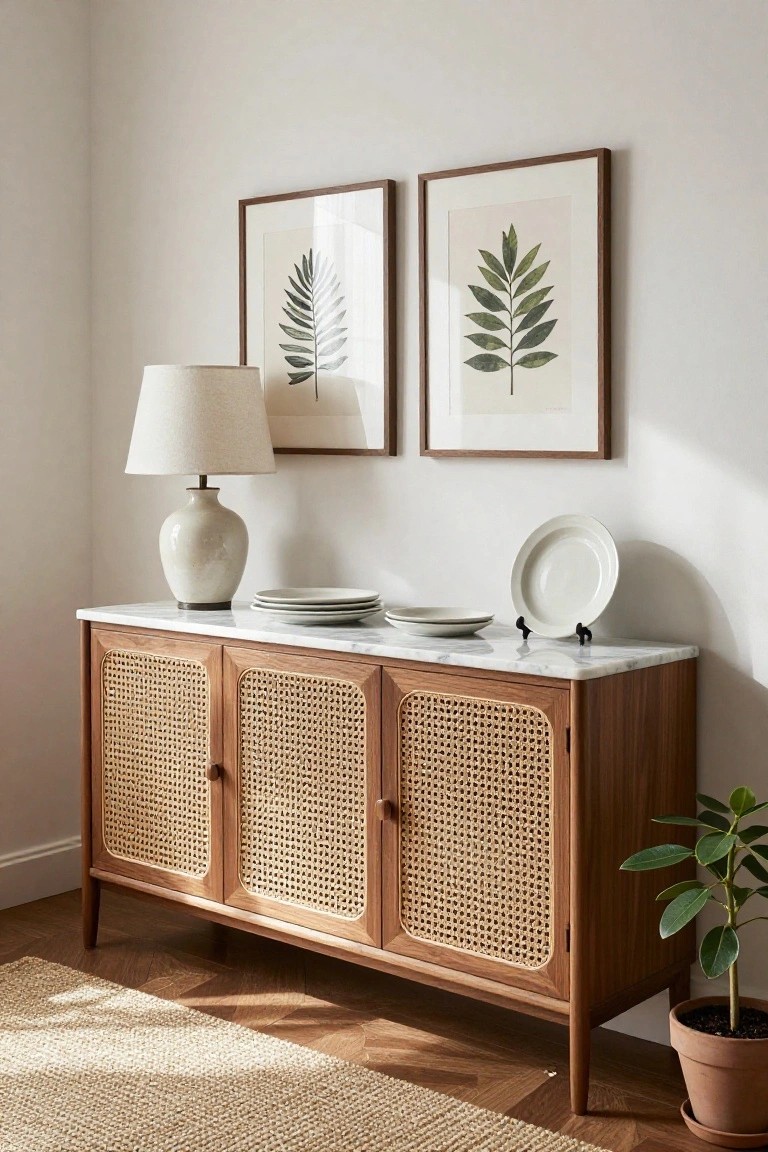
A sideboard with cane doors gives you plenty of hidden storage while keeping the piece from feeling too solid or heavy in a small room. The open weave lets some light and air through, so the furniture does not take over the space the way a solid front would.
This style works especially well along a dining room wall or in an entry where you need to tuck away dishes, linens, or everyday clutter. Keep the top fairly clear and add just a few simple items so the cane texture stays visible.
Store Records In An Open Sideboard
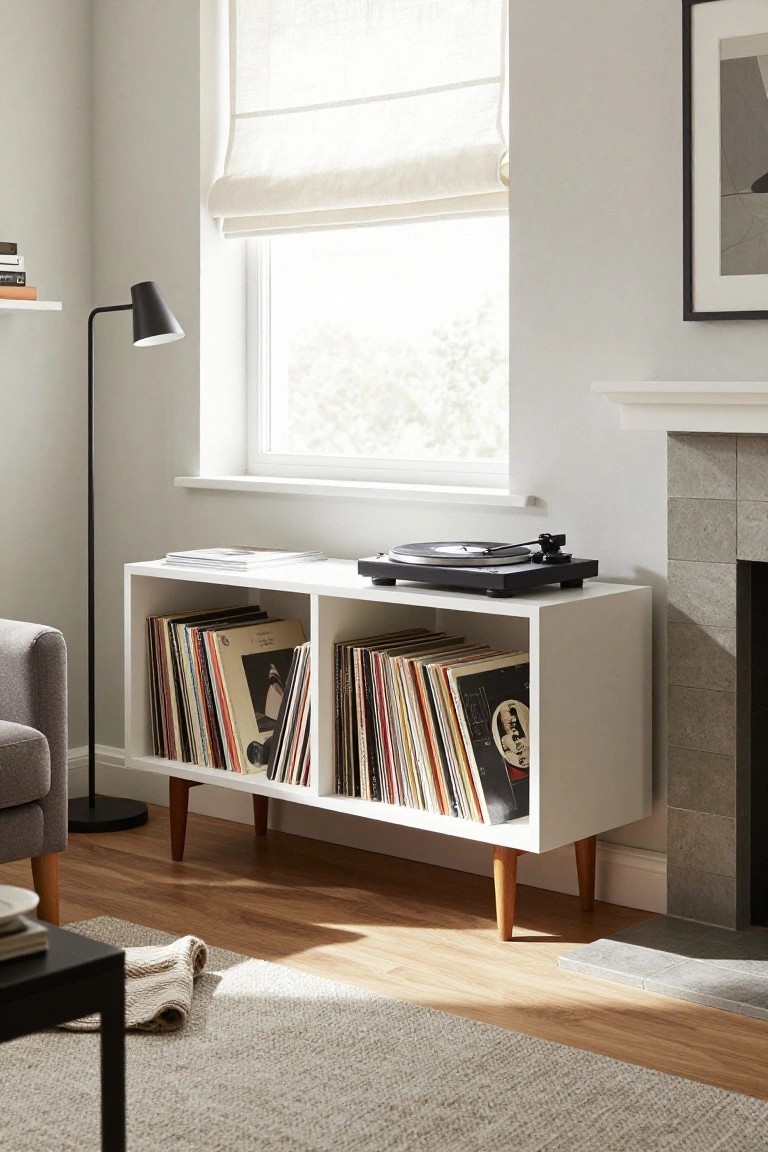
A low sideboard with open cubbies gives you a spot for vinyl without adding another piece of furniture. It keeps the collection visible and easy to flip through while the top stays clear for the turntable.
This works best in small living rooms where every inch counts. Keep the records you play most often in the front sections so you can grab them quickly without digging through closed doors.
Mount Shelves Above a Sideboard
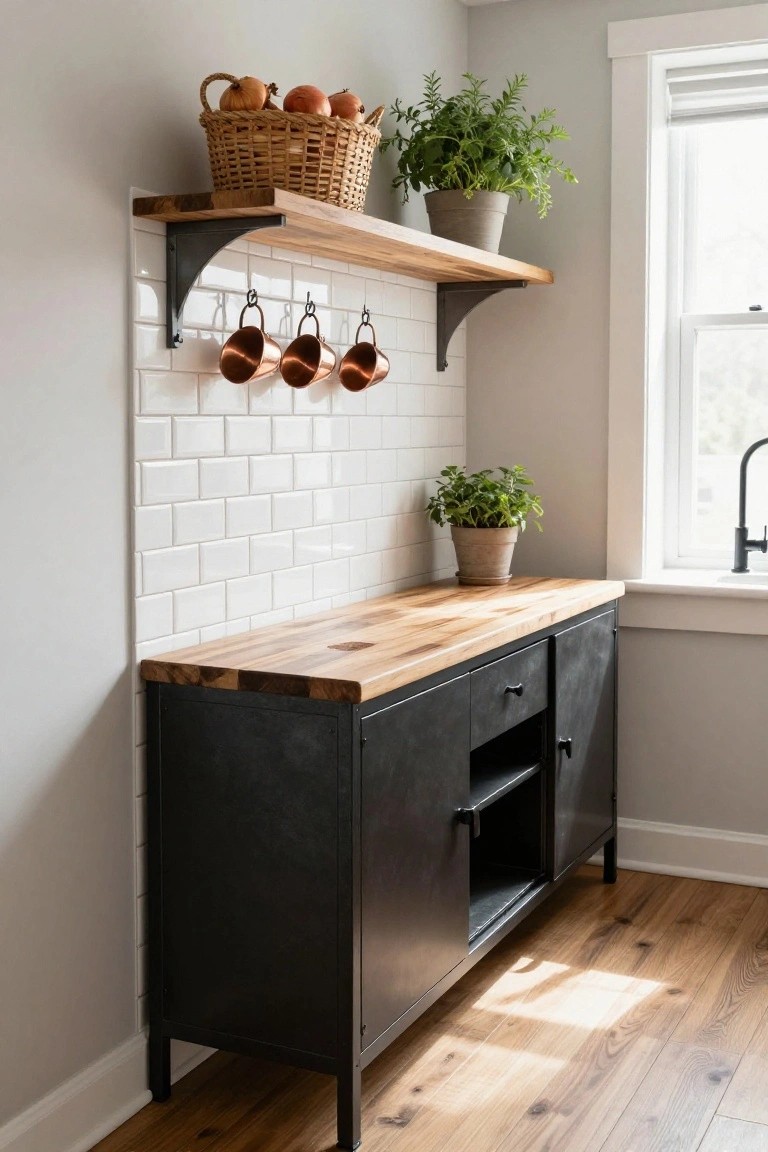
Adding wall shelves over a sideboard is a simple way to stretch storage in a small room. The shelves take advantage of empty wall space while the sideboard below handles heavier items, so nothing feels cramped or wasted.
This works especially well in kitchens or narrow hallways where floor space is limited. Keep the shelves shallow and use sturdy brackets so they do not overpower the room, and leave room to hang a few lightweight items underneath if needed.
Sideboards With Mixed Open And Closed Storage
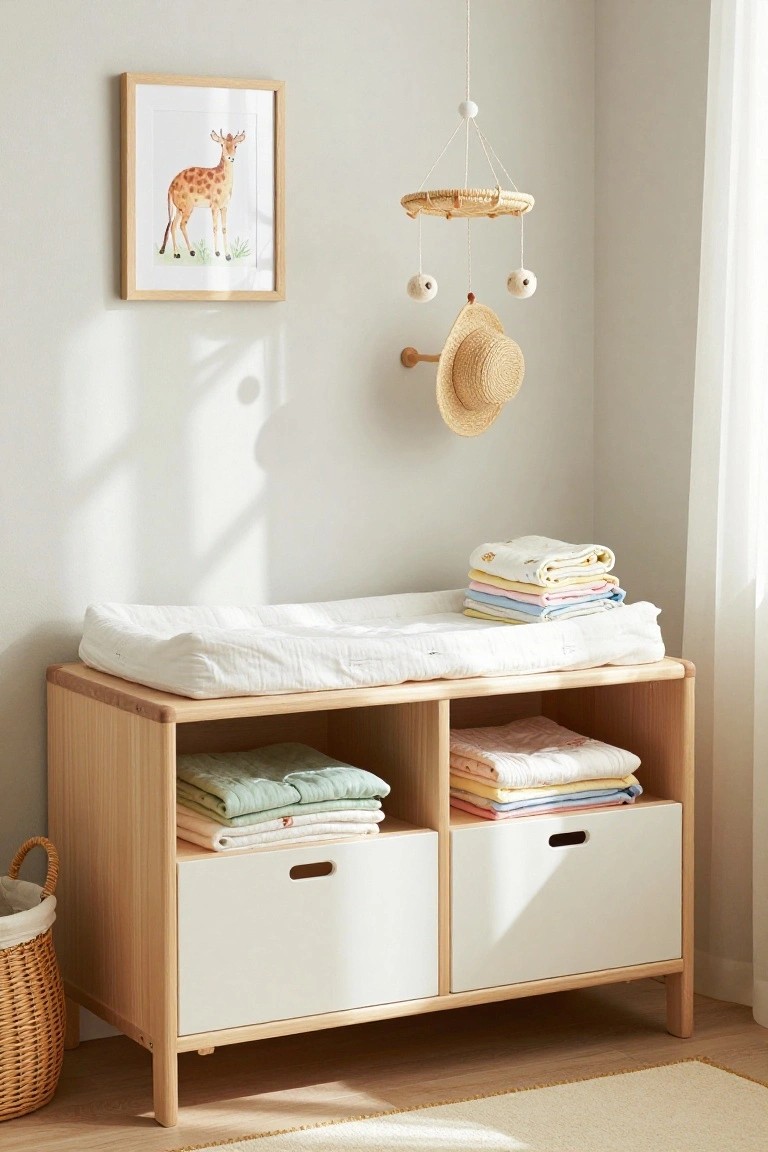
A sideboard that combines open cubbies with closed drawers gives you quick access without letting the space feel cluttered. You can see what you need right away in the open areas while tucking away the rest.
This works best in small rooms like a nursery or a compact living space. Keep daily items in the cubbies and use the drawers for less frequent things. Just check the height if you want to add a changing pad on top
Fit a Sideboard Into a Narrow Alcove
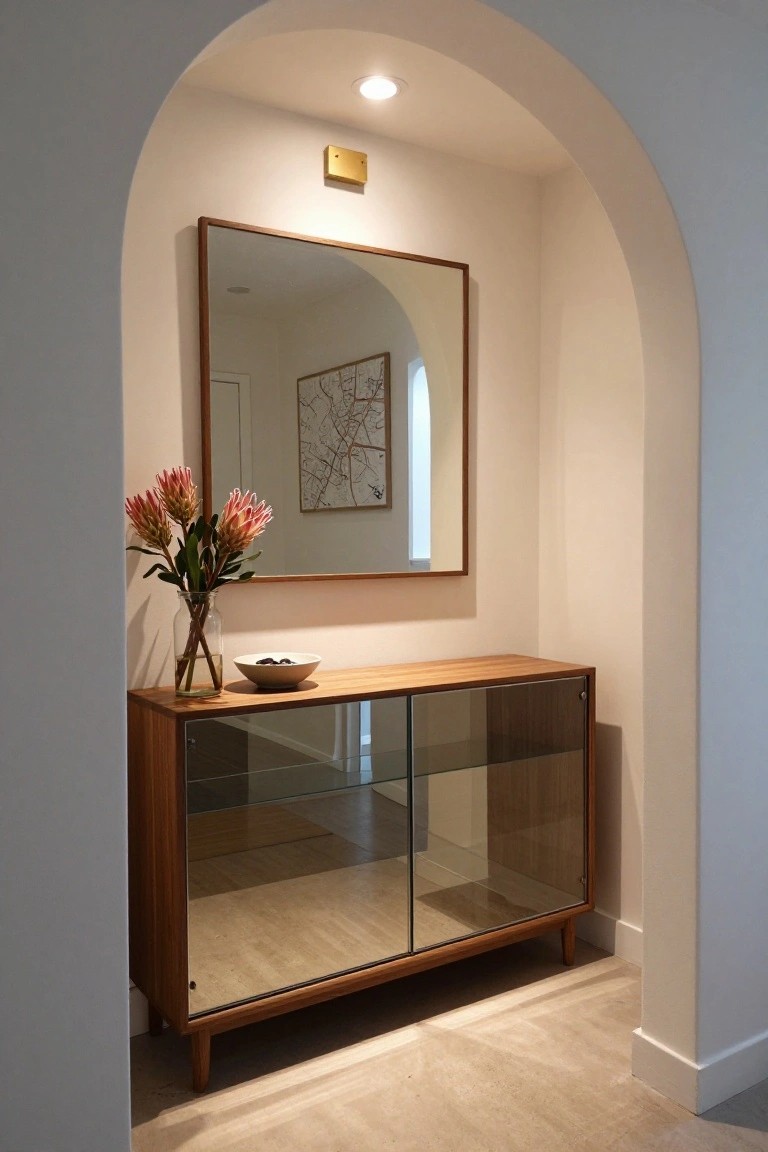
A sideboard works especially well when it fills a small recessed spot rather than sitting out in the open. The alcove gives the piece a built-in feel and keeps the rest of the walkway clear, which matters in tight entries or hallways.
Choose a lower profile piece with simple doors so it does not crowd the space. Glass fronts help the cabinet feel lighter while still offering useful storage for everyday items like mail, keys, or linens. This setup suits older homes with odd wall depths or new builds where every square foot counts.
Add Wine Storage Compartments To A Sideboard
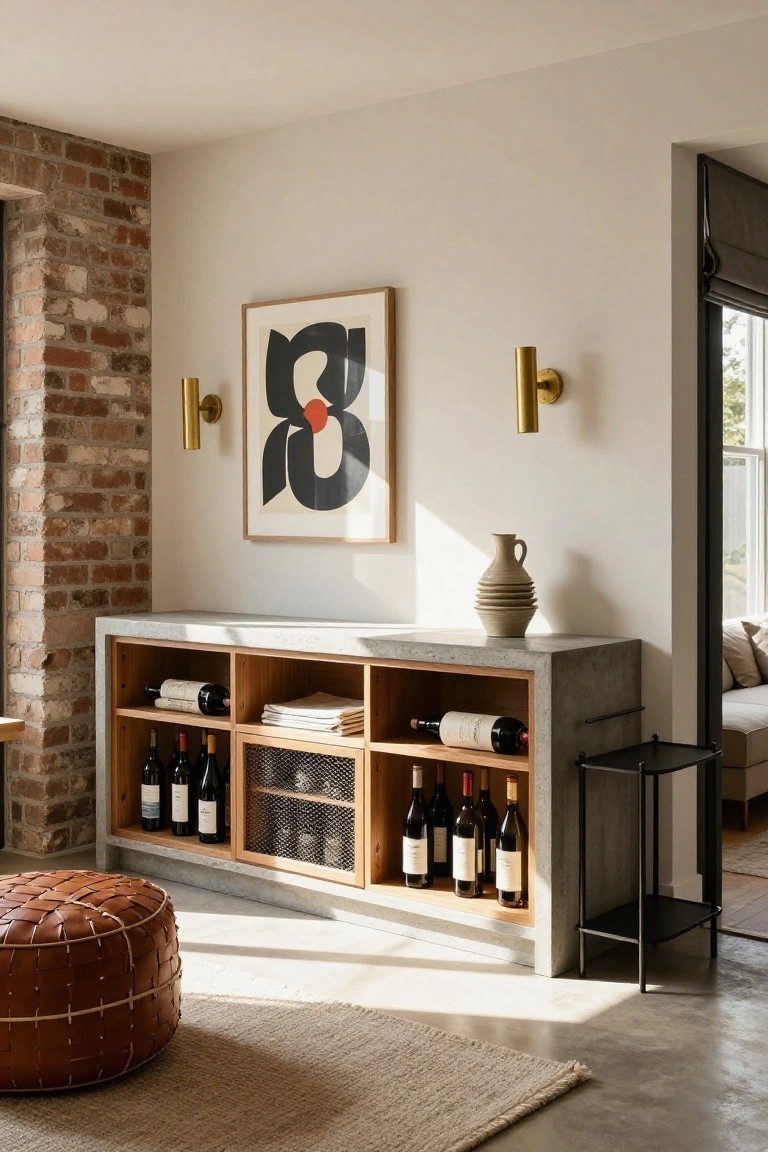
A sideboard with open sections for wine bottles keeps the bottles visible and easy to grab while freeing up space elsewhere. This setup works especially well when you want storage that feels light instead of bulky, and it turns a plain piece into something more useful without adding extra furniture.
Place it along a wall in a dining area or entry where the floor space is limited. Keep the shelves from getting too crowded so the bottles stay protected and the whole piece still looks tidy. A concrete top adds durability if you need a spot to set things down during meals or gatherings.
Add Pegboard And Chalkboard Sections To A Sideboard
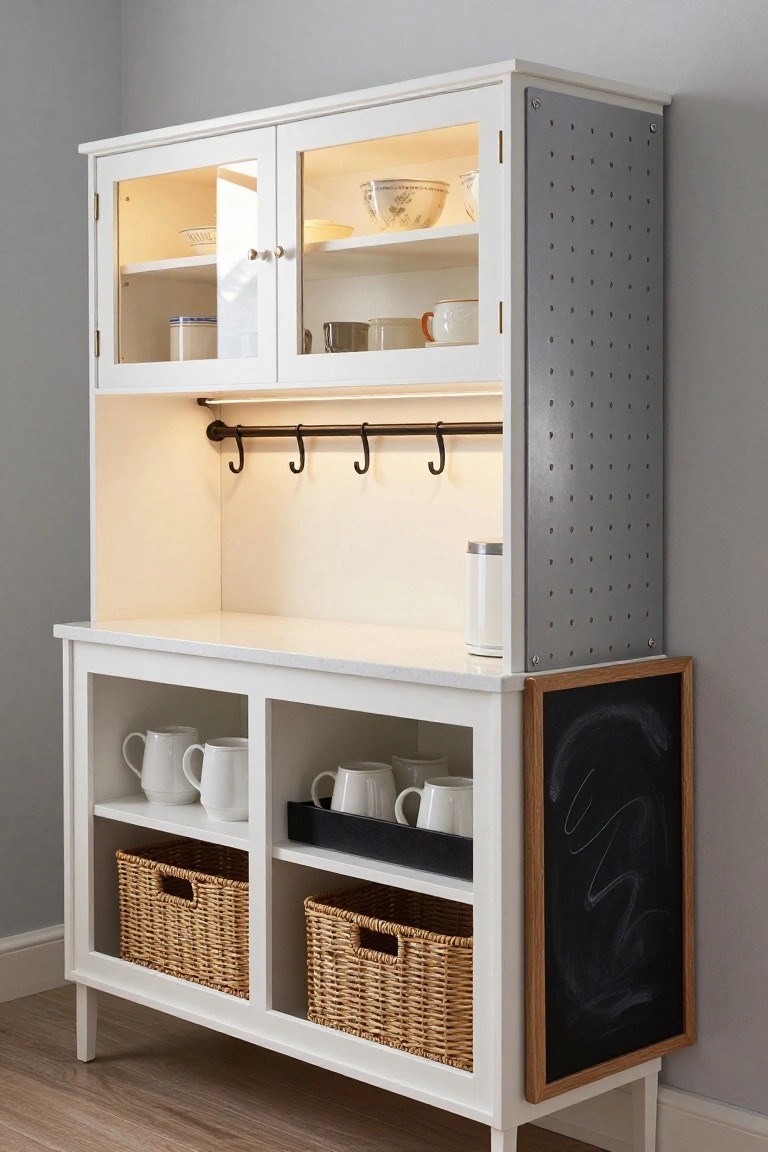
A sideboard with a pegboard panel and chalkboard area gives you more places to hang things and leave notes without needing extra furniture. The side panels turn into useful spots for tools or reminders while the main body still handles dishes and linens.
This kind of piece works best in a small kitchen or dining room where every surface counts. Keep the rest of the unit simple so the added panels do not make the whole thing feel busy.
Sideboards Can Double as Balcony Storage
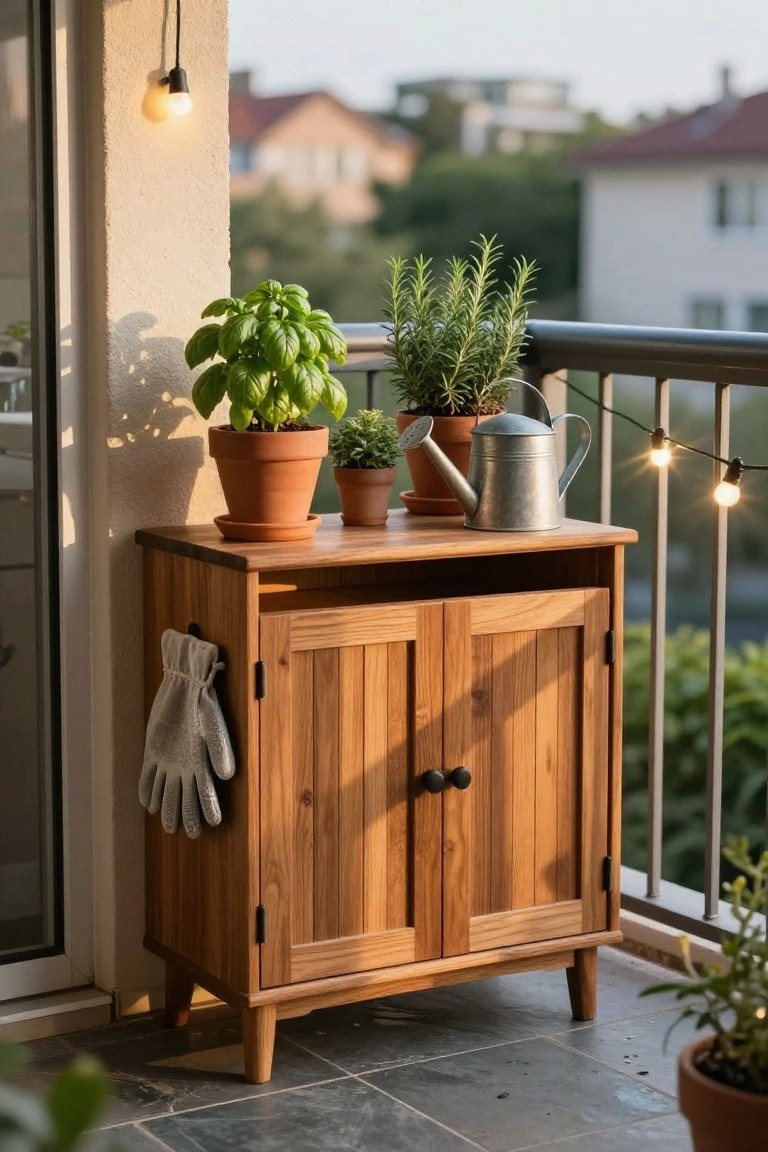
A sideboard adds real storage to a small balcony without crowding the space. The closed doors keep tools or cushions out of sight while the top surface holds plants or watering cans right where you need them.
It works best on balconies with a solid wall or railing to set it against. Just make sure the piece is sturdy enough for outdoor use and protected from heavy rain if it is not made for weather.
Use a Low Sideboard as Bedside Storage
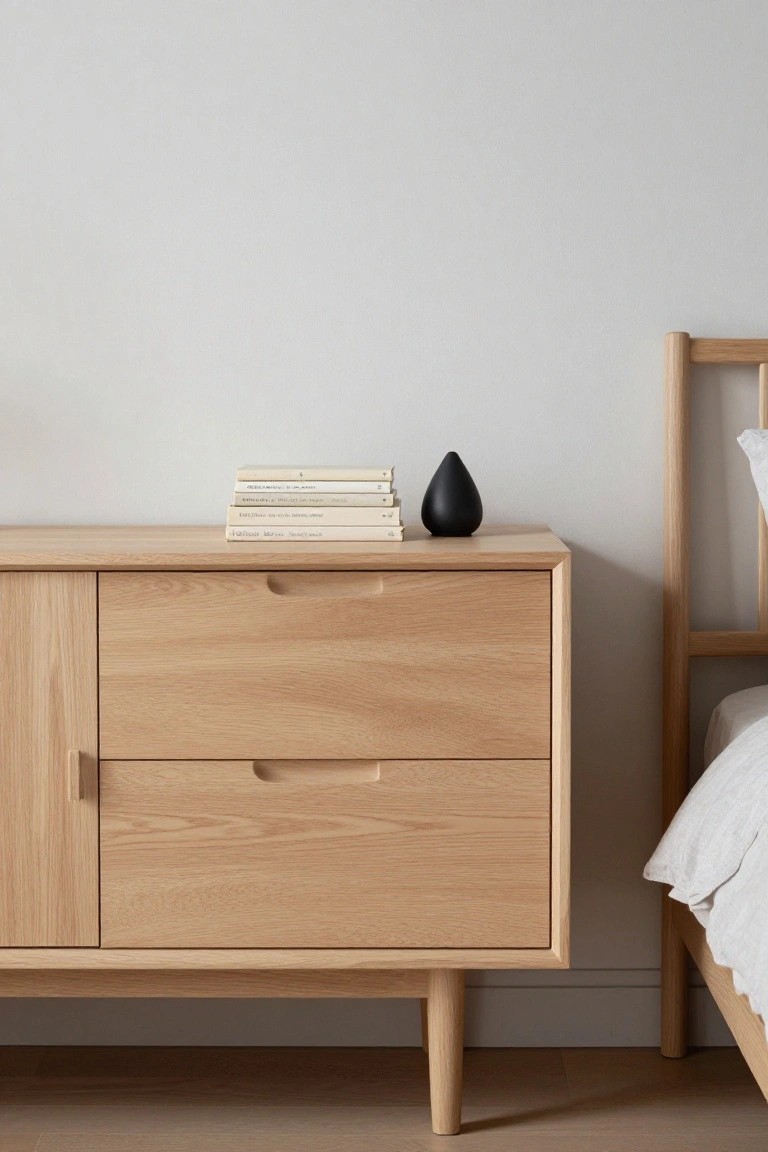
A low sideboard can work well next to the bed when space is tight. The height stays practical for reaching things at night, and the mix of drawers and a cabinet gives you hidden storage without adding bulk.
This approach suits small bedrooms or guest rooms where a regular nightstand would feel cramped. Keep the top mostly clear and choose a light wood finish so the piece does not dominate the room.
Mirrored Sideboards Make Small Rooms Feel More Open
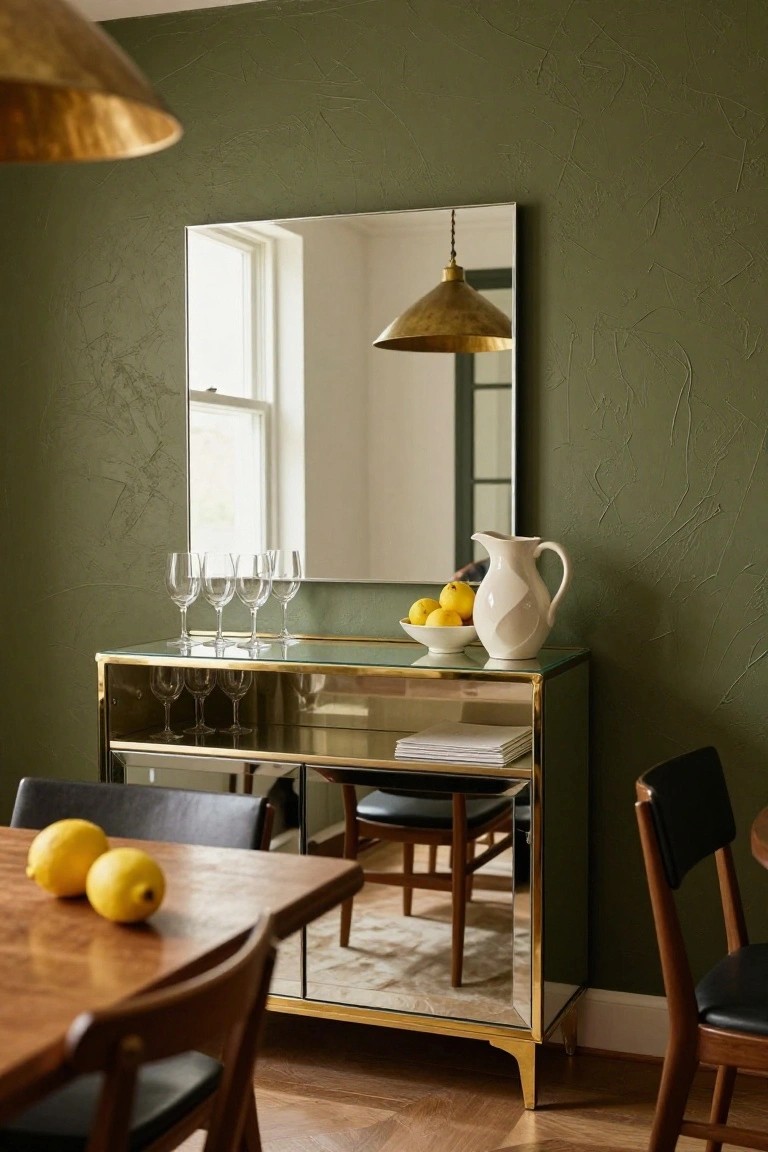
A mirrored sideboard works well when a room feels cramped. The reflective panels catch light and push the walls back visually, so the space reads larger without any extra square footage.
Try one along a dining wall where you need both storage and a surface for everyday items. Keep the top fairly clear and let the shine do most of the work. It suits older homes with narrow rooms or any layout that lacks natural light.
Wooden Cabinets That Add Storage In Small Bathrooms
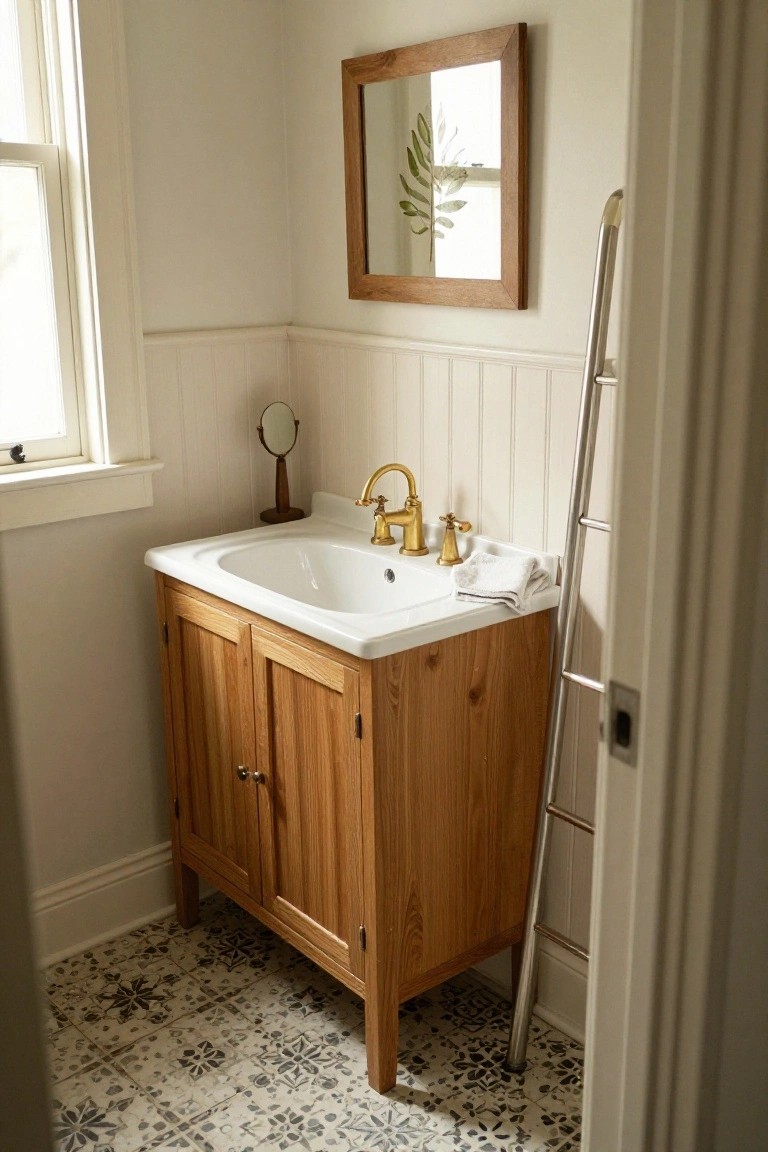
A wooden cabinet under the sink gives you a simple way to keep towels and daily items tucked away without crowding the floor. It turns the vanity into a practical storage piece that still leaves room to move around in a tight space.
This approach works well in older homes or any bathroom where you want a bit of warmth from natural wood. Keep the cabinet low and the top clear so the room stays open and easy to clean.
Built-In Shelving For Narrow Hallways
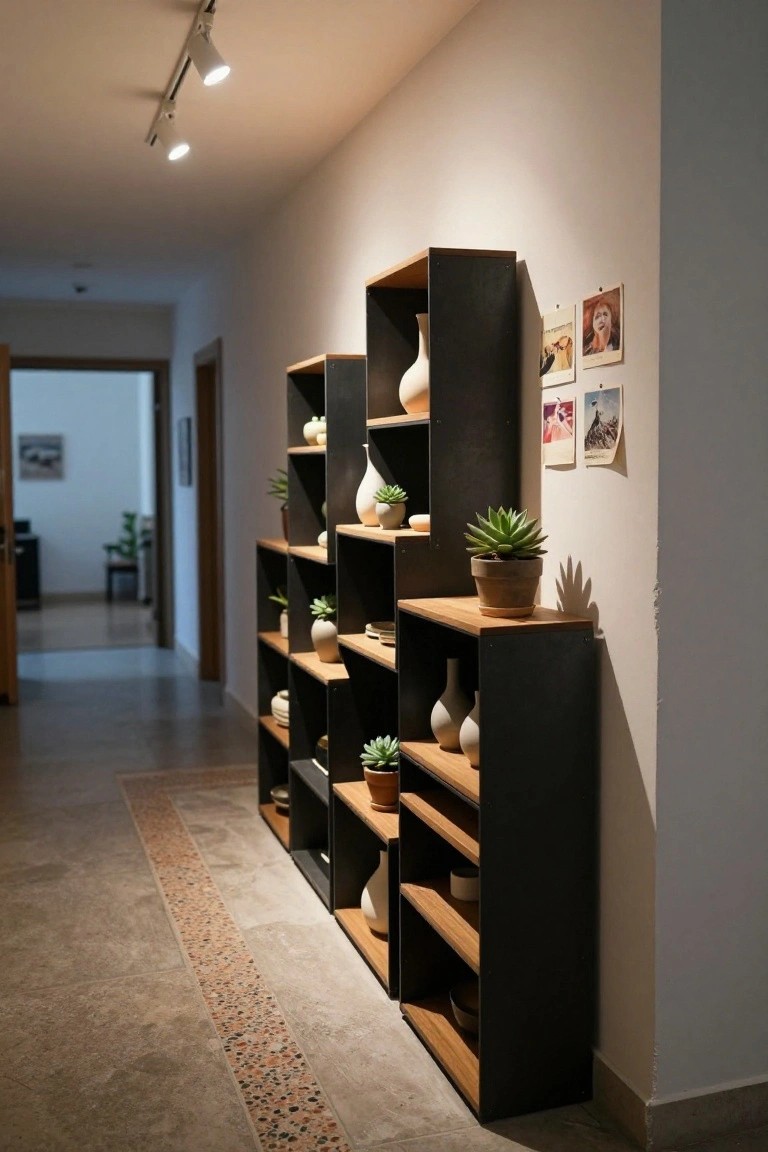
A tall unit like this works well in tight hallways because it uses the full height of the wall instead of spreading out across the floor. Open shelves keep the look light while still giving plenty of room for everyday items and a few plants or vases.
This setup suits homes where hallways feel cramped but storage is still needed. Try mixing darker frames with lighter wood tones so the piece blends in rather than closing the space in. Keep the bottom shelves for heavier or less used things and leave the upper ones lighter to maintain an open feel.
Frequently Asked Questions
Q: Where should I place a sideboard in a cramped living room?
A: Try tucking it behind the sofa if there is space. This hides it from the main view while still giving you storage. Keep the height low so it does not block any windows.
Q: How can I make a sideboard work for both storage and display?
A: Choose one with a mix of drawers and a flat top. Store daily items inside and add a few decorative pieces on top. Rotate those pieces every few months to keep things fresh.
Q: What materials hold up best in a busy small space?
A: Go for solid wood or metal frames. They resist scratches better than cheap laminates when kids or pets are around.
Q: Is it worth building my own sideboard for a perfect fit?
A: Building your own works well for tight spots. Adjust the depth to match your wall and skip the fancy finishes.
