

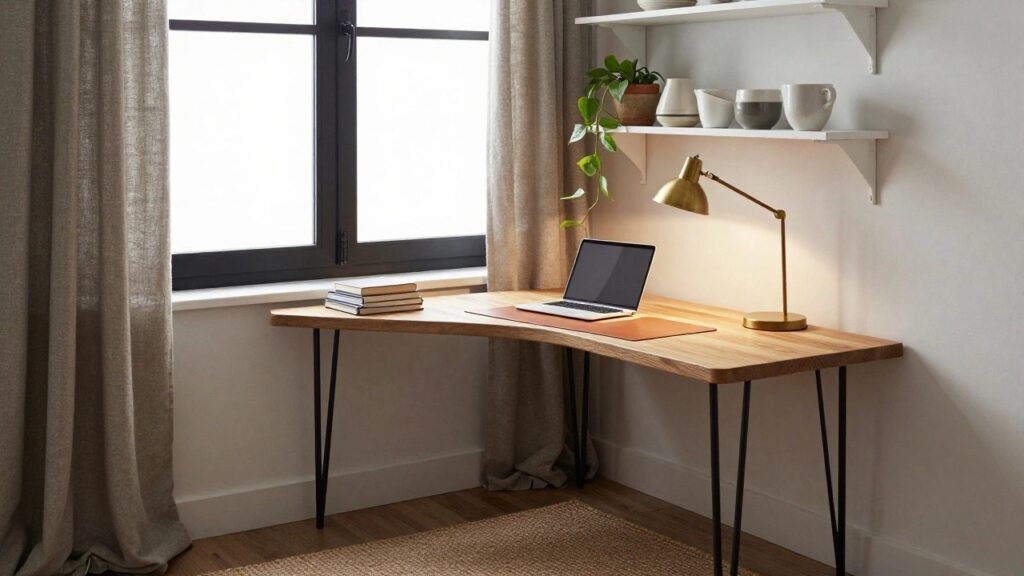
I often find that a corner in the home office ends up feeling cramped unless the desk actually matches how the rest of the room gets used each day.
The right placement can open up floor space and make the whole area feel more settled instead of like an afterthought.
Small changes in height and storage usually make the biggest difference.
I tested a few corner arrangements in my own place and noticed that setups with a simple lamp and one clear surface stayed usable far longer than anything crowded.
Ideas like these can help adapt what works without needing a full room overhaul.
Floating Shelves Add Storage Over A Corner Desk
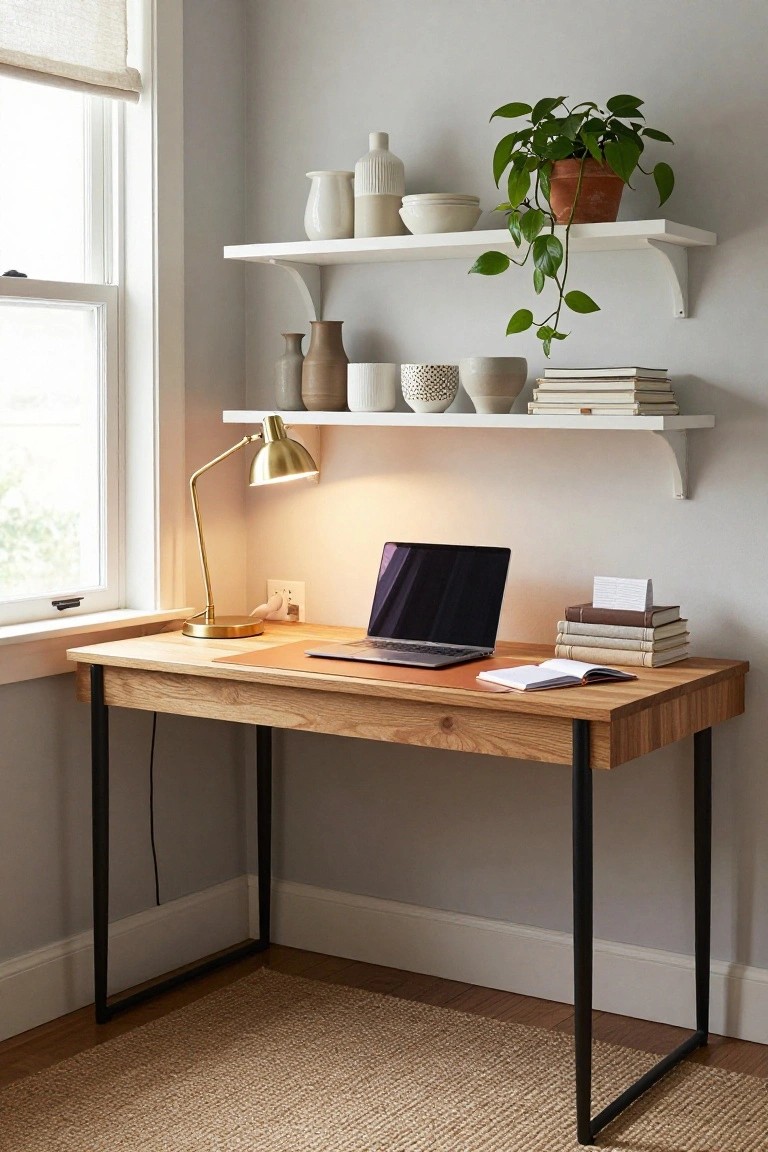
Floating shelves above a desk give you a place to keep books and small items without crowding the surface below. In a corner setup this keeps the workspace open and makes the whole area feel more organized rather than cramped.
This approach works best in smaller rooms or apartments where floor space is limited. Keep the shelves fairly shallow and stick to a few everyday pieces so they stay useful instead of turning into clutter.
Corner Desks That Work Against Brick Walls

A corner desk set against an exposed brick wall gives the whole spot a solid, grounded look without much extra effort. The wood surface and simple metal frame sit well with the rough texture behind them, and a leather chair keeps things comfortable while still fitting the overall feel.
This approach works best in older buildings or loft-style homes where the brick is already there. Keep the rest of the desk fairly clear and add just one or two warm lights so the space stays usable and not too busy.
Hang A Wall Textile Above Your Desk
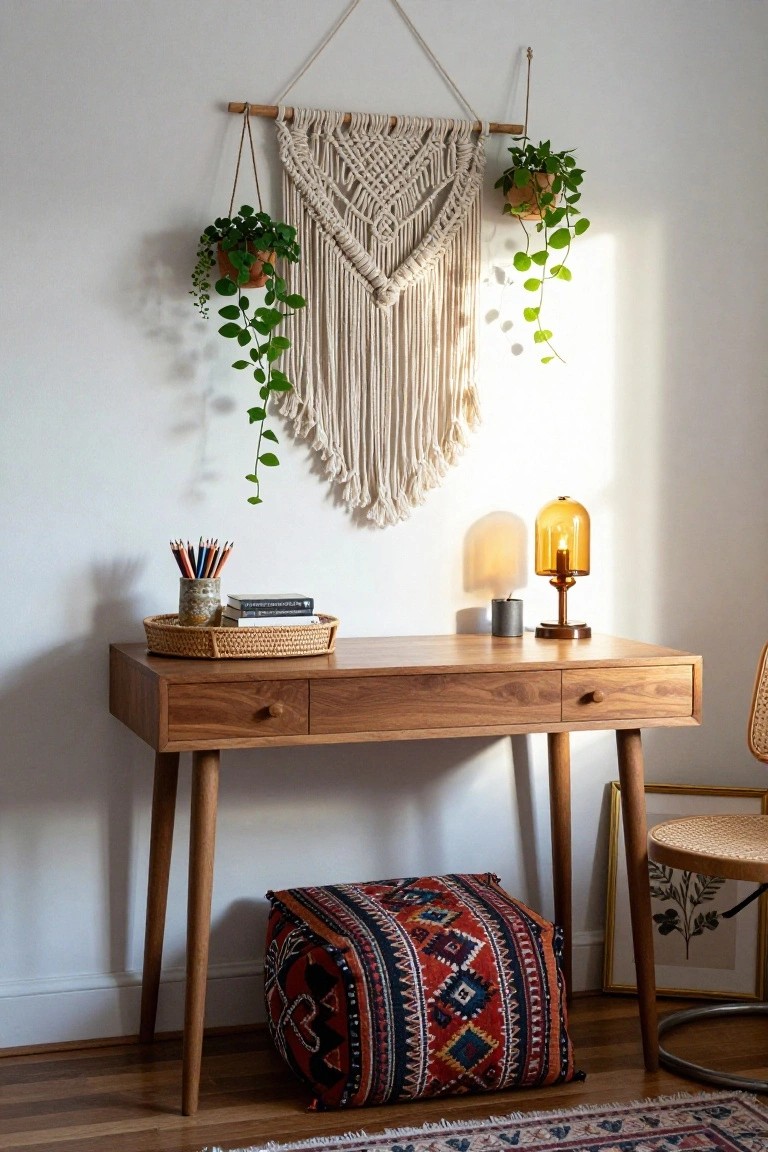
A simple wooden desk can look much more complete when you add a large wall hanging above it. The texture draws the eye up and gives the space a finished feel without crowding the surface with extra items.
This approach suits small rooms or apartments where you want the workspace to feel calm and put together. Keep the hanging in a natural tone, add a couple of plants on either side, and use a low seat or pouf underneath if you need extra storage.
Desk Under The Window Keeps Things Simple
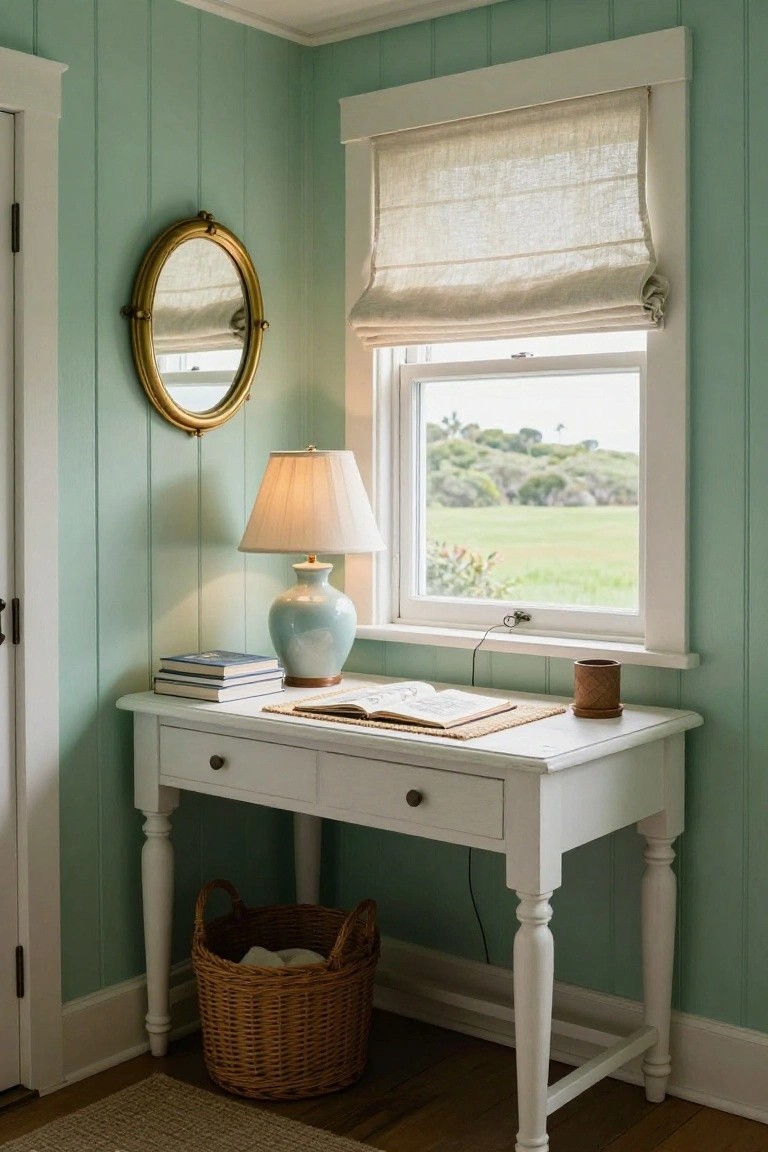
A desk placed right under the window brings in plenty of natural light and makes a small corner feel more open. The light wall color helps too since it bounces that light around without making the space feel busy.
This works best in bedrooms or guest rooms where you want a quiet spot to work or read. Keep the surface mostly clear and use just a lamp and a few books so the area stays calm and easy to use every day.
Pegboard Walls Give Corner Desks Room To Grow
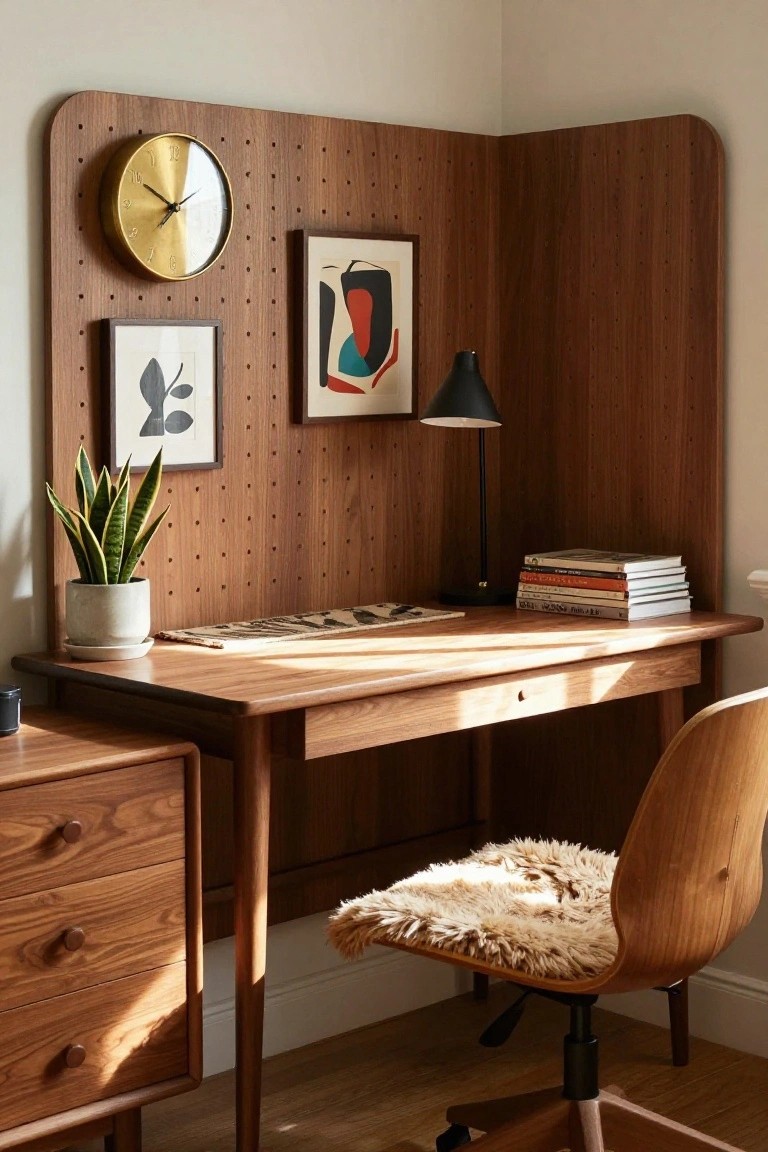
A pegboard wall behind the desk makes it easy to rearrange art, clocks, and small accessories whenever the mood strikes. The setup stays simple, but it never feels stuck in one look because you can shift things around without tools or new holes in the wall.
This idea works best in smaller rooms or shared spaces where the desk needs to stay flexible. Keep the pegs spaced evenly so pieces hang straight, and limit yourself to a few items so the surface does not get crowded.
Add a Corkboard for Quick Notes
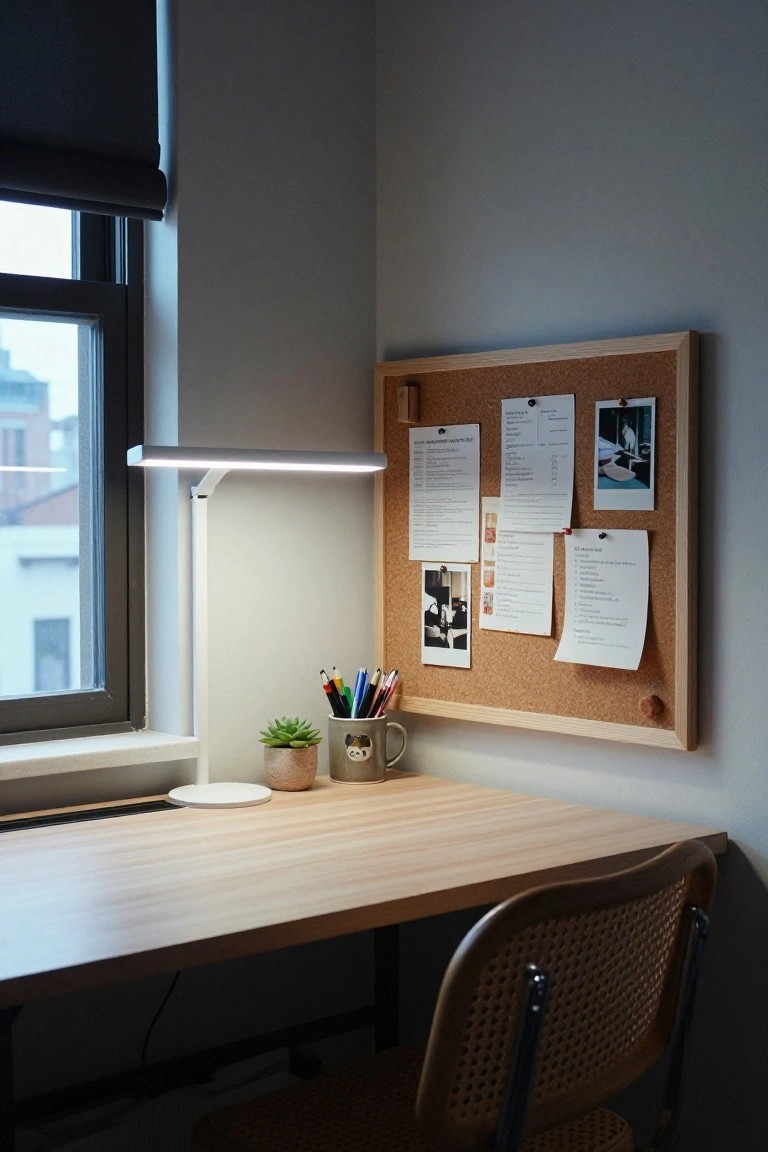
A corkboard mounted above the desk gives you an easy spot to pin up lists, reminders, and a few photos without creating extra clutter. It keeps important things visible at eye level so you do not have to dig through drawers or stacks of paper.
This works especially well in a small home office or bedroom corner where space is limited. Keep the board from getting too full and swap out old notes regularly so it stays helpful instead of overwhelming.
Mounting Monitors On A Floating Shelf
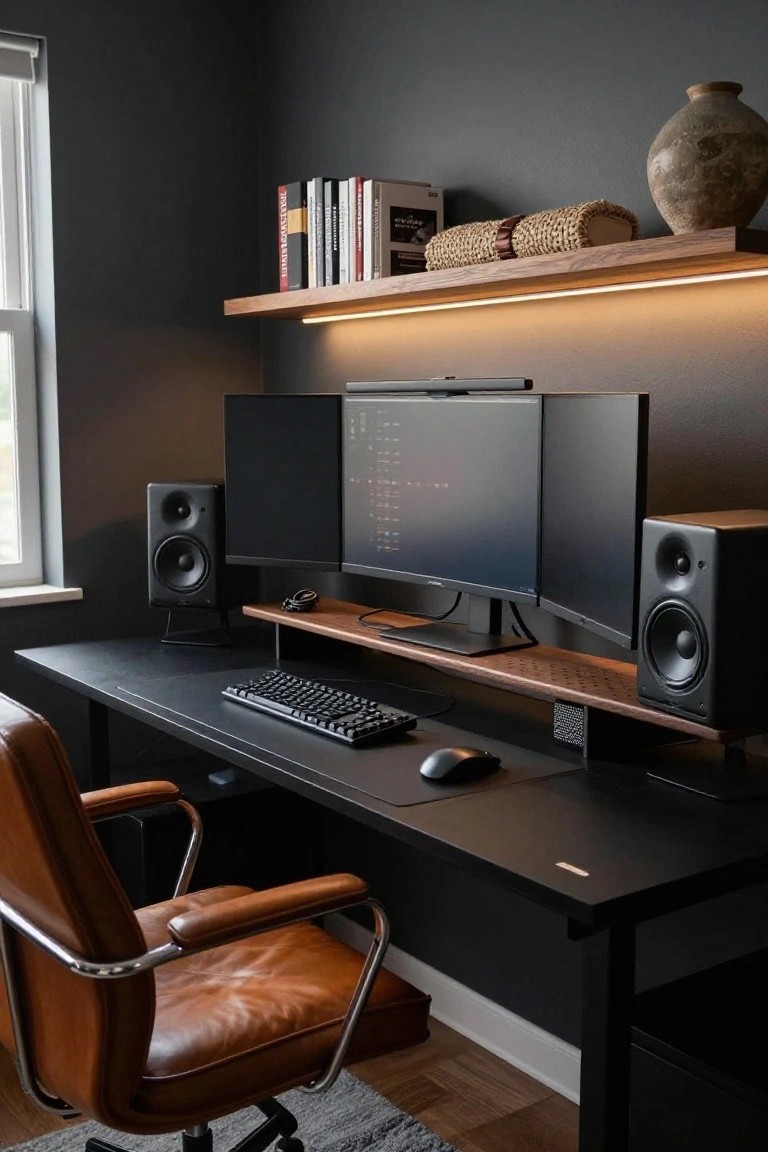
One thing that keeps a corner desk looking clean is mounting the monitors on a floating shelf instead of letting them sit directly on the desktop. The shelf lifts the screens to a better height, frees up surface space, and gives you a simple place to run cables out of sight.
This approach works best in smaller rooms or darker spaces where you want the desk to feel open rather than crowded. Use a sturdy shelf with a built-in light strip if you can, and keep the rest of the surface clear except for a keyboard and mouse.
Desks With A Chalkboard Back
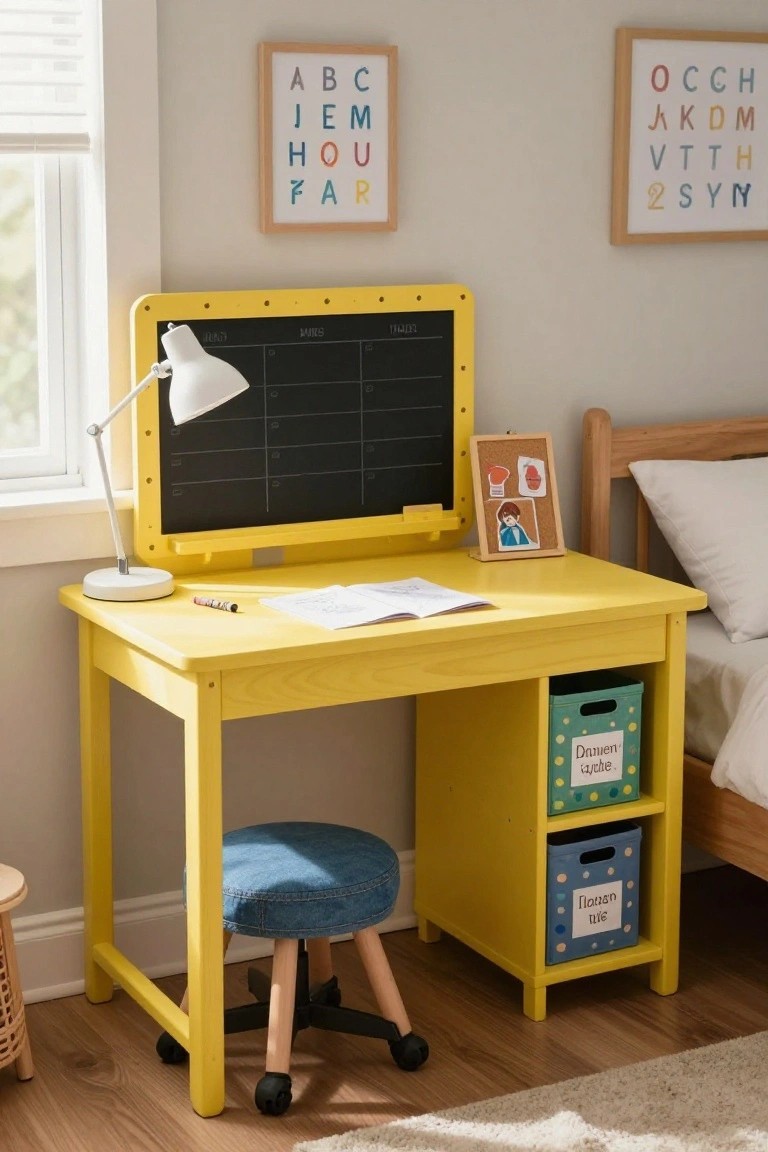
A desk that includes a chalkboard surface right behind the work area gives kids a spot to draw or jot things down without adding another piece of furniture. It keeps the corner feeling useful instead of crowded.
This setup works best in a child’s room where you want one piece to handle both homework and play. Pair it with simple bins underneath for supplies so everything stays in reach.
Hide a Desk Inside a Closet
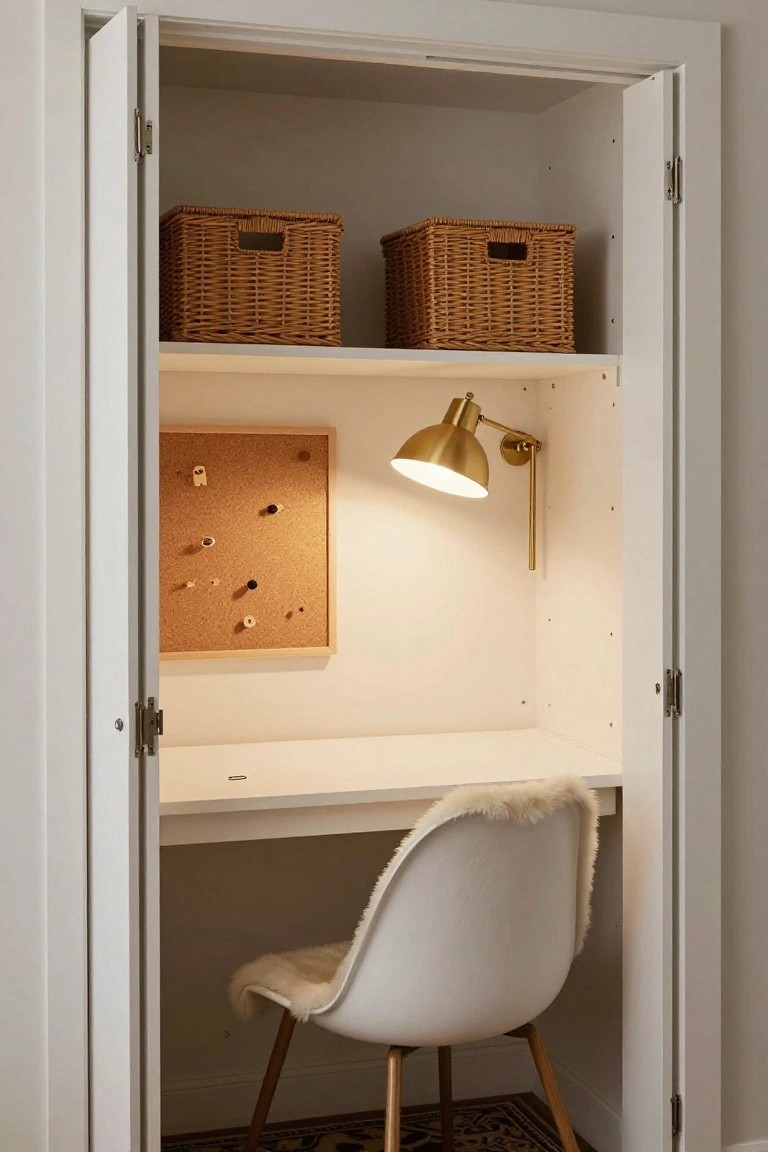
Many people turn a closet into a small desk area when they need a workspace but do not want it to take over the room. Closing the doors keeps papers and clutter out of sight, which helps the rest of the space feel calmer and more open.
This idea works especially well in bedrooms or smaller homes where floor space is limited. Keep the inside simple with a basic shelf for the desk surface and add a few baskets on a high shelf for supplies you do not use every day.
Using The Space Under Stairs For A Compact Desk
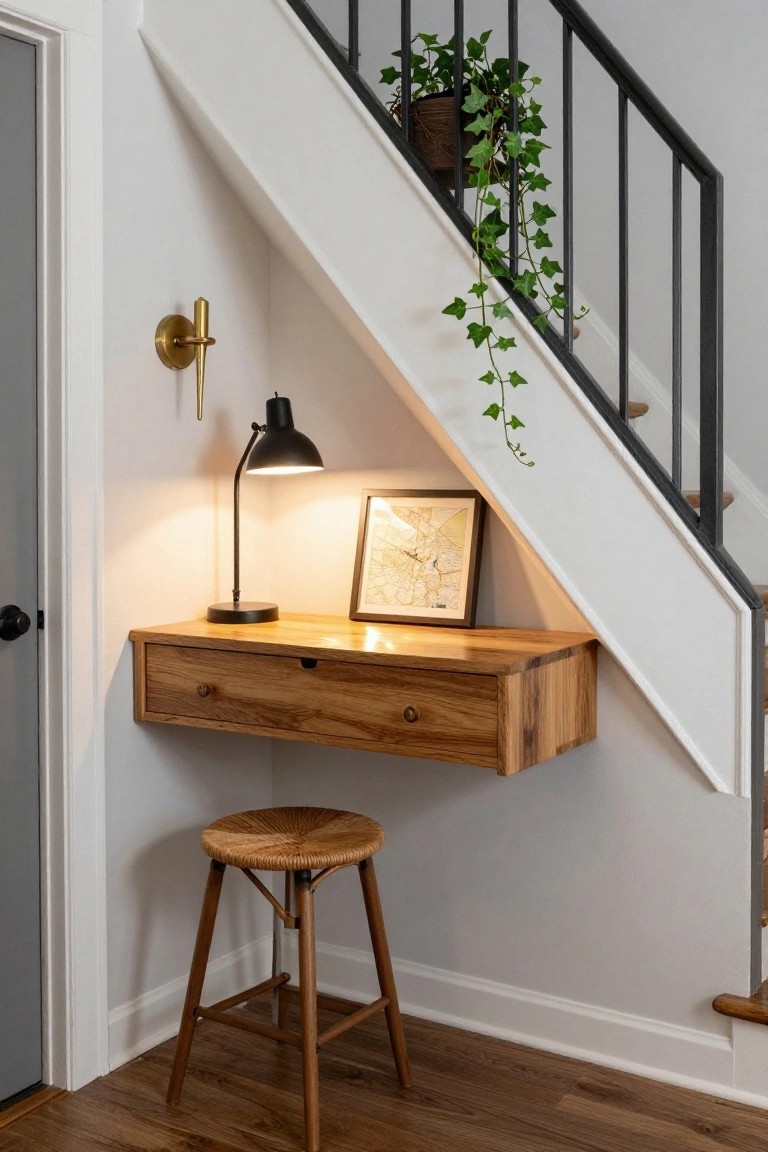
A floating desk tucked under the stairs gives you a workspace without eating into the rest of the room. It keeps the area feeling open while still giving you a flat surface for a laptop or papers. The simple wood tone blends in with the floor and keeps the whole setup from looking heavy.
This works best in homes where the staircase is open on one side and you need an extra spot to work. A low stool that slides underneath helps keep the floor clear when the desk is not in use. Stick to one or two small items on top so the area stays tidy.
Mount A Whiteboard Above The Desk
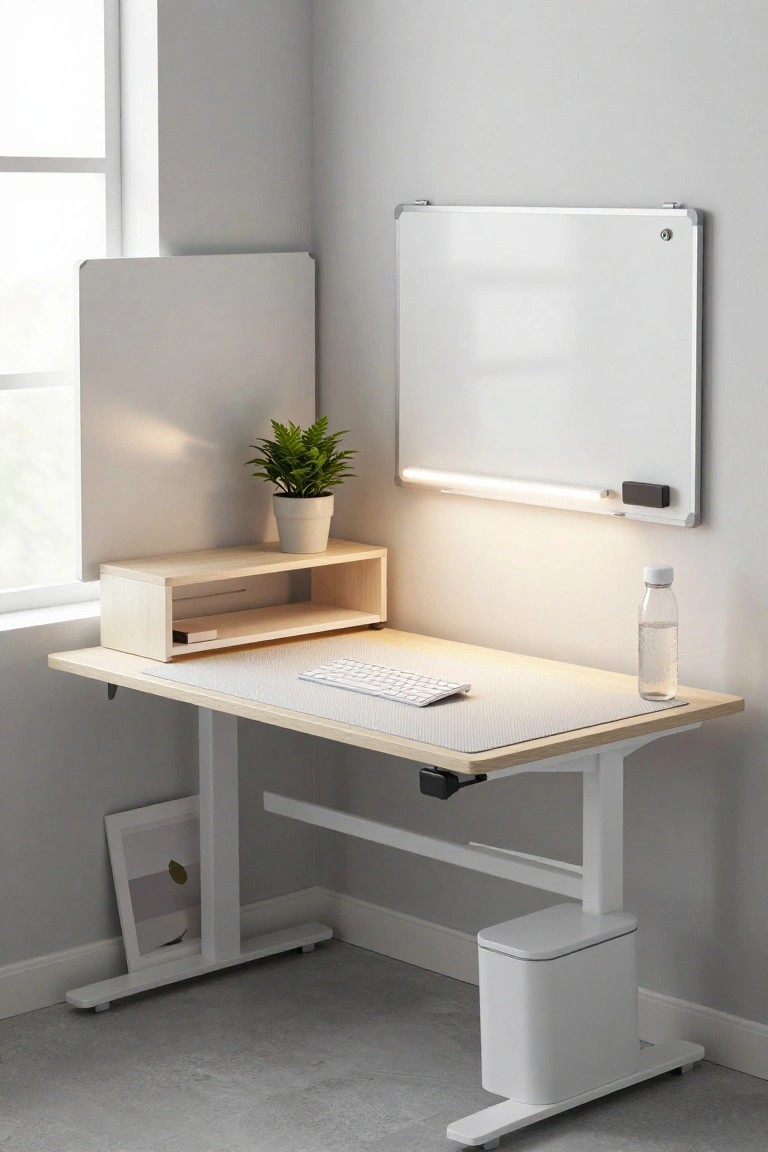
A whiteboard above the desk turns a plain corner into a spot that actually helps with daily work. It gives you a place to write quick notes or rough ideas without piling up paper or sticky notes on the surface itself.
This setup works best in smaller rooms or shared spaces where you need the desk to stay clear. Hang the board at a comfortable height and add a small light underneath if you often work after dark.
Marble Tops With A Simple Round Mirror

A marble desk top paired with a round mirror keeps a corner feeling light and organized. The smooth surface reflects light nicely, and the curved mirror adds shape without crowding the wall or making the area feel heavy.
This look works best in bedrooms or small dressing spots where the desk needs to serve more than one purpose. Limit what you place on top to just a few items so the marble stays visible and the whole setup stays easy to keep tidy.
A Basket Under The Desk
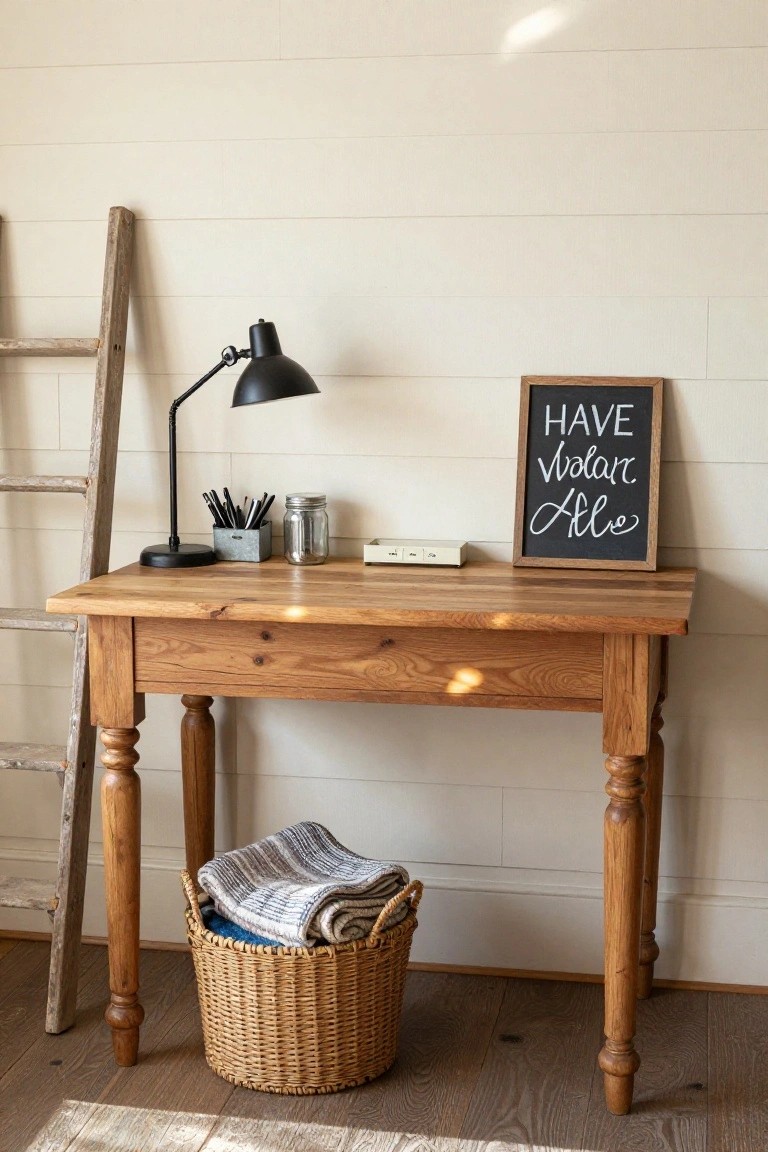
A basket tucked under the desk is one of those small moves that keeps the top surface tidy without making the whole setup feel bare. It gives you a place to stash extra throws or supplies while still letting the wood and simple accessories show through. The look stays relaxed because nothing is fighting for attention on the desk itself.
This works best in smaller rooms where floor space is limited and you want storage that does not add another piece of furniture. A wide, low basket fits neatly between the legs and can hold seasonal items you reach for often. Just make sure the basket is sturdy enough to slide in and out without catching on the wood.
Low Table Desk With Floor Seating
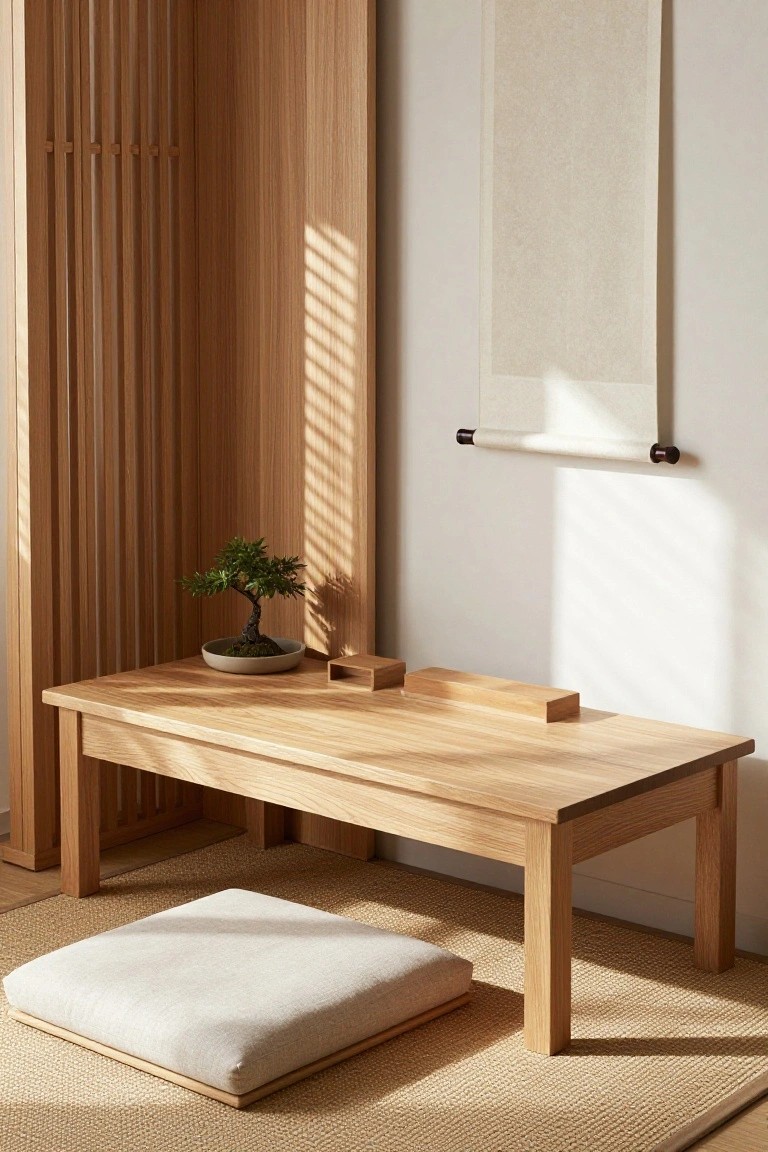
A low wooden table makes a nice corner desk when you want something simple and grounded. It sits right on the floor so the whole setup stays open and does not take over the room. Many people like this because it feels calm and keeps the focus on the work surface itself.
This approach works best in smaller rooms or homes that already lean toward minimal styling. Pair the table with a flat cushion for seating and leave most of the surface clear except for one small plant or tool. Keep extra storage or decor to a minimum so the corner stays easy to use.
Dark Walls Anchor A Simple Desk Setup
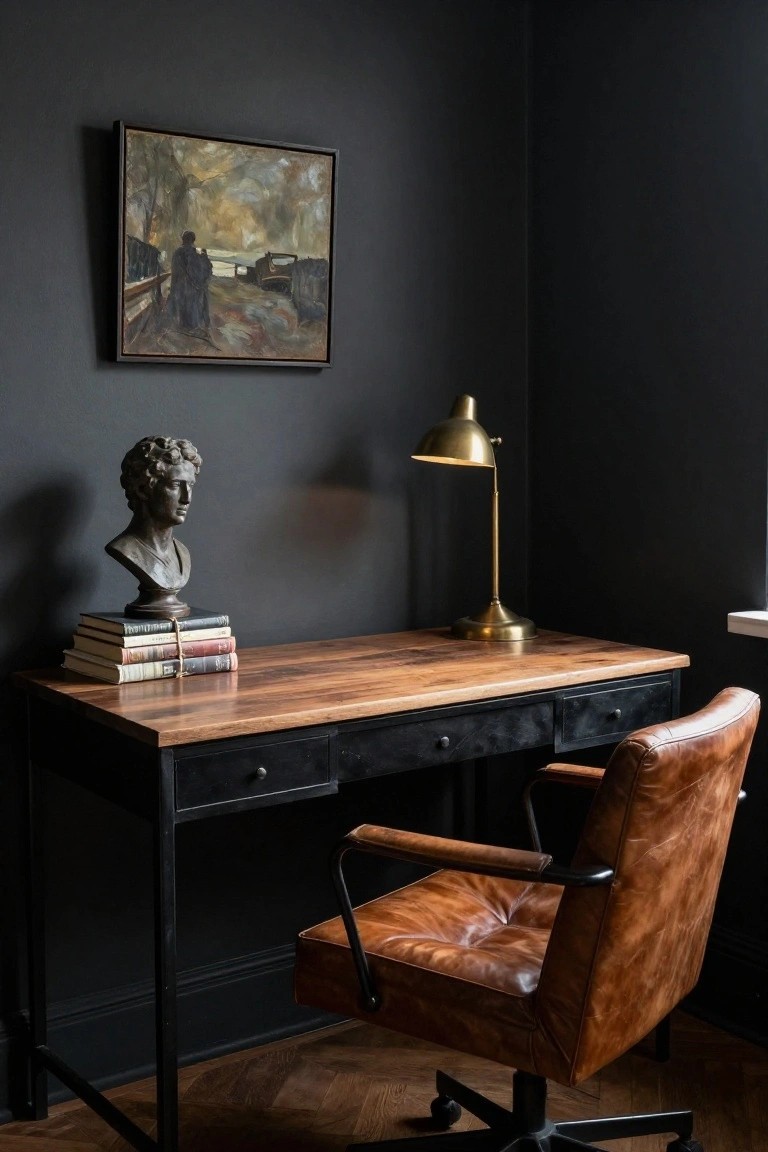
A dark wall behind the desk creates a quiet, enclosed feel that makes the workspace stand out without needing lots of extra pieces. The deep color pulls everything together and gives the area a finished look even when the desk itself stays fairly plain.
This approach works best in a corner or smaller room where you want the desk to feel like its own zone. Pair the dark paint with warm wood and leather so the space stays comfortable instead of turning too stark.
Keeping A Corner Desk Simple
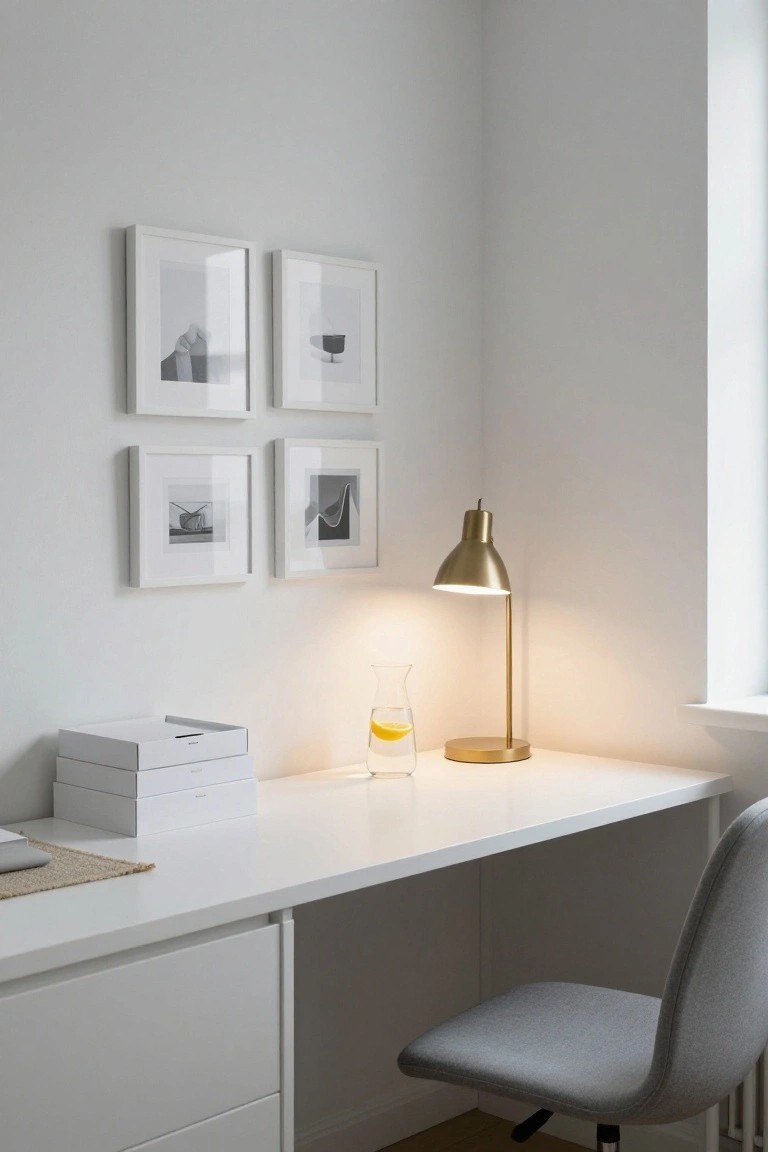
A mostly empty desk surface can make a small corner feel much more usable. With just a lamp and one or two practical items, the space stays calm and does not compete with the work you actually need to do there.
This approach suits apartments or spare rooms where the desk shares space with other functions. Stick to light colors on the desk and walls, and limit accessories so the area does not start to feel cluttered over time.
Corner Desk With Overhead Shelves
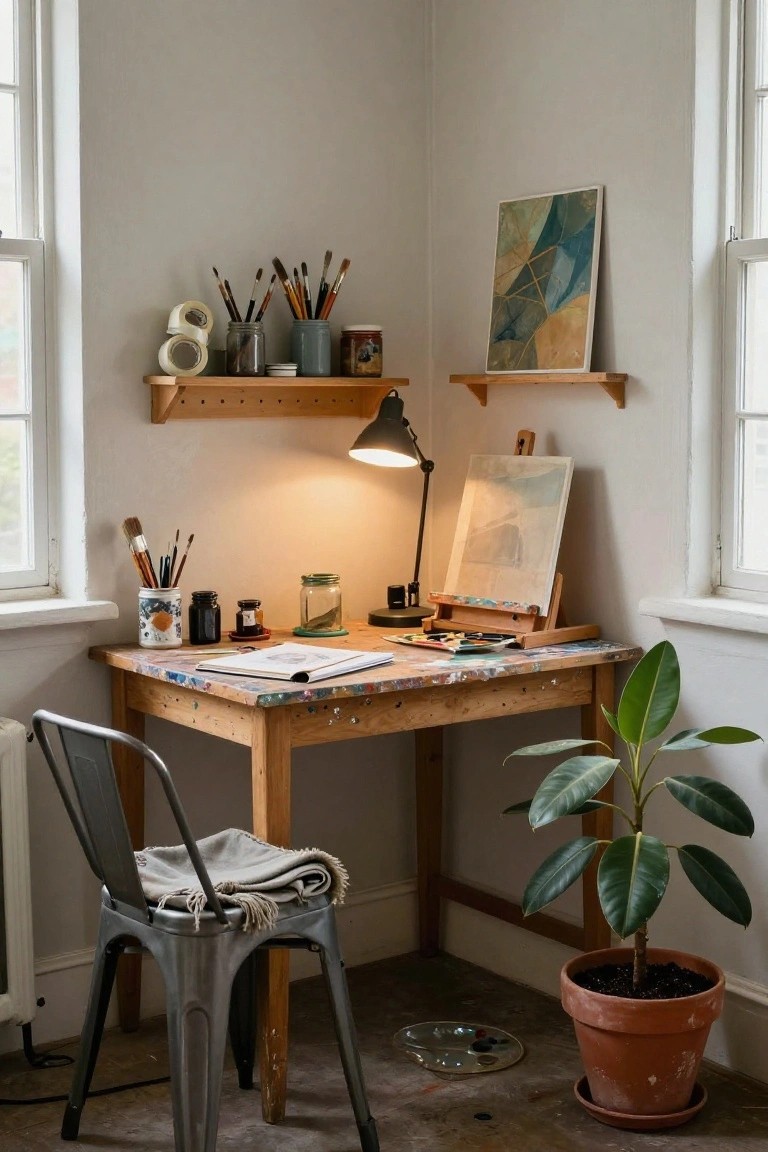
A corner desk becomes more useful when you add a simple shelf right above it. The shelf keeps brushes, jars, and other supplies close without crowding the work surface below, so the whole spot stays tidy while still feeling casual.
This approach works well in smaller rooms or homes where you need a creative area but do not want to dedicate an entire room. A basic wooden desk paired with one narrow shelf above it gives enough storage and leaves room for a plant or lamp to soften the look.
Built-In Storage For Corner Desks
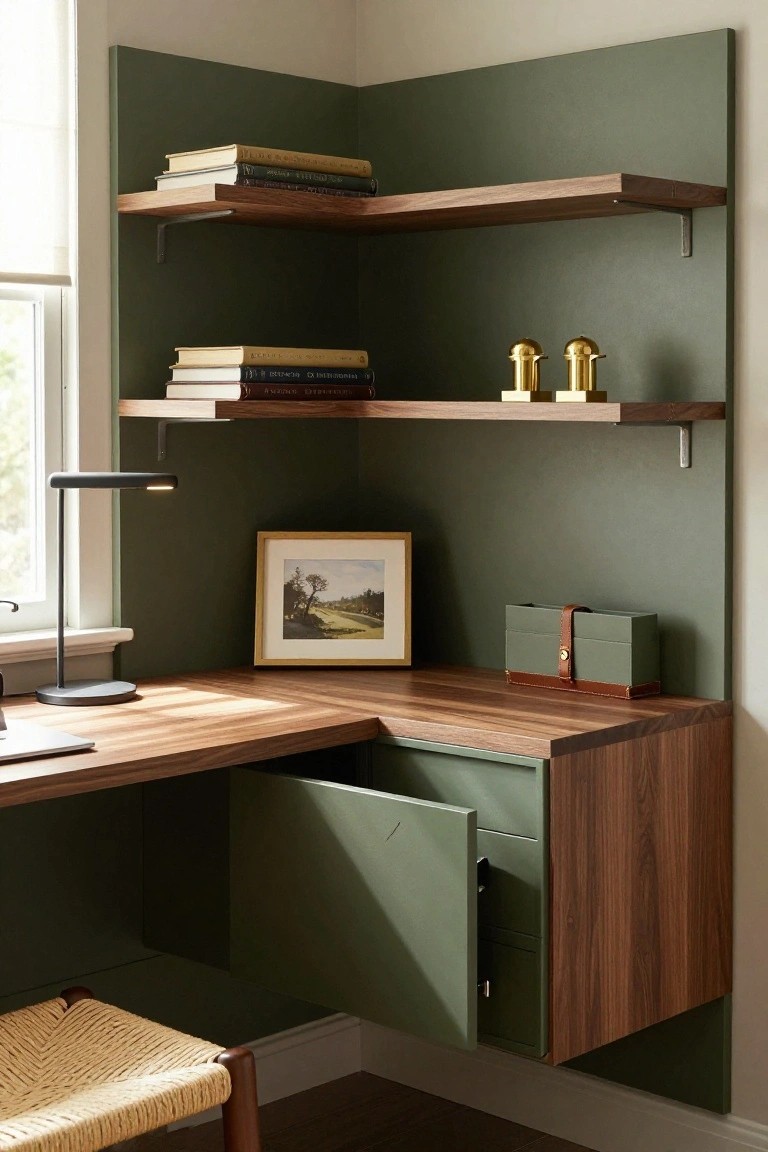
A corner desk becomes much more useful when you add built-in cabinetry and floating shelves. The lower cabinet keeps supplies out of sight, while the shelves above hold books and a few small items without crowding the work surface. This approach makes the whole setup feel more finished and less like a collection of separate pieces.
It works especially well in smaller rooms or shared spaces where you need storage but want to keep the floor open. Stick to a simple color mix like wood tones with a painted cabinet, and place the shelves at a comfortable reach so the corner stays practical day to day.
Pegboard Storage Keeps A Corner Desk Tidy
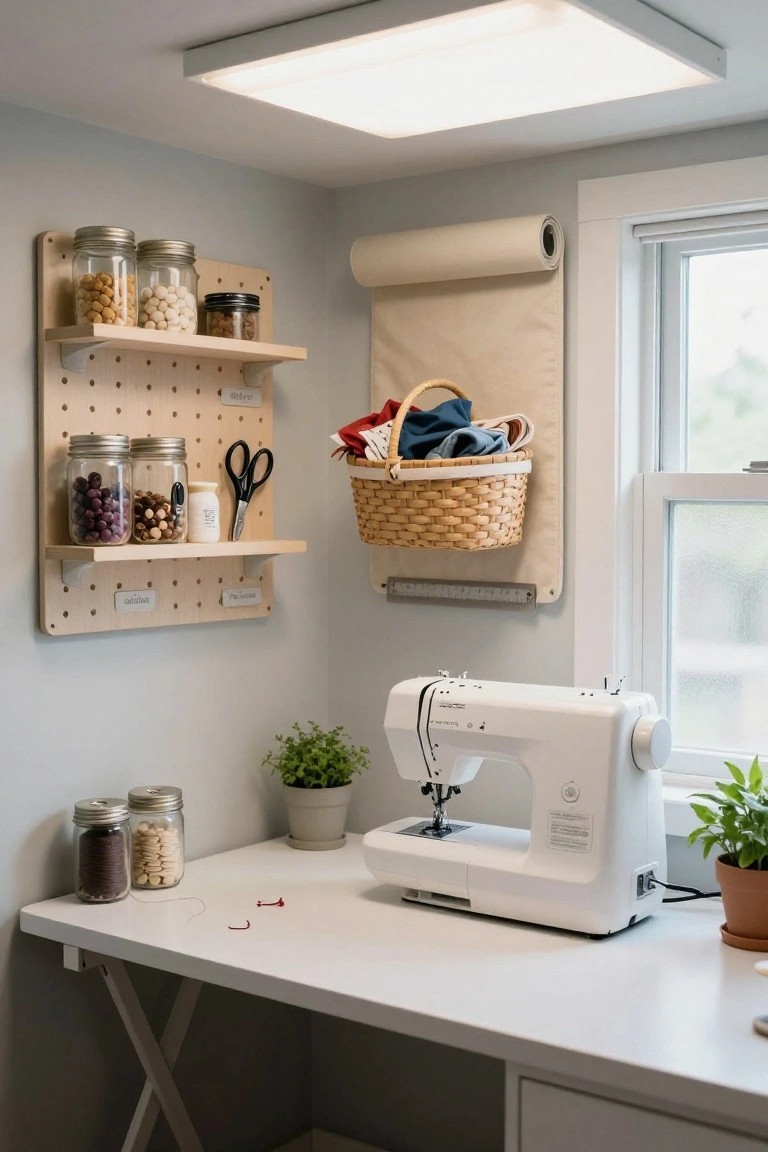
A pegboard above the desk gives you a simple way to store tools and supplies without crowding the work surface. Jars hold small items like thread and buttons while scissors stay right where you need them. The whole setup feels practical and easy to maintain.
This approach works well in a small room or spare corner where you want quick access to supplies. Mount the pegboard at a comfortable height and keep only the items you use often so the space stays useful instead of overwhelming.
Frequently Asked Questions
Q: How do I keep a corner desk from feeling boxed in when the room is small?
A: Measure the walls first and choose a desk with a shallow depth on one side. Angle your chair toward the open part of the room so you still have legroom and can move freely. This setup leaves the rest of the floor clear for walking through.
Q: What is the simplest way to deal with cables on a corner desk?
A: Feed the cords through a hole in the desk if it has one, then run them down the corner where the two walls meet. Clip them in place every few inches so they stay flat against the surface. The corner itself hides most of the bundle from view.
Q: How can I add storage without piling things on the desk surface?
A: Hang one narrow shelf a few inches above the desk along the back wall. Keep only daily items on it and store the rest in a small bin that slides underneath. You keep the work area clear while everything stays close at hand.
