

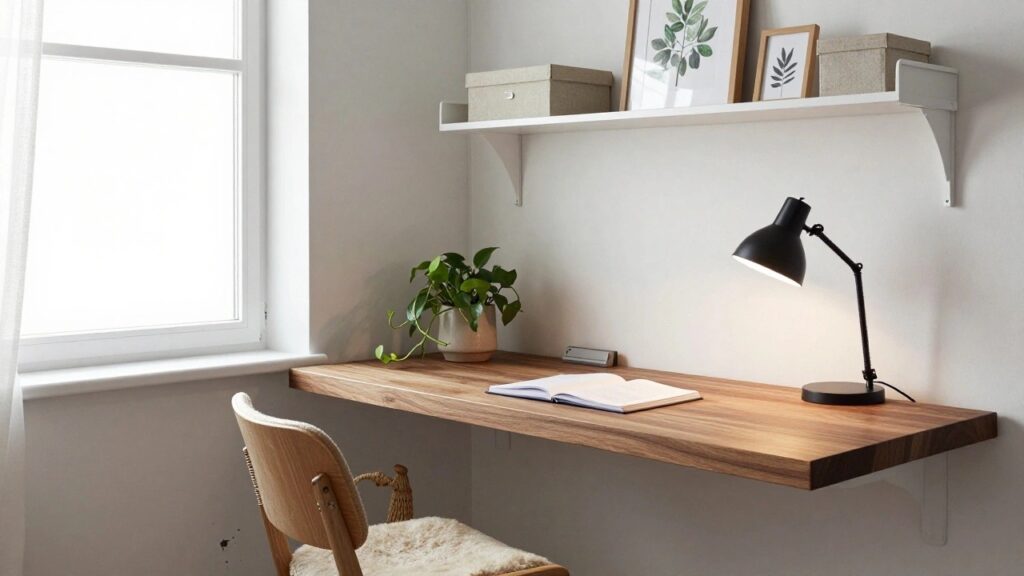
I have noticed over time that corner areas in smaller rooms tend to feel cramped when you add standard furniture that sits on the floor.
A floating desk solves part of that problem by mounting directly to the wall and leaving the space underneath open for movement or storage bins if needed.
In my place this approach made the room look less crowded and allowed more natural light to reach the seating area nearby.
The difference shows up immediately.
It is one of those changes I would test first when trying to make a compact workspace fit without closing off the rest of the room.
Floating Desks Fit Well In Small Corners
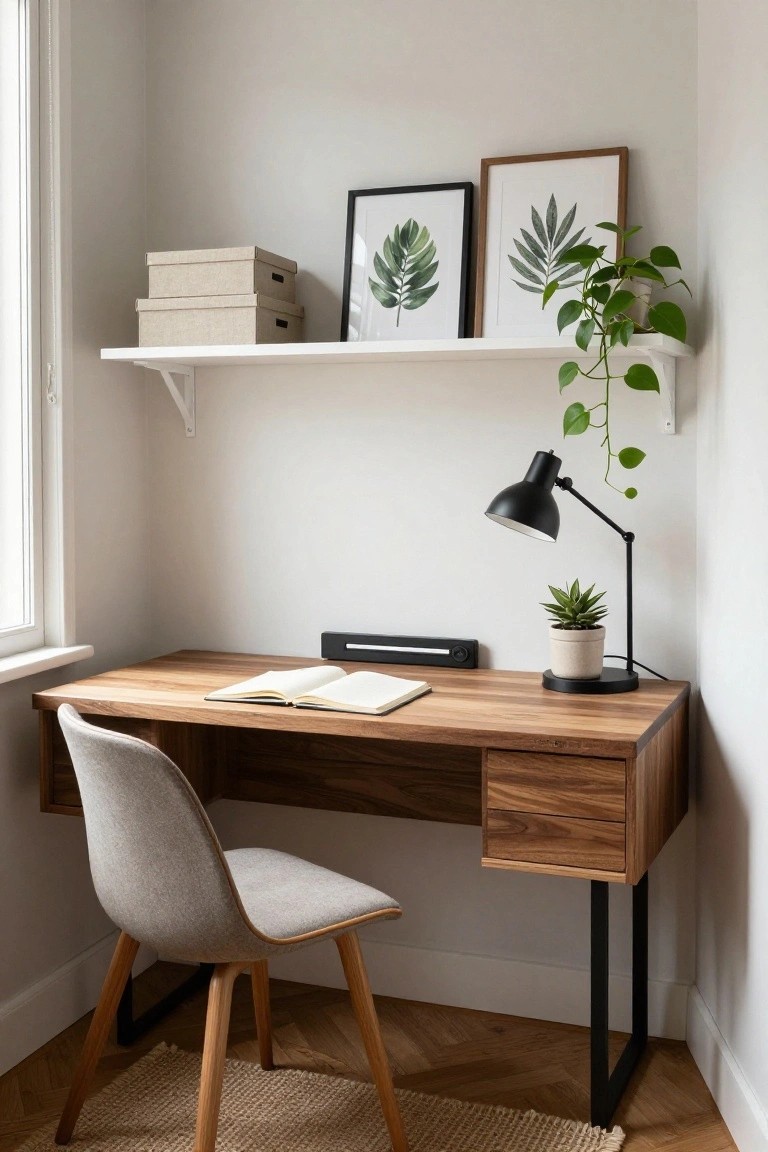
A floating desk can turn a tight corner into a useful spot without crowding the room. Because it stays off the floor on one side, the space below stays open and the whole area feels less closed in. This kind of setup works nicely when you still want room to move around the chair.
It suits smaller bedrooms or home offices where every inch counts. Keep the top fairly clear and add just a lamp and a plant so the desk does not start to feel heavy. A simple shelf above can hold a few boxes or papers without taking up extra wall space.
A Floating Desk Under The Window
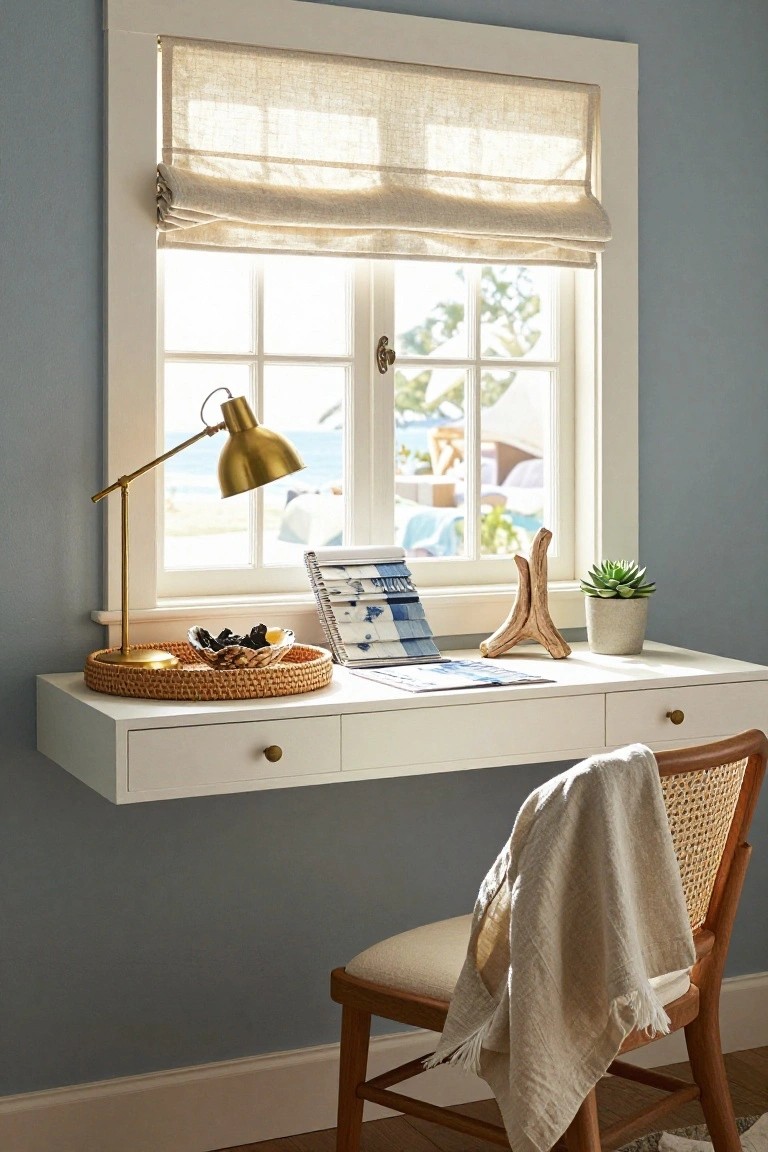
A floating desk mounted right below a window gives you workspace without eating up floor space. The wall mount keeps everything off the ground so light can move through the room and the area stays open even in smaller homes.
This setup works best in bedrooms or quiet corners where you need a simple place to work or sort mail. Keep the desk color light and avoid adding too many pieces on top so the window stays the main feature.
Floating Corner Desks With Overhead Shelves
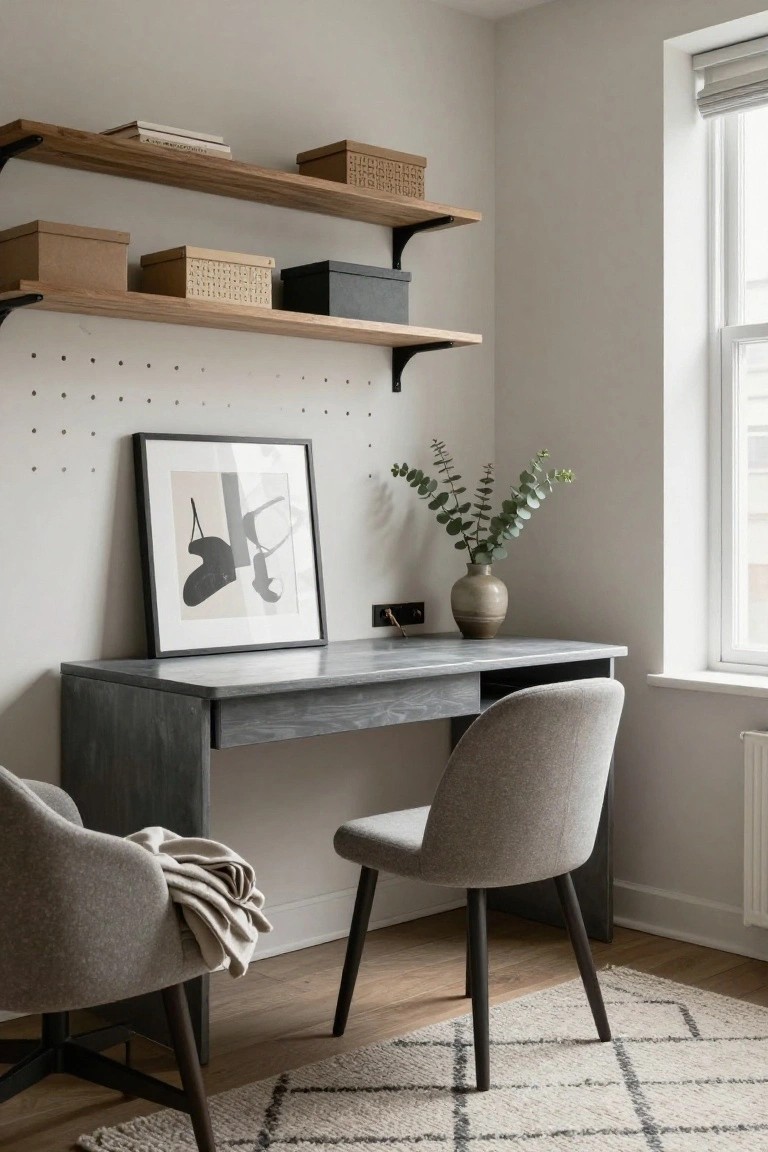
A floating desk tucked into the corner works well when you want the room to stay open and easy to move around in. The desk sits right against the wall with nothing on the floor below it, and the shelves above hold boxes and books without adding more furniture that could crowd the space.
This setup suits smaller rooms or homes where one area needs to handle work and still feel calm at the end of the day. Keep the wall simple with a pegboard or a single piece of art so the corner does not start to feel busy.
Floating Corner Desks Keep Small Rooms Feeling Open
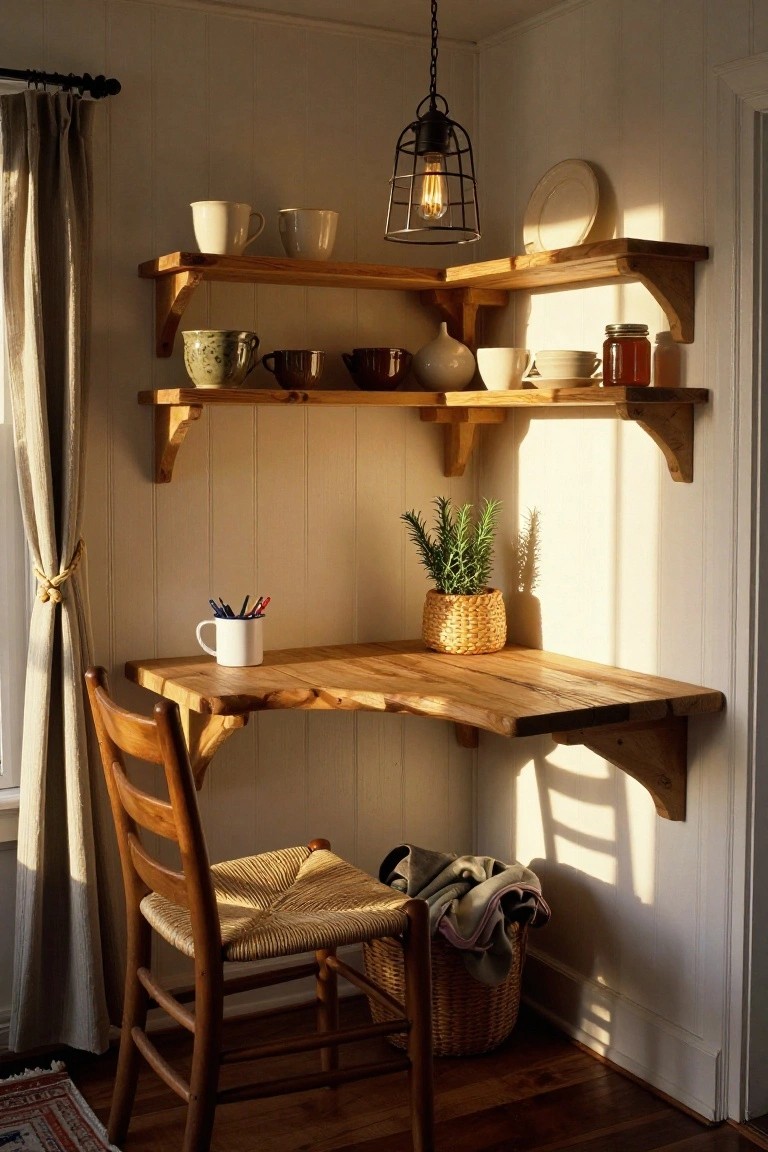
Mounting a desk right into the corner without legs underneath is a simple way to keep the floor clear. It works especially well in rooms that already feel tight, since nothing blocks the path or crowds the space below. The wood surface and a couple of shelves above give you room for everyday things without needing a full piece of furniture.
This setup suits smaller homes or any spot where you want a workspace that does not take over. It works best when you keep the rest of the room light, with just a chair tucked in close and maybe one basket underneath for storage. Avoid filling the wall above with too many shelves or the whole area can start to feel closed in again.
Low Storage Units That Double As Desks
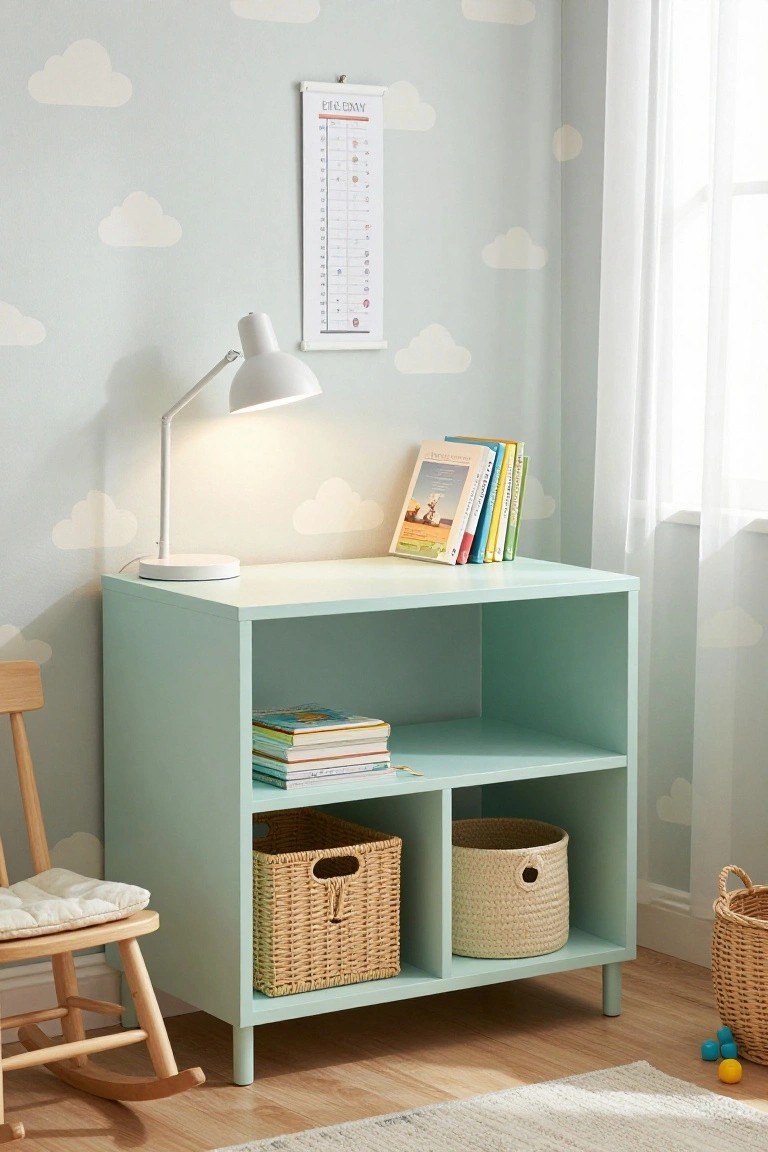
A low storage unit with a flat top gives you a simple desk surface while leaving the floor open underneath. The open shelves and baskets keep books and supplies visible but tidy, which stops the area from feeling boxed in.
This setup works well in kids rooms or small bedrooms where you need both workspace and storage in one piece. Keep the unit light in color and avoid filling every shelf so the corner stays airy and easy to move around.
Floating Corner Desk That Saves Floor Space
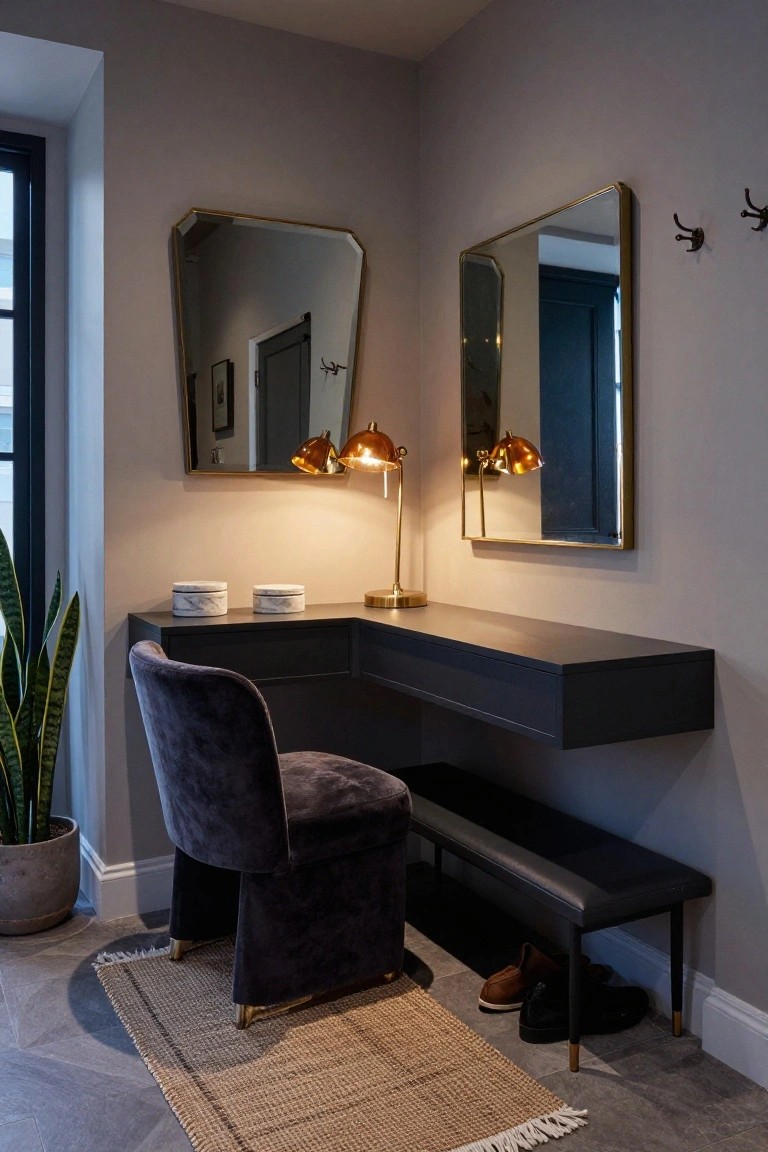
A floating corner desk works well when you want a workspace or vanity area without crowding the room with big furniture legs. It mounts right to the wall so the floor stays open and the space feels lighter overall.
This setup fits best in bedrooms or small entry spots where every inch counts. Pick a simple finish and add just one chair so the desk does not start to feel heavy.
Built-In Corner Desks With Open Shelving
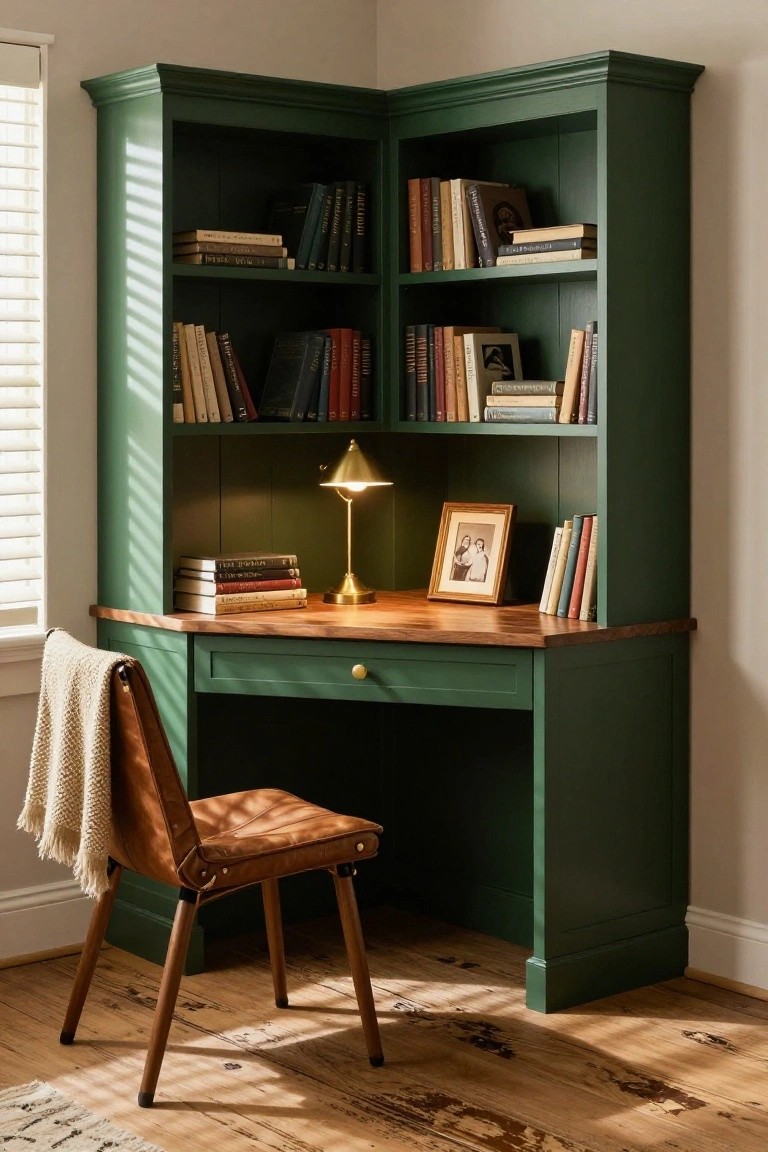
A built-in desk that wraps into the corner and includes open shelves above gives you a solid workspace without crowding the room. The shelves keep books and supplies visible and easy to reach, while the lower cabinet hides clutter and still leaves floor space clear underneath.
This kind of setup works best in smaller rooms or homes that need one area to handle both work and storage. Choose a lighter wood tone on top and keep the shelves from getting too deep so the corner stays open rather than boxed in.
A Minimal Corner Desk Keeps The Space Open
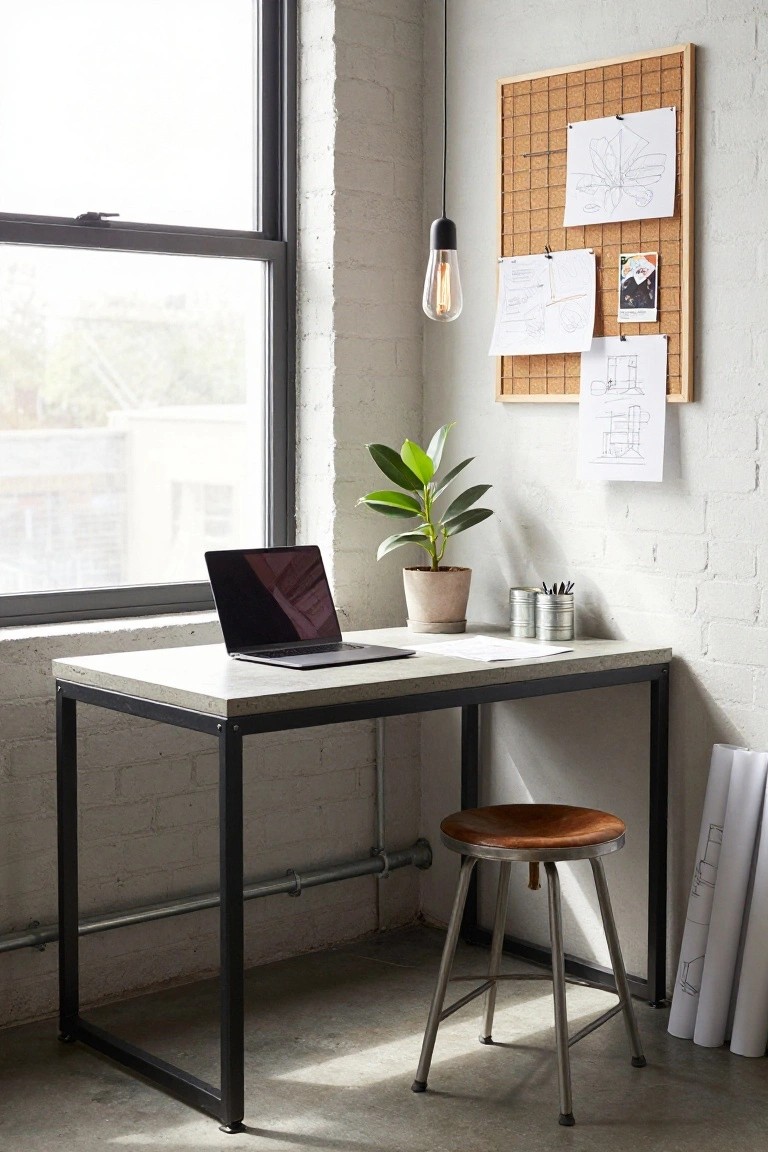
A desk with a slim frame and light top can sit in a corner without crowding the room. The thin metal legs and simple surface let light move through and keep the floor visible, which makes even a small area feel less boxed in.
This style works best in apartments or rooms that serve more than one purpose. Place it near a window if you can, and skip extra storage on top so the desk stays practical without turning into a catch-all.
A Floating Desk Keeps the Room Feeling Open
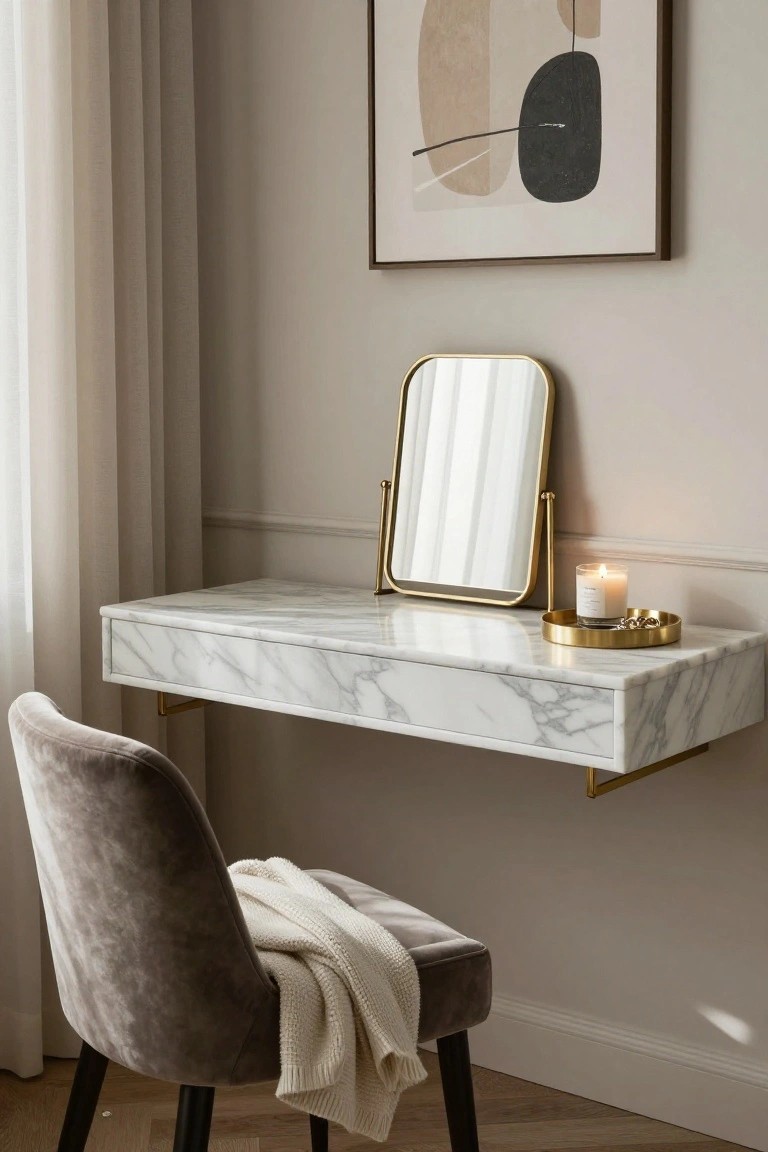
Mounting a desk straight to the wall is one of the easiest ways to avoid a cramped look. Without legs taking up floor space, the room stays clearer underneath and light can move through more freely. A simple marble top and slim brackets help it blend in rather than stand out as heavy furniture.
This setup works best in bedrooms or small work areas where you want the space to feel calm and uncluttered. Keep the surface mostly bare and choose a chair that tucks in neatly when not in use. Just watch the weight limit on your wall anchors if you plan to store much on top.
Floating Corner Desk For Everyday Kitchen Tasks
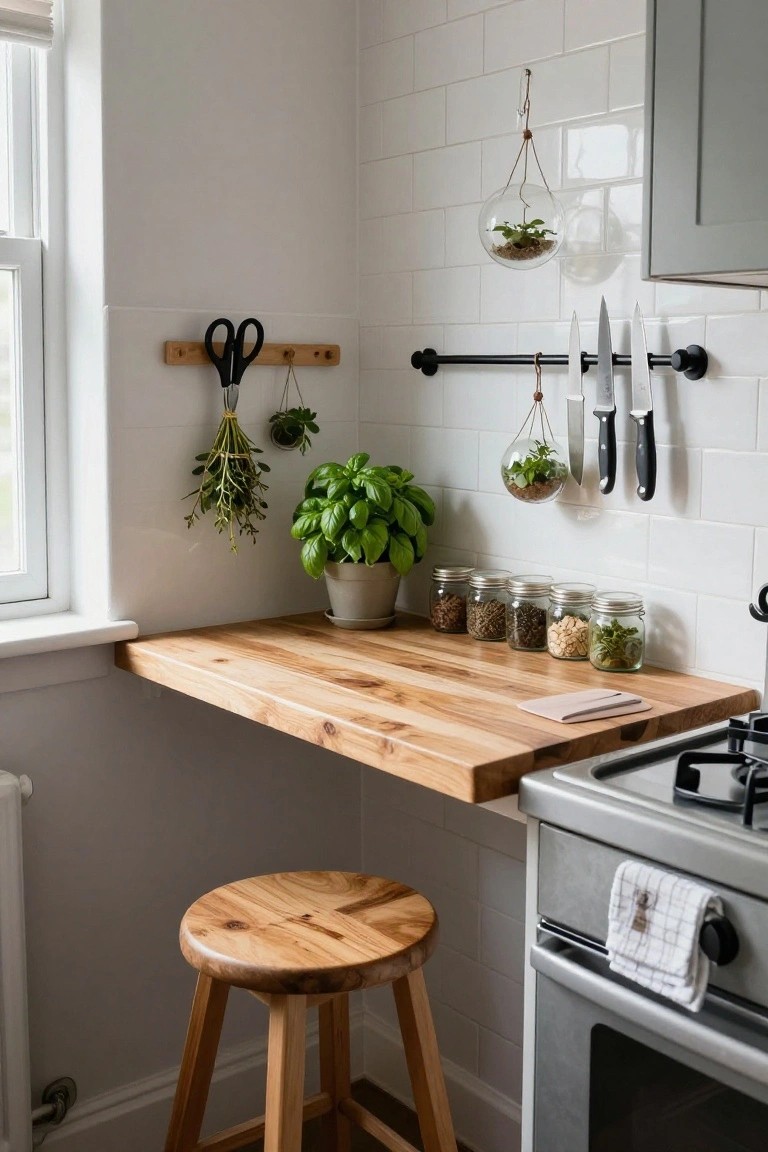
A floating desk in the corner gives you a solid work surface without taking up floor space with legs or bulky bases. In a kitchen it works especially well because you can stand or pull up a simple stool when needed and still have room to move around the rest of the room.
This setup suits small kitchens or homes that already feel crowded with cabinets. Mount it at a comfortable height next to the stove or prep area and keep the wall above clear for hooks or a narrow rail. Just make sure the brackets are strong enough to hold whatever weight you plan to put on it.
A Floating Desk In The Corner
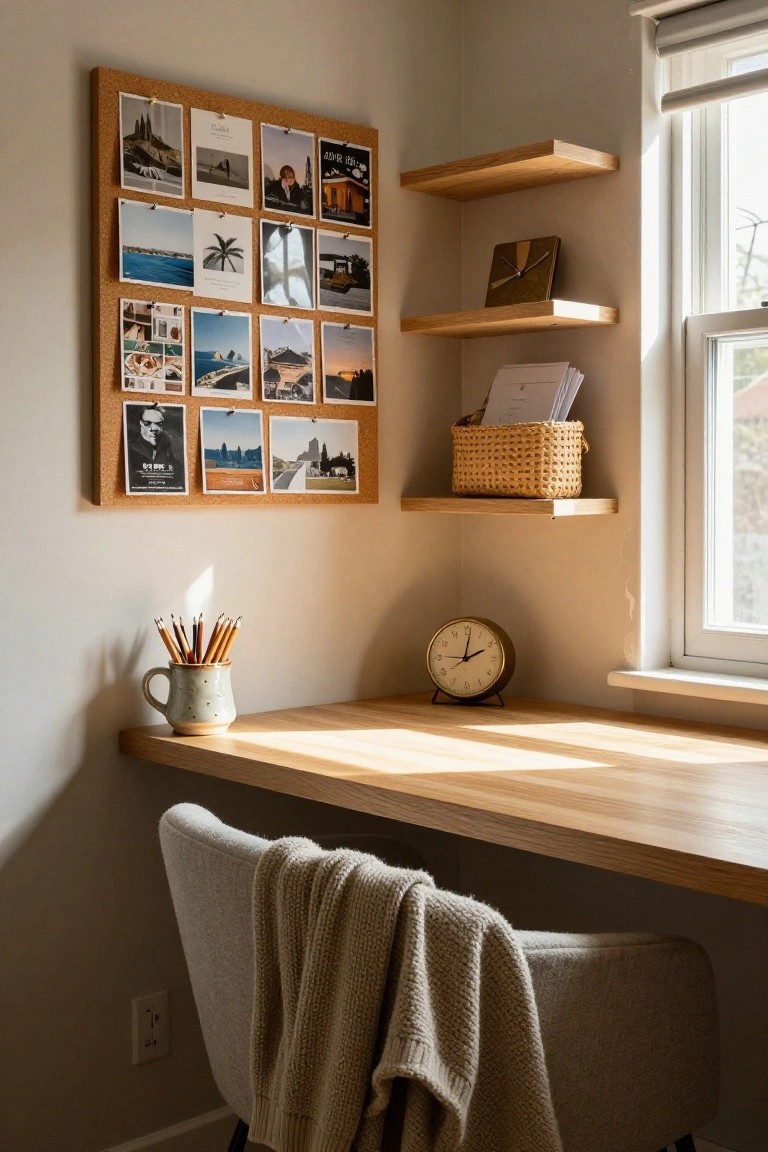
A floating desk mounted in the corner is one of the easiest ways to keep a small room from feeling crowded. It leaves the floor open underneath, so the space still feels light even when you add a chair and a few daily items. Pairing it with a couple of shallow shelves above gives you storage without adding bulk.
This setup works best in bedrooms or guest rooms that double as offices. Keep the desk surface fairly clear and use the wall above for a board or narrow shelves. Avoid loading it with too many accessories if you want the open look to last.
Floating Shelves Above A Corner Desk
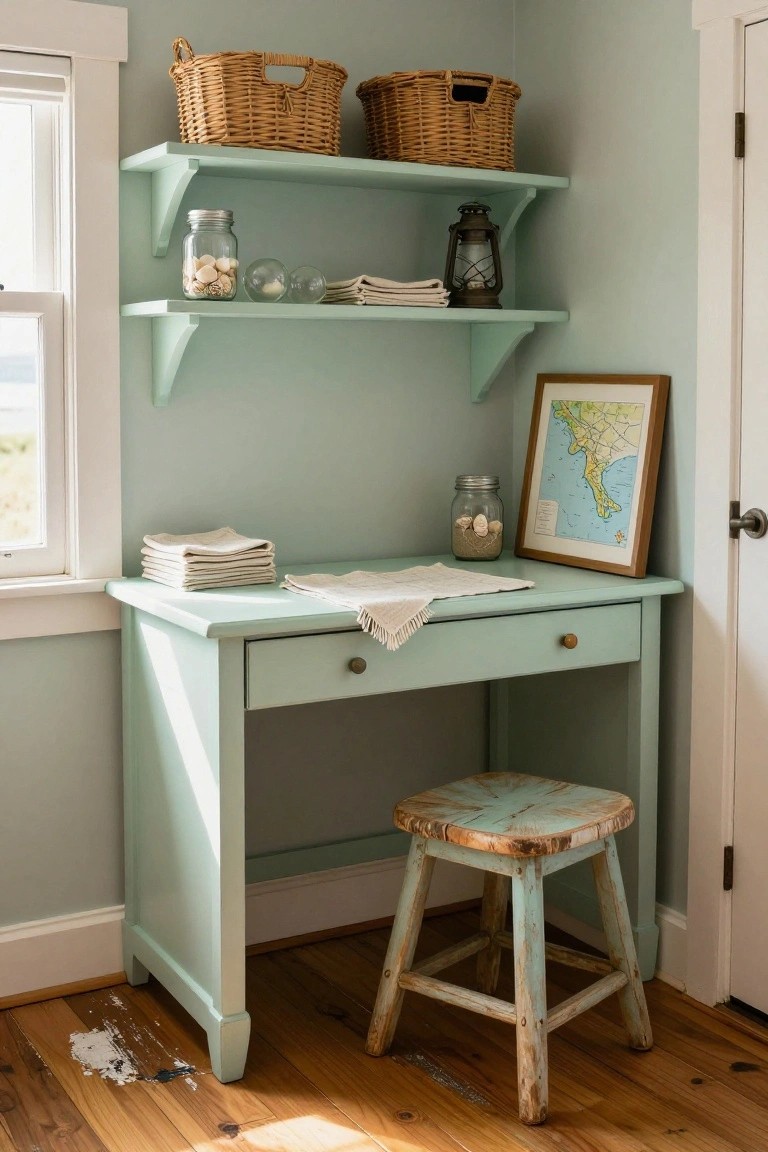
One easy way to keep a corner desk from feeling bulky is to use floating shelves instead of closed cabinets. The open shelves hold a few baskets and small items while letting the wall and light show through, so the whole spot stays airy even in a small room.
This setup works best in spaces that double as something else, like a guest room or hallway nook. Stick to the same soft color on the desk, shelves, and walls so the area feels calm and simple rather than crowded.
Corner Desk With a Tuck-Under Stool
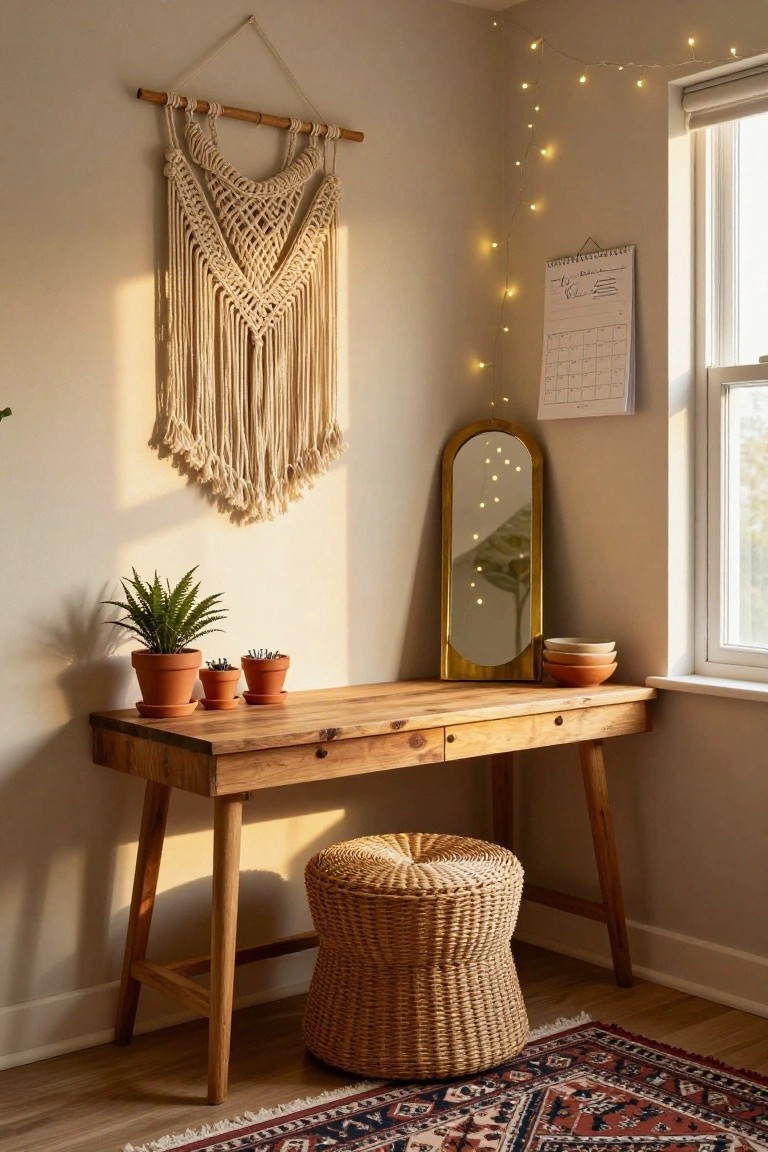
A corner desk paired with a low stool that slides underneath is a simple way to keep the floor clear. This setup avoids the bulky look of a regular chair and leaves more open space around the desk, which helps the room feel larger even when the desk itself takes up the corner.
It works especially well in smaller bedrooms or apartments where every bit of floor space counts. Look for a stool that fits the height of your desk and choose one made from natural materials if you want it to blend in with wood tones and soft textures.
Low Corner Desks With An Open Shelf
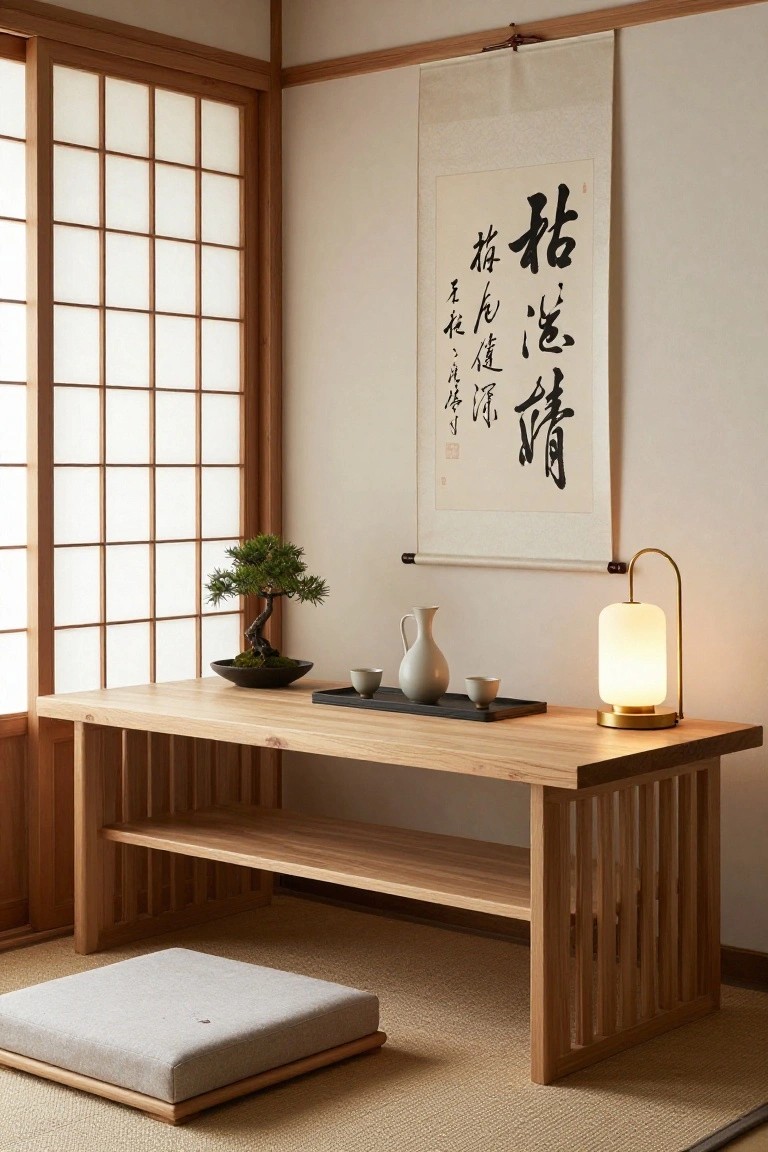
A low desk tucked into the corner works well when you want the room to stay open and easy to move through. The space underneath keeps the piece from feeling heavy, so the whole area still feels light even with a full workspace in place.
This setup suits smaller rooms or homes that lean minimalist. Keep accessories few and choose natural wood tones so the desk blends in rather than taking over the corner.
Add A Corner Counter For Extra Workspace
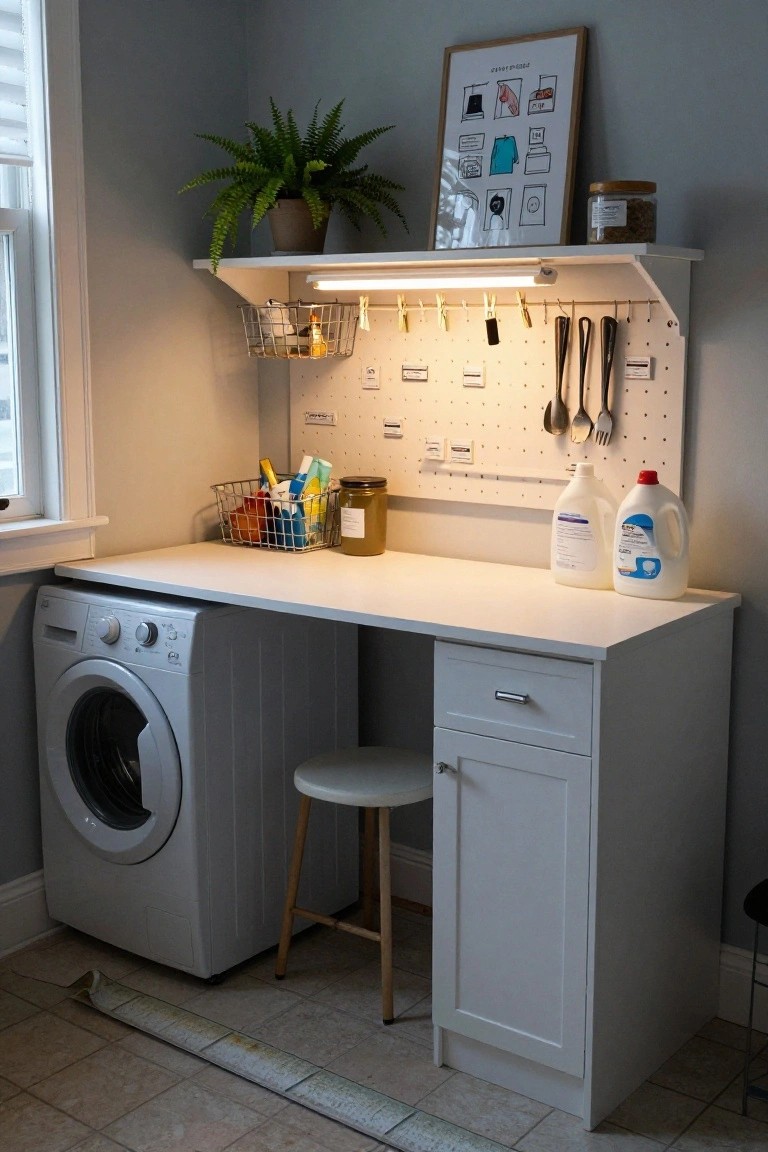
A floating counter that runs along the wall and over the washer gives you a steady place to fold clothes or sort mail without crowding the floor. It leaves the room feeling bigger because the surface is supported from the side or back rather than sitting on bulky legs.
This setup works well in small laundry rooms or utility corners where you need a work surface but do not want another piece of furniture. Keep the area under the counter mostly open so you can tuck a stool away when it is not in use, and add simple wall storage above to hold supplies without blocking light.
Corner Desks With Overhead Storage
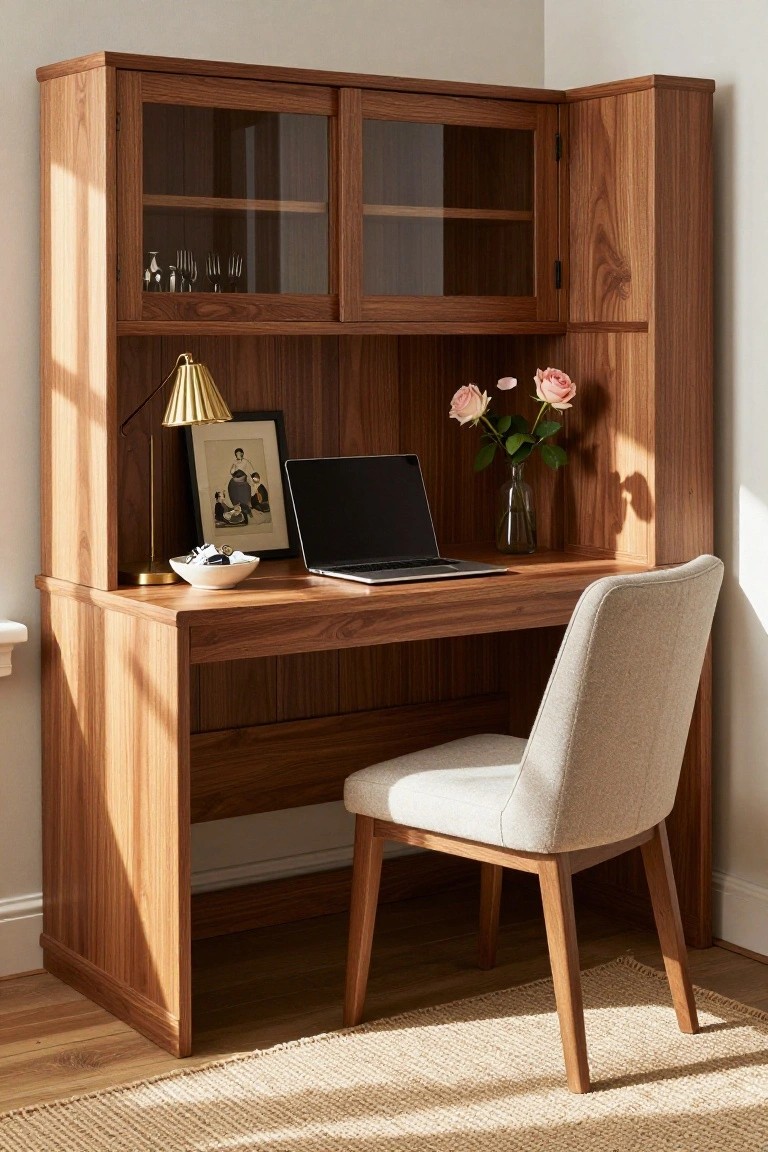
A corner desk works best when it does not eat up all the floor space. Adding cabinets or a hutch above the desk gives you a place to store books, papers, and supplies without needing extra furniture along the walls. The lower area stays open, so the room still feels airy and easy to move through.
This setup suits small offices, guest rooms that double as work areas, or any spot where you want the desk to feel like part of the room rather than the main feature. Keep the cabinet doors simple and the desk surface mostly clear so the corner does not look heavy.
Floating Glass Tops For Corner Desks
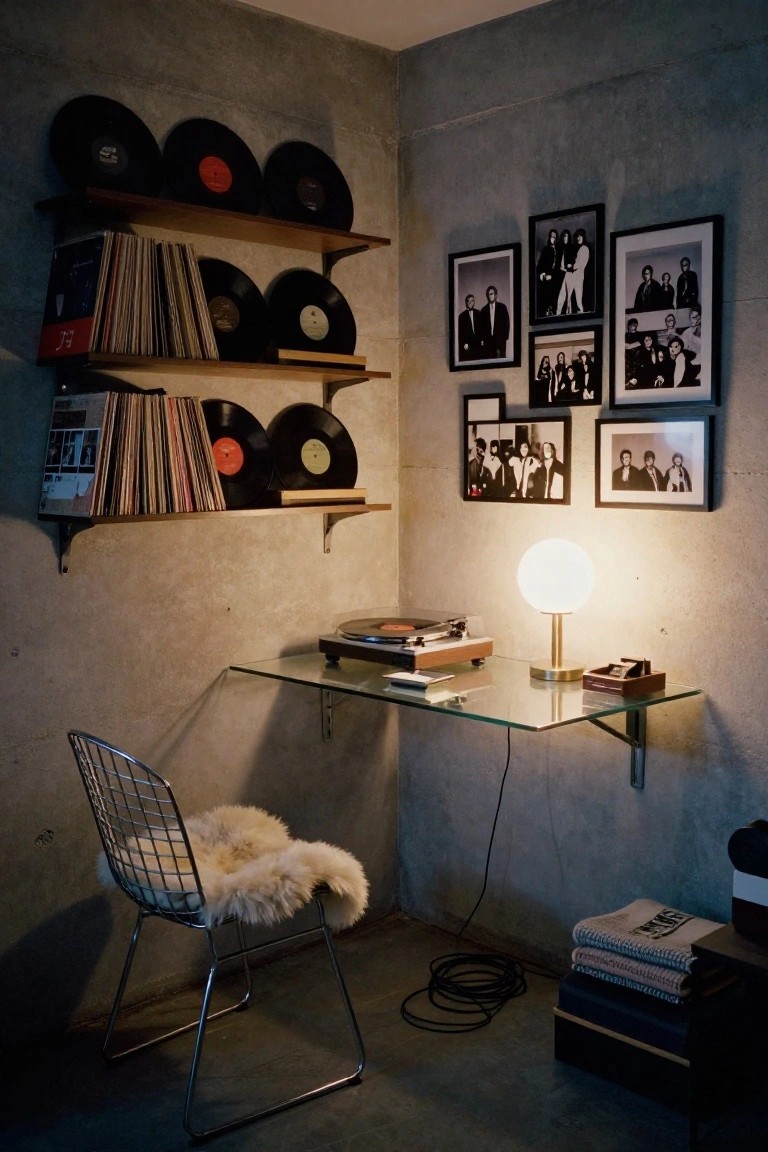
A glass floating desk keeps a corner from feeling boxed in. The see-through surface lets the floor and walls show through, so the whole spot stays lighter even when you add a lamp or a few records nearby. It works especially well in smaller rooms where a solid desk would start to crowd the space.
This style suits apartments or any room that needs to double as a workspace without looking busy. Mount it at a comfortable height, keep the brackets slim, and leave the area underneath open so the room still feels airy.
Corner Desk With Open Storage Below
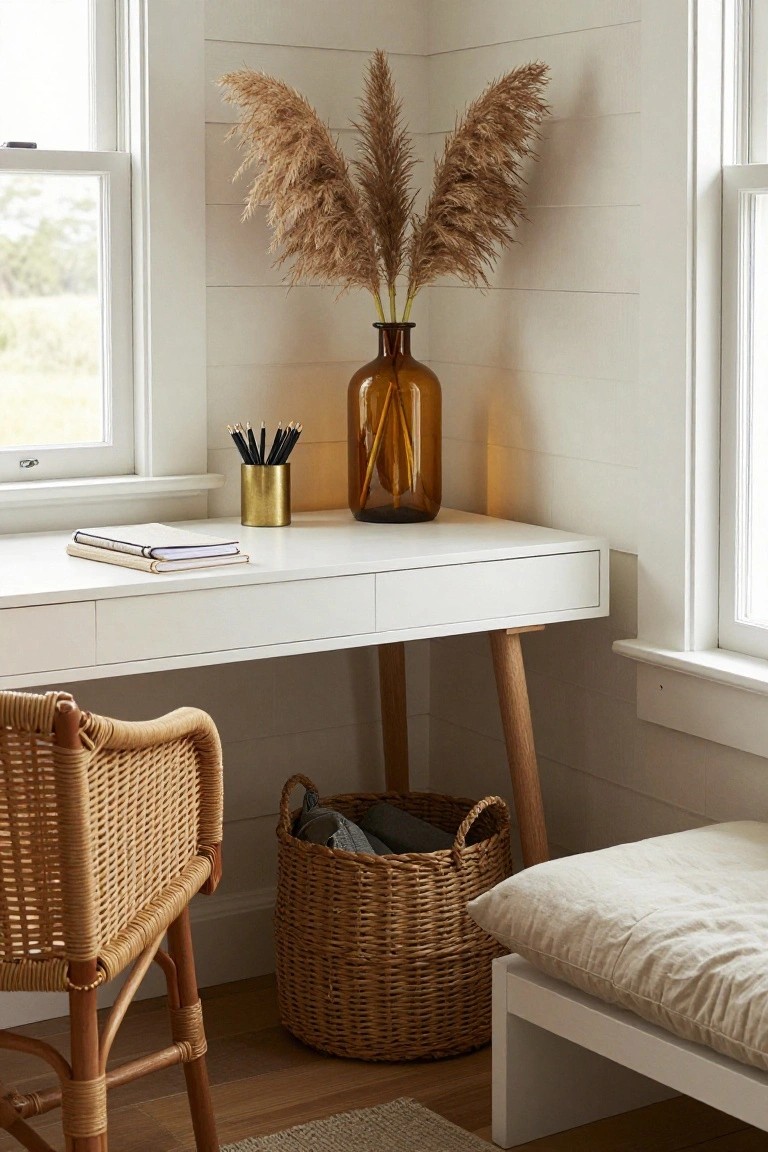
A simple desk tucked into the corner works well when you leave the space underneath clear. This keeps the room from feeling crowded and lets you add a basket or bin for things you want out of sight but still close at hand. The light wood legs help too, since they do not block the view across the floor the way a solid base would.
This setup suits a small bedroom or a quiet spot in a larger room where you need a place to work without taking over the whole space. Just watch the size of the basket so it fits neatly and does not stick out too far.
Floating Shelves Around A Corner Desk
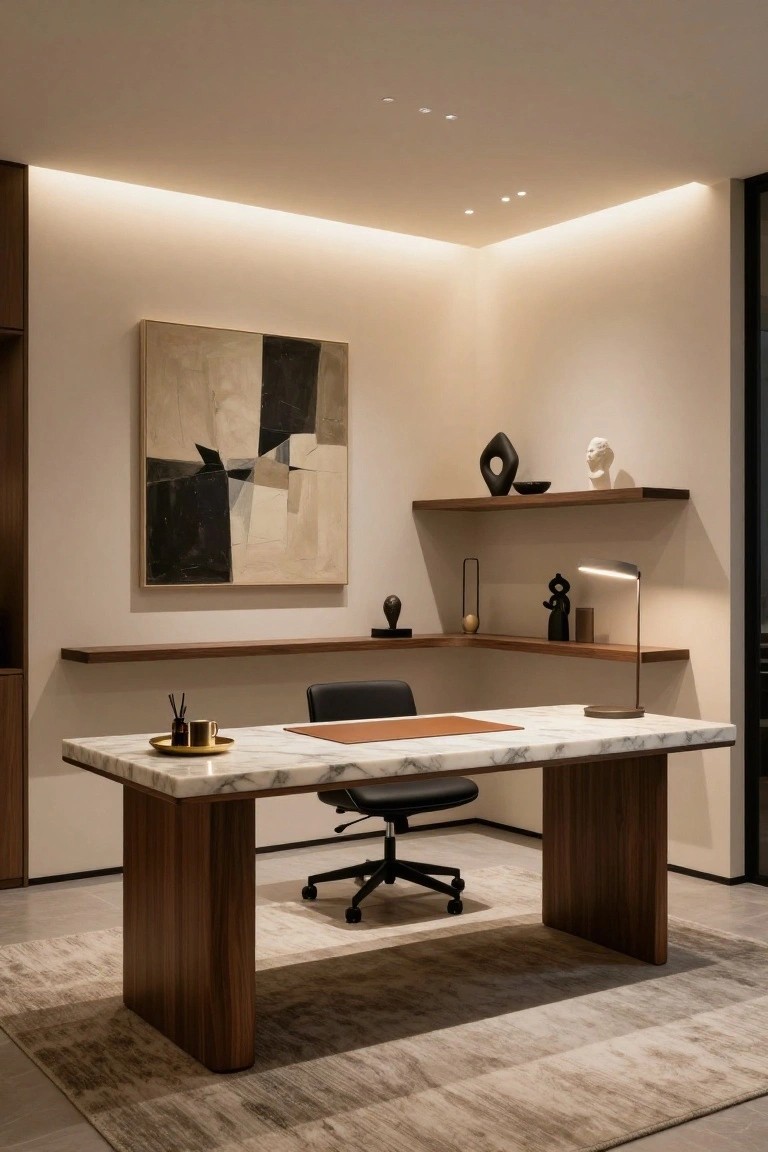
A floating corner desk already helps a room feel less crowded. Adding matching floating shelves above it takes that idea further and gives you storage without the visual weight of cabinets or bookcases.
This setup works especially well in smaller home offices or multi-use rooms where you want the desk to stay the main focus. Keep the shelves fairly shallow and limit what you put on them so the wall space still feels open.
Floating Corner Desk For A Light Workspace
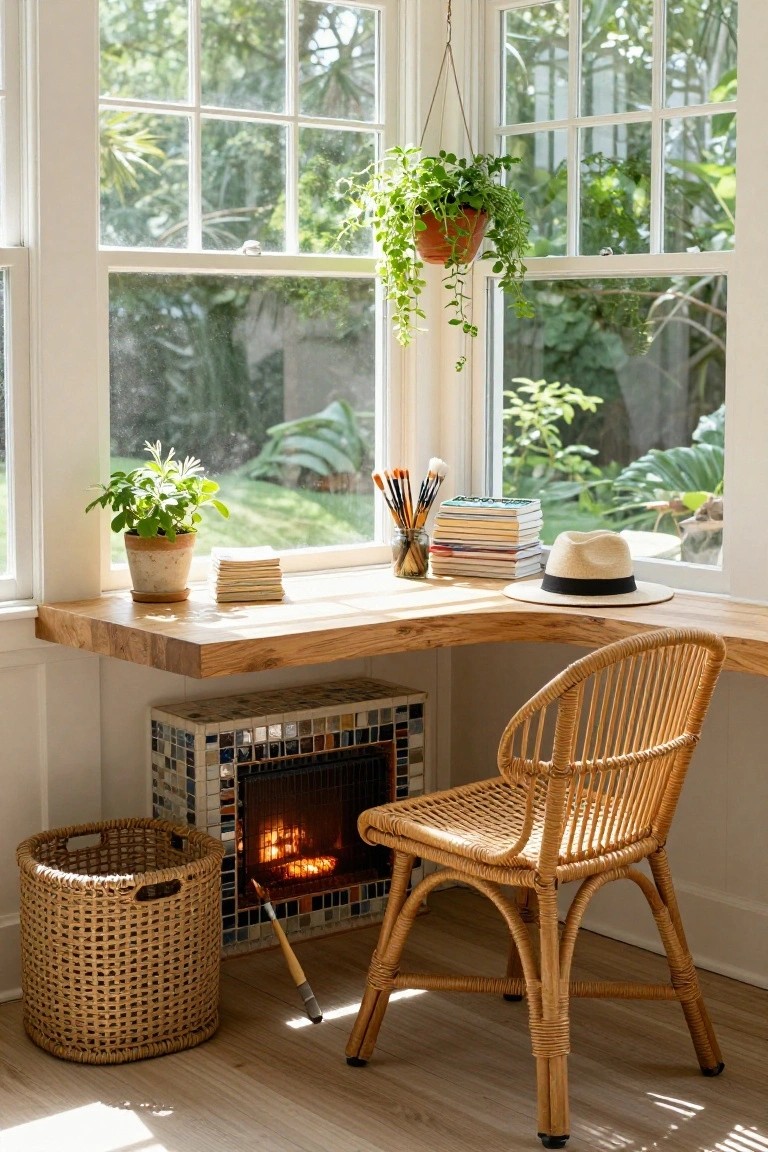
A floating desk in the corner works well because it leaves the floor open and lets the room feel bigger than it is. The wood top sits right at window height so natural light spreads across the surface without any bulky legs or cabinets getting in the way.
This setup suits smaller rooms or homes that already have good natural light. Keep the area under the desk clear and add just a simple chair so the corner stays practical without crowding the space.
Frequently Asked Questions
Q: How can I check if my wall can hold a floating desk?
A: Tap along the corner to find the studs behind the drywall. Mount brackets right into those spots for the best hold. Always test with your full setup before daily use.
Q: What size works best in a really tight corner?
A: Measure twice and choose a compact triangle shape that fits the angle. A depth around sixteen inches leaves walking room. (go lighter on the finish to keep things bright)
Q: Can I still use my favorite chair with this desk style?
A: Yes pick an armless one that slides right underneath. This keeps the open look you want from the floating design.
