

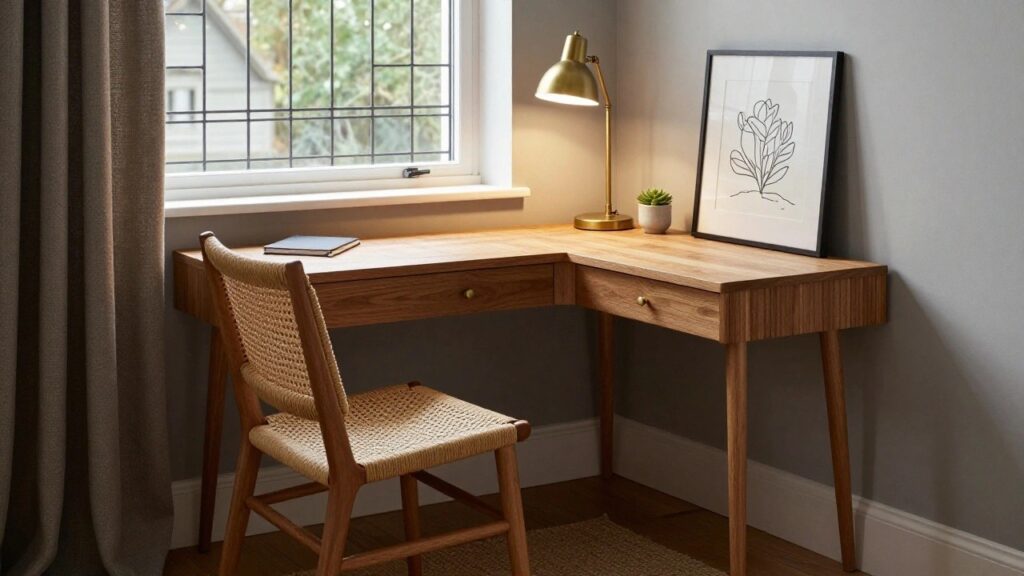
I set up my first corner workspace years ago and quickly learned that the desk itself can either anchor a room or turn it into a scattered mess.
A clean minimalist design seems to help by tucking away cables and papers so the eye has fewer places to wander during a long workday.
Fewer surfaces mean fewer distractions in practice.
Over time I have found that the layouts which feel most natural are the ones that match the scale of the actual corner rather than fighting it with extra shelves or bulky legs.
Trying a couple of these approaches in my own home showed me how small changes in placement can keep the rest of the room feeling open and usable.
Position Your Desk By A Window
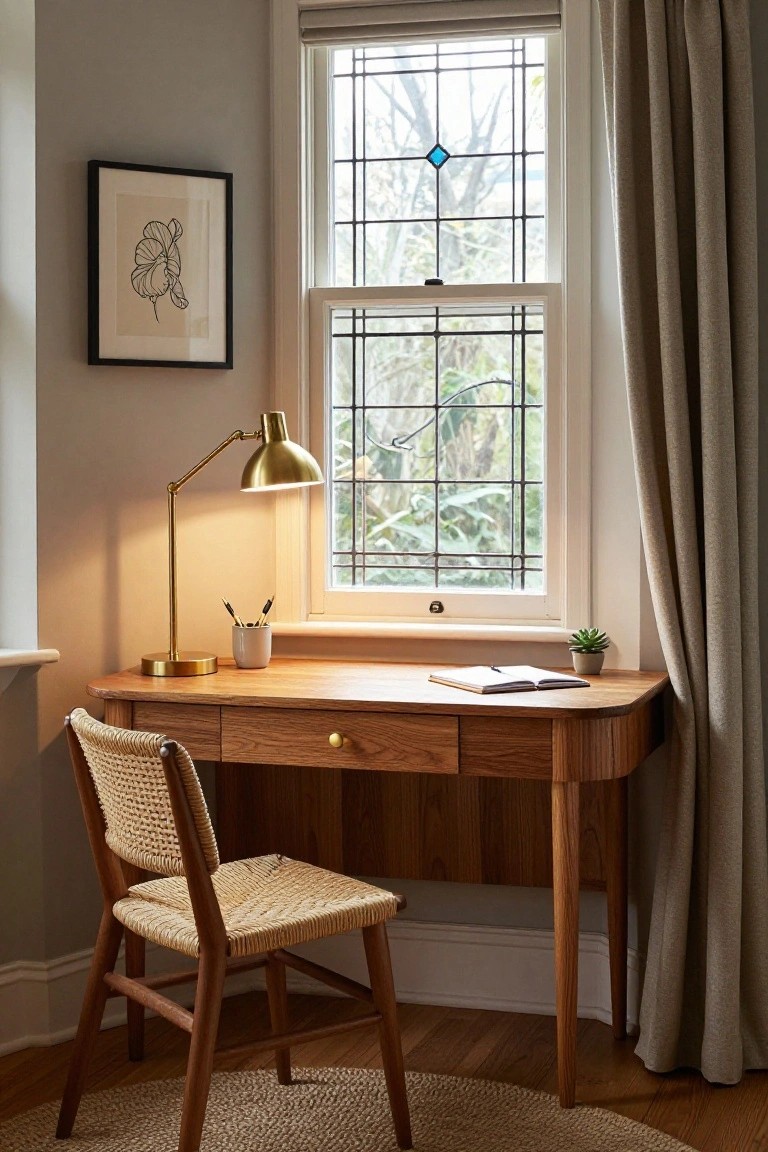
Many people find that working near a window helps them stay focused without feeling closed in. The natural light cuts down on the need for extra lamps during the day and gives the space an open feel.
This setup works well in smaller rooms or corner areas where you want to avoid clutter. Choose a desk with clean lines and keep only a few items on it so the view outside becomes the main feature rather than a busy surface.
Add A Wall Shelf Above The Desk
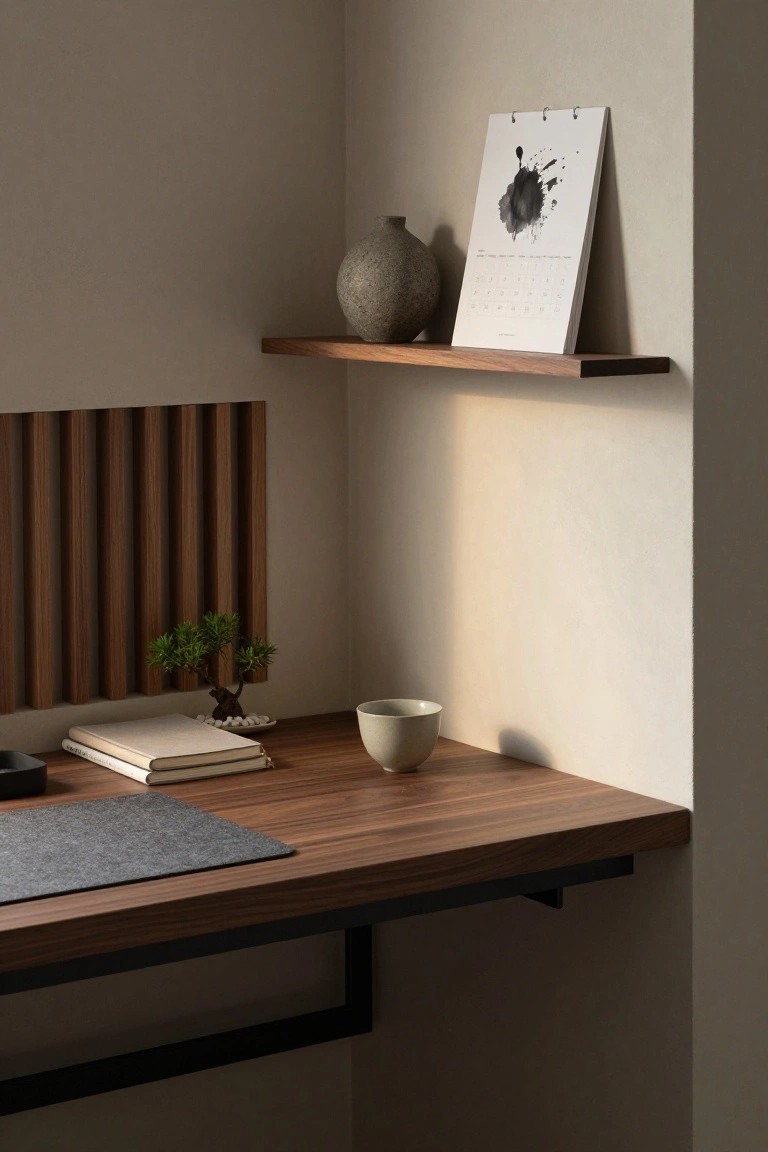
A simple shelf above the desk gives you a place to keep a few things without crowding the work surface. It helps the whole corner feel calmer and makes it easier to stay focused when you sit down.
This works best in small rooms or tight corners where every bit of surface space matters. Keep only a couple of useful items up there, like a calendar or a small vase, and leave the desk itself mostly clear.
Glass Tops Help A Corner Desk Stay Light And Open
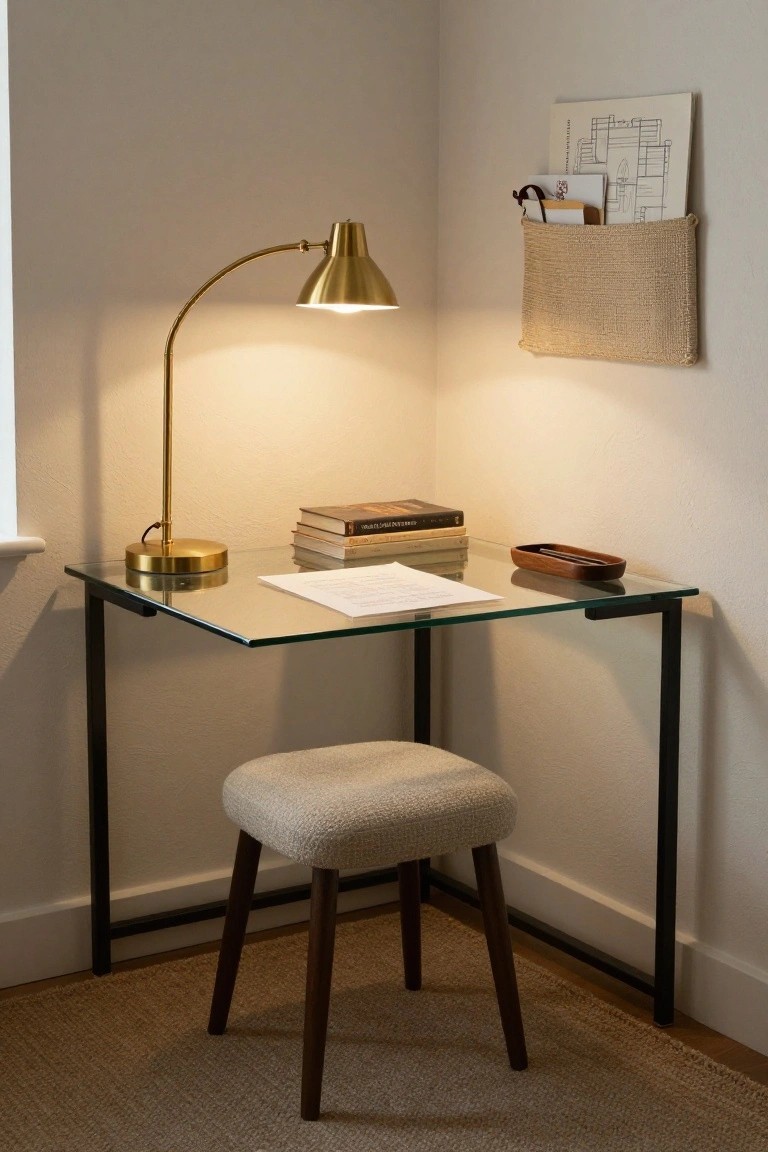
A glass top on a corner desk lets light move through the surface instead of stopping at a solid block. This keeps the whole area from feeling crowded even when the desk sits right up against two walls.
It works best in smaller rooms where you want the space to stay open. Pair it with slim legs and limit what stays on top so the desk blends into the room rather than taking over.
Add A Pegboard Wall Above Your Corner Desk
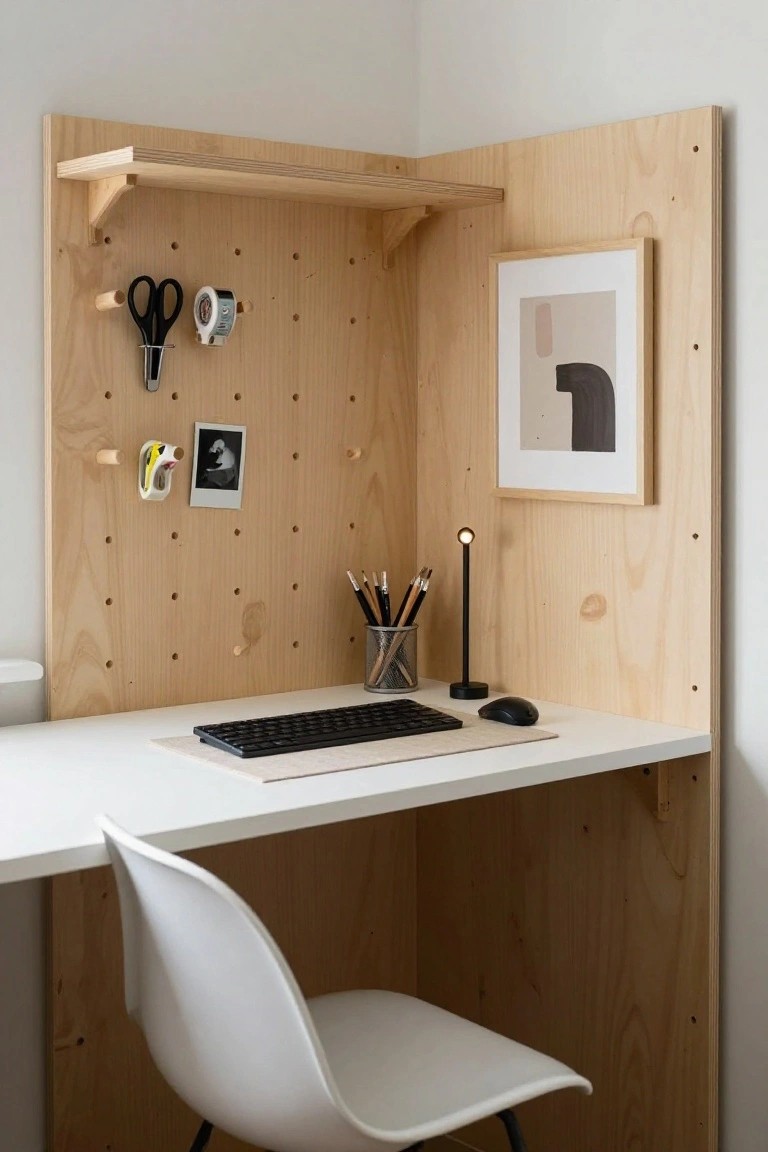
A pegboard wall gives you storage right where you need it without crowding the desk surface. You can hang the things you reach for often and keep the top clear for actual work.
This setup works well in small rooms or tight corners where floor space is limited. Use simple hooks and a couple of small shelves so the board stays useful without turning into another display wall.
Built-In Shelving Helps a Desk Stay Organized
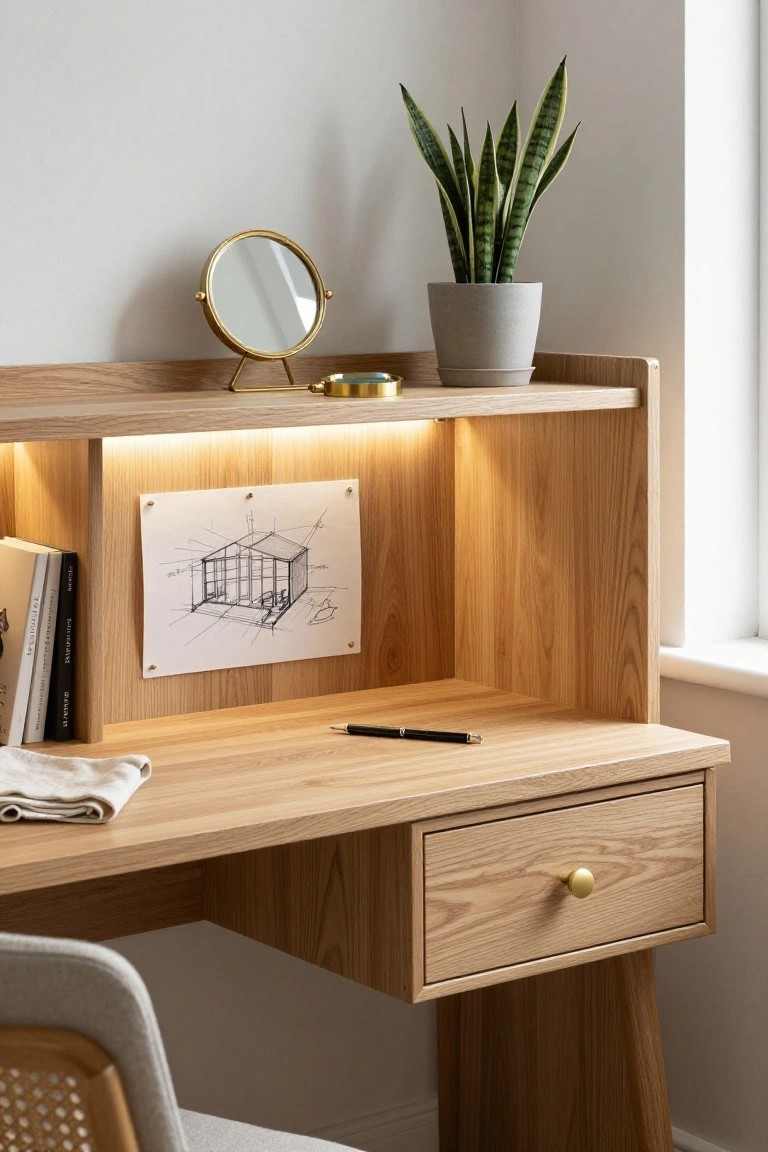
A corner desk with a simple shelf overhead gives you a place to keep a few essentials without crowding the work surface. The open shelf holds just enough for daily use while the drawer below tucks away the rest, so papers and small items stay out of sight yet close at hand.
This setup works best in a small room or shared space where you want the desk to feel calm rather than busy. Choose light wood tones and limit what goes on the shelf to one or two items you actually reach for often.
Use A Corner Nook For A Simple Desk
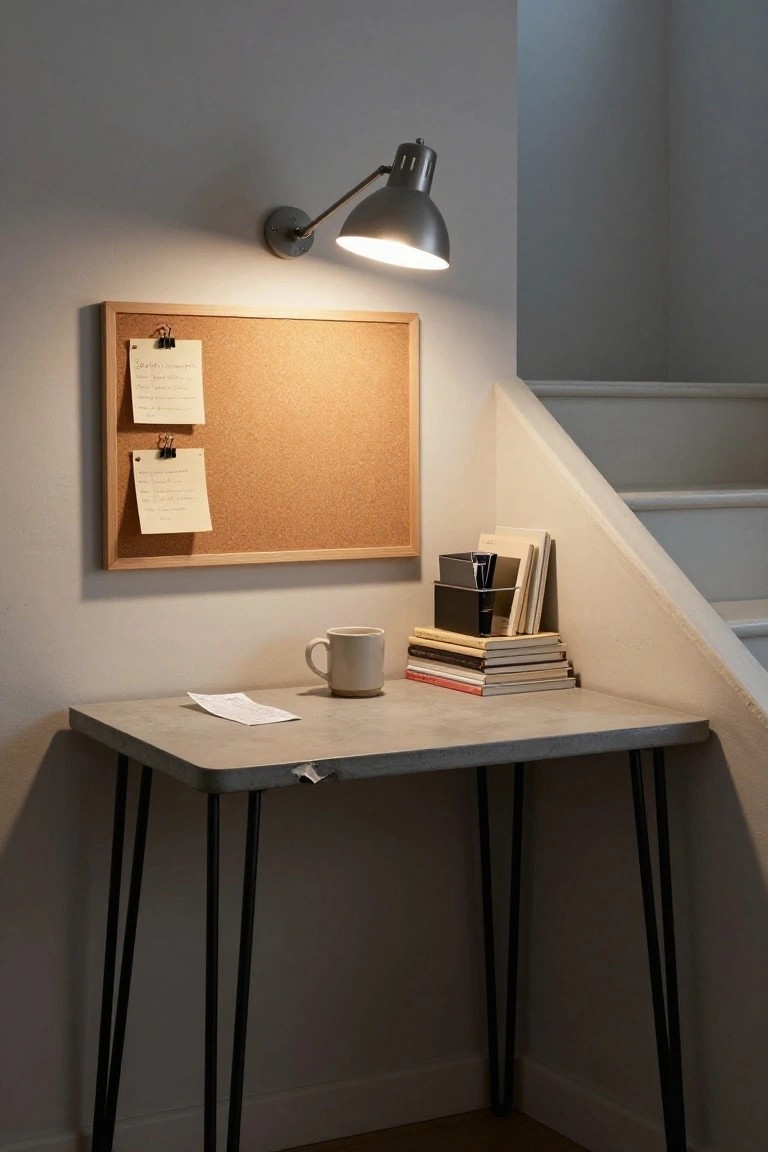
Placing a desk in a tucked corner helps limit distractions by keeping the workspace separate from the main areas of the home. The narrow setup shown here fits neatly under the stairs and stays useful without taking over the room.
This works well in smaller homes or apartments where every bit of space counts. Stick to a basic surface, one good light, and very few items on top so the area stays calm and ready for work.
Corner Desks That Use Window Light
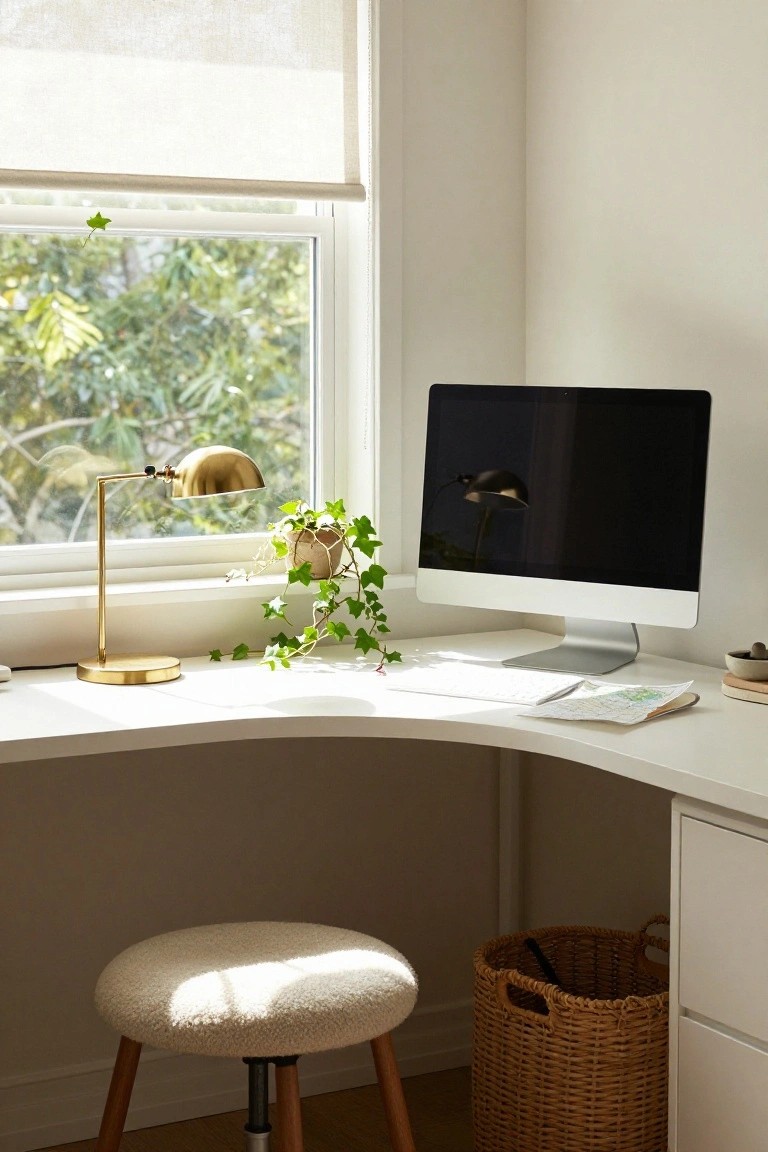
Many people set a desk right under a window in a corner because the natural light keeps the space open and calm. It cuts down on the need for extra lamps during the day and helps the surface stay uncluttered.
This layout works well in smaller rooms or apartments where you want to keep things simple. Leave most of the desk clear and pick a low stool that slides underneath when not in use.
Dark Walls Frame a Simple Desk
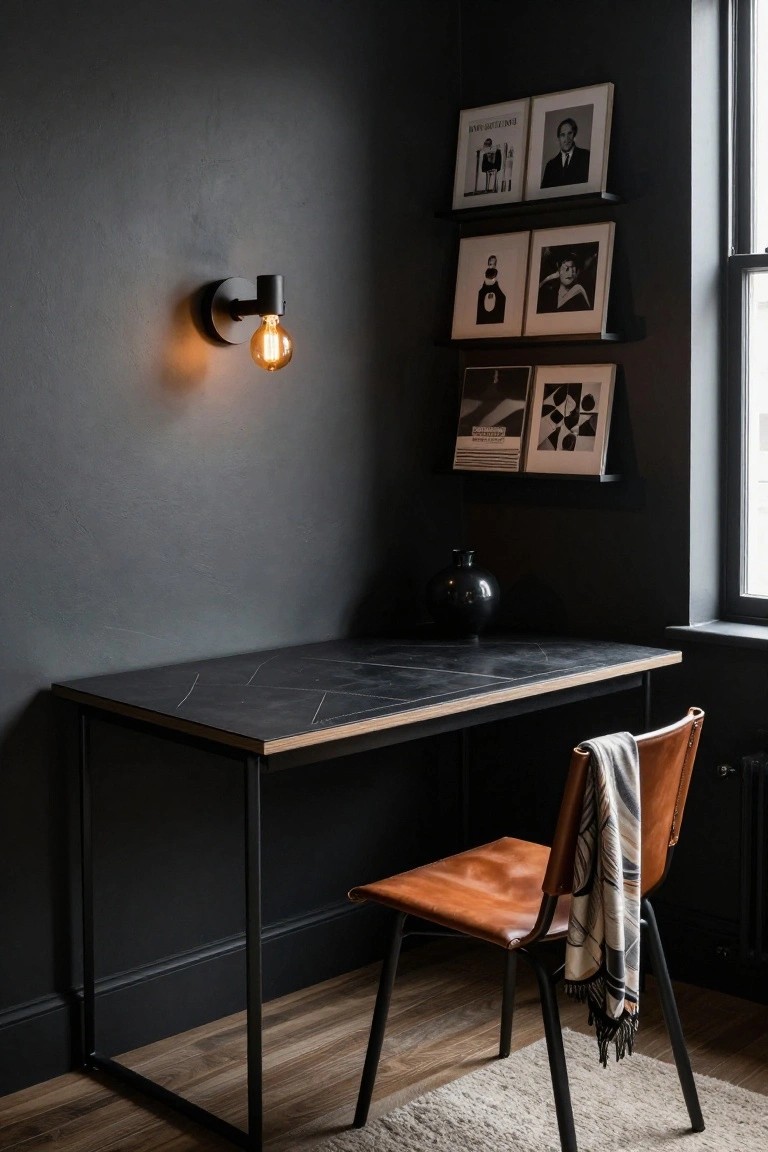
A dark wall color is one of the easiest ways to make a corner desk feel more contained and less busy. It pulls attention inward and keeps extra visual noise from creeping in from the rest of the room. The setup stays calm because the background does not compete with what is on the desk.
This approach works best in smaller rooms or spaces that get decent natural light from a nearby window. Stick with a plain desk, one task light, and very little else on the wall so the dark tone does the quiet work without extra effort.
A Corner Desk With a Tucked Stool
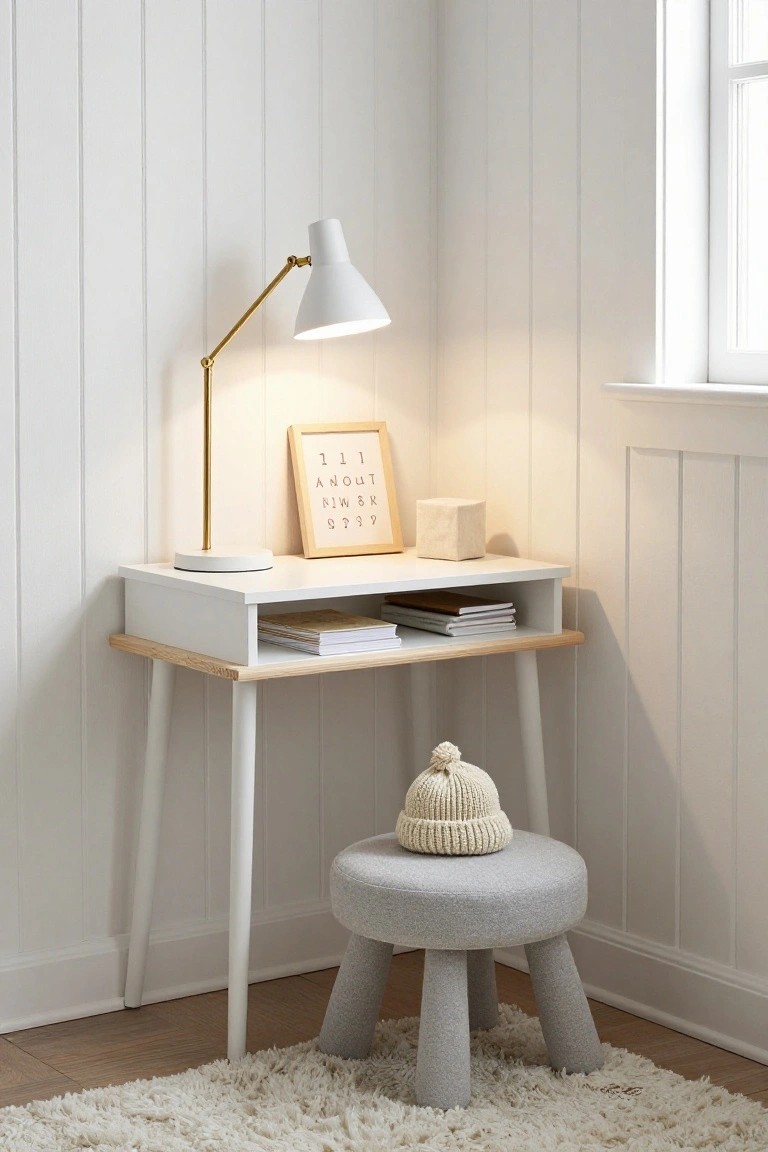
A small corner desk stays calmer when the seating tucks out of sight. A low stool that slides underneath keeps the floor open and removes one more visual item that can pull attention away from the work surface.
This works well in a bedroom or narrow office where space is tight. Pick a stool in a soft neutral tone so it fades into the room rather than standing out.
Add A Floating Shelf Above The Desk
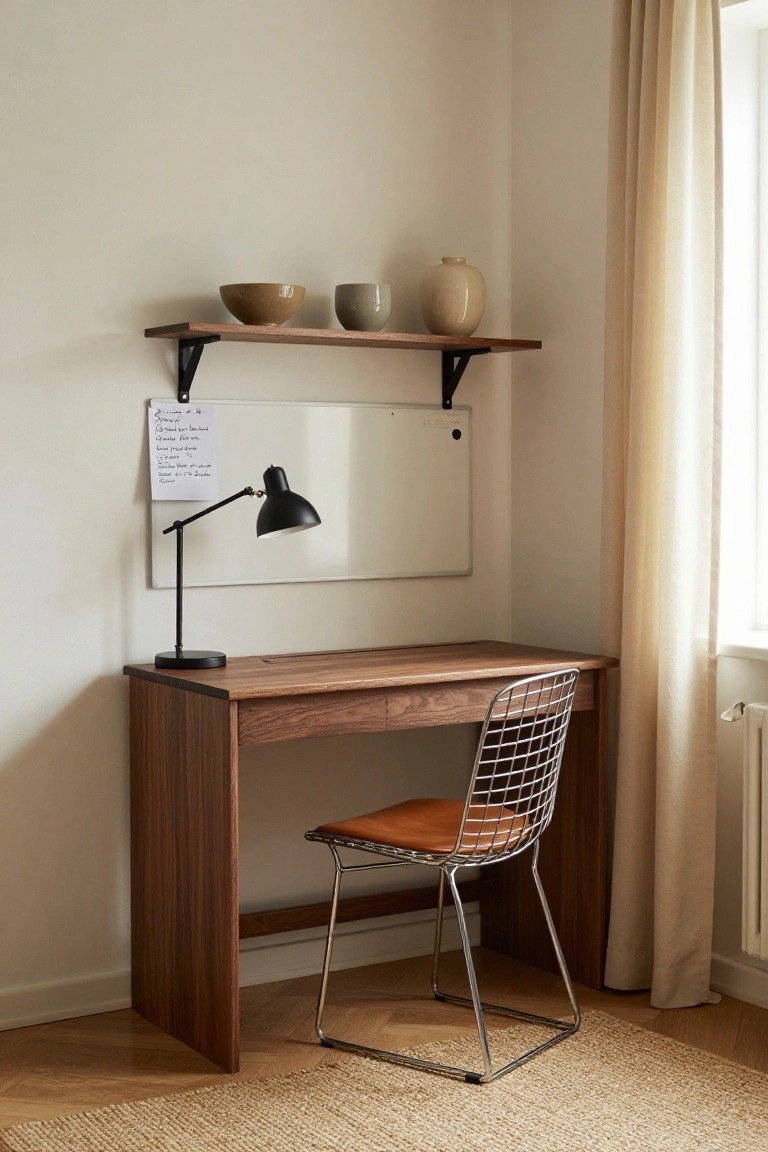
A floating shelf above the desk gives you a bit of storage without crowding the surface below. It keeps everyday items within reach while leaving the actual workspace clear, which makes it easier to focus on what you are doing.
This setup works best in smaller rooms or corners where floor space is tight. Keep only a few items on the shelf and choose a simple style so the whole area stays calm rather than busy.
Floating Corner Desks With Soft Lighting
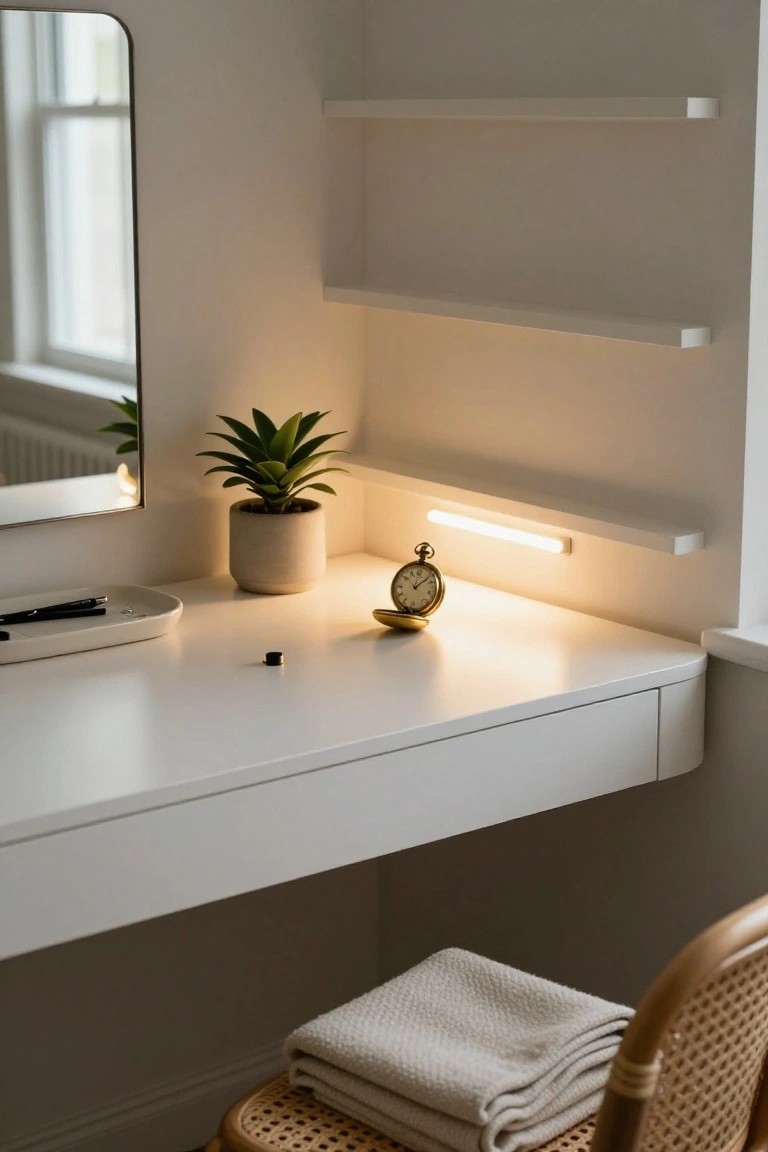
A floating desk that sits right in the corner can make a workspace feel much calmer. Without legs or bulky supports underneath, the floor stays clear and the room does not get crowded with furniture.
The light tucked under the shelf above the desk gives just enough glow for reading or writing without adding another lamp to the surface. This kind of setup works well in a bedroom or a small spare room where you want a place to focus but still need the space to feel open and simple.
Keep The Desk Clear With An Overhead Board
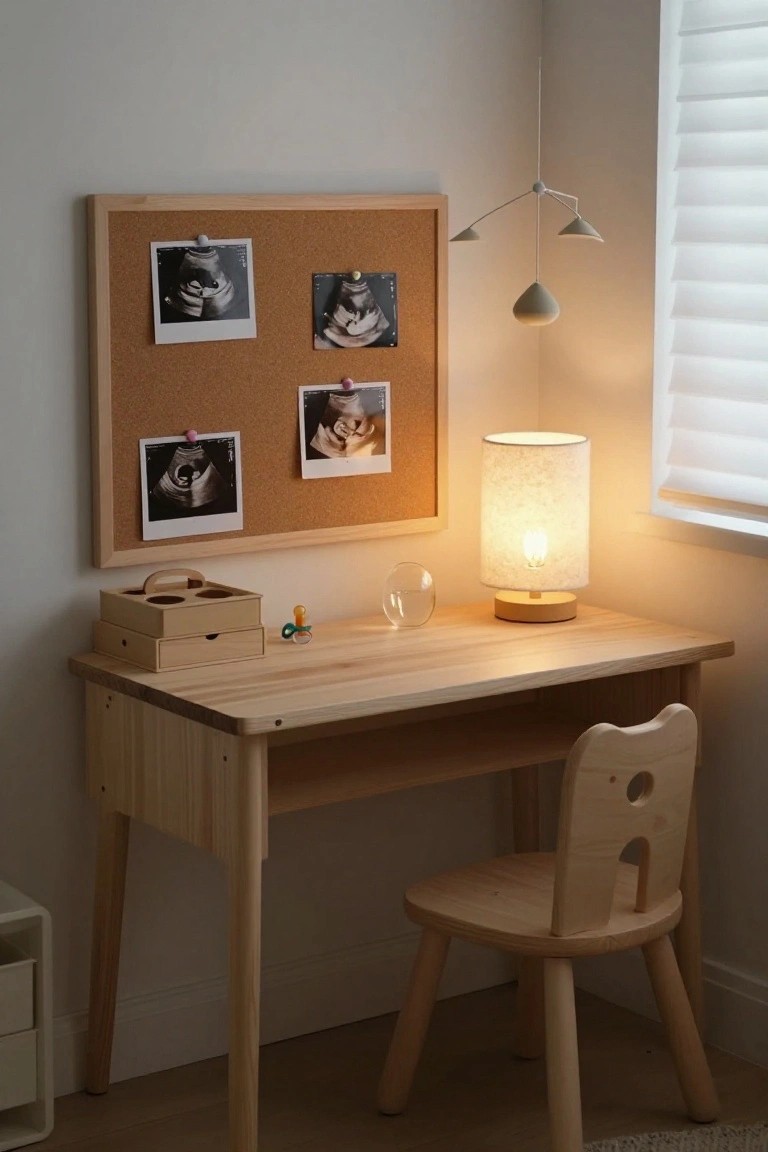
A corner desk works best when the surface stays mostly empty. Placing a simple board on the wall above it gives you a spot for photos, notes, or small reminders without crowding the workspace itself. This keeps the focus on the task at hand instead of scattered objects.
The setup suits small rooms or quiet corners where you want calm surroundings. Use a lightweight board that matches the desk finish and limit what goes on it. That way the desk remains practical for daily use while the board handles the personal touches.
Add a Compact Corner Desk with Floating Shelves
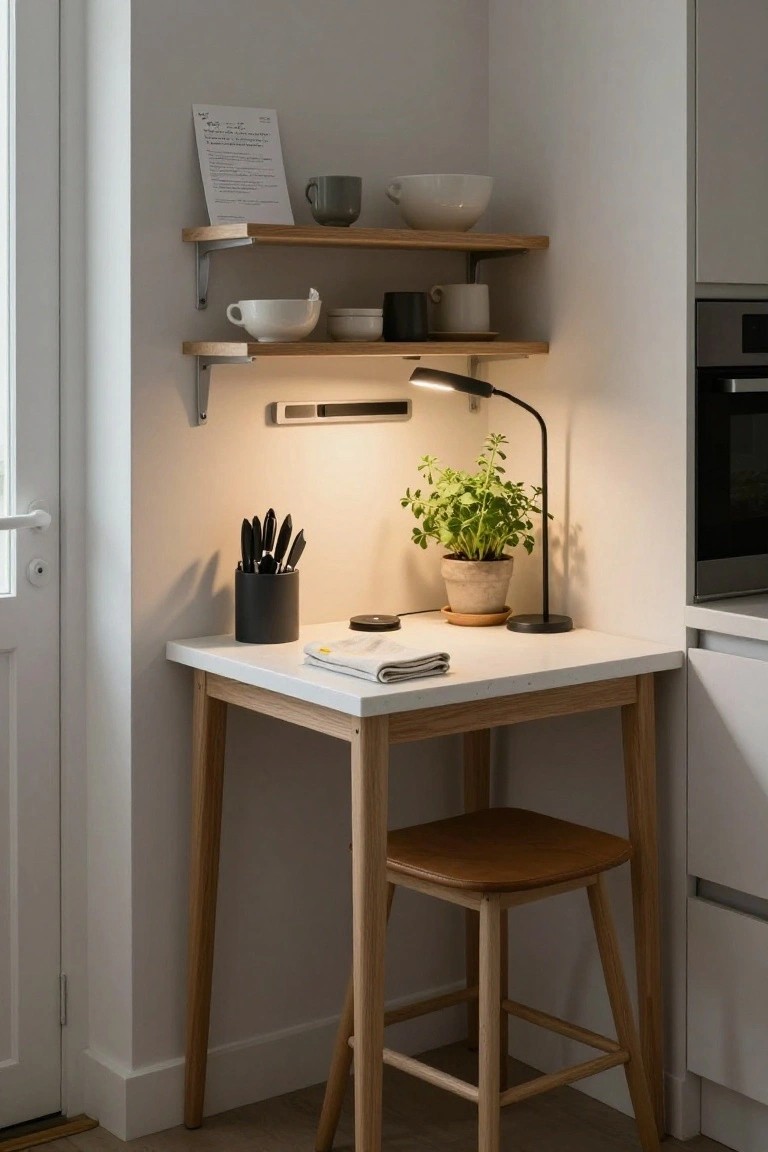
A small corner desk works well when you want a workspace that stays out of the way and keeps clutter from building up. Floating shelves above it give you a place to store a few daily items without crowding the surface or making the spot feel busy.
This setup suits kitchens, hallways, or small apartments where a full desk would take up too much room. Keep only the things you use often on the shelves and leave the desk mostly clear so it stays easy to sit down at and focus.
Floating A Desk Into The Corner
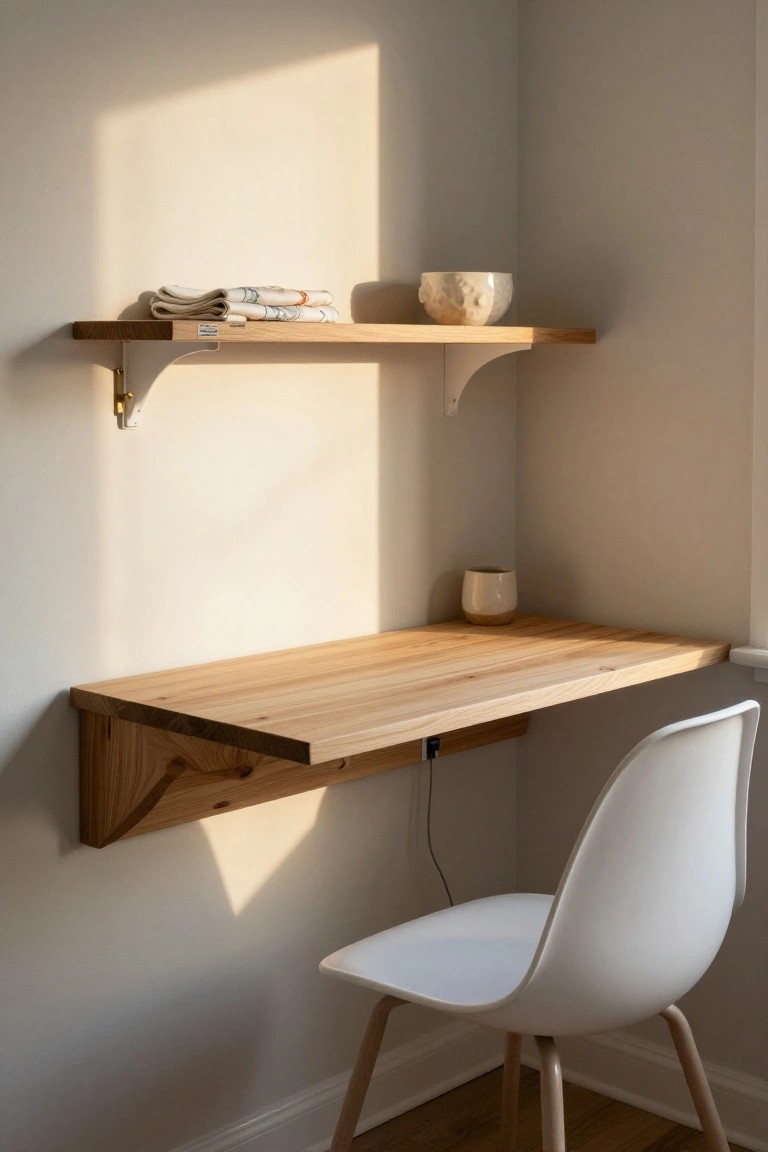
A floating desk mounted right in the corner gives you a work spot without taking up extra floor space or adding bulk to the room. It stays out of the way visually, which helps keep the focus on the task instead of the furniture around it.
This setup works well in smaller rooms or any home where you want a simple dedicated area for work. Use a matching shelf above for just a couple of items and keep the surface clear. Sturdy brackets and a clean wood tone make the whole thing feel steady and understated.
Corner Desks With Built In Storage
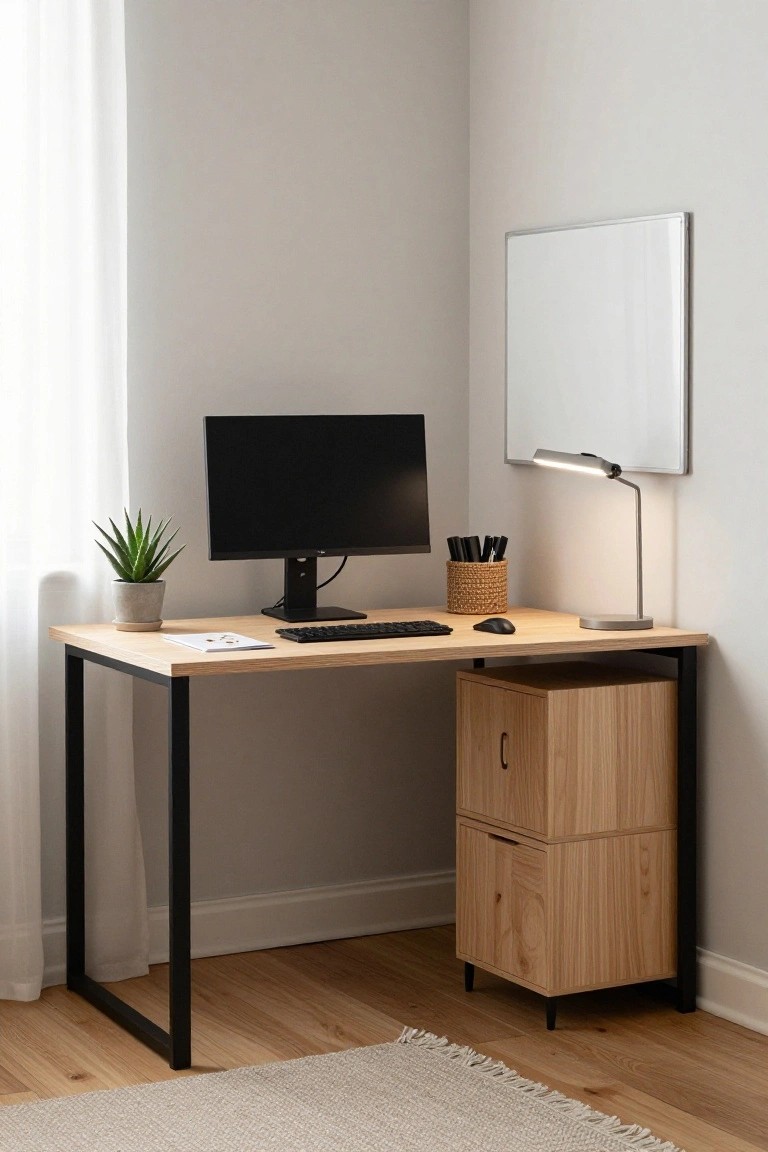
A corner desk works well when it includes some kind of storage right under the work surface. The drawers keep papers and small items out of sight so the top stays clear and the whole setup feels calmer.
This kind of desk fits best in smaller rooms where you want to use every bit of space without crowding the floor. Look for one with a simple frame and drawers that match the desk top so the whole thing stays neat and easy to keep clean.
A Floating Desk Keeps A Corner Workspace Clean
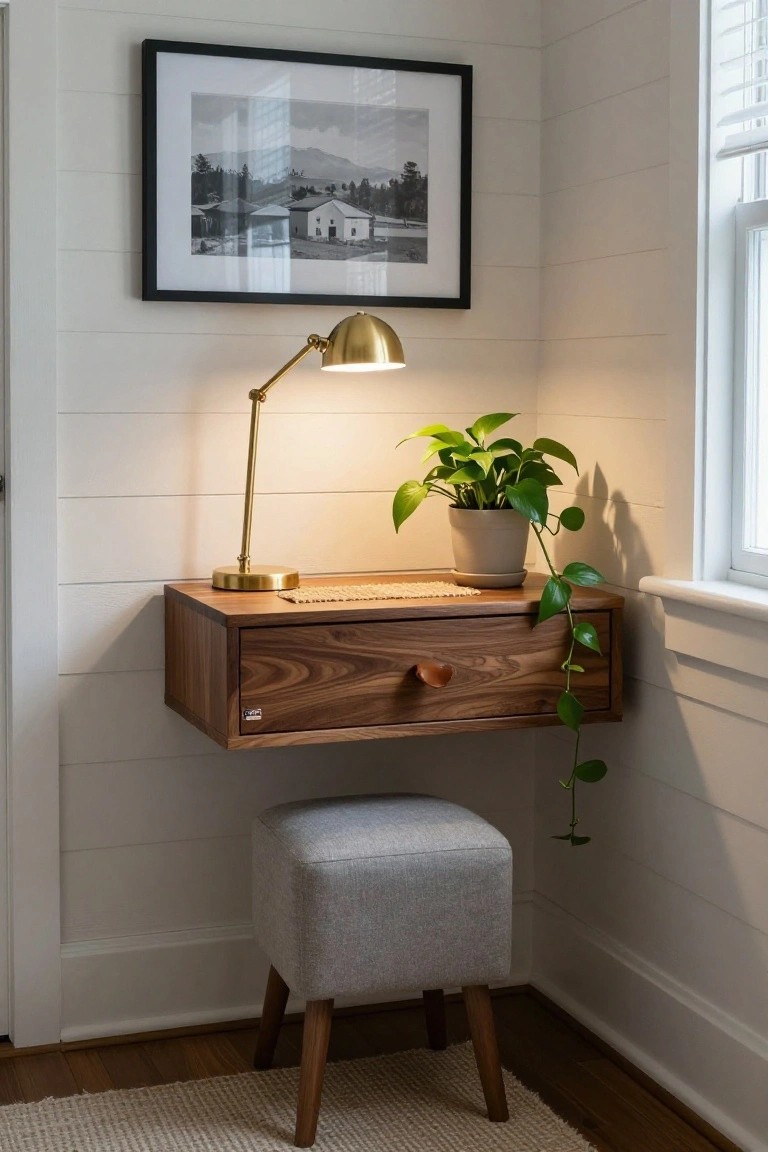
A floating desk mounted in the corner gives you a workspace without adding bulk to the floor. It stays out of the way, which helps the area feel open and calm instead of crowded with legs and frames.
This style works best in smaller rooms or homes where you want a simple spot to focus without a full desk setup. Pair it with a low stool and one or two task pieces so the surface stays clear when you finish for the day.
A Slim Marble Desk by the Window
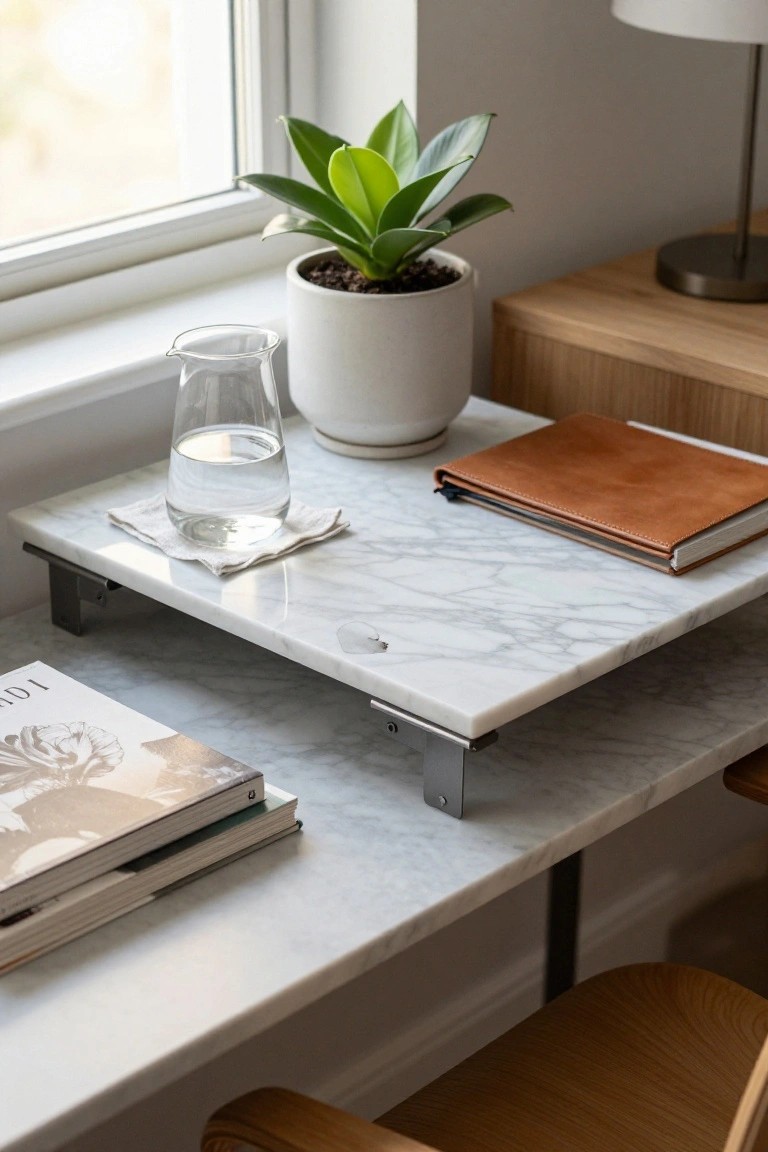
A narrow marble surface keeps the workspace feeling open and calm. It limits how much you can place on top, so the area stays clear of extra papers or gadgets that pull attention away from the task at hand.
This style suits small corners or rooms with limited floor space. Place it near a window for steady natural light, and stick to just a few items like a plant or a single notebook so the surface stays useful without becoming crowded.
Pegboards Keep a Corner Desk Surface Clear
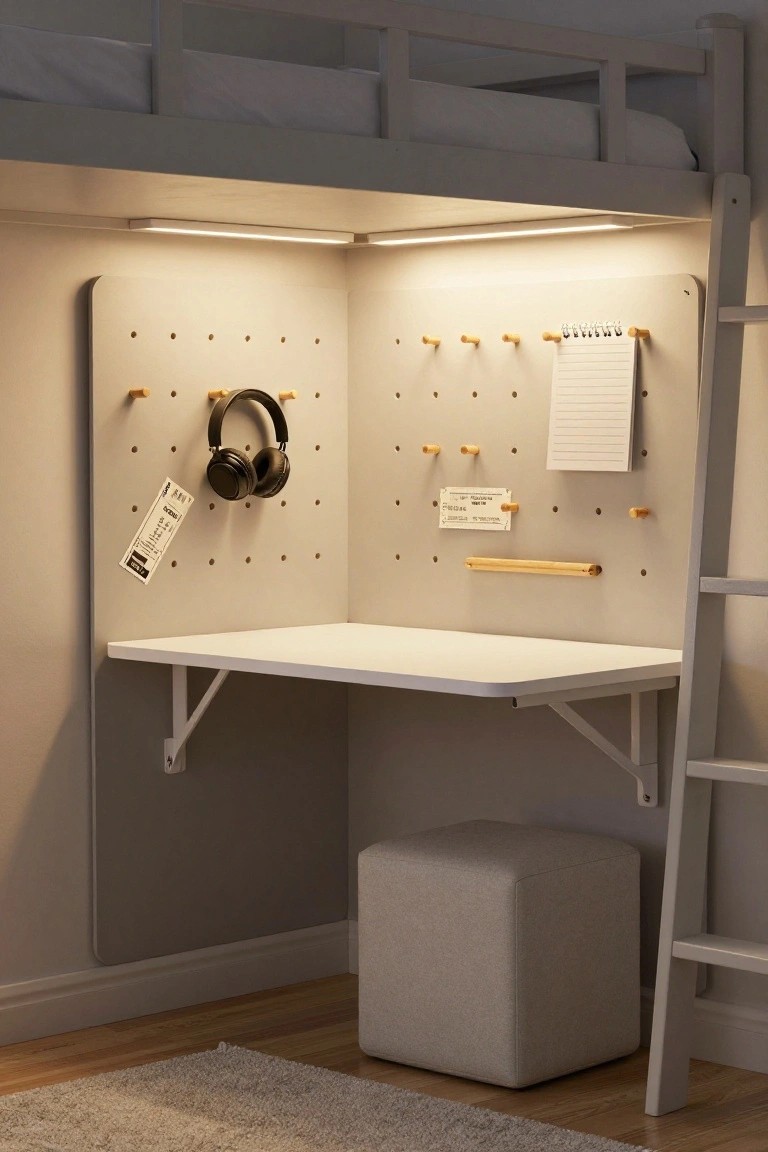
A pegboard wall turns a small corner desk into something much more practical. Instead of letting headphones, notes, and chargers pile up on the desk, you hang them where they stay visible but out of the way. This simple change helps the workspace feel calmer and easier to use every day.
The setup fits best in bedrooms or small apartments where every inch counts. Mount the pegboard at a comfortable height, add a few hooks or shelves, and move things around whenever your routine changes. It stays useful without adding bulk or visual noise.
Round Tables For Quiet Corner Spots
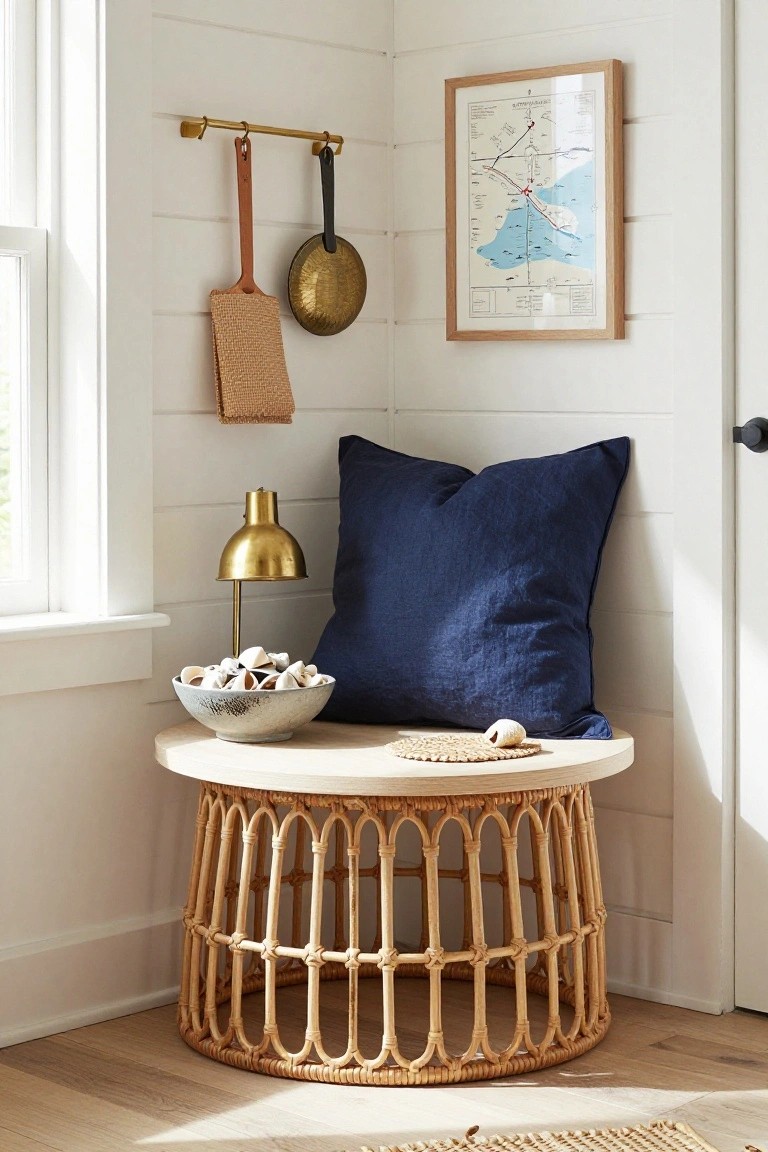
A round table with an open woven base helps a corner stay open and calm instead of boxed in. The shape softens the angle of the walls while the see-through sides keep the space from feeling heavy or crowded.
This works best in smaller homes or rooms where you want a place to sit with a notebook or laptop but do not need a full desk. Keep the surface nearly empty, add one cushion for comfort, and let the natural material do the rest.
Built-In Shelves Keep A Desk Surface Clear
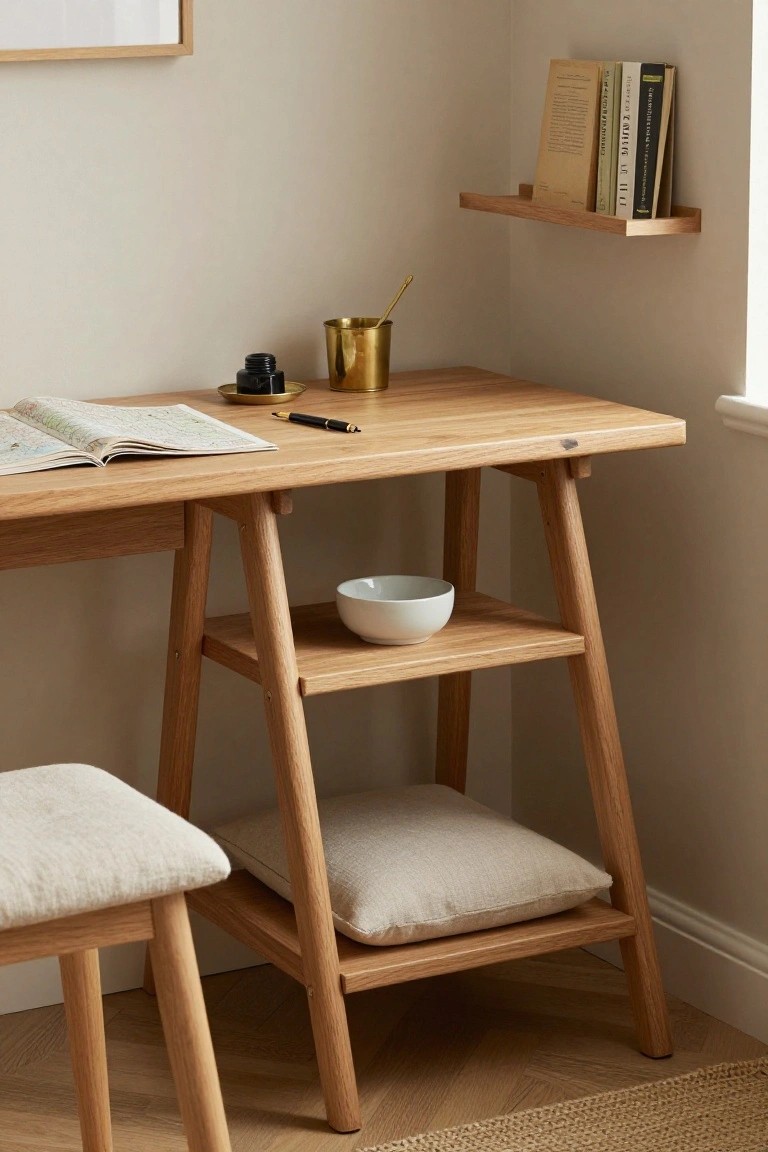
A desk with lower shelves built into the frame gives you spots for the small things that usually end up scattered across the top. Instead of fighting clutter all day, you can drop items like a bowl or extra cushion down low where they stay handy but out of the way.
This setup works best in a quiet corner of a bedroom or small home office. The open wood frame keeps the whole piece from feeling heavy, and it suits anyone who wants fewer distractions while they work.
Floating Corner Desk With Side Cabinet
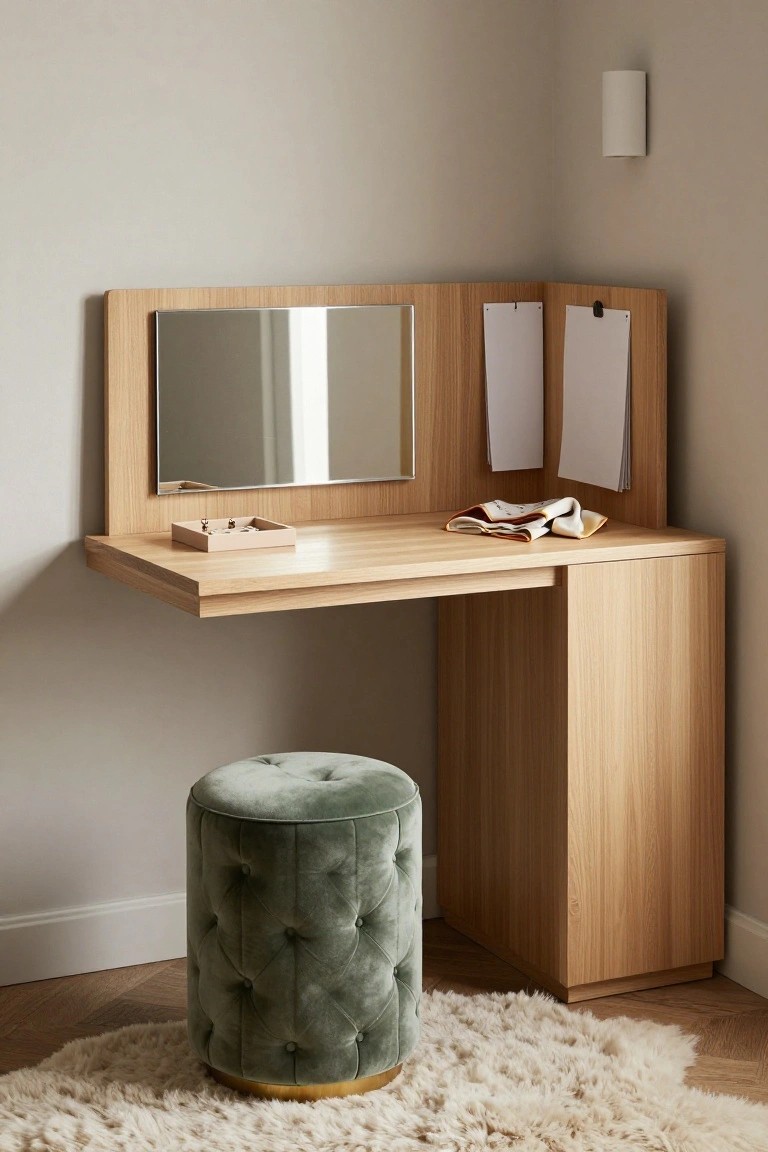
A floating corner desk with a side cabinet gives you workspace without eating up floor space or adding bulk. The clean top stays clear for what you actually need, and the cabinet tucks away anything that might pull your attention.
This works best in a bedroom or small home office where you want the desk to feel like part of the room rather than a separate piece of furniture. Keep the surface mostly empty and use the cabinet for everyday items so the corner stays calm and easy to use.
Limit Desk Items to the Basics
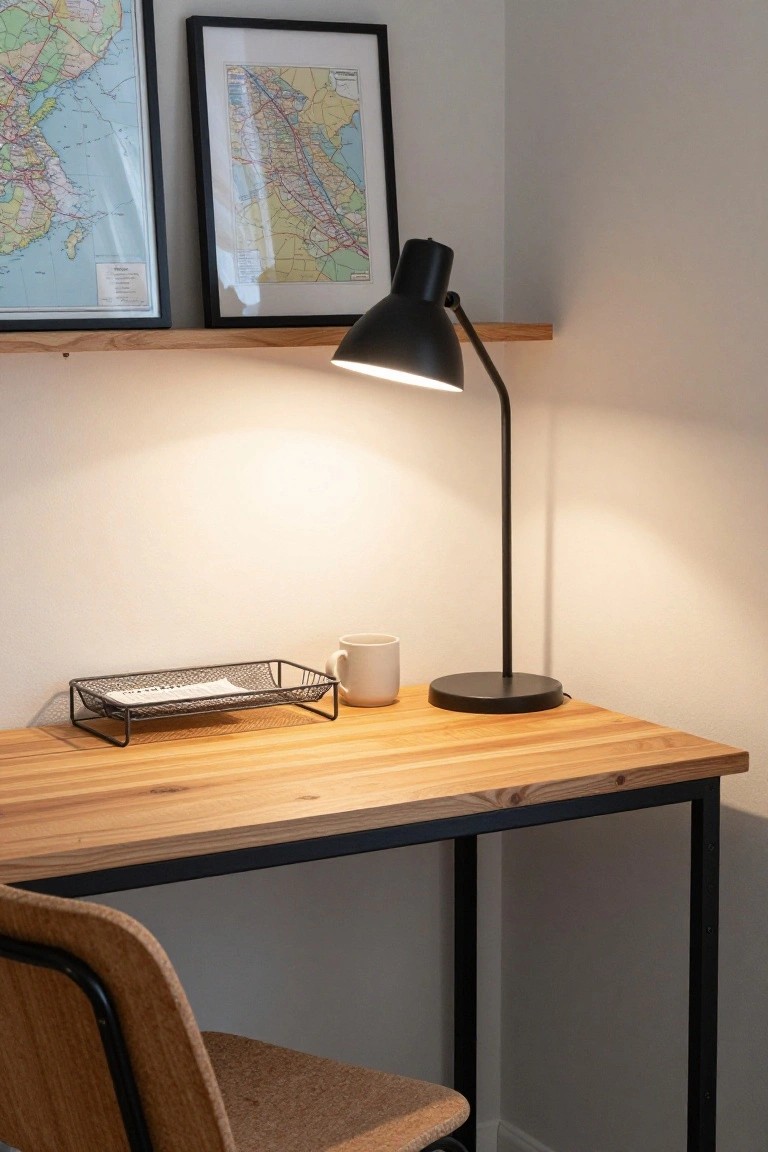
A desk that holds only what you really need makes it easier to stay on task. With fewer things in sight, your eyes and mind have less to wander over, which is especially helpful in a small corner setup where space is already tight.
This approach works well in any home office or shared room where you want the workspace to feel calm rather than cluttered. Stick to one good task lamp for lighting and add just a couple of small, useful items like a mug or a simple tray. Skip extra decor or stacks of papers that can pile up quickly.
A Storage Bench Desk For Quiet Corners
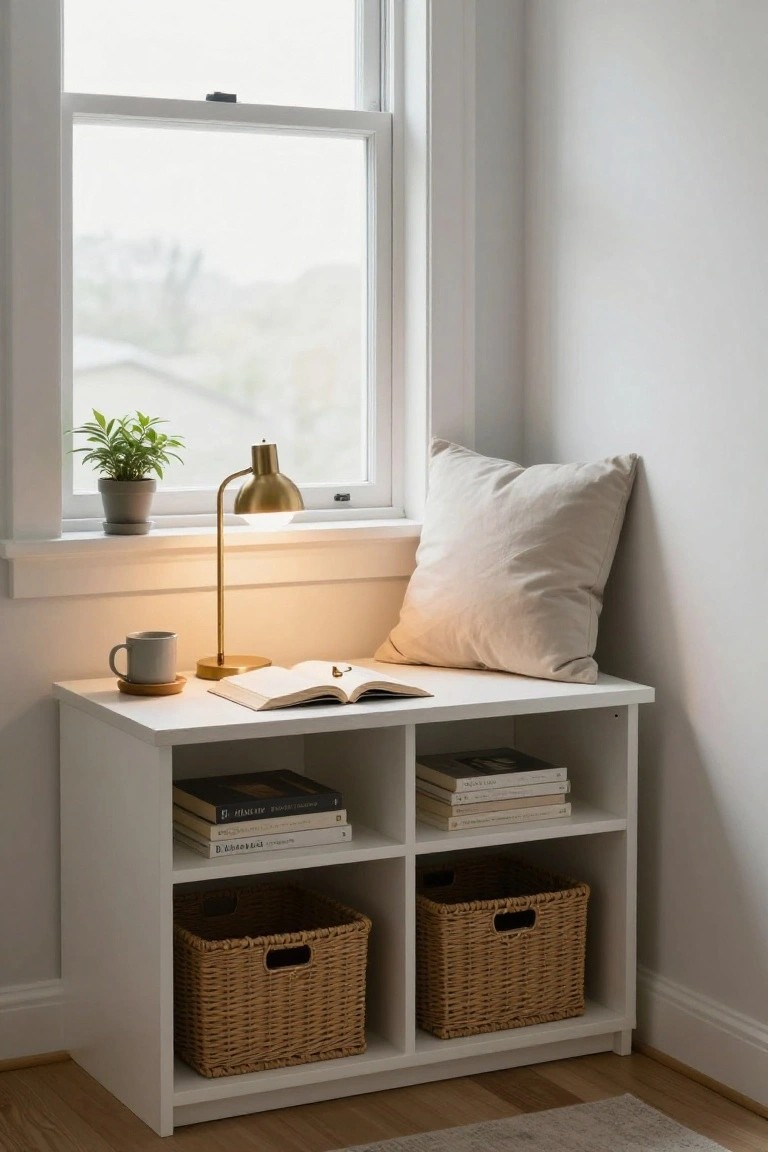
A low white bench with open cubbies makes a good corner desk because it stays simple while still giving you places to tuck things away. The flat top leaves room for just a few items at a time, and the shelves below keep books and supplies from piling up on the surface.
This setup works best in small rooms or quiet corners where you want natural light but not a lot of visual noise. Use the baskets for anything you reach for less often so the desk itself stays clear.
A Corner Desk With Simple Overhead Storage
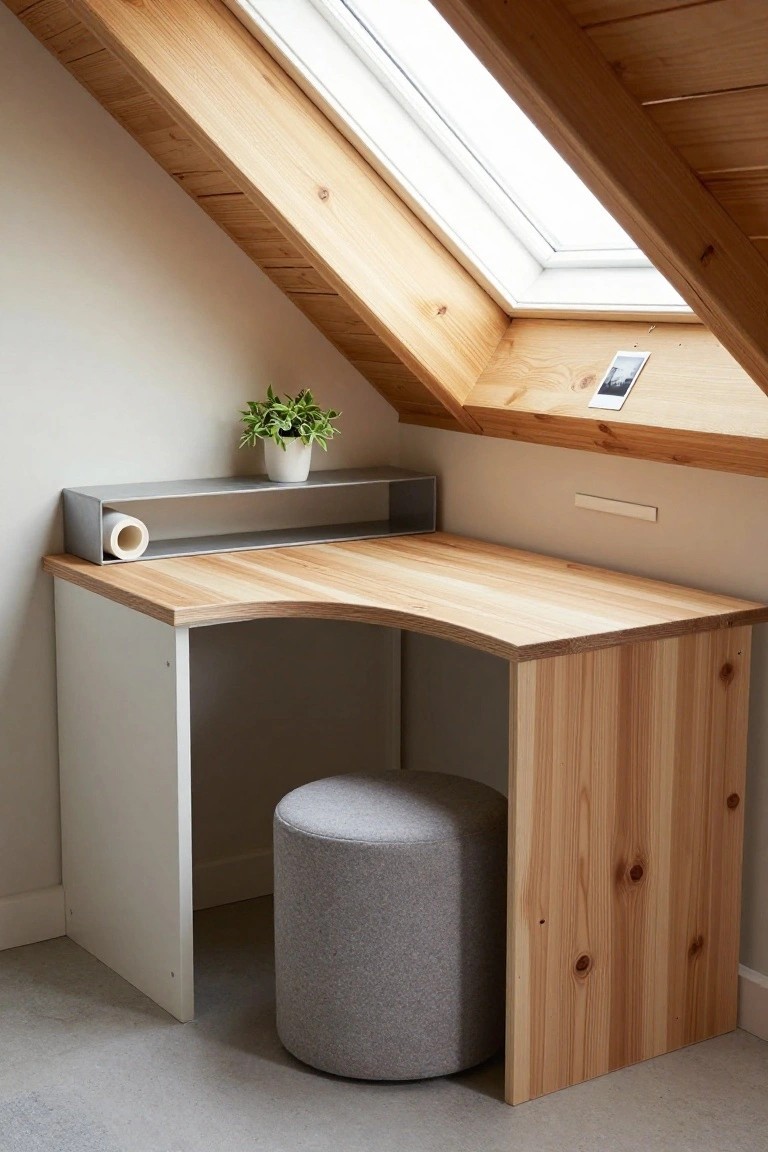
A corner desk works best when it stays simple and low on visual noise. Adding a narrow shelf right above the surface gives you a place for just one or two small items without needing extra furniture or wall units. The clean lines keep the focus on the work area itself rather than on scattered supplies.
This setup suits small rooms or spaces with sloped ceilings where every inch counts. Tuck a low stool underneath so it disappears when you are not sitting there, and keep the shelf clear except for what you actually reach for during the day.
Frequently Asked Questions
Q: Where should I place my corner desk to cut down on distractions from the rest of the room?
A: Turn the desk so the open side faces a blank wall or window with a simple view. This keeps your eyes from wandering to doorways or busy spots. Sit with your back to the main activity areas and you will notice fewer interruptions during work.
Q: How do I store everyday items without letting the surface fill up?
A: Keep only a pen cup and your laptop on top. Stash notebooks and chargers in one small bin that slides under the desk or into a nearby drawer. Clear the top at the end of each day so the space stays ready for focused work.
Q: What helps with cables and chargers in a setup like this?
A: Tuck the power strip behind the desk leg and route cords through a single clip. Charge devices in one spot at the back corner so nothing trails across the workspace. This keeps the area looking open and ready instead of tangled.
