

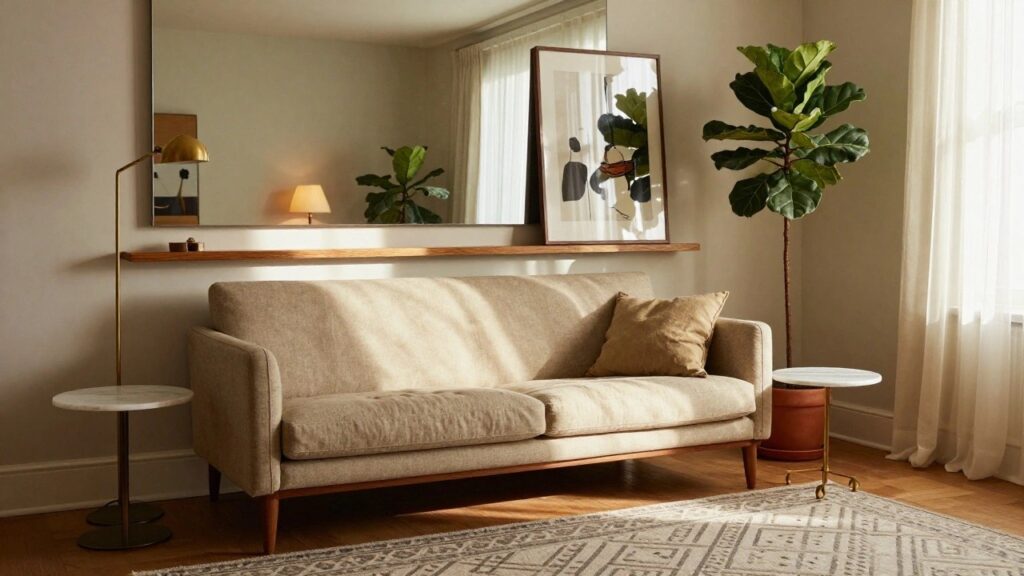
Living in a compact apartment showed me how much a sofa dictates the flow and comfort of the whole space. Get it wrong, and it crowds everything else out, turning a promising room into a pinch. The best ones use slim profiles, airy legs, or clever angles to pull your eye around instead of boxing it in. That shift alone breathes life into tight spots. I’ve tested a handful of these approaches myself, and they prove worth tweaking for your own setup.
Light Beige Sofa with Raised Wooden Legs
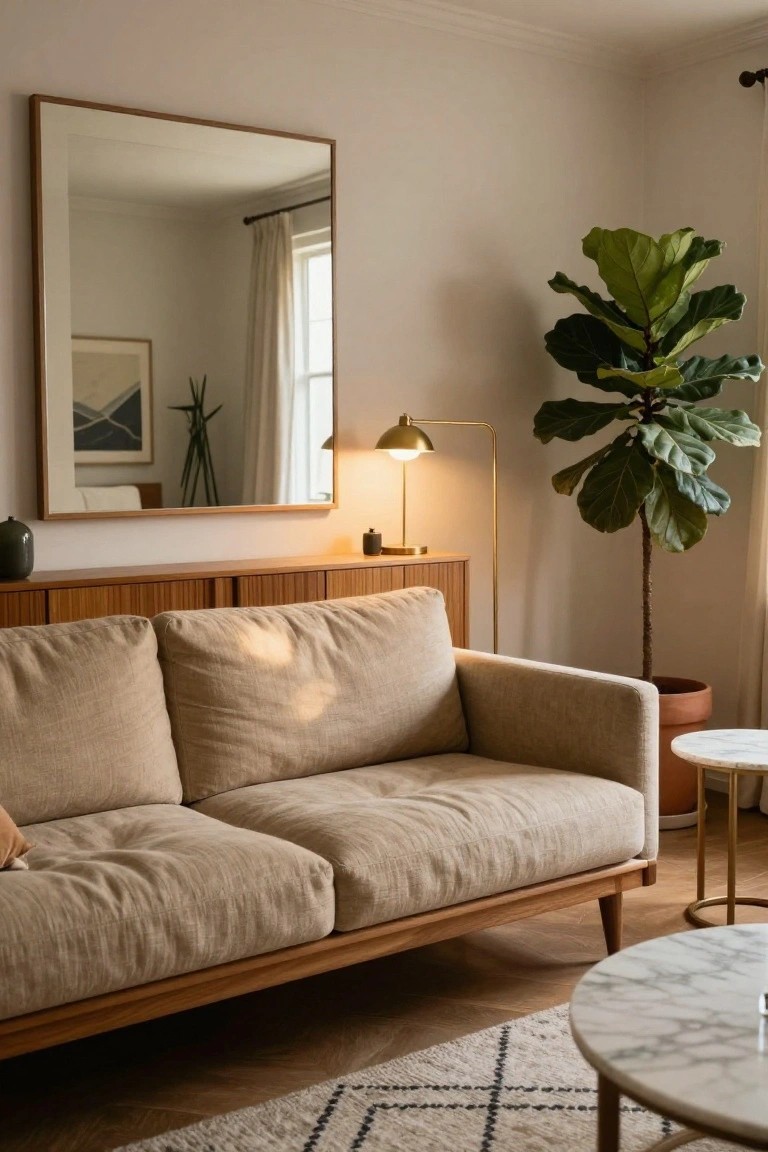
A light beige sofa like this one keeps small living rooms from feeling crowded. The soft linen fabric blends right into pale walls, and those slim wooden legs lift it off the floor. Light slips underneath. No heavy block in the middle of the room.
Put one in a tight apartment space or a narrow family room. Match it with a round coffee table and one tall plant nearby. Skip bulky cushions or dark throws. That way the whole area stays open and easy to move through.
Light Gray Sofa for Bigger Small Rooms
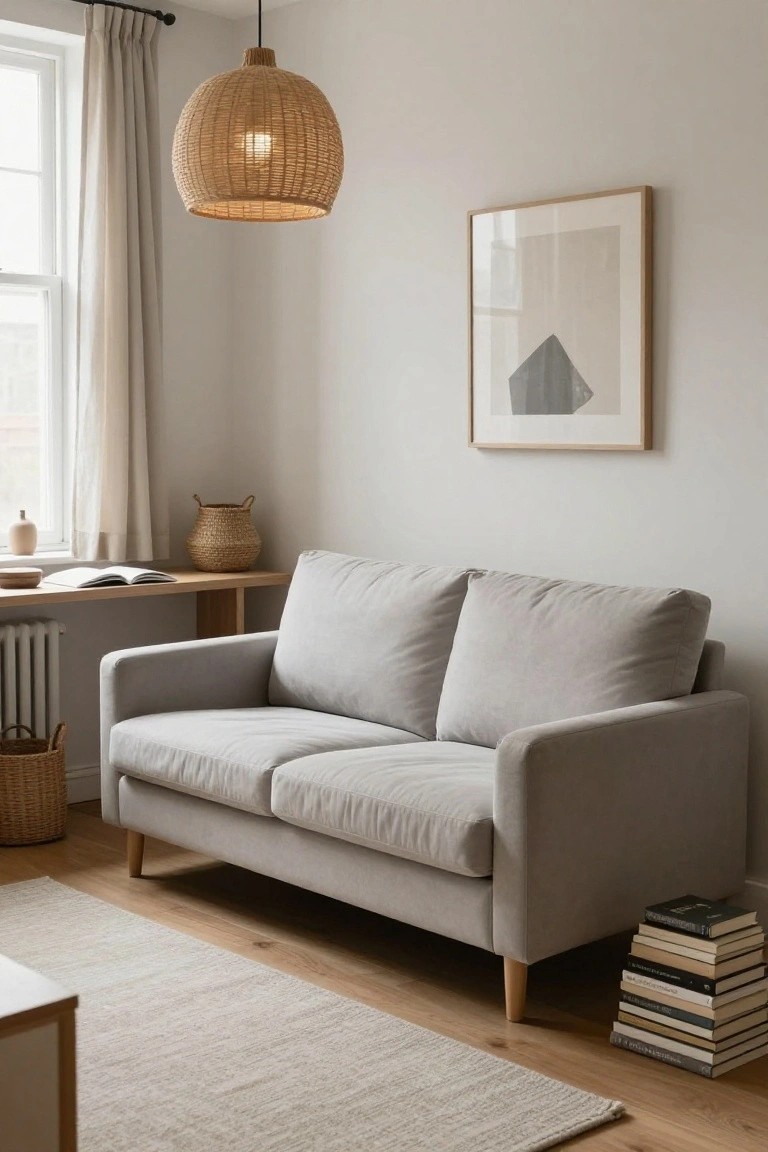
A light gray sofa like this one keeps things simple and open in tight living spaces. The soft color blends right into pale walls, so your eye travels farther. Those slim wooden legs lift it up a bit, letting the floor show through and making the whole area feel less crowded.
Put one in an apartment nook or narrow living room where every inch counts. Pair it with light rugs and minimal side tables, nothing too bulky. Skip dark fabrics, though. They can shrink the space fast.
Built-In Bench Seating Under Windows
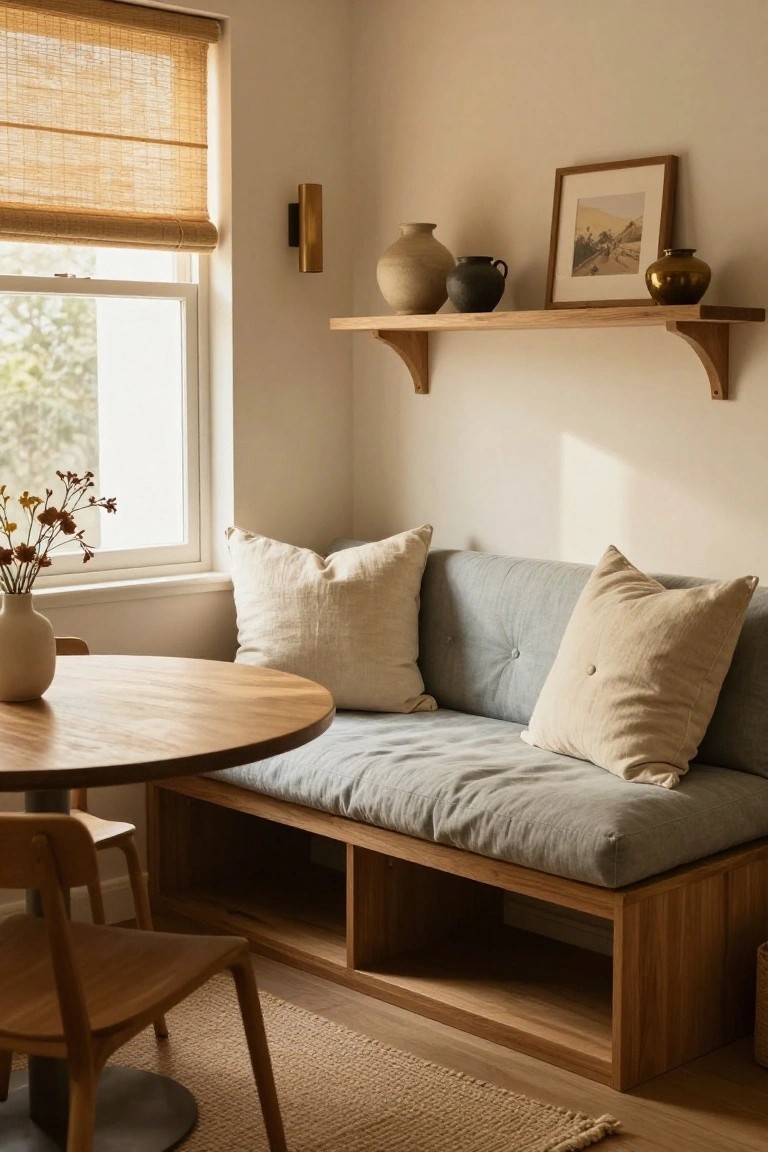
A built-in bench like this turns a narrow window nook into real seating without eating up floor space. The wood frame matches the round table nearby, and those open cubbies below hold blankets or books. Light cushions in soft blue and cream keep everything feeling open and calm, especially with shelves of pottery up top.
Put one in a breakfast area or spare corner where you want sofa space but have no room for freestanding pieces. It suits apartments or cottages best. Go for natural wood tones to blend with floors, and add a slim chair opposite… just measure your window sill first so the bench sits right.
Corner L-Shaped Sofas Save Floor Space
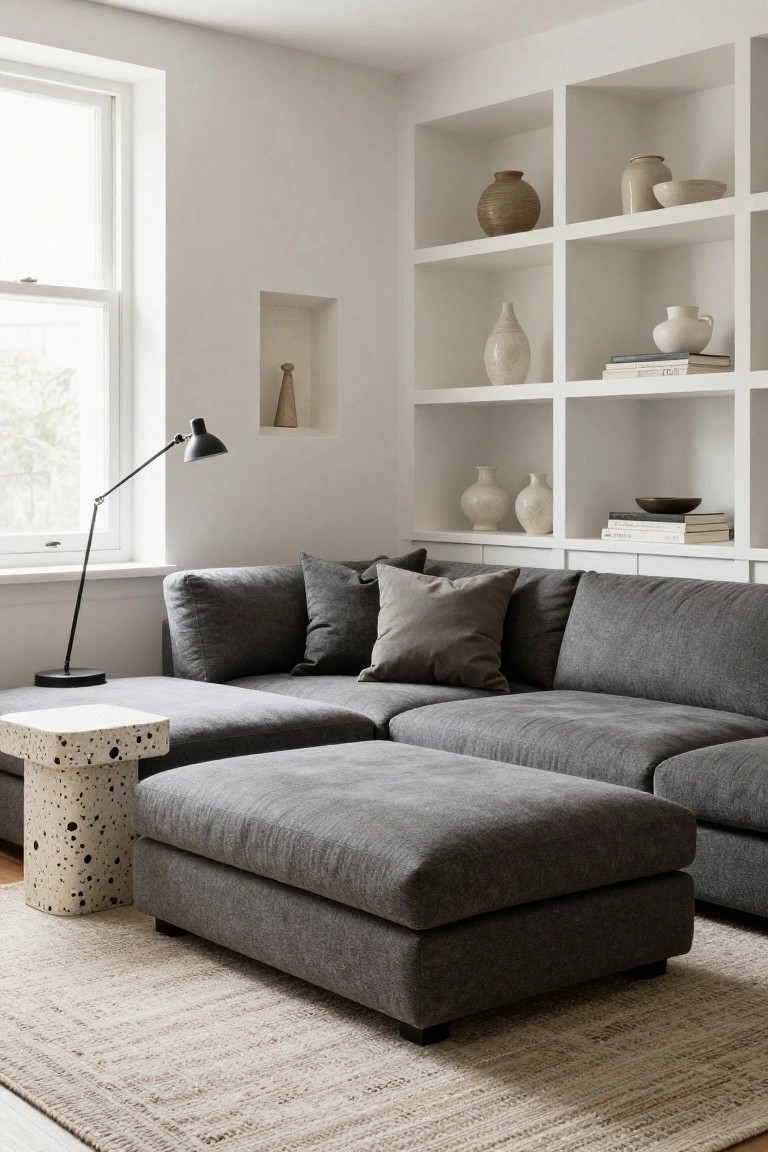
One smart way to fit more seating into a small living room is with an L-shaped sofa that hugs the corner. This setup leaves the center open, so the room feels bigger right away. The gray fabric keeps it neutral and easy on the eyes, while built-in shelves nearby handle storage without eating up extra floor area.
Try this in apartments or narrow townhouses where every inch counts. Pick a sofa in a mid-tone like soft gray, and add a matching ottoman for footrest flexibility. Just measure your corner first to avoid anything too bulky… it works best when the lines stay clean and simple.
Sofas with Visible Legs
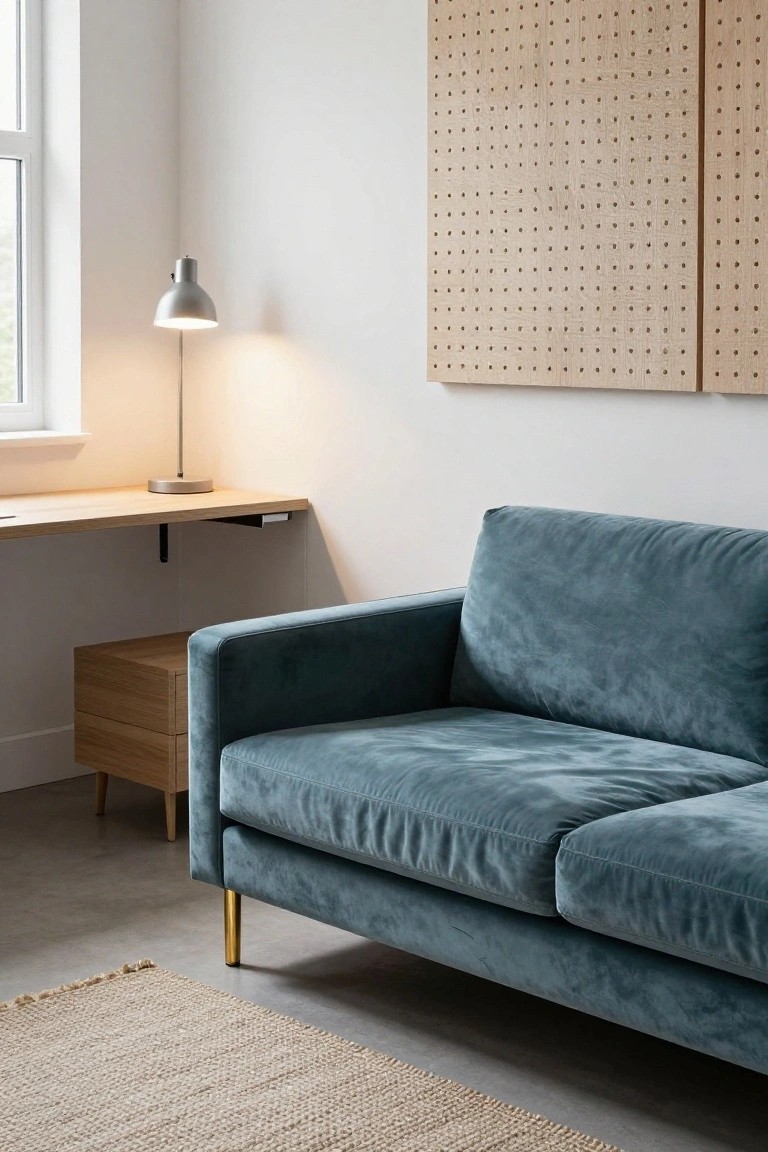
In tight rooms, a sofa with slim exposed legs changes everything. You see the floor and rug underneath, like with this low teal velvet one on gold legs. It keeps the space from feeling boxy and weighed down. Light flows better too.
Hunt for sofas sitting 16 to 18 inches off the ground. They suit corners or spots by a desk best. Skip bulky skirts or blocky bases. In apartments or small homes, this trick makes the whole area look wider without losing seating.
Light Linen Sofas Open Up Small Spaces
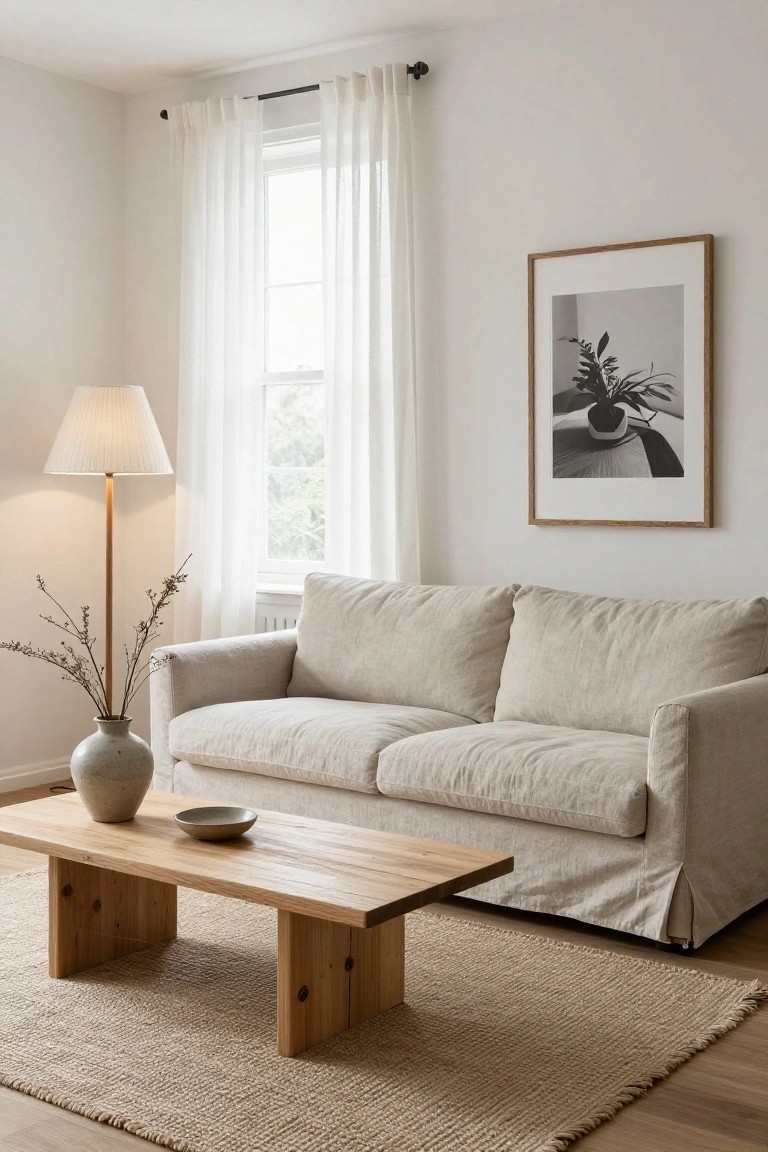
A light linen sofa like this one keeps a small room from feeling crowded. The pale beige slipcover blends with white walls and lets natural light flow around it. No heavy fabrics or dark colors to close things in. Just soft, easy lines that make the space breathe.
Try this in apartments or snug living rooms where every inch counts. Go for a low two-seater with loose covers in cream or soft gray. Add a simple wood coffee table nearby. It suits casual homes best. Watch the scale though. Too big and it swamps the spot.
Slim Corner Sofa Saves Floor Space
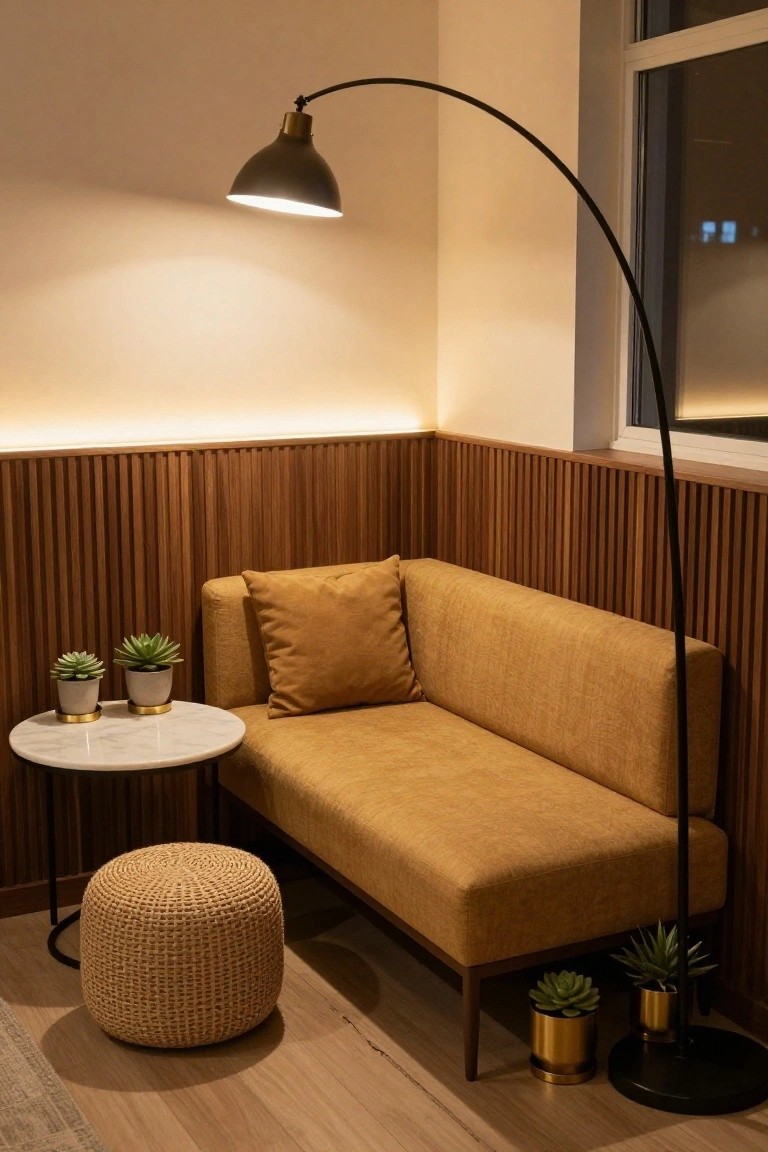
A slim corner sofa like this mustard one hugs the wall tight and leaves room to breathe. The low profile keeps sightlines open across the floor, while a simple woven pouf slides in for extra seating without bulk. That tall arched lamp swings right over it all, pulling the eye up to make the corner feel taller.
This works best in apartments or narrow living areas where every inch counts. Pick legs on the sofa so the floor shows through. Add one small table and a plant or two… nothing more, or it closes in fast.
Open Shelves Beside the Sofa for Extra Storage
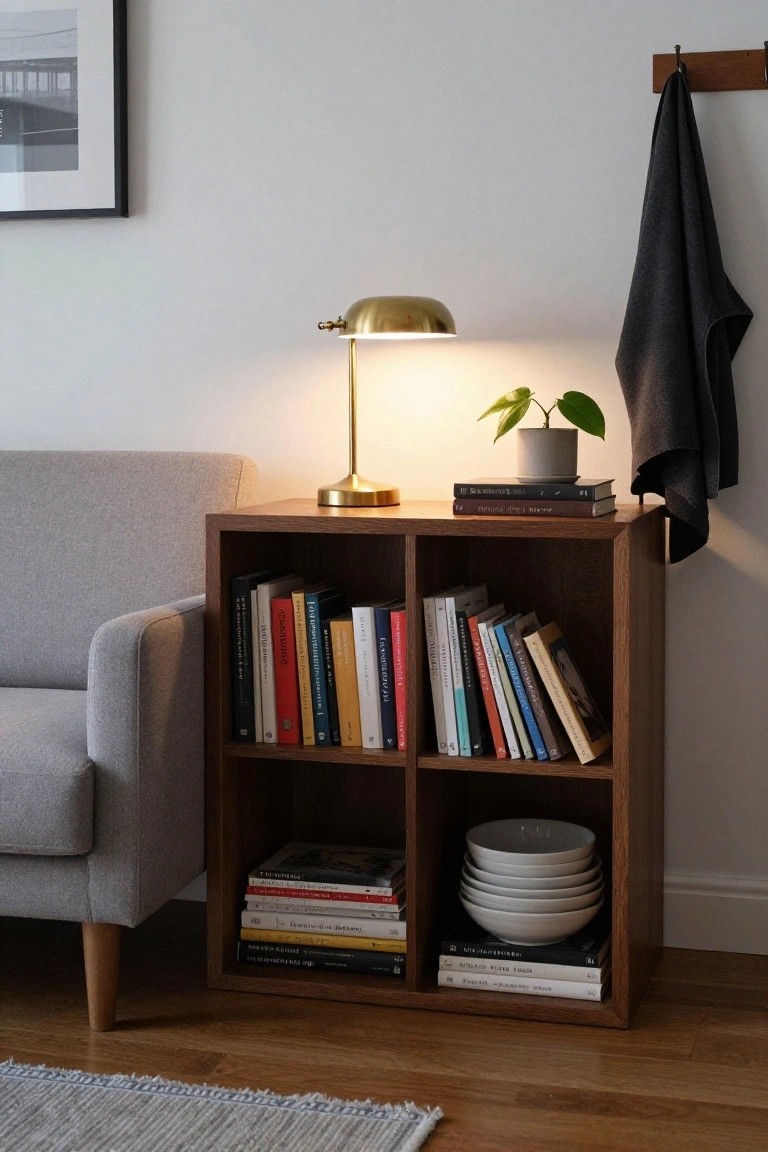
In small living rooms, sliding your sofa right up to a low open bookshelf like this one keeps things practical without eating up floor space. The gray sofa hugs the wood cube unit, which holds books, dishes, and even a plant on top. It leaves the floor clear under the sofa legs and lets light flow around everything. That open feeling makes even a tight corner look bigger.
Try this setup in apartments or narrow rooms where every inch counts. Pick shelves about the same height as your sofa back so it feels connected, not chopped up. Stick to neutral colors and avoid cramming too much in. One lamp or plant on top adds life without clutter. Works best on wood floors or rugs that show underneath.
Facing Sofas in Narrow Rooms
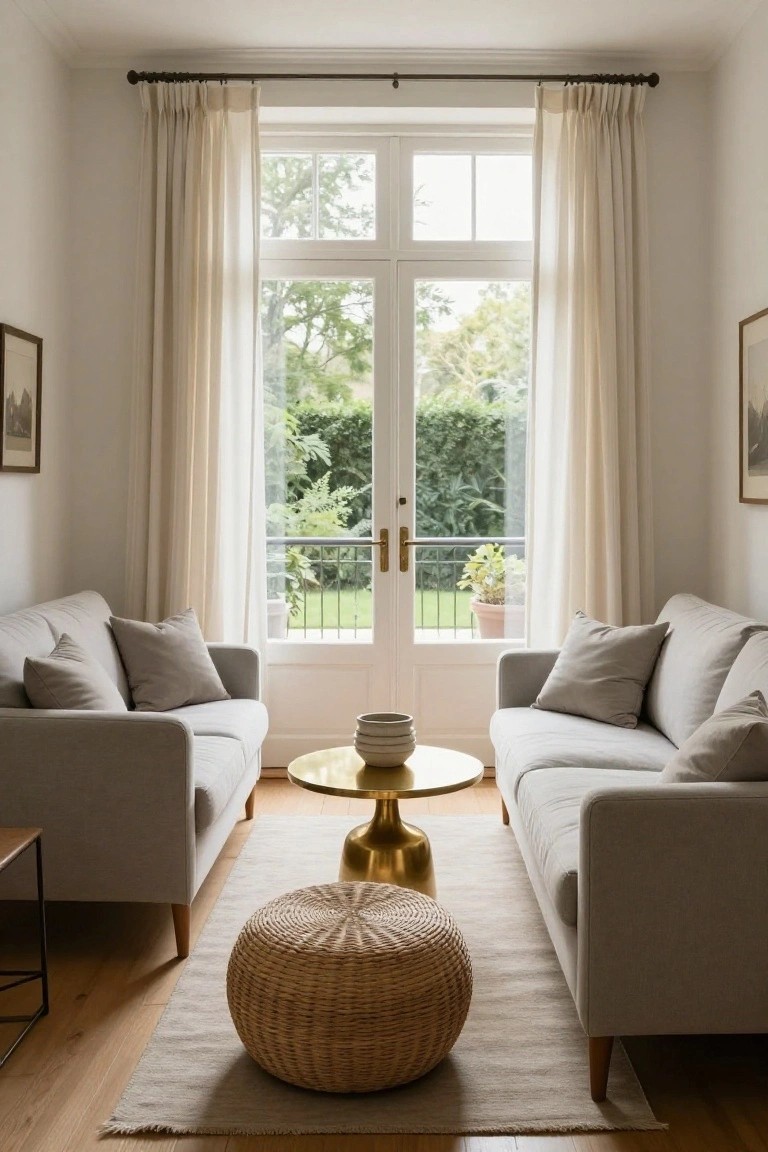
Two slim sofas facing each other across a low brass coffee table make a narrow living room feel open and easy to use. The light gray fabric keeps things airy, and the large French doors with sheer curtains pull the garden view right inside. This setup saves wall space for art or shelves, so the room doesn’t close in.
Try this in apartments or older homes with long skinny rooms. Pick sofas under 70 inches long, and center them on the windows. A woven pouf nearby adds a spot to kick up your feet without crowding. Just make sure the table stays small… nothing bulky.
Bench Sofa with Under-Seat Storage
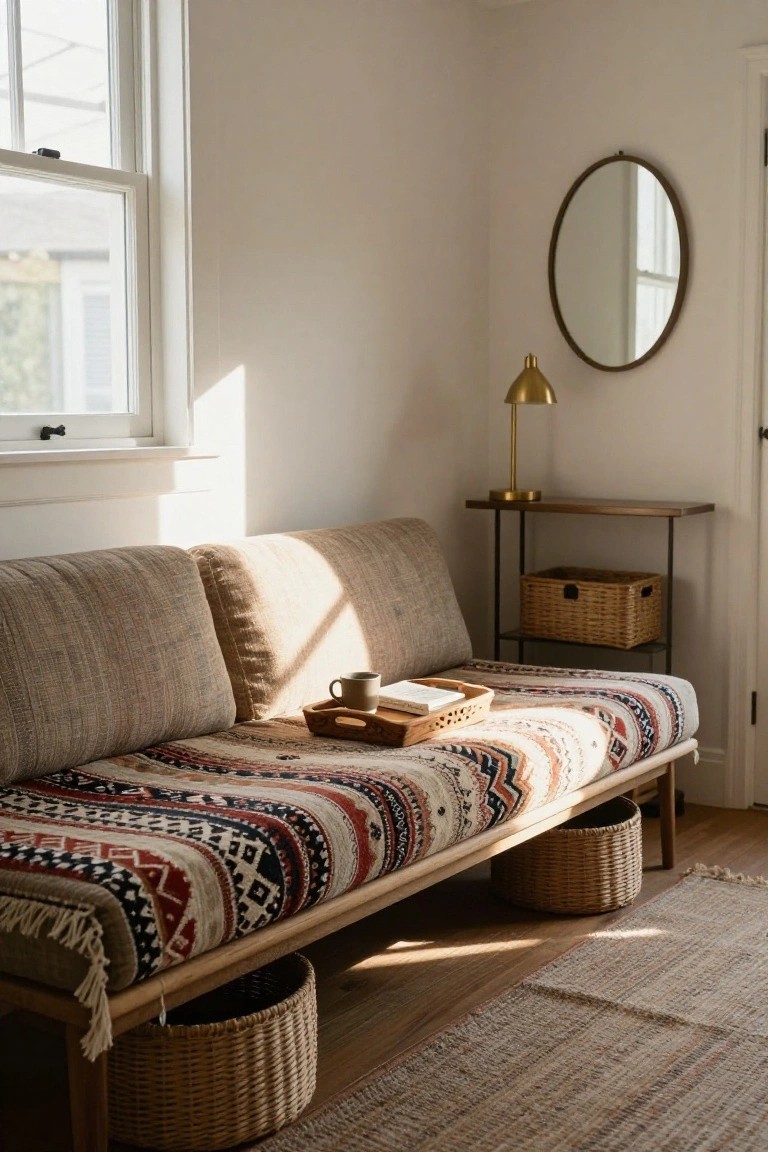
A bench-style sofa like this one sits low on wood legs. Cushions and a woven throw make it comfy without bulk. Wicker baskets slide right under for storing throws or magazines. That open space below lets light bounce around. The room feels bigger right away.
Try this in a tight corner or reading spot. Natural wood and baskets fit most homes, especially rentals or small apartments. Pick baskets that match your colors. It keeps things practical… no need for bulky side tables.
Light Blue Sectional for Small Rooms

A pale blue leather sectional like this one fits right into tight living areas. The soft color bounces light around and keeps things from feeling crowded. That L-shape gives you room for a few people without eating up the floor, which is perfect when space is short.
Try it in an apartment or starter home where every inch counts. Pair the sofa with light floors and simple wood pieces, like that credenza nearby. Skip dark accents so the blue stays fresh. Just watch for spills on leather, but a quick wipe usually handles it.
Armchair Nook in a Wall Recess
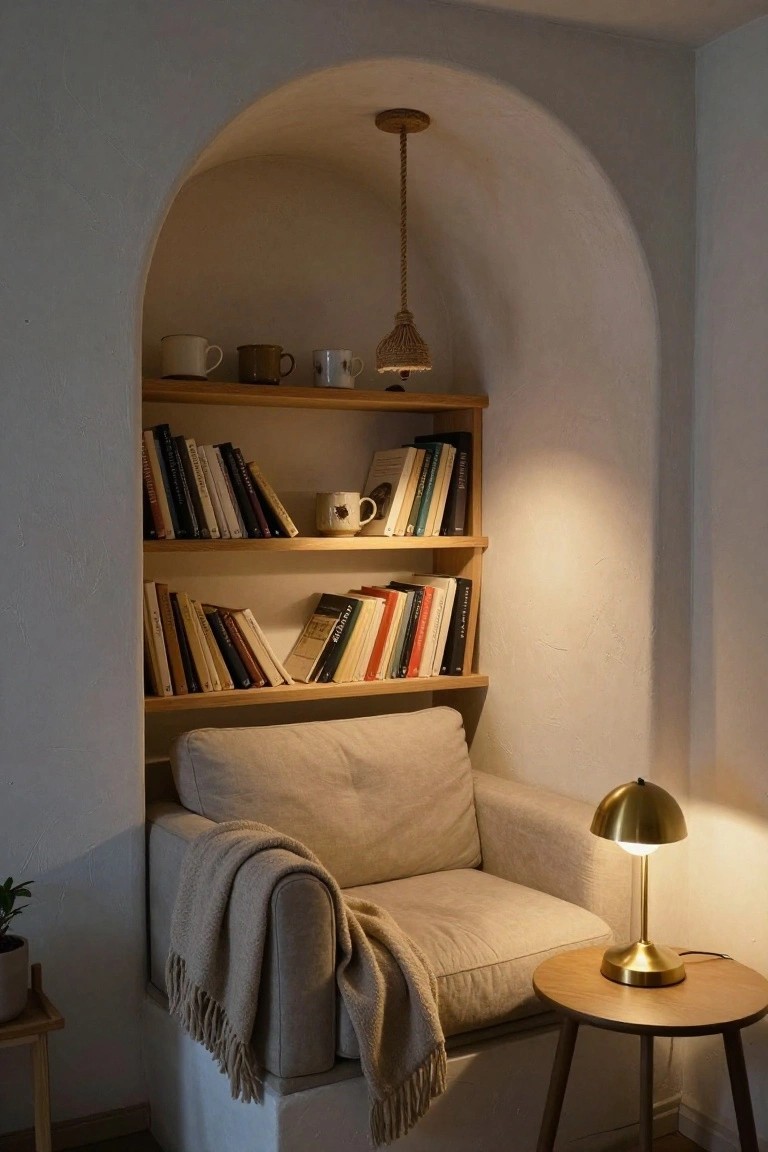
A recessed wall like this one holds an armchair right in, with open shelves arched above for books and odds like mugs. It carves out a little spot for sitting without stealing room from the rest of the space. That makes even a tight corner feel purposeful and open around it.
Try this in small living areas or bedrooms with a shallow bump-out wall. Pick a chair that fits snug, add a throw for comfort, and a lamp close by. It suits apartments best, but scale it down if your recess is narrow… just don’t let the seating jut out.
Sofa Next to the Kitchen Island
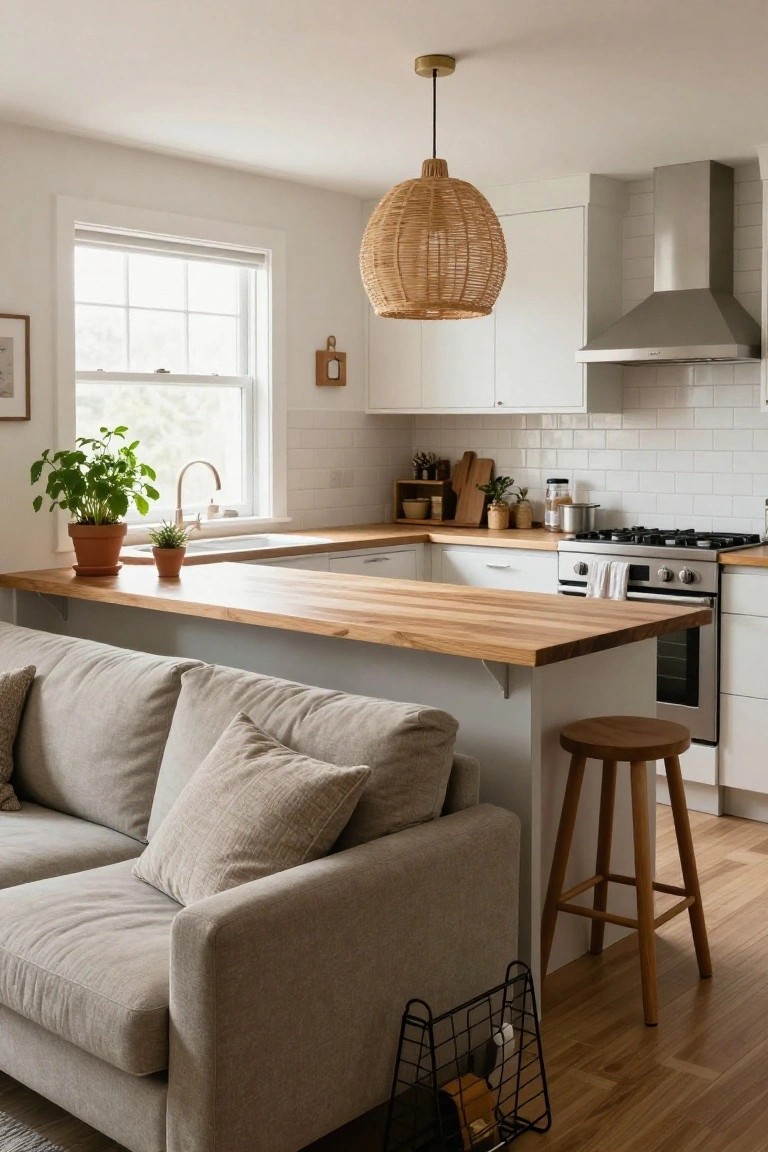
Putting a sofa snug against the kitchen island turns a small open-plan space into something practical and roomy. It lets you chat while cooking or grab a quick bite without needing a full dining set. The gray sofa here sits low and close to the wood peninsula, making the whole area feel connected instead of chopped up.
This idea fits best in apartments or starter homes with limited square footage. Go for a slim sofa in a soft fabric that won’t overpower the kitchen. Pair it with wood stools that slide under the counter. Just make sure there’s enough knee room so it doesn’t cramp traffic flow.
Low Profile Tan Sofa for Small Rooms
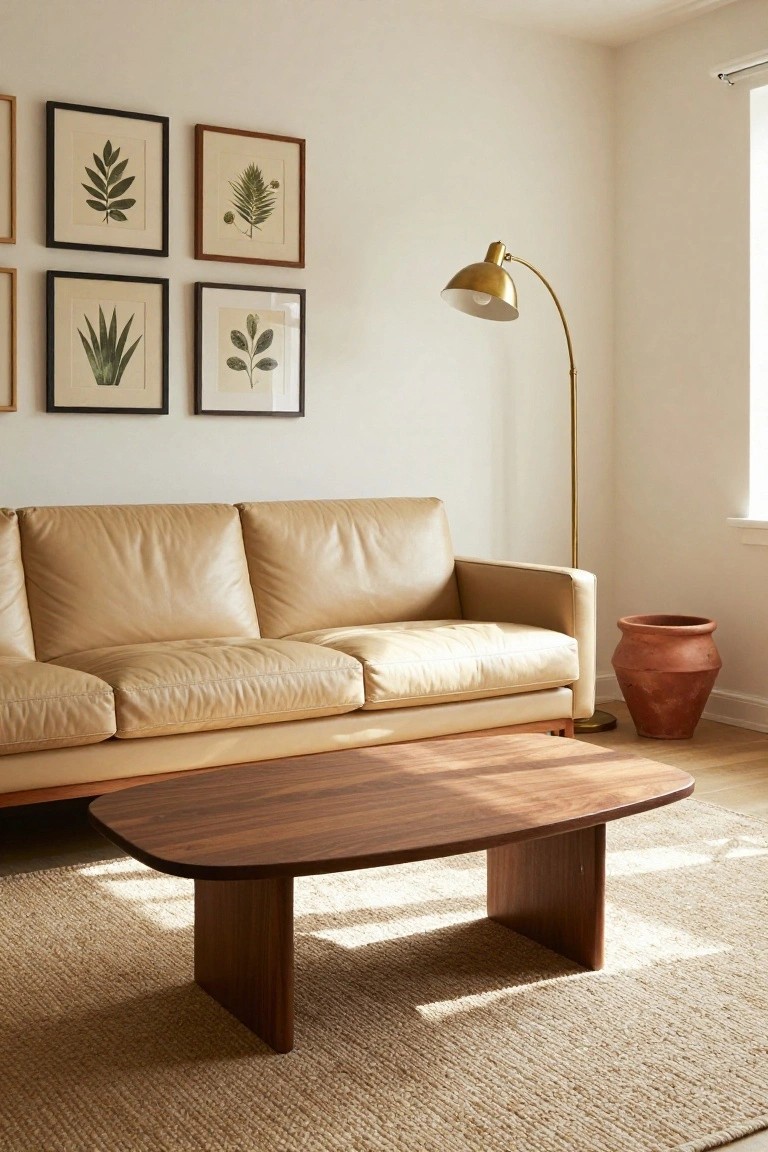
A low profile tan leather sofa like this one keeps small living rooms from feeling crowded. The pale color bounces around natural light from the windows, and the slim shape leaves plenty of floor visible. Paired with just an oval walnut coffee table, it lets the space breathe instead of boxing it in.
This setup works best in apartments or narrow city rooms where every inch counts. Stick to light neutrals on the sofa and avoid bulky arms or skirts. Add a simple wood table for balance, but skip side tables unless you need storage. Watch the scale though. Too big, and it swamps the room.
Rattan Sofa Frames Open Up Tight Spaces
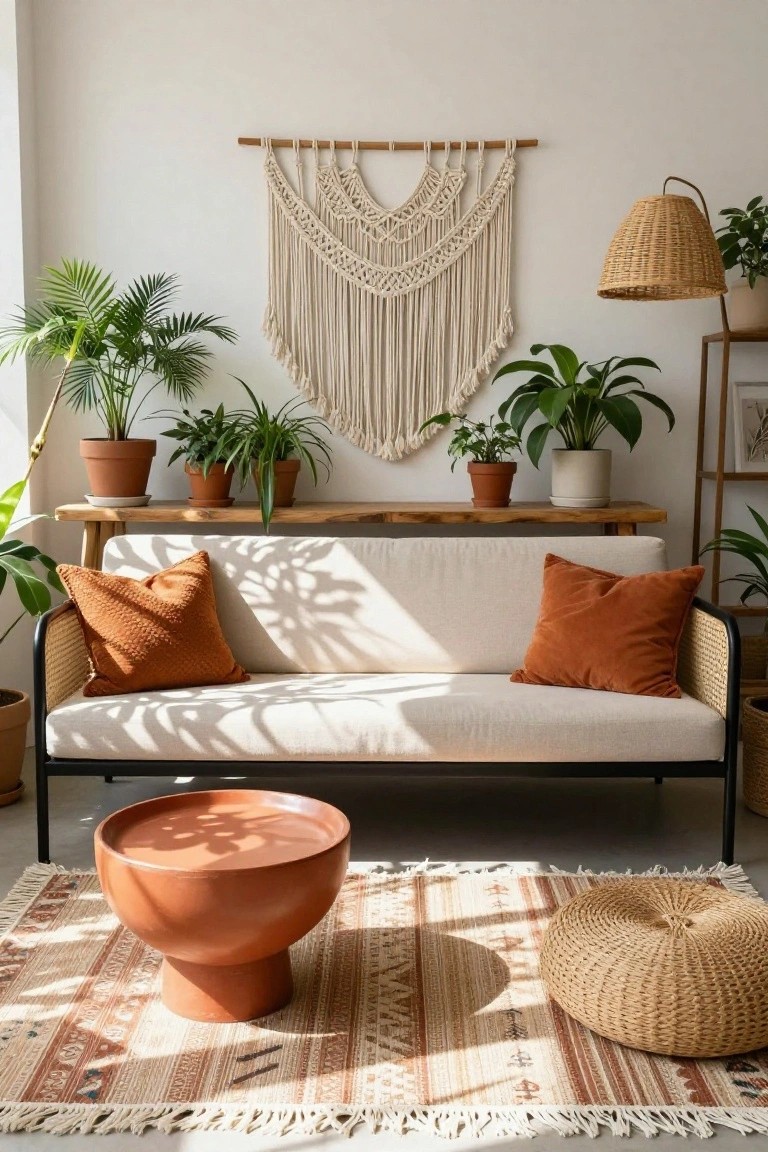
A rattan-framed sofa like this one keeps small rooms from feeling closed in. The open weave and slim black metal base let light filter through instead of blocking it. White cushions blend with the walls, and those orange pillows add just enough punch without clutter.
Try this in apartments or narrow living areas where every inch counts. Go for light upholstery and raised legs to show the floor underneath. It pairs well with plants for that fresh feel. Skip solid wood frames. They make things too heavy.
Light Sofas Open Up Tight Living Rooms
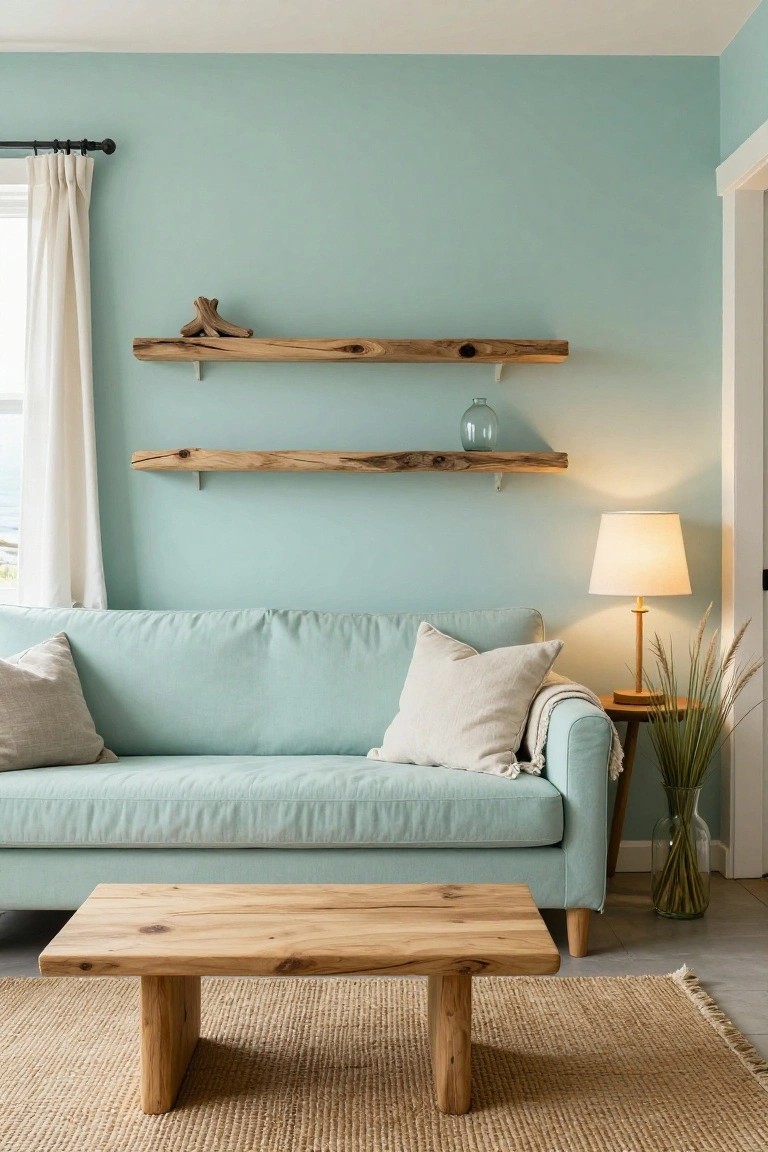
A pale sofa works wonders in small spaces. This soft aqua one sits right against walls in a similar tone, so the room doesn’t feel chopped up. The light color bounces whatever natural light comes in, making everything feel a bit roomier without much effort.
Try this in apartments or narrow family rooms where every inch counts. Stick to low-slung pieces like that wood coffee table to keep sightlines clear. Just avoid dark throws at first… let the sofa do its job. It suits casual spots near windows best.
Storage Bench for Small Play Corners
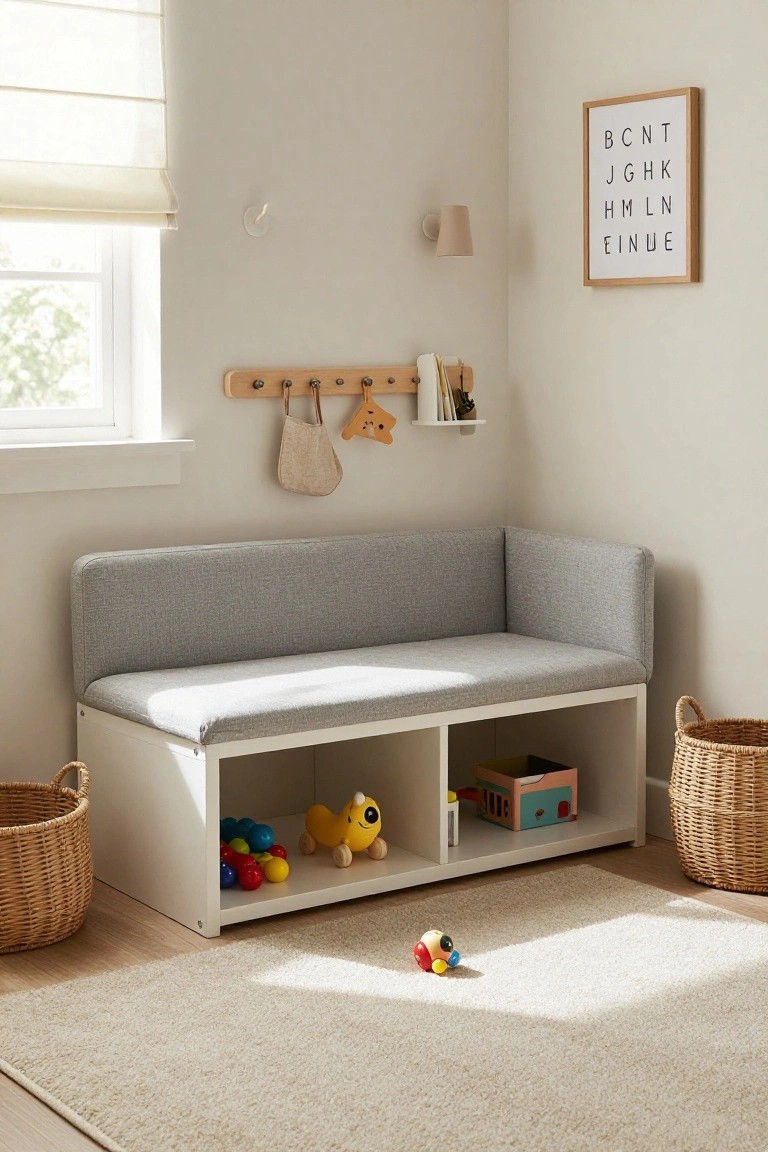
A simple corner bench like this one pulls double duty as seating and storage. The open shelves underneath hold toys and baskets without eating up floor space. In a kid’s room it keeps things tidy and lets the room breathe a bit more.
Put one in a tight nook near a window where light comes in. Works best in play areas or reading spots. Gray fabric keeps it neutral. Just make sure the cushions are firm enough for sitting.
Sofa with a Clear Acrylic Table
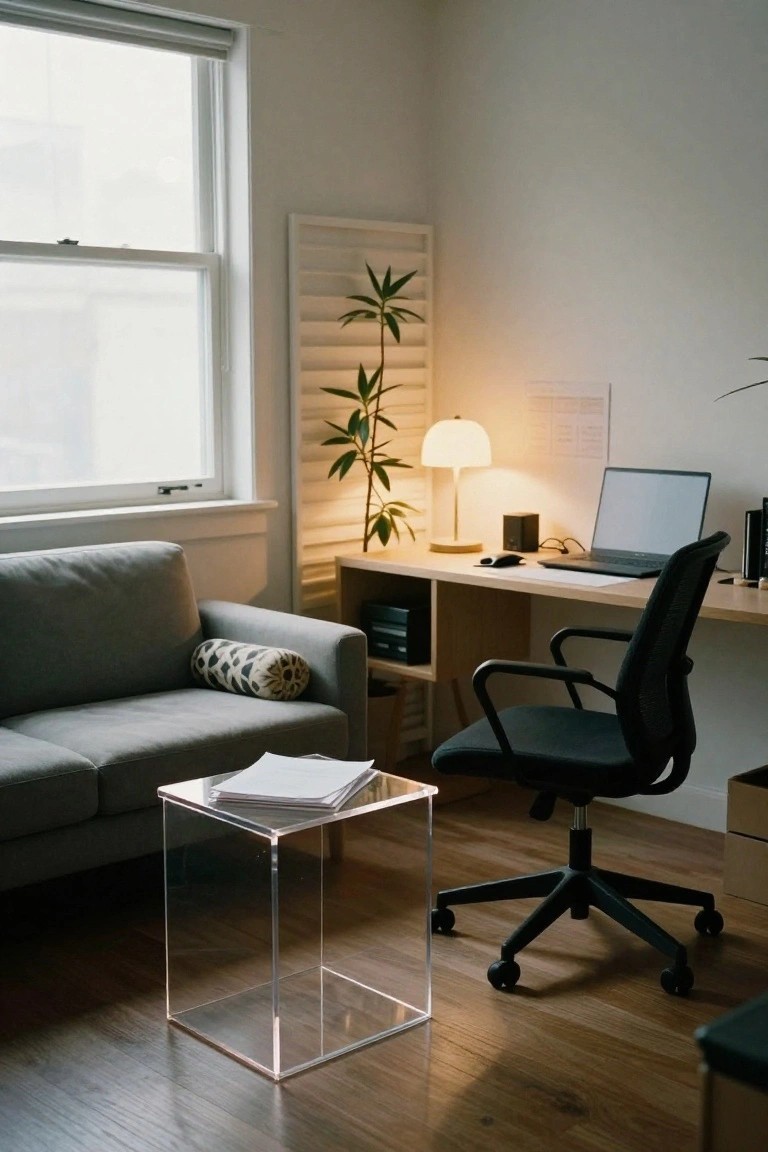
In tight living spaces, putting a clear acrylic coffee table right in front of your sofa makes the whole area feel way more open. It doesn’t block the view to the floor or add any visual weight, so the room looks bigger even with furniture there. You can see the wood floors stretching out, and light from the window bounces right through.
This setup shines in small apartments or corner nooks where every inch counts. Go for a low cube style like this one holding a few papers, and keep the sofa slim and against the wall. Skip heavy wood tables that crowd things. It pairs easy with a desk nearby too, if you’re mixing work and lounge.
Frequently Asked Questions
Q: Will a light-colored sofa really open up my cramped living room?
A: Light shades like cream or pale blue reflect whatever light you have and trick the eye into seeing more space. Pair it with sheer curtains to let even more glow in. Dark fabrics just make walls close in.
Q: How do I pick a sofa that squeezes through my tight hallway?
A: Check the sofa’s fully assembled dimensions against your doorway and turns. Ask the seller for the boxed shipping size too, since that’s what delivery folks wrestle through. Opt for modular pieces if your path twists.
Q: Can I stick some storage under the sofa without cluttering things up?
A: Go for a sofa with legs at least six inches high. Slide in slim baskets or bins for blankets and remotes. It keeps floors clear so the room breathes.
Q: What’s the smartest spot for the sofa in my super-narrow space?
A: Float it an inch or two off the wall. This lets light slip behind and makes the setup feel airier. And skip matching pillows, they weigh it down.
