

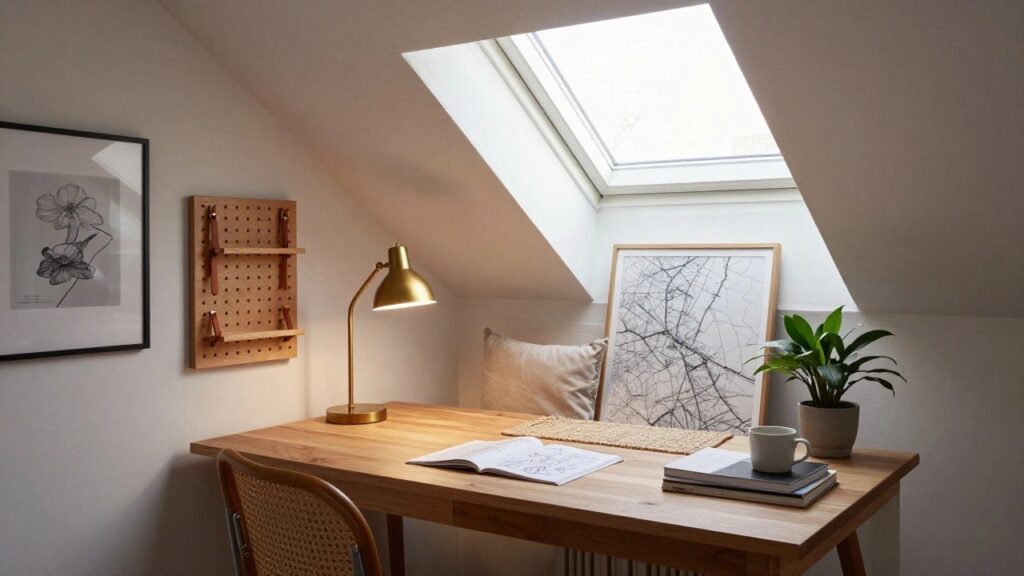
I’ve spent time poking around attics that folks turned into offices, and the ones that stick with you pull off a quiet focus without feeling squeezed by the roofline. They work best when the setup nods to real work rhythms, like desks that hug the slopes and spots for cables that don’t trip you up on the way to the window. You notice right away how light shifts through the eaves, making the space feel lifted even on gray days. A low bookshelf along the slant in one I saw made storage feel clever instead of forced. Some of these setups capture that practicality, the kind you could adapt without second-guessing.
Pegboard Wall for Attic Desk Storage

One smart way to make an attic office work harder is adding a pegboard wall right by the desk. In this setup, the wooden pegboard holds an adjustable gold lamp for task lighting and leather-strapped hooks for notes or tools. It keeps everything handy without eating up desk space, which is key in a tight spot under sloped ceilings.
You can mount one like this on any wall near your workspace, using it for cords, headphones, or even small shelves. It fits older homes with attics best, where you want practical storage that doesn’t look cluttered. Just pick a board that matches your wood tones, and avoid overloading it.
Corner Desk in Attic Nook
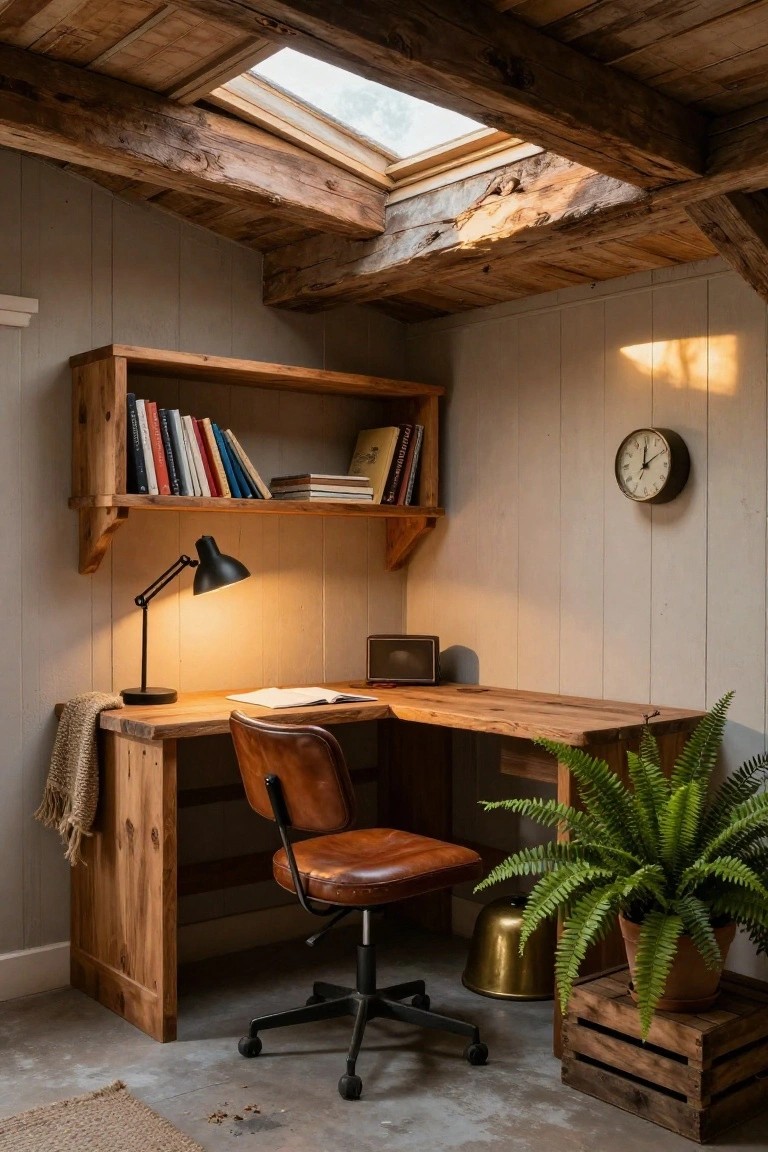
A corner desk like this one makes the most of a tight attic spot. Tucked right under the sloped ceiling with exposed wooden beams overhead, the L-shaped wooden top fits snug against two walls. It leaves just enough room for a leather chair and a bit of green from a potted fern. That setup feels practical without crowding the space.
Try this in any attic conversion where headroom is short. Go for rough-sawn wood on the desk and matching shelves up high for books or files. It suits older homes with character already, like beamed ceilings. Skip fancy finishes. Keep it simple so the wood warms up the pale walls.
Plant Shelves in a Moody Attic Office
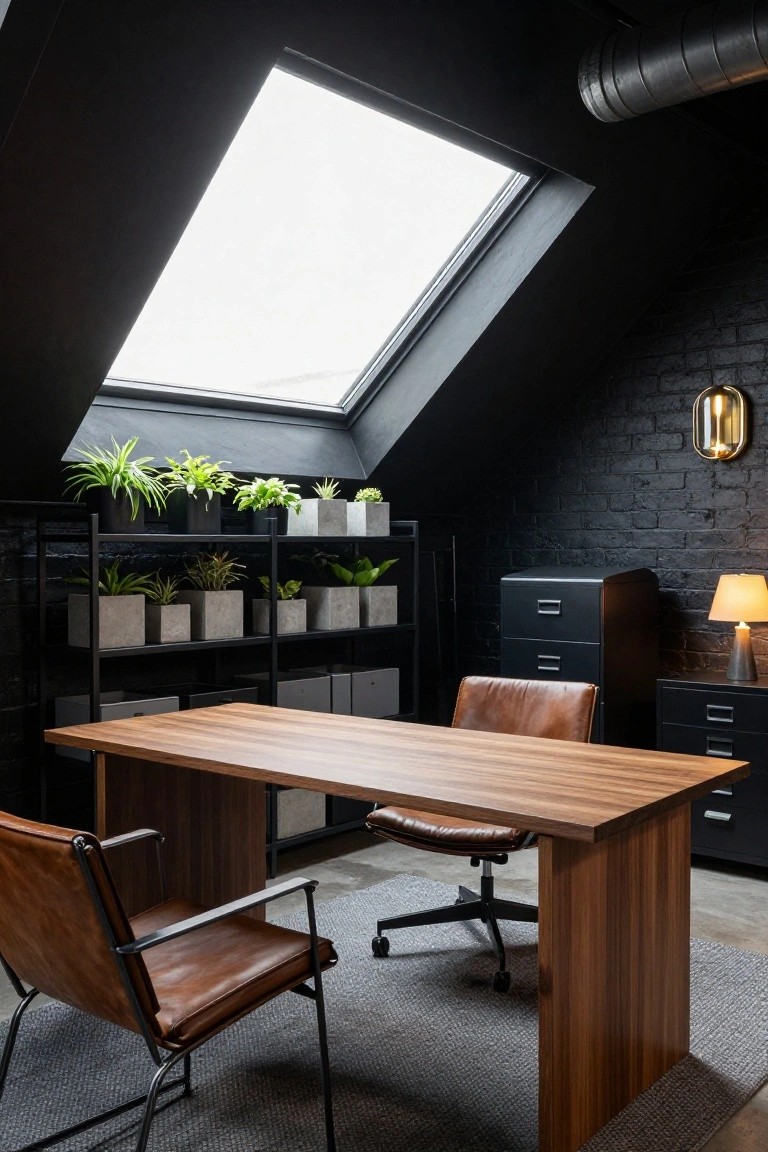
Black metal shelves packed with potted plants make a big difference in this attic office. They line one wall against dark brick, adding green right where the space feels a bit cave-like from the sloped ceiling and black tones. That burst of plants softens things up without taking floor space, and it pulls in natural light from the nearby skylight.
You can do this in any tight attic setup, especially if your walls are dark or exposed. Grab simple metal racks, concrete pots for the plants, and mix in easy growers like succulents or trailing greens. It works best in lofts turned offices… keeps it lively for long work hours. Just don’t overload the shelves, or it might feel cluttered.
Blue Shiplap Walls for Cozy Attic Offices
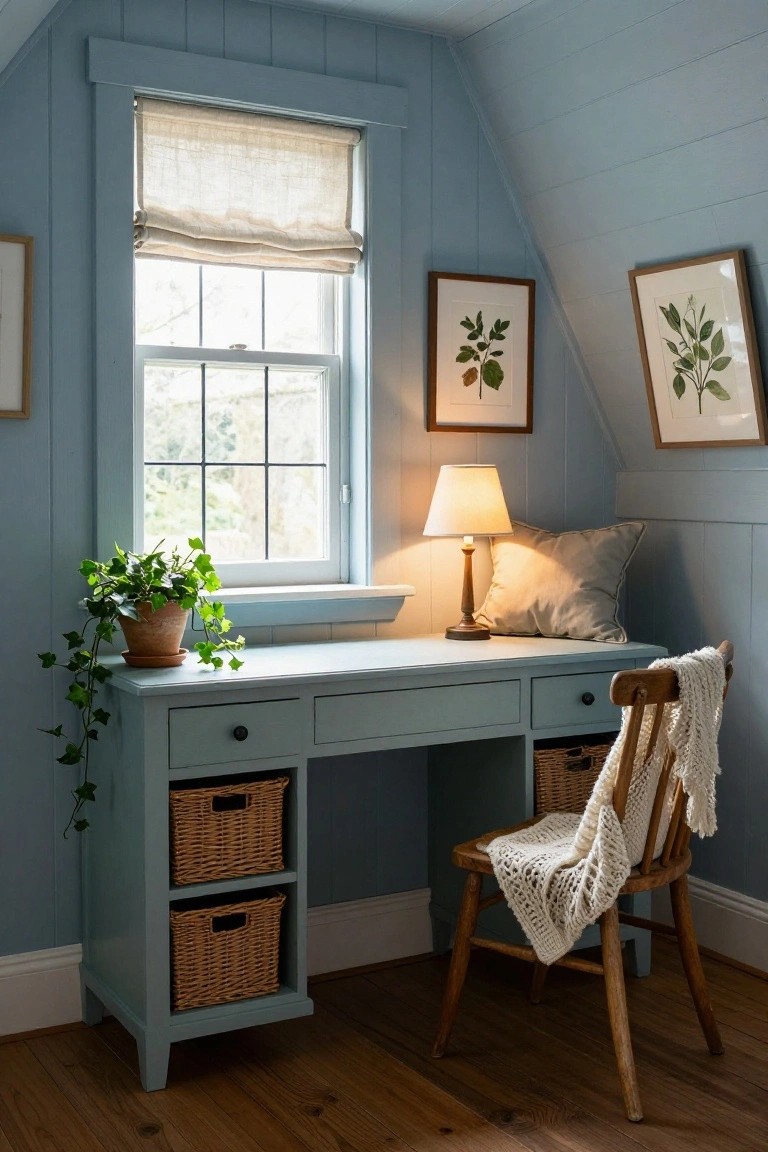
Painting the sloped walls of an attic in a soft blue shiplap turns tight spaces into something welcoming. You see it here with the wood planks picking up light from the window, making the room feel open instead of squeezed. That gentle color keeps things calm, especially good for a spot where you work or read.
Try this in older homes with knotty pine attics, or any slanted ceiling room headed for an office. Just clean the surface first, then use a matte paint for that lived-in look. Pair it with simple wood furniture like this desk. It fits cottages or farmhouses best, but watch the sheen, too much gloss can make it chilly.
White Desk Brightens Attic Offices
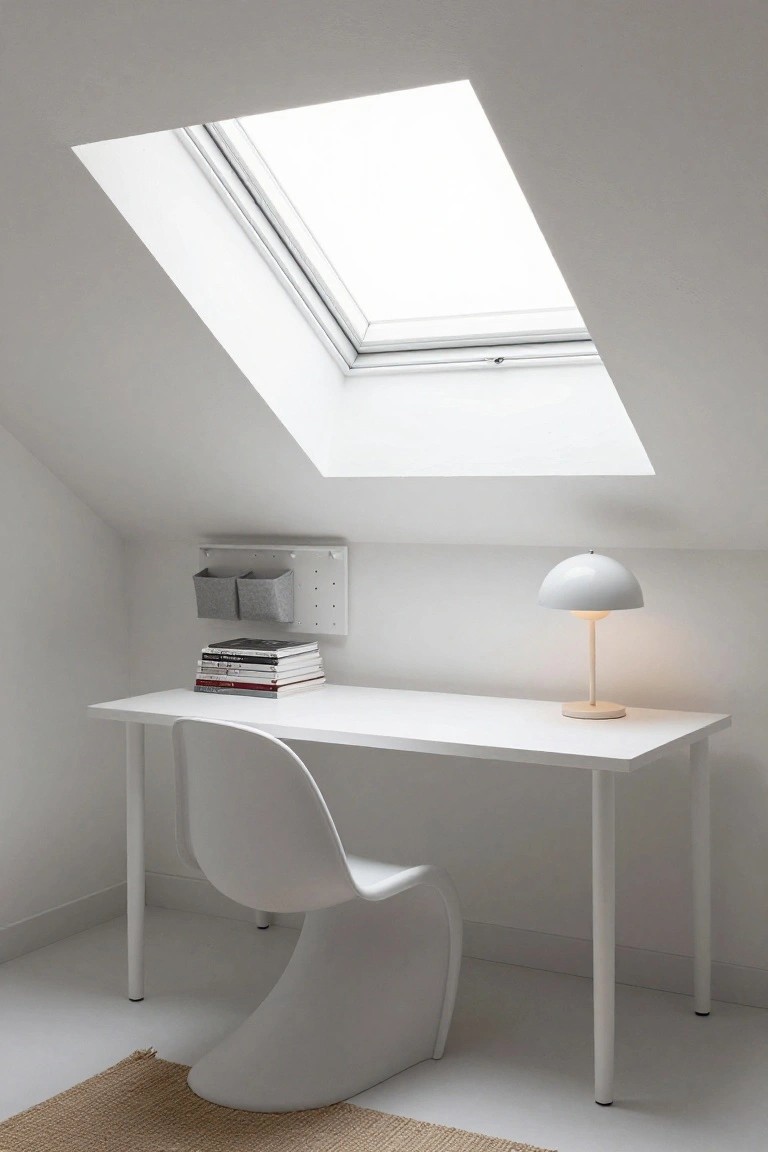
A plain white desk tucked under the skylight turns this sloped attic into a workable office. The light pours in all day, and that simple setup with stacked books and a white lamp keeps distractions low. White furniture like the curved chair bounces light around, so the space doesn’t feel closed in.
Try this in any low-ceiling attic. Line up a basic desk with legs that fit the slope, add wall hooks for storage. It suits renters or small homes… just watch for glare on screens in the afternoon.
Deep Green Paneled Walls
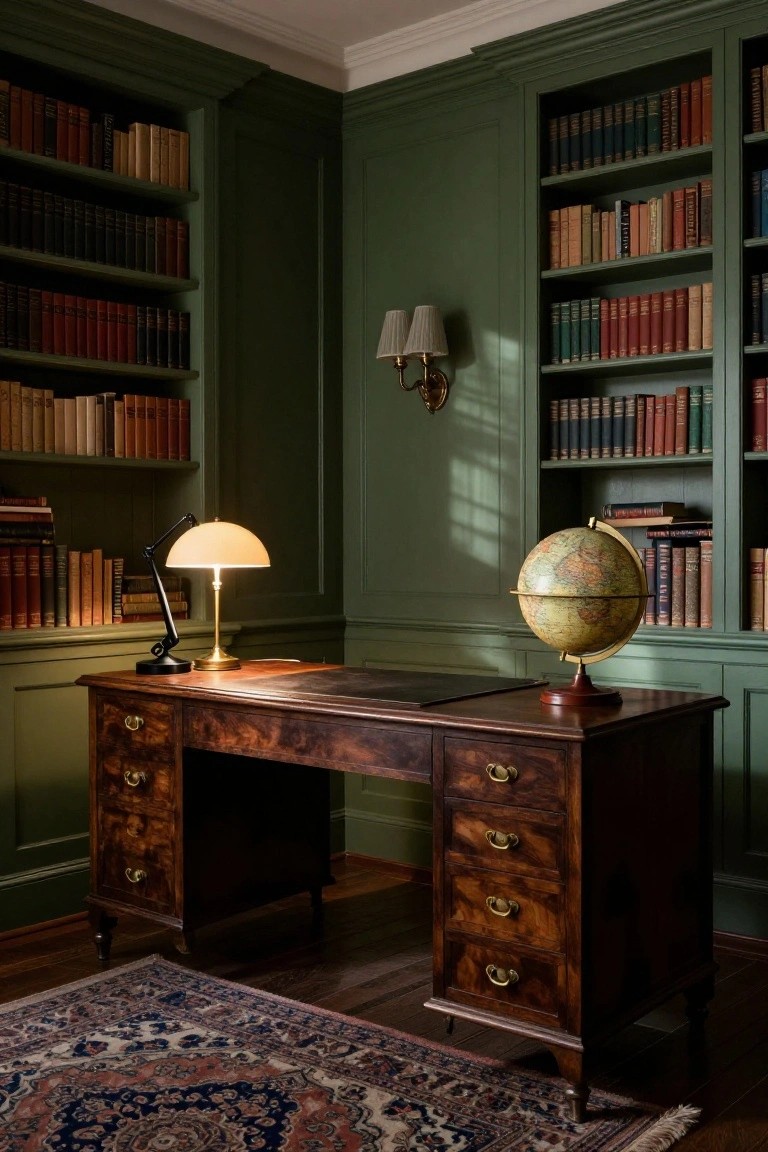
Deep green walls like these make a small office feel like a proper library without much effort. The paneling adds some structure and keeps things from looking too plain. It pulls in light from the lamps and windows just right, so the room stays cozy even on dim days. Bookshelves built right into the walls mean you get tons of storage without eating up floor space.
This setup works best in attics or any tight room where you want to feel wrapped up. Paint or panel over plain drywall, then add shelves floor to ceiling. Skip super bright greens, though. Go darker for that settled-in look. A wooden desk in the center keeps it practical.
Attic Office with Desk by the Window
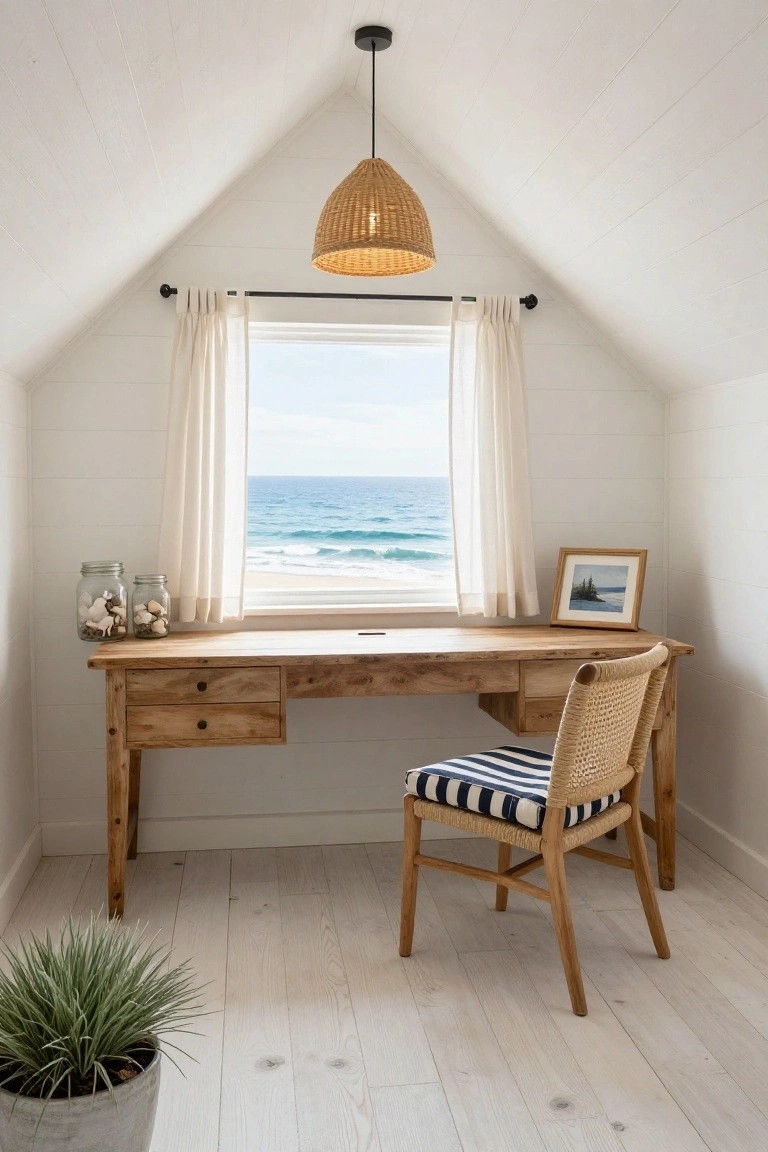
One simple way to make an attic office feel special is to tuck the desk right under the large end window. Here the wooden desk sits snug against the sloped white ceiling, pulling in tons of natural light from the ocean outside. That view of waves and beach turns a tight space into something peaceful and productive. No need for fancy extras. Just the basics like jars of shells on the desk add a little beach touch.
This setup works best in attics with a good gable window facing something nice, like water or trees. Position your desk to face out, add a comfy chair maybe rattan like this one, and keep walls light to bounce the light around. It suits coastal spots obviously, but any home with a view. Watch for glare though. A sheer curtain helps on bright days.
Recommended Products

Electric Height Adjustable Standing Desk for Comfortable Work - Switch effortlessly between sitting and standing with this electric standing desk. The smooth height adjustment from 28.35" to 46.46" helps promote a more comfortable working posture and keeps your energy flowing throughout the workday. Ideal for home offices, gaming setups, and productivity workspaces.
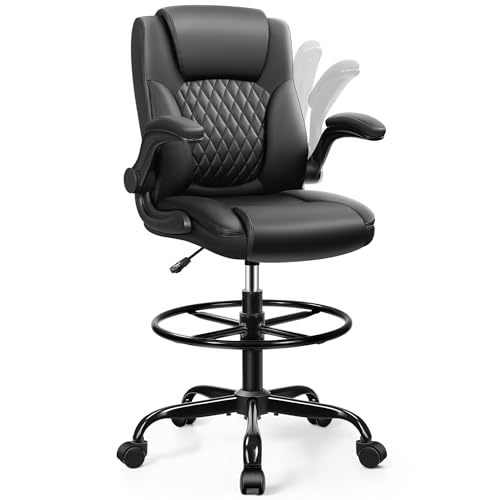
Built for Standing Desk & Elevated Workstations:The standing chair seat cushion and backrest are generously padded with soft natural sponge, ensuring a plush and comfortable sitting experience. confident support at elevated heights. Ideal for drafting, drawing, and focused desk work in home offices or creative studios.

Electric Height Adjustment – Sit or Stand Any Time: Quiet motor (under 52 dB) with memory presets. Easily switch between sitting and standing from 28.3" to 46.5" to help reduce sedentary time
House-Shaped Built-In Desk Hutch
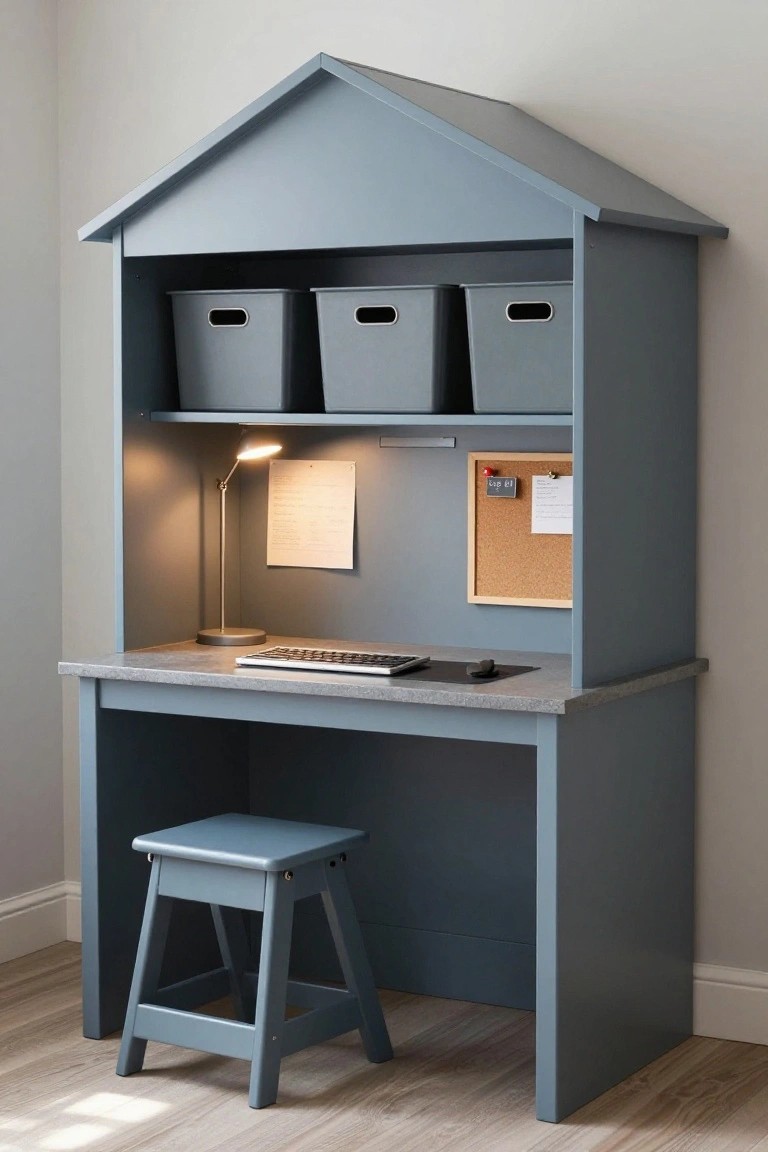
One simple way to make an attic office feel special is this house-shaped desk hutch. It has a peaked roofline that echoes the attic slope, with open shelves above for bins and a lower desk surface right where you need it. The whole thing hugs the wall, saving floor space while giving you spots for papers and supplies. It’s practical but with a touch of whimsy that keeps the room from feeling too plain.
You can pull this off in tight attic corners or any small upstairs spot. Paint it a soft blue like this to blend with neutral walls. Pair it with a basic stool and task lamp for everyday use. Just measure your wall height first, since the roof adds extra inches. It suits family homes especially, where kids might share the space for homework.
Pegboard Wall Storage
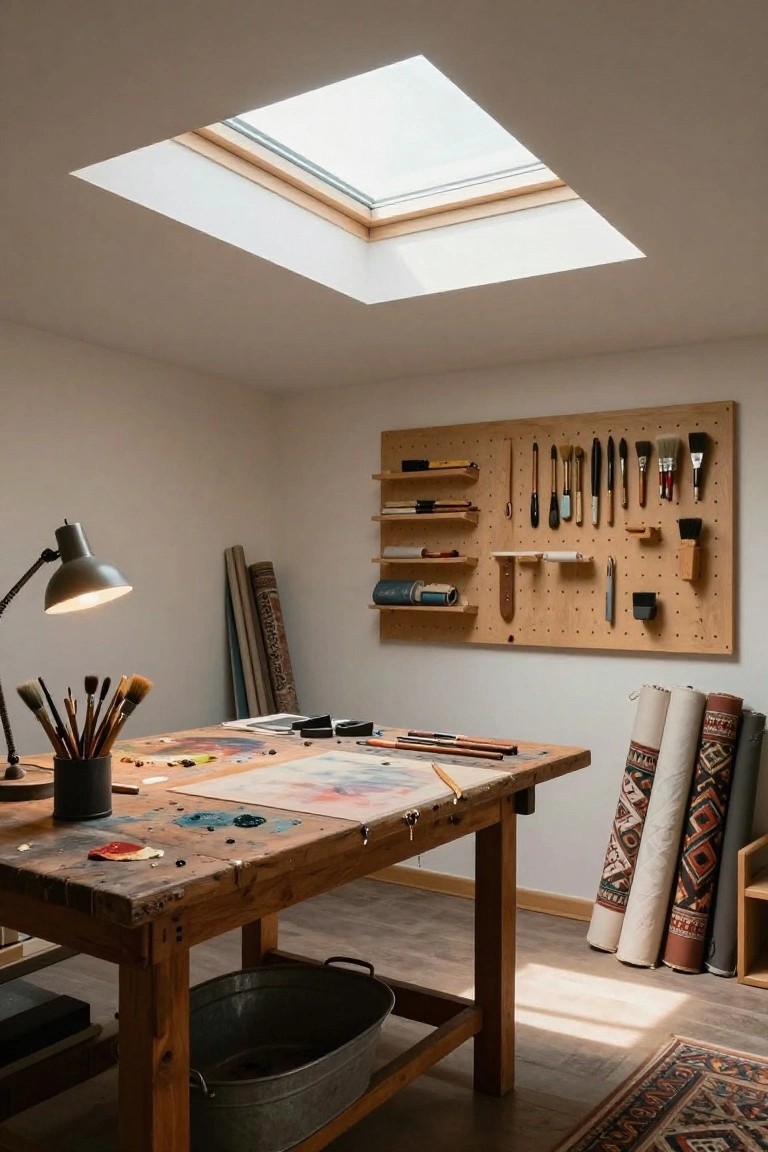
A big wooden pegboard covers one wall in this attic office. It holds brushes, tools, rollers, and jars right where you need them. No digging through drawers. Keeps the workbench clear for actual work.
This setup shines in tight attic spaces. Pick a wall away from the desk. Add shelves and hooks to fit your stuff, whether paints or office supplies. Works in any workspace, really. Just make sure it’s sturdy.
Recommended Products

BULIT TO LAST: Boasts a large 8 Gallon (32L) hidden storage capacity, measuring 12.2"D x 16.1"W x 12.2"H (31 x 41 x 31 cm). Perfect for storing clothes, blankets, toys, books and magazines to tidy up your living room, bedroom and entryway. Built with solid MDF panels and reinforced heavy-duty frame, this storage ottoman holds up to 286 lbs (130 kg) static weight. It works great as a comfortable extra seat, footrest for daily use.

[Tuck Away Your Items] Stow away your books, blankets, and bed linens in this 12.2"D x 16.1"W x 12.2"H (31 x 41 x 31 cm) ottoman to hide the chaos for a tidy space

【Perfect Footrest】Length 17 x width 13 x height 13 inches (43 x 33 x 33 cm), a comfortable footrest size with thickened, high quality soft foam for comfortable foot spacing. By reducing pressure on the legs, placing your feet on the footstool helps prevent blood clots associated with deep vein thrombosis, reduces pressure on the lower back, and reduces swelling and varicose veins.
Tatami Mats for a Calm Floor-Level Office
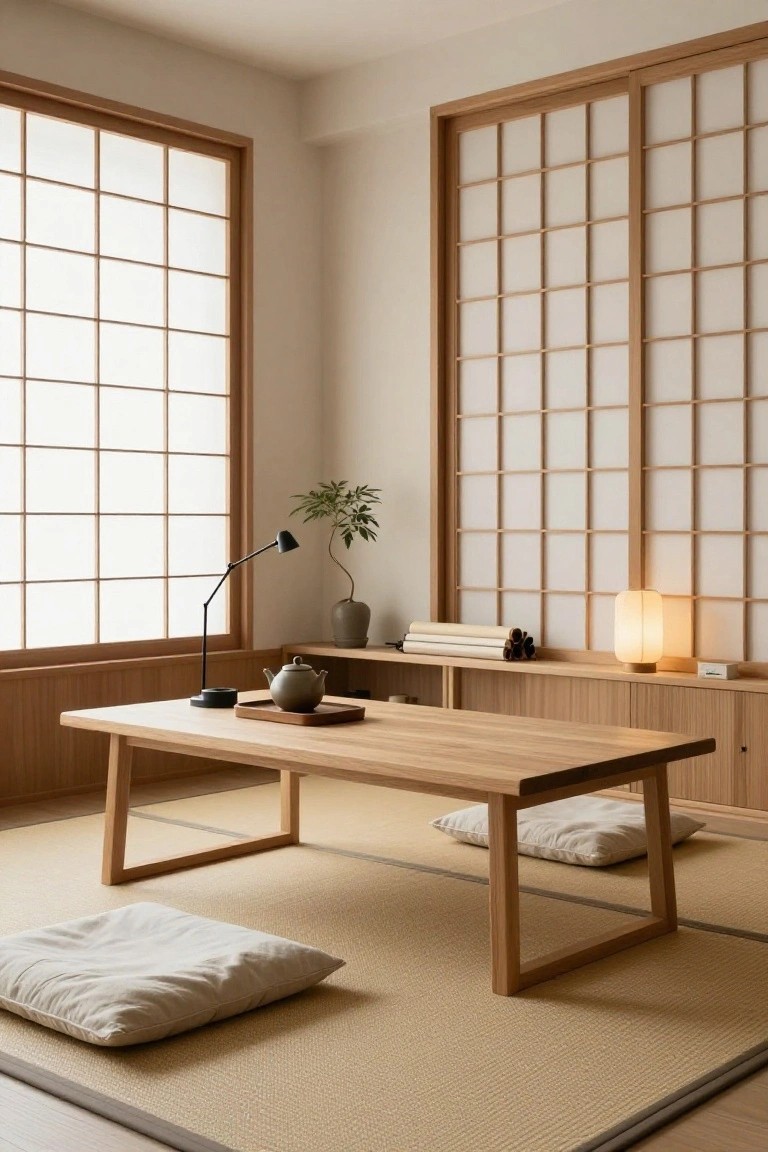
A low wooden table sits directly on light-colored tatami mats, paired with simple cushions for seating. This floor-based setup keeps the room feeling spacious and relaxed, letting natural light filter softly through shoji screens. It’s a smart way to avoid bulky furniture that can make tight spaces feel closed in.
Try this in an attic office with sloped ceilings, where traditional desks might not fit well. The mats add warmth underfoot and a bit of texture, suiting homes that want a quiet work spot without much visual clutter. Just make sure the floor is level enough for comfort.
Wooden Desk on Brass Legs
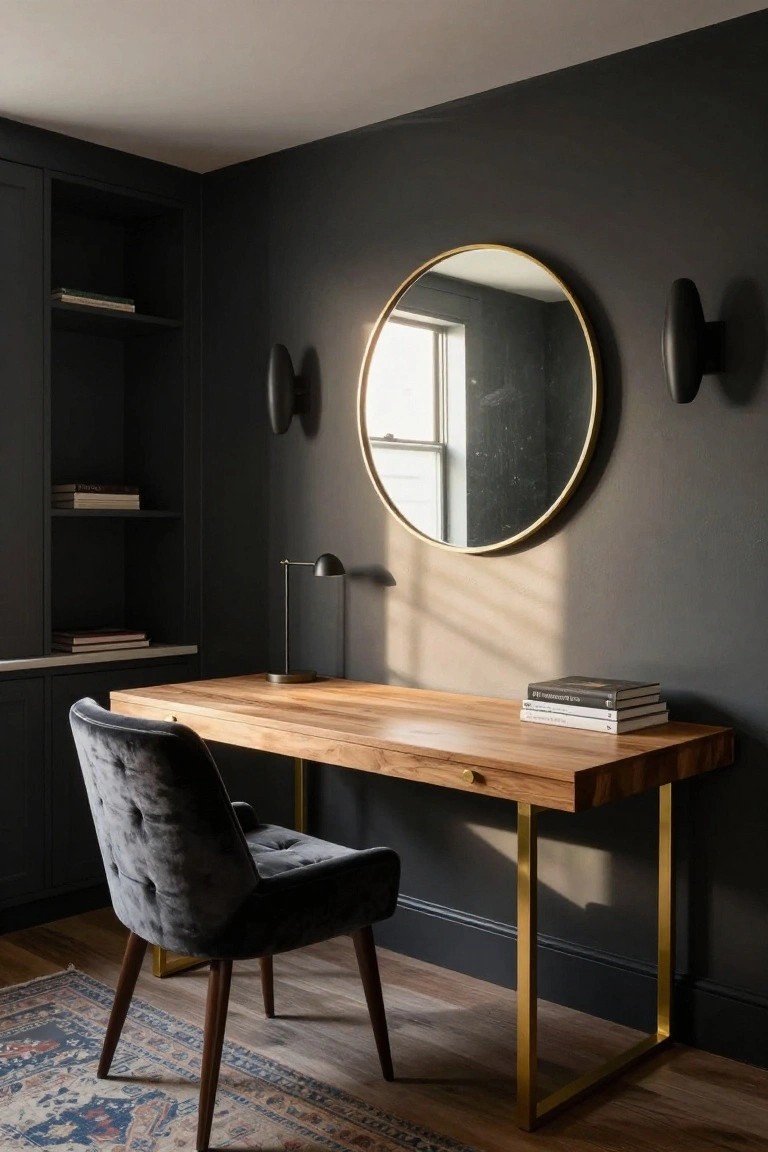
A wooden desk like this one stands out nicely in an attic office with dark walls. The brass legs keep it from feeling too heavy. They catch the light from the window and mirror, making the space feel brighter and more open. It’s a simple swap that adds some polish.
Try this in compact attics or studies where you need furniture that doesn’t crowd the room. The metal legs let you slide things underneath easily. Works best with neutral wood tops and dark surroundings. Skip it if your style leans too rustic.
Recommended Products

Exceptional Sound Absorption:These pyramid acoustic panels are engineered to effectively absorb sound waves, reducing echo and reverberation. With a high NRC (Noise Reduction Coefficient), they create a quieter, more acoustically balanced environment, ideal for recording studios, home theaters, and offices.
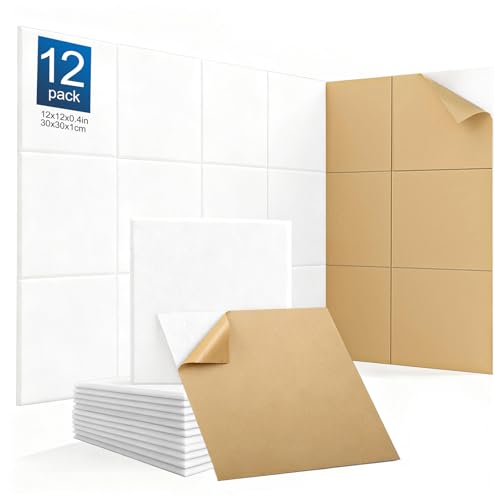
【High-Efficiency Noise Reduction and Soundproofing Acoustic Panels】 These self-adhesive acoustic wall panels are precision-cut from 100% high-density polyester fiber, effectively absorbing noise and blocking sound transmission. acoustic panels significantly reduce sound reflections and echoes, markedly enhancing speech clarity and audio purity. They effortlessly create a quieter, more comfortable environment, allowing you to focus on work or enjoy life.

【High-Quality Safe Materials】This acoustic panels are made of 100% high-density polyester fiber, which can effectively absorb high-frequency/low-frequency noise. The soundproof wall panels are odorless and non-toxic, and can be safely installed in the mother-and-child room/pet space/podcast/recording studio, bringing health and tranquility.
Attic Corner with Two Desks
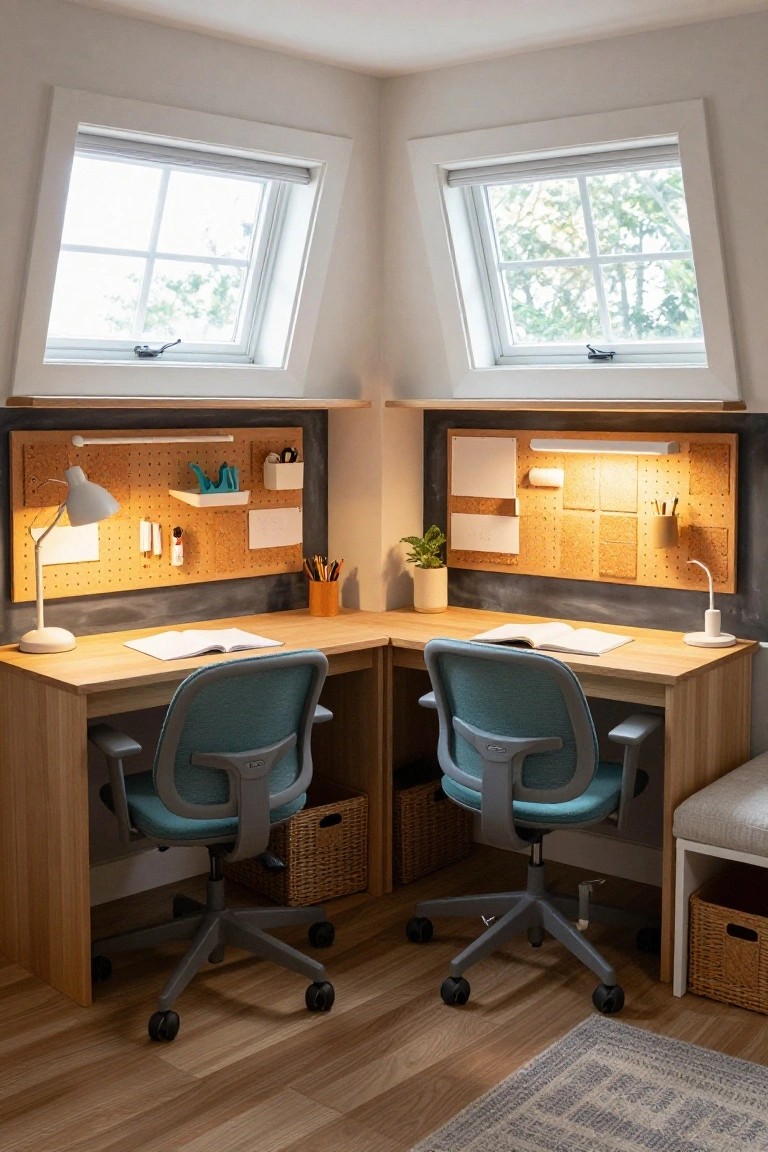
Attics often have tricky corners under slanted roofs, but two desks tucked right there turn wasted space into a workable office spot. Light wood desks face each other with teal chairs that roll easy, and corkboard panels above hold notes, pens, and clips handy. Natural light from the big skylight-style windows keeps it bright all day.
This fits homes with shared workspaces, like for kids studying or adults splitting remote work. Line the desks L-shaped along the walls, add simple lamps, and use baskets below for papers. Measure knee room under the eaves first, or taller folks might bump their heads.
Custom Wooden Built-Ins Line the Attic Office
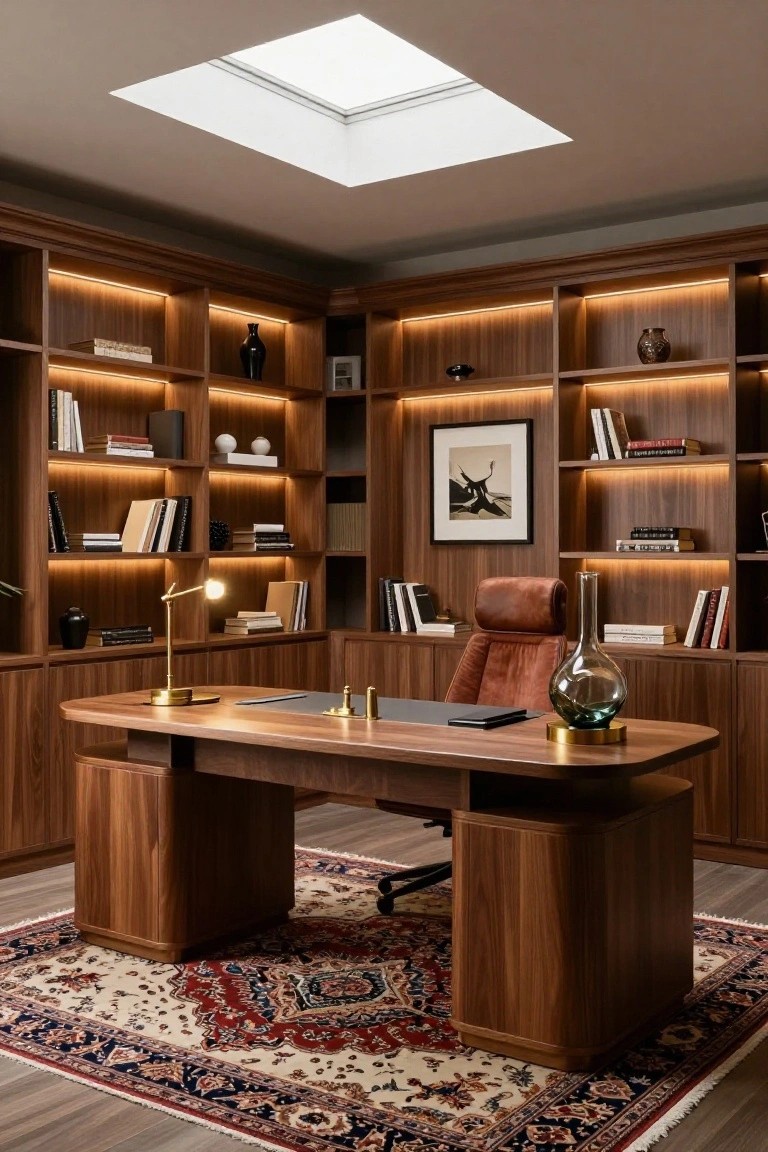
One smart way to make an attic office feel like a real room is with custom wooden built-ins that wrap right around the corners. Here you see walnut shelves and cabinets filling the walls floor to ceiling, holding books and a few decorative pieces without crowding the space. That overhead skylight lets in plenty of natural light to keep it from feeling closed in. The wood adds a warm tone that makes the whole setup cozy and focused on work.
These built-ins work best in tight attic spots where you need storage but don’t want freestanding furniture taking up floor space. Go for a matching desk tucked right into the corner like this one, curved edges and all. It suits homes with sloped ceilings since the lower shelves stay practical. Just measure twice before building, or hunt for modular pieces that fit.
Compact Desk and Bench for Attic Offices
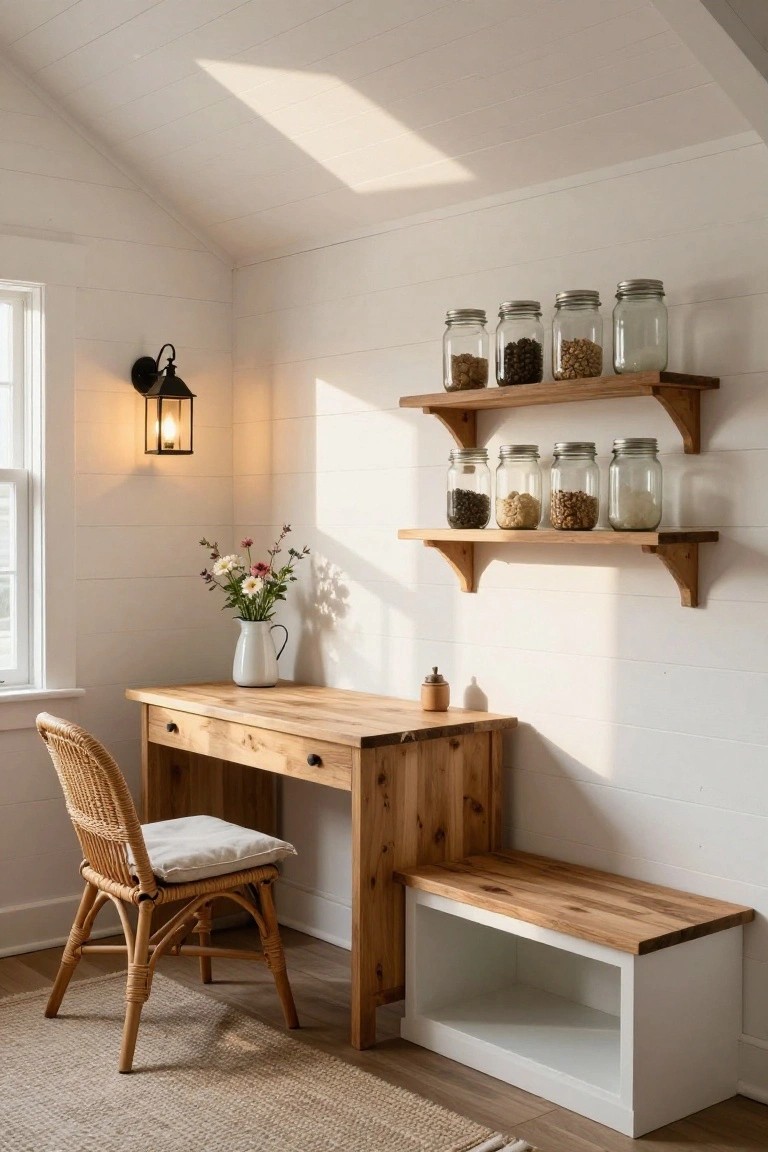
This setup uses a simple wooden desk paired right with a matching bench that slides underneath. It fits perfectly under the low attic ceiling, leaving room to move around without feeling cramped. The warm wood tone keeps things cozy against those white shiplap walls, and it adds built-in storage in the bench cubby for books or supplies.
Try this in any tight attic spot where headroom drops off quick. It works best in homes with a rustic or farmhouse feel, but you could stain the wood lighter for a cleaner look. Just measure your slope first… no one wants to bump their head mid-workday.
Compact Attic Desk Under Sloped Ceilings
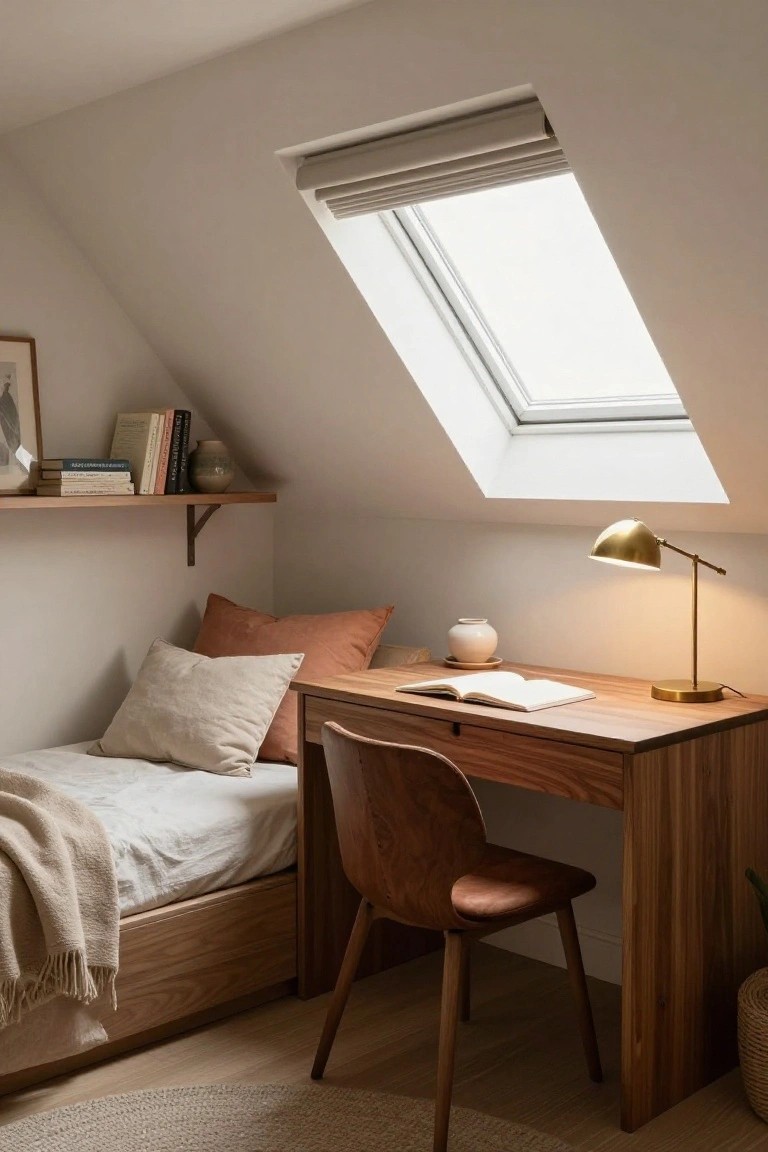
Attics often have those tricky sloped areas that waste space. But fitting a low wooden desk right under the eaves turns it into a real workspace. In this setup, the desk sits snug with a simple chair and a gold desk lamp, while a skylight overhead lets in natural light. It keeps things open and useful without crowding the room.
Try this in a small attic you’re converting to an office. Warm wood like walnut warms up plain white walls and pairs well with soft linens on a nearby low bed. It’s good for homes with limited space… just make sure the slope gives enough headroom at the desk. Add floating shelves for books to keep it practical.
Plant-Filled Attic Office
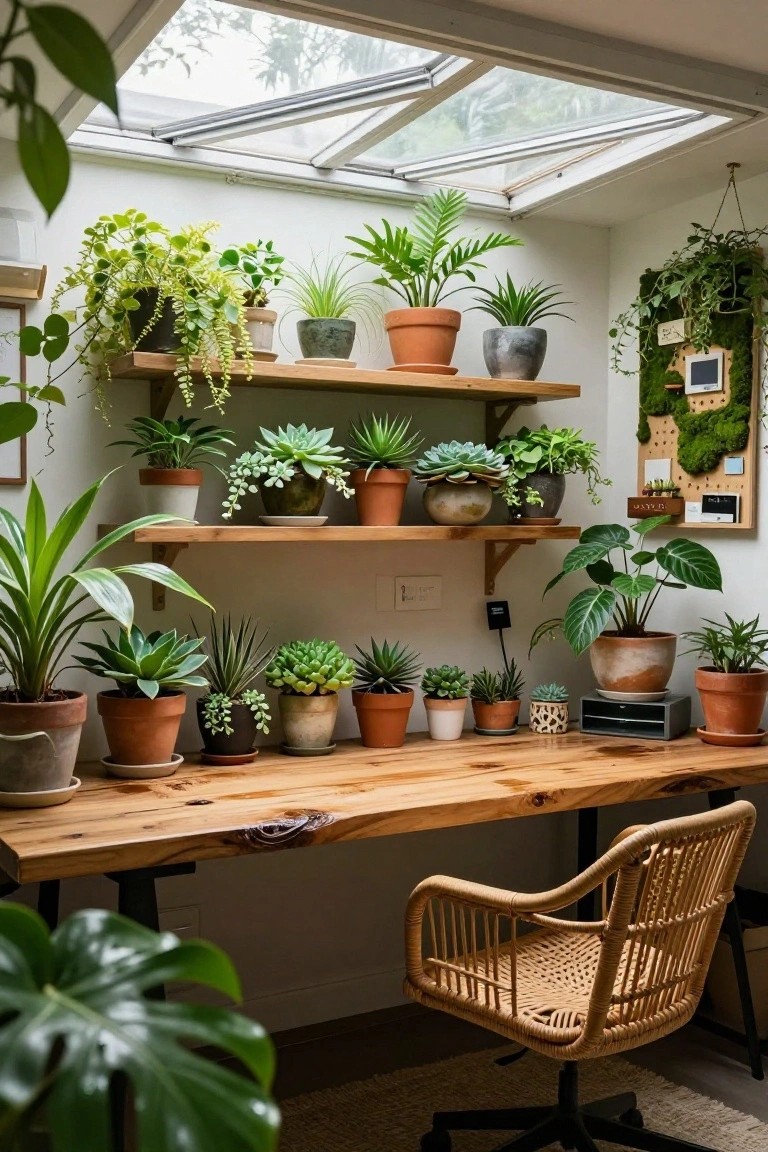
Attics often feel a bit tight and dim. But this setup changes that with shelves full of plants wrapping around the desk area. A mix of succulents, ferns, and trailing greens sits in simple terracotta and ceramic pots. The big skylight pulls in soft light that keeps it all thriving and makes the space feel open.
Try this in any attic room with overhead windows. Mount floating wood shelves at different levels for easy reach. Pick tough plants that handle indoor light. It works great for home offices… turns a plain spot into something calming without much cost.
Attic Standing Desk Setup
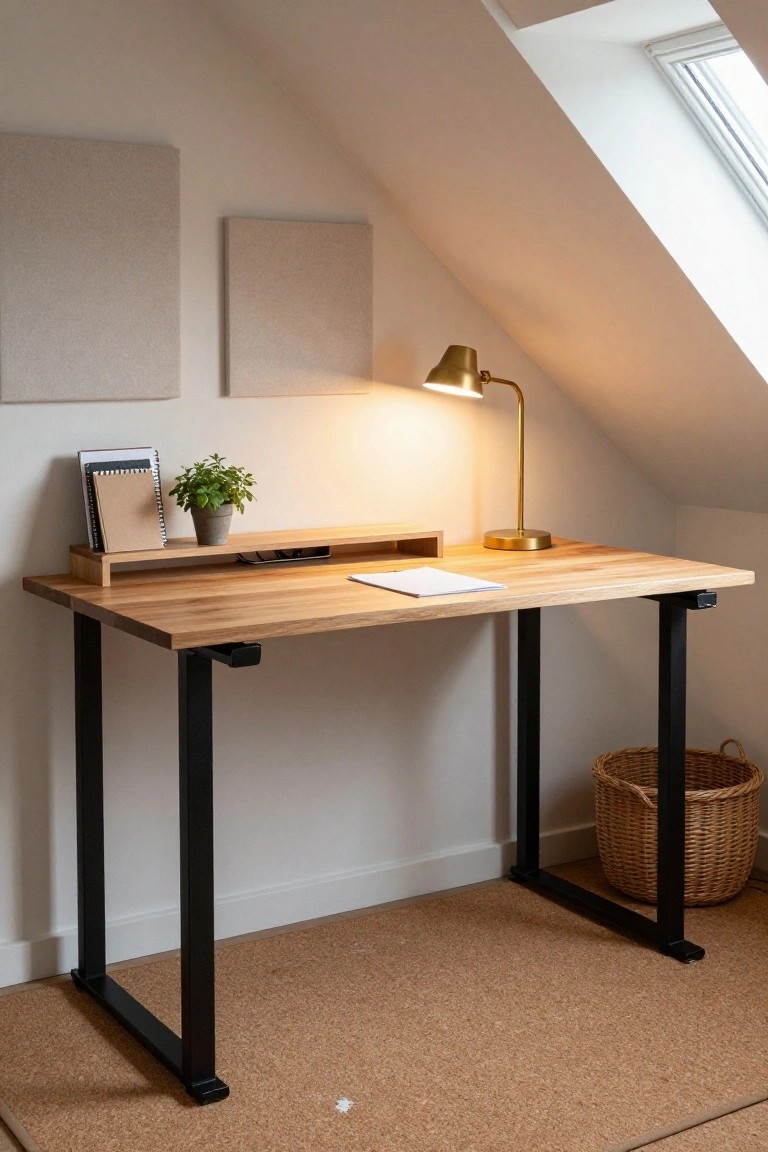
A basic standing desk works great in an attic office where the ceiling slopes low. Here it’s a light wood top on black metal legs, with a simple shelf up top for a monitor or notebooks. That shelf keeps the desk surface clear, and the adjustable height lets you stand or sit without bumping your head. It’s practical without taking much space.
This kind of desk suits small attic conversions best, especially if you’re working from home up there. Go for butcher block wood and slim legs to keep it airy. Add a task lamp and a plant nearby… and you’re set. Just measure the slope first to avoid tight fits.
Eclectic Textiles Warm Attic Offices
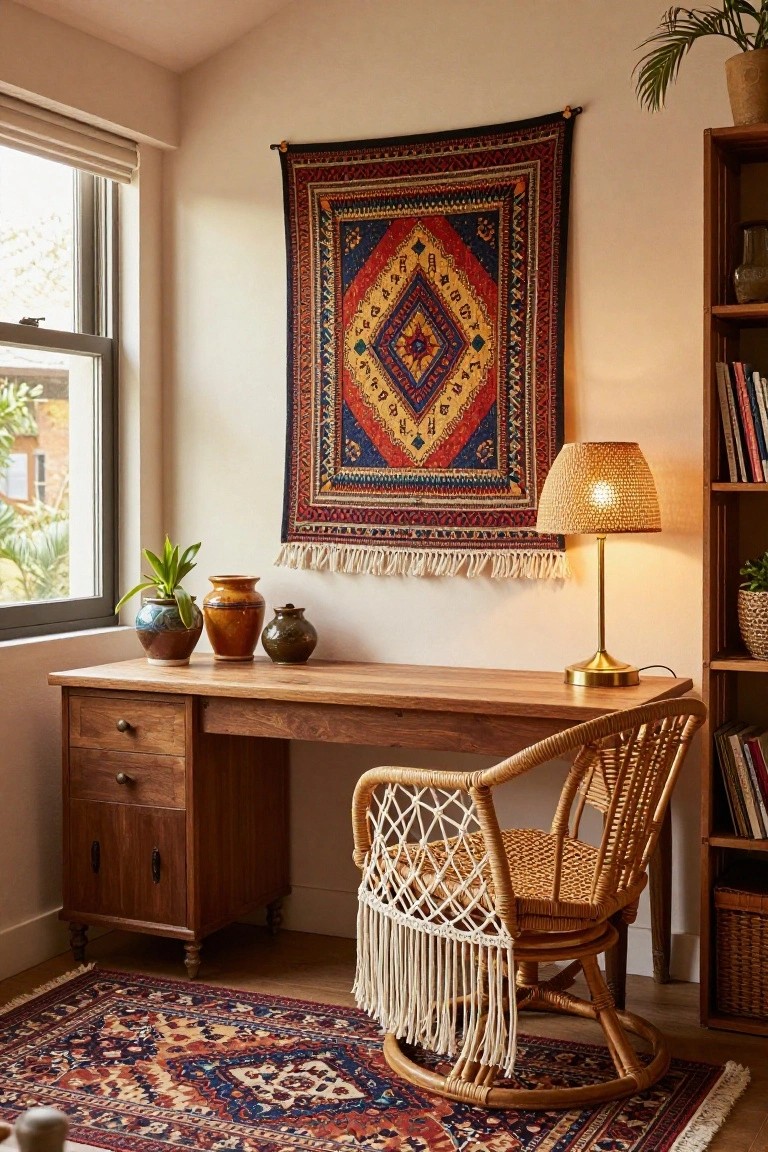
A simple wooden desk sits in this attic office, paired with a rattan chair and softened by a large Persian rug on the floor. A matching tapestry hangs on the wall nearby. Together, these bold patterns fill the sloped-ceiling space with color and texture. They turn a basic setup into something cozy and personal, without much effort.
This look works best in tight attic nooks where plain walls might feel cold. Layer one big rug under your desk, then add a textile wall hanging for scale. Stick to warm reds and blues if you want energy. Natural wood furniture keeps it grounded. Avoid too many patterns elsewhere… or it gets busy.
Warm Wood Desk Areas
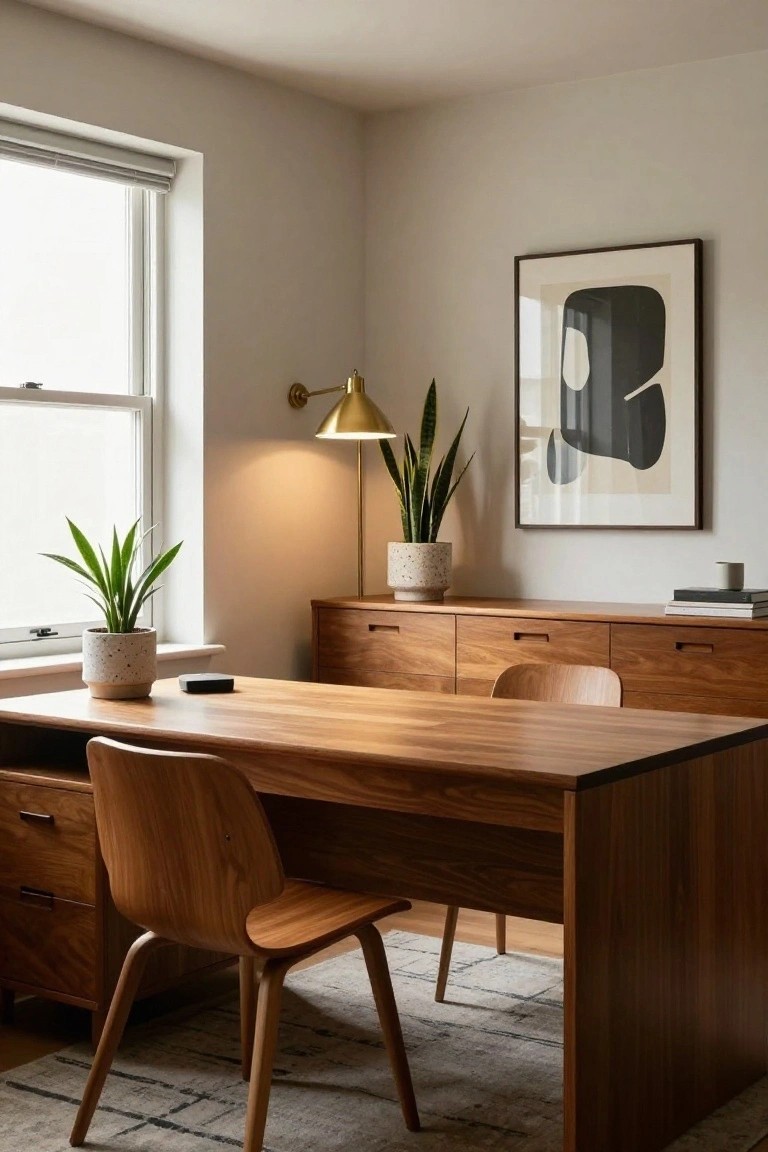
A simple wooden desk like this one warms up a plain office corner right away. The matching credenza and chair keep everything tied together, and those potted snake plants on the desk and floor bring in some green without much fuss. It turns a basic spot into something you actually want to sit at every day.
This works best in attics or any tight room with good window light. Go for solid wood tones that aren’t too dark, pair it with a light rug, and skip heavy decor. Just watch the scale, the desk shouldn’t crowd the chair space.
Built-In Attic Corner Desk
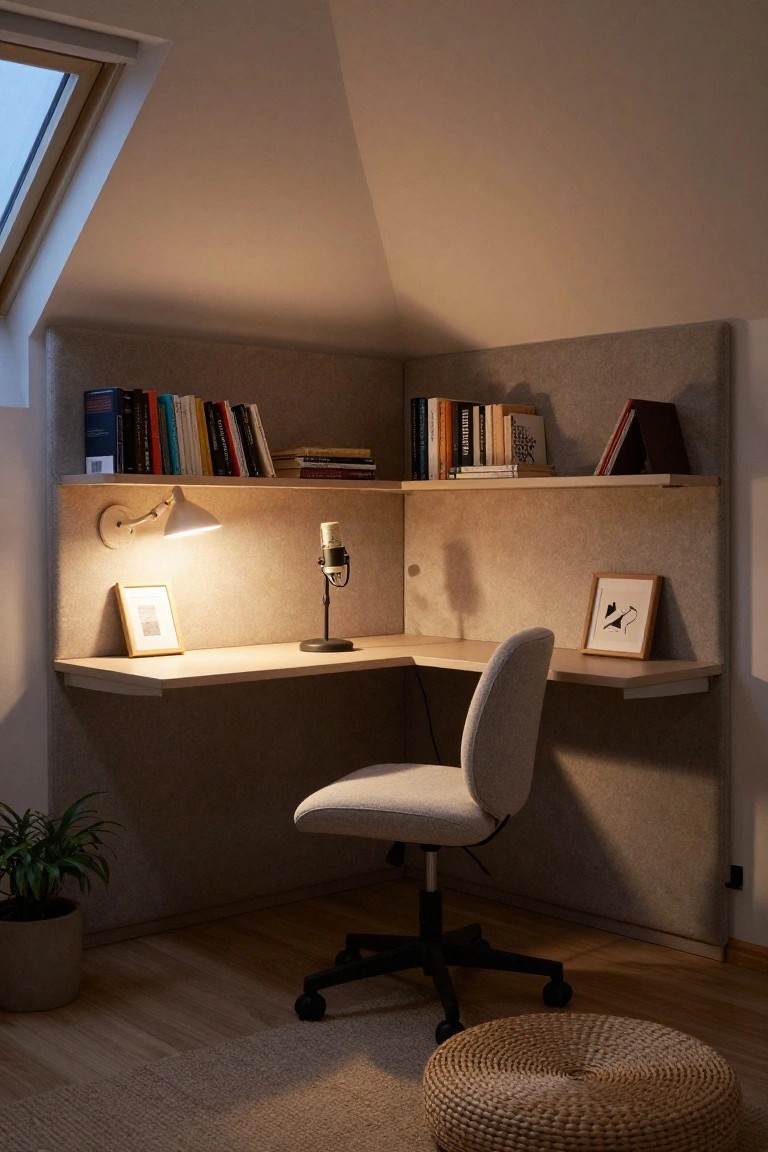
Turning a tight attic corner into a workable desk spot is smart when space is odd-shaped. This one uses floating wood shelves for books and a simple desk surface tucked under the slope. The felt-covered walls help with sound too, if you’re on calls or recording.
It fits best in unused nooks where walls meet at angles. Add a basic swivel chair and a plant for life… just make sure the lamp reaches everywhere. Keeps things practical without crowding the room.
Frequently Asked Questions
Q: How do I check if my attic floor can handle a desk setup? A: Start by eyeballing the floor joists from below. Look for solid wood without cracks or sagging. Grab a contractor for a quick load check if you spot any red flags.
Q: What do I do with those steep sloped ceilings? A: Build custom cabinetry that hugs the walls under the slopes. Tuck your desk against the tallest part in the middle. You gain storage without losing headroom.
Q: How do I brighten up a dark attic office? A: Cut in a few skylights or dormer windows right away. They flood the space with natural light. Pair that with white walls to bounce it around.
Q: Will my attic stay warm enough in winter? A: Spray foam insulation seals gaps best against drafts. Add a small space heater for chilly days. And vent properly to avoid moisture buildup.
