

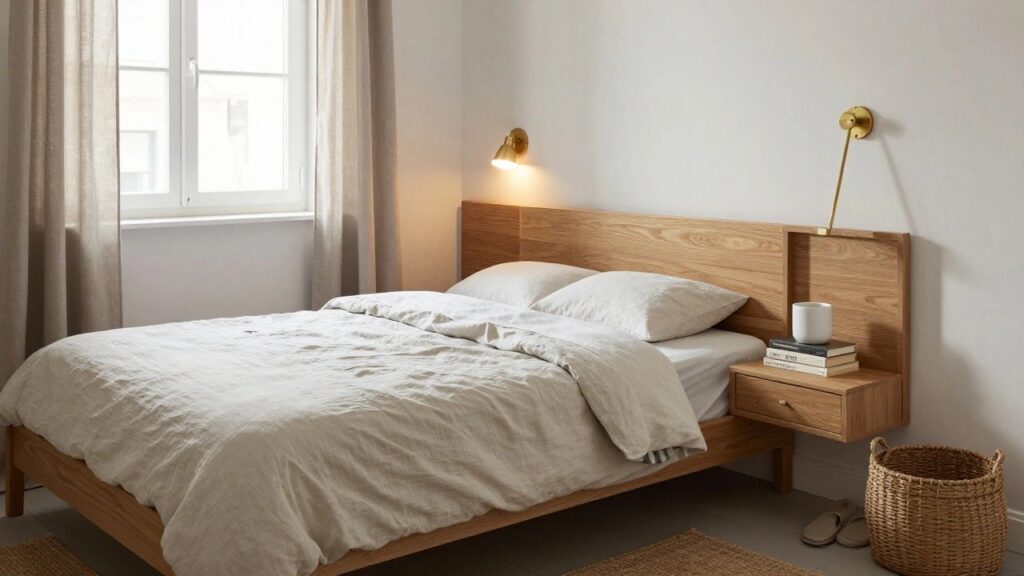
When I first tried to furnish my own small bedroom I quickly learned that every piece has to earn its spot or the whole room starts to feel cramped.
Bedside tables often end up being the spot where clutter builds fastest if they do not fit the scale of the space.
Layout really matters here.
I have seen setups where a narrow shelf or a floating option frees up floor space and suddenly the room feels easier to move through at night.
Some of these approaches are the kind I would test first because they address how people actually use the area beside the bed rather than just how it looks in photos.
Use A Wall-Mounted Shelf As A Nightstand
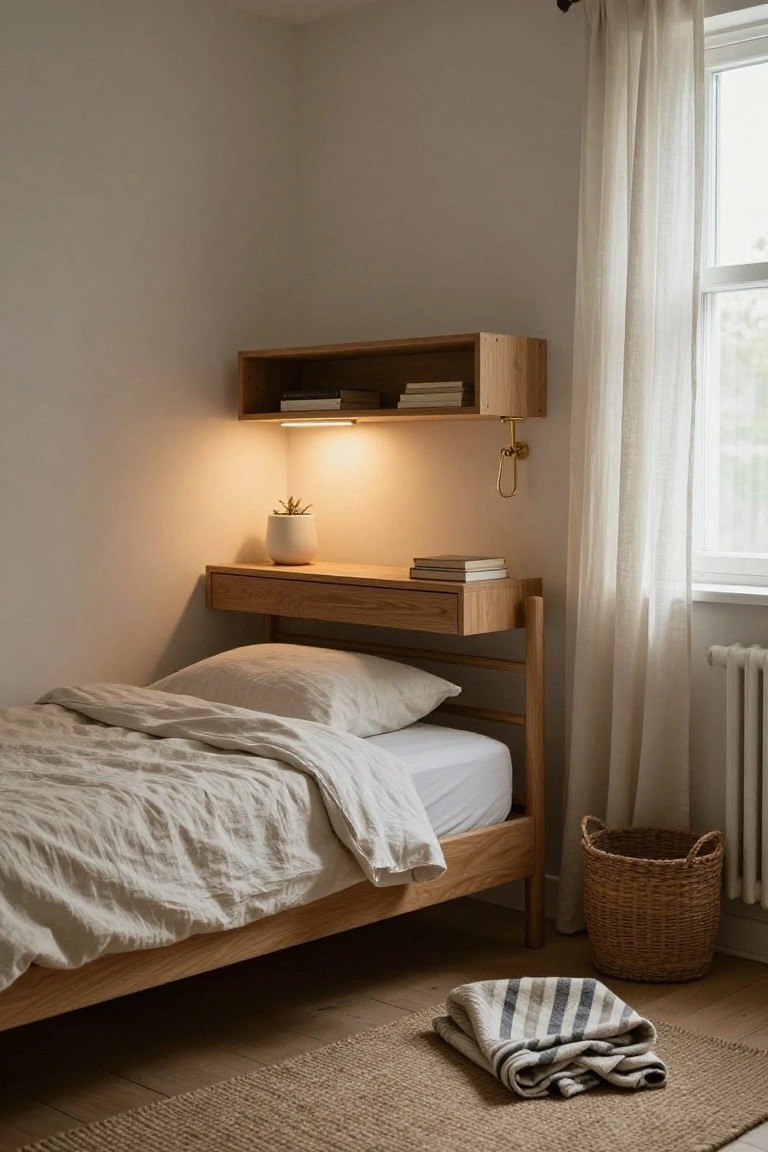
Small bedrooms often leave little room for a full nightstand beside the bed. A simple wall-mounted shelf solves that by giving you a surface for books and a lamp while keeping the floor clear.
This idea works well in narrow layouts or rooms with low ceilings. Keep the shelf at a comfortable height, add a shallow drawer if you need more storage, and make sure the wall can support the weight.
Floating Shelves Instead of Nightstands
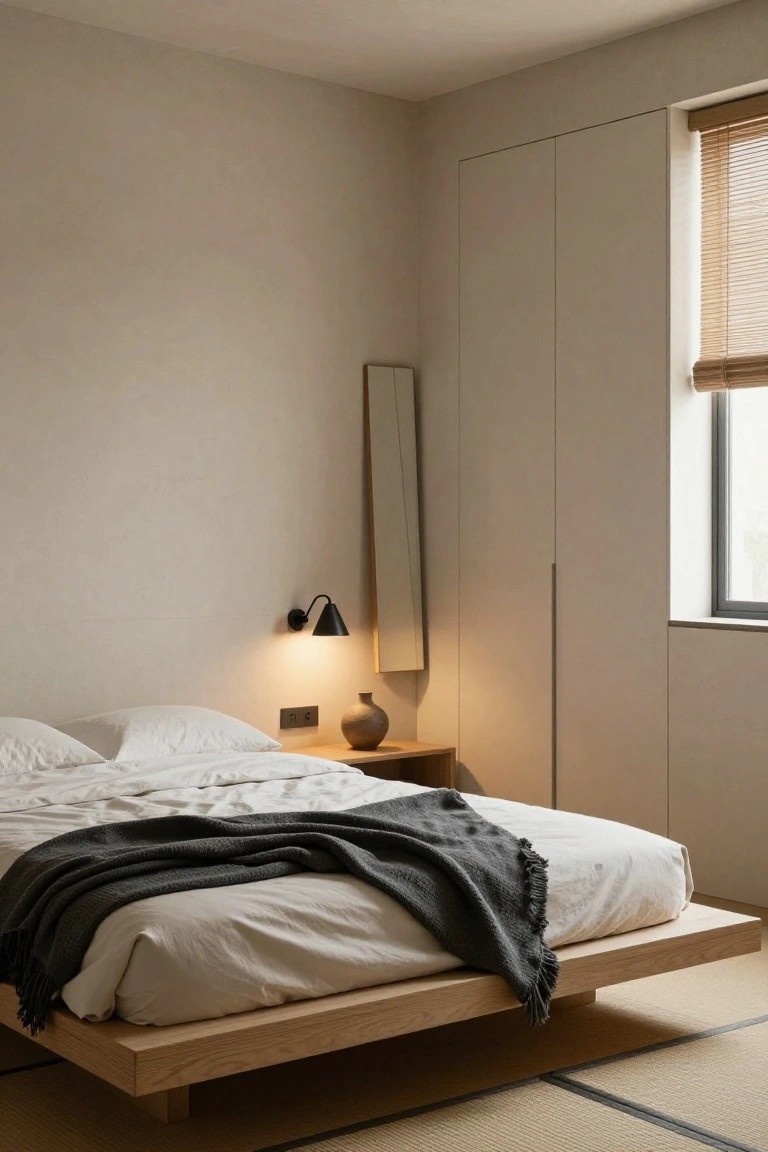
A small floating shelf gives you just enough room for a lamp and a couple of things without taking up floor space. In tight bedrooms this keeps the area around the bed open and makes the room feel less crowded.
Mount the shelf at bed height and pair it with a wall sconce so you do not need a lamp that sits on top. This setup works especially well with low platform beds and leaves more room to walk around the sides.
Use a Stool as a Bedside Table
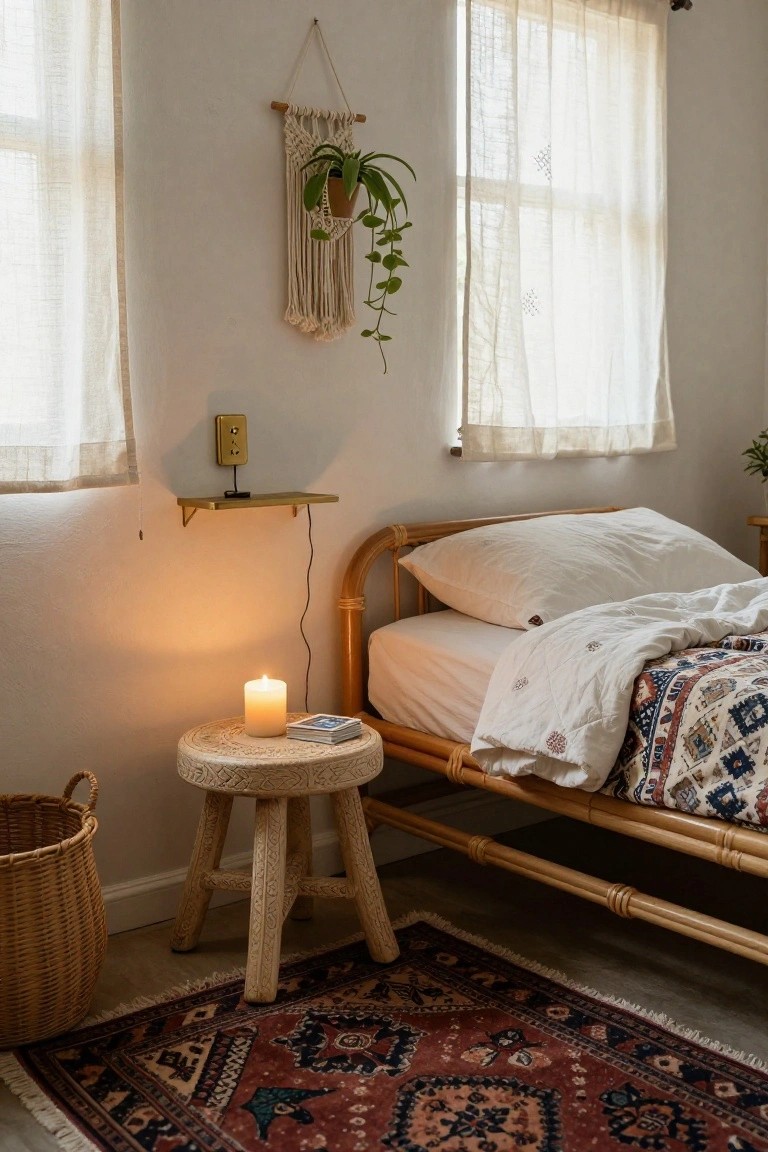
A small stool can work surprisingly well as a bedside table in a tight bedroom. It takes up less floor space than most nightstands while still giving you a surface for the basics like a lamp or a book.
This setup works best in rooms where you need to keep the area around the bed open for walking. Pick a sturdy stool with a flat top and set it close to the mattress. It suits simple or casual bedrooms and helps the space feel less crowded overall.
Wall Shelves That Double As A Bedside Table
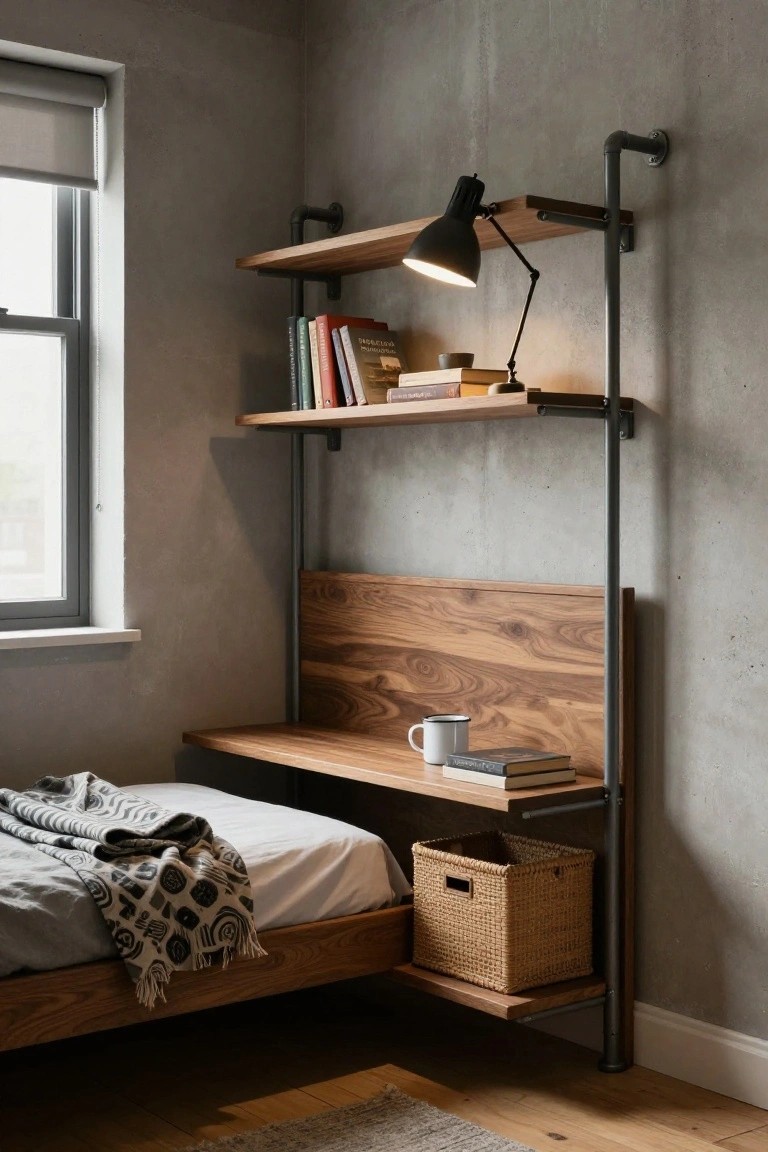
Small bedrooms often leave little room for a standard nightstand. A wall mounted setup with a wide shelf and lower ledge gives you a place to set things down without using up floor space next to the bed.
This approach works best in rooms where every inch counts. Keep the shelves at a comfortable height for reaching from the bed and use the lower section for baskets or slim storage to hold books and other items.
Narrow Pedestal Tables For Small Bedrooms
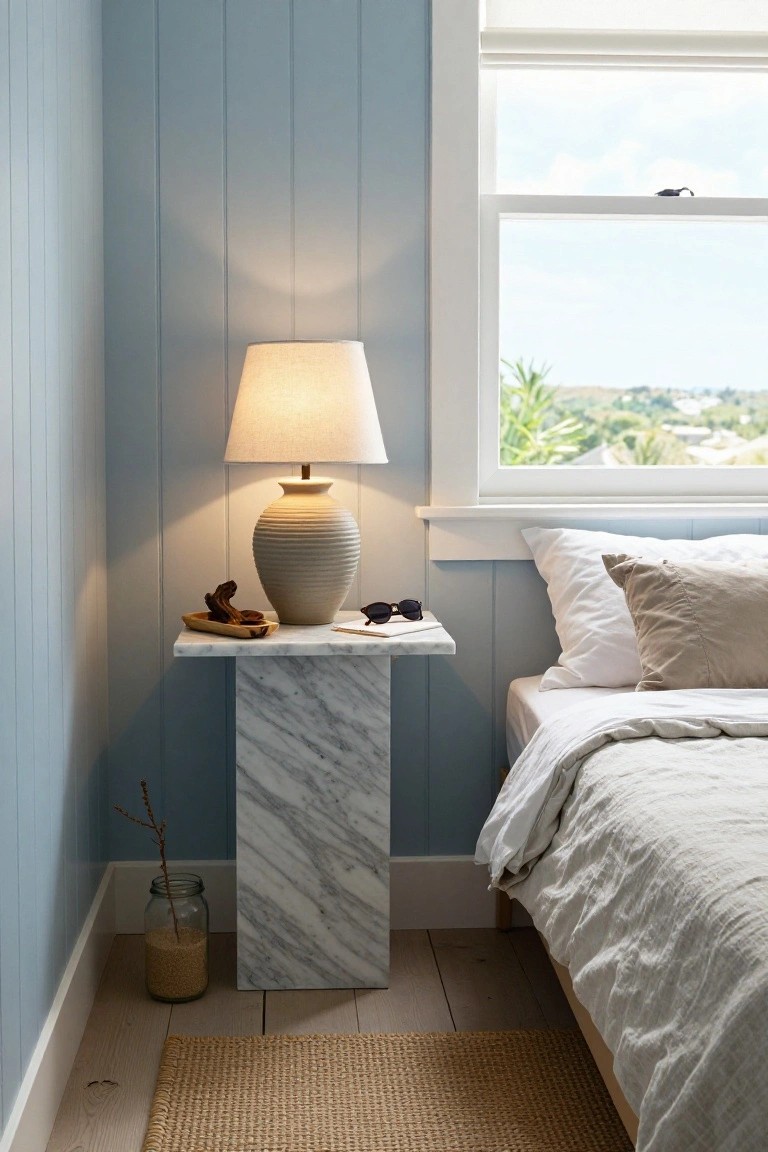
A pedestal table gives you a bedside surface without eating up much floor space. The narrow base lets the bed sit closer to the wall or window, which helps in rooms where every inch counts.
This works well in simple layouts where you want just enough room for a lamp and a book or two. Choose one with a solid bottom so it does not wobble, and keep the top clear to stop it from feeling crowded.
Wall Mounted Lamps Free Up Space on Small Nightstands
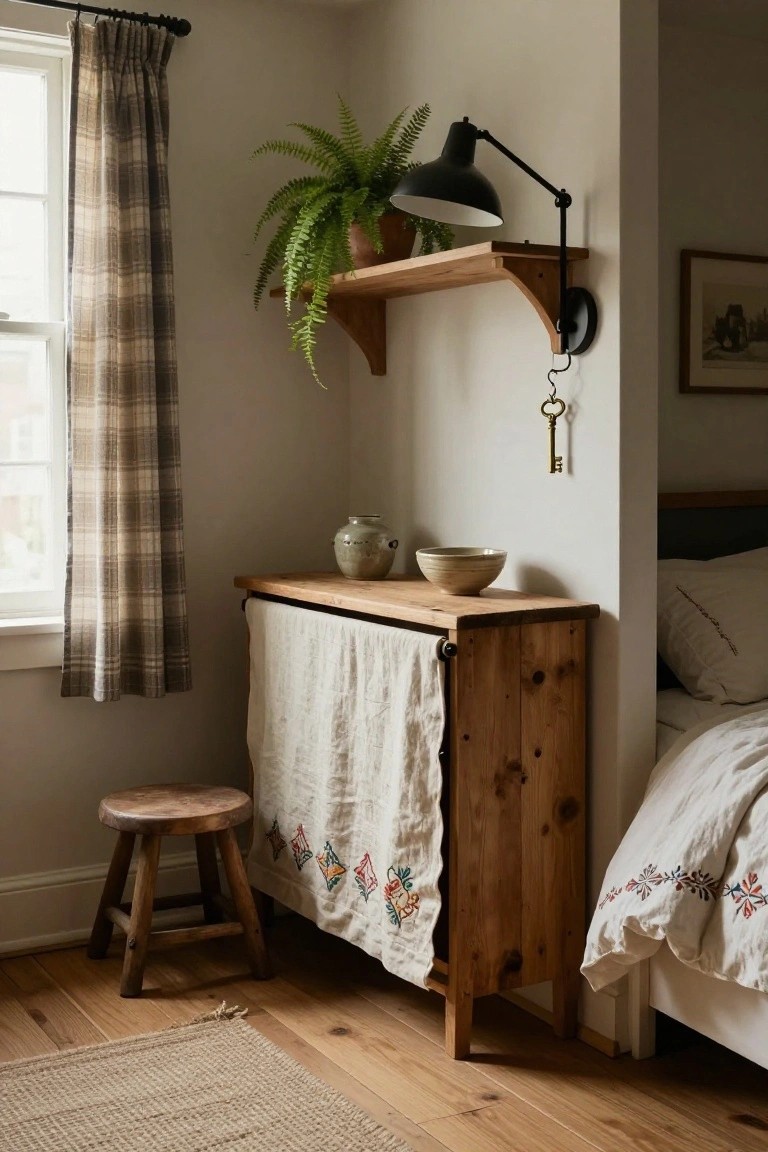
Mounting a lamp on the wall lets you keep the bedside surface clear and much smaller. You still get good light for reading without a bulky base taking up room on the table.
A narrow wooden cabinet works well in this setup because it tucks close to the bed and leaves walking space open. This approach suits small bedrooms where every inch counts and you want the area to feel less crowded.
Compact Nightstands With Mixed Storage
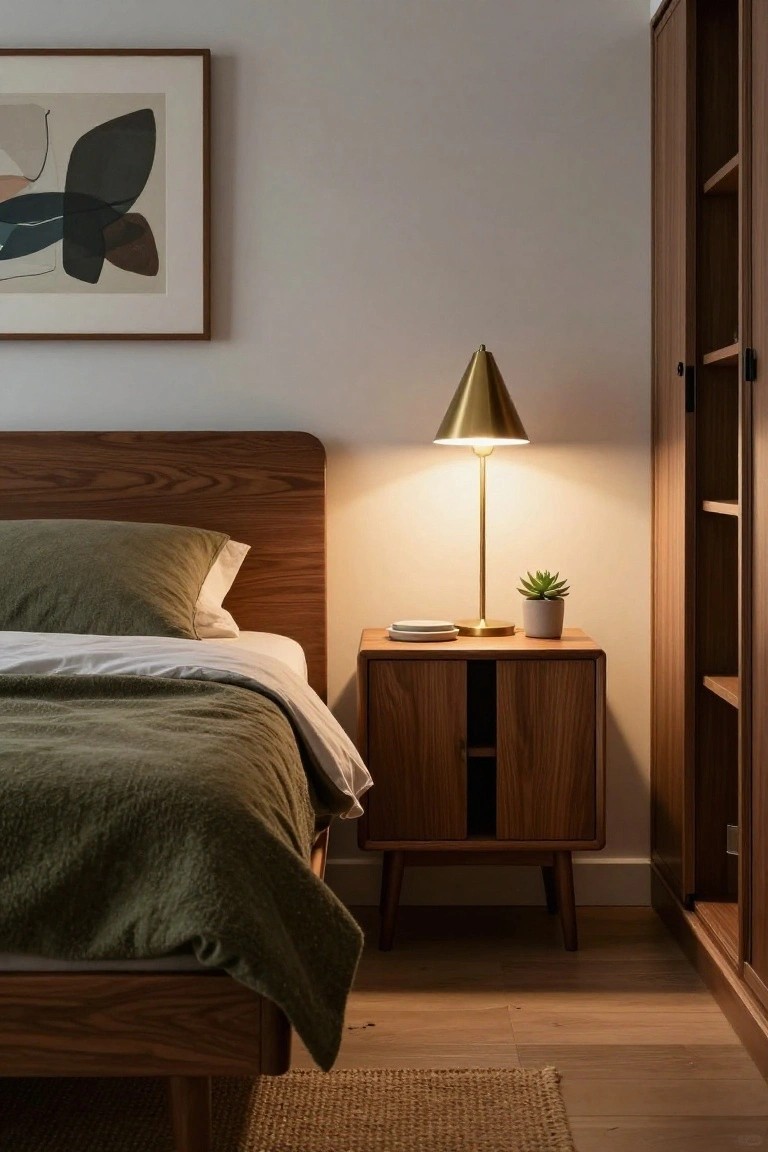
A small bedside table can do more than hold a lamp if it combines closed storage with a narrow open slot in the middle. This setup keeps everyday items within reach while hiding clutter behind doors, which helps the whole room feel less crowded.
It suits tight layouts where floor space is limited and works best next to a low bed frame. Choose one with simple legs so light can pass underneath and the area stays open and easy to clean.
A Rolling Cart Makes A Practical Bedside Table
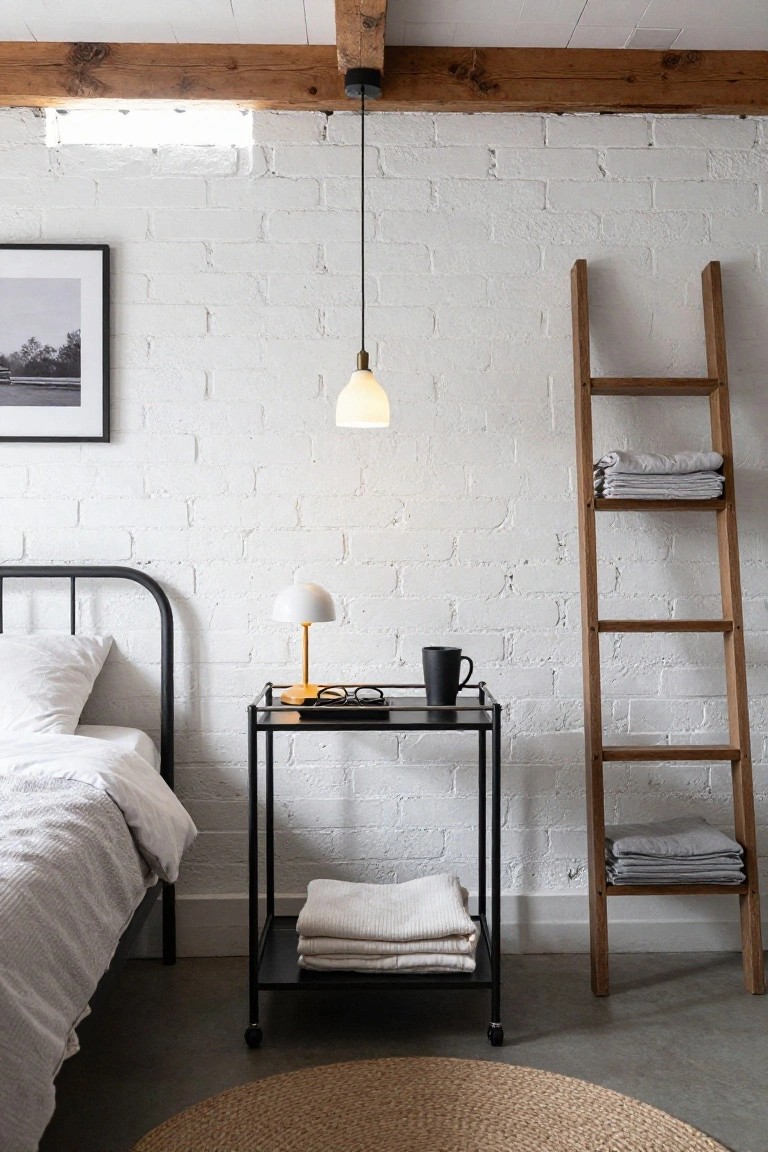
Many small bedrooms feel tight when you try to add a regular nightstand. A narrow cart takes up less floor space and still gives you room for a lamp, a glass of water, or whatever you reach for at night.
Set the cart on the side you use most and keep the bottom shelf for extra sheets or books. The wheels make it easy to roll out of the way for cleaning or when you want to change the layout later.
Use a Small Chest of Drawers
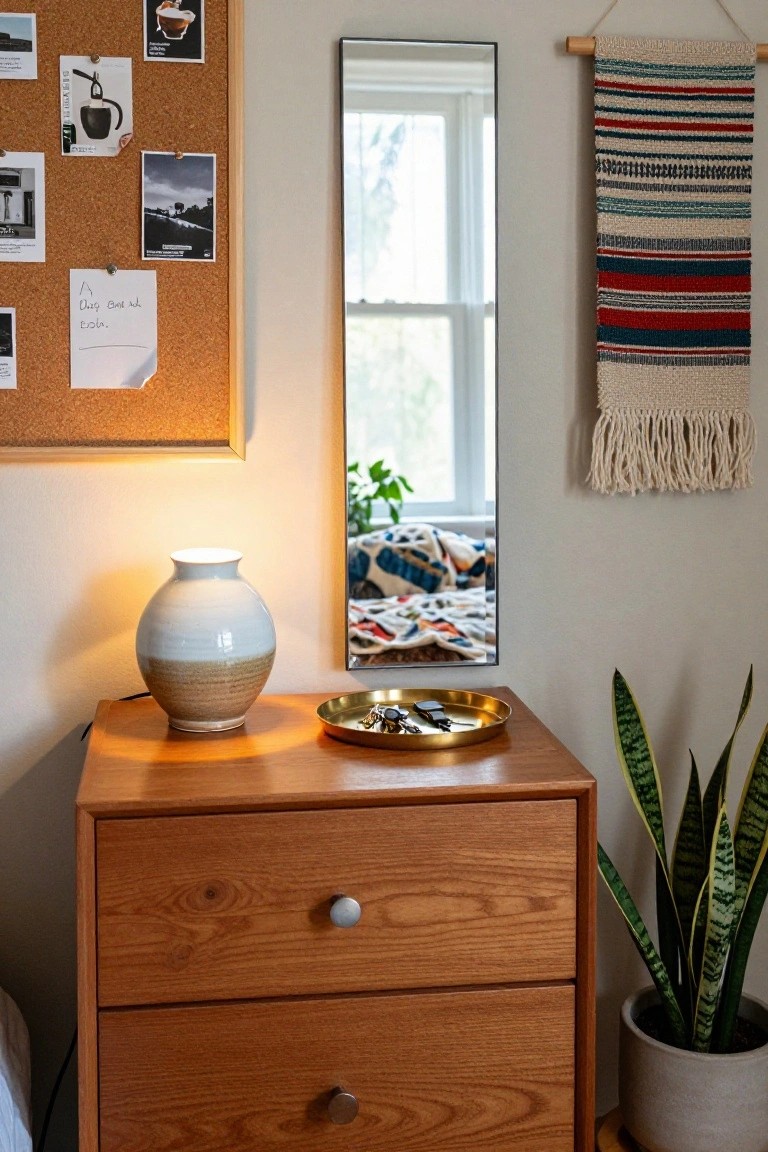
A small chest of drawers works nicely as a bedside table when floor space is limited. It gives you room on top for a lamp and daily items while the drawers handle folded clothes or extra bedding that would otherwise crowd the room.
This setup suits small bedrooms where you want one piece to do more than one job. Keep the top fairly clear and make sure the chest sits at a height that feels easy to reach from the bed.
Floating Shelves As Nightstands
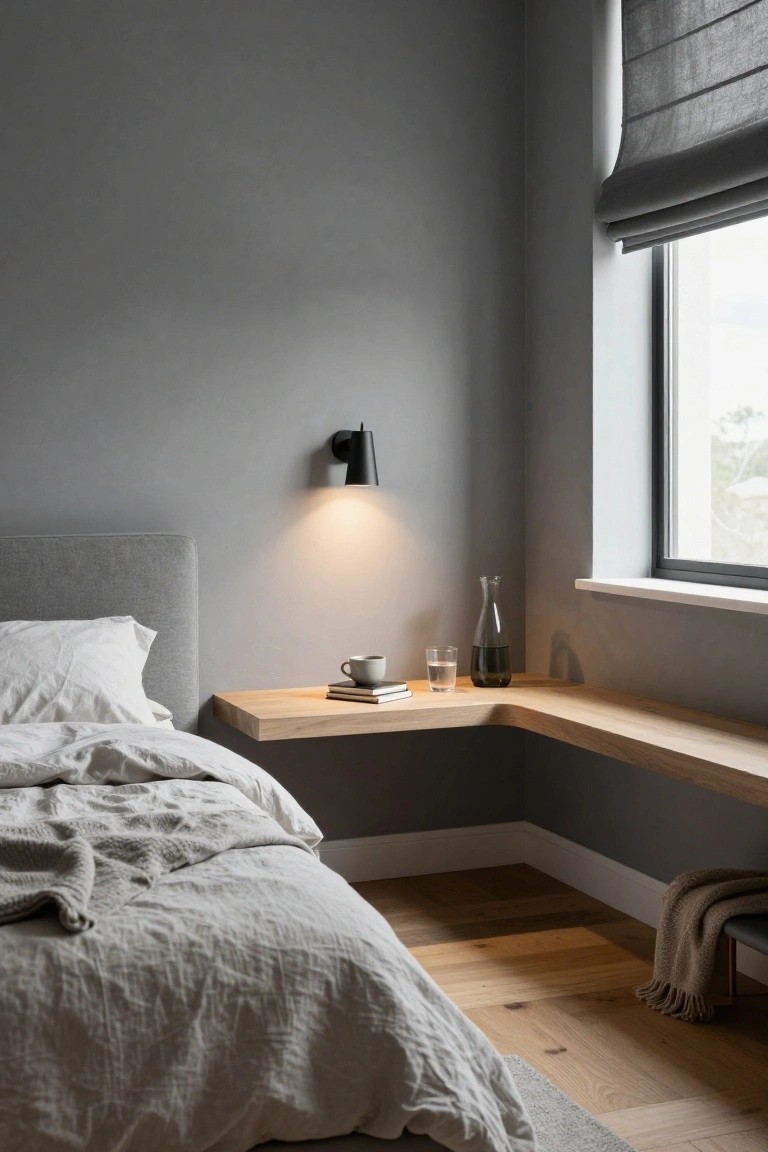
A floating shelf can replace a traditional nightstand and still give you a spot for your book, water glass, and lamp. It works because it sits right where you need it without taking up floor space, which helps the room feel less crowded.
This setup suits small bedrooms best, especially when the shelf runs a little longer than usual so you can reach things easily from bed. Keep the surface fairly clear and add a wall sconce above it if you want light without another table lamp.
Use a Slim Nightstand With Storage Below
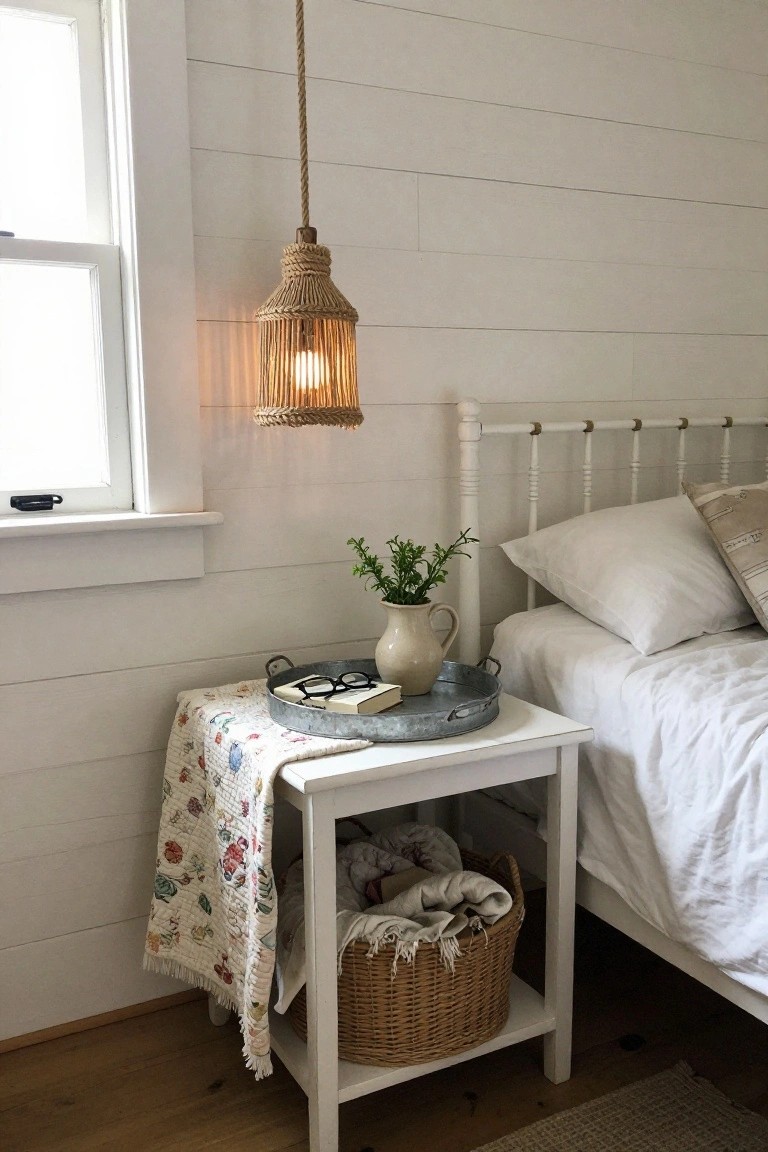
A narrow bedside table works well in small bedrooms because it takes up little floor space while still giving you a surface for a lamp and a few essentials. Adding storage underneath keeps the top clear and helps the room feel less crowded overall.
Look for a simple table with an open lower shelf and tuck a basket there for extra blankets or books. This setup fits best in tight layouts where every inch counts and you want something practical without adding bulk.
Built-In Niches Over Nightstands
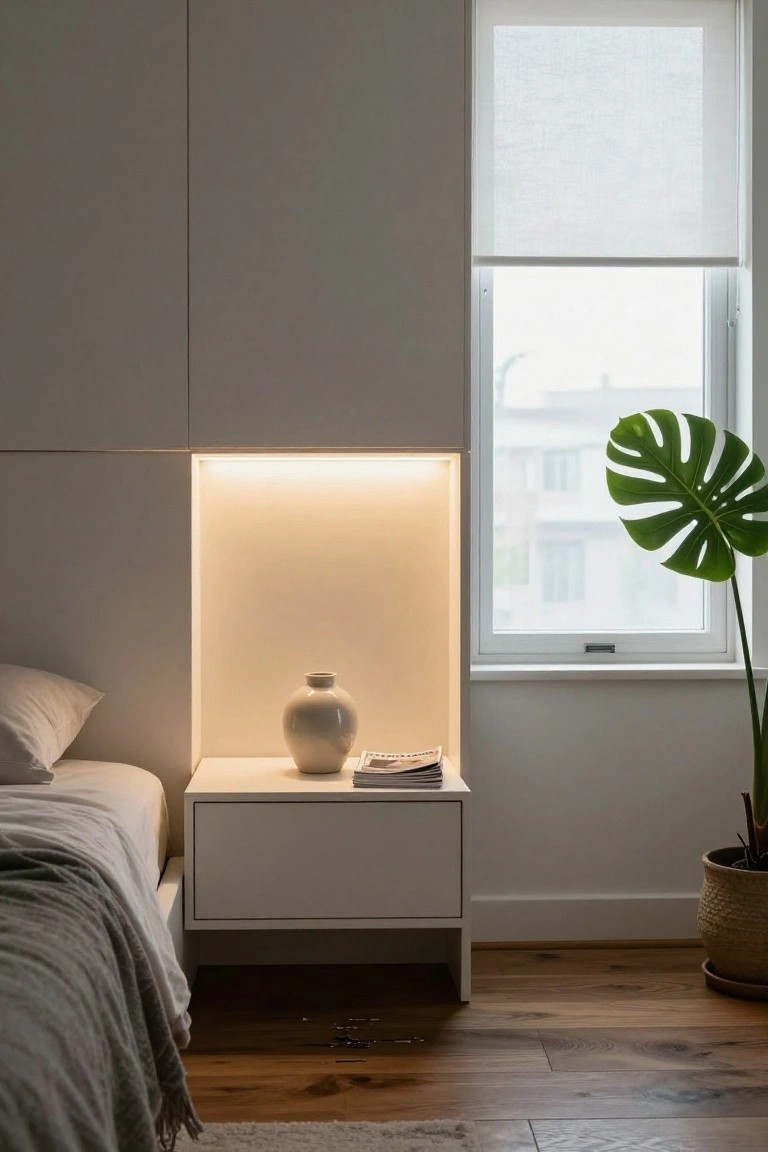
A recessed niche above the nightstand gives you extra display space without taking up any floor room. The built-in light turns the whole area into a soft focal point at night and keeps the surface below clear for just a few small items.
This works best in small bedrooms where every inch counts. It suits homes that allow for wall modifications, and it pairs well with a simple drawer unit underneath so you still have closed storage without crowding the room.
A Tray Table Makes A Practical Bedside Option
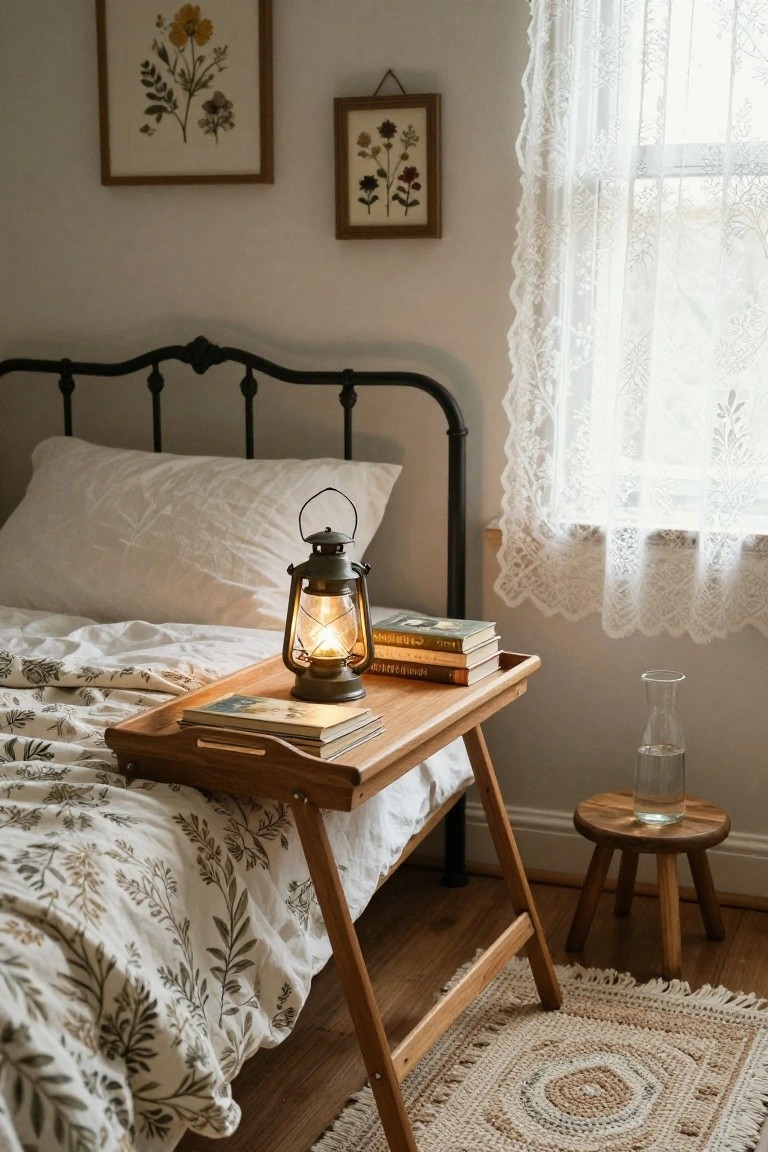
Many small bedrooms feel tighter with a full size nightstand, so a tray table can help. It sits low and takes up little floor space while still giving you a spot for a lamp and a couple of books.
This works best when the room needs to stay open during the day. You can lift the whole tray away if you want more walking room, and a low stool underneath adds a bit of extra storage without crowding the area.
Cube Storage Units Work Well As Nightstands
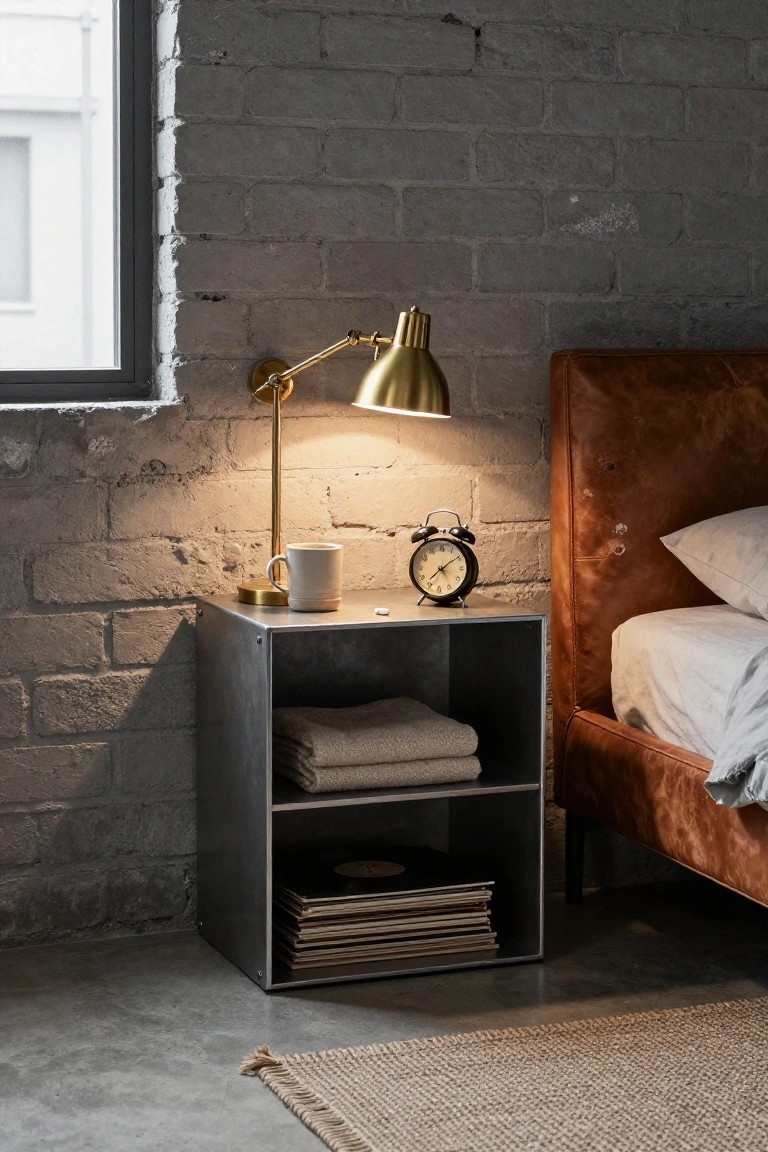
A cube storage unit makes a solid choice for a nightstand when the bedroom feels cramped. It takes up less floor space than a traditional table and gives you two open compartments for things you want close by without adding bulk.
Place it right next to the bed in any small layout and load the shelves with folded linens or other everyday items. It works best in simple rooms where you need storage but still want to keep the area clear enough to move around easily.
Try A Floating Shelf As A Bedside Table
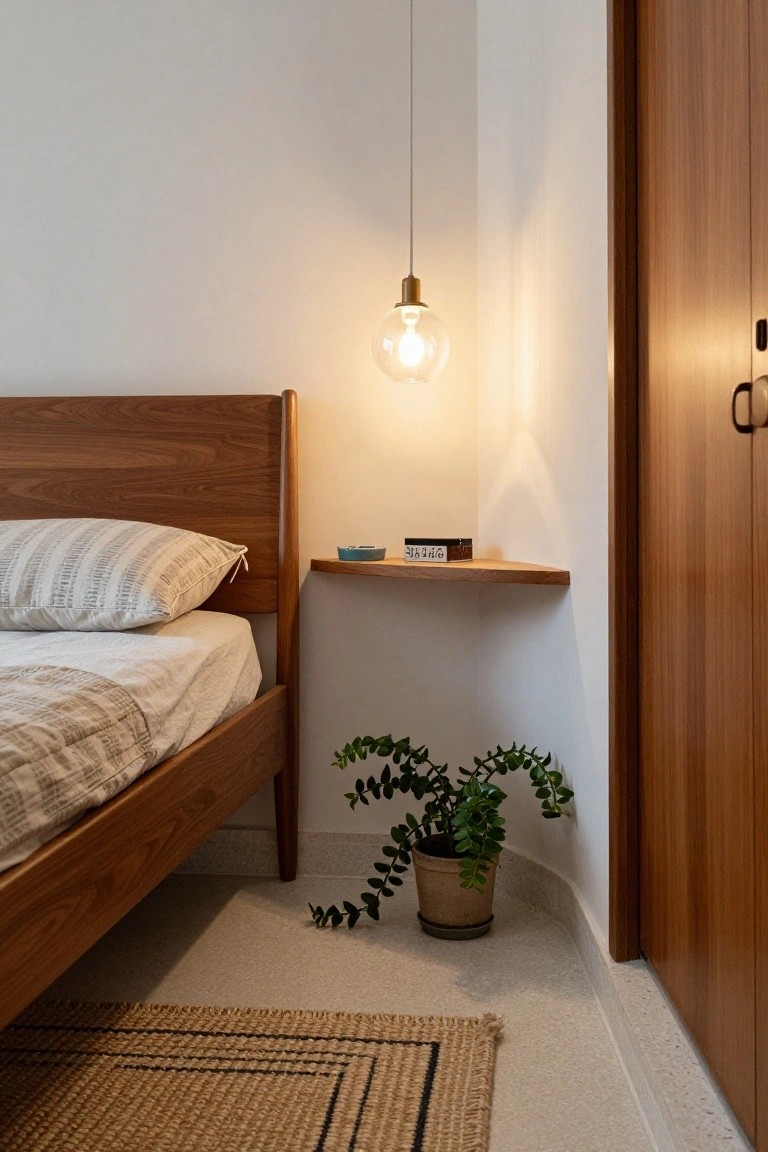
A floating shelf gives you a bedside spot without taking up floor space. This keeps the area around the bed open, which makes a small bedroom feel less cramped and easier to move through.
Hang the shelf at a height that works for reaching from bed. It suits rooms where a full nightstand would get in the way or block a walkway. Keep the shelf fairly narrow so it does not jut out too far into the room.
Use A Pegboard For Bedside Storage
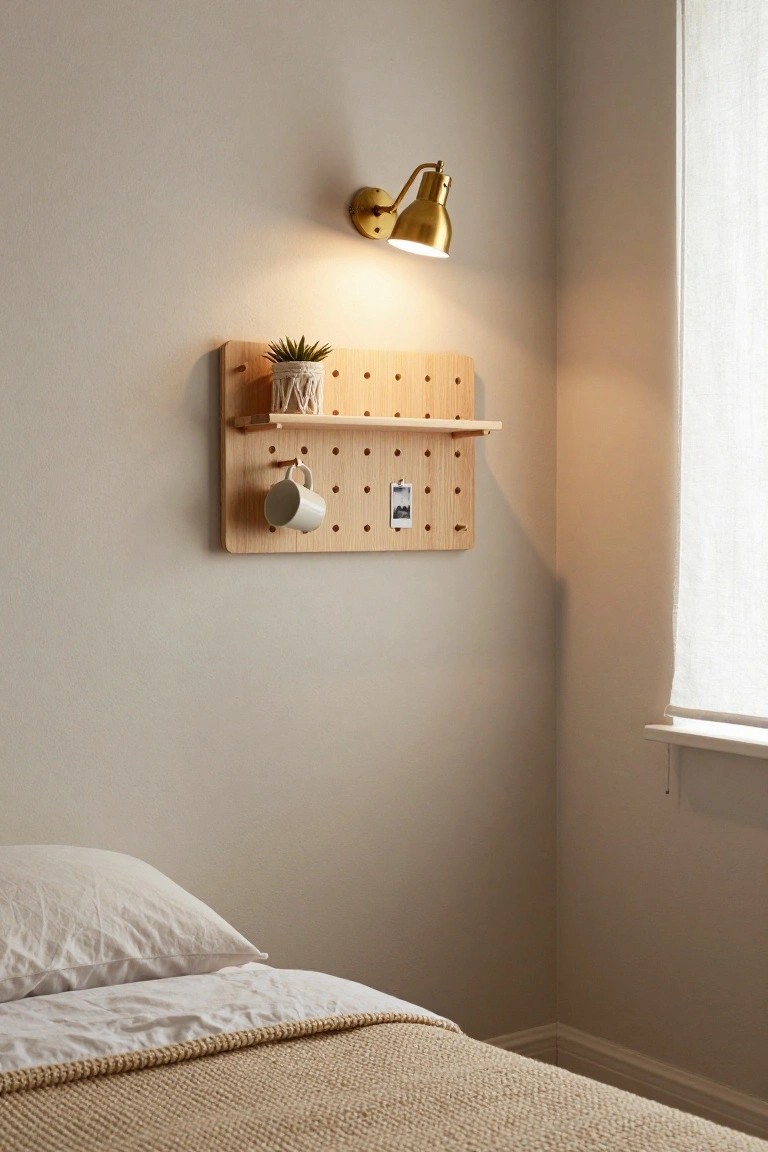
A pegboard on the wall can replace a regular nightstand in a small bedroom. It keeps the floor clear while still giving you spots to hang a mug or tuck in a small shelf for the things you reach for at night.
This setup works best in tight layouts where a full table would get in the way. Keep the pegs simple and only hang what you actually use so the wall stays tidy instead of turning into extra clutter.
Pair a Slim Nightstand with a Storage Ottoman
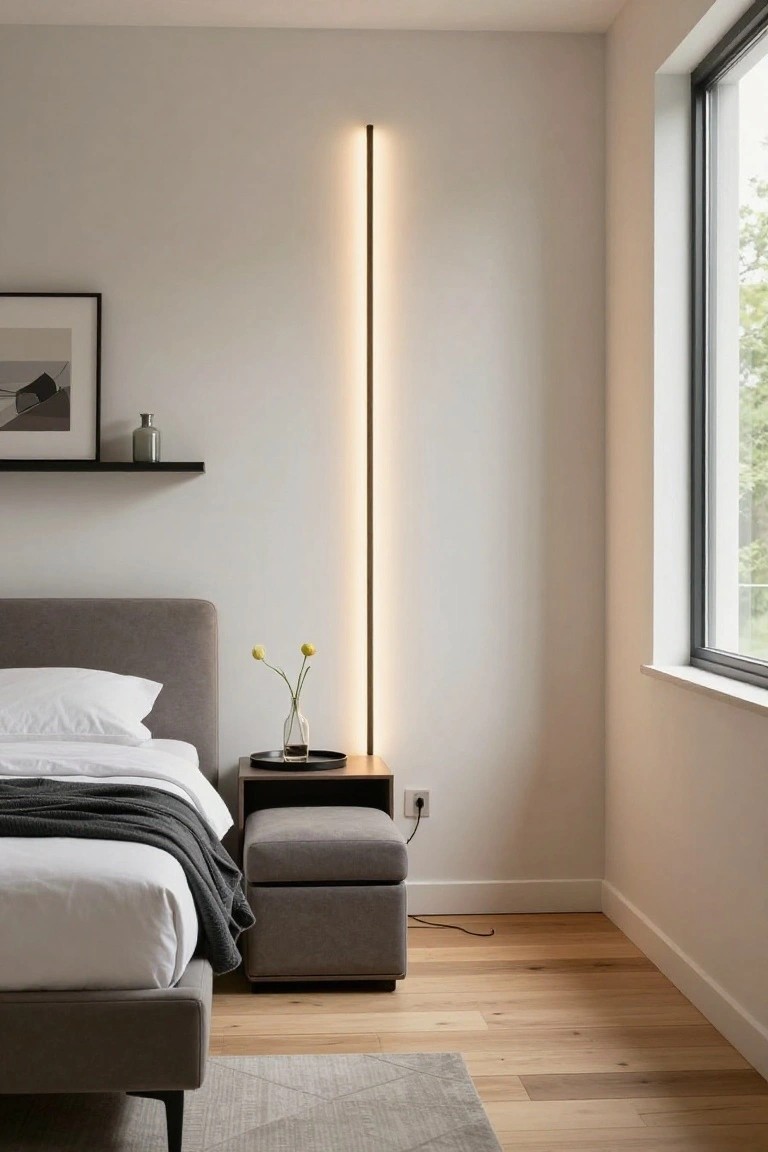
Small bedrooms often need more than just a tiny table next to the bed. A narrow nightstand keeps the footprint light while an upholstered ottoman placed right in front adds seating and hidden storage without crowding the floor.
This setup works best in rooms where you want flexibility. The ottoman can be pulled out for extra seating during the day and tucked back in at night, leaving the walking path clear. It suits simple layouts where every inch counts and you prefer clean surfaces over bulky furniture.
Use a Tray Table Instead of a Full Nightstand
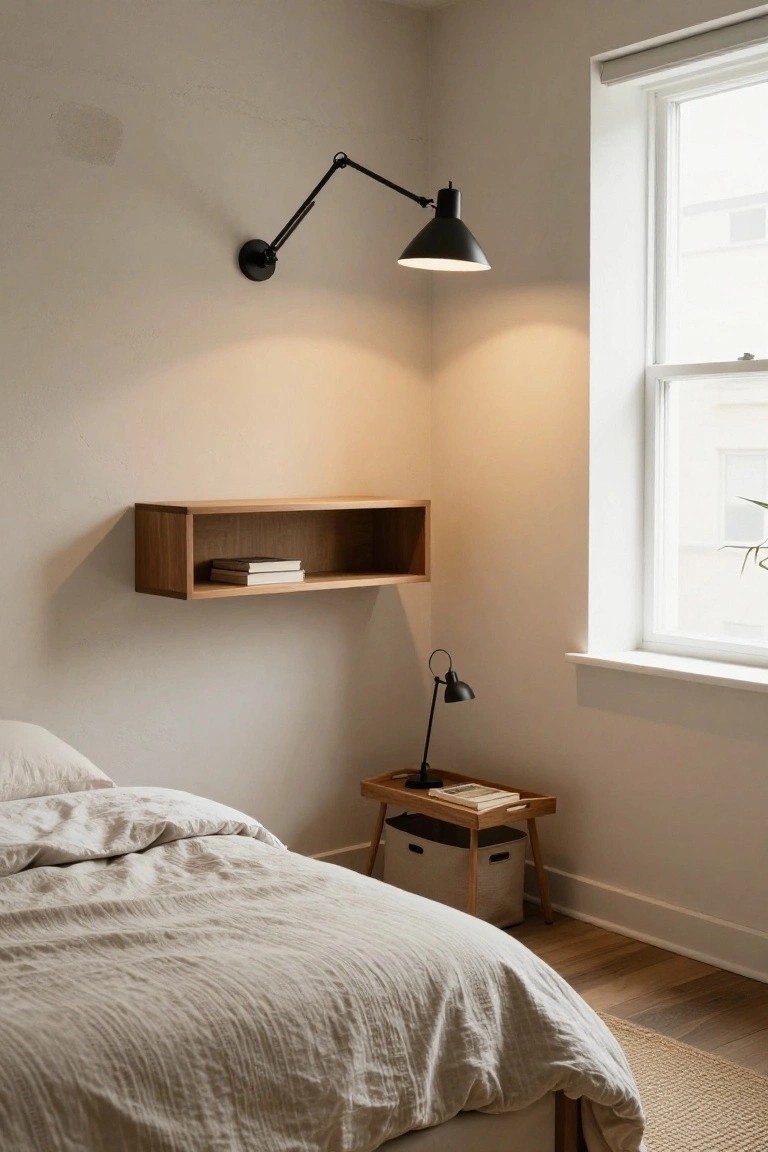
A small tray table can give you just enough surface area beside the bed without taking over the floor space. It keeps things simple and leaves more room to move around, which matters in tighter bedrooms where every inch counts.
This works best when you pair it with a wall-mounted light so the table itself stays uncluttered. Look for one with a low profile and maybe a handle if you want the option to shift it out of the way during the day.
Frequently Asked Questions
Q: What if I rent and can’t attach anything to the walls?
A: Go with a narrow rolling cart or a freestanding pedestal that tucks beside the bed. These options give you a surface for your lamp and phone without any drilling or permanent changes. You can roll it out of the way during the day to keep the floor clear.
Q: How do I stop a tiny table from getting cluttered fast?
A: Stick to just three items on top like a small lamp, one book, and your charger. Look for designs with a lower shelf or drawer so everything else stays out of sight but still close by. This setup keeps the area usable without extra mess.
Q: Will these ideas work if my bed already has drawers underneath?
A: Choose a wall mounted ledge or a tall thin stand that sits above the drawers. It adds quick reach space without blocking the storage you already have. You end up with both surface room and easy access to what you need at night.
