

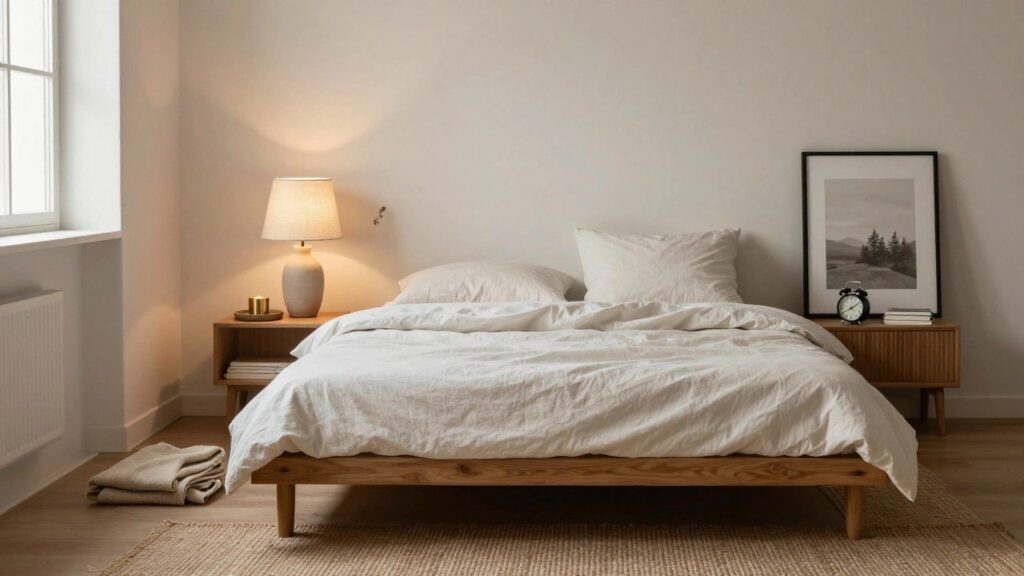
I have noticed that the bedside area often decides whether a bedroom feels calm at the end of the day or just a little cluttered.
When the table matches the height of the mattress and leaves enough room to move around it the whole side of the bed starts to work better for reading or setting down a phone.
I usually try moving a few options into the space first because the right scale only shows up once you see how it sits next to the bed in real light.
Choosing a surface that can handle a lamp plus whatever else lands there overnight keeps the rest of the room from looking too busy.
It changes more than you expect.
Low Wooden Nightstands for a Balanced Bedroom
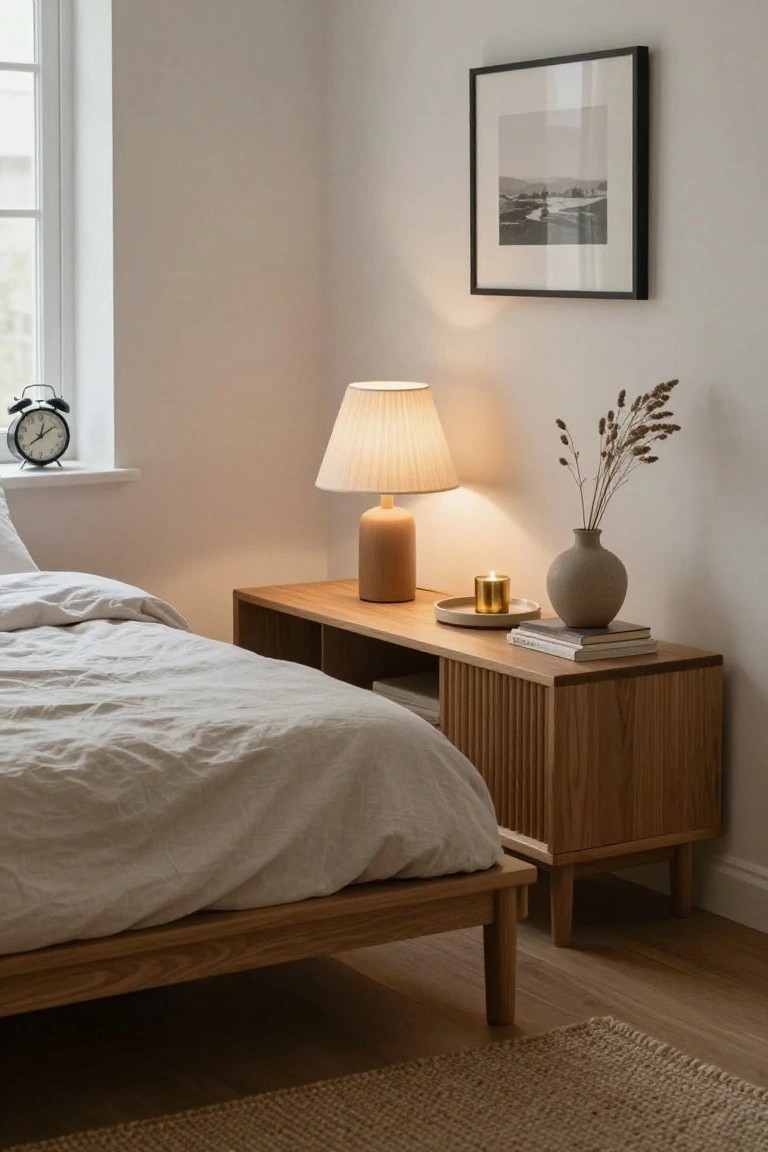
A low wooden nightstand works well because it sits closer to the height of the mattress and leaves more open space above it. This keeps the corner from feeling crowded and helps the whole room look calmer and more even.
It suits smaller bedrooms or any setup where you want simple storage without adding bulk. Stick to a natural wood tone and keep the surface light with just a lamp and one or two small items so the look stays soft and easy to maintain.
Floating Nightstands for Easier Flow
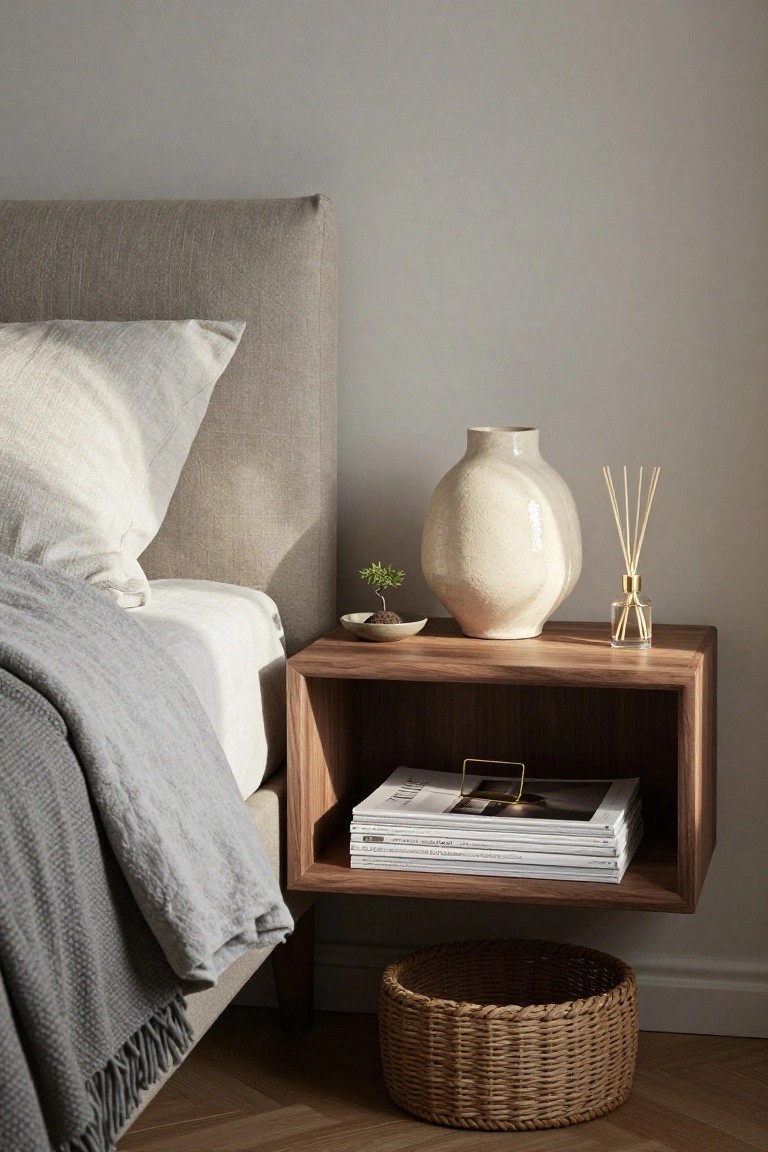
A floating nightstand keeps the floor clear and gives you useful storage right beside the bed. The open lower shelf holds a stack of magazines or a few books while the top stays simple with just a vase and one small accent. This setup works especially well when you want the bedroom to feel open and easy to walk through.
It suits smaller rooms or any space where you prefer less visual weight near the bed. Choose a wood tone that matches your headboard or flooring and avoid filling the shelf too full so the look stays relaxed.
A White Nightstand For A Softer Bedroom
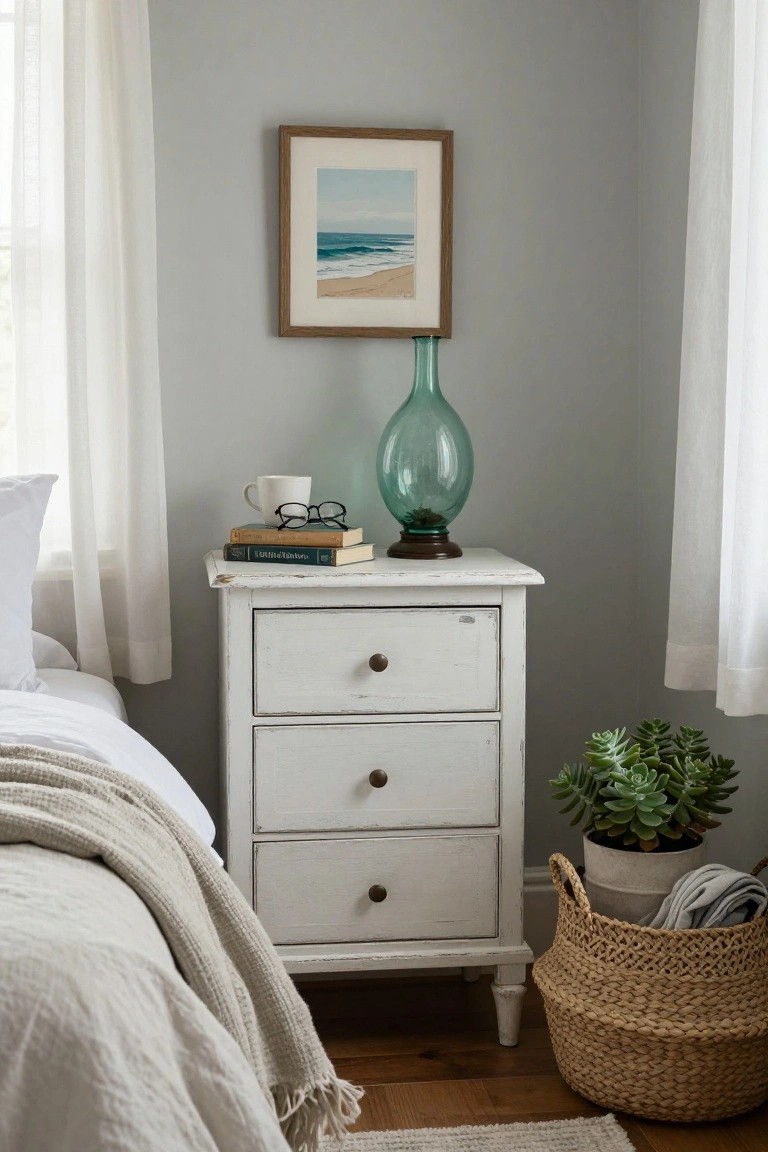
A white nightstand with a bit of wear can make a bedroom feel lighter and less busy. The pale finish blends into the walls instead of standing out, which helps the whole space stay calm even when you add a few books or a lamp on top.
It works best in smaller rooms or anywhere you want a gentle look without much effort. Keep the top fairly clear and choose simple shapes so the table does not compete with the bed or other furniture nearby.
A Wooden Nightstand With A Lower Shelf
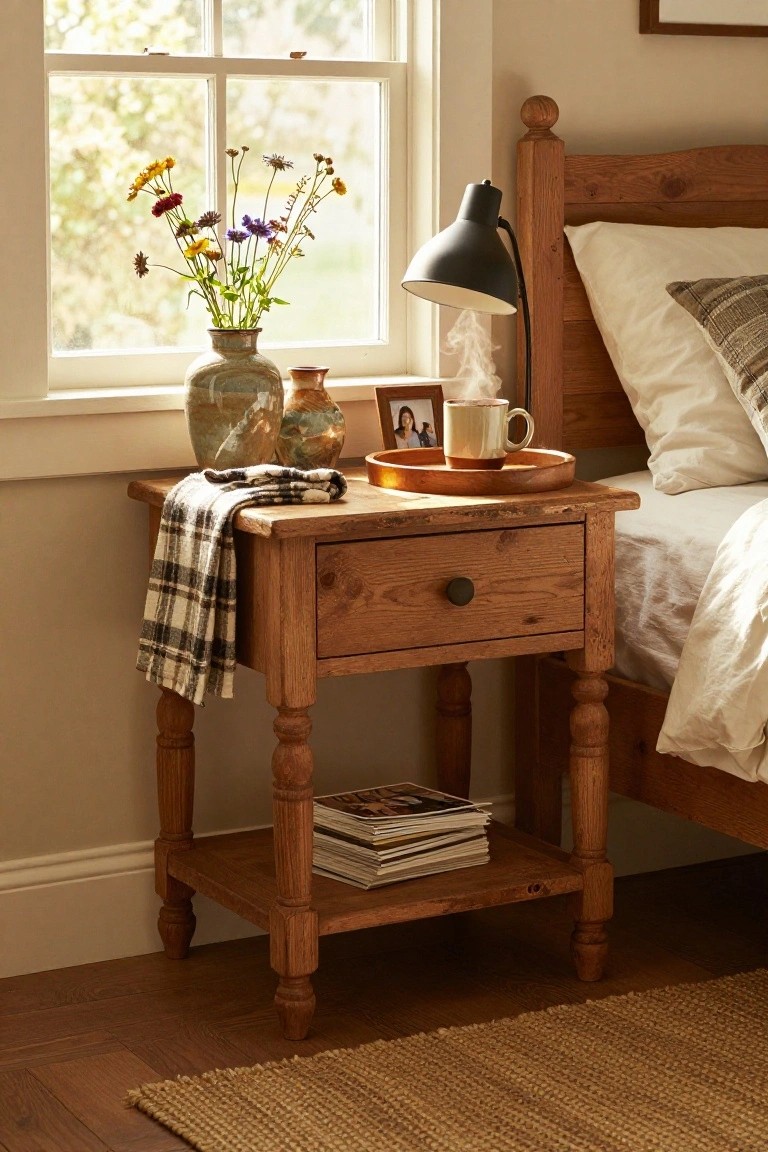
A bedside table made of solid wood with a simple lower shelf gives you extra storage without adding bulk. The open space below keeps books and magazines within reach while the top stays clear for a lamp and a few small items. This setup works especially well in smaller bedrooms where every surface needs to earn its place.
Try it in a room with soft neutral walls and light bedding so the wood grain adds warmth without feeling heavy. Keep the shelf from getting overcrowded by rotating what you store there. A single folded throw over the edge can soften the look if the table starts to feel too structured.
Dark Nightstands With Marble Tops
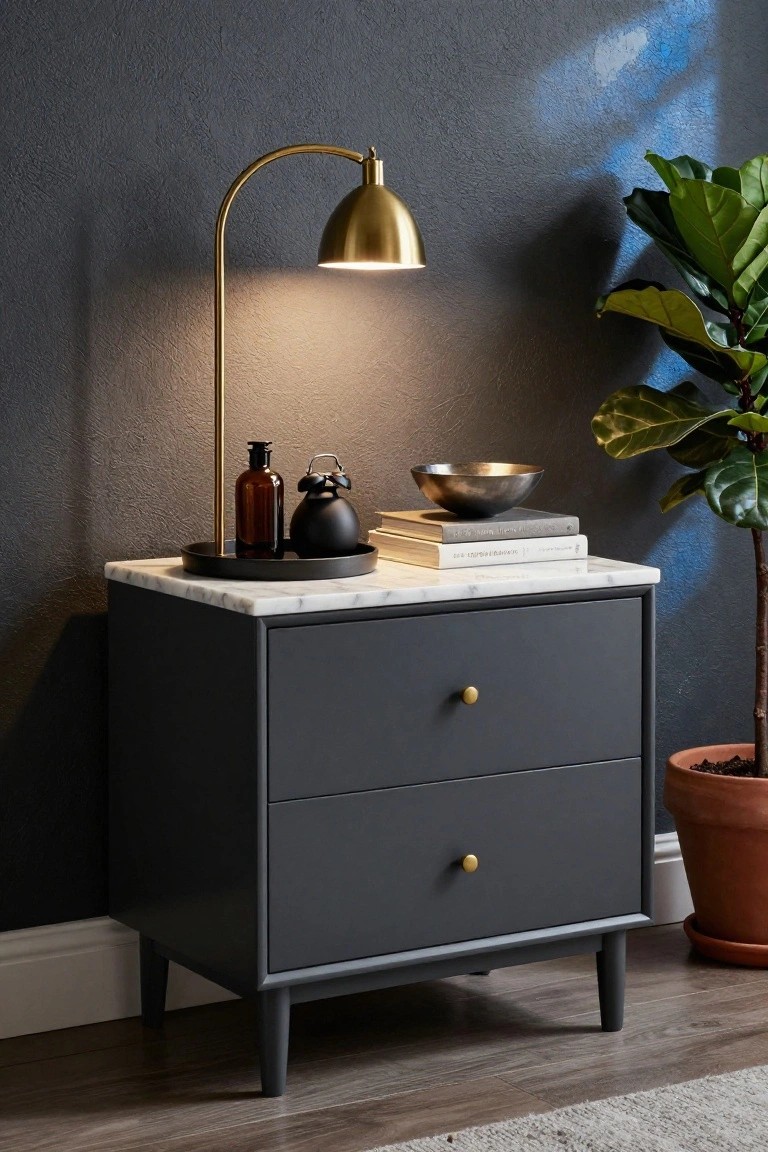
A dark bedside table topped with marble adds just enough contrast to keep a bedroom feeling balanced. The deep color grounds the space while the lighter stone surface softens the overall look and prevents the furniture from feeling too heavy.
This setup works best in rooms with lighter walls or plenty of natural light. Keep accessories minimal so the marble and dark finish remain the main focus rather than competing with too many small items.
Choose a Woven Rattan Nightstand
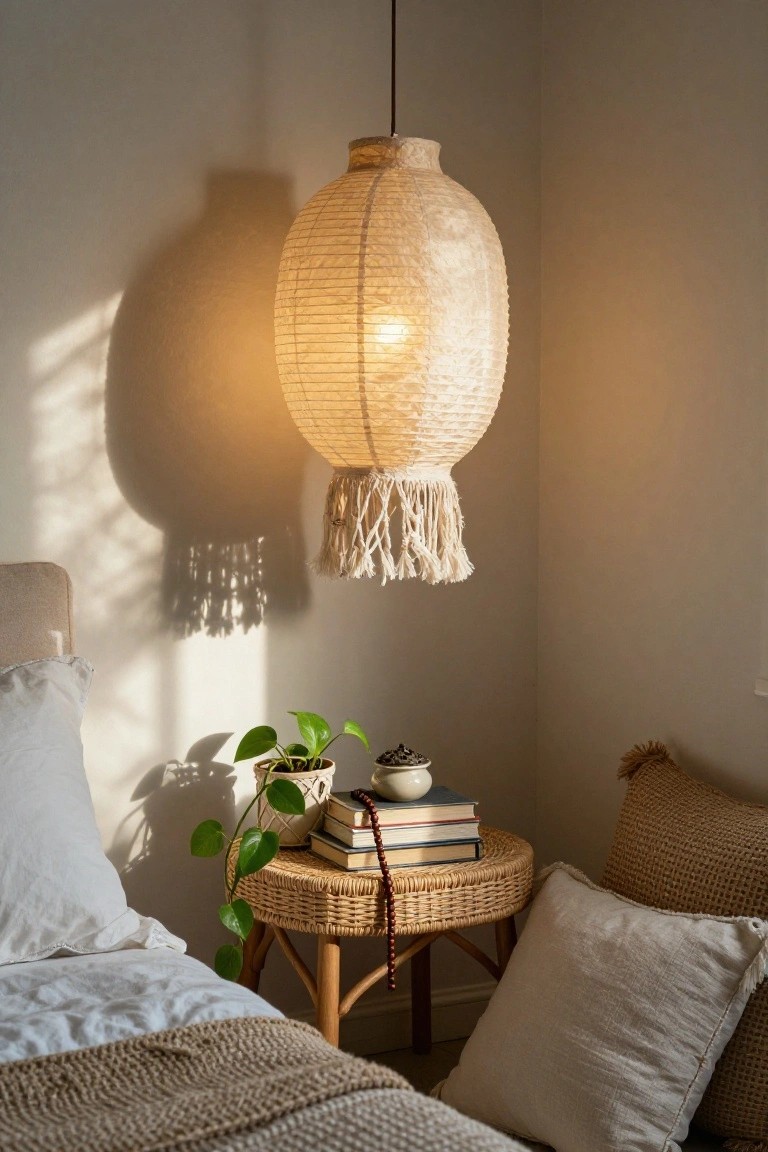
A woven rattan nightstand keeps the bedside area feeling light and natural. The open texture adds interest without crowding the space, and it pairs easily with soft bedding and simple accessories.
Set one beside a bed with neutral linens and keep the surface uncluttered. A small plant or a few books is usually enough. This works best in rooms that already use wood tones and soft lighting.
Try Adding a Tray to Your Nightstand
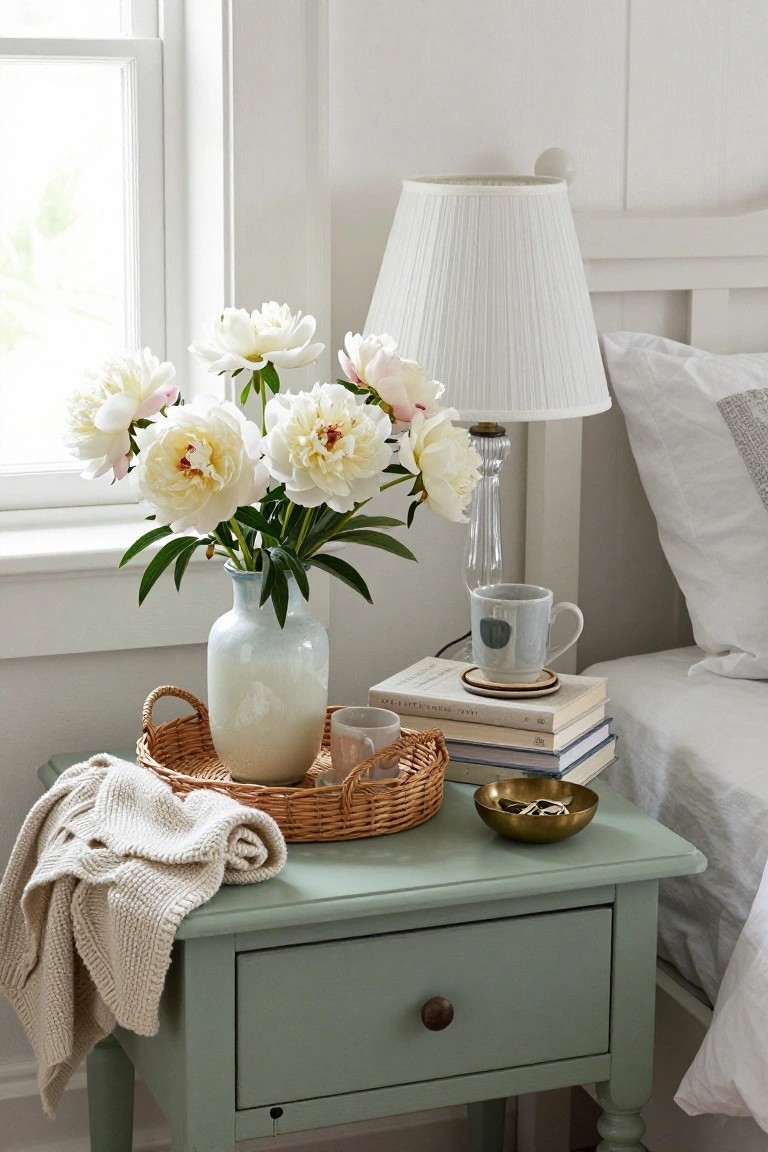
A tray gives the bedside table a clear spot for the things you reach for most. It keeps the surface from feeling scattered while still letting you show a few favorite pieces like a small vase or a favorite mug.
Place the tray on one side of the table and leave a little breathing room on the other. This setup works especially well in softer bedrooms where you want calm rather than clutter. Just watch the size so the tray does not crowd the lamp or the books you keep nearby.
Using A Low Wood Cabinet As A Bedside Table
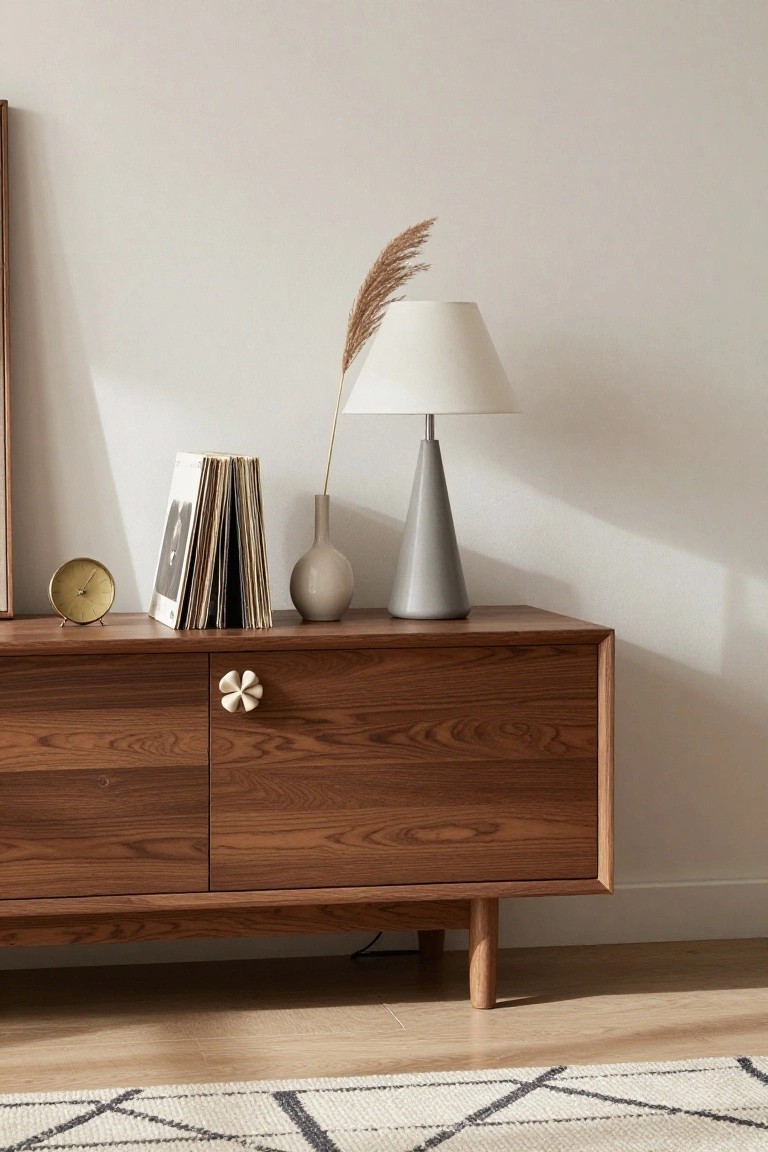
Many bedrooms feel calmer when the bedside surface has a bit more length than a standard nightstand. A low wood cabinet gives you room for a lamp and a couple of small items while keeping the overall look simple and balanced.
This works best in spaces that already lean toward natural materials and soft lighting. Keep the top fairly clear, choose a lamp with a gentle shape, and let the wood grain do most of the work.
Vintage Nightstands With Soft Fabric Details
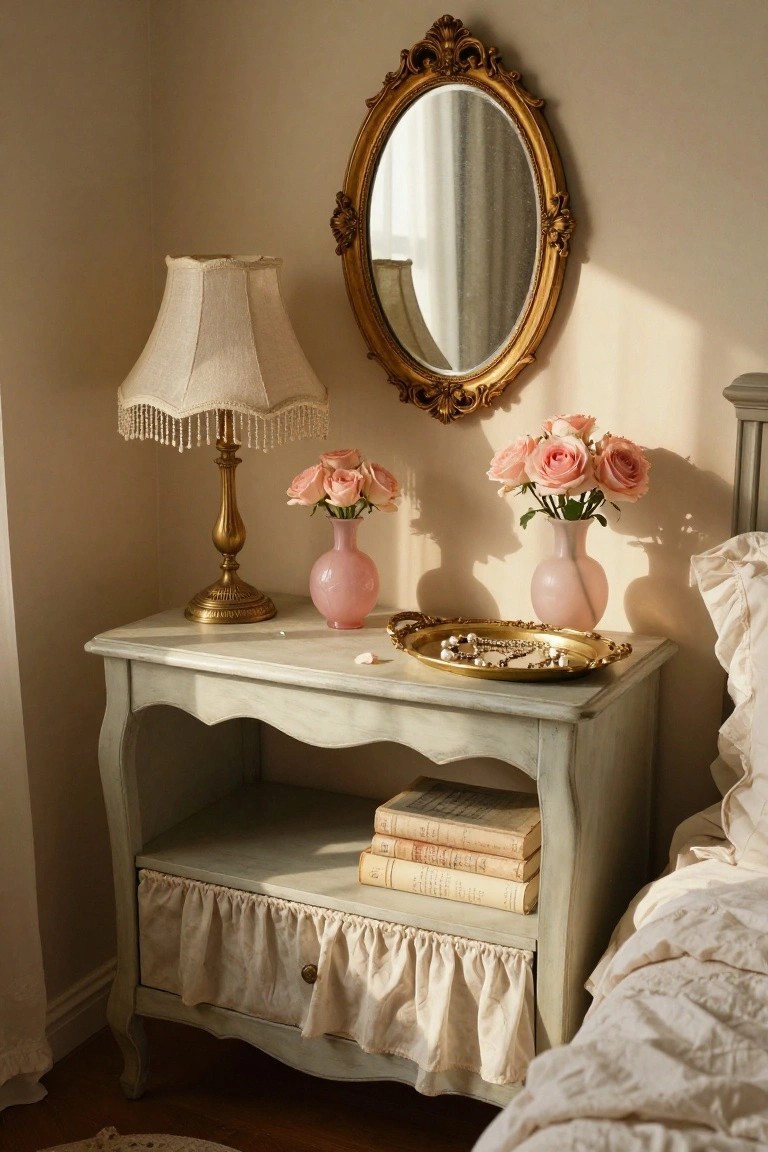
A bedside table with a fabric skirt adds a gentle layer that helps a bedroom feel softer without much effort. The ruffled edge breaks up the hard lines of wood furniture and creates a quiet sense of balance next to the bed.
This style works best in rooms with simple walls and pale bedding. Keep the finish light and the top uncluttered so the fabric detail can stand out on its own.
Natural Wood Nightstands For A Soft Bedroom
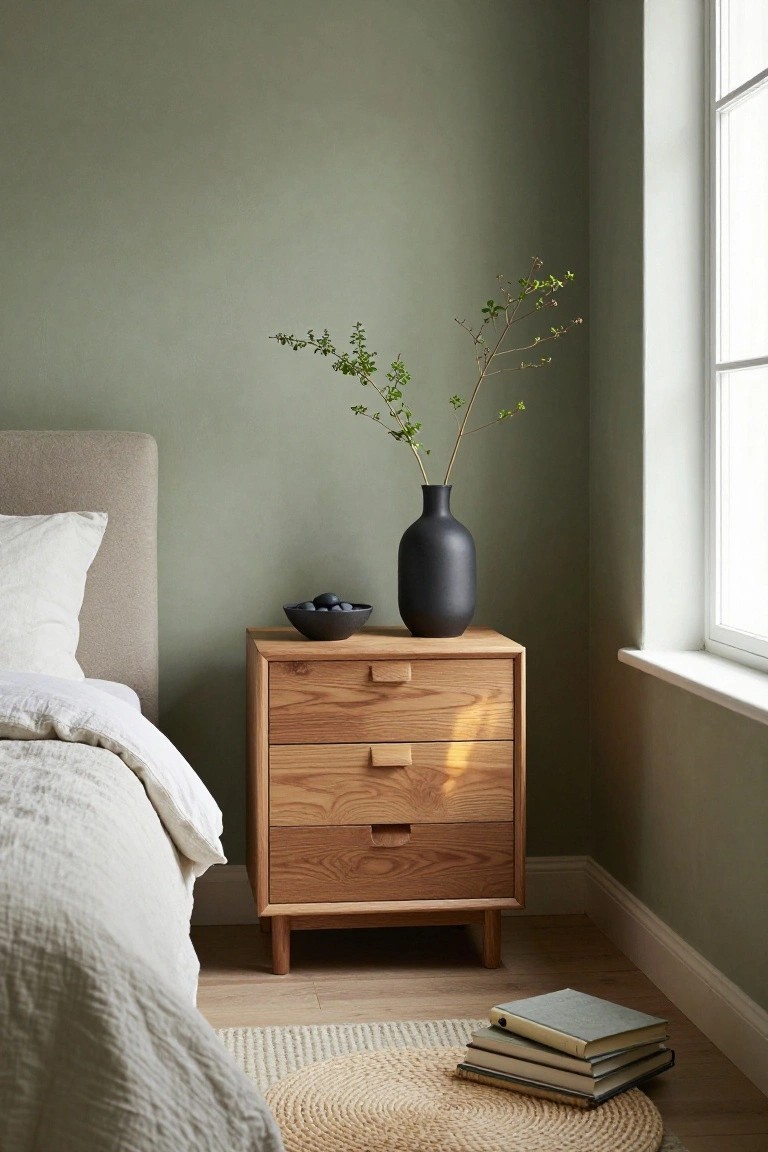
A bedside table in natural wood adds warmth without making the room feel heavy. The simple lines and visible grain keep things calm, especially when the rest of the space uses soft fabrics and quiet colors.
Choose a lower piece with a couple of drawers if you want storage that stays out of sight. It works well in smaller rooms or anywhere you want the bed area to feel open and easy to keep tidy.
A Floating Shelf For A Lighter Bedside Setup
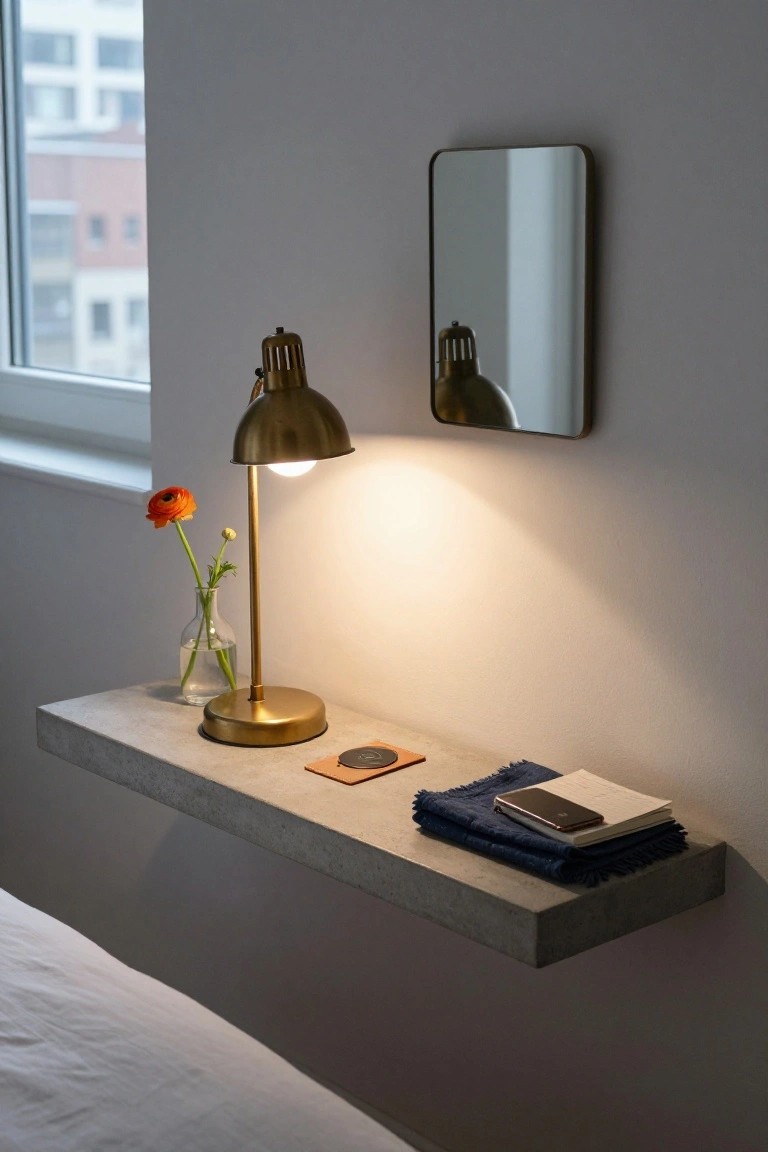
A floating shelf can replace a traditional nightstand when you want the area beside the bed to feel less heavy. It keeps the floor clear and gives the room a calmer, more open look without losing a spot for a lamp or a few small things you use at night.
This approach suits smaller bedrooms or spaces where you already have enough storage elsewhere. Just choose a shelf with enough depth and strength for a lamp and whatever else you like to keep within reach.
Nightstands with an Open Lower Shelf
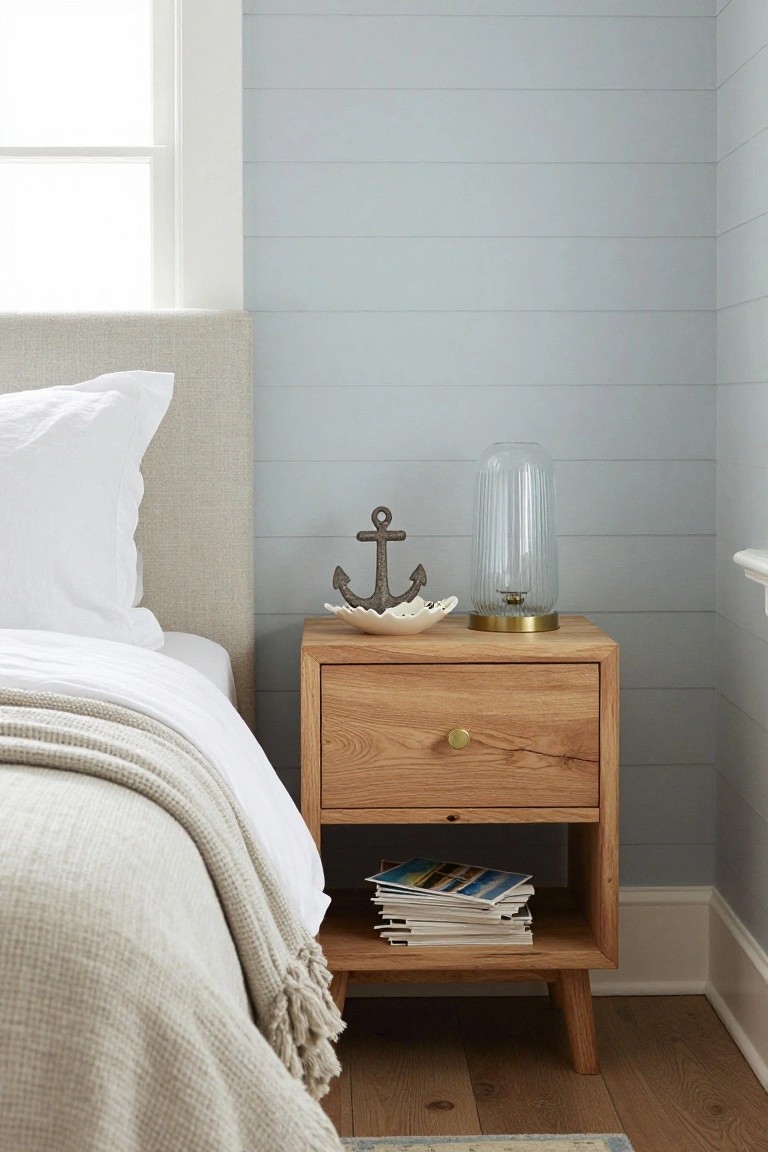
A bedside table that includes an open shelf underneath gives you a place to keep books or magazines without crowding the top surface. This setup keeps the area feeling light and easy to manage, especially when you want quick access to reading material before bed. The wood tone adds a bit of warmth that fits nicely with soft linens and simple bedding.
This style works best in smaller bedrooms where floor space is limited. It also suits people who like to change out their reading stack often. Just make sure the shelf stays somewhat tidy so it does not start to look messy from across the room.
Add a Tray to Your Nightstand
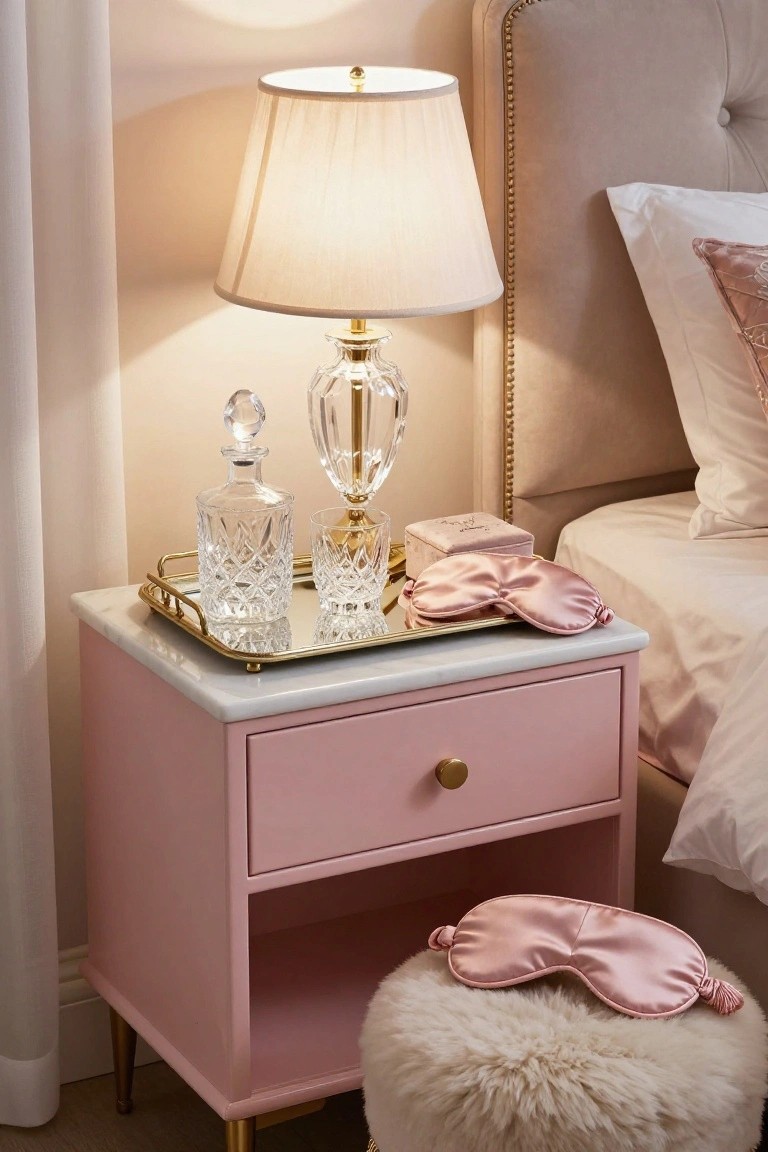
A tray on the bedside table helps keep smaller items from spreading out and looking messy. It turns everyday things like a water glass or sleep mask into part of a neat, finished arrangement instead of loose clutter.
This works best in softer bedrooms where you want things to feel calm and balanced. Pick a tray with a simple metal edge and use it for a few favorite pieces rather than filling it up completely.
Open Shelving Nightstands
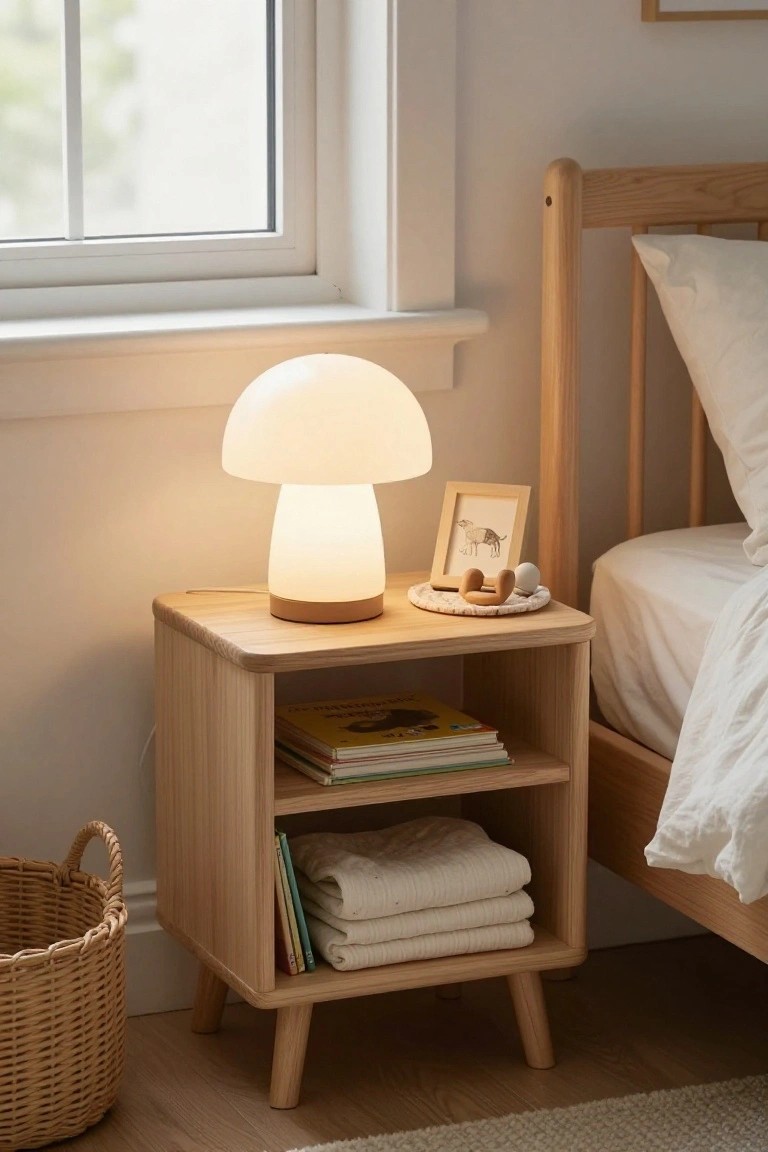
Many people like nightstands with open shelves because they give extra storage without making the bedside area feel closed in. The shelves let you keep a few books and extra linens right where you need them while still leaving the top surface clear for a lamp.
This style works best in smaller bedrooms or in rooms that already have plenty of other furniture. Just make sure the shelves do not get too crowded so the whole corner stays calm and easy to use.
Painted Nightstands for a Gentle Touch
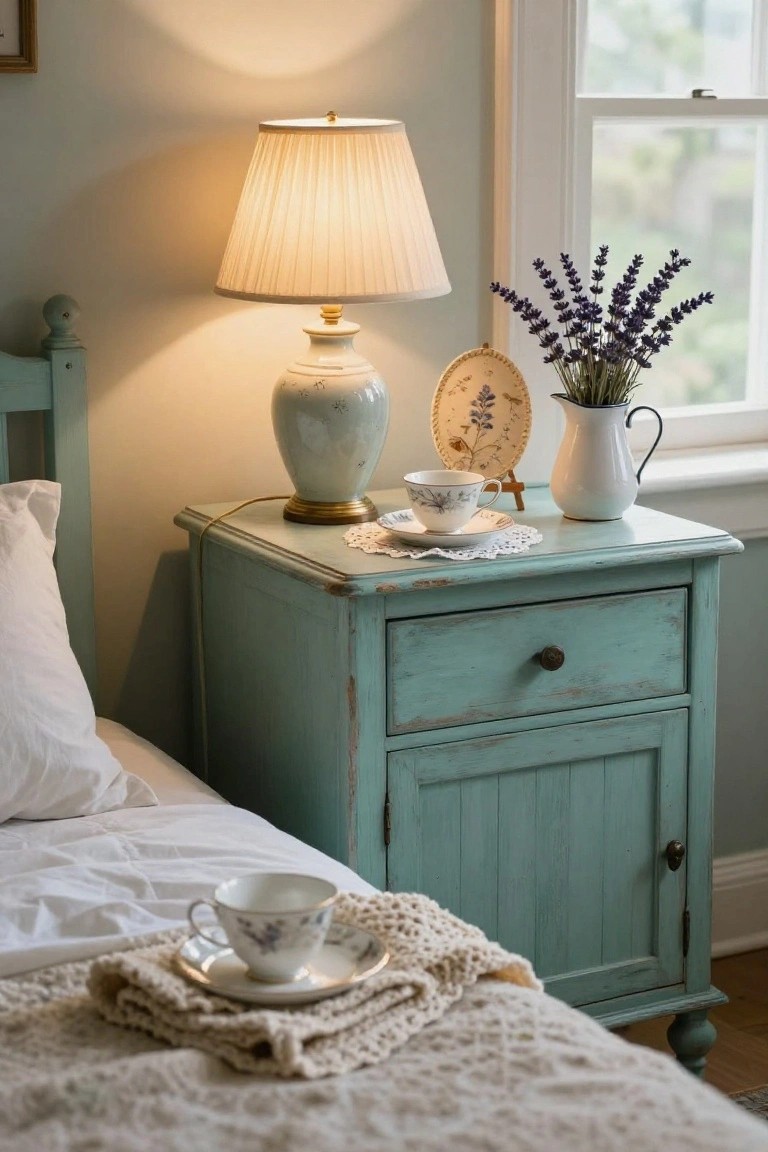
A nightstand with a soft painted finish can make the whole bedside area feel calmer and more lived in. The color softens the look of the wood and the light wear adds just enough character without trying too hard.
Place one beside a bed with simple white linens and keep the top fairly clear. A single lamp plus one or two small items like a cup or a little bunch of flowers is usually enough to make it feel personal while still useful.
Nightstands With Open Shelving
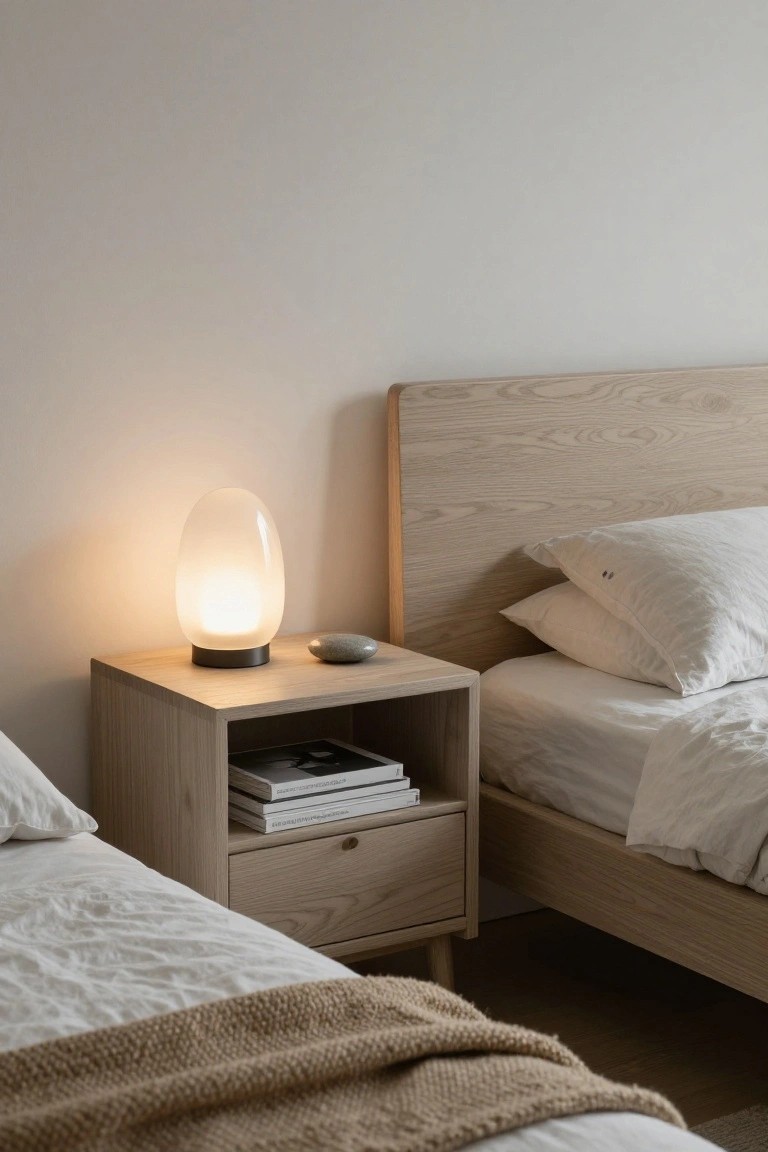
A bedside table with an open shelf keeps a few favorite books within easy reach while leaving the top surface clear for just a lamp. This setup feels lighter than a fully closed cabinet and helps the whole corner stay calm rather than crowded.
It works well in smaller bedrooms or any space where you want storage without adding visual weight. Try it with light wood tones and simple linens so the open area does not start to look messy.
Repurpose a Metal Cabinet as a Nightstand
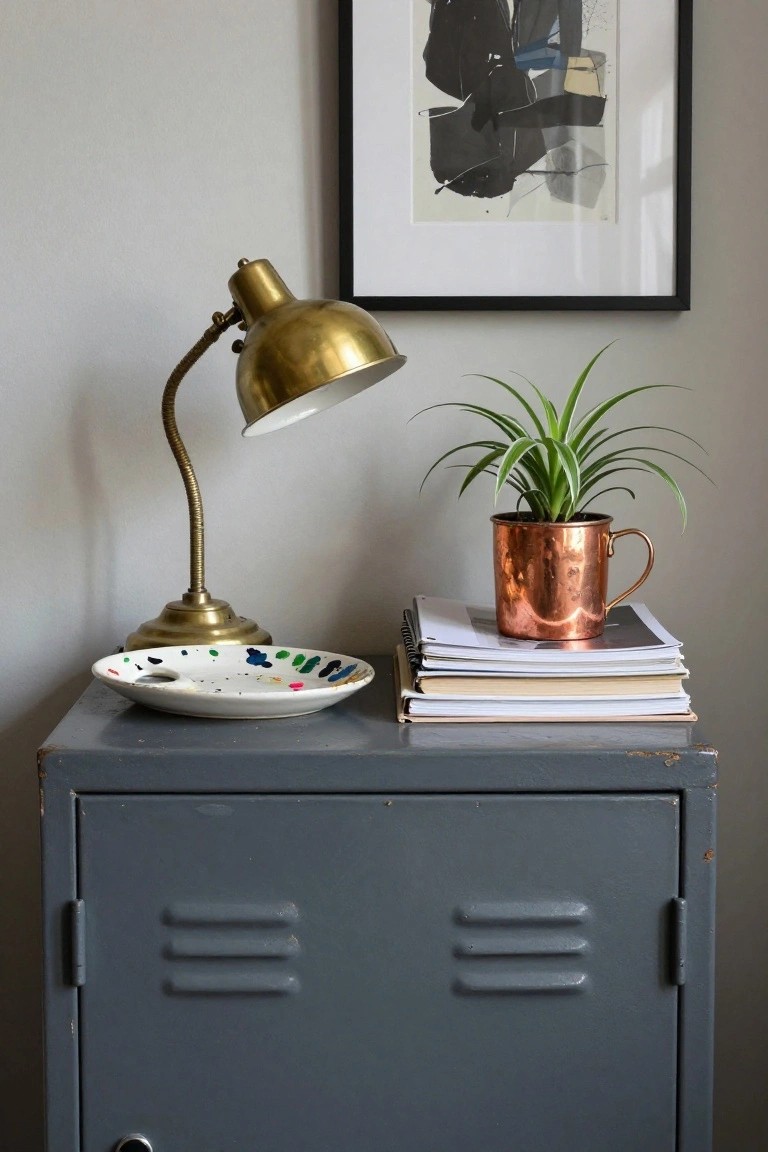
A metal cabinet makes a strong bedside table because it gives you closed storage right where you need it most. The solid shape holds up well to a lamp and a few everyday items without feeling cluttered or top-heavy.
This works best in smaller bedrooms that already have some industrial or simple furniture. Choose a softer color like gray so it feels calm rather than stark, and keep the top surface fairly clear for balance.
Simple Styling on a Wooden Nightstand
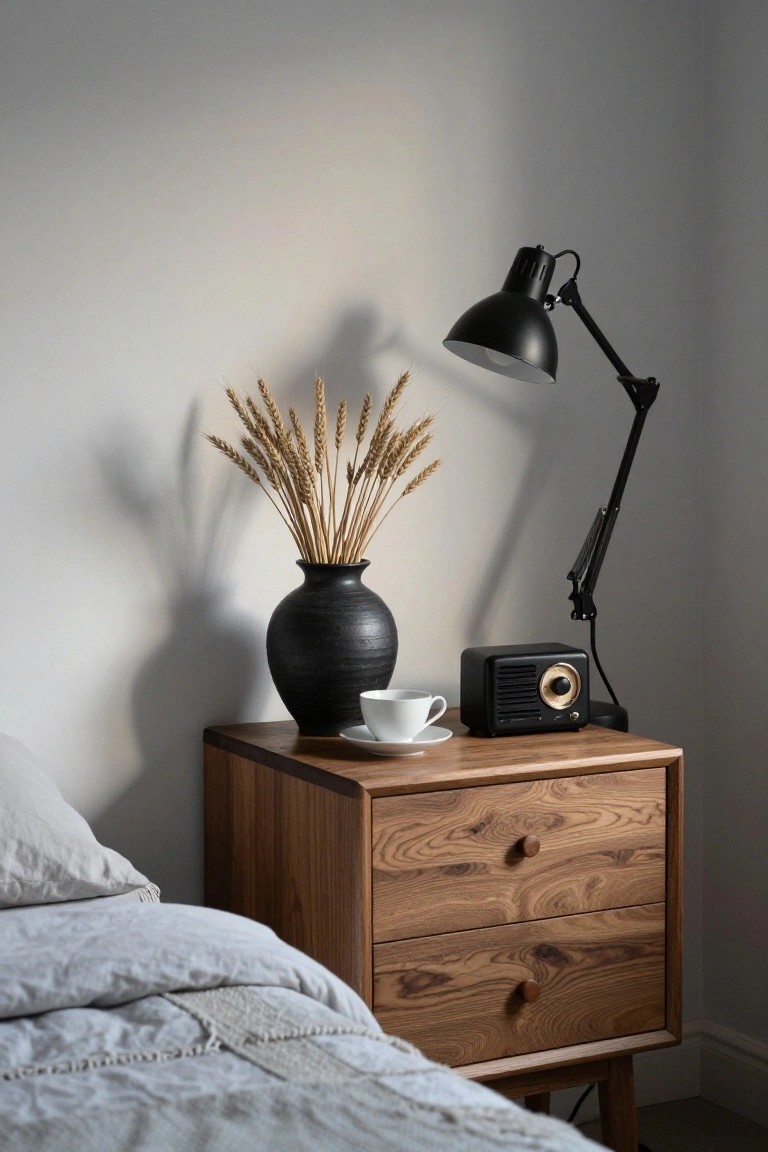
A wooden nightstand with drawers keeps the surface calm and gives you a place to hide the everyday clutter. That clean top makes the whole bedside area feel softer and more balanced, especially in a bedroom where you want things to stay quiet and easy to look at.
Stick to just a few items like a small vase with dried stems, a cup, and a lamp. This approach works best in smaller rooms or when you prefer a relaxed look that does not need constant rearranging.
Clay Nightstands for Natural Warmth
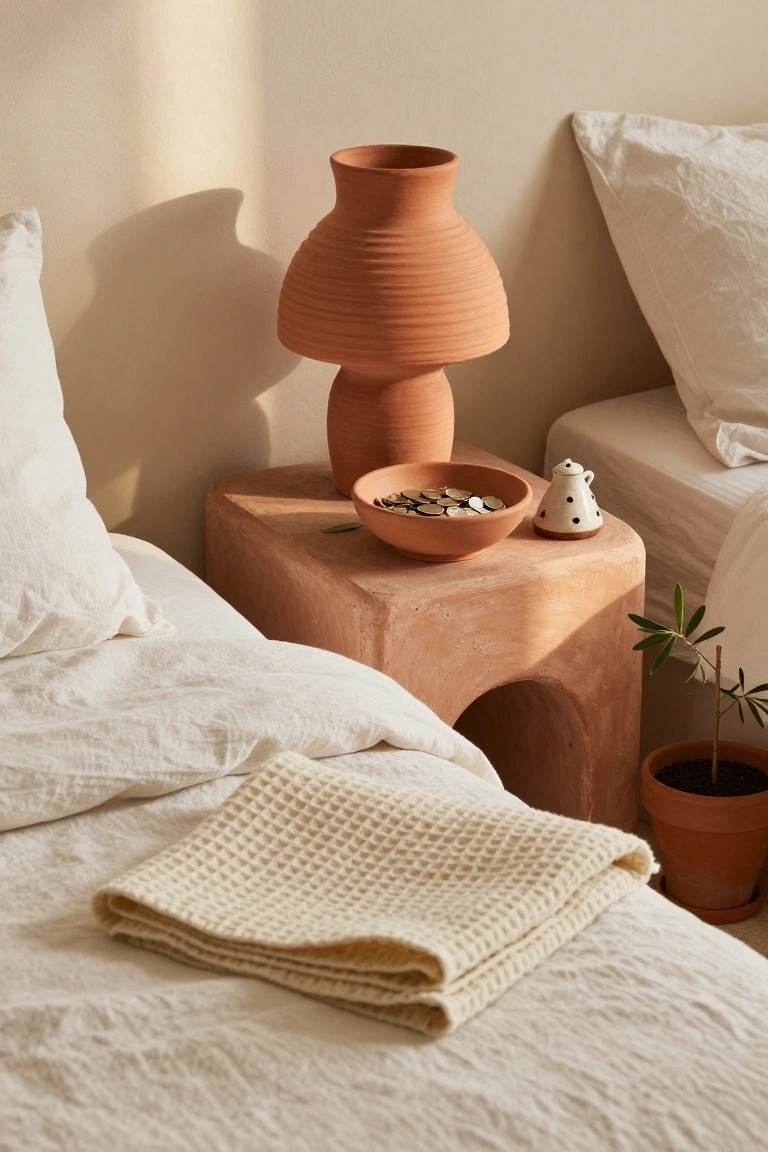
A bedside table made from clay or terracotta brings a grounded feel to a room full of soft fabrics and pale colors. The material adds texture without adding clutter, and it works especially well when the rest of the space stays simple and light.
This approach suits neutral bedrooms that already lean toward linen, cotton, and wood. Keep the top fairly clear so the shape of the table can stand out, and pair it with basic bedding rather than too many extra layers or patterns.
Use a Tray on Your Bedside Table
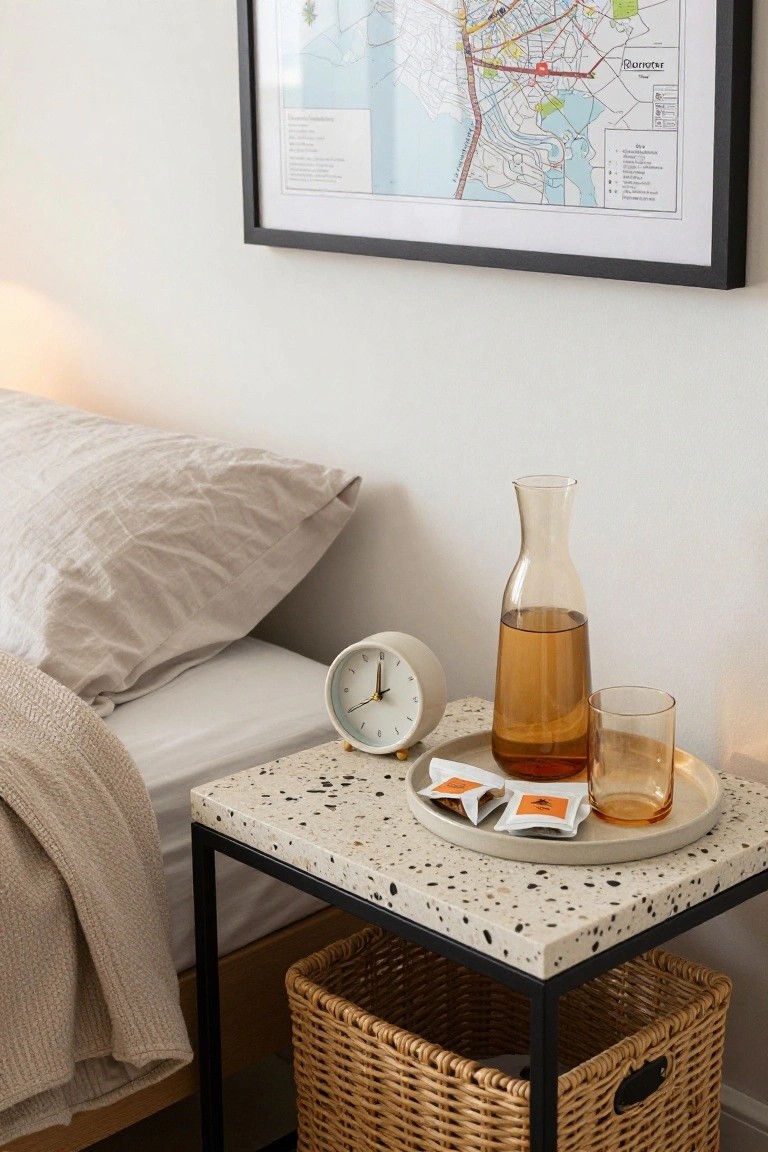
A tray keeps the top of a bedside table feeling calm and put together. It pulls together a few everyday items like a water carafe or a small clock so they do not scatter across the surface and create visual clutter.
This setup works best in bedrooms that already feel soft and simple. Place the tray on one side of the table and tuck a low basket underneath for extra storage. That way the table stays useful without looking busy.
A Wooden Stump Works as a Nightstand
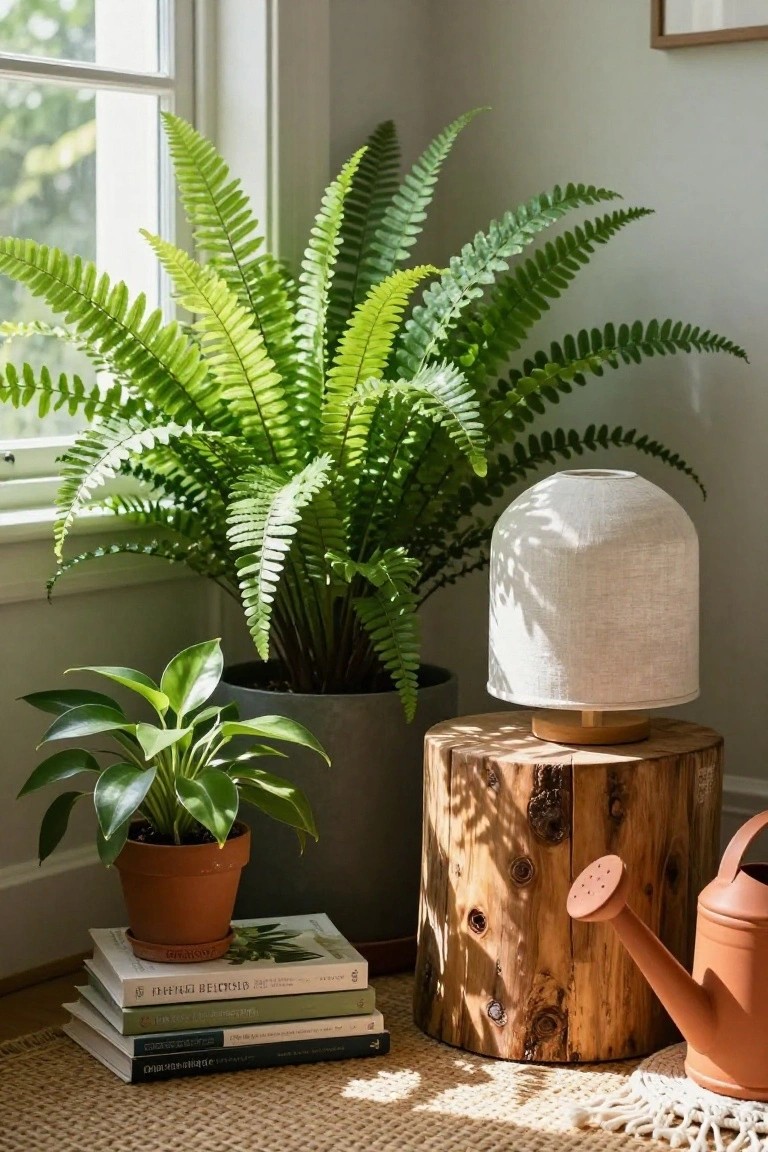
A tree stump brings an easy natural texture to a bedside spot without needing much else around it. The rough wood grain and simple shape keep things grounded while still feeling soft and relaxed next to a bed.
This idea works best in bedrooms that already lean toward plants and neutral tones. Keep the top clear except for a small lamp and maybe one plant nearby so the stump stays the main feature. Make sure the piece is level and sturdy before using it every day.
Rolling Carts Work Well As Bedside Tables
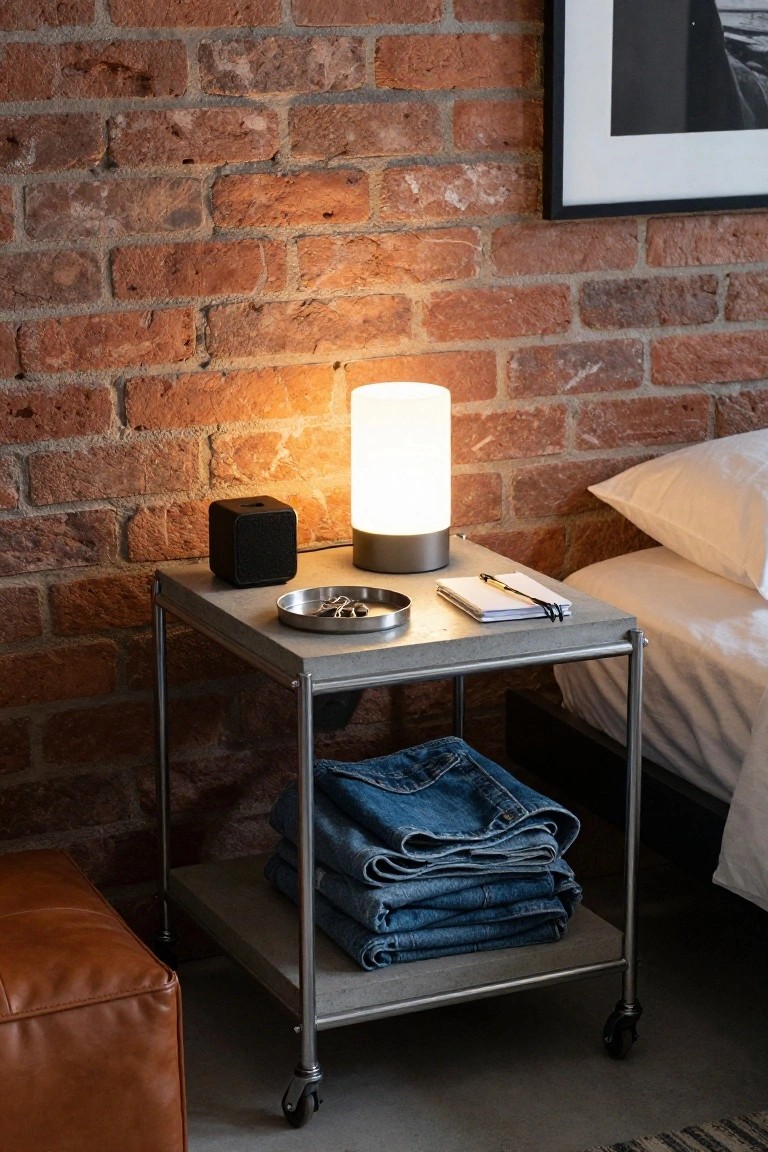
A rolling cart gives you a bedside table that moves when you need it to and adds storage without taking up much space. The lower shelf holds folded items while the top stays clear for a lamp and a few small things you reach for at night.
This option fits smaller bedrooms or anyone who likes to rearrange now and then. Just make sure the wheels lock so the cart stays put once you have it in place.
A Warm Wood Nightstand For Everyday Balance
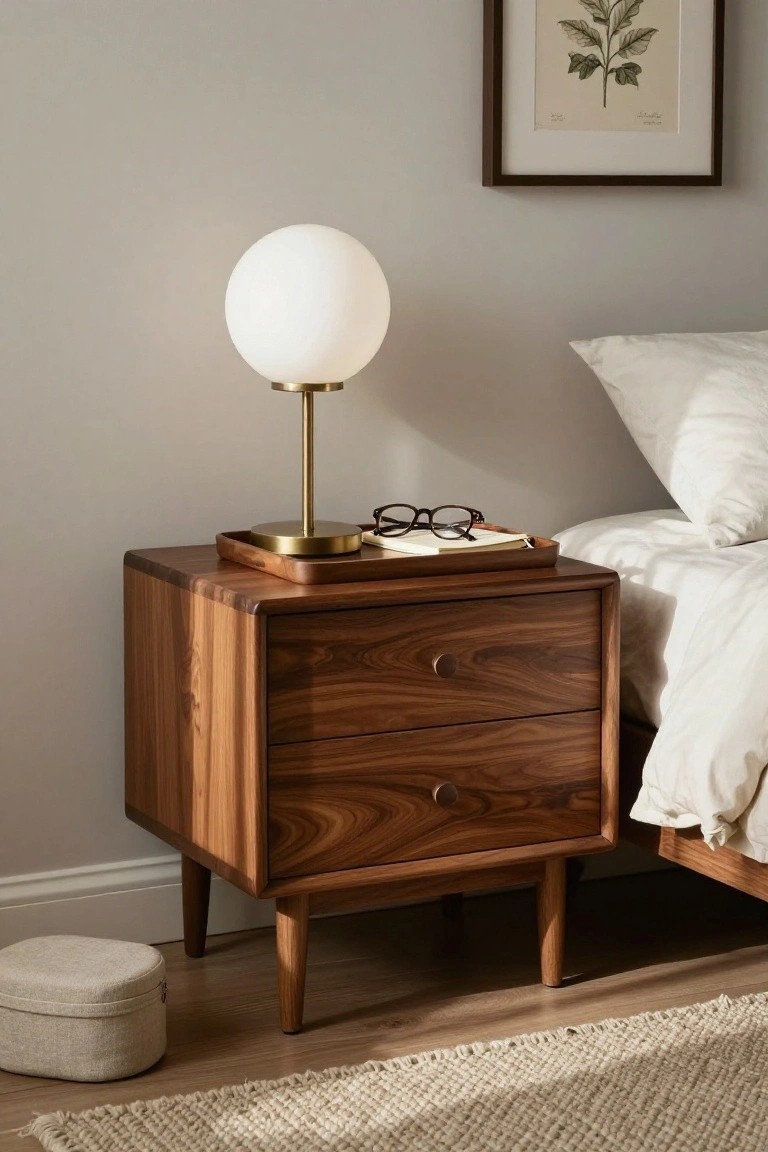
A bedside table in solid wood brings a steady, grounded feel to a bedroom that is otherwise soft and light. The natural grain adds just enough warmth without pulling attention away from the rest of the room, and the simple tapered legs keep the piece from looking too heavy.
This choice works especially well in smaller bedrooms or spaces with mostly neutral bedding and walls. Keep the top fairly clear so the wood itself stays visible, and let the rest of the room stay soft around it.
Frequently Asked Questions
Q: What size bedside table works best in a smaller bedroom?
A: Measure the area next to your bed first. A narrow table with a single drawer gives you storage without taking over the floor space. This keeps the room feeling open and balanced.
Q: How do I style my bedside table for that soft look without it looking empty?
A: Add one or two textured items like a linen-covered journal and a ceramic vase with dried flowers. These elements bring warmth and interest while staying simple.
Q: Can I use a different table on each side of the bed?
A: Sure you can. Just choose tables around the same height with matching tones so the overall feel stays soft and even.
