

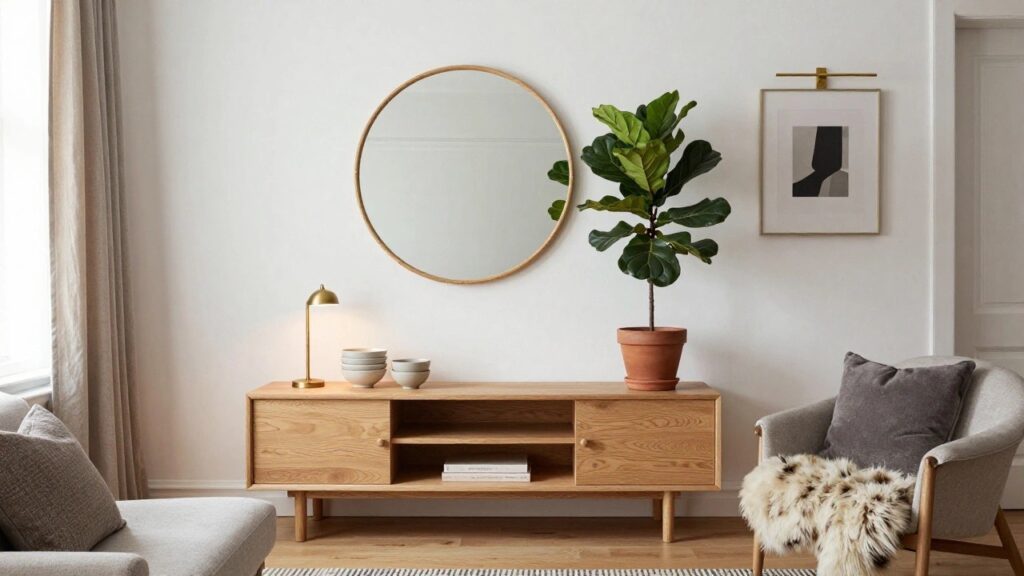
I have noticed over the years that a sideboard can quietly shape the balance of a room once you pair it with the right wall treatment.
The wall behind it often becomes the first thing guests register when they step into the dining area or living space.
I tend to test these pairings in person because photos rarely capture how the textures play off each other in daily light.
Scale matters more than most people expect.
Trying out a few of these approaches has helped me see which ones actually hold up once the furniture is in place and the room gets used.
A Round Mirror Above The Sideboard
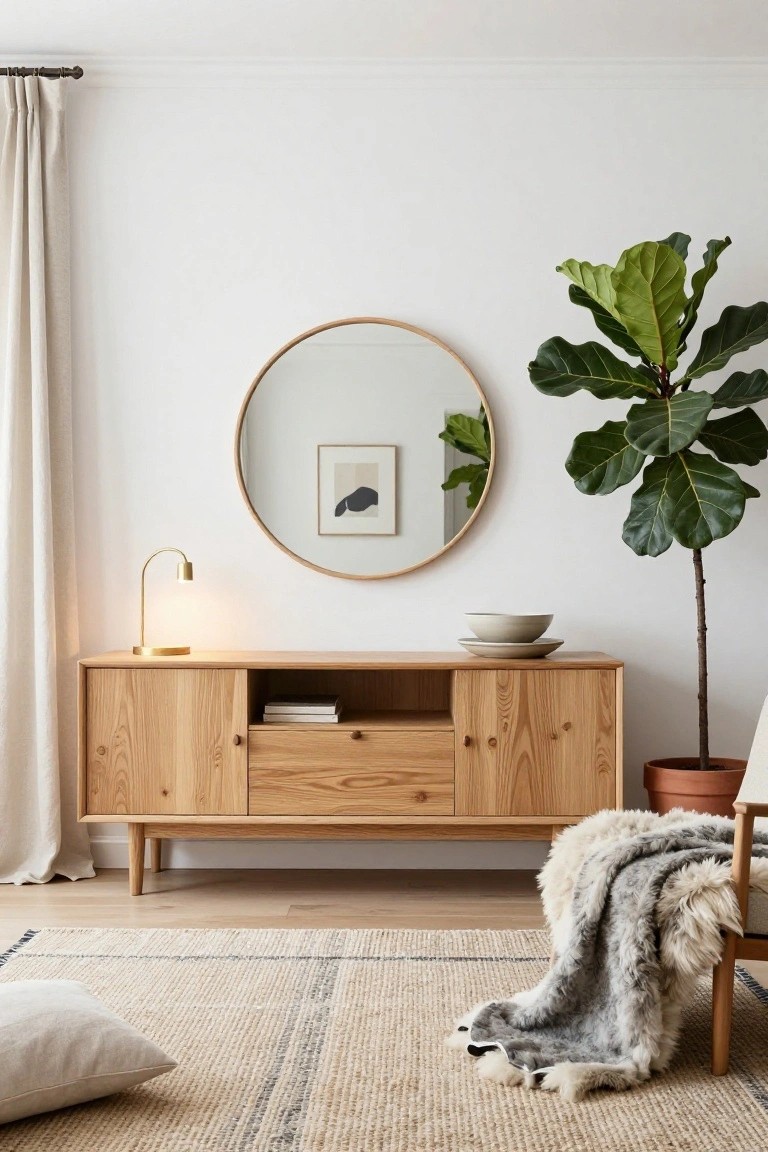
A round mirror above a sideboard is one of the simplest ways to finish off a long, low piece without adding clutter. The curve softens the straight lines of the cabinet and bounces light around the room at the same time.
This pairing works best on a fairly plain wall where the mirror can sit centered and the sideboard can stay the main storage piece. Keep the styling light on top so the reflection stays calm and the whole wall still feels open.
Pairing Wall Art With a Sideboard
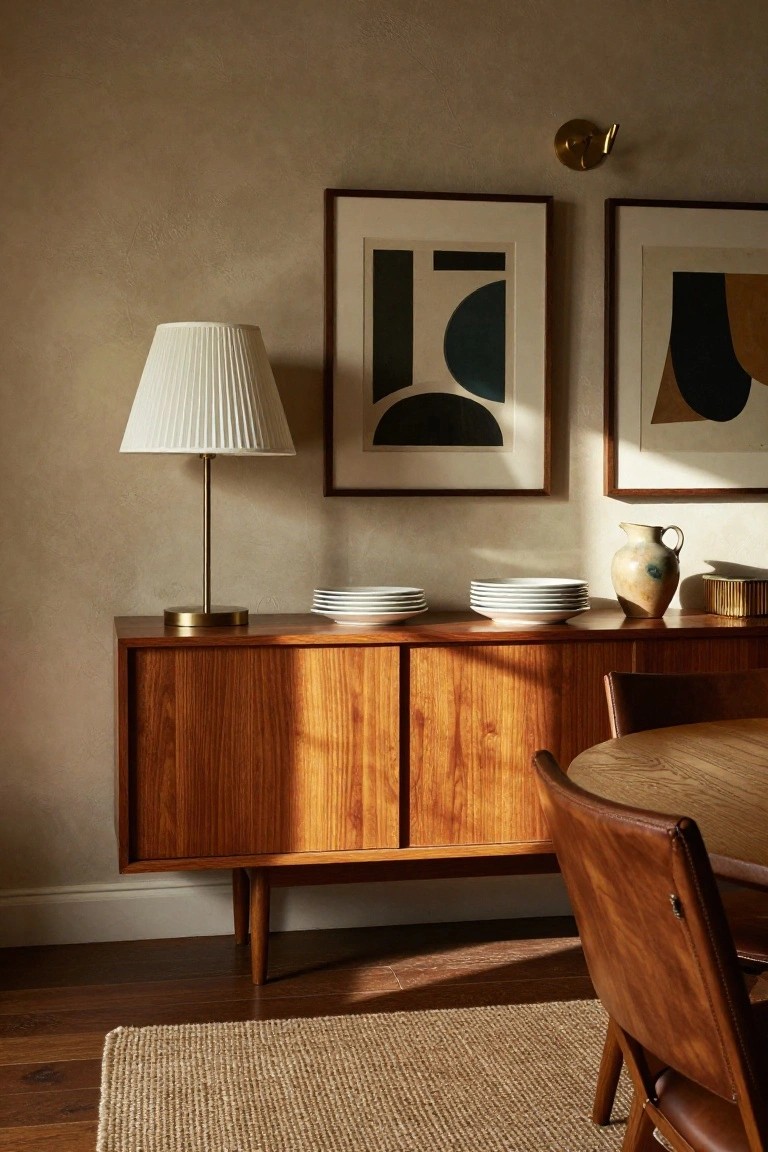
A sideboard often needs something above it to feel finished. Adding a couple of framed prints helps fill the wall without crowding the surface below. The simple shapes in the art keep things calm while the wood of the sideboard adds warmth.
This works best in dining areas where you want storage but also a bit of visual interest. Keep the art at a similar scale to the sideboard so nothing feels too heavy or too small. Stick to one or two pieces rather than filling every inch of wall space.
Match The Sideboard Color To The Wall
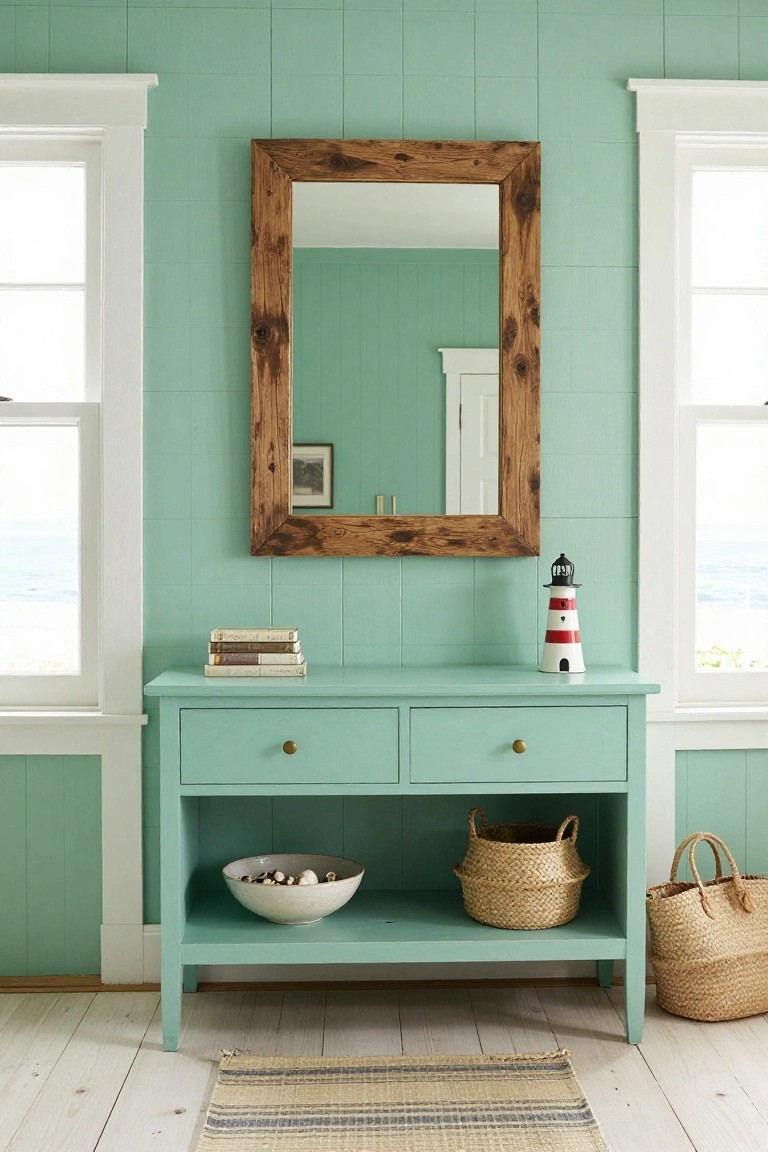
Painting a sideboard the same color as the wall behind it creates a clean and unified look that feels intentional rather than busy. The eye moves smoothly across the surface instead of stopping at a hard line between furniture and wall. This approach works especially well in coastal or cottage style homes where you want the space to feel light and open.
Try it in an entryway or hallway where natural light can play off the color. Keep accessories minimal so the match stays the focus. A large framed mirror above the sideboard helps reflect light and adds just enough contrast without breaking the effect.
Pairing Dark Sideboards with Large Abstract Art
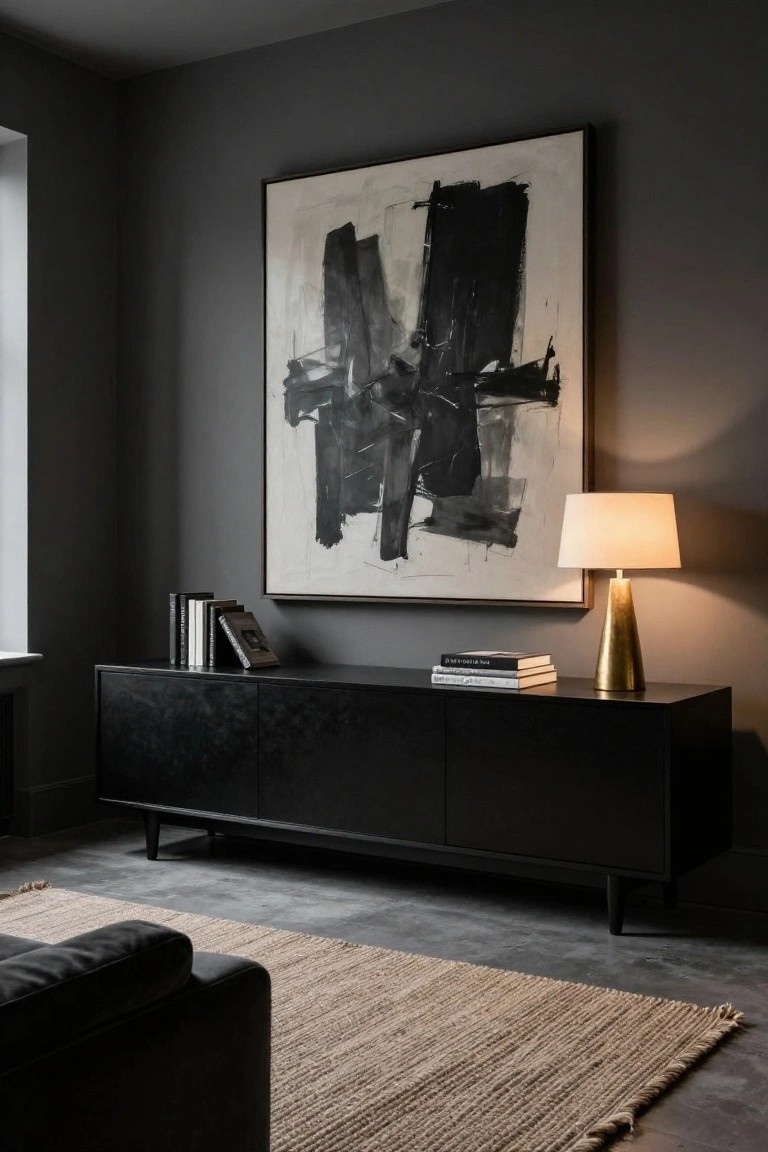
A dark sideboard paired with a big abstract painting can give a plain wall real presence. The strong lines of the furniture keep things grounded while the artwork adds movement and contrast that draws the eye without cluttering the space.
This works best in rooms with deeper wall colors where you want a focal point that still feels calm. Stick to one large piece rather than several smaller ones, and leave some breathing room around the edges so the pairing stays balanced.
Wooden Sideboards With Open Shelves Above
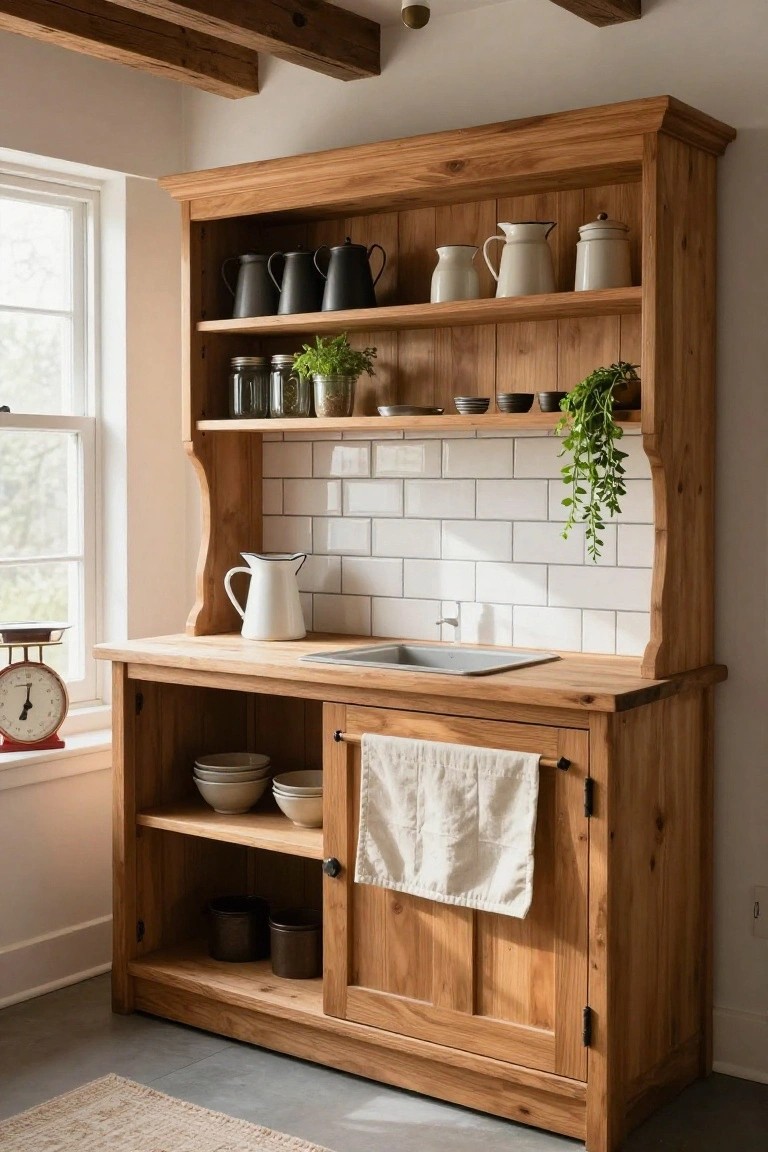
A wooden sideboard with open shelves on top gives you both storage and a place to keep everyday items in sight. The lower cabinets hide the clutter while the shelves let you reach for bowls or pitchers without opening doors. It feels practical in a space where you do a lot of daily tasks.
This works best in kitchens or utility areas that need more surface room but still want some warmth from natural wood. Try it in smaller homes where closed cabinets alone can make the area feel heavy. Just avoid overloading the shelves so the whole piece stays easy to use.
Pairing a Sideboard with a Mirror Above It
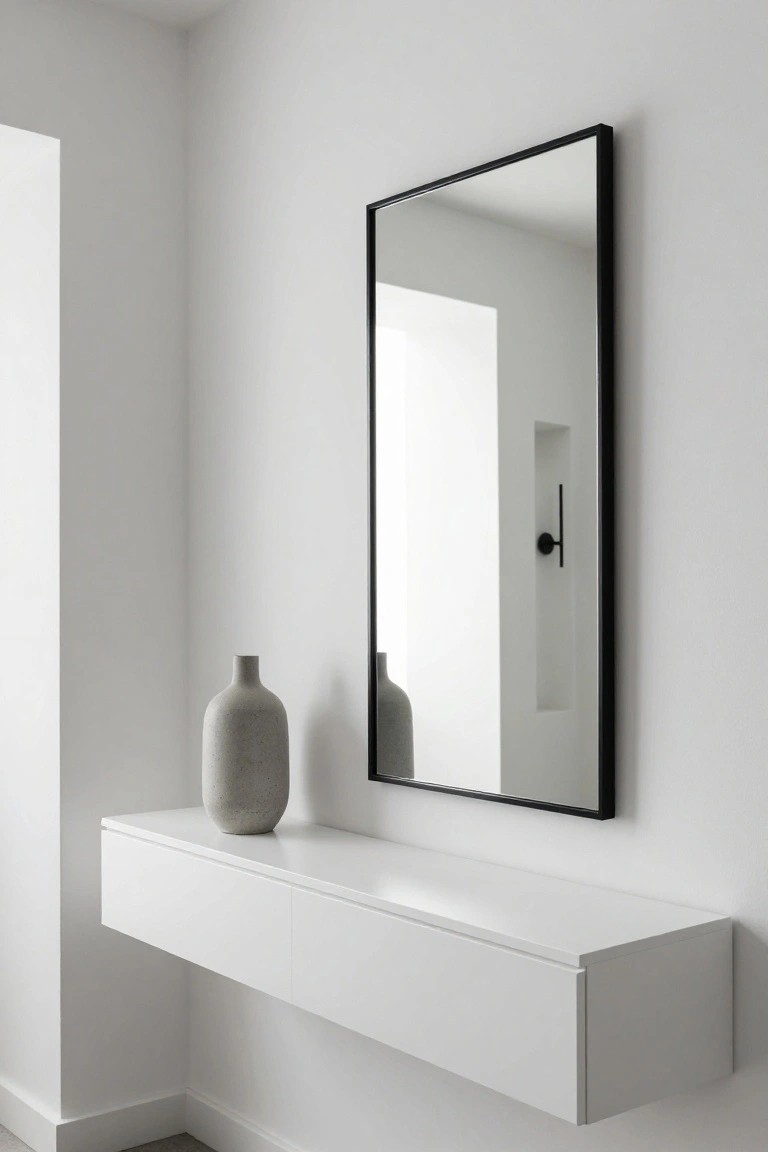
A floating sideboard gains a lot from a large mirror hung directly over it. The reflection brings in more light and makes the wall feel complete without adding extra shelves or art.
This works best in hallways or small entry areas where you need storage but still want the space to feel open. Keep the frame simple and roughly the same width as the sideboard so the two pieces read as one clean unit.
Pair a Woven Wall Hanging Over Your Sideboard
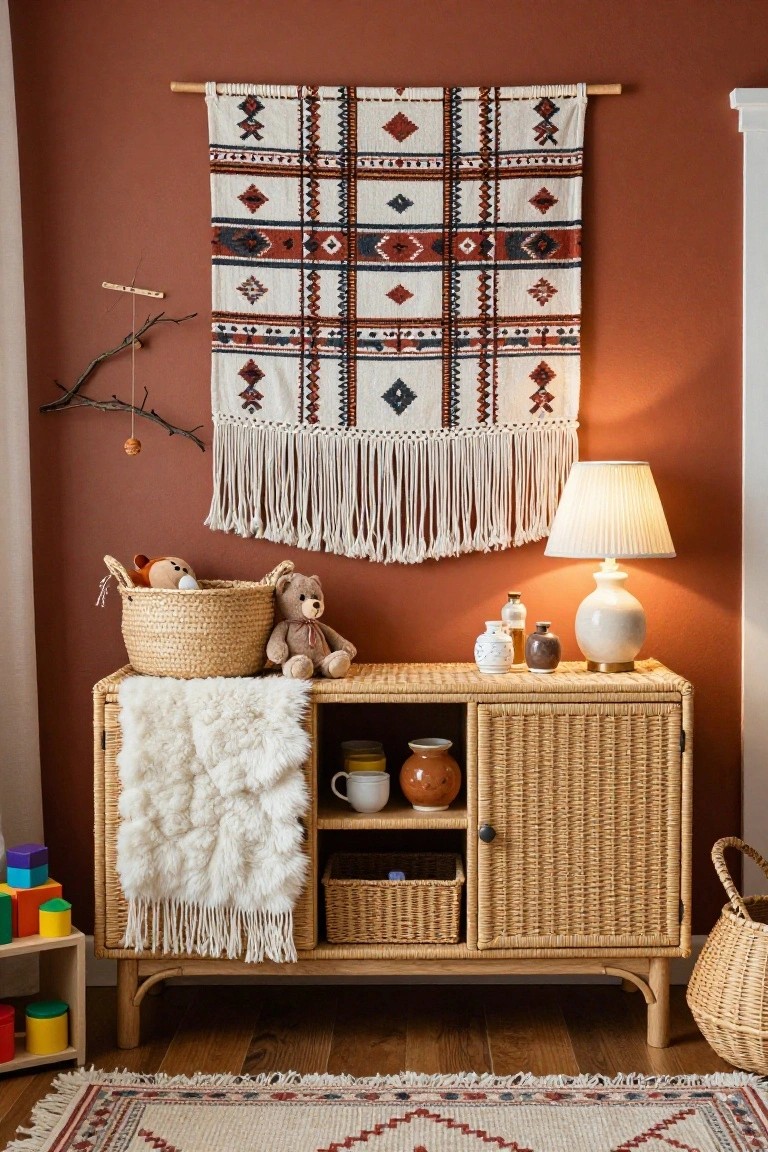
A woven wall hanging adds texture and a bit of pattern right where a sideboard needs it most. The soft fringe and simple geometric design keep the look relaxed instead of busy.
This works well in living rooms or family spaces where you already have wood or rattan furniture. Stick to neutral tones on the hanging so the items on the sideboard still stand out.
Three Prints Over A Low Sideboard
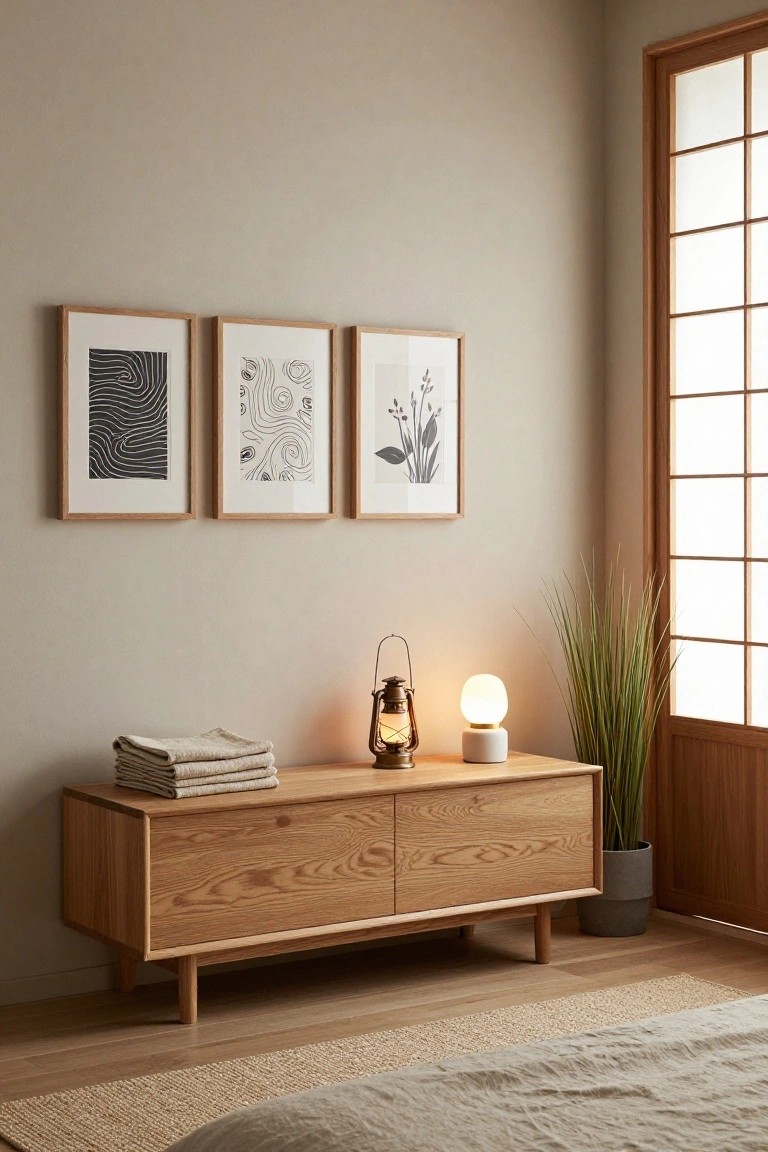
A row of three framed prints works well above a long wooden sideboard because it fills the wall without crowding it. The simple black and white line drawings add just enough interest while the sideboard handles storage and keeps the lower part of the wall clear. This pairing feels calm and balanced in spaces that already have plenty of wood and soft tones.
Try the same idea in a bedroom or entry where you need both storage and a bit of wall art. Keep the frames matching and the artwork minimal so the sideboard stays the main focus. Too many objects on top can make the whole wall feel busy, so stick to one or two small lamps or accents at most.
Sideboards Against Exposed Brick
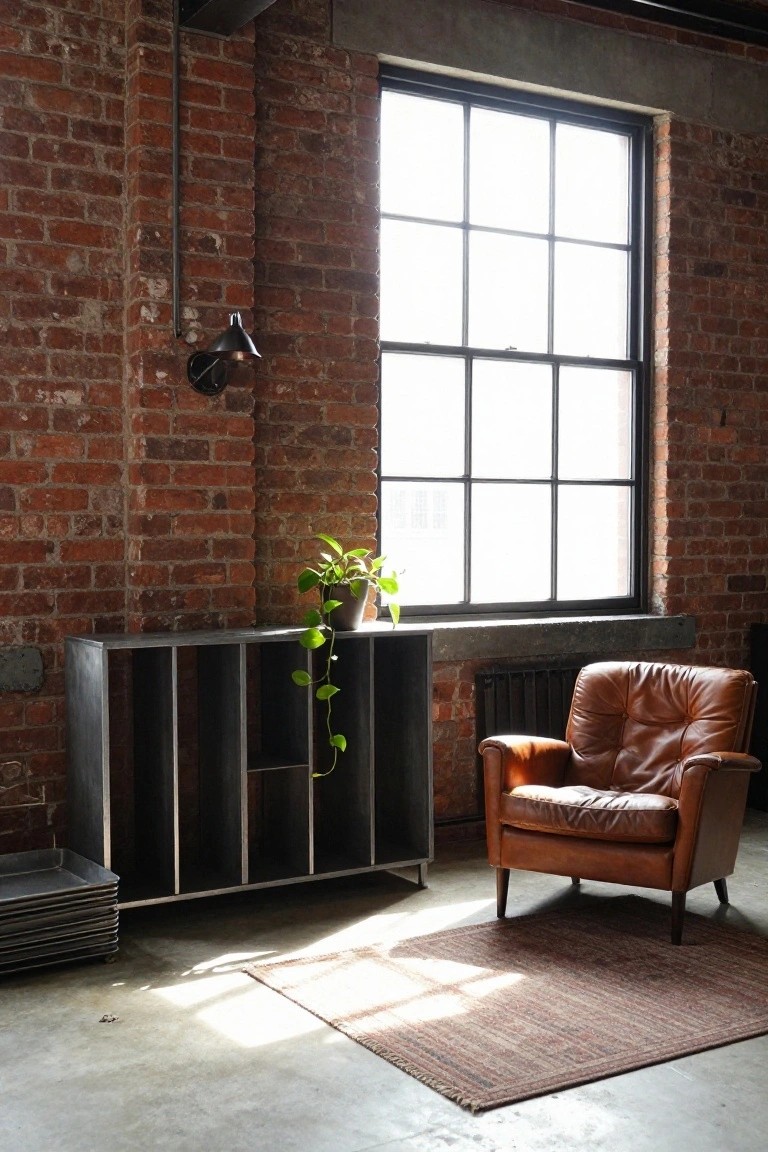
A low metal sideboard sits nicely against raw brick because the smooth surface plays off the rough texture without competing. The contrast keeps the wall from feeling too heavy while still letting the brick stay the main feature.
This setup works best in older buildings or loft spaces where the brick is already there. Keep the sideboard simple and low so it does not block too much of the wall or fight for attention.
Pairing a Bench With a Mirror
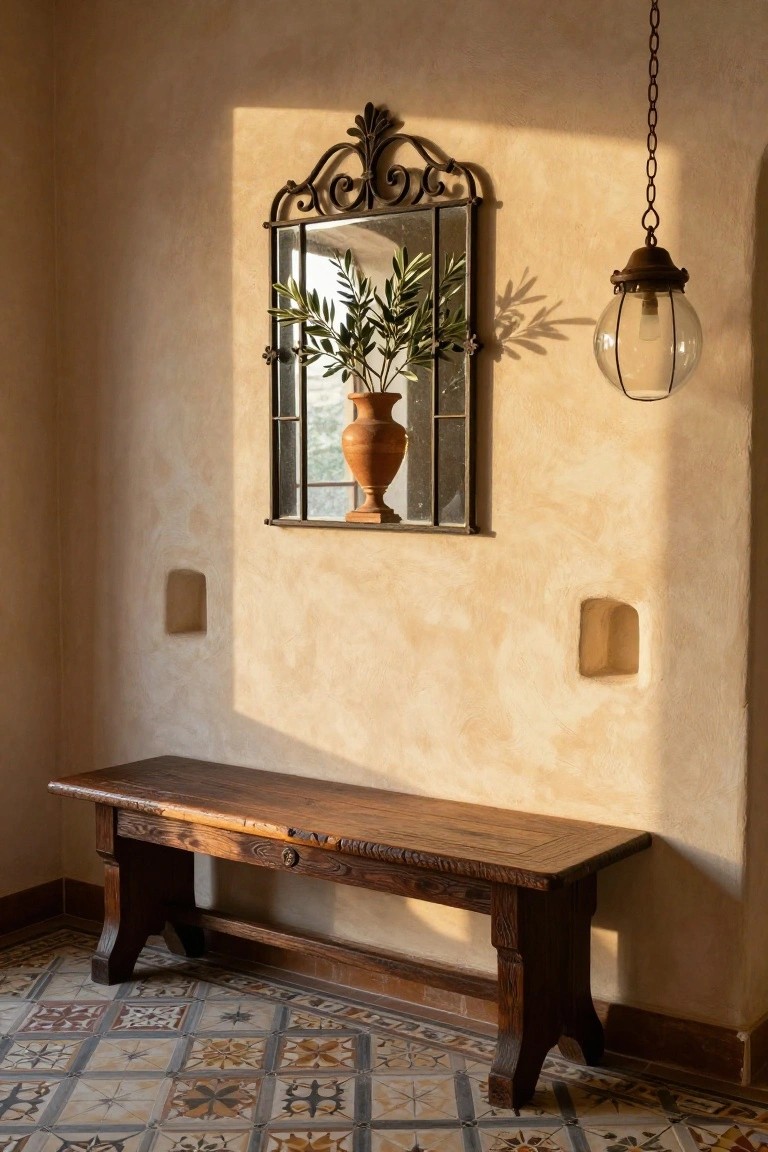
A low bench works well as a sideboard when you hang a mirror directly above it. The combination gives the wall some height and keeps the area from feeling empty. It is a simple setup that still feels finished.
This pairing suits narrow hallways or entry spots where you want a place to set keys or mail. Stick with a plain bench so the mirror can stand out, and make sure the wall behind has some texture to add interest without extra pieces.
Sideboards Placed In Front Of Fireplaces
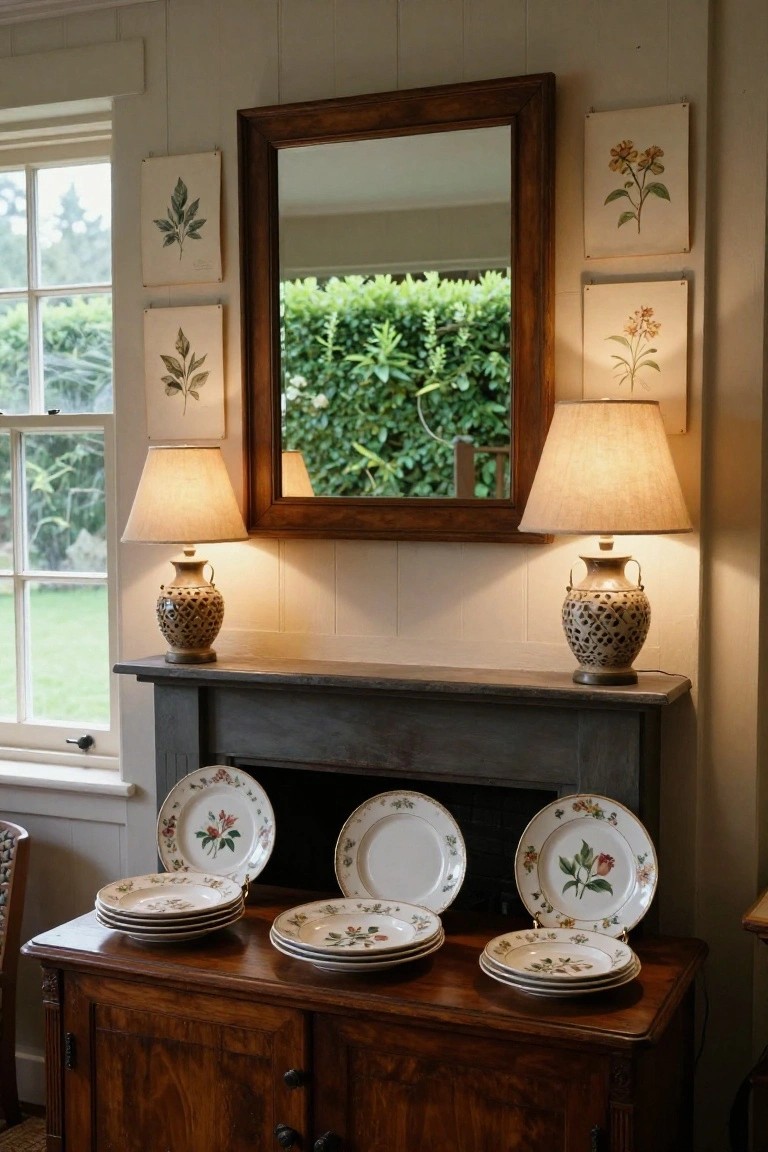
A sideboard in front of a fireplace gives the room a solid base for showing off plates or other collected pieces. It turns the whole wall into a single display area instead of leaving the mantel to stand alone.
This setup works best in older homes where the fireplace already draws attention. Keep the sideboard lower than the mantel and use lamps or simple stacks of plates so the arrangement stays balanced and easy to dust.
Hanging a Mirror Above a Sideboard
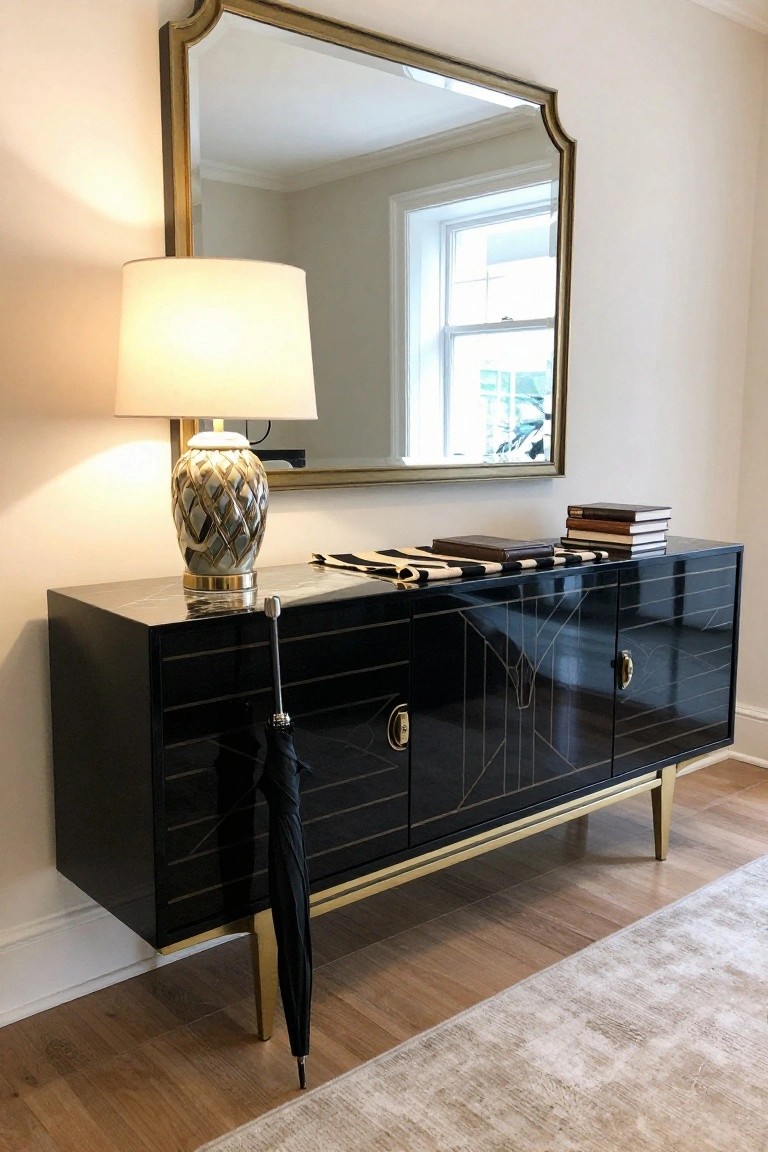
A mirror placed over a sideboard can open up a hallway or entry and keep the wall from feeling too heavy. It bounces light around the room and gives the sideboard a clear purpose without needing extra decoration.
This setup works best in narrower spaces where you want to keep the look simple. Choose a mirror that lines up with the width of the sideboard so the two pieces feel like one unit rather than separate items.
Window Bench Seating
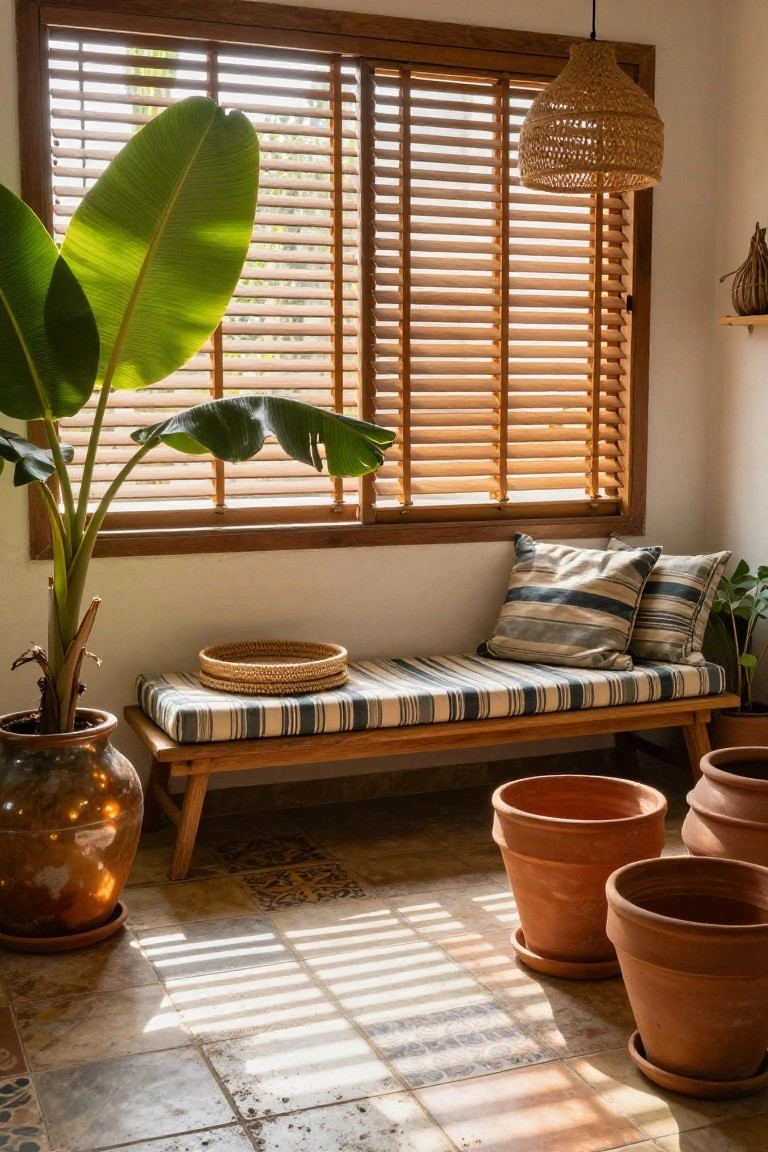
A bench tucked under a window turns a plain wall into a useful spot for sitting. It catches the light nicely and gives you a place to rest without adding bulky furniture that crowds the room.
This setup works best in living areas or hallways where you want something simple and low to the ground. Add a cushion for comfort and keep a few plants nearby so the space feels lived in rather than staged.
Pairing a Sideboard with a Large Map
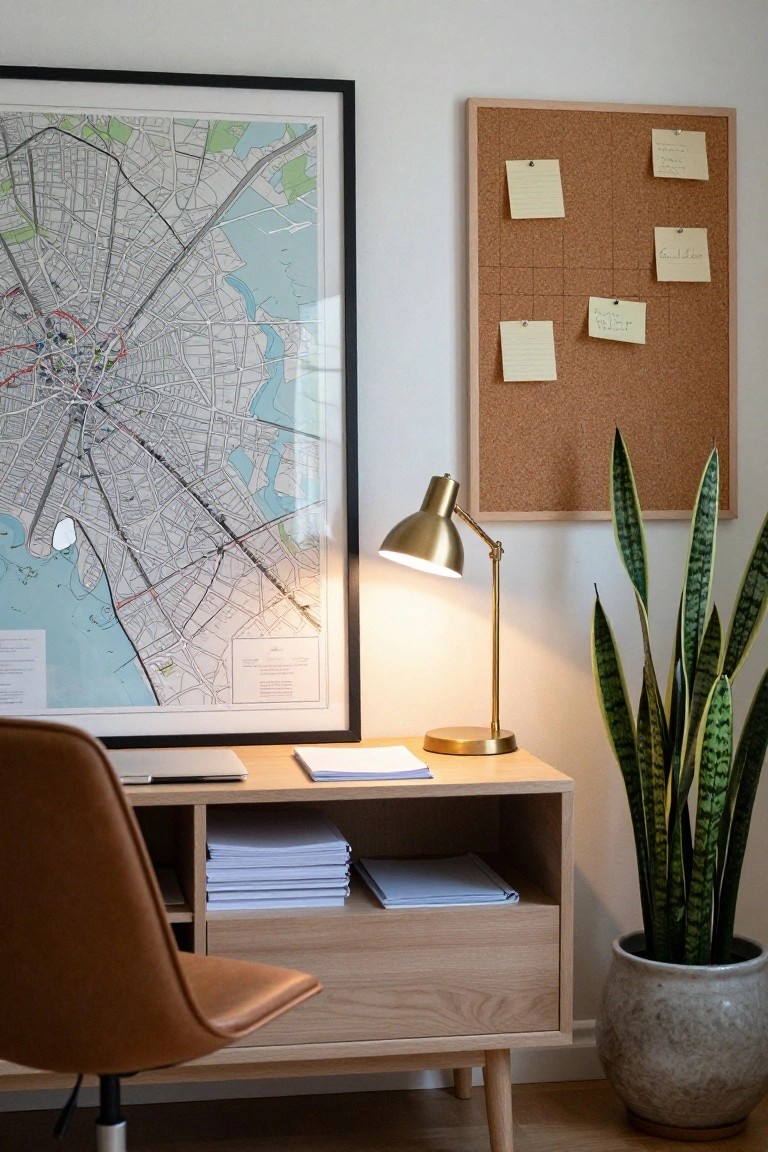
A sideboard works nicely in a home office when you hang a big map right above it. The map adds interest to the wall without crowding the space, and the sideboard below keeps things practical for papers, files, or daily work.
This setup fits best in smaller rooms where you need storage but still want the wall to feel finished. A light wood sideboard under the map keeps the look simple, and you can add a corkboard on a nearby wall if you need a spot for notes.
Built-In Benches With Hooks For Everyday Storage
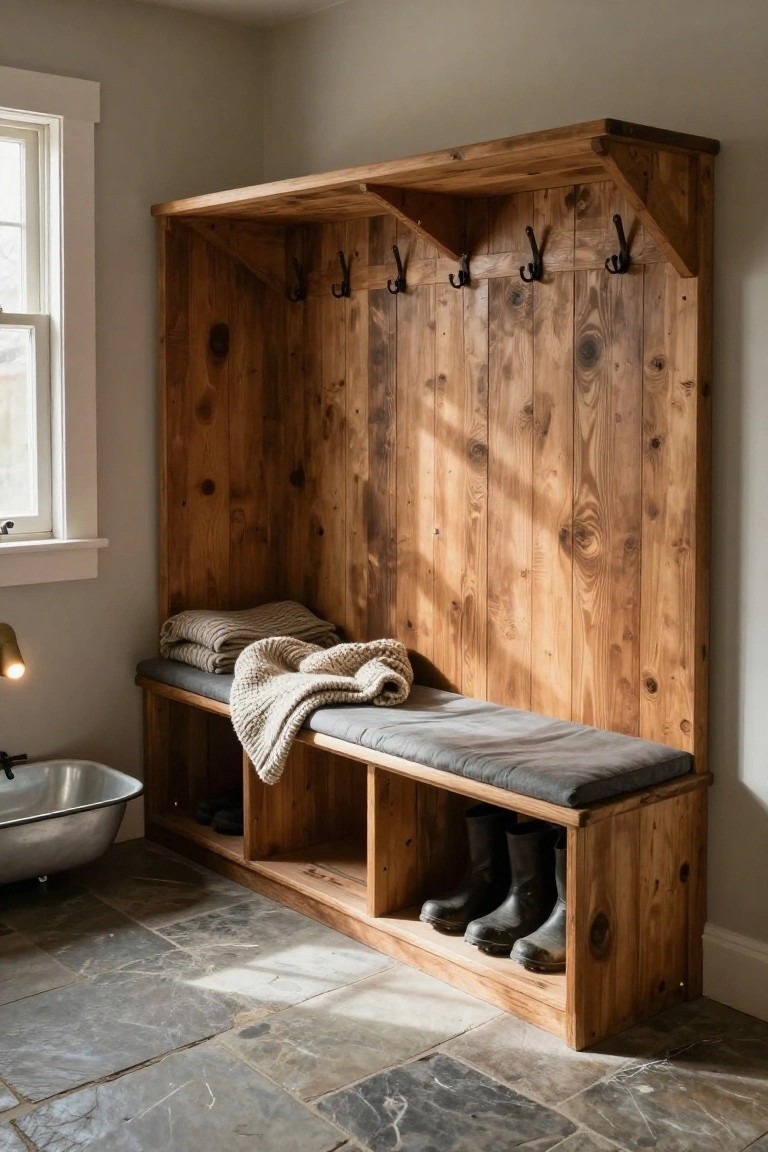
A built-in bench that includes hooks above it gives an entryway or mudroom a simple way to handle coats, bags, and shoes without adding extra furniture. The setup keeps things off the floor and makes the space feel more organized right from the door.
This kind of bench works best in homes that see a lot of daily traffic through one main entrance. It suits smaller entry areas where separate pieces would crowd the room, though it helps to keep the lower cubbies open so boots and shoes can dry out properly.
Placing a Mirror Above a Dresser
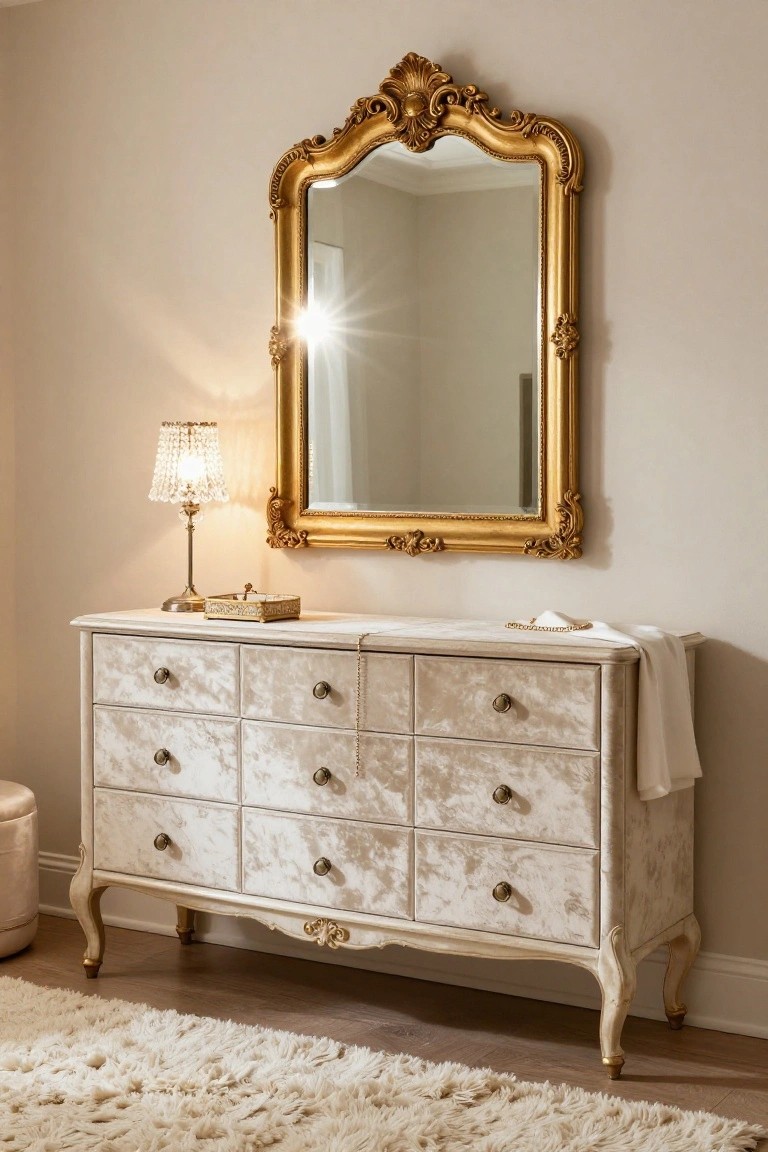
A large mirror over a dresser gives the piece more presence on the wall. It also bounces light around the room and turns a simple storage piece into something that feels more complete.
This pairing works best in bedrooms or smaller spaces where you want storage without the wall feeling too heavy. Keep the frame simple or ornate depending on the style of the dresser, and make sure the bottom edge sits just a few inches above the surface so the two pieces read as one unit.
Wooden Sideboards With Built In Pegboards
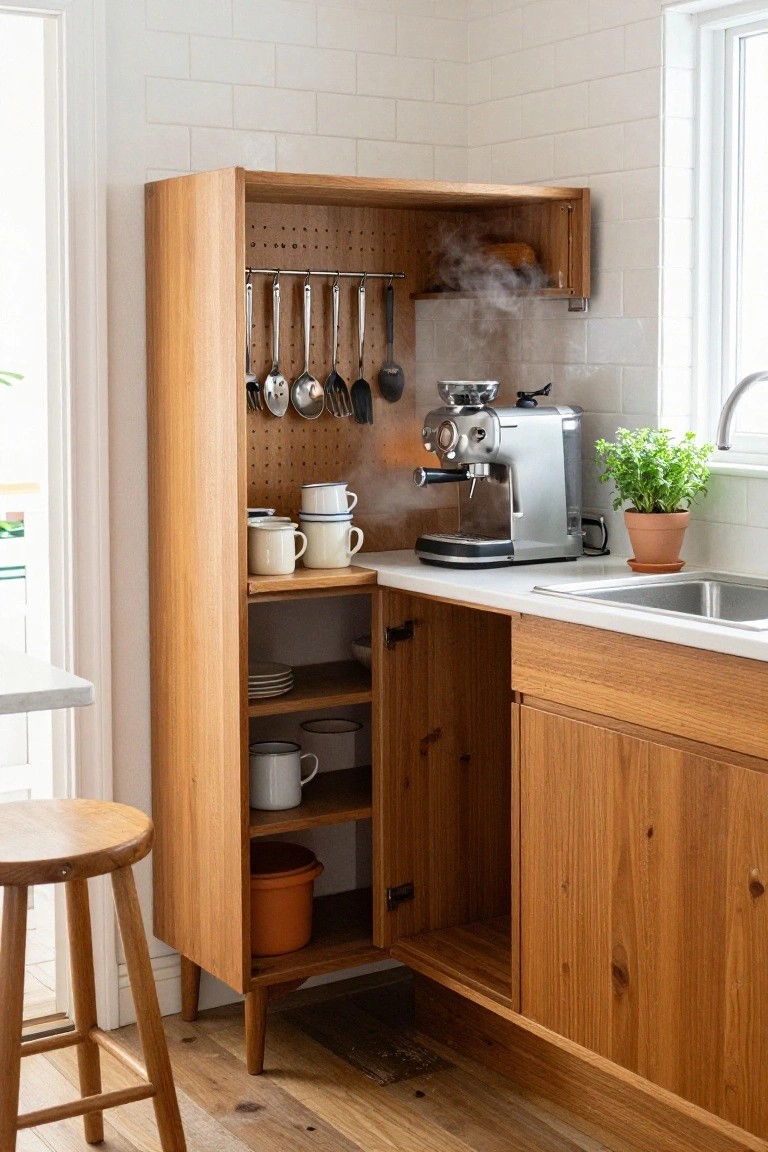
A wooden sideboard works well when it includes a pegboard section for hanging tools right above the main surface. This setup keeps everyday items within reach while the lower cabinets hide the rest, so the counter stays clear for actual use.
It suits kitchens that need extra storage without adding more upper cabinets. Place it near the sink or coffee station and keep the hanging items limited to what you reach for daily.
Pairing Wood Vanities With Light Tile Walls
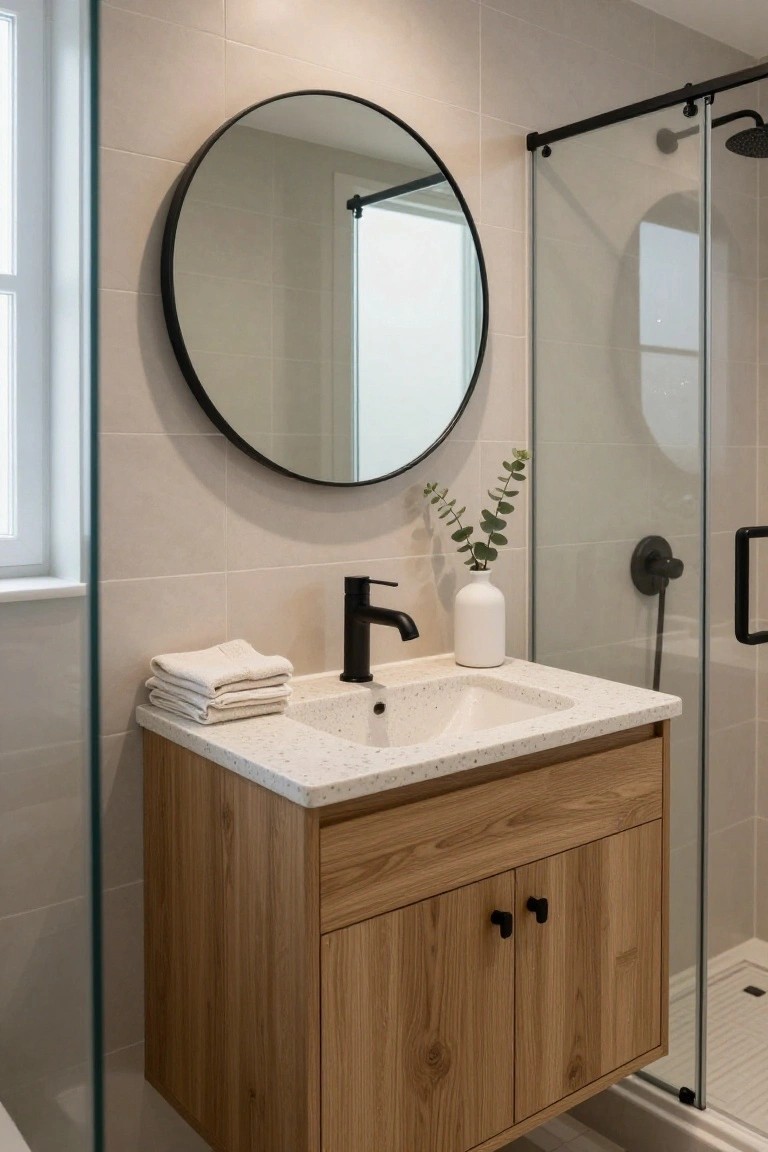
A wood vanity can soften a bathroom that relies mostly on tile and stone. The natural grain adds warmth and a bit of texture that keeps the space from feeling too stark or clinical.
This approach works well in smaller baths or guest rooms where you want storage without adding bulk. Stick with simple black hardware and a light countertop so the wood stays visible but does not take over the room.
Adding a Sideboard to the Porch
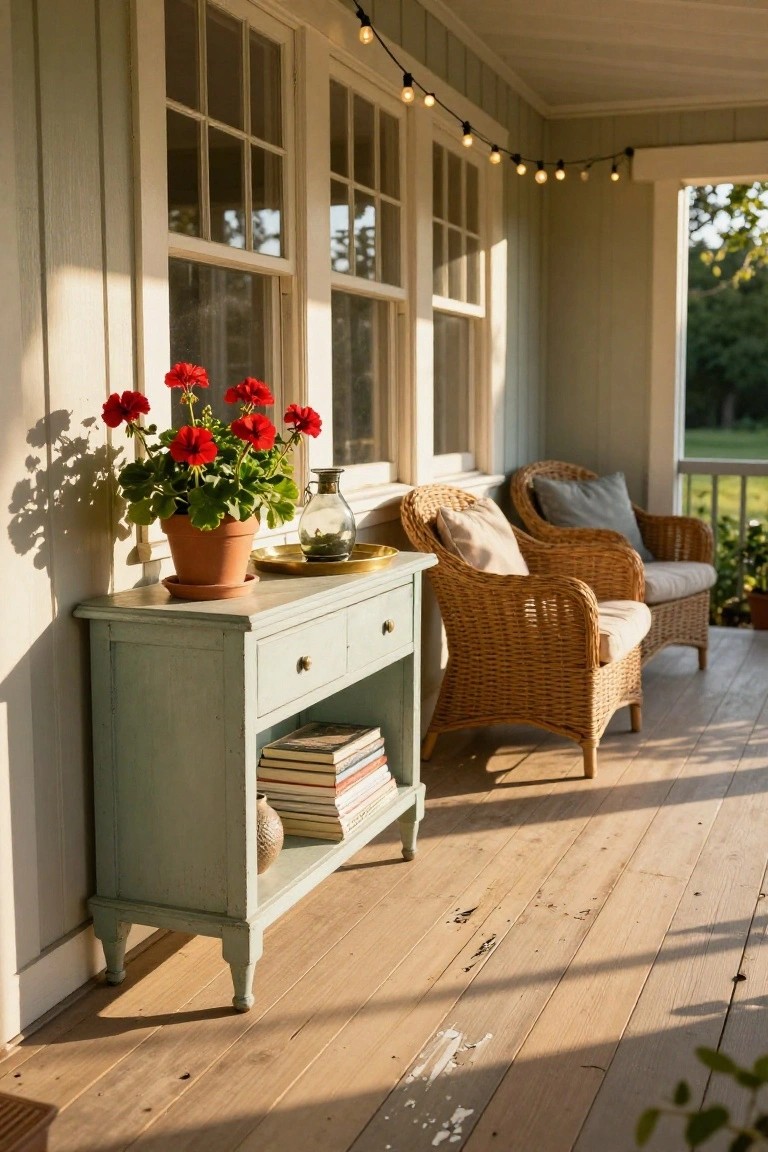
One idea worth trying is moving a sideboard out onto the porch so it sits against the exterior wall. It creates a useful surface for plants or small items and keeps things organized without crowding the floor space. The piece blends in easily when the color matches the house trim.
This works best on a covered porch that stays fairly dry. It suits homes where people spend time sitting outside, since the sideboard can hold books or drinks near the chairs. Just pick a sturdier finish or plan to move it inside during bad weather.
Built-In Shelves Over A Sideboard
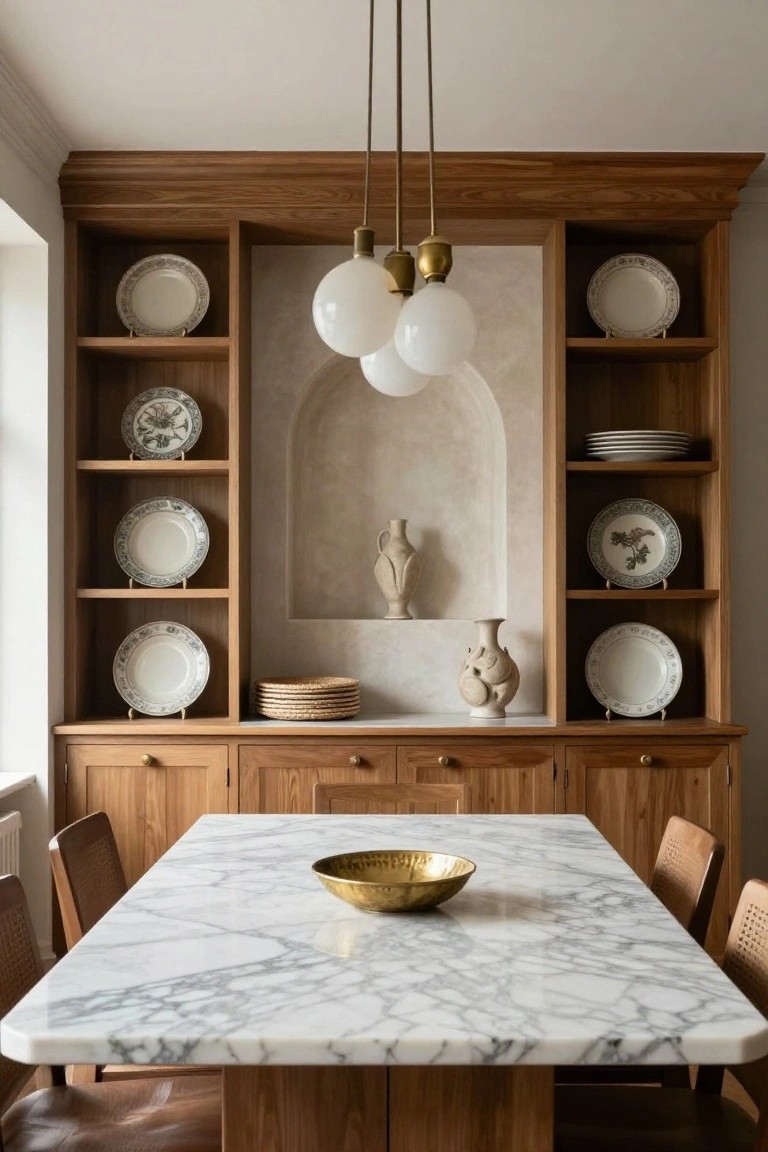
One simple way to make a dining wall feel finished is to add open shelves right into the cabinetry above a low sideboard. This gives you a spot to show plates and other pieces while keeping the lower section closed for storage.
It works best in rooms where you already eat or entertain, since the display stays useful rather than just decorative. Keep the shelves fairly shallow and limit what you put on them so the whole wall stays balanced.
Mixing Frames Above a Sideboard
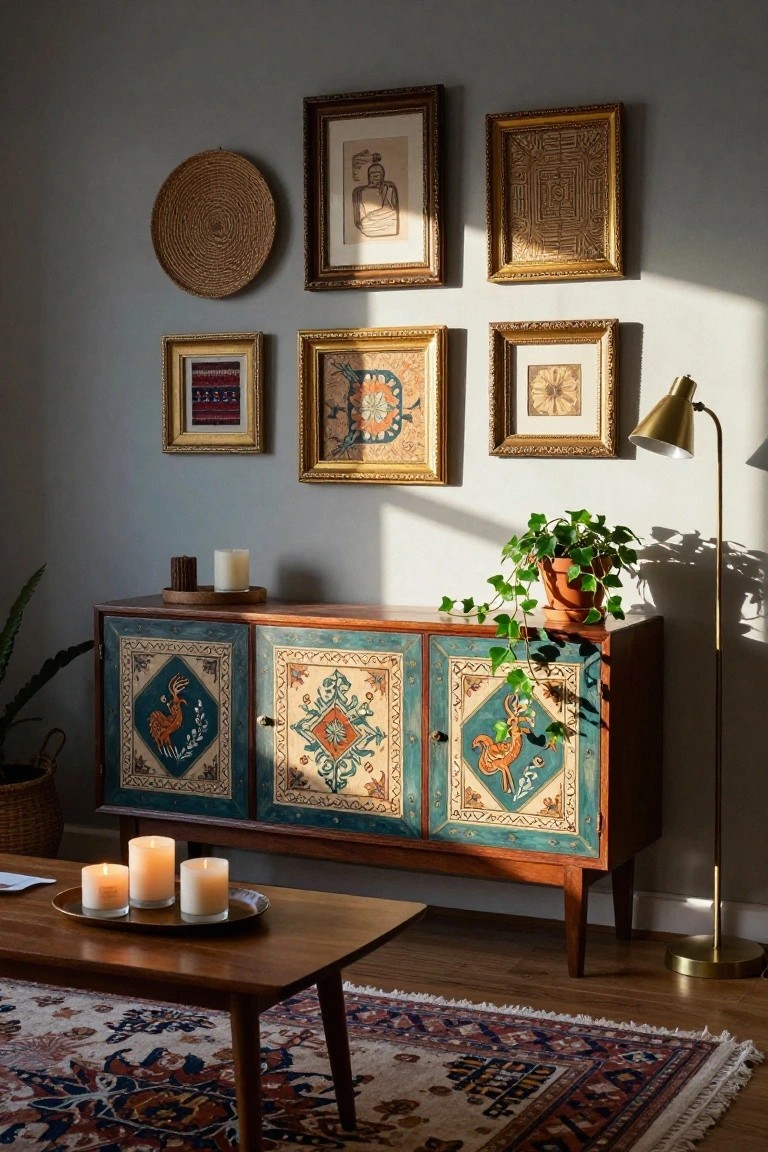
One way to make a plain wall feel finished is to hang a loose group of frames right over the sideboard. The mix of sizes and styles keeps the eye moving and gives the furniture a settled look instead of leaving it floating on its own.
This approach works in living rooms or entryways where you want some warmth without filling every surface. Keep the frames fairly close together and let one or two larger pieces anchor the group so the arrangement feels balanced rather than scattered.
Frequently Asked Questions
Q: My walls are a deep navy. Which sideboard color should I try first?
A: Go with a light oak or whitewashed finish. It brightens the space and makes the navy pop without feeling heavy.
Q: Should I hang art above the sideboard or leave the wall plain?
A: Hang a single large piece or a small gallery wall centered over it. Keep the art no wider than the sideboard itself for the best proportions. This setup draws the eye up and completes the pairing nicely.
Q: Can the sideboard double as extra storage in my dining area?
A: Yes. Choose one with drawers and doors. Store table linens or extra dishes inside while the top holds lamps and decor.
Q: What if my room has low ceilings?
A: Pick a lower sideboard profile. It keeps the space feeling open.
