

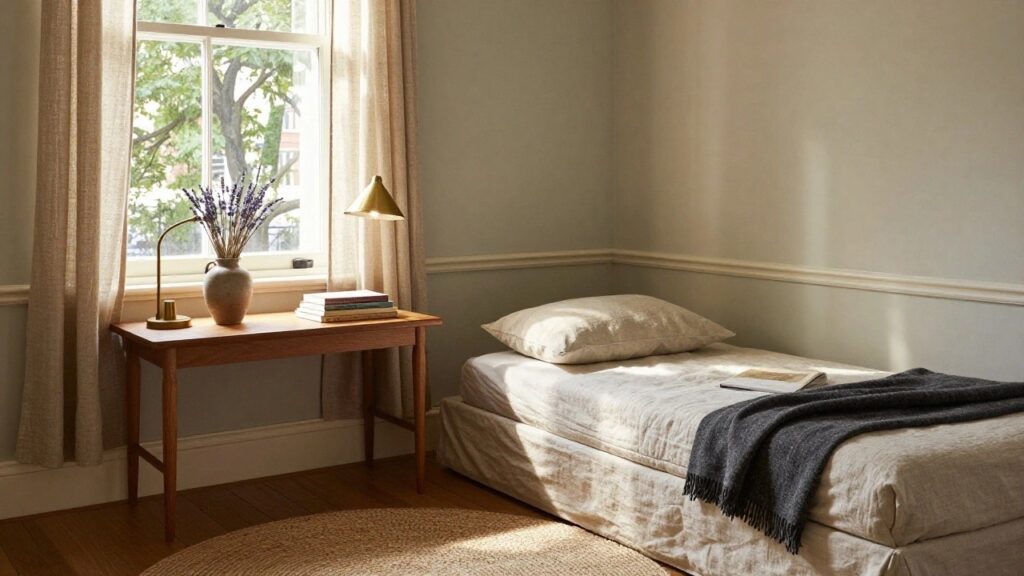
When your bedroom has limited floor space the last thing you need is a bedside table that crowds the walkway or blocks easy access to the bed.
I found this out the hard way after moving into a smaller room where even a standard nightstand made the area feel cramped from the moment I walked in.
Finding slim options helps keep the room functional while still giving you a spot for a lamp or a book.
It is surprising how much difference the right proportions can make once everything is in place and the space starts to feel balanced again.
Some of these work better than others once you live with them.
Slim Wooden Nightstands For Narrow Spaces
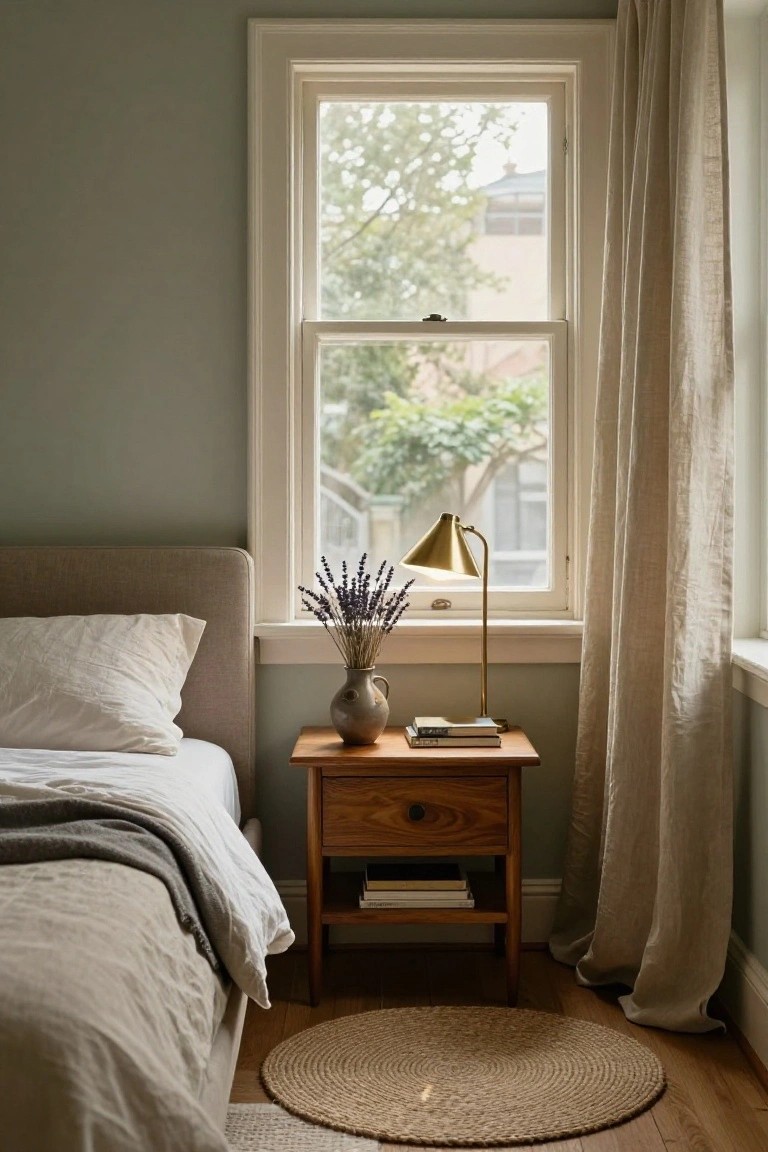
A slim bedside table can make all the difference when the area next to the bed feels cramped. This wooden piece fits neatly into the tight spot without sticking out or blocking the path, while still offering enough surface space for a lamp and a few small items.
It suits smaller bedrooms or rooms where the bed sits close to a window or wall. Look for a design with one drawer and an open lower shelf so you can store books and extras without adding extra width or visual clutter.
A Floating Ledge Makes A Practical Bedside Option
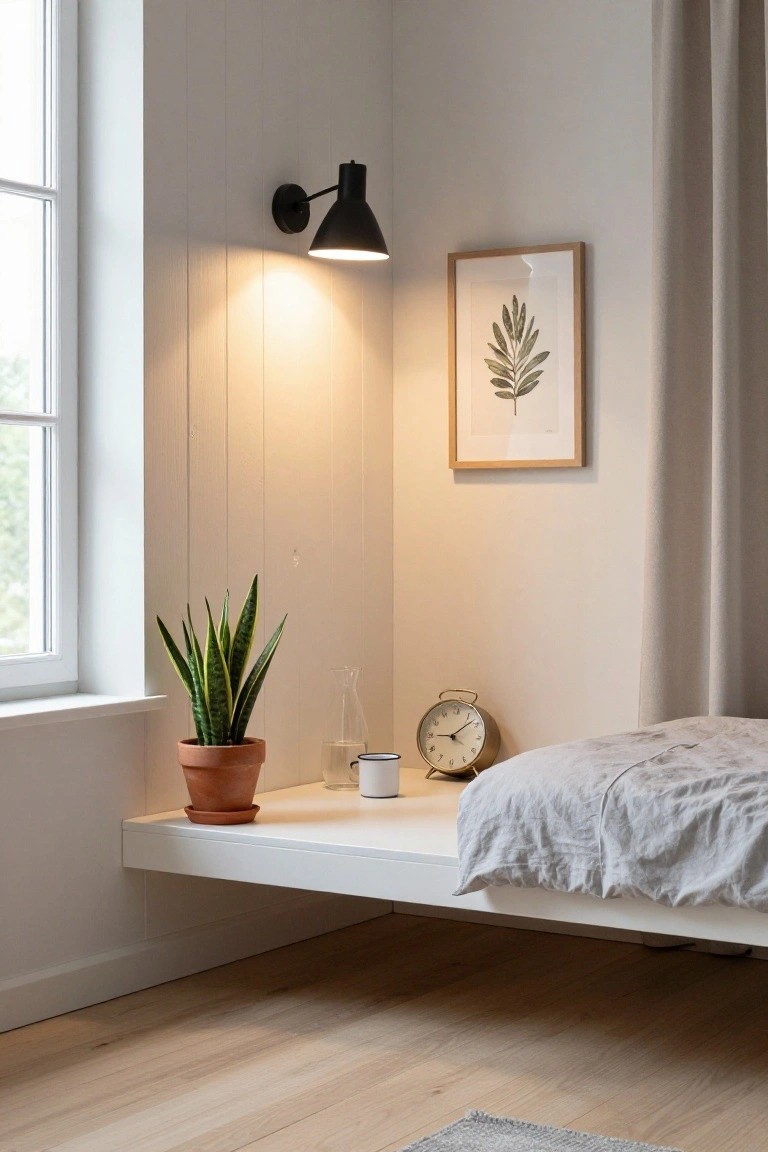
A floating ledge gives you surface space without the bulk of a full nightstand. In rooms where every inch counts, this kind of narrow built-in keeps the floor clear and still holds the basics you reach for at night.
It works best in small bedrooms or tight corners where a standard table would crowd the walkway. Keep the styling light with just a clock, a small plant, and maybe a simple wall light above so the ledge stays useful without feeling cluttered.
Slim Nightstand With Open Storage Below
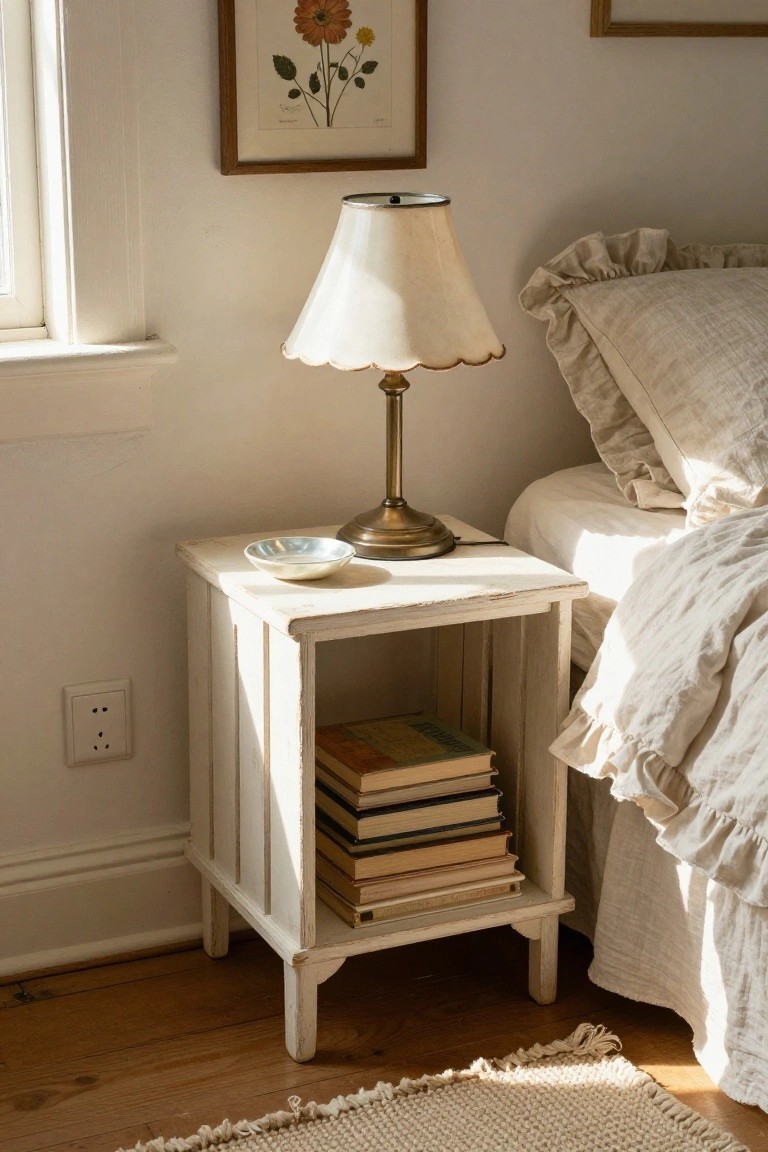
A slim bedside table like this one keeps the area next to the bed from feeling cramped. The narrow top gives just enough room for a lamp while the open space underneath holds a stack of books without needing extra drawers or cabinets.
This setup works best in small bedrooms where floor space is limited. It keeps the look light and makes it easy to reach what you need at night without adding bulk.
Slim Marble Tables For Narrow Spots
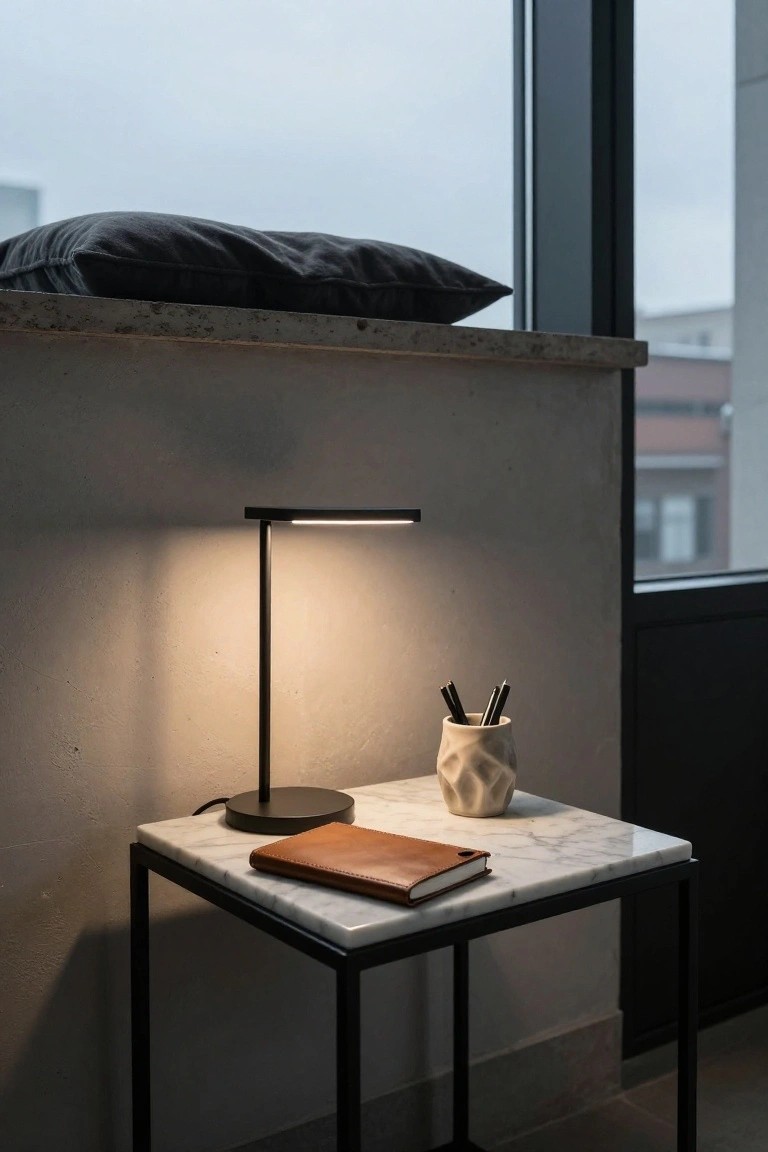
A narrow table with a marble top gives you just enough surface without taking over the floor space. It slips neatly beside a bed or along a wall where a wider piece would feel cramped and leaves room to move around the room.
This kind of table works best in small bedrooms or apartments where every inch counts. Keep the top simple with one lamp and a couple of small items so it stays useful without looking crowded.
Narrow Nightstands With A Single Drawer
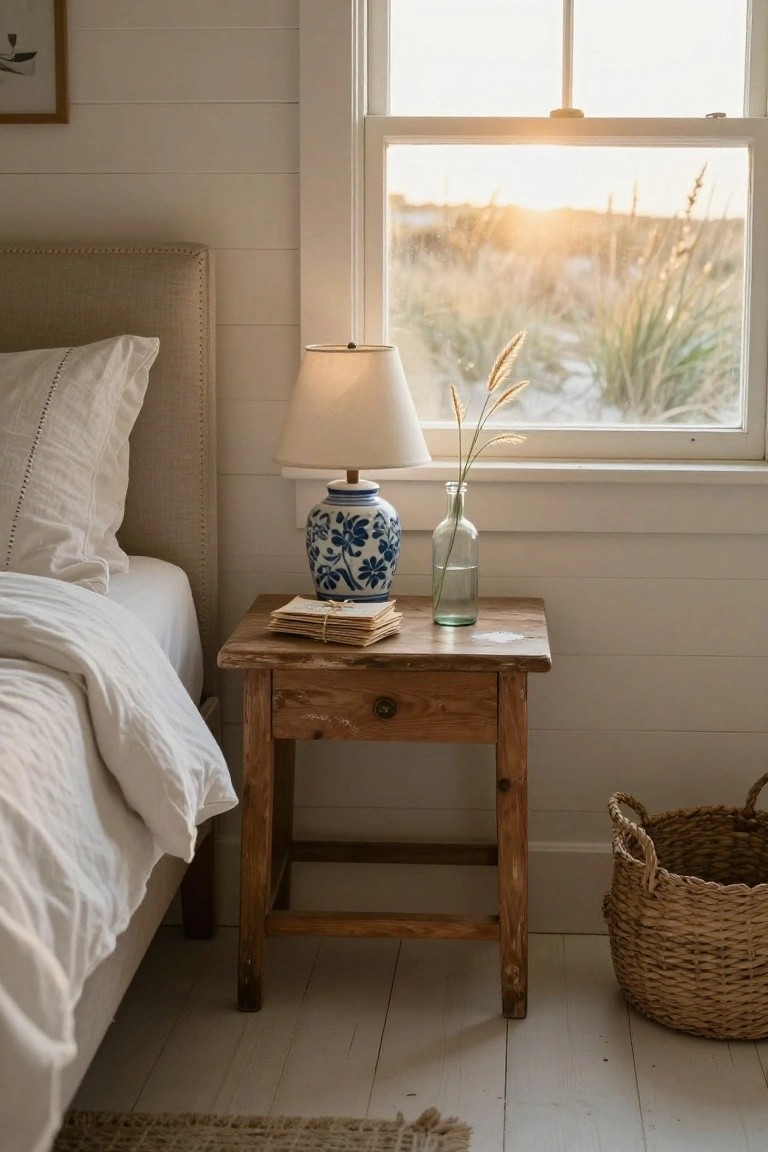
A slim nightstand with just one drawer can solve a lot of problems in a tight bedroom. It takes up very little floor space yet still gives you a surface for a lamp and room to store a few small things out of sight.
This style works especially well in older homes or guest rooms where the bed sits close to a wall or window. Choose one made of wood so it feels sturdy without looking bulky, and keep the top fairly clear so the area stays calm and easy to use.
Ladder Shelves Work Well As Slim Nightstands
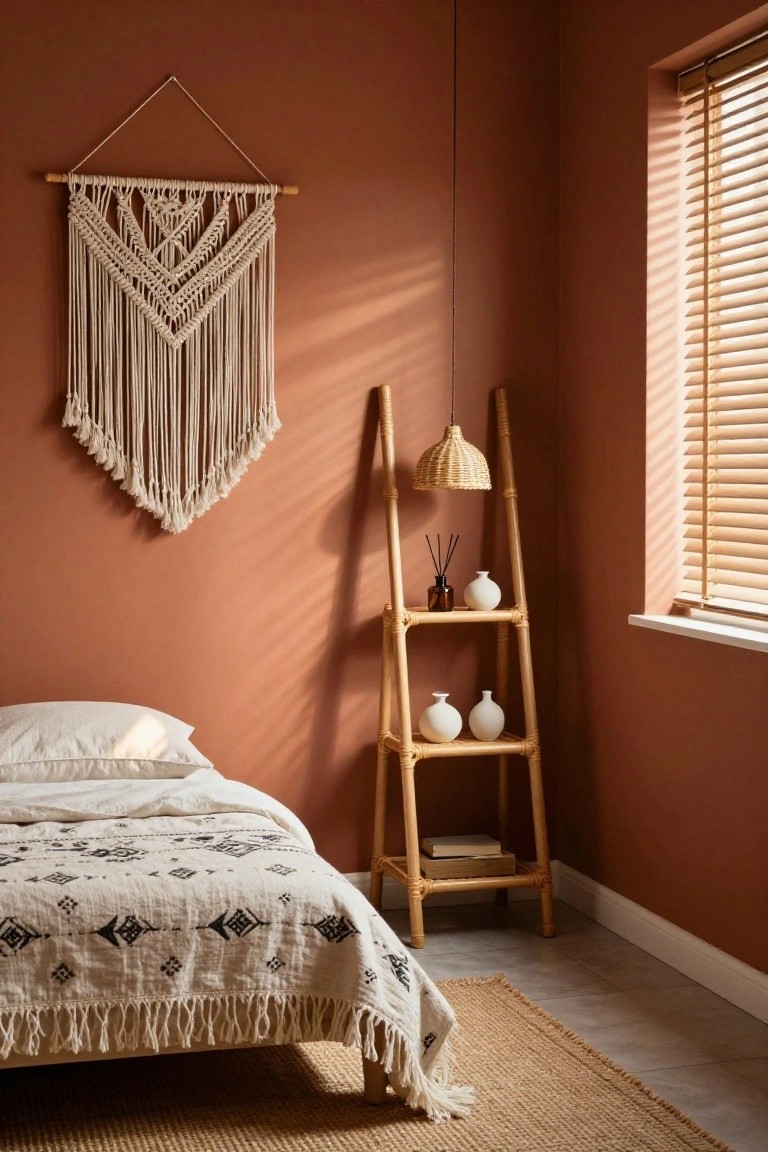
Many bedrooms have just enough room for a bed and little else, so a standard nightstand can feel like too much. A tall ladder shelf stays narrow yet gives you several open levels for a lamp, a few books, or small items you want close at hand.
This works best in tight layouts where floor space is limited or when you want the area around the bed to feel lighter. Keep the bottom shelf for things you reach for often and leave the top clear so the lamp sits at a good height without taking over the room.
Floating Shelves For Narrow Bedside Spots
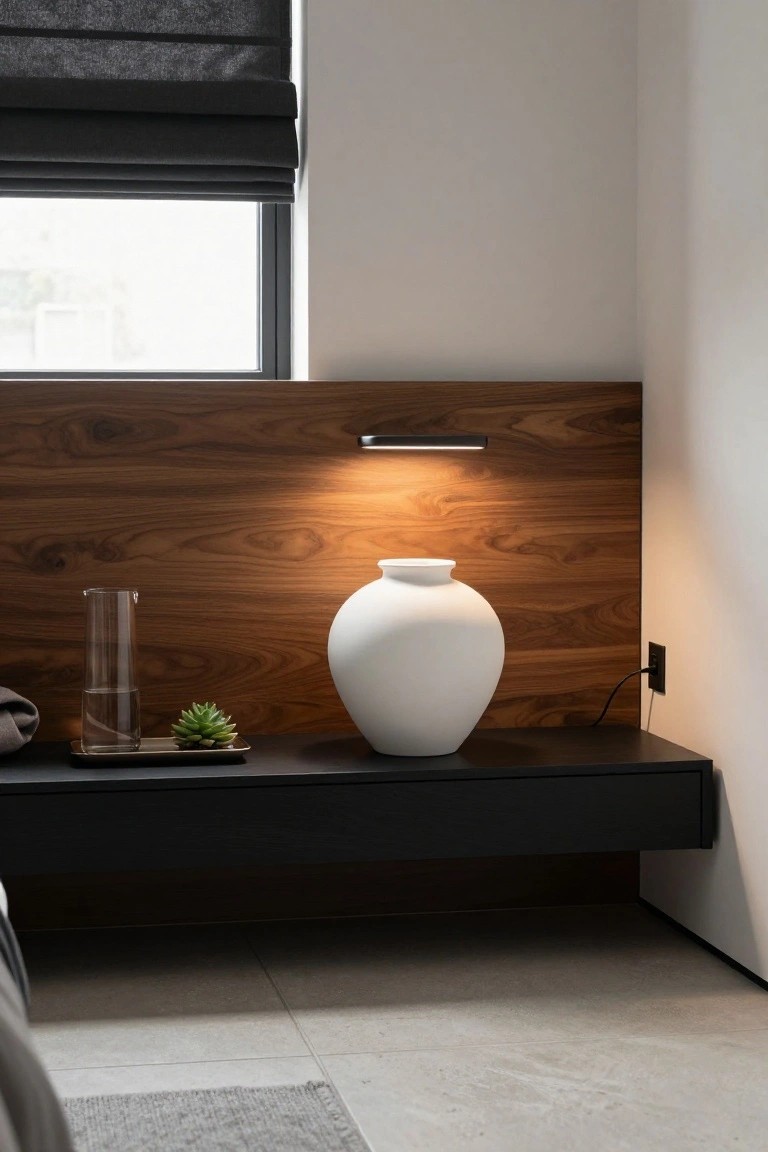
One simple way to handle a tight spot next to the bed is to skip a full table and mount a slim floating shelf instead. It takes up almost no floor space and still gives you room for a lamp, a book, or a glass of water.
This works best in small bedrooms or when you already have a headboard panel in place. Keep the shelf fairly shallow so it does not stick out too far, and choose a dark finish if you want it to blend with the wall behind it.
Round Pedestal Tables Fit Narrow Spaces
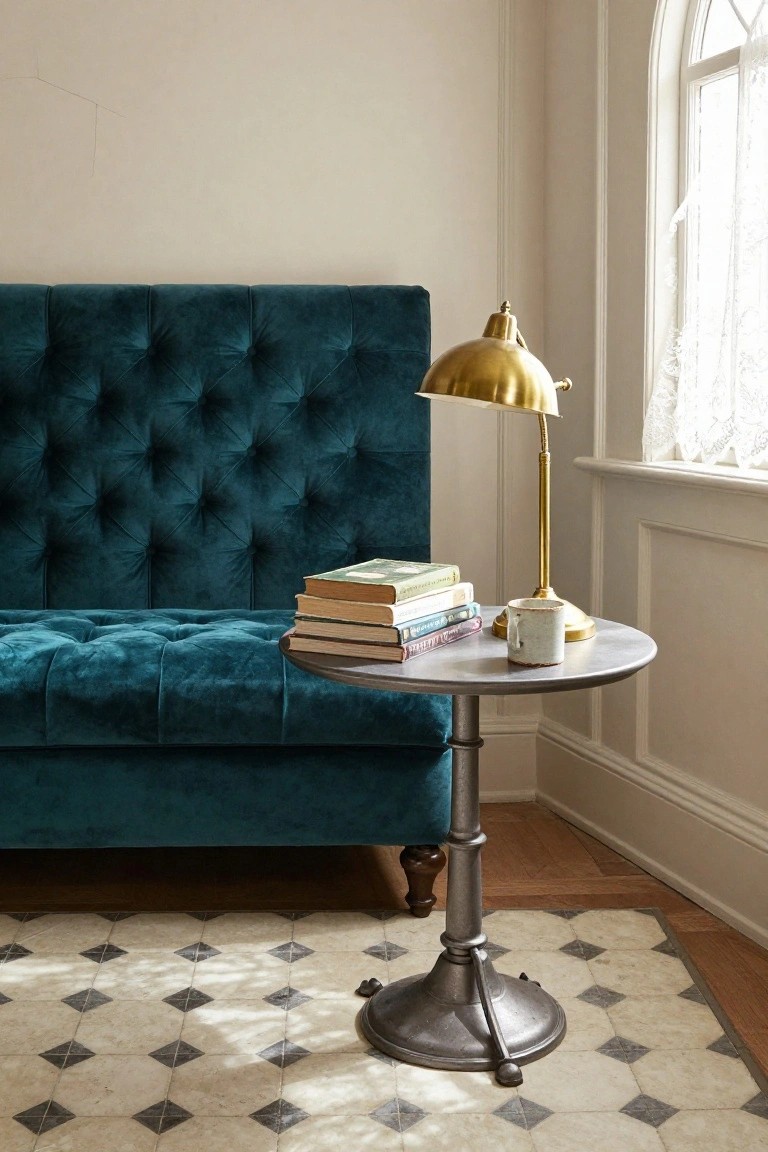
A round pedestal table gives you a slim surface without the bulk of four legs. The single base takes up less visual space and leaves the floor open, which helps in tight spots next to a bed or sofa.
This style works best in small bedrooms or narrow living areas where you still want room to walk around. Look for a sturdy metal or wood base so the table feels steady even in a busy spot.
Lean A Ladder Next To The Bed
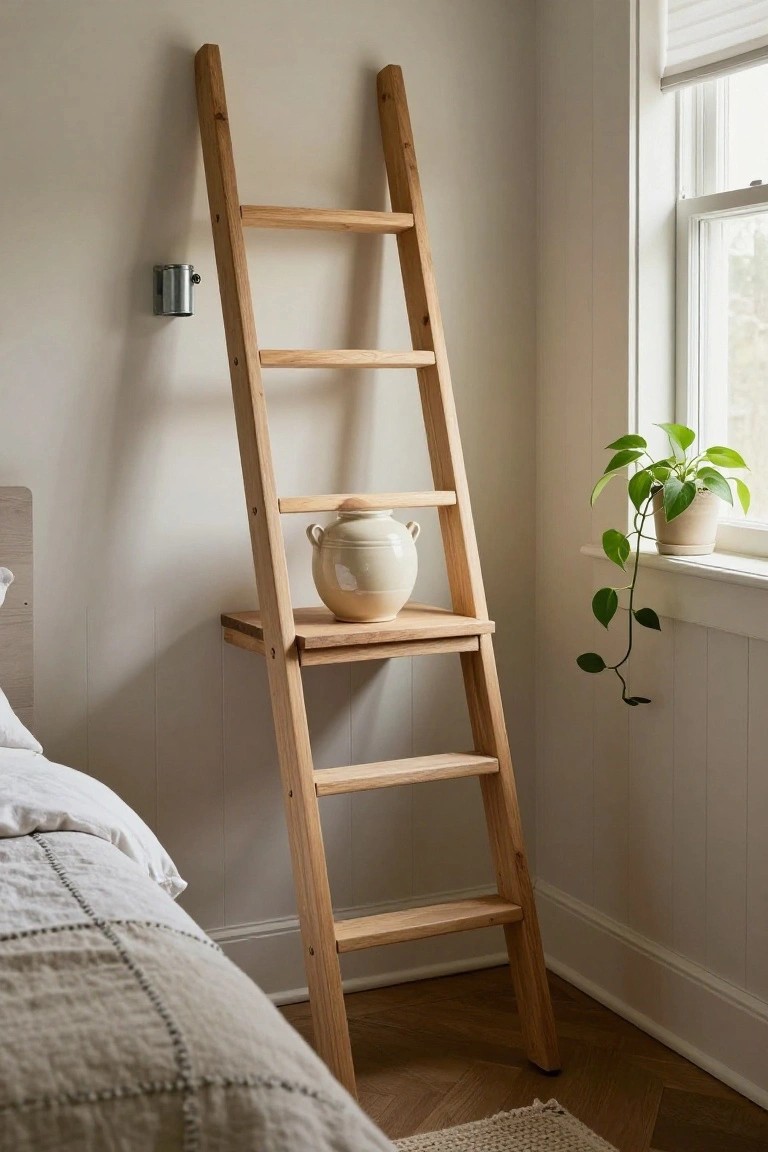
A leaning ladder gives you a slim bedside option that barely takes up floor space. It rests right against the wall and creates several small shelves without needing a bulky table or extra legs.
This setup works well in narrow bedrooms or tight corners where a regular nightstand would crowd the area. Look for a sturdy wooden ladder with flat rungs and add a small non-slip pad at the base so it stays put.
Tall Mirrored Cabinets Work As Slim Bedside Tables
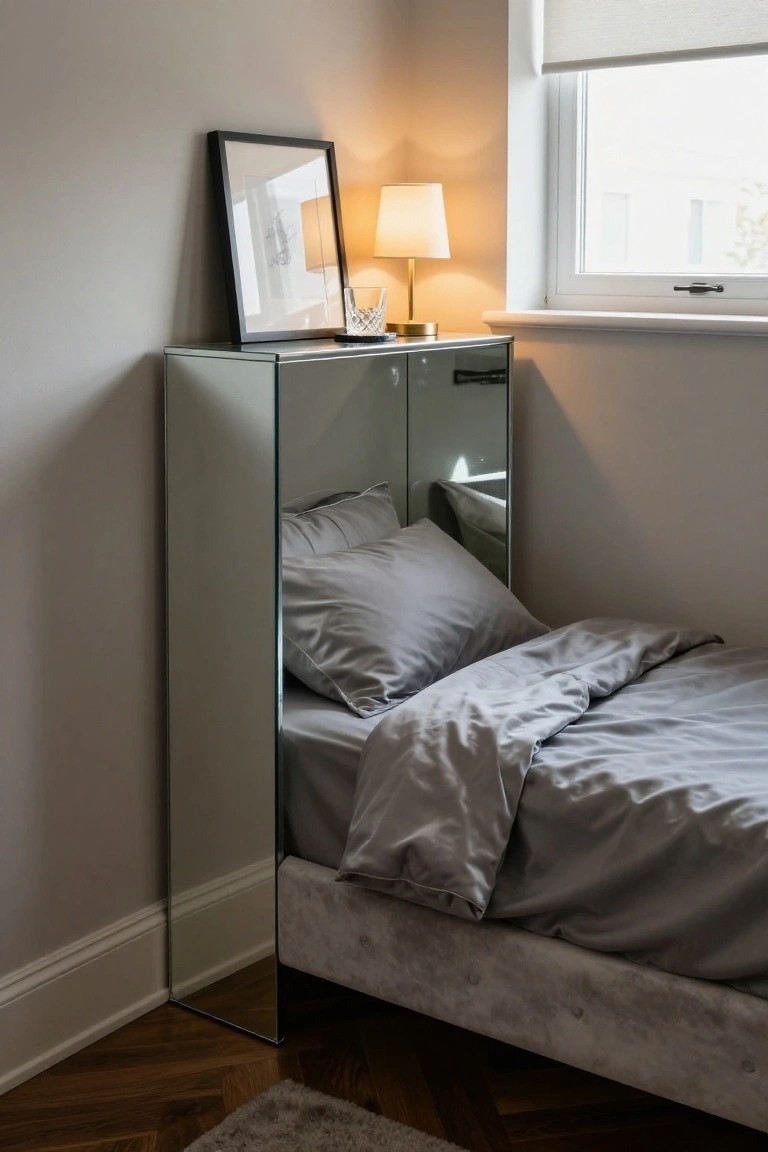
A tall mirrored cabinet gives you a bedside surface without taking up much floor space. It stands in the narrow gap between the bed and the wall while the reflection helps the room feel a bit bigger and brighter.
This kind of piece works best in small bedrooms where a regular nightstand would crowd the walkway. Place a lamp and a few small items on top and use the inside for extra linens or clothing. Just keep the finish simple so it does not compete with the rest of the room.
Try a Narrow Table With an Open Frame
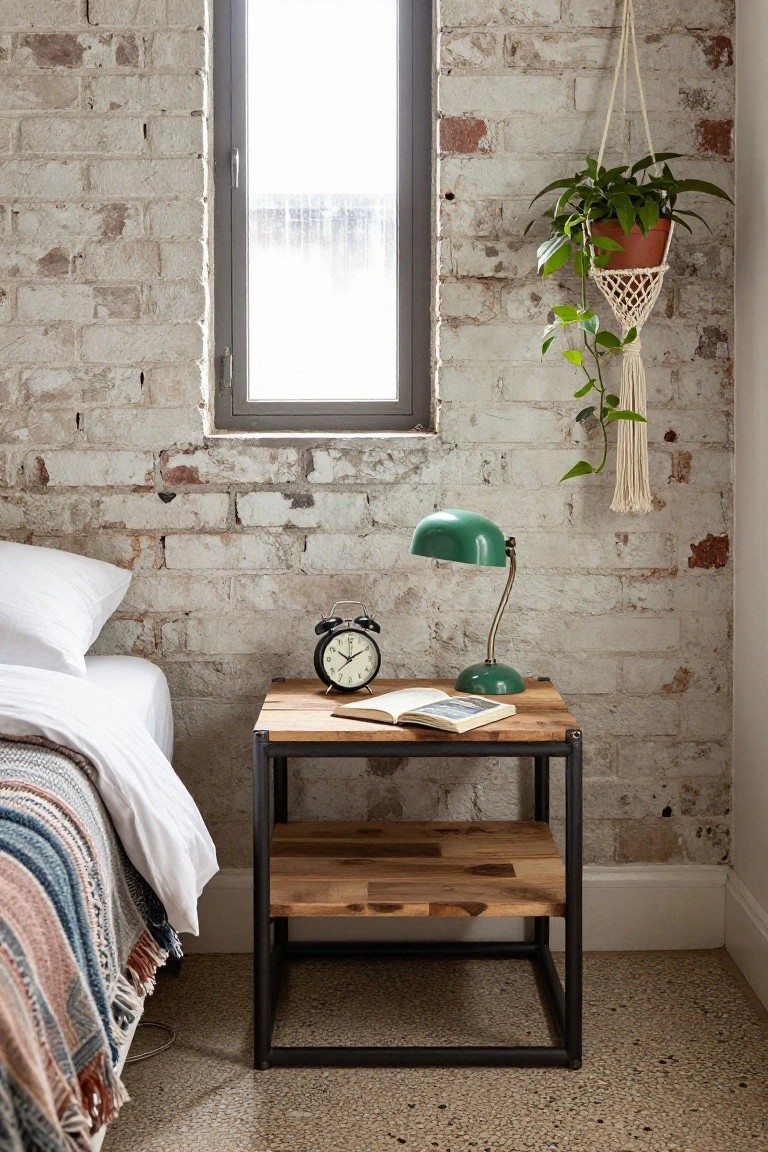
A narrow bedside table with an open metal frame works well when the space next to the bed is limited. The design keeps the floor visible underneath, so the room still feels open even when the table sits close to the mattress.
This style suits small bedrooms or apartments where you need storage without taking up extra floor space. The lower shelf holds a few items, while the slim top leaves room for a lamp and clock without crowding the area.
Round Nightstands With Open Shelves Save Floor Space
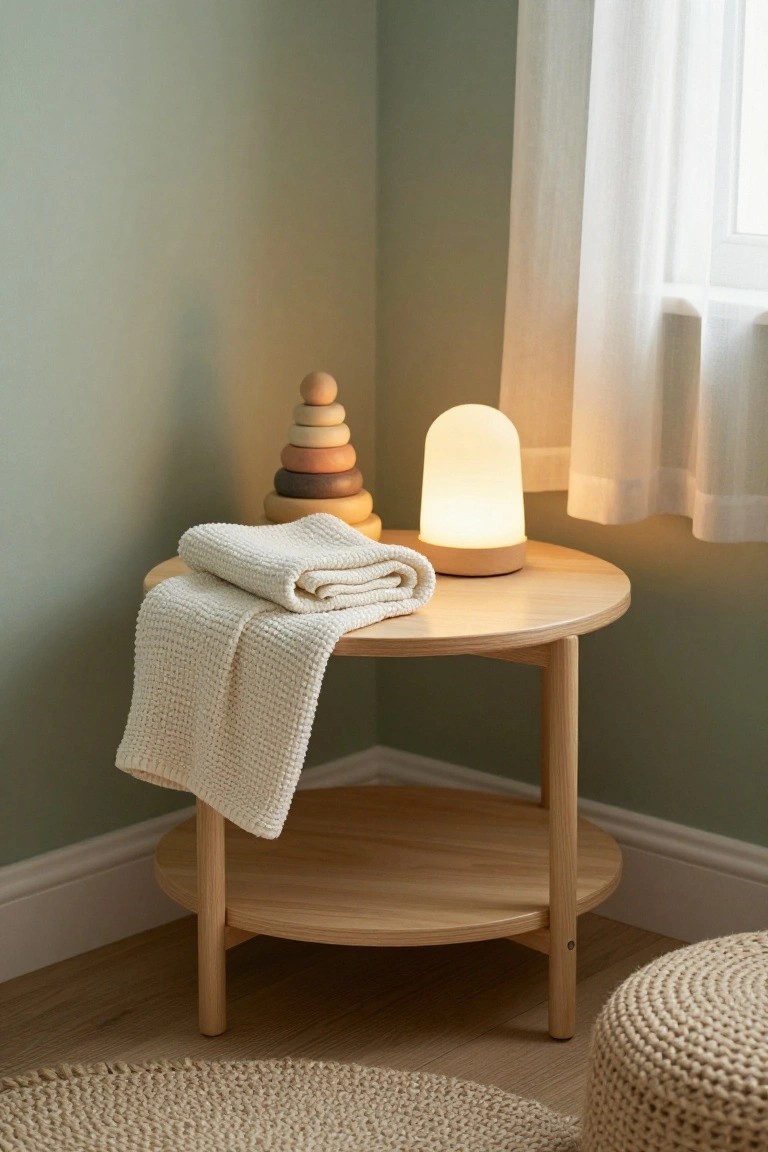
A round bedside table with a lower shelf gives you storage without eating up much floor space. The shape slides neatly into tight corners and avoids the bulk of square furniture, so the room still feels open even when the bed sits close to the wall.
Place a small lamp on top and use the shelf for a few books or a basket. This setup works especially well in small bedrooms or narrow guest rooms where you need function but do not want the table to crowd the walkway.
Low Tables That Suit Narrow Rooms
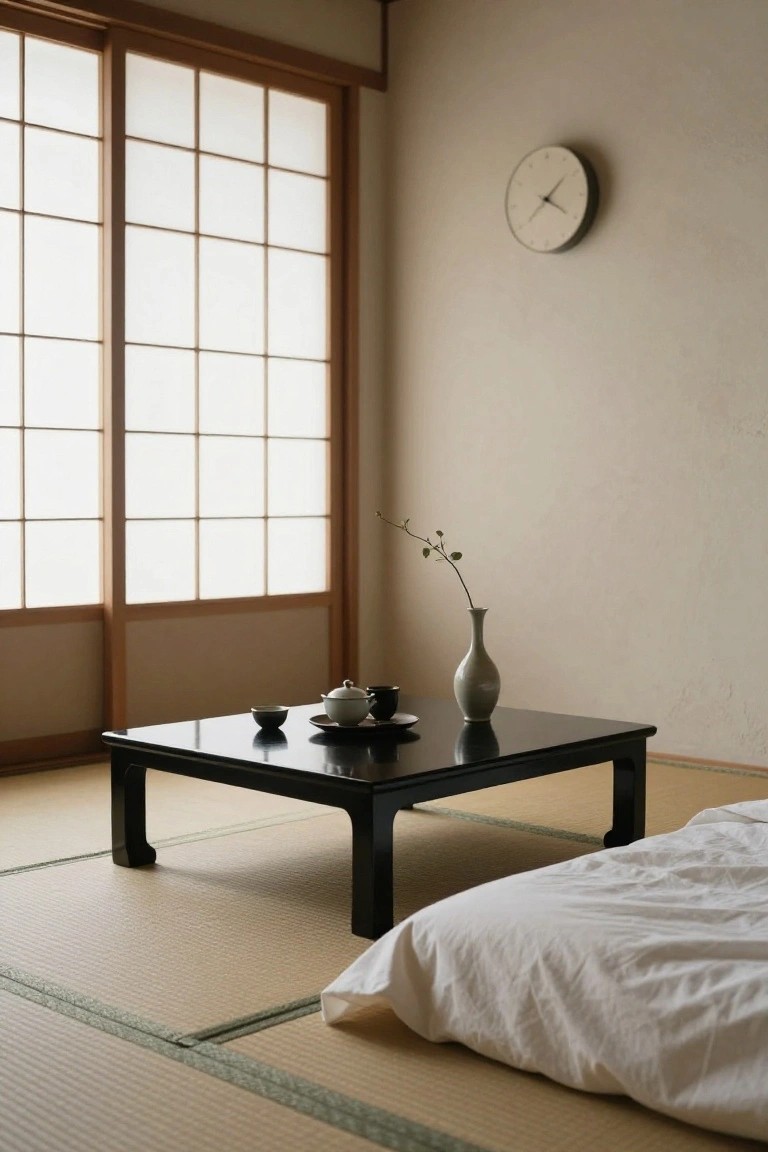
A low table placed beside the bed can work surprisingly well when space is tight. It stays out of the way, keeps the room feeling open, and still gives you a spot for a lamp, book, or cup without adding bulk.
This approach fits best in smaller bedrooms or minimalist setups where you want to avoid crowding the floor. Just make sure the table is stable and not too far from the bed so it remains practical to reach.
Mirrored Nightstands Help Small Bedrooms Feel Larger
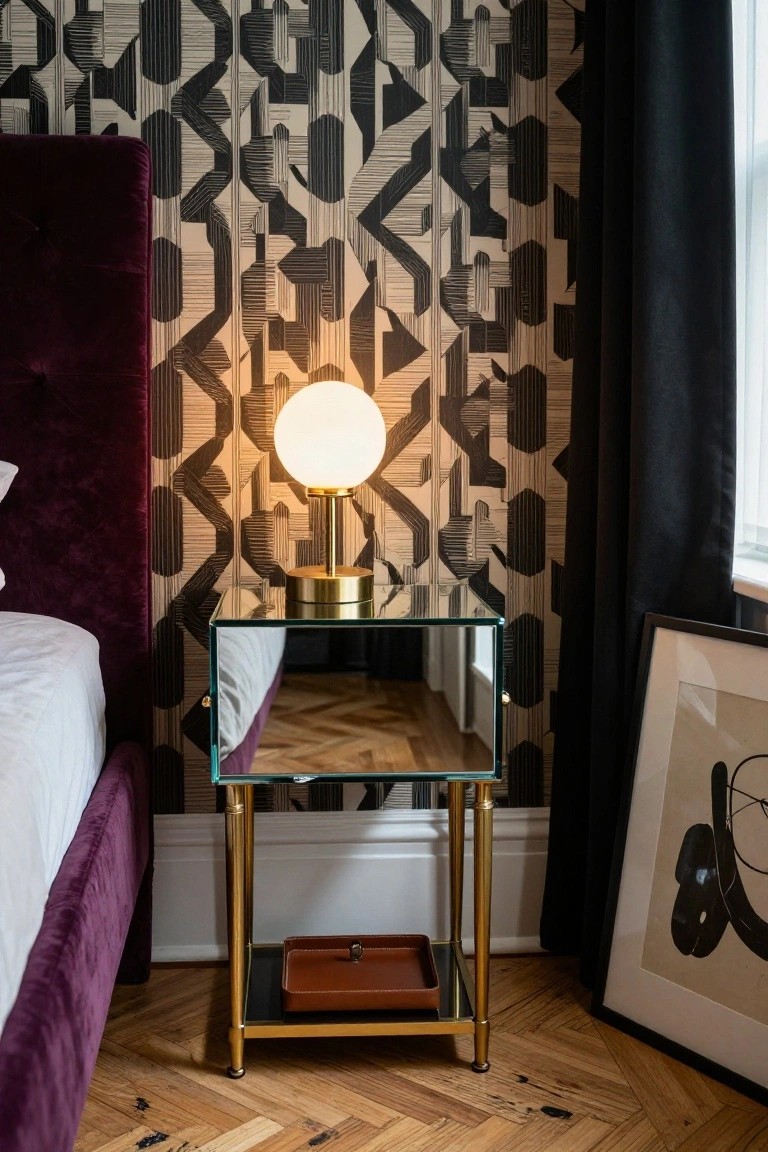
A slim bedside table with a mirrored top can open up a tight space beside the bed. The reflective surface bounces light around the room and keeps the area from feeling cramped or dark.
This works well in bedrooms with darker walls or limited floor space. Look for thin metal legs and a lower shelf so you still get a bit of storage without adding visual weight.
Tree Stump Nightstands For Narrow Spaces
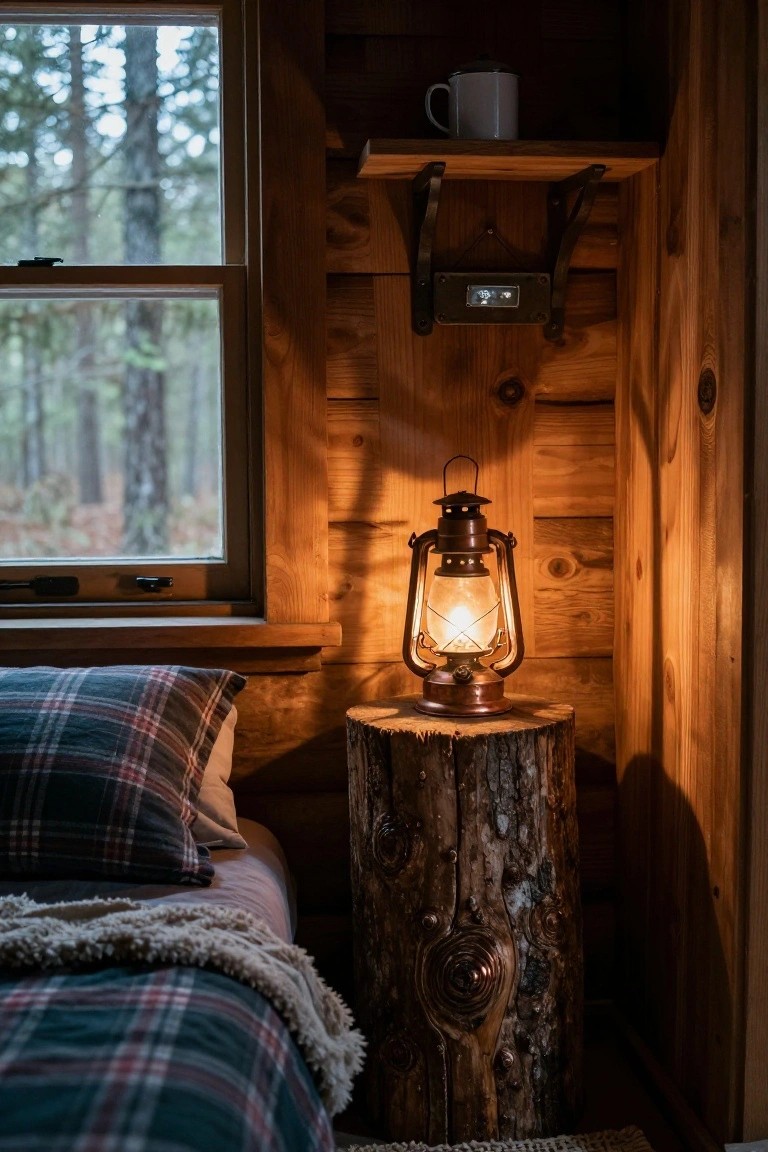
A tree stump works well as a bedside table when floor space is limited. It stays slim against the bed while giving you a sturdy spot for a lamp or a glass of water. The natural shape feels simple and fits right into smaller bedrooms without crowding things.
This idea suits cabins or homes with a rustic style. Look for a stump with a fairly flat top so items stay level, and keep the height close to your mattress for easy reach. It adds character without needing extra furniture.
Tall Narrow Shelving Works Well Next to the Bed
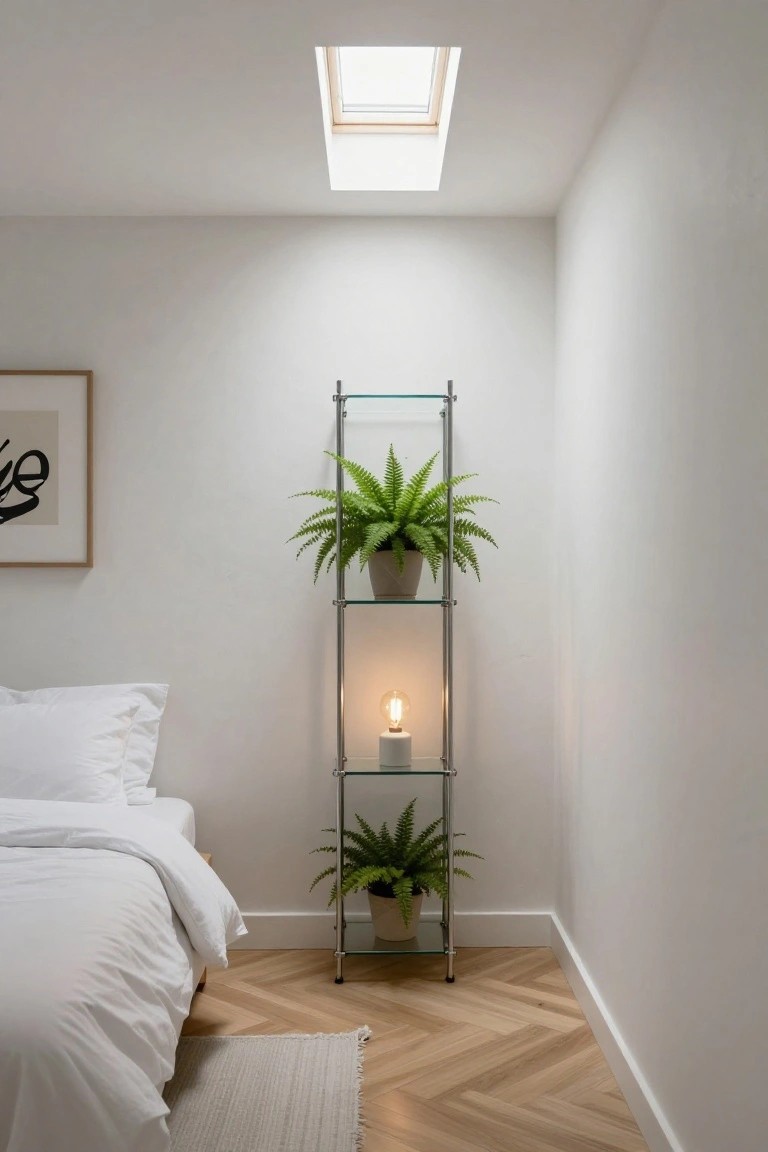
Small bedrooms often leave little room for a regular bedside table. A tall narrow shelf unit solves that by taking up almost no floor space while still giving you room for a lamp and a couple of small plants.
This setup works best in tight layouts where you need both storage and a light source without crowding the bed. It suits simple modern rooms and keeps the area feeling open rather than cramped.
Long Consoles As Slim Bedside Tables
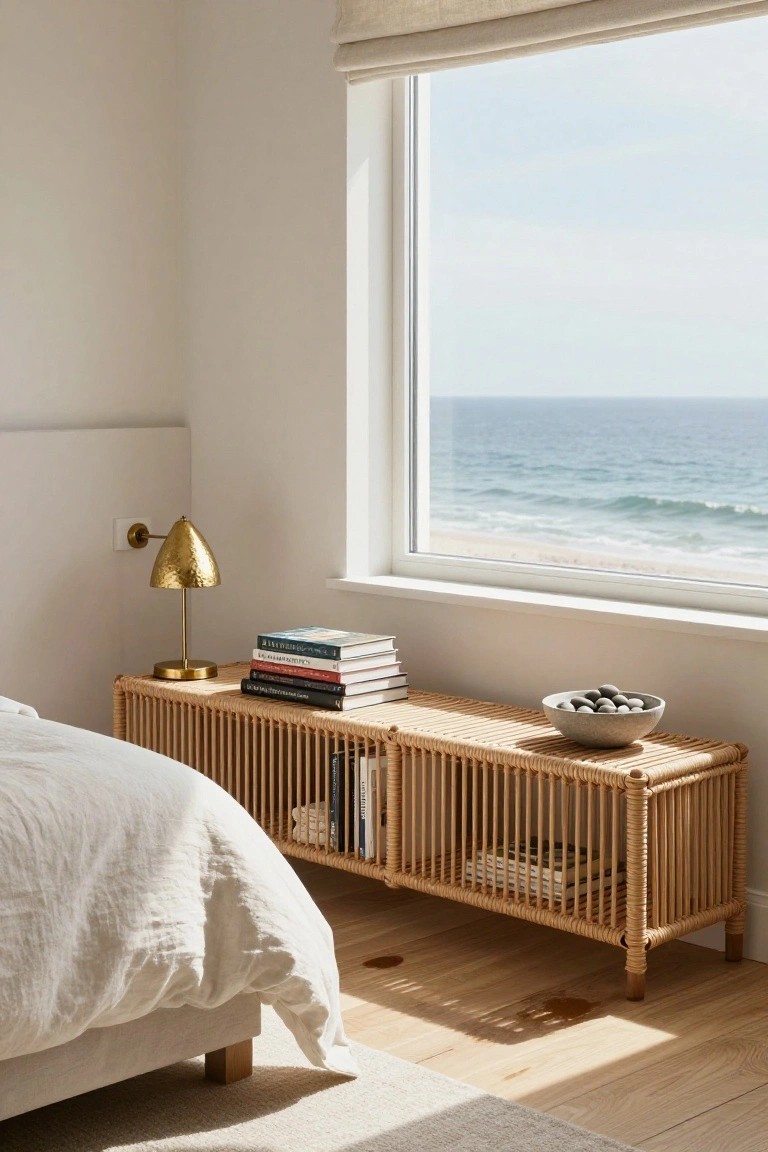
A long console table can slide right into a narrow spot next to the bed. It gives you surface space for a lamp and books without taking up the floor area that a wider nightstand would need.
This works especially well when the bed sits close to a window or wall. The open lower section adds room for extra storage while keeping the whole setup low and light.
Concrete Cubes Work As Slim Nightstands
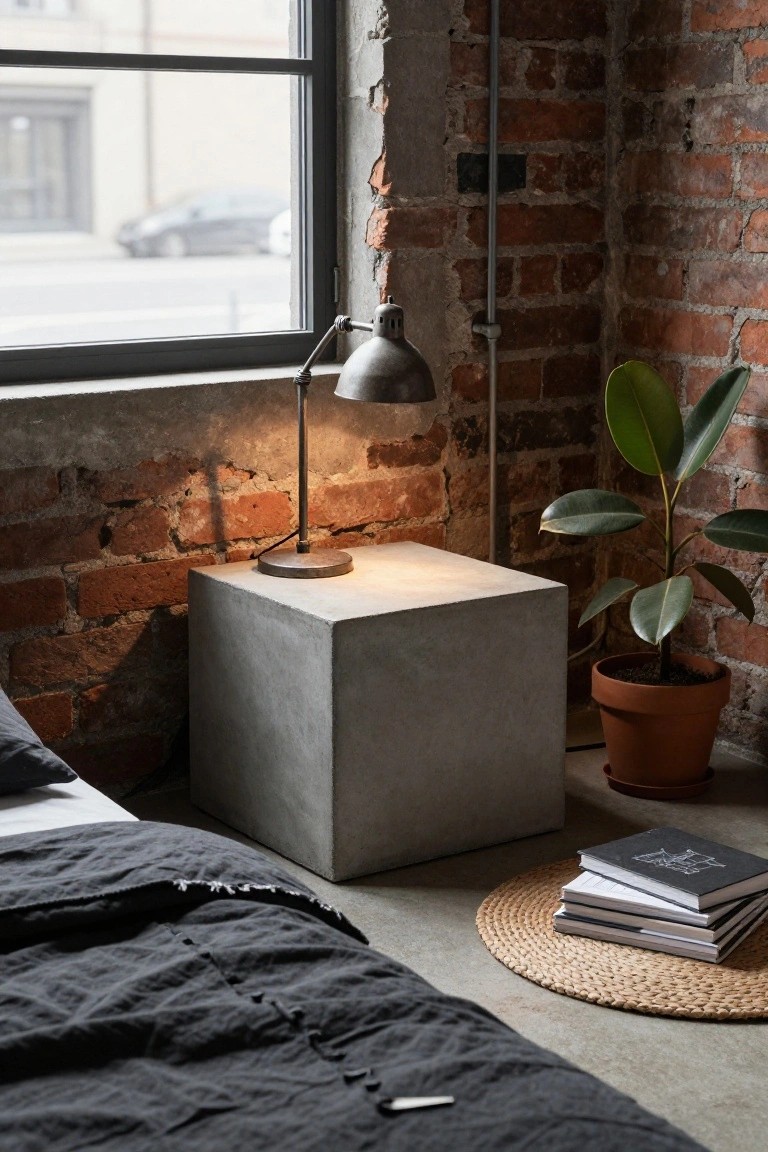
A concrete cube gives you a solid bedside surface without eating up floor space. It stays narrow enough for tight spots next to the bed while still holding a lamp and a few small things within easy reach.
This idea works best in small bedrooms or apartments where you need something sturdy but minimal. Place it on a simple floor like concrete or wood, and pair it with basic bedding so the cube stays the main feature without feeling heavy.
A Narrow Nightstand With One Drawer
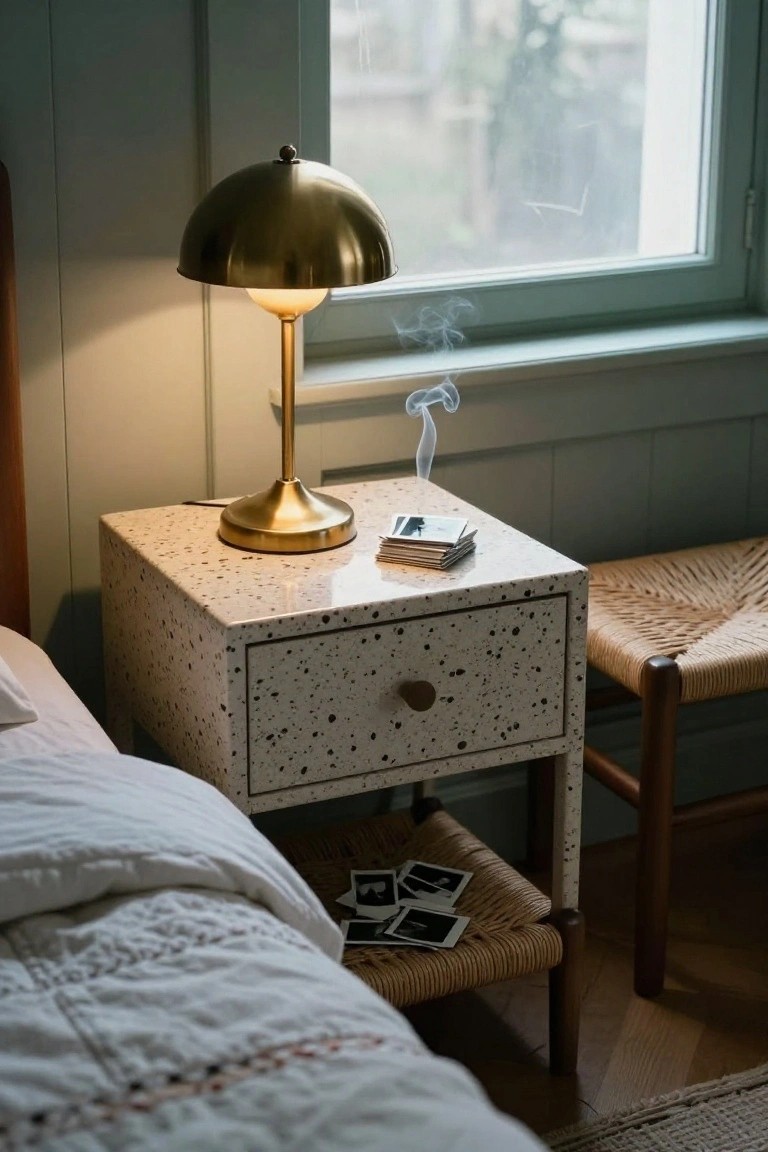
A slim bedside table keeps the space around the bed open and easy to move through. The single drawer gives you a spot for books or chargers while the narrow top still holds a lamp without spreading out too far.
This style suits small bedrooms or tight corners where a wider table would feel cramped. Look for one with simple legs so you can slide a low stool or basket underneath for extra room when needed.
Slim Tray Tables Work Well in Tight Spaces
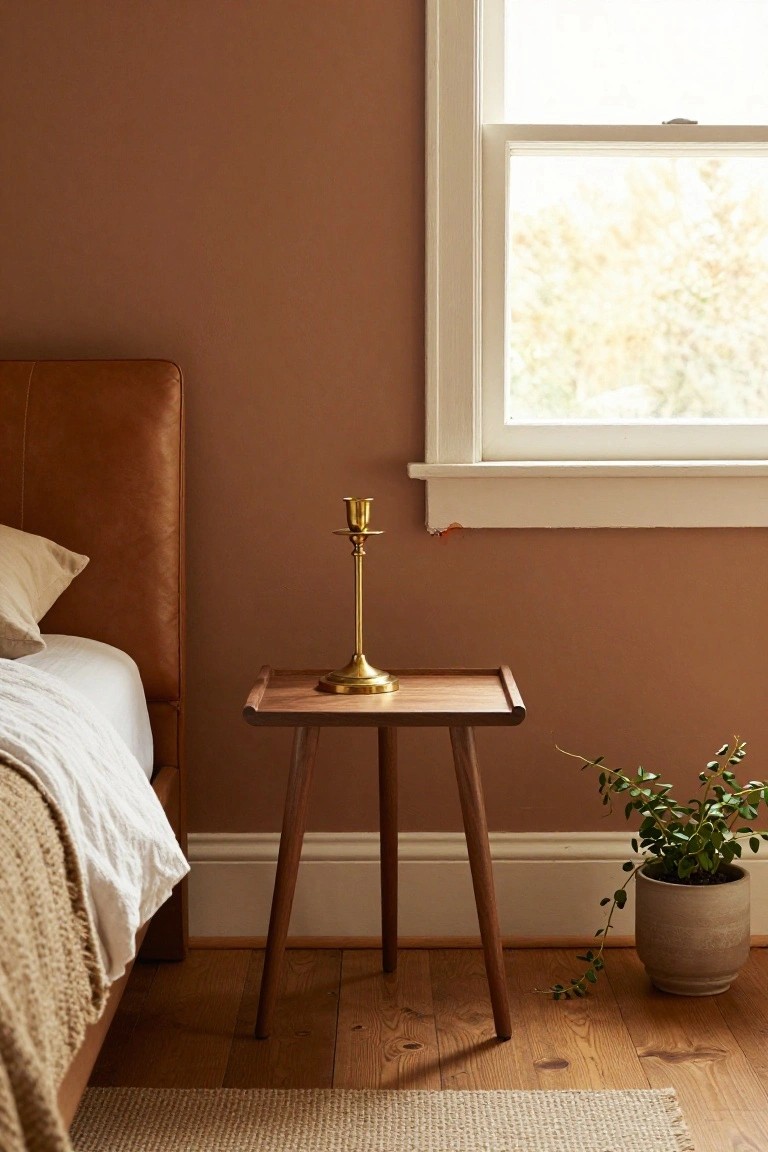
A slim table with a tray top and thin tapered legs slides easily into narrow spots beside the bed. It gives you a usable surface without spreading out across the floor like a wider piece would.
This kind of table suits small bedrooms where you need every bit of room to count. It keeps the area feeling open underneath and works best when you keep the styling simple.
Slim Console Tables Work Well In Tight Bedside Areas
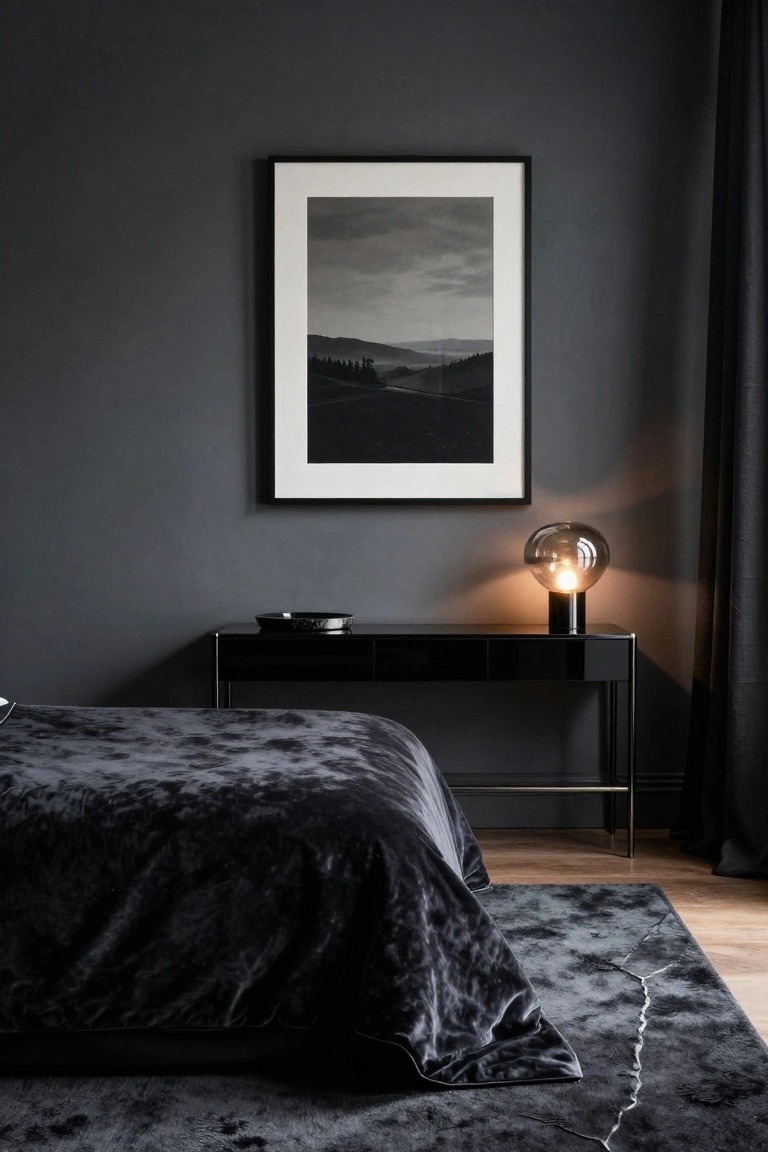
A slim console table can solve the problem of narrow space next to the bed better than a standard nightstand. It stays shallow enough to fit without crowding the room yet still gives you a place to set a lamp and a few small items within easy reach.
This setup works especially well in darker bedrooms where you want clean lines and minimal bulk. Choose a table with a low profile and keep the top mostly clear so the area feels open rather than cluttered.
Frequently Asked Questions
Q: My bed sits low to the ground so most tables end up too tall. How do I find one that actually works?
A: Measure from the floor up to your mattress edge before you shop. Look for tables around 18 to 22 inches high with slim legs that slide under the frame if needed. This keeps everything within easy reach at night.
Q: I need a spot for my lamp and phone charger but the floor space is tiny. Which options handle both without extra bulk?
A: Pick a design with a flat top wide enough for the lamp base and a small notch or hole in the back for cords. Add a narrow tray on the bottom shelf to hold the charger brick. Test the setup at home to confirm nothing sticks out into the walkway.
Q: These tables sound great but mine always wobble on uneven floors. Is there a simple fix that does not involve tools?
A: Choose models with adjustable feet or add stick-on pads yourself. Place the table in the corner and shift it slightly until it sits flat. And skip anything with thin metal legs if your floor has dips.
